1. Introduction
An examination of the term “cosmoecology” reveals that it is not a novel concept but a polysemous neologism used by researchers across multiple disciplines. This review aims to offer an overview of the intellectual terrain surrounding “cosmoecology,” tracing its conceptual development, highlighting key contributors, and situating its use within diverse contexts. It provides a thorough understanding of the term’s established presence and its range of interpretations, laying the groundwork for an original application within emerging research lines in the SPIRAL project.
A deeper analysis shows that the term’s mere presence is less significant than the distinct and at times divergent meanings it carries across different disciplinary contexts. This suggests that “cosmoecology” is not a single, linearly evolving concept but has emerged independently or semi-independently to address similar conceptual gaps from various angles. This conceptual divergence is a significant strength, as it points to a convergent intellectual need to bridge the Cosmos and ecology from perspectives including philosophy, astrobiology, environmental humanities, and even space defense. These varied interpretations offer avenues for scholarly inquiry, from quantitative astro-engineering to philosophical ethnography and qualitative studies of human-more-than-human relations.
The independent emergence and diverse conceptualizations of “cosmoecology” are symptomatic of a broader evolving planetary consciousness in academia, which increasingly recognizes the interconnectedness of Earth’s ecology with cosmic processes and human actions at a planetary scale. The term thus functions as a response to the growing realization that ecological challenges cannot be fully understood or resolved without considering their cosmic dimensions and the scale of human agency within that Cosmos. It is a linguistic tool reflecting a fundamental shift in how scholars perceive the human-planet-universe relationship, signifying its role in a larger intellectual movement. Understanding this polysemy is crucial for any new scholarly engagement with “cosmoecology,” as it necessitates a clear definition and a careful positioning relative to these existing, diverse lineages.
This paper critically reviews the concept of ‘cosmoecology’, tracing its intellectual history to justify its application within different disciplinary domains making it accessible also to human geography, political ecology and landscape ethnoecology. It synthesizes the term’s varied conceptualizations, from its philosophical origins to its astrobiological visions and more recent focuses on multispecies entanglements. After the review, it introduces a new perspective that redefines cosmoecology as a relational ontoepistemology with material implications in socioecosystem dynamics and territorial governance. This interpretive framework traces diverse influences, including the discussions that sparked during both the École doctorale des Ateliers de la Pensée and the ADLP event that took place in Dakar (2022), Arturo Escobar’s concept of pluriverse,13 Boaventura de Sousa Santos’s knowledge ecology,40 Sarah A. Radcliffe’s conceptualization of indigeneity,38 and the cross-cultural findings of the SPIRAL project on ecospiritual practices.
The SPIRAL project proposes a paradigmatic shift in the epistemology of sustainability, one that embraces the plurality of cosmoecologies and the ecospiritual practices that maintain a metastable balance in forest human-ecology relations across different geographical contexts. No new empirical data are analyzed or reported in this article. This review draws conceptually on the SPIRAL project’s broader cross-cultural corpus (fieldwork and eHRAF archival material across 73 forest-oriented societies), but that corpus is discussed as background context rather than presented, coded, or appended as a dataset here.
By systematically delineating distinct intellectual traditions, this paper contributes a new perspective to human geography and environmental studies by demonstrating how planetary and local human-ecology relations intersect.
2. Cosmoecology’s appearance, meaning, and application
The earliest identified scholarly contribution to the concept of “cosmoecology” stems from the work of Bohdan Kiełczewski, who is explicitly credited with having “coined the term ‘cosmoecology’” in 2010.21 His foundational conceptualization is notably discussed in his paper, “Listening to Anima Mundi: The Organic Metaphor in the Cosmoecological Perspective”.21
Kiełczewski’s “cosmoecology” is etymologically rooted in the Greek words “kosmos,” signifying “order” or “universe,” and “oikos,” meaning “environment.” His definition primarily centers on “the influence on life on Earth of various cosmic elements”.21 These cosmic elements encompass a broad spectrum, including solar radiation, solar activity, solar and lunar gravitation, meteorite events, supernova explosions, magnetic and electric fields, and the dynamic changes and disturbances within planetary atmospheres. All these factors, in Kiełczewski’s view, play a significant role in shaping life’s diversity, its potential for development, and the adaptation processes of living organisms on Earth.
The philosophical roots of Kiełczewski’s perspective are profound. His “cosmoecology” is presented as a deliberate revision of an organic epistemological approach to nature, standing in stark contrast to the mechanistic worldview that gained prominence during the Enlightenment through figures like Galileo, Francis Bacon, and René Descartes. This conceptualization emphasizes the “interconnectedness of all phenomena in the universe, from cosmic factors to life on Earth”,21 advocating for a holistic understanding that transcends reductionist frameworks. Central themes in his work include the “World Soul (anima mundi)” and the concept of “planetary ethics,” suggesting a deep, sympathetic relationship between the human soul and the cosmic order.
Kiełczewski’s “cosmoecology” is not merely a scientific description of cosmic influences but embodies a philosophical counter-narrative to the prevailing mechanistic worldview. However, a critical engagement with Kiełczewski’s organic worldview requires caution against potential risks of environmental essentialism or romanticism. Idealizing nature as an inherently harmonious organism could potentially obscure the socio-political frictions, epistemic violence, material inequalities, and ecological disruptions that characterize real-world socio-ecological dynamics. It seeks to re-establish a holistic, organic understanding of the universe and humanity’s place within it. This emphasis on re-enchanting the world through a scientific lens, rather than simply defining a new scientific field, means that even the earliest usage of “cosmoecology” carries significant normative weight. It is part of a larger intellectual debate about humanity’s relationship with nature and the Cosmos, rather than a neutral descriptive term. Consequently, any new scholarly engagement with “cosmoecology” must implicitly or explicitly contend with this underlying philosophical tension.
A distinct and influential conceptualization of “cosmo-ecology” (often hyphenated) emerges from the work of Michael Noah Mautner within the fields of astrobiology and space science. Mautner defines “cosmoecology” as the extrapolation of the relations between life and space resources to cosmological scales. This framework involves understanding how life interacts with and utilizes resources across the immense expansion of the universe. It is presented as a direct extension of “astroecology,” a related field that focuses on the interactions of biota with space environments and the resources available for life on planets, asteroids, and comets.32
Mautner’s research quantifies the potential for life that can be derived from space resources. His work includes measuring soluble carbon and electrolyte nutrients in asteroid and meteorite materials, demonstrating that microorganisms and plant cultures can grow on these materials with fertility comparable to productive agricultural soils. From these findings, his “cosmoecology” explores the immense potential for future life in space, estimating biomass yields from asteroids and comets, and assessing the capacity of stars to sustain life across galactic and universal scales. For instance, he estimates that carbonaceous asteroids could yield vast amounts of biomass, and stellar luminosities could sustain life for immense durations across the galaxy and universe.
A central tenet of Mautner’s “cosmoecology” is its motivation by a “life-centered biotic ethics.” The ultimate vision articulated is to “secure and propagate life” throughout the Cosmos by actively seeding new planetary systems with microbial representatives of Earth’s life-forms, including extremophiles, autotrophs, heterotrophs, and simple multicellular organisms.30,31 This ambitious program, in his view, could lead to the development of intelligent species capable of further expanding life in the galaxy, thereby giving human endeavors a profound “cosmic purpose.”
Mautner’s “cosmoecology” represents a significant conceptual reorientation compared to Kiełczewski’s focus. While Kiełczewski examined cosmic influences on Earth, Mautner emphasizes humanity’s agency in the Cosmos.32 His framework positions human activity as an active force capable of shaping the future of life on universal scales.30 This reorientation moves from a geocentric understanding of cosmic impact to a pan-cosmic, life-driven project of universal propagation. Mautner’s life-centered biotic ethics also raises significant bioethical and geopolitical questions regarding planetary protection and space expansionism. Actively seeding off-earth environments presents risks of forward contamination, anthropocentric projection onto cosmic scales, and the uncritical extension of colonial logics under the guise of propagating life.
Within the environmental humanities and Science and Technology Studies (STS), Vinciane Despret and Michel Meuret are prominent scholars who utilize the term “cosmoecology” (unhyphenated). Their conceptualization offers a distinct perspective, emphasizing the intricate and practical entanglements of human and more-than-human beings in shaping a shared “Cosmos.” Despret and Meuret’s seminal work, “Cosmoecological Sheep and the Arts of Living on a Damaged Planet,” was published in 2016,11 positioning their usage as one of the more recent prominent conceptualizations.
Despret and Meuret shift focus from grand cosmic scales to intimate, relational practices among terrestrial beings as context-sensitive approaches to environmental governance.
Despret and Meuret define their “cosmoecology” as a concept where “ecology and cosmology are knotted in a common story, forming a cosmoecology of multiple beings, gods, animals, humans, living, and dead”.11 They describe it as a “practical science of the ordinary and mundane, rooted in ‘earthly companionship’”,11 a term derived from cum panis, meaning “with bread,” highlighting the relational act of eating. This framework is deeply informed by multispecies ethnography and the broader discourse around the “arts of living on a damaged planet,” a concept notably articulated by Anna Tsing.42 Their work underscores the “noninnocent bonds of respect” that tie humans and animals together,11 proposing that the Cosmos is not a fixed, external entity but actively emerges from “diverse ways of composing worlds, of crafting attachments and connections that link soil and earth, compost, humus, mud, grass, dogs, sheep, humans, and more”.11
A key application of their concept is “cosmoecological diplomacy,” which they define as “the art of giving collective shape to a more-than-human Cosmos yet to arrive”.11 This highlights a crucial political and ethical dimension, focusing on the navigation of complex coexistence problems between human and more-than-human beings within specific “critical zones”.19 Their approach also connects to what Ghassan Hage terms “alter-politics,” a form of politics arising from attentiveness to alternative ways of being with other living beings, rather than solely from critique of existing systems.16 The re-emergence of shepherding practices in the South of France serves as a central empirical example, illustrating how humans and sheep undergo a “metamorphosis” through mutual learning, transforming both their identities and their shared environment. While Despret and Meuret’s ethnographic focus on sheep herding in Southern France offers rich localized insights into multispecies diplomacy, these specific pastoral practices cannot be translated into universal templates for global environmental governance as they are context-specific.
Beyond the primary conceptualizations discussed, “cosmoecology” and its related terms appear in other significant contexts, demonstrating its versatility as a conceptual tool for addressing complex interdisciplinary challenges.
One distinct application is “synergetic cosmoecology,” which views “near space as the Earth’s civilization living space.” This concept proposes a scientific problem centered on protecting Earth, its orbital stations, and space-faring vehicles from both natural threats, such as meteoroids, and artificial threats, like plasmoids. It highlights a “complementarity between cosmophysics and biology” and involves the construction of mathematical models for the biosphere and the “man-environment” system.
Another brief mention proposes the concept of Cosmoecology as a field of astrophysics in the context of human interplanetary expansion projects. This aligns conceptually with Mautner’s work on expanding life in space, potentially representing a separate or more recent proposal within the broader discourse of space settlement. Discussions of astroecology increasingly engage planetary protection protocols and the Fermi Paradox, both of which sharpen the ethical and empirical stakes of extending ecology beyond Earth.48 Planetary protection frameworks caution against biological contamination of extraterrestrial environments, a concern that directly complicates Mautner’s directed-panspermia proposal.49 The Fermi Paradox - the apparent absence of detectable extraterrestrial life despite its statistical likelihood - has similarly been invoked to question whether ‘seeding’ life beyond Earth answers cosmic silence or instead projects anthropocentric urgency onto an otherwise indifferent universe.48
Furthermore, “cosmoecology” shares conceptual territory with “cosmopolitics,” though they remain distinct. “Cosmopolitics” generally refers to the idea that all human beings are members of a single community, often implying universal moral or political obligations. Despret and Meuret’s work explicitly links their “cosmoecological” approach to “cosmopolitical” frameworks and “alter-politics”,16 indicating that their “cosmoecology” can be understood as an ecological extension of a political philosophy that recognizes a “more-than-human Cosmos.” This connection suggests that “cosmoecology” can be seen as the ecological dimension of a broader cosmopolitan or cosmopolitical project. This alignment is not unproblematic. Isabelle Stengers’s original formulation of cosmopolitics insists on the ineliminable friction and ‘non-common’ ground between different worlds, deliberately resisting premature reconciliation between them.55 Read against this, cosmoecology’s appeal to a shared, relational Cosmos risks understating genuine incommensurability between worldviews, potentially smoothing over the political conflict that cosmopolitics is designed to keep visible.
Jensen’s conceptualization of “cosmoecologies”19 aligns with the enhanced conceptualization that will be given in the next section. For Jensen, “cosmoecology” is a way of thinking about planetary problems that rejects a singular, god-like perspective in favor of a pluralistic and relational approach. It expands the traditional notion of ecology to include not just biological systems, but all entities - human, non-human, and even abstract concepts - as interconnected parts of a unified cosmic web. This framework is fundamentally political and ontological, as it argues that how we define the Cosmos directly shapes our social and political actions. By drawing on a mix of art, science, and Indigenous knowledge, Jensen’s concept emphasizes that new ways of thinking and acting are needed to address the volatile state of our planet. It promotes an “acritical” stance that is not anti-critical but instead seeks to create new conjunctions and alliances that move beyond Western dualisms and allow for new, more sustainable ways of world-making.
Finally, the concept of critical zones: the thin, inhabitable layer of the planetary surface, is mentioned in conjunction with “cosmoecology” in the “Rewilding Bangkok” article.19 This illustrates how the expansive “cosmoecological” perspective can be applied to specific, localized, and intensely interactive interfaces on the planet, highlighting the interconnectedness of micro- and macro-scales in ecological thought.
The diverse applications of “cosmoecology,” ranging from space defense to urban rewilding, reveal its function as a flexible conceptual bridge that facilitates transdisciplinary approaches to complex planetary and cosmic challenges. These challenges are often related to human-environment interactions at vast scales. Despite their different specific applications, these contexts consistently address intricate interactions between human civilization, life, and the broader cosmic dimension. Such issues inherently transcend traditional disciplinary boundaries, encompassing engineering, physics, biology, urban studies, and philosophy. “Cosmoecology” thus emerges as a conceptual tool that enables scholars to articulate problems and propose solutions that necessitate integrating perspectives from seemingly disparate fields. This reflects a contemporary academic trend towards transdisciplinary approach, driven by the urgency of global multiple crises. For scholars, this indicates that the term “cosmoecology” holds significant potential for interdisciplinary research. By carefully defining their own usage, researchers can position their work at the forefront of addressing complex, multi-scalar challenges that demand integrated approaches beyond traditional academic silos.
3. Towards a new conceptualization: Cosmoecology as a relational onto-epistemology
Delineating a brief history of a novel conceptualization is crucial for tracing the root of the meaning in new theoretical endeavors. Emerging African paradigms draw from critical post-colonial thought, engage deeply with African humanist traditions, and aim to reimagine a future in which Africans are central to the production of knowledge, both locally and globally. The École doctorale des Ateliers de la Pensée (2022), focused on the core theme of cosmologies and forms of life. It invited reflections on how to confront humanity’s growing disconnection from ecosystems and the Earth by rethinking critically how modern worldviews are entangled with worldmaking practices. Here, relational onto-epistemology
is defined as a framework wherein reality (being, ontology) and knowledge (knowing, epistemology) are intrinsically linked and co-constituted through ongoing web-like relationships among humans, landscapes, and other-than-human entities.
This conceptualization is not without tension, however. Feminist epistemology and science and technology studies - notably Donna Haraway’s account of situated knowledges and Karen Barad’s agential realism - caution that relational onto-epistemologies can flatten differences in power and positionality among the human and more-than-human actors they describe.53,54 The risk is to obscur who bears the costs of ecological harm and whose knowledge claims are institutionally legible. A cosmoecological onto-epistemology, this review argues, must therefore remain attentive to asymmetries of voice, translation, and authority even as it affirms relationality. As part of this intellectual movement, Achille Mbembe re-envisions Earth as the shared home of all living beings, framing the concept of a terrestrial community as the “ultimate utopia”.33 This thematic stream of ADLP seeks to revitalize planetary consciousness by rethinking the human being as an entity open to the Cosmos and all living things, drawing particularly from African animist metaphysics. Based on the animist African cosmogonies (e.g. the cosmic dimension of human body), Mbembe designs a political ecology in which humanity enters community with all living beings and rediscovers its cosmic dimension.33 This utopia, where dwelling in the world means coexisting and making space for others (human and non-human), gives rise to new politics of the living. These politics are grounded in the primary right to breath and a fundamental right to life based on the rule of interdependence and African hospitality. For Mbembe, the right to a home in Africa should be accompanied by a birthright that extends beyond the Western concept of jus soli, explicitly recognizing belonging to a cosmic ecosystem.24,26 He proposes a fundamental shift from the “droit des gens” (the law of peoples), which is rooted in land appropriation, to the “droit du vivant” (the law of the living)33 converging towards a more nuanced cosmoecology’s normative dimension.
Séverine J. Kodjo-Grandvaux, another ADLP’s member, in her book “Devenir Vivant”, proposes a fundamental return to a different conception of matter and the universe.22 Her work advocates for re-inhabiting the Cosmos and re-examining the dualism of living versus inert matter by asking what constitutes life and death. She argues that what we perceive as inert is not necessarily inanimate, a perspective shared by certain African and Amerindian philosophies as well as quantum physics, which shows that the solidity of our world is an illusion created by the continuous movement within the atom. This leads to her central proposal: to make cosmology a new philosophy that reintegrates the Cosmos as a life-generating ecosystem. This approach offers a new framework for understanding the deep, interconnected nature of all things, challenging Western dualisms and aligning with the relational ontologies explored in this review.
Felwine Sarr similarly contrasts mechanistic cosmologies - which treat nature as an exploitable object - with an emerging ‘economy of the living’ that constructs narratives of ecological awareness across multiple scales.27,28
The quality of bonds is most evident in social systems where gift-giving, solidarity (mutual aid), reciprocity, and the shared management of resources (commons) are the dominant forms of social organisation. These relational modes tend to marginalise ontological systems based on hierarchy or incompatibility of value systems.10,43 In this context, the ecological transition can be imagined as a common good for the broader Earth community. The practice of commoning describes communities that live in close relationship with their commons, managing ecological transitions according to shared, locally rooted systems of meaning, or endogenous grammars.7 This practice relies on networks of mutual care, grounded in the shared understanding that certain resources belong to all, a core principle of the commons.35
While Arturo Escobar does not use the specific term “cosmoecology” in his book Pluriversal Politics: The Real and the Possible, his work lays a foundational philosophical and political framework for understanding the plurality of worldviews that a cosmoecological perspective would encompass. Escobar’s core argument is for the recognition of a “pluriverse”: a world where many worlds fit.9,13 He critiques the hegemonic, singular, and modernist worldview that has dominated global development and environmental discourse. This dominant view, rooted in Western science and capitalism, treats nature as a separate, exploitable resource and has led to a global ecological crisis. In contrast, the pluriverse is a concept that acknowledges the existence and validity of diverse, non-Western worldviews and cosmologies. These worldviews, or “relational ontologies,” do not see a division between nature and culture, but rather understand humans and non-humans as interconnected parts of a unified web of life.2 For Escobar, a pluriversal approach to sustainability means learning from these alternative cosmologies and their corresponding practices, which are often more harmonious with ecological systems. His work thus provides the theoretical groundwork for appreciating the plurality of cosmoecologies as distinct ways of being and knowing that can inform a truly sustainable future.
Another milestone was posed with the concept of knowledge ecology, as advanced by Margarita Bowen4 and refined by Boaventura de Sousa Santos,40 provides that knowledge is a dynamic, living system, not a static commodity. It challenges the hegemonic view of knowledge as a singular, Euro-American accumulation of data, arguing instead that it is a complex social and environmental process. The term frames knowledge as an ecosystem in which diverse forms, including scientific, indigenous, and traditional knowledge, coexist and interact. This approach emphasizes the inseparability of knowledge from the relationships and practices that produce it, advocating for a paradigm shift that values a plurality of experiences and ways of knowing. By broadening the concept of experience to encompass all ideas and actions as part of a global knowledge ecosystem, it calls for a more inclusive and respectful approach to knowledge co-production.
Relational onto-epistemology, as used here, also differs from, while drawing on, several neighboring concepts. Santos’s ecology of knowledges addresses the plurality and legitimacy of different knowledge systems without necessarily specifying their ontological entanglement with place.56 Indigenous knowledge (or Traditional Ecological Knowledge) typically denotes situated bodies of practice and observation accumulated over generations. Multispecies ethnography is a methodological orientation for studying human/nonhuman relations empirically. Cosmoecology, by contrast, names the underlying onto-epistemological premise - that being and knowing are co-constituted relationally - that can inform any of these approaches without being reducible to them While Escobar’s pluriverse emphasizes a world where multiple worldviews coexist, and cosmopolitics focuses on political negotiation across human and non-human domains, cosmoecology integrates these by focusing specifically on the spatial and territorial governance implications of these worldviews. Furthermore, we distinguish non-human entities (such as biological species, rivers, and soils) from more-than-human agencies, which encompass ancestral, spiritual, and unseen forces that customary laws and practices recognize within spiritual landscapes.
While the term Traditional Ecological Knowledge (TEK) has been widely used, contemporary scholarship increasingly treats indigeneity, rather than the fixed category of “Indigenous people,” as an analytical entry point into livelihood practices.38,39 Indigeneity is understood as a socio-spatial process through which communities assert ontological, epistemological, and cultural distinctiveness in response to dominant colonial universals.5,38,39 This marks a shift toward relational understandings of Indigenous presence and practices as forms of resistance entangled in different ways of knowing and living. This perspective challenges anthropocentric conservation discourses in the Anthropocene, where universalizing guilt or vulnerability often obscures local complexities.14 A critical approach requires engaging with Indigenous ontologies on their own terms, recognizing them as world-making practices that challenge colonial narratives, that offer alternative ecological imaginaries and relational governance frameworks.6,15,37,38,46 This necessitates attuning research methods to coherently shape interactions in the knowledge co-production process.41,47 Indigenous critical studies offer vital perspectives on forest management by emphasizing the inseparability of ecological and spiritual systems.3,12,41
This relational turn resonates with a wider body of Indigenous studies scholarship theorizing kinship-based ecological stewardship. Kyle Whyte frames Indigenous environmental relations as ongoing treaty-like obligations of reciprocity rather than resource management.50 Deborah McGregor’s concept of Indigenous environmental justice centers responsibilities to land as inseparable from Indigenous knowledge systems themselves.51 Kim TallBear’s critique of settler ontologies further challenges the human/nonhuman divide underlying much Western conservation science.52 Read together, this scholarship grounds cosmoecology’s Indigenous and African lineages in an established critical tradition, rather than positioning them as illustrative cases external to it.
After reviewing the traces of the term, this section pursues a new intersectional conceptualization of cosmoecology emerging from the entry point of indigeneity and mapping of ecospiritual practices in forest-societies relational ontologies across cultures. This cross line synthesizes the scales of the previous lineages, defining cosmoecologies (Figure 1) as onto-epistemologies that manifest themselves through material implications visible in territorial governance paradigms, spiritual landscapes richness and ecospiritual practices.
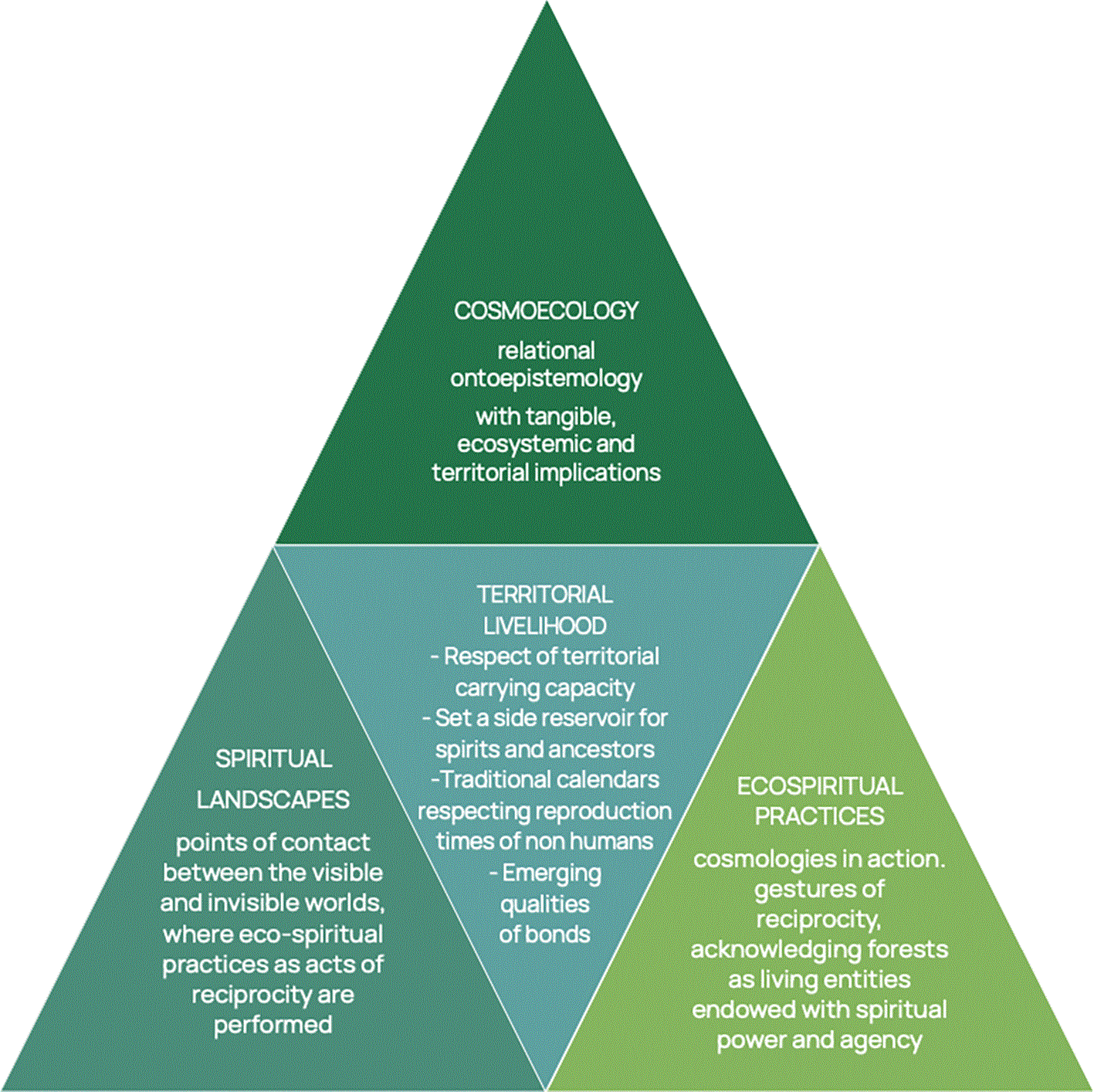
Figure 1. Conceptual map of cosmoecology and its territorial governance implications.
IPLCs’ cosmologies evolve dynamically, and policy must be adaptable enough to accommodate this dynamism. SPIRAL argues that the uniqueness and diversity of cosmoecologies, intertwined with eco-spiritual practices, translate into territorial governance paradigms that are more resilient, polycentric, and adaptive than traditional, top-down planning models. Relational governance is characterized by some key features:
• Respect for territorial carrying capacity through customary law and place-based norms
• Multispecies decision-making grounded in multisensorial observation, moral equilibrium, and reciprocal relations
• Designation of protected reservoirs reserved for spirits, ancestors, and other-than-human presences
• Traditional calendrical systems aligned with non-human reproductive and regenerative cycles
• Emergent qualities arising from enduring relational bonds among humans, non-humans, and landscapes
Cosmologies in action, expressed through traditional authority and customary prescriptions, play a vital role in safeguarding core forest patches from deforestation pressures driven by livelihood needs, including hunger, resource extraction for growing communities, and the commodification of nature through expanding commercial activities. Customary laws of forest management enforced by local traditional authorities are the normative expression of indigeneity as a knowing process embracing the dynamic, evolving nature of TEK in contemporary contexts. Within this paradigm of knowledge production, cosmoecologies in principles valorizes knowledge by honoring and respecting spiritual landscapes’ carry capacity through a moral balance. Eco-spiritual practices emerge from cosmoecologies as embodied, relational acts within Indigenous knowledge systems, far from Western dualisms. Such practices reflect a worldview in which humans and nonhumans are interconnected within a relational web. They represent gestures of reciprocity, acknowledging forests as living entities endowed with spiritual power and agency. Landscapes are cumulative, historical matrices of places and pathways.18 They are always in process, rich with memory, and entangled in complex, evolving relationships with human-nonhuman ecology. Spiritual landscapes conceptualization draws attention to how people imagine spirit forces and energies as emerging from, or connected to, places, and to their attitudes toward the “hidden” or mysterious realms that lie beyond, behind, or immanent within the visible world.1 The notion of spiritual landscapes allows for the continued attribution of spiritual significance to landscapes, even as belief in “spirits” may decline. This framing enables the imagination of continuity amidst change.1 Within such landscapes, sacred forests (SFs) and sacred groves (SGs) for communities are points of contact between the invisible and the human-non-human world and establish a ritualised alliance with spiritual entities that dwell there.45 They function as socio-ecological niches where eco-spiritual practices foster reciprocal interactions between humans, non-human beings, and more-than-humans. These practices reflect complex cosmological and ontological relationships, grounded in a unified purpose that merges the material and the spiritual through sacralization of nature forbidding access and livelihood practices in sacred places.
Ecosystemic awareness2 is the connecting link that can lead to new ameliorative actions, a consciousness that opens to new/updated ‘interpretations of reality’ or worldviews. They can be joined either by practice or by virtue of new cognitive acquisitions, influencing the course of Socio-Ecological Systems (SES = transitions).25 Moving beyond dualistic frameworks, the SES perspective helps to identify practices linked to Traditional and Indigenous Ecological Knowledge (TIEK) and their impacts on socio-ecological dynamics.
The transition trajectories of complex systems, being non-linear, are in any case characterized by a high degree of unpredictability.17,29,36 It can be said that the evolutionary strategy of biological systems has developed human components to reinforce its cybernetic networks with land management and planning, provided, however, that humans do not alter the socio-ecological entanglement.17
Put simply, this framework treats human societies and ecosystems as parts of a single or even double and triple feedback loop: human decisions shape ecological conditions, and those conditions in turn reshape human decisions, rather than humans directing nature from outside it. The technical vocabulary that follows - drawn from Gregory Bateson’s cybernetic theory - formalizes this idea. In the sense closest to African gnoseological traditions, human beings are part of the whole immersed in the connective structure of the Cosmos. As part of an epistemological and cybernetic system, humans can influence everything but are not able to control ‘everything’. As Bateson would say, the connecting structure always remains immanent to the system, which abstracts its properties through the way it grasps differences, relationships and relations between elements.2 This epistemological approach is based on cybernetic systems (especially second-order cybernetics in which the observer is included in the system observed), defined in an extended sense as ‘connecting structure’.2 This connecting structure is ‘the total system that processes information and completes the process by trial and error’, and its procedural mode is based on grasping differences. These differences do not lie in things, but in their relationships (the relationship), and are unrelated to the space-time dimension. In simpler terms, human societies and ecosystems function as interconnected feedback systems. Following Gregory Bateson’s systems view, humans do not control nature from the outside; rather, human decisions and cultural practices are embedded within a larger ecological web of relationships. When ecological systems face severe stress or reach critical thresholds (metastability), traditional practices and cultural taboos often act as stabilizing mechanisms, guiding communities to adaptively adjust their resource use before irreversible ecosystem collapse occurs.17,23,34,44
In practical terms, this means ecological systems are not steered by any single actor, human or otherwise. They reorganize themselves in response to internal and external pressures and can reach tipping points - described technically below as conditions of ‘metastability’ - where their trajectory shifts abruptly rather than gradually.
As Prigogine has shown, when a system exceeds the limit of stability (a critical threshold) by entering a field of instability, it no longer proceeds linearly, but by successive bifurcations.36 Disturbances or fluctuations become important and force the system to ‘choose’ one direction out of the two (or three) possible in those conditions of metastability.17
The ecological functions of spiritual practices often stem from reasons beyond explicit conservation8,20 yet they encourage populations to preserve forests, perceiving them as homes for supernatural or “more-than-human” entities. The impacts on ecosystems are tangible, evidenced by taboos and prohibitions governing resource use. These taboos, a normative dimension linked to cosmoecologies, guide ecospiritual practices and influence the dynamics of socio-ecological systems. The “consciousness” generated by intuition residing in the relationship between humans, non-humans, and “more-than-humans” (including forests) leads to an actualization of the worldviews that shape people livelihood and ecospiritual practices into a unique cosmoecology. This fosters adaptive improvements, strengthening the resilience and resistance of landscapes and populations. Spiritual authorities play a decisive role in this updating process. Therefore, a critical intersectional analysis of power dynamics within the spiritual dimension of society is essential to avoid idealization. A critical political ecology perspective highlights that customary laws and spiritual authorities are often shaped by internal power dynamics, gendered divisions of labor, generational hierarchies, and mechanisms of social exclusion or contestation over resource access.
4. Conclusion: Cosmoecology as a relational ontoepistemology for the anthropocene
In conclusion, cosmoecology is a polysemous neologism whose strength lies in its diverse intellectual lineages. It redefines cosmoecology as a relational ontoepistemology, one that affirms the agency of cosmic and ecological forces as found in the human body’s connection with Earth and the Cosmos. Attuning human minds and bodies to these forces through ecospiritual practices is a necessary step toward the unification of mind and nature and, consequently, sustainable world-making practices. This framework bridges the macro scale of worldviews with the micro scale of embodied, lived realities. By engaging with Indigeneity as a process rather than a fixed identity and recognizing ecospiritual practices as cosmologies in action, the new trajectory offers new perspectives for learning sustainability from a plurality of worldviews. The SPIRAL project’s empirical findings demonstrate how these relational ontologies, which view humans as part of a cybernetic connecting structure, contribute to the adaptive resilience of socio-ecological systems, making it more equitable among species. The implications of such worldviews for territorial management become evident in the way spirituality shapes practices: groves are respected, and forest reserves protected solely through the enduring power of beliefs, taboos and myths. Despite significant progress, several critical gaps persist in the literature. The current literature often idealizes Indigenous and spiritual practices; therefore, a more nuanced analysis of power dynamics within traditional authority is essential to avoid romanticizing these systems. Furthermore, significant methodological challenges remain in assessing the ecological impacts of these practices and in converting qualitative, place-based knowledge into quantitative data suitable for informing global conservation strategies. New research lines should explore how cosmoecologies can be translated into effective systems of relational governance and policymaking, assessed through alternative metrics. This includes the use of biocultural indicators within participatory, multidimensional evaluation processes that measure their effectiveness over time and across different temporal depths.
A central implication of a cosmoecological turn is the establishment of equitable relations among humans, non-humans, and more-than-humans. This means moving beyond anthropocentric hierarchies to recognize the inherent value and agency of all beings, fostering a system where justice extends to the entire Earth community and the Cosmos.









