Introduction
Nature-based Solutions (NbS) have emerged as a promising approach to address environmental challenges by combining ecosystem restoration with risk reduction and climate adaptation objectives (European Commission, 2021; Raymond et al., 2017). In landslide-prone environments, NbS can contribute to slope stabilization, erosion control, runoff regulation, and habitat recovery through the integration of bioengineering techniques and ecological restoration measures. Recent studies have highlighted the importance of selecting NbS according to ecosystem characteristics, geomorphological conditions, and restoration objectives. Frameworks integrating ecological and engineering criteria demonstrate that combinations of bioengineering structures, runoff management measures, and revegetation techniques can support ecosystem recovery while simultaneously addressing hydrogeomorphological risks (Arce-Mojica et al., 2019; Sarwar et al., 2025).
Beyond the direct loss of soil and vegetation, landslides may create long-lasting ecological disturbances by disrupting native plant communities and facilitating the establishment of IAS. This challenge is particularly relevant in oceanic islands, where many endemic species occupy restricted environmental niches and are vulnerable to habitat degradation and fragmentation. In the Azores, future climate projections suggest substantial reductions in suitable climatic conditions for many native and endemic species, highlighting the importance of habitat restoration and ecological connectivity for long-term biodiversity conservation (Ferreira et al., 2016).
The natural vegetation of the Azores is organized along distinct elevational gradients, forming characteristic vegetation belts associated with climatic and environmental conditions. High-elevation habitats are typically dominated by native communities composed of species such as Calluna vulgaris, Erica azorica, Juniperus brevifolia, and bryophyte-rich assemblages, which represent important conservation targets due to their ecological uniqueness and role in supporting endemic biodiversity (Elias et al., 2016). Consequently, restoration initiatives in the Azores aim to recover native habitats and their characteristic vegetation, with particular emphasis on reversing habitat degradation and invasive species impacts.
Within the Pico da Vara/Ribeira do Guilherme Special Protection Area (PV/RG SPA), landslides represent an important source of habitat disturbance and may facilitate the spread of invasive species into priority habitats. Restoration actions implemented under the LIFE+ Lands of Priolo project therefore combined bioengineering measures and native species revegetation to stabilize landslide scars and promote ecosystem recovery. Restoration of degraded habitats may complement protected area management by increasing the availability and connectivity of native habitats within conservation landscapes, where biodiversity representation can be improved through spatially targeted conservation actions (Vergilio et al., 2016).
This study evaluates ten years of vegetation recovery following the implementation of NbS in landslide scars within PV/RG SPA on São Miguel Island (Azores). Specifically, we assessed (i) the short-term performance of hydroseeding through germination and establishment success, (ii) long-term vegetation composition, biodiversity patterns, and differences between restored and reference slopes, and (iii) the relative contribution of active restoration measures and natural colonization processes to ecosystem recovery.
Methods
Nature-based restoration interventions
Five landslide scars (D1–D5) located within PV/RG SPA were restored in 2015 under the LIFE+ Lands of Priolo project (Figure 1). Three landslides (D1–D3) were classified as shallow failures, whereas D4 and D5 involved deeper soil displacement and required slope regrading using heavy machinery before restoration interventions were implemented.
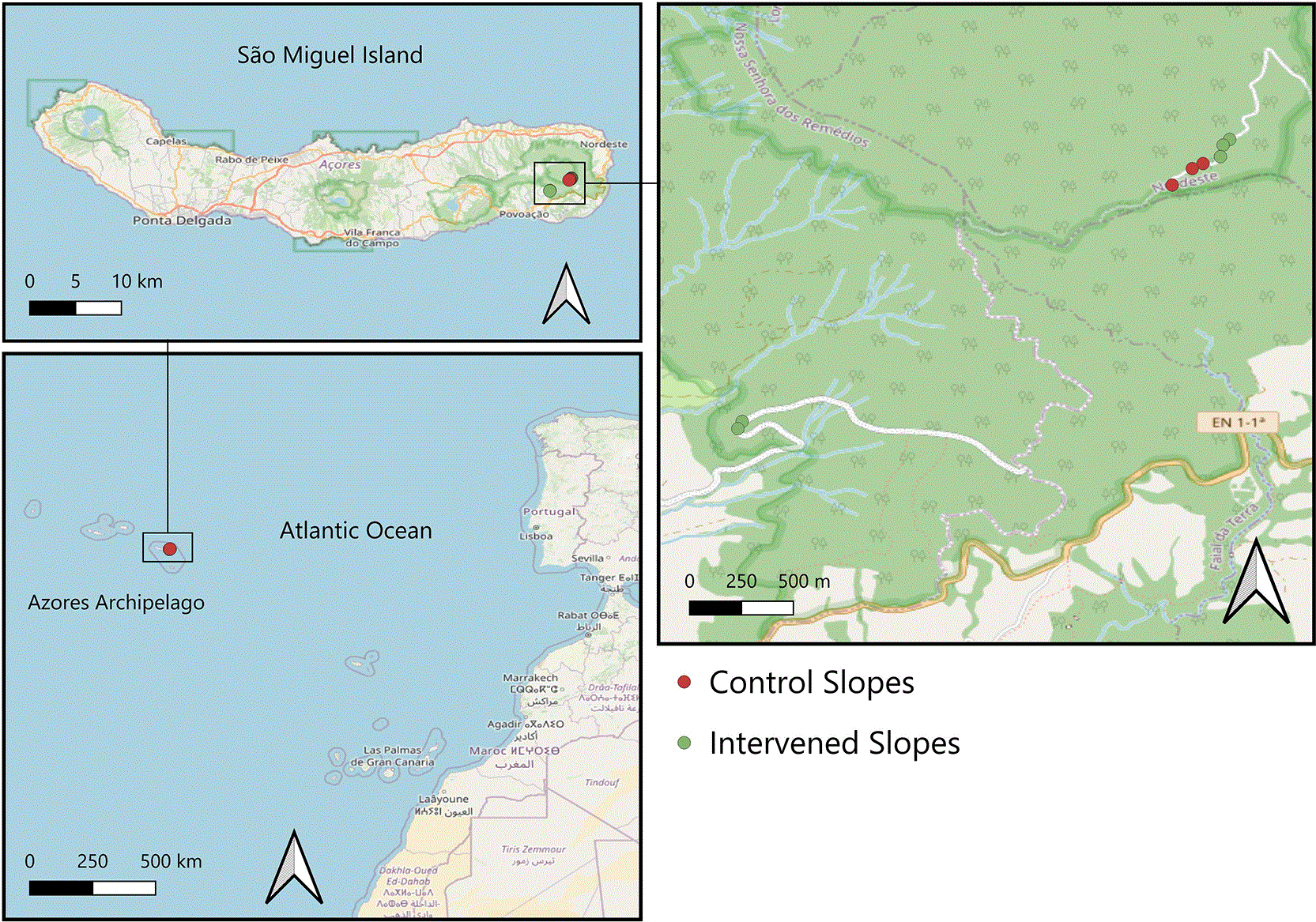
Figure 1. Location of the studied slopes, in the Pico da Vara/Ribeira do Guilherme SPA (São Miguel, Azores, Portugal).
Restoration planning included topographic surveys, slope characterization, and the preparation of planting and engineering designs. Initial works focused on the removal of IAS using mechanical and chemical control methods. Subsequently, a combination of bioengineering techniques was implemented, including live crib walls, living grids, palisades, erosion-control barriers, and bioswales constructed using natural materials such as logs, stones, and wooden stakes (Figure 2). These measures were designed to facilitate vegetation establishment, reduce surface runoff concentration, and support ecological restoration processes.
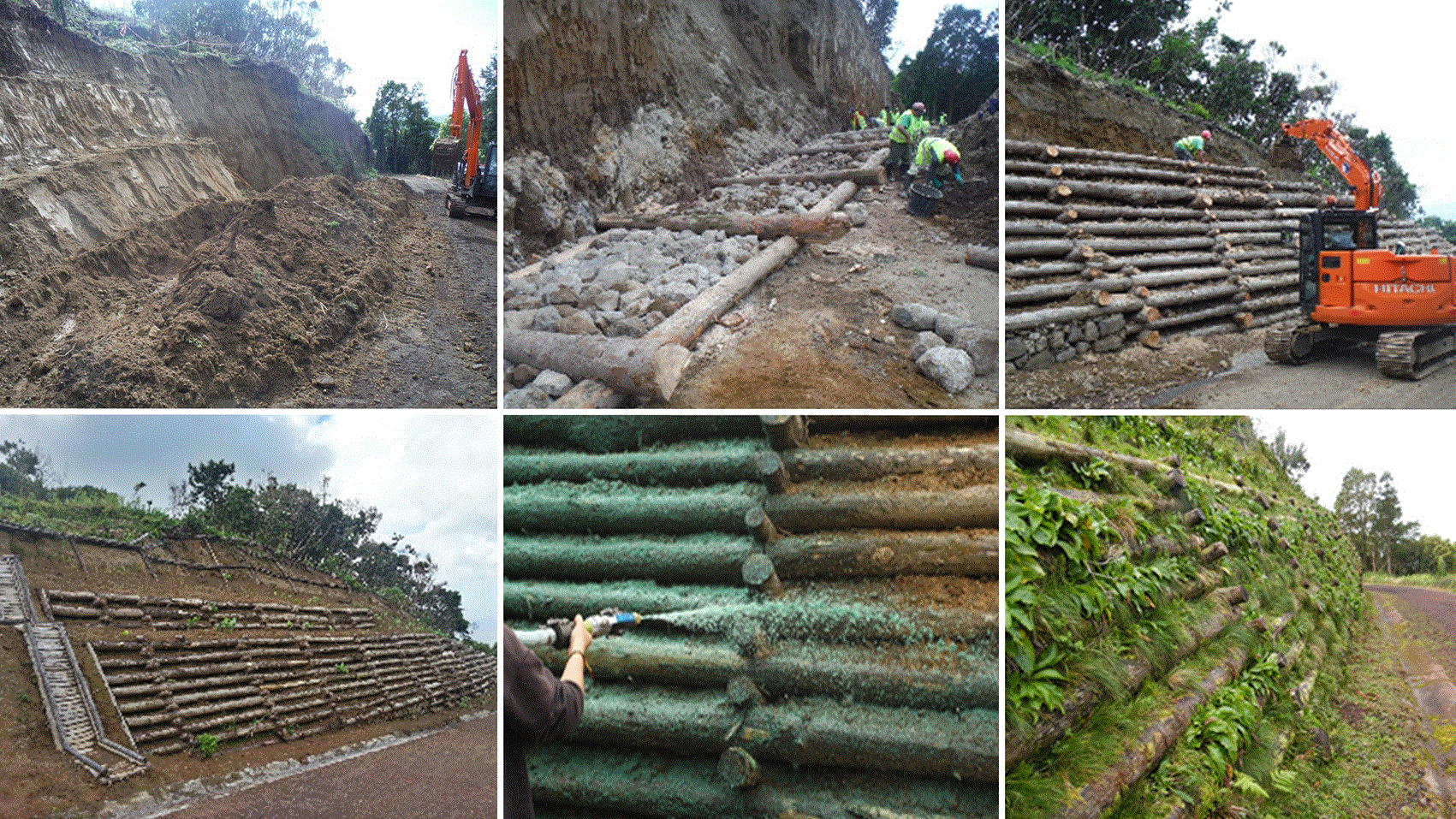
Figure 2. Slope reprofiling using heavy machinery, followed by the installation of NBS (including live crib walls and bioswales, shown here) constructed with natural materials and iron rods, and subsequent hydroseeding with native species.
Hydroseeding was applied using locally collected native species from the PV/RG SPA. The seed mixture consisted of Calluna vulgaris and Erica azorica (1 kg per 100 m2 each), and Festuca francoi, Leontodon rigens, Luzula purpureosplendens, and Hypericum foliosum (0.25 kg per 100 m2 each). Following implementation, restoration areas were maintained quarterly during the first three years to control IAS and support vegetation establishment.
Hydroseeding assessment
Hydroseeding performance was evaluated one year after implementation using six randomly positioned 1 × 1 m plots distributed across the restored landslides. For each hydroseeded species, the number of established individuals was recorded and compared with the estimated number of seeds applied per square meter. Germination rates were calculated as the proportion of established individuals relative to the estimated seed density.
Vegetation monitoring
To evaluate long-term vegetation recovery, 24 plots (1 × 1 m) were surveyed in 2024. Fifteen plots were located within restored landslides (three plots per restored landslide), while nine plots were established on three non-restored reference slopes (C1–C3), representing a gradient of vegetation conditions ranging from mixed native–invasive communities to predominantly native vegetation. Reference slopes were selected within the same protected area and under comparable environmental conditions, including elevation, climate, and surrounding vegetation, to provide ecological benchmarks for restoration assessment (Morton, 2009).
Vegetation cover in percentage was visually estimated for all vascular plant and bryophyte species within each plot. Species were subsequently classified as native or exotic according to regional floristic references. For each plot, species richness, total vegetation cover, native species richness, exotic species richness, native cover, exotic cover, and the proportional contribution of native and exotic vegetation were calculated.
Statistical analyses
Differences between restored and reference plots were assessed at the plot level (n = 24). Because most variables did not meet normality assumptions, comparisons of native and exotic richness and cover metrics were performed using Mann–Whitney U tests. Effect sizes were calculated using the rank-biserial correlation coefficient (r) and classified following conventional thresholds.
Plant community composition was analysed using Bray–Curtis dissimilarities. Non-metric multidimensional scaling (NMDS) was used to visualize differences among plots. Permutational multivariate analysis of variance (PERMANOVA; 9,999 permutations) was applied to test for differences in species composition between restored and reference plots, while homogeneity of multivariate dispersion was evaluated using PERMDISP. Canonical Analysis of Principal Coordinates (CAP) was used to further assess group separation.
Species contributing most strongly to compositional differences were identified using Similarity Percentage Analysis (SIMPER). Indicator Species Analysis (IndVal) was performed to identify species significantly associated with restored or reference conditions. All statistical analyses were conducted in R version 2026.07.1 using the packages vegan, indicspecies, rstatix, and tidyverse.
Results
Hydroseeding performance
All species included in the hydroseeding mixture germinated during the first year following restoration. Germination rates varied substantially among species (Figure 3), with Leontodon rigens (0.037 plants per seed applied), Festuca francoi (0.017), and Luzula purpureosplendens (0.002) showing the highest establishment success. In contrast, Calluna vulgaris, Hypericum foliosum, and Festuca petraceae exhibited very low germination rates (<0.001). Ten years after restoration, hydroseeded species remained important components of the vegetation, particularly L. rigens (mean abundance = 187 individuals m−2) and F. francoi (63.5 individuals m−2), although several abundant native species, including Sphagnum sp. and Woodwardia radicans, established through natural colonization.
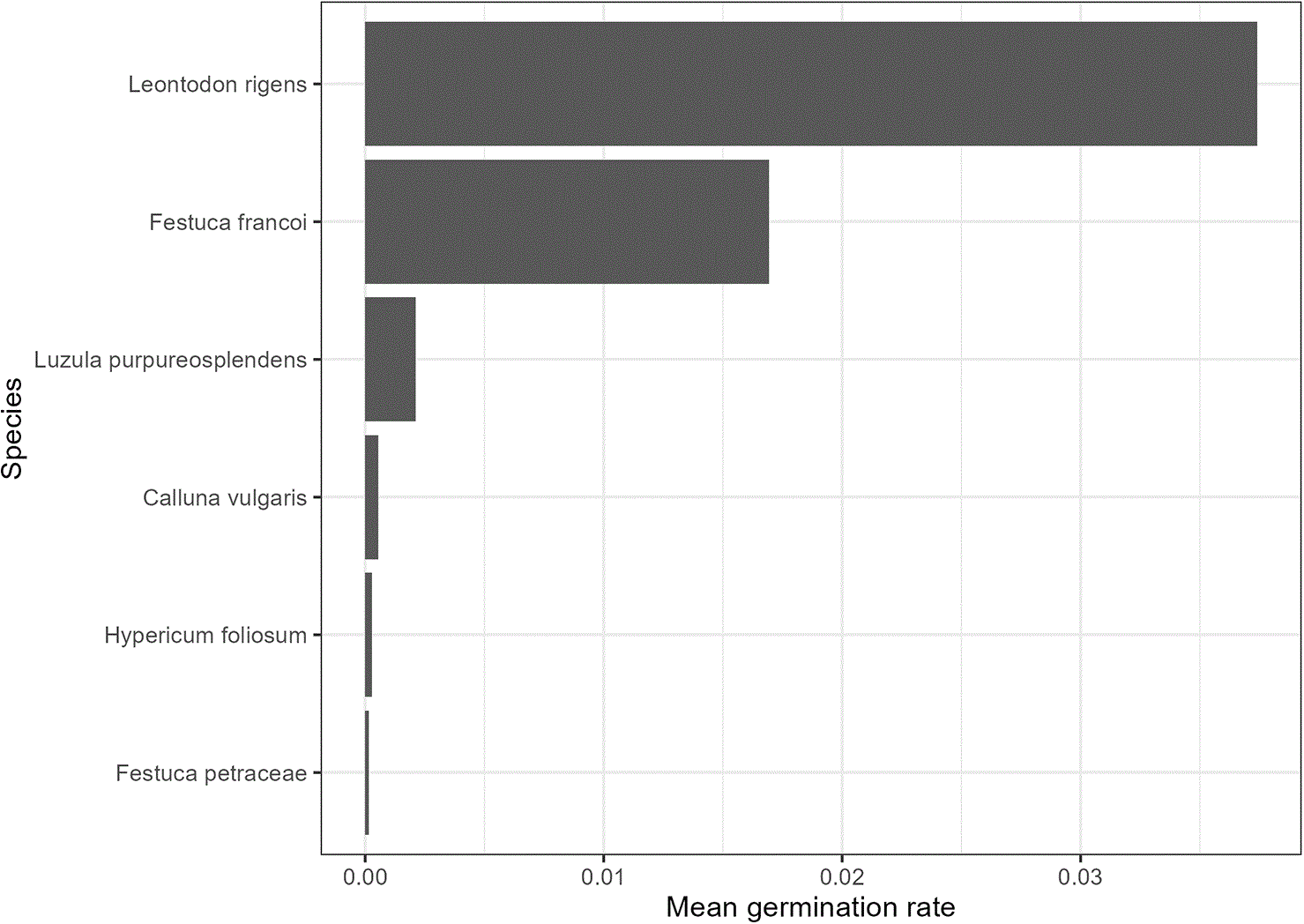
Figure 3. Germination rates of native species used in the hydroseeding mixture one year after implementation.
Native and exotic vegetation
Restored plots were characterised by a significantly lower richness of exotic species than control plots (Mann–Whitney U = 117, p = 0.003, r = 0.62). Native species richness did not differ significantly between treatments (U = 70, p = 0.90, r = 0.03). However, native vegetation cover was significantly higher in restored plots (U = 27.5, p = 0.018, r = 0.49), while exotic vegetation cover was significantly lower (U = 108.5, p = 0.015, r = 0.50). Similarly, the proportional contribution of native species was significantly greater in restored plots (p = 0.015), whereas the proportion of exotic vegetation was significantly reduced.
Restored plots exhibited high native vegetation cover (mean = 87.9 ± 15.4%). The most abundant native taxa were Sphagnum sp. (20.0%), Calluna vulgaris (19.6%), Woodwardia radicans (10.9%), and Festuca francoi (10.2%). Among these, only C. vulgaris and F. francoi were included in the hydroseeding mixture. The most abundant exotic taxa were Polygonum capitatum (3.2%), Poa sp. (2.9%), Dicksonia antarctica (1.6%), and Erigeron sp. (1.2%). Figures 4 and 5 illustrate the percentage cover of native and exotic species recorded in restored and control plots ten years after restoration.
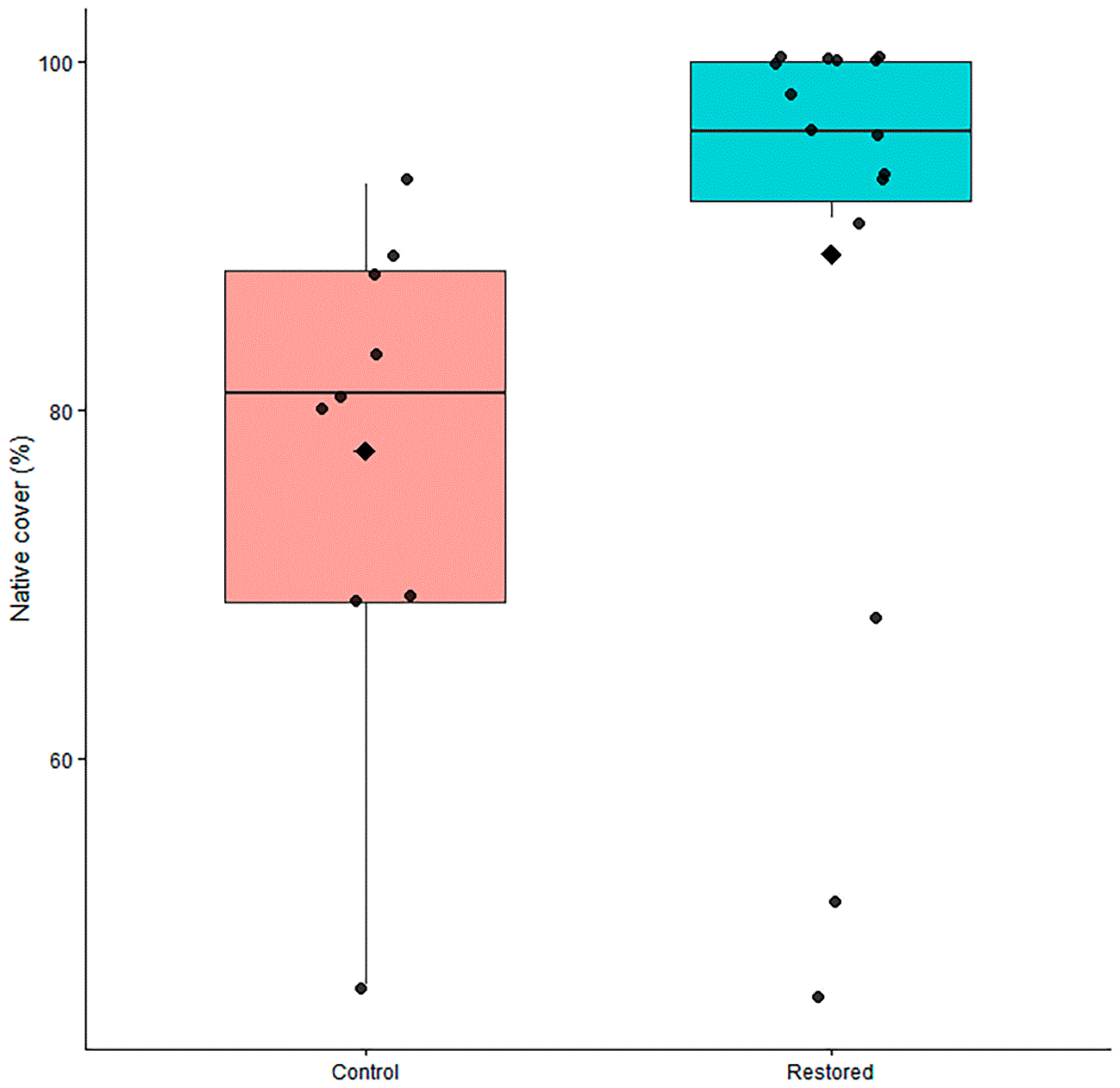
Figure 4. Percentage cover of native species in restored (n = 15) and control plots (n = 9) ten years after restoration. Points represent individual 1 × 1 m plots, boxplots show the median and interquartile range, and whiskers indicate the range of observed values.
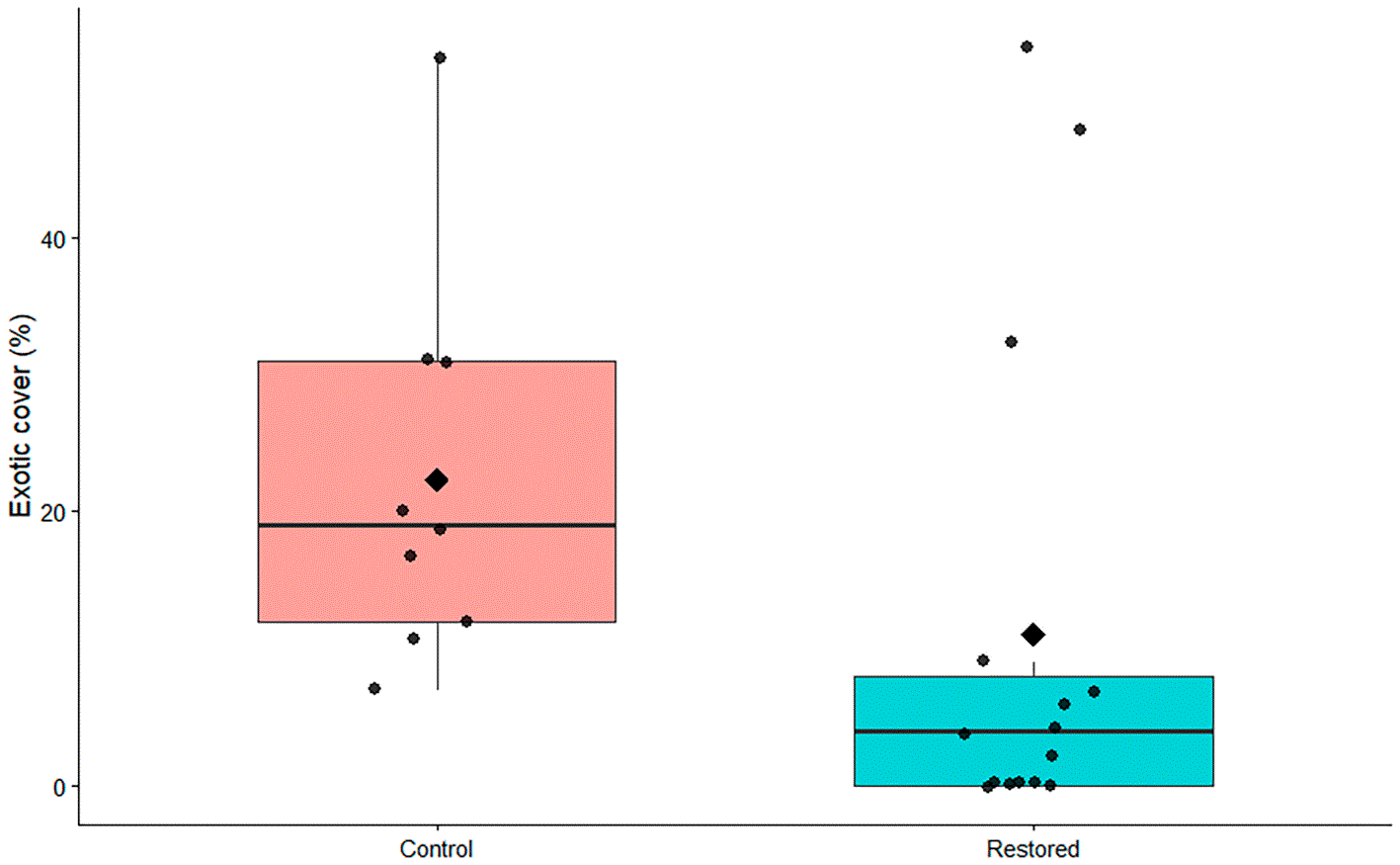
Figure 5. Percentage cover of exotic species in restored (n = 15) and control plots (n = 9) ten years after restoration. Points represent individual 1 × 1 m plots, boxplots show the median and interquartile range, and whiskers indicate the range of observed values.
Community composition analyses
Non-metric multidimensional scaling (NMDS) revealed partial separation between restored and control plots (stress = 0.175) (Figure 6). PERMANOVA confirmed significant differences in plant community composition between treatments (F = 2.75, R2 = 0.11, p = 0.012). Multivariate dispersion did not differ significantly between groups (PERMDISP, p = 0.517), indicating that the observed compositional differences were not driven by unequal within-group variability. Canonical Analysis of Principal Coordinates (CAP) further supported the distinction between restored and control communities (p = 0.014) (Figure 7).
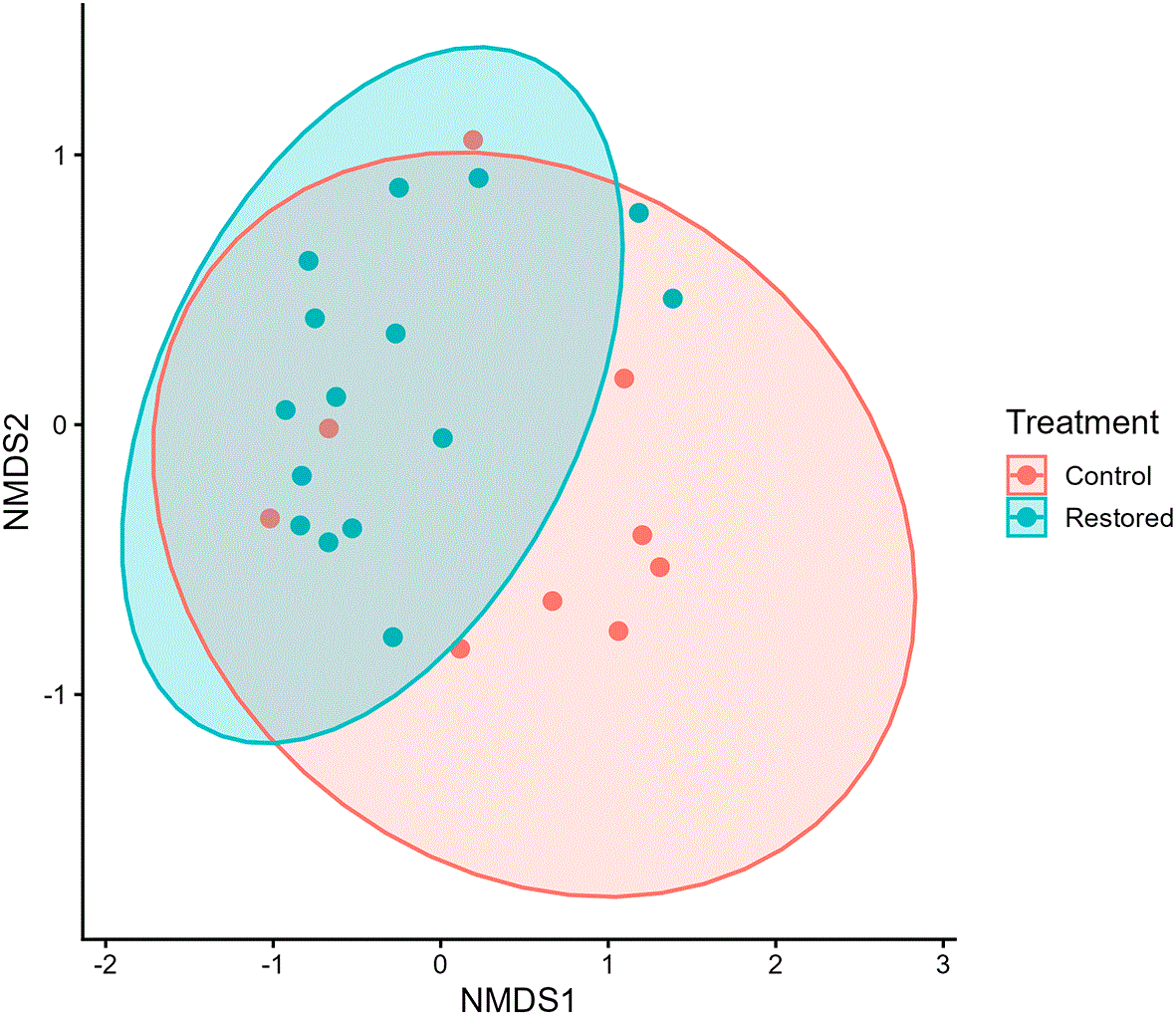
Figure 6. Non-metric multidimensional scaling (NMDS) ordination of plant community composition in restored and control plots based on Bray–Curtis dissimilarity. Each point represents a 1 × 1 m vegetation plot.
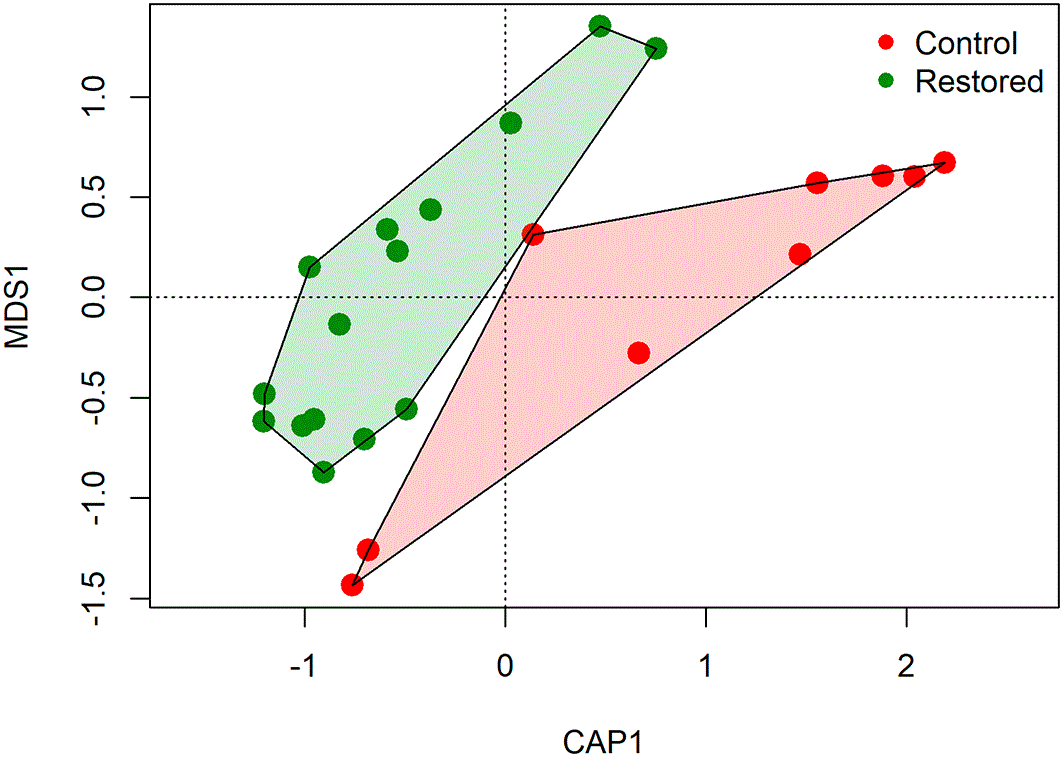
Figure 7. Canonical Analysis of Principal Coordinates (CAP) of plant community composition in restored and control plots based on Bray–Curtis dissimilarity. Each point represents a 1 × 1 m vegetation plot.
Discussion
Ten years after restoration, all restored landslide scars remained fully vegetated, and no additional landslide events were recorded within the monitored sites. Although slope stability and erosion rates were not directly quantified, the persistence of vegetation cover and the continued functionality of the bioengineering structures indicate successful long-term establishment of the restoration interventions. Restored plots were characterized by significantly higher native vegetation cover and significantly lower exotic species richness and cover than control plots, suggesting that the implemented NbS contributed to the recovery of native plant communities following landslide disturbance. These findings are consistent with the role of NbS in supporting ecosystem recovery and biodiversity conservation after environmental disturbances (Ommer et al., 2022).
Enhancing biodiversity is a recognized strategy to address climate resilience and societal challenges through NbS (Raymond et al., 2017). In the PV/RG SPA, IAS represent one of the main threats to native habitats, particularly after landslides, which create open areas susceptible to colonization by opportunistic species (Costa et al., 2013). The significantly lower richness and cover of exotic species observed in restored plots indicate that restoration interventions may help reduce invasion pressure while promoting the recovery of native vegetation. Such outcomes are particularly relevant for the conservation of the endemic Azores Bullfinch (Pyrrhula murina), whose population (~1,000 individuals) remains strongly influenced by habitat quality and IAS impacts (Costa et al., 2023; Heredia et al., 1996; Ramos, 1996). Species such as Woodwardia radicans are also ecologically relevant because fern fronds constitute an important food resource for the Azores Bullfinch (Ramos, 1994). By facilitating the re-establishment of native vegetation, restoration measures may contribute to improved habitat quality and ecological connectivity, supporting conservation objectives under both the Natura 2000 framework and the EU Biodiversity Strategy for 2030 (European Commission, 2021; Eggermont et al., 2015).
Monitoring and evaluation are crucial for assessing NbS effectiveness (Sarabi et al., 2019; Kumar et al., 2021a). The hydroseeding assessment demonstrated that although all seeded species germinated during the first year, establishment success varied substantially among species. Leontodon rigens and Festuca francoi showed the highest germination and long-term persistence, whereas several other hydroseeded species remained poorly represented after ten years. At the same time, species not included in the hydroseeding mixture, particularly Woodwardia radicans and Sphagnum sp., became dominant components of the restored vegetation. These findings suggest that long-term restoration outcomes resulted from the combined influence of active restoration measures and natural ecological succession rather than hydroseeding alone. Similar patterns have been reported in restoration studies where natural colonization processes play an important role in shaping vegetation trajectories after disturbance. The significant contribution of Sphagnum sp., Calluna vulgaris, Luzula purpureosplendens, Woodwardia radicans, and Festuca francoi to community differentiation further supports the importance of native species establishment during ecosystem recovery.
Multivariate analyses revealed significant differences in plant community composition between restored and control plots. Both PERMANOVA and CAP indicated clear compositional separation between treatments, while SIMPER identified a small group of native species as the principal contributors to these differences. Indicator Species Analysis identified five significant indicator species associated with control plots, including several invasive or non-target taxa, whereas no indicator species were associated with restored plots. Together, these results suggest that restoration promoted the development of plant communities that differ from those observed in non-restored slopes and are characterized by a stronger dominance of native vegetation.
Ecological indices indicated that native species richness did not differ significantly between restored and control plots. Nevertheless, restored plots supported significantly lower exotic species richness and cover and a higher dominance of native vegetation. Given that invasive alien species are among the main drivers of habitat degradation in the Pico da Vara/Ribeira do Guilherme SPA (Costa et al., 2013), these results suggest that restoration measures successfully promoted the recovery of native habitat conditions while reducing opportunities for invasion following landslide disturbance. While hydroseeding facilitates rapid vegetation establishment and surface protection, woody native species may provide additional long-term benefits for slope stabilization through deeper root penetration and greater soil reinforcement (Baltasar, 1988). The potential use of Azorean native trees in soil bioengineering techniques, such as live staking, remains largely unexplored and deserves further investigation. Evaluating the mechanical and ecological performance of these species could improve the effectiveness of future Nature-based restoration interventions in landslide-prone environments.
There remains a lack of widely accepted and standardized approaches for monitoring NbS performance (Kumar et al., 2021a, 2021b). Evaluating project success therefore depends on selecting indicators that are consistent with restoration objectives. In protected areas, biodiversity indicators provide valuable information on habitat recovery and vegetation development. However, a comprehensive assessment of NbS should also incorporate ecosystem services such as runoff regulation, water retention, erosion reduction, and climate resilience to fully capture intervention performance and benefits (Sarabi et al., 2019; Kumar et al., 2021a).
This study has several limitations that should be acknowledged. First, quantitative pre-restoration vegetation data were not available, preventing direct before–after comparisons and limiting the assessment of ecological trajectories through time. Second, the study evaluated a relatively small number of restored and reference slopes, which may limit broader generalization of the findings. Third, the study focused primarily on vegetation recovery and community composition, while ecosystem services such as runoff regulation, sediment retention, and geotechnical slope stability were not directly measured. Future studies integrating ecological, hydrological, and geomorphological indicators would provide a more comprehensive evaluation of NbS performance in landslide restoration contexts.
Despite these limitations, the ten-year monitoring programme provides valuable evidence regarding long-term vegetation recovery following NbS implementation in an island protected area. The results demonstrate that restoration interventions promoted native vegetation dominance, reduced exotic species representation, and facilitated the development of distinct plant communities. These findings contribute to the growing evidence base supporting NbS as effective tools for ecological restoration in disturbed landscapes and provide practical guidance for future restoration initiatives in the Azores and other island ecosystems. Restoration of degraded habitats may complement protected area management by increasing the availability and connectivity of native habitats within conservation landscapes. In island systems such as the Azores, biodiversity representation can be improved through spatially targeted conservation actions that enhance habitat quality and reduce ecosystem degradation (Vergilio et al., 2016).
Ethics and consent
Ethical approval and consent were not required.
Use of generative AI
During the preparation of this manuscript, the authors used ChatGPT (OpenAI, GPT-5.5) to assist with language editing, improving clarity and readability, restructuring sections of the manuscript, refining the presentation of the methods and discussion, and preparing responses to peer-review comments. The tool was used solely as a writing and editorial assistant. It was not used to generate data, perform statistical analyses, interpret results, or make scientific decisions. All scientific content, analyses, interpretations, and conclusions were developed, verified, and approved by the authors, who take full responsibility for the final content of the manuscript.
Acknowledgments
The rehabilitation of the slopes using Nature-Based Solutions (NBS) in the Pico da Vara/Ribeira do Guilherme SPA was carried out under the LIFE+ Lands of Priolo project (LIFE12 NAT/PT/000527), supported by the LIFE Programme of the European Commission and the Government of the Azores.
References
- Arce-Mojica TJ, Nehren U, Sudmeier-Rieux K, et al.:
Nature-based solutions (NbS) for reducing the risk of shallow landslides: Where do we stand?
Int J Disaster Risk Reduct.
2019; 41: 101293. Publisher Full Text
- Baltasar CFA:
Contribuição para o estudo e caracterização geomorfológica de taludes e escarpas.Universidade de Évora;
1988;
311 pp. MSc Dissertation.
- Costa H, Bettencourt MJ, Silva CMN, et al.:
Invasive Alien Plants in the Azorean Protected Areas: Invasion Status and Mitigation Actions. Foxcroft LC, Pyšek P, Richardson DM, et al., editors.
Plant Invasions in Protected Areas: Patterns, Problems and Challenges
.Dordrecht, The Netherlands:Springer;
2013. 9789400777507. Publisher Full Text
- Costa T:
Vegetation Hydroseeding and Monitoring Dataset. [Data set].
International Symposium FloraMac 2025: Program & Abstracts. Zenodo;
2026;
p.10. Publisher Full Text
- Costa TdMM, Gil A, Timóteo S, et al.:
How Many Azores Bullfinches (Pyrrhula murina) Are There in the World? Case Study of a Threatened Species.
Diversity.
2023; 15(5): 685. Publisher Full Text
- Eggermont H, Balian E, A JMN, et al.:
Nature-based solutions: New influence for environmental management and research in Europe.
Gaia.
2015; 24(4): 243–248. Publisher Full Text
- Elias RB, Gil A, Silva L, et al.:
Natural zonal vegetation of the Azores Islands: Characterization and potential distribution.
Phytocoenologia.
2016; 46(2): 107–123. Publisher Full Text
- European Commission:
Evaluating the Impact of Nature-based Solutions: A Handbook for Practitioners
;2021.Publisher Full Text
- Ferreira MT, Cardoso P, Borges PA, et al.:
Effects of climate change on the distribution of indigenous species in oceanic islands (Azores).
Climatic Change.
2016; 138: 603–615. Publisher Full Text
- Heredia B, Rose L, Painter M:
Globally Threatened Birds in Europe: Action Plans.
Strasbourg, France:
Council of Europe;1996; 9789287130662.
- Kumar P, Debele SE, Sahani J, et al.:
Nature-based solutions efficiency evaluation against natural hazards: modelling methods, advantages and limitations.
Sci Total Environ.
2021a; 784: 147058. PubMed Abstract
| Publisher Full Text
| Free Full Text
- Kumar P, Debele SE, Sahani J, et al.:
An overview of monitoring methods for assessing the performance of nature-based solutions against natural hazards.
Earth Sci Rev.
2021b; 217: 103603. Publisher Full Text
- Morton MH:
Applicability of Impact Evaluation to Cohesion Policy, Report Working Paper.2009. Reference Source
- Ommer J, Bucchignani E, Leo LS, et al.:
Quantifying co-benefits and disbenefits of Nature-based Solutions targeting Disaster Risk Reduction.
Int J Disaster Risk Reduct.
2022; 75: 102966. Publisher Full Text
- Ramos JA:
Fern Frond Feeding by the Azores Bullfinch.
J Avian Biol.
1994; 25: 344–347. Publisher Full Text
- Ramos JA:
Introduction of Exotic Tree Species as a Threat to the Azores Bullfinch Population.
J Appl Ecol.
1996; 33: 710. Publisher Full Text
- Raymond CM, Berry P, Breil M, et al.:
A framework for assessing and implementing the co-benefits of nature-based solutions in urban areas.
Environ Sci Policy.
2017; 77: 15–24. Publisher Full Text
- Sarabi E, Han S, Romme Q, et al.:
Key enablers of and barriers to the uptake and implementation of nature-based solutions in urban settings: a review.
Resources.
2019; 8(3): 121. Publisher Full Text
- Sarwar AN, Caramiello C, Pugliese F, et al.:
A framework for selecting Nature-based Solutions: applications and challenges at the catchment scale.
J Environ Manage.
2025; 394: 127220. PubMed Abstract
| Publisher Full Text
- Vergílio M, Fonseca C, Calado H, et al.:
Assessing the efficiency of protected areas to represent biodiversity: a small island case study.
Environ Conserv.
2016; 43(4): 337–349. Publisher Full Text







