Background
Autobiographical memory refers to the ability to remember events and experiences from personal past. Research on autobiographical memory retrieval has traditionally focused on voluntary remembering, in which individuals intentionally attempt to recall a past event in response to a cue or task demand. One of the most widely used approaches for studying autobiographical retrieval in experimental psychology is the word-cue method (Crovitz & Schiffman, 1974). In this paradigm, participants are presented with verbal cues and asked to retrieve a personal memory associated with each cue.
Previous research has shown that autobiographical memories differ substantially in the way they are retrieved (Uzer et al., 2012; Barzykowski & Staugaard, 2016). Some memories emerge slowly and appear to involve strategic and effortful search processes, whereas others come to mind rapidly and with little subjective effort. These observations correspond to theoretical distinctions between generative and direct retrieval processes proposed in contemporary models of autobiographical memory retrieval (Conway & Pleydell-Pearce, 2000).
Although considerable attention has been devoted to retrieval intentionality, accessibility, retrieval effort, and phenomenological characteristics of autobiographical remembering (Moulin et al., 2023), considerably less attention has been given to feelings of familiarity accompanying autobiographical retrieval. In everyday remembering, individuals may experience varying degrees of familiarity toward retrieved content, cues, or partially accessed memory representations. Such experiences may influence the subjective sense of successful retrieval, perceived accessibility of a memory, confidence in recollection, and classification of retrieval experiences. However, despite their theoretical relevance, there is currently a lack of standardized procedures specifically designed to investigate familiarity-related experiences during autobiographical retrieval under controlled experimental conditions.
The present method addresses this gap by providing a structured and standardized online and laboratory procedure for investigating feelings of familiarity and memory content during autobiographical retrieval using a word-cue paradigm. The procedure builds on the well-established word-cue method while extending it into a ready-to-use framework that can be directly implemented, modified, and adapted across research settings. In addition to autobiographical retrieval itself, the procedure incorporates measures related to retrieval phenomenology, including familiarity ratings, retrieval characteristics, and classifications of subjective retrieval experience inspired by the Remember-Know-No memory paradigm (e.g. Dewhusrt, Holmes, Brandt & Dean, 2006).
To enhance reproducibility and accessibility, the full protocol is provided in a format that can be directly implemented within widely used online experimental platforms. This enables researchers to administer the procedure in laboratory, hybrid, or remote settings without constructing the paradigm from scratch. The structure of the procedure also allows flexible adaptation of cue materials, retrieval instructions, phenomenological questions, and timing parameters while preserving the overall logic of the paradigm.
Researchers interested in autobiographical memory retrieval can directly upload the provided files into supported platforms (e.g., Qualtrics or Gorilla). The procedure is currently available in English and French and can be readily translated into additional languages. By making the protocol and its implementation details explicitly available, the present method provides a practical and adaptable resource for studying autobiographical memory retrieval across diverse experimental contexts.
Method details
Overview and initialization of the procedure. The autobiographical memory retrieval procedure is provided in English and French as supplementary material (file: 1_Autobiographical Memory Procedure.qsf
). The file can be directly imported into Qualtrics (see instructions: https://www.qualtrics.com/support/survey-platform/survey-module/survey-tools/import-and-export-surveys/) or into Gorilla (see instructions: https://support.gorilla.sc/support/tools/questionnaire-builder-2/qsf-importer#importingyourqualtricssurvey). In addition, a supplementary file is provided to facilitate familiarization with the procedure prior to uploading it into the selected platform. A printed PDF version of the English version of the survey is included (2_Qualtrics Survey Software_Printed_Version
). The present implementation includes the complete set of cue words, phenomenological questions, retrieval instructions, and rating scales used in the procedure. This allows researchers to directly reproduce, implement, modify, and adapt the method across different research settings and experimental contexts.
General implementation and participant setup. As presented in
Figure 1, the autobiographical memory retrieval procedure consists of several sequential components: (1) Participant Information and Consent block, (2) Participant Details block, (3) Demographics block, (4) General Instructions block, (5) Specific Instructions block, (6) Control and Compliance Check block, (7) Procedure Launch block, and (8) the main autobiographical retrieval procedure implemented through randomized cue presentation. Each component is briefly described below.
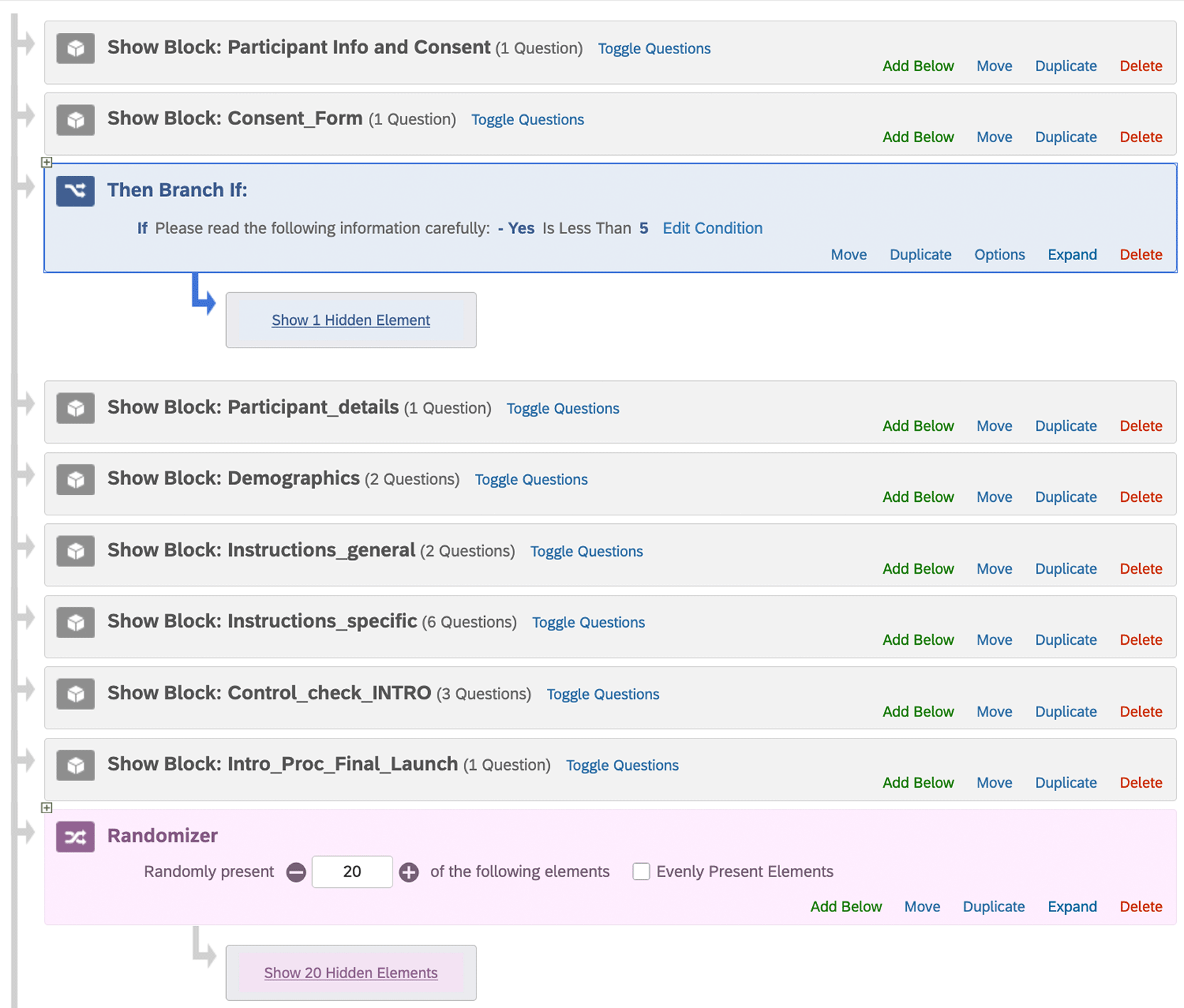
Figure 1. General overview of the flow of autobiographical memory retrieval procedure.
(1) Participant Information and Consent block provides participants with detailed information regarding the purpose, structure, and requirements of the study prior to participation. Specifically, participants are informed that the study investigates autobiographical memory retrieval, including how memories from the personal past are recalled and situations in which retrieval may be difficult or unsuccessful. The information sheet also explains the general structure of the task, in which participants respond to word cues by retrieving autobiographical memories or reporting feelings associated with memory retrieval attempts. Participants are informed that participation is entirely voluntary and that they may discontinue the study at any point without providing a reason by closing the browser window. The information sheet additionally describes the expected duration of the study, inclusion criteria, potential risks associated with recalling autobiographical experiences, confidentiality and anonymization procedures, data storage procedures, and researcher contact details. Ethical approval information is also provided.
Following the information sheet, participants complete a written consent form confirming that they understand the study conditions and agree to participate. The consent procedure is implemented using a branching condition within the survey flow. Only participants who provide the required consent five responses are allowed to continue to the remaining parts of the procedure, whereas participants who do not consent are automatically excluded from further participation.
(2) Participant details block is used to generate a unique, non-identifiable participant code that enables data management while preserving participant anonymity. Participants are instructed to create a 9-character code based on predefined personal information components that are unlikely to directly identify them individually. Specifically, the code consists of: (1) the first three letters of the city or town where the participant was born, (2) the last three digits of their cell phone number, and (3) the last three letters of their birth month. Detailed instructions and examples are provided within the survey to ensure standardized code generation across participants. The generated participant code serves as an anonymous identifier throughout the procedure and can additionally be used in cases where participants wish to withdraw their data after submission. This approach allows participant responses to remain confidential while still enabling practical data organization and management within the study.
(3) Demographics block. The Demographics block collects basic participant information relevant to the implementation of the procedure. In the present version, participants are asked to report their age and gender. The structure of this section is intentionally flexible and can be modified depending on the aims of a particular study. Researchers may add further demographic, clinical, linguistic, cultural, or individual-difference measures relevant to their research questions while preserving the general structure of the procedure.
(4) General instructions block provides participants with detailed procedural and environmental requirements that must be followed throughout the experiment. Participants are informed that the procedure should be completed on a desktop or laptop computer with the browser window maximized to full-screen mode. They are additionally instructed to complete the study in a single uninterrupted session without simultaneously engaging in other activities such as checking messages, browsing the internet, or interacting with other people. To minimize distraction and maximize data quality, participants are asked to complete the experiment in a quiet environment free from external interruptions and noise. The instructions recommend avoiding music, silencing mobile devices, and minimizing social interaction during the task. Participants are also informed that these requirements are important for maintaining attentional engagement and ensuring reliable autobiographical retrieval performance throughout the procedure. Following the instruction screen, participants complete a brief compliance confirmation section in which they confirm that they understand the experimental requirements, agree to follow them during the study, and will complete the procedure in an environment free from substantial distraction or noise. This step serves as an initial compliance and attentional control measure prior to beginning the main experimental procedure.
(5) Specific instructions block introduces participants to the autobiographical retrieval task and explains the different retrieval experiences of interest within the procedure. Participants are informed that they will be presented with a series of verbal cues and asked to respond to each cue by retrieving something from their personal past as quickly as possible. They are instructed that each cue will remain on the screen until they respond by clicking the response button. Participants are additionally informed that if they realize they are unable to retrieve anything in response to a cue, they should also respond immediately.
The instructions emphasize that the procedure is designed to investigate not only successful autobiographical memory retrieval, but also subjective feelings accompanying retrieval attempts and situations in which retrieval fails. Three broad response categories are introduced: (1) feelings of familiarity, in which participants experience a sense that something related to the cue exists in their past without yet having a specific memory in mind; (2) successful memory retrieval, in which a specific autobiographical memory comes to mind; and (3) inability to retrieve either a memory or a feeling of familiarity in response to the cue. Participants are instructed to respond as soon as any of these experiences occur.
To familiarize participants with the task structure, the instruction section includes example verbal cues accompanied by practice demonstrations. Participants are shown how to respond when they experience a feeling of familiarity, successfully retrieve a memory, or realize that they cannot retrieve anything in response to a cue. The instructions additionally clarify that any autobiographical content is relevant to the study, regardless of whether the memory or feeling appears specific, vague, emotionally significant, mundane, schematic, or personally unimportant. Participants are informed that autobiographical memories may refer to concrete events, more general repeated experiences, or broader representations related to their personal past.
The instructions further emphasize that all response types are equally important for the aims of the procedure. Participants are informed that the study is interested not only in successfully retrieved memories, but also in partial retrieval experiences, vague feelings associated with autobiographical content, and retrieval failures. They are encouraged to respond as quickly as possible whenever any relevant experience occurs in response to a cue.
Finally, participants are informed that after each response they will complete a series of phenomenological questions concerning the memory, feeling, or retrieval failure they experienced. Instructions are also provided regarding sensitive autobiographical content. Specifically, participants are informed that they may refrain from reporting highly sensitive memories by entering “X” or by providing a more general description instead of a detailed account.
(6) Control and compliance check block introduces participants to instructional attention-check questions embedded within the procedure. Participants are informed that, at various points during the experiment, they may encounter questions containing explicit response instructions (e.g., “select response two”) designed to verify whether they are reading instructions carefully and responding attentively. The instructions emphasize that participants should follow these embedded directives exactly, regardless of the semantic content of the question itself.
To familiarize participants with this procedure, the block includes example attention-check items accompanied by explanatory feedback. Participants are shown how instructional manipulation checks operate and are informed that, although feedback is provided during the practice examples, no feedback will be presented during the main experimental procedure. Importantly, responses to these practice items are validated within the survey flow, and participants are not allowed to proceed further unless they provide the correct responses. This ensures that participants understand the logic of the instructional checks before beginning the main autobiographical retrieval task.
In the main procedure, six attentional control questions are additionally implemented throughout the autobiographical retrieval task. Four standalone attentional control questions are presented in randomized order between autobiographical retrieval blocks, whereas two additional attentional checks are embedded directly within selected phenomenological assessment blocks. These items are designed to assess whether participants continue to read instructions carefully and remain attentive throughout the experiment. The instructions additionally emphasize that repeated failures to follow these directives may compromise the interpretability of the data and prevent inclusion of responses in the final analyses. Detailed information regarding the structure, labelling convention, and implementation of these attentional control questions is provided in the section “Technical Implementation”. Thus, this section serves both as a comprehension check and as an attentional quality-control measure prior to and during the main experimental procedure.
(7) Procedure launch block serves as the final preparatory stage before the beginning of the autobiographical retrieval task. Participants are informed that they are about to start the main autobiographical memory procedure and are encouraged to prepare themselves and remain comfortably seated throughout the task. The instructions emphasize that participants should continue responding for as long as verbal cues are presented on the screen and that all cues and questions should be completed.
This section additionally reiterates the core response instructions introduced earlier in the procedure. Specifically, participants are reminded to respond as quickly as possible whenever they: (1) recall a memory from their personal past, (2) experience a feeling in response to a verbal cue, or (3) realize that they are unable to retrieve either a memory or a feeling. Participants are again informed that any autobiographical content is relevant to the study, regardless of whether memories or feelings appear specific, vague, emotionally significant, mundane, strong, or subtle.
The launch screen functions as a final instruction reminder and transition phase immediately preceding the randomized cue-presentation stage of the experiment.
(8) The main autobiographical retrieval procedure is implemented through a randomized cue-presentation structure. In the present implementation, the procedure consists of 20 groups presented in fully randomized order. Sixteen of these groups correspond to autobiographical retrieval cue trials, whereas the remaining four groups consist of attentional control questions embedded throughout the procedure. The autobiographical retrieval trials are divided into two cue categories designed to vary in expected accessibility of autobiographical content. Specifically, the procedure includes eight high-access (fluent-access) cues and eight low-access (limited-access) cues. High-access cues are intended to facilitate relatively fluent and immediate retrieval experiences, whereas low-access cues are designed to increase retrieval difficulty and the likelihood of partial retrieval experiences, vague feelings of familiarity, or retrieval failure. Each cue is presented individually and remains visible on the screen until the participant provides a response (see below for further detailed description). The four attentional control groups are interspersed between autobiographical cue trials and presented in random order alongside the cue conditions. These control items contain explicit response instructions and serve as an ongoing attentional and compliance measure throughout the experiment. Randomization of all 20 groups ensures that cue type and attentional checks are distributed unpredictably across the procedure, thereby minimizing potential order effects and reducing anticipatory response strategies.
As presented in
Figure 2 (example: Group: Fluent_Cue_1), each autobiographical retrieval trial follows a structured branching procedure determined by the participant’s initial retrieval experience. At the beginning of each cue trial, participants are presented with a verbal cue and instructed to retrieve something from their personal past relating to that cue. Importantly, participants are instructed to click the response button displayed below the cue as quickly as possible whenever something first comes to mind in response to the cue. This response initiates the next stage of the procedure and simultaneously allows measurement of response times (RTs), reflecting the latency between cue presentation and the participant’s initial experience. More specifically, participants are instructed to respond immediately whenever they first experience: (1) a feeling of familiarity, (2) autobiographical memory content, or (3) awareness that they are unable to retrieve either a memory or a feeling of familiarity (“knowing not”). The instructions emphasize that the study is interested not only in successfully retrieved autobiographical memories, but also in partial retrieval experiences and retrieval failures. Feelings of familiarity are described as situations in which participants experience a sense that something related to the cue may exist in their personal past without yet having a specific memory in mind. Memory retrieval refers to situations in which participants already have specific autobiographical content available in awareness. Finally, the “knowing-not” category refers to situations in which participants realize that they are unable to retrieve either autobiographical memory content or any feeling of familiarity relating to the cue. Participants are instructed to respond immediately whenever any of these experiences occur, including situations in which they realize that nothing will come to mind in response to the cue.
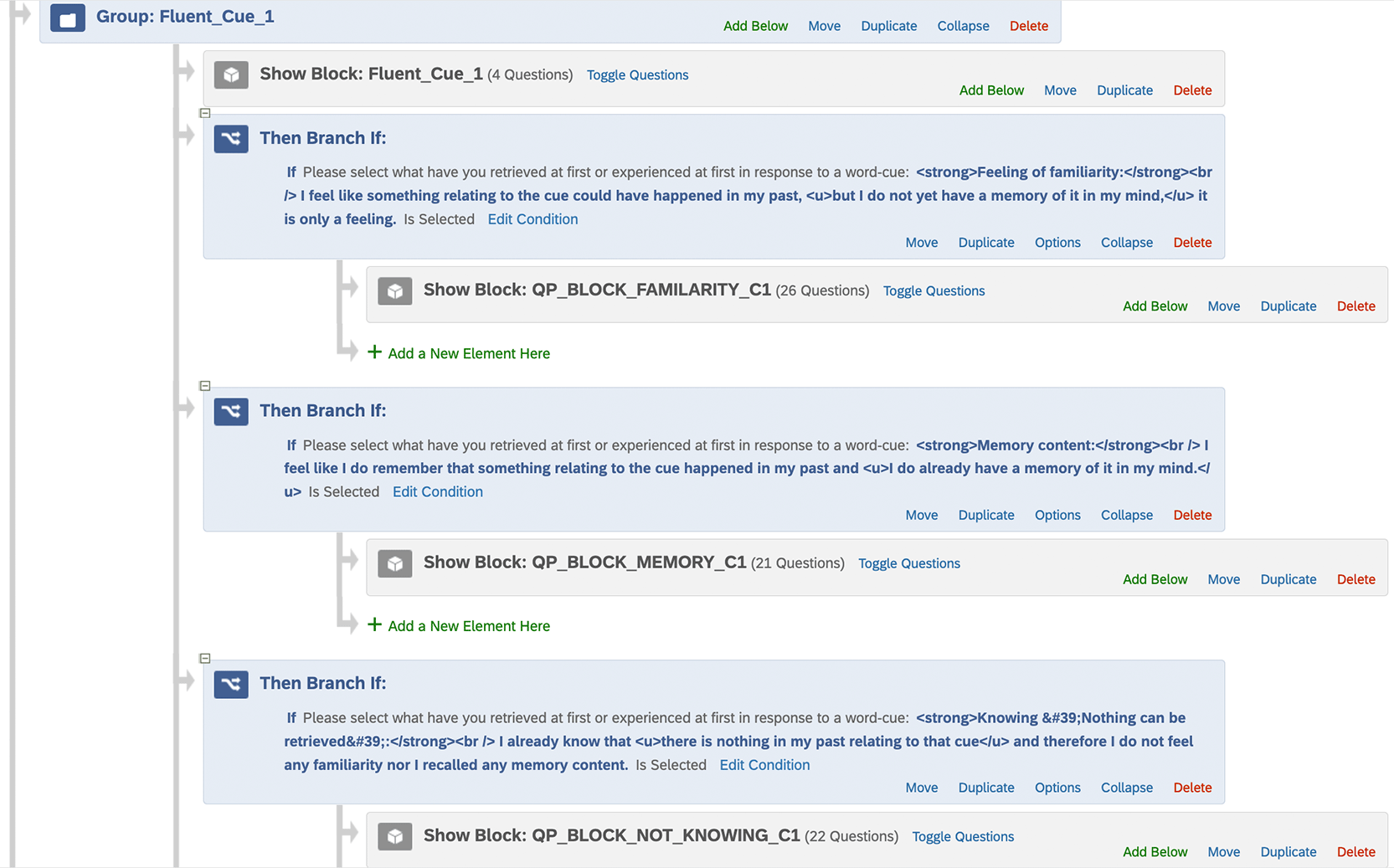
Figure 2. Example of the survey flow for a single autobiographical retrieval cue trial (Group: Fluent_Cue_1).
Following the initial response, the procedure dynamically branches into condition-specific phenomenological assessment blocks. If participants indicate a feeling of familiarity, they are redirected to a dedicated familiarity assessment block focused on the phenomenological characteristics of the familiarity experience. If participants indicate successful autobiographical retrieval, they complete a separate autobiographical memory assessment block concerning the retrieved memory content and associated retrieval characteristics. Finally, if participants indicate that they are unable to retrieve either a memory or a feeling of familiarity, they are redirected to a retrieval-failure assessment block focusing on the subjective experience of retrieval absence. Thus, each cue trial dynamically adapts to the participant’s initial retrieval experience through conditional branching implemented within the survey flow. This structure allows the procedure to separately capture phenomenological characteristics associated with familiarity experiences, successful autobiographical retrieval, and retrieval failure within a unified experimental framework.
Following the initial branching response, participants proceed to a series of phenomenological assessment questions tailored to the type of retrieval experience they reported first in response to the cue (see
Figure 3). The purpose of this stage is to examine the phenomenological characteristics of the retrieval experience itself, independently of the specific autobiographical content that may or may not have been retrieved. Participants are informed that the upcoming questions concern how the retrieval experience felt, rather than what was retrieved. Depending on the participant’s initial response category (feeling of familiarity, memory retrieval, or knowing-not), the survey flow redirects participants to condition-specific phenomenological assessment blocks. Each block contains an overlapping but customized set of questions designed to capture subjective aspects of the retrieval process relevant to the reported experience type. Across conditions, participants rate multiple phenomenological dimensions of the retrieval experience using clearly labelled 7-point Likert scales. These dimensions include retrieval fluency, subjective effort, emotional and/or physiological sensations accompanying retrieval, sense of agency and control over the retrieval process, plausibility of the experience, feeling of pastness, and personal relevance to the self. Additional questions assess the extent to which the experience contained autobiographical memory content, as well as whether the experience felt more intuitive or more based on deliberate realization or metacognitive evaluation.
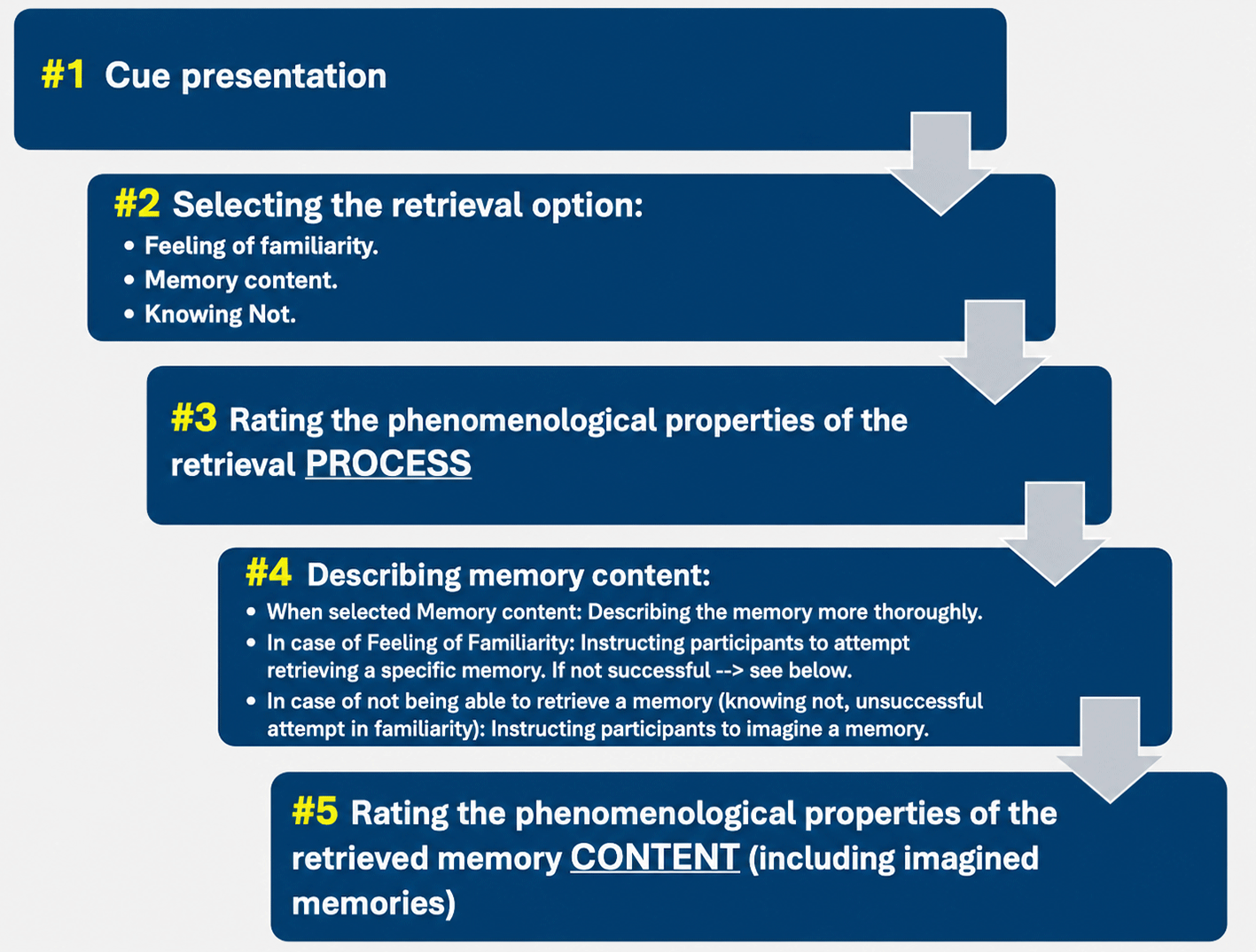
Figure 3. General flow of a single autobiographical retrieval trial.
Participants reporting autobiographical memory retrieval additionally complete questions concerning the subjective qualities of the retrieved memory content. These include ratings of vividness, specificity, sensory detail, emotional valence, importance, and other phenomenological properties commonly examined in autobiographical memory research. Participants who initially reported a feeling of familiarity are subsequently asked whether they are eventually able to retrieve specific autobiographical content relating to the cue. If so, they complete the same phenomenological memory-content assessment questions.
Participants who remained unable to retrieve autobiographical content, as well as those who initially selected the knowing-not response category, complete additional questions concerning the subjective reasons underlying retrieval failure. Importantly, these participants are subsequently instructed to imagine, generate, or “make up” a hypothetical autobiographical memory that could plausibly relate to the presented cue. They are then asked to describe this imagined memory and complete the same phenomenological memory-content assessment questions as participants who had successfully retrieved genuine autobiographical memories. This procedure ensured that all participants complete the full set of phenomenological memory-content measures regardless of whether autobiographical memory retrieval was initially successful in response to a given cue.
Finally, attentional control questions are embedded throughout the procedure to monitor participants’ vigilance and compliance with instructions. In the present implementation, four attentional control items are presented in randomized order between cue trials. These questions instruct participants to provide specific responses and served as an ongoing quality-control measure throughout the experiment.
Cue Structure. In the present procedure, 16 autobiographical word cues were used. These cues were adapted from previous autobiographical memory retrieval studies employing cue-word paradigms (e.g., Carreras et al., 2026). The complete list of cues used in the present implementation is provided in the Supplementary Material (file 3_List_of_cues.xlsx). Specifically, the cues were selected based on the experiments conducted by Carreras et al. (2024), in which participants were presented with word cues and asked to categorize each cue as either a fluent-access cue or a limited-access cue. In these studies, fluent-access cues were defined as word cues expected to facilitate access to autobiographical memories, whereas limited-access cues were defined as cues expected to constrain or limit such access. In the present procedure, we selected the eight words most frequently categorized as limited-access cues and the eight words most frequently categorized as fluent-access cues by participants in Carreras et al.’s studies, with one exception. The word Blood, which ranked sixth among the most frequently categorized fluent-access cues, was replaced with Boat, which ranked ninth, due to the potentially negative emotional connotations associated with the word Blood. In addition, whereas the original procedure developed by Carreras et al. used single-word cues, the present implementation includes several short cue phrases (e.g., riding a horse instead of horse). These modifications were introduced to increase cue specificity and facilitate interpretation while preserving the original accessibility characteristics of the cues. Researchers adapting the procedure may therefore use either single-word cues or short cue phrases, depending on the aims and requirements of their study. Importantly, in Carreras et al.’s studies, fluent-access cues were associated with more fluent autobiographical retrieval than limited-access cues, as reflected in shorter retrieval latencies and higher subjective ratings of retrieval ease. Accordingly, the fluent-access cues used in the present procedure were selected to maximize the likelihood of rapidly triggering autobiographical retrieval experiences, whereas limited-access cues were selected because they were less likely to elicit immediate autobiographical retrieval and were expected to increase the probability of partial retrieval experiences, feelings of familiarity, or retrieval failure (Carreras et al., 2024, 2026). The word cues used in Carreras et al.’s (2024) experiments were derived from the database developed by Miceli et al. (2021), in which each word is associated with a range of psycholinguistic properties. Importantly, the two cue categories used in the present procedure remain comparable across these psycholinguistic properties. Independent-samples t-tests showed that fluent-access and limited-access cues did not significantly differ in imageability, t(14) = 0.54, p = .597, familiarity, t(14) = 0.08, p = .939, or concreteness, t(14) = 0.64, p = .532. Specifically, fluent-access cues (M = 4.46, SD = 0.53) and limited-access cues (M = 4.28, SD = 0.77) showed comparable imageability ratings. Similarly, the two cue categories did not differ in familiarity ratings (fluent-access: M = 6.06, SD = 1.68; limited-access: M = 6.00, SD = 1.17) or concreteness ratings (fluent-access: M = 4.17, SD = 0.78; limited-access: M = 4.36, SD = 0.38). At the same time, fluent-access cues were characterized by significantly higher emotional valence ratings compared to limited-access cues, t(14) = 3.21, p = .006. Specifically, fluent-access cues had higher valence ratings (M = 7.24, SD = 1.52) than limited-access cues (M = 5.39, SD = 0.60). Most importantly, the two cue categories differed substantially in their expected (anticipated) effectiveness in triggering autobiographical retrieval experiences in previous studies. Fluent-access cues were more frequently categorised as fluent access (M = 71.88, SD = 6.27) than limited-access cues (M = 17.57, SD = 3.38), t(14) = 21.56, p < .001 in the original studies.
This cue-selection strategy was intended to manipulate autobiographical retrieval accessibility while minimizing potential confounding influences associated with basic lexical and semantic cue properties. Consequently, differences observed between cue categories are more likely to reflect variations in autobiographical accessibility and retrieval fluency rather than differences in familiarity, concreteness, or imageability of the cue words themselves.
Importantly, in the original study from which the present procedure was developed (Barzykowski et al., in preparation), differences between fluent-access and limited-access cues were not analyzed directly, as the primary focus of that work concerned autobiographical retrieval processes more generally rather than cue-category comparisons. Consequently, the present cue set may be used as a unified autobiographical cue pool without necessarily distinguishing between cue categories. At the same time, the cue structure also allows researchers to explicitly manipulate retrieval accessibility by separately analyzing fluent-access and limited-access cues. Thus, depending on the aims of a particular study, the cues may either be treated collectively or used to investigate differences between relatively easy versus relatively difficult autobiographical retrieval conditions.
Technical implementation. The procedure is organized using a standardized block-labelling convention intended to facilitate implementation, navigation, adaptation, and data analysis. Each section of the procedure is clearly labelled according to its functional role within the survey flow. For example, introductory sections are labelled descriptively (e.g., “Participant Information and Consent”, “Demographics”, “Instructions_general”), allowing straightforward identification of the corresponding procedure stage.
Autobiographical retrieval cue trials are implemented through separate cue blocks labelled according to cue type and cue number. Specifically, blocks labelled “Fluent_Cue_1” to “Fluent_Cue_8” correspond to high-access (fluent-access) cues, whereas blocks labelled “Limited_Cue_1” to “Limited_Cue_8” correspond to low-access (limited-access) cues. The numerical identifier specifies the individual cue number within a given cue category. Each cue block contains the verbal cue presentation and the initial retrieval-response selection stage.
Phenomenological assessment blocks are labelled according to both retrieval condition and cue type. For example:
• “QP_BLOCK_FAMILIARITY_C1” or “QP_BLOCK_FAMILIARITY_L-C1”.
• “QP_BLOCK_MEMORY_C1” or “QP_BLOCK_MEMORY_L-C1”.
• “QP_BLOCK_NOT_KNOWING_C1” or “QP_BLOCK_NOT_KNOWING_L-C1”.
Within this naming convention:
• “QP” refers to phenomenological questions (“Questions Phenomenology”),
• “BLOCK” indicates that the label refers to a complete survey block within the procedure,
• “FAMILIARITY” indicates blocks presented when participants initially selected the feeling-of-familiarity response option,
• “MEMORY” indicates blocks presented following successful autobiographical memory retrieval,
• “NOT_KNOWING” indicates blocks presented following selection of the knowing-not response category,
• “C” indicates fluent-access cues (“Cue Fluent”),
• “L” indicates limited-access cues,
• and the numerical suffix specifies the individual cue number within a given cue category.
For example, “QP_BLOCK_FAMILIARITY_C1” refers to the phenomenological assessment block presented after a participant selected a feeling-of-familiarity response for Fluent Cue 1, whereas “QP_BLOCK_MEMORY_L-C1” refers to the memory-content assessment block presented following successful retrieval in response to Limited Cue 1.
A similar naming convention is used for individual variables and questionnaire items within each block. For example:
Within this naming convention:
• “QP” refers to questions concerning the phenomenological properties of the retrieval process,
• “QMC” refers to questions concerning phenomenological properties of memory content,
• “BF” refers to the familiarity condition block,
• “BM” refers to the autobiographical memory retrieval block,
• “BKN” refers to the knowing-not block,
• “IMAmem” indicates imagined-memory questions completed when participants were unable to retrieve autobiographical memory content,
• the following label specifies the phenomenological property being assessed (e.g., Fluency, Effort, Pastness, Vividness),
• “C” indicates fluent-access cues,
• “L” indicates limited-access cues,
• and the final numerical suffix specifies the individual cue number.
For example, “QP_BF_Fluency_C1” refers to the fluency question assessing the retrieval-process phenomenology of a familiarity response following Fluent Cue 1, whereas “QMC_IMAmem_Vividness_L-C4” refers to the vividness rating of an imagined autobiographical memory generated in response to Limited Cue 4. This standardized variable-labelling structure allows straightforward identification of questionnaire items, facilitates automated data processing and scoring, and supports transparent adaptation of the procedure across different studies and research settings.
Attention-control questions follow a parallel naming convention and are implemented both as standalone randomized control blocks and as embedded within-block attentional checks. Standalone attentional control blocks presented in randomized order between autobiographical retrieval trials are labeled as:
• “ctrl_check_#1_2”.
• “ctrl_check_#2_7”.
• “ctrl_check_#3_6”.
• “ctrl_check_#4_6”.
Within this convention:
• “ctrl_check” indicates a standalone attentional control question,
• the first numerical identifier specifies the control-question number,
• and the final numerical identifier indicates the correct response option participants are instructed to select.
Additional attentional control questions are embedded directly within selected phenomenological assessment blocks. For example, within Fluent Cue 1, attentional checks are inserted before the “Self” phenomenological question:
• “QP_BF_Self_C1” → “ctrl_BF_#5_7-tru”.
• “QP_BM_Self_C1” → “ctrl_BM_#5_7-tru”.
• “QP_BKN_Self_C1” → “ctrl_BKN_#5_3-tru”.
Similarly, within Limited Cue 2, attentional checks are presented following the “words/pictures” phenomenological memory-content question:
• “QMC_BF_wrds_L-C2” → “ctrl_BF_#6_6-tru”.
• “QMC_BM_wrds_L-C2” → “ctrl_BM_#6_6-tru”.
• “QMC_BKN_wrds_L-C2” → “ctrl_BKN_#6_6-tru”.
In this convention:
• “ctrl” indicates an attentional control question,
• “BF”, “BM”, and “BKN” specify whether the control question appears within the familiarity, memory, or knowing-not condition,
• the first numerical identifier specifies the control-question number,
• the second numerical identifier specifies the correct response option,
• and “tru” indicates the correct (“true”) response required to proceed appropriately through the task.
This implementation allows attentional control questions to be distributed both globally throughout the procedure and locally within phenomenological assessment sections, thereby providing continuous monitoring of participant attentiveness and compliance across different stages of the experiment.
Scoring. Responses identified by participants as (1) feelings of familiarity, (2) autobiographical memory retrieval, and (3) knowing-not experiences can all be included in subsequent analyses. Because each participant contributes multiple observations across cue trials, data are typically aggregated at the participant level by computing mean scores separately for each retrieval category. This approach is consistent with previous autobiographical retrieval research using repeated cue-trial procedures (e.g., Zareen et al., 2026). For example, mean phenomenological ratings (e.g., fluency, effort, emotionality, pastness, vividness etc.) may be computed separately for feelings of familiarity, autobiographical memory retrieval, and knowing-not responses for each participant. These ratings can additionally be analyzed independently for fluent-access and limited-access cues. Researchers may also calculate the frequency and proportional distribution of retrieval outcomes across the procedure (e.g., percentage of autobiographical memory retrievals, familiarity experiences, or knowing-not responses). In addition, retrieval response times (RTs) can be averaged separately for each retrieval category, allowing examination of latency differences associated with familiarity experiences, successful autobiographical retrieval, and retrieval failures.
In addition, the procedure enables computation of phenomenological density indices. For example, a Remembering–Knowing density index can be calculated as the proportion of memories classified as “remembered” relative to the total number of autobiographical memories retrieved by a participant. Higher values indicate that a larger proportion of retrieved memories were experienced as consciously recollected (“remembered”), whereas lower values indicate a greater proportion of memories experienced primarily as familiarity-based or “known.” Because this index is based on proportions rather than absolute frequencies, it controls for individual differences in the total number of memories retrieved and allows meaningful comparisons between participants who may differ substantially in overall retrieval frequency. Similarly, researchers may compute proportional indices for familiarity responses, retrieval failures, imagined memories, or other phenomenological response categories. Such proportional scoring approaches help reduce biases associated with individual variability in autobiographical retrieval productivity and provide standardized measures that can be compared across participants and studies.
Practical note on scoring and response-time measurement. The present procedure allows collection of retrieval response times (RTs) using Qualtrics timing variables. Firstly, it is important to note that retrieval latencies in autobiographical memory are relatively long, of the order of several seconds, and therefore millisecond accuracy is not important (e.g., Haque and Conway, 2001). It is important to note that Qualtrics does not provide a perfect solution for measuring retrieval latencies in paradigms requiring immediate responses to internally generated cognitive experiences. For example, the platform does not naturally support precise registration of a single keyboard press (e.g., pressing the space bar immediately upon retrieval). To address this methodological limitation, participants in the present implementation were instructed to click a response button displayed below the cue word as soon as they experienced retrieval-related content (e.g., autobiographical memory retrieval, feeling of familiarity, or knowing-not experience). The Qualtrics timing system subsequently records multiple timing-related variables, including the latency of the first click, the last click, and the page-submission response time. In an ideal response sequence, participants should make a single click on the response button immediately after experiencing retrieval and subsequently submit the page in order to proceed to the next stage of the procedure. In such cases, the first-click latency most closely reflects the intended retrieval response time. In practice, the majority of retrieval trials (approximately 85% of all retrieval instances) followed this intended response structure, with participants clicking once on the retrieval button before submitting the page. This pattern indicates that participants generally understood and followed the response instructions correctly, supporting the practical feasibility and usability of the present procedure for investigating autobiographical retrieval processes. However, several alternative response patterns were also observed. In approximately 6% of retrieval trials, participants submitted the page without clicking the response button. In an additional 7% of cases, participants clicked twice, whereas approximately 1.55% of trials involved three clicks and 0.12% involved four clicks. When multiple clicks are recorded within a single trial, it is recommended that researchers use the latency of the first recorded click as the primary RT measure, as this value most likely corresponds to the participant’s initial retrieval experience. In trials in which no button click is recorded, the page-submission RT may serve as the most appropriate approximation of retrieval latency. Such cases likely reflect situations in which participants attempted to speed up the procedure by directly submitting the page after retrieval rather than clicking the designated response button first. Researchers using the procedure are encouraged to inspect click-pattern distributions and apply consistent exclusion or cleaning criteria appropriate for their particular research aims and analytic strategy.
Customization and adaptation. Customization and adaptation. The autobiographical memory retrieval procedure is currently provided in both English and French. It can be readily translated into additional languages using the built-in translation feature available in Qualtrics (see instructions: https://www.qualtrics.com/support/survey-platform/survey-module/survey-tools/translate-survey/).
The protocol is designed to allow flexible adaptation while preserving its overall structure and experimental logic. In particular, the verbal cue set can be modified depending on the aims of a given study, cultural context, participant population, or theoretical focus. Researchers may additionally add, modify, or remove phenomenological questions, retrieval measures, attentional checks, timing parameters, or supplementary task components according to their research goals. The number of cues presented during the procedure can also be adjusted depending on the intended duration or experimental design. In its current form, the procedure is ready for immediate implementation in English- and French-speaking contexts. At the same time, the protocol can be easily adapted for use in other countries, languages, or research settings by modifying only content-specific elements while maintaining the standardized framework of the procedure. This approach enables researchers to preserve the general structure of the autobiographical retrieval paradigm without developing comparable procedures from scratch in future studies.









