Introduction
Digital technologies have reshaped how young people encounter, join, and sustain engagement with their communities. Meta-analytic evidence indicates a positive, though heterogeneous, relationship between digital media use and young people’s engagement in civic life (Boulianne & Theocharis, 2020), and volunteering itself has partly migrated online, where it takes forms ranging from episodic micro-tasks to sustained virtual service (Ihm, 2017). Online participatory cultures appear to function as gateways through which young people move toward engagement rather than as substitutes for it (Kahne et al., 2013). Research on these developments, however, has accumulated in parallel strands: education research examines service-learning and its digital variants, communication research examines social media and engagement, and nonprofit and youth studies examine volunteering and youth development (Bennett et al., 2009; Loader et al., 2014). Each strand has matured largely on its own terms. What the field lacks is an integrated, empirical picture of how these strands relate to one another.
Relating these strands empirically, however, first requires resolving a conceptual problem: civic engagement is an elastic term that covers everything from community service to electoral politics (Adler & Goggin, 2005), and its catch-all use has been criticised as an obstacle to cumulative research (Berger, 2009). Civic engagement is multidimensional, and no single partition exhausts it. Building on a well-established line of work, the present study adopts an analytic distinction between two faces of the concept. One face is political participation, that is, activity aimed at influencing government, policy, or the selection of political personnel, such as voting, campaigning, and protest (Ekman & Amnå, 2012; van Deth, 2014). The other face is community-benefit engagement: organised, unpaid activity directed at improving the quality of life of others or of the community, exemplified by volunteering (Cnaan et al., 1996; Wilson, 2000) and by service-learning, the pedagogy that couples organised community service with academic learning and structured reflection (Bringle & Hatcher, 1996). Survey evidence on American youth cohorts suggests that young people gravitate toward this community-benefit face rather than toward conventional politics (Zukin et al., 2006). The present study maps the second face. Its object is research on youth digital volunteering and community-benefit civic engagement, understood as studies in which young people give time, service, or skills for community benefit in contexts shaped by digital technology. Research centred on political participation (voting, protest, activism) falls outside the corpus by definition. This exclusion is conceptual rather than evaluative: political participation is oriented toward influencing government, policy, or the selection of officeholders, a different object from community-benefit contribution, and combining the two would blur the construct the map is intended to describe. The operationalisation of this boundary is reported in the Methods section.
This construct boundary matters because the community-benefit strand sits between disciplinary homes. Service-learning is studied largely within education, volunteering within nonprofit and voluntary sector studies, and digital engagement within communication research, so the same underlying phenomenon, young people contributing to their communities under digital conditions, is described in different vocabularies and cited within different canons. Two questions therefore remain empirically open. First, what holds this dispersed field together: is it organised around a principal conceptual frame, and if so, where does that frame lie? Second, what position does digital technology occupy within the structure: has it consolidated into a coherent research strand of its own, or does it operate as a cross-cutting layer running through themes anchored elsewhere? Kahne et al. (2013) theorise digital participation as a gateway rather than a destination; whether the structure of the accumulated literature reflects such an instrumental position has not been examined empirically.
Bibliometric science mapping has been applied to several fields adjacent to this intersection, but not to the intersection itself. Volunteering has been mapped through the lenses of volunteer motivation (Chen et al., 2022) and volunteer management in nonprofit organisations (Xu et al., 2024), yet neither engages with young people as a distinct population or with digital technology as a condition of engagement. Service-learning has received a field-wide bibliometric review spanning more than five thousand documents (Hallinger & Narong, 2024), again without a technological axis. Digital citizenship has been mapped repeatedly (Aprilianata et al., 2025; Sel & Demirci, 2025), but these maps foreground citizenship education and civic identity rather than volunteering as a civic practice, and a recent map of community-based learning and civic engagement is confined to higher education and carries no digital dimension (Mariyani et al., 2026). No bibliometric map dedicated to digital or online volunteering could be identified; the closest synthesis is a scoping review of fourteen studies on the psychology of online volunteering (Tommasi et al., 2025), which signals a literature that has not yet been examined at scale.
Table 1 summarises these adjacent maps and the gap each leaves open.
Table 1. Adjacent bibliometric studies and their differentiation from the present study.
| Previous study | Scope | Database | N | Period | Gap relative to the present study |
|---|
| Chen et al. (2022) | Volunteer motivation | Web of Science (SSCI) | 162 | 2000–2021 | No youth focus; no digital axis |
| Xu et al. (2024) | Volunteer management in nonprofit organisations | Scopus | 1,605 | 1956–2022 | Organisational lens; no youth focus; no digital axis |
| Hallinger & Narong (2024) | Service learning (field-wide) | Scopus | 5,815 | 1950–2022 | Pedagogy-wide map; no digital axis; youth implicit |
| Sel & Demirci (2025) | Digital citizenship | Web of Science | 387 | 2003–2024 | Citizenship education focus; volunteering absent |
| Aprilianata et al. (2025) | Digital citizenship | Scopus | 215 | 2004–2024 | Civic identity focus; volunteering absent |
| Mariyani et al. (2026) | Community-based learning and civic engagement in higher education | Scopus | 110 | 2015–2025 | Higher-education subset; no digital axis |
| Tommasi et al. (2025) | Online volunteering (scoping review, not bibliometric) | n/a | 14 | n/a | Evidence synthesis, not a science map; corpus too small for mapping |
| Present study | Youth volunteering, service-learning, and community-benefit civic engagement in digital contexts | Web of Science Core Collection | 310 | 2006–2026 | Maps the three-axis intersection with an explicit community-benefit construct boundary |
The present study addresses this gap through a bibliometric analysis of 310 articles and reviews indexed in the Web of Science Core Collection between 2006 and 2026. Bibliometric science mapping is an established approach for revealing the conceptual, intellectual, and social structure of a research field when the literature is too large and too dispersed for manual synthesis (Donthu et al., 2021; Zupic & Čater, 2015). The analysis combines performance indicators with co-word and thematic mapping, co-citation analysis, and reference publication year spectroscopy, implemented in the bibliometrix environment (Aria & Cuccurullo, 2017). The identity of the article is deliberately narrow: it is a science-mapping study with an explicit construct boundary, not an evaluation of individual interventions and not a map of political participation. Five research questions guide the analysis:
•
RQ1. What are the publication performance and growth patterns of research on youth digital volunteering and community-benefit civic engagement?
•
RQ2. What conceptual structure characterises the field, and which motor, niche, emerging, and basic themes does co-word and thematic analysis reveal?
•
RQ3. On which intellectual foundations does the field rest, and what are its historical roots?
•
RQ4. How are volunteering, service-learning, and digital technologies positioned within this structure: which theme, if any, forms the field’s principal organisational frame, and is the digital layer consolidated or cross-cutting?
•
RQ5. How are scientific production and international collaboration geographically distributed within the Web of Science English-language corpus?
The intended contribution is threefold. First, to our knowledge, and on the basis of the searches documented in extended-data Table S1, no prior science-mapping study has examined this three-axis intersection under an explicit community-benefit construct boundary: each adjacent map covers a single axis of the intersection, and none isolates the community-benefit face of engagement as its object. Second, the map grounds an evidence-based research agenda. By identifying which themes act as motors, which remain emerging or marginal, and where the field is produced geographically, the study indicates where conceptual and empirical work is most needed. Third, the study contributes an explicit construct boundary: by separating community-benefit engagement from political participation at the point of corpus construction, it provides a reproducible basis for mapping an otherwise elastic field. The geographic question is treated descriptively and conditionally on coverage: how scientific production and international collaboration on young people’s digital engagement are distributed across national systems is an empirical question that the map can describe within the limits of its data source rather than a claim about inclusiveness. The remainder of the article proceeds as follows. The Methods section reports the search strategy, the construct-based screening, and the analytic procedures; the Results section answers the five research questions in turn; the Discussion interprets the map against the conceptual distinctions introduced above and develops the research agenda.
Methods
Study design and reporting
This study is a bibliometric analysis of the research field at the intersection of youth, community-benefit civic participation and digital technology, following the workflow proposed by Donthu et al. (2021), which combines performance analysis (publication and citation structure) with science mapping (co-word, co-citation and citation-genealogy techniques). Procedures for data collection and analysis follow Aria and Cuccurullo (2017).
Retrieval and screening are reported in line with PRISMA 2020 (Page et al., 2021) and its search-reporting extension PRISMA-S (Rethlefsen et al., 2021). As this is a bibliometric study rather than a systematic review of evidence, PRISMA is used to structure the reporting of the record flow and eligibility decisions, not as the analytic method. The record flow is summarised in
Figure 1.
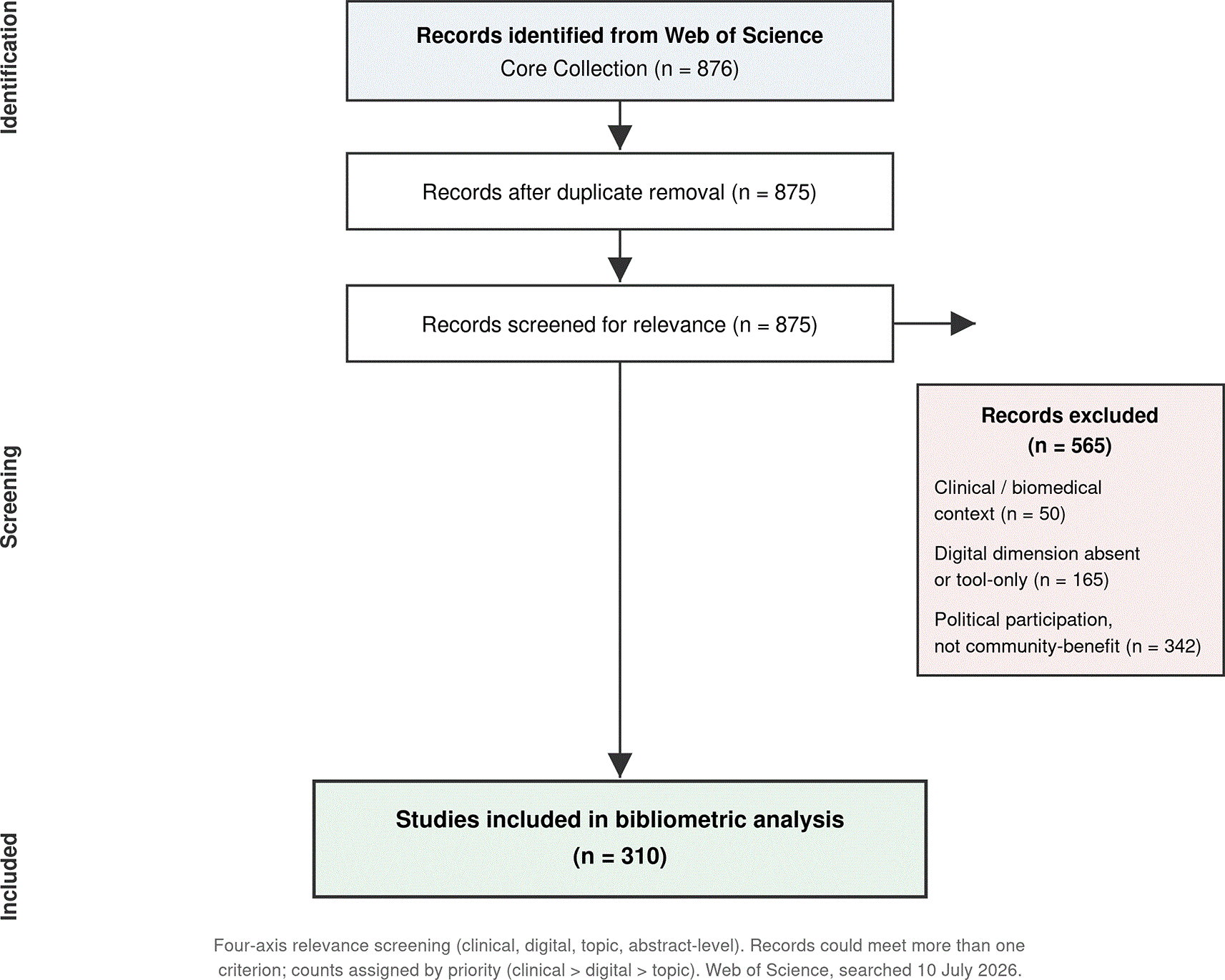
Figure 1. PRISMA-style flow of record identification, screening and inclusion (N = 310).
Data source and retrieval
All records were retrieved from the Web of Science Core Collection. A single database was used deliberately rather than merging Web of Science with Scopus, for three reasons. First, merging databases with differently formatted reference metadata introduces reference-standardisation and matching problems that compromise the integrity of the cited-reference field, which would have made it necessary either to abandon co-citation analysis or to compute it on database-specific subsets; retrieving from a single source keeps the cited-reference field intact and consistently formatted for the full corpus (the cited-reference field is populated for 99.9% of the retrieved records). Second, a single database provides one coherent citation universe, so that citation-based indicators and keyword-based indicators describe the same set of documents. Third, the Core Collection applies curated, selective and consistently documented indexing (Birkle et al., 2020), which reduces the document-type and metadata heterogeneity that de-duplication across sources introduces. A single database is therefore the more internally consistent basis for this analytic design. The cost of this choice is single-database coverage bias, which is addressed in the Limitations section together with the case for a future Scopus cross-validation (Mongeon & Paul-Hus, 2016).
The definitive search was run on 10 July 2026 in the Web of Science Core Collection, restricted to English-language articles and reviews (including early-access items), and returned 876 records, exported in BibTeX format with full records and cited references. No publication-year limit was imposed: the time span is data-driven, the retrieval reached back to 1984, and after screening the earliest record in the final corpus dates from 2006. The year 2026 is incomplete at the time of the search and is flagged as a partial year in all annual figures.
Query development
The search strategy was developed iteratively over three versions; the intermediate failures shaped the final construct boundary. The initial query (v0, October 2025) combined two concept blocks, youth and volunteering, and returned roughly 1,386 documents after filtering; because the study targets technology-shaped participation, the absence of a digital block meant the corpus did not match the study’s scope. A second version (v1, 28 June 2026) added a third block of digital and technological terms and retrieved 1,494 records, refined to 1,269 English-language articles and reviews. Inspection of this set revealed substantial topical drift: the unrestricted term volunteer* retrieved a large body of biomedical work in which “volunteer” denotes a research participant (“healthy volunteers”, “study volunteers”) rather than a civic actor, evidenced by the prominence of clinical themes and medical journals among the most frequent keywords and sources. A post-hoc keyword exclusion filter did not resolve the drift, because the contamination was semantic rather than lexical.
In the final version (v2), the volunteering block was re-anchored on terms that carry civic meaning (service-learning, volunteerism, community service, civic engagement, civic participation, voluntary work and sector) together with compound volunteering forms (youth, student, online, virtual, digital, e- and micro-volunteering), and the bare term volunteer* was removed. This cuts the participant-as-subject false positives at the source while retaining the service-learning, civic engagement and digital-volunteering core. The full v2 query string, including all three concept blocks, is provided in the extended data and the shared data package.
Eligibility and screening
Eligibility was defined by an explicit construct boundary. The study maps community-benefit participation: volunteering, service-learning and civically oriented engagement whose primary target is the benefit of others or of a community. Political participation, understood as activity aimed at influencing government, policy or electoral outcomes, falls outside the construct. This boundary is not novel; it rests on the conceptual distinction between civic engagement and political participation developed by Ekman and Amnå (2012), on van Deth’s (2014) decision rules for when an activity counts as political, and on Zukin et al.’s (2006) empirical demonstration that community-benefit and political engagement are behaviourally distinct repertoires, particularly among young people. Because the v2 query deliberately retained broad civic terms (civic engagement, civic participation) that carry both meanings, the boundary had to be applied at the screening stage, record by record, rather than at the query level, where excluding political vocabulary would also have discarded legitimate community-benefit studies.
Youth was operationalised broadly through the search block rather than through a numerical age filter. The youth block combined youth, adolescents, teenagers, young people, young adults, emerging adults, and university or college students and undergraduates, so that the corpus spans secondary-school age through tertiary students and young adults; no additional age filter was imposed. As a result, samples drawn from higher-education settings (undergraduate and college populations, which are prominent in the service-learning literature) carry substantial weight in the corpus, a point taken up in the Limitations section.
Screening proceeded along four axes, and a record was excluded if it failed any one of them. The first axis removed clinical and biomedical noise (50 records): records were flagged by a three-tier screening dictionary (definite clinical signals, conditional signals that count only in a clinical context, and a civic veto that protects records with civic core terms), with field-weighted, word-boundary matching (title and author keywords weighted 3, journal and category 2, abstract 1), and each flagged record received a manual decision. The second axis assessed digital relevance (192 records excluded): records in which technology appeared only as a data-collection instrument, rather than as part of the participation phenomenon, were removed through automated classification followed by abstract reading of 221 grey-zone records. The third axis applied the construct boundary and removed exactly 395 records: 224 unambiguous cases were identified by dictionary-based classification, and a further 171 were removed on abstract reading (125 of the 244 ambiguous records read and 46 of the 55 borderline records read). A fourth pass addressed a blind spot of the first three: 21 records whose titles and keywords were clean but whose abstracts indicated a primarily political focus were read in full, and 8 were removed.
Because a record could receive more than one preliminary flag, the axis-level counts are not additive. The four axes produced 645 exclusion flags in total (50 + 192 + 395 + 8). Of the flagged records, 469 were flagged on a single axis and 88 on exactly two axes, and none was flagged on three or more; verified through the union of record identifiers, this leaves 557 unique excluded records (645 flags minus 88 overlaps), so that 318 records remained (875 minus 557) as an intermediate corpus.
A fifth, targeted step then refined this intermediate corpus. A post-hoc content scan of the 318 records identified 10 candidate records whose content appeared to fall outside the community-benefit construct despite having passed the dictionary-based screening; all 10 were re-evaluated by the researcher record by record, and 8, predominantly clinical or health-intervention studies, were removed while 2 were retained. Rather than reporting these known out-of-scope records as a limitation, they were removed and all analyses were rerun on the corrected corpus. These decisions are preserved in a coded decision file (see Reproducibility and availability). The final corpus therefore comprises N = 310 records, which was then frozen for analysis.
The resulting corpus is deliberately focused rather than exhaustive. The implications of corpus size for network-based analyses are taken up in the Limitations section.
Quality assurance
Abstract screening was LLM-assisted. For the 520 records that required abstract reading across the digital and topical axes, a large language model (Claude, Anthropic, model claude-opus-4-8, accessed July 2026; the screening prompt is provided as extended data) used as decision support in line with evidence that large language models perform reliably in title-and-abstract screening (López-Pineda et al., 2025); all final inclusion and exclusion decisions were made by the researcher. Divergences were logged.
Because automated exclusion carries the opposite risk, the corpus was audited in both directions. Against over-exclusion, a stratified random sample of 40 automatically excluded records (32 political-automatic, 8 digital-definite; fixed seed) was independently re-read: no false exclusions were identified in this sample (0/40), and 5 borderline cases sat at the civic-political boundary that the underlying typologies themselves describe as hard to draw (Ekman & Amnå, 2012; van Deth, 2014). The sample covers roughly a tenth of the automatically excluded pool, so this is a targeted audit of the decision rules rather than an exhaustive guarantee of the exclusion set. Against over-retention, the abstract-level pass described above identified and removed 8 politically oriented records that the title-and-keyword rules had missed. Taken together, these two audits test the screening in both error directions on top of the documented per-record decision trail.
Data preparation
Records were imported into R with the bibliometrix function convert2df. A document-type filter written by the authors then retained journal articles and reviews and excluded book chapters, conference proceedings, editorials and similar types; this filter was applied because Web of Science assigns dual document types (for example “Article; Book Chapter”), so restricting the type at export does not reliably remove such items. In this corpus the filter removed no records. One duplicate was then removed by matching on DOI and normalised title, yielding 875 unique records that entered the eligibility screening described above.
Author keywords were harmonised with a two-tier thesaurus before any keyword-based analysis. Tier 1 resolves purely lexical variation (singular and plural forms, hyphenation, spelling variants); Tier 2 merges semantic near-synonyms (for example volunteerism into volunteering). Because semantic merging can shape the resulting map, the main analysis uses both tiers, and a Tier-1-only sensitivity run was performed; its results are reported in the Results and the extended data. The thesaurus is example-based rather than exhaustive, and the full mapping file is shared. Author keywords were available for roughly 89% of the 310 records, and the co-word co-occurrence map covers approximately 67% of the corpus; this coverage measure is distinct from the exclusive cluster assignment used for label validation (71%), which is reported in the Limitations.
Bibliometric analyses
All analyses were run in R 4.6.1 with bibliometrix 5.4.1 (Aria & Cuccurullo, 2017) and igraph 2.3.3; figures were produced with ggplot2 3.5.1, and network visualisations with VOSviewer 1.6.21 (van Eck & Waltman, 2010). Bibliometrix was chosen because it implements the full Donthu et al. (2021) workflow in a single scripted, reproducible environment, and VOSviewer for network visualisation because its normalisation and clustering procedures are documented and standard (van Eck & Waltman, 2009, 2010).
Performance analysis covered annual scientific production, source and country distributions, Bradford core-source and Lotka author-productivity structure, and a three-field (source, keyword, country) overview. The annual growth rate is the compound annual growth rate as implemented in bibliometrix; because 2026 is a partial year at the time of the search, the rate computed with 2026 excluded (20.39%) is also reported as a sensitivity check. Country production counts are based on the corresponding author’s country, following the bibliometrix convention, which classifies each publication as a single-country publication (SCP) or a multiple-country publication (MCP) according to the affiliations of its authors; full-counting and fractional-counting alternatives are provided as extended data. These figures are reported using neutral national and regional categories, without imposing an external policy classification of countries.
Science mapping rested on co-word analysis (Callon et al., 1983), which was selected as the primary structural lens because in a young field keyword co-occurrence captures the conceptual organisation of current production without the citation lag that co-citation requires. Two co-word representations were produced on harmonised author keywords: a thematic map following the strategic-diagram approach (Cobo et al., 2011), with a minimum keyword frequency threshold of four occurrences (n = 250), and a keyword co-occurrence network built from the 40 most frequent keywords (39 retained after removing one isolated node; 206 links; 5 clusters), normalised by association strength (van Eck & Waltman, 2009) with VOSviewer’s clustering resolution of 1.00; the cluster solution is stable at resolutions 1.00 to 1.25 and coarsens to three clusters at 0.75. These thresholds were chosen for legibility in a small-to-medium corpus: in a corpus of 310 records a higher frequency threshold over-sparsifies the thematic map, while a network of the 40 most frequent keywords is a standard size for a readable co-occurrence graph. To confirm that the reported thematic structure does not depend on these choices, the thematic map was recomputed across 18 parameter combinations (thesaurus tier by minimum frequency of 3, 4 or 5 by n of 150, 250 or 350); service-learning remained the most central theme in every combination, with details reported in the robustness table. A multiple correspondence analysis of the conceptual structure (Greenacre, 2016; minimum degree 3, five clusters) served as a third view of the same keyword space.
The intellectual base of the field was examined through three complementary techniques. A reference co-citation network (Small, 1973) of the 30 most co-cited references identifies the works the field builds on; reference publication year spectroscopy (Marx et al., 2014) locates the historical root years of the cited literature; and a historiograph (Garfield, 2004) traces the direct citation genealogy within the corpus itself, computed with a minimum of one local citation and plotted for the 20 most connected records. The three are used jointly because they answer different questions: co-citation shows which works anchor the field, spectroscopy shows when its roots formed, and the historiograph shows whether a within-field citation chain has yet emerged.
Thematic cluster labels are assigned automatically by bibliometrix as the highest-frequency keyword in each cluster. To guard against label-content mismatch, every cluster was validated by assigning each document exclusively to its best-matching cluster (221 of 310 documents were assignable through their keywords) and reading the title, keywords and abstract of the five most cited articles per cluster; the validation results are reported in the Results. Finally, because the construct boundary excludes political participation, a screening-sensitivity contrast was run comparing the keyword distribution of the corpus with and without politically oriented records; its results are reported in the Results and interpreted in the Discussion. Differences between the intermediate 318-record solution and the final 310-record solution are reported in the robustness table.
Reproducibility and availability
The raw Web of Science records cannot be redistributed under the database licence. Everything needed to reproduce the study from that starting point is openly deposited on Zenodo (https://doi.org/10.5281/zenodo.21427974) (Büber Kaya, 2026): the full search strings for all query versions, the DOI and Web of Science accession (UT) list of the 310 included records, the coded decision files for all four screening axes and the post-hoc content step, the R scripts for import, screening, exclusion and analysis, the keyword thesaurus, and the VOSviewer map and network files underlying the network figures. The extended data additionally contains the sessionInfo() output with all package versions, so that the reported software environment (R 4.6.1, bibliometrix 5.4.1, igraph 2.3.3, ggplot2 3.5.1, VOSviewer 1.6.21) can be verified against the analysis exactly as run.
Results
The results are organised along the five research questions: overall performance and growth (RQ1), conceptual structure (RQ2), intellectual base and historical roots (RQ3), the structural position of volunteering, service-learning, and digital technology (RQ4), and geographic distribution (RQ5).
Performance and growth pattern
Table 2 summarises the main characteristics of the corpus. The 310 documents were published between 2006 and 2026 in 251 distinct journals, with an annual growth rate of 16.44% (20.39% when the partial year 2026 is excluded) and a mean of 16.05 citations per document (median 5, interquartile range 1–14.75). The most immediate structural signal in these figures is dispersion: 310 articles are spread across 251 outlets, a ratio of roughly 1.2 documents per journal. The Bradford core (Zone 1) contains 45 journals (
Table 3), and no single journal accounts for more than four documents; the four most productive outlets (Comunicar, Gerontology & Geriatrics Education, International Journal of Environmental Research and Public Health, and Journal of Intergenerational Relationships) span communication, gerontology, public health, and intergenerational studies. The output is thus dispersed across education, communication, health, and ageing venues rather than concentrated in a dedicated core.
Table 2. Main characteristics of the corpus.
| Indicator | Value |
|---|
| Timespan | 2006–2026 |
| Documents | 310 |
| Sources (journals) | 251 |
| Annual growth rate | 16.44% (20.39% excluding the partial year 2026) |
| Average citations per document | 16.05 |
| Cited references | 14,284 |
| Author keywords | 1,164 |
| Authors | 1,015 |
| Single-authored documents | 61 |
| International co-authorship | 17.42% |
Table 3. Most productive sources (journals with three or more documents; the Bradford Zone 1 core contains 45 journals in total).
| Source |
Documents |
|---|
| Comunicar | 4 |
| Gerontology & Geriatrics Education | 4 |
| International Journal of Environmental Research and Public Health | 4 |
| Journal of Intergenerational Relationships | 4 |
| Applied Research in Quality of Life | 3 |
| Children and Youth Services Review | 3 |
| Frontiers in Education | 3 |
| Journal of Nonprofit Education and Leadership | 3 |
| Learning, Media and Technology | 3 |
| New Media & Society | 3 |
| Social Work Education | 3 |
| Sustainability | 3 |
Figure 2 shows the annual scientific production. The first record appears in 2006, output remains in single digits until 2013, and a sustained acceleration begins around 2016, culminating in a peak of 46 documents in 2024. Three fifths of the corpus (187 documents, 60.3%) appeared in the period from 2020 onwards, placing the bulk of this literature in the most recent years of the observation window. The 2026 bar (21 documents) reflects a mid-year snapshot, as the search was conducted on 10 July 2026; the 2026 count is therefore partial rather than a real decline, and its mid-year level appears consistent with the post-2023 output plateau.
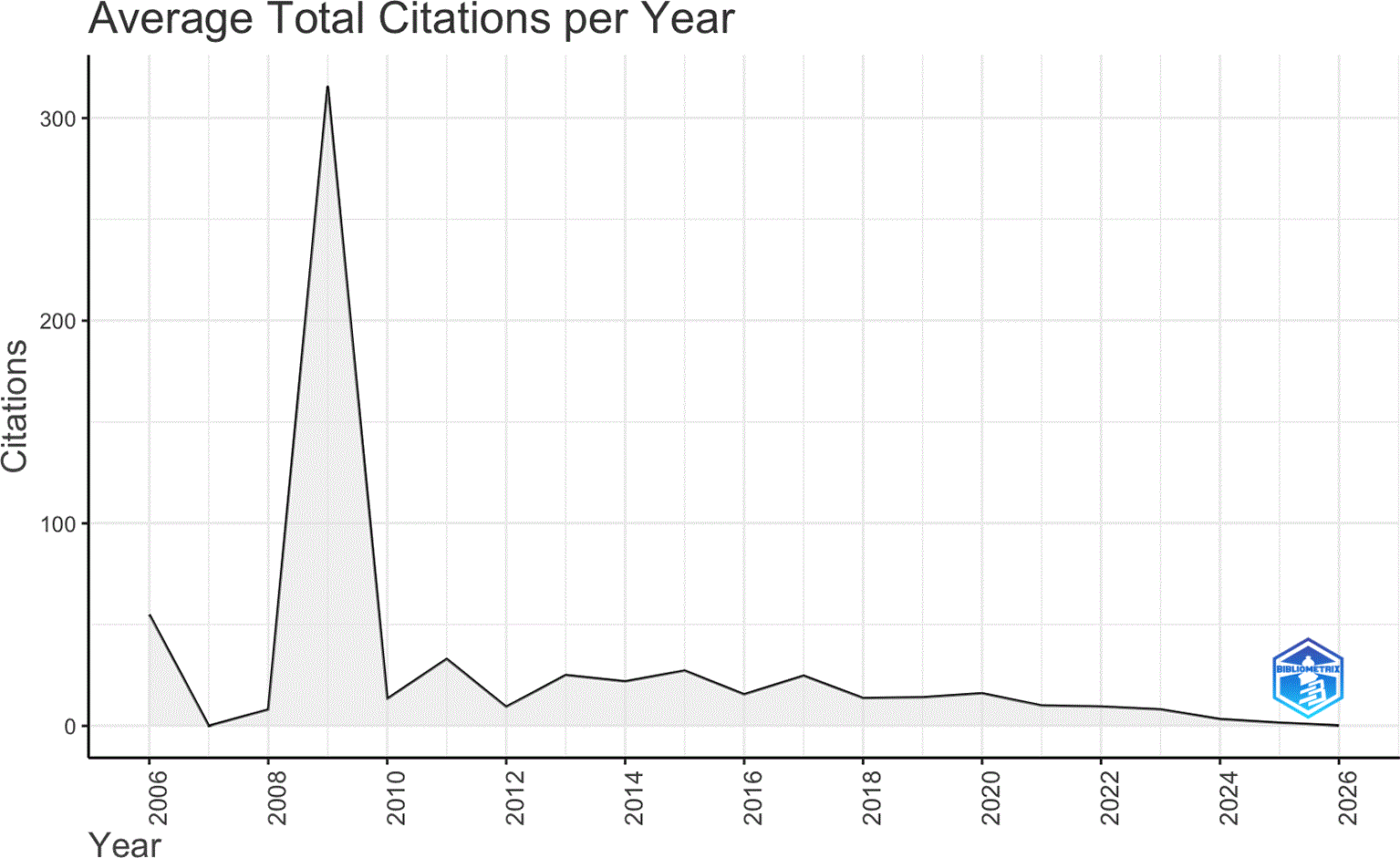
Figure 2. Annual scientific production, 2006 to 2026 (2026 is a mid-year partial count).
The author base mirrors the dispersion observed among journals. Of 1,015 contributing authors, 95.4% (968 of 1,015) appear on a single document, and the fitted Lotka exponent (beta = 4.097, Kolmogorov-Smirnov p = .33) is far steeper than the classical value of 2 (Lotka, 1926), meaning that productivity decays much faster than in mature fields. In practical terms, author productivity within this corpus shows little continuity: the corpus does not contain a persistent core community of authors. Whether these same authors are productive in adjacent fields cannot be determined from this corpus, so no inference about an identifiable invisible college is drawn here. Collaboration is moderate in size (3.47 co-authors per document) but predominantly domestic, with international co-authorship at 17.42%.
Citation impact concentrates in the older, media-oriented portion of the corpus. The most cited documents (
Table 4) are headed by early studies of social network sites and civic participation, most prominently Valenzuela et al. (2009), which alone accounts for 1,360 of the corpus’s Web of Science citations as of the search date, far ahead of the second-ranked document (164 citations), whereas the recent service-learning mass that dominates the corpus numerically has had less time to accumulate citations, its highest-ranked example being Salam and Farooq (2020).
This asymmetry is informative: the field’s visibility still rests on its social media wing, while its current production runs through service-learning.
Conceptual structure
The frequency distribution of author keywords (
Table 5) provides the first view of the conceptual structure. Service-learning is the most frequent keyword by a clear margin (65 occurrences), followed by youth (51) and civic engagement (44). The largest explicitly digital keyword, social media, occurs 22 times, roughly one third as often as service-learning; the remaining digital vocabulary is distributed across smaller nodes such as digital literacy (10), Facebook (8), and internet (8). Volunteering itself appears 11 times. The ordering already suggests the field’s basic asymmetry: community-benefit participation, articulated mainly through the service-learning frame, supplies the dominant vocabulary, while digital terms are present but fragmented into several mid-sized nodes rather than consolidated into a single hub. These frequencies depend on author keywording practice and on the thesaurus harmonisation applied during data preparation, and are read here as indicative of relative emphasis rather than as exact measures.
Table 5. Fifteen most frequent author keywords after thesaurus harmonisation.
| Author keyword |
Documents |
|---|
| service-learning
| 65 |
| youth | 51 |
| civic engagement | 44 |
| social media | 22 |
| covid-19 | 15 |
| student | 13 |
| higher education | 11 |
| volunteering | 11 |
| digital literacy | 10 |
| education | 10 |
| participation | 10 |
| civic participation | 8 |
| engagement | 8 |
| experiential learning | 8 |
| facebook | 8 |
The keyword co-occurrence network (
Figure 3; 39 nodes, 5 clusters, 206 links, total link strength 321.22) makes this asymmetry visible as a map. Service-learning forms the densest hub of the network, tightly bound to education, experiential learning, and e-service-learning; a second large region gathers youth, civic engagement, and their developmental vocabulary. The digital terms, by contrast, do not cohere into one region: digital citizenship sits with online civic participation, digital literacy attaches to the youth and civic engagement cluster, and digital divide appears within the service-learning neighbourhood. The network therefore points to a conceptual structure in which the digital layer runs through several thematic territories as connective tissue instead of standing as a consolidated theme of its own.
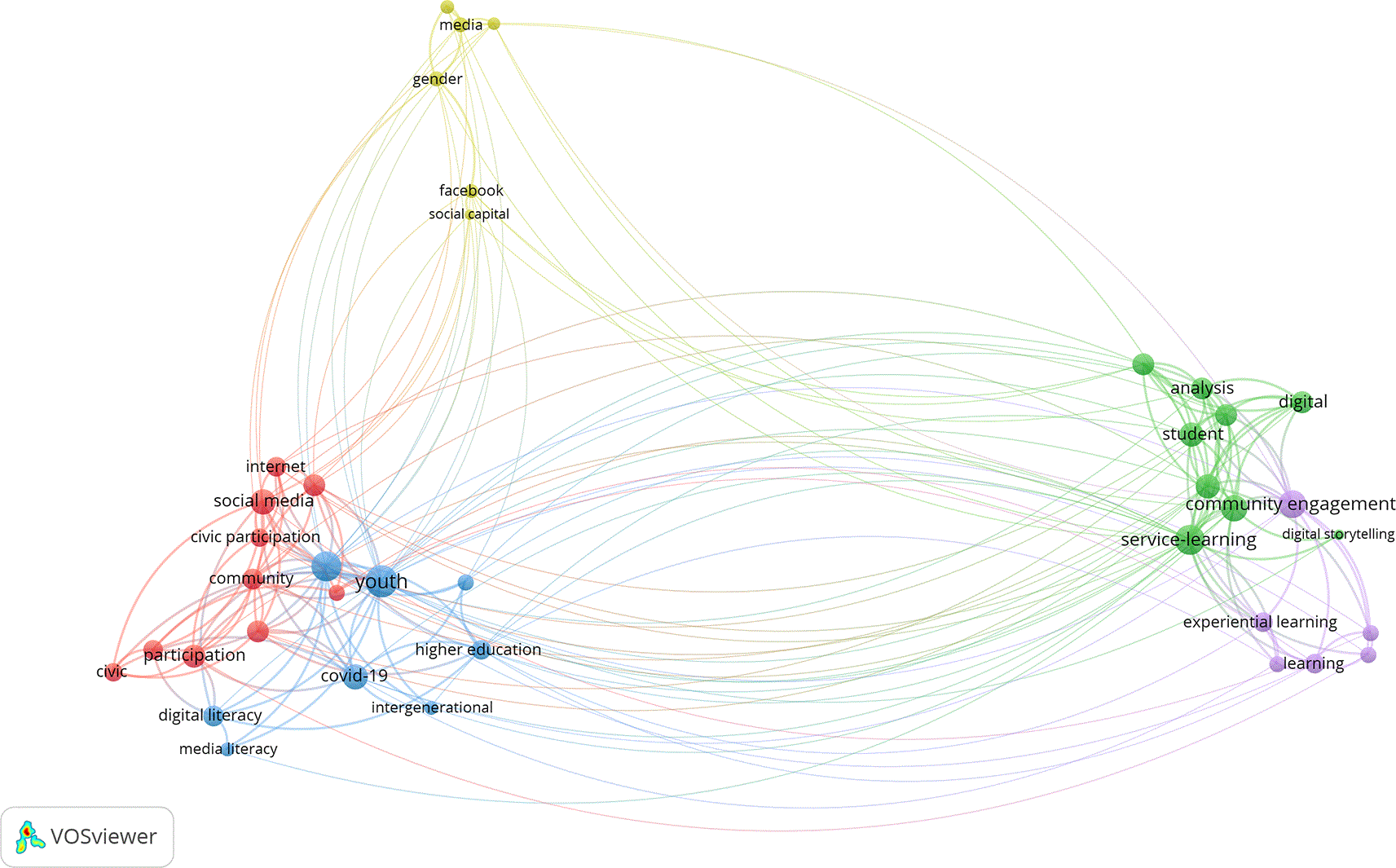
Figure 3. Author-keyword co-occurrence network (39 nodes, 5 clusters).
The thematic map (
Figure 4;
Table 6) locates the same clusters on the centrality-density plane. In the present parameterisation, the service-learning cluster (77 assigned documents) occupies the basic-theme quadrant, combining the highest centrality with the lowest density of any cluster in this solution. This position is consistent with a transversal role across the field rather than a tightly bounded specialist conversation. The largest cluster by document count, read on inspection of its contents as youth civic engagement and development (79 documents), sits in the motor quadrant, combining high centrality with above-median density; under these parameters it occupies the position of a driving research programme. The social media cluster (27 documents) falls, like service-learning, into the basic quadrant, but with visibly weaker centrality. A reading rule is applied to the smaller clusters here: those containing fewer than 15 assigned documents are interpreted as exploratory signals rather than stable thematic domains. On this basis, the student cluster (16 documents) reaches the motor quadrant but is heterogeneous in content (students using digital tools for community service); the engagement cluster (13 documents), whose top-cited members concern online civic engagement and media literacy, occupies a niche position, developed internally but weakly connected to the rest of the map; and the two remaining clusters, college students (7 assigned documents) and general public (2 documents), fall below the interpretation threshold and are not read as themes. Read against these thresholds, the map is consistent with a field organised around a service-learning basic theme and a youth development motor, accompanied by digital themes that are either transversal but weaker in centrality (social media) or confined to small exploratory clusters.
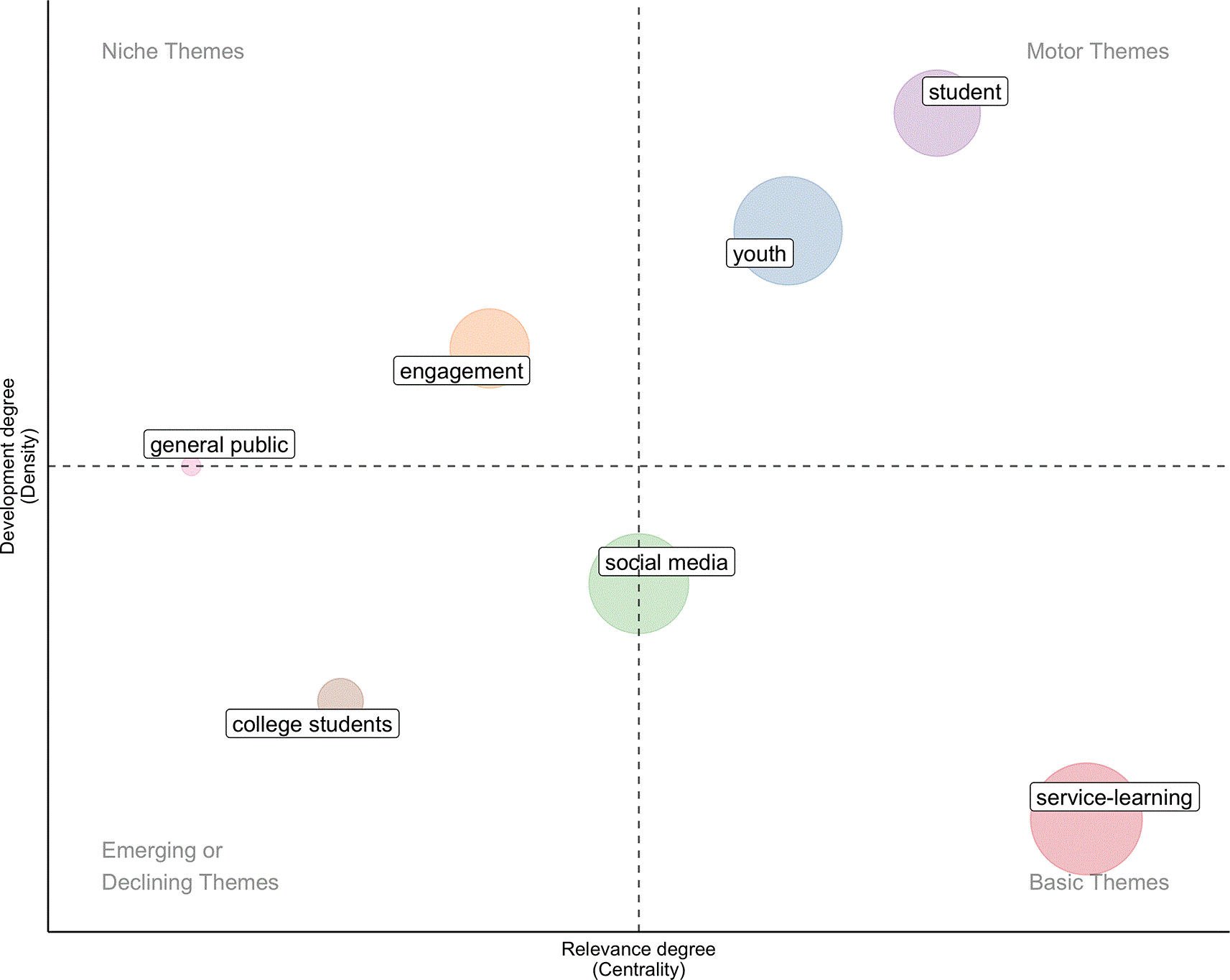
Figure 4. Thematic map of author keywords on the centrality-density plane.
Table 6. Thematic clusters on the centrality-density plane.
Assigned documents are from the cluster-label validation (221 of 310 documents assignable); centrality and density are from the thematic map.
| Cluster | Assigned documents | Centrality | Density | Quadrant |
|---|
| service-learning
| 77 | 4.58 | 53.53 | Basic |
| youth (civic engagement and development) | 79 | 2.45 | 73.82 | Motor |
| social media | 27 | 2.18 | 57.87 | Basic |
| student | 16 | 3.64 | 85.97 | Motor |
| engagement | 13 | 1.41 | 64.62 | Niche |
| college students | 7 | 0.61 | 55.56 | Below threshold |
| general public | 2 | 0.00 | 62.50 | Below threshold |
A sensitivity run using Tier-1 keywords only reproduced the same broad structure, with service-learning again central and stable memberships across the small set of clusters (service-learning n = 42, social media n = 33, student n = 24, engagement n = 13, college students n = 8); only the dominant label of the youth cluster shifted, from youth to civic engagement (n = 44), while its membership remained unchanged. The thematic configuration is thus stable across this parameter choice.
The multiple correspondence analysis of author keywords (
Figure 5) offers a third, complementary cut through the conceptual space; its two dimensions retain a modest 16.45% and 11.81% of inertia, so the configuration is interpreted only at the level of coarse regions. Three features of the plane align with the preceding maps. First, a distinct service region (service, global citizenship, intercultural, leadership, e-service-learning, community engagement) separates cleanly from the rest of the space. Second, the digital and media vocabulary forms a single broad, internally loose cloud at the centre of the plane, stretching from learning and digital divide to Facebook, Twitter, and smartphone; its breadth and low internal structure are consistent with the earlier finding that the digital layer is connective rather than consolidated. Third, a compact intergenerational service-learning pocket (gerontology, older adults, virtual, social isolation) appears at the margin, matching the niche position of the intergenerational clusters in the thematic map.
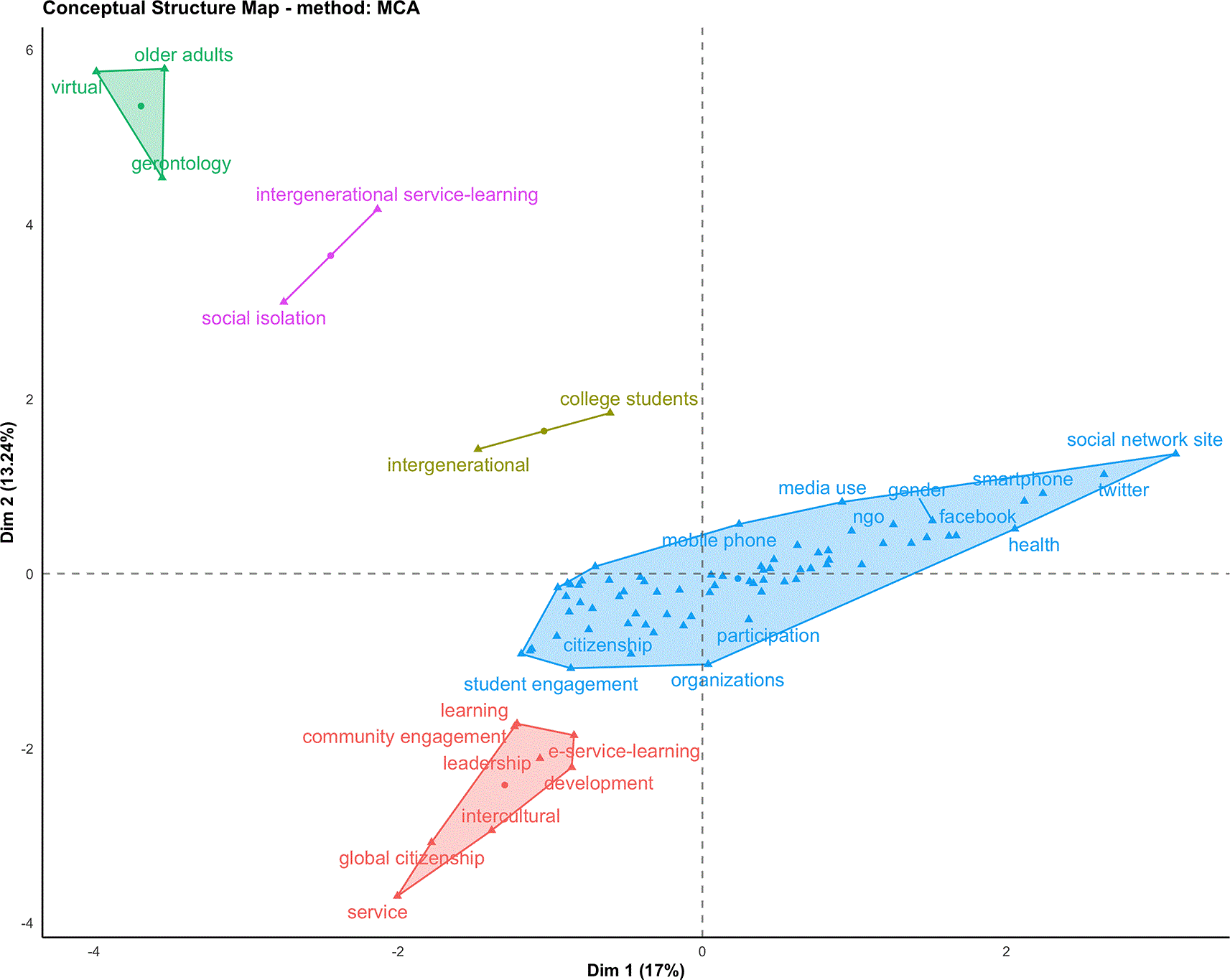
Figure 5. Multiple correspondence analysis of author keywords.
A sensitivity run using Tier-1 keywords only reproduced the same broad structure, with service-learning again central and stable memberships across the small set of clusters (service-learning n = 42, social media n = 33, student n = 24, engagement n = 13, college students n = 8); only the dominant label of the youth cluster shifted, from youth to civic engagement (n = 44), while its membership remained unchanged. The thematic configuration is thus stable across this parameter choice.
Intellectual base and historical roots
The co-citation network of the corpus’s cited references (
Figure 6A; 30 nodes, 2 clusters, 180 links) is dense: 41% of all possible ties among the 30 most co-cited references are realised. These node, cluster, and link counts are identical to those of the pre-refinement solution, indicating that the intellectual base is unaffected by the corpus refinement. The selected intellectual core, that is the 30 most co-cited references, is therefore densely interconnected rather than fragmented, and it resolves into two tightly interwoven streams. The first cluster gathers the classical civic participation and social media canon, with Putnam’s social capital work, Verba and colleagues’ civic voluntarism model, the civic engagement definitions of Adler and Goggin (2005), Zukin and colleagues’ account of changing citizenship, and the social media-participation studies of Valenzuela et al. (2009) and Gil de Zúñiga et al. (2012) among its most co-cited members. The second cluster is anchored by recent service-learning evaluation scholarship, with Lin’s 2023 study as its most visible node. That the two streams remain densely cross-linked rather than separated suggests that authors in this field frequently cite across the civic-theoretical and pedagogical traditions.
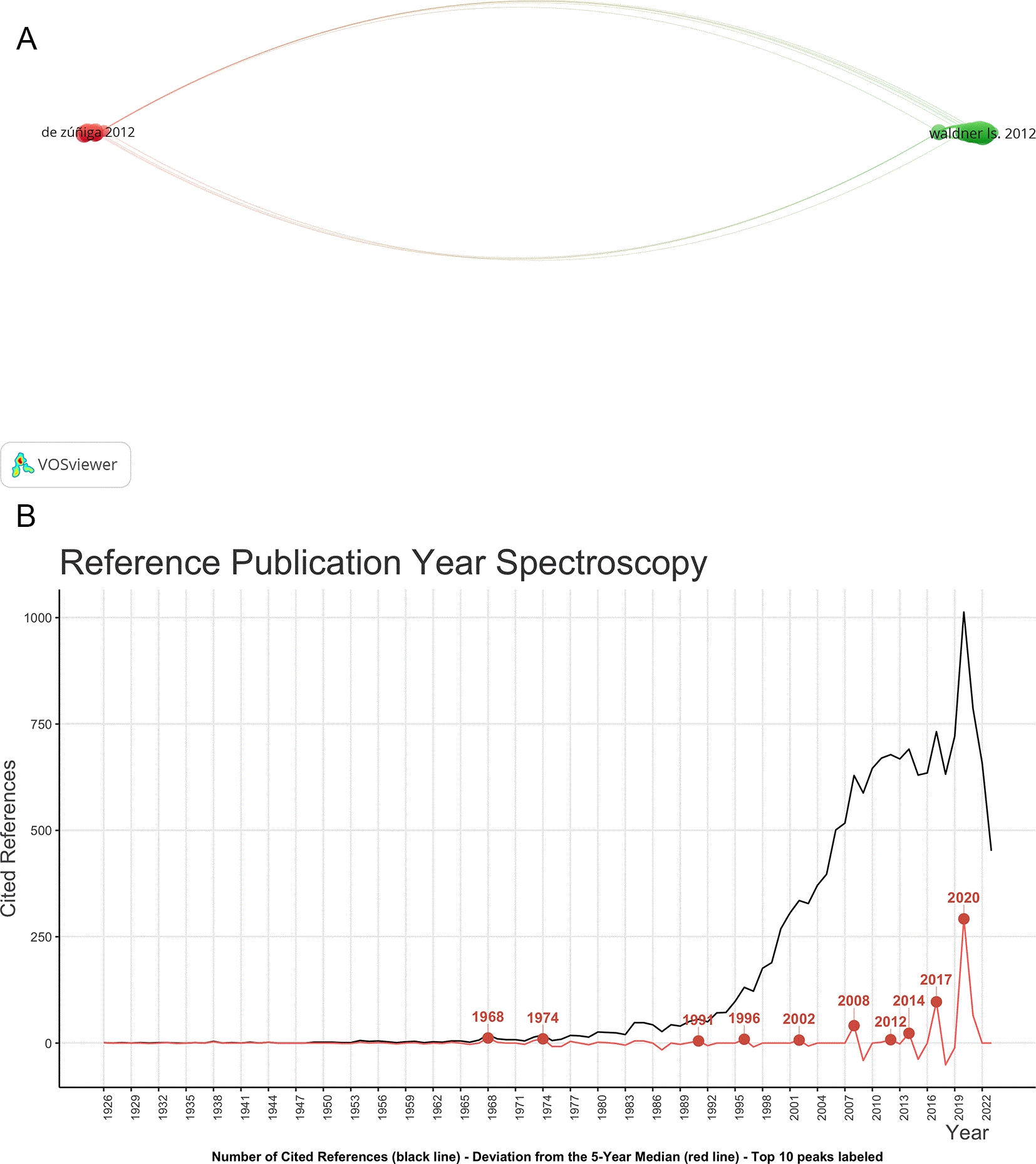
Figure 6. (A) Co-citation network of the most co-cited references (30 nodes, 2 clusters). (B) Reference publication year spectroscopy (RPYS).
Reference publication year spectroscopy (
Figure 6B) dates the layers of this base. Three root strata emerge from the deviation-from-median profile. A classical-theory stratum peaks around 2000–2001 (deviations of +93 and + 117), coinciding with the social capital and civic voluntarism classics identified in the co-citation map. A formative stratum spans roughly 2005–2010 (peaks of +130 in 2006 and + 128 in 2008, +120 in 2007), corresponding to the years in which civic engagement was redefined and the first social media-participation studies appeared. The largest peak, however, is recent: 2020 shows the strongest deviation in the entire spectrum (+292), within a broader 2017–2021 burst. The field is thus not rootless; it has clearly identifiable theoretical anchors two decades old, but the greater mass of its intellectual base was laid down in the last few years, a pattern consistent with a recently and rapidly expanding empirical programme.
The historiograph (
Figure 7) examines whether the corpus has begun to cite itself, that is, to form an internal chain of ideas. Only 39 of the 310 documents (13%) have a local citation score of at least one, meaning they are cited by at least one other document in the corpus; the remaining 87% are not cited internally and sit outside the genealogy. This figure is essentially unchanged from the pre-audit solution (39 of 318), confirming that removing the eight out-of-scope records did not alter the internal citation structure. Taken with the growth rate, the 2020 peak in the reference-year spectrum, and the steep Lotka exponent reported above, this low level of internal citation indicates that a shared internal citation lineage is only beginning to form. The connected core that does exist, however, is thematically unambiguous. The highest local citation scores belong to service-learning and e-service-learning studies (Faulconer, 2021, LCS = 13; Shek et al., 2022, LCS = 9; Lin et al., 2023, LCS = 8; Harris, 2017, LCS = 7), and the clearest citation chain, from Shek et al. (2022) to Lin et al. (2023) to Li et al. (2024), traces a programme of service-learning outcome evaluation. Where the field has started to build on itself, it builds on service-learning. Given the small size of this connected core, the reading is confined to this observation and no finer-grained lineage claims are made.
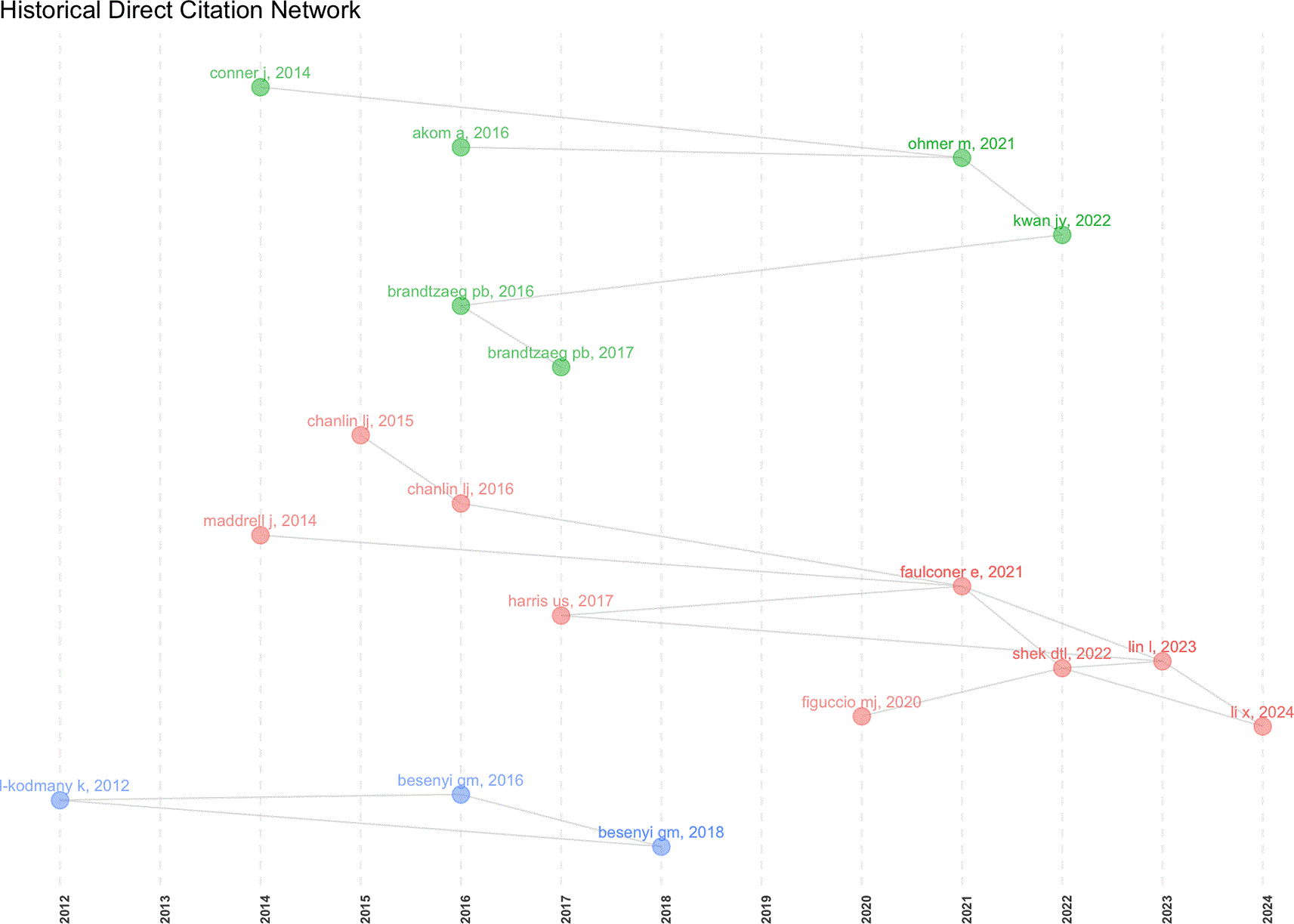
Figure 7. Historiograph of internally cited documents.
The position of volunteering, service-learning, and digital technology
Across four complementary analytical views, taken here in the same order throughout, service-learning repeatedly occupies a central position in the corpus: it is the densest hub in the keyword co-occurrence network (
Figure 3), a basic theme in the thematic map (
Figure 4), the leading strand in the citation genealogy (
Figure 7), and, on the content reading of cluster members, the dominant subject of the largest clusters. The content validation of cluster labels reinforces this pattern: even the college students cluster (7 documents), nominally a population label, turns out on reading of its most cited members to consist of intergenerational service-learning studies. Taken together, these results position service-learning as the principal organisational frame of the community-benefit corpus. These four views are complementary rather than statistically independent: the keyword co-occurrence network, the thematic map, and the multiple correspondence analysis all draw on the same author-keyword substrate, whereas the citation-based historiograph and the content-based validation of cluster labels rest on separate data layers. The convergence spans a keyword layer, a citation layer, and a content layer; the four views are complementary rather than fully independent measurements.
Digital technology is present across the corpus but does not appear as a single consolidated conceptual pillar. Instead, digital terms are distributed across civic-development, social-media, and service-learning-related clusters, suggesting a cross-cutting and context-dependent role. Two identifiable strands can be distinguished within this dispersion: a digital-civic strand (digital literacy, digital citizenship) attaches to the civic engagement and youth development territory, while a social-media strand (social media, internet, Facebook) forms its own basic-quadrant cluster with weaker centrality. Although the sampling frame requires every record to carry an explicit digital term, it does not require these terms to resolve into two separate strands, nor does it prescribe which thematic clusters they attach to; this dispersion is therefore a pattern in the data rather than an artefact of the query design. Explicit volunteering vocabulary, finally, is present but thin: volunteering occurs 11 times as an author keyword and appears inside the social media cluster rather than as an autonomous node, suggesting that in this literature voluntary community service is enacted and studied primarily through the institutionalised service-learning frame rather than under the volunteering label itself.
One caveat on the construct boundary belongs here, as it conditions this reading. A screening-sensitivity contrast compared the raw author-keyword structure under two corpus conditions: a political-retained condition comprising the 660 records that pass the clinical and digital screening axes with the construct axis not applied, and the final community-benefit corpus (N = 310). When politically oriented records are retained, civic engagement (149), social media (114), youth (77), and political participation (64) dominate the keyword structure, and service-learning (65 occurrences across its two spelling variants) sits in a minor position. Under the community-benefit boundary, service-learning (64 across the same variants) becomes co-dominant with civic engagement (47), and political participation drops out of the twenty leading terms altogether. These figures are unharmonised author-keyword frequencies, reported for proportional comparison only and regenerated by a deposited script (extended-data Table S2); they are not directly comparable with the harmonised counts of the N = 310 corpus reported above. The contrast shows that this configuration is specific to the explicitly defined community-benefit corpus and should not be generalised to the broader literature on youth civic and political participation.
Geographic distribution
Scientific production is geographically concentrated (
Table 7). The United States accounts for 122 documents (39.5% of the corpus), followed at a considerable distance by China (41; 13.3%) and Spain (19; 6.1%); the United Kingdom (9), Malaysia (8), Canada (7), Italy (7), and the Republic of Korea (7) complete the leading group. The corresponding-author country distribution also reveals distinct collaboration profiles. The United States, despite its volume, is domestically oriented, with only 8.2% of its documents internationally co-authored, whereas several smaller producers show the opposite pattern (the Republic of Korea 71.4%, the United Kingdom 44.4%, Canada 28.6% multiple-country publications). Internationalisation in this field thus appears to be carried by its smaller contributors, while the dominant producer publishes largely within national teams; this is consistent with the corpus-wide international co-authorship rate of 17.42% reported above.
Table 7. Leading countries by corresponding-author production (documents, share of the corpus, and multiple-country publication rate).
| Country | Documents | % of corpus |
MCP (%) |
|---|
| United States | 122 | 39.5 | 8.2 |
| China | 41 | 13.3 | 14.6 |
| Spain | 19 | 6.1 | 10.5 |
| United Kingdom | 9 | 2.9 | 44.4 |
| Malaysia | 8 | 2.6 | 37.5 |
| Canada | 7 | 2.3 | 28.6 |
| Italy | 7 | 2.3 | 28.6 |
| Republic of Korea | 7 | 2.3 | 71.4 |
| Australia | 6 | 1.9 | 16.7 |
| Portugal | 6 | 1.9 | 33.3 |
| New Zealand | 5 | 1.6 | 0.0 |
| Norway | 5 | 1.6 | 20.0 |
| Türkiye | 5 | 1.6 | 20.0 |
Discussion
The map answers the two questions the Introduction left open, and it answers them in a way that reframes what kind of field this is. On four complementary analytical views, the keyword co-occurrence network, the thematic map, the internal citation genealogy, and the content reading of cluster members, the same configuration recurs: service-learning is the principal organisational frame of the community-benefit corpus, and digital technology appears as a cross-cutting, context-dependent layer rather than a consolidated pillar. These views are complementary rather than fully independent: the co-occurrence network and the thematic map are both derived from the same author-keyword layer, whereas the citation genealogy and the content reading rest on a separate data layer, so their agreement reflects convergence across, not within, evidentiary sources. These convergent signals suggest that the literature is not organised as a field of digital youth participation, with technology as its object, but as a field of pedagogically institutionalised community-benefit participation into which digital tools are woven. Its centre of gravity sits in education, the home of service-learning (Bringle & Hatcher, 1996; Eyler & Giles, 1999), rather than in communication or political science. This describes how the community-benefit subfield is assembled, not young people’s civic behaviour in general. It nonetheless has a behavioural counterpart: survey work shows that young Americans gravitate toward the community-benefit face of engagement rather than toward conventional politics (Zukin et al., 2006). That evidence speaks to the American context in which it was gathered; within this corpus, itself dominated by US production, the institutionalised, pedagogical form is the one around which research has settled.
That reading gains weight from an unusual property of the intellectual base. Several of the works that best interpret the map, social capital theory (Putnam, 2000), the civic voluntarism model (Verba et al., 1995), the analysis of the civic engagement construct (Adler & Goggin, 2005), and the community-benefit versus political distinction (Zukin et al., 2006), are also among the references the field most co-cites. The interpretive frame is therefore not imposed from outside the corpus; it is drawn in large part from the corpus’s own most densely shared canon. Within that frame, the position of the digital layer becomes legible. Digital technology never consolidates into a single pillar comparable to the service-learning hub. It splits into two strands that answer different theoretical questions. A digital-civic strand (digital literacy, digital citizenship, digital inclusion) sits closest to questions of capability and access, reading through the digital-citizenship tradition, in which the digital is an infrastructure of skills and participation (Mossberger et al., 2008). A social-media strand (social media, internet, Facebook) sits closer to platform-mediated communication and to the meta-analytic literature on digital media and engagement (Boulianne & Theocharis, 2020; Loader et al., 2014). The separation of these strands may reflect distinct research problems and disciplinary traditions. Their dispersed position is consistent with Kahne et al.’s (2013) account of digital participation as an enabling channel across civic activity. The social-media strand also carries most of the field’s citation impact, while the more recent service-learning mass is less cited: the digital wing is where the field has been visible, not where it is now growing. Because citation counts accumulate over time, this contrast is a temporal asymmetry between the older, highly cited social-media literature and the more recent service-learning-heavy production.
The structure also speaks to a long-standing worry about the civic engagement construct. Because the term absorbs everything from community service to electoral politics, its catch-all use has been treated as an obstacle to cumulative research (Adler & Goggin, 2005; Berger, 2009). Service-learning, volunteering, and civic engagement occupy separate disciplinary homes and cite different canons, inviting the objection that a single corpus staples three unrelated literatures together. The map speaks to that objection empirically rather than settling it by definition. The selected co-citation core, the thirty most co-cited references, is densely interconnected, with roughly two fifths of the possible ties among them realised, and it resolves into two streams that remain heavily cross-linked. Authors in this field therefore cite across the civic-theoretical and pedagogical traditions even while writing under separate keywords, so conflation at the level of vocabulary coexists with integration at the level of intellectual debt. The construct boundary this study imposed is what makes the underlying integration visible: a sensitivity contrast confirmed that retaining politically oriented records lets civic and political engagement and social media dominate the structure and pushes service-learning to the margin, whereas excluding them brings service-learning’s organising position into view. The sensitivity contrast shows that this configuration is specific to the explicitly defined community-benefit corpus and does not generalise to the broader literature on youth civic and political participation.
Excluding political participation from the corpus does not place the mapped field outside democracy research; it locates it at a different point in the same terrain. The community-benefit repertoire that the map foregrounds, volunteering and service-learning, is the setting in which young people accumulate the civic skills, interpersonal trust, and organisational ties that models of civic voluntarism and social capital treat as antecedents of later civic and political engagement (Putnam, 2000; Verba et al., 1995). On this reading, service-learning’s central position is not an apolitical curiosity but the pedagogical infrastructure through which a community-benefit disposition is cultivated, and the separation the study draws between community-benefit and political participation (Ekman & Amnå, 2012; van Deth, 2014; Zukin et al., 2006) is what allows that infrastructure to be seen without being folded into electoral behaviour.
The distinction also clarifies how a map of community-benefit engagement bears on questions of democratic linkage. Volunteering organisations, universities running service-learning, and community groups are intermediary structures that connect young people to public institutions, and research on electronic participation has treated such voluntary organisations as democratic actors in their own right rather than as a residual category (Sæbø et al., 2008). Within these structures the digital layer operates less as a neutral instrument than as part of an organisational and participatory arrangement, a reading that a socio-technical perspective on information systems would invite (Mumford, 2006) and that is consistent with the map’s finding that digital technology runs across the field as a cross-cutting condition rather than consolidating into a theme of its own (Mossberger et al., 2008; Kahne et al., 2013). Framed this way, the study contributes to democracy research by charting the community-benefit substrate on which digitally mediated civic capacity is built, while leaving the separate question of political participation to the literature that defines it as its object.
Against this backdrop, the position of volunteering is an instructive surprise. Volunteering is present and visible, yet it is neither the principal organisational frame nor an autonomous node; it appears eleven times as an author keyword and sits inside the social-media neighbourhood rather than forming a territory of its own. No distinct digital-volunteering theme emerged under the present corpus definition, author-keyword coverage, and mapping parameters. This does not establish the absence of digital-volunteering research; it indicates that the topic has not formed a sufficiently visible and internally coherent keyword structure within this corpus. This absence is not produced by the construct boundary, which was drawn to admit volunteering, but is a property of the literature itself: voluntary community service under digital conditions is examined largely through the institutionalised service-learning frame rather than under the volunteering label. This is corroborated from outside the corpus, where the closest synthesis of online volunteering is a scoping review of fourteen studies (Tommasi et al., 2025) and the phenomenon has an established conceptual typology (Ihm, 2017) but no science map of its own. For a field one might expect to be centred on digital volunteering, the map diagnoses it as a named but under-built research object.
The field is also produced narrowly in geographic terms, which matters for a literature whose subject is community participation. Output concentrates in the United States and China, and production elsewhere is comparatively thin, with Türkiye contributing five documents. This partly reflects the study’s own instrument, since a single English-language database over-represents Anglophone output (Mongeon & Paul-Hus, 2016; Maddi et al., 2025), a limitation addressed in the next section. Whether the community-benefit repertoire, the balance between institutionalised service-learning and informal volunteering, and the meaning of digital participation vary across welfare regimes and civic traditions is a question the current evidence base cannot answer, and one that a map drawn largely from North American evidence cannot settle. This uneven geographic distribution is a descriptive property of the mapped corpus. Read alongside the field’s recent emergence, it marks the limits of what a single-database, English-language map can presently show rather than a settled verdict on where the field is active.
Read historically, the field is recent but not rootless. Reference publication year spectroscopy locates clear theoretical anchors around 2000 and 2001, the social-capital and civic-voluntarism classics, while the mass of the base was laid down between 2017 and 2021, peaking in 2020. The internal genealogy tells the same story: only thirteen per cent of the corpus is connected by local citation links, so a shared lineage is only now forming, and the connected core is a service-learning evaluation chain. Two readings follow, both modest given the small connected core. First, the field has inherited a theoretical vocabulary but has not yet turned it into a cumulative internal conversation, a pattern consistent with the field’s recent formation, evident in the post-2017 concentration of the base and the low internal connectivity, rather than a defect. Second, where the field has begun to build on itself, it builds on service-learning, which reinforces the principal-frame finding from a fourth, temporal direction. Finer lineage claims are not warranted at this level of connectivity.
Research agenda and implications
The map identifies where this literature is thin as precisely as where it is dense, and each thin region converts into a concrete line of work rather than a general call for more research. The six directions below follow from specific structural features of the map, and each names the gap it addresses, a tractable design, and the readers it would serve.
1.
A measurement basis for digital volunteering. The map surfaces no theme dedicated to digital volunteering, and the closest synthesis outside the corpus covers only fourteen studies (Tommasi et al., 2025). Conceptual typologies of online volunteering exist (Ihm, 2017), but the map suggests limited visibility of standardised measurement work distinguishing its forms, for example episodic micro-tasks from sustained virtual service. A tractable first step is to develop and psychometrically validate such an instrument on youth samples, building on the dimensional definition of volunteering (Cnaan et al., 1996) and established measurement guidance (International Labour Office, 2011). This would give nonprofit and youth researchers the shared operationalisation that a literature organised around service-learning keywords does not currently supply.
2.
Volunteering beyond the service-learning frame. Because voluntary community service is enacted largely through the institutionalised service-learning frame, informal and self-initiated forms of digital volunteering are comparatively invisible in the map. Research that treats non-curricular digital volunteering, such as micro-volunteering, crowdsourced civic tasks, and platform-coordinated mutual aid, as a primary object, with the design rigour service-learning already receives, would test whether findings from curricular settings transfer to voluntary ones. A comparative design contrasting curricular and self-initiated youth volunteering on the continuity of participation would be especially informative. Continuity here can be operationalised through comparable measures of onset, persistence, and discontinuation of participation, so that curricular and voluntary pathways are assessed on the same terms, and such a design would serve voluntary-sector organisations that recruit outside educational institutions.
3.
Specifying the role of the digital, not just its presence. The digital layer splits into a capability strand (digital literacy, digital citizenship, inclusion) and a platform strand (social media, internet) that do not consolidate. Rather than adding digital as a single undifferentiated variable, future studies can apply a proposed analytical typology of the role the technology plays in a given case, distinguishing whether it constitutes the participation, provides its delivery environment, coordinates it, or is incidental to it, and then ask whether these roles carry different civic outcomes. One question follows directly: do interventions that raise young people’s digital-citizenship skills (Mossberger et al., 2008) change the quality of their platform-mediated community contribution, or do the two strands stay independent in practice as they are on the map? Answering it would connect a curriculum-facing research community to a communication-facing one, two groups that currently occupy separate clusters.
4.
Comparative evidence from under-represented research systems. Production concentrates in the United States and China, and under-represented national and regional contexts, Türkiye among them with five documents, are thinly represented. Part of this is an instrument effect taken up in the Limitations, but it also points to a substantive gap: a template built largely on North American service-learning may not describe community-benefit participation under different welfare regimes and civic traditions. Comparative and single-context primary studies in under-represented systems, including Türkiye, would test the external validity of the principal-frame finding and could surface forms of youth community contribution that the present corpus cannot see. This work is most valuable to researchers in those systems and to any use of the field’s conclusions beyond the contexts that produced them.
5.
Longitudinal tests of the post-2020 surge. Three fifths of the corpus appeared in 2020 or later, the strongest reference year is 2020, and COVID-19 is a visible keyword, so much of the field documents a recent surge; whether the pandemic drove that surge is a hypothesis these cross-sectional data cannot test. Whether post-2020 digital community participation persisted, converted into sustained service, or receded is an open question that cross-sectional bibliometrics cannot answer. Longitudinal and cohort designs that follow young participants across and beyond the post-2020 period would separate durable behaviour change from a temporary spike, a distinction that matters for youth-development researchers and for programmes premised on the assumption that the shift is permanent.
6.
Construct-transparent science mapping. In this study, the central structural finding became visible only after a declared construct boundary was applied, and the sensitivity contrast showed that admitting politically oriented records inverts the structure. This carries a methodological implication beyond the present case. Science maps of elastic constructs, of which civic engagement is the textbook example (Adler & Goggin, 2005; Berger, 2009), can report a two-way sensitivity contrast that shows the map with and without the contested boundary and can state the construct decision explicitly. Making the boundary visible lets a structural finding be read as the consequence of a stated definition rather than as a neutral discovery, a standard that reviewers of such maps can reasonably ask for.
Limitations
Several limitations bound the interpretation of these results, most of them consequences of deliberate design choices whose trade-offs are set out here.
First, the analysis draws on a single database, the Web of Science Core Collection. As explained in the Methods, this was a considered choice rather than a convenience: merging Web of Science with Scopus introduces reference-standardisation and matching problems in the cited-reference field, so a single source was the more consistent basis for computing co-citation analysis on one coherent citation universe. The cost is coverage bias. Journals indexed only in Scopus, and the documents they carry, lie outside the corpus, and the two databases are known to index the literature unevenly (Mongeon & Paul-Hus, 2016; Visser et al., 2021). The performance and mapping results therefore describe the Web of Science stratum of the field rather than its entirety. Re-running the same construct-based screening on a Scopus corpus and comparing the resulting maps is the most direct extension of this study and would test how far the reported structure depends on the indexing source. As an external consistency check rather than a replication, an approximate three-block query on the open OpenAlex database (4,870 records, retrieved 17 July 2026) reproduced the headline patterns directionally: a post-2020 concentration of output, the joint centrality of civic engagement and service-learning interwoven with digital terms, and the marginal visibility of digital or online volunteering (about 1% of records). Given OpenAlex’s broader and differently indexed coverage, this check supports the direction, though not the magnitudes, of the reported structure (see Extended data).
Second, the corpus is restricted to English-language articles and reviews. This keeps screening and keyword harmonisation tractable and matches the language of the analytic vocabulary, but it introduces an Anglophone bias that bears directly on the geographic reading. The study reports the geographic distribution of the Web of Science English-language stratum and does not treat it as a measure of underlying research activity: the thin representation of countries such as Türkiye (RQ5) cannot be read as a clean measure of research activity in those settings, because the English-only filter and the geographic coverage skew of Web of Science push in the same direction, under-counting non-English output (Maddi et al., 2025; Mongeon & Paul-Hus, 2016). The distribution the map describes is thus partly a feature of the field and partly an artefact of language and database coverage, and the two cannot be fully separated with these data. Multilingual retrieval, or a source with broader linguistic coverage, would be needed to establish how much of the under-representation is substantive.
Third, the construct boundary that excludes political participation is analytically necessary but imperfect at its edge. The distinction between community-benefit and political engagement is well established (Ekman & Amnå, 2012; van Deth, 2014; Zukin et al., 2006), yet the same typologies acknowledge that the two repertoires shade into one another at the margin, and the study’s own validation, a targeted re-read of forty borderline records and thus limited by that sample, is consistent with this: five of the forty sat in a zone of digitally mediated civic participation adjacent to the political boundary, defensibly classifiable either way. A screening-sensitivity contrast (reported in the Results and Discussion) showed that the reported configuration is specific to the community-benefit boundary as defined and does not generalise to the broader youth civic and political participation literature. A further consideration is that the construct boundary ultimately rests on the judgement of a single researcher: the large language model provided a structured recommendation as decision support rather than serving as an independent second coder, and the two-way audit reported above mitigates but does not remove this reliance. Residual ambiguity at the edge nonetheless remains, and a finer coding scheme that records the civic-political and constitutive-instrumental status of each document would sharpen the boundary in future maps.
Fourth, dictionary-based screening can pass records whose clinical orientation only becomes visible on close reading. A targeted post-hoc content audit of the intermediate corpus identified 10 such candidates; 8 were removed after record-by-record re-assessment and all analyses were re-run (see Methods). The audit cannot guarantee that no further out-of-scope records remain, but the robustness comparison between the pre- and post-audit solutions showed no change in any headline finding (robustness tables), which bounds the plausible influence of any residual noise.
Fifth, both the screening and the conceptual mapping rest on term-based procedures, which carry the limits of any lexical method. Screening used a field-weighted dictionary, and the co-word maps depend on author-supplied keywords, which are neither exhaustive nor uniformly assigned. Author keywords were present for roughly 89% of the corpus, and 221 of the 310 documents (71%) could be assigned to a thematic cluster through their keywords; the remaining records, lacking usable keywords, are invisible to the keyword-based maps even though they inform the performance and citation analyses. This coverage is high for a keyword-based map but not complete, so the maps represent the keyworded majority, not every document. Supplementing author keywords with Keywords Plus, or with title-and-abstract term extraction, would raise coverage at the cost of introducing indexer-assigned or noisier vocabulary.
Sixth, because the search required a digital or technological term in every record, the corpus is digital by construction, which raises a circularity question about the finding that digital technology plays a cross-cutting, context-dependent role rather than forming a consolidated conceptual pillar. Two features of the analysis answer it. The claim is not that digital themes are absent, which the design would trivially guarantee, but that digital-specific concepts fail to consolidate into a single dense theme and instead disperse across territories anchored by service-learning and civic engagement, a pattern the sampling frame does not force. And the sensitivity contrast shows that the structure shifts coherently when the construct boundary is changed, which a pure sampling artefact would not. The finding should still be read within the frame it describes: it characterises how digital technology is positioned inside a literature already defined by its digital dimension, not whether digital tools matter to youth civic participation in general.
Seventh, the corpus is a single-time snapshot taken on 10 July 2026, and several of its properties are time-sensitive. The year 2026 is incomplete and is flagged as partial throughout; recent and early-access records, retained to preserve currency, have had little time to accumulate citations, so citation-based indicators under-represent the newest work. Co-citation and reference-year analyses are especially exposed to this lag, since they rest on citations that accrue slowly (Boyack & Klavans, 2010; Donthu et al., 2021). The corpus is also modest in size for network methods: at 310 documents the co-word and thematic structures are stable, but the co-citation and historiograph networks rest on a small connected core (39 of the 310 documents are locally cited) and are read here at a deliberately coarse grain. These are the expected properties of a focused, still-young corpus rather than defects to be corrected, and re-running the map as the field matures would show whether its currently dispersed author base and thin internal citation lineage consolidate.
Eighth, the corpus reflects deliberate scope choices that shape what the findings can represent. The youth criterion spans secondary through young-adult populations, and because service-learning is enacted largely in higher education, samples of university and college students predominate; the results are therefore weighted toward students and young adults rather than youth in general. More broadly, the corpus deliberately trades breadth for construct fidelity: the findings describe the community-benefit stratum, not the full youth-digital-engagement literature.
Conclusion
This study mapped the research field at the intersection of youth, community-benefit civic participation, and digital technology through a bibliometric analysis of 310 Web of Science records published between 2006 and 2026. On performance (RQ1), the field is young, growing at 16.44% a year, and structurally dispersed, spread across 251 journals with no single journal emerging as a disciplinary home and drawing on a dispersed author base rather than a stable core community. On conceptual structure (RQ2), co-word and thematic analysis place service-learning in the basic-transversal position that underpins the rest of the field, a youth civic engagement and development motor, and digital themes that are either subordinate, in the case of social media, or peripheral, in the case of digital inclusion; the keyword-based maps rest on author keywords available for about 89% of the corpus. On intellectual foundations (RQ3), the field rests on two densely interwoven streams, a classical civic participation and social capital canon rooted around 2000 and a recent service-learning evaluation literature, while its internal citation lineage is only beginning to form. On structural position (RQ4), four complementary analytical views converge on service-learning as the principal organisational frame of the community-benefit corpus, with digital technology appearing as a cross-cutting and context-dependent layer rather than a consolidated pillar of its own. On geography (RQ5), production concentrates in the United States and China, Türkiye contributes five documents, and the geographic reading is conditioned by the English-language single-database frame rather than treated as a measure of underlying research activity.
The contribution of the study is to give this dispersed literature its first integrated science map under an explicit community-benefit construct boundary, and to turn that map into a located diagnosis of where the field is thin: in its volunteering vocabulary, in its internal theoretical consolidation, and in its geographic breadth of production. These are the coordinates against which future empirical and comparative work on young people’s digitally mediated community engagement can be positioned.
Ethics and consent
This study analysed published bibliographic metadata and involved no human participants, no personal data, and no intervention. Ethical approval and informed consent were therefore not required.
Use of generative AI
The use of a large language model as a decision-support tool during corpus screening is reported in the Methods (Screening reliability and validation). In addition, Claude (Anthropic), model claude-opus-4-8 (accessed July 2026; prompt template in the extended data) was used to assist in preparation of the text to the final submission. All bibliometric analyses, numerical results, and interpretations were produced by the author, and the entire text was written and revised by the author. The author takes full responsibility for the originality, validity, and integrity of the content. Generative AI was not used to create or manipulate any figures, images, or research data, and the tool does not meet authorship criteria and is not listed as an author.







