Introduction
Tuberculosis (TB) remains a significant global health issue. It is estimated that more than 10 million people are diagnosed with TB each year, contributing to over 1 million deaths annually.1 Early diagnosis is key to reduce transmission, decrease morbidity, and to prevent deaths.2 Current diagnostic methods mainly depend on sputum-based microbiological testing.3 While sputum-based molecular and culture-based tests have high sensitivity, they also have some limitations. Sputum can be difficult to obtain in certain groups (e.g., children, people living with HIV); up to 25% of people with presumed TB cannot produce sputum for testing.4 Furthermore, a poor-quality sputum sample lowers the chances of the patient receiving an accurate diagnosis.5–7 Sputum induction can be problematic due to limited availability, potential infection prevention, and control issues.8
The World Health Organization (WHO) has prioritized non-sputum-based diagnostic methods as a critical research need.9 Recently, the first non-sputum based near point-of-care test has been approved by WHO based on tongue swab sampling.10 Breath sampling is another promising non-sputum, non-invasive sampling method that could provide an alternative sampling method.11 Breath-based diagnostics may support near point-of-care testing, provide information about infectiousness, and allow sampling and simultaneous infection control though mask wearing.
Mycobacterium tuberculosis (Mtb) has been detected in exhaled breath using the respiratory aerosol sampling chamber (RASC) and other specialized devices,12–14 although data are limited and no evidence exists for drug resistance detection. However, there are still significant challenges to address with regards to breath-based sampling. Exhaled breath typically contains low levels of bacteria; there is variability in aerosol production between individuals and over time, and there remains a need to optimize both sampling duration and the pathogen capturing technology.15,16 It remains crucial to understand the performance of breath sampling: its sensitivity, specificity, feasibility, and scalability.
This study aims to evaluate exhaled breath as a non-invasive sampling method for detecting respiratory infections, including TB. The study focuses on pathogen detection from exhaled breath rather than volatile organic compound (VOC) profiling. Unlike metabolomic breath approaches, exhaled breath sampling aims to capture pathogen or pathogen-derived nucleic acids, thereby enabling direct molecular detection with the possibility of drug resistance testing. The present protocol extends prior proof-of-principle work,15 by evaluating exhaled breath in a prospective clinical diagnostic accuracy design against sputum-based microbiological and clinical reference standards, while also integrating usability, acceptability, and operational feasibility outcomes.
Methods and analysis
Objectives
The primary objective of the study is to determine the diagnostic sensitivity and specificity of exhaled breath sampling using a face mask sampling (FMS) device coupled with molecular testing for detection of pulmonary TB, using sputum-based microbiological testing as the primary reference standard.
The secondary objectives are: 1) to assess if exhaled breath samples can be used to detect rifampicin resistance detection, 2) to compare exhaled breath sampling performance against tongue swab sampling, 3) to assess diagnostic yield of exhaled breath sampling, 4) to assess acceptability, usability and operation feasibility of exhaled breath sampling among healthcare workers and patients, as well as to identify modifiable barriers to adoption and integration into routine care across diverse settings, and 5) to explore performance of exhaled breath sampling in clinically relevant subgroups.
Study design
This study is a cross-sectional health facility-based diagnostic accuracy study in Bucharest, Romania. The study protocol and final report will be developed in accordance with STARD 2015 recommendations for diagnostic accuracy studies.17 Individuals seeking care will be screened for symptoms of TB (cough, fever, weight loss, night sweats), and those eligible who consent will be asked to provide sputum, a tongue swab, and exhaled breath samples using a face mask (described below under Study Procedures). Study samples will undergo molecular testing for TB and rifampicin resistance. All patients will undergo sputum testing using the Xpert MTB/RIF Ultra molecular assay (Cepheid, USA), mycobacterial culture, and phenotypic drug susceptibility testing, according to local standard-of-care procedures.
To assess feasibility, usability and acceptability, a mixed-methods approach will be used that includes observations, semi-structured interviews, focus-group discussions and surveys from intervention recipients (i.e. those providing a face mask sample), intervention providers (i.e. healthcare workers), and other stakeholders involved in policy and the care cascade for TB and respiratory tract infections in high-TB burden settings. To assess usability, we will observe user-device interaction and record task execution, errors and near misses.
Definitions
Acceptability is defined as the extent to which participants receiving and experiencing collection of exhaled breath samples using the devices consider it to be appropriate, based on anticipated or experienced cognitive and emotional responses to the intervention.18 Feasibility is the extent to which the exhaled breath sampling and testing can be successfully used or carried out within the specified setting.19 Usability is characteristic of the user interface that facilitates use and thereby establishes effectiveness, efficiency, and user satisfaction in the intended use environment.20 According to the WHO-recommended four-symptoms screening, a participant will be classified as symptomatic for TB if they present with any of the following symptoms at the time of sample collection: cough, fever, weight loss, night sweats.21
For the reference standard, microbiologically confirmed TB is defined as at least one positive Xpert MTB/RIF Ultra result, or culture positive result on any specimen. Clinically diagnosed TB is defined as having a compatible clinical illness or radiological finding suggestive of TB and/or the decision of the responsible clinical team to commence TB treatment in the absence of any positive microbiological tests for TB. A patient will be classified as having a rifampicin-resistant TB based on phenotypic drug susceptibility testing.
Study population and setting
The study will take place at the Institutul de Pneumoftiziologie Marius Nasta (IPMN) in Bucharest, Romania, where an estimated 60 per 100000 new TB cases occur yearly, of which approximately 10% are estimated to have drug resistance.22 Persons seeking care at TB clinics will be eligible for inclusion if they are adults (≥18 years of age) and have had a cough for 2 weeks or longer or any other symptoms suggestive of TB disease, and if they are willing to provide written informed consent. Individuals will be excluded if they have received treatment for TB infection or disease within the preceding 12 months, if they have taken any medication with anti-mycobacterial activity (including fluoroquinolones) within two weeks prior to study entry, or if they are unable or unwilling to provide informed consent. Recruitment is planned to occur over a period of 18 months.
Study procedures
A study team member will introduce the study to potential participants. After confirming a participant’s interest, the team member will explain the study in detail and provide the participant with a patient Information leaflet. After verifying the participant’s understanding of the study and its procedures, written informed consent will be obtained. The study team will collect information on patient demographics and symptoms (including clinical history, TB symptoms, past history of TB and HIV care, other co-morbidities). All participants enrolled in the study will be asked to provide at least 3 mL of sputum, one tongue swab, and an exhaled breath sample using the AveloMask device (Avelo AG, Switzerland).15 The AveloMask is a specimen collection kit for collecting a participant’s exhaled breath sample. The processing steps are illustrated in
Figure 1. The kit contains a mask and a buffer tube. The inner side of the mask contains a filter inlay to collect aerosol particles from the exhaled breath. The filter inlay is a 75 x 75 mm sheet with electro-spun fibers mounted to the inside of the mask.15 The protocol initially also planned to collect exhaled breath samples using the AveloCollect blowtube device (Avelo AG, Switzerland). However, sample collection with the AveloCollect device was stopped in October 2025 due to preliminary data which showed the AveloCollect had lower sensitivity compared to the AveloMask.
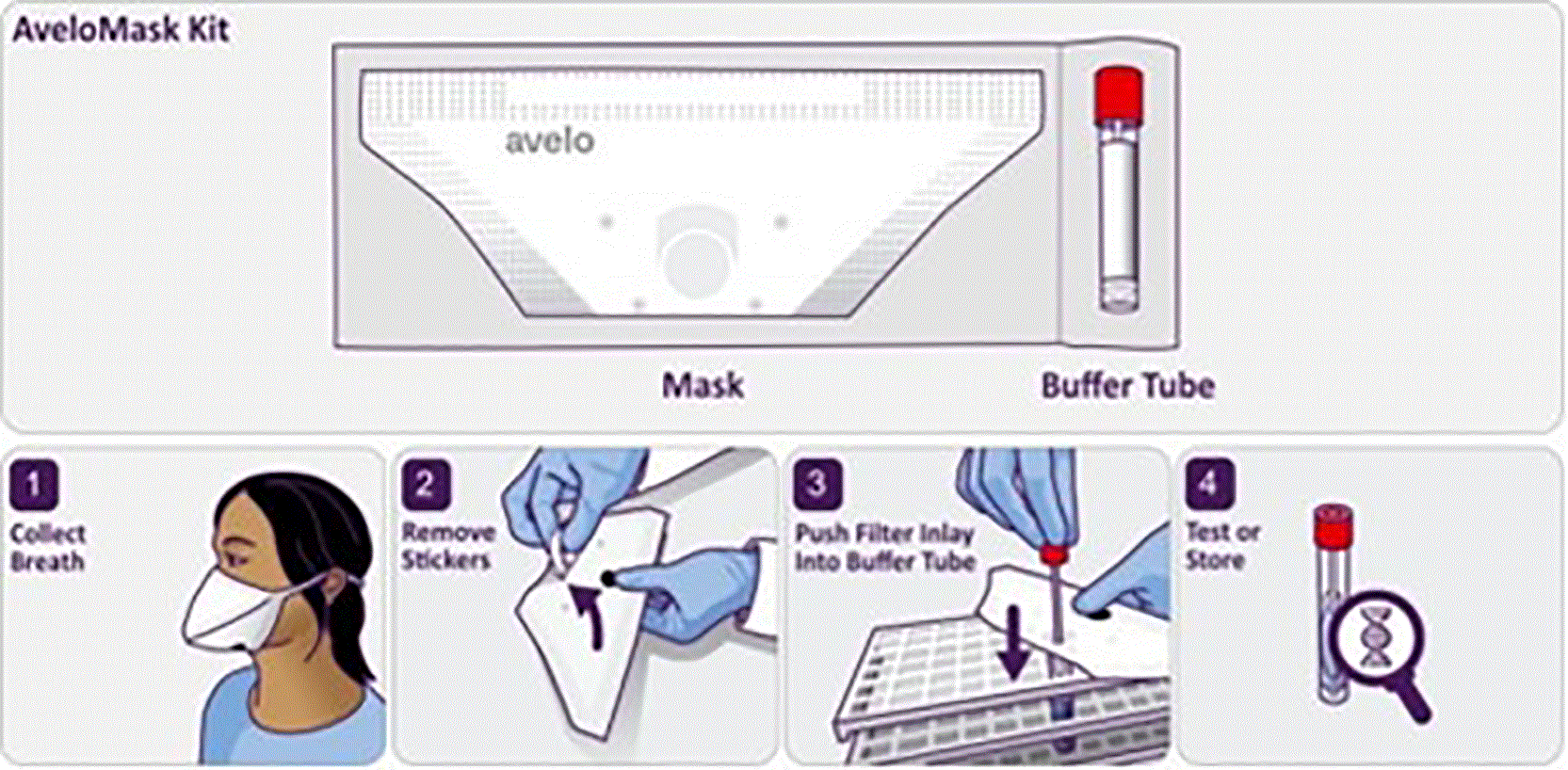
Figure 1. AveloMask Kit and XBA collection procedure.
Provided by Avelo AG – Schlieren, Switzerland. The participant wears the mask for 45 minutes, coughing 5 times at the beginning and 5 times at the end of the wearing period to collect the breath sample.
Participants should not have eaten or drunk anything besides water for 30 minutes prior to breath sampling. Participants will be asked to wear AveloMask for 45 minutes and to cough inside the mask a total of 10 times during the wearing period (5 times at the beginning and 5 times at the end of the wearing time). After collection, the participant will be asked to remove the mask, and the study team member will expose the filter inlay by peeling off the two stickers on either side of the mask (Figure 1). The filter inlay will subsequently be pushed into the buffer inside the sample tube using a stick attached to the tube cap. The buffer inactivates the sample and preserves nucleic acid, allowing for sample transport at ambient temperature until testing and/or biobanking.
Tongue swabs will be collected using sterile, single-use swabs (Copan Floqswabs #503CS01). After confirming participants has had nothing by mouth for 30 minutes and has not used oral hygiene products, swabs will be obtained from the tongue dorsum using a standardized back-front and left-right motion for ≥15 seconds, with sufficient pressure to bend the swab stem and constant rotation to ensure complete coverage. Samples will be stored dry in cryovials, kept upright, and transported at 2–8 °C to the laboratory for storage at −20 °C until testing.
Sputum samples will be collected by the hospital for their routine procedures. If a sputum sample cannot be spontaneously produced, sputum induction techniques may be used according to local procedures and protocols. Sputum will be tested for TB and for drug-resistant TB using Xpert MTB/RIF Ultra (Cepheid, Sunnyvale, CA, USA) within 24 hours of collection (or within 4 days if stored at 2–8 °C), according to the manufacturer’s instructions.
For mycobacterial culture, sputum samples will be decontaminated and concentrated using the NALC-NaOH method. For liquid culture, 0.5 mL of decontaminated sediment will be inoculated into MGIT 960 tubes supplemented with OADC enrichment and PANTA antibiotic mixture, then incubated at 37 °C for up to 42 days. For solid culture, 0.2 mL of resuspended sediment will be inoculated onto Lowenstein-Jensen slants and incubated at 37 °C in a CO2 incubator for 6–8 weeks with weekly examination for growth. Drug susceptibility testing will be conducted. The responsible medical team will arrange further TB investigations as standard of care and local guidelines when deemed necessary. Any leftover patient sputum will be stored at −20 °C.
Exhaled breath samples (face mask filters submerged in buffer) will be transported to the laboratory on the same day as sample collection at a maintained temperature of 2–8 °C, and will be stored in the laboratory at −20 °C until ready for further processing. Tongue swab and exhaled breath samples will be processed on the PlusLife platform using the Thermolyse device for lysis (75 °C, 5 minutes) followed by molecular testing with MTB Nucleic Acid Test Cards on the MiniDock Ultra Integrated Nucleic Acid Testing Device or PlusLife Dock Pro 8. Labeled reaction cards will be prepared, samples will be added, and results will be generated. Laboratory personnel performing exhaled breath and tongue swab testing will be blinded to sputum, culture, and clinical results. Quality control measures including negative and positive controls will run at study initiation, after testing 100 and 200 samples respectively, and at the end of enrollment.
Study sample TB results will be documented directly into the study database. Cycle threshold (Ct) values for TB testing will be recorded where available, and samples will additionally be recorded as ‘TB positive’, ‘TB negative’, ‘TB test indeterminate’ or ‘TB test not done’. Rifampicin resistance results will also be recorded as ‘resistance’, ‘no resistance’ or ‘indeterminate’ where available.
Participants in the mixed-methods component will include a purposively selected subset of adult study participants, healthcare workers involved in recruitment and sample collection, and laboratory personnel involved in specimen processing. Sampling will be conducted using a purposive strategy to ensure diversity in age, sex, clinical presentation, and study experience. Among patients, efforts will be made to include individuals with differing diagnostic outcomes and varying levels of perceived ease or difficulty with exhaled breath sampling. Among stakeholders, participants will be selected to represent different professional roles and levels of experience with the study, TB diagnostic procedures and overall healthcare management.
Data will be collected through semi-structured individual interviews and focus group discussions, using pre-developed interview guides tailored to each participant group. Interview guides will explore key domains including perceived comfort and tolerability of the sampling procedure, clarity of instructions, perceived safety, comparison with sputum and tongue swab sampling, and perceived suitability for routine clinical use. Interviews will be conducted by trained researchers or trained study staff, audio-recorded with participant consent, and supplemented by field notes.
Interviews with patients will be conducted after completion of study procedures, preferably on the same day or within a short, predefined time frame, to capture immediate experiences while minimizing recall bias. Interviews with healthcare workers and laboratory personnel may be conducted after sufficient experience with the sampling workflow has been accumulated.
Sample size justification
The sample size is based on feasibility and width of confidence intervals around diagnostic accuracy for Mtb. The sensitivity of the breath sampling is the focus as specificity of molecular tests has already been proven to be high across sample types.23 Assuming 80% sensitivity, a sample size of 60 patients with TB disease will allow us to calculate sensitivity with a 10% confidence interval (CI). Assuming a prevalence of TB of 20% in patients with presumed TB, up to 300 patients may be required to enroll enough patients with microbiologically confirmed TB. We will recruit consecutive patients meeting the eligibility criteria (e.g., single-gate design). However, due to resource constraints, once we reach a total of 240 patients enrolled without TB based on our reference standard, we will enrich our study population by only recruiting patients with a positive molecular test confirming TB. To minimize spectrum bias, the primary diagnostic accuracy analysis will be restricted to consecutively enrolled participants recruited prior to any enrichment. Enriched recruitment, if implemented, will contribute only to secondary exploratory analyses or precision analyses in confirmed TB cases.
The sample size for the qualitative component will be guided by the principle of thematic saturation, defined as the point at which no substantially new themes emerge from ongoing data collection. As an initial estimate, approximately 15–25 patient interviews and 10–15 stakeholder interviews may be conducted, with one or more focus group discussions where appropriate.
Data collection and management
Study data will be collected during enrollment. Electronic case report forms (eCRFs) will be developed using the REDCap software.24 Quality assurance processes are in place to check all consent forms, screening eCRFs, support documents and laboratory eCRFs. Data will be pseudonymized at site level, entered into REDCap using unique study identifiers, and stored on secure sponsor-hosted servers with role-based access control and audit trails. Missing and inconsistent data will be queried prospectively and resolved prior to database lock.
Data analysis
The trial profile will be summarized using a STARD diagram to report flow of patients through the study, including reasons for non-eligibility and non-enrolment. Data will be reviewed, interpreted, cleaned and analyzed by the study investigators. A statistical analysis plan will describe the analysis in detail. Statistical analysis will be performed with a dedicated statistical software (e.g., R: A language and environment for statistical computing,25 or Stata26 for quantitative analyses and a qualitative coding software, i.e NVivo27 or MAXQDA28 for qualitative data). Analyses will include but are not limited to: descriptive analysis of baseline characteristics of the study participants, frequency of number of collected samples and of TB and rifampicin resistance detection, frequency of collected samples, and TB and rifampicin resistance detection. Categorical variables will be presented as absolute numbers and their relative frequencies, continuous variables as median and min–max values, and interquartile range (IQR) for selected variables. Comparative analysis when required will include chi-squared test (or Fisher’s exact test when appropriate) and T-test or Mann–Whitney test.
Quantitative data
We will calculate sensitivity and specificity compared to reference standards, and report 95% CI for both. Diagnostic yield (i.e. the proportion of people in whom exhaled breath identifies TB among all people attempted to test for TB) among all participants and among all diagnosed with TB,29 will also be calculated with 95% CI. Indeterminate, invalid or missing samples or results (non-actionable results) from both the index and reference standard tests will be excluded from the primary analysis but will be reported and included in a secondary analysis. The analyses will be repeated in key sub-groups, including to age, sex, TB symptoms, co-morbidities and TB disease severity (based on sputum bacillary load and chest radiology appearances). We will compare sensitivity and specificity differences between groups using CI for the difference of paired proportions.
Qualitative data
Qualitative data will be transcribed verbatim and translated into English. Data will be analyzed using a thematic analysis approach. An initial coding framework will be developed based on predefined domains (acceptability, feasibility), followed by an inductive approach to identify emergent sub-themes. Coding will be performed using qualitative data analysis software (e.g., NVivo or MAXQDA). Usability outcomes will be reported using descriptive statistics of the tasks and steps involved and supplemented by observer notes. Subgroup analyses will include comparisons by sex to explore any variations in acceptability, usability, and feasibility of the exhaled breath sampling device.
Trial governance
The study is governed by a Steering Committee, consisting of members belonging to both UKHD (sponsor, coordinating center, quality assurance, quality monitoring, study monitoring, data management), IPMN (study site) and the BreathForDx consortium members.
Discussion
Human breath has been considered a sample for aiding in disease diagnosis since ancient times,30 and it can be an attractive sample type due to ease of collection via non-invasive methods.31 Breath is linked to transmission of infectious microorganisms via the respiratory route, thus a breath test can conceivably detect the most infectious individuals.32 Aerosol transmission of respiratory infections has been largely underestimated, with the COVID-19 pandemic highlighting the limitations of traditional views of droplet and fomite transmission.33 There is now robust evidence supporting aerosol transmission of many respiratory infections including pandemic coronaviruses, influenza, respiratory syncytial virus (RSV), and TB.32
Much of the breath-based diagnostic research has been primarily focused on VOCs. VOCs originate from metabolic processes and often lack specificity, as they can be influenced by host factors, disease, and physiological status. XBA offers a promising alternative to traditional breath-based sampling methods. These aerosols consist of microscopic liquid and solid particles, ranging from 10 nm - 100 μm in size can carry pathogens, nucleic acids, and proteins.34 XBA is a non-invasive sample type and may allow for the detection of both upper and lower respiratory infections. Exhaled breath sample collection collected via FMS may be a safer sample type than sputum for healthcare workers, and face mask sampling may be a more, feasible sampling method in resource-limited settings, directly sampling the aerosol route of TB transmission. A molecular test from an easy to collect sample such as XBA could contribute to closing this diagnostic gap. Direct molecular pathogen detection in XBA has the potential to be highly specific and detect AMR. A molecular test from an easy to collect sample such as XBA could contribute to closing this diagnostic gap.
The BreathForDx project (https://breathfordx.org/)), includes studies on exhaled breath sampling for simple detection of respiratory infections for diagnosis and screening (for early diagnosis and transmission control). The current study aims to assess the accuracy of exhaled breath sampling using a face mask with molecular testing for TB and rifampicin resistance detection in intended use settings when compared to a culture-based microbiological reference standard. Studies to assess diagnostic performance are essential to benchmark novel diagnostics against other established diagnostics and assess potential utility, particularly its ability to detect drug resistance in TB cases. There have been studies with the same device on detection of
Mtb,
15 and one study conducted on a different face mask sampling method has shown promising results on molecular detection of rifampicin resistance via Xpert MTB/RIF Ultra, although the Xpert MTB/XDR assay was unsuccessful.35
The study has several strengths. Unlike prior studies centered on VOCs or breath condensate, this study advances TB diagnostics by focusing on exhaled breath sampling for direct molecular detection of
Mtb,
potentially allowing detection of drug resistance. The chosen study setting is suitable for the aims as the location has a significant TB burden meaning TB diagnosis is provided on a routine basis. Many diagnostic studies are flawed due to small sample sizes, inadequate reference standards, or multi-gate study design introducing spectrum bias.36,37 This study mitigates these risks through an adequately powered sample size, robust reference standard (sputum culture and Xpert MTB/RIF Ultra), consecutive recruitment to reduce bias, and a mixed-methods design assessing both diagnostic accuracy and real-world feasibility.
The study also has several limitations: An established reference standard for exhaled breath could has not yet been established. As a monocentric study, the results may have limited generalizability. Since participants are self-presenting to IPMN clinics, disease severity may be higher than in general population. We will address this with sub-group analysis looking at severity of TB disease. Based on our results, further studies with larger sample sizes could be warranted. There were strategies in place to minimize the risk of bias; the cross-sectional design was chosen to avoid bias in estimates of performance characteristics, and the single-gate sampling method was chosen to ensure access to a representative sample of the target population in the intended settings of use.
In summary, this study aims to understand the accuracy and feasibility of exhaled breath sampling for diagnosis of pulmonary TB, potentially helping to address the TB diagnostic gap and contributing to End TB goals.
Ethics and dissemination
Ethical approval has been granted by all relevant institutional review boards prior to study initiation, and written informed consent will be obtained from all participants. The study will be conducted according to ethical recommendations from the Helsinki declaration (World Medical Association, 2024. The study was registered on the German Clinical Trials Register (DRKS) on April 16th 2025 as ‘Diagnostic accuracy of exhaled breath aerosol sampling for respiratory illnesses in symptomatic adults (BreathforDx-Accuracy)’ with the identifier DRKS00036391 (for more details, see https://www.drks.de/DRKS00036391). This manuscript is based on the latest protocol version from July 4th, 2025. The sponsor, University Hospital Heidelberg (UKHD) is an academic institution responsible for the monitoring of the study. The study will follow principles of data minimization and protection, ensuring the confidentiality and security of participant data.
The trial has received approval from the University of Heidelberg Ethics Commission of the medical faculty in Germany (ref: S-629/2024), the National Commission for Bioethics of Medicines and Medical Devices in Romania (initial approval ref: 1DM/14.01.2025; amendment ref: 15ADM/19.08.2025), and the Ministry of Health National Agency for Medicines and Medical Devices in Romania (initial approval ref: 87/27.03.2025; amendment ref: 15ADM/19.08.2025). The results will be published after final analysis in the form of scientific articles in peer-reviewed journals and may be presented at national and international conferences.