1. Introduction
As we confront the challenges of climate change, a wide range of communication actors, including scientists, journalists, policymakers, activists, and professionals from creative and cultural sectors, have engaged in environmental communication dialogues where metaphors often mediate the communication: “Mother Nature”, “Nature’s Balance,” and “Earth’s Lungs.”
The use of metaphor in environmental communication is powerful, as it influences individuals’ perceptions and reactions to environmental issues, with meanings varying across different frames and tones (Lakoff, 2010; Steen, 2011). For example, framing ecological issues as a “losing battle against a wounded Mother Nature” portrays environmental challenges as a struggle, suggesting that efforts to protect the environment are defensive. Conversely, emphasizing ecological transition as “bridging to Nature’s Balance,” promoting dialogue in the human-nature relations rather than a combative one.
Across this wide spectrum of frames and tones, metaphors play a crucial role in shaping the understanding of the human-nature relationship where the communication actors have a vital role. Scientists often use comprehensible metaphors to explain complex environmental phenomena, whereas journalists frame issues through conflict metaphors that can shift responsibility away from the public towards leaders (Al-Shboul, 2023; Reijnierse et al., 2025). Activists employ diverse metaphorical strategies to challenge mainstream eco-narratives and promote a more collective action, advocating for alternative ecological visions (Koop-Monteiro et al., 2023). Overall, these communication interventions actively reconstruct the framework through which people reflect on the human-nature relationship.
However, metaphors possess a dual nature: they can foster the understanding of environmental problems, but their effectiveness depends on how the audience resonates with the metaphor. This duality leads an emerging field of study that explores how and why individuals resist, embrace, or extend metaphors, and the role played by environmental values, political ideology, and geographical location (Flusberg & Thibodeau, 2023; Cameron & Maslen, 2010). Among these studies, those that focus on metaphor resistance, primarily guided by argumentative discourses, conceptualize resistance as a mechanism for challenging established arguments (van Poppel & Pilgram, 2023; Augé, 2023). From this perspective, metaphors serve as a venue for argument, allowing individuals to debate and extend the values, attitudes, and beliefs associated with them.
This study seeks to position the argumentative function of the metaphor Mother Nature as central to mapping the understanding of the human-nature relationship among neglected actors in environmental communication dialogues: farmers who work with “nature.” These neglected actors in the environmental communication dialogues actively reflect on the human–nature relationship through lived experience, and, via deep relationships with nature, tend to manage and stewardship as occupational choices (Unay-Gailhard et al., 2023).
This research is driven by the reported impact of social movements in inspiring a new generation of young farmers in Western cultures. Alternative agriculture movements, such as agroecology, organic farming, local food, and urban farming, shift the understanding of human–nature relationships by advocating for a more respectful and reciprocal engagement with nature (DeLong et al., 2023; Unay-Gailhard et al., 2025). Recent agrarian literature indicates that even the agricultural sector faces generational renewal problems; a new generation of farmers is emerging from non-farming families and those at least two generations removed from agriculture in the EU and the USA. This new generation of farmers demonstrates interest in alternative agricultural practices during a period marked by a shift in the understating of human-nature relationship, with concepts such as connectedness. Connectedness define as reciprocal relationships among humans, crops, animals, and land, and covers pluralistic values toward nature. In this sense, these connections can support responses to environmental challenges. For example, connectedness can foster long-term care for nature and farmers’ stewardship (Alarcon et al., 2020), shape farmers’ responses to climate change (Parks, 2022), and inform the development of agricultural strategies during ecological challenges (Aumeeruddy Thomas et al., 2024).
In parallel with the rising interest in alternative agricultural practices among new generation farmers, investigations of farmers’ environmental behaviors often note the importance of another demographic characteristic: gender. Scholars document a stronger predisposition among women farmers toward environmentally friendly farming practices than among male farmers (Ball, 2020; Unay-Gailhard & Bojnec, 2021), as well as the “rise of women farmers,” which highlights the pattern of switching career identities from farmer’s wife to farmer. Specifically, this pattern consists of: more and more women entering agriculture by choice, women farmers increasingly constructing a modern farming identity, and ideological factors, including environmental attitudes shaping women’s involvement in agro-ecological farming (Sachs et al., 2016; Schmidt et al., 2021; Serpossian et al., 2022). While the majority of research linking women farmers and their environmental concerns has illuminated outer world (external values) far less attention has been paid to inner world (inner values). Narrowing its focus on young women farmers, this study seeks to access the unspoken inner world underlying their understanding of the human–nature relationship and how this relationship informs their farming lives by employing metaphor analysis.
The study collected data from two Western countries, the USA and France, through in-depth interviews (N = 54) with young women farmers. Participants were invited to share their personal definitions and visual illustrations that embodied their perceptions of Mother Nature. Regarding to the selection of the Mother Nature metaphor, the central argument is that it is one of the most frequently used symbols in environmental communication among various actors in Western countries. This metaphor resonates with Western audiences as it connects to existing cultural myths that evoke strong emotions and carry multiple meanings, such as nurture, sacrifice, and discipline (Flusberg & Thibodeau, 2023). The metaphor and deity Mother Nature immediately establish a clear power dynamic with themes of interdependence and interrelationship, as well as a gendered dimension, while hiding alternative perspectives (Väliverronen & Hellsten, 2002). All these elements of the Mother Nature metaphor give it a powerful argumentative function, with potential for investigation into the inner values attributed to nature. This makes it helpful for mapping shifts in understanding of the human–nature relationship, providing a stable foundation for cross-country comparative analysis.
This study investigates how the metaphor of Mother Nature, as used by various environmental communication actors, resonates with young women farmers, specifically examining two questions: Q1 (Reception Typology): How is the Mother Nature metaphor defined within three interconnected dimensions: their verbal definitions, their farm career meaning-making, and their visual imaginings? Q2 (Contextual Variation): How does this reception typology differ between the two distinct cultural contexts represented in the study?
This research employed qualitative thematic coding. The Q1 (Reception Typology) was examined via a three-stage analysis: Stage 1 (Verbal) coded how participants verbally resisted, embraced or extended the Mother Nature metaphor; Stage 2 (Farming Career Meaning-Making) examined whether and how participants made sense of their farm management practices and the meaning of their farming work when defining the Mother Nature metaphor; and Stage 3 (Visual) captured their drawing instructions. The Q2 (Contextual Variation) was examined via a fourth stage that systematically compared the resulting verbal, farming career meaning-making and visual dimensions across the two cultural contexts. Throughout, coding was guided by argumentation theory, which views metaphors as cognitive tools for understanding and discussing complex concepts; interdisciplinary literature on the Mother Nature metaphor, and the rising literature on metaphor resistance research that uses a typology approach, as detailed later in this paper.
The structure of this study is organized into seven sections. The next section provides a literature review. This is followed by the third section, on the study framework. Following this, the research design section details the case study regions and outlines the steps taken for data collection, and methodology. The findings section presents the results. The discussion section discusses the findings, and the final conclusion section concludes with a summary, and limitations.
2. Literature review
The literature review is organised around two interrelated areas: the strategic use of metaphors by environmental communication actors, and the critical scholarship that employs the Mother Nature metaphor as an analytical lens, establishing the argumentative landscape to which young women farmers are engaged with the metaphor.
2.1 Review of metaphor use by environmental communication actors
The strength of metaphor use in environmental communication lies in its ability to convey complex ecological phenomena in an accessible way by bridging different social contexts. Beyond this descriptive power, metaphors in their argumentative function actively frame issues, shape reasoning, and influence decisions all of which have direct implications for how audiences understand and respond to environmental challenges (Lakoff, 1993; Larson, 2011; Augé, 2023). This strength of metaphor underscores the significance of examining how metaphorical framings employed by various communication actors such as scientists, journalists, policymakers, activists, and creative professionals reflect and reshape contemporary understandings of the human-nature relationship. Previous studies provide some insights for this broad question.
Scientists often use metaphors such as the greenhouse effect or greenwashing, prioritizing comprehensibility by describing abstract, complex, and unfamiliar phenomena with concrete, simple framing (Lakoff & Johnson, 2008). A carefully chosen metaphor can also aim to turn environmental dialogue from confrontation toward coexistence, particularly in cases of human–animal conflict, for example, reframing beavers as pleasant, indifferent, or annoying “neighbors” rather than a generic species in opposition to humans (Kohler et al., 2023). Even though the effectiveness of metaphors for science-related topics is discussed in terms of their comprehension (Reijnierse et al., 2025), metaphors influence how science affects society, bridge the science–policy interface, for instance with the “carbon budget” metaphor (Glynn, 2021) or the UN’s declaration of International Mother Earth Day, and reconstruct the framework through which people understand their place in the natural world (Kueffer & Larson, 2014; Thibodeau et al., 2017).
Journalists, by contrast, use metaphors of conflict and urgency that cast the human-nature relationship as a struggle against a force. For example, war and threat metaphors (e.g., “battle against climate change”) dominate news about climate issues, framing environmental issues through the lens of threat, defeat, or heroic resistance (Šarić & Trnavac, 2026). Such metaphorical framing reshapes the understanding of the human–nature relationship into a top-down dynamic, shifting responsibility away from citizens rather than fostering individual-level efforts (Hambali et al., 2025). The use of metaphors serves the social communicative functions of media, politics, and news: encouraging immediate action, correcting behaviors, and shaping perspectives on climate change (Al-Shboul, 2023).
Activists use various metaphorical strategies, including words, images, and elements such as layout and symbols, to challenge mainstream ecological narratives by use of through threat-and-action framings (Hidalgo-Downing & O’Dowd, 2023), or framing climate action around generational conflict as documented within the speeches by Greta Thunberg (Ponton & Raimo, 2024). Another example, to change how people perceive environmentally friendly transportation, cycling activists use partial resistance metaphors by comparing motorized traffic to a disease, and use complete resistance metaphors to reframe cities as ecosystems (Filardo-Llamas & Pérez-Hernández, 2025). They also challenge dominant institutionalized eco-narratives to emphasize care, collective action, and alternative ecological visions for instance, by positioning animals as citizens and moving beyond the dominant resource-based view of nature (Koop-Monteiro et al., 2023).
2.2 Review of scholarly applications of the mother nature metaphor as an analytical lens
The metaphor of Mother Nature is widely employed by scholars as an analytical lens. Such studies examine the relationship between humans and their natural, social, and built environments across diverse disciplines, including communication studies, behavior analysis, discourse analysis, psychology, and the sociology of religion as categorized into three interconnected clusters.
Eco-feminist critiques dominate the literature, offering distinct frameworks for understanding the connection between gender identity and environmental concern (Berman, 1994; Chireshe, 2023; Liu et al., 2019). While ecofeminism suggests that gender differences arise because women and marginalized gender groups experience the injustice of marginalization (Berman, 1994), eco-feminist critiques use the Mother Nature metaphor as an analytical lens to expose how patriarchal systems limit women’s autonomy through culturally defined roles such as childbearing, nurturing, and caregiving (Chireshe, 2023). As found by Liu et al. (2019), even though anthropomorphizing nature as feminine (versus masculine) increases connectedness to nature and pro-environmental behavior, this reveals not women’s inherent ecological values but the cognitive power of gendered framing itself.
Eco-spirituality scholarship on Mother Nature consistently shows that personifying nature as a maternal figure serves as a comparative tool for understanding the sacred and generates diverse, gender, and queer perspectives on nature (Meier, 2018; Camorrino, 2021; Becci & Grandjean, 2021; Houlihan et al., 2025). Camorrino (2021) examines eco-spirituality as a means to recognize the sacred in our lives. The study emphasizes the reliance on Mother Nature for legitimacy and contrasts technological control with spiritual immersion. Scholars Becci and Grandjean (2021) investigated the perspectives of eco-spiritual activists and discovered that the queer perspectives challenge the notion that Mother Nature carries the same meaning for everyone. A recent study by Houlihan et al. (2025) documents that writing thank-you letters to Mother Nature enhances our sense of eco-spirituality, illustrating a strong link between personifying nature and feeling a sacred connection to it.
Eco-anxiety discourses often reflect on the metaphor Mother Nature to discuss our disrupted bond with nature, defend the pathological relational disorder in the human-nature relationship, or reveal anxiety triggers when experiencing nature as a vulnerable mother that suffers (Jenkins, 2022; Juliano, 2022; Bernateau, 2023). The metaphor identifies modern society’s disconnect as neglect, leading humanity to engage in climate-damaging behaviors (Jenkins, 2022). The study by Juliano (2022) argues that exploiting Mother Earth makes eco-anxiety a rational response to the oppressive dynamics between humans, women, and nature. Bernateau (2023) adds that eco-anxiety arises when one experiences Earth as a vulnerable, nurturing mother, whose suffering triggers distress.
Overall, these studies reveal the complexities of our understanding of the human-nature relationship, characterizing the Mother Nature metaphor as potentially empowering, inherently problematic, or ambivalent, carrying dualities (Roach, 2003; Flusberg & Thibodeau, 2023; Jelinski, 2005). While the above studies illuminate the argumentative power and multifaceted uses of the Mother Nature metaphor in environmental discourse, this study complements them by examining how young women farmers understand the human–nature relationship and make sense of their farming career through their personal definitions, and imaginations of Mother Nature.
3. Background
This section provides the conceptual, theoretical, and methodological foundations of the study. The conceptual background reviews emerging metaphor resistance studies, the theoretical background introduces argumentation theory as the guiding analytical lens, and the methodological background outlines the typology approaches used to categories forms of metaphor resonance.
3.1 Conceptual background: metaphor resistance studies
In recent years, a growing body of literature has emerged focusing on how and why individuals resist metaphors (van Poppel & Pilgram, 2023). A central aim of this field, termed “metaphor resistance studies,” in this paper is to understand the potential drawbacks of metaphor use and to identify the specific elements that provoke resistance. Metaphor resistance studies span diverse domains, including health communication (Semino, 2021), public and discourse (van Poppel & Pilgram, 2023; Nacey, 2024), science communication (Bilstrup Finsen et al., 2021), and environmental communication (Porto, 2024). The strands of research on metaphor resistance that intersect with environmental communication studies can be broadly categorized by three key objectives.
The first line of research focuses on metaphor resistance and its ideological implications: Hambali et al. (2025) analyze war and threat metaphors in climate news, documenting that these metaphors create global solidarity but attribute agency to leaders rather than the public, thereby constructing an “us vs. them” ideology that shifts responsibility away from citizens. Jelinski (2005) contributes to this effort by fostering critical literacy, exposing the ideological weight of two metaphors: “Mother Nature” and the “Balance of Nature.” By revealing these as ancient cultural concepts that “mask other perspectives,” Jelinski demonstrates how dominant framings can silence alternative viewpoints.
A second strand examining the strategic use of metaphors to build consensus: Väliverronen and Hellsten (2002) examine how popular metaphors as “the library of life,” “Green medicine,” and “the Holy Grail” function as communicative tools in public discourse on biodiversity loss. Authors approaches the phenomenon of metaphor resistance from the opposite direction by investigating how metaphors are strategically employed to legitimize agendas.
A third area of investigation explores how metaphor resistance can act as a catalyst for social change: Porto (2024) investigates how social movements resist dominant metaphors and propose alternatives to reframe public discourse. Porto examines the metaphor lifecycle, tracing the transition from entrenched metaphors such as “Greenhouse” for global warming to emergent alternatives like “Blanket” or “Journey.” Filardo-Llamas and Pérez-Hernández, 2025 focus on how cycling activists resist dominant metaphors (e.g., “City is a body”), challenge institutionalized framings, and develop counter-metaphors to promote alternative visions with framings such as “Cities are ecosystems.”
3.2 Theoretical background: argumentation theory
Scholars studying metaphor resistance draw on argumentation theory as a core analytical framework grounded in Wagemans’ (2016) identification of three distinct functions metaphors can serve: as a standpoint, as a starting point, or as an argument.
A metaphor functioning as a standpoint represents the position being advocated in a debate; for instance, claims such as “climate change is a war” or “industrial agriculture is a factory farm” operate as central assertions in discussions on these topics. A metaphor may act as a starting point by establishing common ground or a conceptual framework that guides discourse without itself being the main argument, as seen in concepts like “ecological footprint” or “soil health as a living system.” When metaphors act as arguments, they provide premises that support a conclusion. For example, the statement “we should adopt agroecology because industrial monocultures are ecological deserts” uses the metaphor “ecological deserts” to support its conclusion; similarly, “we should ban single-use plastics because they are invasive species in our oceans” leverages the “invasive species” metaphor to argue for a ban.
Building on the argumentative functions of metaphor and their finer distinctions, recent scholarship has turned directly to the phenomenon of metaphor resistance, using argumentation theory as a core analytical framework (Van Poppel, 2020; Bilstrup Finsen et al., 2021; Finsen and Wagemans, 2025). Finsen and Wagemans (2025) advance this line of inquiry by conceptualizing metaphor resistance itself not merely as a rhetorical reaction, but as a mechanism for challenging established arguments. In their view, scientific metaphors such as computer metaphor of the brain become platforms for debate, enabling individuals and communities to question and contest accepted norms or beliefs.
Van Poppel’s (2020) work on metaphor in argumentation theory, differentiate between metaphors as figurative analogy arguments, metaphors as rebuttal analogies, and metaphors as other types of argument (e.g., causal, definitional, or arguments from consequence). The most commonly examined case in argumentation literature is the figurative analogy argument, where the metaphor enables analogical inference. An example is the framing of biodiversity as a net: if a net loses its function when too many strands are cut, then, by analogy, the loss of species weakens the integrity of ecosystems. When the metaphor of Mother Nature is used as an argument, it often falls into a specific category. This is because the concept of a mother is linked to certain values and attitudes associated with a person, a woman, or a superior power that deserves respect.
3.3 Methodological background: typology approach
A common methodological strategy emerging from metaphor resistance studies is the development of typologies that categorize different forms of resistance based on underlying argumentative functions of metaphor and/or their finer distinctions. Such typologies rest on the premise that metaphors serving different discursive roles may elicit distinct types of critical reactions, with varying consequences for the discourse in which they occur.
In a conceptual study, Gibbs and Siman (2021) propose a dynamic systems perspective to identify multiple forms of metaphor resistance. Authors document that resistance can be directed toward metaphors one produces oneself, those imposed by others, or those perceived as offensive, stigmatizing, outdated, or lacking explanatory power. Their work underscores that metaphor resistance is a multifaceted phenomenon, and that it extends beyond consciousness. Authors introduce the category of unconscious resistance, which refers to automatic, paradoxical, and dissociated from explicit beliefs. Unconscious resistance occurs without deliberate awareness, from the cognitive unconscious rather than through conscious, reflective judgment. Unlike collective resistance, it influences automatic thoughts, bodily reactions, and everyday behaviors regardless of conscious intent.
Van Poppel and Pilgram (2023) address the metaphor resistance by proposing a systematic analytical tool organized around two main parameters: i) the focus of resistance (whether it targets the proposition, the situation, or the person), and ii) the norms appealed to in the resistance (such as discussion rules, linguistic norms, or ethical standards). Applying their typology in a corpus-analytical study of Twitter examines reacting to former UK Prime Minister Boris Johnson’s “virus is a mugger” metaphor.
Complementing these typology approaches, Nacey (2024) introduces a temporal perspective into the resistance studies by examining the lifecycle of metaphor resistance. Focusing on the dugnad metaphor, a Norwegian term for voluntary community work as it was used during the COVID-19 pandemic, study proposes a threefold categorization of metaphor resonance: i) imposition, ii) endorsement, and iii) resistance, each with inductively derived subcategories. Author finds that while the metaphor initially enjoyed widespread endorsement, patterns of acceptance and opposition shifted over time.
Overall, this body of work demonstrates that metaphors are not always embraced passively but are resisted, as well as extended within environmental discourses: argumentation theory provides lens for analysing the argumentative functions such metaphors perform, and typology approaches offer systematic tools for categorising these responses. Building on these conceptual, theoretical, and methodological foundations, this study examines the argumentative dynamics of this reception by young women farmers across two distinct cultural contexts.
4. Comparative case study design
This section presents the comparative research design, including the case study contexts, participant selection, interview protocol, and the four-stage methodological analyses employed to address the research questions.
4.1 Case study regions
This study was conducted in Pennsylvania, and Auvergne-Rhône-Alpes. Both regions are among the predominant areas of organic agriculture, and growing interest in urban farming in specific cities with strong awareness of environmental issues (Vincent et al., 2025; BioEcoActual, 2025; Milardo, 2025). Auvergne-Rhône-Alpes is the leading area for organic production in France, while Pennsylvania holds fourth place in the USA for organic agriculture and is a national leader in organic livestock and poultry (TASTE, 2025). The organic farming models in both regions have established networks that emphasize direct marketing and value-added products. These include farmers’ markets, on-farm stands, and Community Supported Agriculture activities, known as AMAP in France (PA Gov, 2025). In Pennsylvania and Auvergne-Rhône-Alpes, there is a notable rise in urban agriculture for food and non-food production in urban and suburban areas. Cities such as Grenoble, Lyon, Pittsburgh, and Philadelphia show a rising interest in urban agriculture among young professionals (Dorr et al., 2023; Weidner and Yang, 2020; Unay-Gailhard et al., 2025; Itey et al., 2025).
4.2 Data collection
Data were collected through in-depth interviews with young women farmers in the USA (Pennsylvania, N = 32) and France (Auvergne-Rhône-Alpes, N = 22). As highlighted by the literature on generational renewal problems in farming in the EU (Coopmans et al., 2019; Unay-Gailhard & Simões, 2022) and in the USA (Bruce, 2019; DeLong et al., 2023; Ackoff et al., 2022), reaching early-career farmers is a challenging task. It is particularly difficult to reach young women farmers. In both the EU and the US, approximately 10% of farmers are under the age of 40, while the proportion of older age groups continues to rise, and women farm managers constitute about 30% of all farm managers (Eurostat, 2023; USDA, 2022). Consequently, the study targeted 30 in-depth interviews with young farmers for the USA case and 20 for the France case.
The study defined young farmers as those who met at least one of the following three criteria to ensure cross-national comparability: i) age under 40, based on studies of generational renewal in agriculture in both the EU (Coopmans et al., 2019; Hamilton et al., 2015) and the USA (Bruce, 2019; Katchova & Ahearn, 2016); ii) for French participants, classification as a “new farmer” under the EU Common Agricultural Policy (e.g., becoming head of a farming holding for the first time), regardless of age; and iii) for US participants, classification as a “Beginning Farmer and Rancher” according to USDA programs (e.g., in business for less than 10 years), regardless of age.
Participants were selected using purposive sampling to include farmers representing various farm types. Based on a farm typology approach (Unay-Gailhard et al., 2018), farm types were defined through expert interviews according to size, specialization, and ownership. Recruitment involved consultations with professionals, agricultural networks, and farmer associations, along with snowball sampling during interviews.
4.3 Profiles of the study participants
The study gathered narratives from 54 young women farmers across two case study regions. Participants’ ages averaged 34 years in the Pennsylvania group and 37 years in the Auvergne-Rhône-Alpes group. Educational pathways reflected a mix of humanities, social sciences, agricultural and life sciences, and business degrees. Farm enterprises encompassed organic vegetable production, fruit and livestock farms, dairy operations, mixed farming, and specialty crops such as Christmas trees. Majority of participants were coming from families who were at least two generations removed from farming, and reported having no off-farm income, all their income comes from farming.
4.4 Interview protocol
The interview protocol consists of three parts: Part I: Biographical Narrative Interview; Part II: Assessment of Professional Identity; and Part III: The “Journey of Myths” toolkit, an art-based research tool (Unay-Gailhard, 2026 a,b) that investigates participants’ narratives via metaphor and myths. This paper draws exclusively on data from the third part, which was designed to explore young women farmers’ understanding of the human–nature relationship and how their inner values connect to their professional choices and practices. Participants were asked: “Who are you calling ‘Mother Nature’? How would you describe and draw her? Is she abstract or figurative? Which colors would you use?” In contrast to the first two parts, which focused on participants’ outer world (external values) by examining career stories and professional identities, the third part was designed to uncover their inner world (inner values), exploring their understanding of the human–nature relationship and how they experience their career through the personal, often unspoken meanings they attach to the metaphor.
All interviews were conducted by the author, who is bilingual in English and French and trained in qualitative interview methods and art-based methodologies. US interviews were held in English, while French interviews were predominantly conducted in French. Interviews took place face-to-face during farm visits or online, lasted 50 to 90 minutes, and were recorded. Written informed consent was obtained from all participants prior to their participation. Participants were all adults (no minors were included), with an age range of 22 to 40 years.
As the analysis and publication were planned in English, the French audio recordings were first transcribed in French using NVivo, and the transcripts were then translated into English by the author with the support of DeepL translation software. Culture-specific terms were discussed with academic colleagues in the USA and France to ensure cultural resonance. The original English transcripts and the translated English transcripts were then manually coded, allowing the analysis to maintain consistency across the two linguistic datasets.
4.5 Study framework: definitions and methodological stages
This study used a descriptive coding approach (Saldaña, 2021) with inductive coding. To anchor the analytical process within a coherent methodological structure, the study framework presented in Figure 1 integrates the core conceptual, theoretical, and methodological foundations that inform this research. The titles for the four-stage analyses, and defined terms are bolded and italicized in the following manuscript for easy identification.
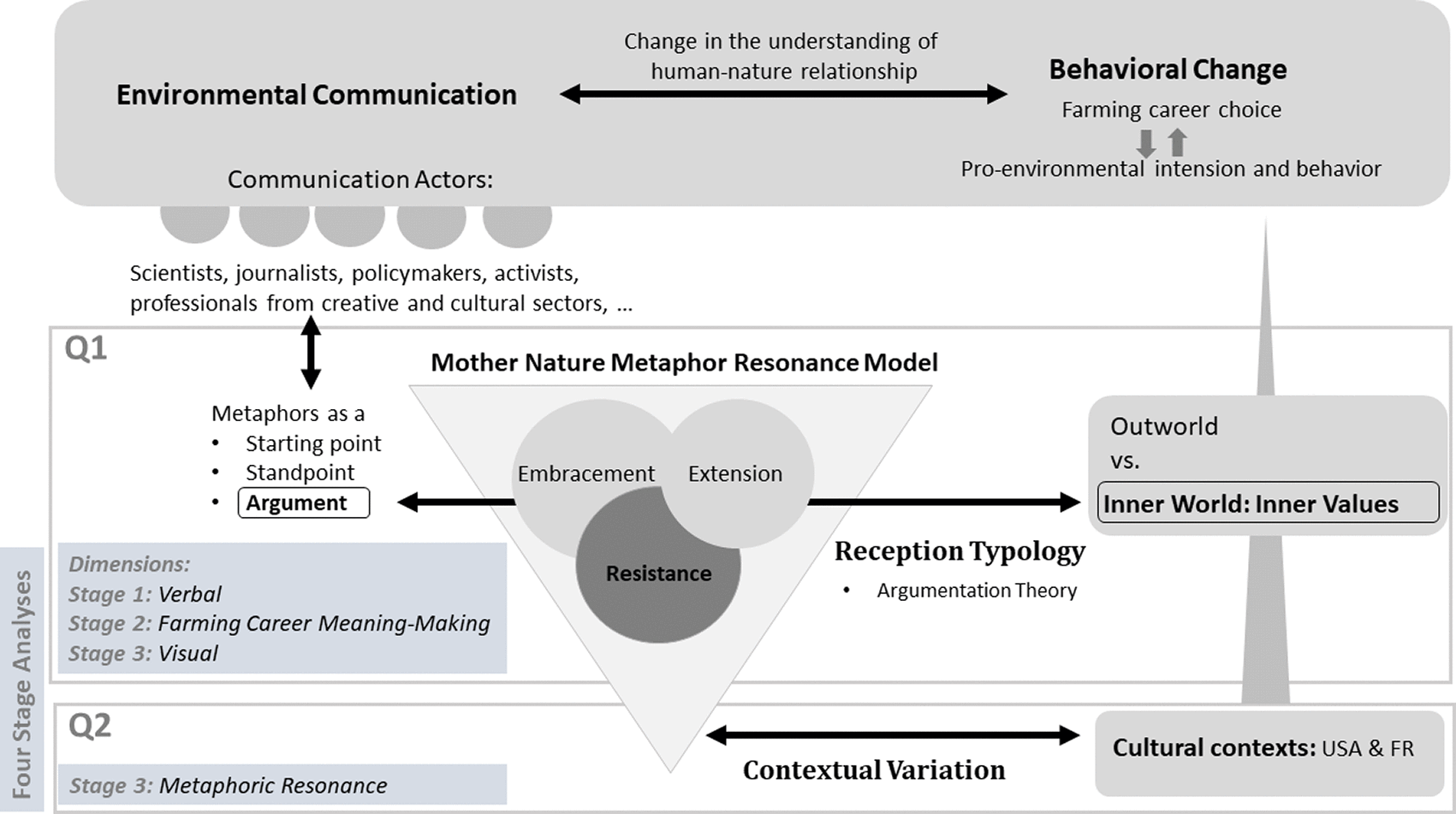
Figure 1. Study framework: Who Are You Calling Mother Nature? Exploring Metaphor Resonance among Young Women Farmers: A Comparative Study in the US and France.
Notes: 1) The graphical illustration shows the connection between environmental communication and the functions of metaphor, based on studies by Wagemans (2016), Finsen and Wagemans (2025), and Larson (2011). The study was guided by the literature on metaphor analysis by Gibbs and Siman (2021), van Poppel and Pilgram (2023), and Nacey (2024), as well as studies that contribute to understanding the shift in human–nature relations (Muradian & Pascual, 2018); and 2) To map the understanding of the human–nature relationship, this study investigates how the metaphor of Mother Nature resonates with young women farmers, specifically examining two questions: Q1 (Reception Typology): How is the Mother Nature metaphor defined within three interconnected dimensions (verbal definitions, their farm career meaning-making, and their visual imaginings)?; and Q2 (Contextual Variation): How does this reception typology differ between the two distinct cultural contexts?.
Q1 (Reception Typology)
was approached through three dimensions: verbal, farming career meaning-making, and visual examined in a three-stage analysis. In
Stage 1 (Verbal),
transcribed interviews were coded with a focus on how participants verbally resonated with the Mother Nature metaphor, drawing on their own definitions. As in the study by Nacey (2024), in our study the term “resonance” refers to reactions toward the metaphor under study, that is, the ways in which the metaphor was received by the target audience. The categories of verbal resonance (resistance, embrace, and extension) align with cognitive linguists’ interest in how people reject, accept, or modify metaphors, and with the literature on “metaphor shifting” and “reaction frames” (Cameron, 2007; Cameron & Maslen, 2010). “Metaphor shifting” refers to the process by which speakers adjust and transform metaphors as they interact with others, while “reaction frames” denote the communicative moves speakers use to respond to a metaphor in discourse, such as aligning with it, questioning it, or resisting it. This study defines “
resistance
” as one of the categories of verbal resonance, encompassing comments that express feelings, experiences, perceptions, and viewpoints through a critical reaction that provides arguments for or against the image attached to the metaphor. In this view, the Mother Nature metaphor is applied both as an analytical lens for this research and as a venue for discussion, allowing individuals to argue, debate, and extend the values, attitudes, and beliefs associated with it.
Stage 2 (Farming Career Meaning-Making)
examined whether and how participants made sense of their farming career, and farm management practices when verbally defining the Mother Nature metaphor. In the Stage 1, and 2, a three-step coding process was applied: (i) an initial familiarisation reading to identify broad themes; (ii) a second reading during which participants’ statements were organized under the corresponding themes; and (iii) a third reading to refine the data structure, incorporating newly emergent codes and aligning them with the relevant metaphor analysis literature.
Stage 3 (Visual)
explored the visual dimension of the model: narratives were re-analyzed to identify the instructions participants gave for drawing the Mother Nature metaphor. A descriptive coding approach was used to capture statements related to their visual imagination, such as the choice of colours, figures, and abstract elements. These statements were then classified according to the themes and sub-themes established in Stages 1 and 2.
Q2 (Contextual Variation)
was examined in
Stage 4 (Metaphoric Resonance),
which systematically compared the resulting verbal, farming career meaning-making, and visual dimensions (the results of Stages 1, 2, and 3) across the two cultural contexts. This stage demonstrated that metaphors operate not in isolation but in culturally embedded clusters, thereby extending Larson’s (2011) concept of “metaphoric resonance,” which captures how a metaphor’s meaning, social associations, and contextual power shift across different national and cultural contexts. Larson introduces “metaphoric resonance” as a criterion for evaluating the quality and likely effectiveness of an environmental metaphor and defines it as the degree to which a metaphor simultaneously aligns with the best available ecological science and with the cultural values and narratives that shape human perception of nature, such that the metaphor feels natural or appropriate to a broad audience (Larson, 2011).
The thematic coding yielded a model titled
“The Mother Nature Metaphor Resonance Model,”
which consists of four aggregated themes: i) Resonance with Hierarchical Relations Embedded in the Metaphor; ii) Resonance with Attitudinal Expectations Indicated by the Metaphor; iii) Resonance with the Communicative Medium of the Metaphor; and iv) Unconscious Resonance. These four types encompass ten sub-themes.
Table 1 in the following results section provides detailed definitions of themes and sub-themes.
Table 1. Summary of results: Mother Nature Metaphor Resonance Model.
Theme I) Resonance with Hierarchical Relations Embedded in the Metaphor
i) Mother Nature as a superior power
: Participants’ narratives question the image of nature as an independent authority over humanity. This questioning ranges from metaphor resistance to extension by narratives on its uncontrollable power that shapes farming life.
ii) Mother Nature as a person
: Participants’ narratives engage with anthropocentric understandings of nature as having human-like qualities or as framed within human-centered perspectives. Metaphoric resonance spans resistance to nature as a “human-like” or “singular figure,” extension through the strategic use of personification (e.g., weather as Mother Nature’s “face” or “mood”), and, in some cases, embracement of personified nature as a familiar reference.
iii) Mother Nature as a female figure
: Participants’ narratives engage only modestly with the gender dimension of the metaphor. Where it appears, metaphoric resonance ranges from resistance to embracement and extends visually into de-personified representations that emphasize aesthetic beauty. |
Theme II) Resonance with Attitudinal Expectations Indicated by the Metaphor
iv) Mother Nature waits for respect
: Participants’ narratives engage moderately with the metaphor’s call for respect grounded in sacredness and deity. Metaphoric resonance spans resistance, extension, and embracement, which appears verbally and professionally, as well as visually in drawings that depict miraculous moments in nature.
v) Mother Nature needs to “fix”:
Participants’ narratives orient themselves to the understanding of the metaphor as a passive entity that awaits human intervention to preserve, heal, restore, or recover from destructive actions. Metaphoric resonance encompasses resistance (e.g., eco-anxiety about irreversible damage), extension (e.g., harmony, and acceptance of its limits), and, in visual imagination, an embracement of idyllic scenes. |
Theme III) Resonance with the Communicative Medium of the Metaphor
vi) Mother Nature as a cultural product
: Participants’ narratives reveal an awareness of the metaphor’s mediated character. Narratives engage the metaphor primarily at the verbal stage, and metaphoric resonance includes resistance, and extension.
vii) Mother Nature as an imported idea
: Participants’ narratives engage with the metaphor as a cultural symbol. Resonance includes metaphor resistance (e.g., viewing the metaphor as a foreign, inappropriate import), extension (e.g., selectively adapting imported elements to local farming realities), and, for some, a subtle embracement as part of a cultural vocabulary, even when one felt to be personally distant from the metaphor. |
Theme IV) Unconscious Resonance
viii) Dissociation between definitions and depictions of Mother Nature: Participants’ narratives show a gap between verbal conceptualisation and visual representation. This unconscious resonance pattern highlights how resistance to hierarchical relations can co-exist with an extension of interconnectedness imagery, where humans are present as observers but not as visible agents, revealing duality between explicit beliefs and spontaneously produced visual expressions.
ix) Paradoxical Personification of Mother Nature
: Participants’ narratives simultaneously resist and employ personification, revealing internal contradiction as a form of resonance. Participants reject the metaphor’s human-like qualities while spontaneously endowing nature with personality, mood, and humour, a dynamic that signals both resistance and an embracement of personified language as a helpful resource for meaning-making.
x) Automatic Non-Verbal Reactions to Mother Nature:
Automatic, pre-reflective responses, such as a sudden smile or an exclamation like “wow, a powerful term” constitute an immediate, embodied resonance with the metaphor, signalling an emotional acknowledgment of it. These reactions show that the metaphor resonates across the full spectrum: it may be felt as an object of humour, or an emotionally charged presence, often before verbal evaluation. |
The sub-themes are not intended to be strictly exclusive. They represent distinct but interrelated entry points into how participants engage with the metaphor. For example, a single eco-narrative segment could simultaneously respond to both hierarchical relations and attitudinal expectations, and it was therefore coded under all applicable themes. This approach treats metaphor resonance as layered and multidimensional, rather than classifying narratives into isolated boxes. This flexibility aligns with the exploratory character of the analyses and reflects the understanding that metaphor engagement is often a holistic response.
5. Results
This section presents the results with four aggregated themes and sub-themes.
Table 1 providing descriptions of each sub-theme.
In the following each sub-theme is discussed with the order of reference to Stage 1 (Verbal), Stage 2 (Farming Career Meaning-Making), and Stage 3 (Visual), reflecting the model’s verbal, farm life, and visual dimensions with a comparative cross-country perspective (Stage 4: Metaphoric resonance). Each sub-theme provides specific statements from the narratives, and indicates the level of support for the statements; that is, “strong support,” “moderate support,” and “tentative support” as used in studies employ typology approaches (Clair and Dufresne, 2004; Modestino et al., 2019; Unay-Gailhard & Simões, 2022).
Theme I) Resonance with Hierarchical Relations Embedded in the Metaphor: Critical reactions against images that depict a separation between humans and nature are strongly presence in the participants’ narratives.
i) Mother Nature as a superior power
. The study revealed significant resistance among young women farmers in America and France to the hierarchical relationships associated with the Mother Nature metaphor. French farmers explicitly argue against the notions of “independent nature” and “human-nature separate images” by sharing their views and seeing humans as part of nature. The resistance of American farmers directly conflicts with their own ideas that “nature is a living organism,” “nature is a network,” and “nature is a system.”
Narratives that link the farming profession to hierarchical relations attached to the metaphor are often expressed through experiences of sudden losses: “So violent, in one hour of hail, there’s no crop left. It’s not Mother Nature who takes care of us,” and professional challenges both in positive, and negative directions: “She is challenging me to look into better ways of doing my farming,” and “Mother Nature is the farmer’s boss.”
The Mother Nature drawings reinforced the main critical reaction pattern towards the hierarchical human–nature relationship. Participants often visualized the metaphor as a web or a cycle, translating their verbal extensions into non-hierarchical imagery.
ii) Mother Nature as a person
. Participants from both countries often voiced resistance to the personification of Mother Nature, rejecting her as a “human-like” or “singular figure” and describing nature instead as “non-figurative,” “non-abstract,” or “a nebulous concept.” At the same time, many participants simultaneously employed personification in their own descriptions, revealing a tension between embrace (using the metaphor) and resistance (criticizing it). A notable cultural extension emerged among American farmers: for them, “weather is Mother Nature’s actions” served as a dominant narrative, and weather was described as her “face” or “expression.”
This weather as person framing directly shaped how American farmers interpreted their management challenges; they frequently attributed negative impacts on crops, or planting schedules to Mother Nature’s “moods.” French farmers, by contrast, rarely relied on this personified weather logic when making sense of their farm decisions.
The visualization of the Mother Nature further reflected an extension of the person metaphor toward larger scales. Most French participants drew Mother Nature at a landscape or ecosystem scale (trees, water, air, soil, mountains, earth, flowers), whereas most American participants drew her at a planetary or global scale (earth, planet). Tangible elements such as trees, plants, animals, air, and water appeared frequently in both cultural contexts.
iii) Mother Nature as a female figure
. The findings indicate that least resonance was based on the gender dimension of Mother Nature. In both cultural contexts, only a few participants explicitly embraced or critically comment on framing nature with a gender dimension. Among French young women farmers, resistance, when it occurs, is directed at the metaphor’s underlying dualism: “nature is us, not a mother.” However, among American young women farmers, when resonance occurs, it is more likely to be directed at the acknowledgment of the Mother Nature metaphor as a common use as a gendered insult, as a reaction against the social consequences.
In both countries, a few narratives embrace the metaphor’s female qualities due to the nutritional and giving birth qualities of the feminine figure, and express the relevance of the term “mother” in the metaphor, suggesting a linguistic connection between these qualities. Through their farming-career meaning-making, participants link these qualities directly to their agricultural work (e.g., producing food).
Visual imaginary representations of Mother Nature do not use the feminine personification traditionally associated with natural elements. Illustrations of Mother Nature often emphasize aesthetics and beauty, qualities that are attributed to women. These representations mostly incorporate green, with a few uses of blue.
Theme II) Resonance with Attitudinal Expectations Indicated by the Metaphor: Arguments containing resistance to the images that ask for attitudinal change, adjust for a certain behavior have a moderate level of presence in the narratives of the participants.
iv) Mother Nature waits for respect
: Participants’ narratives containing resistance to the Mother Nature metaphor as an image that calls for respect due to her sacredness and divine nature have a moderate presence. French young women farmers explicitly reject sacred authority by using terms like “deity” and “goddness” as “dangerously misleading metaphors,” which do not foster an adaptive relationship. Unlike French farmers, American young women farmers do not explicitly comment on the deity dimension; instead, they resist the sacred Mother Nature metaphor by emphasizing nature’s unpredictable, adversarial, unreliable, and hostile qualities that are the opposite of the expectations of a divine presence.
Narratives connecting the farming profession to respect often depict it as demanding deference to authority such as “We have to respect; she’s who we work for.” Several farmers from both cultures shared their experiences of farming abroad, mostly through WWOOFing (World Wide Opportunities on Organic Farms), and through these experiences they recognized various cultural deities such as Gaia and Pachamama, as well as indigenous beliefs about nature, including the view shared by a farmer as “in a lot of indigenous languages there is no word for nature.”
Drawings embrace the sacred dimension through depictions of moments that feel miraculous or blessing-like. Examples include the “shifting light in the Alps” observed at a specific time of day, as shared by a goat keeper; the “miraculous fertility and rebirth of nature during spring,” described by an organic vegetable farmer; and the “calmness of the wind during sunset and sunrise,” noted by a dairy farmer.
v) Mother Nature needs to “fix”:
In the narratives the moderate level of resistance takes forms, and includes the resistance to the metaphor of Mother Nature as an image that calls for human preservation, healing, or recovery from destructive actions. When resistance occurs, it manifests in two forms: i) skepticism about restoration, driven by the eco-anxiety belief that “damage is irreversible,” and the emphasis on the “disconnection between nature and humanity.” and ii) advocating for adaptation over healing, viewing nature as autonomous and prioritizing “harmony,” “reciprocity,” and “acceptance of limits” without human intervention.
Narratives that connect the idea of “fixing” with the farming profession have generated, and shared with many farming life experiences compare to other sub-themes. Most of these narratives show that young women farmers do not view themselves as healers of a broken Mother Nature. Instead, they emphasize concepts such as reciprocity, balance, and adaptation to uncontrollable forces. Terms like “managing a dynamic” in challenging relationships, and “giving back for harmony,” are used to illustrate the adaptive behaviors of farmers in their practices.
In the imaginative drawings of Mother Nature, none of the responders described nature as something that requires human preservation, healing, or restoration. Instead, the narratives predominantly presented idealized and harmonious visions of nature, resembling “idyllic postcard” imagery in which everything appears to need no “fix.”
Theme III) Resonance with the Communicative Medium of the Metaphor: The study showed that most resonance in the form of resistance was based on the mediums used for the metaphor. For this theme, only the verbal stage was salient, and farming-career meaning-making and visual imagination were not present.
vi) Mother Nature as a cultural product.
The metaphor resonance operates primarily at the verbal stage. Linking the metaphor to the hippie movement, media imagery such as “Avatar,” and its portrayal in TV shows used for weather forecasts, reveals a major pattern in the narratives created by young women farmers. These narratives often take the form of folklore, fantasy, and myth, highlighting a common thread across two cultural contexts, despite variations in specific examples from different countries. Findings indicate that French young women farmers present a significantly higher number of narratives that resist the medium used the Mother Nature metaphor compared to American young women farmers. For French farmers, these narratives frequently challenge the medium due to its associations with specific political, social, and religious discourses in the media. This use of metaphor as a slogan in social movements has led to concerns that it is losing its original meaning, or “an oversimplified shortcut.”
vii) Mother Nature as an imported idea
. Narratives reveal notable differences, with a significantly higher number of French young women farmers expressing resistance to the Mother Nature metaphor because it is not well-rooted in their culture, personal experiences, or professional practices. For French farmers, the metaphor is often linked to imported images from “American 1960s hippie dreams” and “Hollywood science fiction movies.” Some French young women farmers also report being unfamiliar with the term or not internalizing it through their own reflections. French farmers frequently express resistance by describing the metaphor as “inappropriate” in relation to their cultural and farming professional realities. For some American young women farmers, similar to their French counterparts, associate the Mother Nature metaphor with hippie culture that is foreign, and distance themselves from this imported idea, implying that it does not belong in their farming reality, and acknowledge that it is not a part of their vocabulary use in “daily life.”
Theme IV) Unconscious Resonance: Reactions that are automatic, paradoxical, and dissociated from explicit attitudes, values, and beliefs are strongly present in the participants’ narratives and are described as “moiety emotion trigger,” referring to a specific Mother Nature image that evokes an emotional response through a duality within their inner values.
viii) Dissociation between definitions and depictions of Mother Nature
. A contrasting pattern emerged between the verbal expressions of Mother Nature definition and visual depiction via drawing instructions. As detailed under the sub-theme of “Mother Nature as a superior power”, the verbal definitions mostly resist ideas of hierarchy and separation, and explain the human-nature relationship within a system or network approach where humans are part of the system.
In contrast, in the imaginary drawings, explicit human imprints or figures were largely absent. The drawings do not visually represent a human–nature relationship but only nature’s internal interconnectedness, such as “living organisms in the soil” and “invisible roots between soil and air,” where the human seems to be an observer.
ix) Paradoxical Personification of Mother Nature
. As detailed under the sub-theme of “Mother Nature as a person”, participants from both countries explicitly show resistance to the personification of Mother Nature while simultaneously employing personification in their own descriptions.
As a distinct moiety, visual imaginations from both countries include descriptions of nature that use personification. For example, participants described facial features as “she has facial features that might be recognizable to people,” personalities as “she is capricious,” “a difficult character,” and “She’s not fair, and she’s not kind,” and humor as “Mother Nature is bipolar.”
x) Automatic Non-Verbal Reactions to Mother Nature
. Beyond the verbal expressions analyzed in this study, a frequently recurring non-verbal automatic reaction was observed when participants in both countries were asked about the Mother Nature metaphor: a sudden smile. Participants explained their reactions using expressions such as: “This is a very powerful term”; “Emotionally charged terms”; “It is funny, but not in a negative sense”; and “It makes me laugh” These articulations indicate that the metaphor’s intended meaning does resonate, possibly across a wide spectrum that includes perceiving the metaphor as an imposition, embracement, endorsement, and/or resistance.
6. Discussion
This study proposes a Mother Nature Metaphor Resonance Model with the aim of mapping young women farmers’ understanding of the human–nature relationship through a cross-country analysis of two Western cultures. By centering the argumentative function of the Mother Nature metaphor, the study reveals how these neglected actors in environmental communication actively make sense of the human–nature relationship through occupational experiences using metaphor as a cognitive tool to articulate the inner values attached to farming career meaning-making.
The findings reveal a multi-layered structure of metaphor resonance. What is strongly present across narratives is a rejection of Mother Nature imagery that separates humans from nature. Results also coupled with a pattern of unconscious reactions, a finding that aligns with and extends previous work on unconscious metaphor resonance (Gibbs & Siman, 2021; Roach, 2003), which identified such reactions as rooted in conflicting inner values. The study finds that a strong level of resistance also arose from the medium through which the metaphor is communicated. The gender dimension of the metaphor elicited a low level of resonance at the verbal stage, a surprising result, given that all participants were women, however the explicitly gendered framing went largely not expressed in their narratives. Together, in line with previous studies on the Mother Nature metaphor (Roach, 2003; Flusberg & Thibodeau, 2023; Jelinski, 2005), these patterns reveal the Mother Nature metaphor as potentially empowering, inherently problematic, and carrying dualities when viewed through the narratives of young women farmers.
The hierarchical dimension of the metaphor serves as a trigger for resistance
. The resistance among young women farmers in America and France to the superior power associated with the Mother Nature metaphor emphasizes a more integrative view of humans as a part of nature. While French young women farmers explicitly reject notion of human-nature separation, American farmers explicitly provide notion of networked nature in the human-nature relationship. This result indicates that, while young women farmers move away from traditional paradigms, and recognize interconnectedness, they resist hierarchical relations to varying narratives. This finding extends the previous studies that document the role of social and geographic context on how people conceive of and relate to nature (Gifford & Nilsson, 2014), and aligns with the argument that metaphors signifying separation from nature lack resonance at our times when understandings of the human–nature relationship are shifting (Larson, 2011).
The silent gender dimension of the metaphor.
Research indicates that young women farmers in America and France do not exhibit a strong resonance with, a critical reaction to, or a strong embracement of the metaphor’s gender dimension. A few narratives resist, embrace, or extend the metaphor’s female qualities. One explanation may lie in the metaphor’s deep cultural naturalization, where the term “mother” becomes discursively invisible; another reason may be a voluntary distancing of participants from eco-feminist discussions. A third potential reason relates to the metaphor itself: “Who are you calling Mother Nature?” presupposes gender and personification. Participants may have taken the feminine framing as a given and therefore not expressed a strong gendered response. These findings suggesting that the cognitive power of gendered framing (Liu et al., 2019) does not translate into verbal expressions. Our findings indicate that resistance primarily stems from hierarchical relations attributed to the metaphor. In contrast, as discussed in eco-feminist discourse (Chireshe, 2023), the limited autonomy of women through culturally defined roles such as childbearing, nurturing, and caregiving was less frequently associated with the metaphor. However, the cognitive power of gendered framing resonated in the visual representations of Mother Nature, which aligned with aesthetic qualities of nature commonly accepted as feminine in both cultural contexts, rather than with a feminine figure.
The communicative medium as a trigger for metaphor resistance
. The study found that most resistance was based on the ways (medium) in which the persuasion attempt is made by the metaphor. A concluding remark aligned with Marshall McLuhan’s (1964) insight that “the medium is the message” becomes particularly insightful. McLuhan argued that the form of a medium shapes human perception more profoundly than its specific content. Applied to our findings, the resistance expressed by young women farmers is strongly directed through the medium by which the metaphor is transmitted, such as social and political discourses with media imagery. This provokes shared resistance with varying examples in two cultural contexts, and creates a process where environmental themes become off-limits, often operating below explicit awareness, as introduced by the study of Kennedy (2016) with the metaphor “environmental evaporation” to conceptualize this specific socio-political process.
Unconscious triggers.
Findings offer insights into unconscious resonance, a category less explored in metaphor studies (with the exception of a few studies, such as Gibbs & Siman, 2021, and Roach, 2003) in three key ways. First, we observed a contrasting pattern between the verbal expressions of Mother Nature’s definition and those of depiction via drawing instructions. The verbal definitions actively resist ideas of separation, and explain the human nature relationship within a system approach. However, the depictions of human forms were predominantly missing in the visual imaginations.
Second, participants explicitly resist the personification of Mother Nature while simultaneously employing it in their own descriptions of nature. This finding aligns with the study by Kohler et al. (2023), which found that participants from rural France defined nature through human-centered values such as beauty, leisure, and spiritual fulfillment. In our case, this suggests a paradox: while people verbally resist anthropomorphic metaphors, they unconsciously default to them when defining nature.
Finally, beyond verbal content, we noted non-verbal automatic reactions when the A metaphor was requested to describe. As discussed in Roach’s (2003) study on Mother Nature within the perspectives of popular culture and environmental ethics, unconscious projections shape both the content and the emotional tone of imagery. In our case, it reveals that the metaphor’s emotional tone arises from internal dualities. These non-verbal automatic reactions are not deliberate interpretations but spontaneous affective responses, demonstrating that the imagery of Mother Nature carries an unconscious emotional charge.
7. Conclusion
This research contributes to the literature on the use of metaphors in environmental discourses by extending insights into how young women farmers in the USA and France resonate with the Mother Nature metaphor through verbal definitions and visual depictions, and how they link their inner values to the meaning-making of their careers. These findings, which provide insights into how cross-cultural variations and different forms of metaphor resonance emerge, carry conceptual, theoretical and methodological implications.
By resisting the hierarchical dimension of the Mother Nature metaphor and instead defining the human–nature relationship as a networked system of mutual dependence, the young women farmers in this study articulate a form of connectedness that echoes the shift toward more reciprocal engagement with nature described in recent agrarian literature on young, and first-generation farmers (DeLong et al., 2023; Unay-Gailhard et al., 2025). The study shifts the analytical focus from merely documenting metaphor resistance, and revealing how that resistance give insights on the understanding of connectedness, with lived experience of farming. Young women farmers farming career meaning-making extends this connectedness into everyday practice (e.g., framing farming not as control or healing, but as “managing a dynamic” and “giving back for harmony”), that connectedness has been argued to foster (Alarcon et al., 2020; Aumeeruddy-Thomas et al., 2024).
The theoretical implications of this study suggest that the argumentative functions of metaphor (Wagemans, 2016) enable us to systematically analyze farmers’ narratives, identify these cultural differences, and examine how metaphor resonance takes different forms. In line with the conceptual study by Gibbs and Siman (2021), our findings highlight that metaphor resistance extends beyond consciousness; it influences automatic thoughts and bodily reactions as categories in the unconscious resistance.
A key methodological implication arising from this study is consistent with Burgers et al. (2016) on figurative framing. In line with the authors’ findings, the Mother Nature Metaphor Resonance Model, which employs figurative language with a selected metaphor, helps to create a more vivid understanding of the investigated concept. This also echoes the methodological use of metaphor analysis in natural resource management, where examining metaphors such as “journeying” or “watershed illness” reveals the conceptual frameworks that underpin participant behaviours and project outcomes (Allan, 2007; Allan, 2024). In this study, the figurative language of the Mother Nature metaphor engages the argumentations, imaginations and emotions, allowing participants to better relate to and recall their ideas as a linguistic, cognitive, and affective tool for analyses.
This study has some limitations, and there is potential further to explore metaphor resonance through quantitative metaphor analyses models. Current analyses are based on qualitative coding methods, and may benefit with the extension with experimental methods that offer insights on how variations in metaphorical frames, and tones influence the patterns of resonance, and provide insights on the causal relationships through controlled experiments (Tam et al., 2013; Flusberg et al., 2017; Thibodeau & Boroditsky, 2011).
The methodological approach adopted in this research employs imaginative art-based methodologies to capture representations of Mother Nature of participants through verbal expressions. This approach could serve as a foundation for further research aimed at exploring various themes through traditional art methods. One example is the Draw-A-Scientist-Test (Chambers, 1983; Brumovska et al., 2022), which traditionally asks participants to create a drawing using pen and pencil that visually represents their imaginaries.
Ethics and consent statement
All procedures performed in this study involving human participants were in accordance with the ethical standards of the Institutional Review Board (IRB) of Pennsylvania State University (PSU) (IRB Number: STUDY00019851; Date: April 28, 2022) and the Ethics Commission of the Leibniz Institute of Agricultural Development in Transition Economies (IAMO) (Certificate Reference Number: 05/2019; Date: August 28, 2019). No separate ethical approval was obtained in France because the French data collection did not involve a French institutional partner. At the time of the study, the author was affiliated only with institutions in Germany and the USA and had no institutional affiliation or official research partner in France. Written informed consent was obtained from all individual participants prior to their participation. Participants were all adults (no minors were included), with an age range of 22 to 40 years.
The PSU IRB was informed that data collection would take place in both the US and the EU as a comparative study; the IRB reviewed and approved this comparative study protocol and the data collection. In France, 1) all participants received an information sheet in French explaining the purpose of the study, their rights, and how their data would be used; 2) this information was also provided in the consent form (uploaded as extended data in this article), which was signed by all study participants; 3) data were pseudonymised immediately after the interview and stored on password-protected business devices; and 4) no sensitive personal data were transferred outside the EU. Overall, the French case study followed the ethical principles of the Declaration of Helsinki.
Data availability statement
Underlying data
The qualitative interview data underlying this study cannot be made openly available. The data are drawn from the final portion of longer biographical narrative interviews (that contains sensitive data) conducted with a small population of young women farmers, a group that is limited in number within the case study regions and therefore potentially identifiable. Based on that reasoning, the YOUNG FARMERS project (Horizon 2020 Marie Skłodowska-Curie grant agreement No. 895185) opted out of the Horizon 2020 Open Research Data Pilot. A Data Transfer Agreement between the Leibniz Institute of Agricultural Development in Transition Economies (IAMO) and The Pennsylvania State University further limits onward dissemination of the data. Inquiries about the data may be directed to unaygailhard@iamo.de.
Extended data
The following extended data are openly available: Zenodo. Extended data for the study: “Who Are You Calling Mother Nature? Exploring Metaphor Resonance among Young Women Farmers: A Comparative Study in the US and France.” https://doi.org/10.5281/zenodo.22138931 (Unay-Gailhard, İ. 2026a).
This project contains the following extended data:
1) Extended Data_No1_Example Consent Form_YOUNG FARMERS. (An example of the consent form used for the study.)
2) Extended Data_No2_Interview Questions_YOUNG FARMERS. (The interview questions used in the field studies in the USA (Pennsylvania) and France (Auvergne-Rhône-Alpes).)
3) Extended Data_No3_Description_Art Based Research Toolkit_YOUNG FARMERS. (A description of the methodology and interview questions used for the art-based component of the article: “Who Are You Calling Mother Nature? Exploring Metaphor Resonance among Young Women Farmers: A Comparative Study in the US and France.”)
Data are available under the terms of the Creative Commons Attribution 4.0 International license (CC-BY 4.0).
Acknowledgements
The author expresses sincere gratitude to all the interviewees for their time and for sharing their knowledge. Without their contribution, this study would not have been possible. Data collection for the USA case study was carried out during a research stay at Pennsylvania State University (2021–2023). The French case study data were collected between 2023 and 2025 with network support from the University of Grenoble Alpes and the Saint-Ismier Centre de Formation Professionnelle et de Promotion Agricole (CFPPA). Special thanks go to Benoit Thollin for his assistance in recruiting French participants. The author also thanks Prof. Stefano De Paoli from Abertay University, UK for conducting large language model (LLM) testing in the early stages of the research.
References
- Ackoff S, Flom E, Polanco VG, et al.:
Building a future with farmers results and recommendations from the national young farmer survey.
National Young Farmers Coalition;
2022. (Accessed 1 August 2026).
Reference Source
- Alarcon M, Marty P, Prévot AC:
Caring for vineyards: Transforming farmer-vine relations and practices in viticulture French farms.
Journal of Rural Studies.
2020; 80: 160–170. Publisher Full Text
- Allan C:
Exploring natural resource management with metaphor analysis.
Society and Natural Resources.
2007; 20(4): 351–362. Publisher Full Text
- Allan C:
Helping scientists reflect on their relationship with rivers via frames.
River Research and Applications.
2024; 40(9): 1710–1718. Publisher Full Text
- Al-Shboul OK:
The politics of climate change metaphors in the US discourse: Conceptual metaphor theory and analysis from an ecolinguistics and critical discourse analysis perspective.
Springer Nature;
2023. Publisher Full Text
- Augé A:
Metaphor and argumentation in climate crisis discourse.
Routledge;
2023. Publisher Full Text
- Aumeeruddy-Thomas Y, Caubet D, Deguillame V, et al.:
Barley, Grapevines, Domestic Animals, and People: Changing Agricultural Practices On the Island of Pantelleria, Sicily.
Human Ecology.
2024; 52(2): 335–352. Publisher Full Text
- Ball JA:
Women farmers in developed countries: a literature review.
Agriculture and Human Values.
2020; 37(1): 147–160. Publisher Full Text
- Becci I, Grandjean A:
Is Sacred Nature Gendered or Queer? Insights from a Study on Eco-Spiritual Activism in Switzerland.
Religions.
2021; 13(1): 23. Publisher Full Text
- Berman T:
The rape of mother nature.
The Ecolinguistics Reader: Language, Ecology and Environment, Continuum.
1994; 258–269.
- Bernateau I:
La terre, un paysage en voie de disparition?.
Le Carnet PSY.
2023; N° 264(7): 23–24. Publisher Full Text
- BioEcoActual.:
Organic youth movement criticises lack of concrete tools and recognition of organic farming to boost generational renewal.
Bio Eco Actual.
2025, October 30.
Reference Source
- Bilstrup Finsen A, Steen GJ, Wagemans JH:
How do scientists criticize the computer metaphor of the brain? Using an argumentative pattern for reconstructing resistance to metaphor.
Journal of Argumentation in Context.
2021; 10(2): 171–201. Publisher Full Text
- Brumovska TJ, Carroll S, Javornicky M, et al.:
Brainy, Crazy, Supernatural, Clumsy and Normal: Five profiles of children's stereotypical and non-stereotypical perceptions of scientists in the Draw-A-Scientist-Test.
International Journal of Educational Research Open.
2022; 3: 100180. Publisher Full Text
- Bruce AB:
Farm entry and persistence: Three pathways into alternative agriculture in southern Ohio.
Journal of Rural Studies.
2019; 69: 30–40. Publisher Full Text
- Burgers C, Konijn EA, Steen GJ:
Figurative framing: Shaping public discourse through metaphor, hyperbole, and irony.
Communication theory.
2016; 26(4): 410–430. Publisher Full Text
- Cameron L:
Patterns of metaphor use in reconciliation talk.
Discourse & Society.
2007; 18(2): 197–222. Publisher Full Text
- Cameron L, Maslen R:
Metaphor analysis: Research practice in applied linguistics, social sciences and the humanities.
Equinox;
2010.
- Camorrino A:
Mother nature and the nature of motherhood: Gestational surrogacy and ecospirituality as two postmodern forms of sacralization.
Current Sociology.
2021; 69(2): 212–230. Publisher Full Text
- Clair JA, Dufresne RL:
Playing the grim reaper: How employees experience carrying out a downsizing.
Human Relations.
2004; 57(12): 1597–1625. Publisher Full Text
- Chambers DW:
Stereotypic images of the scientist: The draw-a-scientist test.
Science education.
1983; 67(2): 255–265. Publisher Full Text
- Chireshe E:
The liberation of women and girls as the liberation of Mother Earth: A theological discourse.
HTS Teologiese Studies/Theological Studies.
2023; 79(3): 8300. Publisher Full Text
- Coopmans I, Draganova M, Fowler S, et al.:
D2. 2 Report on analysis of biographical narratives exploring short-and long-term adaptive behaviour of farmers under various challenges.2019. Publisher Full Text
- DeLong A, Swisher ME, Chase CA, et al.:
The roots of first-generation farmers: the role of inspiration in starting an organic farm.
Land.
2023; 12(6): 1169. Publisher Full Text
- Dorr E, Goldstein B, Aubry C, et al.:
Life cycle assessment of eight urban farms and community gardens in France and California.
Resources, Conservation and Recycling.
2023; 192: 106921. Publisher Full Text
- Eurostat:
Farm indicators by sex and age of farm manager: Share of women farm managers, 2020.2023.
Reference Source
- Filardo-Llamas L, Pérez-Hernández L:
Metaphors of resistance in the counter-discourse of Spanish, English and Dutch cycling activists.
Russian Journal of Linguistics.
2025; 29(1): 103–127. Publisher Full Text
- Finsen AB, Wagemans J:
Reconstructing Resistance: Pragmatic Argumentation Against Scientific Metaphor.
Argumentation.
2025; 1–23. Publisher Full Text
- Flusberg SJ, Thibodeau PH:
Why is mother earth on life support? Metaphors in environmental discourse.
Topics in Cognitive Science.
2023; 15(3): 522–545. PubMed Abstract
| Publisher Full Text
- Flusberg SJ, Matlock T, Thibodeau PH:
Metaphors for the war (or race) against climate change.
Environmental Communication
,
2017;
11(6):
769–783. Publisher Full Text
- Gibbs RW Jr, Siman J:
How we resist metaphors.
Language and Cognition.
2021; 13(4): 670–692. Publisher Full Text
- Gifford R, Nilsson A:
Personal and social factors that influence pro-environmental concern and behaviour: A review.
International journal of psychology.
2014; 49(3): 141–157. Publisher Full Text
- Glynn J:
Carbon budgets: A metaphor to bridge the science–policy interface on climate change action.Hughes I, Byrne E, Mullally G, et al., editors.
Metaphor, sustainability, transformation: Transdisciplinary perspectives.
Routledge;
2021; pp. 97–114. Publisher Full Text
- Hambali M, Istianah A, Susilowati NE, et al.:
Battling the climate crisis: WAR and THREAT metaphors in Indonesian news media through a corpus-ecolinguistics lens.
Cogent Arts & Humanities.
2025; 12(1): 2526143. Publisher Full Text
- Hamilton W, Bosworth G, Ruto E:
Entrepreneurial younger farmers and the" Young Farmer Problem" in England.
Poljoprivreda i Sumarstvo.
2015; 61(4): 61. Publisher Full Text
- Hidalgo-Downing L, O’Dowd NA:
Code red for humanity: Multimodal metaphor and metonymy in noncommercial advertisements on environmental awareness and activism.
Metaphor and Symbol.
2023; 38(3): 231–253. Publisher Full Text
- Houlihan AL, Reed CA, Jacobs TP:
Gratitude Letters to Natural Places Promote Ecospirituality via Increased Anthropomorphism.
Ecopsychology.
2025; 17(2): 157–169. Publisher Full Text
- Itey JC, Baysse-Lainé A, Desrousseaux M:
La notion de potentiel agronomique en droit de l’urbanisme: une invisibilisation de la qualité des sols par les enjeux socio-spatiaux du foncier agricole.
Développement durable et territoires.
2025; 16(1). Publisher Full Text
- Jelinski DE:
There is no Mother Nature: There is no Balance of Nature: Culture, ecology and conservation.
Human Ecology.
2005; 33(2): 271–288. Publisher Full Text
- Jenkins M:
Mother Nature: An initial exploration of new potential for attachment theory.
Australasian Psychiatry.
2022; 30(3): 338–340. Publisher Full Text
- Juliano M:
From Oppression to Love as Mother Earth Joins the Time’s Up and# MeToo Movements.
Eco-Anxiety and Planetary Hope: Experiencing the Twin Disasters of COVID-19 and Climate Change.
Cham:
Springer International Publishing;
2022; pp. 99–107. Publisher Full Text
- Katchova AL, Ahearn MC:
Dynamics of farmland ownership and leasing: Implications for young and beginning farmers.
Applied Economic Perspectives and Policy.
2016; 38(2): 334–350. Publisher Full Text
- Kennedy EH:
Environmental evaporation: the invisibility of environmental concern in food system change.
Environmental Sociology.
2016; 2(1): 18–28. Publisher Full Text
- Kohler F, Andrieu D, Bois E, et al.:
Our neighbor the beaver: anthropomorphism to facilitate environmental mediation in rural France.
Human Ecology.
2023; 51(3): 513–528. PubMed Abstract
| Publisher Full Text
| Free Full Text
- Koop-Monteiro Y, Stoddart MC, Tindall DB:
Animals and climate change: A visual and discourse network analysis of Instagram posts.
Environmental Sociology.
2023; 9(4): 409–426. Publisher Full Text
- Kueffer C, Larson BM:
Responsible use of language in scientific writing and science communication.
BioScience.
2014; 64(8): 719–724. Publisher Full Text
- Lakoff G:
The contemporary theory of metaphor.
Metaphor and Thought.
Cambridge University Press;
1993; 2008. : pages 202–251.
- Lakoff G, Johnson M:
Metaphors we live by.
University of Chicago press;
2008.
- Lakoff G:
Why it matters how we frame the environment.
Environmental communication.
2010; 4(1): 70–81. Publisher Full Text
- Larson B:
Metaphors for environmental sustainability: Redefining our relationship with nature.
Yale University Press;
2011. Publisher Full Text
- Liu T, Geng L, Ye L, et al.:
“Mother Nature” enhances connectedness to nature and pro-environmental behavior.
Journal of Environmental Psychology.
2019; 61: 37–45. Publisher Full Text
- McLuhan M:
Understanding media: The extensions of man.
McGraw-Hill;
1964.
- Meier MG:
Le réveil des gardiennes de la terre: guide pratique d'écothérapie.
Le Courrier du livre;
2018.
- Milardo R:
The role of knowledge and innovation in organic farming systems: A systematic literature review.
Sustainability.
2025; 17(14): 6563. Publisher Full Text
- Modestino AS, Sugiyama K, Ladge J:
Careers in construction: An examination of the career narratives of young professionals and their emerging career self-concepts.
Journal of Vocational Behavior.
2019; 115: 103306–103321. Publisher Full Text
- Muradian R, Pascual U:
A typology of elementary forms of human-nature relations: a contribution to the valuation debate.
Current opinion in environmental sustainability.
2018; 35: 8–14. Publisher Full Text
- Nacey S:
The Norwegian dugnad in times of COVID-19.
Metaphor and Symbol.
2024; 39(2): 79–95. Publisher Full Text
- Parks M:
The Influence of Nonhuman Assemblage Interactions on Small Farmers’ Perceptions of Weather in Oregon: A Social Network Analysis.
Human Ecology.
2022; 50(6): 1103–1114. Publisher Full Text
- PA Gov:
Support for Pennsylvania's agriculture and food system.
Pennsylvania Department of Agriculture;
2025. Retrieved December 2025.
Reference Source
- Ponton DM, Raimo A:
Framing environmental discourse. Greta Thunberg, metaphors, blah blah blah!.
Cogent Arts & Humanities.
2024; 11(1): 2339577. Publisher Full Text
- Poppel LV:
The study of metaphor in argumentation theory.
Argumentation Through Languages and Cultures.
Cham:
Springer Nature Switzerland;
2020; pp. 177–208. Publisher Full Text
- Porto MD:
Fighting metaphors: Social resistance to mainstream metaphors.
Metaphor in Socio-Political Contexts: Current Crises.
2024; 54: 177.
- Reijnierse WG, Brugman B, Droog E:
The differential effects of metaphor on comprehensibility and comprehension of environmental concepts.
Journal of Science Communication.
2025; 24(4): A01. Publisher Full Text
- Roach CM:
Mother/nature: Popular culture and environmental ethics.
Indiana University Press;
2003. Publisher Full Text
- Sachs C, Barbercheck M, Braiser K, et al.:
The rise of women farmers and sustainable agriculture.
University of Iowa Press;
2016. Publisher Full Text
- Saldaña J:
The coding manual for qualitative researchers.2021.
- Šarić L, Trnavac R:
The representation of the climate crisis in Croatian online news media.
Frontiers in Communication.
2026; 11: 1754352. Publisher Full Text
- Semino E:
“Not soldiers but fire-fighters”–metaphors and Covid-19.
Health communication.
2021; 36(1): 50–58. PubMed Abstract
| Publisher Full Text
- Serpossian E, Coquil X, Annes A:
Involvement of women farmers in the agro-ecological transition and transformation of their work: chronicle of the agricultural organization Groupe Femmes 44.
Frontiers in Sustainable Food Systems.
2022; 6: 869533. Publisher Full Text
- Schmidt C, Goetz SJ, Tian Z:
Female farmers in the United States: Research needs and policy questions.
Food Policy.
2021; 101: 102039. Publisher Full Text
- Steen G:
Metaphor, language, and discourse processes.
Discourse processes.
2011; 48(8): 585–591. Publisher Full Text
- Tam KP, Lee SL, Chao MM:
Saving Mr. Nature: Anthropomorphism enhances connectedness to and protectiveness toward nature.
Journal of Experimental Social Psychology.
2013; 49(3): 514–521. Publisher Full Text
- TASTE:
A major region for livestock and processing: Auvergne-Rhone-Alpes.
Taste France for Business;
2025. Retrieved December 2025.
Reference Source
- Thibodeau PH, Boroditsky L:
Metaphors we think with: The role of metaphor in reasoning.
PloS one.
2011; 6(2): e16782. PubMed Abstract
| Publisher Full Text
| Free Full Text
- Thibodeau PH, Frantz CM, Berretta M:
The earth is our home: systemic metaphors to redefine our relationship with nature.
Climatic Change.
2017; 142(1): 287–300. Publisher Full Text
- Unay-Gailhard I, Balmann A, Appel F:
Dimensions of SURE-Farm farm typology for farm resilience assessments.
Deliverable D1. 3 of the SURE-Farm project.
2018; 70. Publisher Full Text
- Unay-Gailhard I, Bojnec Š:
Gender and the environmental concerns of young farmers: Do young women farmers make a difference on family farms?.
Journal of Rural Studies.
2021; 88: 71–82. Publisher Full Text
- Unay-Gailhard İ, Simões F:
Becoming a young farmer in the digital age—An island perspective.
Rural Sociology.
2022; 87(1): 144–185. Publisher Full Text
- Unay-Gailhard İ, Lawson K, Brennan MA:
An examination of digital empathy: When farmers speak for the climate through TikTok.
Journal of Rural Studies.
2023; 102: 103075. Publisher Full Text
- Unay-Gailhard I, Chaskin RJ, Brennan MA:
The online portrayal of urban farmers: Professionals’ perspectives on their influence on constructing farming-career paths.
Journal of Rural Studies.
2025; 115: 103586. Publisher Full Text
- Unay-Gailhard İ:
Extended data for the study: "Who are you calling Mother Nature? Exploring metaphor resonance among young women farmers: A comparative study in the US and France". [Data set].
Zenodo.
2026a. Publisher Full Text
- Unay-Gailhard İ:
Journey with myths: An art-based tool for cross-cultural dialogue on nature-based solutions in agriculture.Bentz J, Ng K, editors.
Living and thriving with Nature: Engagement tools for fostering social-ecological resilience and co-creating nature-based solutions.
2026b. [Manuscript submitted for publication]. [ Univ. of Lisbon].
- USDA:
Census of agriculture highlights, farm producers, United States department of agriculture, national agricultural statistics service.2022. (Accessed 1 August 2026).
Reference Source
- van Poppel L , Pilgram R:
Types of resistance to metaphor.
Metaphor and Symbol.
2023; 38(4): 311–328. Publisher Full Text
- Väliverronen E, Hellsten I:
From “Burning Library” to “Green Medicine” the role of metaphors in communicating biodiversity.
Science Communication.
2002; 24(2): 229–245. Publisher Full Text
- Vincent L, Aubron C, Depeyrot JN, et al.:
Agroecological engagement among beginning livestock farmers’ farms in France: a marginal but emerging trend.
Frontiers in Sustainable Food Systems.
2025; 9: 1624405. Publisher Full Text
- Wagemans J:
Analyzing metaphor in argumentative discourse.
Rivista italiana di filosofia del linguaggio.
2016; 10(2). Publisher Full Text
- Weidner T, Yang A:
The potential of urban agriculture in combination with organic waste valorization: Assessment of resource flows and emissions for two european cities.
Journal of Cleaner Production.
2020; 244: 118490. Publisher Full Text









