Background
Acrobeloides is a genus of free-living nematodes classified within the infraorder Tylenchina (order Rhabditida, Clade IV),1–3 belonging to the family Cephalobidae.4 This group is ubiquitous, classified as bacteria-feeding nematodes,5 and is one of the more abundant nematode groups across diverse terrestrial environments, including fields, forests, and arid environments.5–8 The genus Acrobeloides contains both sexually reproducing and parthenogenetic species, making it a valuable system for studying the evolutionary transition to asexuality from a developmental9 and ecological perspective.10
Acrobeloides species are known to be particularly resilient to adverse conditions, such as drought, often surviving by entering a dormant state.11 Specifically, anhydrobiotic abilities were documented in the parthenogenetic species Acrobeloides nanus, capable of surviving near-complete desiccation by adopting a temporary coiled structure.12–14 A. nanus has been used to measure responses to abiotic stress induced by varying copper and pH levels.10,15 Partly based on these studies, it was suggested that A. nanus would be useful for toxicity assessments under natural conditions.16
From an evolutionary developmental point of view, A. nanus has been an intriguing system, as a regulative potential in embryonic development in Nematoda was first described in this species.17 Its early development on the cellular level is thus significantly different from the nematode model system Caenorhabditis elegans,
18,19 allowing for studies into nematode evolution of development.20 Cephalobidae have elaborate head morphologies,21 which are thought to be ecological adaptations to different bacterial food sources22 and fascinating from a standpoint of post-embryonic development. As the exact relationships within the family are unresolved, with the possibility that the genera Acrobeloides and Cephalobus should be united into one genus (see e.g.23), comparative studies into ecology, evolution and development are currently impeded by phylogenetic uncertainty. Previous genomic studies of A. nanus have been limited by the quality of available resources; two highly fragmented short-read assemblies were previously released, offering only kilobase-level contiguity.20,24 These fragmented assemblies have restricted comprehensive analyses of chromosome evolution, repetitive elements, as well as detailed studies in ecology, evolution, and development.
Here we present a high-quality, chromosome-level collapsed haploid assembly of Acrobeloides nanus. This resource provides the necessary scaffold to enable detailed comparative studies addressing genome evolution in the context of parthenogenesis and anhydrobiosis, resolve taxonomic questions and offers a new framework for identifying genomic adaptation for this nematode’s environmental resilience.
Methods
Nanopore R10.4 sequencing
High-molecular-weight DNA was extracted as described in.25 Briefly, worms were pelleted from agar plates, decontaminated with sucrose and dissolved in 180 μL cetyltrimethylammonium bromide (CTAB) buffer (polyvinylpyrrolidone 2%, Tris-HCl 100 mM, ethylenediaminetetraacetic acid 25 mM, NaCl 2 M, CTAB 2%) supplemented with 25 μL of proteinase K (Zymo Research, D3001–2). Samples were incubated for 1 hour at 60 °C, and then for another 10 minutes with 70 μL 1.0 M potassium acetate. DNA was purified with 200 μL phenol-chloroform-isoamyl alcohol 25:24:1, chloroform-isoamyl alcohol 24:1, 200 μL chloroform-isoamyl alcohol 24:1, and 150 μL AMPure XP beads (Beckman Coulter, A63881), eluted in 50 μL elution buffer from the Short Reads Eliminator kit (Pacific Biosciences, 102–208-300), and RNA was removed with RNAse cocktail enzyme mix (Thermo Fischer, AM2286) for 1 hour at 37 ° C. DNA was fragmented in a 2 mL low-bind round bottom Eppendorf tube using a sterile 3 mm borosilicate bead (Merck, Z143928-1EA) by vortexing for 1 minute at maximum speed as described in26 and short fragments were removed using the Short Reads Eliminator (Pacific Biosciences, 102–208-300). DNA concentrations were quantified using a Qubit 4 fluoremeter with 1X dsDNA kit. Nanopore libraries were prepared using the Ligation Sequencing DNA Kit V14 (Oxford Nanopore Technologies, SQK-LSK114) and sequenced on R10.4.1 MinION flowcells (Oxford Nanopore Technologies, FLO-MIN114). Basecalling was performed using Dorado v0.3.127 in duplex mode with model dna r10.4.1 e8.2 400 bps supv4.2.0 and the reads were converted to fastq using SAMtools v1.628 with the module samtools fastq.
Ultra-low input amplified pacific biosciences HiFi sequencing
Up to 10 individuals were lysed in 90 μL salt-based extraction buffer (Tris-HCl 100 mM, ethylenediaminetetraacetic acid 50 mM, NaCl 0.5 M and sodium dodecylsulfate 1%) and 5 μL of proteinase K (Zymo Research, D3001–2) overnight at 50 °C, as described in.25 DNA was precipitated using 10 μL NaCl 5 M, 1.5 μL yeast tRNA (Invitrogen, AM7119) and 120 μL isopropanol, and incubated at room temperature for 30 minutes, then pelleted at 18,000 g for 20 minutes (4 °C). The DNA was washed twice with 80% ethanol and spinned at 18,000 g for 10 min (4 °C). The DNA pellet was eluted in elution buffer (Zymo Research, D3004-4-10) and incubated at 50 °C for 10 minutes. RNA was removed by incubating with RNAse (Qiagen, 19101) for 1 hour at (37 °C). Note that the RNAse here is different from the Nanopore extraction protocol, as we later switched to the RNAse cocktail enzyme mix (Thermo Fischer, AM2286) for more consistent RNA elimination. DNA concentrations were quantified using a Qubit 4 fluoremeter with 1X dsDNA kit. The amplified PacBio HiFi library was prepared with the Express 2.0 Template kit and the SMRTbell prep kit 3.0 (Pacific Biosciences), and sequenced on a Sequel II instrument with 30 hours movie time. PacBio HiFi reads were generated using SMRT Link v11.1 (Pacific Biosciences) with default parameters.
Hi-C sequencing
Worms were pelleted and crosslinked in 1 mL 3% formaldehyde for 45 minutes and quenched in 250 mM glycine for 25 minutes. They were then processed with Arima Hi-C+ kit (Arima Genomics, A51008-ARI) starting from lysis. The library was sequenced on an Illumina NovaSeq 6000 at the Cologne Center for Genomics.
Genome assembly
Amplified PacBio HiFi and non-amplified Nanopore reads were assembled using hifiasm v0.19.429 with parameters -l 3 --ul. The alignment from BLAST v2.13,30 the output from BUSCO v5.4.731 against Metazoa odb10, and the sorted mapping of PacBio HiFi reads were provided as input to BlobToolKit v4.1.532 to identify and remove contaminants. PacBio HiFi reads were mapped using minimap2 v2.2433 with parameter -x map-hifi to subsequently remove alternative haplotypes using purge dups v1.2.5.34 Hi-C reads were trimmed using TrimGalore v0.6.1046 and mapped to the purged assembly using hicstuff v3.1.1.38 The assembly was scaffolded using instaGRAAL v0.1.6-noopengl39 with parameters -l 4 -n 50 -c 1 -N 5, and the scaffolds were automatically curated with the module instraGRAAL-polish. Adapters were searched for and removed using the NCBI Foreign Contamination Screen (FCS) with the module FCS-adaptor v0.5.4.35 Basic assembly statistics were computed using assembly-stats v1.0.1.36 BUSCO v5.8.031 was run against Nematoda odb12 with parameter -m genome. k -mer comparison plots were computed using KAT v2.4.237 with the module kat comp and the PacBio HiFi reads. Hi-C contact maps were generated by processing Hi-C reads using hicstuff v3.1.138 as described previously and visualizing the contacts using the module hicstuff view with the parameter -b 500. Orthologs from the Nematoda odb10 lineage were searched for in genome assemblies using BUSCO v4.1.431 and classification to the ancestral rhabditid linkage groups (Nigon elements) were identified using the online platform of vis_alg.40 Chromosome-level assemblies were checked for residual contamination and corrected using BTK,32 and FCS.41 Manual curation was performed using JBrowse 2,42 HiGlass43 and PretextView.44
Repeat and gene annotations
The Extensive De novo TE Annotator (EDTA) pipeline v2.0.145 was run with parameters --sensitive 1 --anno 1 --force 1. The hardmasked assembly was converted into a softmasked assembly. RNA-seq reads were trimmed using TrimGalore v0.6.1046 and mapped to the assemblies using hisat2 v2.2.1.47 After sorting the mapped reads using SAMTools v1.6,28 the output was provided as input to BRAKER v3.0.348 with parameters --gff3 --UTR off, which combined predictions from Augustus v3.5.049 and GeneMark-ES v4.68.50 The longest isoform was selected using Another Gtf/Gff Analysis Toolkit (AGAT) v0.8.051 with the script agat_sp_keep_longest_isoform.pl. The protein predictions were evaluated using BUSCO v5.8.031 against the Nematoda odb12 lineages with the parameter -m protein.
Mitochondrial genome assemblies and annotations
The module findMitoReference.py from MitoHiFi v3.2.152 was run with parameter --type mitochondrion to search for a closely related mitochondrial genome to use as a reference and identified the complete mitochondrial genome of Acrobeloides varius (MK559448).53 MitoHiFi was run with reads as input (–r) and parameters –o 5 --mitos -f
MK559448.1.fasta -g MK559448.1.gb.
Synteny
Orthologs were identified within the annotated genes by BUSCO v4.1.4 and the Nematoda odb10 lineage. An Oxford dot plot was constructed with a custom script between Acrobeloides nanus and Acrobeloides maximus (nxAcrMaxi1.1, GCA 964212105.1) based on these orthologs, as in.54
Genome description
We generated ultra-low input PacBio HiFi reads from a few individuals with amplification, Nanopore R10.4 reads from a large pool of individuals, and Hi-C from a large pool of individuals. Sequencing resulted in 33.2 Gb of PacBio HiFi reads, 14.6 Gb of Nanopore reads, 126 millions pairs of Hi-C reads. It should be noted for future reuse that the Hi-C library was highly contaminated with bacteria (as food source) and only 17% of the reads mapped to the assembly. k-mer analyses were run on the Nanopore reads, as heterozygous and homozygous peaks were not properly identified in the PacBio HiFi reads due to amplification, and the nuclear genome was predicted to be diploid (
Figure 1A).
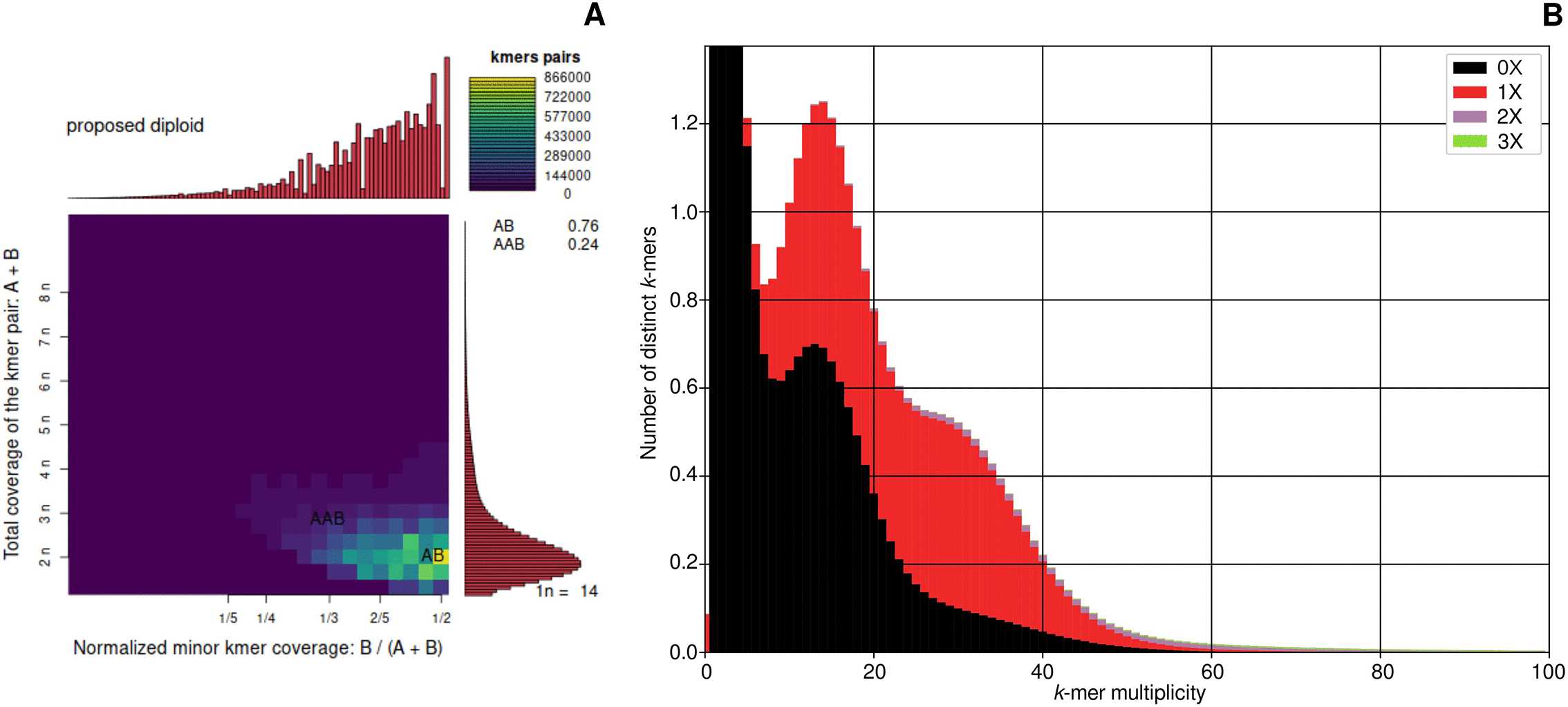
Figure 1.
Acrobeloides nanus is predicted as diploid.
27-mer analysis of the Nanopore sequencing dataset and the genome assembly. A) Ploidy assessment using Smudgeplot. The strong AB signal at 1 and 2n suggest diploidy. B) Comparison of 27-mers in the Nanopore reads and those integrated in the genome assembly. k -mer multiplicity and number of distinct k -mers refer to the 27-mers identified in the Nanopore reads. Curves are colored based on the representation of these same 27-mers in the assembly: 0X black (absent from the assembly), 1X red, 2X purple, 3X green.
The nuclear genome assembly of A. nanus, available in the European Nucleotide Archive as nxAcrNanu1, was collapsed to represent the two haplotypes into single sequences.55 The final assembly has homozygous regions included in one copy and heterozygous regions represented in one copy or absent from the assembly, as only one haplotype could be included (
Figure 1B). The homozygous peak shows some missing sequences, as 0X; this could be sequences in the Nanopore sequencing dataset and absent from the PacBio HiFi reads, which were used for the initial hifiasm assembly. The initial assembly included a large amount of bacterial contamination, due to the feeding mode of A. nanus, which was removed from the final assembly (
Figure 2). The final assembly reached a size of 188.9 Mb with 6 chromosome-level scaffolds spanning 98.98% of the assembly (
Figure 3A,
Table 1). This size is smaller than previous short-read assemblies at 248.1 Mb20 and 241.6 Mb,24 but the genome size was estimated to 176.6 Mb in,24 close to the size of this long-read assembly. The longer short-read assemblies may be owed to partial haplotype collapsing or contamination. Chromosome candidates have similar sizes ranging from 29.6 to 32.5 Mb. Along with the k-mer comparison suggesting a high completeness, the BUSCO score reached 95.6% against the Nematoda odb12 lineage (92.6% single-copy ortholog, 3.0% duplicated orthologs).
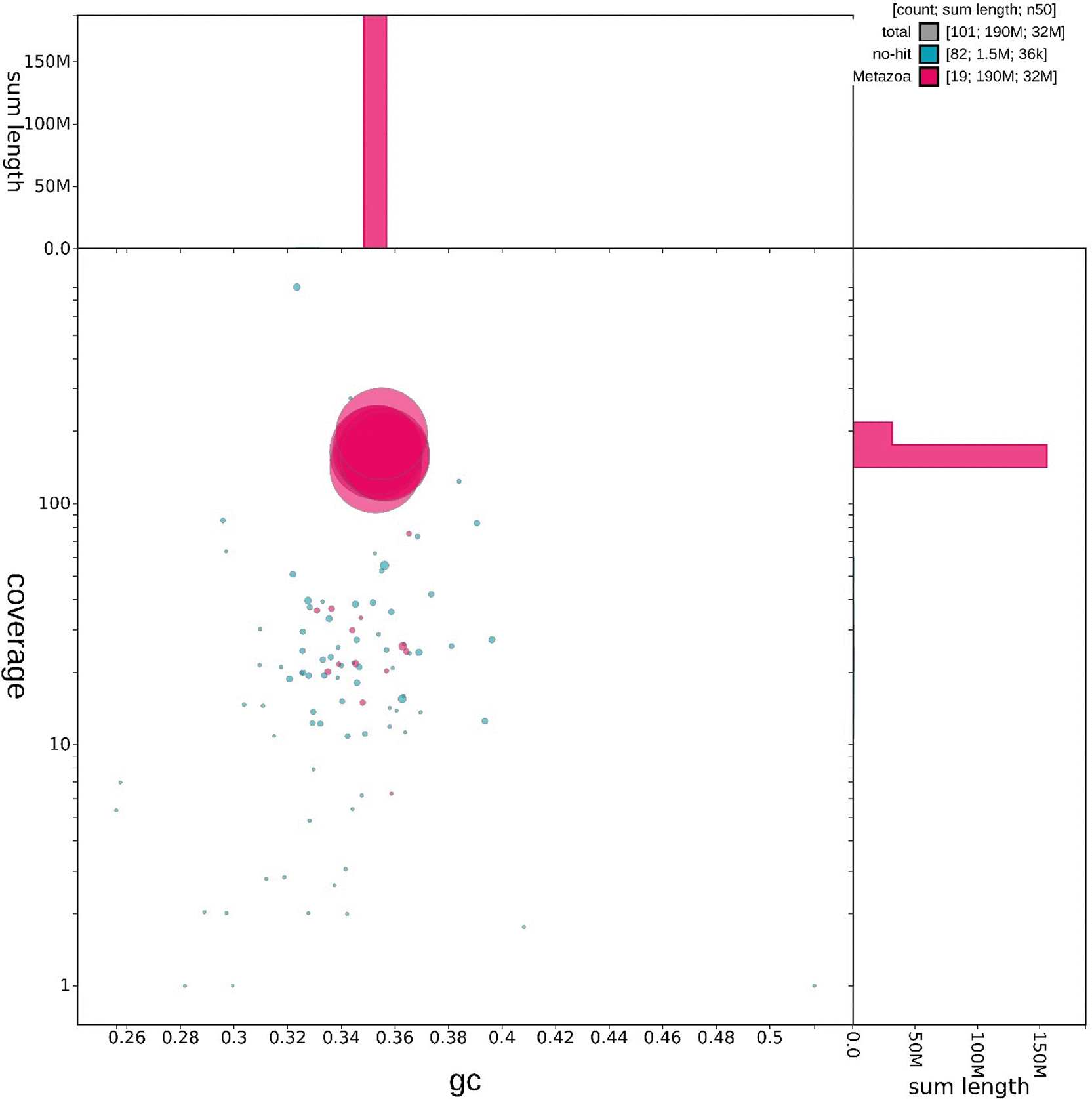
Figure 2. Removal of bacterial contamination from the final assembly.
BlobToolKit plot of GC content and PacBio HiFi coverage. Dots are colored following the kingdom to which they were attributed based on BLAST hits (Metazoa in pink, no hit in blue). Bacterial contigs, often present as food source for this species, were removed from the final assembly.
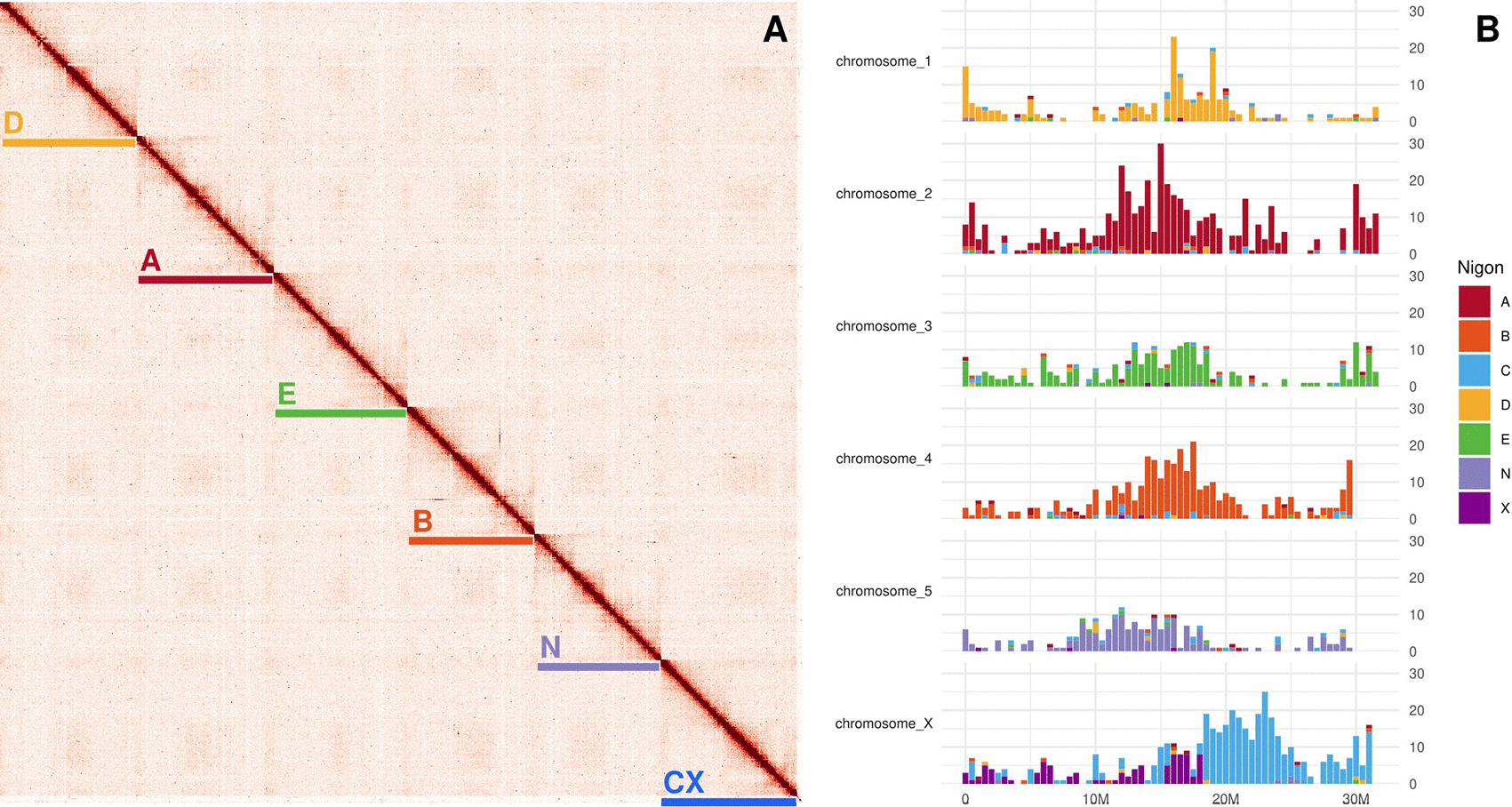
Figure 3. The nuclear genome assembly includes six chromosomes in which Nigon ancestral linkage groups are conserved.
A) Hi-C contact map with chromosomes identified based on their Nigon group. B) Identification of Nigon elements for each chromosome.
Table 1. Assembly statistics for Acrobeloides nanus nxAcrNanu1.
BUSCO orthologs were identified from the Nematoda odb12 lineage.
| Assembly size |
188,892,103 bp |
|---|
| Contig number
| 101 |
| Scaffold N50
| 31,568,468 bp |
| Scaffold N90
| 29,610,334 bp |
| Contig N50
| 284,133 bp |
| Contig N90
| 77,610 bp |
| Gaps
| 1,113 |
| Genome BUSCO
| Complete | 95.6% |
| Single copy | 92.6% |
| Duplicated | 3.0% |
| Repeat content
| | 48.06% |
| LTR
| Gypsy | 0.35% |
| unknown | 8.04% |
| TIR
| CACTA | 1.53% |
| Mutator | 20.39% |
| PIF Harbinger | 1.37% |
| Tc1 Mariner | 0.06% |
| hAT | 6.36% |
| Helitron
| | 2.10% |
| Predicted genes
| | 24,912 |
| Protein BUSCO
| Complete | 96.3% |
| Single copy | 91.9% |
| Duplicated | 4.4% |
Comparison of the six chromosomes to the Nigon element model of ancestral chromosomes indicated retention of five of the seven elements as single chromosomes (A, B, D, E, N;
Figure 3B). One chromosome comprised a fusion of the C element with the X element (
Figure 4). Nigon X in sexual species is the sex chromosome, usually found haploid in males.56,40 The assembly was annotated to contain 48.1% repeat. Annotation of transposable elements identified a majority of Mutator-like elements, representing 20.4% of the assembly. 24,912 genes were predicted, with a BUSCO score against the Nematoda odb12 lineage of 96.3% (91.9% single-copy orthologs, 4.4% duplicated orthologs). The mitochondrial genome assembly could not be circularized; it reached 17,634 bp, close to the reference assembly of Acrobeloides varius at 17,650 bp.
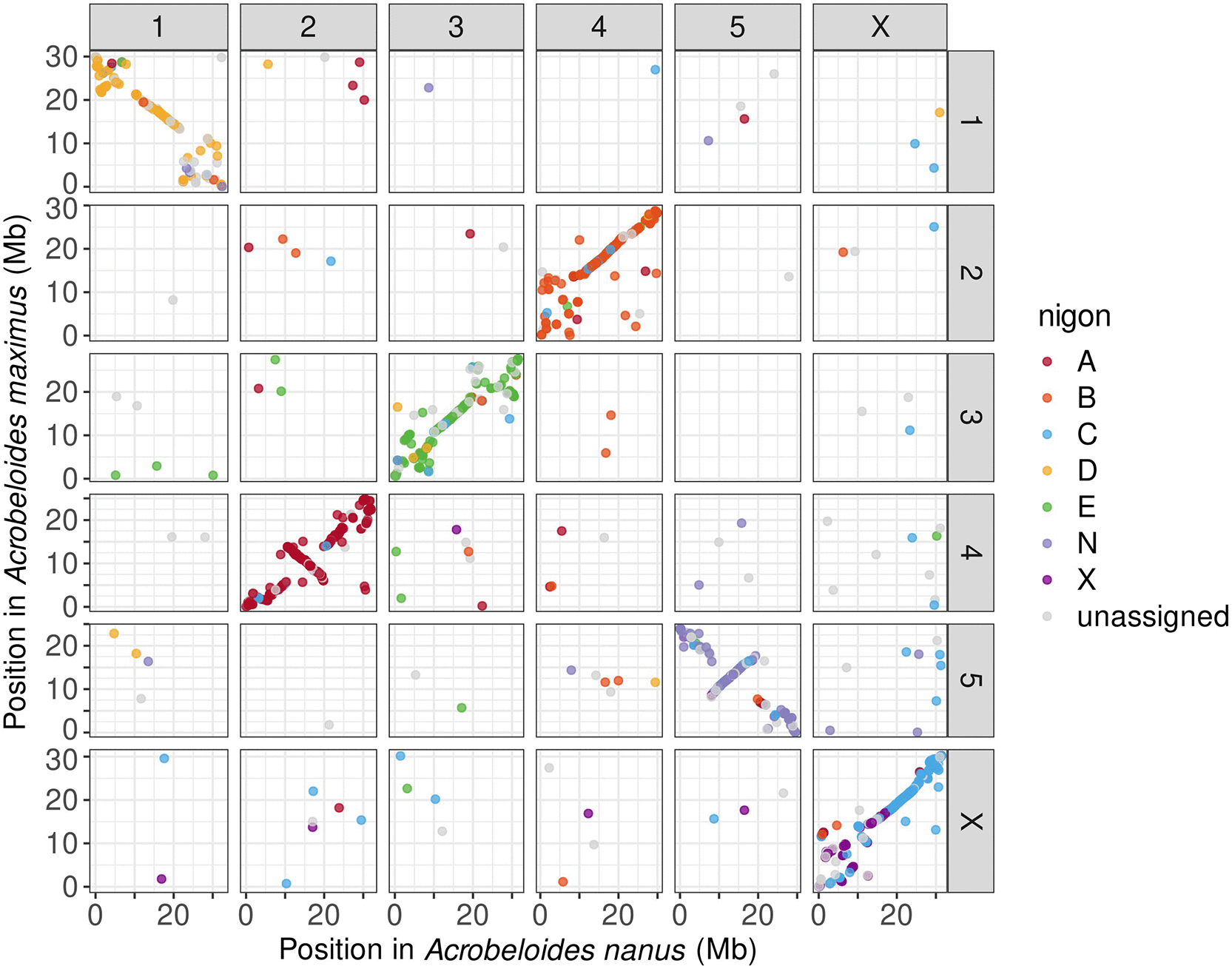
Figure 4. Conservation of six chromosomes in Acrobeloides nanus and Acrobeloides maximus, with widespread rearrangements.
Oxford dot plot of conserved orthologs between the two species, based on the Nigon element model of ancestral linkage groups for nematodes. Dots represent matches between genes and are colored based on their category (A, B, C, D, E, N, X, unassigned).
We compared the chromosomal structure of A. nanus with the publicly available assembly of A. maximus (GCA 964212105.1), using conserved orthologs from the Nigon element model. Both species have six chromo-somes, with one-to-one matches. Some rearrangements are observed, particularly at: the extremities of chromosomes 1 (Nigon D); the extremities of chromosomes 3 (Nigon E); the beginning of chromosome 4 of A. nanus and chromosome 2 of A. maximus (Nigon B); and the X portion of chromosomes X.
The combination of long reads and Hi-C brought the genome assembly of Acrobeloides nanus to chromosome level, far over the kilobase-level contiguity of previous short-read assemblies. Preliminary comparison with Acrobeloides maximus revealed an overall conservation of chromosomal organization between the two species, nuanced by multiple intra- and interchromosomal rearrangements. The availability of chromosome-level assemblies for A. nanus, A. maximus and more representatives of the family Cephalobidae in the future will bring new insights into their phylogeny, developmental and morphological genes, and the evolution of their genomes.
Ethics and consent
Ethical approval and consent were not required.
Data availability
Acrobeloides nanus and the related genomic study were assigned to Tree of Life ID (ToLID) ‘nxAcrNanu1’ and all sample, sequence, and assembly information are available under the umbrella BioProject PRJEB83609.57 The genome assembly is accessible from ENA under accession number GCA_964656895.1 and the annotation is available in the repository doi.org/10.6084/m9.figshare.31316383.58 Sequencing data produced as part of this project are available from ENA at the following accessions: ERR13339168 (Nanopore R10.4), ERR13339214 (ULI PacBio HiFi), ERR13362003 (Hi-C). All data are published under CC0 licence.
References
- 1.
Smythe AB, Nadler SA:
Molecular phylogeny of Acrobeloides and Cephalobus (Nematoda: Cephalobidae) reveals paraphyletic taxa and recurrent evolution of simple labial morphology.
Nematology.
2006; 8: 819–836. Publisher Full Text
- 2.
Blaxter M:
Nematodes: the worm and its relatives.
PLoS Biol.
2011; 9: e1001050. PubMed Abstract
| Publisher Full Text
| Free Full Text
- 3.
Kirangwa J, et al.:
Evolutionary plasticity in nematode Hox gene complements and genomic loci arrange-ment.
Sci. Rep.
2024; 14: 29513. PubMed Abstract
| Publisher Full Text
| Free Full Text
- 4.
Thorne G:
A revision of the nematode family Cephalobidae Chitwood and Chitwood, 1934.1937.
- 5.
Bird AF, Ryder MH:
Feeding of the nematode Acrobeloides nanus. on bacteria.
J. Nematol.
1993; 25: 493–499. PubMed Abstract
- 6.
Petrikovszki R, et al.:
A case study of soil nematode populations under intensive cucumber monoculture in hungary.
Helminthologia.
2024; 61: 272–276. Publisher Full Text
- 7.
Villegas L, et al.:
Geographic distribution of nematodes in the atacama is associated with elevation, climate gradients and parthenogenesis.
Nat. Commun.
2026; 17. Publisher Full Text
- 8.
Treonis A, Bell A, Marais E, et al.:
Namibian fairy circles: Hostile territory for soil nematodes.
PLoS One.
2025; 20: e0315884. PubMed Abstract
| Publisher Full Text
| Free Full Text
- 9.
Lahl V, Sadler B, Schierenberg E:
Egg development in parthenogenetic nematodes: variations in meiosis and axis formation.
Int. J. Dev. Biol.
2006; 50: 393–397. Publisher Full Text
- 10.
Doroszuk A, Wojewodzic MW, Kammenga JE:
Rapid adaptive divergence of life-history traits in response to abiotic stress within a natural population of a parthenogenetic nematode.
Proc. R. Soc. B Biol. Sci.
2006; 273: 2611–2618. PubMed Abstract
| Publisher Full Text
| Free Full Text
- 11.
Lu L, Kang Z, Sun S, et al.:
The Life-History Traits of Soil-Dwelling Nematode (Acrobeloides sp.) Exhibit More Resilience to Water Restriction Than Caenorhabditis elegans.
Integr. Comp. Biol.
2023; 64: 27–37. Publisher Full Text
- 12.
Demeure Y, Freckman D, Van Gundy S:
Anhydrobiotic coiling of nematodes in soil.
J. Nematol.
1979; 11: 189–195. PubMed Abstract
- 13.
Nicholas W, Stewart A:
Experiments on anhydrobiosis in Acrobeloides nanus (de Man, 1880) Anderson, 1986 (Nematoda).
Nematologica.
1989; 35: 489–491. Publisher Full Text
- 14.
Watanabe M:
Anhydrobiosis in invertebrates.
Appl. Entomol. Zool.
2006; 41: 15–31. Publisher Full Text
- 15.
Doroszuk A, Te Brake E, Crespo-Gonzalez D, et al.:
Response of secondary production and its components to multiple stressors in nematode field populations.
J. Appl. Ecol.
2007; 44: 446–455. Publisher Full Text
- 16.
Hao W, Li Q, Zhang J, et al.:
Utility of nematode Acrobeloides nanus for assessing subacute toxicity of heavy metals.
Environ. Monit. Assess.
2010; 164: 273–278. PubMed Abstract
| Publisher Full Text
- 17.
Wiegner O, Schierenberg E:
Regulative development in a nematode embryo: a hierarchy of cell fate transformations.
Dev. Biol.
1999; 215: 1–12. Publisher Full Text
- 18.
Wiegner O, Schierenberg E:
Specification of gut cell fate differs significantly between the nematodes Acrobeloides nanus and Caenorhabditis elegans.
Dev. Biol.
1998; 204: 3–14. PubMed Abstract
| Publisher Full Text
- 19.
Schierenberg E:
Three sons of fortune: early embryogenesis, evolution and ecology of nematodes.
Bioessays.
2001; 23: 841–847. Publisher Full Text
- 20.
Schiffer PH, et al.:
The gene regulatory program of Acrobeloides nanus reveals conservation of phylum-specific expression.
Proc. Natl. Acad. Sci.
2018; 115: 4459–4464. PubMed Abstract
| Publisher Full Text
| Free Full Text
- 21.
Holovachov O, Boström S:
Introduction to Nematodes of the Family Cephalobidae.
Publit;
2025.
- 22.
De Ley P:
The Nematode Community of a Marginal Soil at Cambérène, Senegal, with Special Attention to Functional Morphology and Niche Partitioning in the Family Cephalobidae.
Mededelingen van de Koninklijke Academie voor Wetenschappen, Letteren en Schone Kunsten van België, Klasse der Wetenschappen.
1992; 53: 109–153.
- 23.
Abolafia J, Robles M-C, Ruiz-Cuenca AN:
Characterisation of four species of the genus Acrobeloides Cobb, 1924 (Rhabditida, Cephalobidae) from xeric areas in Spain, with revision of the genus and restoration of Paracephalobus Akhtar, 1962.
Zool. Anz.
2024; 312: 47–68. Publisher Full Text
- 24.
Collins G, et al.:
The MetaInvert soil invertebrate genome resource provides insights into below-ground biodiversity and evolution.
Commun. Biol.
2023; 6: 1241. PubMed Abstract
| Publisher Full Text
| Free Full Text
- 25.
Guiglielmoni N, Villegas LI, Kirangwa J, et al.:
Revisiting genomes of non-model species with long reads yields new insights into their biology and evolution.
Front. Genet.
2024; 15: 1308527. Publisher Full Text
- 26.
Koetsier PAG, Cantor EJ:
A simple approach for effective shearing and reliable concentration measurement of ultra-high-molecular-weight DNA.
BioTechniques.
2021; 71: 439–444. PubMed Abstract
| Publisher Full Text
- 27.
Oxford Nanopore Technologies.
Dorado:
2022.
Reference Source
- 28.
Danecek P, et al.:
Twelve years of SAMtools and BCFtools.
GigaScience.
2021; 10: Giab008.
- 29.
Cheng H, Concepcion GT, Feng X, et al.:
Haplotype-resolved de novo assembly using phased assembly graphs with hifiasm.
Nat. Methods.
2021; 18: 170–175. Publisher Full Text
- 30.
Altschul SF, Gish W, Miller W, et al.:
Basic local alignment search tool.
J. Mol. Biol.
1990; 215: 403–410. Publisher Full Text
- 31.
Manni M, Berkeley MR, Seppey M, et al.:
BUSCO update: novel and streamlined workflows along with broader and deeper phylogenetic coverage for scoring of eukaryotic, prokaryotic, and viral genomes.
Mol. Biol. Evol.
2021; 38: 4647–4654. PubMed Abstract
| Publisher Full Text
| Free Full Text
- 32.
Challis R, Richards E, Rajan J, et al.:
BlobToolKit–interactive quality assessment of genome assemblies.
G3: Genes, Genomes, Genetics.
2020; 10: 1361–1374.
- 33.
Li H:
Minimap2: pairwise alignment for nucleotide sequences.
Bioinformatics.
2018; 34: 3094–3100. PubMed Abstract
| Publisher Full Text
| Free Full Text
- 34.
Guan D, et al.:
Identifying and removing haplotypic duplication in primary genome assemblies.
Bioinformatics.
2020; 36: 2896–2898. PubMed Abstract
| Publisher Full Text
| Free Full Text
- 35.
National Center for Biotechnology Information:
Foreign Contamination Screen.2022.
Reference Source
- 36.
Pathogen Informatics:
Wellcome Sanger Institute. assembly-stats.2014.
Reference Source
- 37.
Mapleson D, Garcia Accinelli G, Kettleborough G, et al.:
KAT: a K-mer analysis toolkit to quality control NGS datasets and genome assemblies.
Bioinformatics.
2016; 33: 574–576. Publisher Full Text
- 38.
Matthey-Doret C, et al.:
koszullab/hicstuff.2020.
- 39.
Baudry Lyam, et al.:
“instaGRAAL: chromosome-level quality scaffolding of genomes using a proximity ligation-based scaffolder.”
Genome Biology
21.1 2020: 148.
- 40.
Gonzalez de la Rosa PM, et al.:
A telomere-to-telomere assembly of Oscheius tipulae and the evolution of rhabditid nematode chromosomes.
G3: Genes, Genomes, Genetics.
2021; 11.
- 41.
Astashyn A, et al.:
Rapid and sensitive detection of genome contamination at scale with FCS-GX.
Genome Biol.
2024; 25: 60. PubMed Abstract
| Publisher Full Text
| Free Full Text
- 42.
Diesh C, et al.:
JBrowse 2: a modular genome browser with views of synteny and structural variation.
Genome Biol.
2023; 24: 74. PubMed Abstract
| Publisher Full Text
| Free Full Text
- 43.
Kerpedjiev P, et al.:
HiGlass: web-based visual exploration and analysis of genome interaction maps.
Genome Biol.
2018; 19: 125. Publisher Full Text
- 44.
Harry E:
PretextView (Paired REad TEXTure Viewer): a desktop application for viewing pretext contact maps.2022.
- 45.
Ou S, et al.:
Benchmarking transposable element annotation methods for creation of a streamlined, com-prehensive pipeline.
Genome Biol.
2019; 20: 1–18.
- 46.
Krueger F, et al.:
FelixKrueger/TrimGalore: v0.6.10 - add default decompression path.2023.
- 47.
Kim D, Paggi JM, Park C, et al.:
Graph-based genome alignment and genotyping with HISAT2 and HISAT-genotype.
Nat. Biotechnol.
2019; 37: 907–915. PubMed Abstract
| Publisher Full Text
| Free Full Text
- 48.
Gabriel L, et al.:
BRAKER3: Fully automated genome annotation using RNA-seq and protein evidence with GeneMark-ETP, AUGUSTUS, and TSEBRA.
Genome Res.
2024; 34: 769–777. Publisher Full Text
- 49.
Stanke M, Diekhans M, Baertsch R, et al.:
Using native and syntenically mapped cDNA alignments to improve de novo gene finding.
Bioinformatics.
2008; 24: 637–644. Publisher Full Text
- 50.
Lomsadze A, Ter-Hovhannisyan V, Chernoff YO, et al.:
Gene identification in novel eukaryotic genomes by self-training algorithm.
Nucleic Acids Res.
2005; 33: 6494–6506. Publisher Full Text
- 51.
Dainat J:
AGAT: Another Gff Analysis Toolkit to handle annotations in any GTF/GFF format.2020.
- 52.
Uliano-Silva M, et al.:
MitoHiFi: a python pipeline for mitochondrial genome assembly from PacBio high fidelity reads.
BMC Bioinformatics.
2023; 24: 288. PubMed Abstract
| Publisher Full Text
| Free Full Text
- 53.
Kim T, Lee Y, Kil H-J, et al.:
The mitochondrial genome of Acrobeloides varius (Cephalobomorpha) confirms non-monophyly of Tylenchina (Nematoda).
PeerJ.
2020; 8: e9108. Publisher Full Text
- 54.
Stevens L, et al.:
The genome of Litomosoides sigmodontis illuminates the origins of Y chromosomes in filarial nematodes.
PLoS Genet.
2024; 20: e1011116. Publisher Full Text
- 55.
Guiglielmoni N, et al.:
Overcoming uncollapsed haplotypes in long-read assemblies of non-model organisms.
BMC Bioinformatics.
2021; 22(1): 303. PubMed Abstract
| Publisher Full Text
| Free Full Text
- 56.
Tandonnet S.:
Chromosome-wide evolution and sex determination in the three-sexed nematode Auanema rhodensis.
G3: Genes, Genomes, Genetics.
2019; 9, 1211–1230.
- 57.
Guiglielmoni N, et al.:
Acrobeloides nanus genome assembly. European Nucleotide Archive. Project: PRJEB83609. [Dataset].
2024.
- 58.
Guiglielmoni N:
Acrobeloides nanus, genome note.
Figshare.
2026. Publisher Full Text









