Introduction
Gesiella jameensis, a stygobitic scale worm of the family Polynoidae (Annelida), is a highly specialized anchialine subterranean species distinguished by its lack of pigmentation, absence of eyes, and the presence of transparent dorsal elytra alternating with long dorsal cirri (Hartmann-Schröder, 1974; Gonzalez et al., 2018a) (Figure 1). The species also exhibits a unique ciliated parapodial “wheel organ”, a structure not reported in other polynoids, likely associated with locomotion, respiration, and reproductive processes (Pettibone, 1976). Phylogenetically, Gesiella belongs to the subfamily Pelagomacellicephalinae, which comprises mostly of deep-sea lineages together with an additional anchialine-specialized taxa Pelagomacellicephala, suggesting an origin linked to colonization of coastal saline groundwater from deep-sea ancestors (Gonzalez et al., 2018a, b). Gesiella jameensis is restricted to the saline groundwater at La Corona lava tube, at the northern tip of Lanzarote (Canary Islands) (Martínez et al. 2016), being one of the few examples of cave aquatic polychaetes known in the world.
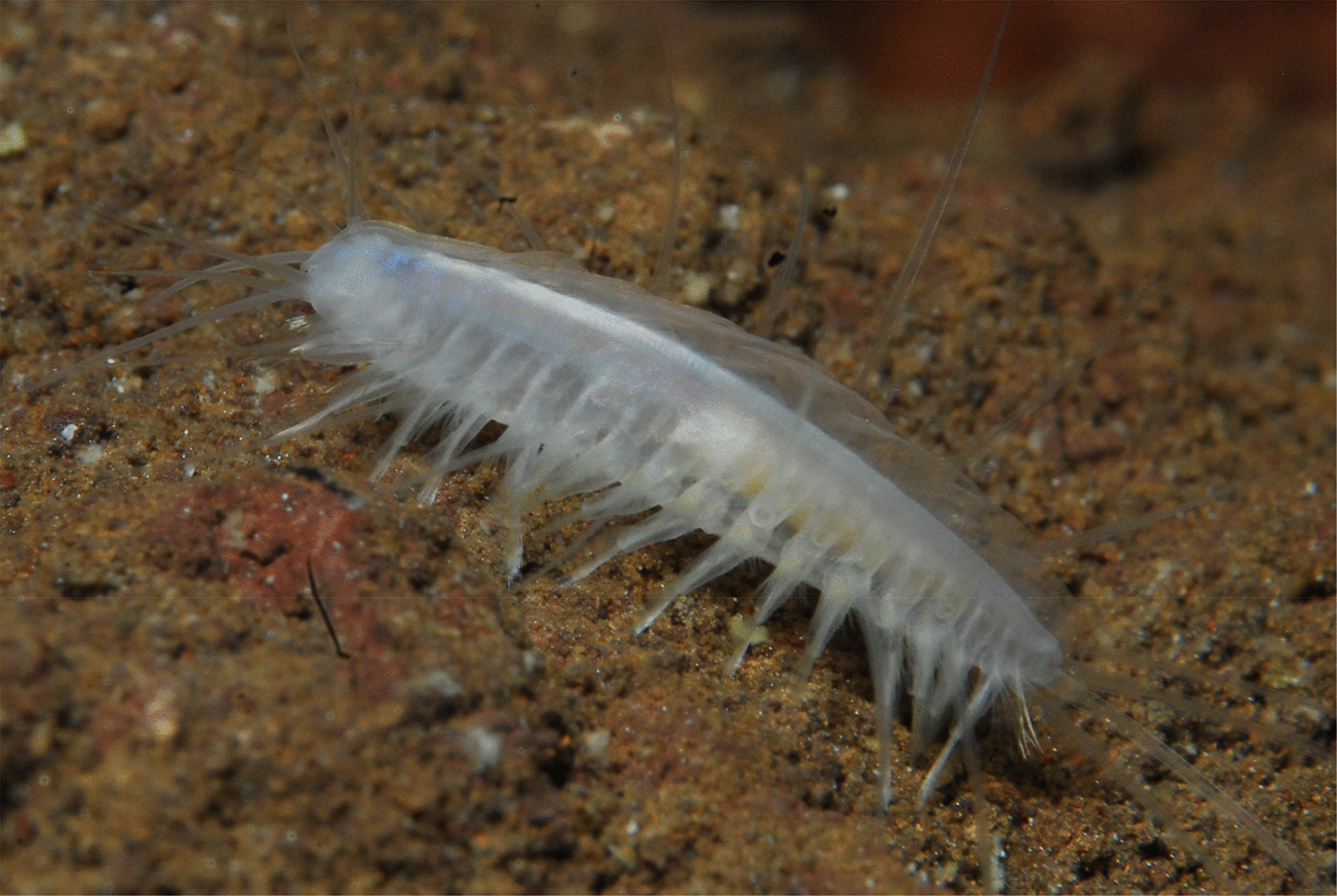
Figure 1.
Gesiella jameensis resting on the bottom of Los Jameos del Agua anchialine lake (photo by Juan Valenciano).
Gesiella jameensis has not been formally assessed for the IUCN Red List, likely reflecting the general lack of population data and the inherent difficulty of evaluating extinction risk in subterranean, microendemic taxa with highly restricted and inaccessible habitats (Mammola et al., 2021). Nevertheless, the species is recognized at the regional level within the Canary Catalogue of Protected Species, where it is listed as a species of “interés para los ecosistemas canarios” (i.e. species of interest for the Canarian ecosystems). This category includes taxa that, while not necessarily classified as threatened, play important ecological roles within protected ecosystems or contribute significantly to their structure and functioning.
Despite the absence of a formal global conservation assessment, G. jameensis exhibits several traits typically associated with high vulnerability, including extreme range restriction (limited to a single anchialine lava tube system), habitat specialization, and dependence on stable groundwater conditions (Martínez et al., 2016). These characteristics, combined with increasing pressures on coastal aquifers (e.g., groundwater extraction, pollution and tourism-related disturbance), suggest that the species may be at risk and would likely qualify for a threatened category under IUCN criteria if sufficient data were available (Mammola et al., 2019).
Endemic to the La Corona lava tube in northeastern Lanzarote (Canary Islands, Spain), G. jameensis inhabits submerged anchialine saline cave waters connected to the coastal aquifer, anchialine systems being coastal groundwater habitats characterized by subterranean connections to the sea, where marine and freshwater mix under reduced light or dark conditions (Iliffe & Alvarez, 2019). Its distribution includes three main sites: Cueva de los Lagos, Los Jameos del Agua, and Túnel de la Atlántida (Martínez et al., 2016). Within this system, it is one of the most frequently observed macroinvertebrates, often found drifting in the water column, where it maintains position using extended parapodia and cirri, and occasionally resting within crevices of the volcanic substrate (Gonzalez et al., 2021). Owing to its high abundance and its role as an active predator of small invertebrates such as mysids and copepods, Gesiella likely functions as a keystone species within this ecosystem, regulating populations of dominant zooplankton and mediating trophic pathways between the water column and benthic compartments. Its distribution is strictly confined to this single volcanic aquifer system, reflecting extreme habitat specialization and a narrow geographic range typical of anchialine cave fauna.
Developing a high-quality reference genome for Gesiella jameensis is valuable because this species occupies a unique evolutionary position at the intersection of deep-sea and subterranean lineages within Polynoidae, exhibiting morphological convergence with pelagic lineages (Gonzalez et al., 2018a, 2021). Previous work on scaleworms has shown convergent evolution of swimming and troglomorphic traits across anchialine, pelagic, and deep-sea species, while genomic studies on cave adaptation focusing on other lineages indicate that both exaptation and convergence shape responses to subterranean environments (Balart-García et al., 2023). As a cave-restricted, anchialine endemic with affinities to deep-sea species, G. jameensis provides a key system to investigate the genomic basis of adaptation to dark, oligotrophic conditions and to test how evolutionary transitions between deep-sea and subterranean habitats are reflected at the genomic level. Its genome will therefore offer insights into convergent evolution, trait loss and innovation, while also providing an essential resource for the conservation of this highly restricted species.
The generation of this reference resource was coordinated by the European Reference Genome Atlas (ERGA) initiative’s Biodiversity Genomics Europe (BGE) project, supporting ERGA’s aims of promoting transnational cooperation and advances in the application of genomics technologies to protect and restore biodiversity.
Materials & Methods
ERGA’s sequencing strategy includes Oxford Nanopore Technology (ONT) and Pacific Biosciences (PacBio) for long-read sequencing, along with Hi-C sequencing for chromosomal architecture, Illumina Paired-End (PE) for polishing (i.e. recommended for ONT-only assemblies), and RNA sequencing for transcriptomic profiling, to facilitate genome assembly and annotation.
Sample and sampling information
AM, AR, NE, KE, and RF sampled five specimens of Gesiella jameensis, determined based on the original description and re-description of the species, as well as the Guide to the Anchialine Ecosystems of Jameos del Agua and Túnel de la Atlántida (Martínez et al., 2016), identified in situ by AM. The sampling permit was issued to AM and RF, with the support of LM, by the Dirección General de Espacios Naturales y Biodiversidad (Gobierno de Canarias) under file no. 68–2023-1107134106 (Resolución n° 99/2023), authorizing the collection and use of protected species, including Gesiella jameensis, for scientific research. Additional authorization for access and fieldwork within protected areas was granted by the Cabildo Insular de Lanzarote (file no. 17018/2022). Specimens were collected in Falcon tubes during an immersion in the Túnel de la Atlántida. Specimens were directly flash frozen in dry ice upon collection, and kept at −80°C until DNA extraction.
Vouchering information
Physical reference materials for the here sequenced specimen have been deposited at the National Museum of Natural Sciences (MNCN-CSIC, Madrid, Spain) under the accession numbers MNCN-ADN-202922. Frozen reference tissue material is available from a proxy voucher at the Biobank of the MNCN-CSIC under the voucher ID MNCN-ADN-202923.
Data availability
Gesiella jameensis and the related genomic study were assigned to Tree of Life ID (ToLID) ‘wpGesJame1’, and all sample, sequence, and assembly information are available under the umbrella BioProject PRJEB77889. The sample information is available at the following BioSample accessions: SAMEA114540937, SAMEA114540969, SAMEA114540967, SAMEA116288676, SAMEA116288677, SAMEA114540938, SAMEA114540966, SAMEA114540970, SAMEA114540939 and SAMEA116288675. The genome assembly is accessible from GenBank under accession number GCA_981280645.1. Sequencing data produced as part of this project are available from SRA at the following accessions: ERX12756226 (ONT WGS data), ERX13167077 (Illumina WGS data), ERX14820218 (PacBio HiFi WGS data), ERX14820220 (Illumina RNAseq data) and ERX14820219 (HiC data). Documentation related to the genome assembly and curation can be found in the ERGA Assembly Report (EAR) document available at https://github.com/ERGA-consortium/EARs/blob/main/Assembly_Reports/Gesiella_jameensis/wpGesJame1/wpGesJame1_EAR.pdf.
Genetic information
Genetic information retrieved for this species from Genomes on a Tree (Challis R et al., 2023) prior to sequencing included an estimated genome size, based on ancestral taxa, of 2.15 Gb, an estimated haploid number of 10 chromosomes (2n = 20), and unknown sex chromosomes. These values were used as provisional expectations only, as they are inferred from ancestral information and do not represent species-specific genome size or cytogenetic estimates. The genome was predicted to be diploid. Re-estimation of genome size based on k-mer profiling gave a more accurate estimate of 8.518 Gb, which necessitated a top-up of sequencing yield (see below).
DNA/RNA processing
DNA was extracted from the mid body using the Blood & Cell Culture DNA Mini Kit (Qiagen) following the manufacturer’s instructions. DNA quantification was performed using a Qubit dsDNA BR Assay Kit (Thermo Fisher Scientific), and DNA integrity was assessed using a Genomic DNA 165 Kb Kit (Agilent) on the Femto Pulse system (Agilent). The DNA was stored at +4 °C until sequenced.
RNA was extracted using an RNeasy Mini Kit (Qiagen) according to the manufacturer’s instructions. RNA was extracted from two different specimen parts: mid body and other somatic tissues. RNA quantification was performed using the Qubit RNA BR kit, and RNA integrity was assessed using a Bioanalyzer 2100 system (Agilent) with a RNA 6000 Pico Kit (Agilent). The RNA was pooled in a 1:1 ratio for the library preparation and stored at −80 °C until used.
Library preparation and sequencing
For long-read whole genome sequencing, a library was prepared using the SMRTbell prep kit 3.0 (Pacific Biosciences, PacBio), which was then sequenced across three SMRTcells (PacBio) on a Revio System (PacBio). A Hi-C library was prepared from the whole organism using the Dovetail Omni-C Kit (Cantata Bio), followed by the KAPA Hyper Prep Kit for Illumina sequencing (Roche). The RNA library was prepared using the KAPA mRNA Hyper prep kit (Roche). All short-read libraries were sequenced on a NovaSeq 6000 instrument (2x150bp, Illumina).
Genome assembly methods
The genome was assembled using the CNAG CLAWS pipeline (Jessica Gomez-Garrido, 2024). Briefly, Pacbio HiFi reads were preprocessed for quality and length using Filtlong v0.2.1 (−-min_length 1000 --min_mean_q 80), and initial contigs were assembled using Hifiasm v0.24, followed by scaffolding with YaHS v1.2a with default error correction and minimum mapping quality of 10. Finally, the assembled scaffolds of the primary assembly were curated via manual inspection using PretextViewAI v1.0.4 with the Rapid Curation Toolkit (https://gitlab.com/wtsi-grit/rapid-curation
) to remove false duplications, any false joins and incorporate any sequences not automatically scaffolded into their respective locations in the chromosomal pseudomolecules (or super-scaffolds). A first round of curation performed on the entire genome to ensure correct placement of sequence into chromosomes was followed by a second round of curation performed on each chromosome individually, which afforded higher resolution for accurate localization of previously unscaffolded sequences, corrections and removal of haplotigs and other falsely duplicated sequences. An average of 193 interventions were made per Gb (402 cuts in contigs, 575 breaks at gaps and 682 joins). FCS-GX v0.5.5 (Astashyn et al. 2024) identified 59 contaminants (proteobacteria and mycoplasma) which were removed. Finally, the mitochondrial genome was assembled as a single circular contig of 22,663 bp using the FOAM pipeline (https://github.com/cnag-aat/FOAM) and included in the released assembly (GCA_981280645.1). Summary analysis of the released assembly was performed using CLAWS (Jessica Gomez-Garrido, 2024) and BlobToolKit v4.4.5 (Challis et al. 2020).
Results
Genome Assembly
The genome assembly has a total length of 8,589,617,347 bp in 1,810 scaffolds, including the mitogenome (
Figures 2 & 3), with a GC content of 41.78%. The assembly has a contig N50 of 7,197,108 bp and L50 of 370, and a scaffold N50 of 1,071,549,555 bp and L50 of 4. The assembly has a total of 224.68 gaps/Gbp, totalling 386,000 bp in cumulative size. The single-copy gene content analysis using the metazoa_odb12 (n = 672) database with BUSCO v6.0.0 (Manni et al. 2021) resulted in 97.0% completeness (93.2% single and 3.9% duplicated). 93.46% of read k-mers are present in the assembly, and the assembly has a base accuracy Quality Value (QV) of 66.385 as calculated by Merqury (Rhie et al., 2020).
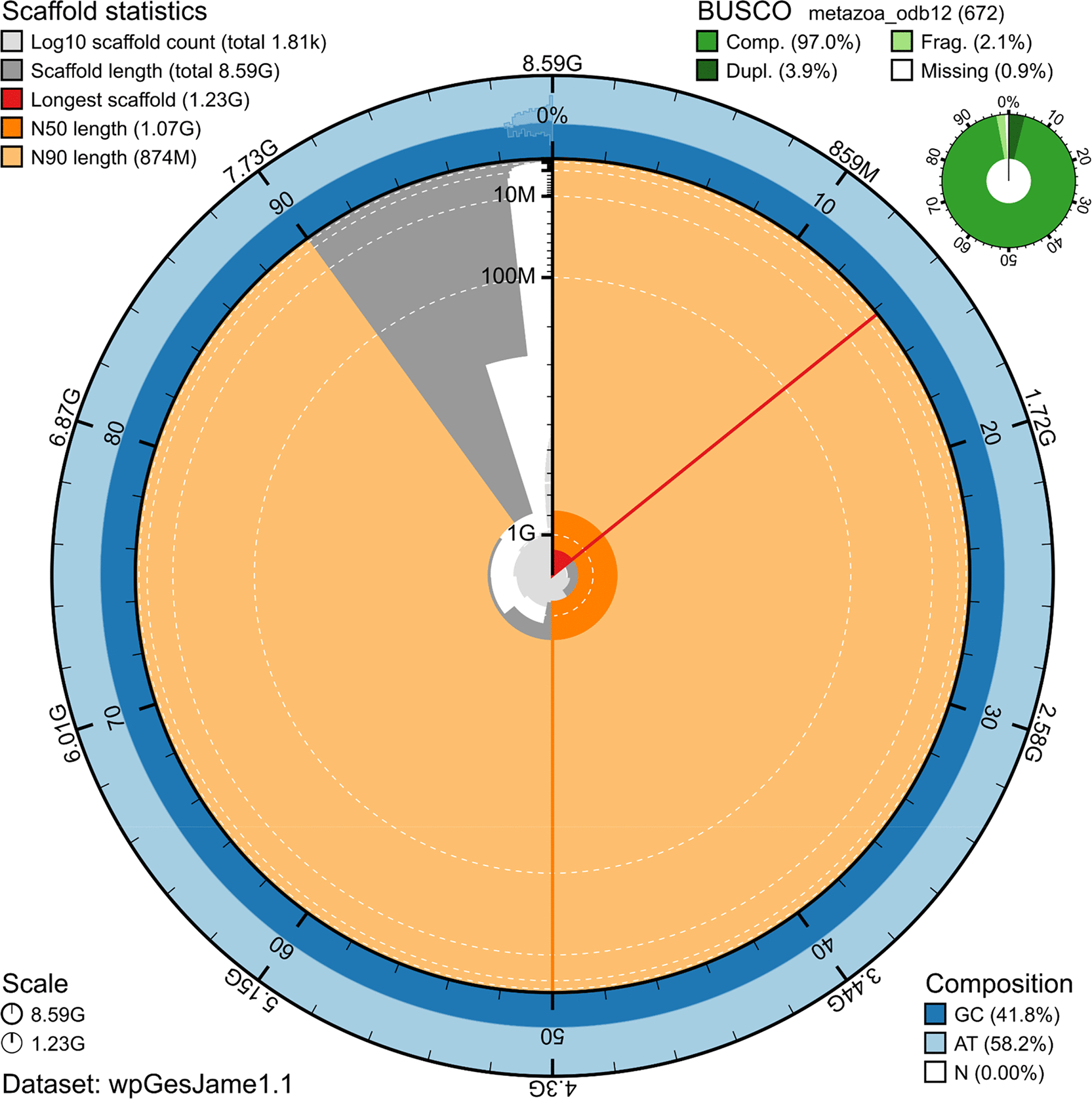
Figure 2. Snail plot summary of assembly statistics.
The main plot is divided into 1,000 size-ordered bins around the circumference, with each bin representing 0.1% of the 8,590,003,347 bp assembly, including the mitochondrial genome. The distribution of sequence lengths is shown in dark grey, with the plot radius scaled to the longest sequence present in the assembly (1,226,408,822 bp, shown in red). Orange and pale-orange arcs show the scaffold N50 and N90 sequence lengths (1,071,549,555 and 874,439,734 bp), respectively. The pale grey spiral shows the cumulative sequence count on a log-scale, with white scale lines showing successive orders of magnitude. The blue and pale-blue area around the outside of the plot shows the distribution of GC, AT, and N percentages in the same bins as the inner plot. A summary of complete, fragmented, duplicated, and missing BUSCO genes found in the assembled genome from the metazoa database (odb12) is shown in the top right.
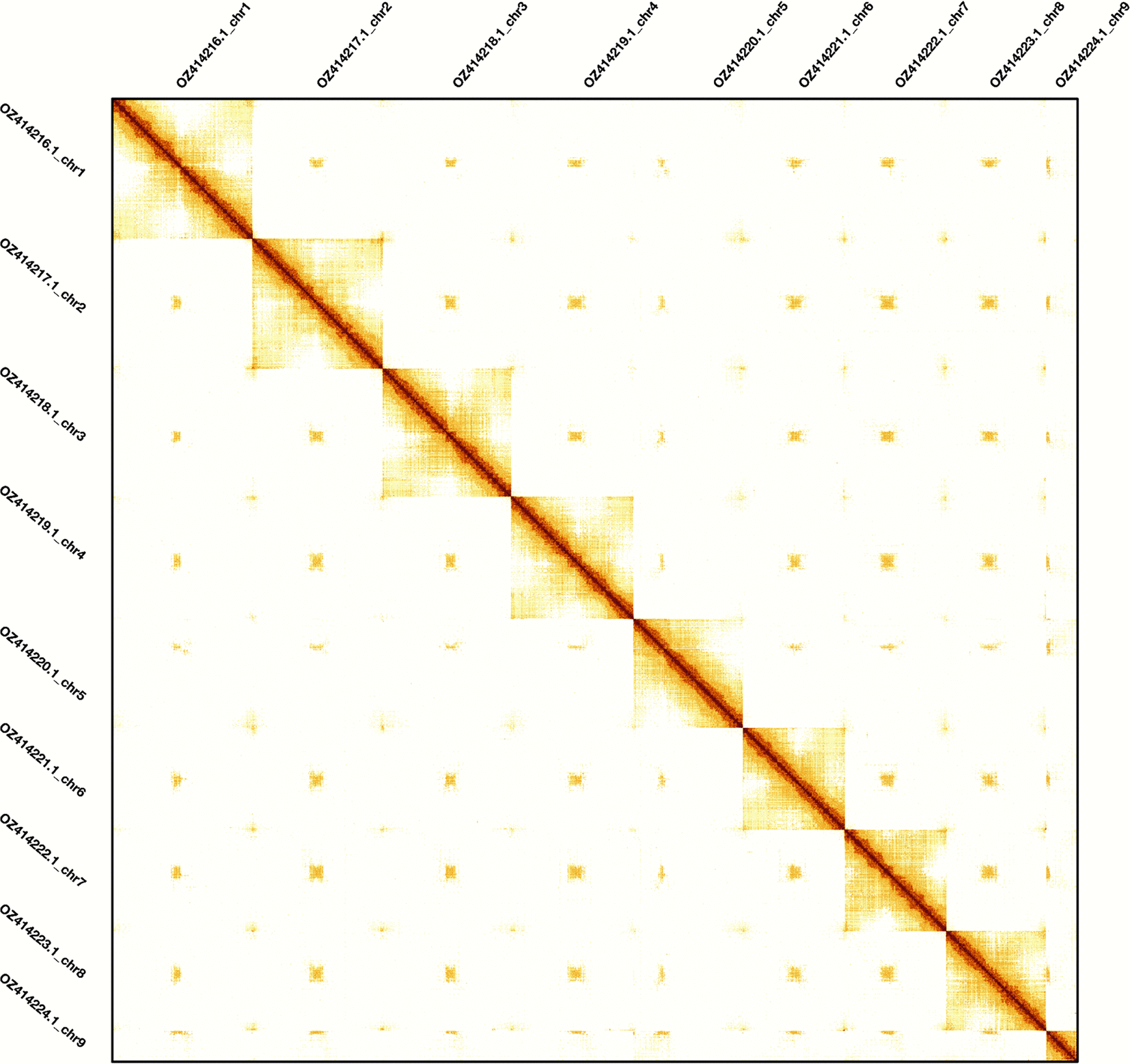
Figure 3. Hi-C contact map showing spatial interactions between regions of the genome.
The diagonal corresponds to intra-chromosomal contacts, depicting chromosome boundaries for the nine super-scaffolds assembled. These chromosomal pseudomolecules are named with their accessions and their chromosome numbers (based on their length). The color intensity along the map is proportional to the frequency of contacts and is stronger along the diagonal. The image was generated from the pretext contact map using PretextSnapshot (https://github.com/sanger-tol/PretextSnapshot). The contact patterns are consistent with putative centromeric regions within the chromosome-scale pseudomolecules, including approximately central regions in the eight largest pseudomolecules and a more terminal region in the smallest pseudomolecule. Please note that the mitochondrial genome is not shown because it is below the resolution of the map.
The nuclear assembly was organized into nine chromosome-scale pseudomolecules supported by the Hi-C contact map. This number differs from the indirect GoaT-based ancestral estimate of 10 haploid chromosomes reported prior to sequencing. The Hi-C contact patterns further suggest putative centromeric regions in the chromosome-scale scaffolds. The eight largest pseudomolecules show interaction patterns compatible with approximately metacentric organization, whereas the smallest pseudomolecule shows a pattern suggestive of a more terminal, possibly telocentric, centromere. However, in the absence of a species-specific karyotype, these interpretations remain tentative pending direct cytogenetic validation or centromere-specific annotation.
Author contributions
NE and RF coordinated the project; AR, AM, RF, NE and KE collected the species; AM identified the species; LM provided essential support to obtain sampling permits; RF, NE and KE sampled and preserved biological material and provided metadata; NE, RF, RM and AB provided sampling and metadata support and management; LA extracted DNA, prepared libraries, and performed sequencing; FCF, FC and JGG performed genome assembly and curation under the supervision of TA; AM and RF prepared the genome report, with feedback from all authors. All authors contributed to the writing, review, and editing of this genome note and read and approved the final version.
Acknowledgements
We are grateful to Nieves Zurita (Servicio de Biodiversidad, Gobierno de Canarias) for her invaluable assistance in obtaining the permits. We thank the Cabildo de Lanzarote and the Centros de Arte, Cultura y Turismo (CACT) for their support. We are especially grateful to the staff at Los Jameos del Agua, particularly Suso Fontes and Alexis Guadalupe, for facilitating access and fieldwork at the site. We would like to acknowledge the assembly reviewer, Jean-Marc Aury from Genoscope.
References
- Astashyn A, Tvedte ES, Sweeney D, et al.:
Rapid and sensitive detection of genome contamination at scale with FCS-GX.
Genome Biol.
2024 Feb 26; 25(1): 60. PubMed Abstract
| Publisher Full Text
| Free Full Text
- Balart-García P, Aristide L, Bradford TM, et al.:
Parallel and convergent genomic changes underlie independent subterranean colonization across beetles.
Nat. Commun.
2023; 14(1): 3842. PubMed Abstract
| Publisher Full Text
| Free Full Text
- Challis R, Kumar S, Sotero-Caio C:
Genomes on a Tree (GoaT): A versatile, scalable search engine for genomic and sequencing project metadata across the eukaryotic tree of life [version 1; peer review: 2 approved].2023; 8: 24. PubMed Abstract
| Publisher Full Text
| Free Full Text
- Challis R, Richards E, Rajan J, et al.:
BlobToolKit – Interactive Quality Assessment of Genome Assemblies.
G3: Genes|Genomes|Genetics.
2020; 10(4): 1361–1374. PubMed Abstract
| Publisher Full Text
| Free Full Text
- Gomez-Garrido J:
CLAWS (CNAG’s Long-read Assembly Workflow in Snakemake) [Computer software].2024. Publisher Full Text
- Gonzalez BC, Worsaae K, Fontaneto D, et al.:
Anophthalmia and elongation of body appendages in cave scale worms (Annelida: Aphroditiformia).
Zool. Scr.
2018a; 47(1): 106–121. Publisher Full Text
- Gonzalez BC, Martínez A, Borda E, et al.:
Phylogeny and systematics of Aphroditiformia.
Cladistics.
2018b; 34(3): 225–259. PubMed Abstract
| Publisher Full Text
- Gonzalez BC, Martínez A, Worsaae K, et al.:
Morphological convergence and adaptation in cave and pelagic scale worms (Polynoidae, Annelida).
Sci. Rep.
2021; 11(1): 10718. PubMed Abstract
| Publisher Full Text
| Free Full Text
- Hartmann-Schröder G:
Die Unterfamilie Macellicephalinae Hartmann-Schröder, 1971 (Polynoidae, Polychaeta). Mit Beschreibung einer neuen Art, Macellicephala jameensis n.sp., aus einem Höhlengewässer von Lanzarote (Kanarische Inseln).
1974; vol. 71. : 75–85.
Mitteilungen aus dem Hamburgischen Zoologischen Museum und Institut.
- Iliffe TM, Alvarez F:
Research in anchialine caves.
Cave Ecology.
Cham:
Springer International Publishing;
2019; pp. 383–397.
- Mammola S, Cardoso P, Culver DC, et al.:
Scientists’ Warning on the Conservation of Subterranean Ecosystems.
Bioscience.
2019; biz064. Publisher Full Text
- Mammola S, Lunghi E, Bilandžija H, et al.:
Collecting eco-evolutionary data in the dark: Impediments to subterranean research and how to overcome them.
Ecol. Evol.
2021; 11(11): 5911–5926. PubMed Abstract
| Publisher Full Text
| Free Full Text
- Manni M, Berkeley MR, Seppey M, et al.:
BUSCO Update: Novel and Streamlined Workflows along with Broader and Deeper Phylogenetic Coverage for Scoring of Eukaryotic, Prokaryotic, and Viral Genomes.
Mol. Biol. Evol.
2021; 38(10): 4647–4654. PubMed Abstract
| Publisher Full Text
| Free Full Text
- Martínez A, Gonzalez BC, Núñez J, et al.:
Guide to the anchialine ecosystems of Los Jameos del Agua and Túnel de la Atlántida.
Cabildo de Lanzarote;
2016.
- Pettibone MH:
Revision of the genus Macellicephala McIntosh and the subfamily Macellicephalinae Hartmann-Schröder (Polychaeta: Polynoidae).
Smithsonian Contributions to Zoology.
1976; 229: 1–71. Publisher Full Text
- Rhie A, Walenz BP, Koren S, et al.:
Merqury: Reference-free quality, completeness, and phasing assessment for genome assemblies.
Genome Biol.
2020; 21(1): 245. PubMed Abstract
| Publisher Full Text
| Free Full Text