4.1 Initial baseline framework and fine-tuning
We first gathered desk research findings from other (fully accessible) EU-funded R&D projects (see Table 1, in order to construct a baseline framework of the most essential skills and knowledge innovation intermediaries should possess to effectively train and provide business support services to innovators active in the space and space-related sectors. This exercise was a key component of our research because it gave us a starting point to rely on our next steps (i.e., interviews and online surveys). By utilising this initial framework, we were able to depict the key skill levels that were to be investigated, while it also enabled us to fine-tune these skills and knowledge areas based on partners’ perspectives and experts’ views.
Our preliminary research findings yielded several skills that were grouped into five knowledge and skill areas. These areas include:
Knowledge of the space industry
Knowledge to perform business assessment
Organisational and digital skills
Business support skills
Soft skills
The five knowledge and skill areas along with a more detailed enumeration of each of them are illustrated in Figure 2.
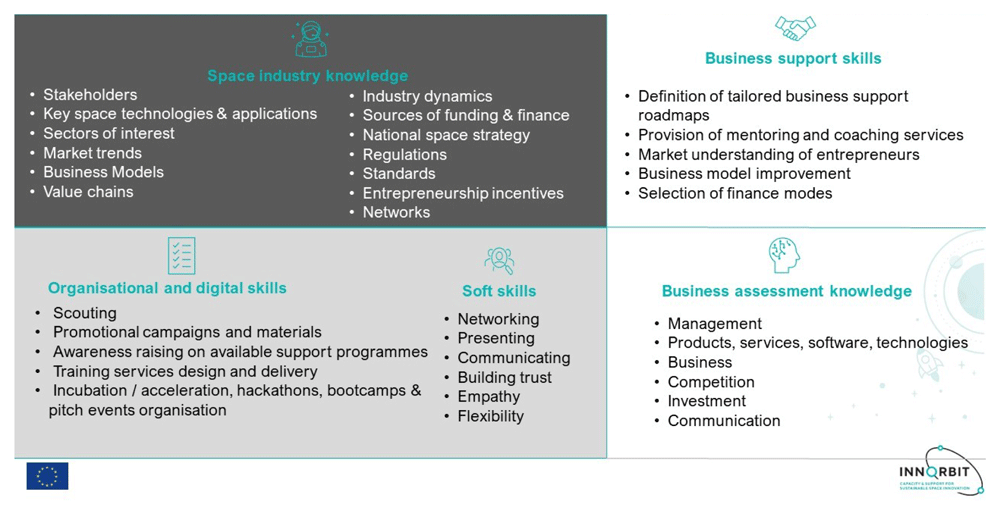
Figure 2. The initial baseline framework of knowledge and skill areas.
Subsequently to the first step, we implemented a series of semi-structured interviews with senior experts in the field, representing both stakeholder groups - innovation intermediaries and innovators.
Our sampling approach yields 15 suitable candidates spread across five CE and SE European countries. More specifically, the majority of interviewees are based in Greece and Croatia, with 6 and 5 experts respectively, followed by Romania with 2 and the Czech Republic and Hungary with 1 interviewee each. In total, 9 experts of innovation intermediaries and 6 innovators from start-ups and SMEs were interviewed. All interviewees hold top-level positions in their respective organisations based on their job description. The breakdown of interviewees per target group (innovation intermediary or innovator) in each country is presented in Table 2.
Table 2. Breakdown of interviews’ sample per target group & country.
| Croatia | Greece | Romania | Czech Republic | Hungary |
|---|
| Innovation Intermediaries | 3 | 4 | 1 | 1 | |
| Innovators | 2 | 2 | 1 | | 1 |
All innovation intermediaries within our sample possessed experience in providing support to start-ups and, in some cases, also to scale-ups and SMEs. Most innovation intermediaries support businesses with activity in technical domains such as space, IT technologies, energy, and transport/mobility. However, in a few cases, innovation intermediaries were described as technology or sector agnostic. Most experts representing innovation intermediaries identified their organisation as an incubator, with 6 out of 9 responses supporting this trend. The rest described their organisation either as a Space Cluster, Business Angels group or Business Agency. The typical service portfolio of innovation intermediaries in our sample includes the provision of incubation and/or acceleration services, mentoring, matchmaking, project management and consultancy in financial, business, and legal issues. Similarly, all interviewed innovators, either have received business support services or are aware of such opportunities and relevant services in their local ecosystems. Our sample of innovators contains mostly start-ups, except for one innovator classified as SME and one as large corporate. Innovators in our sample have developed innovative products and services in high-tech fields such as Artificial Intelligence, Earth Observation, as well as in niche domains, including hardware for space and environmental applications such as LIDAR sensors, lunar vehicles, global navigation satellite system (GNSS) receivers, etc.
4.1.1 Key insights from interviews. Quantitative insights from interviews indicate that experts validate the general knowledge and skill categories that are included in our baseline framework. The same holds true for experts of both innovation intermediaries and innovators, indicating consistency in our findings. Table 3 summarises the average and the mode of skills’ categories for the whole sample, as well as for each stakeholder group (following the same rating method - Likert scale from 1 to 5 - as defined in Step 2 of Section 3).
Table 3. Experts’ rankings for knowledge and skill categories.
| Knowledge and Skill category | All Experts | Innovators
Intermediaries | Innovation |
|---|
| Average | Mode | Average | Mode | Average | Mode |
|---|
| Space industry knowledge | 4,13 | 4 | 3,89 | 4 | 4,50 | 5 |
| Business Assessment Knowledge | 4,27 | 4 | 4,22 | 5 | 4,33 | 4 |
| Business support skills | 4,53 | 5 | 4,67 | 5 | 4,33 | 4 |
| Organisational and digital skills | 3,80 | 4 | 4,11 | 4 | 3,33 | 3 |
| Soft skills | 3,93 | 5 | 4,11 | 5 | 3,67 | 5 |
In general, interviewees’ ratings of specific knowledge and skill areas are comparable to the ratings of knowledge and skills categories. The most notable exception is the need for innovation intermediaries to build knowledge about the National Space Strategy. This knowledge area received an average rating of 2.86 across all experts, 2.75 based on innovation intermediaries’ and 3.00 based on innovators’ responses. Therefore, this knowledge area has been removed from the baseline framework.
The in-depth interviews provided valid grounds to adjust the baseline framework of innovation intermediaries’ required knowledge and skill areas. In fact, compared to the initial baseline framework, 28 knowledge and skill sub-categories were validated to be important, thus, they remained in the final baseline framework. On the other hand, another 3 additional knowledge and skill sub-categories were highlighted as important and added to the framework, while the description and content of the 4 skill components were adjusted. Those sub-categories were (re-)grouped into the 5 main knowledge and skill areas. The updated baseline framework (Figure 3) constitutes the basis of our skill gap analysis; this framework is transformed into specific questions for each skill area and block, feeding the content of our online surveys.
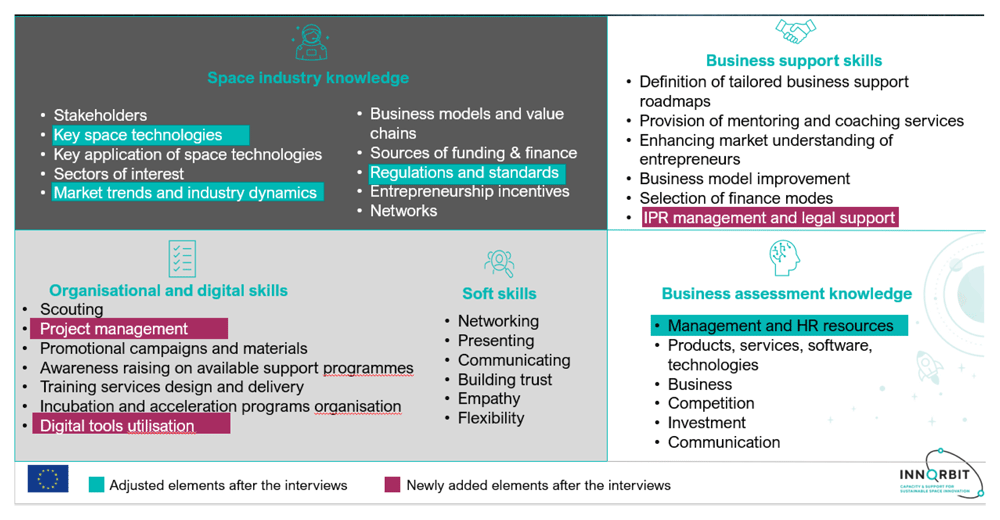
Figure 3. Updated baseline framework of analysis based on interview insights.
4.2 Analysis of survey results
The online surveys (see the Appendix) run for a period of approximately one month, namely from the 24th of May 2021 until the 18th of June 2021. In total, we received 104 valid answers from innovation intermediaries and entrepreneurs, start-ups and scale-ups based in Europe, focusing on CE and SE Europe (58 from innovation intermediaries and 46 from innovators). During the survey, we adhered to the GDPR provisions, while no personal data were collected, processed, and/or generated. The complete dataset of the survey performed is available on Zenodo31.
4.2.1 Demographics of survey respondents. Of all respondents, 56% of them were classified as innovation intermediaries, while the rest 44% of responses came from innovators. In fact, our sample covers innovation intermediaries and innovators who are based in 16 out of 27 EU Members States – we have also ensured representation of the CE and SE European regions since 79% of responses stem from this area (Figure 4). Nevertheless, it is also evident, that 62% of the respondents originate only from three countries (i.e., Croatia, Greece, and Romania). This limitation of the present study is due to the fact that the InnORBIT consortium has intermediaries from these countries, which led to the collection of significantly more responses.
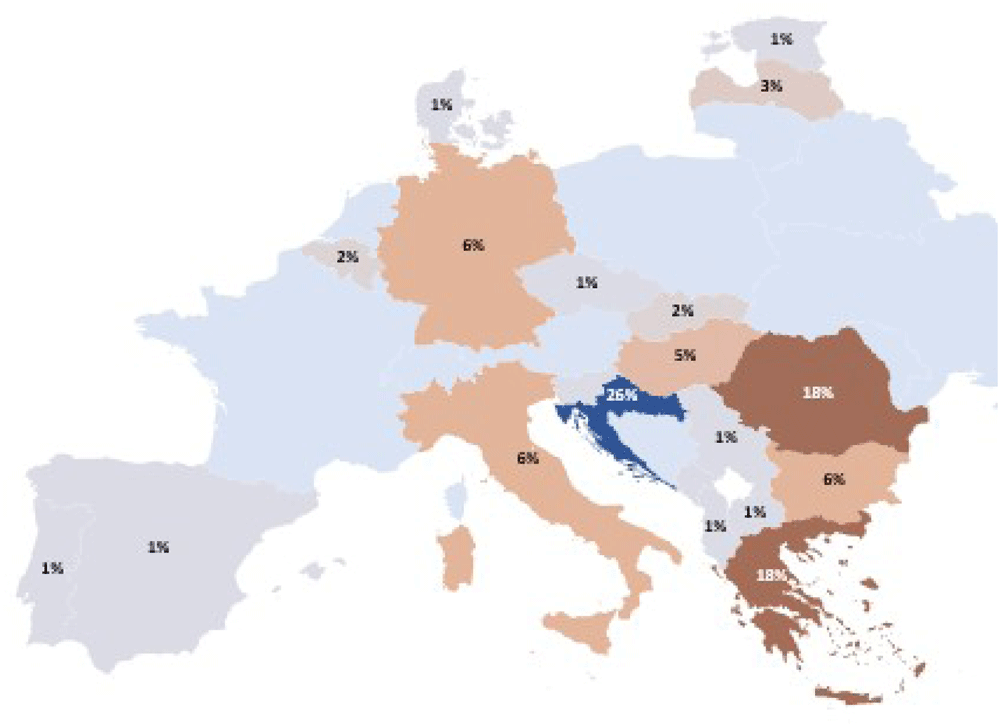
Figure 4. Countries of survey respondents.
Out of all innovators involved in the survey, almost 54% indicated that they have received in the past any kind of business support and training. Notably, most of them, have collaborated with business incubators and accelerators, followed by clusters and industry associations. Figure 5 provides an overall idea of the business portfolio of respondents.
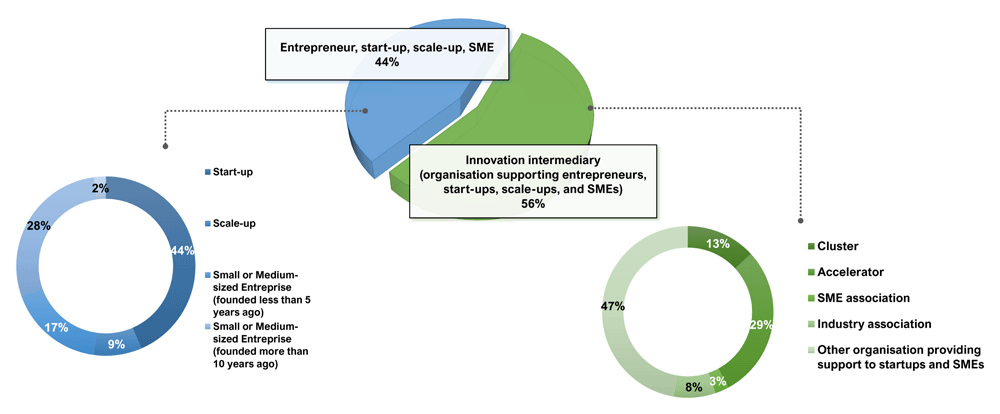
Figure 5. Types of respondents per stakeholder group.
Innovation intermediaries of the study highlighted that they mainly support innovators in the technological domains of software development, information and communication technologies (ICT), and production of hardware (Figure 6). In parallel, innovators engaged in the study provide solutions and services in the fields of software development, ICT, and earth observation technologies (Figure 7).
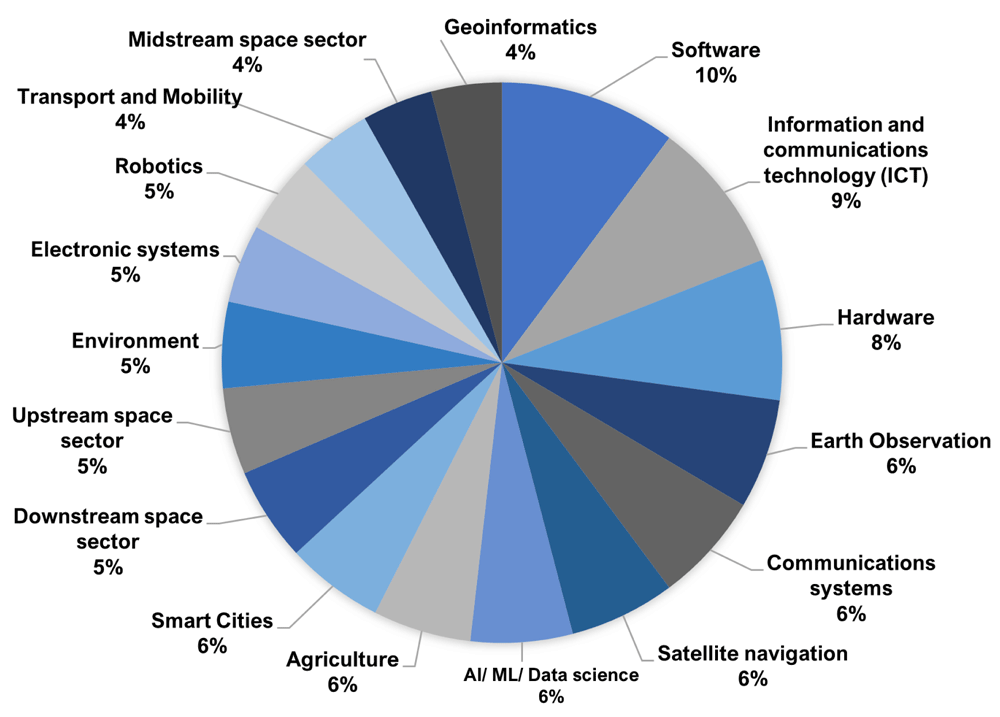
Figure 6. Industry domain of innovation intermediaries’ business support portfolio (multiple answers allowed).
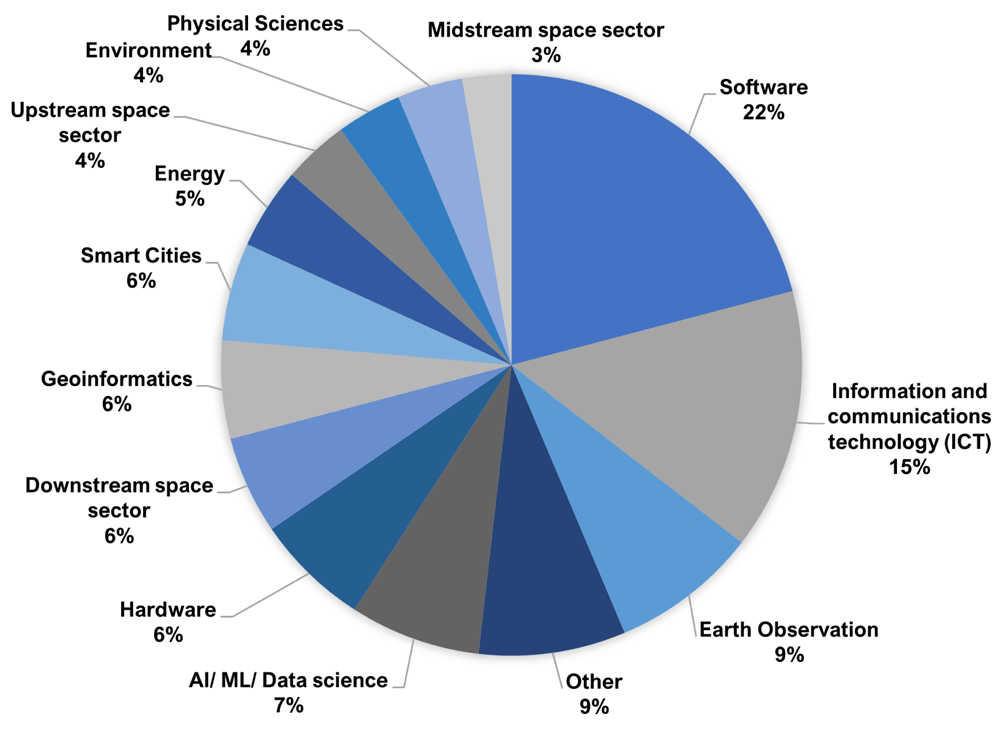
Figure 7. Industry domain of innovators’ business activities (multiple answers allowed).
4.2.2 Overall knowledge and skill areas assessment. In this section, we analyse the survey data to extract meaningful insights into the knowledge and skill levels of the trainers/coaches/mentors of innovation intermediaries at providing business support to space-related innovators. We investigate the skill levels from two angles; on the one hand, from the skill levels that the innovation intermediaries believe they have (perceived skills), and on the other hand, from the perspective of innovators concerning the knowledge and skill levels of innovation intermediaries (business support services provided to innovators). This approach enables us to conduct a skill level analysis relying on both stakeholder groups, allowing a direct comparison, as can be seen by the results in Table 4.
Table 4. Perceived knowledge and skill areas from innovation intermediaries and the innovators' perspective.
| Knowledge and Skill category | Innovation
Intermediaries | Innovators |
|---|
| Average | Mode | Average | Mode |
|---|
| Space industry knowledge | 2,92 | 3 | 3,14 | 3 |
| Business Assessment Knowledge | 3,91 | 4 | 3,66 | 3 |
| Business support skills | 3,68 | 5 | 3,57 | 3 |
| Organisational and digital skills | 3,96 | 5 | 3,82 | 4 |
| Soft skills | 4,32 | 5 | 3,98 | 5 |
On averagevii, innovation intermediaries scored above the threshold in 4 out of 5 core skills’ areas – the threshold of our analysis corresponds to the value of three (3), since it signifies the middle skill level. Before delving into more detail, an interesting general remark is that, on average, innovators score the skill levels of innovation intermediaries lower than intermediaries score themselves – this is true in 4 out of 5 skill areas (business assessment knowledge, business support skills, organisational and digital skills, and soft skills).
Respondents (specifically, innovation intermediaries) feel confident in their business support skills and business assessment skills. Besides, they perceive their ability to effectively organise, deliver, and communicate training and coaching modules as very competent (high scoring in the areas of organisational and digital skills). On the contrary, they feel less comfortable about their knowledge of space industry related aspects, such as emerging trends and technologies in the industry as well as business models and legal factors in the space industry, among others.
In parallel, the aggregate analysis of innovators’ perspective on the overall competence of innovation intermediaries also offers some interesting insights. In fact, the overall perspective of innovators matches with the perceived knowledge and skill competence of innovation intermediaries per core knowledge and skill area in the following manner: innovators validate that innovation intermediaries possess strong competence in their organizational and soft skills. They also indicate that the innovation intermediaries, they have engaged with, lack some skills and capacity with respect to knowledge of the space industry – some evidence also highlight that trainers and coaches could potentially improve their business support and assessment skills. The encouraging factor of our analysis is that the views of innovation intermediaries and innovators coincide, in most cases and knowledge and skill areas, making our analysis a more robust tool to extract meaningful insight for support service for space innovation in the CE and SE Europe.
Beyond this aggregated perspective, we found varying levels of intermediaries’ expertise in the sub-categories of each knowledge and skill area. The following sections provide an overview of the key insights gained.
4.2.3 Knowledge in the space industry. The first factor that we considered in our analysis is the capacity of advisors, trainers, and coaches to know the relevant business and operational aspects of the space industry. As identified in previous literature findings, such knowledge area is extremely important, especially when considering knowledge transfer perspectives10. Several aspects of the respondents in this area highlight that they feel very comfortable identifying and assessing potential funding and financing opportunities for the innovators they support, while they also score relatively high in their ability to effectively incentivise entrepreneurs in involving in the space industry. Nevertheless, intermediaries’ skill levels fall behind in most of the remaining knowledge and skill areas under assessment, making this skill segment a key part that capacity building programmes (such as the one developed under InnORBIT) should aim to address. For instance, intermediaries have low confidence in their skill to (i) identify and asses the existing success cases and sustainable business models in the space industry, (ii) assess how international and national legal, administrative, and economic factors will impact innovators’ performance, as well as (iii) understand and infer how technological developments in the space industry affect the business prospects of innovators. The figures that follow, present the knowledge and skill levels of innovation intermediaries (Figure 8) that they perceive they have, along with the perspective of innovators (Figure 9) in this area, in order to extract comparative inferences.
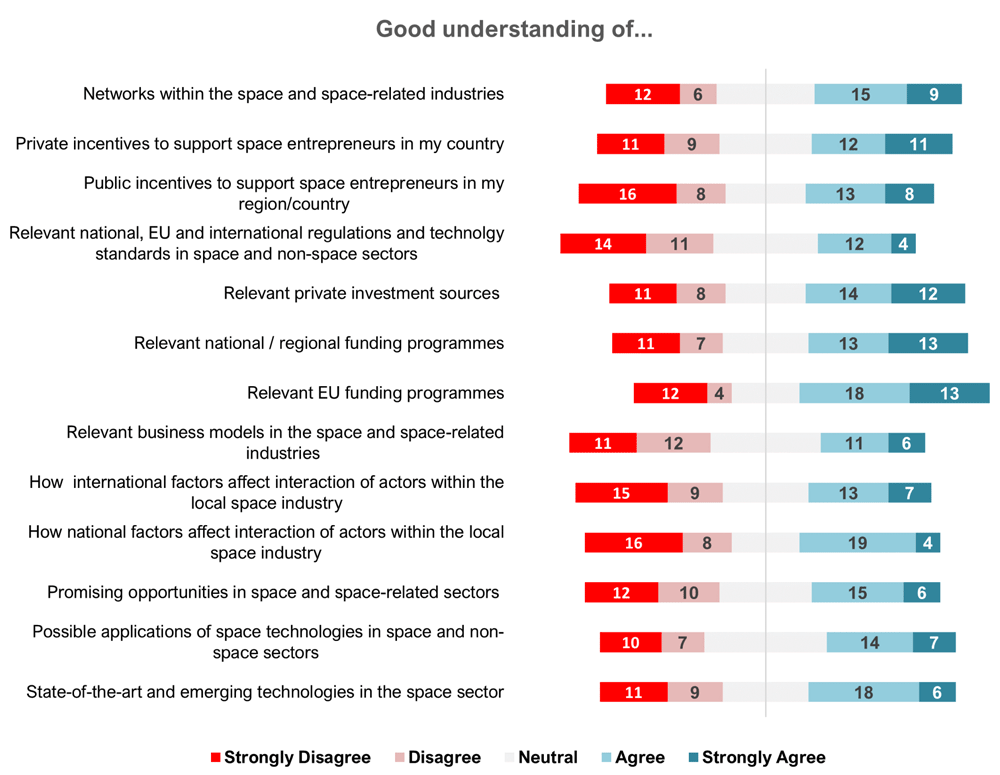
Figure 8. Perceived levels of innovation intermediaries in the area of knowledge in the space industry.
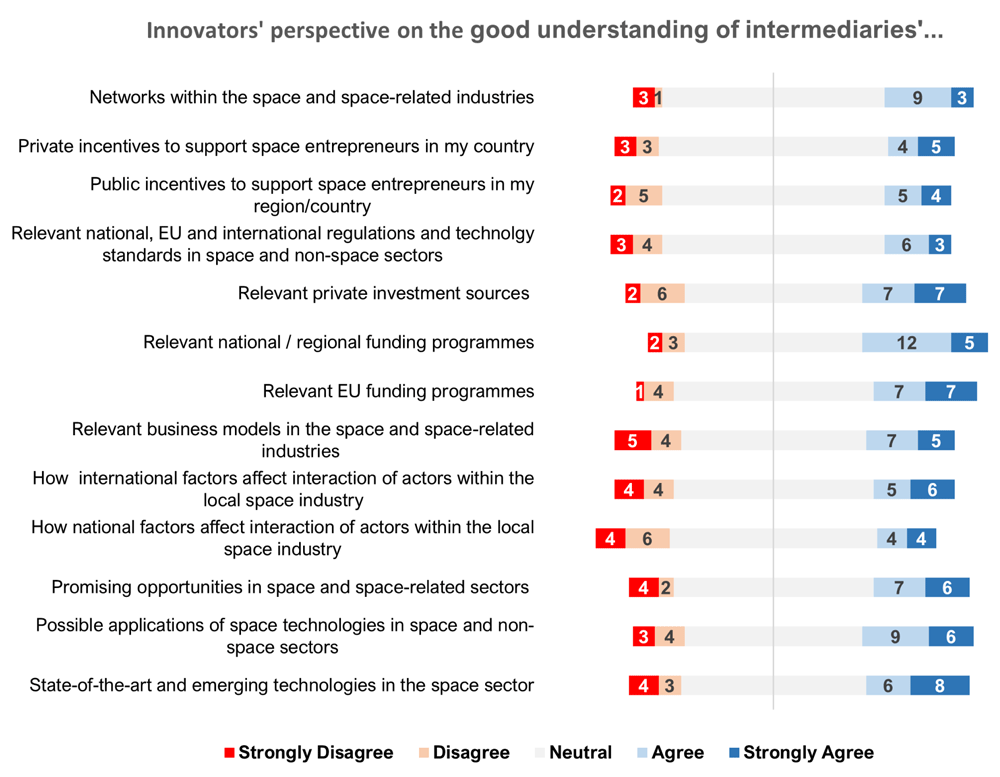
Figure 9. Innovators perspective on intermediaries’ levels in the area of knowledge in the space industry.
From innovators’ point of view, the lack of the proper incentivization mechanisms stands out as the key shortcoming of the intermediaries they have engaged with – in particular, the respective knowledge and skill areas record the lowest scores in our analysis. In parallel, innovation intermediaries could be improved in their ability to properly communicate the implications of national and EU-level regulations and technology standards to space entrepreneurs. After all, the overall legal framework is one of the key aspects that new innovators and entrepreneurs should consider prior to starting a new venture or entering a new tech-domain or market, as supported by 32. It also seems that both innovators and intermediaries share the same consensus when it comes to relevant financing and funding programmes. Surveyed innovators do believe that advisors who provided business support services had adequate (or even very good) knowledge of the existing funding mechanisms and schemes, especially for those mechanisms that mostly address space entrepreneurs, start-ups and SMEs.
4.2.4 Business assessment knowledge. The second area that we investigate in our analysis is the business assessment knowledge that the innovation intermediaries possess when it comes to supporting businesses that are active in space-related domains. In general, based on the views of innovation intermediaries surveyed (Figure 10), the business assessment skills of trainers are relatively perceived as high in almost all specific skill areas and competences of our study. For example, innovation intermediaries feel very confident about their pitching skills, as well as in assessing the teams in terms of skill-sets and management skills. Similarly, respondents indicate that they can effectively identify and assess the value propositions of innovative ventures, supporting them in commercialising their products or services.
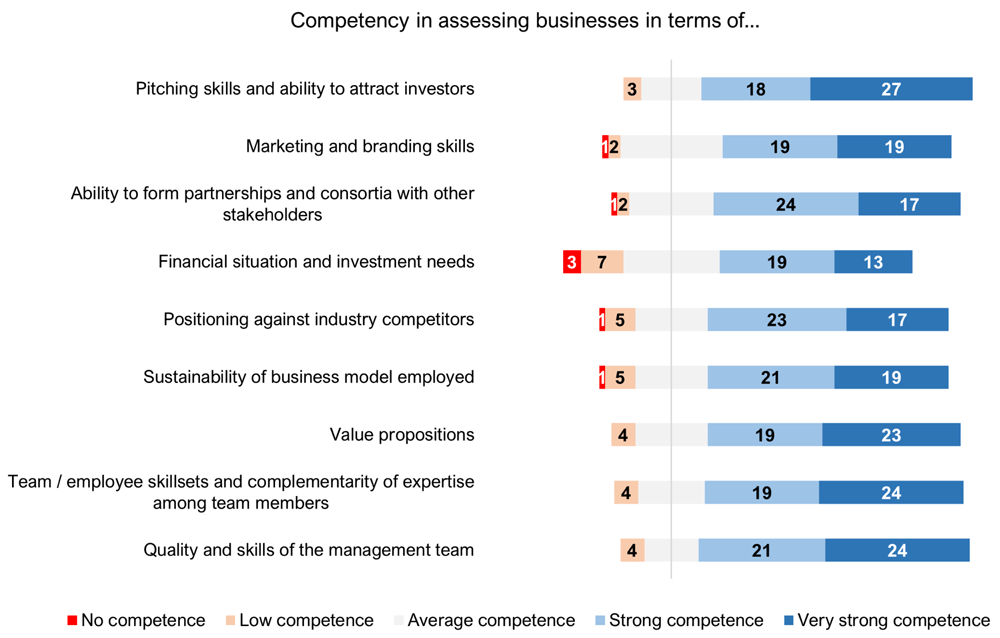
Figure 10. Perceived levels of innovation intermediaries in the area of business assessment knowledge.
Concerning the views of innovators (Figure 11) with respect to the skills and capacity of innovation intermediaries, we reveal mixed results, which nevertheless, offer some very interesting insight. To start, innovators do agree that one of the strongest abilities of innovation intermediaries is on assessing their pitching skills – this is a key component of intermediaries’ portfolio since proper pitching skills of innovators will help them gain access to potential funding sources. However, we have traced mixed opinions when it comes to the ability of trainers in identifying the core competences of a team behind a venture and in assessing the skill-set of innovators, aspects that have also been highlighted from existing literature11,18. In more detail, despite the fact that innovation intermediaries feel confident in investigating the specificities of innovative teams, supporting their business activities, this opinion is not shared by entrepreneurs themselves. In fact, entrepreneurs believe that innovation intermediaries lack the underlying skills and therefore, intermediaries need to improve the way they engage and assess the quality and the skill-sets of teams. Interestingly, innovators highlight that the assessment of their competitive advantage and value propositions is not adequate enough – innovation intermediaries could improve in these areas. The analysis of innovators perspective is presented in Figure 11.
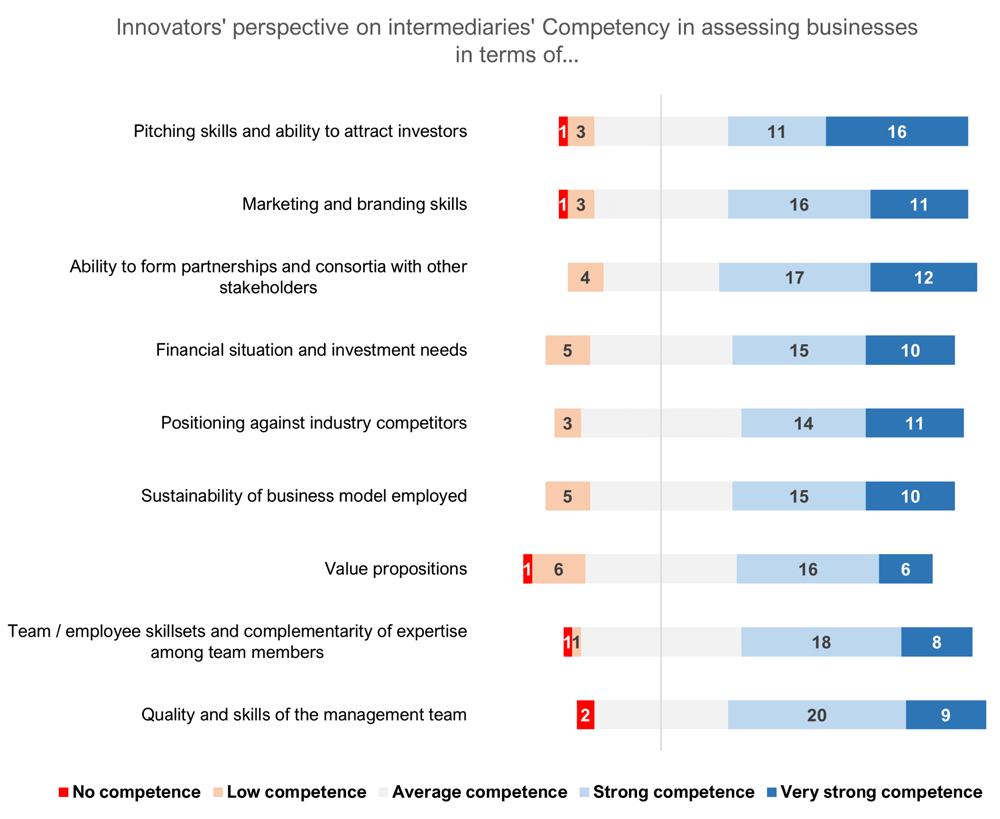
Figure 11. Innovators perspective on intermediaries’ levels in the area of business assessment knowledge.
4.2.5 Business support skills. In this sub-section, we investigate the level of the business support skills of innovation intermediaries. Based on the results of our survey, this skill area is one of the most competent for innovation intermediaries. The figures that follow illustrate the perceived capacity of innovation intermediaries in specific skill areas, along with the respective perspective of innovators on the intermediaries’ skill levels.
Overall, innovation intermediaries (Figure 12) score high in their mentoring and coaching skills as well as in defining dedicated business support roadmaps for the entrepreneurs, since they perceive these areas among the most competent in their business support portfolio. On top of that, advisors/trainers feel confident that they can provide decent guidance to innovators in building successful business models and in guiding them through the various financing opportunities that they could acquire. However, the results reveal that innovation intermediaries do not feel confident about their skills to provide advisory services dealing with (i) IPR aspects, (ii) Legal aspects, as well as (iii) better understanding of the space-related markets.
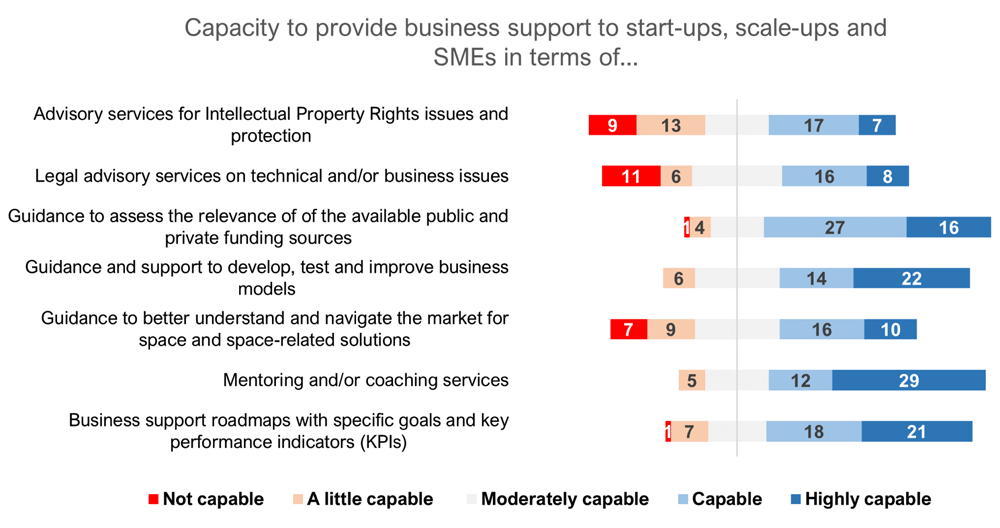
Figure 12. Perceived levels of innovation intermediaries in the area of business support skills.
The key insight from this analysis is that innovators (Figure 13) share the same perspective, and they strongly believe that innovation intermediaries have strong capacity in business support skills and, in particular, in their mentoring/coaching skills, support and guidance to identify financing opportunities and tailored business roadmaps. Notably, innovators believe that advisors and trainers of innovation intermediaries lack the proper understanding of how to navigate the market for space and space-related solutions.
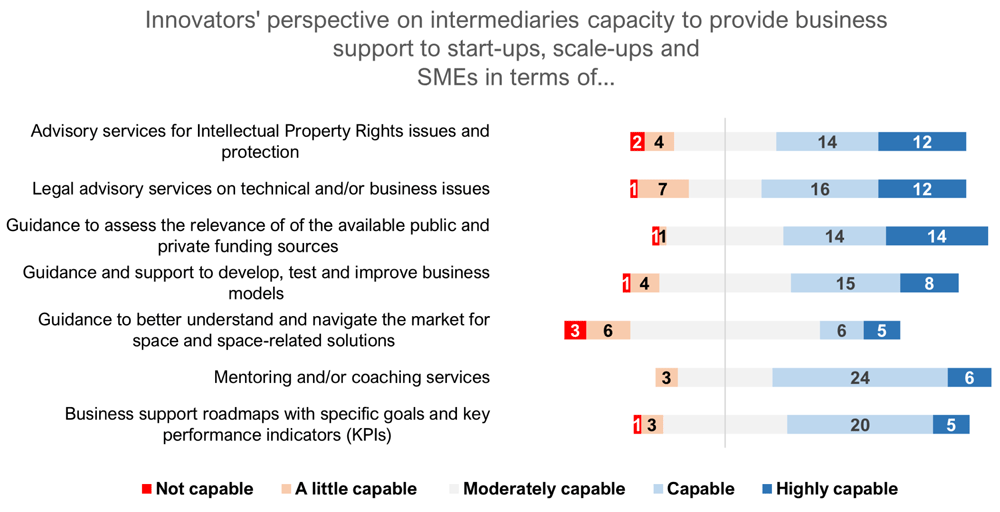
Figure 13. Innovators perspective on intermediaries’ levels in the area of business support skills.
4.2.6 Organisational and digital skills. Organisational and digital skills leave minimum room for improvement. The consistency by which the different skills in this area have been evaluated close to “strong competence” or “very strong competence” clearly point that there are no significant training needs in this skill area (see Figure 14). Respondents highlight that they do not need any training support in any of the constituent competences of this segment – services like the design of incubation programmes, the management and operation of new initiatives, as well as the scouting of innovative ventures to get business support stand out as the highest scoring skill levels of innovation intermediaries.
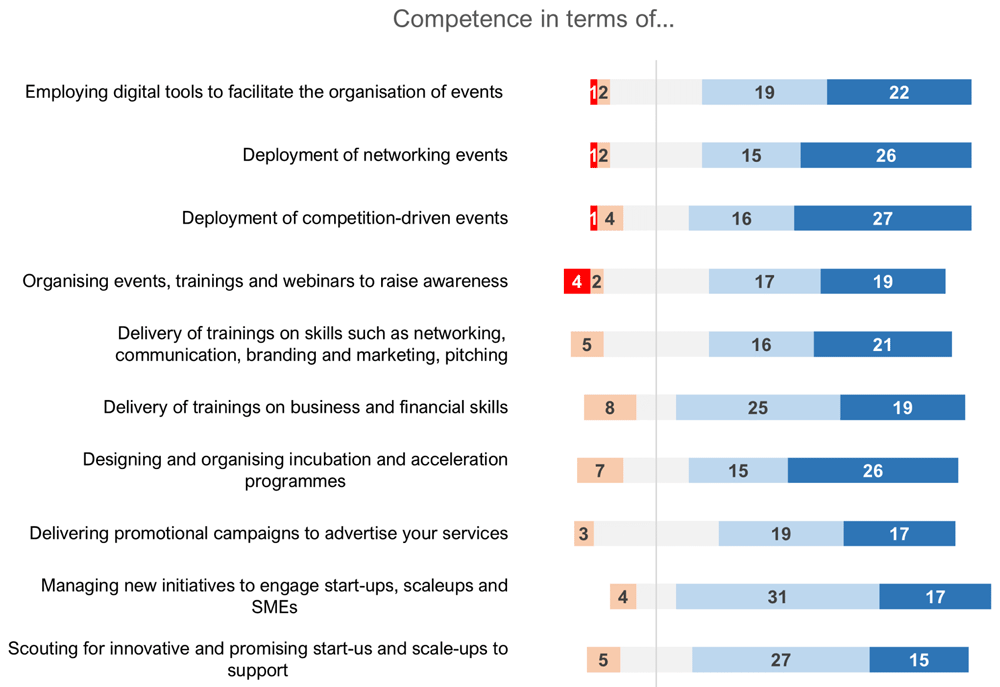
Figure 14. Perceived levels of innovation intermediaries in the area of organisational and digital skills.
Our analysis of innovators’ perspective leads to the same conclusion: innovation intermediaries mostly possess very strong skills and competences in their organisational skills portfolio(see the Figure 15). Also, they have competence in their digital skills, meaning that they can effectively use the right digital tools to provide support services to innovators. The only area that could potentially be improved, according to innovators’ perspective, is the way that trainers and advisors build business and financial skills.
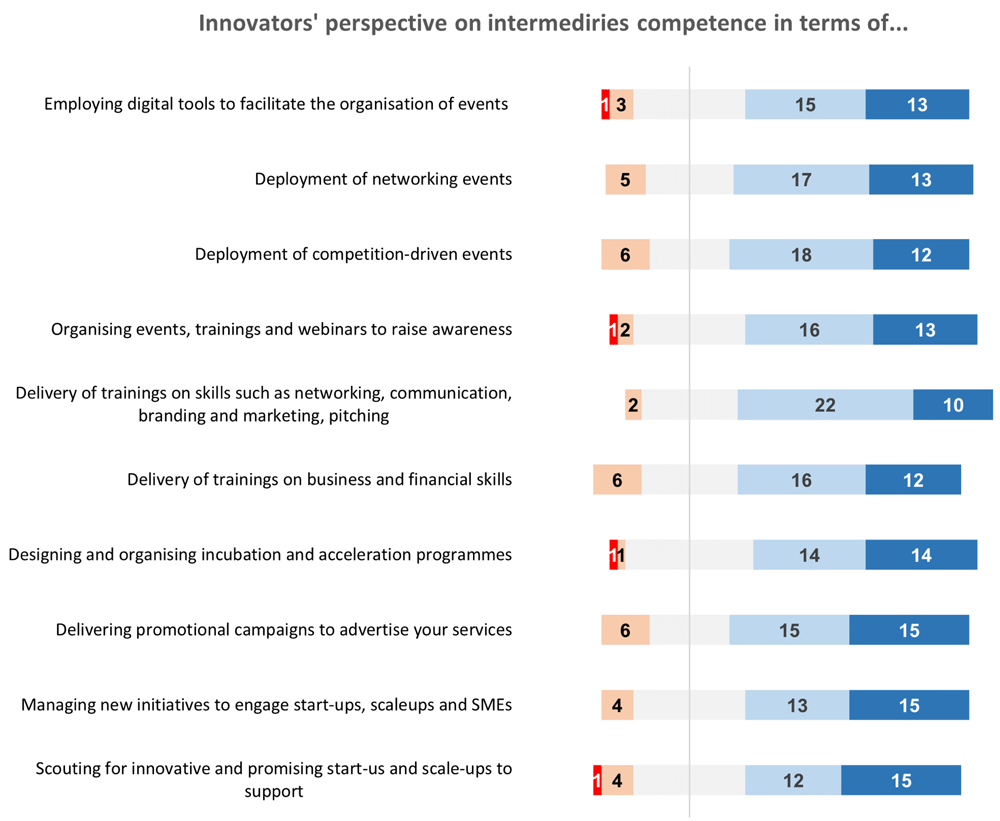
Figure 15. Innovators perspective on intermediaries’ levels in the area of organisational and digital skills.
4.2.7 Soft skills. Soft skills received the highest acceptance of all survey respondents, having the highest scoring in the different skill areas under this study. More specifically, under this area, we trace some of the highest-scoring trainers’ skills, including their ability to establish trust with SME members, the ability to share know-how and skills with innovators, as well as their levels of emotional and social intelligence. Intermediaries (Figure 16) also feel that they can understand the needs and preferences of the actors they support, by showing the proper level of empathy when they deliver business support skills. These findings are also validated by the perspective of innovators (Figure 17), who share the same opinions as innovation intermediaries. This consists a very positive and promising finding, considering that soft skills have been highly evaluated and assessed in the literature12,23.
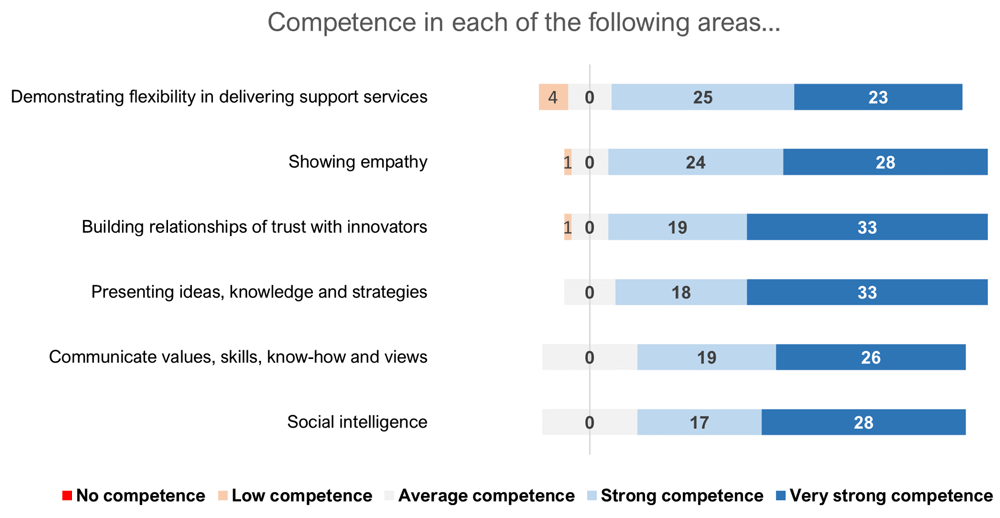
Figure 16. Perceived levels of innovation intermediaries in the area of soft skills.
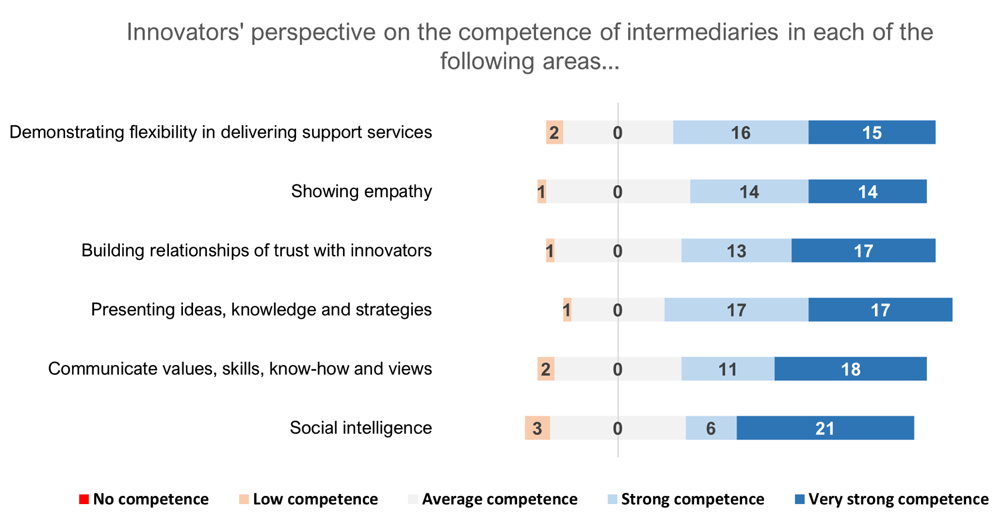
Figure 17. Innovators perspective on intermediaries’ levels in the area of soft skills.