Plain language summary
The Embassy of Good Science (https://www.embassy.science) aims to improve the conduct of research in Europe and beyond by presenting information on research integrity and ethics in an accessible, understandable and appealing way. The Embassy is wiki-based, allowing anyone to contribute. The platform also brings the research community together in novel ways in a dedicated community section. The Embassy, therefore, enables researchers to find useful guidance, rules and tools to conduct research responsibly. The platform empowers researchers through increased knowledge and awareness, and through the support of the research integrity and ethics community. In this article we will discuss the background of this new platform, the way in which it is organized, and how users can contribute.
Background
The trustworthiness of research results is increasingly being questioned1. In practice, research results often cannot be reproduced2–6. Several internal and external factors of human, operational and methodological origins have been identified7,8. However, the importance of each is unclear. There is much attention to the classic triad of fabrication, falsification, and plagiarism, partly in response to high profile cases of misconduct9–12. However, 'sloppy science' and 'questionable research practices' might have more impact on research and researchers because of the sheer frequency of these “small” misdemeanours13–15. Whilst reproducibility is a clear concern in quantitative research, trustworthiness is also an issue for qualitative research, as it is not always clear how findings are supported by the data and how conclusions are drawn.
The Embassy of Good Science (https://www.embassy.science) is an initiative that aims to improve the trustworthiness and integrity of research by supporting researchers to avoid questionable research practices and develop responsible research practices, both by increasing knowledge and awareness of the best guidance and practices in research integrity and ethics and by sharing and collaboratively building new knowledge16. The Embassy is a wiki-based platform, allowing users to add - when logged in with their ORCID researcher id (Open Researcher and Contributor ID, ORCID Inc.) - new information, and update and refine existing information. The platform and its initial content have been developed, from 2017 to 2021, by the European Commission funded projects EnTIRE17 and VIRT2UE18. The development process included an extensive consultation with stakeholders across Europe, whose needs and preferences related to research integrity and ethics are reflected in the platform’s design and content19.
Sharing knowledge, experiences and good practices
The Embassy brings together, and makes smart connections between, relevant research integrity and ethics guidelines and regulations, cases and scenarios, educational materials, and initiatives. Figure 1. provides a site map of the platform reflecting the permanent architecture of the site (within each of these categories, users are able to make new pages and hierarchies using the wiki functionalities). The content of the Embassy is organized into: ‘Themes’, ‘Reports’, ‘Resources’, ‘Community’, ‘Training’, and ‘About’.
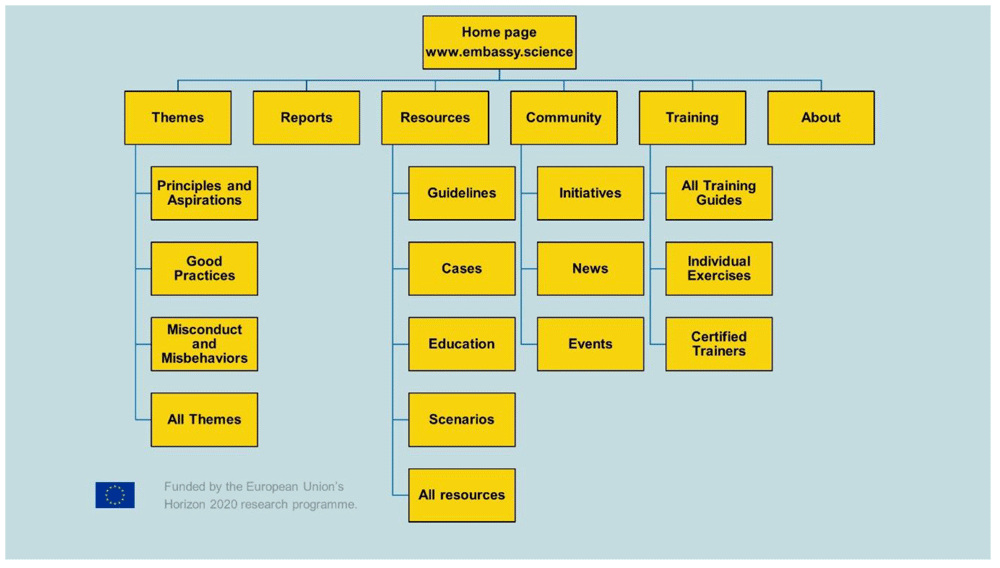
Figure 1. Site map of The Embassy’s permanent structure.
‘Themes’ are pages which provide engaging, bite-sized introductions to single topics related to good research practices, research principles, or misbehaviours. Complex topics are made accessible by describing why they are important, for whom they are important, and what might be considered good practice examples. Essentially, each theme page provides the context in which all of the relevant resources on that topic across the Embassy platform are brought together and made usable and understandable. Users interested in, for instance ‘p-hacking’, ‘predatory publishing’, or ‘research virtues’, can read a Theme page on the topic, which links to resources (e.g., relevant guidance, online training, and misconduct cases) about the topic across The Embassy.
‘Reports’ describe the status of research infrastructure and governance across Europe. A semantic mediawiki tool which searches in and compares relevant topics across countries on the platform keeps these report cards up-to-date.
‘Resources’ represent relevant and openly available research integrity and ethics guidelines, cases, educational materials, and hypothetical scenarios. These resources were either systematically collected and described by the EnTIRE consortium20–23 or, in the case of the hypothetical scenarios, developed from scratch. Each resource is described and tagged in terms of what it is about and for whom it is important, enabling convenient filtering and search retrieval.
‘Community’ makes the research integrity and ethics communities visible. Projects and consortia can inform, via The Embassy, an existing user base interested in research integrity and ethics about their initiatives, news and events. The initiatives section allows individual projects to create a long-term repository of materials – such as reports, guidelines, leaflets, articles - allowing smaller initiatives to be represented online without the need to build their own websites from scratch.
‘Training’ provides access to free online training guides and information about opportunities to follow more traditional in-person courses. The Embassy offers material that can be used by universities to provide training to researchers, research integrity and ethics teachers, managers and other staff. Bespoke ‘Guides’ for training courses can also be constructed by users and made openly available on the platform. Guides consist of step-by-step instruction pages, describing how to do individual exercises or activities, which users can make and group together themselves. The training guide for the European Commission funded VIRT2UE train-the-trainer programme, for example, is presented on The Embassy. VIRT2UE is a blended learning programme which gives trainees the knowledge and skills to conduct a research integrity course from a virtue ethics perspective. The VIRT2UE guide contains separate instruction pages for four series of e-learning modules and individual instruction pages detailing how to facilitate participatory exercises aimed at encouraging group reflection on research practice. In line with the ethos of the platform, VIRT2UE takes a positive approach, and focuses on what it means to be a good and virtuous researcher.
Technically, content within each section can be tagged and searched. Theme pages and Resources can be filtered by, for example, discipline, target group, or country. In this way, it is possible to organize a wide range of information, examples of good practices, cases, and national and international guidelines and regulations.
The ‘About’ section provides information about the mission, management and funding of The Embassy platform, providing transparency about who is involved in the platform and how decisions are made regarding content. The non-profit ‘Embassy of Good Science Foundation’ has been established to ensure the sustainability of the platform and further develop it based on the needs of users. Core funding is provided by involvement in European and national projects as a platform for the dissemination of results. The Foundation is supported by volunteer ‘Ambassadors of Good Science’ who have substantially contributed to the structure, content and dissemination of the platform.
On every page, users can access The Embassy’s privacy statement, terms of service, take down policy and a contact form. The take down policy in particular provides details about the content that is, and is not, appropriate for The Embassy. The Embassy aims to provide a diversity of perspectives in relation to research integrity and ethics as long as they are not libellous or factually wrong.
An embedded evaluation button with questions specific for each section of The Embassy has also been integrated into the platform, allowing users to provide structured feedback (via answering a questionnaire) as well as report any platform bugs. As users need to actively opt to provide feedback via the embedded evaluation button, this has been little used to date. This embedded evaluation option does, however, provide the possibility to quickly respond to user feedback, e.g. two users indicated that they were unaware of the option to add or edit content. The wiki nature of the Embassy was subsequently stressed on The Embassy homepage.
The Embassy was initially developed to meet the needs of the European research community and its current content, and management, reflect this origin. Its reach, however, is global. Over time, user added content from outside of Europe will vastly increase the value of the platform by making diverse experiences and perspectives in relation to research integrity and ethics practices accessible for a global readership. The Foundation also hopes to attract more ‘Ambassadors’ from outside of Europe and have made some initial steps towards this by engaging with the African Research Integrity Network during the 7th World Conference for Research Integrity held in Cape Town in 2022. The Embassy has been designed to ensure a good user experience across a range of devices, and mobile phones in particular, which facilitates access and contributions from low and middle income countries. Indeed, because anybody with an ORCID, access to the internet, time, and relevant research integrity and ethics knowledge, can develop content on the platform, the Embassy has the potential to breakdown traditional power imbalances in relation to knowledge transfer.
Open science
The open-source platform is technically based on, and inspired by, Wikipedia (Wikimedia Foundation, USA). This is a proven safe, scalable and well-maintained open-source system. Wikipedia is consulted 21 billion times a month worldwide24. Although there has been discussion for years about the reliability of Wikipedia’s content, studies show that it is comparable to traditional encyclopaedias25,26. A review of specialist content, such as content from pharmacology27, shows a similar picture. Meanwhile, with a total of approximately 50 million articles28, it has become the largest encyclopaedia in human history.
Just like with Wikipedia, the entire content of The Embassy is freely available and the content can be supplemented and adjusted by users. The only requirement for making an adjustment is an ORCID account. Currently, more than 7 million researchers worldwide already have such an ORCID29. To guarantee quality, all changes and additions can be traced at all times and, if necessary, corrected. Furthermore, users are acknowledged by name at the end of pages to which they contribute, allowing for full transparency.
An important technical addition to the platform is the Semantic Mediawiki30 extension. This makes it possible to organize content in a smart way ("semantic web"). The information is easily searchable and different sources of information can be linked to each other. The system works well for people and machines, according to the FAIR principles31. This also makes it possible to give automated systems access to the knowledge that is collected on the platform. A complete overview of the open-source software used for The Embassy can be found on the platform itself32.
On a wiki-platform it can be difficult for users to create and edit content. A core group of experts provide most of the content and changes to Wikipedia33. To lower the threshold, increase usability, and be inclusive, the user interface of The Embassy has been rebuilt from the ground up. It has been designed to be intuitive. We hope that ‘passive’ users (readers) are encouraged to submit and edit content (see the video). In the future, substantial digital contributions will be provided with a Digital Object Identifier (DOI) so that the content can be included in the scholarly literature and can be cited. Such micro publications34 create the ability to transparently summarize, assess, discuss, verify, revoke, mix and expand information and knowledge. If all small changes to content are publicised, it allows for full transparency. We will also be able to measure the types of additions (few and large, or small and numerous) which lead to the incremental development of research integrity and ethics knowledge.
The specific extensions and adjustments made by software developers within this project are also open source35. This means that other organizations can reuse elements of the platform in a different configuration, for example by changing the design, structure and content.
The online community moderates itself
Unlike other scientific platforms such as ResearchGate36 (Berlin, Germany), The Embassy is not a commercial enterprise. Compared to other websites which aim to improve research integrity and ethics by sharing relevant information or cases (e.g. The Office for Research Integrity (https://ori.hhs.gov/), The National Ethics Center (https://nationalethicscenter.org/), the Online Ethics Center (www.onlineethics.org), or Retraction Watch (https://retractionwatch.com/)), The Embassy’s users have the freedom to moderate and add content themselves. The emphasis of the Embassy is positive, highlighting initiatives to improve research practices whilst also raising awareness about the research practices which might be considered ‘misconduct’ or ‘misbehavior’.
In the coming years, the intention is that the online community will gradually take on further development and moderation. This process will be guided by The Embassy of Good Science Foundation. A core team of Ambassadors are currently responsible for checking recent changes and rolling back any unsuitable changes and making minor content edits for style.
Just as with Wikipedia, there is of course a risk of incidents of online vandalism37, however this is expected to remain a limited problem. During the first year after going live, amongst a total of 7000 edits, just one edit could be considered as non-substantial ‘tinkering’. Clear versioning and tracked changes ensure good levels of control and enable editors to undo changes easily. New additions are made by the community at least weekly, and recent changes can be followed here: Recent changes - The Embassy of Good Science. Changes are linked to contributors’ ORCID accounts, therefore community members can check contributors’ level of expertise. Also, in cases of vandalism or other substantial breaches of the terms and conditions of the platform, users can be selectively blocked based on their ORCID.
Conclusion
The Embassy of Good Science is a platform that has the potential to inform and engage the research community on research integrity and ethics. The platform aims to support individual researchers, but also, thorough increased awareness and action, to incrementally improve the trustworthiness of research and the culture in which research is conducted.
Data availability
No data is associated with this article.
Acknowledgements
EnTIRE aims to create an online platform that makes RE and RI information easily accessible to the research community. The EnTIRE Consortium is composed Amsterdam UMC and VU University, Amsterdam, Gesinn.It, KU Leuven, University of Split School of Medicine, Dublin City University, the Central European University, University of Oslo, University of Manchester, European Network of Research Ethics Committees. The authors would also like to thank the EnTIRE consortium members: Alexander Gesinn, Ana Marusic, Andrijana Perković Paloš, Anna, Astrid Hooghiemstra, Bert Gordijn, Bjørn Hofmann, Dirk Lanzerath, Dorothee Gueth, Elsa Amin, Emma Mulder, Ferdy Pullens, Giulia Inguaggiato, Guy Widdershoven, Harald Dunnink, Hugh Desmond, Iris Lechner, Ivan Buljan, Jonathan Lewis, Kim Zandvliet-Oerlemans, Kris Dierickx, Lana Barac, Lisa Tambornino, Marc van Hoof, Mohammad Hosseini, Natalie Evans, Peter Kakuk, Raymond de Vries, Rea Scepanovic, Rosie Hastings, Rúben Nascimento, Ruzica Tokalic, Soren Holm, Stefan Veen, Talitha Ahmed, Tom Lindemann, Vicko Tomic
VIRT2UE aims to develop a sustainable train-the-trainer blended learning programme enabling contextualised research integrity and ethics teaching across Europe focusing on understanding and upholding the principles and practices of the European Code of Conduct for Research Integrity. The VIRT2UE Consortium is composed of the VU Medical Center Amsterdam, KU Leuven, University of Split School of Medicine, Austrian Agency for Research Integrity, University of Oslo, European Network of Research Ethics Committees, Ankara University, National Technical University of Athens, University of Helsinki, University of Latvia, Universidade Catolica Portuguesa, University of Insubria, and Momkai. The authors would also like to thank the VIRT2UE consortium members: Ana Marusic, Ana Sofia Carvalho, Andrijana Perković Paloš, Armin Schmolmueller, Astrid Hooghiemstra, Bert Molewijk, Bjørn Hofmann, Costas Charitidis, Daniel Pizzolato, David van Zeggeren, Dirk Lanzerath, Eleni Spyrakou, Emma Mulder, Erika Lofstrom, Fenneke Blom, Franca Marino, Giulia Inguaggiato, Harald Dunnink, Ivan Buljan, Jan Helge Solbakk, Joana Araújo, Kim Zandvliet-Oerlemans, Kris Dierickx, Krishma Labib, Lana Barac, Laura Hartman, Lisa Tambornino, Marc van Hoof, Marco Cosentino, Margreet Stolper, Martina Garriga, Mustafa Volkan Kavas, Natalie Evans, Nicole Foeger, Panagiotis Kavouras, Rien Janssens, Rosemarie Bernabe, Rúben Nascimento, Ruzica Tokalic, Signe Mezinska, Solveig Corner, Stefan Veen, Teodora Konach, Vassilis Markakis, Vicko Tomic, Gamze Senyurek
Faculty Opinions recommendedReferences
- 1.
Edwards MA, Roy S:
Academic Research in the 21st Century: Maintaining Scientific Integrity in a Climate of Perverse Incentives and Hypercompetition.
Environ Eng Sci.
2017; 34(1): 51–61. PubMed Abstract
| Publisher Full Text
| Free Full Text
- 2.
Mobley A, Linder SK, Braeuer R, et al.:
A Survey on Data Reproducibility in Cancer Research Provides Insights into Our Limited Ability to Translate Findings from the Laboratory to the Clinic.
PLoS One.
2013; 8(5): e63221. PubMed Abstract
| Publisher Full Text
| Free Full Text
- 3.
Open Science Collaboration:
PSYCHOLOGY. Estimating the reproducibility of psychological science.
Science.
2015; 349(6251): aac4716. PubMed Abstract
| Publisher Full Text
- 4.
Klein RA, Vianello M, Hasselman F, et al.:
Many Labs 2: Investigating variation in replicability across samples and settings.
Adv Methods Pract Psychol Sci.
2018; 1(4): 443–490.
- 5.
Camerer CF, Dreber A, Holzmeister F, et al.:
Evaluating the replicability of social science experiments in Nature and Science between 2010 and 2015.
Nat Hum Behav.
2018; 2(9): 637–644. PubMed Abstract
| Publisher Full Text
- 6.
Errington TM, Mathur M, Soderberg CK, et al.:
Investigating the replicability of preclinical cancer biology.
eLife.
2021; 10: e71601. PubMed Abstract
| Publisher Full Text
| Free Full Text
- 7.
Ioannidis JP:
Why most published research findings are false.
PLoS Med.
2005; 2(8): e124. PubMed Abstract
| Publisher Full Text
| Free Full Text
- 8.
Prinz F, Schlange T, Asadullah K:
Believe it or not: How much can we rely on published data on potential drug targets?
Nat Rev Drug Discov.
2011; 10(9): 712. PubMed Abstract
| Publisher Full Text
- 9.
Pashler H, Wagenmakers EJ:
Editors‘ Introduction to the Special Section on Replicability in Psychological SCience: A Crisis of Confidence?
Perspect Psychol Sci.
2012; 7(6): 528–530. PubMed Abstract
| Publisher Full Text
- 10.
Godlee F, Smith J, Marcovitch H:
Wakefield’s article linking MMR vaccine and autism was fraudulent.
BMJ.
2011; 342(7788): c7452. PubMed Abstract
| Publisher Full Text
- 11.
Kakuk P:
The Legacy of the Hwang Case: Research Misconduct in Biosciences.
Sci Eng Ethics.
2009; 15(4): 545–562. PubMed Abstract
| Publisher Full Text
- 12.
National Academies of Sciences, Engineering, and Medicine:
Fostering Integrity in Research. The National Academies Press, Washington, DC, 2017. Publisher Full Text
- 13.
Bouter LM, Tijdink J, Axelsen N, et al.:
Ranking major and minor research misbehaviors: results from a survey among participants of four World Conferences on Research Integrity.
Res Integr Peer Rev.
2016; 1(1): 17. PubMed Abstract
| Publisher Full Text
| Free Full Text
- 14.
Xie Y, Wang K, Kong Y:
Prevalence of research misconduct and questionable research practices: a systematic review and meta-analysis.
Sci Eng Ethics.
2021; 27(4): 41. PubMed Abstract
| Publisher Full Text
- 15.
Gopalakrishna G, Ter Riet G, Vink G, et al.:
Prevalence of questionable research practices, research misconduct and their potential explanatory factors: A survey among academic researchers in The Netherlands.
PLoS One.
2022; 17(2): e0263023. PubMed Abstract
| Publisher Full Text
| Free Full Text
- 16.
Good practice from the grass roots.
Nature.
2019; 576: 181. Reference Source
- 17.
Evans N, van Hoof M, Hartman L, et al.:
EnTIRE: Mapping Normative Frameworks for EThics and Integrity of REsearch.
Res Ideas Outcomes.
2021; 7: e76240. Publisher Full Text
- 18.
Evans N, Marusic A, Foeger N, et al.:
Virtue-based ethics and integrity of research: train-the-trainer programme for upholding the principles and practices of the European Code of Conduct for Research Integrity (VIRT2UE).
Res Ideas Outcomes.
2021; 7: e68258. Publisher Full Text
- 19.
Evans N, Buljan I, Valenti E, et al.:
Stakeholders’ Experiences of Research Integrity Support in Universities: A Qualitative Study in Three European Countries.
Sci Eng Ethics.
2022; 28(5): 43. PubMed Abstract
| Publisher Full Text
| Free Full Text
- 20.
Desmond H, Dierickx K:
Research integrity codes of conduct in Europe: Understanding the divergences.
Bioethics.
2021; 35(5): 414–428. PubMed Abstract
| Publisher Full Text
- 21.
Hastings RC, Labib K, Lechner IM, et al.:
Guidance on Research Integrity Provided by European Discipline-specific Learned Societies: A Scoping Review.
MetaArXiv.
2022. Publisher Full Text
- 22.
Armond AC, Gordijn B, Lewis J, et al.:
A scoping review of the literature featuring research ethics and research integrity cases.
BMC Med Ethics.
2021; 22(1): 50. PubMed Abstract
| Publisher Full Text
| Free Full Text
- 23.
Pizzolato D, Abdi S, Dierickx K:
Collecting and characterizing existing and freely accessible research integrity educational resources.
Account Res.
2020; 27(4): 195–211. PubMed Abstract
| Publisher Full Text
- 24.
Wikipedia. 2019. Reference Source
- 25.
Giles J:
Internet encyclopaedias go head to head.
Nature.
2005; 438(7070): 900–1. PubMed Abstract
| Publisher Full Text
- 26.
Mesgari M, Okoli C, Mehdi M, et al.:
“The Sum of All Human Knowledge”: A Systematic Review of Scholarly Research on the Content of Wikipedia.
J Assoc Inf Sci Tech.
2015; 66(2): 219–245. Publisher Full Text
- 27.
Kräenbring J, Penza TM, Gutmann J, et al.:
Accuracy and completeness of drug information in Wikipedia: A comparison with standard textbooks of pharmacology.
PLoS One.
2014; 9(9): e106930. PubMed Abstract
| Publisher Full Text
| Free Full Text
- 28.
Size of Wikipedia. Reference Source
- 29.
ORCID. Reference Source
- 30.
Semantic Mediawiki. Reference Source
- 31.
Wilkinson MD, Dumontier M, Aalbersberg IJ, et al.:
The FAIR Guiding Principles for scientific data management and stewardship.
Sci Data.
2016; 3(1): 160018. PubMed Abstract
| Publisher Full Text
| Free Full Text
- 32.
The Embassy of Good Science. Reference Source
- 33.
Kittur A, Chi EH, Pendleton BA, et al.:
Power of the few vs. wisdom of the crowd: Wikipedia and the rise of the bourgeoisie. 25th Annual ACM Conference on Human Factors in Computing Systems. 2007; 1(2): 19. Reference Source
- 34.
Clark T, Ciccarese PN, Goble CA:
Micropublications: A semantic model for claims, evidence, arguments and annotations in biomedical communications.
J Biomed Semantics.
2014; 5(1): 28. PubMed Abstract
| Publisher Full Text
| Free Full Text
- 35.
The Embassy of Good Science. Reference Source
- 36.
Researchgate. Reference Source
- 37.
Shachaf P, Hara N:
Beyond vandalism: Wikipedia trolls.
J Inf Sci.
2010; 36(3): 357–370. Publisher Full Text
- 38.
Nascimento R, RZ:
the-embassy-of-good-science/the-embassy-components: The Switch Release (Switch).
Zenodo.
2022. http://www.doi.org/10.5281/zenodo.5925902
- 39.
Alexander:
the-embassy-of-good-science/the-embassy-platform: The Switch Release (switch).
Zenodo.
2022. http://www.doi.org/10.5281/zenodo.5925930