Plain language summary
Agent-based models can be used to simulate people’s decisions and behaviour. To improve these models, information from surveys that ask people about their decisions and behaviours can be used. However, simple survey questions may not reflect real-life situations, so the answers someone gives in a survey may not match what they would do in real life. Games are more engaging and may offer more accurate representations of real-life situations. Therefore, they could be more useful than surveys. To examine this, we created a game in which players make migration decisions to advance through a story. We then conducted an experiment to investigate whether people that played this game made different migration decisions compared to people that took a survey. We did this to try to build an agent-based simulation of migration. Unfortunately, the experiment was too complicated, which made it difficult to clearly understand the results it produced. The way in which the game stories were set up could have mattered, too. We suggest carrying out more research on this topic, but with simpler experiments.
Introduction
Agent-based modelling (e.g. Bonabeau, 2002), where simulated ‘agents’ represent people, groups, or institutions interacting with themselves and their environment, offer an appealing methodological choice for simulating human behaviour and gaining insights into the emergence of individual- and macro-level patterns. The currently-dominant approaches, however, based on static transition rates or unverified assumptions for agents are limiting, and could be enhanced with insights gained by collecting primary data on actual decision-making from surveys or cognitive psychology experiments (Bijak et al., 2021).
At the same time, standard surveys and experiments may lack ecological validity. There has been a longstanding concern regarding the extent to which survey results can be generalised to real-life settings (Cicourel, 1982). For example, real-life migration decisions are often highly emotive, involve costly trade-offs, and may threaten one’s personal safety. These aspects are poorly represented by the short, methodical questions commonly used in surveys. With that in mind, it is reasonable to expect immersive contexts to offer more accurate and engaging representations of reality and provide better tools for capturing such complex decisions (Rossetti & Hurtubia, 2020).
In light of this, in a preregistered exploratory study, we created a choice-based interactive fiction game in which participants made migration decisions to advance through a story. Choice-based interactive fiction games are fully text-based games where a player progresses by selecting from a list of possible actions (Hausknecht et al., 2020). To achieve immersion, we (a) added narrative: brief statements about the character’s internal thoughts and feelings; and (b) created a sense of agency through repeated decision-making, with each decision being followed by a distinct piece of text outlining its consequence. These consequences made participants believe that their decisions were impactful; despite being dependent on the earlier decisions, however, they did not affect any of the later decisions or the conclusion of the story. We included narrative elements and player agency to foster immersion in games, as suggested by McMahan (2003) and Rafael (2018).
The design of our study was driven by the interdisciplinary needs of agent-based modelling endeavours, discussed in detail in Bijak et al. (2021). Despite – or perhaps because of – close alignment to the modelling needs, the experiment we implemented proved too complex, making the results on their own difficult to interpret. In particular, we identified trade-offs between conducting experiments that provide valuable psychological insights, and those that can inform agent-based models. Critically, to inform an agent-based model, large amounts of data for various different variables are required, which can only be obtained at the cost of experimental simplicity and thus control. In this paper, we present the lessons learned from this experimental exercise, and provide recommendations for future interdisciplinary research.
Methods
Participants
The study was carried out on Prolific (https://www.prolific.co), with the participant pool approximately balanced in terms of sex and restricted to those fluent in English, residing in the UK at the time of the study, and with a Prolific approval rate above 90. After excluding three participants for completing the study in under 20% of the expected time and one for failing to complete the study, the final sample consisted of 1000 individuals. This included 491 female and 494 male participants, 10 individuals who identified as “other”, and five individuals who preferred not to disclose their gender. Participants were between the ages of 18 and 78 (M = 37.07, SD = 13.29) and were paid at a rate of £5.00 per hour. The minimum age for our study was determined by Prolific, which requires participants to be at least 18 years old. We did not set a maximum age for our study.
To replicate this experiment without participant costs, we recommend advertising the study on social media websites such as Twitter and Reddit. This is an increasingly common data collection method for psychological research, which we plan on using for future studies.
Experimental design and research variables
A between-subject, multi-group experimental design was used, with participants randomly assigned to one of four conditions: (a) narrative and agency; (b) narrative-only; (c) agency-only; and (d) survey (without narrative or agency). The independent variables were agency (yes, no), narrative (yes, no), decision stage (one, two, three), and trade-off (chance of success, safety, travel speed). The dependent variable was participants’ responses to migration decision(s). Ten control variables were collected for exploratory purposes, listed under ‘Demographic Questions’ below. All the authors and acknowledged team members tested the surveys prior to data collection, which led to the migration decisions being updated several times. Consequently, we pilot tested the final version of the study with 200 participants to identify potential problems, but we did not find any.
Migration decisions
The experiment involved nine migration decisions, divided into three stages, each including three decisions. The three decisions in each stage corresponded to three different trade-offs, namely travel speed versus safety, chance of success versus safety, and chance of success versus travel speed. Although these different trade-offs were present at all three stages, the specific scenario and context for the decision differed between stages. For example, at Stage 1, the trade-off for travel speed versus safety involved either getting on an unsafe boat now or waiting for a safer boat; at Stage 2, the trade-off involved crossing a minefield or taking a long detour; and at Stage 3, waiting longer to cross with a safer smuggler versus crossing the border now with a less reputable one. This variability was implemented to enhance realism and ensure that the migration decisions seemed appropriately embedded within the current stage of the migration journey. However, as we discuss further in the conclusion, this strategy also led to difficulties in interpreting the results.
Participants were not presented with the same trade-off more than once. Therefore, at Stage 1, the first decision was randomly selected from the three trade-offs. At Stage 2, the second decision was randomly selected from the two decisions involving the remaining trade-offs. At Stage 3, the third decision presented the trade-off that had not been presented in either of the preceding stages (e.g., if a participant made a chance of success vs. travel speed decision at Stage 1 and a chance of success vs. safety decision at Stage 2, they would be presented with the safety vs. travel speed decision at Stage 3).
The pools of potential migration decisions for the narrative-and-agency and narrative-only conditions were identical. However, in the narrative-only condition, participants were shown the outcome of the first two migration decisions (randomised in the survey) and only made the third migration decisions. In the agency-only condition, descriptions of the character’s thoughts and feelings were omitted. Finally, for the survey condition, the migration decisions were heavily stripped-down versions of those presented in the other conditions. All migration decisions and their different versions were created by the researchers following interdisciplinary discussions within the team about the requirements of the agent-based model of migration route formation (Bijak et al., 2021). The final conditions were set up so as to correspond as closely as possible to the simulated environment and decisions made by the agents in the model.
Demographic questions
A total of 10 demographic and general questions were asked in all conditions, including questions about the participants’ emotional investment and sense of agency while playing, age, gender, number of children, how often they play games, whether they have ever considered migrating or have actually migrated, whether they think the number of immigrants in the UK should increase or decrease, and how warm their feelings are towards migrants.
Procedure
No device restrictions were applied on Prolific. Before starting the study, participants were shown a combined information sheet and consent form (University of Southampton Ethics approval No. ERGO 68015). After reading the forms and providing informed consent, participants were asked to provide their Prolific IDs.
Participants were then randomly allocated to one of four conditions: (a) narrative and agency; (b) narrative-only; (c) agency-only; and (d) survey. Those in the narrative and agency condition made three migration decisions throughout a story that involved both narrative (i.e., descriptions of the character’s thoughts and feelings) and agency (i.e., repeated decision-making). Those in the narrative-only condition made one migration decision at the end of a story that involved narrative but no agency. Those in the agency-only condition made three migration decisions throughout a story that involved agency but limited narrative. Finally, those in the survey condition made three decisions presented as simple survey questions.
Once participants had finished their condition-specific task, they completed the demographic questions and were debriefed. The study’s length varied across conditions; the narrative and agency and the narrative-only conditions took approximately 15 minutes, the agency-only condition – around 10 minutes, and the survey condition – around 5 minutes. Since progression was entirely self-paced, the completion time varied between participants.
Results
A series of logistic regression analyses were conducted to investigate the impact of condition, decision stage, and trade-off on participant’s decisions. Because participants in the narrative-only condition only made one decision (at the third stage), we first present a series of logistic regression analyses for the narrative and agency, agency-only, and survey conditions, including decision stage as a predictor (as well as condition and trade-off). These logistic regressions were conducted separately for each attribute of the decision (chance of success, safety, and travel speed). We then present logistic regressions on decisions made at the third stage only for all four conditions, excluding decision stage as a predictor (but including condition and trade-off). These logistic regressions are again conducted separately for each of the three attributes.
Logistic regression analysis excluding the narrative-only condition
A logistic regression analysis was conducted to investigate the relationship between the probability of prioritising one of the attributes of the decision (chance of success, safety, or travel speed) and the condition (narrative and agency, agency-only, or survey), decision stage (one, two, or three), and attribute that it was traded off against (chance of success, safety, or travel speed). Table 1 shows the analysis of deviance table produced by Type III Wald Chi-Squared tests. For the model prioritising chance of success, Figure 1 shows the significant two-way interaction between condition and trade-off and the two-way interaction between condition and choice stage. For the model prioritising safety, Figure 2 shows the significant two-way interaction between condition and choice stage, and for the model prioritising travel speed, Figure 3 presents the significant three-way interaction between condition, choice stage, and trade-off.
Table 1. Analysis of Deviance for Logistic Regression Models.
| Factor(s) | χ2 | df | p |
|---|
Response Variable: Probability of Prioritising Chance
of Success |
|---|
| Condition | 7.00 | 2 | .030 |
| choice stage | 36.27 | 2 | < .001 |
| trade-off | 12.32 | 1 | < .001 |
| condition:choice stage | 21.97 | 4 | < .001 |
| condition:trade-off | 14.46 | 2 | < .001 |
| choice stage:trade-off | 29.17 | 2 | < .001 |
| condition:choice stage:trade-off | 7.92 | 4 | .094 |
| Response Variable: Probability of Prioritising Safety |
|---|
| condition | 7.00 | 2 | .030 |
| choice stage | 36.27 | 2 | < .001 |
| trade-off | 1.69 | 1 | .194 |
| condition:choice stage | 21.97 | 4 | < .001 |
| condition:trade-off | 5.11 | 2 | .078 |
| choice stage:trade-off | 7.67 | 2 | .022 |
| condition:choice stage:trade-off | 3.03 | 4 | .553 |
Response Variable: Probability of Prioritising Travel
Speed |
|---|
| condition | 26.04 | 2 | < .001 |
| choice stage | 2.81 | 2 | .246 |
| trade-off | 6.98 | 1 | .008 |
| condition:choice stage | 14.86 | 4 | .005 |
| condition:trade off | 13.85 | 2 | < .001 |
| choice stage:trade-off | 0.19 | 2 | .911 |
| condition:choice stage:trade-off | 10.84 | 4 | .028 |
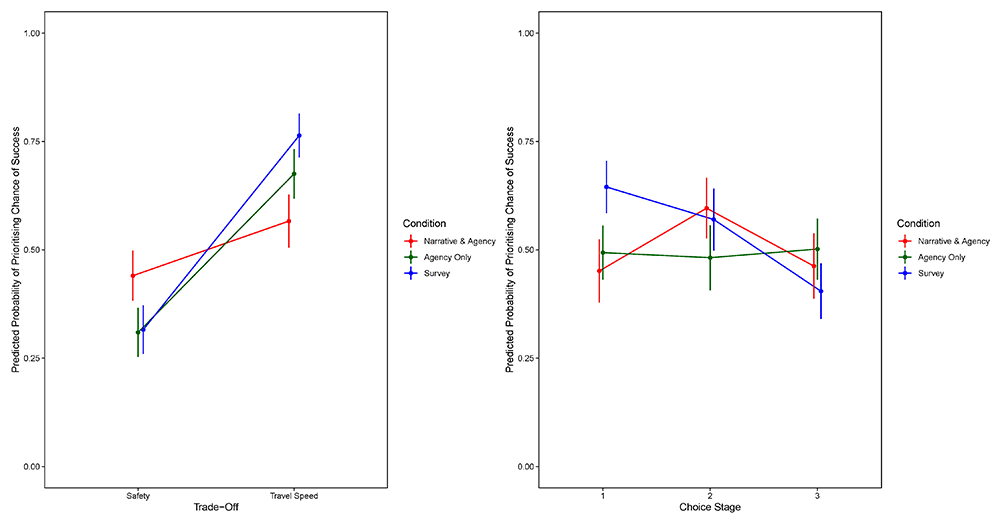
Figure 1. Predicted Probability of Prioritising Chance of Success, by Trade-Off and Condition (Top Panel) and by Decision Stage and Condition (Bottom Panel).
The Narrative-Only Condition Is Excluded.
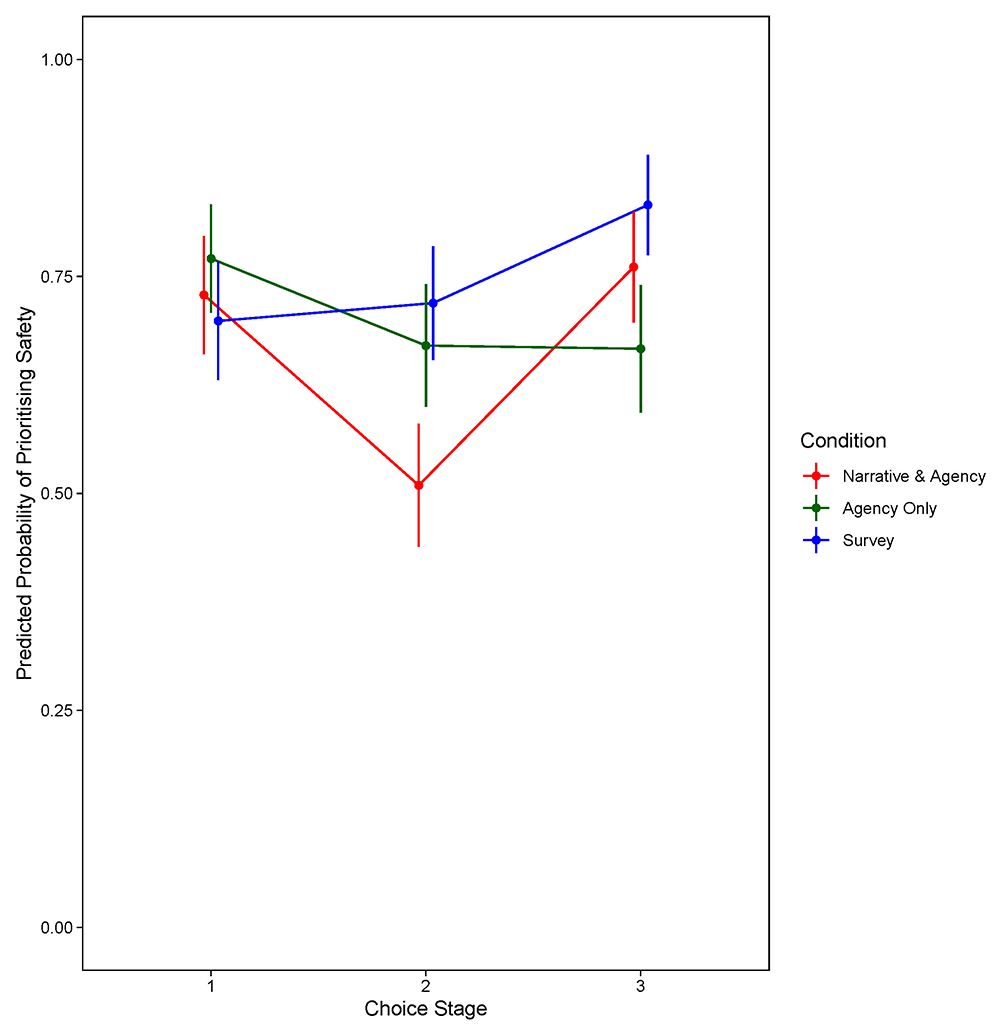
Figure 2. Predicted Probability of Prioritising Safety, by Decision Stage and Condition (Excluding Narrative-Only).
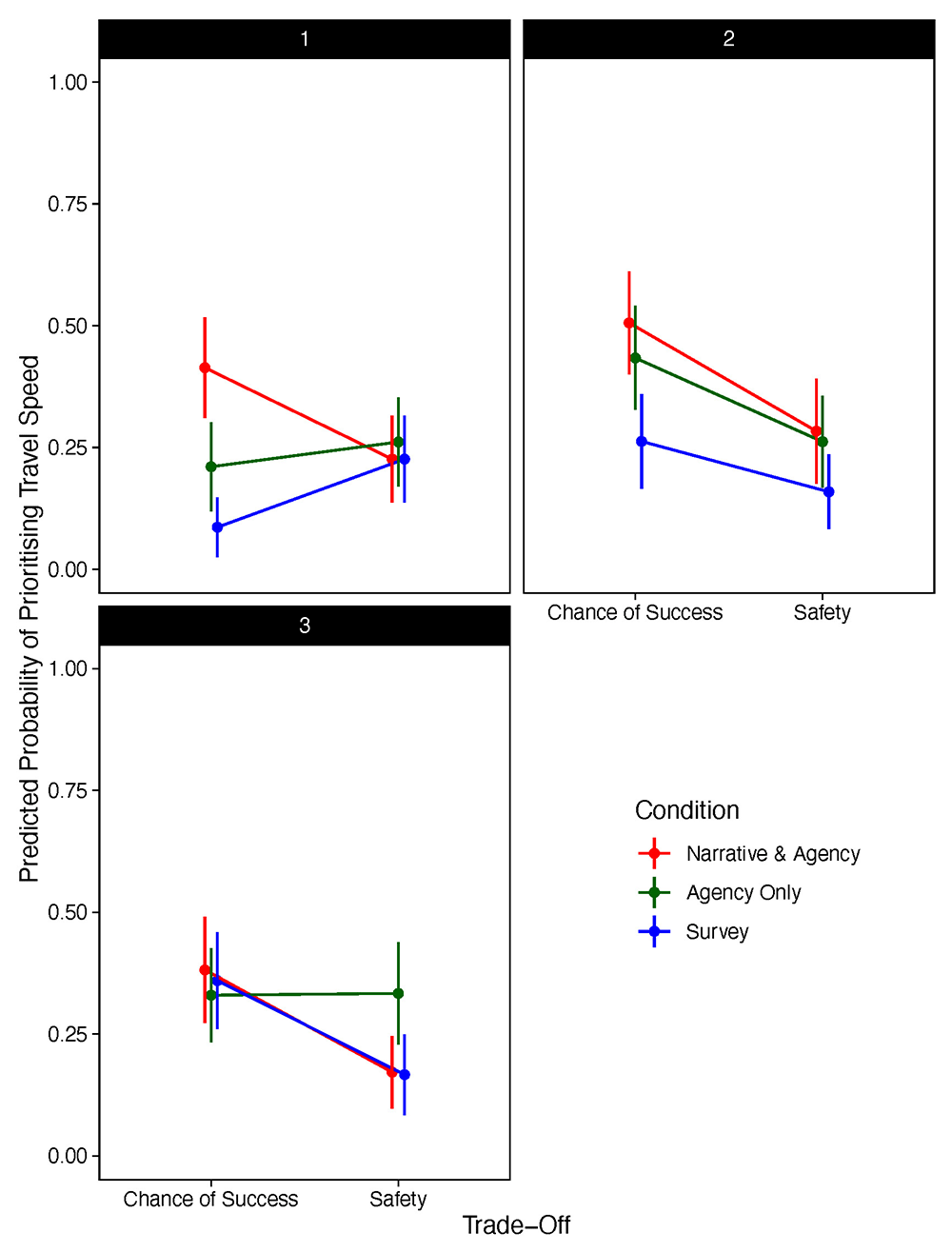
Figure 3. Predicted Probability of Prioritising Travel Speed Against Trade-Off, Decision Stage, and Condition (Excluding Narrative-Only).
Logistic regression analysis excluding the first two decision stages
A further logistic regression analysis was conducted on third-stage decisions to investigate the relationship between the probability of prioritising one of the decision attributes (chance of success, safety, or travel speed) and the condition (all four conditions) and attributes it was traded off against (chance of success, safety, or travel speed). Table 2 shows the analysis of deviance table for models with response variables related to all three attributes of the decision. For the model prioritising chance of success, although the main effect of condition was significant, a post-hoc Tukey test showed no significant pairwise comparisons, with smallest p = .058. The main effect of trade-off was also significant, and a post hoc z-test showed that the probability of prioritising chance of success when it was traded off against safety (M = .29, SE = .025) was significantly lower than the probability of prioritising chance of success when it was traded off against travel speed (M = .66, SE = .026, z = –10.40, p < .001).
Table 2. Analysis of Deviance for Logistic Regression Models for Stage 3 Decisions only.
| Factor(s) | χ2 | df | p |
|---|
Response variable: Probability of Prioritising Chance of
Success |
|---|
| condition | 8.39 | 3 | .039 |
| trade-off | 15.01 | 1 | < .001 |
| condition:trade-off | 3.71 | 3 | .295 |
| Response variable: Probability of Prioritising Safety |
|---|
| condition | 8.39 | 3 | .039 |
| trade-off | 4.36 | 1 | .037 |
| condition:trade-off | 3.32 | 3 | .345 |
| Response variable: Probability of Prioritising Travel Speed |
|---|
| condition | 1.84 | 3 | .606 |
| trade-off | 9.75 | 1 | .002 |
| condition:trade-off | 12.48 | 3 | .006 |
For the model prioritising safety, the main effect of condition was again significant, and a post-hoc Tukey test showed that the probability of prioritising safety in the survey condition (M = .83, SE = .030) was significantly higher than: (a) the probability of prioritising safety in the agency-only condition (M = .67, SE = .037, z = –3.48, p = .003); and (b) the probability of prioritising safety in the narrative-only condition (M = .66, SE = .038, z = 3.69, p = .001). Although the main effect of trade-off was also significant, the probability of prioritising safety when it was traded off against chance of success (M = .71, SE = .025) was not significantly different from the probability of prioritising safety when it was traded off against travel speed (M = .75, SE = .024, z = –0.97, p = .334). For the model prioritising travel speed, in addition to the summary statistics presented in Table 2, the significant two-way interaction between condition and trade-off are shown in Figure 4.
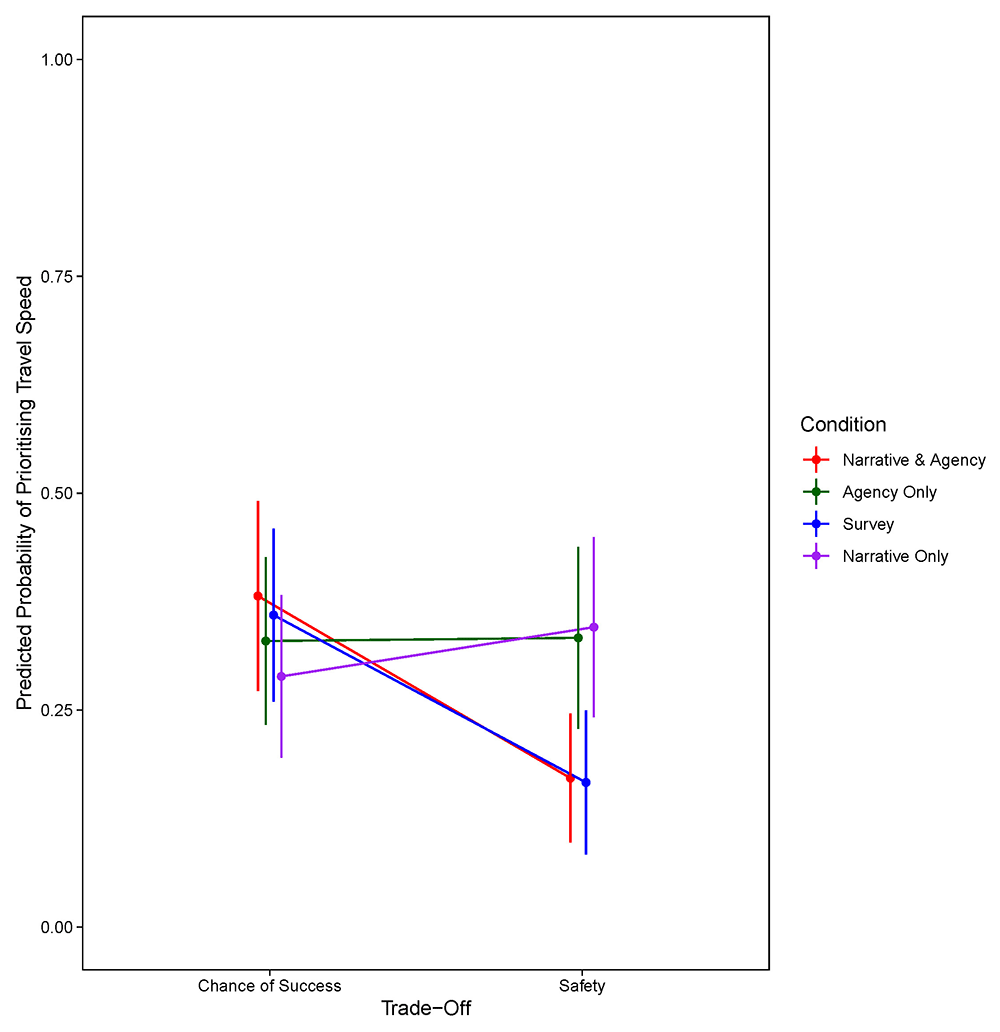
Figure 4. Predicted Probability of Prioritising Travel Speed Against Trade-Off and Condition at the Third Decision Stage.
Conclusion
Interpreting the results of the experiment in a meaningful and generalisable way proved challenging. Firstly, both between and within conditions, participants experienced a different number of migration decisions (i.e., stimuli), some of which were presented in different contexts for the same attribute (e.g., boat crossing or landmines for safety), with different migration decisions presented in different orders. Therefore, although participants made conceptually analogous trade-offs, confounds made it difficult to meaningfully interpret the results. Furthermore, the conditions proved too distinct from each other, meaning that although the different renditions of each migration decision were intended to be analogous, there were unintended confounds. For example, participants could have made different migration decisions in the narrative and agency condition compared to the survey condition simply because in the former case, the text was substantially longer and contained more details than that in the latter.
Overall, this study, even if exploratory in nature, illuminated some important tensions and trade-offs present in interdisciplinary research. On the one hand, there are important discipline-specific questions, in our case, around the lack of ecological validity in surveys. On the other hand, there is a need to align the experiment closely with the model needs through greater realism and participant immersion. Due to the need to satisfy the interdisciplinary modelling requirements, the resulting design ended up being too complex, and we could not obtain the discipline-specific psychological insights we had anticipated and desired. There are some significant differences and interactions, including with some of the control variables, such as the perception of agency amongst participants (not reported here), indicating there may be some signal coming through from the experimental data. However, because of issues with the study design, it is difficult to identify specific patterns and then interpret and attribute these findings to a particular variable, not to mention generalising them to different contexts.
Alternatively, idiosyncratic differences between the migration decisions across different conditions, as well as between versions of the same trade-off, designed to be analogous, but differing in content and wording, dominated over everything else. Together with relatively small effects of immersion, this could have made the results inconclusive. In this interpretation, the main problem is the failure to anticipate the importance of the specific wording and the details of the situation in determining people's responses.
Ambiguous results notwithstanding, studying decision-making in richer and more ecologically valid conditions is a worthwhile endeavour, and the results of the ensuing experiments would enrich the toolkit of agent-based modellers, making the models more realistic and valid. We therefore hope that this paper acts not only as a cautionary tale, but also as motivation to conduct more rigorous research on this topic. Our main recommendation for future research is to keep the design simple, with well-controlled differences between conditions carried out step-by-step, to allow for more interpretable results. At the general level, the allure of interdisciplinary research needs to be moderated by discipline-specific rigour.
Ethical approval
This study was approved by the University of Southampton, Ethics approval No. ERGO 68015. Participants provided informed consent to take part in this study and for their anonymised data to be published and uploaded to OSF (please see the combined participant information sheet and consent form at the beginning of all the Qualtrics surveys available on OSF: https://doi.org/10.17605/OSF.IO/PN9EW).
Data availability
Open Science Framework: Modirrousta-Galian, A. (2023). Investigating Immersion and Migration Decisions: A Cautionary Tale. OSF, DOI: https://doi.org/10.17605/OSF.IO/PN9EW, accessed on 31 January 2023.
This project contains the following underlying data:
Data (folder)
Agency Only Condition_November 25, 2021_14.13.csv (https://osf.io/8ewcf; raw data file for the agency-only condition)
Narrative & Agency Condition_November 24, 2021_16.33.csv (https://osf.io/uxp8d; raw data file for the narrative and agency condition)
Narrative Only Condition_November 24, 2021_16.33.csv (https://osf.io/279ux; raw data file for the narrative-only condition)
Survey Condition_November 24, 2021_13.53.csv (https://osf.io/uzea2; raw data file for the survey condition)
Pilot Data (Folder)
Agency Only Condition_November 18, 2021_19.35.csv (https://osf.io/xdbjp; raw data file for the agency-only condition)
Narrative & Agency Condition_November 19, 2021_15.04.csv (https://osf.io/eup2c; raw data file for the narrative and agency condition)
Narrative Only Condition_November 18, 2021_16.55.csv (https://osf.io/rzdsv; raw data file for the narrative-only condition)
Survey Condition_November 18, 2021_16.08.csv (https://osf.io/8r9ac; raw data file for the survey condition
Data are available under the terms of the Creative Commons Attributions 4.0 International license (CC-By Attribution 4.0 International).
Acknowledgements
This article reflects the authors’ views, and the Research Executive Agency of the European Commission is not responsible for any use that may be made of the information it contains. We thank Souhila Belabbas, Jason Hilton, and Peter W. Smith for discussions and help with the testing of the questionnaire. Needless to say, all errors and interpretations are ours alone.
Faculty Opinions recommendedReferences
- Bijak J, Higham PA, Hilton J, et al.:
Towards Bayesian Model-Based Demography: Agency, Complexity and Uncertainty in Migration Studies.Methodos series. Cham: Springer, 2021; 17. Publisher Full Text
- Bonabeau E:
Agent-based modeling: Methods and techniques for simulating human systems.
PNAS.
2002; 99(Suppl. 3): 7280–7287. Publisher Full Text
- Cicourel AV:
Interviews, surveys, and the problem of ecological validity.
The American Sociologist.
1982; 17(1): 11–20. Reference Source
- Hausknecht M, Ammanabrolu P, Côté M-A, et al.:
Interactive Fiction Games: A Colossal Adventure.
Proceedings of the AAAI Conference on Artificial Intelligence.
2020; 34(5): 7903–7910. Publisher Full Text
- McMahan A:
Immersion, engagement, and presence: A method for analyzing 3-D video games. In: M. J. P. Wolf & B. Perron (Eds.),
The video game, theory reader.
Routledge, 2003; 67–86. Reference Source
- Rafael S:
Interactive fiction. Narrative and immersive experience in text-based games.
Proceedings of the 2018 6th International Conference on Illustration Animation.
2018; 568–576. Reference Source
- Rossetti T, Hurtubia R:
An assessment of the ecological validity of immersive videos in stated preference surveys.
J Choice Model.
2020; 34: 100198. Publisher Full Text