Introduction
During the last decade, Open Science practices have become mainstream, with Open Access publications now common (Mills, 2020), and data collection and sharing under the FAIR (findable, accessible, interoperable, and reusable) principles (Jacobsen et al., 2020) strongly encouraged by many research funding agencies1. Nowadays, for most research projects, a data management plan2 (DMP) is required as a formal document that outlines how to handle research data both during research and after the research project is completed. The DMP essentially documents key activities in the research data lifecycle, such as the collection, description, preservation, and access or discovery of data. In brief, it should specify the services and legal support that the project needs to make the data as FAIR and open as possible. Such documentation is crucial for the reproducibility of research results, which is a fundamental precept of scientific investigations. International organisations such as the Research Data Alliance (RDA) host working groups which are trying to define DMP standards, while research funding agencies such as Horizon Europe propose template documents for DMPs. However, researchers that produce data need tools to help them create a DMP, and there are still only a limited number of online tools for filling in a DMP questionnaire, probably due to the lack of standardization. The Opidor DMP tool and the ELIXIR Data Stewardship Wizard are good examples of frameworks that facilitate DMP production.
Nevertheless, the collection of data in a way that enables FAIR data sharing is not trivial, and requires some knowledge of underlying principles of data annotation (metadata) and the overall ways in which data can be organized (formats, storage, etc.). Increasing efforts at academic and research institutions, mainly by employing data stewards to help the producers of the data, as well as upcoming changes in evaluation practices, are enabling FAIR data sharing, but there are still many hurdles present. For example, whilst data stewards can educate scientists in data management principles and help them, the scientist themselves have to understand the data management terminology and aims to a certain extent, so that they can reliably collect and organize relevant data, while remaining motivated to do so. This active participation of scientists is especially relevant as data (storage) is often very domain specific, making it impossible for data stewards to understand all the subtleties and prior practices of each field.
Our goal here is to describe the experience of learning about data management by Early- Stage Researchers (ESRs) in the frame of the RNAct Marie Sklodowska Curie European innovative training network (ITN) (Gownaris et al., 2022). The RNAct ITN (https://rnact.eu/) started in 2018 and employed 10 ESRs in research with the main goal being the re-design of RNA Recognition Motif (RRM) protein domains. By investigating how these RRMs bind RNA molecules, through structural biology and bioinformatics approaches, their application in biosensor development and synthetic biology was envisaged. The project employed a mix of synergistic computational and experimental approaches, in a 50/50 ratio, and so encompassed two very different audiences in terms of how data is managed. To address this as part of the project, a data management subcommittee consisting of the principal investigators responsible for RNAct data management (DM PIs; Drs. Devignes, Smaïl-Tabbone, Chauvot de Beauchêne and Vranken) was initiated at the start of the project, with regular meetings held. This subcommittee trained the 10 ESRs on basic and practical data management principles, with the main goal the creation of individual Data Management Plans (DMPs). This process highlighted difficulties in explaining data management: what it means, which resources are available, how related it is to the publication of FAIR data, etc. A key difficulty for our ESRs was, for example, how to describe the data they were producing during their PhD thesis work. Explaining this required an iterative process of providing information about data management, while asking them for relevant information about their own datasets. During this process, we developed a ‘simple’ version of the generic Life Sciences Data Stewardship Wizard (DSW) Knowledge Model (Pergl et al., 2019). This simplified model is aimed at training young scientists, both with computational and experimental backgrounds, in core data management principles. We collected feedback from the ESRs during this exercise. We here report the experiences of ourselves and the ESRs and introduce our new training life sciences data management plan template for young scientists.
Methods
Data Stewardship Wizard (DSW) framework
The DSW framework (Pergl et al., 2019) has become well known through various working groups of ELIXIR, the European Research Infrastructure for bioinformatics (Harrow et al., 2021), where it is part of an associated set of tools around FAIR data management (Wilkinson et al., 2016). It is based on a set of core concepts, with default data management plan questionnaires provided, while still allowing flexibility in customization of these templates for specific purposes. We decided to use DSW based on the three following key features.
1. Possibility to get an «RNAct instance» of the DS-Wizard hosted in the DSW Cloud, thanks to the resources provided by the ELIXIR infrastructure
2. Possibility to modify the default «Life Science DSW Knowledge Model» into an RNAct specific Knowledge Model
3. Possibility for the ESRs to create their own DMP projects based on this model.
The DSW framework includes three main levels: knowledge model, template, and project that are schematized in Figure 1.
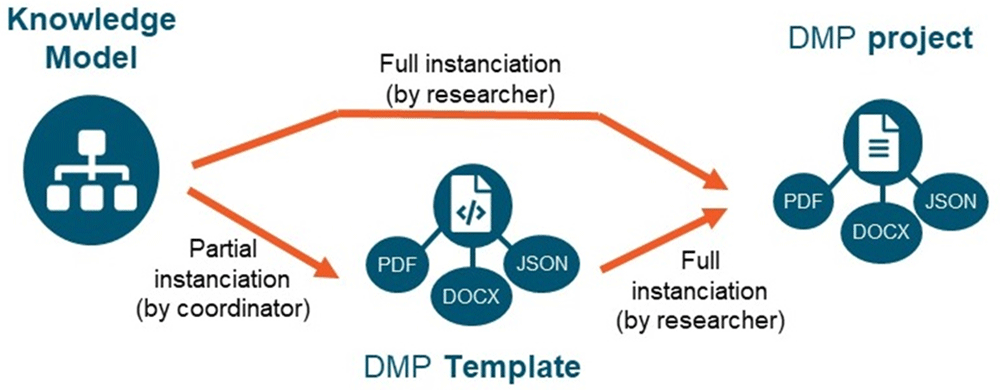
Figure 1. The three levels of DSW framework.
The ‘knowledge model’ describes the elements of the DMP in the form of questions, which can be directly answered in by researchers to create a DMP ‘project’, exportable under various formats for various usages. Alternatively, the knowledge model questionnaire can be partially pre-filled by the project coordinator with common information to provide an initial DMP ‘template’ to be further completed by researchers. Permission has been given from the DSW to use their images in this figure.
The DS Wizard tool provides a user-friendly interface for editing the DSW knowledge model (Figure 2). It is organized by chapters, which capture aspects of data management (e.g. Administrative information). Each chapter has sections, which are more specific (e.g. contributors to a DMP) and which contain questions to collect information (e.g. name of a contributor). The questions are tagged depending on the timeline in a data/project lifecycle (e.g. start of the project), and depending on the impact of answers on the compliance with respect to FAIR principles (e.g. answering Yes to the question “Will you describe your data with standard vocabularies or ontologies?” will result in a green FAIR tag).
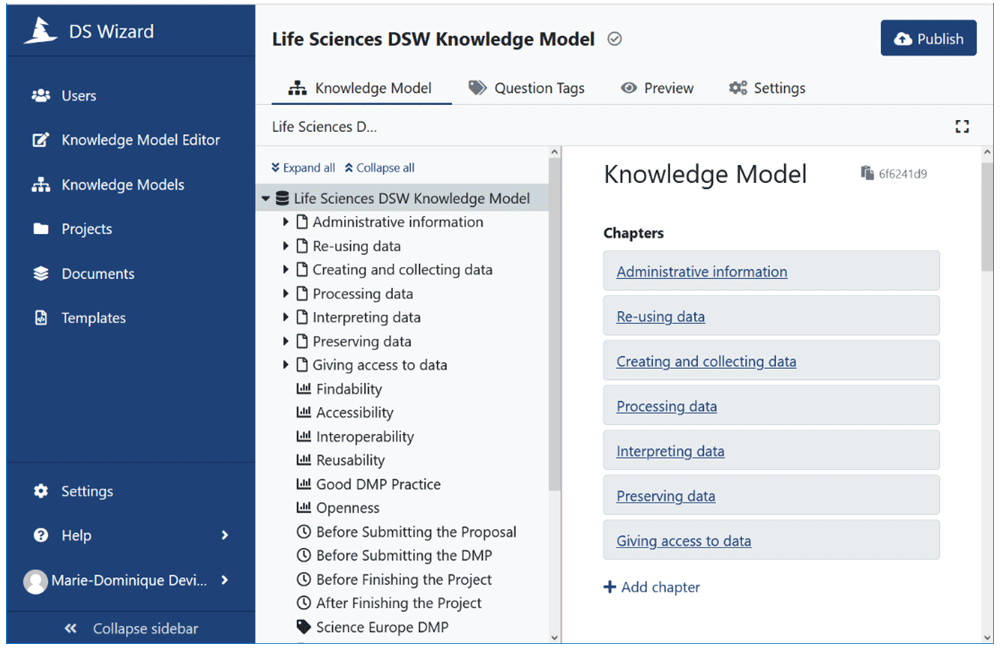
Figure 2. DS Wizard interface for Knowledge Model editor.
Permission has been given from the DSW to use their images in this figure.
A knowledge model can be instantiated as a DMP project through a user-friendly questionnaire interface. Moreover, one can save a pre-filled version of a project as a template, when several DMP projects have to be produced with shared information (e.g. funding sources, licensing modes).
Other resources
When editing the knowledge model, we added references to the resources and documentation compiled in the ELIXIR RDMkit such as FAIR-SHARING to facilitate the search for relevant ontologies and vocabularies.
Experimental design
The experimental design was based on an iterative process, with task sharing between ESRs and DM PIs as data management supervisors (Figure 3). All ESRs had to select among all the data they produced one relevant dataset for which they had to produce a DMP project. Starting from the default Life Science DSW knowledge model (version 2.4.0), we performed two iterations of a process composed of four steps: (i) creating or updating the RNAct DSW knowledge model, (ii) having the ESRs create their own DMPs, (iii) reviewing the DMPs and (iv) collecting feedback from the ESRs.
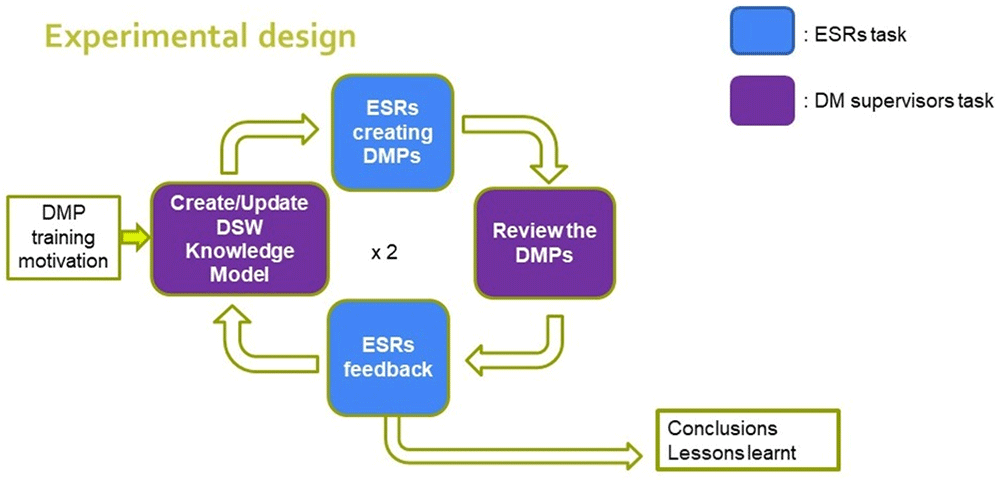
Figure 3. Experimental design for the DMP training.
Starting from the modified RNAct knowledge model, ESRs created DMPs that were reviewed, to which ESRs provided further feedback that was taken into account to tune the knowledge model.
The first round of this process was interactively performed at a hybrid session during an RNAct workshop (3rd June 2021, Brussels), with 7 ESRs physically present and 3 present online. For this session, version 1.0.3 of the RNAct_ESRTraining_KM DMP questionnaire was used (see Vranken et al., 2023). The following steps were then taken:
1. Presentation of general concepts around data management (available at Vranken et al., 2023), including an introduction of the DSW and an overview of the DMP questionnaire.
2. The ESRs selected the dataset(s) that they wanted to create a DMP for, with diverse computational and experimental topics: protein domain structure data; binding and RNA/protein interface data; cell cultures and other data in relation to the Mushashi-1 protein; commercial data; and cell lines (see Table 1).
3. During a 3-hour session they filled in the DMP questionnaire, with technical help provided but minimal help on content, in order to let them independently explore the questionnaire and identify problems.
4. This session was followed by a one-hour session to qualitatively gather their feedback, for example in relation to how much they understood of the DMP terminology that was used, if they encountered specific needs with regard to their dataset, etc.
Table 1. Brief description of the datasets addressed by ESRs’ DMPs.
Only specific EDAM metadata terms are displayed (3rd column). Common terms are RNA and Protein interactions. The full table is available at Vranken et al., 2023 (RNA_datasets.xlsx).
| ESR | Title | Metadata from EDAM ontology
for content description | File
formats | Size | Short description |
|---|
| 1 | Protein Conformational
Variability predictions
for RRMs | Prediction and recognition;
Protein property; Protein folding,
stability and design | json | 10Mb | Dataset with predictions of the RRM proteins in
the InteR3MDB with the ConforMine program. |
| 2 | RRM conservation and
contact diversity | Sequence alignment analysis
(conservation); Protein Structure
alignment; Protein-nucleic acid
interaction analysis | json,
fasta | 500Mb | Dataset listing conserved residues and protein-
nucleic acid contacts for all positions of the
RRM master alignment. |
| 3 | Database for RRM-RNA
Interactions. | Data integration and
warehousing; Residue interaction
calculation | sql | 500Mb | Complete and comprehensive database about
RRMs (InteR3Mdb) |
| 4 | Protein bound ssRNA
fragments (PSRNA) | Protein interaction data; Protein
binding sites ; Residue interaction
calculation | pdb, json | <5 Gb | List of characteristics for protein-RNA
contacts extracted from PDB complexes. Each
RNA is considered as a set of overlapping
trinucleotides. |
| 5 | Phage-display results
for novel RRM design | Protein-nucleic acid interaction
analysis, Protein interaction
experiment; Protein interaction
data | xlsx | >1Gb | Protein-RNA interaction data produced from
processing and analyzing phage display results
corresponding to in vitro binding experiments
of RNA/ ssDNA to Sex-lethal protein. |
| 6 | NMR data analysis for
hnRNP A1 protein | Structural biology; NMR; Protein
interaction data | xlsx | >1Gb | Data produced from processing and analyzing
NMR data collected on hnRNP A1 |
| 7 | NMR data analysis
for Musashi-1 RRM
domains | NMR; Protein interaction data | xlsx | >1Gb | Data produced from processing and analyzing
NMR data collected on human Musahi-1
protein domains (RRM-1, RRM-2, RRM1-2 and
RRM1-2 DM). |
| 8 | Fluorometric data on
Musashi circuit | Synthetic Biology;
Cytometry;
Imaging | xlsx | >1Gb | Results of fluorometry on Musashi protein
(from Varioskan Lux microplate reader). |
| 9 | Human Musashi-1
binding kinetics | Rate of association; Protein-
nucleic acid interaction analysis | csv, etbl | >1 Gb | Binding kinetic traces (heliOS) and extracted
association and dissociation rate constants, as
well as affinity values for a determined protein-
nucleic acid interaction (Musashi-1). |
| 10 | RNA-Musashi1
interaction in living
cells | Protein-nucleic acid interaction
analysis; Gene expression | ltr, ltv, txt | <5 Gb | Data collected using LigandTracer technology
(.ltr) and analyzed using TraceDrawer (.ltv).
Detection of RNA-protein binding and kinetics
in living cells using real time binding assays. |
We obtained 10 DMPs (available at Vranken et al., 2023). This procedure revealed that most ESRs had particular difficulties with: i) the many nested questions inside the DMP questionnaire, pointing to its complexity, and ii) lack of understanding of data management concepts and terminology, especially the metadata section, which was overlooked by most ESRs because they did not comprehend why this was relevant.
The qualitative feedback therefore indicated a strong need to simplify the version 1.0.3 knowledge model, with more explanations provided for each of the questions. The 10 DMPs were therefore reviewed in detail by the DM PIs in subsequent meetings and the version 1.0.3 model was updated accordingly to result in the further simplified and annotated RNAct_ESRTraining_KM version 1.0.14 DMP questionnaire (available at Vranken et al., 2023) (Figure 4). A template project based on this questionnaire and pre-filled with general information about the RNAct project (such as funding sources) was proposed to the ESRs in April 2022 (available at Vranken et al., 2023). The following steps were then taken:
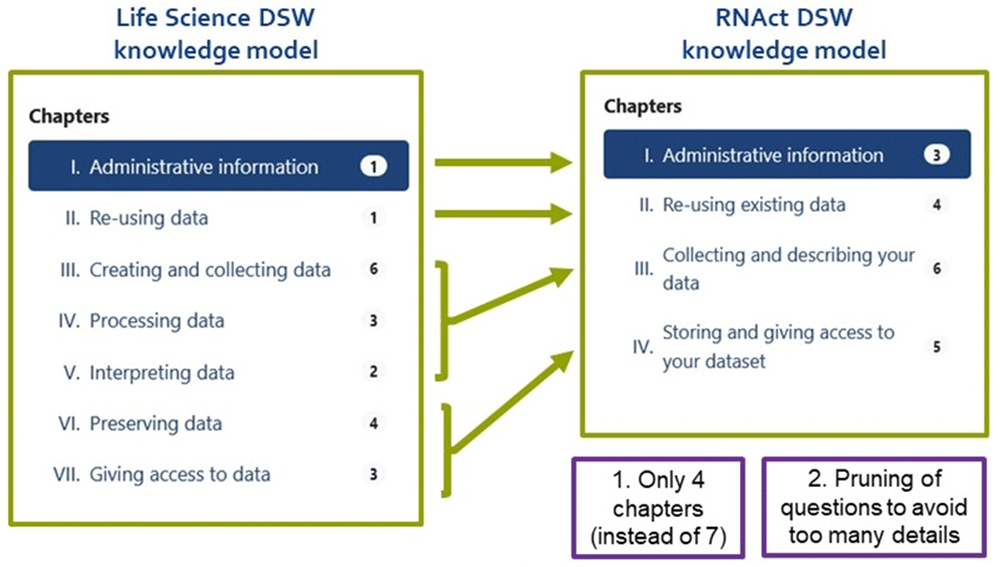
Figure 4. Summary of the initial modifications of the default Life Science DSW model.
The number of chapters was reduced and questions were removed and/or simplified.
1. The ESRs were asked to fill this template anew, now online using the – by then more extensive – information about their dataset.
2. To obtain more quantitative feedback, an online survey form (available at Vranken et al., 2023) was created for the ESRs to fill in after completing their DMP.
The resulting 8 full completed projects and the survey results were collected in June 2022 (available at Vranken et al., 2023). The survey results were qualitatively analysed by the participants in this study.
A preliminary report about this experiment was presented at the DM workshop during the ELIXIR All Hands meeting in June 2022 (Amsterdam, the Netherlands). Final missing ESR information for DMPs was collected separately during December 2022 to obtain 10 complete DMPs, with the data summarized in Table 1.
Results
The RNAct DSW Knowledge Model
We present the final RNAct DSW Knowledge Model that was implemented based on the ESR feedback after the first round of DMP production and which is available at https://registry.ds-wizard.org/knowledge-models/rnact:rnact-esr:1.1.0. We reduced the number of chapters from 7 to 4, thereby merging chapters III, IV and V about ‘Creating and Collecting data’, ‘Processing data’, and ‘Interpreting data’ into a single chapter III: ‘Collecting and Describing your data’. We also merged Chapters VI and VII about ‘Preserving data’ and ‘Giving access to data’ into a single chapter IV ‘Storing and giving access to your dataset’.
Meanwhile, we pruned certain nested questions to avoid cognitive overload. We mention here some examples of removed or simplified questions.
- In chapter I, we skipped questions relative to the description of diverse policies and procedures for data management or requiring any additional specialist expertise (as these questions are beyond the ESR role in the RNAct project).
- In chapter II, we merged questions relative to reference and non-reference data;
- In former chapter III, we skipped the questions concerning collaborations with groups/institutions, data integrity, and data integration tools; we also moved the questions relative to file naming/organization to the new chapter IV.
- In former chapter IV, we skipped the questions on how to validate the integrity of the results or plan the computing capacity required for processing data.
- In former chapter V, we removed all questions (e.g. asking for data formats, common ontologies for interpreting the results etc.) as these questions were included in the new chapter III for data description.
As for the difficulties encountered by ESRs concerning metadata concepts, we tried to explain metadata items by relating them to more familiar concepts, such as items describing published articles in Zotero or BibteX. The original metadata question in the Chapter ‘Collecting and Describing your data’ was restructured as shown in Figure 5. We added three sub-questions to the question “What kind of metadata will you collect and save?” to collect information on metadata for:
Identifying the dataset
Describing the dataset
Reusing the dataset.
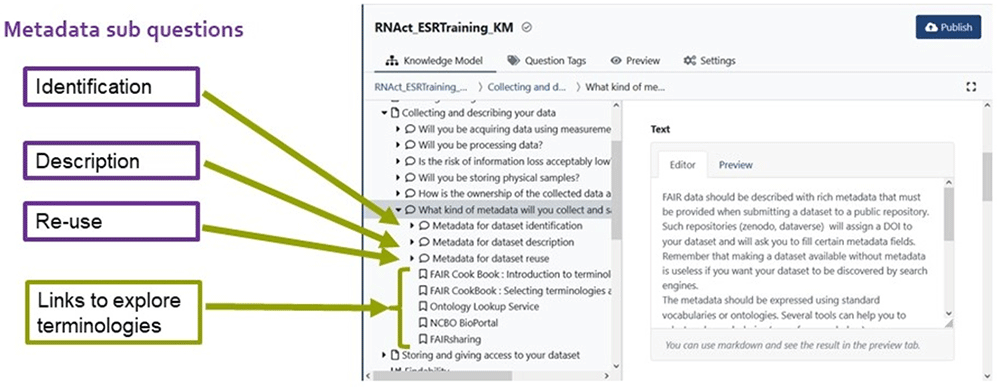
Figure 5. Summary of the structure of the metadata question in the RNAct DSW Knowledge Model.
Permission has been given from the DSW to use their images in this figure.
By doing so, we wanted to clarify what the metadata concretely refer to. We also provided examples of relevant vocabularies and ontologies for each category of metadata, as well as links to online resources to guide ESRs in the task of understanding and selecting proper vocabulary and ontology terms for their data.
ESR feedback
The discussions at the DM subcommittee and with the ESRs identified a series of issues that surfaced, and solutions which we employed, which are summarized in Table 2.
Table 2. Issues and solutions related to data management identified during the project.
| Issue | Possible solutions |
|---|
The final aim of a DMP is very difficult to get across and is in general
considered very abstract, hindering the students’ motivation. | Concrete examples help to clarify why they are creating a
DMP, and to motivate them. |
The selection of the most important datasets to document and store is
difficult, especially during exploratory phases of research. At which point
should one archive data? | Provide a wider perspective: which datasets will in the end
be most useful for other users? This is especially important
for early-stage researchers that might not yet have this view. |
It is very difficult to label datasets with metadata and other info in a
structured way (using ontologies, …) so that it is easily re-usable. In other
words, questions related to terminologies and vocabularies are difficult. | Propose a small concrete list of possible resources, relevant
for their research field, from which they may choose. |
There are large differences between the level of knowledge about data
between ESRs with computational and experimental backgrounds. Both
produce and/or work with data, but the way of organizing and labelling
data is very different. | Minimum information standards that include both types
of information focussed on a research field (e.g. MIADE for
intrinsically disordered proteins) are essential to make this
practical and easier. |
There are large differences between the types of data being used. ‘Large
scale’ data are often already in a more consistent digital form, whereas
‘focussed individual projects’ data are often not as well organised, with
more freedom available in how to store the data. | In the focussed data case, organised file directory structures
are often the key organisational feature, and help to
understand dataset content. |
The need for correctly licensing data is difficult to get across, but is essential
for researchers to understand in relation to making their data open. | Online resources such as http://ufal.github.io/public-license-
selector/ to guide the selection of suitable licenses can help. |
Once the DMP is finalized, how should the dataset be published in public
repositories, and where? | This question goes beyond the DMP production per se but
it shows that the exercise can prepare to next steps of open
science, e.g., data sharing. |
The experimentalists need more explanations and (video) tutorials to
help them answering the most difficult questions. | Identify existing training material and adapt them to the
audience if necessary, e.g., from the ELIXIR TESS catalogue |
In addition, we formulated a final survey for the ESRs to quantify where the key problems are situated from their perspective. At the end of the process, ESRs were asked to answer this survey. Results for the three checkbox questions are presented in Figure 6.
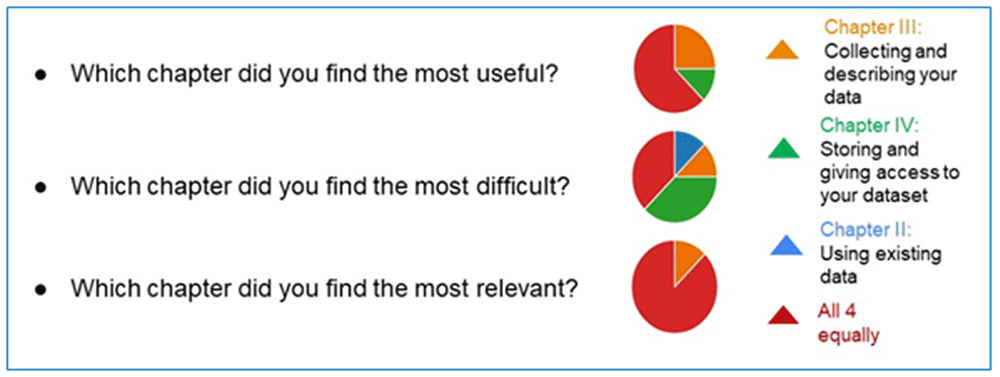
Figure 6. Response distribution for the first three survey questions.
The full responses are available from Vranken et al., 2023 (RNAct feedback questionnaire.xlsx).
To the 1st question of the survey, ESRs mostly answered that they found the 4 chapters equally useful, while some of them specified that the most useful was Chapter III (Collecting and describing the data), others opted for Chapter IV (Storing and giving access to the dataset).
To the 2nd question, concerning the most difficult chapters, answers were quite diverse and covered all chapters, except for the first one (administrative information).
To the 3rd question, concerning the relevance of the chapters, most ESRs found that all 4 chapters are equally relevant.
In the survey, we also asked ESRs about what they learnt about data management during the exercise. They answered that they learnt i) good practices for data storage and accessibility, ii) how to use metadata, iii) how important and difficult it is to comply with all data management requirements. To the question about what remained unclear to them, the main issues were related to metadata, with one question about how to publish data in repositories. Finally, the ESRs suggested to further improve the RNAct knowledge model, in particular to include more explanations for experimentalists and video help to answer the most difficult questions.
Conclusion
A limitation of our study and results is that they only cover in depth the experiences of 10 ESRs in the life sciences field, although with a relatively wide coverage of topics from protein structure to biosensors and synthetic biology, and especially covering both experimental and computational angles. The data we collected is highly qualitative, with some quantitative aspects. The main product of the process is the RNAct knowledge model (version 1.1.0), which we are making available via https://registry.ds-wizard.org/knowledge-models/rnact:rnact-esr:1.1.0, with any updates available via https://registry-ppe.ds-wizard.org/knowledge-models/rnact:rnact-esr:latest. We also noticed that some ESRs filled in the absolute minimum in the templates, likely because of a lack of motivation. Indeed, the DMP exercise remains very abstract as long as there is no way to use the produced DMP as an operational guide for subsequent steps, such as dataset identification, description, storage and publication. This made it difficult to justify the choice of items to keep in the simplified model. The produced DMPs are also not machine actionable; each DMP can be visualized and exported in various formats, but we still lack tools with functionalities such as querying, aggregating, performing statistical analyses, etc. Institutions increasingly ask for DMPs, but their further use beyond the initial generation stage, where it ideally makes researchers ponder their data, seems limited (Smale et al., 2020). To exploit DMPs as the field progresses, it will become increasingly important to direct researchers to topic specific databases, where their data can be stored in a highly structured and meaningful way. The EOSC3 (European Open Science Cloud) organisation is working towards this, but combined data storage and DMP infrastructure is required, as ideally the DMP should only describe the specific data locations where field-specific information will be stored. We hope our model will contribute to the mutual understanding between data stewards and researchers that is required to work towards this goal.
In conclusion, we found that the DS-wizard is not only relevant for data stewards, to collect and maintain information on DMPs, but that it is also an appropriate tool for DMP training. This is important, as data management is not an easy task, with the terminology and concepts difficult to get across to researchers. Young people need education on DM at least for at least for their next project submissions and in the more distant future to benefit society as a whole. Both ESRs and DM supervisors learnt a lot during the exercise we describe here, in terms of increased awareness of data management and interoperability requirements. To get a more complete picture of DMP training, we think that such an exercise with DS wizard should be extended with two other steps:
An upstream step presenting basic concepts and principles on DMPs: such presentations can be selected from existing training material in the ELIXIR TESS catalogue, or can be built by exploring the ELIXIR RDMkit web resources,
A downstream step that corresponds to the publication of the dataset in a public repository like Zenodo, for which some training material already exists in the FAIR CookBook or in the RDMkit.
Overall, the process we followed thanks to the DS-Wizard played a central role in our DMP training for ESRs in the frame of this RNAct project, and we hope that our efforts can be used in other projects, and by data stewards, to create more complete training on data management for young researchers.
Consent
All participants gave written informed consent for their participation in the research and for the use and publication of their feedback on the knowledge form. Ethical approval was not required for this research given the non-sensitive nature of the data and the consent and active involvement of the participants in the study.
Acknowledgements
We thank the DSW team and its great and efficient support to our project. MDD is grateful to the Interoperability Working Group at ELIXIR-FR (IFB) for fruitful discussions.
Faculty Opinions recommendedReferences
- Gownaris NJ, Vermeir K, Bittner MI, et al.:
Barriers to Full Participation in the Open Science Life Cycle among Early Career Researchers.
Data Science Journal.
2022; 21: 2. Publisher Full Text
- Harrow J, Drysdale R, Smith A, et al.:
ELIXIR: Providing a Sustainable Infrastructure for Life Science Data at European Scale.
Bioinformatics.
2021; 37(16): 2506–2511. PubMed Abstract
| Publisher Full Text
| Free Full Text
- Jacobsen A, de Miranda Azevedo R, Juty N, et al.:
FAIR Principles: Interpretations and Implementation Considerations.
Data Intelligence.
2020; 2(1–2): 10–29. Publisher Full Text
- Mills M:
Global trends in open access publication and open data.
J Appl Clin Med Phys.
2020; 21(12): 4–5. PubMed Abstract
| Publisher Full Text
| Free Full Text
- Pergl R, Hooft R, Suchánek M, et al.:
Data Stewardship Wizard: A Tool Bringing Together Researchers, Data Stewards, and Data Experts around Data Management Planning.
Data Science Journal.
2019; 18: 59. Publisher Full Text
- Smale N, Unsworth K, Denyer G, et al.:
A reivew of the History, Advocacy and Efficact of Data Management Plans.
Int J Digit Curation.
2020; 15(1): 30. Publisher Full Text
- Vranken W, Devignes MD, Smail M:
Supporting information for the RNAct Data Science Wizard (DSW) knowledge model for early-stage researchers. [Dataset].
Zenodo. 2023. http://www.doi.org/10.5281/zenodo.7912419
- Wilkinson MD, Dumontier M, Aalbersberg IJ, et al.:
The FAIR Guiding Principles for scientific data management and stewardship.
Sci Data.
2016; 3: 160018. PubMed Abstract
| Publisher Full Text
| Free Full Text