Whole genome sequencing and sequence analysis
WGS revealed seven different E. coli STs in the sequenced isolates (Table 4). Each sequenced isolate harbored from one to six different plasmid replicons. Three isolates carried an IncI1 plasmid replicon. Multidrug resistance was found in all of the sequenced isolates. Four of the isolates harbored genes conferring resistance to seven different antibiotic classes. In addition to beta-lactams, resistance genes were detected against aminoglycoside, fluoroquinolone, macrolide, lincosamide, streptogramin B, phenicol, sulfonamide, tetracycline, and trimethoprim. No fosfomycin or rifampicin resistance genes were detected.
Table 4. Genomic characteristics of hybrid sequenced Escherichia coli isolates and plasmid replicons from barnacle geese.
Isolate
(E. coli
MLST) | Sampling
period | Number
of total
contigs | ESBL-
plasmid
(replicon;
pMLST) | bla gene(s)
on ESBL-
plasmid | Other
resistance
genes
on ESBL-
plasmid | Virulence
genes on
ESBL-
plasmid | Phenotypea | Other plasmid
replicons in
isolate | Other
resistance
genes in
isolate | Other virulence genes in
isolate |
|---|
H5
(ST359) | Fall | 6 | pZPK-H5
(IncI1; ST38,
CC-3) | blaCTX-M-1 | floR | cia | ESBL | IncFIB,
IncFIC(FII),
IncFII(29) | mdf(A), aph(6)-
Id, aph(3″)-Ib,
sul2, dfrA | astA, cea, etsC, gad, hlyF,
iroN, iss, iucC, iutA, lpfA,
ompT, sitA, terC, traT, tsh |
H11
(ST58) | Fall | 11 | pZPK-H11
(IncN+IncR;
IncN: ST1) | blaCTX-M-1 | qnrS1,
aadA2b, lnu(F) | – | ESBL | IncFIB, IncFII,
IncFII(pCoo),
IncQ1 | mdf(A), aph(6)-
Id, aph(3")-Ib,
dfrA5, sul2,
tet(A) | cea, cia, cvaC, etsC, fyuA,
gad, hlyF, iroN, irp2, iss,
iucC, iutA, lpfA, mchF, ompT,
sitA, terC, traT, tsh |
H21
(ST115) | Fall | 9 | pZPK-H21
(IncK) | blaCMY-2, blaTEM-32 | – | traT | AmpC | Col156,
Col8282, IncFIB,
IncFII, IncFII | mdf(A) | air, celb, chuA, cia, eilA, etsC,
gad, hlyF, hra, iha, iss, iucC,
iutA, kpsE, kpsMII_K5, mcbA,
ompT, papC, sitA, terC, traT |
H29
(ST453) | Fall | 3 | pZPK-H29
(IncY) | blaCTX-M-15,
blaTEM-1B | qnrS1, aph(6)-
Id, aph(3")-Ib,
sul2, dfrA14,
tet(A) | – | ESBL | – | dfrA1, mdf(A),
aadA1, tet(A) | fyuA, gad, irp2, iss, kpsE,
kpsMIII_K10, lpfA, papC,
sitA, terC |
H58
(ST1594) | Fall | 20 | pZPK-H58
(IncK) | blaCMY-2 | – | traT | AmpC | Col8282,
ColpVC | mdf(A) | astA, celb, gad, gad, hra,
iha, iss, iucC, iutA, kpsE,
kpsMII, ompT, sitA, terC |
H68B
(ST3580) | Fall | 3 | – | Chromosomal
point
mutation
in AmpC
promoter | – | – | AmpC | IncFIA, IncFIB,
IncFIC(FII),
IncFII(pHN7A8) | mdf(A), tet(A) | cba, cma, etsC, gad, hlyF,
iroN, iss, iucC, iutA, lpfA,
ompT, sitA, terC, traT, tsh |
H98
(ST453) | Fall | 3 | pZPK-H98
(IncY) | blaCTX-M-15,
blaTEM-1B | qnrS1, aph(6)-
Id, aph(3")-Ib,
sul2, dfrA14,
tet(A) | – | ESBL | – | dfrA1, mdf(A),
aadA1, tet(A) | fyuA, gad, irp2, iss, kpsE,
kpsMIII_K10, lpfA, papC,
sitA, terC |
H163
(ST2178) | Spring | 9 | pZPK-H163
(IncI1; ST23,
CC-2) | blaCMY-2 | – | cia | AmpC | ColpVC, IncFIB,
IncFII | mdf(A) | cif, eae, espA, espF, espJ,
gad, iss, lpfA, nleB, sepA,
terC, tir |
H193
(ST2178) | Spring | 4 | pZPK-H193
(IncI1; ST23,
CC-2) | blaCMY-2 | – | cia | AmpC+ESBL | ColpVC, IncFIB,
IncFII | mdf(A) | cif, eae, espA, espF, espJ,
gad, iss, lpfA, nleB, sepA,
terC, tir |
Human-associated resistance gene blaCTX-M-15 was found in two isolates sharing the same sequence type ST453 and plasmid replicon IncY. Additionally, four and two isolates harbored blaCMY-2 and blaCTX-M-1, respectively, which are commonly found from poultry (EFSA, 2011; Rozwandowicz et al., 2018). Interestingly, no beta-lactamase genes were recovered from isolate H68B, although this isolate was phenotypically an AmpC producer. The phenotype correlated with the genotype in all but two isolates—the aforementioned isolate H68B and isolate H193—which was phenotypically both an AmpC and an ESBL producer, but only blaCMY-2 was recovered from the WGS analysis. In addition, isolate H21 was phenotypically an AmpC producer but harbored both blaCMY-2 and blaTEM-32.
The isolates harbored a wide variety of different virulence genes with 38 different genes found altogether. The increased serum survival gene iss, tellurium ion resistance gene terC, and glutamate decarboxylase gene gad were found in all isolates, and the long polar fimbriae gene lpfA in seven isolates. Enterobactin siderophore receptor gene iroN and temperature sensitive hemagglutinin gene tsh were both found in three isolates. Two of the isolates harbored the adhesin intimin coding eae gene, which is associated with enteropathogenic E. coli (Frankel et al., 1998; Müller et al., 2016), but no Shiga toxin coding genes were found.
Plasmid analysis. Eight out of the nine hybrid sequenced E. coli isolates were found to harbor a plasmid replicon with a bla gene. All hybrid-assembled bla-carrying plasmids were found to be in one circular contig.
One isolate, H68B, did not carry any plasmids with bla genes, but instead a chromosomal point mutation in the AmpC promoter was identified. This isolate did, however, harbor multiple IncF type replicons and resistance genes mdf(A) and tet(A) (Table 4).
IncI1 type plasmids
In three isolates, an IncI1 type replicon harboring either blaCMY-2 (H163 and H193) or blaCTX-M-1 (H5) was identified (plasmids pZPK-H5, pZPK-H163, and pZPK-H193). Plasmid pZPK-H5 from isolate H5 was 98.7 kb in size with a G+C content of 50.2% and 112 predicted coding sequences (CDSs). Plasmid multilocus sequence typing (pMLST) analysis indicated that the plasmid belonged to ST38 CC-3. In addition to blaCTX-M-1, pZPK-H5 harbored the florfenicol resistance gene floR. The only virulence gene identified on this plasmid was the channel-forming colicin cia.
pZPK-H163 from isolate H163 and pZPK-H193 from isolate H193 were found to be identical with pairwise alignment with BLASTn. Both plasmids were 89.6 kb in size with a G+C content of 50.31% and predicted 101 CDSs. pMLST analysis identified the plasmids as ST23 CC-2. In addition to blaCMY-2, the plasmids carried the macrolide-associated resistance gene mdf(A). Similar to pZPK-H5, the only virulence gene identified on these plasmids was cia.
Pairwise alignment with BLASTn against IncI1 type reference plasmid R64 (GenBank accession: AP005147) demonstrated high similarity between R64 and pZPK-H163 and pZPK-H193, with 89% coverage and 97.57% identity. BLASTn alignment between R64 and pZPK-H5 indicated less similarity, with 79% coverage and 98.52% identity. Alignments of the studied plasmids with the reference R64 are visualized in Figure 1A for pZPK-H5 and Figure 1B for PZPK-H163 and pZPK-H193.
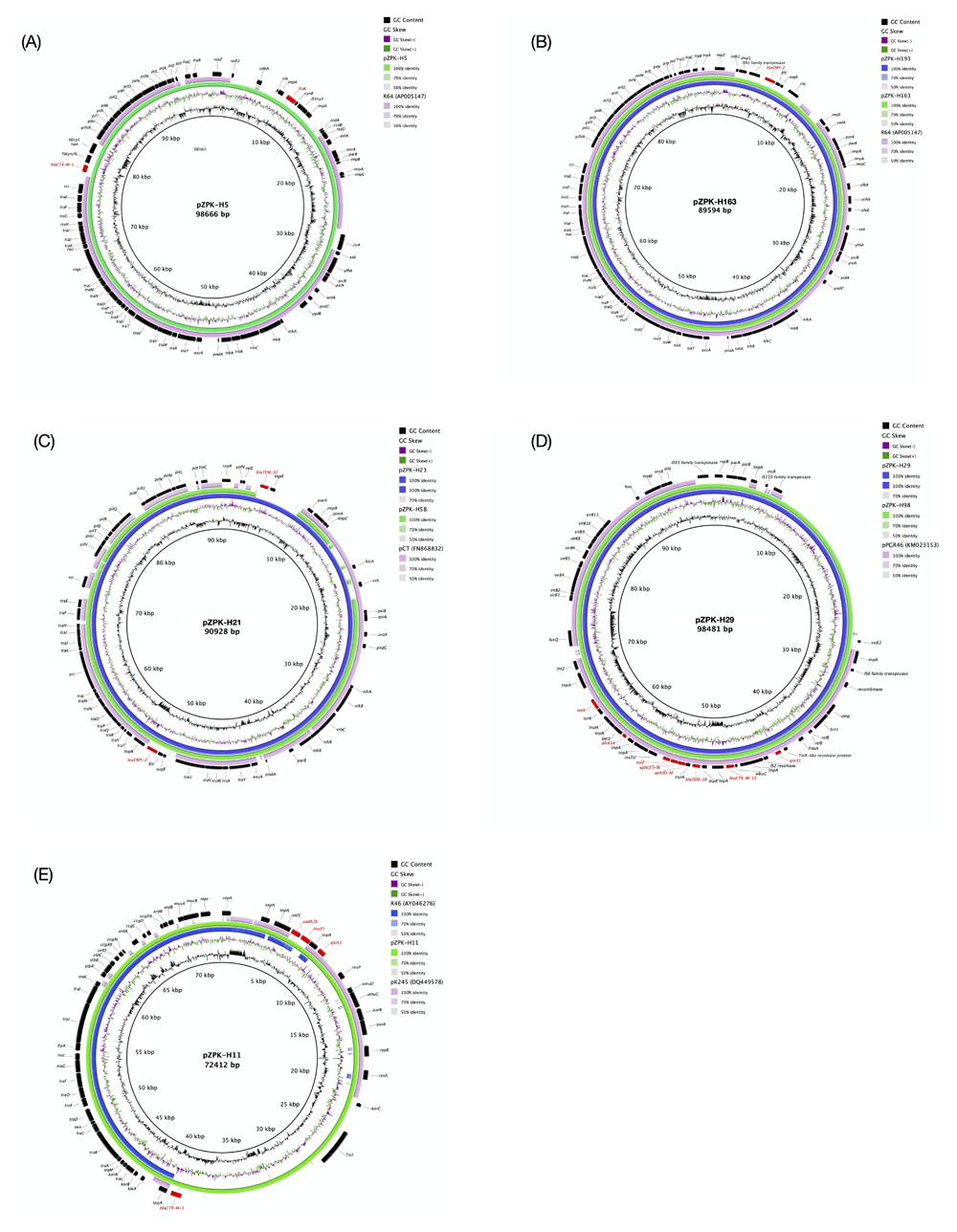
Figure 1. Circular comparison of the studied plasmids with previously published reference plasmids.
GC content and GC skew are depicted in the inner map with distance scale. Predicted coding sequences of the plasmid named within the circle are depicted in the outer ring with antimicrobial resistance genes highlighted in red. (A) pZPK-H5 compared with IncI1 type reference R64 (GenBank accession: AP005147), (B) pZPK-H163 and pZPK-H193 compared with IncI1 type reference R64 (GenBank accession: AP005147), (C) pZPK-H21 and pZPK-H58 compared with IncK type reference pCT (GenBank accession: FN868832), (D) pZPK-H29 and pZPK-98 compared with IncY type reference pPGR46 (GenBank accession: KM023153), (E) pZPK-H11 compared with IncN type R46 (GenBank accession: AY046276) and IncR type pK245 (GenBank accession: DQ449578).
The studied IncI1 plasmids demonstrated typical IncI plasmid backbones with maintenance and stability-related regions with parAB, impCAB, ssb, psiAB, ardA, and pndAC genes, and transfer-associated, shufflon, and pilus formation regions (Figure 1A–B). In pZPK-H5, flor and cia genes were located in the accessory module, whereas blaCTX-M-1 was integrated into the shufflon region. As previously described, blaCTX-M-1 was integrated into shufflon segment B by a copy of ISEcp1, although in pZPK-H5 this IS element contains an integration of ISKpn26 (Brouwer et al., 2015). In pZPK-H163 and pZPK-H193, blaCMY-2 was located in the accessory module after the replication region.
Comparison of the studied IncI1 plasmids with the most closely related previously published plasmids from GenBank using BLASTn demonstrated that pZPK-H163 and pZPK-H193 were similar with a blaCMY-136-harboring IncI1 plasmid obtained from a human urinary tract sample in France with 100% coverage and 99.95% identity (GenBank accession: MG844436.1), a blaCMY-2-harboring IncI1 ST23 plasmid from an Australian silver gull with 100% coverage and 99.96% identity (GenBank accession: MT468651.1), and a blaCMY-2-harboring IncI1 ST2 plasmid recovered from a human clinical sample in Australia with 100% coverage and 98.75% identity (GenBank accession: HG970648.1). pZPK-H5 was found to be most similar, with blaCTX-M-1-harboring IncI1 ST3 plasmids, such as a plasmid obtained from a poultry sample in France (GenBank accession: MG648932.1) with 96% coverage and 99.79% identity, and a plasmid recovered from E. coli from a healthy human in Switzerland (GenBank accession: KJ484629.1) with 96% coverage and 99.90% identity. A cgMLST-based minimum spanning tree built with 75 discriminatory loci (95% occurrence) is visualized in Figure 2.
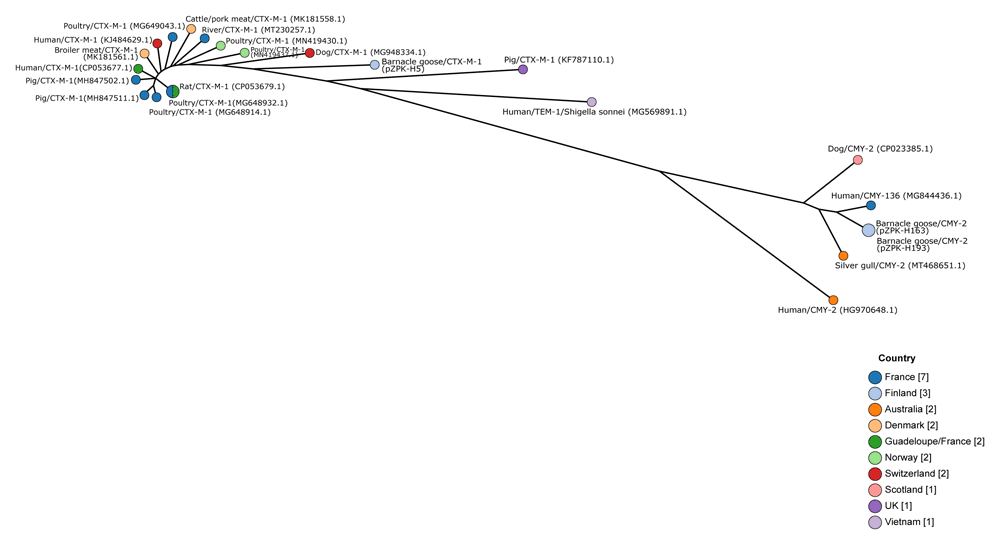
Figure 2. Minimum spanning tree based on core genome multilocus sequence typing of IncI1 type plasmids.
Plasmids pZPK-H5, pZPK-H163, and pZPK-H193 compared with 20 previously published IncI1 plasmids from GenBank. Nodes are colored by the country of origin and node text includes information on the source, bla gene, and bacterial species if other than Escherichia coli. GenBank accession numbers are provided in parentheses.
IncK type plasmids
Two isolates, H21 and H58, harbored IncK type replicons with blaCMY-2. Plasmid pZPK-H21 from isolate H21 was 90.9 kb in size with a G+C content of 52.51% and 108 CDSs. In addition to blaCMY-2, pZPK-H21 carried blaTEM-32. pZPK-H58 was 79.2 kb in size with a G+C content of 52.16% and 92 predicted CDSs. From both pZPK-H21 and pZPK-H58, only the virulence gene traT was identified. Pairwise alignment with BLASTn showed 88% coverage and 99.99% identity between pZPK-H21 and pZPK-H58.
Similar to IncI1 plasmids, pZPK-H21 and pZPK-H58 were found to have a typical I-complex plasmid backbone structure with maintenance and stability, conjugation, shufflon, and pilus formation regions (Figure 1C). blaTEM-32 in pZPK-H21 was located in the accessory module, whereas blaCMY-2 in both pZPK-H21 and pZPK-H58 was located near a transfer-associated region next to tnpA. BLASTn pairwise alignment with IncK type reference plasmid pCT (GenBank accession: FN868832) indicated that both pZPK-H21 and pZPK-H58 shared 92.42% identity with pCT, whereas pZPK-H21 shared 81% coverage and pZPK-H58 82% coverage.
A BLASTn search against the NCBI database indicated that the most similar previously published plasmids consisted of poultry-associated IncK2 or IncB/O/K/Z replicons harboring blaCMY-2 (Table 1). pZPK-H21 was also found to be similar with two IncK2 plasmids derived from E. coli from a human urinary tract infection in Switzerland, with 94% coverage and 99.81% identity with plasmid pDV45 (GenBank accession: KR905384.1) and 92% coverage and 99.88% identity with plasmid p5312.29 (GenBank accession: KR905385.1). A cgMLST-based minimum spanning tree was built with 64 discriminatory loci (95% occurrence) and is visualized in Figure 3.
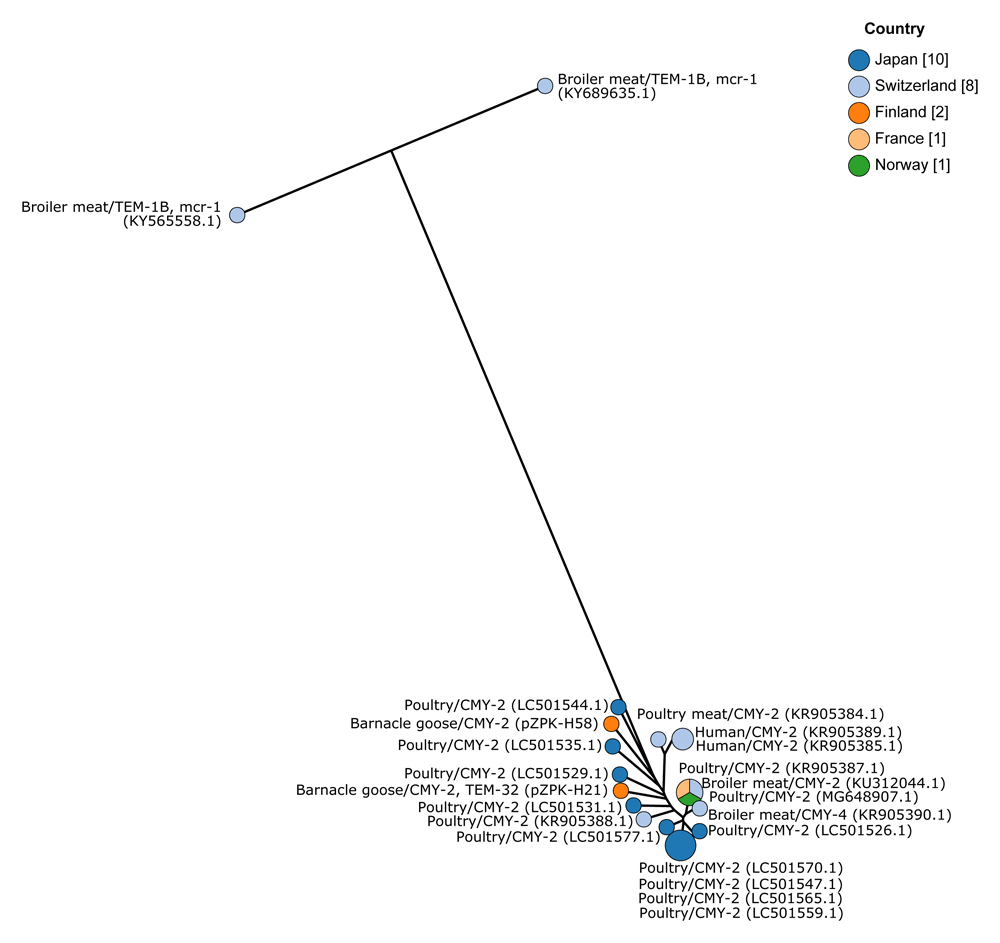
Figure 3. Minimum spanning tree based on core genome multilocus sequence typing of IncK type plasmids.
Plasmids pZPK-H21 and pZPK-H58 compared with 20 previously published IncK or IncB/O/K/Z plasmids from GenBank. Nodes are colored by the country of origin and node text includes information on the source, bla gene, and possible additional mcr-1. GenBank accession numbers are provided in parentheses.
IncY type plasmids
Two isolates, H29 and H98, harbored IncY type replicons. pZPK-H29 from isolate H29 and pZPK-H98 from isolate H98 were highly similar when compared with pairwise alignment with BLASTn, resulting in 100% coverage and 99.94% identity. Both plasmids harbored blaCTX-M-15 and blaTEM-1B. In addition to bla genes, both plasmids carried the resistance genes qnrS1, aph(6)-Id, aph(3")-Ib, sul2, dfrA14, and tet(A). Both plasmids were 98.5 kb in size, had a G+C content of 51.13% and 98 predicted CDSs in pZPK-H29, and had a G+C content of 51.12% and 99 predicted CDSs in pZPK-H98. These IncY plasmids were not found to harbor any virulence genes. BLASTn comparison with previously described IncY type plasmid pPGR46 (GenBank accession: KM023153) demonstrated 71% coverage with both pZPK-H29 and pZPK-H98, and 99.98% identity with pZPK-H29 and 99.94% identity with pZPK-H98 (Figure 1D). A BLASTn search against the NCBI database identified only six IncY type previously published plasmids with available metadata to be similar to pZPK-H29 and pZPK-H98 (Table 1). Three of the similar previously published plasmids were obtained from human clinical samples isolated from Salmonella Typhi (GenBank accessions: CP044008.1, LT906492.1, and CP046430.1) and two from E. coli also of human clinical sample origin (GenBank accessions: KM023153.1 and MF510423.1), all harboring blaCTX-M-15. One IncY plasmid originated from Shigella flexneri from a pig fecal sample harboring blaTEM-1B (GenBank accession: KY848295.1). Phylogenetic comparison with these six previously published IncY plasmids with a cgMLST-based minimum spanning tree included 20 discriminatory loci (95% occurrence) and did not indicate clusters (Figure 4).
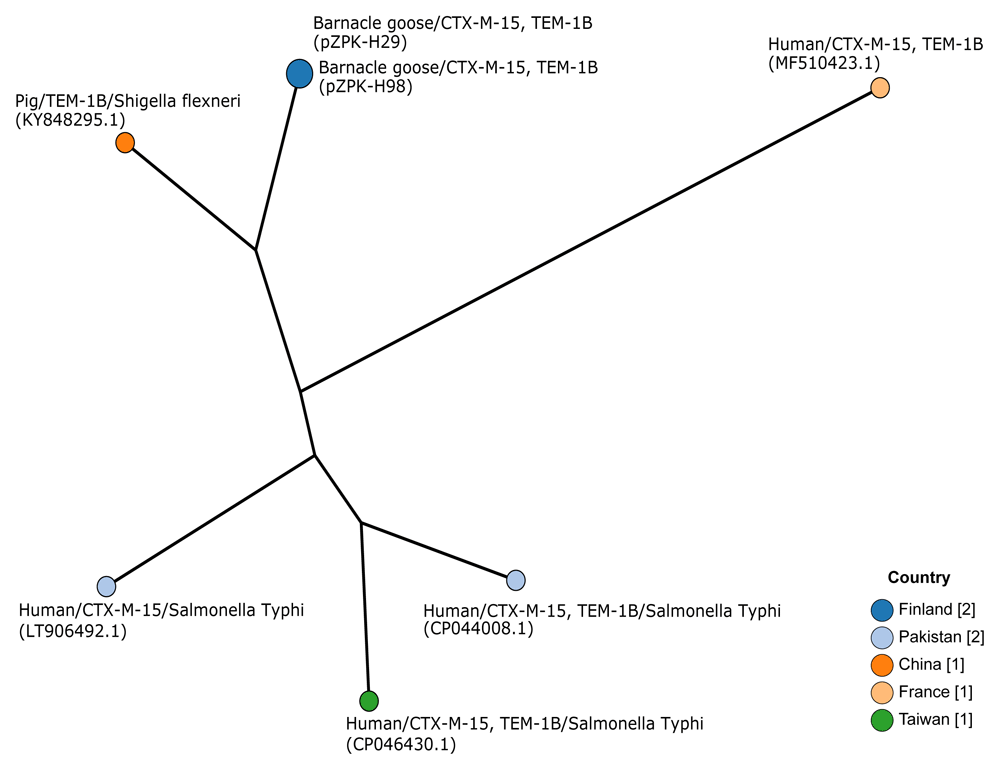
Figure 4. Minimum spanning tree based on core genome multilocus sequence typing of IncY type plasmids.
Plasmids pZPK-H29 and pZPK-H98 compared with six previously published IncY plasmids from GenBank. Nodes are colored by the country of origin and node text includes information on the source, bla gene, and bacterial species if other than Escherichia coli. GenBank accession numbers are provided in parentheses.
IncN+IncR multireplicon
From isolate H11, two plasmid replicons, IncN and IncR, were identified on the same contig. This multireplicon plasmid pZPK-H11 was 72.4 kb in size, with a G+C content of 50.91% and 78 predicted CDSs. Pairwise alignment with BLASTn indicated that the plasmid aligned with IncN reference plasmid R46 (GenBank accession: AY046276) with a coverage of 55% and 99.73% identity, whereas alignment with previously published IncR type plasmid pK245 (GenBank accession: DQ449578) resulted in a coverage of 31% and 98.53% identity (Figure 1E).
The multireplicon plasmid harbored blaCTX-M-1 and additional resistance genes qnrS1, aadA2b, and lnu(F). No virulence genes were detected on the multireplicon plasmid. The IncN replicon in the plasmid was identified as ST1 with pMLST analysis. Top two hits from a BLASTn search against the NCBI database were IncF+IncN type multireplicons both isolated from E. coli of human origin, one in Italy with blaNDM-5 (GenBank accession: MT199177.1; 60% coverage and 99.97% identity) and the other in Switzerland carrying blaCTX-M-1 (GenBank accession: KJ484634.1; 59% coverage and 99.97% identity) (Table 1). Other top hits with BLASTn included IncN plasmids isolated from various sources, such as uncultured bacteria from wastewater treatment plant effluent in Germany, carrying blaTEM-1 (GenBank accessions: JN102342.1, JN102344.1, and JN102343.1). A cgMLST-based minimum spanning tree was built with 34 discriminatory loci (95% occurrence) and is visualized in Figure 5.
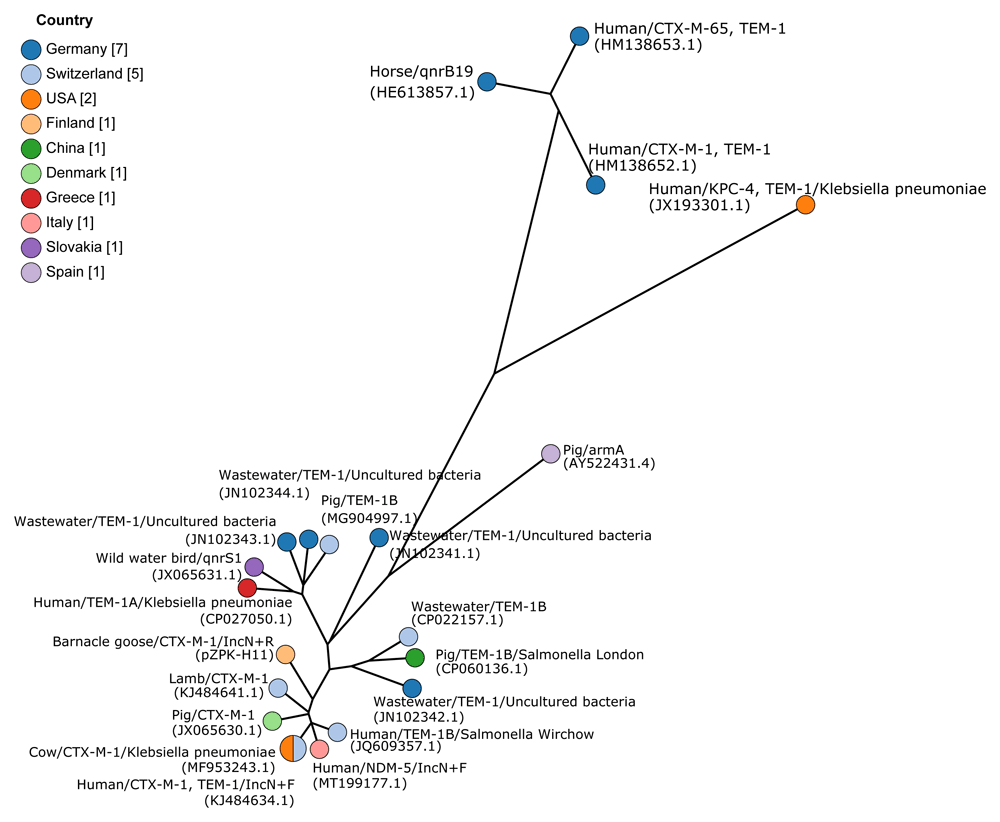
Figure 5. Minimum spanning tree based on core genome multilocus sequence typing of IncN+IncR multireplicon.
Plasmid pZPK-H11 compared with 20 previously published plasmids from GenBank. Nodes are colored by the country of origin and node text includes information on the source, bla gene, or other resistance gene if the bla gene was not present, bacterial species if other than Escherichia coli, and replicon type if other than IncN. GenBank accession numbers are provided in parentheses.
pPK-H11 shared similar backbone structures with IncN reference R46, including the replicon repA, stability-related stbABC, mucA, and mucB involved in mutagenesis enhancement, genes involved in plasmid DNA protection from type I restriction enzymes (ccgC, ccgD, ccgAI, and ccgAII), antirestriction-associated ardA, ardB, and ardR, and two transfer-associated tra loci (traI, traJ, traK; traL, traM, traA, traB, traC, traD, traE, traO, traF, traG) (Carattoli et al., 2010; Delver & Belogurov, 1997; Dolejska et al., 2013). Similar to the R46 structure, fipA and nuc were located between tra loci in pZPK-H11. IncR plasmid backbone structures identified in pZPK-H11 included replicon repB, parAB, and umuCD and multimer resolvase, but toxin–antitoxin vagDC operon involved in plasmid maintenance and retA reverse transcriptase were not identified (Guo et al., 2016). Transcriptional regulator korC was identified in a region not aligning with either IncN or IncR reference plasmids (Ludwiczak et al., 2013). blaCTX-M-1 was located next to mobile genetic element tnpA outside of a multidrug resistance cassette containing aadA2b, lnu(F), and qnrS1, which were located downstream of repA. The pZPK-H11 structure is visualized in Figure 6.
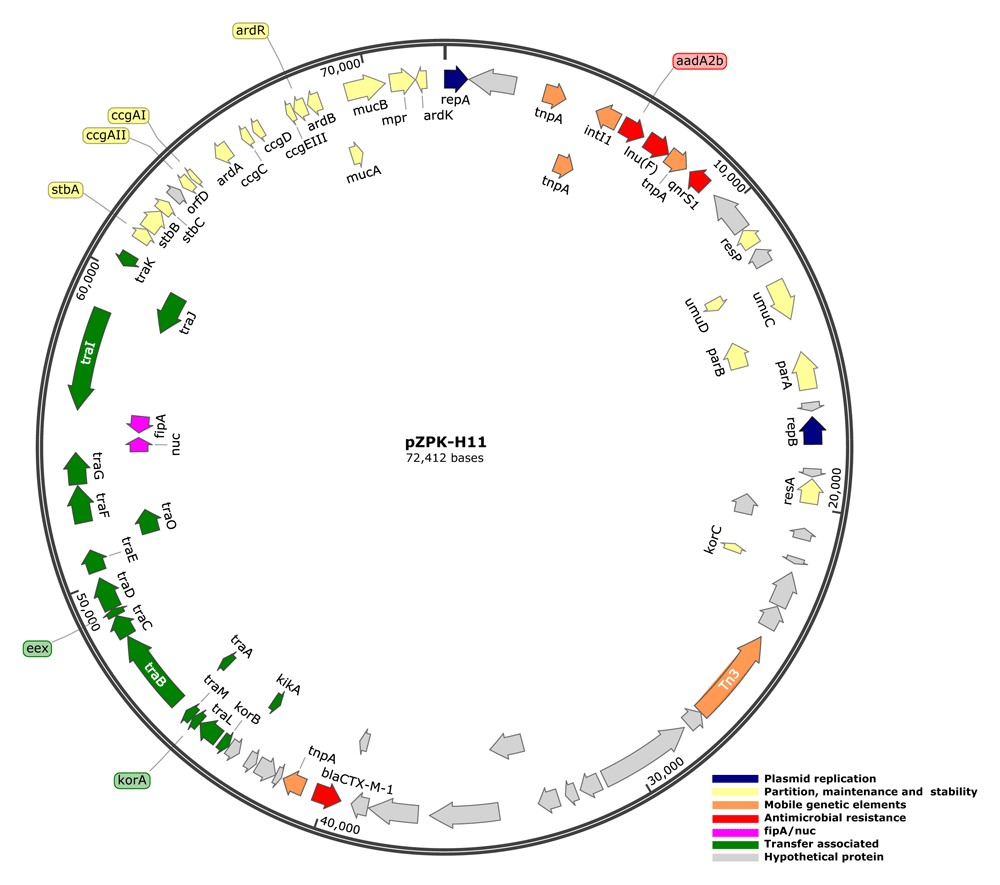
Figure 6. Genetic structure of multireplicon plasmid pZPK-H11.
Predicted coding sequences and their orientation are represented by arrows colored based on the function of the gene product. Size of the plasmid is depicted on the outer circle.