Introduction
Cities both generate and suffer from escalating contemporary crises, from climate change to rising inequalities. These crises tend to hit the most vulnerable the hardest (UN, 2020). Urban ecosystems use about 75% of world resources and they contribute up to 70% of the global budget of greenhouse gases. At the same time, urban areas bear the brunt of climate change effects, especially in terms of the frequency increase of extreme events such as heat waves, droughts, and intense rainfalls. Highly dense coastal areas such as the Mediterranean basin have been particularly under the impact of these trends (Lange, 2022). In this context, the water system of the city can be gravely affected (Wang et al., 2022). In the Global North, the water sector has been generally efficient in devising innovative responses to the challenge of urban sustainability and climate change, stemming predominantly from the fields of environmental engineering and planning: from the digitalisation and the use of high-tech solutions for the control and management of infrastructures (Kijak, 2021) to the progressive ‘naturalization’ of conventional technologies (Castellar et al., 2021). Examples include the gradual incorporation of regenerated water for urban irrigation (Santos et al., 2023) and other municipal uses, sewer mining to extract and recover resources and data, separation and resource recovery at point source, rainwater collection and treatment, and implementation of green infrastructures and nature-based solutions (NBS) with low energy requirement to manage rainwater and overflows (Oral et al., 2020).
Thus far, water professionals focused on deploying technical approaches to water management –evidence-based methods and models to account for physical, environmental, and economic factors in their management tasks, developing solutions to well-defined problems (Garrido-Baserba et al., 2020). However, they have not been as successful at understanding the needs and expectations of local communities, nor in integrating critical variables such as subjective, moral and emotional drivers of decision-making (González-Hidalgo & Zografos, 2020; Pahl Wostl, 2015). In line with Caprotti’s reflection on the need to overcome overly technical approaches to urban planning (2018), we assert that the current management of the urban water cycle (UWC) remains tributary to:
(a) Highly technical notions of the city and its urban water cycle. In this perspective, climate change, resource pressures, and socioeconomic and environmental inequalities are considered as results of inefficiencies in the city-as-machine. From this perspective, then, the water cycle is a technical issue to be solved rather than an opportunity to delve into the ‘black box’ of urban and societal problems (March & Ribera-Furnaz, 2016).
(b) An urban economic lens: current research into UWC contains, explicitly or implicitly, the premise that water in the cities should be managed on ‘business as usual’ paradigm that combines technological progress with endless economic growth (Pansera et al., 2021). In this context, the conflict for water resources between different uses – domestic, industrial, agricultural – is also a conflict for water as revenue streams between different major players in the urban water cycle and beyond.
(c) I The urban efficiency imperative: UWC is often envisaged as a frictionless place where water flows need to be simply enabled and accelerated to nurture the urban machine. The inherent tensions tend to be minimalized and those not willing or able to participate in this dynamic (the poor, the elderly, those who live outside of the networks of digital urbanism) are sidelined and rendered as targets of control (Rodríguez-Labajos & Martínez-Alier, 2015).
In this context, nature-based solutions (NBS) and the increasing digitalization of water management are two good examples of concepts which have captured the imagination of water researchers and planners in recent years. They are trends located on opposite sides on the spectrum of water technologies (‘high touch’ vs. ‘high tech’). Yet, they share important features: they both promise to bring about a ‘revolution’ in the water sector and therefore they are positively assessed by the scientific community. At the same time, considerably less attention has been paid to the limitations, concerns (and resistance) they may generate.
To address this gap, the hydrosocial cycle piecepiece has emerged as a promising framework, acknowledging the need to see water—and the systems within which it flows—as both social and natural (Wesselink et al., 2017). However, despite the increasing scientific production focused on this concept, its use remains constricted to a social science scholarly audience. Moreover, while this framework has been extensively used as a theoretical tool to analyze the social impacts – and often injustice - of major water infrastructures, the question of water technologies has received less consideration. In this position paper we explore how the urban hydrosocial cycle, an essentially critical theoretical framework, can represent a useful conceptual guide for a more interdisciplinary research agenda and planning, and how can serve a larger water community of practice. In this exercise, we take NBS and digitalization as illustrations.
The fundaments of the hydrosocial cycle
Interdisciplinary approaches to water research have been on the rise over the past decades (Rusca & Di Baldassarre, 2019). Much of the motivation to combine disciplines has been driven by the need to understand and address complex, interdependent water related societal challenges (Di Baldassarre et al., 2019). Various concepts have been put forward to consider the connections between water and the social sphere. The concept of “waterscape” was introduced in political ecology in the late 1990s by Erik Swyngedouw (1990). In political ecology, “waterscape” addresses a specific spatial hybrid (natural and social) characteristics. More recently, the concept of “hydrosocial cycle” (Boelens, 2014; Linton & Budds, 2014) has gained momentum. In the hydrosocial cycle, human agency shapes the circulation of water for different uses, modifying the chemical, biological, and morphological properties of water for the benefit of some sectors of the population, and to the detriment of others (Rodríguez-Labajos & Martínez-Alier, 2015). Overall, the concept has been adopted in the so-called critical water studies to account for power relations, institutions, infrastructures and technologies, material flows and representations that shape hydrosocial relations across time and space.
Hydrosocial research is closely related to the tradition of Integrated Water Resources Management (IWRM), a concept introduced in the 1990s (Global Water Partnership, 2018) aiming to accommodate different water users and include engineering, economic, social, ecological, and legal aspects. The hydrosocial approach is a step forward on the same path, as it widens the spectrum of complexity to be contemplated in modelling and planning in this field. It does so by conceptualizing better the trade-offs between hydrological interventions and morally informed theoretical stances dealing with water justice. It has focused on developing case studies and undertaking historical analysis to critique the often profoundly inequitable nature of waterscapes. In this sense, a hydrosocial theoretical frame seeks guide reflection on the power dynamics inherent to water management, or the conflicts that may arise over water distribution and governance across different societal groups (Swyngedouw, 2009; Ženko & Menga, 2019).
In our view, the most important contribution of the concept in mainstream water studies is a critical perspective on both environmental technologies and interventions. Thus, instead of striving to diminish uncertainty by artificial simplifications, consciously or unconsciously excluding the relational and conflictive nature of water, a hydrosocial perspective puts complexity at the core of decision-making, acknowledging bias, power relations and subjectivity as its indelible traits. From this standing point, by merging different methodologies and disciplines, hydrosocial research trades the pursuit of efficiency for the aspiration of effectiveness, aiming to politicize water policy responses. In the following, we employ the framework to analyse our two areas of interest: NBS and digitalization (Figure 1).
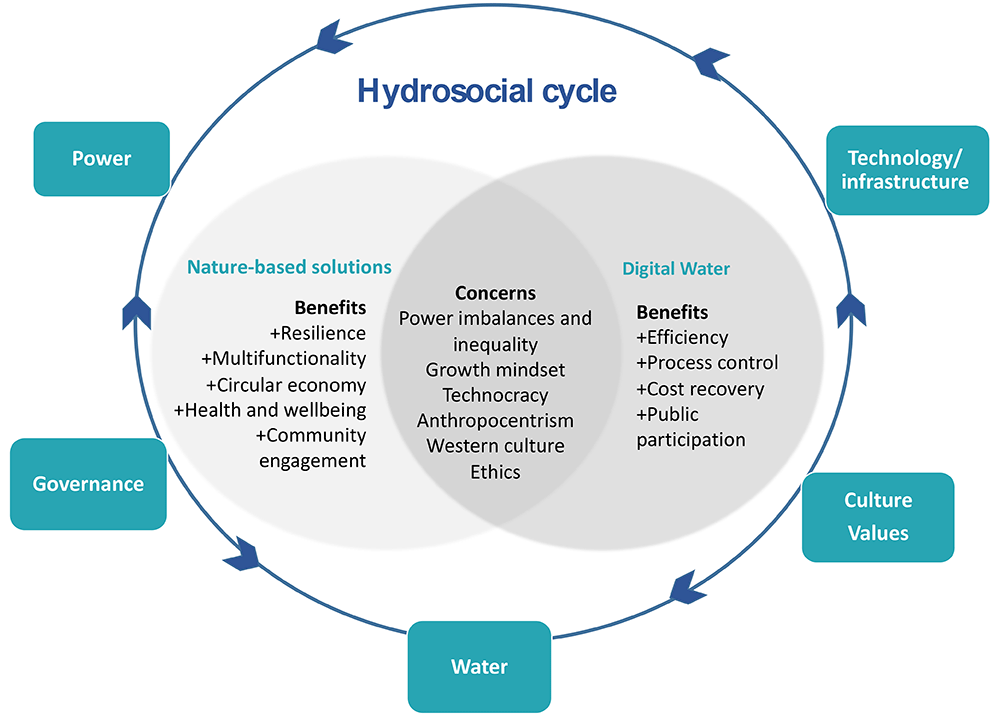
Figure 1. A hydrosocial perspective for NBS and digitalization.
Source: authors own ellaboration.
Nature-based solutions: a hydrosocial approach
NBS is a concept that has gained extraordinary popularity amongst environmental scholars and practitioners, incentivized by considerable European funding. In 2021, the European Commission calculated that its Horizon 2020 research and innovation program had invested 292 million euros in NBS projects (Kotsila et al., 2020), while the UN called for doubling the investment in NBS by 2025. Beyond the EU confines, a key factor in the popularisation of these technologies has been the work of the International Union for the Conservation of Nature (IUCN) which laid the ground for a standardisation the idea of NBS (IUCN, 2020). In the water sector, the concept of NBS is associated to decentralized water infrastructures (Castellar et al., 2022; Oral et al., 2020), where, for instance, source separation systems can enhance the efficiency of recovery and reuse of useful substances from waste streams (Langergraber et al., 2020). However, the fundamentals of the NBS go much further. NBS are able to deliver sustainable water management and restoration of natural (or modified) ecosystems. A particularity of the concept is that NBS are expected to address societal problems effectively and adaptively, simultaneously providing human wellbeing and biodiversity benefits (IUCN, 2020).
Thus, unlike other water technologies, NBS have incorporated the preoccupation for social impacts: their main advantage is precisely their multifunctionality, meaning their ability to simultaneously address multiple societal challenges. Yet, if these benefits are analyzed exclusively within the quantitative paradigm (Croeser et al., 2021; Ommer et al., 2022), many nuances are lost. While biophysical benefits are reasonably easily quantified, such as energy saved, thermal regulation or number of avoided overflows, social benefits are normally oversimplified to fit them in a quantitative assessment. Some examples are summarizing social equity under a proxy indicator such as the Area Deprivation Index (Castro, 2022) or the universally accepted thesis that NBS create jobs (WWF, 2020), without never, as far as we know, discussing whether those are increasing inequalities (jobs for who?) or precariousness (what type of jobs?).
The term multifunctionality resonates with the assumption in the NBS epistemological community that they are win-win, do-no-harm solutions. This may, in practice, prevent a critical scrutiny of their in-built hierarchy of objectives (Sekulova et al., 2021). A good example in this sense is that neutral studies on NBS present the rise of property prices generated by blue-green infrastructures as a positive situation (see for instance Locatelli et al., 2020). These technologies are only recently assessed from an environmental justice perspective (for instance in terms of distribution of environmental ‘goods and bads’ they produce), given that most research in NBS is focused on technical and environmental aspects (Almenar et al., 2021). The critical literature to NBS is consolidating, especially informed by political ecology (see Kotsila et al., 2020), pointing out the risk that NBS become a form of greenwashing in urban planning, prioritizing investment attraction, urban expansion and economic growth at the expense of justice-oriented goals and more comprehensive sustainability objectives (Sekulova et al., 2021). However, this critical literature has focused more on green interventions, paying less attention the water management NBS: even if more recent studies refer to both benefits and disbenefits of these NBS (see Ommer et al., 2022) they tend to be neutrally framed and lacking a thorough theoretical engagement.
Other critical perspectives to NBS would point to its anthropocentrism. Inheriting from the ecosystem services approach, the assessment of NBS is mainly focused on outcomes and benefits for humans (European Commission, 2021). The approach has not yet been sensitive to more-than-human approaches (Edwards et al., 2023), where the non-human species and ecosystems need to be accounted for as subjects not only as objects of transformation, ‘no matter how minimal or invisible they may be perceived to be’ (Maller, 2021, pg.2). Indeed, NBS often builds on economistic and utilitarian readings of nature’s traits and services, obscuring the value of non-replicable human–nature interactions: trees and greenery are treated solely as a ‘physical’ element that can be moved around (Edwards et al., 2023) and that offer ‘advantages’ such as carbon sequestration and flood regulation. In the same vein, it is worth noting the necessary connection between NBS and the literature on post-colonial studies, indigenous knowledge, and water (see Mathur & Mulwafu, 2018). This strand of thinking highlights the need for more pluralistic ways of approaching ecosystems, reflecting the symbolic meanings given to nature and water in different cultures (Youdelis et al., 2021).
The interactions of the NBS with the complexity of the surrounding environment has consequences for the technical aspects too. Planners at all levels (particularly at local level) need standards to design and assess NBS and tools to conduct large-scale strategic implementations, integrating NBS in different geographical and socio-economic conditions (Raymond et al., 2017). There is also due to a lack of sufficient knowledge on how to determine the right mix of NBS and still predominant ‘grey’-infrastructure options (Castellar et al., 2022). For the same reason, other concerns related to the effect on health (allergies, insect bites, accidental use of polluted water), risk of accidents (sudden overflows, invasive plant species, fallen trees, polluted water accumulated, poor performance), or public perception (‘dirty’ aspect, lack of skills and motivation for co-responsibility) need more attention. NBS interventions also need to consider resistance or conflicts between different uses of public policy priorities. Thus, a hydrosocial perspective on NBS interventions would provide a nuanced framework to explore the in-built, value-laden and political nature of NBS impact, beneficial for some but detrimental to others, humans and non-humans. A more consistent and systematic approach to these impacts could complexify decision-making and inform more comprehensive sets of policies, combining environmental and social planning from the beginning. This would entail incorporating new valuation measures, such as for instance biocultural diversity indicators (Gonçalves et al., 2021) in planning water projects, more-than-human perspectives and methods (Bourguignon et al., 2023) and a wider mix of disciplines in the research process (Wesselink et al., 2017).
Hydrosocial digitalization
On the high-tech end of the spectrum, digitalization or ‘digital water’ (Garrido-Baserba et al., 2020) is an umbrella for a multitude of technologies applied at all the levels of the urban water cycle. Artificial Intelligence (AI) is also transforming the urban water cycle management through the development and application of new elements of automation and monitoring (Garrido-Baserba et al., 2020). Moreover, water has the potential to become one of society’s key sources of information: cities will be able to ‘mine’ their sewer systems for information in order to understand lifestyle habits, and the health status of the population by measuring human biomarkers (Picó & Barceló, 2021). By collecting the data available in the wastewater, public health decision-making can be improved through the rapid access to potential sources of epidemiological threats through ‘sewer sociology1’. In terms of governance and politics, digital water solutions have the potential to democratize the access to knowledge and open spheres of decision-making currently restricted to industries and experts. The access to open-source data and cheaper technology holds the promise of a transition to a more horizontal water policy, based on increased co-creation and accountability of water institutions (Hoolohan et al., 2021). For instance, digital tools and methods such as citizen science and serious games (Pueyo-Ros et al., 2023) envisage more participatory planning and ways to assess how blue-green interventions can be incorporated for regreening ‘lost spaces’, i.e. derelict or in disuse (Istrate et al., 2023).
However, a hydrosocial perspective on digital water would reveal that the gradual penetration of Big Data and AI-related technologies in the water sector can have negative effects, such as increased surveillance, lack of accountability and transparency, workforce exclusion, discrimination, and injustice (Popartan et al., 2022). For example, water saving technologies and methods (such as smart meters) may end up affecting already low water uses of the more vulnerable (Vidal et al., 2022). Relying on positivist perspectives, the way efficiencies are calculated in these cases portray water use as a function of consumers' rational decisions and the diffusion of domestic technologies. This oversimplifies the socio-political, material and historical contingencies of water use and disguises diversity (Hoolohan et al., 2021). A typical example in this sense is that the gendered dimensions of domestic labor and the specific ways women use water in different places may remain unrepresented. Moreover, Big Data techniques are still unable to capture complex interactions with the water systems, or reflect vulnerabilities related to household structure, life stage, (dis)ability, or employment. These contingencies are well researched in the qualitative social sciences; however, quantitative analysis using Big Data is not yet common (Istrate et al., 2023).
In the same vein, digital twins2 for the UWC have gained popularity in recent years as a means of simulating and optimizing the management of water systems in cities (Conejos Fuertes, 2017; Ferré-Bigorra et al., 2022). However, while digital twins can be useful for modeling and analyzing complex physical systems, they may decomplexify social processes because they often focus primarily on the technical aspects of a system such as flow rates, water quality or infrastructure maintenance (Wan et al., 2019). Although these aspects are certainly important, they do not fully capture the social and cultural dynamics that can influence water management outcomes (Pesantez et al., 2022). Factors such as social norms, political power dynamics, and stakeholder participation can all have a significant impact on water management decisions and outcomes, yet may not be easily captured in a digital twin. For instance, a digital twin simulating the effects of water recovery cost policies could overlook that the subsequent reductions in water consumption may be related to hydric poverty rather to an awareness increase, as it is usually argued in favor of such policies (March & Sauri, 2010).
Overall, digital water does not merely depend on the development of new technologies – artefacts or processes – but also on governance processes that recognize the socio-political nature of technological innovations. Realizing this transition will require a reconfiguration of governance and knowledge production processes to enable democratic and participatory means of designing and managing digital water technologies. It is important to open “the black box” of both water digital technology design, construction and operation processes and their resulting effects on the transformation of cities, to better understand the complex relations between water, power and technology. This means paying attention to trade-offs between efficiency and personal autonomy in the case of digital solutions (Popartan et al., 2022) or between environmental and social pillars of sustainability. While not offering a universal panacea, a better integration of technology with participation and decision-making, could address these shortcomings. The same goes with critically examining the assumptions and narratives built into AI and digital simulations and applications in urban environmental governance across different sectors (water, energy, food).
Conclusions
In theory, the urban cycle has been conceptualized as complex, multifaceted, and global, yet in practice it has mostly been approached from an engineering, cost benefit analysis, which omits crucial societal dimensions of human-nature relations. While there is a growing availability of tools, indicators, good practice guides (especially technical and economic), as well as initiatives at the local and global level (Water Wise cities, Water Futures) to promote the implementation of sustainable solutions for water management in cities, we are still far from being able to account for different scenarios based on dynamic and real data, identifying positive and negative impacts and trade-offs at a social, technical, economic, and environmental level. The hydrosocial research has made important progresses towards this integration but this research remains predominantly qualitative and speaks mainly to a social science scholarship.
A hydrosocial perspective invites a research agenda which strives to understand who ends up being the ‘winners and losers’ of water technologies and what processes affect the inequitable distribution of adaptation costs and benefits of the water systems. Difficulties remain in defining vulnerable (or in risk of) groups; accounting for differences on perceptions of risk; establishing reliable criteria for calculating economic risk and distribution through consolidated indicators; reflecting the different aspects of justice (distributional, procedural, recognitional); accounting for the unwanted effects of resilience interventions and the dangers of maladaptation. It is thus key to work towards new conceptual frameworks, analytical tools, and make available new data streams for research and practice including, among others, a number of different themes, currently left out of mainstream management approaches. Here we include: gender and feminist perspectives, political ecology, sustainable supply chain management, labor and geopolitical North–South relations and indigenous knowledge.
Incorporating the hydrosocial approach to mainstream water management, both for digital and nature-based technologies and interventions also requires adequate tools and methods. This means for instance, the design of decision-support systems and multicriteria analysis that are theory-driven, integrating quantitative and qualitative variables for the management of different aspects of the water cycle. This can be combined with approaches coming from political ecology or geography, such as conflict mapping, critical Geographic Information System (GIS), water social metabolism, or Q methodology
The water sector needs to embrace what Rayner (2012) defined as ‘uncomfortable knowledge’ – i.e. knowledge about the world which cannot be easily captured in quantitative methods or models, associated with irreducible uncertainty and epistemic pluralism. Here is where the role of educational system in Europe and beyond, especially at graduate level, is key: the new generation of water professionals, from environmental engineers to hydrologists and planners, should be equipped with the necessary skills to navigate across disciplines and worldviews and, most importantly, not shy away from systemic, critical and political thinking.
Ethics and consent
Ethical approval and consent were not required.








