Introduction
The first year after the birth of a child represents a challenging phase of life for families, especially in terms of establishing and maintaining mental well being and resilience, which are associated with health behaviour and thus weight management. Psychosocial (e.g. role conflicts), behavioural (e.g. sleep behaviour), and physical (e.g. previous pregnancy) changes can have an unfavourable effect on health related behaviour (Saxbe et al., 2018b). Hence, the postpartum period represents a critical time for the development of long-term weight gain, and thus a risk for (long-term) overweight and obesity as mothers have a 17% greater absolute body mass index (BMI) gain between 15 and 35 years than non-mothers (Corder et al., 2020; Saxbe et al., 2018a). While many women tend to lose the extra weight after giving birth, about 20% of them remain more than 5 kg heavier than their pre-pregnancy weight (Calfas & Marcus, 2007). A gestational weight gain higher than recommended resulted in an increased risk of postpartum weight retention (> 2 kg after 18 months), especially for nulliparous women with overweight/obesity (Haugen et al., 2014). Increasing physical activity (PA) and healthy eating by improving coping strategies was shown to be an effective component of postpartum weight management interventions (Østbye et al., 2012). Treatment guidelines for preventive interventions of overweight and obesity also suggest the integration of dietary behaviour, PA, and (cognitive) behavioural strategies (Deutsche Adipositas Gesellschaft e.V., German Association for the Study of Obesity [DAG], 2014; National Institute for Health and Care Excellence [NICE], 2014). Fathers also have an increased risk for unhealthy weight gain in the pre- and postpartum period with a mean increase of 5 kg (Haugen et al., 2014; Versele et al., 2023a; Versele et al., 2023b). Hormonal (e.g. testosterone, cortisol), behavioural (e.g. diet), and psychological (e.g. parental stress) processes are considered to be underlying mechanism for father’s weight gain in this time period (Saxbe et al., 2018a). On the other hand, social support, e.g. by the father, is associated with favourable health behaviour and less depressive symptoms in postpartum women (Faleschini et al., 2019; Zhao & Zhang, 2020). Hence, the involvement of fathers himself for strengthening his resilience and mental well-being as a source of social support for the mother could be an effectiveness booster in postpartum interventions.
Several meta-analyses showed that not only poor health of the fathers, but also partnership dissatisfaction, perceived stress, and low socio economic status (SES) are associated with postpartum depression of both parents and thus, the mental well-being of the whole family (Ansari et al., 2021; Vehmeijer et al., 2020; Wang et al., 2021). Factors such as a history of depression, anxiety, single parenthood, unplanned pregnancy, stressful life events, and poor social support contribute to this heightened risk (Cena et al., 2021; Silverman et al., 2017). Above that, the first year of a child and its socialisation within the family is substantial for the offspring’s risk of developing physical and mental diseases, which is associated with their parent’s care, quality of interaction with their child and the parents´ mental health (Goodman & Gotlib, 1999; Hosman et al., 2009; Lampert, 2010; Pinquart & Silbereisen, 2002).
In a comprehensive study involving 8,063 parents with varying SES and risk factors, Lorenz and colleagues (2020) identified that parents with low SES (18.8%), high parental stress (17.3%), and multiple risk for child neglect and abuse (5.2%) displayed elevated scores of depression, anxiety, and experienced increased family conflicts. A meta-analysis observed a prevalence of 10.4% paternal depression (28,004 participants), with a higher rate during the 3- to 6 months postpartum period (25.6%), and a positive moderate correlation between paternal and maternal depression (Paulson & Bazemore, 2010). Hence, supporting parents to adapt strategies that promote parental mental well-being by reducing parental stress and postpartum depressive symptoms, e.g. by optimising PA and healthy eating, are important for family health (Kołomańska-Bogucka & Mazur-Bialy, 2019).
For enhancing the weight management in the postpartum period, not only the prevention of postpartum depression or parental stress is beneficial, but also strengthening resilience factors like self-efficacy and emotion regulation (Hinton & Olson, 2001; Versele et al., 2021; Versele et al., 2022). Emotion regulation is the ability to influence the intensity, the duration, the time, and the expression of emotions, which can strengthen, weaken or maintain positive and negative emotions (Gross, 1998). Functional emotion regulation promotes the interaction of mother and child, and enables the mother to respond sensitively to babies’ crying and needs (Rutherford et al., 2015; Schultheis et al., 2019; Shaffer & Obradović, 2017). Above that, sleep quality such as sleep interruptions, which are common in the postpartum phase, are associated with maladaptive changes in the regulation (process) of emotions (Palmer & Alfano, 2017). Difficulties in emotion regulation are associated with reduced cortisol reactivity and may increase the risk for severe difficulties in the long term (England-Mason et al., 2017). Furthermore, cognitive emotion regulation strategies and perceived social support six weeks after the birth were able to predict depressive symptoms six months postpartum (Haga et al., 2012).
Another resilience factor, that is associated with family health, social support, and depressive symptoms in the postpartum phase, is self-efficacy, reflecting an optimistic self-belief (Leahy-Warren et al., 2012; Schwarzer & Jerusalem, 1995). An increase in self-efficacy can not just reduce postpartum depression, but also improve maternal role competencies (Dlamini et al., 2023). Above that, studies have shown, that self-efficacy should be targeted in interventions for women in the postpartum phase to increase PA, which is associated with weight retention (Hinton & Olson, 2001).
Due to the multifactorial aetiology of overweight and obesity and the individual circumstances in the postpartum period, the individualisation of interventions targeting weight management, mental well being, and resilience factors is essential. To address the numerous personal challenges of internal and external conditions due to parenthood, customisable, highly flexible self guided mobile health (mHealth) interventions are particularly promising for postpartum women (Sherifali et al., 2017; Teufel, 2015). Furthermore, smartphone applications offer a convenient, cost-effective, and particularly useful approach during time constrained periods such as the postpartum phase (Ebert et al., 2018; Feierabend et al., 2021). Mhealth interventions reach parents, who are well versed in digital tools, and thus a high acceptance rate for such interventions can be shown (Ebert et al., 2018; Feierabend et al., 2021). Many mHealth interventions for expectant parents primarily focus on maternal needs and lack the integration of fathers. However, paternal involvement can significantly increase the effectiveness of digital interventions by providing additional social and practical support for mothers (Pebryatie et al., 2022; Versele et al., 2022). Also, parents within the postpartum period experience individual barriers to enhance a healthy lifestyle, which is why a gender sensitive, self guided app could be favourable (Carter-Edwards et al., 2009). Although a plethora of free-market health apps is available, the empirical evidence for their effectiveness is scarce. Further, limitations of current apps include unclear long-term effects on mental well-being, methodological and data security issues, and shortcomings in transparency for the user (Larsen et al., 2019).
In summary, personalised mHealth interventions have a great potential for the prevention of weight problems, the enhancement of mental well being and resilience by addressing the needs of parents in the postpartum period. However, to unfold this potential of scalable and low-threshold mHealth interventions, evidence on its efficacy and acceptance by the target group is still needed.
Therefore, the aim of the proposed project is the development and evaluation of a mHealth intervention, the self-guided I-PREGNO app, which was developed from June 2021 to July 2022. The app consists of 12 modules, which besides PA and nutrition focus on cognitive-behavioural modules: emotion regulation, self-efficacy, stress management, self-esteem, social competences, self-monitoring, and mindfulness. All modules take into consideration behaviour change techniques (BCTs) based on the taxonomy of Michie and colleagues (2013), which are associated with intervention effectiveness in regard to parents’ involvement in weight related nutrition of their children, changes of weight, and PA in postpartum women (Golley et al., 2011; Lim et al., 2020). The focus of the app development was on individualising the user's options in order to reflect individual needs and lifestyles (user centred approach).
In the randomised controlled trial (RCT) described here, we examine the effects of the I-PREGNO app intervention in a field study in mothers and fathers with children aged 0 to 12 months. Another trial will examine the app in a blended counselling condition (Vogel et al., 2023). We expect a positive intervention effect on i) the prevention of unhealthy weight management (indicated by the weight difference after the intervention (follow-up) and pre pregnancy), ii) promoting mental well-being by reducing depressive symptoms and parental stress, iii) enhancing resilience by strengthening self efficacy and emotion regulation. Additionally, psychological constructs and variables that are associated with the three main outcomes, such as dietary behaviour, PA, psychosocial burdens, or bonding, as well as app usability will be assessed.
Protocol
Sample
The sample of this field study will consist of mothers and fathers, whereby a registration of the father will require a prior registration of the mother. Parents are eligible if they a) have a child aged 0 12 months, b) possess a smartphone (android or iOS), c) are at least 16 years old, and d) speak German. The online registration form will be available online from February 2023 until July 2023 and participants will be excluded from the trial, when a) they do not fulfil the inclusion criteria, b) have severe mental health problems that hamper the ability to participate, or c) have a chronic disease that can influence behaviour related to energy balance (e.g. diabetes). The app is available in Austria and Germany.
The target group will be recruited by press releases, social media adverts, and the distributions of leaflets and posters at paediatricians, kindergartens, and child guidance counselling. All promoting material consists of a short description of the project and a link to the study-website, where the online registration form is available. After the registration, the mother will be randomised to one of the two study conditions (IG = intervention group; CG = control group). See Figure 1 for an overview of the study process. The randomisation will be performed using a computerised random number generator, which is provided by an external, independent expert from the Department of Computing in the Cultural Sciences at the University of Bamberg. Subsequently, the mothers will be contacted by the study coordination team of the University of Bamberg (see Figure 1). In a 15 20 minutes phone call, the mothers will be informed about the study condition and procedure. In case the father is interested in participating, the mother will receive an email with his invitation to t0, which can be linked to the corresponding mother’s assessment. The completion of the t0 questionnaire is the precondition for receiving the individual access code and password for the I-PREGNO mHealth app (IG only). After 12 weeks, all participants will be asked to fill out the post assessment (t1) and the study coordination center will deactivate the app for the IG. The follow up online questionnaire (t2) will be sent out via email six months after the baseline assessment. The completion of the t2 questionnaire will be the requirement for reactivation of the app for the IG (all content from the intervention phase will be available again) and initial access to the app for the CG. Each family will be incentivised after t1 (€20) and after t2 (€30). To avoid dropouts, the participants will be reminded via email and telephone to fill out the questionnaires.
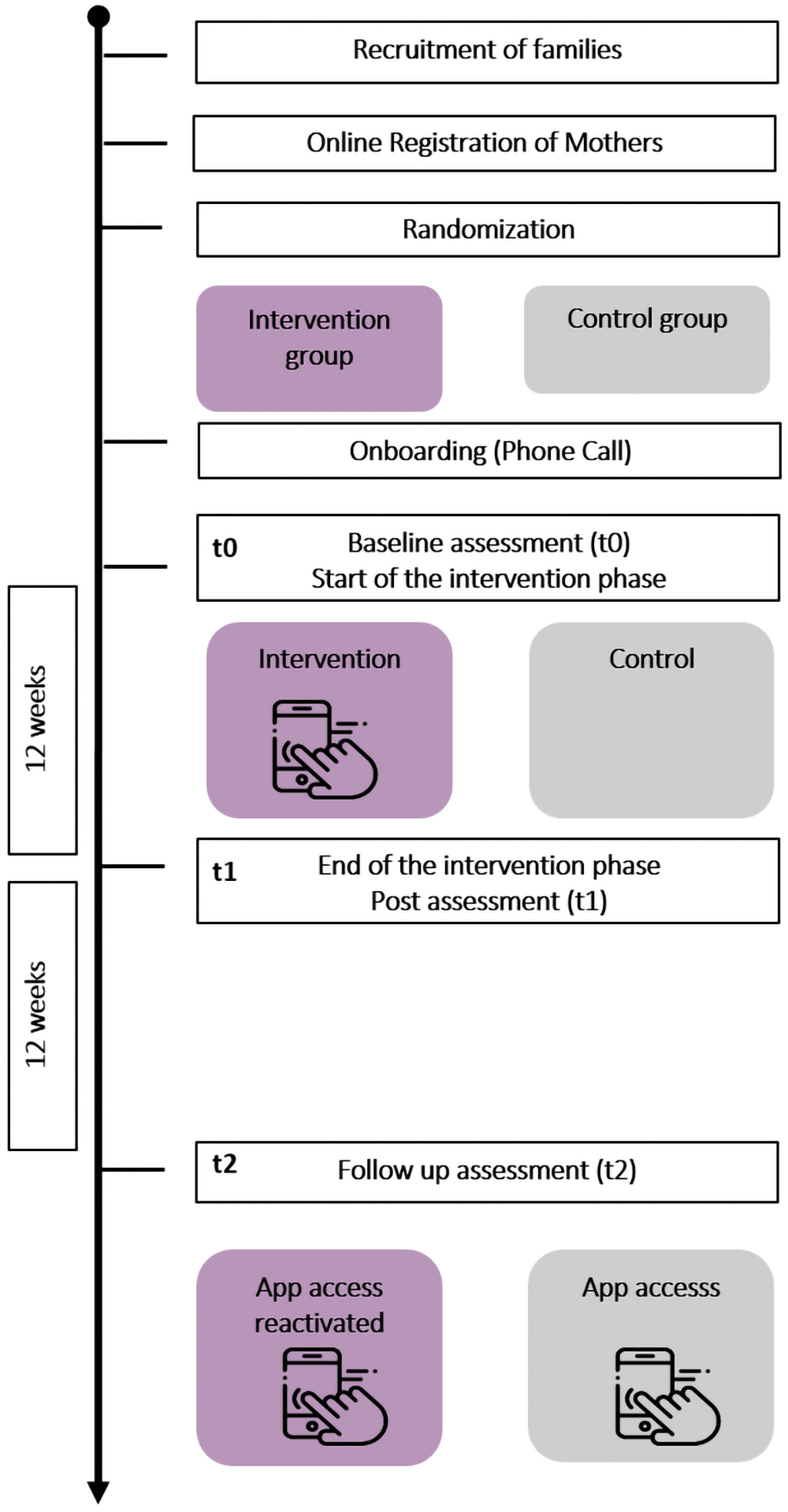
Figure 1. Study process for mothers.
Intervention
The interactive self-guided 12-week modular I-PREGNO app integrates basic principles of evidence-based cognitive-behavioural therapy and BCTs (Michie et al., 2013). The modular structure of I-PREGNO was based on the technical and content-related knowledge and experiences gained from the gender-sensitive mHealth weight loss intervention I-GENDO (Pape et al., 2022), further extended and developed within an iterative process by the authors working closely with the target group, health professionals, and an external software provider (groupXS Solutions GmbH). The developmental process was further in accordance to methodological standards seeking high transparency for the users and data protection (Seiferth et al., 2023).
Figure 2 provides an overview of the I-PREGNO home screen. The app consists of a modular psychological intervention, self-monitoring of mood, PA, eating behaviour, and sleep quality through a personalised diary; a folder to save favourite exercises and strategies; information about the study itself and emergency contacts, and a selection of accompanying coaches. In addition to the individual customisation (e.g. coach) within the app, we provided two app releases with slightly adapted content, one for the mothers and one for the fathers to ensure that the app content fits to the different needs and perspectives. The core of the app, the psychological intervention, includes 12 modules that focus on improving specific psychosocial or behavioural aspects associated with weight management in the postpartum phase. Three modules address the introduction to (getting to know the app, goal setting) and conclusion (review and relapse prevention) of the intervention program. Eight more modules focus on improving core behaviour change skills for parents: self-care, stress management skills, emotion regulation skills, self-efficacy, self-esteem, mindfulness, social competences, and self monitoring of health behaviour. The remaining two modules address nutrition and PA.
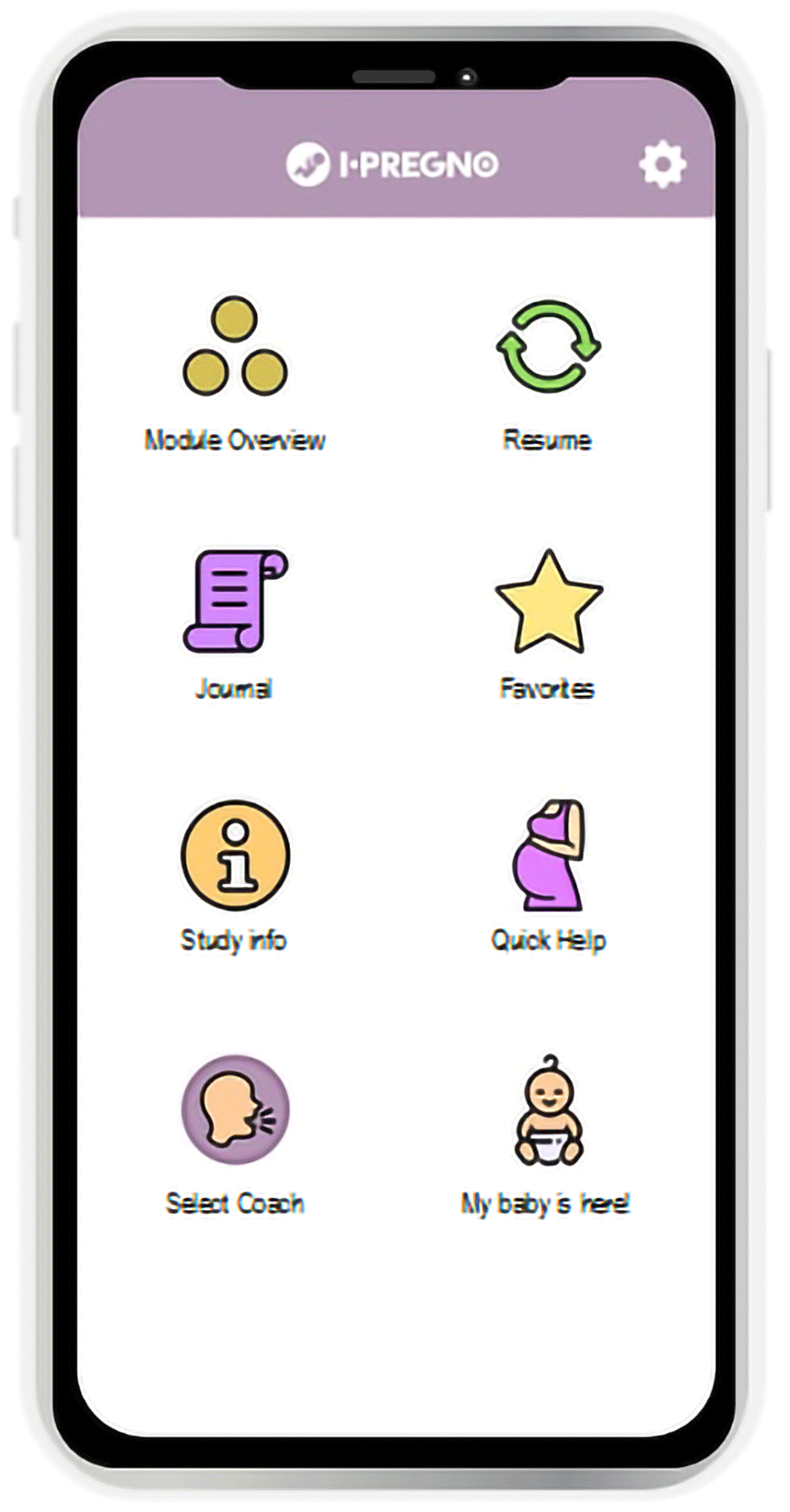
Figure 2. App interface.
To ensure an independent exploration of content of individual interest, users are able to work through the modules and sessions as desired. According to the existing literature and to prevent parents to spend too much time with digital devices, we recommend that participants interact with the app three times a week for a duration of approximately 15 minutes (Saur et al., 2022). Each module consists of various sessions (n = 2 18). The app contains a progress bar, which tracks the finished sessions. The sessions include psychoeducational information, several cognitive behavioural therapy-based self-help techniques, skills (i.e., cognitive restructuring) and, a range of BCTs (i.e., goal setting, self-monitoring) delivered through text, audio, images, and interactive elements that require participants’ input (i.e., swiping boxes down the screen into baskets, filling out gap texts or questionnaires). The content was developed and pre-tested with psychosocially burdened parents as well as health care professionals to enhance usability and facilitate the user experience.
Sample size calculation
An a priori power analysis for ANOVA, repeated measures and within-between interaction, was conducted with G*Power (version 3.1.9.7). A difference of 1 kg weight change between intervention and control group after the intervention will be considered as clinically significant (f = .1), which is based on studies investigating weight development pre pregnancy vs. postpartum (Haugen et al., 2014; Nehring et al., 2011). This small effect size, according to Cohen, can be expected also for the other outcome variables (Cohen, 1977).
The sample size resulted in 125 participants for each group, assuming 20 % drop out and aiming for at least 80 % power (α = .05 and retest r = .5).
Primary and secondary outcomes
Our primary outcomes will be weight management, mental well-being, and resilience.
Weight management will be operationalised by the difference of the self reported weight (kg) at t1, respectively at t2 for the long-term effect, and pre-pregnancy weight. The pre-pregnancy weight will be assessed retrospectively at the baseline assessment (t0).
Mental well-being will be conceptualised by postpartum depressive symptoms and parental stress using the German versions of the Edinburgh-Postnatal-Depression-Scale (EPDS; Bergant et al., 1998; Cox et al., 1987) and the Parenting Stress Index – Short Form (PSI-SF; Abidin et al., 2006; Tröster, 2011). The EPDS consists of ten items (e.g. ‘I have been anxious or worried for no good reason’), which are rated on a 4-point-Likert scale ranging from 0 (e.g. ‘No, not at all’) to 3 (e.g. ‘Yes, quite a lot.’). A sum score is conducted to screen for parental postpartum depression (0 = ‘no postpartum depression’; 30 = ‘severe postpartum depression’). Parental stress will be assessed by the 28 items of the parent’s section of the PSI-SF, whereby four items will be only asked, when a partnership exists. The seven subscales (‘depression’, ‘competence’, ‘parental attachment’, ‘isolation’, ‘spouse’, ‘health’, ‘role restriction’), include four items each, which will be rated on a 5 point Likert-scale ranging from 1 (‘strongly disagree’) to 5 (‘strongly agree’) with higher scores indicating higher levels of parental stress.
Resilience will be assessed through emotion regulation and self-efficacy. Emotion regulation will be measured by the short form of the Difficulties in Emotion Regulation Scale (Ehring et al., 2013; Gratz & Roemer, 2004), which consists of six subscales: non-acceptance of emotional responses, difficulty engaging in goal-directed behaviour, impulse control difficulties, lack of emotional awareness, limited access to emotion regulation strategies, and lack of emotional clarity. General self-efficacy, general optimistic self-beliefs to cope with difficult situations, will be assessed by the ten items of the German version of the General Self-Efficacy Scale (Schwarzer & Jerusalem, 1995; Schwarzer & Jerusalem, 2010). The 4 point Likert scale ranges from 1 (‘not at all true’) to 4 (‘exactly true’) and a total sum score will be calculated.
All questionnaires for well being and resilience show acceptable psychometric properties (Abidin et al., 2006; Cox et al., 1987; Damásio et al., 2016; Hutcheson & Black, 1996; Reitman et al., 2002; Victor & Klonsky, 2016).
Aspects, which are associated with these three main outcomes such as dietary behaviour, PA, psychosocial burdens, sociodemographics or bonding as well as app usability will be assessed:
The socio-demographic characteristics and socio-economic stressors (e.g. lack of social support, migrant status of the parents, difficult living conditions, e.g. single parent) will be assessed to measure psychosocial burdens of families. A detailed description of the instruments and subscales can be found in the study protocol of the I PREGNO blended counselling study (Vogel et al., 2023)
To assess eating styles, total scores of the German version of the Dutch Eating Behaviour Questionnaire (Nagl et al., 2016; van Strien et al., 1986) will be used, which consists of 30 items with three subscales: emotional eating, restrained eating, and external eating. For eating behaviour, two additional questions will be asked that measure diagnostic criteria of an undereating disorder based on the Diagnostic Classification of Mental Health and Developmental Disorders of Infancy and Early Childhood (Frankel et al., 2018). Additionally, participants will be asked to indicate the average food intake frequency for following food groups: a) vegetables, b) fish, c) meat, d) meat replacement products/eggs, e) fruit, f) processed pasta/rice, g) potatoes/whole grain pasta/whole grain rice, h) sweet and savory snacks, i) seeds and nuts, j) whole grain bread, k) white bread, l) sugary drinks.
PA (vigorous, moderate or walking activities) will be assessed using the German short version of the International Physical Activity Questionnaire (Lee et al., 2011).
To assess attachment anxiety and avoidance in adult partnerships, the German version of the Experiences in Close Relationships-Revised questionnaire will be used (Brennan et al., 1998; Ehrenthal et al., 2009).
The Childhood Trauma Screener (CTS) is the short form of the Childhood Trauma Questionnaire with five items (Bernstein et al., 2003; Grabe et al., 2012). The CTS will be used to assess parental childhood maltreatment experiences.
Parent-child interaction (bonding) will be assessed by the German version of the Postpartum Bonding Questionnaire (Brockington et al., 2006; Reck et al., 2006).
To assess the parental perception of the child’s emotions, the Infant Facial Expressions of Emotion from Looking at Pictures (IFEEL) approach was conducted, by using 16 infant pictures with adapted answering format (Emde et al., 1993).
To gauge the potential stress by a present regulatory disorder, families will be asked to rate how burdened they are by the crying, sleeping, and eating behaviour of their child. For each of these three areas, families will answer one question, each on a 4-point Likert scale and ranging from 0 (‘not at all’) to 4 (‘very’).
In order to assess app usability the German version of the mHealth app usability questionnaire (MAUQ) for standalone mHealth apps (patient version) will be used (Pape et al., 2022; Zhou et al., 2019), which contains the subscales ‘ease of use’, ‘interface and satisfaction’, and ‘usefulness’ (six items).
The quantitative (i.e., login, logout times, modules completed, time spent in the app) and qualitative (i.e., participants input, used features, content utilised) app usage and engagement will be assessed by the apps’ meta-data log files. The fundamental data are internally tracked within the app and downloaded to secure servers. Treatment adherence will be operationalised as time spent using the app, numbers of days using the app, and percentage of worked-through modules.
Data analysis and statistical plan
The impact of the intervention on the primary outcomes (weight, mental well being, resilience) will be analysed using multilevel analysis. Analyses of intervention effects will be based on the intention-to-treat principle. Given the randomised design of the study, analyses on intervention effects will be adjusted for baseline values of the outcomes. If suitable, missing data will be checked for randomness. Potentially confounding variables will be assessed and their impact explored (e.g see Table 1 *). Additionally, we will check for differences between conditions and mothers and fathers. Table 1 provides an overview of data collection and time points.
Table 1. Data collection and time points.
| Questionnaire | t0 | t1 | t2 |
|---|
|
Postnatal Depression (EPDS)
|
x
|
x
|
x
|
|
Parenting stress (PSI-SF)
|
x
|
x
|
x
|
|
Emotion Regulation (DERS-SF)
|
x
|
x
|
x
|
|
Self-efficacy (GSE)
|
x
|
x
|
x
|
|
Sociodemographics *
|
x
| | |
|
Eating behaviour (DEBQ) *
|
x
|
x
|
x
|
|
Frequency of food intake (FFQ) *
|
x
|
x
|
x
|
|
Physical Activity (IPAQ) *
|
x
|
x
|
x
|
|
Relationship experience (ECR-RD) *
| |
x
| |
|
Childhood trauma (CTS) *
|
x
| | |
|
Postpartum bonding (PBQ) *
|
x
|
x
|
x
|
|
Emotion recognition, parent (I-FEEL) *
| | | x |
|
Regulatory Disorders *
| | | x |
|
mHealth app usability (MAUQ) *
| | x | |
Ethical approval and consent
The study is in line with the declaration of Helsinki and has received ethical approval from the ethical committee of the University of Bamberg (nr. 2022-02/09) and the trial was registered in the German register for clinical trials (DRKS00031067). No harms of side effects for the participating families are expected. However, since we aim to include participants in a potential stressful time, we will put great emphasis on the personal support on families and their well-being by providing initial personal contact via phone. Informed consent will be obtained from all participating families at the beginning of the study by phone and via online questionnaire.
Dissemination
Dissemination activities include the identification of relevant groups, i.e., pediatrics, psychologists, and gynecologists, for dissemination and subsequent identification of appropriate communication channels per target group (e.g. newsletters, Twitter, Instagram, Facebook, local press). This ensures that the delivered content is suitable to the target population and media outlets. Dissemination partners will be involved during different stages of the project. The process of the app development as well as the results of the RCT will be disseminated by articles for scientific journals as well as press releases and journalistic reportage. In addition, project members will hold presentations at conferences and organise symposia and events. A closing event for professionals and scientists as well as families will be conducted.
Study status
Enrolment of the participants was going on while first submission of this manuscript and ended at the end of July 2023. Most of the participants of the intervention group are now using the app, some of the participants already filled out the questionary for t1.
Conclusion
In this longitudinal, randomised controlled and prospective study, we aim to evaluate a self-guided mHealth intervention (I PREGNO) addressing mothers and fathers in the postpartum phase to establish and maintain resilience and mental well-being for the prevention of unhealthy weight development. In case of success and positive intervention effects, this mHealth intervention can provide a low-threshold, scalable, flexible, and low-cost access to primary preventive support. Following a holistic approach, the I-PREGNO app enhances health behaviour by offering a variety of evidence-based strategies to improve sustainable weight management and mental well-being.
In the long-term, the results will help to support evidence-based mHealth interventions that can be applied in a flexible and individualised manner and thus promote comprehensive health care in this vulnerable phase of life. Furthermore, this study will contribute to the lack of high-standard, evidence-based and transparent mHealth solutions.
The strength of this study is the focus on individualisation (e.g. self-guided) within the intervention, inclusion of fathers, and a holistic approach. In addition, the self-help intervention goes along with potential cost effectiveness. Furthermore, the intervention may be available especially when health care infrastructure is scarce.
However, self-help interventions were shown to be associated with high drop-out rates and lower compliance than guided interventions, e.g. supported by a coach, therapist (Carlbring et al., 2018). To encounter this limitation, we will establish personal contact via telephone early on and support families throughout the whole process.
This study investigates the effects of a mHealth intervention for preventing unhealthy weight gain and increase mental well being and resilience in parents in the postpartum period. Results may contribute substantially to provide early on health support for the whole family and improve evidence on mHealth interventions as potential additional health services.