Introduction
Plastics are one of the most relevant materials worldwide due to their unique combination of properties, including chemical resistance, ease of processing, low cost and lightweight potential. These properties allow them to be used in a variety of key components for different sectors, such as construction, architecture, cushioning, electronics or the aeronautical and automotive. On top of that, the increasing use of plastic materials increases the post-consumer plastic waste produced, giving concern about their management and recyclability techniques. According to a new report of the OECD organization, only about 9% of collected plastic waste is recycled while 22% is mismanaged globally. Although, recent improvements on the reusability and recyclability of plastics had been performed, the global production of plastics from recycled or secondary plastics has more than quadrupled in the last 20 years, but this is still only 6% of the size of total plastics production, being most of the plastics in use today virgin or primary plastics, made from crude oil or gas1.
The automotive and electronic industries manufacture key products for the current market needs. They use high amounts of plastic materials, including polypropylene (PP), polyurethane (PU), polyvinyl chloride (PVC), acrylonitrile-butadiene-styrene (ABS), polycarbonate (PC) and many others. These sectors fulfil the demand of around a 15 % of the Europe demand for plastics materials2. Among them, ABS and PC are one of the most important ones. ABS is a polymeric material that stands out for being highly resistant to impact and chemical corrosion along with a low melting point that allows an easy processability. It is widely used automotive and electronics as an impact modifier or integral part of dashboards and steering wheel covers. However, ABS has lower mechanical properties than most of the engineering plastics on the market3. PC on the other hand, is a widely used amorphous plastic which has some outstanding characteristics like transparency or high impact strength but possesses poor solvent resistance and harder processability due to its high viscosity4. Combining those materials in a ABS/PC blend, increases the thermomechanical resistance of ABS5,6 and reduces the cost and increases the processability of PC3. ABS/PC blends are commonly applied in automotive parts as well as housings of electronics and household appliances7. Automotive and electronics were one of the main demanding end-users for these kinds of plastics, accounting about 9.9 and 6.2 % of the total European plastic demand in 20188. One of the main issues are the wastes generated from engineering plastics used in automotive and in electronic equipment, where ABS and PC take an important part. The waste generation of Waste Electrical and Electronic Equipment (WEEE) have increased from 8.3 Mt in 2010 to 10.4 Mt in 2021, whereas its collection has increased from 3.8 to 5.6 Mt9. On top of that, the demand of recycled engineering plastics reached 2.8 Mt in 2020. This means that although recycling is experiencing and increasing demand, the increasing production and low collection rates show us that there are still plenty of work to do.
Commonly, plastic components are employed in visible applications, where design plays an important factor in the consumer´s decision and for that, they are commonly coated with paints or varnishes that improve their appearance and their resistance to external agents. Coatings are an additional stone on the recyclability path, as they are designed to be strongly attached to the substrate surface and resist aggressive conditions10,11. To allow its reuse, the coating must be separated from the component, adding an additional cost than just a mere mechanical recycling. However, it is very hard to eliminate all the coating impurities before the recycling process. Several studies showed that impurities decrease the mechanical properties of the recycled materials, preventing its use on demanding applications12–15. This could have implications for the industry, due to the lack of repeatability from lot to lot with recycled polymers, which would result in injury or warranty issues for the company, leading to money loss. For that reason, the highly technological sectors, such as the automotive industry, have been reluctant to use large amounts of recycled plastic, fearing a significant reduction of the material performance and thus, making, painted parts virtually not recyclable. It was reported that even 1 wt.% of a polymeric impurity in composites, causes unacceptable reductions in impact resistance and ductility16. Such a challenge is of industrial importance and could lead to massive improvement in the use of recyclable materials in the automotive and electronic sectors. Besides impurities, several factors can still affect the final properties of the recycled materials. The ageing of the material at the end-of-life, the number of reprocessing cycles or the amount of recycled material can all negatively impact the performances of the material11,13,17–20.
In the present study, a comprehensive assessment was done to evaluate the effect of each of those factors (ageing, reprocessing cycles and coating impurities) and a cross-combination of those which showed higher impact, to provide an insight about the factors influencing the performance of a recyclable material. The results provide a better knowledge of the recycling effect and can be used to decide the potential applications of recycled plastic. The ascribed project (DECOAT) aims to develop efficient systems to remove coatings at the end-of-life of the part, to reduce the damage and promote the use of recycled material in high-tech applications. Being part of a European project with industrial application, gives clear proof about the importance of close working environments between research entities and companies, giving results that impact on the society.
Methods
The assessment was done for 2 industrial use-cases:
• Automotive use-case: A rear door garnish made of ABS coated with a solvent-based primer, a black paint and a clear coat provided by Maier S. Coop (Gernika, Spain).
• Electronic use-case: A socket part made of ABS/PC coated with a water-based anthracite paint provided by Panasonic (Istanbul, Turkey).
To perform the present study, the mentioned polymers were ABS Elix H605 Black (Elix polymers, Tarragona Spain) and ABS/PC Lupoy HT5007A White (LG Chem, South Korea). Polymer pellets where dried before injecting it with a WITTMANN DRYMAX E30 (Viena, Austria) and their moisture was measured with a Brabender Moisture meter AQUATRAC® - 3E (Germany). The granulator machine used was a WITTMANN G-MAX 23. The mixture of virgin and recycled pellets (after granulation) or painted pellets was done with a Vrieco-Nauta® laboratory mixer (HOSOKAWA MICRON B.V., Doetinchem, Netherlands)
Processing temperatures were determined according to the TDS of the selected polymers (220–240°C for ABS and 240–270°C for ABS/PC) with a mold temperature of 70ºC for both cases. The studied cases were molded using an injection molding machine Engel Victory 350Tn (ENGEL, Austria), to obtain 3 kinds of samples according to the testing needs: Tensile strength (ISO-527-2 type A), impact strength (ISO-179-2) and plates of 110×160×3 mm. Average value and standard deviation of 5 samples were reported. When required, the samples were coated with their corresponding paint, according to the supplier. The injection parameters were as follows:
For ABS, a temperature of 220–240°C for the plastificator part and 70°C for the mold. Pressure was 65–70/25–30/7 Kg/cm2 (injection/post-pressure/counterpressure). The total time for injection (including all steps) was around 60 s.
For ABS/PC, a temperature of 240–270°C for the plastificator part and 70°C for the mold. The injection machine conditions were 60–65/20–25/7 Kg/cm2 (injection/post-pressure/counterpressure). The total time for injection (including all steps) was around 50 s.
Due to the requirements of this project, a single-screw injection machine was used. However, it must be punctuated that a single-screw extruder should not be used to melt-blend components, as it lacks sufficient shear forces for proper mixing. On the other hand, it is known that twin-screw cause more thermomechanical degradation.
The study was divided into two different methods, focusing on the impact of the ageing, reprocessing cycles, recycle content and amount of coating impurities on the properties of the case materials.
1.1. Method to assess the properties of the material at the end-of-life: effect of the ageing
In a real-life scenario, the parts presumed to be recycled are already damaged due to the exposure to different environmental conditions (temperature, moisture, sun irradiation, etc.) during several years along its lifetime. For that reason, the material is already in an aged state before the start of the recycling process. Commonly, an aged material has presumably lower mechanical properties than the pristine one17,18. To evaluate this loss of properties, ABS and ABS/PC samples were exposed to accelerated ageing tests (Figure 1), following the standard of the automotive and the electronic sector, respectively. After the ageing, the samples were tested to determine the tensile modulus and the impact resistance of the material, respectively. The use cases are depicted below:
For the automotive use-case, DIN 75220 standard for exterior parts was followed, outlining the process of simulating prolonged solar radiation exposure. The tests consist of alternating 10 dry cycles (including irradiation) with 5 humid cycles, for a total of 15 days of accelerated ageing. The exposure was done in a climatic chamber FITOTERM 14.000 (Figure 1A).
For the electronic use-case, samples were exposed to 70 °C during 168 h in an oven (Figure 1B), following an internal standard from Panasonic.
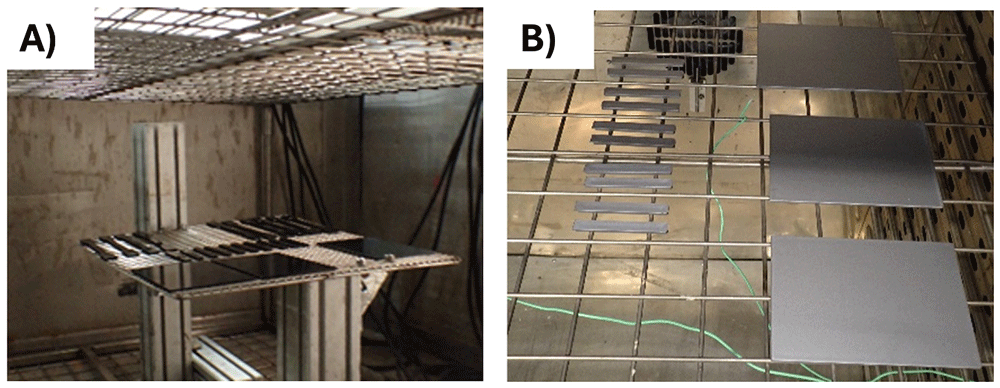
Figure 1.
A) ABS samples into the climate chamber B) ABS/PC samples into the oven.
1.2. Method to determine the effect of the recycling process on plastic material
During the recycling process of coated parts proposed in this study, we identified different factors that can affect the properties of the material. Table 1 summarize the parameters tested for each factor. For each factor, tensile and impact strength were reported. A factorial design resume is shown in the supporting information (Table S1 and S2)
Table 1. Design of experiment to evaluate the effect of the recycling process proposed in this study.
| FACTOR 1. Mechanical recycling | FACTOR 2. Coating
impurities | FACTOR 3. Combination of factors |
|---|
| Purpose | To determine the recycled content and
n° of cycles with the best compromise
between environmental impact and
material performance | To determine the maximum
remaining coating content to
guarantee the circularity and
effectiveness | To determine the impact of both effects
(impurities and reprocessing) on the
recyclability of the material |
| Variables | - Recycled content (15%, 30%, 50%, 100%)
- N° of reprocessing cycles: 1 to 5 | 0.5%, 1%, 3%, 10%, 25%, 50%
and 100% of remaining coating
respect to a fully painted part. | - 5%, 10% and 20% of coating impurities
- 1–5 reprocessing cycles |
■ The mechanical recycling process itself:
The recycling process consists of several steps of reprocessing. First, the material parts are transformed into shredded material. Then, they are mixed with virgin one at different proportions according to the desired recycled content (15, 30, 50 and 100%). Last, the material is injected to prepare the test samples according to the standards. Following this procedure, the pressure, shear, and temperature during the reprocessing can shorten the polymeric chain, affecting the mechanical properties10,16. Since a circular approach is aimed, we evaluated the properties after five reprocessing cycles and different recycled contents (Figure 2).
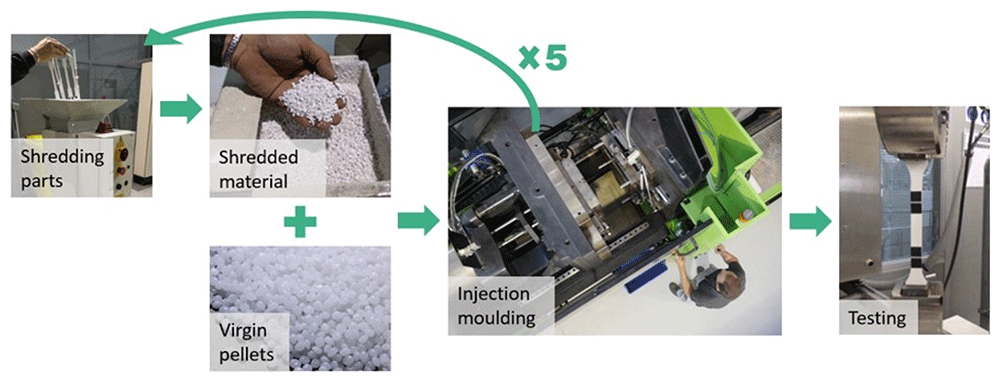
Figure 2. Experimental procedure to evaluate the mechanical recycling effect on the properties of plastic.
■ The remaining coating impurities:
Most of the recycling procedures are not perfectly efficient, therefore some coating impurities can remain in the plastic substrate, affecting its properties11,13. In this case, mostly acrylic impurities from paint residues could be expected. To reproduce this situation, plastic pellets were coated and then mixed with virgin pellets, controlling the weight of coating that was introduced in the mixture (Figure 3). It was calculated that the automotive part (ABS) has 1,92 wt.% of coating and the electronic part (ABS/PC) has 0,40 wt.% respectively. Therefore, those proportions were considered as 100% coating impurities, corresponding to an untreated part.
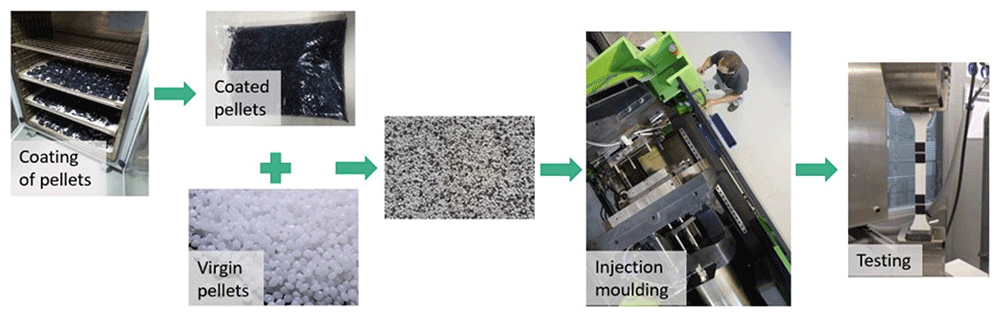
Figure 3. Experimental procedure to evaluate the effect of coating impurities.
■ Combined effect of reprocessing and coating impurities:
Through the previous factors presented above, it was noted that the reprocessing of the material and the presence of coating impurities could have a big impact on the mechanical performance of the plastic product. For that reason, to study those combined effects, ABS and ABS/PC pellets were coated as in the process showed in Figure 3 (5, 10 and 20% of remaining coating impurities) and then subjected to a five-cycle reprocessing process. The aim of this analysis is to determine the possible synergistic effect between these recycling factors.
Results
Effect of the ageing on the mechanical properties of the material
Specimen samples were manufactured following the procedure explained in section 3 and then tested for tensile and impact strength. Five test samples were tested per material and their average was reported. As shown in Table 2, Aged ABS showed a significative loss of properties on both tensile modulus and impact resistance (Figure S1, see Extended data), decreasing 12.3% and 18.8% respectively in comparison to virgin ABS. On the other hand, aged ABS/PC was also damaged by such process, with a loss of properties of 4.9% and 17.0% for tensile modulus and impact resistance, respectively (Figure S2, see Extended data) in comparison to pristine ABS/PC. The change in tensile modulus for ABS/PC is not significant as showed by the statistical data showed in the supporting information document and in Table 4. ABS suffered a higher degradation on its properties than the ABS/PC blends. This is explained by the lower UV radiation resistance of ABS due to the double bonds of the butadiene unit, whereas PC is relatively stable to the light21. Also, the higher tensile performance and Tg of PC, results on a higher resistance to thermal degradation than ABS, thus improving the overall properties in the blend. On top of that, it can be observed a higher damage on the impact resistance performance than in the tensile modulus in both ABS and ABS/PC. This is due to surface degradation upon ageing, mostly on the polybutadiene phase of the polymer. Ageing leads to chain scission and cross-linking, that restricts the polymer chain mobility and decreases the free volume, resulting in an increase of the Tg upon ageing, whereas the effect on the styrene-acrylonitrile phase is less significant18,22. It can be observed that automotive and electronic parts following an ageing process, suffer enough loss of mechanical properties. These results showed the importance of the ageing studies on automotive and electronic parts in the mechanical and life cycle analysis of these products.
Table 2. Tensile modulus and impact resistance results of test specimens after ageing tests.
| Test samples | ABS-ref | ABS-After
automotive ageing | ABS/PC-ref | ABS/PC-After
electronic ageing |
|---|
| Tensile modulus (Mpa) | 2407.4 ± 84.8 | 2110.6 ± 131.4 | 2276.5 ± 159.7 | 2165.7 ± 118.0 |
| Impact resistance (KJ/m2) | 18.43 ± 0.25 | 14.97 ± 0.32 | 50.53 ± 2.00 | 41.93 ± 1.77 |
1.3. Effect of the recycling and purification process on the mechanical properties
■ Assessment of the mechanical recycling effect
Samples were manufactured following the procedure explained in section 3.2 and then tested for tensile and impact strength. Five test samples were tested per material and their average was reported. Average values of tensile modulus are plotted in Figure 4 and Figure 5 for ABS and ABS/PC respectively. For recycled ABS, the tensile modulus remains very stable and close to the reference showed in Table 2 (1st cycle of 100 % recycled material), regardless of the recycled content nor the number of reprocessing cycles (Figure 4). These results showed the excellent behavior of ABS as a recyclable material for the automotive sector. It is not statistically significant the difference in ABS tensile modulus results, as showed in the Table 4. Regarding ABS/PC for electronics, the effect of the recycling content and different injection cycles on the tensile strength showed a positive impact (Figure 5). Like ABS alone, the values of ABS/PC remain close to the reference one (Table 2). Notably, an initial increase (about 10%) of the tensile modulus with the introduction of increasing content of recycled material was observed. It was reported that changes in the orientation of the polymeric chains at the macromolecular scale could lead to bear increasing loadings during the test23. The reprocessing effect showed as well increasing values with a slightly higher impact than ABS alone. Degradation caused by several injections could produce a reduction in the mean distances and the length of the PC macromolecular chains, thus increasing the Van der Waals interactions and leading to an increasing tensile strength24. Despite this, it is expected a reduction on the mechanical performance after more than 5 cycles due to the continuous degradative process25.
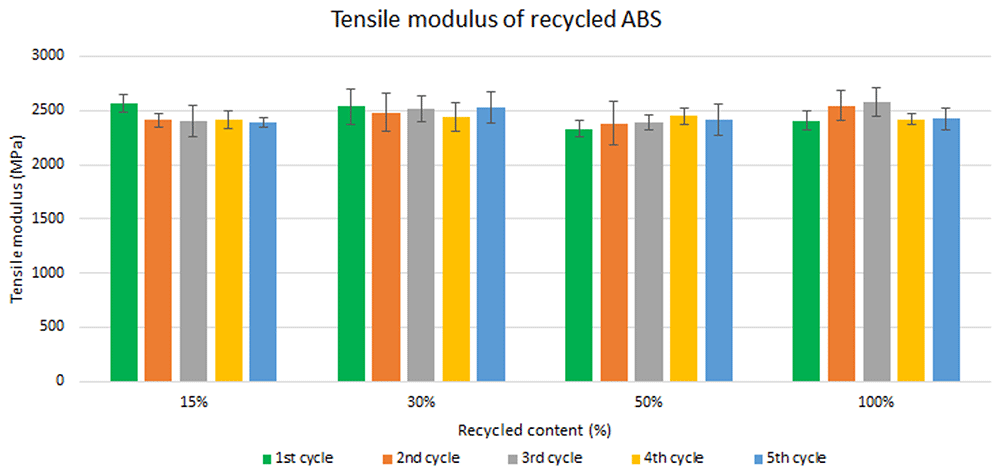
Figure 4. Effect of recycled content and reprocessing cycles on the tensile modulus of ABS.
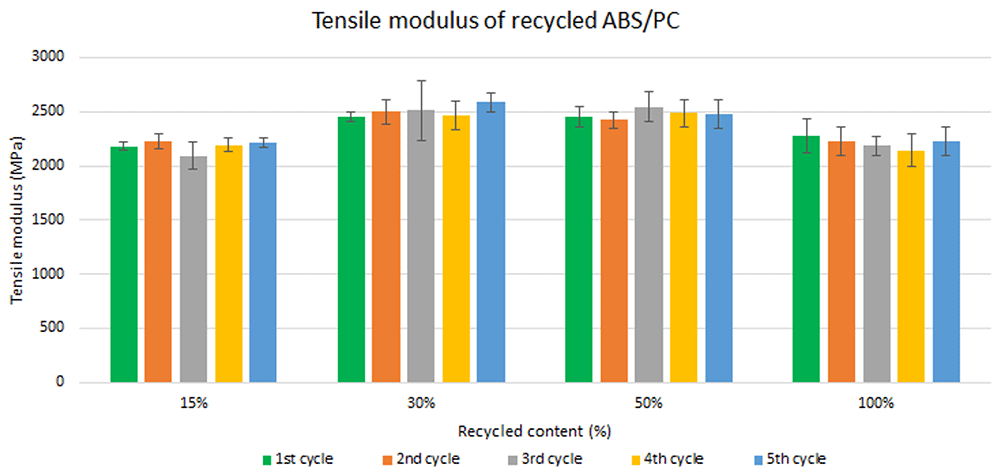
Figure 5. Effect of recycled content and reprocessing cycles on the tensile modulus of ABS/PC.
Unlike the tensile strength, impact resistance performance changes especially with each reprocessing cycle. Five test samples were tested per material and their average was reported. Average values of charpy impact resistance are plotted in Figure 6 and Figure 7 for ABS and ABS/PC respectively. In both materials, the impact of increasing recyclable content is almost negligible, although the presence of recyclable content decreases the performance in comparison to the reference Table 2. The impact resistance dropped on average by 5.9% for ABS and 14.5% for ABS/PC when recycling content is introduced. On the other hand, the impact of the reprocessing cycles is of significance. The first cycle of each recycled content for ABS keeps similar strength as the reference (Table 2). However, after each additional cycle, the performance drops dramatically, decreasing up to 12.5% on average for the 5th cycle (Figure 6). In the case of ABS/PC, the loss of performance due to the reprocessing cycles is even more dramatic than in the ABS case. ABS/PC losses impact resistance from the first reprocessing cycle and drops 23 % on average after 5 cycles (Figure 7). On the other hand, ABS/PC seems to show higher stability on the first two reprocessing cycles regardless of the recycling content but drops abruptly after the 3rd cycle. The loss of mechanical properties in ABS is often attributed to thermo-oxidative degradation in the polybutadiene phase only, whereas additional physical ageing can also occur in the styrene-acrylonitrile phase26. The polymeric degradation of ABS is thermodynamically favorable after periods of exposure to heat and oxygen (such as after reprocessing), leading to a deterioration of the mechanical properties27. Commonly, the introduction of PC leads to a higher stability upon reprocessing28,29. However, it was reported that the decrement of strength with reprocessing might be attributed to the decrease of the molecular weight and chain scission. Broader chain length distribution and shorter chain induced poor chain entanglements, and consequently, the impact strength dropped with increasing reprocessing3. Further studies including thermogravimetric analysis (TGA) and differential scanning calorimetry (DSC) techniques could give more information about the degradation of the material with the increasing reprocessing cycles.
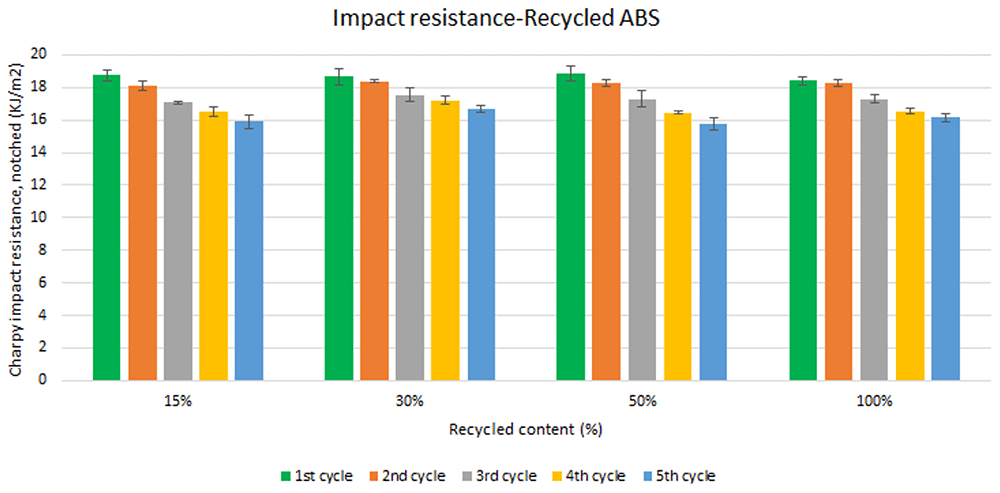
Figure 6. Effect of recycled content and reprocessing cycles on the impact resistance of ABS.
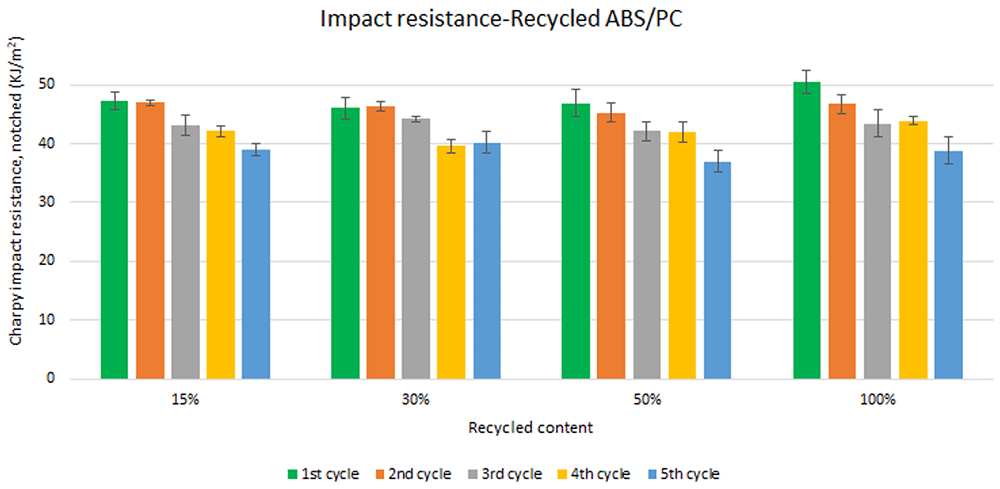
Figure 7. Effect of recycled content and reprocessing cycles on the impact resistance of ABS/PC.
■ Assessment of the coating impurities effect
Samples were manufactured following the procedure explained in section 3.2 (Figure 3) and then tested for tensile and impact strength. Results are showed in Table 3, and Figures S3 and S4 (see Extended data). Five test samples were tested per material and their average was reported. Regarding ABS, the tensile modulus decreases when coating impurities are present. For coating contents from 0.5 to 50%, the tensile modulus decreases 12% on average. With 100% of remaining coating, it decreases 16%. For ABS/PC, the effect of coating impurities on the tensile modulus is not clear, since there is a huge variability of data which is more evident with the higher impurity content. However, a slight decrease in the performance can be presumed. For the impact resistance, again, a clear relationship was found between the amount of coating impurities and the performance of both ABS and ABS/PC. Both ABS and ABS/PC can retain its properties when the coating impurities fall below 3% compared to the neat material. However, with full coating (100% impurities) decreases the impact resistance of ABS and ABS/PC by 42% and 28%, respectively. It can be thus noted the better performance of ABS/PC with respect to ABS. According to the trend curves, it is enough with 14.2% and 21.2% of the remaining coating impurities to lost about the 10% of the performance of the reference ABS and ABS/PC, respectively. The presence of coating impurities had a very large impact on the mechanical properties. It was reported that these impurities usually have different dimensions and produce an inhomogeneous structure with weak mechanical points, which resulted in local cavitation and higher stress for the ABS matrix that allows an easy breakage7,14,30. Further studies including scanning electron microscopy (SEM) analysis for the microstructure of the polymers would be recommendable. This result shows the importance of a good cleaning process before the start of a recycling procedure.
Table 3. Tensile modulus and impact resistance of ABS with varied coating impurities (%).
| Material | Mechanical
performance | Coating impurities (%) |
|---|
| Ref | 0.50% | 1.00% | 3.00% | 10.00% | 25.00% | 50.00% | 100.00% |
|---|
| ABS | Tensile modulus
(Mpa)-Avg | 2407.4 ±
84.8 | 2129.2 ±
124.8 | 2120 ±
159.0 | 2119.8 ±
263.4 | 2155.6 ±
21.9 | 2090.1 ±
98.1 | 2147.1 ±
73.5 | 2025.8 ±
231.9 |
Impact resistance
(KJ/m2)-Avg | 18.43 ±
0.25 | 17.98 ±
0.18 | 18.53 ±
0.45 | 18.38 ±
1.89 | 17.6 ±
0.27 | 14.73 ±
0.4 | 13.13 ±
0.4 | 10.7 ±
0.28 |
| ABS/PC | Tensile modulus
(Mpa)-Avg | 2276.5 ±
156.7 | 2333.5 ±
219.6 | 2119.5 ±
84.8 | 2176.4 ±
330.5 | 2171.9 ±
91.8 | 2203.3 ±
128.0 | 2191 ±
118.3 | 2431.5 ±
173.6 |
Impact resistance
(KJ/m2)-Avg | 50.53 ±
2.00 | 49.22 ±
2.07 | 49.08 ±
1.65 | 51.11 ±
1.73 | 46.09 ±
1.81 | 44.87 ±
1.37 | 41.26 ±
1.02 | 36.49 ±
1.11 |
Table 4. ANOVA statistical studies for tensile studies.
| Test performed | ANOVA test (one factor) | F value | Critical F value | P-value (<0.05) |
|---|
| Tensile ageing test | ABS | 20.74 | 4.67 | 0.00054073 |
| ABS/PC | 2.34 | 4.67 | 0.15004974 |
| Tensile mechanical recycling test | ABS | 2.91 | 3.24 | 0.06685515 |
| ABS/PC | 57.85 | 3.24 | 0.00000001 |
| Tensile modulus-Coated and reprocessed | ABS | 1.73 | 3.89 | 0.21847025 |
| ABS/PC | 0.04 | 3.89 | 0.96443924 |
■ Assessment of the combined effect of coating impurities and reprocessing cycles
Specimen samples were manufactured following the procedure explained in section 3.2 and then tested for tensile and impact strength. Five test samples were tested per material and their average was reported. Results for ABS analysis are shown in Figure 8 and Figure 10 whereas for ABS/PC are shown in Figure 9 and Figure 11. The data for the tensile modulus and impact resistance of ABS showed a general drop on the properties of the material with increasing reprocessing cycles and coating impurities. ABS decreased on average 9% and 24% for the tensile and impact strength respectively. This result implies a higher effect on the impact resistance than in the tensile modulus. Nonetheless, the combined factors showed no synergistic effect, being the effect of the coating individually, the one with probably higher contribution. In the case of ABS/PC, the performance decreased on average by 3.0% and 15% for the tensile and impact strength respectively. ABS/PC retained notably its properties in comparison to ABS. In the same way as ABS, no synergistic effect was found. One possibility to explain this lack of synergistic degradative effects could be on the impurities size and distribution. As the materials are reprocessed, the impurities could be distributed homogeneously due to the temperature and shear stress of the process, thus reducing its size. As the impurities size diminishes, the local stress increases due to the interaction between the polymer molecules, leading to a reduced effect of coating impurities on the impact strength decrease30.
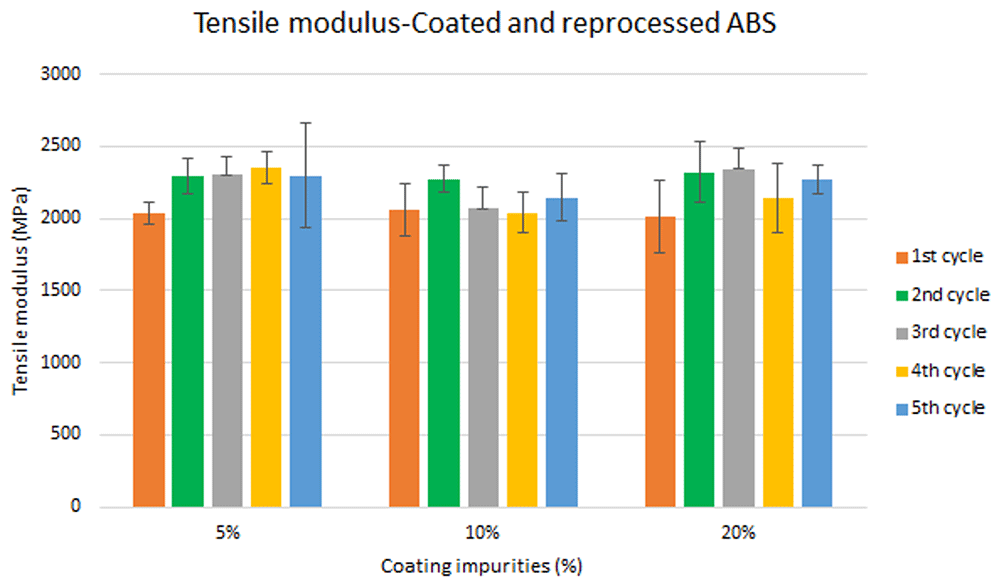
Figure 8. Combined effect of reprocessing cycles and coating impurities on the tensile modulus of ABS.
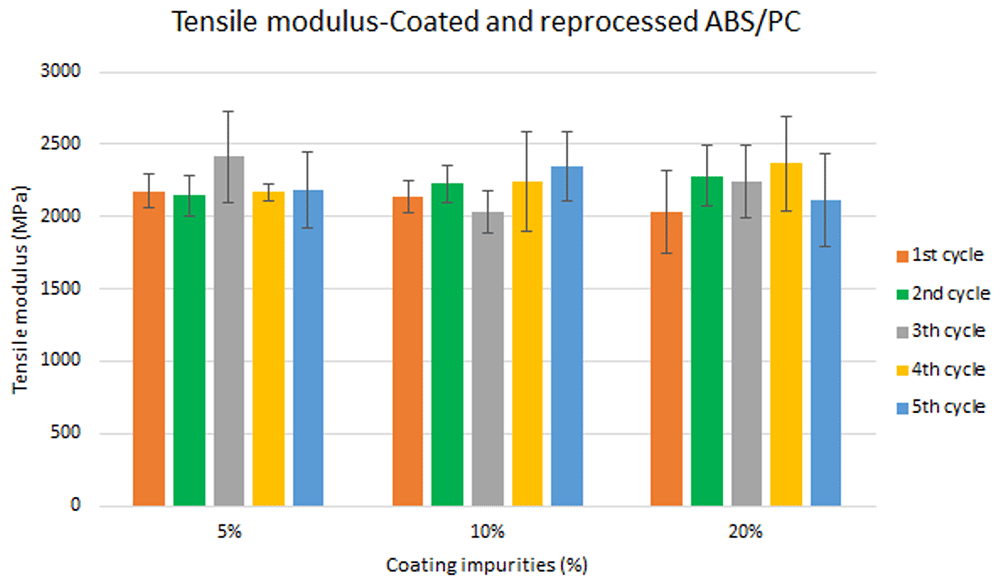
Figure 9. Combined effect of reprocessing cycles and coating impurities on the tensile strength of ABS/PC.
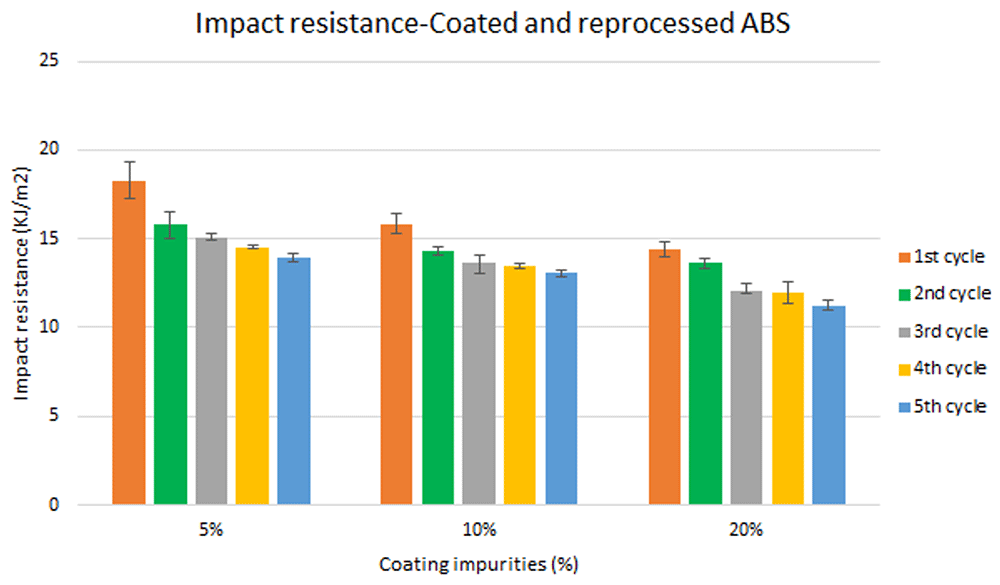
Figure 10. Combined effect of reprocessing cycles and coating impurities on the impact resistance of ABS.
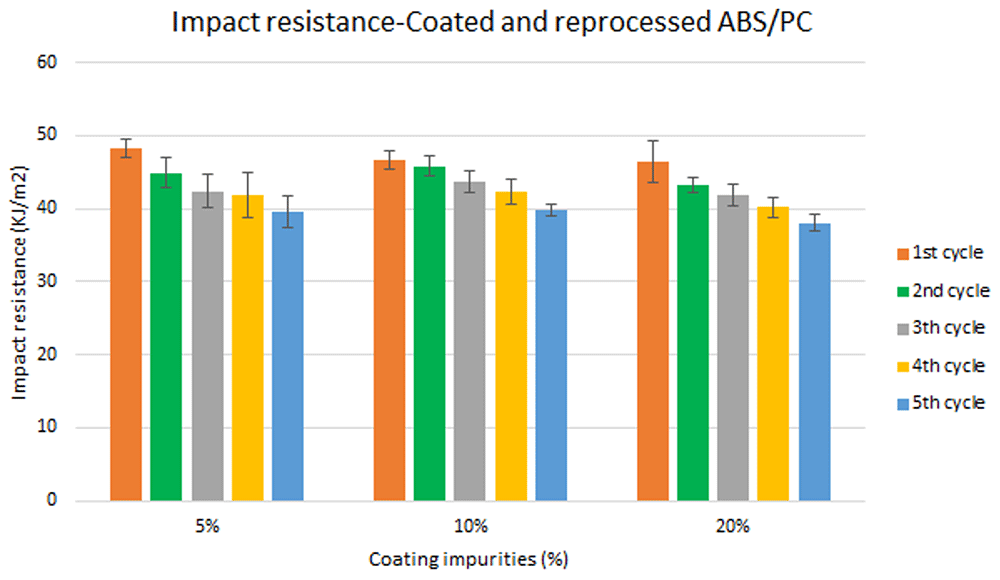
Figure 11. Combined effect of reprocessing cycles and coating impurities on the impact resistance of ABS/PC.
• Statistical studies for tensile strength of testing materials:
An ANOVA test (one factor) was performed to check if the average values reported are statistically different from each other. Herein the statistical data for the tensile strength of ABS and ABS/PC testing probes will be shown. It can be seen that the F value is higher than their corresponding critical value in the cases of ABS for the ageing test (Figure S1) and in the ABS/PC for the mechanical recycling effect (Figure 5). Indeed, the P-values are <0.05 in the same cases. This indicates that the averages are significantly different in these cases. In the cases where the averages are not significantly different, this could be a result of using a single screw injection machine and not using a twin screw, resulting in little chain scission.
Conclusion
A comprehensive assessment of the mechanical properties of recycled materials was done during this, isolating different factors that can potentially damage the polymers and therefore, limit their application in high-tech sectors such as automotive and electronic industries. Through ageing tests, it was demonstrated that a part to be recycled is already damaged by years of environmental exposure. Therefore, the recycling process should have almost no impact to avoid even more degradation.
Mechanical recycling showed that ABS and ABS/PC are stable after the first reprocessing cycle, regardless of the recycled content, but a loss of properties is reported after 2 cycles or more, affecting mostly the impact resistance.
In coated parts, the coating impurities were proved to be very pernicious in terms of mechanical properties, especially for the impact resistance. These impurities must be eliminated allowing only almost <10 % impurities to retain the mechanical performance.
The analysis for the combination of both previous factors showed no synergistic effect between the degradative processes. Impact resistance was the one with a high depletion on its performance.
From this study, it is encouraged by the importance of a high-performance cleaning process that avoids the presence of coating impurities in the recyclable material in order to ensure the use of recyclable products into high-end industries like automotive and electronics.