Introduction
Obsessive-compulsive disorder (OCD) is a mental illness characterised by unwanted thoughts, urges or images (obsessions), and behaviours or mental acts performed repetitively (compulsions; Veale & Roberts, 2014). It is both common, with an estimated lifetime prevalence of 2.5% – 3% (Robbins et al., 2019), and highly disabling (Hollander et al., 2016), with a reported ten-fold increase in suicide risk (Fernandez de la Cruz et al., 2017). The recommended treatment for OCD is a combination of anti-depressant medication and cognitive behavioural therapy (CBT). However, CBT is ineffective for a substantial minority (30% – 40%) of people with OCD (Atmaca, 2016), and, even among those who do respond to treatment, full and sustained recovery remains rare (Fisher et al., 2020). There is therefore an urgent need to understand more about the factors associated with both severity and treatment response in OCD.
Previous work has identified a number of factors which may correlate with symptom severity in OCD. These include early life stress (Coban & Tan, 2019), recent negative life events (Destree et al., 2020) and early age of OCD onset (Anholt et al., 2014). Early life stress in particular has consistently emerged as a factor related to OCD severity (Boger et al., 2020; Semiz et al., 2014), with multiple studies reporting a relationship between emotional abuse and neglect in early life and OCD severity in adulthood (Hemmings et al., 2013; Mathews et al., 2008; Ou et al., 2021). Early life stress has also been linked to a more chronic course of OCD (van Oudheusden et al., 2018) and a reduced response to OCD treatment (Gershuny et al., 2008). However other studies have found no relationship between early life stress and reduced treatment response once other clinical factors are taken into account (Boger et al., 2020; Semiz et al., 2014). A thorough understanding of the relationship between early life stress and OCD is necessary, especially when making the case for more prevention and earlier intervention.
However, whilst individuals can seek therapy to ameliorate the impact of early life stress, the presence of historical early life stress itself clearly cannot be changed. Furthermore, whilst earlier invention is a worthy goal, it is necessarily limited in a context where the average time from first symptoms to diagnosis is seven years (Hezel et al., 2022), and timely access to specialised therapy is limited (O'Neill & Feusner, 2015; Ziegler et al., 2021). It is therefore essential that research also identifies modifiable factors related to treatment response in OCD. Whilst this could encompass clinical factors such as comorbid depression (Keeley et al., 2008) or dissociation (Boger et al., 2020; Semiz et al., 2014), interest is also growing in the role of modifiable psychological processes (Arslan, 2017). These psychological processes may be positive (e.g. positive coping styles), or negative (e.g. experiential avoidance).
Carver et al. (1989) identified various “coping styles” that describe the ways individuals respond to stress. Among these coping styles are two positive strategies, both of which take a problem-focused approach to dealing with a stressor. These are active coping, which involves taking direct action to deal with a stressor, and planning, which involves thinking about ways to deal with a stressor (Carver et al., 1989). Previous work suggests a positive relationship between better mental health outcomes and greater use of active coping (Arslan, 2017; Horwitz et al., 2018; Singh et al., 2022) and planning (Meyer, 2001; Samuolis et al., 2023). There is a small amount of evidence that greater use of these positive coping strategies could be associated with improvement in OCD severity (Fang et al., 2022), though the relevance of such coping strategies to OCD specifically (as opposed to mental health more broadly) has been questioned (Moritz et al., 2016), and requires further investigation.
Experiential avoidance refers to an individual's attempt or desire to suppress or control unwanted internal experiences, including emotions, thoughts, memories, and bodily sensations (Hayes et al., 1996). Higher scores on measures of experiential avoidance have been associated with more severe OCD symptoms (Abramowitz et al., 2009; Angelakis & Gooding, 2020; Briggs & Price, 2009). Research suggests that successful psychotherapy for anxiety disorders is associated with reductions in experiential avoidance (Espejo et al., 2017; Eustis et al., 2016), though to the authors’ knowledge this has not been examined in the context of OCD.
There is good evidence for the utility of existing approaches, such as CBT and anti-depressants, in treating the symptoms of OCD. However, people who receive treatment for OCD rarely achieve full remission (Fisher et al., 2020), especially in the long term (Eisen et al., 2013). In light of this, a more comprehensive understanding of factors associated with the persistence of OCD is urgently required. To this end the present research examined factors (early life stress, active coping, planning, experiential avoidance) associated with OCD severity and self-reported OCD treatment response in a sample of people living with OCD. Unlike previous research, which typically focuses on improvement following one course of treatment, the present study measured more long-term treatment outcomes by assessing perceived change in OCD symptoms from pre-treatment to the time of survey completion. This allowed for an approximation of each individual’s treatment experiences over time.
Regarding OCD severity, it was hypothesised that more severe OCD symptoms would be associated with higher levels of early life stress and more use of experiential avoidance. It was also tentatively hypothesised that more severe OCD symptoms would be associated with less use of planning and active coping styles. Regarding self-reported OCD treatment response, it was hypothesised that a better response to OCD treatment would be associated with lower levels of early life stress. It was also tentatively hypothesised that a better response to treatment would be associated with less experiential avoidance and more use of planning and active coping styles.
Methods
Participants
The study sample consisted of 202 participants with self-reported OCD (either medically diagnosed or self-diagnosed). Data collection took place between 31st May 2022 and 30th June 2022 via an online survey. The survey was completed by 390 participants in total (the remaining 188 participants reported that they did not have OCD and were therefore not included in the present analyses). Among the 202 participants included in the sample, 66.2% selected “female”, 32.3% selected “male” and 1.5% selected “non-binary” or “other”. The mean age was 29.9 years (SD = 10.0), and the majority (84.1%) of participants had attended university. Ethnicity was as follows: 8.5% Asian, 9.5% Black, 5.0% mixed or multiple ethnic groups, 72.6% White and 4.5% other ethnic group.
Materials
All research questionnaires were open-access, and as such a copyright license was not required for their use. Severity of OCD symptoms was measured using the Obsessive-Compulsive Inventory Revised (OCI-R; Foa et al., 2002). The OCI-R is an 18-item questionnaire covering six domains of OCD symptoms: washing, checking, ordering, obsessing, hoarding, and neutralising. Higher scores indicate more severe OCD symptoms, with scores over 21 indicating probable OCD. Early life stress was measured using the Child Abuse and Trauma Scale (CATS; Sanders & Becker-Lausen, 1995), a 38-item questionnaire which measures experiences of neglect, negative home environment, sexual abuse, physical abuse and emotional abuse during childhood and adolescence. Higher scores on this measure indicate more early life stress. Experiential avoidance was measured using the Brief Experiential Avoidance Questionnaire (BEAQ; Gamez et al., 2014), a 15-item questionnaire which incorporates six dimensions of experiential avoidance as a construct: behavioural avoidance, distress aversion, procrastination, distraction/suppression, repression/denial, and distress endurance. The BEAQ provides one overall measure of experiential avoidance, rather than measures for each subscale. Higher scores indicate more experiential avoidance. Active coping and planning were each measured using the relevant Coping Orientation to Problems Experienced (COPE) scales (Carver et al., 1989). Each scale includes four items which measure active coping or planning, respectively. Higher scores indicate greater use of a given coping style. Comorbid anxiety and depression were measured using the Hospital Anxiety and Depression Scale (HADS; Zigmond & Snaith, 1983). The HADS is a 14-item questionnaire which provides a measure of anxiety and a measure of depression. Higher scores indicate more anxiety or depression, respectively.
Participants were asked to complete a series of questions designed to record their experience of OCD treatment over time (Kirkham et al., 2024). This included whether they had received CBT treatment for OCD, and whether they had received medication for OCD (and if so how many medications they had tried). Participants were also asked to respond to a question designed to estimate their OCD treatment response. Only participants who had received treatment that was either fully or partly focused on OCD were presented with this question. In the question, participants were presented with a 100-point continuous scale which ranged from “My OCD symptoms are worse now than they were before I first received treatment” (coded 0 for analysis), and “My OCD symptoms were worse before I first received treatment than they are now” (coded 100 for analysis). The midpoint of the scale was labelled “My OCD symptoms are the same now as they were before I first received treatment”. Higher scores corresponded to better self-reported treatment response.
Procedure
This project received ethical approval on 24th May 2022 from the Philosophy, Psychology and Language Sciences Research Ethics Committee of the University of Edinburgh (Reference Number: 227-2122/8). All participants provided written informed consent by completing an online consent form. To be eligible for the research, participants had to be English-speakers aged 18 years or over. Participants were recruited through social media, Prolific Academic (prolific.ac), and online survey exchange communities (Survey Circle and Survey Swap). Those who took part via Prolific Academic received approximately £2.25 upon survey completion. For each participant who took part though social media a £4 donation to an OCD charity was made by the researchers.
Data preparation
The OCI-R, HADS, BEAQ and coping scales were typically completed either in their entirety or not at all. Similarly, the majority of participants (n = 171) responded to the CATS either in its entirety or not at all. However, there were some participants (n = 32) with missing values for one or more items on the CATS (median number of missing values per participant = 1). In these instances, multiple imputation with five iterations was used to impute a mean value for each missing item. A total CATS score was then calculated for each participant by taking a mean of all 38 items in the scale.
Statistical analysis
Data were analysed using IBM SPSS Statistics, Version 27.0, Release 27.0.1.0 (IBM Corp, 2020). An independent-samples t-test was used to examine whether there was a significant difference in OCD severity between people who reported being diagnosed with OCD by a health professional and people who were self-diagnosed with OCD. Next, participants were divided into “medication-responsive” (one or two OCD medications) or “medication-resistant” (three or more medications) groups according to the number of medications they had tried for OCD treatment. A Mann-Whitney U test was then used to examine whether there was a significant difference on the self-reported treatment response scale between people who were medication-responsive and those who were medication-resistant. This was to test if the self-reported treatment response scale performed in a similar manner to other measures of treatment response (i.e. response to medication). Following this, an independent t-test was used to examine whether medication-response participants differed from medication-resistant participants in OCD severity scores.
Hierarchical multiple linear regression was used to examine the relationship between OCD severity (outcome; measured as total OCI-R score) and the predictor variables (early life stress, experiential avoidance, active coping, planning). Anxiety and depression were entered in Model 1 as control variables. Early life stress was entered in Model 2, and measures of psychological processing (experiential avoidance, active coping, planning) were entered in Model 3. If outliers (standard deviation +/-3) occurred, they were removed and the model was re-run. The same linear regression model was then used to examine the relationship between self-reported OCD treatment response and the predictor variables (early life stress, experiential avoidance, active coping, planning).
Results
Sample characteristics
There was no significant difference in severity of OCD symptoms (OCI-R total score) between people who had been diagnosed by a health professional (n = 90, M = 32.81, SD = 14.40) and people who were self-diagnosed (n = 122, M = 36.68, SD = 13.73), t(197) = - 1.94, p = .05. Table 1 (Kirkham et al., 2024) depicts the mental health treatment received by people with OCD. Among those who had received mental health treatment that was at least partly focused on OCD (n = 201), 47.7% had received both medication and cognitive behavioural therapy/exposure and response prevention therapy (CBT/ERP), 22.9% had received CBT/ERP only, 11.9% had received medication only, and 17.4% had received neither. Among the 65 participants whose OCD treatment had included medication, the median number of medications tried was two (range 1 – 8).
Table 1. Type of mental health treatment received by participants with OCD.
OCD, obsessive-compulsive disorder.
Type of mental
health treatment | Source of OCD diagnosis | |
|---|
| Professional
diagnosis (n) | Self-diagnosed (n) | All (n) |
|---|
| OCD-focused | 49 | 3 | 52 |
| Partly OCD-focused | 30 | 26 | 56 |
| Not OCD-focused | 7 | 47 | 54 |
| None | 4 | 35 | 39 |
Response to OCD treatment
Among participants who had received treatment for OCD, a clear majority (81.5%) reported that their OCD symptoms were easier to manage at the time of the survey than they had been before any treatment was delivered (Figure 1), with only 15.7% reporting that their symptoms were worse now, and 2.8% reporting that their symptoms were the same. To further assess treatment response participants were separated into two groups according to medication status: medication-responsive (one or two different medications tried for OCD, n = 38), and medication-resistant (three or more different medications tried for OCD, n = 27). A Mann-Whitney U test found that medication-responsive participants scored significantly higher on the self-reported treatment response measure (median = 87.50) than the medication-resistant participants (median = 79.00; U = 349.00, p = .02). This indicates that, as would be expected, participants who were more responsive to medication also perceived their overall treatment response more positively than participants who were less responsive to medication. There was no significant difference in OCD severity between participants who were classified as medication-responsive (M = 31.24, SD = 13.98) and participants classified as medication-resistant (M = 36.00, SD = 16.25; t(62) = -1.26, p = .21).
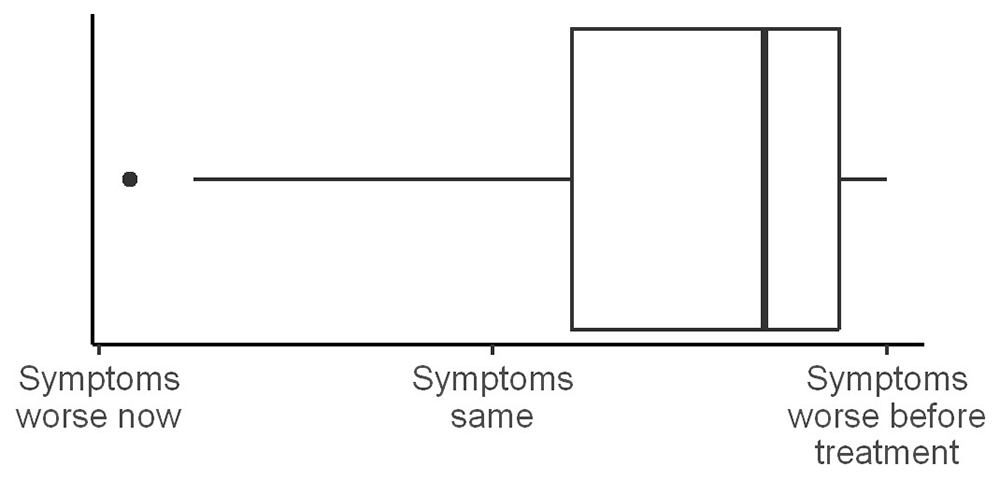
Figure 1. Self-reported response to all OCD treatment received.
Note. This question was presented on a sliding scale from 0 to 100. The ends of the sliding scale were labelled “My OCD symptoms are worse now than they were before I first received treatment”, and “My OCD symptoms were worse before I first received treatment than they are now”. OCD, obsessive-compulsive disorder.
Relationship between psychological variables and OCD severity
Hierarchical multiple linear regression was used to examine the relationship between OCD severity (outcome; measured as total OCI-R score) and the variables of interest (early life stress, experiential avoidance, active coping, planning; Table 2). The final model (Model 3) explained 21% of the variance in OCD severity. Early life stress was significantly positively associated with OCD severity, such that higher scores on the CATS were associated with higher scores on the OCI-R. Experiential avoidance was also significantly positively associated with OCD severity, such that higher scores on the BEAQ were associated with higher scores on the OCI-R. The final model found no significant relationships between OCD severity and scores on the measures of active coping, planning, anxiety or depression.
Table 2. Relationships between psychological variables and OCD severity.
OCD, obsessive-compulsive disorder.
| OCD symptom severity |
|---|
| Variable | Model 1 | Model 2 | Model 3 |
|---|
| β | B | 95% CI | β | B | 95% CI | β | B | 95% CI |
|---|
| Anxiety | 0.17 | 0.62 | -0.03 to 1.25 | 0.14 | 0.53 | -0.14 to 1.14 | 0.13 | 0.50 | -0.14 to 1.10 |
| Depression | 0.19* | 0.60 | 0.08 to 1.12 | 0.11 | 0.35 | -0.17 to 0.87 | 0.07 | 0.20 | -0.41 to 0.80 |
| Early life stress | | | | 0.26** | 4.87 | 2.11 to 7.80 | 0.23** | 4.26 | 1.38 to 7.21 |
| Experiential avoidance | | | | | | | 0.23** | 0.24 | 0.04 to 0.43 |
| Active coping | | | | | | | 0.09 | 0.46 | -0.55 to 1.32 |
| Planning | | | | | | | 0.13 | 0.52 | -0.15 to 1.34 |
| R2 | 0.10*** | 0.15*** | 0.21*** |
| ∆ R2 | 0.10*** | 0.06*** | 0.06** |
Relationship between psychological variables and self-reported OCD treatment response
Hierarchical multiple linear regression was then used to examine the relationship between self-reported OCD treatment response (outcome) and the variables of interest (predictors; early life stress, active coping, planning, experiential avoidance; Table 3). The final model (Model 3) explained 36% of the variance in self-reported OCD treatment response. In the final model, planning was significantly associated with self-reported treatment response, such that greater use of planning as a coping strategy was associated with better self-reported treatment response. Higher levels of anxiety were associated with worse self-reported treatment response. No other variables were associated with treatment response in the final model.
Table 3. Relationships between psychological variables and self-reported OCD treatment response.
OCD, obsessive-compulsive disorder.
| Self-reported OCD treatment response |
|---|
| Variable | Model 1 | Model 2 | Model 3 |
|---|
| β | B | 95% CI | β | B | 95% CI | β | B | 95% CI |
|---|
| Anxiety | -0.26* | -1.73 | -3.08 to -0.28 | -0.25* | -1.68 | -3.07 to -0.13 | -0.25* | -1.70 | -3.08 to -0.31 |
| Depression | -0.24* | -1.27 | -2.40 to -0.20 | -0.26* | -1.35 | -2.70 to -0.11 | -0.05 | -0.28 | -1.51 to 0.91 |
| OCD severity | 0.01 | 0.01 | -0.37 to 0.36 | -0.01 | -0.01 | -0.39 to 0.35 | -0.05 | -0.09 | -0.45 to 0.24 |
| Early life stress | | | | 0.05 | 1.34 | -4.30 to 7.71 | 0.07 | 1.93 | -3.88 to 7.68 |
| Experiential avoidance | | | | | | | -0.12 | -0.18 | -0.52 to 0.21 |
| Active coping | | | | | | | 0.01 | 0.09 | -2.00 to 2.06 |
| Planning | | | | | | | 0.40** | 2.68 | 0.60 to 4.74 |
| R2 | 0.18*** | 0.19** | 0.36*** |
| ∆ R2 | 0.18*** | 0.00 | 0.17*** |
Sensitivity analysis
Direct comparison of results of the two regression analyses is limited by differences in sample size (OCD severity n = 176, OCD treatment response n = 93). Therefore, the analysis of factors associated with OCD severity was repeated using only the cases that were included in the analysis of OCD treatment response (n = 93; final model R2 = 0.30, F(6,86) = 6.26, p < .001; Table 4). There was a significant positive relationship between early life stress and severity of OCD symptoms in both the original analysis (Table 2) and the sensitivity analysis (β = .28, p < .01, B = 5.22 [95% confidence interval 1.83 to 8.49]). However, whilst the original analysis found a significant positive relationship between experiential avoidance and severity of OCD symptoms (Table 2), this relationship was not significant in the sensitivity analysis (β = .05, p > .05, B = 0.05 [95% confidence interval -0.20 to 0.34]). Neither analysis found significant relationships between OCD severity and anxiety, depression, active coping or planning-focused coping (all p values > .05).
Table 4. Relationship between psychological variables and OCD symptom severity among the subsample of participants with values for the measure of self-reported treatment response.
OCD, obsessive-compulsive disorder.
| OCD symptom severity |
|---|
| Variable | Model 1 | Model 2 | Model 3 |
|---|
| β | B | 95% CI | β | B | 95% CI | β | B | 95% CI |
|---|
| Anxiety | 0.15 | 0.63 | -0.27 to 1.51 | 0.18 | 0.76 | -0.11 to 1.58 | 0.17 | 0.73 | -0.15 to 1.60 |
| Depression | 0.38*** | 1.27 | 0.60 to 1.96 | 0.24* | 0.81 | 0.11 to 1.52 | 0.25 | 0.84 | -0.06 to 1.67 |
| Early life stress | | | | 0.29** | 5.38 | 2.11 to 8.53 | 0.28** | 5.22 | 1.83 to 8.49 |
| Experiential avoidance | | | | | | | 0.05 | 0.05 | -0.20 to 0.34 |
| Active coping | | | | | | | -0.03 | -0.12 | -1.26 to 1.05 |
| Planning | | | | | | | 0.12 | 0.52 | -0.70 to 1.74 |
| R2 | 0.22*** | 0.29*** | 0.30*** |
| ∆ R2 | 0.22*** | 0.07** | 0.01 |
Discussion
The present study found that more severe OCD symptoms were associated with higher levels of early life stress and greater use of experiential avoidance. In contrast, self-reported response to OCD treatment was associated with planning as a coping style, such that a better self-reported response to OCD treatment was associated with more use of planning when dealing with stressful situations.
The observed relationship between more severe OCD and greater levels of early life stress supports the present hypotheses and fits well within the wider literature (Boger et al., 2020; Semiz et al., 2014). A number of studies have found positive relationships between OCD and emotional abuse (Hemmings et al., 2013; Mathews et al., 2008; Ou et al., 2021), and between OCD and early emotional or physical neglect (Brooks et al., 2016; Hemmings et al., 2013; Lochner et al., 2002). A smaller number of studies have also reported worse OCD outcomes in people who experienced physical or sexual abuse (Gershuny et al., 2008; Ou et al., 2021). Such findings fit within the broader research landscape in which stress in early life has been persistently associated with poorer mental health outcomes in adulthood (though see Danese & Widom, 2020, for related discussion).
The tentative hypothesis that higher levels of early life stress would be associated with reduced self-reported treatment response was not supported. However, this was not entirely surprising, given that other studies have also found no relationship between these two factors (Boger et al., 2020; Semiz et al., 2014). Boger et al. (2020) assessed 68 adult patients before and after inpatient treatment for OCD. They found that, whilst childhood maltreatment was associated with more severe OCD, it was not associated with response to OCD treatment. Whilst prior experience of early life stress is not a modifiable factor in adults with OCD, these findings do give tentative cause for optimism, as they suggest that although early life stress may increase OCD symptom severity, it does not necessarily disrupt attempts to treat those OCD symptoms.
Regarding modifiable psychological factors, it was found that, as hypothesised, more use of experiential avoidance was associated with more severe OCD symptomology. These relationships are in the same direction as previous work, which found that experiential avoidance is positively associated with OCD symptomology (Abramowitz et al., 2009; Angelakis & Gooding, 2020; Briggs & Price, 2009). It should be noted that the relationship between experiential avoidance and OCD symptomology was present in the analysis of the full sample but not in the sensitivity analysis (which included only participants who rated their response to OCD treatment). It is a question for further research whether this discrepancy is related to the characteristics of the subsample (i.e. participants who had received OCD treatment), or simply due to a reduction in statistical power. More use of experiential avoidance has also previously been associated with poorer responses to mental health treatment amongst people with depression and anxiety (Espejo et al., 2017; Eustis et al., 2020; Zeifman et al., 2023). The present study did not find a relationship between experiential avoidance and self-reported OCD treatment response, though as aforementioned this may have been related to statistical power and warrants further investigation.
The present study is one of the first to examine relationships between OCD and the use of planning as a coping style. The tentative hypothesis that more severe OCD would be associated with less planning was not supported, but there was evidence for the hypothesised relationship between better response to OCD treatment and more use of planning. While novel, the finding that planning was related to OCD treatment response but not to OCD symptom severity is broadly in keeping with the wider mental health literature, in which planning and other positive coping styles are typically associated with prevention and recovery rather than illness severity (Arslan, 2017; Ociskova et al., 2015). Related research by Fang et al. (2022) assessed OCD symptoms and coping styles on a weekly basis. They found that, in the context of the Covid-19 pandemic, increases in the use of planning (and other positive coping styles) from one week to the next predicted less severe OCD symptoms the following week.
Active coping was not related to OCD severity or self-reported response to OCD treatment. It is noteworthy that, whilst the present study examined two positive coping styles which could be considered similar constructs, active coping and planning, only planning was associated with a better self-reported response to OCD treatment. A speculative explanation for this may be that planning is more closely related to “thinking”, whilst active coping is more closely related to “doing” (Carver et al., 1989). It is perhaps unsurprising that the more cognitive style of positive coping (i.e. planning) may have more relevance to mental health treatment response.
The present research has a number of limitations. Firstly, it was conducted online via self-report, so the presence of diagnoses and courses of treatment cannot be objectively verified. Furthermore, due to the nature of the study, recruitment was targeted towards people with OCD. It is possible that people who have recovered from OCD were consequently missed. The present study is consequently limited in its ability to shed light on the treatment outcomes of a representative sample of all individuals diagnosed with OCD. Nevertheless, understanding the factors associated with a greater or lesser response to past treatment among those currently living with OCD is a worthy aim, especially given that many people do not fully recover from OCD (Fisher et al., 2020).
A further limitation is that the measure of self-perceived treatment response in the present study has not been previously validated. However, this measure performed as expected in relation to a medication-based measure of treatment resistance. Specifically, participants who reported having tried more than two medications to treat their OCD (a recognised measure of treatment resistance) scored significantly lower on self-reported treatment response than those who had tried only one or two medications. Furthermore, the findings observed with this self-report measure accord with previous findings from research conducted in-person with treatment-seeking patients (Boger et al., 2020; Semiz et al., 2014).
The present study gives rise to a number of future directions for research. The finding that more use of planning was associated with better self-perceived response to OCD treatment requires further investigation with longitudinal pre- and post- treatment studies. In addition, studies could examine whether teaching skills in planning-focused coping alongside traditional OCD treatment routes could help patients maximise potential therapeutic gains. This research highlights the utility of examining how people living with OCD experience therapeutic input over time, as opposed to the more traditional methodological approach of examining how a specific course of treatment alters OCD symptomology. In doing so it attempts to respond to the present reality for people with OCD, which typically involves waiting years between symptom onset and diagnosis (Hezel et al., 2022), and substantial difficulties accessing specialised therapy (O'Neill & Feusner, 2015; Ziegler et al., 2021). By examining potentially modifiable psychological factors associated with response across a variety of treatment experiences, the present work seeks to identify ways in which people already living with OCD can improve their chances of full or partial recovery despite this challenging societal landscape. It is hoped that this approach will give rise to further investigations which take a similar approach.
The present research found that OCD severity and response to OCD treatment were associated with different psychological variables in a sample of people with self-reported OCD. Specifically, more severe OCD was related to more experiential avoidance and more early life stress, whereas reduced response to OCD treatment was associated with less use of planning when responding to stressful situations. These findings highlight the value of focusing on the lived experiences of people with OCD in order to identify modifiable factors that could maximise potential therapeutic gains.
Ethics and consent
This project received ethical approval on 24th May 2022 from the Philosophy, Psychology and Language Sciences Research Ethics Committee of the University of Edinburgh (Reference Number: 227-2122/8). All participants provided written informed consent by completing an online consent form.