Multilevel of gender equality learning
The framework aims for individual (personal) and collective capacity building for gender equality. Knowledge building, skills development, and attitude changing can improve the individual's capacity to proceed with a gender equality change. Personal development refers to the psychological processes that occur in the individual through learning and acting that can influence changes at the collective level via interactions the individual has with other members of the collective entity (working group, network, CoP etc.)29, and through the ‘Spillover’ phenomenon. The ‘Spillover’ phenomenon was first explored in chemistry30. But it can be observed in human groups behavior where one individual behavior can cause the adoption of related behaviors by others31.
In the following paragraphs we present the SFL framework characteristics. Figure 2 depicts the SFL new deliveries that include narratives, approaches, toolbox, and mindset, and considers adaptability and resilience in the process.
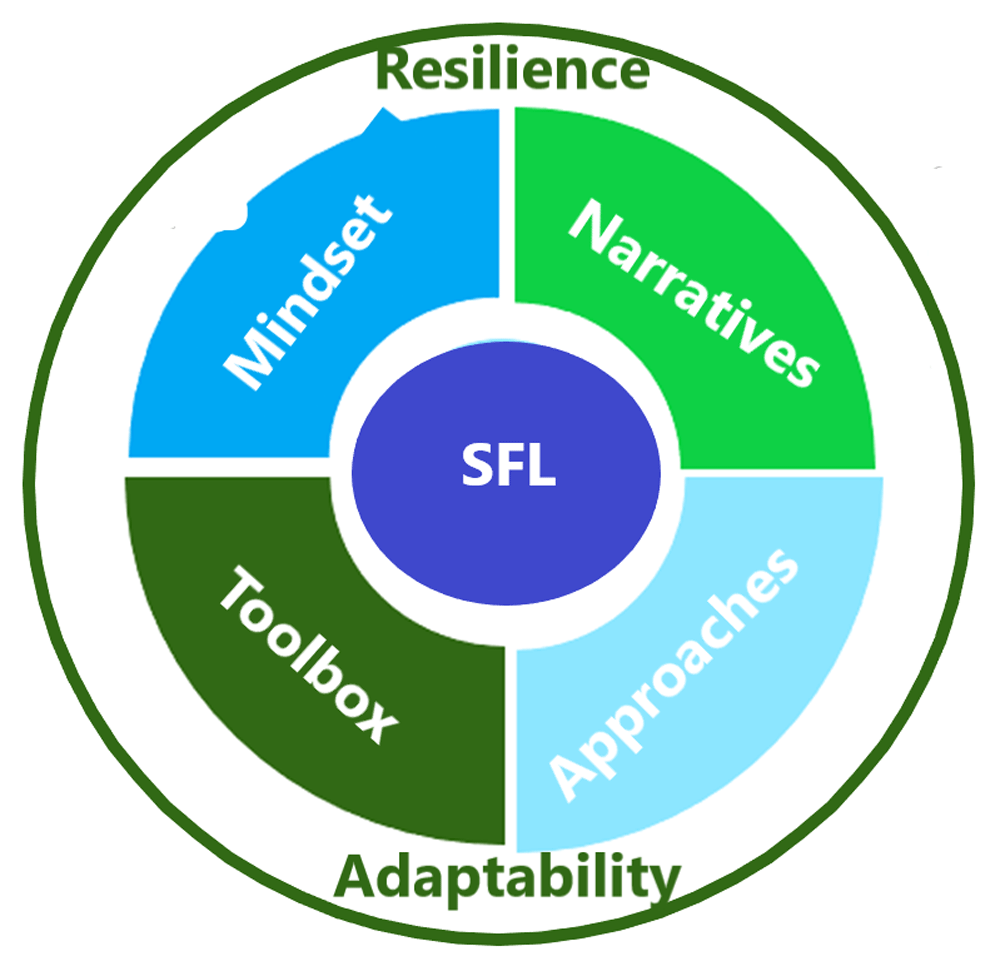
Figure 2. SFL framework’s new deliveries.
Step 1: SFL new narratives
We assumed the need to change the narratives around gender equality in engineering education settings and went beyond a charity cause, since we observed that the charity cause cannot be relegated to the realm of social justice within technocratic settings32. Therefore, we brought to the discourse new arguments and discovered new narratives that can shed light to the multifaceted gender equality principle, while we explored other promising frameworks for transforming higher engineering education towards this objective.
Since we recognize that gender equality is a wicked problem, inherent in any socio-economic system, as well as in higher education systems, we integrated arguments based on natural and social capitals, ethics, and values, to serve as agencies for planning and gender equality mainstreaming, advocating that these integrations can accelerate fundamental changes towards a sustainable, equitable and resilient life.
The key message is that our framework is based on new narratives that can help overcome social, contextual, and territorial assumptions and difficult settings, such as the engineering ones. Our narratives can foster systemic gender equality and holistic approaches for a whole-system transformation.
Looking beyond traditional gender lens. Gender lens approaches have expanded in recent years regarding the implementation of gender equality in universities/organizations. The aligning of the traditional gender lens with the SDGs gains a broader perspective. This alignment matters because it facilitates the practice of gender mainstreaming in engineering settings. Gender mainstreaming matters because it acknowledges that all SDGs (from climate change to food security, resources, energy) impact different genders differently.
Going beyond gender lens and fairness argument, we advocate that since gender equality is a challenge for many sectors, (from education and research, to production, economy, etc.), it has implications with climate change, health, security of food, water, waste, energy, biodiversity, and technological innovations. We argue that the transition towards socio-ecological resilience should be aligned with the fundamental aspect of gender equality and that by increasing gender equality in all sectors a positive impact on productivity, innovation, sustainability, resilience, and democracy can be brought.
Differentiated vulnerabilities and gender inequalities can impede the effectiveness and sustainability of climate change responses which are essential for tackling global challenges.
The key message here is that women equal participation in all sectors should be a contextual policy and a leverage for sustainability, resilience, and democracy.
Gaining a contextual perspective. Engineers can play an important role in most of the SDGs’ implementation, mainly by designing cost-efficient technological projects to preserve natural resources and the environment. In the 21st century, engineering is defined as the ‘social practice of conceiving, designing, implementing, producing, and sustaining complex eco-socio-technological products, processes, or systems’33. We believe that technology must serve the needs of humanity, in terms of providing sustainable resources for the present and future generations34,35.
A good leader in engineering settings and sensitive to gender equality principle can find synergies of SDGs technological and engineering innovations with gender equality and identify R&I activities to connect with gender vulnerability agency (to connect gender equality with clean water and sanitation systems (SDG6), energy systems (SDG7), infrastructures (SDG9), cities (SDG11), production and industrialization (SDG 9, 12), and in climate action (SDG13)).
The message here is that, when augmenting gender equality in engineering, it is basically arguing for sustainability and sustainable development implementation, because SDG5 should be horizontally integrated into all SDGs. Any top manager of engineering context and setting, committed to sustainable development and having understood the interconnectivity of all SDGs, cannot deny the commitment to gender equality that is crucial in accelerating sustainable development.
Gaining a complex systems perspective. SDGs implementation requires solutions that need critical thinking, creativity, and knowledge-transfer. It requires to take a complex system approach that integrates social sciences, engineering, and humanities36.
Systems thinking is a useful tool in addressing complex situations. It is problem-solving framework that explores inter-relationships of the system, perspectives of the situation, and defines critical boundaries37, while it enables a more contextual perspective by shedding light on the role of social, economic, and historical conditions38.
Engineering institutions should recognize that gender equality requires changing the entire system, because gender equality is nested within the system, and they need to adopt a whole-system approach from leadership to capacity development, accounting, and assessment of the institution to creating a new wisdom39.
The message here is that an appropriate leadership for gender equality must take a systemic and contextual analysis of the problem, reflexive, and circular approaches, to go beyond reductionism that claims individuality in society without interconnections40.
Reminding the social role of universities. The sustainability-oriented education and transformation at the higher educational level calls for equality and diversity41. In the 21st century, universities are the key drivers of education for sustainability (EfS). They have the responsibility to integrate gender equality into teaching, research practices, and to bring a shift in ways of thinking. Engineering schools have the responsibility, besides developing appropriate competencies in designing technological products, processes, or systems, to raise awareness for sustainability and inclusivity42,43, and developing leadership capability44.
The message here is that when augmenting for gender equality in engineering settings, it is basically augmenting that both men and women engineers, managers and scientists should make substantial contributions to the sustainable development, work equally on sustainable solutions that benefit entire societies. Gender equality can boost an interconnected and knowledge-based world economy that can distribute equal opportunities for men and women.
Step 2: SFL adopted approaches
STIGMERGY mechanism: self-assembling systems. The science based ‘Stigmergy’ mechanism can be useful in addressing complex problems by self-organized collective schemes, with coordinated actions and interactions of individuals, and feedback45. It is a biological term documented by Pierre-Paul Grassé (1959) describing the mechanism of termites to coordinate actions without having a management structure46. This mechanism as a phenomenon can be applied to human environments, both natural and engineered, and it is especially referring to CoP and networks’ coordinative contributions46. In human systems, it means that individuals actions leave traces in the environment that affect the behavior of other individuals in the network45, and changes that occur in one part can influence changes in another part of a system47.
The message here is that in a CoP or a network that are self-organized collective schemes, with coordinated actions and interactions of individuals and feedbacks, gender equality change occurs when one member actions affect subsequent behavior of other members, creating the so-called change-agents.
SPILLOVER phenomenon: participatory systems. As scientists in chemical engineering, we are aware of the ‘Spillover’ phenomenon that defines effects of an activity spread further than was originally intended48. We assumed that for a gender equality perspective in engineering education, spillover could happen as an interesting phenomenon to shed new light on how the process of a change occurs, and how an individual can become a change-agent49.
Gender roles are learned through social processes and have a strong impact on the gender progress in universities. The spillover behavioral phenomenon applying on a system composed by many entities like the RMEI network (that is composed by different engineering schools), can help in developing GEPs, based upon a common willingness to share, and extend experiences beyond the context of our initial community in which we work. This can result in the following: one well-performing school (member of RMEI) in one country can inspire another school to do the same in another country, regarding the development of a GEP, and to adopt it accordingly to the specificity of national context. Therefore we hypothesized that, by sharing common values of sustainable development and equality in a clear, open, and collaborative way to the members of the network (professors and students), we could catalyze gender equality practices in all engineering institutions of the Mediterranean CoP, based on the “behavioral spillover” which is the notion that “one behavior triggers adoption of other behaviors”.
The message here is that evaporation of some biases can be catalyzed through trustful interrelations, interactions, and interchanges among members of a CoP and due to the behavioral spillover phenomenon, which takes place where the adoption of one behavior causes the adoption of additional related behaviors by others.
4I organizational approach (Intuiting, Interpreting, Integrating, Institutionalizing). The ‘4I’ approach of organizational learning describes the processes that are involved in creating, retaining, and transferring knowledge within an organization/institution, that can be applied at many scales. According to the 4I approach, the process of learning is taking the steps of Intuiting, Interpreting, Integrating, and Institutionalizing. Interpreting is a more conscious process than intuiting, involving conversation and dialogue that leads to mental shift among individuals, while integrating involves taking coordinated actions and focusing on collective action. Finally, institutionalization occurs when new ideas and actions become embedded into rules, procedures, and infrastructures50.
The message here is that in conceptualizing the gender quality change at the RMEI network and member-institutions, we took the steps of:
• Intuiting (at faculty staff and students’ level).
• Interpreting (bridging faculty staff and students with the gender equality working group).
• Integrating (shared understanding among members).
• Institutionalizing (at the network and member-institutions level).
Step 3: SFL new toolbox
Once we positioned SFL as a driver of gender equality change, we provided the tools that enable the change to thrive.
A clear vision for a desirable future based on common values. Willing to bring about gender equality change in the network we created a clear vision of the type of change we wanted. To change a culture of leadership we were based on mutual respect and trust, empowering others to become ‘change-agents’ at their institutions, as well at their life.
The SFL leader must compel a strong set of common values among members and create relations that are based on trust. The adoption of a GEP statement was the result of members’ commitment to common values. GE is an ethical concept, with values and beliefs underpinning it.
The new toolbox offers the discovering of own values in the domain of sustainable development shared, with other individuals and the collective.
Interdisciplinary and transdisciplinary approaches for systemic solutions. For engineers to solve complex socio-ecological problems, there is a need for interdisciplinary approaches beyond technological knowledge and simulation models. Sensibility to interdisciplinarity, transdisciplinarity, and complexity matters for a global transformation process51–55.
In a disciplinary approach to a problem, each scientist uses processes to solve the problem through a developed methodology. For example, science and engineering contributes technical and scientific innovations, while social sciences contribute language and ethics52,53. In an interdisciplinarity approach a connection of both fields of knowledge is occurring7.
SFL tool is encouraging to work closely with experts from social science, humanities, art, and other stakeholders, to overcome the barriers of gender equality in engineering education.
Creativity in solving complex problems. Problem-solving learning is particularly reflected in the process of engineering education. Solving a problem is a complex cognitive process requiring mental effort, critical thinking, and creativity55. The realization of problem-oriented learning requires to develop skills of critical thinking, skills in argumentation56, while various contextual factors impact the creative process of informal social groups57.
The SFL toolbox creates capacity and openness to support creative ideas in the process of innovation or change. In an ever-changing world to meet the needs of societal demands, creative leadership and critical thinking are required, which SFL offers.
Pythagorean perspective: art-based learning. Literature, music, mathematics, and art are constituents of the Pythagorean perspective58. Learning involves enriching the ‘Self’, broadening visions of an individual59.
Art-based learning can be used in gender equality CoP-based projects to connect to social inquiry and foster a dialogue60–62, developing connections between different ways of knowing and interdisciplinarity52, allowing different opinions to be expressed with a nonviolent communication62.
The art-based methodology is what RMEI leaders use during the Michelangelo Workshop, annually co-organized with the students of the network (GAMe sub-network), for gender equality learning.
The Socratic “know yourself”: developing character and consciousness. First, Socrates, the Greek Philosopher, with his famous ‘Know Thyself’, has advocated working on yourself to obtain consciousness63. Similarly, in China, Confucius approached learning and education by emphasizing character cultivation of individuals60.
The concept of consciousness appears in the field of psychology, and it is defined as self-awareness, awakening state, and knowledge, according to Velmans (2009), entailing a system of beliefs. It is the state of an individual being aware of something, and it is related to individuals' tendency to engage in social change activities64. It entails:
• Emotional dimensions (beliefs and values).
• Perceptions (attitudes).
• Cognitive factors (information and knowledge).
• Action taking (environmental behavior)
Consciousness can be referred to as the experience of the 'Self'65 while understanding how human consciousness is functioning can deliver societies with significant opportunities53. Workshops can help consciousness enlarging and understanding of gender bias and biased conceptions66.
The SFL toolbox is used within the RMEI CoP in helping professors and students understand the relationships between their actions and the impact they have on society and others. For this reason, awareness workshops and symposiums were organized by RMEI leaders.
Einstein’s quote ‘the intuitive mind is a sacred gift: emerging intuition. Albert Einstein has had often quoted intuition with ‘the intuitive mind is a sacred gift’. Some other researchers have been debating the value of intuition in decision-making for years67, while cognitive scientists accept that intuition can lead to effective decision-making, as Gerd Gigerenzer from the Max Planck Institute for Human Development in Berlin, argues in his book entitled ‘Intuition is the Intelligence of the unconscious’68. Capra (1989), in his book entitled ’Uncommon Wisdom’, argues that humans dispose an extraordinary reservoir of power, love, and wisdom within69, that needs to be activated by practices66.
Intuition can be a helpful tool. This is a SFL tool used within the gender equality working group (GEWG) in shaping the GEP for RMEI.
Step 4: SFL new learning processes
Introducing new forms of learning: living lab. For a gender equality change new forms of learning (like the living lab) can benefit from the co-sharing, collaborating conditions of a network by engaging stakeholders actively70,71. Living lab for gender equality is a transdisciplinary form serving as the vehicle and offering space for systemic change activities72.
A living lab has been organized in RMEI to be the vehicle for gender equality systemic change, offering space for collaboration and innovations. The living lab was very effective for the RMEI members during the disruption that Covid-19 pandemic has brought with closed borders and online communication, because it offered the virtual space for interacting and collaborative papers writing (14 collaborative papers collaboratively submitted to peer review journals) for the consolidation of knowledge in gender equality.
Introducing transformation. For a gradual transformation of engineering education institutions, fostering awareness of the ‘systemic view of life’ can enhance individual change7, making a shift from bias perceptions into gender equality in co-existence4, adopting finally a ‘whole-institution approach’.
We believe that transformative learning deserves a role in engineers’ education to go together with technological achievements, inventions, and innovations.
Step 5: SFL new mindset
Affording the heterodox views, respect democratic freedom, reaching a consensus. The concept of gender equality is a cross-cutting issue of social and cultural constructions on women and men’s social relationships73. Various cultural representations have a strong influence on gender equality beliefs and perceptions74, acquired through social processes75. Cultural change in a geographical context is seen as a change in shared values76.
In developing a gender equality policy (GEP) at RMEI, we had to respect the high diversity of national contexts, without demonizing heterodox conceptions and beliefs. To transcend the complexity of national contexts, we used the arguments of ethical commitment to SDGs, common values, trustful relationships, and effective communication.
Our SFL framework is respecting national-context complexities existing in Mediterranean countries, depending on the level of gender equality advancement in each country, knowing that this differentiation can also create differentiation in perceptions of individuals on gender equality processes and level of interventions for RMEI. We overpassed these difficulties by respecting the cultural differences, heterodox views and disagreements among members, trying to always reach a consensus.
Avoiding judgmental comparisons. Gender equality change asks for voluntary actions. People who are participating in CoP are volunteers; they offer time and energy for the CoP that is beyond their professional workload and obligations at their institution.
Among members of the RMEI, gender equality policies and institutional ambitions are more advanced in some institutions, mainly from European countries where European and national legislation is in place. More ambitious policies and new gender equality options are needed for the less-advanced ones.
SFL calls for co-creation on a volunteer basis and for exchanging knowledge and best practices, while avoids creating a competition among the low-advanced individuals and institutions with those that are high-advanced in gender equality practices. It empowers by inspiring members to enhance their commitment to SDGs, encouraging the use of gender equality strategies in a way that does require a deeper theoretical understanding of the change theory, but a practitioner character that fits to engineering settings, and making optimum use of network’s capacity.
Need for responsibility and commitment. A leader for gender equality is someone who can inspire through the formation of positive relationships and empowering others to lead13, inspiring initiatives to strengthen consciousness, responsibility, and commitment that then can give birth to new gender-sensitive initiatives. Responsibility assumed by the members of the network can provide a commitment and a sense of the mission77. Trust must be sustained with evidence-based interventions and transparent communication.
SFL inspires humanistic approaches, improves individuals’ responsibility, creates trustful relations, stimulates emotions.
Credibility in communication with intergenerational, intercultural, international groups. For leading multiple generations from diverse cultural backgrounds (faculty members and students from 10 different Mediterranean countries), we took into consideration the different strengths and weaknesses of each sub-group, interchanging with them with respect, challenging them to contribute to the CoP by finding ways to involve them in initiatives and processes, in a win-win basis.
The RMEI CoP is a multicultural and multigeneration group; members choose their actions according to their beliefs and experiences.
Consolidating knowledge and dissemination of results. It is important to consolidate knowledge on gender equality and disseminate the results. During the Covid-19 lockdowns, we achieved knowledge building and consolidation by writing collective publications on:
Statistical analysis of gender segregated data from various member-institutions.
Questionnaire building and analysis of responses on perceptions of gender equality in Mediterranean Engineering Schools and society, and on other domains of engineering innovations and practices.
Analysis of responses on Covid-19 remote work impact on Mediterranean female researchers.
Resilience to climate change hazards and implication of gender differentiated vulnerabilities.
Self-assessment frameworks and monitoring indicators development.
Lessons learned.
A SFL leader is a person capable of finding ways to keep the community active. In RMEI, we provide capacity, experience, guidance, and creative ideas for knowledge consolidation by writing collaborative publications for peer review international journals and for conferences, to collaboratively disseminate results on gender equality.
Step 6. Resilience and adaptability-disrupt the Covid-19 disruption.
Lockdown and online remote work. The face-to-face aspect of CoP and university life was disrupted during the Covid-19 lockdowns. Meetings, conversations are ceased. It is showing that the socio-economic implications of Covid-19 are impacting women disproportionately78 because the increased childcare during schools closing is having impacts on the distribution of home activities and childcare79. Addressing the question of how the current Covid-19 pandemic reveals existing gender injustices, we propose new caring social norms to universities80.
Digital stage. In the Covid-19 disruptive age, physical services are being replaced by online ones, reducing the interventions and activities of our CoP81. However, the current transition to the digital stage provides an opportunity for:
Redesigning learning processes on gender equality.
Aligning technology and gender equality skills.
Consolidation of knowledge.
Building human-centric leadership culture.
RMEI adapted to the Covid-19 disruption by keeping the CoP active via introducing new ideas of activities for knowledge consolidation, inspiring, and supporting collaborative publications on gender equality issues. In addition, collaborative surveys with dedicated questionnaires on how the Covid-19 remote work has impacted Mediterranean female academic developed and distributed to Engineering Institutions faculty members and young research, PhD students etc. while the outcomes the foundation of publications sent to international journals and other Universities networks. This is an on-going process. The above increased the adaptability and resilience of our GEP and CoP.
To increase resilience and adaptability and strengthen the feeling of belonging to a CoP that can be weaken especially for those who joined the CoP recently or due to the lack of face-face interactions during Covid-19 pandemic, we countered that by keeping an active online communication and organizing capacity building workshops online.