Introduction
Ensuring food security is a top goal for economic policymakers in developing countries because it is closely linked to social stability in these countries, where extreme poverty is common. Food and Agriculture Organization (FAO) estimates that over 3 billion people lacked access to a nutritious meal in 2020, and over 720 million people were undernourished worldwide (FAO et al., 2021). Most of these individuals reside in underdeveloped nations, mostly in sub-Saharan Africa. Due to the persistent food insecurity in parts of Uganda, achieving Goal 2 of the Sustainable Development Goals (SDG) continues to be a top priority. Statistics from FAO show that 69.2% (30.6 million) of Ugandans experienced food insecurity at the end of 2020, with 21.7% (9.6 million) experiencing extreme food insecurity (FAO et al., 2021). This grim reality not only poses immediate health risks but also inflicts long-term economic repercussions. For instance, inadequate food production and availability contribute to stunted growth, incurring an average cost of over USD 7.7 billion for Uganda alone (Namugumya et al., 2014). Compounding these challenges are substantial grain losses within Low Income African Countries (LIAC), amounting to roughly USD 4 billion annually—a staggering figure that could sustainably feed more than 48 million people (Zorya et al., 2011). Adding to the complexity is the looming threat of climate change, which exacerbates existing vulnerabilities.
To reverse these troubling trends, several nations, including Uganda have modified their long-term plans for the shift to low-carbon economies and provision of affordable off-grid renewable energy (RE) sources especially in rural areas to support year-round agricultural production. Increased access to energy can lead to increased productivity and incomes, reduced food losses, enhanced climate resilience of farmers, reduced poverty, and enhanced rural development, contributing to social stability (IRENA & FAO, 2021). For agricultural production, off-grid RE presents a compelling solution that can address several critical challenges facing the sector today. Off-grid RE is needed to power agricultural development in aspects of powering irrigation, post-harvest preservation (e.g., cooling/chilling and drying), agro-processing, and other forms of value addition. For example, solar-powered irrigation systems can empower farmers to optimize their crop production, even in regions with unreliable access to conventional energy sources. By extending the growing seasons and reducing water scarcity constraints, solar technology contributes directly to increased crop yields, enhanced food security, and enhanced overall economic resilience.
The government of Uganda recognizes and is committed to deploying RE technologies as one of the strategies for achieving its medium and long-term goals articulated in its Vision 2040 and the third National Development Plan (NDPIII). Several reforms have already happened, including the Energy Policy (2002) which aims to meet the energy needs of Uganda’s population for social and economic development in an environmentally sustainable manner; the Renewable Energy Policy (2007) which aims to increase the share of renewable energy in the national energy mix; and the Electricity Connections Policy (2018) which aims to increase access and provide cleaner energy for Ugandans (MEMD, 2019). The Agricultural Policy (2013) provides a framework for renewable access to aid agricultural growth and competitiveness of the sector. Complementing this, are the Biomass Energy Strategy and the Global Energy Transfer Feed in Tariff (GET FiT) programme, while the Biofuels Act 2018, seeks to blend petroleum with up to 20% biofuels and boost power generation from municipal waste, aligning with broader goals for sustainable bioenergy development. Institutional frameworks are in place for the promotion of biogas technology. The Ministry of Energy and Mineral Development oversees these initiatives, supported by departments advocating for climate-friendly practices. Besides, every district has a department of environment charged with the promotion of RE technologies as part of environment conservation. It is also important to note that the government has licensed local and international NGOs and business enterprises to supplement government initiatives in promoting RE technologies, thus fostering opportunities to scale up the adoption of RE technologies.
A shift to RE technology is a testament to the global trend toward renewable energy and a strategic move to diversify the energy mix and boost agricultural production and economic growth in Uganda. The adoption of RE technologies in agricultural production also aligns seamlessly with the African food systems transformation agenda (Ulimwengu et al., 2023), a critical initiative aimed at addressing the unique challenges facing Africa's agriculture and food security. In the context of this transformative agenda, RE serves as a potent catalyst for change by enhancing agricultural sustainability, resilience, and efficiency across the continent.
However, access to affordable and reliable energy remains a global challenge, that requires concerted effort to address. The International Renewable Energy Agency (IRENA) estimates that 600 million people, or 43% of the total global population, lack access to energy, most of them in sub-Saharan Africa (IEA, 2022). In 2001, the Ugandan government launched the Rural Electrification Strategy and Plan (RESP) for the use of solar technology in rural areas but achieved only 8.75% of the expected target over the 11 years (Hansen et al., 2014). More than 90% of Uganda’s energy consumption comes from renewable sources, but mainly from traditional firewood and charcoal. The high reliance on biomass as a fuel brings added burdens to livelihoods including harm to public health (World Health Organization, 2014), diminished opportunities, particularly for women and girls who are responsible for collecting biomass, environmental degradation, and contributing to climate change.
The low uptake of RE technologies has been associated with high initial installation costs. There is a lack of sufficient consumer financing, coupled with high interest rates for RE equipment. Besides, there is a general lack of public and policy awareness in the utilization of RE technologies in Uganda. The most common issues associated with this are inadequate knowledge regarding the use, importance, costs, and effectiveness, and socio-economic and environmental benefits that are derivable from such technologies. And the additional fears concerning the economic feasibility of solar projects live on.
This study is aimed to provide evidence of the economic, environmental, and societal impacts of adopting off-grid RE in agricultural production in rural Uganda. The study specifically focuses on the use of multiple off-grid RE sources, namely solar, biogas, and charcoal briquettes, explicitly for agricultural operations. It emphasizes their potential benefits in agriculture and addresses the challenges and opportunities associated with their implementation. The study also assesses the current policy and institutional framework on the use of RE technologies in agricultural production in Uganda. Study findings offer valuable insights for agricultural stakeholders and researchers seeking to transition towards sustainable energy practices in the sector by presenting an overview of alternative energy sources for smallholders and their applicability in energy management.
This study is justified on several fronts. Firstly, rural areas in Uganda often struggle with limited access to reliable energy sources, impeding agricultural productivity, which is a cornerstone of the nation's economy and livelihoods. Secondly, embracing RE solutions holds the potential to significantly reduce greenhouse gas emissions, aligning with global climate change mitigation objectives. Lastly, the study can inform the formulation of effective policies and best practices for implementing off-grid RE, thereby ensuring sustainable and resilient agricultural systems.
Methods
Study areas
The study was conducted among 7 rural districts, namely: Kiboga, Kyankwanzi, Luweero, Mityana and Nakaseke districts in Central Uganda; Kamuli district in Eastern Uganda; and Nebbi district in Northwest Uganda. Data collection was conducted in a phased manner starting with household surveys with cooperative and non-cooperative members in Kiboga, Kyankwanzi, and Luwero districts, key areas of operation for Action for Rural Women’s Empowerment (ARUWE); followed by key informant interviews. Case studies were documented in Mityana, Nakaseke, Kamuli and Nebbi districts, where RE has been adopted supported by other organisations, to gain further insights on RE use for agricultural purposes to enable generalization of the information to various other contexts.
Sampling
Survey respondents were drawn from three districts - Kiboga, Kyankwanzi, Luweero – sampled from cooperative and non-cooperative members in ARUWE areas of operation. Action for Rural Women’s Empowerment (ARUWE) is a non-profit; Non- Governmental Organization working with marginalized groups of people in Uganda especially the rural women, Youth and Children, focusing on among other things, enabling communities to adapt to climate change, advocating for rural women’s economic justice, and evidence generation on key social, economic and environment issues through collaborative research. On average, each district has 3 cooperatives, each having 120 farmers (making 360 farmers in total). A population size of 360 of cooperative members per district was used for computation of the sample size. Using the Krejcie and Morgan (1970) table for sample size determination, the corresponding sample size for a population of 360 was 186 per district, totalling to 558 participants for the three districts. An equal number of non-cooperative members was targeted, giving a total sample for both cooperative and non-cooperative members of 1,116 households. Stratified sampling was applied; one stratum constituting crop farming and the other one for livestock keepers. Keen interest was paid to having an equal representation number of males, females, youth, and social class. For non –cooperative members, given that it would be difficult to identify them, an exponential non-discriminative snowball sampling technique was employed. The first participants were identified through the cooperative leader from within the vicinity of the cooperative. Data collection process and data cleaning managed to retain only 1068 records that were included in the analysis (Table 1). However, this sample size is still large enough to make generalisations about study findings.
Table 1. Socio-demographic characteristics of respondents in the study districts.
| Variable | Category | Kiboga | Kyankwanzi | Luwero | Total |
|---|
| Respondents (#) | Male | 154 | 157 | 133 | 444 |
| Female | 218 | 217 | 189 | 624 |
| Membership to cooperative | Cooperative members | 177 | 151 | 160 | 488 |
| Non-cooperative members | 195 | 223 | 162 | 580 |
| Age category (%) | 18–34 | 26 | 29 | 20 | 25 |
| 35–59 | 59 | 57 | 75 | 63 |
| Above 60 | 15 | 14 | 5 | 12 |
| Education level (%) | No School | 31 | 41 | 5 | 27 |
| Primary Level | 39 | 32 | 43 | 38 |
| Post-primary certificate or vocational level | 4 | 5 | 7 | 5 |
| Secondary and high school | 22 | 18 | 36 | 25 |
| Tertiary | 4 | 4 | 9 | 6 |
| Land tenure (%) | Borrowed | 2 | 2 | 1 | 2 |
| Caretaking | 2 | 2 | 3 | 2 |
| Kibanja (tenant) | 80 | 78 | 76 | 78 |
| Owner (Title) | 13 | 15 | 17 | 15 |
| Rented | 3 | 3 | 3 | 3 |
| Size of land (acres) | mean | 6.9 | 5.8 | 7.3 | 6.6 |
| Std. dev. | 30.7 | 12.4 | 21.2 | 22.8 |
Case study participants were selected from Kamuli, Mityana, Nakaseke and Nebbi district. The criteria for selection of respondents included: farmers using RE for at least one year prior to the study, and use of RE for agriculture purposes (exclude cooking and lighting). In total 14 (solar energy 6, biogas 4 and briquettes 4) cases were identified and subsequently documented. These cases were identified through partners that form the Uganda National Renewable Energy and Energy Efficiency Alliance (UNREEEA).
Finally, 20 key informants were identified and interviewed. Key informants were mainly drawn from civil society organizations, government line ministries and departments (Ministry of Energy and Mineral Development, Ministry of Local Government), regulation authorities, and academia.
Data collection
The study employed a cross-sectional design and collected primary quantitative and qualitative data, as well as included reviewing of documents to collect secondary data. Both quantitative and qualitative data were gathered through household surveys, key informant interviews and case study documentation.
For household surveys, data were gathered through individual interviews with both cooperative and non-cooperative members using structured questionnaires, and through face-to-face interviews conducted by trained enumerators. A structured questionnaire was developed and used for data collection. Data were gathered on household demographic characteristics, farming systems (both livestock and crops), use of RE technologies in agriculture, perceived impacts, benefits and challenges of using RE technologies, awareness of climate change factors and coping measures. The questionnaire was programmed on the Kobokollect platform and deployed on tablet computers which allowed the utilisation of in-built checks on data validity that restrict the entry and submission of data that does not meet the required criteria.
Interviews with key informants were done using a semi-structured interview guide administered by trained enumerators and ARUWE team. The focus was on understanding the adequacy of the current policy and institutional frameworks on the adoption of RE technologies in agriculture at the national and regional levels.
Case studies were documented in districts outside ARUWE areas of operation with the aim of recollecting practical experiences of adopting RE technologies in agricultural production, for cross learning and further validation of perceptions of ARUWE project participants. The studies explored different agriculture enterprises in different geographical and farming systems enabling generalisation about their impacts on agriculture in rural Uganda.
Informed prior consent was obtained from all participants before the questionnaire was completed. The purpose of the study, procedures, benefits, privacy and confidentiality, how data will be handled and stored, and the products that will be generated from the study were explained to the respondents. Providing responses was voluntary and no payments were promised or given to the respondents. Consent for household surveys was verbal and gathered via tick box on the Kobo data collection mobile application. Due to low literacy levels of most of the target communities in rural Uganda, written consent was considered not appropriate as participants may not fully understand the content of written documents, leading to misinterpretation. Besides, in various rural regions, there are sensitivities around collecting signatures. Communities might associate signing documents with political activities, or payments or fear potential repercussions. These challenges due to literacy levels and socio-political concerns were explained to the REC, and it gave approval to use verbal consent as per our submitted tools. Participants had to agree to the interview before being able to move on with the questionnaire. Further, enumerators were guided by local leaders during the data collection process which contributed to ethical research conduct, by ensuring respect for individuals and communities, building trust and minimising risks, supporting the consent process, and gaining permissions, approvals and building legitimacy. Decision to use verbal consent was guided by literacy levels but also the need to be sensitive to prevailing socio-political environment. For key informants, consent was written. Ethical approval was provided by Uganda Christian University Research and Ethics Committee (REC), approval number UCUREC-2022-256 on 19 January 2022. Approval by the REC included informed consent (oral for households and written for key informants), data collection tools and protocol.
Results
Socio-Demographic characteristics
Table 1 shows the socio-demographic characteristics of respondents. Most of the respondents were between 35–59 years old. At least 25% were below 35 years, the youth category, while 12% were above 60 years. Education levels were generally low: at least 65% of respondents either had no schooling or attained primary-level education. At least 31% attained secondary or tertiary education.
The average land size was 6.6 acres, highest in Luwero (7.3 acres) and lowest in Kyankwanzi (5.8 acres). However, the majority of the households did not own the land on which they farmed. At least 78% were occupying the land as tenants, renting (3%), and borrowing or caretaking (4%). Only 15% of the respondents legally owned the land and held land titles for it. Land tenure systems in Uganda, especially in central Uganda, are very complex in a manner that the few titled owners (also known as landlords) have the biggest say on land vis-à-vis the land tenants. While land tenants utilize the land portions of the land they occupy, they are susceptible to land conflicts with, and evictions by the titled owner (Bako, 2009; Mwesigye & Matsumoto, 2013). The land tenure system affects the level of crop production and enterprise mix, as non-owners would normally invest in short-term crops and temporary investments.
Agricultural production systems
Crop production in the study districts was mixed, with the majority of farmers (74%) growing crops both for substance (home consumption) and market (commercial) (Figure 1). At least 24% were purely subsistence and only 2% were purely commercial. There was no statistically significant difference in crop production between cooperative and non-cooperative members. Crops for home consumption were dominated by legumes and cereals, while cash crops included coffee, cotton, tobacco, and vanilla. Crop production varied by district with farmers in Luwero growing mainly crops for subsistence, while in Kiboga and Kyankwanzi there were comparatively more farmers growing crops primarily for cash. There was no significant difference in the scale of crop production between cooperative and non-cooperative members.
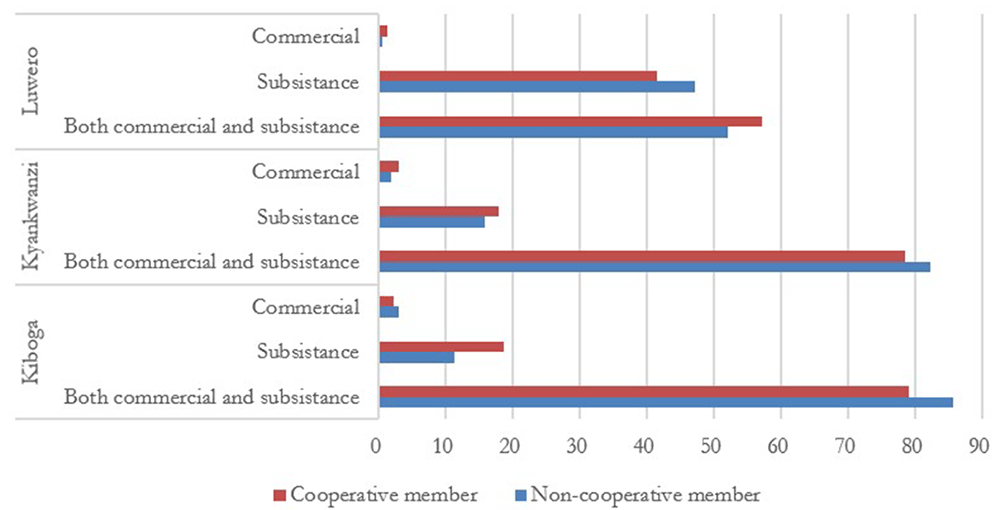
Figure 1. Scale of crop production in the study districts.
While all the households kept some form of livestock, this was dominated by poultry production on a substance level (Table 2). Households in Kiboga had the highest number of poultry farmers. Fish farming was scanty in the three districts with Luwero having none. Kiboga district had more farmers engaged in cattle and goats rearing for commercial and subsistence farming respectively. More farmers in Luwero reared pigs mainly for commercial purposes.
Table 2. Proportion of farmers engaged in cattle production and scale of production in the study districts.
Cattle
production | Kiboga | Kyankwanzi | Luwero |
|---|
| Subsistence | Commercial | Subsistence | Commercial | Subsistence | Commercial |
|---|
| Overall sample | 53 | 47 | 63 | 37 | 40 | 60 |
| Type of livestock | | | | | | |
| Cattle | 2 | 21 | 6 | 17 | 1 | 18 |
| Fish | 0 | 0 | 1 | 1 | 0 | 0 |
| Goats | 25 | 22 | 20 | 19 | 10 | 27 |
| Piggery | 14 | 17 | 25 | 31 | 10 | 33 |
| Chicken | 52 | 39 | 45 | 31 | 76 | 21 |
Others (e.g.
ducks, turkey
etc) | 7 | 1 | 3 | 1 | 3 | 1 |
Adoption of RE technologies
Survey results showed that all the respondents used at least one RE technology among the three – solar, charcoal briquettes, and biogas. Solar technology was the most adopted (92% of the respondents). Charcoal briquettes and biogas were adopted by 8% of the respondents, 4% for each.
Disaggregated adoption rates show that women were more likely than men to adopt RE technologies, in particular solar and charcoal briquettes (Figure 2). There was a statistically significant (p=0.001) difference between men and women in terms of adoption of charcoal briquettes. Men were more likely to adopt biogas, but the difference with women's adoption is not statistically significant. There was a statistically significant difference in adoption between the districts for all the REs (p<0.01). Respondents in Luwero were more likely to use charcoal briquettes compared to other districts, while those in Kyankwanzi were more likely to use biogas compared to other districts. Adoption of RE technology in Kiboga ranged between 22 and 39%. Kiboga and Kyakwanzi are within the cattle corridor, and this would support biogas production compared to Luwero (Table 2).
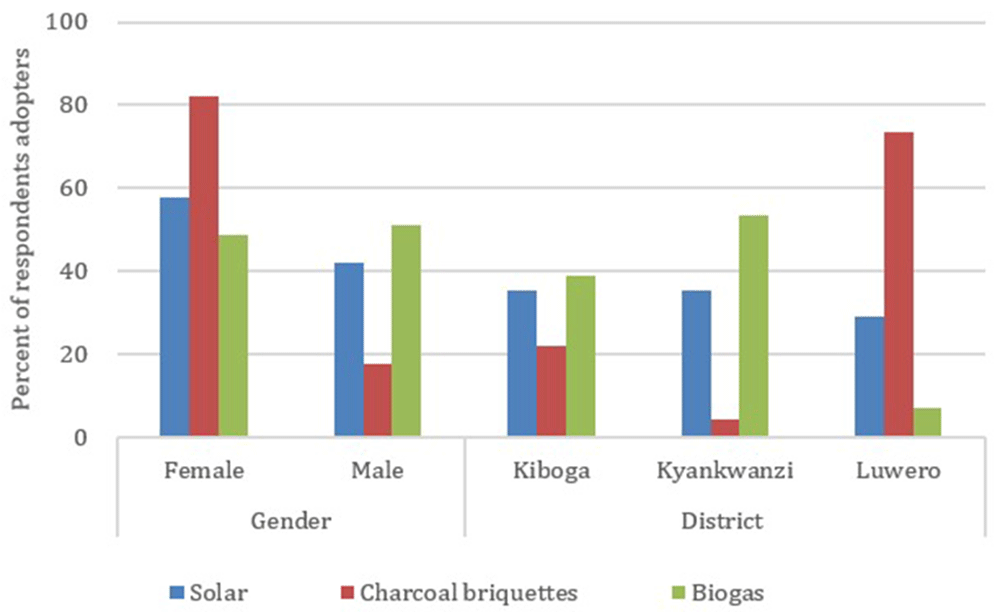
Figure 2. Proportion of respondents adopting RE by gender and location (computed based on the number of adopters per RE).
Half of the respondents using RE technologies have had them for between 0–5 years, while 37% and 13% had applied the RE technologies for between 6–10 years and 11 years or more respectively. This may be explained by the heightened awareness of RE technologies in the study districts by ARUWE and partners dating back to 2008. Respondents mentioned that they had acquired knowledge and information about RE mainly from family, friends or neighbours, energy companies and NGOs. Key mentioned NGOs were ARUWE and Caritas. The model used by NGOs, especially ARUWE was targeting farmers through cooperatives and encouraging information exchange within the community, which could explain the informal information sharing pathway.
Uses of RE in agriculture
Notwithstanding the adoption rate, farmers who are using RE technologies indicated its application in various agricultural activities:.
Solar-powered irrigation: One of the most mature uses of solar is to increase water access in agriculture, allowing for many cropping cycles and enhancing resistance to shifting rainfall patterns. Farmers currently use solar energy to power water pumps for small-scale crop irrigation systems e.g. vegetable plants in a home garden. The water is pumped from underground into a tank, which must be large enough to store sufficient water to supply household needs during cloudy weather.
Solar energy for drying systems: One of the most widely used applications of solar energy in agriculture is value addition via drying or curing farm produce. Solar drying technology helps to dry the product in a clean environment and enhances product quality. Farmers in the study area were using solar dryers to dry fruits, vegetables, tubers, and fish. Designs of solar driers commonly used include quite simple boxes with glass covers, or more complex designs where heat is collected in one part of the drier, and then transferred to a box where the crop is placed. Solar dryers are accessible in numerous forms, sizes, and arrangements.
Charcoal briquettes for heating poultry brooders: During their first 30 days, young poultry chicks need to be kept warm. These can be powered either from the national grid, from a generator, or from renewable energy such as solar or microhydro. Farmers use fuel briquettes made from waste products as a cheaper alternative. Fuel briquettes also burn slowly, over several hours, reducing energy requirements. One of the farmers in Nakaseke has been using charcoal fuel briquettes to heat poultry brooders for both kroiler and indigenous chickens, for around 5 years and is now training other farmers to do so. Further, the farmer makes briquettes using biochar fertiliser which is used in banana plantation and other fields.
Biogas digesters for fertiliser production: Biogas is produced from animal manure and crop residues. The technology is most suitable for farmers who practice stall-feeding (zero grazing) of their livestock, as this gives them a regular supply of manure. As well as providing gas for the home, the system also produces slurry from the digested manure, which is used as a fertiliser without needing any further treatment. This saves money compared to buying chemical fertiliser and is less work than making compost. Biogas digesters also improve on-farm and field sanitation.
Other opportunities for RE in agriculture, mentioned by key informants include: (1) Solar-assisted refrigeration and cold storage systems which include: solar-powered technologies for cooling; the solar ice maker; the water chiller; biomass solar hybrid cold storage system; and gasifier-solar PV hybrid. (2) Solar energy for agro-processing eg solar-powered oil press, solar millers, shea butter processing, etc.
Benefits of using RE
Respondents mentioned various benefits associated with the use of RE technologies. Time savings, health and safety in households, income, and environmental benefits were the most mentioned benefits (Figure 3). The time-saving attribute of RE technologies was linked to the reduced productive burden of women and children including looking for and using fuelwood cooking, heating, or lighting processes, and water for production. The use of RE technologies is quicker and does not require their presence all the time, thus saving time that can be used for agricultural activities. This contributes to the economic empowerment of women.
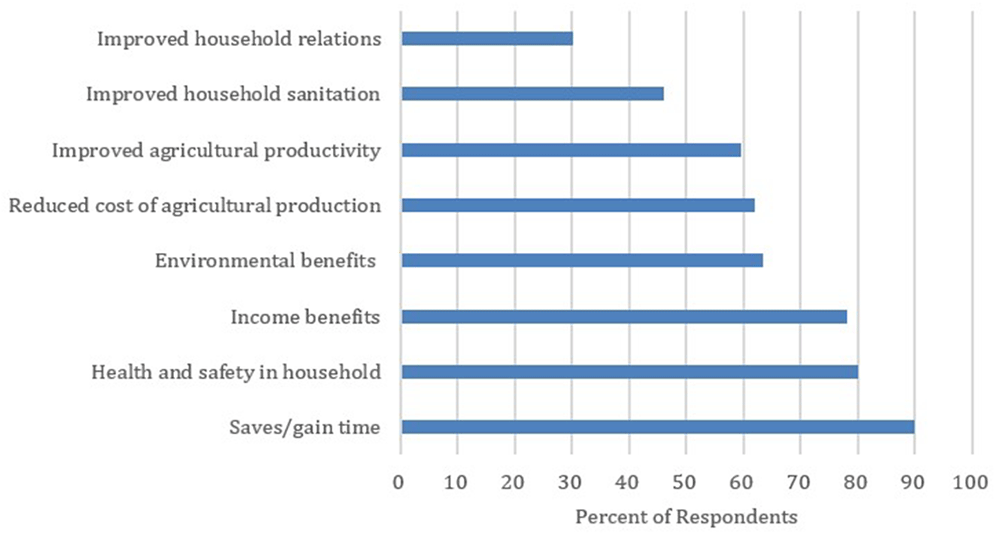
Figure 3. Perceived and actual benefits of using RE technologies reported by respondents in the study districts.
Respondents further mentioned that the use of RE technologies offers several health and safety benefits compared to traditional fossil fuels. The combustion of fossil fuels releases air pollutants and particulate matter. Renewable energy sources like solar, and biogas generate energy without emitting these harmful pollutants, contributing to improved air quality, and reducing respiratory illnesses. For example, solar-powered irrigation systems eliminate the need for fuel-based pumps and generators, reducing farmers' exposure to harmful emissions and pollutants associated with conventional fuel-powered equipment. Respondents also attached a social benefit to the use of RE in homes where the use of smoke-free energy for cooking has contributed to better family relationships as family members connect during food preparation and mealtimes.
Beyond energy production, farmers crafting and selling briquettes illustrated the economic potential and versatility of this eco-friendly alternative in rural communities. Briquette production provides an alternative source of income for them. Besides the direct income, the use of RE sources like solar to generate energy for farm operations has reduced dependence on conventional energy sources, leading to lower energy bills and reduced cost of production over time. For instance, a respondent from Atla farm in Nebbi district indicated that using solar-powered irrigation, the farm now saves at least UGX30,000 (approx. Euro 6) per day, the cost they used to spend before buying fuel to power generators.
Conversion of agricultural waste to make briquettes leads to sustainable waste management reducing environmental pollution. Respondents further highlighted that the adoption of briquette production significantly reduces deforestation activities, mitigating soil erosion and land degradation. Consequently, this adoption acts as a crucial measure in averting drought and enhancing the protection of the natural environment.
Other mentioned reasons included improved agricultural yields and quality. For example, the immediate benefits from biogas as reported by one of the female participants in Kyankwanzi include increased banana production from an average of 90–100 bunches a season to over 160 bunches. The use of solar energy has contributed to improved quality of the products. For example, the use of a Collapsible Dryer case which uses solar has improved the quality of grains since it consistently reduces the risk of growing moulds.
Renewable energy technologies are therefore positioned to improve agricultural productivity for the farmers, by ensuring all-year food production, post-harvest preservation to reduce food losses and agro-processing to add value. Using RE further brings broader benefits at household, community, and national levels as summarized in Table 3.
Table 3. Broader benefits of renewable energy in agriculture (based on responses from various study participants).
| Agricultural
productivity | Social / Health
benefits | Environmental
benefits | Social benefits | Economic / income
benefits |
|---|
| Household level | • Use of bio-slurry to increase crop yields.
• Reduced crop losses through preservation and processing.
• Higher livestock yields (eg brooding). | • Prevention of diseases related to indoor air pollution e.g. respiratory and cardiovascular diseases. | • Improved waste management (e.g. manure for biogas and bio-slurry).
• Improved home hygiene. | • Reduced time spent by women and children collecting firewood and carrying water.
• Improved family relationships. | • Increase in income through the sale of RE products e.g. briquettes.
• Saving on fuel saving and use of external inputs e.g. fertiliser. |
| Community level | • Increased crop diversity leading to community resilience.
• Increased quality of food supply for community and consumers. | • Safer food handling practices preventing malnutrition and food contamination. | • Reduced deforestation and averting drought and increased protection of the natural environment. | • RE solutions, provide energy access to remote or underserved communities.
• Adoption of RE encourages environmentally friendly practices and a culture of sustainability within the community. | • Community-based RE projects generate revenue streams for the community e.g. charcoal briquettes.
• RE projects create local jobs and opportunities for youth and local entrepreneurs. |
| National level | • Improved food security due to increased food production, (less food loss), frequency of yields, and product diversity. | • Overall well-being of the population and the sustainable development of communities.
• Enhanced public health due to improved air quality. | • Reduced GHG emissions from lower consumption of fossil fuels. | • Increased time for children studying leading to higher productivity.
• Increased women empowerment in agriculture. | • Reduced foreign dependency by increasing local food production.
• Lower healthcare costs. |
Barriers for RE technology adoption
The barriers to the adoption of the three focus RE technologies varied, but common to all were; (i) The high initial cost of installation; and (ii) Lack of public and policy awareness in the utilisation of RE technologies. Inadequate public and policy awareness remains a main barrier to the utilisation of RE technologies in Uganda. The most common issues associated with this were inadequate knowledge regarding the use, importance, costs and effectiveness, and socio-economic and environmental benefits that are derivable from such technologies. In addition, there are fears from users of the economic feasibility of RE projects. There are also noted institutional barriers to the promotion of RE technology such as a lack of coordination and cooperation between and within related ministries, agencies, and institutions.
Respondents proposed measures to avert the challenges associated with the use of RE technologies. Principally, building financial service models that enable access and affordability of the RE technologies were suggested. This entails government subsidies on the RE equipment and affordable microcredit for users. Micro-credit can be obtained from formal lending institutions or through internal resource mobilisation such as village savings and loan associations (VSLAs) organised at cooperative level. Building knowledge and capacity of policymakers at national and sub-national levels and supporting national policy planning processes to leverage changes in favour of RE technologies was another recommendation. This would enable development of inclusive policies that promote access and use of RE technologies. Other technology specific challenges and recommendations are shown in Table 4.
Table 4. Reported challenges to adoption of RE technologies and possible solutions to identified challenges.
| RE technology | Reported challenges | Possible solutions |
|---|
| All RE technologies | • The initial cost of installation is high and relatively unaffordable by smallholders.
• Lack of public and policy awareness in the utilisation of RE technologies.
• The insufficient policy framework for promoting RE technologies to smallholders.
• Limited skilled expertise for the installation, operation and maintenance of RE technologies.
• Lack of quality assurance processes, standards, and certification for RE technologies.
• Inadequate and intermittent government support. | • Building financial service models to facilitate RE access by smallholders.
• Building knowledge and capacity of policymakers at national and sub-national levels, and supporting national policy planning processes to leverage changes in favour of RE technologies.
• Public awareness of the benefits of RE technologies e.g. empowerment, productivity, and income.
• Develop energy efficiency standards for RE technology equipment.
• Provide subsidies, grants, or tax incentives to suppliers and users
• Training local service providers on installation, maintenance of solar technologies, and integration into agriculture operations. |
| Solar technology | • The lack of sufficient consumer financing.
• Unregulated quality for solar products on the market, sometimes improper installs, and technical issues with the products affecting consumer experience.
• Institutional barriers to the promotion of solar technology such as lack of coordination and cooperation between and within related ministries, agencies, and institutions. | • Establish innovative financing mechanisms for smallholders.
• Increase the productive and business capacity of rural people, especially youth for RE enterprise development.
• Research and development to create solar solutions tailored to smallholders’ needs.
• Enhance coordination among relevant government ministries, departments, and agencies. |
| Charcoal briquettes | • Inadequate consumer awareness resulting in improper handling and discouraging first-time users.
• In areas where organic waste is used as a feedstock for briquette production, the lack of proper waste collection and management systems can be a challenge.
• Lack of training and skills for briquette production and usage.
• Lack of local manufacturing capacity. Reliance on imported equipment makes production expensive limiting use. | • Achieving significant cost reductions of RE technologies through the pursuit of economies of scale e.g. through community-based production systems.
• Investing in training and capacity-building is crucial. |
| Biogas | • The lack of appropriate technical skills at the local levels for the installation and operation of biogas.
• The absence of scalable models for domestic and commercial-scale biogas energy production.
• Behavioural and social acceptance. | • Promotion of multiple benefits RE technologies such as biogas i.e. manure management for improved health and methane capture, bio-slurry for fertiliser. |
Discussion
The study examined the adoption of RE technologies in agricultural production in rural Uganda. Results revealed a mixed crop production landscape, with the majority of farmers engaging in both subsistence and commercial farming. Poultry farming emerged as the dominant livestock activity, particularly on a subsistence level, with notable variations across districts. Remarkably, all respondents embraced at least one RE technology, predominantly solar, highlighting its widespread adoption. The high adoption rates of RE technologies, indicate a strong interest and feasibility of integrating RE into farming practices. The benefits associated with RE adoption, including cost savings, enhanced agricultural yields, and environmental sustainability, further highlight its potential to revolutionize agricultural production.
Case studies and citizen scientist responses demonstrate that energy is required at each step of agricultural production from pre-production to post harvest handling. Considering the high energy prices and unpredictable energy market that significantly affect the input energy costs, the use of farm renewable energy sources could assist agricultural producers in enabling access to affordable energy and saving energy-related costs. With Uganda's abundant biomass resources and significant potential for RE production, leveraging solar, charcoal briquettes, and biogas technologies presents a pathway to enhance agricultural productivity, improve livelihoods, and foster sustainable development in the region. Potential and opportunities for widespread adoption and scale-up of each of the technologies are discussed below:.
Solar energy
For agricultural production, solar energy offers an attractive solution that can help with several pressing issues that the industry is now facing. Solar energy provide both electricity and heat requirements in agriculture via the use of photovoltaic-thermal (PVT) systems (Majeed et al., 2023), offering diverse applications such as powering irrigation systems, drying produce, and providing energy for various agro-processing activities. Even in areas with inconsistent access to traditional energy sources, farmers can maximize crop productivity with the help of solar-powered irrigation devices. Through the expansion of growing seasons and the alleviation of water scarcity, solar technology immediately enhances food security, boosts crop yields, and improves overall economic resilience. Most of the post-harvest losses occur because of improper handling, storage, and transportation of food. In this regard, solar-based cold storage at farm significantly reduces post-harvest losses as well as operational costs (Zhang et al., 2018). Farmers can produce their energy locally, which minimizes energy transmission losses and lessens reliance on centralized grids. In rural and isolated agricultural areas with inadequate or unstable grid infrastructure, this feature is especially helpful.
A shift to solar energy is a testament to the global trend towards renewable energy and a strategic move to diversify the energy mix and boost agricultural production and economic growth. Oting et al. (2018) project that solar energy use in Uganda will surpass hydropower by 2050, indicating its potential. The 2019/2020 national household survey indicated that solar connections in the country increased to 38% from 18% in 2017 compared to a dip in hydro and grid connections which decreased from 22% to 19% during the same period (UBOS, 2021). The adoption of solar technology in agricultural production aligns seamlessly with the African food systems transformation agenda, a critical initiative aimed at addressing the unique challenges facing Africa's agriculture and food security. In the context of this transformative agenda, solar technology serves as a potent catalyst for change by enhancing agricultural sustainability, resilience, and efficiency across the continent.
Charcoal briquettes
In Uganda, there is a considerable volume of waste generated by farms especially bananas (4.3 tonnes annually) and pineapples (15,960 tons per season) (Mibulo et al., 2023). Coupled with the current shortage of energy sources in the country and environmental degradation problems resulting from deforestation, there is a potential for sustainable utilization of such organic waste through the conversion into charcoal briquettes (Abondio et al., 2020; Mkude et al., 2019). Briquettes made from agricultural residues offset the wood harvesting thereby preventing deforestation. In addition, the briquettes are 20 to 30 percent cheaper than the regular charcoal in Uganda. Charcoal briquettes are therefore an eco-friendly, energy-efficient, and low-technology fuel source that offers a cleaner alternative for household and agricultural use.
The transition to such sustainable alternatives within Uganda's energy system is not only beneficial but also essential in the long-term effort to mitigate environmental degradation and reduce the impact of climate change while contributing to agriculture production (Kyayesimira & Muheirwe, 2021). Charcoal briquettes, as a sustainable energy source, not only enhance accessibility but also create economic opportunities for women, who may be involved in the production and commercialization processes.
Biogas technology
Biogas technology, as a pro-poor renewable energy source, has been promoted in Uganda since the 1980s by the government and NGOs. The Uganda biogas market continues to grow, and currently, the production and utilisation of biogas stands at 25.8% nationally. Biogas can be produced from simple organic raw materials such as animal dung, food wastes, agricultural residues, municipal waste materials, and human waste. Anaerobic digestion of organic wastes results in the production of biogas and a nutrient-rich digestate which can be plowed back to crop/fodder production as manure to enhance agricultural productivity.
The adoption of biogas energy in Uganda contributes to integration into the national energy mix, aligning with sustainability goals. It also has a great potential to empower rural women, contribute to economic development, and address environmental concerns by reducing reliance on traditional biomass. The integration of biogas technology into agriculture, popularly called ecological farming, will improve the income levels of farmers, and facilitate the achievement of effective and low-cost productivity in agricultural systems. Biogas technology therefore provides a link between animal husbandry and crop farming, playing an important role in self-sustaining eco-farming and waste management which is a significant problem in SSA.
Uganda possesses significant potential for biogas production and utilisation, driven by abundant biomass resources from a thriving agricultural sector and a predominantly rural economy. Uganda has the potential to produce 25.17 petajoules of biogas annually, which represents about 40% of the total primary energy consumption in the country (Owusu & Banadda, 2017). This potentially aligns with the country's need for decentralised and sustainable energy sources, particularly in areas with limited access to electricity.
Conclusion
Drawing on data gathered through citizen science, this study highlights the significant potential of off-grid renewable energy (RE) technologies - charcoal briquettes, solar and biogas - in agricultural production in rural Uganda. The findings show increasing use of RE technologies in various agricultural activities contributing to improving productivity and increasing incomes for smallholder farmers in Uganda. Solar energy emerges as the most widely adopted RE technology, followed by briquettes and biogas. This underscores the availability, heightened outreach, feasibility and acceptance of solar solutions in rural agricultural settings. However, the study also identifies challenges, notably the high initial capital investment required for technology installation and the lack of public and policy awareness regarding the benefits of RE technologies. To address these challenges and harness the full potential of off-grid RE in agriculture, the study emphasizes the importance of political and legal support, community awareness, capacity building, and financing mechanisms. Collaboration between government agencies, non-governmental organizations, and private sector actors is deemed essential for promoting the uptake of RE technologies, training local communities in their operation and management, and facilitating access to financing. Overall, the study provides valuable insights into the role of off-grid RE technologies in sustainable agricultural development in Uganda and underscores the need for concerted efforts to promote their adoption and utilization. By leveraging the country's abundant renewable energy resources and fostering multi-stakeholder partnerships, Uganda can accelerate its transition towards low-carbon, resilient, and inclusive agricultural systems, thereby enhancing food security, livelihoods, and environmental sustainability.