Introduction
Collective stimulated emission of coherent light by atoms inside an optical cavity is a fundamental phenomenon studied for decades in quantum optics1–7. Even very recently a large number of theoretical and experimental studies focused on continuous superradiance6–15, aiming at the development of a superradiant laser16–22. Such a superradiant laser typically operates in a bad-cavity regime, where the cavity mode is much broader than the natural linewidth of the atoms providing the gain. In the limit of low photon number operation the coherence necessary for frequency stability is stored in the atoms rather than the cavity field. This makes the laser frequency insensitive to thermal and mechanical fluctuations of the cavity, which is the main limitation for conventional good-cavity lasers23,24. In recent years pulsed superradiance has been experimentally demonstrated16,20–22 and a number of new theoretical ideas have been proposed25–27. However, the experimental realization of a continuous wave superradiant laser has not yet been achieved.
Effects such as frequency broadening in the gain medium are an inherent part of any experiment. Such processes are capable of disrupting the collective interaction between the atoms and the cavity field. In this work, we aim to offer a comprehensive study of these potentially detrimental effects. To this end, we study a model of a superradiant laser and focus on inhomogeneity among the atomic ensemble. The inhomogeneity is primarily associated with a distribution of the atomic resonance frequencies leading to stimulated emission into the cavity at a range of different frequencies. Similar differences in the atom-field coupling due to variation in the atomic positioning are also included in the system.
We numerically investigate the dynamics of an atomic medium with a wide range of resonance frequencies and show how the intensity of the pumping rate can lead to cooperative effects among the atoms such that superradiant lasing is achieved. Furthermore, we consider atoms to have different coupling strengths to the cavity. We also study the laser sensitivity to cavity noise.
Model
We consider an ensemble of N incoherently pumped two-level atoms inside a single mode optical cavity as shown in Figure 1. In a bad-cavity regime, where the cavity relaxation rate exceeds the natural linewidth of the atomic transition by many orders of magnitude (κ ≫ Γ), the system constitutes a generic model of a superradiant laser. The i-th atom couples to the cavity field with the coupling strength gi and has a resonance frequency ωi which might be shifted from the unperturbed atomic transition frequency ωa. Assuming that the cavity is on resonance with the unperturbed atomic transition frequency, we describe the coherent dynamics of the system by the Tavis-Cummings Hamiltonian in the rotating frame of the cavity,
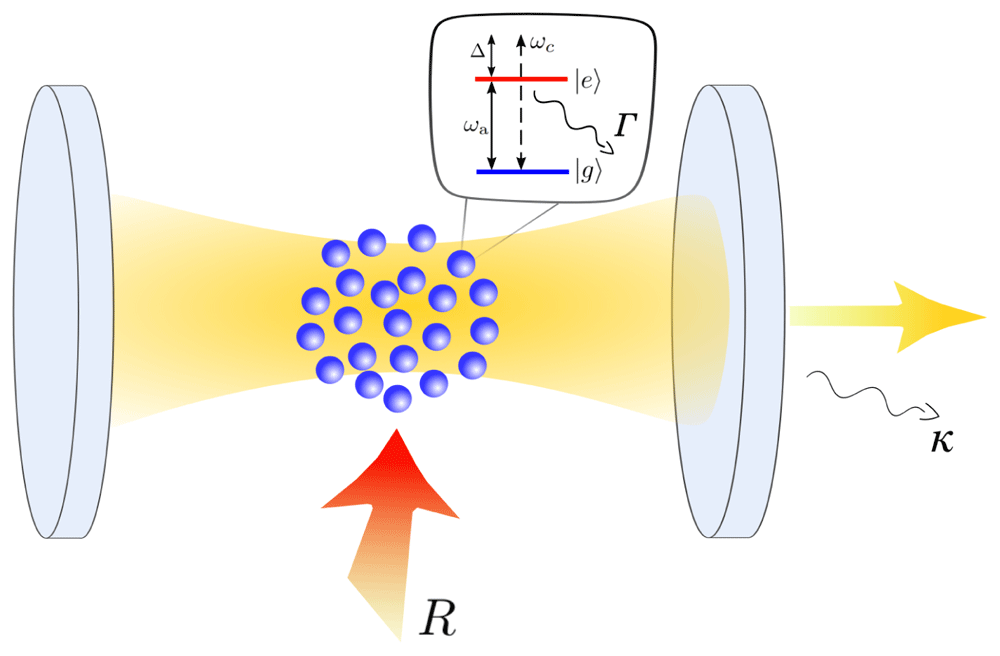
Figure 1. Schematic illustration of the system.
The atomic medium is placed inside the optical resonator which has a resonance frequency ωc. Each atom features a ground and an excited state separated by the transition energy ħωa. The transition couples to the cavity mode (g) as well as the environment (Γ). Additionally, the atoms are incoherently driven from the side (R) such that they can provide gain to the cavity mode.
Here, Δi = ωc − ωi, = ( )† = |e〉i〈g|i denote the raising and lowering operators of the i-th atom, where |g〉 and |e〉 are the atomic ground and excited states, respectively, and a† (a) is the photon creation (annihilation) operator of the cavity mode. The dissipative processes of this system are described by the Liouvillian terms
representing the loss of photons through the cavity at the rate κ, the spontaneous atomic decay with the single-atom spontaneous emission rate Γ, and the individual incoherent pumping with the pump strength R. Thus, the full dynamics of the system is determined by the master equation for the density matrix ρ in standard Lindblad form
Since the exponential growth of the Hilbert space with the number of atoms renders the solution of the master Equation 3 intractable for N ≫ 1, we use a cumulant expansion method7,28. First, we write down the equations for operator averages describing our system, which for a given operator 𝒪 reads
where 𝒟[c]𝒪 = (2c†𝒪c – c†c𝒪 – 𝒪c†c) / 2. We note that in some cases (mentioned in the description of the results) we additionally include cavity dephasing and atomic dephasing described by the terms ξ 〈𝒟[a†a]𝒪〉 and , respectively. The cavity dephasing accounts for the effective noise imposed on the system by thermal fluctuations of the cavity mirrors, whereas the atomic dephasing models perturbations on the lasing transition.
To obtain a closed set of differential equations we use the cumulant expansion method28 up to second order:
In order to calculate the spectrum of the cavity light field we make use of the Wiener–Khinchin theorem29, which states that the spectrum can be computed as the Fourier transform of the first-order correlation function g(1)(τ) = 〈a†(τ)a(0)〉,
We use the quantum regression theorem30 to write down the set of differential equations for the two-time correlation function, which in matrix form reads,
where
We obtain the laser emission spectrum by taking the Laplace transform of Equation 7, where the initial conditions are the steady-state solutions of Equation 5.
In this section, we suppose that all atoms in the ensemble are identical with the same detunings {Δi} = Δ and couplings {gi} = g to the cavity mode. This reduces the problem to a set of four differential equations in Equation 5. The laser linewidth Δν (the FWHM of the spectrum) is depicted in Figure 2 as a function of the number of atoms, pumping rate, and atom-cavity coupling strength. Superradiance is expected in the parameter regime where the single-atom cooperativity parameter C = 4g2/(κΓ) < 1, but the system is in the collective strong coupling regime7, where CN ≫ 1. Figure 2(a) shows the emergence of the superradiant regime as the number of atoms increases. Above the lasing threshold the collective emission of light with an ultra-narrow linewidth is observed. In this collective regime the phases of the atomic dipoles are synchronized via photon exchange through the cavity which leads to the buildup of a collective dipole among the atoms.
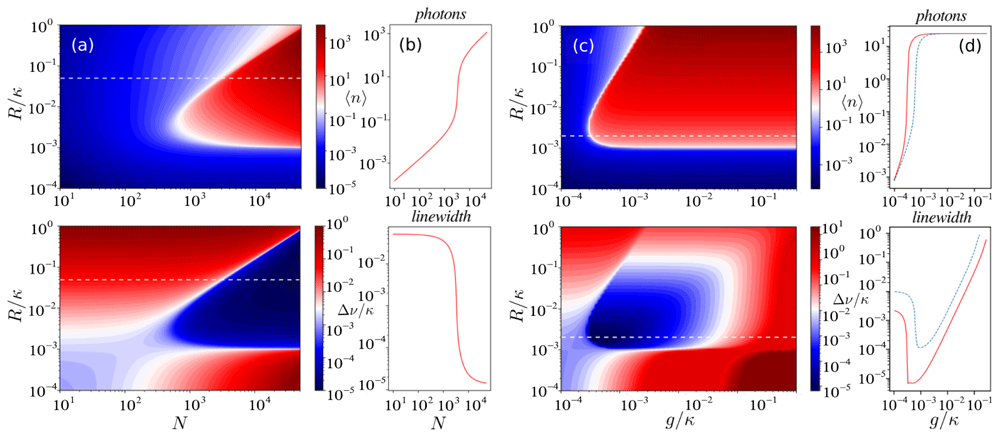
Figure 2.
(a) The mean photon number and the linewidth (in units of κ) as functions of the number of atoms N and pumping rate R for the parameter set (Δ, g, Γ, ξ, ν) = (0,0.002κ, 0.001κ, 0, 0). (b) The cut through the white dashed line in (a) for R = 0.05κ. (c) The mean photon number and the linewidth as functions of the atom-cavity coupling strength g and pumping rate R. Additional cavity dephasing occurs at the rate ξ = κ. Parameters: Δ = 0, Γ = 0.001κ, N = 5 × 10⁴. (d) The cut through the white dashed line in (c): the ultra-narrow linewidth is robust to cavity dephasing ξ = κ (red solid line) in the regime where the photon number is low. For the blue dashed line atomic dephasing was added to the system with the rate ν = 10Γ.
A key feature of such a laser is its insensitivity to thermal and mechanical fluctuations of the cavity length, since the coherence is primarily stored in the atoms rather than in the cavity field. To show the robustness against cavity noise we include cavity dephasing with the rate ξ in the equations. In Figure 2(c) we scan the linewidth over the coupling strength g and pumping rate R for an ensemble of N = 5 × 10⁴ atoms. In the superradiant regime, the laser linewidth is less than the natural linewidth of the atomic transition and approaches the value Δν ~ CΓ, which can be well below 1 mHz for the 1S0 → 3P0 transition in 87Sr, as has been pointed out in Ref. 7.
So far the results are based on the idea of absolutely identical atoms. In the next sections, we focus on inhomogeneity within the atomic medium. In particular, we will consider the atoms to be subject to distinct frequency shifts and different couplings to the resonator mode.
Atomic ensembles with inhomogeneous broadening
While the individual atoms in free space are identical and have the same transition frequencies in principle, in practise they are often subject to individual perturbations introducing local lineshifts, e.g. from trapping within the cavity, motion, or optical pumping. In this section we study the effects of inhomogeneous broadening of the gain on the laser properties.
In contrast to the case of identical atoms, where the atom number in Equation 5 and Equation 7 only enters as a constant factor, the inhomogeneity among atomic frequencies requires keeping track of the time evolution of each atom separately. For the solution of the collective dynamics one then needs to solve 𝒪(N2) equations. This is only possible for a limited atom number and we thus have to resort to further approximation methods in order to treat larger ensembles. As a possible approach to approximate a large ensemble with a continuous frequency distribution we combine several atoms in subgroups representing their average atomic frequencies, which we call clusters, see also Refs. 14,15,31. Each atom in a cluster is assumed to be completely identical to all other atoms in the same frequency cluster. This preserves the central physics of the inhomogeneous broadening, but at the same time substantially reduces the number of equations.
First, we simulate N = 5 atoms in five clusters centered at Δm = ωc − ωm, where Δm ∈ [−κ : κ]. Note that this is equivalent to M = 5 frequency clusters each containing a single atom. At low excitation the resulting cavity output spectrum then consists of precisely five spectral lines at the frequency of each cluster. Basically, these are five independent lasers using the same cavity mode simultaneously. Increasing the number of atoms in each cluster according to a Gaussian normal distribution with the standard deviation σ = κ leaves the structure of the spectrum in Figure 3(a) unchanged, with each peak becoming more pronounced. In particular, in Figure 3(b) we observe growing collective emission among atoms of the same cluster so that the linewidth of each peak becomes smaller as the atom number in the corresponding cluster increases. In Figure 3(c) we show how more and more lines appear as we increase the number of clusters up to M = 201 until the output merges into a single broad emission line. Note that an increase of the collective coupling to or a randomization of the individual cluster detunings do not lead to any substantial difference in the spectral profile of the laser. Hence, one can expect a single broadened peak in the emission spectrum in the more realistic case of a large ensemble of atoms with a continuous frequency distribution.
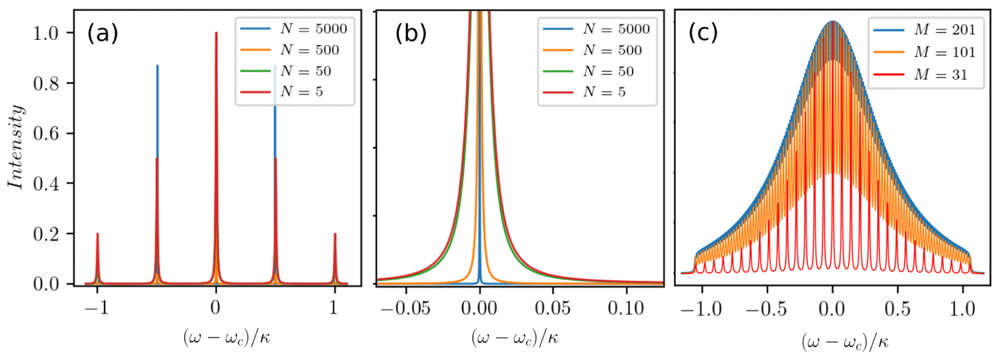
Figure 3. Cavity output spectra for weakly driven atomic ensembles composed of several discrete clusters with varying atomic frequencies.
(a) M = 5 clusters of atoms with the detunings Δm = [−κ; −κ/2; 0; κ/2; κ] for different total numbers of atoms N = 5, ..., 5000. (b) A zoom-in showing the narrowing of the central peak in the spectrum from (a) around the resonance frequency. (c) Transition of the spectral distribution from discrete to quasi-continuous for an increasing number of clusters. Parameters: (g, Γ, R) = (0.002κ, 0.001κ, 0.01κ).
So far we limited investigations to weak incoherent pumping in order to avoid significant additional broadening of the atomic linewidth due to pumping. However, this broadening effect can actually aid the buildup of coherences between the clusters. When the pumping is strong enough such that the distinct spectral lines overlap, the discrete spectral lines of the clusters merge into a single central peak (see Figure 4). In other words, more intra-cavity photons and broader individual atomic gain lines ultimately lead to a dramatic narrowing of the laser line. We attribute this effect to a dynamical phase transition from the unsynchronized phase of the dipoles to the synchronized one. Note that an analogous phenomenon has previously been studied in Ref. 32 for two mesoscopic ensembles of atoms collectively coupled to a cavity with opposite detunings. Furthermore, we show how an atom number imbalance at a particular frequency in Figure 4(b) and overall atom number fluctuations in Figure 4(c) lead to a shift of the spectral lines. However, in the synchronized regime the lineshift of the central peak is much smaller than its linewidth.
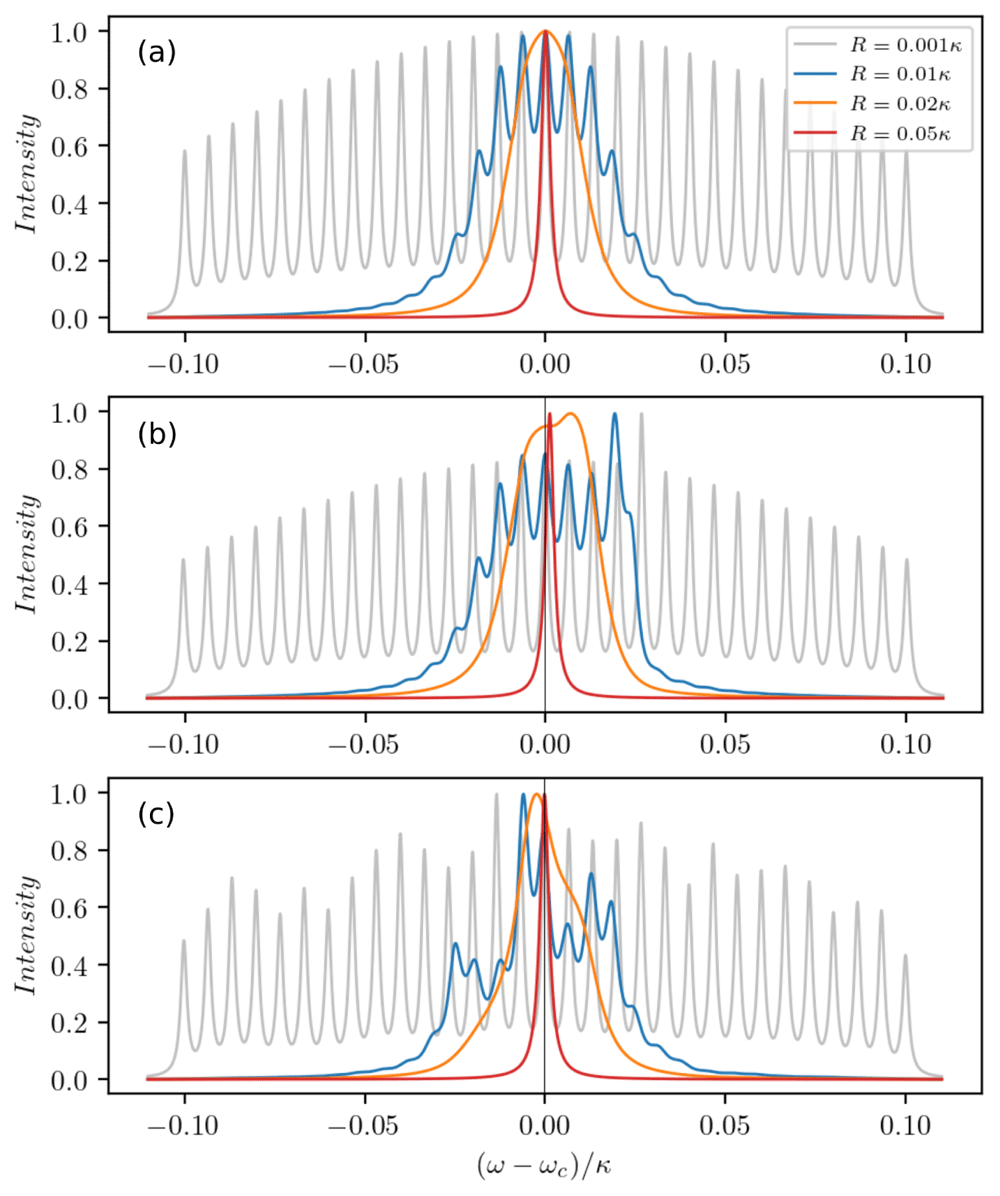
Figure 4.
Cavity output spectra of a large inhomogeneously broadened ensemble of N = 104 atoms for different pumping rates R = 0.001κ (grey), 0.01κ (blue), 0.02κ (orange), 0.05κ (red). The ensemble is represented by M = 31 clusters with the number of atoms per cluster chosen according to a Gaussian normal distribution (a) with the standard deviation σ = 0.1κ, (b) when adding particle imbalance at Δ = 0.027κ, (c) with overall atom number fluctuations. The other parameters are chosen as Δ ∈ [−σ : σ], g = 0.002κ, Γ = 0.001κ.
The collapse of the emission spectrum into a single central line occurs at a critical pump strength Rc. This critical value strongly depends on the overall width of the frequency distribution, but shows almost no dependence on the number of subensembles. The critical transition pump strength is shown for different standard deviations σ of the atomic frequency distribution in Figure 5. Open blue circles show the numerical results for an ensemble of N = 104 atoms sampled by M = 31 clusters. For comparison, we also plot the linear (solid line) function Rc = 0.4σ. We calculate the critical pumping by computing the spectrum for different R. We then determine the critical value of the pump strength as the value at which the spectrum has only a single local maximum, i.e. all separate peaks have merged into a single spectral line. We find a linear dependence for large inhomogeneously broadened ensembles while for narrow ensembles a significantly lower pump strength is required.
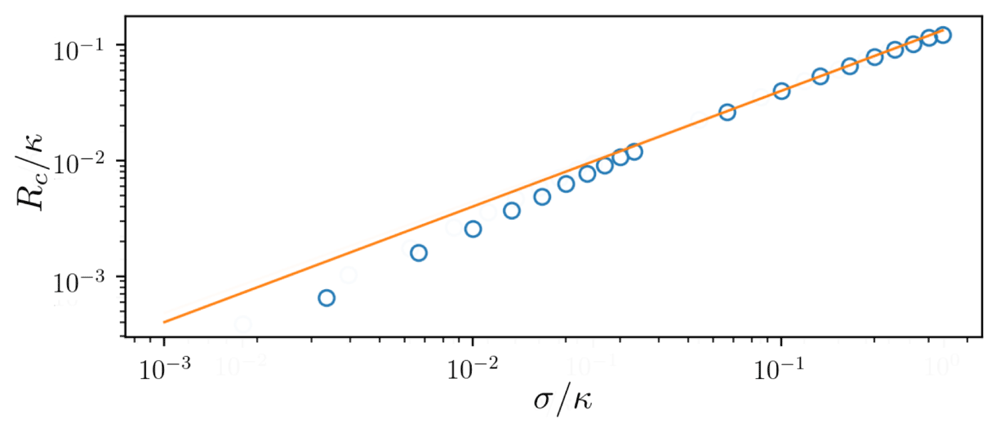
Figure 5.
Critical value of pumping above which the collective superradiant regime is established depending on the standard deviation σ of the atomic frequency distribution. Open blue circles show the numerical results for the ensemble of N = 104 atoms sampled by M = 31 clusters. For comparison we plot the linear (solid line) function Rc = 0.4σ. Parameters: Δ ∈ [−3σ : 3σ], g = 0.001κ, Γ = 0.001κ.
Once the laser is operating at a single distinct emission frequency, we can characterize the properties of the output light by the linewidth and the average photon number. The results for different distributions of atomic frequencies are shown in Figure 6, where Δ ∈ [−3σ : 3σ] and Γ ≤ 3σ ≤ κ. Figure 6(a) illustrates how a narrow linewidth appears for different σ as the number of atoms increases. Note that we chose a pumping strength well above the critical value for a wide atomic frequency distribution (red line). The sharp decrease of the linewidth is accompanied by an increase in the average photon number as can be seen in Figure 6(b). This is indicative of a lasing threshold being crossed at a certain number of atoms.
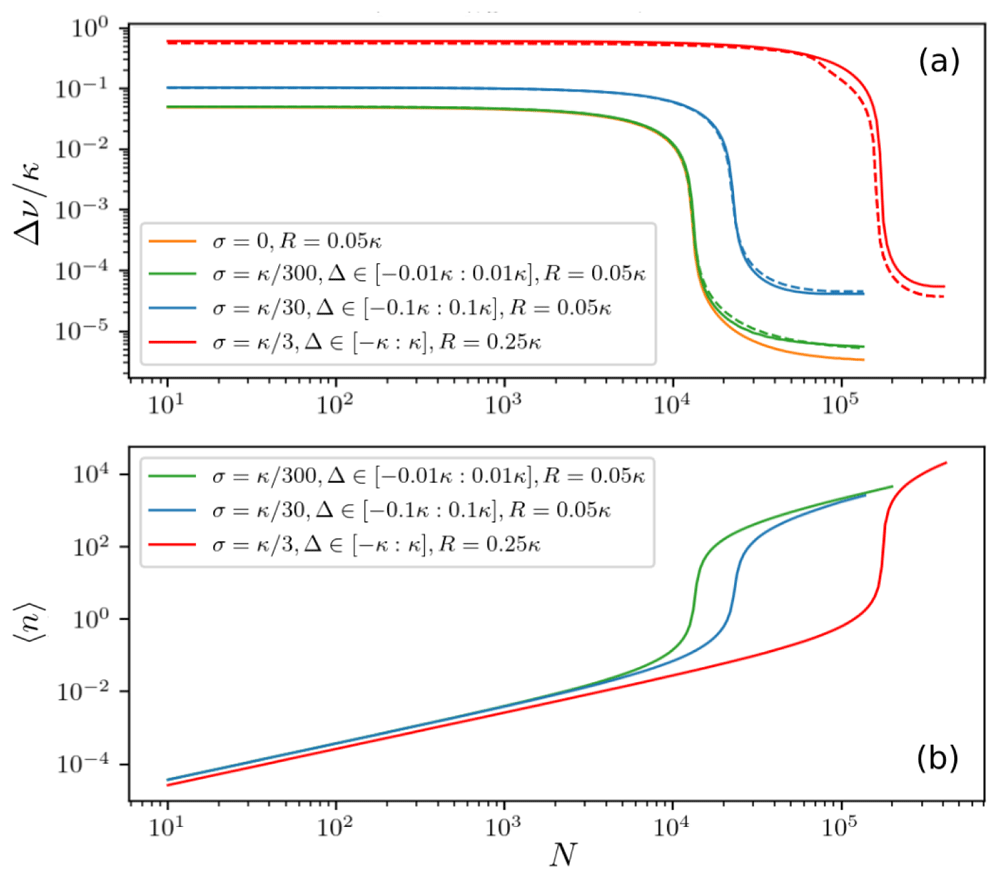
Figure 6.
(a) Laser spectral linewidth and (b) mean photon number for inhomogeneously broadened ensembles with different standard deviations σ and spectral widths of atomic frequencies Δ ∈ [−3σ : 3σ], where σ = κ/300 (green line), σ = κ/30 (blue line), σ = κ/3 (red line) as a function of the total number of atoms. The number of clusters is M = 31 with the number of atoms per cluster chosen according to a Gaussian normal distribution. The dashed lines represent the results including an additional spatial variation of the atom-field coupling g(x) = g0 cos(kx). The ensemble is comprised of M = 11 frequency clusters and K = 5 clusters of different couplings. The couplings are chosen such that the effective coupling strength Parameters: g = 0.001κ, g0 = 0.0013κ, Γ = 0.001κ.
Inhomogeneously broadened ensembles with variable coupling strength
Up to now we have assumed that the atoms are perfectly positioned inside the cavity such that they couple equally to the cavity mode. Let us now include spatial variations of the atom-field coupling within the resonator. We consider the ensemble of atoms with the position-dependent coupling strength g(x) = g0 cos(kx), where g0 is the coupling constant, k = 2π/λ is the cavity mode wave number and x represents the position of an atom. In order to describe the atom-field dynamics we use a similar cluster approach as before. We assume equidistant positions for different clusters xm ∈ [0, ..., λ/4) and corresponding couplings gm(x) = g0 cos(kxm) = {g1, g2, ..., gK}, where K is the total number of clusters. Note, that the sign of the coupling is irrelevant in our system, therefore we only consider couplings with gm > 0.
The dashed lines in Figure 6 show the results for M = 11 frequency clusters and K = 5 clusters of different couplings. As can be seen in Figure 6(a), for atoms with different couplings to the cavity mode the dependence of the linewidth on the number of atoms remains roughly the same as for atoms equally coupled to the cavity. This holds as long as the effective overall coupling strength is constant. Thus, the linewidth is essentially unaffected by atoms having different couplings to the cavity.
Finally, let us include cavity dephasing in order to describe lasing in a large inhomogeneously broadened ensemble in the presence of cavity noise. The spectral linewidth and mean photon number under strong cavity dephasing at the rate ξ = κ are depicted in Figure 7 (blue dashed line). Note that establishing coherence in such a largely broadened ensemble requires sufficiently strong pumping. This subsequently leads to a large number of photons in the cavity mode making the setup sensitive to cavity fluctuations, see Figure 2(c). However, additional atomic dephasing can actually relax the constraint on the pumping. Adding atomic dephasing to the system at the rate ν = 0.01κ allows for maintaining collective interactions in the ensemble and at the same time enables a reduction of the pump strength by one order of magnitude to R = 0.005κ. In the low photon number regime, a linewidth on the order of the natural atomic linewidth Γ can be achieved in the presence of strong atomic and cavity dephasing (dash-dotted grey line).
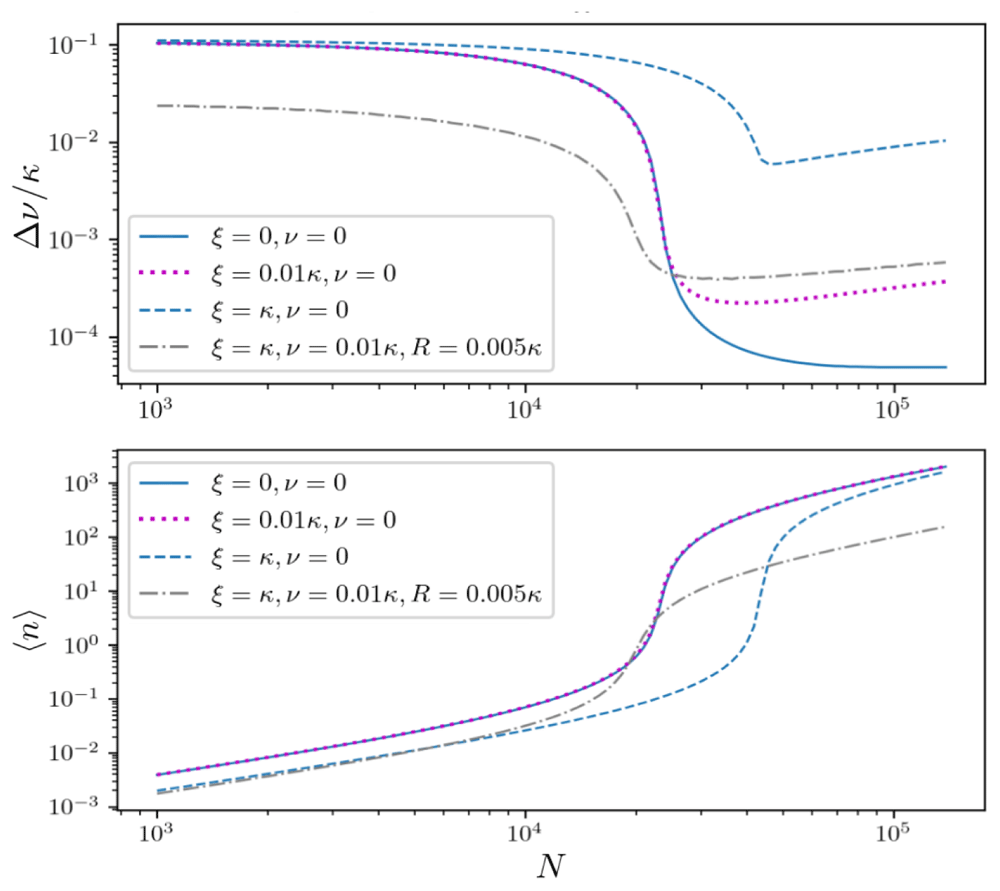
Figure 7.
Laser linewidth (upper panel) and mean photon number (lower panel) for an inhomogeneously broadened ensemble with spatially varying coupling for σ = κ/30, Δ ∈ [−0.1κ : 0.1κ] and R = 0.05κ (solid line). Adding various cavity dephasing at the rate ξ = κ (dashed blue line) and ξ = 0.01κ (dotted magenta line) we can identify an optimal atom number, above which the cavity noise overwhelms the linewidth narrowing due to large photon numbers. The dash-dotted grey line shows the results when adding additional atomic dephasing at the rate ν = 0.01κ. This additional broadening allows synchronization of the individual clusters in the weak pumping regime R = 0.005κ ultimately leading to a smaller linewidth.
The presented results can be reproduced by using the source code N_atoms_M_clusters_Delta.jl (see Software availability)33. The file contains an example of the cluster approach written in Julia version 1.5.0 using the parameters in Figure 4. Numerical simulations were performed with the open-source framework Differentialequations.jl34. The toolbox QuantumCumulants.jl35 has been used to check the equations and verify the second-order cumulant expansion. The graphs were produced using the Matplotlib library36.
Conclusions
We studied superradiant lasing when the gain medium is subject to substantial inhomogeneous frequency broadening and variable coupling. In extensive numerical simulations based on a second-order cumulant expansion we were able to confirm previous predictions that sufficiently large numbers of atoms subject to strong optical pumping can induce synchronization of the atomic dipoles over a large bandwidth. This generates collective stimulated emission of light into the cavity mode leading to narrow-band laser emission at the average of the atomic frequency distribution. The linewidth is orders of magnitudes smaller than that of the cavity as well as the inhomogeneous gain broadening and exhibits reduced sensitivity to cavity frequency noise. We determine the operational conditions and, in particular, the best pump rate to choose for achieving the smallest linewidth for a given atom number and cavity. The minimum occurs not at very low photon numbers but at intra-cavity photon numbers reaching a significant fraction of the atom number.
Typically, full synchronization requires fairly strong pumping, which increases the effective atomic linewidth. We determined the minimum pump strength to achieve collective phase-locked oscillation of all atomic dipoles. Interestingly, some individual line-broadening effects such as atomic dephasing can actually induce synchronization at significantly lower pump rates. Furthermore, our simulations also show that variations in the atom-field coupling strength induced by the cavity mode structure play only a minor role for the laser stability and noise. In fact, they can be compensated by an increase of the effective overall coupling using a larger atom number or stronger pump.
So far our model is still based on a very simplistic effective pump description via an individual, independent and equal pump rate for each atom. More detailed studies of optical pumping schemes including the shifts induced by the pump light will be at the center of future studies.