Abbreviations
APR: aqueous-phase reforming
BET: Brunauer-Emmett-Teller
CHP: combined heat and power
FC: fuel cell
HT-PEMFC: high temperature polymer electrolyte membrane fuel cell
HHV: higher heating value
IWI: incipient wetness impregnation
LT-PEMFC: low temperature polymer electrolyte membrane fuel cell
MeOH: methanol
MEA: membrane electrode assembly
MSR: methanol steam reforming
PR: production rate
WGS: water-gas shift
WHSV: weight hourly space velocity
WI: wetness impregnation
Nomenclature
ΔH° = enthalpy change
εFP = thermal efficiency of fuel processor
K = equilibrium constant
k = rate constant
C = concentration
R = reaction rate
Introduction
Energy decarbonization is critically needed to mitigate climate change and to contribute to economic growth and technological progress. The US Energy Information Administration predicts that between 2018 and 2050, world energy consumption will grow 50% in total and more than 30% in the industrial sector1. According to the United Nations Sustainable Development Goals (goal 7), it is crucial that energy demand is met for the universal access of energy services since 13% of the world’s population still (2019) suffers from a lack of modern energy access2. Fossil fuels such as oil and coal continue to dominate the global energy sector. Consequentially, greenhouse gas emissions, which are pointed to as the main cause of extreme climate change around the world, continues to climb3; the UN recorded 1.3 million climate-related deaths between 1997–2017. This is one of the many reasons to make the transition towards more environmentally friendly and decarbonized energy. Therefore, new sustainable and renewable energy sources are crucial to meet the energy demands created by an increased world population, technological advancements and to mitigate global warming4,5.
Hydrogen has emerged as a potential energy vector for a clean energy transition6 because it can be produced from a wide range of environmentally friendly sources and can be used for storing energy that is easily convertible into electricity and heat for long periods of time4. Hydrogen can be produced from renewable feedstock such as biomass and synthetic fuels as well as from fossil fuels4,7. Different technological pathways can be used to produce hydrogen, both for stationary and/or mobile applications. Hydrogen has a high weight energy density of 120 MJ/kg (lower heating value) compared to a traditional fuel such as gasoline (44 MJ/kg), although it has a very low volumetric energy density7,8. Hydrogen can be used in combustion engines and turbines to produce mechanical energy and in electrochemical processes to produce electricity4,9. These qualities make hydrogen a promising energy vector. Examples of these are the hydrogen driven trains in Germany, UK and France, and ferries in Norway10. The European Commission has recently (March 10, 2020) announced the ‘clean hydrogen alliance’ as an initiative to develop hydrogen-based technologies.
Fuel cells are considered to be the next generation of propulsion systems in automotive, portable and stationary applications11. In particular, hydrogen powered proton exchange membrane fuel cells (PEMFCs) are a promising clean power source due to low-emissions, rapid start times and high energy density and efficiency12. Because of the very low volumetric energy density, hydrogen storage and transportation remain a challenge to overcome and a network of hydrogen delivering infrastructure has to be implemented. An inexpensive strategy that fulfils all the requirements for hydrogen storage and transportation has yet to emerge4,7. Therefore, in situ hydrogen production is an exciting approach to overcome the challenges of hydrogen storage and transportation. Currently, the reforming of fossil fuels, such as methane, is the most widely used process to produce hydrogen, representing 71% of total hydrogen produced globally5,13. Since this source of hydrogen is not renewable, research has shifted toward hydrogen production from renewable sources such as ammonia and alcohols (glycol, methanol and ethanol)14. A large number of studies can be found on catalytic steam reforming of alcohols because of its high hydrogen selectivity and yield14–16. In addition to steam reforming, aqueous-phase reforming (APR) has emerged recently as a promising competitive approach. Contrary to steam reforming, which employs high temperatures and mild pressures, APR converts aqueous phase organic compounds into hydrogen at lower temperatures. In fact, APR operates at temperatures between 200°C and 250°C; and pressures close to bubble point feedstock, normally from 1.5 MPa to 5.0 MPa17. These operating conditions make APR a potential technology for providing in situ hydrogen for automotive and mobile applications, allowing this fuel to be used as a direct hydrogen carrier. This review addresses the early state-of-the-art of APR process for in situ hydrogen production, targeting the integration with high temperature (HT)-PEMFCs.
Methanol APR
In 2002, Dumesic’s research group18 reported APR of an oxygenated hydrocarbon for the first time. Using group VIII metal-based catalysts, this research group successfully demonstrated the APR of sugar and alcohol (e.g. ethylene glycol and methanol) at ca. 226°C in a single reactor. Additionally, these authors proposed a mechanism for hydrogen formation, which became a steppingstone in the APR field18.
APR offers a number of advantages compared with conventional steam or autothermal reforming; APR is more energy efficient, since it eliminates the vaporization of the aqueous/oxygenated hydrocarbon solutions19. Additionally, operating at lower temperatures improves the stability of catalysts, avoiding coke formation, sintering and oxidation20. The low operating temperatures favor the water-gas shift (WGS) reaction, which minimizes the formation of carbon monoxide; and finally, it mitigates undesired decomposition reactions related to carbohydrates19. Contrary to the multi-stage and multi-reactor steam reforming process, APR is an easy single-step and single reactor process21,22.
Of all alcohols, methanol is the most convenient hydrogen carrier. With only one carbon, methanol is the simplest alcohol displaying the highest hydrogen to carbon ratio (Figure 1), meaning that more molecular hydrogen can be extracted from methanol compared to other feedstock15,23. Methanol displays 12.6 wt. % of hydrogen content, it is liquid at room temperature, it is biodegradable and can be easily produced from biomass and or synthesized15. Methanol reforms – via either steam reforming or APR – at the lowest temperature compared to ethanol or methane, because it has no C-C bonds16,24.
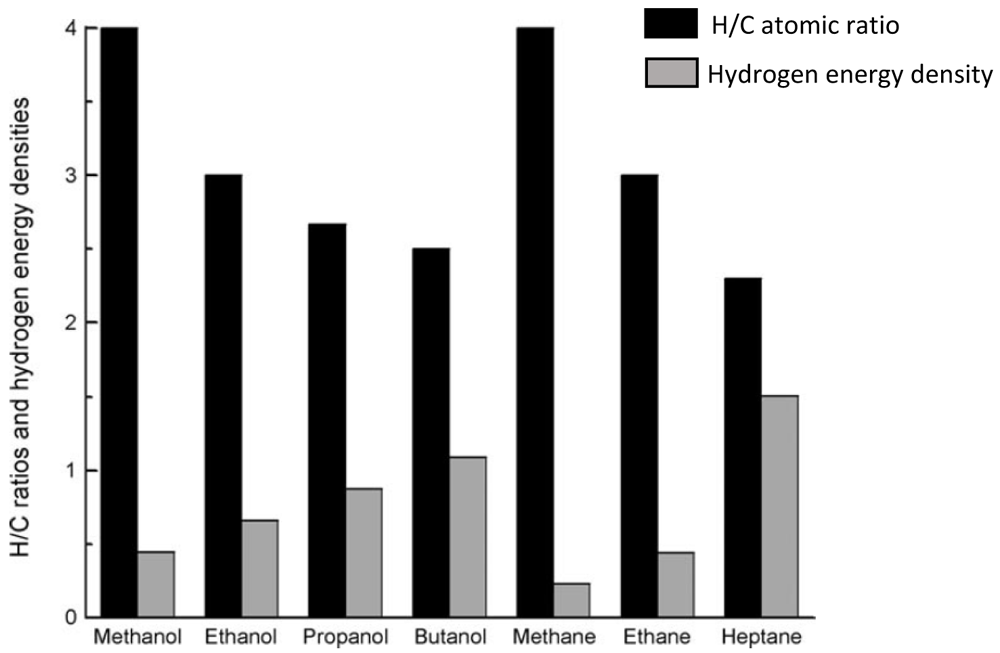
Figure 1. Hydrogen/carbon (H/C) atomic ratio and hydrogen energy densities (10-2 KJ mol-1 number of H atom-1) of various alcohols and alkanes (reproduced with permission from 25.
Copyright 2009. Wiley-VCH Verlag GmbH & Co. KGaA, Weinheim. John Wiley and Sons).
Reaction mechanism
The methanol APR mechanism involves cleaving C-H and O-H bonds to produce hydrogen (H2) and CO (Equation 1). The produced CO then reacts with water to form H2 and CO2 via the WGS reaction (Equation 2)17,18.
APR of oxygenated hydrocarbons (Equation 1–Equation 2) occurs at low temperatures between 200°C and 250°C and are exothermic reactions. However, in both cases (Equation 1–Equation 2), the reactions thermodynamically favored by higher temperatures. On the other hand, WGS reaction equilibrium (Equation 2), which converts CO into CO2 and H2, is favored by lower temperatures and is an endothermic reaction17,18. The reaction products of APR are broader than just CO2 and H2. APR conditions thermodynamically favor undesirable side reactions such as methanation and Fischer-Tropsch. The APR operating conditions make carbon oxides thermodynamically unstable, where the cleavage of the C-O bond followed by hydrogenation can form alkanes and water. For methanol APR, methane and water is produced via methanation of CO and Fischer-Tropsch reaction of CO2 (Equation 3–Equation 4)17–19. Figure 2 shows a schematic representation of methanol APR reaction pathways.
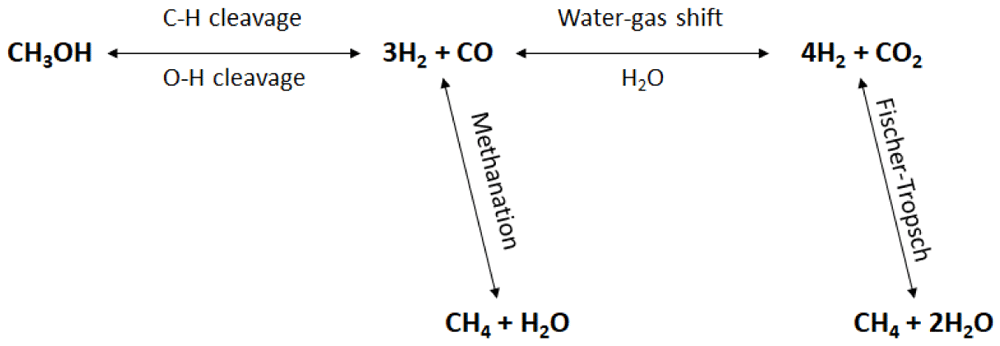
Figure 2. Reaction mechanisms of methanol aqueous-phase reforming (APR).
Catalysts
The focus has been placed on finding suitable catalysts that show high activity for promoting reforming reactions at low temperatures (Equation 1–Equation 2) and inhibit side reactions (Equation 3–Equation 4)17,19. Various catalysts have been used for methanol APR based on noble (Pt, Ru) and non-noble (Ni, Cu) metals, yet the most commonly used catalyst for methanol APR is Pt-based. Dumesic’s group18 made significant advances in APR by using Pt supported on aluminum oxide catalysts. Many authors opted for Pt as it is very active and displays high selectivity towards H218,26,27. Despite its high catalytic activity for methanol APR, Pt shows lower C-C cleavage activity compared to other metals (Ru, Ni and Ir)28, needed for the APR of heavier alcohols, and reasonable activity for the WGS reaction as shown in Figure 329. Additionally, metals such as Cu show the highest activity for WGS but no activity for C-C bond breaking. Different supports, with large surface areas, have also been studied with the objective of increasing the Pt loading in catalysts to increase catalytic activity of Pt-based catalysts22,26,30
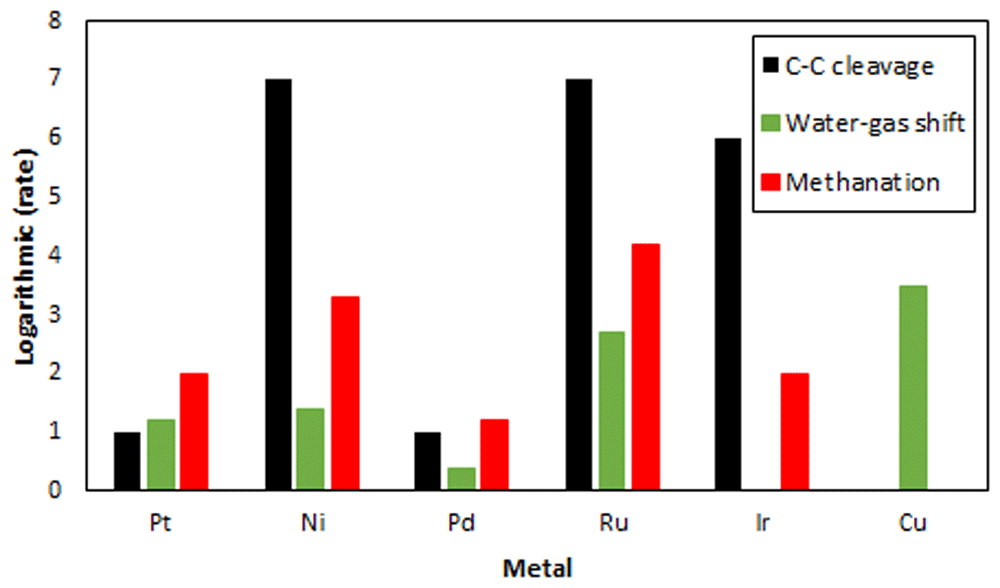
Figure 3. Relative rates for C-C bond cleavage (black) reported in 28, water-gas shift reaction (green) reported in 29 and methanation reaction (red) reported in 35 of various metals.
Nickel-based catalysts have also been investigated for the APR reaction. Although Ni-based catalysts show lower stability and H2 selectivity, they favor the WGS shift reaction and are inexpensive compared to Pt. Davda et al.17 determined the catalytic activities of various silica supported noble metals (based on the rate of CO2 production) for ethylene glycol APR and found that they decrease in the following order: Pt ~ Ni > Ru > Rh ~ Pd > Ir. To improve stability and H2 selectivity of Ni-based catalysts, various support materials have been considered15,20,31–33. However, reports on methanol APR via Ni-based catalysts are still limited. Shabaker et al.34 and Coronado et al.31,32 made significant advances in this field. The least studied catalysts are of Cu, Ce or Ru. These metal-based catalysts have been used as bi-metallic combinations or their complexes, however. For example, a Ru complex for methanol APR showed high H2 yield with turnover frequency of 4700 h-1 and low amounts of unwanted side products (CO and CH4)36.
Platinum-based catalysts. As previously mentioned, Pt is the favoured metal for APR reactions, showing high activity and selectivity for reforming of oxygenated hydrocarbons18, although low C-C cleavage activity17. To enhance the stability and activity of the Pt-based catalyst, different supports have been investigated such as ZnO, ZrO2, TiO2 and carbon black17. However, studies on Pt-based catalysts for methanol APR are limited and mostly focused on Pt supported on ɣ-Al2O3. Shabaker et al.19 performed a detailed study of methanol APR reaction kinetics using a Pt catalyst supported on alumina (Pt/ɣ-Al2O3), reporting 100% selectivity for H2 concerning alkane formation. ɣ-Al2O3 showed very high H2 yield compared to other supports, followed by α-Al2O3 and δ-Al2O337. In contrast, α-Fe2O3 and CeO2 showed low methanol conversion and low H2 yield37. Furthermore, Pt/ɣ-Al2O3 showed improved WGS activity since it had the highest rate of CO2 production amongst various Pt-based catalysts. However, under APR reaction conditions, ɣ-Al2O3 is hydrated to boehmite (AlO(OH)). This reaction reduces the support surface area and promotes the sintering and encapsulation of the Pt nanoparticles. Consequently, it decreases the metal dispersion over the surface of the support, which affects APR performance due to the reduction of the catalyst active sites38,39. Additionally, it also increases the surface acidity of the catalyst, leading to the formation of undesired side products39. Therefore, it is crucial to find suitable supports for Pt-based catalysts that increase catalytic activity and stability. Following this, Li et al.40 prepared Pt supported on nickel aluminate (NiAl2O4) spinel. They observed that the H2 yield from Pt/NiAl2O4 catalyst was four times higher than that of a Pt/Al2O3 catalyst. The authors attributed the noticeably higher dehydrogenation rate of methanol to the NiAl2O4 spinel structure and synergy between Pt and NiAl2O4. The large amount of oxygen vacancies over Pt/NiAl2O4 stabilize Pt and significantly improved WGS activity. Interestingly, they report negligible activity of NiAl2O4 in APR tests, which indicates clearly a synergistic effect between Pt and NiAl2O4. The performance and stability of this catalyst for APR is also affected by the oxidation state of Pt on NiAl2O4, which should be reduced to metallic Pt from PtOx. Zeolites have also been tested as a potential support for methanol APR catalysts26. Pt supported on NaY zeolite shows a slight increase in methanol conversion and H2 selectivity compared with a Pt/Al2O3 catalyst26. This fact was attributed to the synergistic effect between Pt and NaY, where the high electron density of the microporous zeolite surface stabilizes Pt and enhances the hydrogen retention capacity in Pt/NaY catalysts26. The highest H2 production rate reported was achieved using Pt supported on various structures of molybdenum carbide (α-MoC, β-MoC), as can be seen in Table 127. Lin et al.27 using density functional theory (DFT) calculations showed that the enhanced APR activity is due to high interaction between Pt and MoC caused by highly atomically dispersed Pt atoms on the MoC surface. Increasing Pt loading usually leads to higher H2 yield and production rate. They observed a sharp increase in H2 production rate when Pt loading increased from 2 wt. % to 2.2 wt. %27. Higher Pt load leads to the increased number of active sites for the reaction. Figure 4 shows the methanol conversion as a function of the Pt load.
Table 1. Pt-based catalyst for hydrogen production in methanol aqueous-phase reforming (IWI – incipient wetness impregnation, WI – wetness impregnation, WHSV – weight hourly space velocity).
| Support | Pt
loading
(wt. %) | Preparation
method | Temperature
(°C) | Pressure
(MPa) | Methanol
concentration
(wt. %) | WHSV
(h-1) | Methanol
conversion (%) | H2 production
rate
(µmol/min/
gcatalyst) | Ref. |
|---|
| ɣ- Al2O3 | 3 | IWI | 225 | 2.5 | 1 | 0.008 | 94 | 11.6 | 18 |
| ɣ- Al2O3 | 3 | IWI | 267 | 2.5 | 1 | 0.008 | 94 | 11.6 | 18 |
| Al2O3 | 2 | WI | 190 | 6 | | | | 294 | 27 |
| ɣ- Al2O3 | | IWI | | | | | 13.1 | 197 | 37 |
| ɣ-Al2O3 | 8 | IWI | 230 | 3.2 | 5 | 2 | | 41.2 | 32 |
| ɣ- Al2O3 | 3 | IWI | 224 | 2.65 | 1 | 0.008 | 78.9 | 9.5 | 26 |
| ɣ- Al2O3 | 3 | IWI | 264 | 2.65 | 1 | 0.008 | 95.5 | 11.8 | 26 |
| ɣ-Al2O3 | 1 | IWI | 210 | 2.9 | 10 | 2.94 | 26.5 | 107.3 | 40 |
| δ- Al2O3 | | IWI | | | | | 13.8 | 164 | 37 |
| α- Al2O3 | | IWI | | | | | 10.5 | 145 | 37 |
| CeO2 | | IWI | | | | | 3.8 | 41 | 37 |
| α-Fe2O3 | | IWI | | | | | 4.5 | 24 | 37 |
| α-MoC | 2.2 | WI | 190 | 6 | | | | 7776 | 27 |
| α-MoC | 2 | WI | 170 | 6 | | | | 3000 | 27 |
| α-MoC | 2 | WI | 150 | 6 | | | | 924 | 27 |
| α-MoC | 0.2 | WI | 190 | 6 | | | | 4572 | 27 |
| β-MoC | 2.1 | WI | 190 | 6 | | | | 300 | 27 |
| MoC-2 | 2 | WI | 190 | 6 | | | | 4092 | 27 |
| MoC-3 | 2.3 | WI | 190 | 6 | | | | 636 | 27 |
| NaY | 0.5 | | 224 | 2.65 | 1 | 0.08 | 81.0 | 34.8 | 26 |
| NaY | 0.5 | | 264 | 2.65 | 1 | 0.08 | 98.8 | 44.4 | 26 |
| NiAl2O4 | 1 | IWI | 210 | 2.9 | 10 | 2.94 | 99.9 | 439.2 | 40 |
| TiO2 | 2 | WI | 190 | 6 | | | | 252 | 27 |
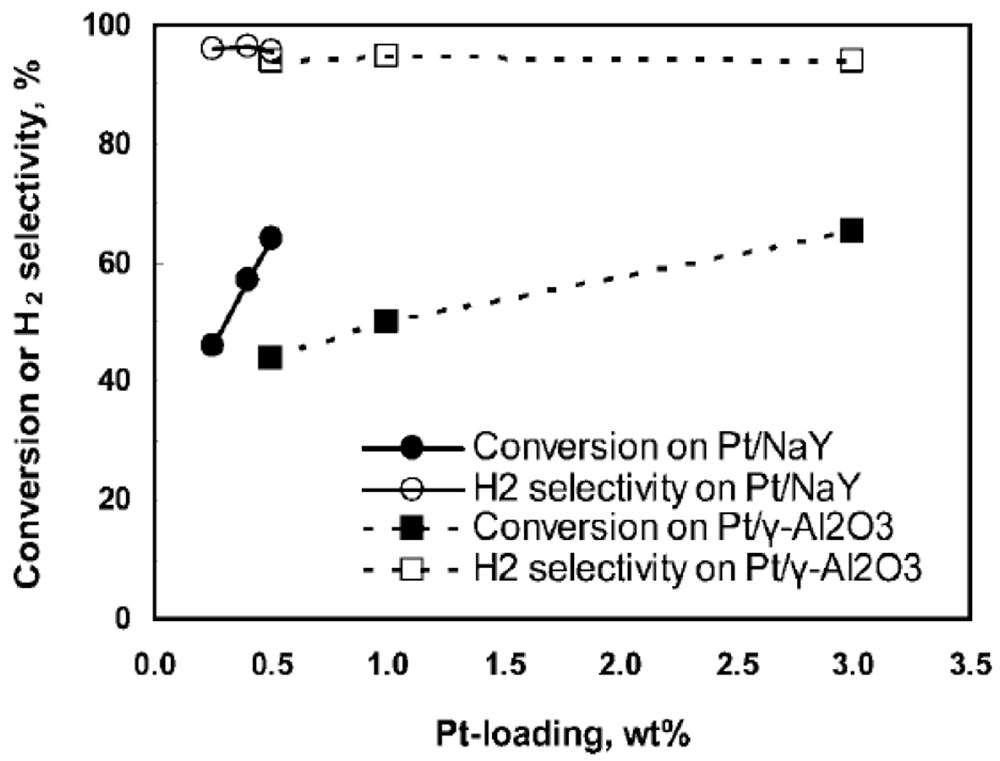
Figure 4. Effect of Pt loading in methanol aqueous-phase reforming.
Reprinted with permission from 26. Copyright 2009. American Chemical Society.
Ni-based catalysts. Ni-based catalysts have been investigated for the APR process, since they show appreciable H2 production and are less expensive than Pt-based catalysts. Table 2 summarizes the Ni-based catalysts reported in the literature for methanol APR. Ni-based catalysts are more susceptible to oxidation in hydrothermal APR conditions41. Additionally, sintering, agglomeration and coke formation leads to the deactivation of Ni-based catalysts39,42. To overcome these issues, Ni has been supported on various materials to increase H2 production along with stability. Raney nickel offers a notably high surface area, thermal and structural stability; adding Sn does not influence the reaction rate of Raney nickel catalysts, but increases the selectivity for H2 by weakening CO and H adsorption, which lowers the methanation reaction rate34. The rate of H2 production, selectivity and stability of Raney NiSn is comparable to Pt/Al2O3 catalysts. Ni has been supported on metal oxides, such as Al2O3 and SiO2, but also on CeO2 and ZrO2 (Table 2). It should be emphasised that both CeO2 and ZrO2 have catalytic activity themselves, making them attractive for APR. For instance, ZrO2 enhances WGS activity43. The use of mixed oxides (bimetallic supports) such as CeO2-ZrO2 and La2O3-ZrO2 improved methanol conversion, hydrogen production and catalyst stability44. The addition of CeO2 increases oxygen storage capacity, catalyst mobility and promotes redox properties. Ni supported on [CeO2]0.25-[ZrO2]0.75, mass fractions showed superior performance compared to Ni supported on [CeO2]0.17-[ZrO2]0.83 or compared to a Ni/ZrO2 catalyst44. However, compared to the performance of Ni supported on CeO2-ZrO2, Ni/CeO2 based catalysts showed worse results; poor metal dispersion due to a lesser surface area was pointed to as the main reason44,45. Ni has also been tested as a catalyst without using any support material. Shabaker et al.34 used a Sn modified Ni catalyst for reforming various hydrocarbons and concluded that adding Sn was required to supress the alkane formation reaction. Nevertheless, Ni without any support showed better H2 selectivity since it avoids the often-observed dehydrogenation of the catalyst support.
Table 2. Ni-based catalysts for hydrogen production in methanol aqueous-phase reforming (IWI – incipient wetness impregnation, WI – wetness impregnation, WHSV – weight hourly space velocity).
| Support | Ni
loading
(wt. %) | Preparation
method | Temperature
(°C) | Pressure
(MPa) | Methanol
conversion
(%) | WHSV
(h-1) | H2 yield
(%) | H2 production
rate
(µmol/min/
gcatalyst) | Ref. |
|---|
| ZrO2 | 10 | IWI | 230 | 3.2 | | 2 | 2 | 20.3 | 32 |
| ZrO2 | 7 | IWI | 230 | 3.2 | 48 | 4 | 40 | | 45 |
| ZrO2 | 10 | IWI | 230 | 3.2 | 26.4 | 3.6 | | 1021 | 44 |
| [CeO2]0.17-[ZrO2]0.83 | 10 | IWI | 230 | 3.2 | 50.9 | 3.6 | | 2144 | 44 |
| [CeO2]0.25-[ZrO2]0.75 | 10 | IWI | 230 | 3.2 | 58.8 | 3.6 | | 2529 | 44 |
[CeO2]0.17-[La2O3]0.05-
[ZrO2]0.78 | 10 | IWI | 230 | 3.2 | 45.7 | 3.6 | | 2134 | 44 |
| [La2O3]0.10-[ZrO2]0.90 | 10 | IWI | 230 | 3.2 | 46.6 | 3.6 | | 2147 | 44 |
Calcia-stabilized
ZrO2 | 5 | IWI | 230 | 3.2 | 75 | 4 | 64 | | 45 |
| Yttria-stabilized ZrO2 | 5.6 | IWI | 230 | 3.2 | 46 | 4 | 36 | | 45 |
Calcia-stabilized
ZrO2 | 6.9 | IWI | 230 | 3.2 | 63 | 4 | 46 | | 45 |
| CeO2 | 10 | IWI | 230 | 3.2 | 16.9 | 3.6 | | 453 | 44 |
| α-Al2O3 | 11.8 | IWI | 230 | 3.2 | | 2 | 0.8 | 8.6 | 32 |
| SiO2 | 10 | IWI | 230 | 3.2 | | 2 | 1 | 10.1 | 32 |
| ɣ-Al2O3 | 11.4 | IWI | 230 | 3.2 | | 2 | 6 | 60.6 | 32 |
| R-NiSn
14 | | 225 | 2.5 | 18.6 | | 1.43 | | 34 |
To increase basicity of the APR reaction and consequently the selectivity for H2, calcia-stabilized ZrO2 (CSZ) and yttria-stabilized ZrO2 (YSZ) have been tested as supports45. The results showed that adding calcia to ZrO2 improves the APR performance with higher methanol conversion and H2 yield, while yttria-stabilized ZrO2 had no impact on performance. However, increasing the loading of calcia for CSZ did not necessarily increase H2 production. Lanthanum (La) has been employed with Ce and Zr to increase WGS activity and catalyst stability. Adding La2O3 to a CeO2 support increases oxygen vacancies, provides better metal-support interactions and leads to higher H2 production due to better Ni dispersion44 .
Effect of dopants. Adding Cu to Ni-based catalysts supported on Al2O3 and SiO2 significantly increases WGS activity and makes methane formation less favorable, as depicted in Table 332. This behavior is less evident in other types of support. Coronado et al.31, using CeO2-ZrO2 supports, reported higher H2 selectivity for alcohol dehydrogenation for Ni-Cu/[CeO2]0.25-[ZrO2]0.75, in comparison to Ni/[CeO2]0.25-[ZrO2]0.75, despite the lower methanol conversion and H2 yield. The authors justified the lower performance with the lower loading of nickel in Ni-Cu/[CeO2]0.25-[ZrO2]0.75. On the other hand, adding Ce to Ni catalysts supported on Al2O3 and SiO2 showed slight improvements in methanol conversion32. The opposite effect was observed for CeO2-ZrO2 supports31, due to an increase in the nickel particles’ size. Similar results were obtained by Goma et al.45, using a Ni-based catalyst doped with CeO2 over different supports (ZrO2, calcia-stabilized ZrO2 and yttria-stabilized ZrO2). The results showed that the CeO2 doped catalysts have lower performances than those without CeO2. The reduction properties and basic nature of Ce reduces the CO selectivity. Moreover, the CeO2 layer additionally hindered the basic sites of calcia and yttria, lowering the methanol conversation and H2 production.
Table 3. Ce and Cu doped Ni-based catalysts for hydrogen production in methanol aqueous-phase reforming at 230°C and 3.2 MPa (5 wt. % methanol concentration) (IWI – incipient wetness impregnation, WI – wetness impregnation, WHSV – weight hourly space velocity).
| Metal | Support | Metal
loading
(wt. %) | Preparation
method | Methanol
conversion
(%) | WHSV
(h-1) | H2 yield
(%) | H2 prodution
rate
(µmol/min/
gcatalyst) | Ref. |
|---|
| Ni-Cu | [CeO2]0.25-[ZrO2]0.75 | Ni 10
Cu 5 | IWI | 38 | 3.6 | 101 | 2100 | 31 |
| Ni-Cu | SiO2 | Ni 10
Cu 5 | IWI | | 2 | 1.0 | 10.9 | 32 |
| Ni-Cu | Al2O3 | Ni 13
Cu 1.3 | IWI | | 2 | 6.2 | 63.5 | 32 |
| Ni-Ce | [CeO2]0.25-[ZrO2]0.75 | Ni 10
Ce 5 | IWI | 12 | 3.6 | 18 | 620 | 31 |
| Ni-Ce | Al2O3 | Ni 13
Ce 1.3 | IWI | 19 | 3.6 | 28 | 950 | 31 |
| Ni-Ce | SiO2 | Ni 10
Cu 5 | IWI | | 2 | 3.4 | 34.19 | 32 |
| Ni-Ce | Al2O3 | Ni 13
Cu 1.3 | IWI | | 2 | 8.3 | 84.7 | 32 |
| Ni-Ce | ZrO2 | Ni 5.9
Ce 12.6 | IWI | 40 | 4 | 34 | | 45 |
| Ni-Ce | Calcia-stabilized ZrO2 | Ni 5.9
Ce 13 | IWI | 68 | 4 | 57 | | 45 |
| Ni-Ce | Calcia-stabilized ZrO2 | Ni 5.5
Ce 13.5 | IWI | 44 | 4 | 33 | | 45 |
| Ni-Ce | Yttria-stabilized ZrO2 | Ni 5.5
Ce 12.7 | IWI | 54 | 4 | 40 | | 45 |
Noble metal-based catalysts. Besides Pt-based catalysts, other noble metals such as Ru, Ir, Rh and Pd have been employed in APR of alcohols17,20, but only Ru and Ir were studied for methanol APR. The dehydrogenation of methanol at low temperatures between 89°C and 95°C, using Ru-based pincer complexes in alkaline solution, showed that decreasing the base concentration (NaOH) negatively affects the catalytic performance36. The presence of formate as an intermediate to produce H2 and CO2 was identified by Raman spectroscopy. The use of the Ru complex allows high H2 yield with a turnover frequency of 4700 h-1 and low amounts of CO and CH4 with long-term stability36,46. Ir-based catalysts supported on SiO2, TiO2 and ZrO2 have also been used in methanol APR. Adding Re to Ir/SiO2 and Ir/ZrO2 increased the H2 formation rate by four times and five times, respectively47, by forming nanocomposite clusters that decreased the H2 adsorption sites on Ir. Meanwhile, adding Mo to Ir/TiO2 created a thin monolayer of MoO2 on TiO2 that is responsible for improving the water reactivity. This hydration process over the monolayer leads to an increased H2 production rate.
Supports and preparation methods. The performance of the catalyst relies on the active surface area of the support, the dispersion of the metal over the support surface and the size of the active metal nanoparticles. Therefore, it is necessary to optimize the preparation method in order to achieve catalysts with highly dispersed metal over the support surface. The most commonly used methods for catalyst preparation are derivations from co-precipitation and wet-impregnation. It is important to opt for an appropriate aforementioned preparation method (depending on metal precursors and supports) in order to achieve optimal catalytic activity. Incipient wetness impregnation (IWI) is a commonly used method for preparation of catalysts for methanol APR. However, the use of metal nitrates often offers poor dispersion of the catalyst. Studies on Fe and Ni precursors attributed the reason for low dispersion to redistribution during the drying process. Adding viscosity-increasing agents or chelating citrate salts to aqueous nitrate solutions can avoid redistribution problems48,49 Figure 5 shows one example of the effect of surface area in methanol APR. As seen in this figure, the use of an alumina support with a larger surface area (α-Al2O3) corresponds to higher H2 yield. The reason behind this could be that the larger surface area of the support allows for a better dispersion of Ni than for the support with lower surface area (ɣ-Al2O3).
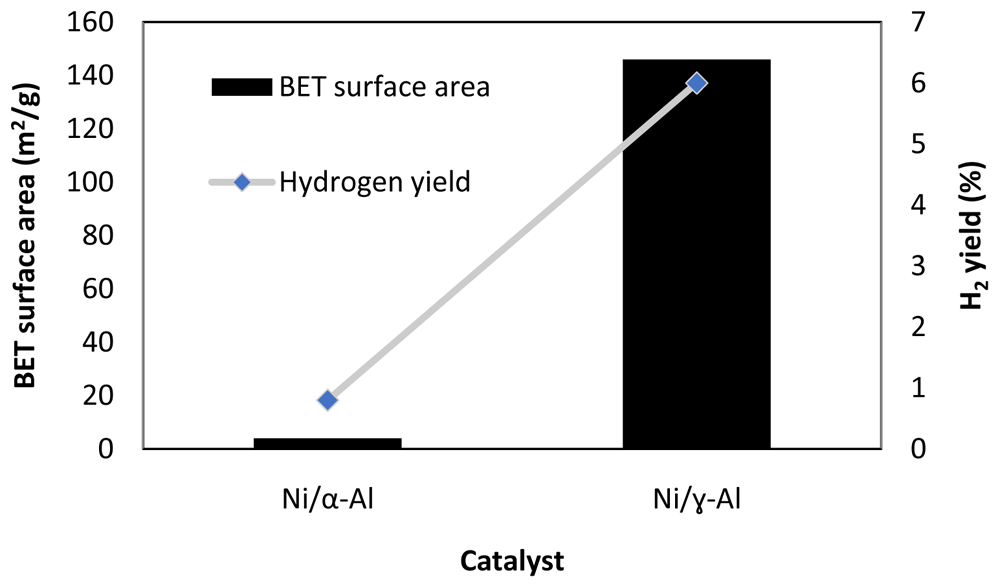
Figure 5. Catalyst Brunauer–Emmett–Teller (BET) surface area and hydrogen yield in methanol aqueous-phase reforming, 230°C, 3.2 MPa, WHSV 2 h-1, Ni loading 11.8 wt. % for Ni/α-Al2O3 catalyst, Ni loading 13 wt. % for Ni/ɣ-Al2O3 (figure created using data obtained from 32).
Alkane formation. In APR, methanation and Fischer-Tropsch reactions are responsible for alkane formation. For APR of methanol, only CH4 is formed as side product alkane. The formation of undesired CH4 can be suppressed to some extent by using suitable metal and/or support materials. Alkane formation heavily depends on the acidity of the catalyst material. Additionally, using catalysts of basic nature not only suppresses alkane formation, it is also favorable for WGS activity50. Huber et al.51 reported that alkane selectivity increased as acidic sites were added to non-acidic Pt/Al catalyst.
As previously mentioned, different metals have their own methanation activity rate (Ni shows a higher tendency to form alkanes than Pt). In order to decrease alkane selectivity and favor higher H2 formation, non-acidic dopants or supports must be used with a Ni-based catalyst during dehydrogenation reactions. Not only the metal of the catalyst, but also the support plays an equally vital part in APR reactions. Acidic supports like SiO2-Al2O3 tend to favor higher alkane formation compared to basic or neutral supports such as Al2O317. Ni-based catalysts have been doped with Cu in order to increase H2 production and to suppress CH4 formation; however, adding Cu had no noticeable effect on increasing H2 production32. Use of a Ce doped Ni-based catalyst also limits CH4 formation, which could be the result of a synergetic effect between Ni and Ce31. Calcia and yttria have been added to ZrO2 in Ni-based catalysts to increase the surface basicity. This resulted in promoted WGS activity that decreased the selectivity of alkane formation45. Table 4 summarizes secondary substances producing rate on catalysts used in MeOH APR. It is clear from this Table that Ni-based catalysts display higher alkane rate production than the Pt-based catalysts. This is in accordance with Figure 3 that indicates that Ni displays a higher methanation rate than Pt.
Table 4. Alkane (CH4 and C2H6) producing rate on various methanol aqueous-phase reforming catalysts.
(PR – production rate, NO – not observed).
| Metal | Support | Metal
loading
(wt. %) | Temperature
(°C) | Pressure
(MPa) | WHSV
(h-1) | CH4
yield
(%) | CH4
(mol.
%) | CH4 PR
(µmol/
min/gcatalyst) | CH4
selectivity
(%) | C2H6
yield
(%) | C2H6 PR
(µmol/min/
gcatalyst) | Ref. |
|---|
| Pt | ɣ- Al2O3 | 3 | 225 | 2.5 | 0.008 | | 0.4 | | | | 0.0 | 18 |
| Pt | ɣ- Al2O3 | 3 | 267 | 2.5 | 0.008 | | 0.6 | | | | 0.0 | 18 |
| Pt | Al2O3 | 2 | 190 | 6 | | | | | | | | 27 |
| Pt | ɣ- Al2O3 | | | | | | | 0.97 | | | | 37 |
| Pt | ɣ-Al2O3 | 8 | 230 | 3.2 | 2 | 0.1 | | 0.9 | | NO | NO | 32 |
| Pt | ɣ- Al2O3 | 3 | 224 | 2.65 | 0.008 | | 0.5 | | | | | 26 |
| Pt | ɣ- Al2O3 | 3 | 264 | 2.65 | 0.008 | | 0.6 | | | | | 26 |
| Pt | ɣ-Al2O3 | 1 | 210 | 2.9 | 2.94 | | | | | | | 40 |
| Pt | δ- Al2O3 | | | | | | | 1.01 | | | | 37 |
| Pt | α- Al2O3 | | | | | | | 1.10 | | | | 37 |
| Pt | CeO2 | | | | | | | 0.20 | | | | 37 |
| Pt | α-Fe2O3 | | | | | | | 0.02 | | | | 37 |
| Pt | α-MoC | 2.2 | 190 | 6 | | | | | | | | 27 |
| Pt | α-MoC | 2 | 170 | 6 | | | | | | | | 27 |
| Pt | α-MoC | 2 | 150 | 6 | | | | | | | | 27 |
| Pt | α-MoC | 0.2 | 190 | 6 | | | | | | | | 27 |
| Pt | β-MoC | 2.1 | 190 | 6 | | | | | | | | 27 |
| Pt | MoC-2 | 2 | 190 | 6 | | | | | | | | 27 |
| Pt | MoC-3 | 2.3 | 190 | 6 | | | | | | | | 27 |
| Pt | NaY | 0.5 | 224 | 2.65 | 0.08 | | 0.6 | | | | | 26 |
| Pt | NaY | 0.5 | 264 | 2.65 | 0.08 | | 0.8 | | | | | 26 |
| Pt | NiAl2O4 | 1 | 210 | 2.9 | 2.94 | | | | | | | 40 |
| Pt | TiO2 | 2 | 190 | 6 | | | | | | | | 27 |
| Ni | ZrO2 | 10 | 230 | 3.2 | 2 | 1.3 | | 13.4 | | 0.1 | 1.5 | 32 |
| Ni | ZrO2 | 7 | 230 | 3.2 | 4 | | | | 2.2 | | | 43 |
| Ni | ZrO2 | 10 | 230 | 3.2 | 3.6 | | | | 1.5 | | | 42 |
| Ni | [CeO2]0.17-[ZrO2]0.83 | 10 | 230 | 3.2 | 3.6 | | | | 2.2 | | | 42 |
| Ni | [CeO2]0.25-[ZrO2]0.75 | 10 | 230 | 3.2 | 3.6 | | | | 3.3 | | | 42 |
| Ni | [CeO2]0.17-
[La2O3]0.05-
[ZrO2]0.78 | 10 | 230 | 3.2 | 3.6 | | | | 2.0 | | | 42 |
| Ni | [La2O3]0.10-
[ZrO2]0.90 | 10 | 230 | 3.2 | 3.6 | | | | 2.6 | | | 42 |
| Ni | Calcia-
stabilized
ZrO2 | 5 | 230 | 3.2 | 4 | | | | 2.1 | | | 43 |
| Ni | Yttria-
stabilized
ZrO2 | 5.6 | 230 | 3.2 | 4 | | | | 1.5 | | | 43 |
| Ni | Calcia-
stabilized
ZrO2 | 6.9 | 230 | 3.2 | 4 | | | | 2.1 | | | 43 |
| Ni | CeO2 | 10 | 230 | 3.2 | 3.6 | | | | 0.0 | | | 42 |
| Ni | α-Al2O3 | 11.8 | 230 | 3.2 | 2 | 0.3 | | 3.4 | | | | 32 |
| Ni | SiO2 | 10 | 230 | 3.2 | 2 | 0.2 | | 2.5 | | | | 32 |
| Ni | ɣ-Al2O3 | 11.4 | 230 | 3.2 | 2 | 3.3 | | 33.4 | | 0.2 | 2.1 | 32 |
| Ni-Cu | [CeO2]0.25-
[ZrO2]0.75 | Ni 10
Cu 5 | 230 | 3.2 | 3.6 | | | | | | | 31 |
| Ni-Cu | SiO2 | Ni 10
Cu 5 | 230 | 3.2 | 2 | 0.0 | | 0.0 | | NO | NO | 32 |
| Ni-Cu | Al2O3 | Ni 13
Cu 1.3 | 230 | 3.2 | 2 | 0.7 | | 7.3 | | 0.0 | 0.1 | 32 |
| Ni-Ce | [CeO2]0.25-
[ZrO2]0.75 | Ni 10
Ce 5 | 230 | 3.2 | 3.6 | | | | | | | 31 |
| Ni-Ce | Al2O3 | Ni 13
Ce 1.3 | 230 | 3.2 | 3.6 | | | | | | | 31 |
| Ni-Ce | SiO2 | Ni 10
Cu 5 | 230 | 3.2 | 2 | 0.7 | | 7.4 | | 0.0 | 0.2 | 32 |
| Ni-Ce | Al2O3 | Ni 13
Cu 1.3 | 230 | 3.2 | 2 | 3.2 | | 32.1 | | 0.2 | 2.0 | 32 |
| Ni-Ce | ZrO2 | Ni 5.9
Ce 12.6 | 230 | 3.2 | 4 | | | | 0.9 | | | 43 |
| Ni-Ce | Calcia-
stabilized
ZrO2 | Ni 5.9
Ce 13 | 230 | 3.2 | 4 | | | | 2.2 | | | 43 |
| Ni-Ce | Calcia-
stabilized
ZrO2 | Ni 5.5
Ce 13.5 | 230 | 3.2 | 4 | | | | 2.5 | | | 43 |
| Ni-Ce | Yttria-
tabilized
ZrO2 | Ni 5.5
Ce 12.7 | 230 | 3.2 | 4 | | | | 0.9 | | | 43 |
Effect of experimental conditions
Methanol APR can be carried out in the range 200°C – 250°C within the pressure range of 1.5 MPa – 3.5 MPa. Therefore, it becomes necessary to observe the effect of system pressure and temperature for optimized H2 production. Pan et al. studied the effect of pressure on H2 production along with the production rates of CO2 and CH4 in APR of 5 wt. % ethylene glycol aqueous solution for Ni20SnAl7 hydrotalcite derived catalyst. It was reported that H2 production decreased significantly with increased pressure (from 2.6 MPa to 3.0 MPa) whereas the production rate of CH4 was unaffected. The decrease in CO2 production was also observed with increasing operating pressure. This effect was ascribed to blockage of available catalytic sites and results in dehydration and hydrogenation of intermediate products at the expense of produced H2. This results in the decrease of H2 production52.
Additionally, partial H2 pressure becomes a limiting factor to H2 production. Methanol APR forms H2, CO, CO2 and sometimes CH4 in gaseous form, which is in the form of gas bubbles within the aqueous solution. The total pressure inside the bubble is calculated to be the same as the total system pressure considering vapor-liquid equilibrium19. The high H2 pressure blocks catalytic sites and lowers the surface concentration of CO, which reduces the activity of the WGS reaction. Additionally, changes in total system pressure influence the gaseous bubble density and size distribution. Such changes affect the performance of the catalyst by modifying their wetting behavior53. In the same manner as pressure, system temperature also influences H2 production. For example, at high temperature water can corrode the catalyst and active metal and/or support can be washed away into the effluent19. However, thermodynamic analysis of methanol APR show higher H2 selectivity at higher temperatures (>187°C). On the contrary, CH4 formation decreases with temperature increase (and increases with pressure increase). Since CH4 formation is an exothermic process, the methanation reaction is thermodynamic unfavored by higher temperatures54.
Reactor types
The catalyst and reactor design must be accurately selected for obtaining the best APR performance. APR is a three phase reaction which reaction kinetic is often controlled by the diffusion of reactants and products in the liquid phase. Namely hydrogen, which has a very low solubility in methanol and in water, diffuses slowly from the reaction center where it is formed to the gas phase, outside the catalyst; the reaction is then normally controlled by diffusion34. Additionally, the evolved hydrogen may take part in the methanation and/or Fischer-Tropsch side reactions that further decreases the H2 production rate34. Therefore, catalyst and reactor should be designed to facilitate the fast hydrogen removal from to maximize the hydrogen production rate. Most studies consider the use of fixed packed reactors for MeOH APR, but this design is certainly not the best suitable for this reaction. In a typical lab-scale APR experimental set-up, an aqueous MeOH solution is fed upwards in a packed bed reactor using an HPLC pump. Before starting the reaction, whenever needed hydrogen is used as a reducing medium for catalyst reduction. Normally nitrogen, but also argon, are then used as sweep gas as to strip away the produced hydrogen. A condenser is used to separate the gas products from the unreacted methanol and water. The products are analyzed with an online gas chromatograph and unreacted reactants can be analyzed with a liquid chromatograph. A pressure regulator is used to maintain the operating pressure of APR such as methanal and water are in liquid phase. Figure 6 shows a schematic representation of a typical MeOH APR reaction set-up using a fix bed reactor.
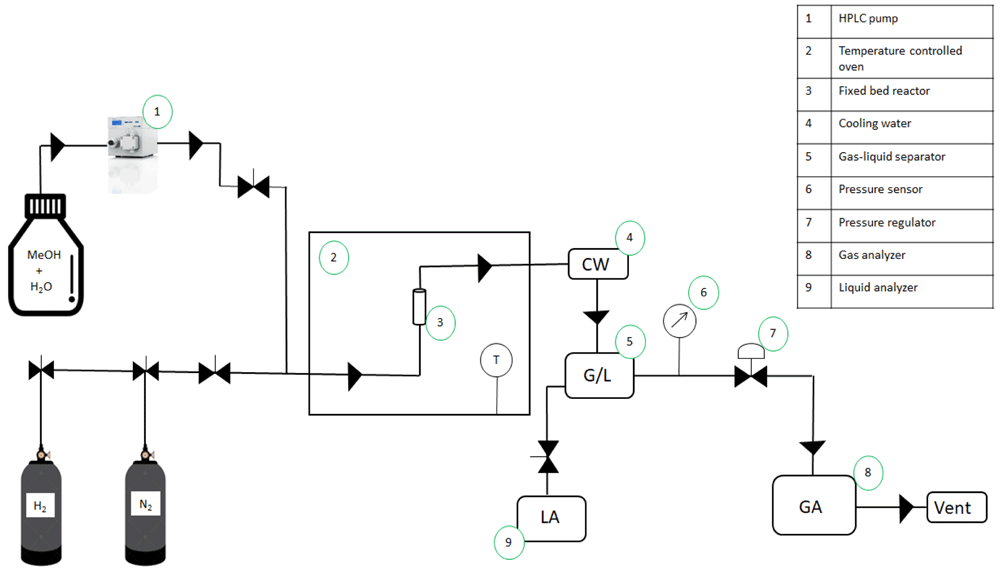
Figure 6. Schematic representation of methanol aqueous-phase reforming experimental set-up.
Microchannel and membrane reactors have also been considered for the APR reaction. These reactors allow higher mass transfer rates of reactants and products and then higher selectivities and hydrogen production rates. D’Angelo et al. published very interesting studies on the use of carbon-coated ceramic membrane reactors55 and coated microchannel reactors56 for APR of sorbitol and ethylene glycol, respectively. The carbon-coated ceramic membrane showed 2.5 times higher hydrogen yield when compared with the fixed bed reactor tested under similar experimental conditions. Since some metals selective possess H2 permeability, due to this fact, membrane reactor can be facilitated as both reaction and purification system in reforming reactors57,58. The membrane reactor facilitates the effective removal of hydrogen from the reaction medium due to the differential pressure between retentate and permeate. This product removal from reaction system can increase H2 yield. Additionally, the authors pointed that the hydrophobic nature of membrane hinders its interaction with water, therefore increasing stability of membrane. The coated microchannel reactor displayed a similar performance when compared with the membrane reactor55. On another fascinating study, D’Angelo et al.56 coated Pt/AlO(OH) catalyst particles on the inner wall of a microchannel (inner diameter of 320 µm) to perform the APR of ethylene glycol. This single microchannel reactor showed increased hydrogen selectivity and ethylene glycol conversion compared to the fixed bed reactor performance used under identical conditions. The authors attributed this greater performance to the hydrodynamic behavior under Taylor flow regime, which facilitates the removal of hydrogen from catalyst surface; such reactors should also be assessed for MeOH APR.
APR kinetics and modeling
Kinetic modelling is a way to shed light on the reaction pathways leading to rate of formation of the products of various catalysts at given temperatures. Ribeirinha et al.59 studied empirical and mechanistic models for the high performance catalyst CuO/ZnO/Ga2O3 for methanol steam reforming (MSR). Simulating a packed bed reactor, they found that these models accurately fit to the experimental results, after appropriate parameter estimation. Lotrič et al.60 developed a power-law empirical model for the same catalyst CuO/ZnO/Ga2O3 and reported good fitting with experimental data. There are several kinetic models reported in the literature for MSR for various catalysts, reaction temperatures and types of reactor61–67 In contrast, APR kinetic models are scarce as the technology is still in its development phase. Coronado et al.68 presented a kinetic model for C1-C4 alcohols derived from Fischer-Tropsch synthesis over Ni supported on ceria-zirconia using power law and phenomenological models. The authors evaluated three different reaction rate equations. The first equation was a Langmuir–Hinshelwood reaction rate expression based on the work by Murzin et al.69 for xylitol APR (Equation 5), and the two other equations (Equation 6–Equation 7) were simple power law models.
The authors considered only alcohols as being able to adsorb on the active sites of the catalyst. The adsorption equilibrium constants of alcohols (K), the rate constants (k) and the reaction orders (m) were considered as lumped parameters to avoid system over-parametrization. Water concentration was considered constant and the WGS reaction was assumed to be dependent on the concentration of CO and H2O. The Arrhenius and Van’t Hoff equations were used to calculate the temperature dependency of the reaction rate constants and adsorption equilibrium constants, respectively68. However, the availability of APR kinetics modelling is still limited and in its preliminary stage. Further study and development in the field of APR kinetic models are required in order to better understand APR reaction kinetics that can help optimize and upscale APR.
Feasibility of reforming for fuel cell applications
Low-temperature PEMFCs (LT-PEMFCs) such as Nafion based polymer electrolyte membrane fuel cells are state-of-the-art fuel cells that operate below 100°C. Despite the excellent proton conductivity, the poor CO tolerance at the anode, slow oxygen reduction reaction kinetics and complex water management system hinders cost reduction and performance improvement of LT-PEMFCs. Some studies reveal that LT-PEMFCs suffer significant performance loss in the presence of > 10-20 ppm of CO in fuel feed70. Operating at temperatures above 100°C has the benefits of enhanced catalytic activities and simplified water management. HT-PEMFCs are also more tolerant to fuel impurities and have low dependency on heat removal systems71,72. HT-PEMFCs also have a better CO tolerance compared to LT-PEMFCs. A HT-PEMFC operating at 130°C can tolerate up to 1000 ppm of CO compared to LT-PEMFCs operating temperature 80°C, which can tolerate only up to 10 ppm of CO70,73. Such attributes of HT-PEMFCs provide the potential of in situ hydrogen production using fuel processors based on reforming or oxidation processes. One of the most important reasons for in situ H2 production is the non-availability of a viable H2 storage material74–76. In this sense, in situ H2 production has been extensively researched in recent years as a source of H2 feedstock for fuel cells. The integration of fuel cells with a steam reformer is thermally advantageous since fuel cells are exothermic, while reformers are endothermic. Several studies investigating the thermal integration of low temperature steam reforming with HT-PEMFCs can be found in the literature23,77–81. However, the operating temperature remains a hurdle to overcome in the integration of steam reformers and HT-PEMFCs. HT-PEMFCs have the operating temperature range of 120°C – 200°C82, whereas the steam reforming of alcohols occurs at temperatures between 150°C and 500°C83–85. The operating temperature for state-of-the-art HT-PEMFCs cannot exceed 200°C, as it would lead to problems such as degradation and loss of proton conductivity. Additionally, the temperature difference between HT-PEMFCs and steam reformers is more of a challenge for rapid startup86,87.
Fuel processors for fuel cells applications
Fuel processors are complex devices that convert hydrocarbons into H2. A typical fuel processor consists of a steam generator, preheater, catalytic fuel reformer, WGS reactor, exhausters, condenser and catalytic after burner (Figure 7). Catalytic fuel reforming is undoubtedly the most crucial part of the cogeneration system as it produces H2 for the fuel cell. A vaporizer or heater is another important component of the fuel processor that is required to heat fuel and water to meet the catalytic reaction conditions of the hydrocarbon. Many fuel processers are equipped with CO removal systems, such as WGS reactors88,89. When using LT-PEMFCs, it becomes critical to feed in pure H2 to avoid the contamination of the fuel cell anode catalyst; therefore, more complex purification systems are required, such as pressure-swing adsorption (PSA) units. Since methanol reforming involves production of CO2, it is critical to install a CO2 capture system at the outlet to avoid adding to CO2 emissions90–92.
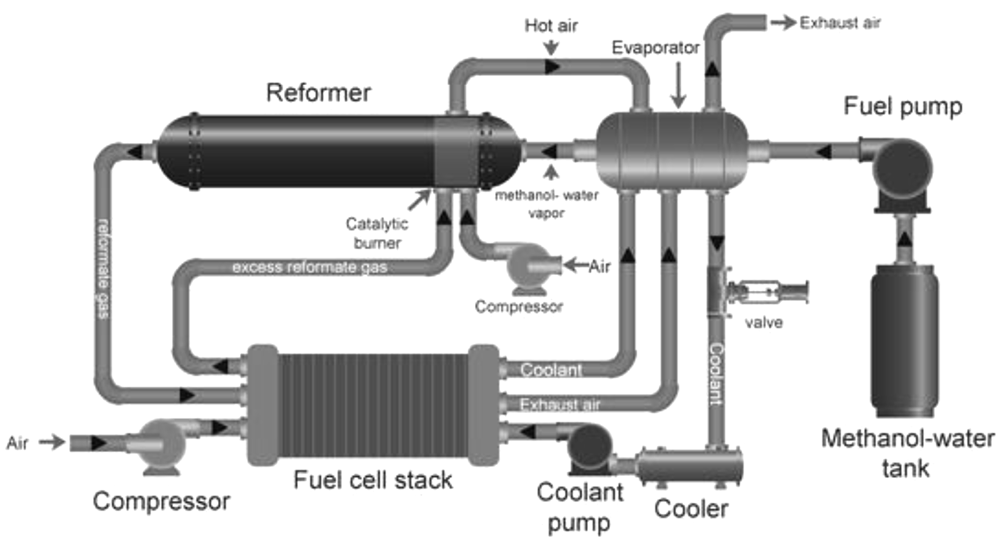
Fuel processors make the overall HT/LT-PEMFCs a complicated system, as it is vital to maintain the temperatures of various subsystems. This in turn can make the thermal integration of the system a challenging task (especially for relatively small fuel cell systems) since the temperatures for different subsystems can vary across wide ranges. The thermal efficiency of a fuel processor (εFP) (Equation 8) is calculated using the higher heating value (HHV) of H2 produced via reforming divided by the HHV of the input fuel (e.g. methanol). The total thermal efficiency of the fuel processor is brought down by the energy required to run the fuel processor subsystem (e.g. pumps, condenser, exhaust fans, etc.). Brett et al.89 reported that if one counts the (electrical) efficiency of the whole system, in reality it is one third to one fifth lower than the efficiency counted for only the fuel cell stack.
APR integration with HT-PEMFC
Internal reforming of methanol or integration of a methanol reformer with a fuel cell is distinctly advantageous compared to fuel processor systems due to the complex thermal management, water management and eventual loss in overall efficiency due to many subsystem components. To overcome this issue, researchers have studied lowering the temperature of MSR for integration with HT-PEMFC24,94–96. Lotrič et al.80 followed a different approach, by considering a higher HT-PEMFC stack operating temperature of 255°C. The authors investigated the integration of MSR with fuel cells and reported that HT-PEMFC shows higher system efficiency than LT-PEMFC in an integrated system. However, operating fuel cell stacks at 255°C requires novel electrolytes capable of proton conduction at such a temperature in absence of water, using expensive gaskets to withstand high temperatures, and development of a new catalyst support, as widely used carbon supports corrode faster at high temperatures88.
These issues can be avoided, to some extent, via methanol APR. Integrating methanol APR with HT-PEMFCs can be seen as a potential technology to increase efficiency and to overcome the complexity of MSR integration into HT-PEMFCs. As discussed earlier, methanol APR, using catalysts such as Pt/MoC, can be performed at temperatures below 200°C with considerably high H2 production27. Additionally, APR is an exothermic process, which makes its integration with fuel cell a simpler and more efficient method of H2 and electricity production80. Using methanol APR with HT-PEMFCs is advantageous since the undesired byproducts of reforming are easy to control, except for CH4 and CO, where the concentration is below the limits of HT-PEMFC tolerance. Integrating APR with HT-PEMFCs can also make the whole system more compact since methanol APR is an easy single-step, single reactor process. The methanol APR reaction conditions are far better suited for integration with HT-PEMFCs than MSR. APR integrated HT-PEMFCs have potential for higher CHP fuel cell system efficiency and performance than MSR integrated HT-PEMFCs.
Challenges with integration. Although the integration of APR and HT-PEMFCs has several advantages, there are also distinct barriers. Challenges are related to the low maturity of the APR technology, elementary APR catalyst research, and the feasible conditions of the integrated system.
To improve the overall efficiency of the HT-PEMFC system and to make the integration of APR and HT-PEMFCs more attractive, the waste heat recovered from the FC stack should be utilized as the heat source of the APR unit. In thermal integration, the waste heat of the FC stack is utilized with a heat transfer fluid recycled in the overall system. Thermal integration would enhance the benefits of APR and compensate for the lower methanol conversions and hydrogen production rates compared to the high values attained with MSR technology. Due to thermal losses in the heat recovery process, the operation temperature of the APR unit is below the operation temperature of the FC stack. Moreover, even though the operation temperature of the HT-PEMFC may vary in the range of 120–200°C, the degradation of the stack is faster at higher operation temperatures97. Therefore, in the thermal integration of APR and HT-PEMFC technology, the selection of operation temperature is based on the optimization of APR catalyst activity and stack lifetime.
Since the reforming temperature should remain below 200°C, a major challenge is the lack of data related to APR systems at decreased temperatures. As presented in Table 1 and Table 2, the methanol conversion and hydrogen production rate drop when the reforming temperature is decreased. A high conversion rate is essential for the system to reach high system efficiency. Furthermore, the anode of the HT-PEMFC tolerates only limited amounts of vaporized feed solution; even a 3% volume fraction of methanol-water vapor would degrade the FC performance98. To avoid this, either a more efficient catalyst or a cold trap for vapor collection is necessary for the integrated system.
Additionally, a challenge with the APR catalysts is the lack of long-term activity experiments. Li et al.27 reached excellent hydrogen production rates with a Pt/α-MoC catalyst, but their experiments lasted less than two hours, which provides no information on long-term catalyst activity. When the APR unit is integrated with the HT-PEMFC stack, the stability of the APR catalyst should correspond with the durability of the HT-PEM membrane electrode assemblies (MEAs), which have recently reached a lifetime of 9,000 hours without any problems99. In situ re-reduction of deactivated catalyst demands more complexity from the FC system and therefore it should be avoided if possible.
Even though high-pressure hydrogen storage is not required when hydrogen is produced in situ with APR, the pressure conditions of APR are relatively high. To perform APR, the reforming pressure should be above the bubble point pressure of the feed mixture. If the methanol molar fraction in the feed solution is 30%, the bubble point pressure of the solution is over 9 bar at 150°C and over 29 bar at 200°C100,101. Since the HT-PEMFC is operated at around atmospheric pressure, the reforming pressure should be maintained with a back-pressure regulator.
In three-phase reforming systems, such as APR, mass transfer limitations cause challenges. Typically, they are solved with nitrogen co-feeding, which enhances the removal of hydrogen molecules from the porous catalyst surfaces. Nevertheless, when the APR is integrated with the HT-PEMFC, nitrogen co-feeding would dilute the feed gas, which is unfavorable. The separation of nitrogen and hydrogen is possible with novel membrane separation techniques102,103. However, such a separation system would increase the complexity and capital expenditure (CAPEX) of the FC system, and thus is not considered a reasonable solution. Instead, usage of a micro-channel reactor or novel catalyst coating on a structured catalyst have been suggested to improve the mass transfer properties of the APR system20.
Conclusion
In recent years, research on methanol APR for hydrogen production has been increasing, with a focus on developing new catalysts. Pt-based catalysts are the best performing catalysts and the highest hydrogen production was reported using MoC and NiAl2O4 as supports. Unconventional supports such as Zeolite and MoC performed better than conventional supports such as alumina and silica. Non-noble metal-based catalysts, such as Ni-based catalysts, show promising results and are the focus of most methanol APR catalytic developments. Ni has been supported on various metal oxides such as CeO2 and ZrO2, which increased overall hydrogen production by promoting WGS reaction. The addition of Cu to produce a bi-metallic Ni-based catalyst leads to higher WGS activity and suppressed methanation, whereas adding Ce only leads to increased hydrogen yield. Ru, Re and Ir are other less frequently used metals that showed promising results and need to be further explored.
Methanol APR has the potential to be considered as a prominent hydrogen production technology. However, methanol APR using non-noble metal catalysts need further development to reach Pt-based catalyst activity, where the supports play a major role. Furthermore, kinetic models need to be developed for better understanding of APR reaction mechanisms, as well as being important tools for scaling, designing and optimizing processes.
Data availability
No data are associated with this article.