State of the art in open science practices
Open science is a concept that aims to make scientific research and data available to scientists, stakeholders, and the general public. The main principle of open science is based on the idea that scientific knowledge should be freely available to everyone and should be easily accessible for reuse, replication, and further development1. It rests on a set of core values2,3, including transparency, reproducibility, accessibility, and interdisciplinarity, to ensure that scientific research is conducted in an open and transparent manner, and that the resulting data, methodologies, and findings are made available to the broader scientific community and non-expert audiences4. By making scientific research and data available to everyone, open science can help to promote scientific progress and drive innovation5.
The concept of open science has gained momentum in recent years, with a significant number of researchers, policymakers, and funding agencies recognizing the importance of openness in scientific research6–8. Researchers from a diverse range of fields strive to remove barriers to information exchange and encourage the academic community to embrace open science procedures5. Numerous initiatives and policies also drive the adoption of open science, such as the European Union’s Horizon 2020 program, which have implemented open-access mandates9. Meanwhile, the European Commission created the EU’s Open Science Policy Platform to provide high-level guidance on the development of its Open Science Policy10. Similarly, in the United States, a Memorandum11 was issued to the Heads of Departments and Agencies, promoting the adoption of open science and public access policies across a broad range of institutions, such as the National Institutes of Health12.
There is an increasing number of resources and platforms available to support open science, including open-access journals, indexed and browsable in the Directory of Open Access Journals1; open data repositories, such as the World Bank open data2 or the World Health Organisation data3; open access repositories, such as Zenodo4 and PubMed Central5; software for open-source computing and development, for instance, Unix6 and Git7; collaborative data and computational platforms, such as MSD-Live8; and projects to promote open data-driven science, such as the European Open Science Cloud9 and the Open Energy Modelling Initiative10; all of which can help to ensure that clear and accessible research methods are used.
As open data gains prominence, the FAIR principles have emerged as a measurable guideline for assessing the Findability, Accessibility, Interoperability, and Reusability of scientific data2. These principles, adopted by institutions like the European Commission, promote data exchange and usage, enabling researchers to build upon existing knowledge. However, the FAIR principles face limitations, including a focus on individual practices and short-term data management13,14. To address these potential barriers, the TRUST principles, based on the pillars of Transparency, Responsibility, User focus, Sustainability, and Technology, were introduced in 2020, ensuring digital repository trustworthiness and long-term data preservation3.
The benefits of open science are wide-ranging. First, it improves research efficiency and reduces total costs through multiple factors such as labor cost savings, productivity improvements, access cost savings, or duplication avoidance15. Importantly, it facilitates interdisciplinarity by using new products, services, companies, and collaborations, which would have been less likely to occur in closed environments15,16. Likewise, open science practices increase public engagement by making research more accessible and understandable to non-experts, which expands reliability and funding opportunities15,17,18. A representative example of the benefits of open science practices is the scientific research during the COVID-19 pandemic. In order to boost scientific collaboration to fight the pandemic, several publishers and researchers sped up their adoption of open science practices19,20. Reviewing processes were accelerated and preprints were shorter and more quickly available21. In the same way, data —especially COVID-19 related— were shared among different institutions and countries, which enhanced the transparency and cooperation between scientists. While this new research paradigm and the new sharing and publication rhythm raised concerns about the potential impact on the quality of research output19, it also encouraged the development of additional guidelines and specific protocols to guarantee the successful deployment of open science practices, which have been maintained in the post-pandemic era in a wide range of scientific disciplines (e.g., sustainable transport22, criminology23, and artificial intelligence24).
Open science practices in IAMs
Open science is rapidly transforming research practices across disciplines22–25, including the energy and climate modeling communities. In recent years, Energy System Optimization Models (ESOMs) like OSeMOSYS11 and Power System Models (PSMs) like PyPSA26 have embraced transparency by releasing their model code under open-source licenses. Some PSMs go a step further by providing fully reproducible workflows and interactive examples through Jupyter notebooks, making them not only more accessible but also valuable tools for education and capacity building. At the same time, the integrated assessment modeling (IAM) community is increasingly adopting open science principles to improve the transparency, accessibility, and understanding of the scenarios they generate27,28. IAMs are essential tools for global scenario analysis and for exploring the systemwide impacts of climate policies29. These models represent the world energy, land, water, climate, and socio-economic systems and estimate plausible scenarios30. For instance, their outcomes and results have been used in the latest Intergovernmental Panel on Climate Change (IPCC) report (AR6;31), which required all contributors to homogenize their data to enable comparisons and ensure full transparency32.
Several well-established IAMs are freely available as open-source projects in their respective repositories, such as GCAM12, MESSAGEix13, MUSE14, REMIND15, and WITCH16. Moreover, efforts are underway to transition models to open access formats, such as OMNIA and OPEN-PROM, which were previously not fully open-source33. Notably, emerging IAMs such as FRIDA17, GCAM-Europe18, NEMESIS-World, and WILIAM19 have been, or are expected to be, released under open-source licenses.
Apart from the open-source licensing of IAMs and related models, modeling teams have recently started to produce standardized reporting procedures to harmonize model outputs, a critical step for facilitating effective result comparisons and enabling robust multi-model studies34–36. In parallel, to communicate effectively the model results, several user-friendly visualization platforms have emerged, standing out to stakeholders and policymakers. Key tools in this domain include the 1.5° C Scenario Explorer37, the Global Hotspots Explorer20, and the Sixth Assessment Report (AR6) Scenario Explorer38. Moreover, various platforms, packages, and libraries have been developed to streamline the analysis, visualization, validation, and comparison of model outputs. Tools like pyam39 assist in data analysis and figure creation, while others, such as nomenclature34 and common-definitions40 hold definitions and mappings to facilitate validation and processing of scenario data. Platforms like I2AMPARIS Validation Tool21 vet the models’ outputs, while R packages like iamc41 and gcamreport35 standardize model outputs, enabling seamless multi-model comparisons. For visualizing model results, tools like witch-plot42 offer specialized features tailored for modelers. Finally, artificial intelligence (AI) is increasingly integrated with IAMs, exemplified by the GCIMS Model Integration System. This powerful agentic AI tool features a cloud-optimized platform equipped with advanced visual analytics and an AI assistant, capable of launching and coordinating multi-stage sequential GCAM runs and their coupled tools, greatly enhancing automation and efficiency.
The development of all these tools facilitates reproducibility, translating results to broad audience, and multi-model comparison studies, which are crucial for improving the consistency and robustness of policy recommendations28,43. Open science strengthens the understanding and integration of models, while also streamlining data analysis by providing comprehensive documentation of model linkages27. Recently, several reports examining methodologies used in large-scale initiatives, such as the IPCC AR6, have highlighted valuable lessons and opportunities for future research44–46. In parallel, several research teams are making substantial efforts to openly share their workflows, methodologies, data, and code47–49, crucial steps to prevent models from being perceived as “black boxes”. However, the implementation of open science practices varies widely across modeling teams and is often hindered by various factors, which can slow scientific progress, limit the reporting and reuse of research findings, and hamper the reliability of the representation of real-world complex systems8,44,50–53. To fill this gap, this study proposes a protocol for the IAM community, grounded in the current state of open science efforts and obstacles encountered by modeling teams.
Methods
To identify the open science practices employed by various modeling teams, as well as the main challenges and barriers they face, we designed a survey54. The survey was structured into three sections aligned with the traditional IAM modeling steps: (1) model(s) development, calibration, and interconnection; (2) model(s) output analysis and dissemination; and (3) tools used throughout the process. Specifically, the first section focused on the documentation process, including model documentation, input harmonization, and potential multi-model connectivities. The second section examined the management of project outcomes, addressing output standardization, the vetting process, output storage, and results presentation. Finally, the third section investigated the tools used or developed to support open science principles.
This survey was sent to all modeling teams from the IAM COMPACT55 and DIAMOND56 consortia, gathering a total of 13 responses. IAM COMPACT, a Horizon Europe research project, aims to support the assessment of global climate goals and the design of the next round of Nationally Determined Contributions and policy planning beyond 2030. At its core are diverse multi-model analyses that emphasize the adoption and standardization of open science practices to ensure that model outputs are comparable, reliable, accessible, transparent, and reusable. On the other hand, the Horizon Europe DIAMOND project focuses on developing open-source IAMs, which stand to benefit significantly from open science principles by enhancing usability and broadening access across modeling teams. With this broad representation of models, institutions, and project scopes, our survey captures a robust and representative sample of the IAM community.
The quantitative and qualitative survey results were analyzed both individually and collectively to identify patterns within specific modeling teams and to highlight common practices shared across the broader community. This dual approach allowed us to capture both the diversity of experiences and the overarching trends in how open science principles are being implemented.
Survey results
As Figure 1 depicts, the consulted modeling teams document their models not only to ensure transparency and facilitate external use but also as a reliable internal reference when uncertainties arise. When models are interconnected, either through soft- or hard-linking, teams typically document the process, along with harmonization procedures, in the Methodology or Supplementary Information section of their papers. However, time constraints often prevent consistent documentation across teams (Figure 1).
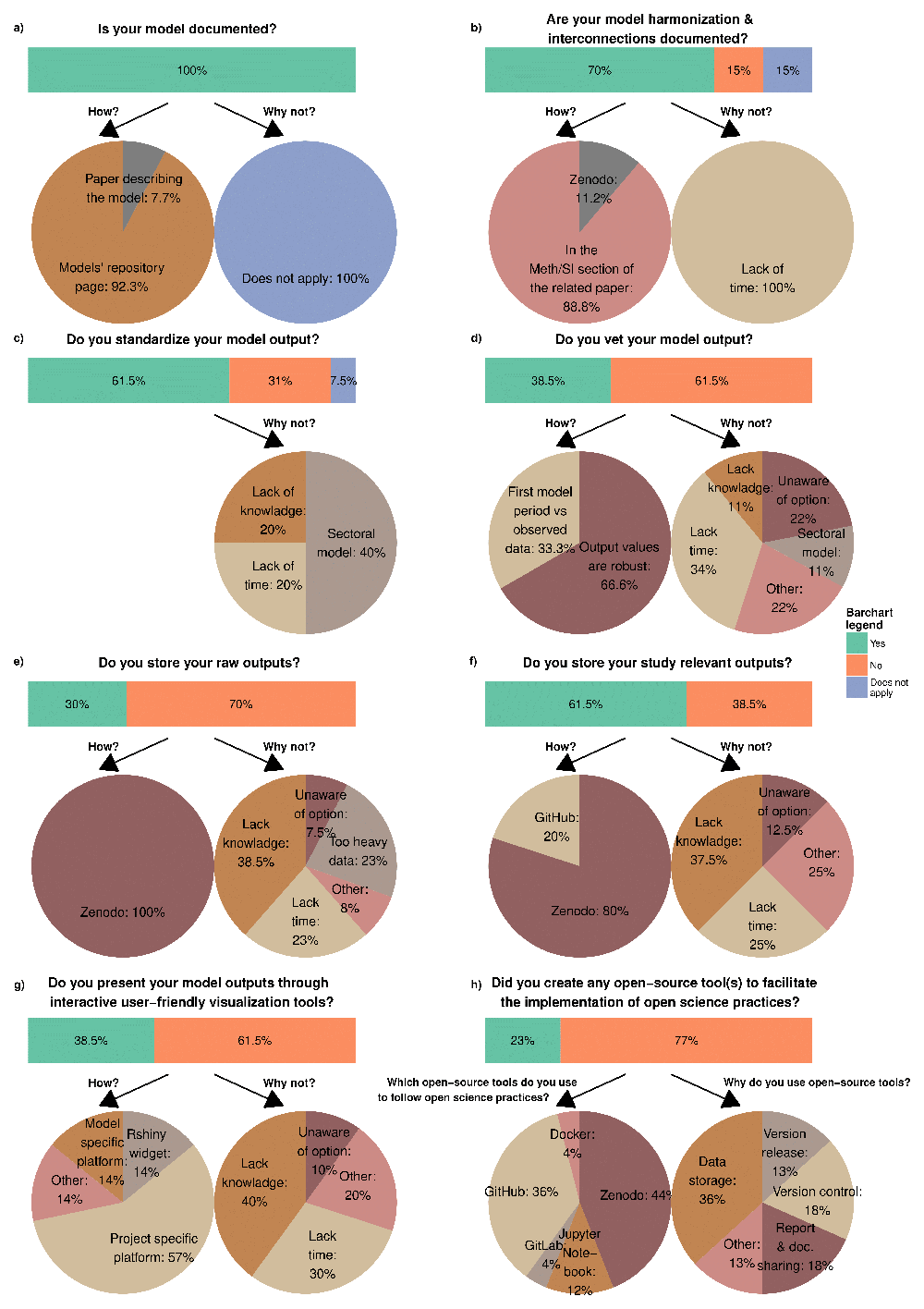
Figure 1. Summary statistics of responses to the primary survey questions.
In terms of model output, not all teams adhere to the standardized reporting formats. IAM models generally recognize the advantages of using the IAMC time-series reporting template57, which standardizes model outputs, facilitating comparisons across different models. However, sector-specific (e.g., energy) models, often linked to IAMs, tend to follow other reporting methods due to their more specialized and disaggregated results. Furthermore, not all modeling teams employ vetting procedures to validate their output. These procedures, designed to assess the accuracy of results, typically compare the first model period to observed data or check that key outputs, such as demand and supply, align correctly. However, these methods are unfamiliar to some teams and can be time-consuming, particularly when done manually rather than using automated tools (Figure 1).
Lastly, modeling teams increasingly publish models’ raw output or relevant datasets on platforms like Zenodo22, and more papers are now accompanied by the analysis code used in the study. However, due to heavy data weight, limited knowledge, or time constraints, this information is not always uploaded to a secure long-term location. To improve the communication of the results, many models are incorporating user-friendly interfaces, which, albeit requiring time to build and set up, make them more accessible and understandable for non-expert audiences (Figure 1).
Open Science Protocol
Based on the collected results, we propose an Open Science Protocol for the IAM community to encourage and support the adoption of open science practices (Figure 2). The protocol structure aligns with the survey sections, with each stage designed to adhere to the FAIR and TRUST principles. It focuses on the key steps of IAM studies, offering detailed guidance and practical strategies to address the challenges identified through the survey. This protocol aims to ensure full transparency and thorough documentation of models, while making outcomes accessible, interoperable, reusable, reproducible, and reliable for a wide range of audiences, including both scientific and non-expert communities, serving as a dependable resource for informed decision-making.
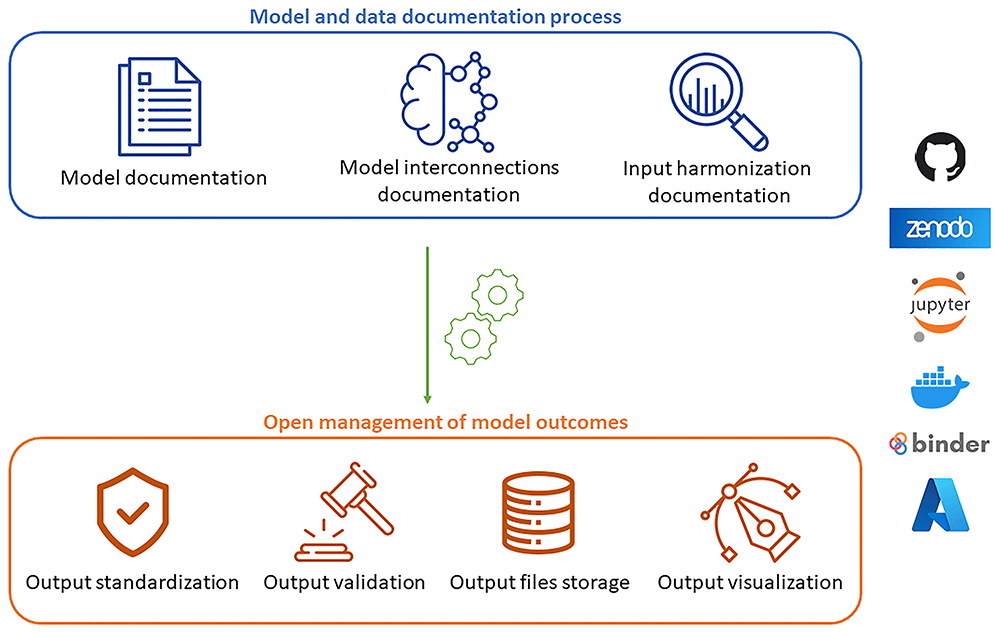
Figure 2. Scheme of the Open Science Protocol for the IAM community.
The first stage of the protocol emphasizes the documentation and harmonization of models and data. It is crucial to ensure transparency in model assumptions, inputs, and outputs so that models developed by different teams can be interoperable and their results comparable. To achieve this, we recommend creating a dedicated platform for thorough documentation of each model with specific details about its versions (see Table 1). It is advisable to assign a Digital Object Identifier (DOI) to each model version release and register the identifier in an indexed searchable resource, ensuring that it is findable, accessible, reusable, and citable for everyone. In the same line, the data should be open and linked to a globally unique and persistent identifier. Well-detailed metadata should be uploaded, even when then data is no longer available.
Table 1. Examples of studies aligned with each protocol step and recommended tools to support their implementation.
| Protocol section | Protocol step | Example/s | Suggested tool/s |
|---|
| 1. Model and data documentation process | Model documentation | GCAM25, MEDEAS26 documentations | Tailor made documentation page |
| 1. Model and data documentation process | Model interconnections documentation | Moreno et al. 202458, Nikas et al. 202459 | Supplementary Information of the related paper |
| 1. Model and data documentation process | Input harmonization documentation | Moreno et al. 202458 | Supplementary Information of the related paper |
| 2. Open management of project outcomes | Output standardization | Fragkos et al. 202460 | Tailor made tools, e.g., gcamreport35 |
| 2. Open management of project outcomes | Output validation | Van Vuuren et al. 202561 | gcamreport35, piamValidation62, I2AMPARIS Validation tool63, |
| 2. Open management of project outcomes | Output files storage | Reisinger et al. 202464, Rinaldi & Ghezzi, 202448, Sampdero et al. 202449, | Zenodo4 |
| 2. Open management of project outcomes | Visualization tools | Khan et al. 202227 | Tailor made user friendly interfaces (e.g., WILIAM web base28, witch-plot42), external platforms (e.g., I2AMPARIS platform28), libraries (e.g., pyam39) |
It is difficult to have a rule to report model interconnections since each case is unique. Thus, these details can be clearly outlined in the corresponding paper or case study, detailing how models interact, as well as the assumptions, inputs, outputs, and model versions used in the integration. If applicable, models’ inputs must be homogenized to have comparable results, a task that should be documented thoroughly in the corresponding paper (see Table 1). Additionally, publications should reference and cite the specific model versions used, including any modification details (if applicable), with links to the version repository if models are open-source. Modeling teams can leverage open-source platforms such as GitHub23 for code hosting and version control, and Zenodo24 for distributing model releases and, when needed, associated data.
The second stage of the protocol focuses on ensuring the quality and transparency of the outcomes. The first step is to standardize the outputs using the IAMC time-series data template57, which facilitates cross-comparison of results between modeling teams and enables automated validation. While this procedure is specific to each model, it must be traceable, transparent, and reproducible. Automating this process is recommended, as it allows for the detection of errors or bugs over time35 (see Table 1).
To ensure consistency in the outputs, we suggest implementing a vetting procedure, ideally automated, using model-independent platforms like the I2AMPARIS Validation tool63 or model-specific tools such as gcamreport35 (see Table 1). Through this process, the accuracy of the outcomes is assessed by verifying that paired outputs, such as supply and demand, are properly aligned, and by comparing the initial model period with observed data. With the automation of these processes, modeling teams can save time and effort, as well as ensure the clarity and replicability of the workflows.
To guarantee full transparency, accessibility, and reusability of results, it is advisable to upload the outputs to a platform under a DOI, such as Zenodo. However, as the survey indicates, it may not always be feasible to upload raw outputs due to their size. In such cases, the relevant study results and/or lighter standardized datasets should be made available. The shared outputs must be accompanied by detailed metadata documenting the data origin and the specific step-by-step data handling processes used to develop and reuse it (see Table 1). Assigning a DOI and detailing tailor-made metadata helps to ensure that data is easily located and preserved over time, and facilitates its use in future research projects.
In order to efficiently share the findings with both the scientific community and the general public, the protocol suggests the dissemination of results through visualization tools that transform complex data outputs into comprehensible formats. Although creating these tools can be time-consuming, user-friendly visualizations enable clear exploration of the results and significantly enhance transparency, engaging policymakers and other stakeholders. Programming tools and platforms, such as dedicated websites, R Shiny apps29, and visualization packages like pyam65, can leverage the development of these interactive interfaces (see Table 1).
Finally, AI can be integrated at any stage of the protocol to support tasks such as output visualization, workflow design, model interpretation, and execution of simulation runs. Capsule modules, like those offered by MSD-Live38, enable seamless integration of code and data, facilitating interaction with non-expert users and allowing the automated launch of complex workflows.
To facilitate the protocol application and boost the implementation of open science principles, we provide a checklist to modeling teams54, available at Zenodo4. This comprehensive list, structured in the same blocks as the protocol, serves as a useful tool to ensure that no steps are overlooked and acts as a reminder of best practices in open science. In the same line, to ensure that uploaded data and metadata follow the FAIR principles, we recommend ensuring that data is retrievable through an open protocol, and that metadata and data use a broadly applicable language and have assigned a unique persistent identifier30.
Discussion
Open science has developed into a major area of policy interest for academic institutions and a common approach for many researchers. The IAM community is rapidly adhering to these principles since IAM results hold particular significance for a wide range of stakeholders and policymakers. IAM models have traditionally faced criticism for their lack of transparency and the difficulty in fully testing their assumptions due to the complexity of the underlying code66. This has led to perceptions of IAMs as “black box” models, diminishing their reliability in the eyes of some decision-makers50. Embracing open science practices would greatly benefit the IAM community by demystifying these models and making their methods and procedures far more transparent and accessible. This is a crucial step in translating model insights into real-world policy actions.
As in other scientific communities, the adoption of open science principles faces several challenges, such as limited awareness, knowledge gaps, time constraints, limited financial resources, intellectual property concerns, and various cultural and social factors67–69. However, several scientific disciplines have established protocols, data repositories, and best practices (e.g., Nature Protocols31, BioModels Database32, and the Environmental Data Initiative33), which help promote open science and ensure transparency. Similarly, projects like the Reproducibility Project Cancer Biology34 and the Reproducibility Project Psychology70 work to verify research reproducibility, thereby enhancing the credibility and reliability of scientific findings. While the IAM community has developed output standardization guidelines34 and user-friendly visualization interfaces37,38, it still lacks a comprehensive protocol to guide the development of modeling studies.
To address this gap, this paper introduces a protocol for the entire IAM community that offers a structured framework for modeling teams and related projects. While it is built on the challenges faced by specific modeling teams and may not capture all perspectives, the protocol aims to serve as a valuable resource for the broader community. It outlines best practices and recommended platforms and tools to streamline labor intensive tasks. By adopting this protocol, modeling teams can optimize time and resources while improving the transparency, accessibility, reliability, interpretability, and reusability of their results. With collective effort, the protocol can be continually updated and refined to better meet the evolving needs of modelers, ultimately advancing climate science and supporting the development of evidence-based policies.
Ethics and consent
All survey respondents were members of the IAM COMPACT or DIAMOND consortium and provided informed consent for the use of the information shared in this study. They were informed that their responses would be utilized for research purposes and included in this paper. The data were collected under the assurance of anonymity and were used exclusively to support the development of open science practices and protocols for integrated assessment models. This process was conducted in compliance with ethical approval from the Basque Centre for Climate Change (BC3) Management Committee. Respondents also retained the right to withdraw their participation at any point.
Authors contributions
C.R. participated in the Conceptualization, Data Curation, Formal Analysis, Investigation, Methodology, Software, Validation, Visualization, Writing - Original Draft Preparation, and Writing – Review & Editing; J.S. participated in the Conceptualization, Funding Acquisition, Methodology, Resources, Supervision, Validation, and Writing – Review & Editing; N.F. participated in the Conceptualization, Funding Acquisition, Project Administration, Resources, Validation, and Writing – Review & Editing; F.B. participated in the Validation and Writing – Review & Editing; and C.L.G. participated in the Validation and Writing – Review & Editing.
Acknowledgments
The authors acknowledge the survey respondents for their time and diligence in thoroughly responding to the survey.
Faculty Opinions recommendedReferences
- 1.
European Commission: The European Union’s Research and Innovation Performance - Facts and Figures 2019. 2019.
- 2.
Wilkinson MD, Dumontier M, Aalbersberg IJJ, et al.:
The FAIR guiding principles for scientific data management and stewardship.
Sci Data.
Publisher: Nature Publishing Group, 2016; 3(1): 160018. PubMed Abstract
| Publisher Full Text
| Free Full Text
- 3.
Lin D, Crabtree J, Dillo I, et al.:
The TRUST principles for digital repositories.
Sci Data.
Publisher: Nature Publishing Group UK London, 2020; 7(1): 144. PubMed Abstract
| Publisher Full Text
| Free Full Text
- 4.
Munafò MR, Nosek BA, Bishop DVM, et al.:
A manifesto for reproducible science.
Nat Hum Behav.
2017; 1(1): 0021. PubMed Abstract
| Publisher Full Text
| Free Full Text
- 5.
Fecher B, Friesike S, Hebing M:
What drives academic data sharing?
PLoS One.
2015; 10(2): e0118053. PubMed Abstract
| Publisher Full Text
| Free Full Text
- 6.
Burgelman JC, Pascu C, Szkuta K, et al.:
Open science, open data, and open scholarship: European policies to make science fit for the twenty-first century.
Front Big Data.
2019; 2: 43. PubMed Abstract
| Publisher Full Text
| Free Full Text
- 7.
Piwowar HA, Vision TJ:
Data reuse and the open data citation advantage.
PeerJ.
Publisher: PeerJ Inc, 2013; 1: e175. PubMed Abstract
| Publisher Full Text
| Free Full Text
- 8.
Tenopir C, Dalton ED, Allard S, et al.:
Changes in data sharing and data reuse practices and perceptions among scientists worldwide.
PLoS One.
Publisher: Public Library of Science San Francisco, CA USA, 2015; 10(8): e0134826. PubMed Abstract
| Publisher Full Text
| Free Full Text
- 9.
European Commission: H2020 guidelines on open access to scientific publications and research data in Horizon 2020. 2017.
- 10.
Mendez E, Lawrence R, MacCallum CJ, et al.:
Progress on open science: towards a shared research knowledge system. Final report of the Open Science Policy Platform. Publisher: European commission, 2020. Reference Source
- 11.
White House Office of Science and Technology Policy (OSTP):
Desirable characteristics of data repositories for federally funded research. Executive Office of the President of the United States, May, 2022; [cited 2025 May 15]. Publisher Full Text
- 12.
NIH:
NIH plan to increase findability and transparency of research results. 2024.
- 13.
Boeckhout M, Zielhuis GA, Bredenoord AL:
The FAIR guiding principles for data stewardship: fair enough?
Eur J Hum Genet.
2018; 26(7): 931–936. PubMed Abstract
| Publisher Full Text
| Free Full Text
- 14.
Peng G, Gross WS, Edmunds R:
Crosswalks among stewardship maturity assessment approaches promoting trustworthy FAIR data and repositories.
Sci Data.
2022; 9(1): 576. PubMed Abstract
| Publisher Full Text
| Free Full Text
- 15.
Fell MJ:
The economic impacts of open science: a rapid evidence assessment.
Publications.
Publisher: MDPI, 2019; 7(3): 46.
Publisher Full Text
- 16.
Mons B, Neylon C, Velterop J, et al.:
Cloudy, increasingly FAIR; revisiting the FAIR Data guiding principles for the european open science cloud.
Information Services & Use.
2017; 37(1): 49–56.
Publisher Full Text
- 17.
Wehn U, Ajates R, Mandeville C, et al.:
Opening science to society: how to progress societal engagement into (open) science policies.
R Soc Open Sci.
2024; 11(5): 231309. PubMed Abstract
| Publisher Full Text
| Free Full Text
- 18.
Grand A, Wilkinson C, Bultitude K, et al.:
On open science and public engagement with engineering. 2010; 09. Reference Source
- 19.
Besançon L, Peiffer-Smadja N, Segalas C, et al.:
Open science saves lives: lessons from the COVID-19 pandemic.
BMC Med Res Methodol.
2021; 21(1): 117. PubMed Abstract
| Publisher Full Text
| Free Full Text
- 20.
Hayashi K:
How could COVID-19 change scholarly communication to a new normal in the open science paradigm?
Patterns (N Y).
2021; 2(1): 100191. PubMed Abstract
| Publisher Full Text
| Free Full Text
- 21.
Fraser N, Brierley L, Dey G, et al.:
Preprinting a pandemic: the role of preprints in the COVID-19 pandemic. 2020. Publisher Full Text
- 22.
Nielsen AF, Michelmann J, Akac A, et al.:
Using the future wheel methodology to assess the impact of open science in the transport sector.
Sci Rep.
2023; 13(1): 6000. PubMed Abstract
| Publisher Full Text
| Free Full Text
- 23.
Branney P, Brooks J, Kilby L, et al.:
Three steps to open science for qualitative research in psychology. 2023; 17(4): e12728. Publisher Full Text
- 24.
Brinkhaus HO, Rajan K, Schaub J, et al.:
Open data and algorithms for open science in AI-driven molecular informatics.
Curr Opin Struct Biol.
2023; 79: 102542. PubMed Abstract
| Publisher Full Text
- 25.
Chin JM, Pickett JT, Vazire S, et al.:
Questionable research practices and open science in quantitative criminology.
J Quant Criminol.
Publisher: Springer, 2023; 39: 21–51. Publisher Full Text
- 26.
Brown T, Hörsch J, Schlachtberger D:
PyPSA: Python for Power System Analysis. arXiv preprint arXiv: 1707.09913. 2017. Reference Source
- 27.
IAMC: IAMC Documentation Wiki. 2022.
- 28.
Nikas A, Gambhir A, Trutnevyte E, et al.:
Perspective of comprehensive and comprehensible multi-model energy and climate science in Europe.
Energy.
Publisher: Elsevier, 2021; 215: 119153. Publisher Full Text
- 29.
Van Beek L, Hajer M, Pelzer P, et al.:
Anticipating futures through models: the rise of integrated assessment modelling in the climate science-policy interface since 1970.
Global Environ Chang.
2020; 65: 102191. Publisher Full Text
- 30.
Weyant J:
Some contributions of integrated assessment models of global climate change.
Rev Environ Econ Policy.
2017; 11(1): 115–137. Publisher Full Text
- 31.
Shukla PR, Skea J, Slade R, et al.:
Climate change 2022 mitigation of climate change. Cambridge University Press, Cambridge, UK and New York, NY, USA, 2022. Reference Source
- 32.
Krey V, Masera O, Blanford G, et al.:
Annex ii: metrics & methodology. In: O. Edenhofer, R. Pichs-Madruga, Y. Sokona, E. Farahani, S. Kadner, K. Seyboth, A. Adler, I. Baum, S. Brunner, P. Eickemeier, B. Kriemann, J. Savolainen, S. Schlömer, C. von Stechow, T. Zwickel, and J. C. Minx, editors, Climate change 2014: mitigation of climate change. Contribution of working group iii to the fifth assessment report of the intergovernmental panel on climate change. Cambridge University Press, 2014. Reference Source
- 33.
Climate-Diamond:
Upgrading models. 2023; Accessed: 2024-09-13. Reference Source
- 34.
Huppmann D, Wienpahl L, Hackstock P, et al.:
nomenclature. 2024. Publisher Full Text
- 35.
Rodés-Bachs C, Sampedro J, Horowitz R, et al.:
gcamreport: an R tool to process and standardize GCAM outputs.
J Open Source Softw.
Publisher: The Open Journal, 2024; 9(96): 5975. Publisher Full Text
- 36.
Usher W, Pietzcker R, Dekker M:
Ecemf: model comparison protocol. 2022. Publisher Full Text
- 37.
Huppmann D, Rogelj J, Kriegler E, et al.:
A new scenario resource for integrated 1.5 °C research.
Nat Clim Change.
2018; 8(12): 1027–1030. Publisher Full Text
- 38.
Byers E, Krey V, Kriegler E, et al.:
Ar6 scenarios database. 05, 2022. Publisher Full Text
- 39.
Gidden MJ, Fujimori S, Van Den Berg M, et al.:
A methodology and implementation of automated emissions harmonization for use in Integrated Assessment Models.
Environ Modell Softw.
2018; 105: 187–200. Publisher Full Text
- 40.
IAM Consortium:
Common definitions. 2024; Accessed: 2024-09-18. Reference Source
- 41.
Dietrich JP, Auer C, Giannousakis A, et al.:
iamc: IAMC tools. R package version 0.29.8, 2023. Reference Source
- 42.
WITCH Team:
Witch plot: visualization tool for witch model outputs. 2024; Accessed: 2024-09-18. Reference Source
- 43.
Guivarch C, Le Gallic T, Bauer N, et al.:
Using large ensembles of climate change mitigation scenarios for robust insights.
Nat Clim Change.
2022; 12(5): 428–435. Publisher Full Text
- 44.
Pirani A, Fuglestvedt JS, Byers E, et al.:
Scenarios in IPCC assessments: lessons from AR6 and opportunities for AR7.
NPJ Clim Action.
2024; 3(1): 1. Publisher Full Text
- 45.
Peters GP, Al Khourdajie A, Sognnaes I, et al.:
AR6 scenarios database: an assessment of current practices and future recommendations.
NPJ Clim Action.
2023; 2(1): 31. Publisher Full Text
- 46.
Stockhause M, Huard D, Al Khourdajie A, et al.:
Implementing FAIR data principles in the IPCC seventh assessment cycle: lessons learned and future prospects.
PLOS Clim.
2024; 3(12): e0000533. Publisher Full Text
- 47.
Byers E, Brutschin E, Sferra F, et al.:
Scenarios processing, vetting and feasibility assessment for the european scientific advisory board on climate change. Technical Report, International Institute for Applied Systems Analysis and Potsdam Institute for Climate Imact research, 2023. Reference Source
- 48.
Rinaldi L, Ghezzi D, Colombo E, et al.:
Assessing environmental and market implications of steel decarbonisation strategies: a hybrid input-output model for the European Union.
Environ Res Lett.
2024; 19(7): 074059. Publisher Full Text
- 49.
Sampedro J, Van De Ven DJ, Horowitz R, et al.:
Energy system analysis of cutting off Russian gas supply to the European Union.
Energy Strateg Rev.
2024; 54: 101450. Publisher Full Text
- 50.
Wilson C, Guivarch C, Kriegler E, et al.:
Evaluating process-based integrated assessment models of climate change mitigation.
Climatic Change.
2021; 166(1–2): 3. Publisher Full Text
- 51.
Robertson S:
Transparency, trust, and integrated assessment models: an ethical consideration for the Intergovernmental Panel on Climate Change.
WIREs Climate Change.
2021; 12(1): e679. Publisher Full Text
- 52.
Skea J, Shukla P, Al Khourdajie A, et al.:
Intergovernmental Panel on Climate Change: transparency and integrated assessment modeling.
WIREs Climate Change.
2021; 12(5): e727. Publisher Full Text
- 53.
Melero R, Boté-Vericad JJ, López-Borrull A:
Perceptions regarding open science appraised by editors of scholarly publications published in Spain.
Learn Publ.
2023; 36(2): 178–193. Publisher Full Text
- 54.
Rodés Bachs C, Sampedro J, Natasha F, et al.:
open_science_iams_dataset (si_material_v1).
Zenodo.
2024. http://www.doi.org/10.5281/zenodo.13970492
- 55.
IAM COMPACT:
IAM COMPACT: expanding integrated assessment modelling: comprehensive and comprehensible science for sustainable, co-created climate action. 2022; Accessed: 2024-09-18. Publisher Full Text
- 56.
DIAMOND: DIAMOND: Delivering the next generation of open Integrated Assessment Models for Net-zero, sustainable Development. 2022; Accessed: 2025-05-15. Publisher Full Text
- 57.
IAMC:
IAMC time-series data template. 2009; Accessed: 2024-09-13. Reference Source
- 58.
Moreno J, Campagnolo L, Boitier B, et al.:
The impacts of decarbonization pathways on Sustainable Development Goals in the European Union.
Commun Earth Environ.
2024; 5(1): 136. Publisher Full Text
- 59.
Nikas A, Frilingou N, Heussaff C, et al.:
Three different directions in which the European Union could replace Russian natural gas.
Energy.
2024; 290: 130254. Publisher Full Text
- 60.
Fragkos P, Van De Ven DJ, Horowitz R, et al.:
Analysing the transformative changes of nationally determined contributions and long-term targets.
Climate.
2024; 12(6): 87. Publisher Full Text
- 61.
Van Vuuren D, O'Neill B, Tebaldi C, et al.:
The Scenario Model Intercomparison Project for CMIP7 (ScenarioMIP-CMIP7).
EGUsphere.
2025; 2025: 1–38. Publisher Full Text
- 62.
Weigmann P, Richters O, Lécuyer F:
piamValidation: validation tools for PIK-PIAM (Version 0.7.4). [Computer software]. 2025. Reference Source
- 63.
DIAMOND:
Iam2paris validation tool. 2009; Accessed: 2024-09-13.
- 64.
Reisinger A, Cowie AL, Geden O, et al.:
Science-based targets miss the mark.
Commun Earth Environ.
2024; 5(1): 383. Publisher Full Text
- 65.
Gidden MJ, Huppmann D:
pyam: a Python package for the analysis and visualization of models of the interaction of climate, human, and environmental systems.
J Open Source Softw.
2019; 4(33): 1095. Publisher Full Text
- 66.
Strachan N, Fais B, Daly H:
Reinventing the energy modelling–policy interface.
Nat Energy.
2016; 1(3): 16012. Publisher Full Text
- 67.
Enke N, Thessen A, Bach K, et al.:
The user’s view on biodiversity data sharing — investigating facts of acceptance and requirements to realize a sustainable use of research data.
Ecol Inform.
Publisher: Elsevier, 2012; 11: 25–33. Publisher Full Text
- 68.
Tenopir C, Allard S, Douglass K, et al.:
Data sharing by scientists: practices and perceptions.
PLoS One.
2011; 6(6): e21101. PubMed Abstract
| Publisher Full Text
| Free Full Text
- 69.
Bertram MG, Sundin J, Roche DG, et al.:
Open science.
Curr Biol.
Publisher: Elsevier, 2023; 33(15): R792–R797. PubMed Abstract
| Publisher Full Text
- 70.
Open Science Collaboration:
PSYCHOLOGY. Estimating the reproducibility of psychological science.
Science.
2015; 349(6251): aac4716. PubMed Abstract
| Publisher Full Text








