Drivers of enhanced weathering using Shapley Additive exPlanations
As the model with the highest average performance across all targets (Table 2), XGB, is a black box model, we calculated the corresponding SHAP values for the individual features (Figure 2) and for the main groups of features (Figure 3) to understand which of the investigated drivers contributed most to the predictions.
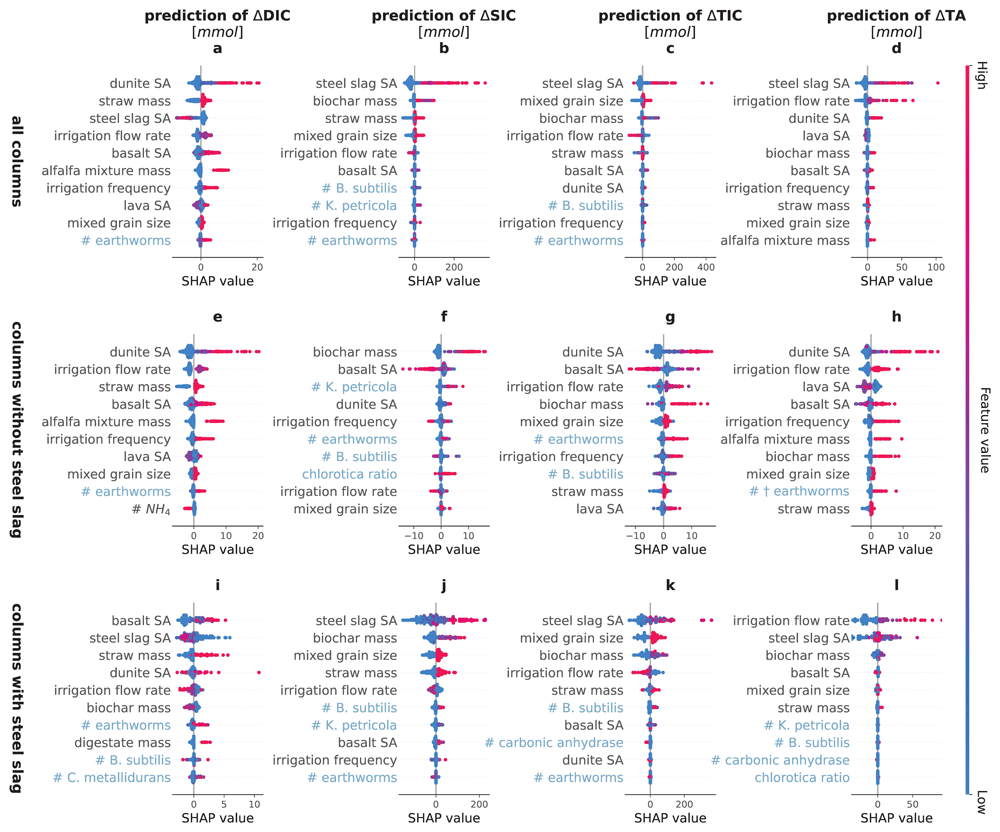
Figure 2. SHapley Additive eXplanation (SHAP) values of the most important drivers of the carbon dioxide removal indicators.
SHAP values of the top ten most important features in the eXtreme Gradient Boosting prediction of the changes in amount of dissolved inorganic carbon (∆DIC), solid inorganic carbon (∆SIC), total inorganic carbon (∆TIC) and total alkalinity (∆TA). The plots depict a SHAP value for each prediction and show the local feature importance and the feature effect. A dot with a high SHAP value for a feature suggests a positive contribution to the prediction, whereas a negative SHAP value leads to a lower prediction. The color of a dot represents the value of the feature in that instance - red indicating relatively high, blue indicating relatively low values (For the binary features, high values = true, low values = false; for chlorotica ratio, red means 100% A. chlorotica earthworms, blue means 100% A. caliginosa earthworms). For example, a red dot with a positive SHAP value implies that a higher value of the feature elicits an increase in the target value. SA stands for surface area, # stands for added amount of biota. The features are ranked in order of descending average importance and biotic features are indicated in light blue for clarity.
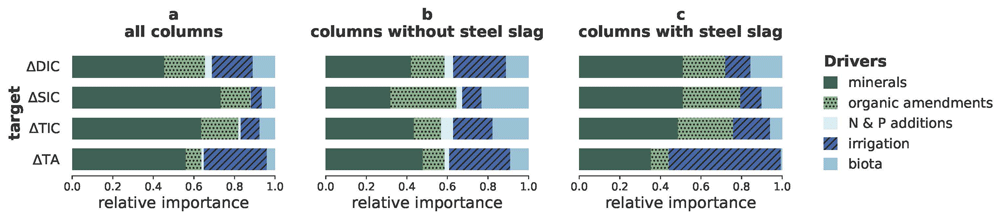
Figure 3. Importance of groups of features to carbon dioxide removal indicators.
Relative importance of the main groups of drivers (minerals, organic amendments, irrigation, N and P additions, and biota and biotic products) to the prediction of the changes in amounts of dissolved inorganic carbon (∆DIC), solid inorganic carbon (∆SIC), total inorganic carbon (∆TIC) and total alkalinity (∆TA); Calculated using Equation 2.2.
In agreement with our hypothesis, the SHAP values revealed that ∆SIC, ∆DIC and ∆TA were indeed driven by different features (Figure 2, Figure 3). Disparities in the drivers of ∆TA and ∆DIC likely indicate a confounding effect of organic alkalinity production or consumption due to the added organics, steel slags or biota. Precipitation of SIC depends on several conditions (saturation, pH, availability of seed crystals (Amann et al., 2022)), and SIC can also be dissolved, leading to ∆SIC being driven by different features than ∆DIC and ∆TA. The target that is most directly related to CDR was ∆TIC, i.e. the sum of ∆DIC and ∆SIC. Its SHAP values are therefore a mix of the SHAP values of DIC and SIC. The next paragraphs discuss in detail the SHAP values of the dominant driver groups of the different targets.
Minerals. Among all potential drivers tested in this experiment, the choice of type of minerals had the biggest impact on the predictions. For ∆DIC, adding dunite to the mineral mix had the largest positive effect. This is clearly shown in Figure 2a, where the columns including dunite (red dots of dunite SA) all exhibited higher SHAP values than those without dunite (blue dots), thus indicating that according to the model, adding dunite increases ∆DIC the most. In addition to dunite, also basalt increased ∆DIC predictions (Figure 2a). As the ultramafic dunite is known to weather faster than the mafic basalt, these findings are in line with expectations (Hartmann et al., 2013).
In contrast to dunite and basalt, adding steel slag reduced ∆DIC (Figure 2a). This is likely because the increased pH shifted the IC equilibrium to carbonate, which precipitated to form SIC (as is indeed seen in Figure 2b). However, for the other CDR indicators, steel slag was identified as the most important feature, consistently increasing the predicted values (Figure 2b-d). Steel slag typically contains free CaO and MgO (Wang et al., 2024), which are rapidly dissolving compounds that quickly increase the solution pH by forming hydroxide in the water. Due to the abundance of metal cations and the high pH, where CO32– is the main species of IC, the solution will be oversaturated with respect to some carbonate minerals. The precipitated CaCO3 can in turn serve as a seed crystal for further CaCO3 precipitation, thereby reducing ∆DIC and increasing ∆SIC and ∆TIC, while the formed hydroxides cause an increase in ∆TA. Interestingly, adding steel slag to the columns led to different SHAP values for some features, such as irrigation flow rate. This is visualized by the blue and red dots (indicating the absence/presence of the feature) switching sign when comparing the SHAP values of some features between the columns with and without steel slag (Figure 2e-g versus Figure 2i-k).
Apparently, using steel slag introduced a suite of interactions that altered the impact of these other features, possibly due to the accompanying increase in pH. In the absence of steel slag, columns that contained more dunite clearly exhibited faster weathering than average, as indicated by the higher SHAP values for ∆DIC, ∆SIC, ∆TIC as well as ∆TA (Figure 2e-h). Columns containing more basalt also exhibited higher SHAP values for ∆DIC and ∆TA, but lower for ∆SIC. For ∆TIC, fine basalt grains (high basalt SA) resulted in lower ∆TIC and coarse grains in higher ∆TIC (medium basalt SA). Adding more lava to the mineral mix had no clear effect on ∆SIC and a positive one on TIC. Coarse grained lava led to a lower ∆DIC and adding lava had a negative effect on ∆TA, especially coarse grains. The negative SHAP values do not necessarily mean that adding the mineral decreased CDR, but that it yielded smaller increases in these targets than other minerals, and its addition comes at the expense of a lower content of the other minerals.
Mixing the grain sizes increased the predictions of the CDR indicators (Figure 2). While finer grains typically correspond to more nucleation sites for carbonate precipitation, mixing them with coarser grains might have enhanced an efficient water flow (Amann et al., 2022).
Irrigation. The irrigation flow rate and irrigation frequency were also commonly important drivers of weathering rate in the XGB models. The irrigation flow rate had opposing effects on the predicted ∆DIC and ∆TIC for the subsets of columns with and without steel slags. In columns without steel slags, higher irrigation flow rates increased predicted ∆DIC, ∆TIC and ∆TA (Figure 2e,g,h). This behaviour could be expected, as a higher flow through transports more cations and bicarbonate ions into the leachates, driving the weathering reactions further from equilibrium (Evans & Banwart, 2006; Maher, 2010). However, for ∆DIC and ∆TA, only small differences were detected between the impacts of the medium flow rate and the highest flow rate (100 and 150 ml day-1; equivalent to rainfall fluxes of roughly 10000 and 15000 mm year-1). Possibly, 100 ml day-1 flushed sufficient dissolved base cations and bicarbonate ions from the column to maintain the solution undersaturated with respect to secondary mineral formation, with stronger dilution only marginally affecting mineral weathering. This suggests that the reactions governing ∆DIC and ∆TA are not transport-limited at flow rates of 0.25 ml day-1g-1 minerals (100 ml day-1 per 400g minerals) or higher, and that the limit likely lies between 0.125 ml day-1g-1 minerals and 0.25 ml day-1g-1 minerals.
In the subset including only columns with steel slag, a negative response to irrigation flow rate was observed for ∆DIC, ∆SIC and ∆TIC, whereas for ∆TA, high flow rates exhibited positive SHAP values. Possibly, higher flow rates transported more cations to the leachate, increasing ∆TA and lowering ∆SIC and as a result also ∆TIC. The increased pH in the leached solution due to the added steel slags could have brought the system far from equilibrium, leading to continuous precipitation of carbonates in the leachate container (Moras et al., 2022).
In addition to irrigation flow rate, also irrigation frequency was selected as an important driver, exhibiting a positive effect on the predicted ∆DIC, ∆TIC and ∆TA in columns with no steel slag. This was in line with expectations, as a higher irrigation frequency implies more continuous replacement of the saturated pore water. Higher irrigation frequencies may also have accelerated weathering by decreasing average pO2, possibly retarding formation of oxides that are known to decrease weathering rates by orders of magnitude (Fuhr et al., 2024; Oelkers et al., 2018).
Organic amendments and biochar. The organic amendments (straw, digestate and the alfalfa mixture) were added to create a livable environment for the biota. By providing the substrates used in respiration, they were expected to accelerate CDR. In agreement, adding straw to the columns increased ∆DIC, ∆SIC (when combined with steel slag), ∆TIC, and ∆TA (Figure 3, B2 in Extended Data (Janssens et al., 2025)). Digestate had a positive effect on ∆DIC (Figure B1 in Extended Data (Janssens et al., 2025)), and a negative one on ∆TA, while its other effects were negligible. The alfalfa mixture was only added to batches without steel slag and had a large positive effect on the predicted ∆DIC and ∆TA (Figure 2e,h) and a small negative effect on ∆SIC (Figure B2 in Extended Data (Janssens et al., 2025)), resulting in a positive effect on ∆TIC (Figure B3 in Extended Data (Janssens et al., 2025)). Its SHAP values were generally more positive than for straw, possibly because it is a better palatable organic matter source. Organic matter additions, and especially straw and the alfalfa mixture, thus seem to have increased mineral weathering, possibly due to increased CO2 concentrations following organic matter decomposition and increased porosity and water flow in the column.
Biochar was not amended to stimulate microbial activity, but to promote weathering abiotically by adsorbing ions and increasing seed crystals due to its high IC content and acidification of the system. It indeed achieved a large positive effect for ∆SIC, ∆TIC and ∆TA (Figure 2), although the increased SIC precipitation logically led to no net increase or even a decrease in ∆DIC (Figure B1). The absence of a rise in ∆DIC suggests that the increase in TA was of organic origin.
Biota and biotic products. Also certain biota were identified as important drivers of the targets. The number of earthworms, for example, frequently was a positive driver. However, as a substantial part of the added earthworms died during the experiment, their effect on the targets could also be due to decomposing earthworms. To investigate this, also dead earthworms were added to certain columns. The SHAP values revealed that earthworms that were alive at the start of the experiment positively impacted the ∆DIC and, in absence of steel slag, also ∆SIC, ∆TIC and ∆TA, while (initially) dead earthworms positively impacted the predicted ∆DIC and ∆TA (Figure 2).
The positive effect of (initially) live earthworms on ∆DIC and ∆TA (Figure 2a,e,i and Figure B4 in Extended data (Janssens et al., 2025)) agrees with our expectations. Earthworms accelerate organic matter decomposition by fragmenting organic matter, consequently increasing its surface area and inoculating it with microbes in their gut (Edwards & Arancon, 2022). Moreover, earthworms stimulate microbial activity and distribution by producing mucus and concentrating nutrients (Amador & Görres, 2007; Brown, 1995; Frouz et al., 2011; Van Groenigen et al., 2019). This accelerated decomposition of organic matter and higher microbial activity leads to increased release of CO2 (Ajwa & Tabatabai, 1994; Condron et al., 2010), which could have enhanced mineral weathering (Amann et al., 2022) and led to an increased formation of bicarbonate in solution (Manning et al., 2024). However, as the number of (initially) dead earthworms had similar SHAP values as the number of (initally) live earthworms, the increased ∆DIC and ∆TA could also be a result of decomposing earthworm bodies, e.g., by increasing the microbial activity due to an immediate pool of available nutrients (Kos et al., 2016; Lin et al., 2022; Sun & Ge, 2021). This higher microbial activity could have further increased decomposition and led to a higher CO2 release and consequently to ∆DIC formation through weathering (Calogiuri et al., 2025).
The positive effect of (initially) live earthworms on the predicted ∆SIC was only seen for columns in which no steel slag was present (Figure 2f). In contrast to ∆DIC and ∆TA, the predicted ∆SIC was not substantially impacted by (initially) dead earthworms, indicating that earthworms likely actively increase ∆SIC. This could occur through physical and chemical processes happening within their bodies when earthworms feed on rock particles. First, earthworms possess calciferous glands through which they can produce calcium carbonate minerals and therefore contribute to the formation of SIC (Briones et al., 2008; Versteegh et al., 2014). Second, the rock particles are grinded in the earthworms’ gizzards, increasing their SA (Suzuki et al., 2003) and removing poorly weathering precipitates by abrasion. These freshly exposed mineral surfaces can then be attacked by microbes living in the earthworms’ intestines (Carpenter et al., 2007; Liu et al., 2011; Zhu et al., 2013) and in the surrounding environment once the particles are egested. In the case of Ca-bearing rocks, this results in an increased release of Ca2+, which drives re-precipitation of ∆DIC as carbonate minerals (Manning et al., 2024; Washbourne et al., 2015), thereby increasing ∆SIC. The positive effect of the earthworms was maximal for 8 earthworms (Figure 2f). Possibly, a higher earthworm density was detrimental for earthworm well-being and might have created conditions which led to earthworms entering a diapause state instead of feeding on the mineral particles. However, when steel slag was present, even in small amounts, the effect of earthworms on the predicted ∆SIC was negligible with respect to the large importance of the abiotic drivers (Figure 2j). As ∆TIC is the sum of ∆DIC and ∆SIC, and (initially) live earthworms had a positive effect on both targets for columns with no steel slag, their presence also led to higher ∆TIC (Figure 2g).
Besides earthworms, bacteria and fungi also impacted the CDR indicators, albeit less clearly. For instance, intermediate inoculum densities of B. subtilis bacteria had a positive effect on ∆SIC and ∆TIC (Figure 2). This is in agreement with previous studies (Ferral-Perez et al., 2020; Keren-Paz et al., 2022; Kim et al., 2005), that showed that B. subtilis can promote the formation of solid inorganic carbonates, such as calcium carbonate, through a process called microbially induced calcium carbonate precipitation during the urease-catalyzed urea metabolization. This process may increase the pH and indirectly contribute to the precipitation of CaCO3. (Ferral-Perez et al., 2020; Keren-Paz et al., 2022; Kim et al., 2005).
Other notable effects are the positive impact of K. petricola on ∆DIC, ∆SIC and, in absence of steel slag, ∆TIC. K. petricola has been demonstrated to increase olivine weathering rates by hindering the formation of iron oxides on the olivine surface (Gerrits et al., 2020a). K. petricola forms biofilms on rock surfaces, providing a unique micro-environment that could promote the precipitation of carbonate minerals. These biofilms can trap ions and organic material, allowing carbonate nucleation to occur under specific conditions. This process could result in the deposition of carbonate minerals as part of SIC formation on or around the microbial biofilm. A. pullulans had a positive effect on ∆DIC, a negative one on ∆SIC in absence of steel slag and no clear net effect on ∆TIC (Figs. B1-3 in Extended Data, Janssens et al. (2025)). A. pullulans is a versatile fungus that can produce numerous different enzymes and siderophores, which could cause the ∆DIC increase. It has the ability to biomineralize metal nanoparticles, which may be of great importance in an environment rich in metallic ions such as in an ultramafic environment, where toxic metal concentrations may accumulate in a high weathering environment (Gostincar et al., 2014; He et al., 2021; Nwoko et al., 2021). Since the biomineralized products are oxides rather than carbonates, the negative effect on ∆SIC is expected.
S. variegatus was added to test whether it could enhance weathering by releasing citric acid, which not only helps mobilize nutrients from the mineral but also creates favorable conditions for bacterial growth (Olsson & Wallander, 1998). C. metallidurans was tested for its resistance to high metal concentrations and its capacity of using basalt as a source of nutrients (Byloos et al., 2017; Byloos et al., 2018; Olsson-Francis et al., 2010). However, in this study, the effect of S. variegatus and C. metallidurans on the predicted targets was small (Figs. B1-4 in Extended Data (Janssens et al., 2025)). Therefore, P and N were added to test for microbial nutrient limitation. However, P and urea had no significant effect on the predicted CDR indicators and NH4Cl even had a large negative effect on ∆DIC, ∆SIC and ∆TIC, which can be attributed to its acidic nature. Consequently, P and N were unlikely to have limited microbial activity.
In theory, the added enzymes could play a role in EW; the overexpression of laccase has been reported to enhance quartz weathering (Kirtzel et al., 2019), hydrolysis of urea leads to CaCO3 precipitation (Dilrukshi et al., 2018; Krajewska, 2018), and carbonic anhydrase catalyzes the conversion of CO2 and H2O to bicarbonates and protons (or reverse), therefore potentially accelerating the supply of protons to weather the minerals (Peplow, 2024; Watson et al., 2016). In contrast, in this experiment, addition of these three enzymes had negligible, and even negative effects on the predicted CDR indicators.








