Plain language summary
Nowadays, a group of elements referred to as Rare Earth Elements (REE) is a key factor in the development of a more environmentally friendly industry and also in the production of renewable technology. Furthermore, due to the unavailability of REE mines in Europe, this region is highly dependent on external providers, thus increasing the risk of supply. This paper presents a sustainable and green way of recycling the residues generated in the REE-intensive industries, easing the risk of supply and decreasing the pollution associated with those residues, such as spent permanent magnets (SPM), permanent magnet swarf (PMS), and NiMH batteries. The proposed recycling route uses different solvents such as innovative ionic liquids and/or mineral acids, followed by the precipitation of the targeted rare earths in oxalate form and their subsequent calcination to obtain the final rare earth oxides. The process has proven to obtain purities higher than 95% and a recovery of >99%, showing considerable potential for REE production.
Introduction
Current energy systems are still highly dependent on fossil fuels contributing enormously to climate change, since carbon-based fuels represent over 40% of total CO2 emissions globally (International Energy Agency, statistics report, 2019). In order to mitigate this effect, the share of energy produced through renewable sources should be heightened substantially, as well as the efficiency achieved in energy production (Climate Change 2007: Mitigation of Climate Change, 2007). The transition towards a more sustainable and renewable transformation of the energy systems is closely related to technologies such as the ones associated with electric cars and wind turbines; sectors which have in common essential requirements of rare earth metals such as dysprosium and neodymium (Hoenderdaal et al., 2013).
Apart from those two examples, the unique properties of rare earth elements (REEs) make them attractive for several high-tech applications (Table 1). REEs form part of high-performance magnets used in computers, mobile phones, turbines, and audio technology (Du & Graedel, 2011) (Balaram, 2019). Magnets represent the main application of REEs, but there is a myriad of different applications in which these elements are present, for instance stabilizers in catalytic compounds (Koerth-Baker, 2012); compact fluorescent light bulbs (CFLs) and light-emitting diode bulbs (LEDs) (Machacek et al., 2015); and color-producing phosphor in video screens (Mertzman, 2019). Table 2 shows specific REE requirements in multiple applications.
| Area | Applications |
|---|
| Electronics | Television screens, computers, cell phones, silicon chips, monitor displays, long-life rechargeable batteries, camera
lenses, light emitting diodes (LEDs), compact fluorescent lamps (CFLs), baggage scanners, marine propulsion
systems |
| Manufacturing | High strength magnets, metal alloys, stress gauges, ceramic pigments, colorants in glassware, chemical oxidizing
agent, polishing powders, plastics creation, as additives for strengthening other metals, automotive catalytic
converters |
| Medical science | Portable X-ray machines, X-ray tubes, magnetic resonance imaging (MRI) contrast agents, nuclear medicine
imaging, cancer treatment applications, and for genetic screening tests, medical, and dental lasers. |
| Technology | Lasers, optical glass, fiber optics, masers, radar detection devices, nuclear fuel rods, mercury-vapor lamps, highly
reflective glass, computer memory, nuclear batteries, high temperature superconductors. |
| Renewable energy | Hybrid automobiles, wind turbines, next generation rechargeable batteries, biofuel catalysts. |
| Others | The europium is being used as a way to identify legitimate bills for the Euro bill supply and to dissuade
counterfeiting. An estimated 1 kg of REE can be found inside a typical hybrid automobile.
Holmium has the highest magnetic strength of any element and is used to create extremely powerful magnets.
This application can reduce the weight of many motors. |
| REE application | La% | Ce% | Pr% | Nd% | Sm% | Eu% | Gd% | Tb% | Dy% | Y% | Others% |
|---|
| Magnets | - | - | 23,4 | 69,4 | - | - | 2 | 0,2 | 5 | - | - |
| Battery alloys | 50 | 33,4 | 3,3 | 10 | 3,3 | - | - | - | - | - | - |
| Metal alloys | 26 | 52 | 5,5 | 16,5 | - | - | - | - | - | - | - |
| Auto catalysts | 5 | 90 | 2 | 3 | - | - | - | - | - | - | - |
| Petroleum refining | 90 | 10 | - | - | - | - | - | - | - | - | - |
| Polishing compounds | 31,5 | 65 | 3,5 | - | - | - | - | - | - | - | - |
| Glass additives | 24 | 66 | 1 | 3 | - | - | - | - | - | 2 | 4 |
| Phosphors | 8,5 | 11 | - | - | - | 4,9 | 1,8 | 4,6 | - | 69,2 | - |
| Ceramics | 17 | 12 | 6 | 12 | - | - | - | - | - | 53 | - |
| Other | 19 | 39 | 4 | 15 | 2 | - | 1 | - | - | 19 | - |
In all these mentioned applications, not only it is difficult to find a concentration of REEs where extraction is economically feasible, but also their separation and refining are difficult and environmentally hazardous (Comisso, 2010). Additionally, China dominates the production of more than 95% of the worldwide rare earth supply, which makes nations highly dependent on China's export policies (Mellman, 2010) (Habib & Wenzel, 2014).
Besides being the world's largest producer of REEs, China is also a consumer and exporter; therefore, this country has established a dominant position in the whole value chain, controlling mining to the production of magnets (Mancheri et al., 2013). Since the demand for REEs is estimated to grow exponentially before 2050 (de Koning et al., 2018), some authors have warned that China's virtual monopoly might hinder the transition to a low-carbon economy, with export policies that make the REE prices strategically high (Roelich et al., 2014) (Alonso et al., 2012). From 2000 to 2016, China has introduced several policies that reinforce its position as a value chain controller via operational cost competitiveness. Local companies are also encouraged by their government to add value by making advanced products instead of exporting raw materials (Mancheri et al., 2019). The most important policies are shown in Figure 1.
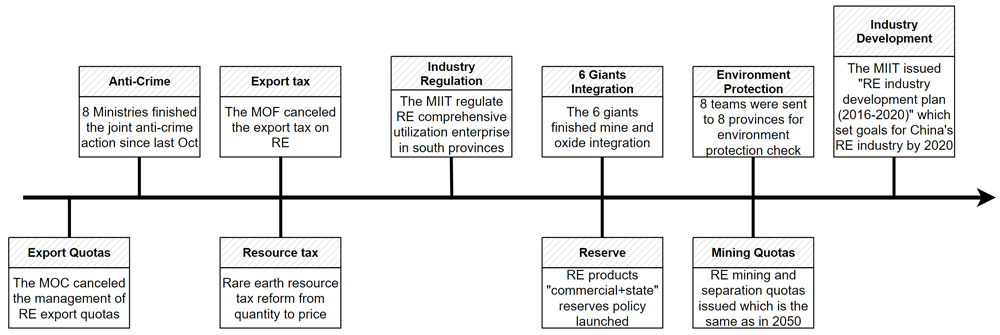
Figure 1. China's export policies regarding rare earth elements (Hu, 2016).
Since the EU needs to import more than 90% of REEs from China due to the lack of internal supply and due to the economic importance that REEs represent, as they are indispensable for technological development, the European Commission classifies REEs as part of a group of 17 specialty metals within the Critical Raw Materials category (European Commission, 2020). The EU aims to decrease its dependency on REEs, not only by improving the efficiency of their consumption but also by improving extraction conditions and enhancing REE recycling (European Commission, 2014) from several sources.
As previously described, spent permanent magnets (SPM) are the main application of REE, containing significant quantities of REEs (see Table 2). Thus, the recycling of SPM becomes very attractive to increase REE production in the EU. Furthermore, the magnetic alloy of which permanent magnets are made comprises about one-third of REE, which could be recycled back to the value chain (Rademaker et al., 2013). In addition, significant amounts of residues are produced throughout the magnet industry (cutting, grinding, and polishing). This residue, also known as permanent magnets swarf (PMS), consisting of approximately 25% of the same alloy, has been typically recycled by the magnet producers (Tanaka et al., 2013). Both SPM and PMS represent an important source of REEs and can be recycled by the same techniques. Thus, this study focused on REE extraction from SPM and PMS. On the other hand, another feedstock for this study was nickel metal hydride (NiMH) batteries. They are similar to nickel-cadmium accumulators, yet they use a mixture of rare earths (La, Ce, Pr, Nd, and Sm) in the anode instead of cadmium. Hence, it also an important secondary source of REEs that can be used to an advantage (Innocenzi & Vegliò, 2012).
Nowadays, there are several recycling pathways for SPM, PMS, and NiMH batteries. Direct reuse is the cheapest option and does not require any chemical treatment, yet it cannot be applied to broken pieces and requires the adequate collection and intact separation of magnets, which is a cost-intensive task (Elwert et al., 2015).
In the case of metallic SPM, an efficient pre-treatment process is hydrogen decrepitation, but only for products containing small magnets as the magnets absorb hydrogen and expand, breaking into a metallic powder. Although further processing of the powder is needed after decrepitation, it is a cost-effective method. However, it is not suited for mixed feeds, oxidized magnets, and magnets with different compositions (Walton et al., 2015).
In the case of hydrometallurgical routes, the magnets are dissolved in a solution (leaching process) where ions separate, and then they are recovered using precipitation or solvent extraction. A large number of pre-treatment and post-treatment stages are required for a high purity recovery and, consequently, several secondary wastes are generated. On the other hand, it can handle a wide variety of compositions and impurities (Dhammika Bandara et al., 2016). Since it is a similar process to those used in fresh REE mining, it is widely used within the industry. In pyrometallurgy, the magnets are submitted to thermal treatments to force a specific physical-chemical transformation so that it is possible to recover the valuable substances. Molten salt extraction is a well-known example. Since high temperatures are required, they usually are energy-intensive. Moreover, they generate non-environmentally friendly solid wastes and use dangerous gases (mainly chlorine). However, they can process variable feeds, and REEs are produced in a metallic state already (Tanaka et al., 2013). Finally, resintering of scrap magnets and magnetic powder is a method that consists of the blending of metallic SPM/PMS powder with fresh REEs and the subsequent magnetic alignment to obtain the targeted alloy. It is cheaper and more environmentally friendly than hydrometallurgy, though it requires a clean and high-purity powder and the SPM must contain metallic elements (instead of oxidized REEs) (Zakotnik et al., 2009).
Within all recovery methods described, hydrometallurgical processes are the most commonly used to recycle REEs. Nonetheless, due to their high reagent consumption, they have raised environmental concerns since they use potentially harmful chemicals (Kerton & Marriot, 2013). Ionic liquids (IL) often show lower toxicity, flammability, corrosiveness, and volatility than conventional solvents. They increase the safety of the process as they have a negligible vapor pressure, high flame resistance and thermal stability (Kubota et al., 2012). In addition, some processes can work at room-temperature, decreasing energy consumption considerably (Hallett & Welton, 2011). Moreover, those environmentally-friendly solvents show higher conductivity than conventional solvents and thus enhance the electrolysis processes. Also, biodegradability and adequate solvent capacity are desired characteristics for these kinds of substances (Chemat et al., 2012). While the electrolysis of REEs from certain ILs is a significant source of perfluorocarbon (PFC) (Kjos et al., 2018), some authors have suggested that this PFC generation can be significantly reduced if operational conditions such as temperature and current density are optimized (Osen et al., 2018).
As the next step towards a more sustainable pathway for the recycling of SPM, PMS, and NiMH batteries, this paper presents an innovative process to recover REEs in the form of rare earth oxalate (REOx) that can be easily transformed to rare earth oxide (REO) by calcination. This process has been studied from several distinct sources by using to advantage the properties of ILs, specifically, performing an IL leaching. Furthermore, several combinations of ILs have been investigated, as well as the effects of adding water and acids to the mixture. Thereafter, a liquid-liquid (L-L) extraction with IL takes place to separate the targeted REEs from impurities. Apart from IL leaching and L-L extraction, this novel process includes the precipitation of REOx by adding oxalic acid and their further purification using ILs again, showing the potential of these solvents in multiple stages of the process. Finally, a scrubbing technique to recycle the ILs by removing unwanted solutes has been studied. An overview of the process is shown in Figure 2.
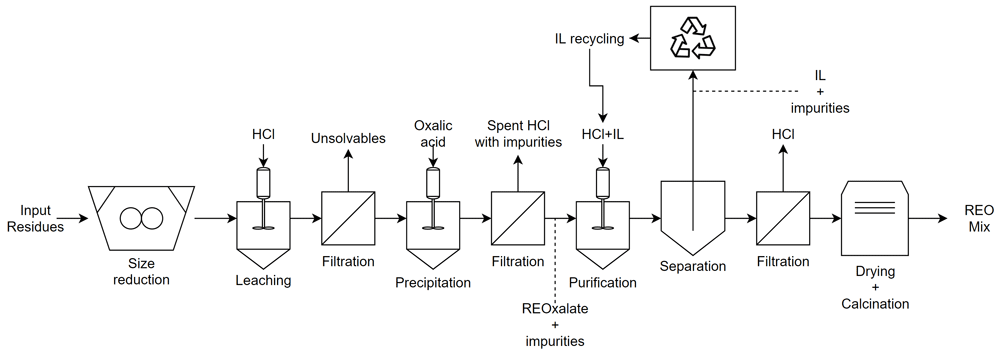
Figure 2. Example of rare earth element recovery process including some of the most promising steps studied.
IL, ionic liquid; REO; rare earth oxide; REOxalate, rare earth oxalate.
Extraction of REEs from the input materials
Conventional extraction methods
Hydrometallurgy technology has been widely used to recover REEs since the industry is familiarized with this branch of processes for raw ores. Moreover, it is inexpensive and suitable for REE recovery from both primary and secondary sources, even at the same time (Yoon et al., 2016). SPMs are the most common REE secondary sources since almost all electronic equipment requires considerable amounts of REE, mainly dysprosium and neodymium. Consequently its manufacturing residue, PMS, also represents a common secondary source and can be treated equally due to their similar properties.
Membrane-assisted L-L extraction is an established selective method to extract Nd, Dy, and Pr from SPMs (Kim et al., 2015). Hollow fiber supported liquid membranes (HFSLM) have been successfully applied at lab-scale, and they are a feasible alternative for the recovery and separation of REEs from SPM leach liquors (Ni'am et al., 2020). There are several extractants that have been shown to obtain consistent results when used in hydrometallurgy techniques, such as tetraoctyldiglycolamide (TODGA) and Cyanex 923 (Kim et al., 2015). Acid leaching followed by precipitation is another established hydrometallurgical route for REE recovery, sulfuric acid and oxalic acid being two of the most common lixiviants for leaching (Tao et al., 2010). Nevertheless, these conventional extractants tend to be lost in aqueous waste streams, which not only raises environmental concerns but also leads to a decrease in efficiency (Krishnamurthy & Gupta, 2015). ILs have shown several advantages in this regard, such as higher selectivity of REEs, reduction in the formation of emulsions, and reduction in volatile organic compound (VOC) emissions (Hidayah & Abidin, 2018).
Liquid metal extraction is a pyrometallurgical approach to recover REEs from end-of-life permanent magnets and permanent magnets wastes. This method takes advantage of the difference in diffusion properties in metal mixtures. For instance, Nd has a selective diffusion affinity with Mg, a typical low-melting-point element (Kim et al., 2016). Other metals have been utilized in liquid metal extraction and have achieved higher efficiencies, such as molten bismuth (Nam et al., 2017), molten silver (Takeda et al., 2004) and molten copper (Xu et al., 2020).
Electrolysis in molten fluorides such as AlF3, ZnF2 and FeF3 is one of the dominant industrial methods for REE extraction from their respective oxide forms (Abbasalizadeh et al., 2013). Molten fluorides generally have a low oxide solubility, yet the operational conditions can be adjusted to favor the reaction kinetics (Abbasalizadeh et al., 2017). Important pollutants like perfluorocarbons (PFCs) can appear when treating SPM and PMS by molten fluoride electrolysis, although it can be prevented or reduced if operational conditions are optimized (Osen et al., 2018). The main drawback of these methods is the high requirement of energy (Ni'am et al., 2019).
On the other hand, spent NiMH batteries are commonly processed by leaching with synthetic adsorbents in an acid environment for the recovery of REEs in oxide form (Gasser & Aly, 2013). After that, the main methods to recover the targeted metals from the leach liquors are selective precipitation, L-L extractions, and electrochemical processes (Santos et al., 2012), often engineered using a combination of them (Tanong et al., 2017). Selective precipitation can be carried out not only by adding acids such as hydrochloric and sulphuric, but also with sodium sulfate or sodium hydroxide (Yoshida et al., 1995). In solvent extraction, the leach liquors are in contact with an organic phase to selectively transfer the metallic ions, with phosphinic acid (D2EHPA) and the Cyanex compounds usually being the extractants (Zhang et al., 1999), as well as other ILs.
REEs extraction from PMS and SPM using ILs: methods and results
In order to study the leaching behavior of ILs in SPM and PMS, several ILs were selected based on their acidity and selective extraction of REEs. These ILs are: methyl imidazolium acetate (MIAc) which was synthesized using 1-Methylimidazolium chloride (95%, Sigma Aldrich, 40477) and silver acetate (for synthesis, Sigma Aldrich, 8.01504) following the procedure described in the literature (Abu-Eishah et al., 2021). MiAc + citric acid (MIAc/cit 1 mol:0.1 mol), methyl imidazolium acetate + lactic acid (MIAc/lac 1 mol:0.1 mol were prepared by mixing MiAc ionic liquid with the corresponding amount of citric acid or lactic acid. Trihexyltetradecyl phosphonium bis(2,4,4-trimethylpentyl) dithiophosphinate (P66614Cy301), trihexyltetradecyl phosphonium (bis-(2,4,4-trimethylpentyl) monothiophosphinate) (P66614Cy302) and trihexyl(tetradecyl)phosphonium diisooctylphosphinate (P66614Dop) where synthesized using Trihexyltetradecylphosphonium chloride (≥95.0%, Sigma Aldrich, 89744) in all the cases and dialky1dithiophosphinic acid (Solvay, Cyanex 301) in the case of P66614Cy301, bis-(2,4,4-trimethylpentyl) monothiophosphinic acid (Solvay, Cyanex 302) in the case P66614Cy302 and diisooctylphosphinic acid (90%, Sigma Aldrich, 38223) in the case of P66614Dop. These ionic liquids were synthesized following the procedure described in the literature (Fraser & MacFarlane, 2009) These ILs were tested on a synthetic sample (SS), which is a mixture of oxides prepared mixing by equal amounts (500 mg) of Nd2O3 (99%, Sigma Aldrich, 1.12276)_Dy2O3 (99%, Sigma Aldrich, 1.12151), Fe2O3 (≥96%, Sigma Aldrich, 310050) and CuO (≥99.0%, Sigma Aldrich, 241741) and on a sample of SPM (PM1), which is a metallic powder residue with the following composition: 29.2% Nd, 1.1% Dy, 0.3% Al, 1.1% B, 0.5% Co, 0.1% Cu, and 69.5% Fe. This composition was determined by open digestion of a representative aliquots (0,2-1g) in aqua regia (21ml HCl and 7ml HNO3) at 130ᵒC for 1h. The digested sample was then diluted in deionized water up to 100ml, filtered in order to remove the unsolvable particles (i.e. plastic, carbon) and finally analysed by ICP-OES. Unless otherwise specified, the preparation procedure and ICP analysis of all the solid samples in this research work has been carried out following the same procedure. PM1 sample was obtained dismantling manually with the help of a screwdriver a hard disk drive, then it was demagnetized in an High-temperature muffle furnace (model Nabertherm LT 15/13) following the procedure described in the literature (Reisdörfer et al., 2019) and crushed in a mortar until a finely ground powder is obtained.
The experiments were carried out by adding the powder (mixture of oxides or PM1 sample) to the mentioned ionic liquids making a 10 ml solution with a solid-liquid weight ratio of 1/100. The mixture was heated at 85°C with a stirring speed of 400 rpm during 24 h using a magnetic stirrer with a hot plate (IKA, C-MAG HS 7).
As it can be seen in Table 3, ILs based on MIAc showed highest REE recovery efficiency, especially in the case of Nd. Furthermore, iron dissolution is low in MIAc, MIAc/cit and MIAc/lac when testing the synthetic sample, which would make the leaching process more efficient. In the case of P66614Cy302 and Dop, they did not dissolve Dy and Nd, so these ILs are not suitable for the process.
Table 3. Leaching efficiency in synthetic samples (SS) and PM1 samples with different ionic liquids (ILs).
| | Recovery (%) |
|---|
| IL | Sample | Dy | Nd | Al | B | Co | Cu | Fe |
|---|
| MIAc | SS | 56.4 | 100 | 94.9 | 16.2 | - | 91 | 0.4 |
| PM1 | 100 | 100 | 100 | 100 | 100 | 100 | 100 |
| MIAc/cit | SS | 12.8 | 100 | 60.1 | 29.5 | - | 60.4 | 0.3 |
| PM1 | 98.3 | 100 | 100 | 100 | 97.9 | 100 | 99 |
| MIAc/lac | SS | 44.7 | 100 | 81.9 | 19 | - | 100 | 0.4 |
| PM1 | 100 | 100 | 100 | 100 | 97.8 | 100 | 97.5 |
| P66614Cy301 | SS | 1.4 | 91.9 | 84.9 | 35.7 | - | 100 | 35.9 |
| PM1 | 64.2 | 57.3 | 100 | 98,2 | 55 | 72.7 | 27.3 |
| P66614Cy302 | SS | 0 | 0 | 43.9 | 21 | - | 76.5 | 0,4 |
| PM1 | 0 | 0 | 38.5 | 46.55 | 0 | 7.8 | 0.3 |
| P66614Dop | SS | 0 | 0 | 56.4 | 25.5 | - | 0.1 | 0.3 |
| PM1 | 0 | 0 | 65.1 | 47.2 | 0 | 0 | 0.2 |
In line with the study of the IL behavior when extracting REEs from SPM, the use of a two-phase system (aqueous and organic) to drive the selective leaching of metals was researched. To that end, in-house synthesized betainium bis(trifluoromethylsulfonyl)imide (BET TFSA) (synthesis procedure as described in the literature (Siriwardana et al., 2008) and water were utilized. BET TFSA has the ability to dissolve REOs, while other metal oxides such as iron and cobalt have very low solubility, making the proposed system very convenient to achieve the goal of the process. In addition, water accelerates the dissolution of metal oxides because it decreases the viscosity of the IL, facilitating the exchange of protons from the betaine groups and enhancing the solvation of ions in the IL.
In this case, a sample extracted from hard disk drives following the same procedure described before was used. The composition of this sample was 30.8% Nd, 0.1% Dy, 0.2% Al, 1.1% B, 1.9% Co, 0.2% Cu, and 65.8% Fe. This sample was subjected to a demagnetion treatment in a high-temperature muffle furnace (model Nabertherm LT 15/13) at 300ºC during two hours (PM2). For some experiments the sample was further treated roasting it at 900ᵒC in the same oven for eight hours (PM2_r) in order to transform the elements of the magnet alloy from metallic to oxide form. The reason why this roasting treatment was carried out only to some samples was to evaluate the different solubility behaviour of such elements in the magnet alloy when they are in both forms (i.e metallic and oxide). Different ILs and water ratios were used as outlined in Table 4, in order to assess the minimum solvent/aqueous ratio needed to extract all the rare earths in the leachate.
Table 4. Leaching efficiency in PM2 roasted and non-roasted samples with betainium bis(trifluoromethylsulfonyl)imide (BET TFSA) as the ionic liquid (IL).
| | | | Recovery (%) |
|---|
| Sample | IL:W* | Time (h) | Phase** | Dy | Nd | Al | B | Co | Cu | Fe |
|---|
| PM2 | 1:1 | 24 | Wp | 91.6 | 35.7 | 0 | 85.7 | 69.7 | 0 | 66 |
| ILp | 0 | 84.2 | 0 | 28.3 | 21.9 | 0 | 45.4 |
| PM2 | 1:1 | 72 | Wp | 88 | 100 | 100 | 43.3 | 31.2 | 100 | 54.2 |
| ILp | 91.4 | 100 | 100 | 36.6 | 32.4 | 100 | 54.6 |
| PM2_r | 1:1 | 24 | Wp | 12.8 | 100 | 60.1 | 29.5 | - | 60.4 | 0.3 |
| ILp | 98.3 | 100 | 100 | 100 | 97.9 | 100 | 99 |
| PM2_r | 1:2 | 24 | Wp | 29.6 | 30.8 | 0 | 61.8 | 45.7 | 0 | 53.6 |
| ILp | 45.8 | 52.8 | 0 | 18.6 | 6.4 | 0 | 9.2 |
Table 4 shows the metal leaching in the water phase and the IL phase. Results from Table 4 show, in general, that the leaching efficiency was higher in the non-roasted samples than in the roasted ones. The main drawback of the process was that the IL was not selective, as all metals were present in both phases (IL and water) in all cases. Even when the IL:water ratio was increased to 1:2 in PM2_r, the selectivity did not improve.
With these preliminary results of leaching with ILs (Table 3 and Table 4), it can be said that the leaching of REEs from SPM using ILs is a promising process as high leaching efficiencies were obtained. Still, more in-depth research is required to obtain better selectivity towards the recovery of REEs as undesirable impurities also showed affinity for the ILs used. To that end, a better understanding of the chemistry between the metals of interest and the ILs will help to find the proper combinations to obtain optimal results. Some ILs, such as N,N-dioctyldiglycol amic acid (DODGAA), have proven to be selective to rare earth metal ions (Yang et al., 2013). These conclusions can be extrapolated to PMS samples due to the nature of the materials.
One of the studied possibilities for improving the selectivity of the process is leaching with mixtures of IL and acids. This approach facilitates the leaching process and reduces the steps, as the extraction and impurities separation take place at the same time. For this approach, and tryhexyl (tetradecyl) phosphonium chloride (97.7% , Cyphos 101, P66614Cy302 kindly provided by Cytec) was selected as IL and was used without any purification. HCl (37%, Scharlau, AC07411000) was selected as acid.
The leaching experiments were carried out with PM1, PM2 and PM2_r, as well as samples from PMS, using solid-liquid weight ratio of 1/40 in approximately 60 g of the mixture of Cyphos 101 with different HCl solutions (0.5M, 1M, 2M and 9M) in 1:1 ratio IL/acid solution. The mixture was heated at 85°C and stirred at 400 rmp using a magnetic stirrer with a hot plate (IKA, C-MAG HS7) obtaining a complete leaching process before nine hours in all cases. In this system, the Cyphos 101 layer showed high selectivity towards iron (Fe2+). However, at the same time, iron was also present in the HCl layer. The results showed that the leaching was quite fast, and REE extraction was completed, but, as in the case of IL + water, the L-L extraction was not selective. Besides, the leaching process was slow compared to conventional acid leaching.
This behavior is interesting because it opens new process possibilities. Taking into account the high efficiency of the acid leaching and the appetence of Cyphos towards Fe2+, the system could include an intermediate step were the metals are precipitated and, after that, the impurities would be separated using IL. This process will be studied in ‘Precipitation step, while, in the following section, the acid leaching over the different samples of interest will be tested.
Extraction using mineral acids: methods and results
To analyze the behavior of both PMS and SPM (compositions in Table 5) when extracting REE from mineral acids, HCl was selected as a lixiviant agent since Fe extraction with the extractant selected for the subsquent impurity extraction step (Cyphos 101) has been stated to be fast and efficient whe this metal is in chloride media (Zhou et al., 2013). Several leaching tests were performed contacting the solid samples in approximately 600 ml of HCl (37%, Scharlab, AC07411000) inside a 1000 ml jacketed reactor with thermal control, coil condenser and anchor impeller rotating at 300 rmp. In these tests liquid-solid ratios from 1:4 to 1:20, HCl concentration from 2 M to 6 M, temperature from room to 85°C and contact time from 1 to 24 h were tested in order to evaluate the effect of those parameters. The leaching efficiency of REEs was measured taking 1 ml of sample from the leaching reactor, filtering it with a 0.45 µm nylon syringe filter (scharlab, NY13021000), diluting 0.5 g of the sample up to 25 ml in 1 M HCl and analysing the resulting solution by inductively coupled plasma optical emission spectrometry (ICP-OES) using a simultaneous spectrometer of inductively coupled plasma optical emission spectrometry (ICP-OES), model Vista-MPX, CCD Simultaneous (Varian Ltd., Australia). Unless otherwise specified, this procedure was used for the preparation and analysis of all the liquid samples analysed by ICP-OES in the research described in this paper.
Table 5. PMS and SPM compositions for mineral acid extraction experiments.
| Nd (%) | Dy (%) | Pr (%) | Co (%) | Cu (%) | Fe (%) | Ca (%) | Al (%) | B (%) |
|---|
| SPM | 26,8 | 4,43 | 0,58 | 0,06 | 0,06 | 66 | 0,08 | 0,31 | 1,03 |
| PMS | 17,17 | 3,39 | 0,51 | 1,26 | 0,18 | 45,39 | 0,57 | 0,27 | 0,71 |
Regarding the SPM used, it was a windmill end of life magnet kindly provided by STENA RECYCLING INTERNATIONAL composed of 26.7% Nd, 3.71% Dy, 0.35% Pr, 66.3% Fe and other elements to a lesser extent. As for the PMS, it was in-process industrial waste obtained from the magnet production kindly provided by VACUUMSCHMELZE GmbH and it had a composition of 17.17% Nd, 3.39% Dy, 0.51% Pr, 1.26% Co, 45.39% Fe and other elements to a lesser extent.
Table 6 shows the main results. In the case of SPM, the leaching was completed after 1–2 hours of operation, even at low temperatures. On the other hand, PMS leaching was slower. The total REE recovery was achieved at a high temperature (85°C) and high HCl concentration (6M) for 1-2 hours, highlighting the relevance of temperature in the acid leaching process.
Table 6. HCl leaching for permanent magnetic swarf (PMS) and spent permanent magnet (SPM) samples.
| Material | S/L* | HCl concentration | Temperature (°C) | Time (h) | Leaching efficiency (%) |
|---|
| SPM | 1:15.5 | 2M | 23 | 1-2 | 100% |
| 1:20 | 40 | 1-2 | 100% |
| PMS | 1:11.35 | 2M | 23 | 6 | 55% |
| 23 | 24 | 58.6% |
| 40 | 4 | 60.6% |
| 60 | 18 | 80% |
| 1:4.35 | 6M | 23 | 1-2 | 55% |
| 1:4.95 | 85 | 1-2 | 100% |
Due to the efficient performance of the acidic leaching system, it can be considered as the first step for the recovery of REE from PMS and SMP. This process was not selective because all metals were leached from the samples. Still, the high leaching efficiency in the tested conditions allows the process to be considered as a first step previous to precipitation and impurity removal processes that will be described in the following sections.
REE extraction from NiMH batteries: methods and results
For the extraction of REEs from NiMH batteries, the first step was to pre-treat the input material to be used as an REE concentrate black mass. This pre-treatment consisted of dismantling to remove all metallic and plastic casing parts, separation of cables and electronic boards to isolate the battery cells, thermal treating of the battery cells and grinding and sieving for obtaining a final black mass. This pretreatment was carried out by SNAM and is described more in detail in the literature (Bae & Kim, 2021). The obtained black mass was characterized by ICP-OES using a simultaneous spectrometer of ICP-OES, model Vista-MPX, CCD Simultaneous (Varian Ltd., Australia). The preparation and ICP-OES analysis of the black mass samples was carried out following the same procedure mentioned before for solid samples. According to the ICP-OES analysis the black mass contained the 80% of the initial REEs with the following composition: 10.8% Ce, 8.1% La, 2.7% Nd, 1.1% Pr, 0.5% Y, 1.0% Al, 8.6% Co, 2.1% Fe, 3.5% Mn, 53.6% Ni, 3.2% K, 1.1% Zn, 0.1% Sm.
In the second step, to leach the metallic species successfully, the black mass was leached in HCl (37%, Scharlau, AC07411000) using 2 M and 6M HCl during contact times from 1 to 24 hours. For each acid concentration the solid-liquid used was considering the sotichiometric amount needed to disolve the metals with each concetration (i.e. 1:15 solid:liquid ratio for 2M HCl and 1:6 for 6M HCl), maintaining the HCl excess to ensure a thorough dissolution. The leaching experiments were carried out at room temperature using approximately 600 ml of acid in a 1000 ml jacketed reactor provided with thermal control, coil condenser and anchor impeller rotating at 300 rpm.
The leaching kinetics of NiMH powder was analysed by taking 1ml samples after different times of reaction (0.5, 1.5, 2.5, 3.5 and 5 h), preparing and analysing them by ICP-OES as previosly described for liquid samples. The ICP-OES analysis showed that the leaching kinetics of NiMH powder was significantly fast due to the small particle size utilized (high available surface area), reaching the maximum recovery in less than 1.5 h in most cases for a 6M solution (Figure 3) (Hidalgo et al., 2021).
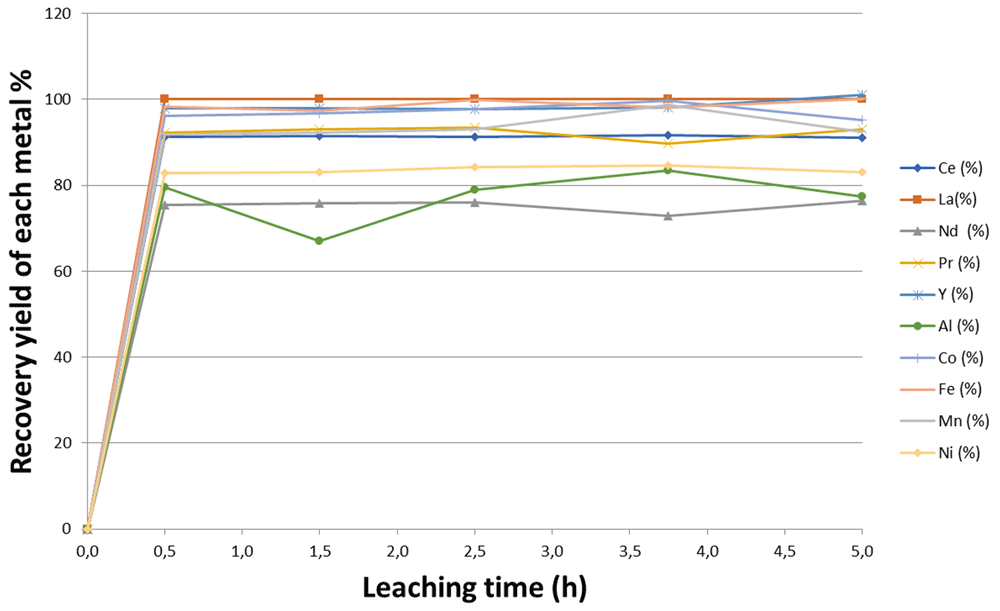
Figure 3. Leaching kinetics of nickel metal hydride (NiMH) black mass in a 6M leaching solution.
NiMH leaching was also strongly exothermic, peaking 67°C in less than 10 minutes. It was necessary to remove the unsolvable material (3–5%), yet this barely contains valuable material, with Ni being the most important element present with 1.716% composition and carbon being the main element.
Precipitation step
Conventional methods
After submitting REE sources to leaching processes, they need to be recovered from the leachates, precipitation being the most commonly applied technique. Oxalic acid is mostly used to precipitate REEs from SPM and PMS in the form of REOx (Tao et al., 2010), reaching concentrations over 98%. Oxalic precipitation after hydrochloric leaching of cathode-ray tubes phosphors is also commonly used to recover Y and Eu in oxide forms (Xingmei et al., 2015). Moreover, REEs from the anhydrite-gypsum residue (Ibrahim & El-Hussaini, 2007) and spent nuclear fuel (Fedorov et al., 2016) are often recovered from the extractant by oxalic acid precipitation. Some authors have proposed combined iron electrowinning and REE precipitation in hydrofluoric acid to considerably increase the recovery efficiency (Yang et al., 2020). This sustainable approach enables the recycling of hydrofluoric acid to be used again in the process.
The REE extraction process from weathered crust elution-deposited rare earth ore has an ammonia-nitrogen pollution problem. Yet, this problem can be solved if magnesium is used as a salt compound leaching agent. Moreover, if calcium oxide is used as a precipitant, effective recycling of Ca and Mg can be achieved, thus reducing the environmental impact of the process (Lai et al., 2020). The precipitation efficiency is over 99% when this procedure is applied. Using magnesium bicarbonate (Mg(HCO3)2) as a precipitation agent has also proven to be an efficient and green substitute for the mentioned process, though temperatures over 40°C might hinder the filterability of the precipitate (Yu et al., 2020).
Regarding NiMH batteries, the filtrate leach liquor is usually processed by oxalic precipitation to produce the REOs (Gasser & Aly, 2013). However, when these batteries are leached in sulfuric acid, sodium hydroxide has shown efficient results and high selectivity at low pH (Pietrelli et al., 2002), the results of which can be transformed into the targeted rare earth salts. Other authors have shown that REEs can be selectively recovered from NiMH battery leach liquors by using antisolvents, such as ethanol or 2-propanol, as precipitation reagents, achieving a 99.9% purity in the precipitates (Korkmaz et al., 2020).
Methodology and results
In this study, REEs were obtained by oxalate precipitation (RE2Ox3⋅xH2O) through the addition of oxalic acid dihydrate (Scharlab, AC17210). Firstly, the nucleation start and settling times were assessed qualitatively based on visual observation. The start of the nucleation was considered when a cloudy formation of colloids was observed in the solution. As the time passed the particles forming this colloid grow until settling occurs. The settling time was considered when the cloud dissapeared completely from the solution, being this transparent again, and all the precipitated solid was settled in the botton of the flask. Following this methodology and criteria, it was observed that precipitation was instantaneous for REEs and considerably slow for impurities (mainly Fe). To avoid the Fe (II) oxalate precipitation, the pH could be lowered. Yet, it provokes the loss of a significant amount of REEs, reducing the overall recovery as a side-effect.
Hydrochloric acid (Scharlau, 37%, AC07411000) was used as reagent for the leaching of the magnet residue with a concentration of 2M HCl (SMP) and 6 M HCl (PMS) using the stoichoimetric amount of acid needed to dissolve the metals and using a 1000 ml jacketed reactor provided with thermal control, coil condenser and anchor impeller rotating at 300 rpm for 24 h period. The leaching was performed at room temperature for SPM and at 85°C for PMS. The initial concentrations of the leachate samples are shown in Table 7.
Table 7. Initial concentrations of permanent magenetic swarf (PMS) and spent permanent magent (SPM) leachates for the precipitation experiments.
| REE | Nd (%) | Dy (%) | Pr (%) | Co (%) | Cu (%) | Fe (%) | Ca (%) | Al (%) | B (%) | Ni (%) | Zn (%) |
|---|
| PMS | 1.364 | 0.205 | 0.010 | 0.002 | 0.003 | 3.438 | <0.002 | 0.015 | 0.047 | 0.000 | 0.000 |
| SPM | 0.861 | 0.161 | 0.037 | 0.047 | 0.003 | 0.487 | 0.045 | 0.010 | 0.061 | 0.039 | - |
The precipitation tests for SPM leachates were carried out with leachates obtained using different concentration of HCl (from 2M to 6M in order to observe different behaviours) mixing a certain amount of leachate containing REEs with the stoichiometric amount of a 100 g/L oxalic acid solution which in the case of SPM corresponded to a molar ratio of (H2C2O4)/(REE) >1.5 and in the case of PMS to molar ratio of (H2C2O4)/(REE) >3.16. Once the oxalic acid solution was added to the leachate the mixture was stirred with a magnetic stirrer (IKA, C-MAG HS 7) at 300 rpm for 15 min. All the experiments are compiled in Table 8.
Table 8. Precipitation experiments for spent permanent magnet (SPM) with oxalic acid.
| | | Oxalate | Residual
solution |
|---|
| [HCl] | REE:Oxalic
(mol) | REE recovery
% (wt) | REE purity
% (wt) | % REE (wt) |
|---|
| SPM | 2M | - | 78.45 | 94.474 | - |
| 2M | - | 95.66 | 90.979 | - |
| 2M | 1.67 | 100 | 99.394 | - |
| 2M | 2.08 | 100 | 99.167 | - |
| 2M | 1.81 | 100 | 99.102 | 0.68 |
| 10M | 1.25 | 83.52 | 99.225 | - |
| 6M | 1.06 | 67.76 | 99.336 | 2.91 |
| 2M | 1.08 | 79.53 | 9.536 | 19.02 |
| 6M | 0.92 | 56.01 | 99.343 | 32.07 |
| 2M | 0.91 | 73.14 | 99.609 | - |
| 10M | 0.77 | 2.76 | 97.800 | 2.29 |
It can be observed that, although the recovered percentage varied considerably, the achieved purities were always >90%, which indicated adequate REE selectivity. Moreover, the two lowest purities were achieved by solid oxalic acid precipitation, and, just considering the liquid oxalic acid experiments, >97% recovery is obtained.
The oxalate precipitation reaction is as follows:
It can be seen that the stoichiometric ratio between REEs and oxalic acid is 2:3. However, in a complex system (SPM leachate), the ratio might not be exact since multiple metals are present in the mixture. Plotting the data from Table 8, it can be observed that the actual ratio is in concordance with the theoretical ratio (Figure 4. and Hidalgo et al., 2021).
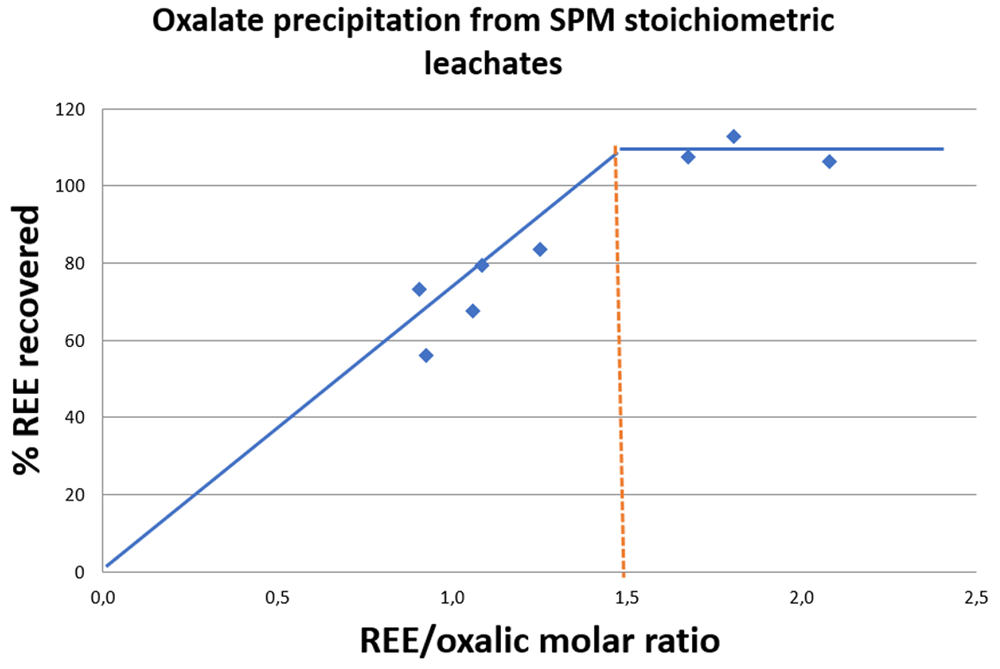
Figure 4. Percentage of rare earth elements (REEs) recovered from spent management magnets (SPM) vs REE:oxalic ratio.
Regarding the PMS leachate experiments, the results are compiled in Table 9. The main difference observed was that a minimum amount of oxalic acid was required to trigger the precipitation reaction, suggesting that other components were probably consuming the precipitation agent.
Table 9. Precipitation experiments for permanent magentic swarf (PMS) with oxalic acid.
| | | Oxalate | Residual
solution |
|---|
| [HCl] | REE:Oxalic
(mol) | REE recovery
% (wt) | REE purity
% (wt) | % REE
(wt) |
|---|
| PMS | 2M | 3.49 | 91.69 | 94.474 | 1.99 |
| 6M | 4.32 | 81.95 | 90.979 | 1.3 |
| 2M | 4.39 | 79.67 | 99.394 | 0.65 |
| 2M | 3.17 | 80.19 | 99.167 | 0.94 |
| 2M | 5.40 | 88.74 | 99.102 | 1.57 |
No relation between oxalic acid and REEs recovered could be observed because there was an oxalic-consuming impurity present in the media. According to theoretical data extracted from (Puigdomenech, 2020), Fe (III) was found to be that impurity as it consumes oxalic acid prior to the actual REOx precipitation.
The following are some considerations reached after the evaluation of the results:
- The more Fe (III) is in the mixture, the more oxalic acid would be required to precipitate the targeted REE. These behaviour has been observed experimentally and confirmed theoretically performing software simulations using the software “Chemical Equilibrium Diagrams” (https://www.amphos21.com/thermodynamics-software/) by (Puigdomenech, 2020). Such simulations show that, if iron is in oxidation state (III), it forms soluble complexes with oxalic acid [Fe(Ox)+, Fe(Ox)2- ], consuming certain amount the oxalic acid present in the solution before REEs start to precipitate.
- PMS had a variable metallic or oxidized iron content, that lead to variable Fe2+/Fe3+ ion concentration in the leachates. As the oxalic acid amount is dependent on the concentration and oxidation state of iron in the leachate, for each pilot-scale batch, the optimum amount of oxalic acid should be evaluated empirically.
On the other hand, in the case of NiMH black mass leachate, the situation was more similar to PMS oxalate precipitation than SPM since a minimum amount of oxalic acid was required to start the precipitation of REEs. However, the precipitation of other species began at the same point as REEs, a fact that made the process even more complicated due to a combination of kinetic and thermodynamic equilibriums between oxalate species.
When a low oxalic ratio was used, the maximum recovery was 83%. Then, it was decided an excess of oxalic acid and fast filtering to separate REOx from other impurities should be used.
The results of the NiMH experiments are shown in Figure 5 and Figure 6 (Hidalgo et al., 2021). It can be observed that, after 15 minutes, a highly pure REOx was achieved (97.4%). From 15 minutes on, the amount of REEs recovered was approximately constant (Figure 7) (Hidalgo et al., 2021).
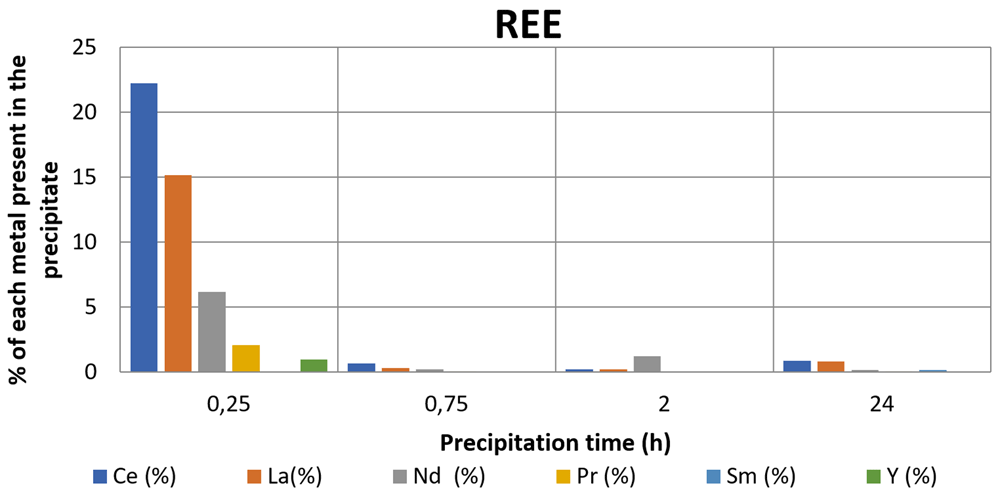
Figure 5. Composition of oxalates (% rare earth elements (REEs)) from nickel metal hydride (NiMH) at different times in the precipitation experiments.
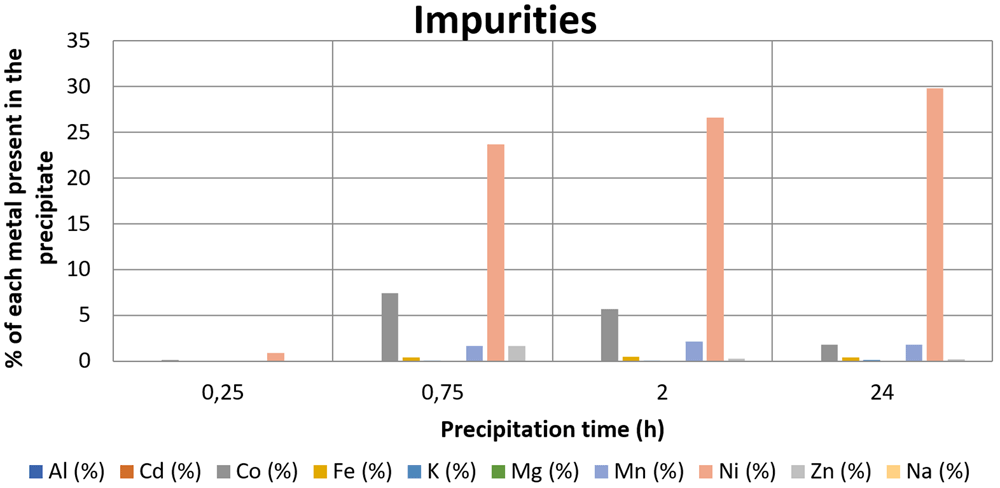
Figure 6. Composition of oxalates from nickel metal hydride (NiMH) at different times (impurities).
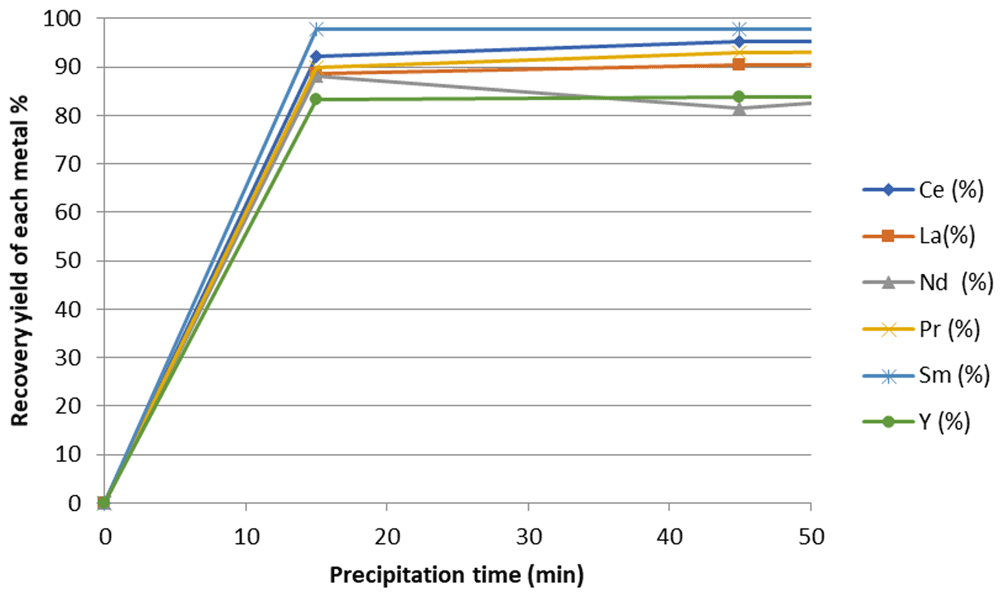
Figure 7. Amount of rare earth elements recovered from nickel metal hydride (NiMH) at different times.
Since there were several impurities in the leachate, the stoichiometric amount of oxalic acid was insufficient to recover the REEs thoroughly. As happened for PMS with Fe, some metals (mainly Ni) must have been interfering by consuming oxalic acid. Hence, the same conclusions are valid in this case.
Purification of the final precipitate
Conventional methods
There are several existing methods for REE purification based on differences in properties, such as the valence electrons or the ionic radii. The selective oxidation-reduction method has been used for the separation of different REEs by adding zinc, for instance, since there are divalent (Eu, Sm, and Yb), trivalent (all REE) and tetravalent ion forms (Ce, Pr, and Tb) (Yan et al., 2006).
Slight differences due to the lanthanide contraction are taken advantage of in the fractional crystallization method. This is the original method for separating REEs, and it enables separation between REE salts and a wide variety of non-REE cations and anions. A specific ionic solution using several salts is required, which evaporates as the REE salt crystals precipitate. To achieve the desired precipitation, the process must be repeated multiple times (Enghag, 2004). This method has been progressively replaced due to its inefficient labor intensity (Walters et al., 2011).
By using the slight differences in alkalinity of the different REEs, fractional precipitation can be achieved if the pH is carefully adjusted when a precipitation agent is added. However, this method is barely used due to its difficulty (Enghag, 2004).
The most commonly used large-scale purification method, though, is solvent extraction, generally performed in a multistage separation loop (MEAB Metallextraktion AB, 2015). The aqueous liquor containing REEs is mixed with an organic agent that transforms the REEs into ions, which are subsequently extracted by adding another solvent where those REE ions are more soluble (stripping stage). The REE concentration can be enhanced to reach the targeted purity by repeating the process multiple times. A scrubbing step can be added to remove contaminants from the organic phase (Kumari et al., 2015). The mentioned organic phase is typically organophosphorus acids such as D2EHPA, other phosphor-based extractants like TBP or Cyanex 923 or 272, long-chained amines like N1923, or quaternary ammonium salts such as Aliquat 336. Solvent extraction is commonly followed by other purification steps such as washing, drying, or calcining (Enghag, 2004). Phase transfer catalysis (PTC) has been recently investigated by some authors (Yan et al., 2006), which heightens the extraction efficiency considerably by moving protons from the aqueous phase to the organic one, thus replacing the extracted REE ions.
Ion exchange, although it is only used to recover a few heavy REEs on a small scale, produces extremely pure REEs (>99.9999%), which are required in certain electronic applications (Walters et al., 2011). It is based on the REE elution affinity with different agents and it is very time demanding.
Methods and results
As it is the most commonly used purification method due to its simplicity, efficiency and reliability, solid-liquid extraction was selected as the second step of the sequential process for impure REOx purification. However, two different methodologies were tested: full dissolution and direct contact. The first one, full dissolution, consists of the thorough dissolution of the raw oxalate in an acidic environment (hydrochloric acid 1M, 2M and 6M) and the subsequent removal of impurities using Cyphos 101 as an extractant. Finally, the REOx dissolved in the acidic phase was precipitated again. However, it was determined that a large amount of acid (Table 10) was required to reach the required acidity, making the process not economically feasible at a large scale.
Table 10. Amount of acid required for the complete rare earth element oxalate dissolution.
Origin of
the oxalate | Solvent | Solubility
(60°C) | Required acid
(L HCl/kg of
oxalate) |
|---|
| SPM | HCl 1M | <0.9 g/l | 1111.1 |
| HCl 2M | 3.7 g/l | 270.3 |
| HCl 6M | 49.8 g/l | 20.1 |
| PMS | HCl 1M | <0.7 g/l | 1428.6 |
| HCl 2M | 4.0 g/l | 250.0 |
| HCl 6M | 12.0 g/l | 83.3 |
The second method, direct contact, was furtherly studied since it is more feasible in large-scale plants. The following steps were carried out:
1) Direct contact of Cyphos 101 and approximately 20 g of the oxalate in a liquid/solid mass ratio of 1:2, stirring at 300 rpm during one hour at room temperature using a magnetic stirrer (IKA, C-MAG HS 7).
2) Addition of a low acidic HCl dissolution with NaCl at different concentrations (2M HCl, 6M HCl, 2M NaCl and 2M HCl 2M + 1M NaCl) in an ionic liquid/aqueous ratio of 1:10 in order to dissolve the iron from the oxalate alloy. The aqueous solutions used are listed in Table 10. The solid:liquid ratio was 1:10 and the operation was performed continuously stirring at 300rpm for one hour at 60°C using a magnetic stirrer with a hot plate (IKA, C-MAG HS 7)
3) Transference of the resulting solution to a separatory funnel and settling down to let the phases separate (settling down assessed at one, 10, 30, and 60 minutes).
4) Separation of the purified rare earth oxalate, aqueous phase and ionic liquid phase controlling the flux of the output going out of the separatory funnel with the stopcock.
All the fractions were analyzed by ICP-OES following the preparation and analysis procedures and using the same equipment described before for solid and liquid samples.
The results of the IL extraction step from the different low acidic HCl dissolutions mentioned in step 2 are shown in Table 11.
Table 11. Direct contact experiments.
Washing
Solution | Initial
Fe (%) | Final
Fe (%) | Fe removed
(%) | Initial
Al (ppm) | Final Al
(ppm) | Al removed
(%) | Initial
Cu (ppm) | Final Cu
(ppm) | Cu removed
(%) |
|---|
| HCl 2M | 0.22 | 0.02 | 89.09 | 733 | 680 | 7.15 | 74 | 67 | 9.08 |
| HCl 6M | 0.37 | 0.02 | 93.22 | 602 | 694 | - | 78 | 55 | 29.00 |
| NaCl 2M | 0.22 | 0.05 | 77.63 | 733 | 684 | 6.71 | 74 | 61 | 17.34 |
| 2M HCl + 3M NaCl | 0.22 | 0.02 | 89.33 | 733 | 671 | 9.37 | 74 | 59 | 19.35 |
The most effective solution was 6M HCl as >90% Fe was removed according to the results, which is logical as they contain a higher amount of acid solvent. Moreover, the use of combined HCl and NaCl is negligible, yet pure 2M NaCl was able to remove iron less effectively than 2M HCl, showing the importance of the media acidity. Regarding the time needed for the phase separation, similar results were obtained for different settling down times; therefore, it is almost instantaneous.
Further experiments were also performed to optimize the IL extraction step, where the aqueous solution composition (2M HCl and 2M HCl 2M + 3M NaCl), temperature (60°C) and the ionic phase-aqueous phase ratio (0.1 and 0.2) were studied. The oxalate amount was set 0.3 g/L of the aqueous solution, and IL extraction was maintained for 2 hours to ensure that equilibrium is reached. Furthermore, to avoid volume changes between phases, the ionic phase was saturated before the extraction.
The experiments were carried out in two steps, the first being the contact between oxalate and aqueous phase for 2h in fixed conditions (Table 12), and the second being the contact with the IL with an IL:aqueous ratio of 1:10 for 2 hours. The iron content in the aqueous phase was evaluated by ICP-OES following the procedure described before for liquid samples. (Figure 8) (Hidalgo et al., 2021).
Table 12. Undissolved oxalate and composition of the aqueous phase after the first step.
| Aqueous dissolution | T (°C) | Weight of
remaining
oxalate (%) | Aqueous composition
(ppm) by ICP-OES |
|---|
| Nd | Fe |
|---|
| HCl 2M + 3M NaCl | Room | 93.75 | 2351 | 412 |
| HCl 2M + 3M NaCl | 60 | 88.00 | 4941 | 510 |
| HCl 2M | Room | 98.25 | 940 | 426 |
| HCl 2M | 60 | 95.40 | - | 512 |
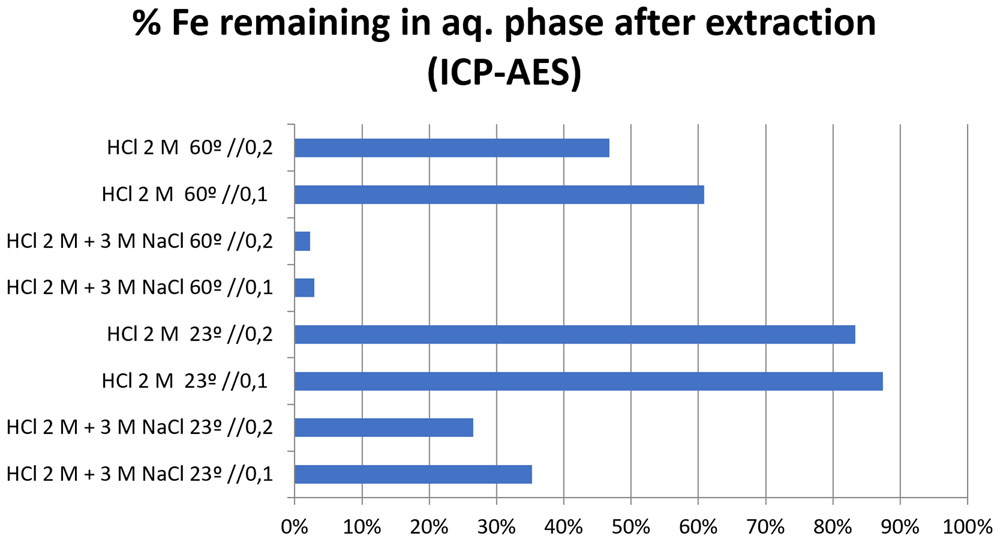
Figure 8. Inductively coupled plasma atomic emission spectroscopy (ICP-OES) analysis of iron content in the aqueous phase after the second step using different aqueous solutions (HCl 2M or HCl 2M + 3 M NaCl), temperatures (23°C and 60°C) and organic/aqueous volume ratio (0.1 and 0.2).
According to the results (Table 11), iron oxalate impurities have similar solubility regardless of the conditions, whereas the Nd solubility is higher at 60°C if 3M NaCl is added. On the other hand, 2M HCl + 3M NaCl achieved the best results due to a higher chloride content (70% and 95% Fe removal at room temperature and 60°C, respectively).
Regarding the ionic-aqueous ratio (Figure 8) (Hidalgo et al., 2021), a slightly higher extraction was obtained (+10%) when the ratio was doubled from 0.1 to 0.2 v/v at room temperature. Nevertheless, no variation was observed at 60°C, thus the ratio was irrelevant for this temperature.
To summarize, the optimal conditions for IL extraction by direct contact are using 2M HCl + 3M NaCl as an aqueous solution at room temperature and using a low ionic-aqueous ratio to reduce the IL costs. Also, Fe (III) was more easily removed. Purification of impurities from NiMH was also studied, yet the IL selected was able to remove only 1.9% Ni (the major impurity), which indicates the incompatibility of that IL with NiMH precipitates.
IL recycling
Conventional methods
The recycling of the IL implies scrubbing it after the L-Lextraction step to remove the dissolved metals so that it can be reused in the process. This scrubbing process is another L-Lextraction where the unwanted solutes are transferred to a scrubbing solution by diffusion. It can be repeated multiple times to enhance the extraction efficiency (scrubbing steps). Depending on the character of the solvent, the scrubbing can be acidic or alkali.
Regarding the acidic approach, H2SO4 has been shown to obtain acceptable results when removing Zn (II) and Fe (III) (Marszałkowska et al., 2010). HCl was also tested, though it achieved a 43.5% removal efficiency, a considerably low recovery compared to 98.7% by H2SO4 extraction. Other acid solutions like ethylendiaminetetraacetic acid (EDTA) have shown promising results for Co and Fe removal from Cyphos 101 (Wellens et al., 2012), achieving 90% recovery efficiency.
On the other hand, ammonia has been widely used in the alkali approach, accomplishing a Cu, Fe, and Zn recovery, where iron is precipitated as hydroxide (Wellens et al., 2014). Mo and V have also been successfully recovered from Cyphos 101 by ammonia scrubbing, obtaining 50% and 73% removal rates on average (Zhu et al., 2015).
Methods and results
Different scrubbing solutions were selected for the experiments based on both a literature review and the affinity of the ligands with iron: aqueous NH4OH 25% w/w (Scharlab, AM02491000) at Ph 7.6-13.4, H2O, H2SO4 (95 - 97%, Scharlab, AC20691000) concentrated and at pH 1.6, HNO3 (65%, Scharlab, AC16051000) concentrated and at Ph 1-2.1, lactic acid (88-90%, Scharlab, AC13811000) and citric acid monohydrate (Scharlab, 38585) aqueous saturated solutions and Na3PO4 solution (Scharlab, SO03401000), Na2CO3 anhydrous (Scharlau, SO01161000) and Na2SO4 anhydrous (Scharlab, SO06641000 )saturated aqueous solutions.
The experiments were performed contacting the scrubbing solutions with an IL previously contacted with leached SPM in HCl (the metal composition of IL is shown in inductively coupled plasma optical emission spectroscopy (ICP-OES), inductively coupled plasma optical emission spectroscopy; T, temperature. (Table 13) at 85°C for 24h with a 1/1 (v/v) IL-scrubbing solution ratio, under continuous magnetic stirring.
Table 13. Ionic liquid metal concentration.
| Metal | Concentration (ppm) |
|---|
| Nd | 7 |
| Dy | <2 |
| Pr | <2 |
| Co | 16 |
| Cu | 20 |
| Fe | 1875 |
| Ca | 5 |
| Al | 6 |
| B | 164 |
The results obtained by ICP-OES analysis are compiled in Table 14. The scrubbing efficiency is analyzed by iron reduction since the rest of the metals are in a very low concentration.
Table 14. Inductively coupled plasma atomic emission spectroscopy analysis of the scrubbing experiments.
| Stripping solution | Iron reduction in
the Ionic liquid (%) |
|---|
| Aqueous solution of NH4OH (pH 7.6) | 100 |
| Aqueous solution of NH4OH (pH 13.6) | 100 |
| H2O | 25 |
| H2SO4 (concentrated) | 98 |
| H2SO4 (pH 1.6) | 64 |
| HNO3 (Concentrated) | 84 |
| HNO3 (pH 1) | 80 |
| HNO3(pH 2.1) | 64 |
| Lactic acid | 72 |
| Citric acid | 87 |
| Saturated solution of Na3PO4 | 100 |
| Saturated solution of Na2CO3 | 100 |
| Saturated solution of Na2SO4 | 87 |
According to the results, NH4OH (Ph 7.6 and 13.6), concentrated H2SO4, Na3PO4 and Na2CO3 obtained the best performances as they were able to remove 100% Fe. Na2CO3 was selected to carry out further experiments since it has the lowest environmental impact and handling risks. These new experiments involved the purification of oxalates using fresh IL and recycled IL to check whether the performance of the IL changes after four extraction-recycling cycles. The purification process was carried out following the same sequence described before. That is, 1) direct contact of Cyphos 101 (kindly provided by Cytec Industries) and the produced oxalate in a liquid to solid of 1:2 and stirring at 300 rpm using a magnetic stirrer (IKA, C-MAG HS 7) for one hour at room temperature; 2) Addition of a low acidic dissolution of 2M NaCl + 3M HCl in an ionic liquid/aqueous ratio of 1:10; 3) Transference of the resulting solution to a separatory funnel and settling down during 15 minutes to let the phases separate; and 4) Separation of the purified rare earth oxalate, aqueous phase, and ionic liquid phase controlling the fluid going out with the stopcock.
To perform the further scrubbing experiments, a 50 g/l Na2CO3 solution (pH 11.8) was used with an IL-scrubbing solution ratio of 0.05 (v/v) at room temperature under continuous magnetic stirring for one hour. Oxalate compositions are shown in Table 15.
Table 15. Rare earth element (REE) oxalate composition in spent permanent magnet (SPM) oxalates after purification with fresh and recycled IL.
| REE | Before
purification | After
purification
with fresh IL | After
purification
with recycled IL |
|---|
| Dy (%) | 4.31 | 5.32 | 5.23 |
| Nd (%) | 30.90 | 37.35 | 36.66 |
| Pr (%) | 0.54 | 0.67 | 0.65 |
| Fe (%) | 6.67 | 0.09 | 0.11 |
It can be observed that the IL performance barely varies after its reutilisation; therefore, neither additional steps nor scrubbing modifications are necessary since the IL works successfully.
Conclusions
To summarize, the following points can be extracted as conclusions from the experiments:
- A roasting pre-treatment on the samples did not improve leaching efficiency.
- Acidic extraction with HCl has been shown to obtain valid results as a first step of the proposed system, even though it is not a selective process.
- The most promising secondary source is SPM due to the higher levels of recovery achieved. Although PMS has similar characteristics, it contains considerable amounts of Fe (III), which consumed oxalic acid initially during the precipitation step.
- Lower recoveries were achieved when using NiMH as a secondary source. Moreover, oxalic acid was consumed by Ni (III) initially during the precipitation step, thus competing against REE precipitation (as happened with PMS and Fe (III) due to other reasons), making the process more difficult to control in large-scale plants.
- The presence of HCl during the purification step enhanced its efficiency (70% and 95% at room temperature and 60°C, respectively). Adding NaCl to the mixture also improved the purification step, although there was a lower Fe removing capacity when there was no acidic environment.
- Generally, highly pure REOx was obtained in the precipitation step with oxalic acid (~99% in most cases).
- Na2CO3 was selected as a scrubbing agent for IL recycling due to both its consistent performance and its low environmental impact and handling risks. It was also concluded that the ILperformance barely changes after its reuse several times.
A novel and innovative process for the extraction of REEs from secondary sources has been intensely investigated in this paper. It has demonstrated strong potential for its implementation, as it achieves high prcess yields and has a low environmental impact compared to conventional processes. In addition, the REO mixtures extracted can be used as feed in a high-temperature electrolysis cell, where the successful production of rare earth alloys was achieved from a molten fluoride electrolyte, as already reported (Osen et al., 2018). Hence, this process can contribute to a greener future where the usage of REEs will presumably be even more relevant.
Data availability
Underlying data
Zenodo. Development of an innovative process involving the use ionic liquids for the recovery and purification of rare earth from permanent magnets and NiMH batteries. http://doi.org/10.5281/zenodo.5113012. (Hidalgo et al., 2021)
This project contains the following underlying data:
REEE paper experimental data V3.xlsx. (File containing data values of the plots shown in the paper as well as the raw experimental data used to calculate the plotted data values )
REEE paper experimental data.xlsx. (File containing data values of the plots shown in the paper)
Data are available under the terms of the Creative Commons Attribution 4.0 International license (CC-BY 4.0).