Introduction
This text examines two areas of my research: methods of arts practice as part of recently completed doctoral study, and a collaborative exhibition UNLAND of photography, video, and print works (NeMe, Cyprus, April 2023). By exploring these two projects I expand on the conference call by presenting research that demonstrates the ways in which artists extend or disrupt the application of technology beyond specialist use from, for example: the military, science, security, forensics or industry. The text centres on a discussion and exploration of art making within the projects and the ways in which technologies, their material qualities, potential and failures underpin critical thinking.
As practitioners who specialise in vision and interpretation, artists are acutely aware of the effect that new technologies have on the ways in which we ‘see’ and are able to ‘look’, this is particularly true of technologies centred on visioning. Observation, analysis and interpretation of our environment and behaviour lies at the heart of traditional, as well as contemporary art practices, presenting many similarities with the methods and techniques of surveillance. Figure 1 is documentation of earlier installed work Come & Go (2107) that considers this analogy1. This two channel interactive video work, is a contemporary rework of early 20th century film of the Serpentine Dance. The dance phrases, choreographed by Alexander Whitley, take influence from flight and drone technology. It is filmed from above on a high-speed (slow motion) camera, the interactivity detects audience members within specified boundaries to affect the playback speed and direction. The work aims to examine the interplay between surveillance, data, visioning and tracking and was formative in the development of doctoral research outlined below.
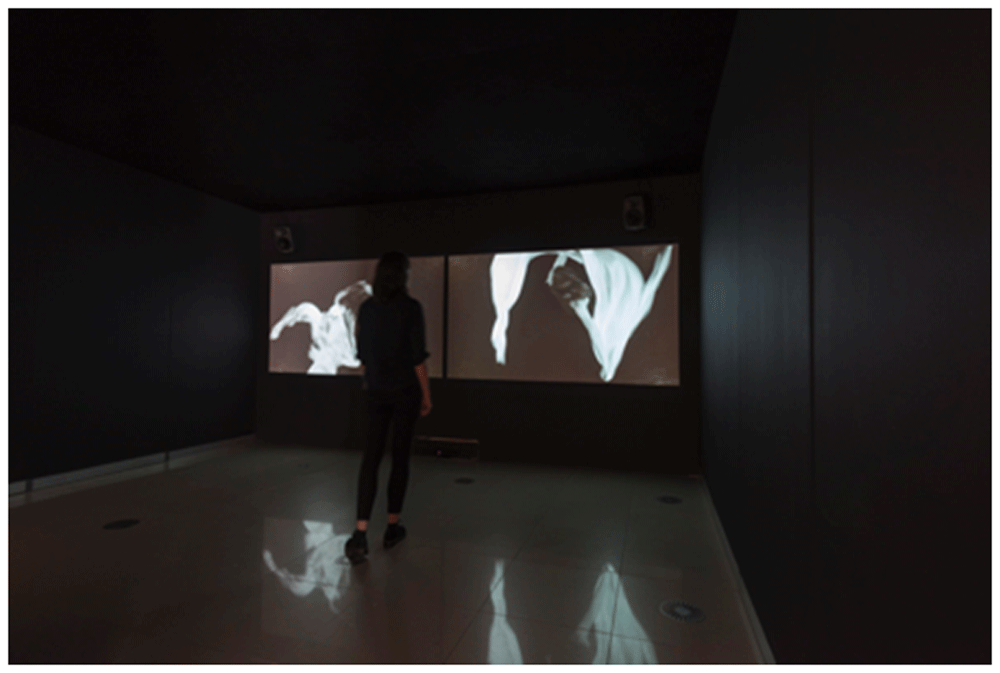
Figure 1. Rose Butler, Come & Go (2017), interactive video installation as part of Everything Flows curated by Jeanine Griffin, Museums of Sheffield.
Note. Photo by Hartley, John.
Project 1: The origins of the title for this text is my doctoral thesis Special Operations: Deploying artists’ methods to investigate surveillance. In the build up to the study I was fascinated by the historic analogue spyware on display in the Stasi Museum, Berlin (see Figure 2 – Figure 5).
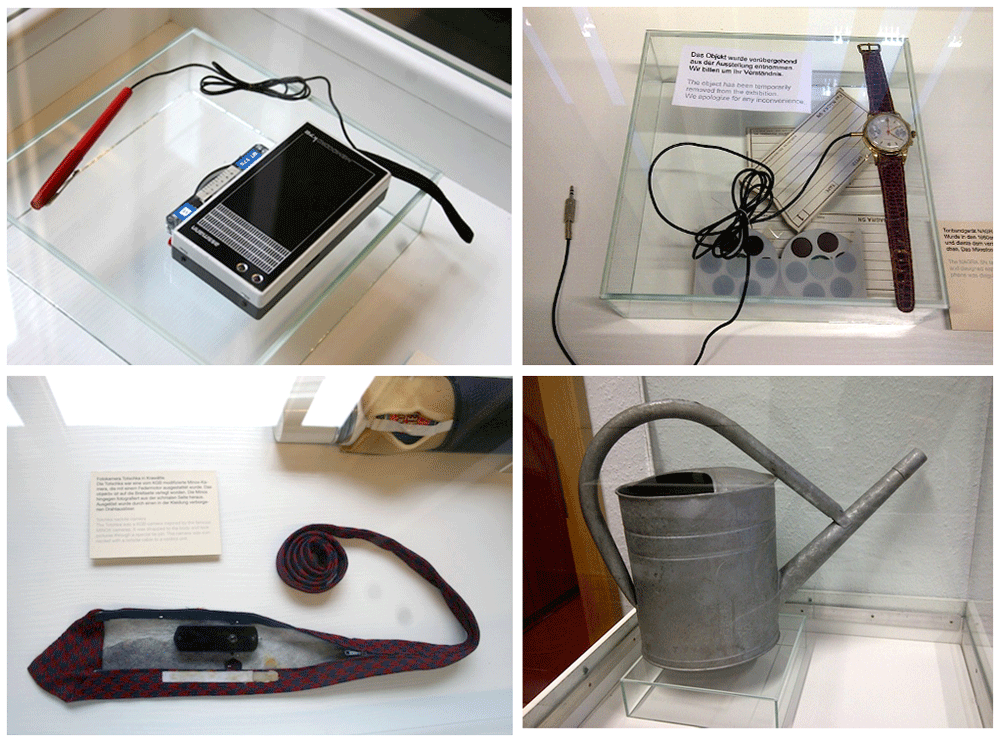
Figure 2 – Figure 5. Cameras hidden in a watering can and a tie, on display at The Stasi Museum (2014).
Note. Documentation images courtesy of The Stasi Museum. Photo by the artist.
The images depict a Minox camera hidden in a tie and a watering can has also been adapted to house a camera. Microphones are hidden within the pen and the watch. These devices were high-tech in their time and hold sculptural and comical qualities, but there is an uncomfortable tension with everyday objects that once supported one of the most effective and brutal surveillance regimes ever to have existed. This basic technology emphasises that information does not necessarily rely on being ‘high-tech’, high-resolution, or from height.
Donna Haraway2 proposes that objectivity understood as a ‘conquering gaze from nowhere’ where the subject is split and distanced from the object as an impossible ‘illusion, a god trick’ and argues for a rethinking of objectivity that acknowledges our perspectives within the world. She proposes that ‘… how to see from below is a problem requiring at least as much skill with bodies and language, with the mediations of vision, as the “highest” technoscientific visualizations’ (Haraway, 1988: 584).
I decided to use historical hidden cameras and microphones during the debate and passage of the Investigatory Powers Act (2016) through the UK Houses of Parliament. At the time this was new surveillance legislation that significantly extended the UK’s digital surveillance capabilities. This legislation was described by Edward Snowden as contributing towards the ‘most extreme surveillance of any western democracy’.3 I bought a 1960s Minox spy camera and 1980s Dictaphone from eBay (see Figure 6 and Figure 7) and spent eight months in and around the Houses of Parliament taking photographs. This included some areas where photography was not permitted. Figure 7 and Figure 8 detail areas in parliament where photography was permitted such as the public toilets or Westminster Hall, as well as images that have ‘failed’.
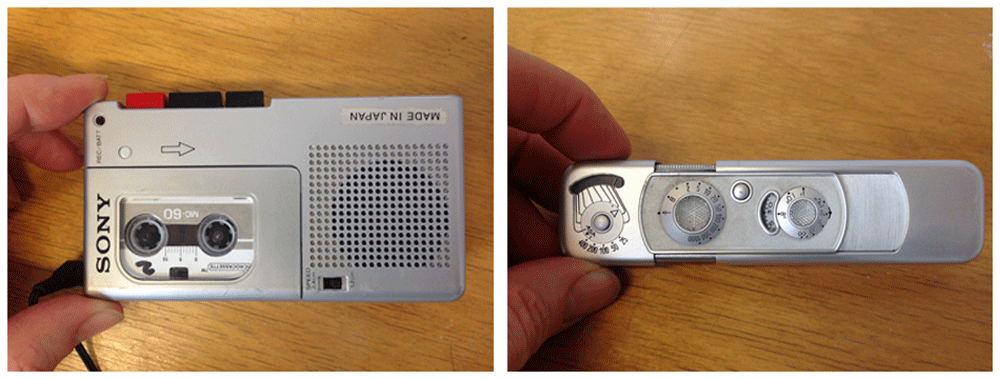
Figure 6 and Figure 7. Images of a 1980s Dictaphone and a 1950s Minox spy camera purchased from eBay.
Note. Image courtesy of the artist.
These processes allowed me to explore the edges of privacy, to consider civil liberties, to grapple with ethical complexities and to question what it means to ‘capture’ or document.
It is not illegal to take cameras into the Houses of Parliament but picture taking has different restrictions depending on security concerns or protection of the copyright of works of art for example. The photographs move around the building and events as the debate takes place, choirs sing, a protest takes place outside and twenty-seven members of the shadow cabinet resign in protest at Jeremy Corbyn being leader of the opposition (2016). This was the first sitting of parliament after the EU referendum, the day that Prime Minister David Cameron delivered his resignation speech. Some of the photographs I produced contain half images and snippets of information as the camera was used in haste, was half covered, or includes blurs of long exposures as I moved swiftly in low light (see Figure 8 & Figure 9).
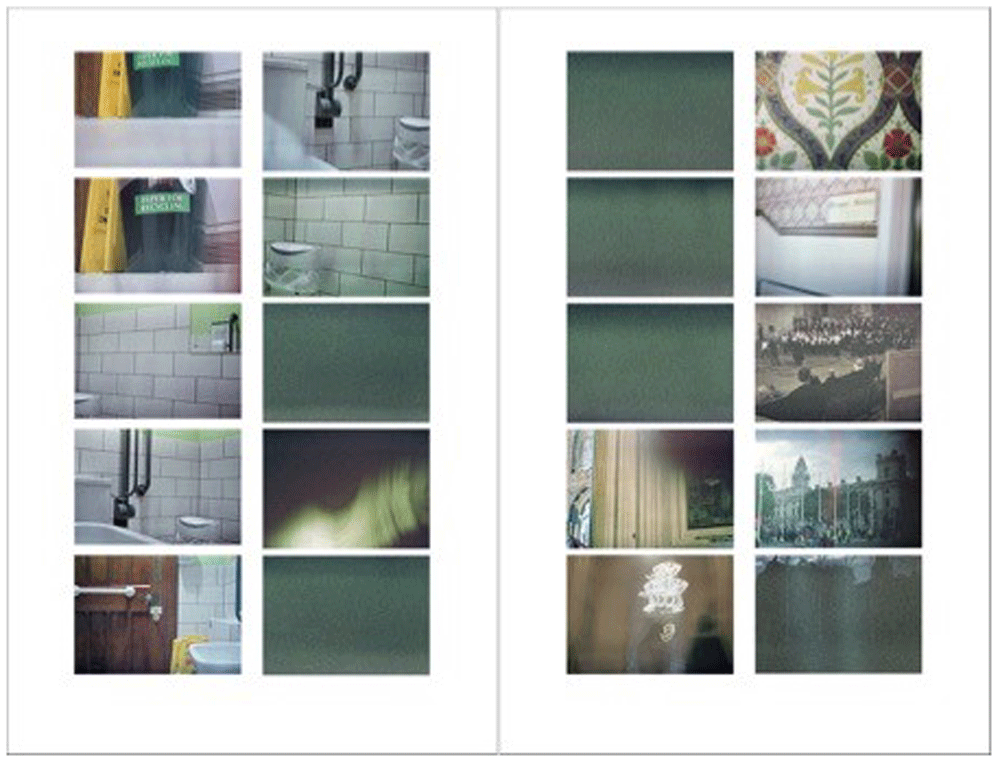
Figure 8 and Figure 9. Rose Butler, The Houses of Parliament documented on a Minox spy camera (2016).
C-Type prints. Note. Image courtesy of the artist.
I wanted to somehow capture this charged emotional atmosphere beyond a legislative debate, all of this information was important, expansive and formed part of my experience on the ground, anchoring me in the heart of politics and parliament as events unfolded. Experience and detailed understanding felt slippery and ungraspable, making ‘knowing’ in a solid and informed way, impossible. This was echoed in a debate that was about collecting bulk-data to create certainty through detailed surveillance. The debate itself reflected the impossibility of understanding the implication of the collection of such detail. Theresa May as Home Secretary, referenced how the specialists’ reports had produced a pile of paperwork that was over a foot high. These grainy, ill-defined, blurry, out of focus, failed images, at odds with what we expect and perhaps want from images, reflects this experience. Instead, you notice the detail of the grain the tone of the retro analogue film, the poor exposure, the fleeting camera movement and the quality of the celluloid.
The spyware at the Stasi Museum had left me with a desire to see the images that might be produced by a camera hidden in a watering can or a tie and left me wondering what audio would sound like when the microphone was placed in a pen or a watch. The devices prompted a series of questions. What might the point of view reveal? What might be the subject matter of these devices? How would the image be composed? What are the aesthetic qualities of these images? Would the microphone include the scratch of the written word or the rustle of the suit pocket? What might a contemporary version of this surveillance technique produce?
As part of the study, I requested access from the Stasi Records Agency to look at footage from hidden cameras that had failed, was sabotaged, damaged or missed its subject. I didn’t want to re-enact an invasion of privacy, I wasn’t interested in the subject of the documentation but wanted to look at its material qualities. The research was situated in two world renowned institutions of power; the UK Houses of Parliament and the original headquarters of the Ministry for State Security Berlin where some of the archival material is housed. I wanted to capture the experiences, encounters, stories of people I spoke to within these institutions as well as the unique atmospheres. I wrote detailed field notes that skipped between time zones, included personal accounts, Twitter feeds, governmental reports, conversations with archivists, policemen, the general public and included, testimonies and passages from historical fiction such as Orwell’s 1984 or Solzhenitsyn’s The First Circle. This material was later presented as performance presentations or existed as pieces of writing. These processes emphasised the constructed nature of knowledge production or sways of influence and the idiosyncrasies of power.
This link takes you to documentation4 of the final body of work bought together in an exhibition5 at The Head Post Office Gallery, Sheffield, UK (July 2022).6 A lot of the material that I worked with from the Houses of Parliament and the Stasi Records Agency was flawed or disrupted. It contained tests and training material and pitches for new technologies that were to be developed in the former GDR. In this exhibition the low-fi, poor, ruined, sabotaged, empty, failed unprofessional image is what I aspired to, the material that I worked with was warped, pixelated, sabotaged or of ‘poor’ quality. In contrast the Stasi agents desired the opposite, detail of information, in surveillance practices is an essential quality. Now that the visual material in the vast Stasi archive appears low tech and outdated, it presents the possibility that the technology itself was less important. What remains important is the access to data, the authorisations of surveillance, the legal safeguarding that is in place and the political situations that we are living within.
The study emphasised the impossibility of ‘capturing’ through image making. Research findings presented, iterative, nuanced, and minor processes (Manning, Stoner, Halberstam) founded in making art, that extended technique through grounded and situated experiences. Through this I was able to consider the bigger operational machine or political situation behind the lens that spilled off the edges, over and around the frame.
Project 2: The doctoral study discussed above was running alongside the development of the work for UNLAND (2023) an exhibition in partnership with NeMe, Limassol, CY.
In 2019 I presented research as part of an ‘Unconference’ at the University of Nicosia Research Foundation. Cyprus remains the only divided country in Europe with the only divided capital city in the world. On the last day of my stay in Cyprus, I drove through the UN buffer zone and checkpoints that demarcate Northern Cyprus, to the edge of the fences that surround the former seaside resort of Varosha.
Varosha was once home to 40,000 people and a popular international tourist destination. It now remains almost empty and sealed off as a militarised zone since the Turkish invasion of Cyprus in 1974 when civilians fled overnight. When I first visited (2019) it was totally inaccessible and photographing the city through or over the fences was restricted by the Turkish police.
I filmed openly in the tourist area and covertly (see Figure 10) next to the border of the resort to make a digital short called Look at Those Palm Trees (2021)7. This was a way of sketching, analysing and testing the edges of looking, the hierarchies of seeing and the conflicted nature of this contested space. From this video sketch I was able to write and devise a proposal for new work in partnership with NeMe and seek funding from Arts Council England.
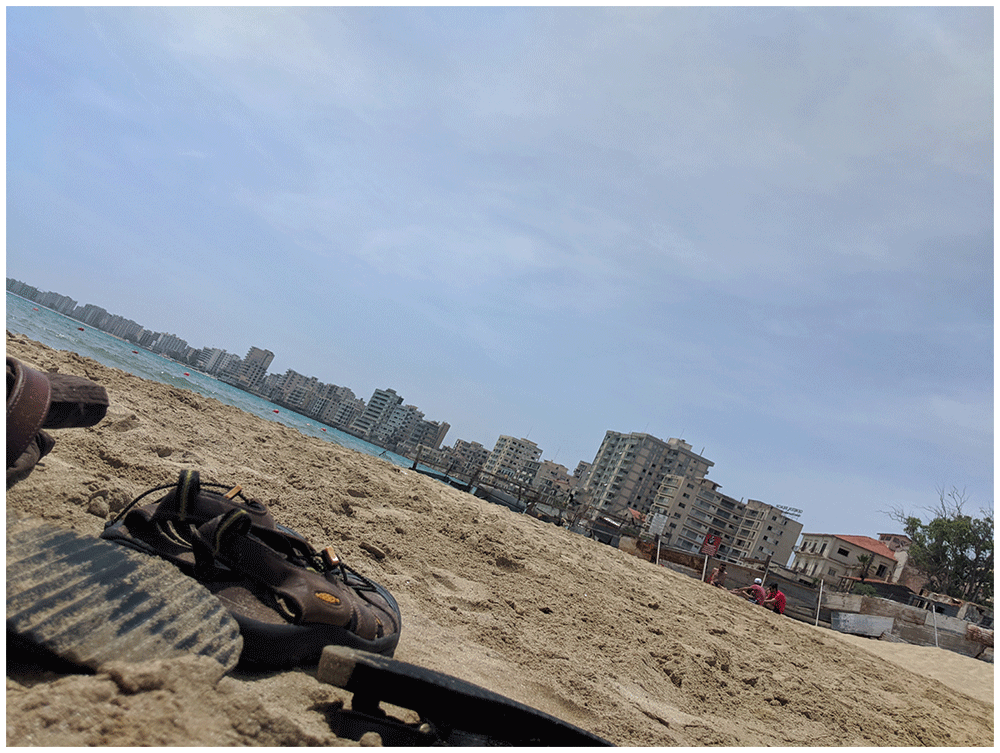
Figure 10. The border fence of Varosha, Northern Cyprus (2019).
Note. Image courtesy of the artist.
I found myself uncomfortably in awe of this site of violence, whilst I was also surrounded by the familiarity of the impact of British colonialism that saturates Cypriot culture and history. I had also driven through a British base and military corridor to get to Varosha and was intimidated by its contemporary and impactful, strategic military presence, as well as that of Greek Cypriot and Turkish forces.
In the development of the work I considered the methods of documentation in relation to the image. LiDar scanning and photogrammetry seemed the right kind of technology to use to capture inaccessible or empty spaces or objects that were hollow, in stasis, no longer inhabited or abandoned through militarised force.
LiDar uses a laser to generate point cloud data to create high resolution 3D mapping of the exterior or internal surface of objects for scientific, geographical and forensic use. It creates an image made up of point clouds (see Figure 11) creating maps of surfaces in their shell-like form, the edges of which fall away. This use of technology underpins the critical thinking as well as the aesthetics of the documented images.
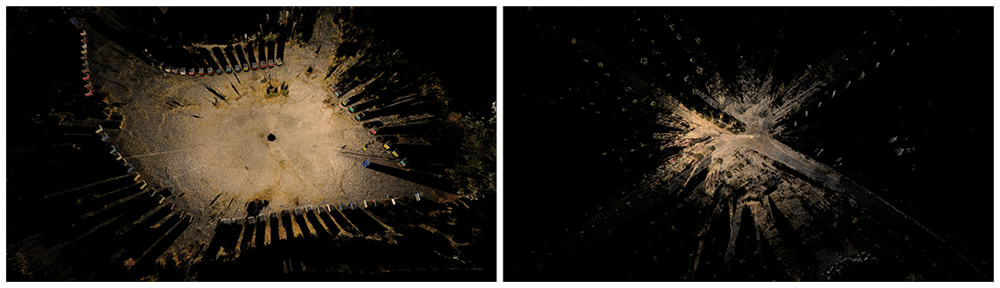
Figure 11. Beehives (2023) and Atsas olive oil farm situated in the UN buffer zone, Evryhou Solea Valley (2023) Diptych, 2 x Giclée prints on Hahnemühle Photo Rag paper mounted on acrylic.
41cm x 22.5cm. Note. Image courtesy of the artists.
I invited artists Jeremy Lee and Kypros Kyprianou to work alongside me and together we produced the exhibition of video, print, photography, 3D print, and mixed media. Jeremy and I were able to visit (2021) whilst Kyp worked remotely generating art work through machine learning and Google imaging8 (see Figure 12)
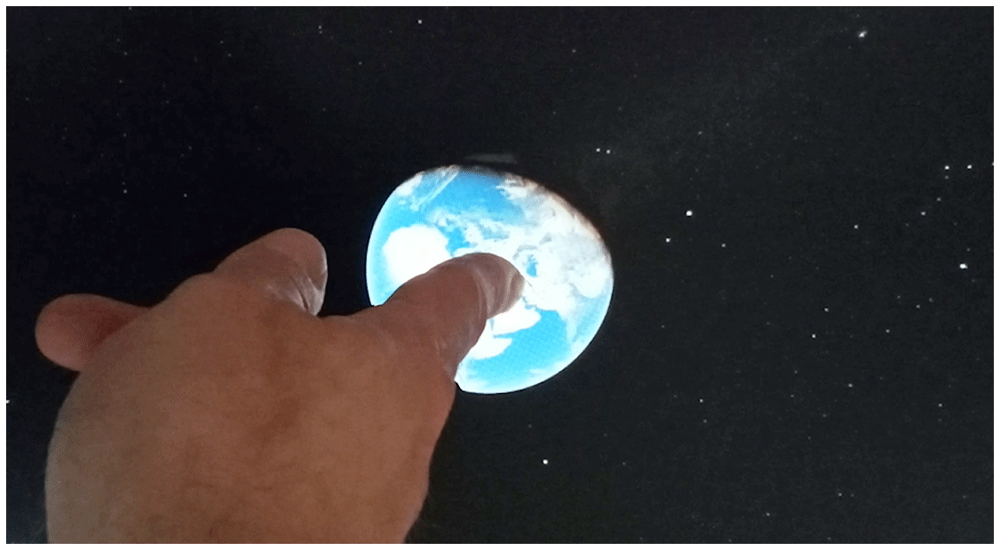
Figure 12. Journey to the Centre Of… 35.1264°N, 33.4299°E (point centre).
Machine learning generated video and digital video on HD 16:9 monitor laying facing up on floor. Note. Kypros Kyprianou (2023).
We worked responsively without predetermined or specific sites and encountering the additional borders presented by the Covid19 pandemic. We created both documented and fictional material of the UN buffer zone, Varosha and British military bases. While some of these spaces are defined by rigid military and surveillance architecture, others straddle areas of leisure, nature reserves, tourism, farming and decommissioned zones. We went to visit the Atsas olive oil farm in the Evryhou Solea Valley that has permission to farm within the buffer zone itself (see Figure 11).
Once you have generated a 3D model your point of view is fluid, you can travel around, off the edges of the model and into viewpoints that aren’t humanly accessible - like these from above (see Figure 11). We are interested in the ways in which flora and fauna transcend boundaries but also bi-communal island infrastructure like power and water systems, trade and farming. The beehive became a visual metaphor for the process of an image made up of millions of components or points. The worker bees (as well as drone bees) disperse and return to an organised whole - each a constituent part.
The LiDar scan below (see Figure 13) is of tyre tracks on the Salt Lake outside the British military base in Akrotiri. The area plays a strategic role as a signals intelligence station for the UK’s surveillance network in the Mediterranean and Middle East. The fact that LiDar was originally developed from Laser and Radar technology brings different ways of thinking about images sited at a signals intelligence base, or within the defined, surveilled, sharp focus of a buffer zone. The images turn the technology back on itself.
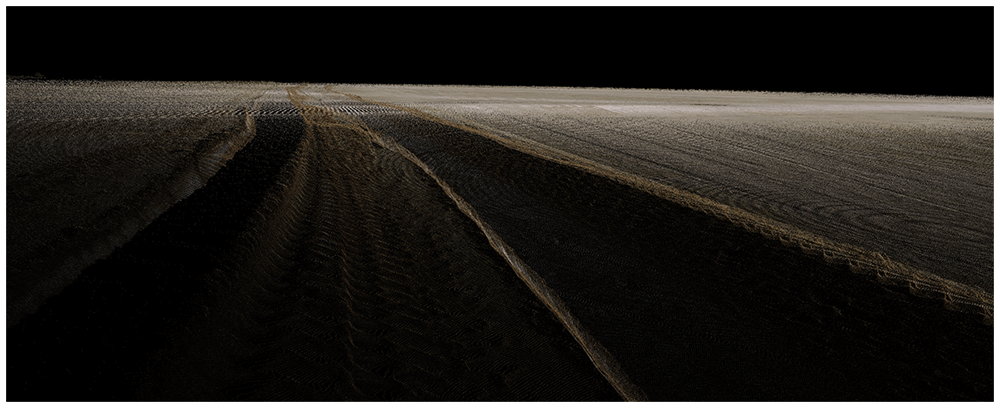
Figure 13. Salt Lake (2023) one from a diptych of Giclée prints on Hahnemühle Photo Rag paper mounted on acrylic, 99 x 39 cm.
Note. Image courtesy of the artists.
By 2021 a 10km section of Varosha had been reopened for tourists to access from Northern Cyprus. This site of crisis, the remnants of a war zone, has transformed into one of leisure. It is now possible to hire bikes and cycle around a controlled area and visit the beaches. Temporary café marquees have been erected and beach loungers and sun umbrellas are available. Image making by tourists in Varosha is encouraged, but it raises the question of what effect, political or otherwise, the normalisation and mobilisation of these images has. The images that I took felt uncomfortable, as I reinforced the re-presentation of this war zone as a site of leisure, something aesthetic and compelling that holds its own wild and abandoned beauty as nature took over. When the Ukraine war started and then the conflict in Gaza these images generated a new agency, revived and reanimated by contemporary images of conflict. The conflict in Cyprus is also live and not an historical reappraisal and we are commenting on countries, cultures and histories that do not reflect our own lived experiences. We questioned how to elicit a response through the work and what kind of response we wanted.
I presented these images as a limited series of hand printed original postcards, digitally printing, hand cutting and then drawing the address lines on the back of each one in pencil (see Figure 14).
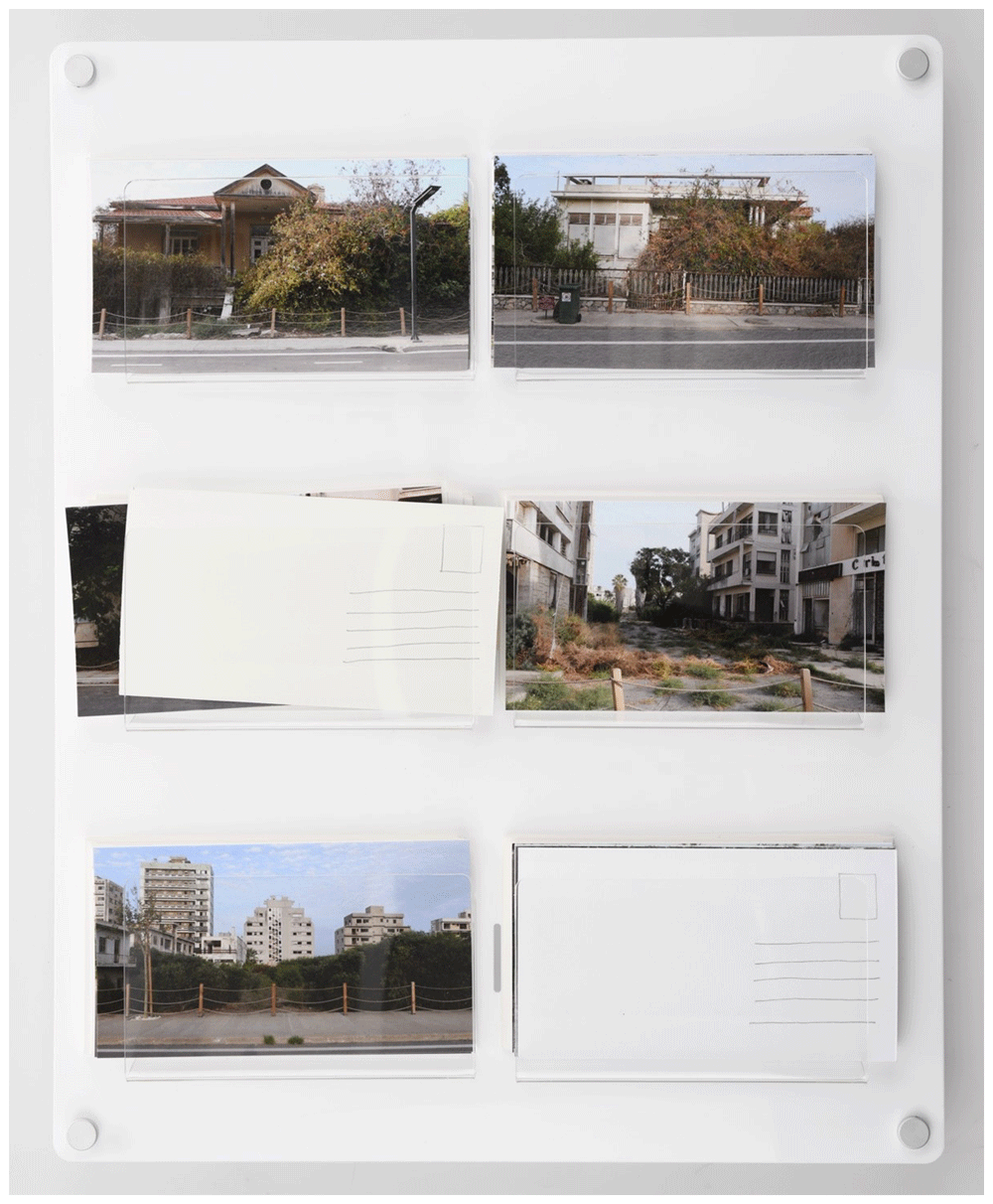
Figure 14. Postcards From Varosha (2022) a series of 18 handprinted postcards, Giclée prints on Hahnemühle Photo Rag paper.
Note. Image courtesy of the artist.
In Varosha we worked with photogrammetry and filmed the streets on a small digital compact camera. The video was then used to create a 3D environment where the algorithm pulls together - matches and maps disparate data from the image frames.
We created a fly-through of this fractured cityscape, un-anchoring the point of view and generating a perspective of the movement of a vehicle or a drone. Stills from this footage were exported as photographic prints. These messy, poor images (see Figure 15) felt like a better representation of the fractured complexity of this unstable, conflicted space, one that is in flux.
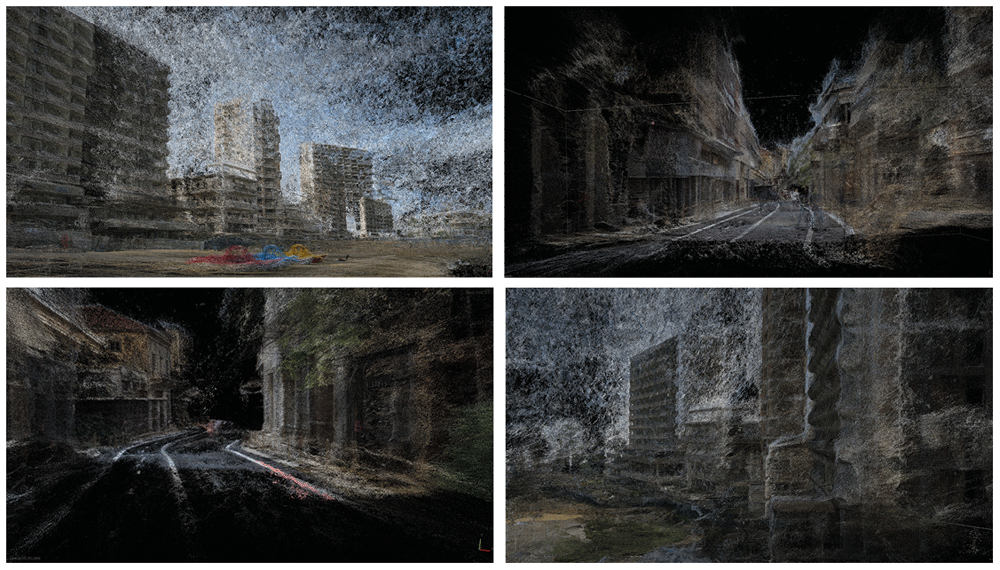
Figure 15. Two images of Varosha beach and two images of streets in Varosha (2022).
Images generated through photogrammetry. Giclée prints on Hahnemühle Photo Rag paper mounted on acrylic 81cm x 44.5cm. Note. Image courtesy of the artists.
These texture maps (see Figure 16) are generated and arranged by the computer through algorithmic processing. The images expose the background work, behind the scenes detail, data and information processing. These pieces of textures lay over the 3D models of the images that are described in the titles. The computer generates and arranges these jigsaw-like parts.
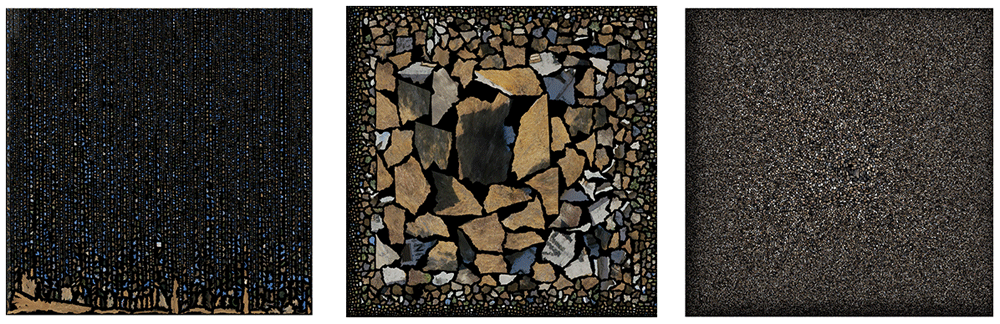
Figure 16. Texture Maps.
1. UN oil drums and large cactus plants in the buffer zone next to a decommissioned UN post, 2023. 2. Wandering around an abandoned UN post next to Atlas olive farm within the buffer zone. 3. Plastic chair discarded by the sea edge on the rocks adjacent to the buffer zone, someone might have been using it whilst fishing. Images printed on Hahenmuhle photo rag paper 100cm x 100cm. Note. Image courtesy of the artists.
These processes favour the ‘definition’, resolution and detail of ‘messy data’. Undercurrents exposing behind-the-scenes imaging come to the surface, affect material qualities, create alternative textures, disturb the image and unsettle representation and reporting of sites of conflict. Rather than enhancing the ‘quality’ of the images, the way we used technique exposed the gaps, flaws, or parts of what is missing. Through this they present the overlooked, beneath the surface, hidden, accidental or malfunctioning manifestations of ‘visioning’.
The specific knowledge base of arts practice lies in making and being engaged in an encounter with the material world (including the materiality of the digital and ephemeral) – this enables a ‘working with’ that can challenge and critique process and is not afraid of making mistakes, trying something different, breaking something down and starting again, or getting it wrong. If we are responsive and self-reflective as we work, we can question whether the methods we have employed are the right ones, or if the processes we are following need to be adjusted. These responsive processes equip artists with investigative practices to explore and represent sensitive spaces in a way that moves beyond the representational, rejects ‘high-tech’ and allows audiences space to encounter the work.
We were interviewed by curator, blogger and art critic Régine Debatty for the prize winning blog We Make Money Not Art, the article provides a comprehensive interview with myself, Kyp and Jeremy and additional images of the work in the exhibition.9
Ethical statement
The doctoral study that took place within the Houses of Parliament and the Stasi Records Agency, received written ethical approval from the Arts, Computing, Engineering and Sciences Faculty, Research Ethics Committee at Sheffield Hallam University 16th March 2017. Approval was retrospectively obtained from the Universities’ Ethics Committee. This was given thorough and careful consideration at the time in response to the research study and request for retrospective approval, and the approval was an exceptional case.
The ethical considerations carried, steered and probed the research as it progressed and provided an essential, interesting and important dynamic. A study that examines surveillance technologies and practices, presented dialogues that were complicated and difficult to navigate. Alongside this the methods employed and material that I looked at demanded thorough ethical scrutiny.
An Undercover Camera Training Course10 at Goldsmiths University, UK, included a day exploring the ethics of undercover filming. This aided an understanding of the legal parameters of filming and invasion of privacy as well as the journalistic guidelines that investigators follow. The strict processes that journalists go through to get ethical approval from their producers positioned filming undercover as being a last resort when all other avenues of evidence gathering had been exhausted. This was useful information but not anything I needed to consider as I was not intending to film or photograph anyone undercover and there was no risk of invading personal privacy or causing harm.
The legislative debate as well as the Stasi Records Act (1991) detailed and examined the ethics surrounding privacy in scrupulous detail. Immersing myself in these contexts meant that this demanded an understanding of the different safeguarding and political dialogues. The sites presented very different ethical considerations around privacy and security; the Investigatory Powers Bill (2016) debated privacy protections within extended state surveillance whereas the Stasi Records Act (1991) defined privacy protections for individuals who had already had their privacy infringed upon by state surveillance overreach. The extensive legislation that had been put in place by the Stasi Records Agency to protect the use of this data was navigated and explained to me by the archivist in relation to the material I was viewing. The Stasi Records Act (1991) unpicks and grapples with the ethics surrounding personal information collected illegally and then made publicly available for reappraisal and education. Although this secondary use of personal data changed from one of oppression to one of education and progression, this legislation was predominantly to prevent a double invasion of privacy. The agency’s access and anonymisation procedures carefully navigate complex parameters to protect privacy but even this protective process is by no means straightforward or infallible and this was expanded upon within the study.
Initially the legalities of taking cameras into the Houses of Parliament was a concern until I understood that it was not picture taking itself that might go against the guidance on documentation in some areas of parliament. One of the issues was the possibility of infringing copyright in works of art in the Government’s collection. The Houses of Parliament are a public space and the way that I planned to use the imagery was intentionally working against detail and subject matter thus taking away any possible copyright infringement. The Houses of Parliament have their own in-house photographer to control the imagery that is circulated from the debating chambers, and all the debates are live-streamed. MPs as well as the public are not allowed to take pictures but this is not a legal requirement. From the viewing gallery this is to limit the potential of cameras being used as a weapon, although phone use (as phones) is allowed in the House of Commons Gallery. In the debating chambers politicians have their own ethical guidelines over use of photography and I expect this would be to protect privacy. It was interesting that during the proroguing of parliament (2019) Labour MPs recorded themselves and released it on social media.11
During the study there were many occasions where I had to navigate dialogues and documentation to protect the individual. At the Stasi Records Agency the archivists were generous and shared personal conversations, many of their accounts of the GDR described personal circumstances that could not be included in the writing. The Stasi Records Act (1991) applies different privacy protections to, for example, a police officer on duty, from when he was meeting his family for lunch or taking a break. Shifts between being on-duty or off-duty are not always as clear cut. A change in circumstances, conversation or event means that as individuals at work we straddle the personal and ‘professional’ all the time. It was these types of shifts that took careful navigation, often in the moment and in response to personal, ethical and political considerations. It was inevitable that I would have to respond to unplannable, real, emotional and un-negotiated situations on the ground as an individual.
Biography
Rose Butler is an artist, researcher and senior lecturer of Fine Art based in Sheffield, UK. She holds a Ph.D from the Art and Design department, Sheffield Hallam University. Her arts practice uses adapted technology, software and new media, alongside early cameras and analogue processes to make interactive installations, single and multi-screen videos or large-scale photographs. Current research examines borders, definition, resolution, media archaeologies and the image. It crosses paths with the politics of big tech and surveillance and considers hard to access, contested or sensitive spaces and communities. She works with the material qualities of image-making defined by both historical technique and technological advance, and the different affordances and knowledge production technologies enable. Projects result in multiple outputs such as artefacts, exhibitions, artists talks, performances, presentations, publications and awards. Rose is particularly interested in interdisciplinary practices and has presented at many conferences in the UK and abroad foregrounding arts research methods.
Rose is working on new work for exhibition in Sheffield as part of the River Don Project (2025). UNLAND was exhibited at NeMe, Cyprus (April 2023) and the body of work resulting from doctoral research Special Operations, was exhibited at HPO Gallery, Sheffield (July 2022) and Decad, Berlin (Jan 2020, curated by Mareike Spendel). Come & Go an interactive dance installation was exhibited at the Museums of Sheffield (May/ June 2017) and received an award as part of the Surveillance Studies Art Prize (2018). She exhibited work with Abandon Normal Devices, Castleton, and at Kabinet Muz; Brno, Czech Republic funded by the British Council (2017).
She continues to screen works internationally over the year in venues such as Wolf and Galentz, Berlin; The London Art Fair, Golden Cinema; Sydney, The British Film Institutes mobile cinema as part of Hull City of Culture, Visual Container TV; International Video Art Channel; France, The Swedenburg Society; London, The Nunnery Gallery; London, and BOX; Video Art Project Space, Milan.
Selected Conference Presentations:
7th International Conference of Photography & Theory (ICPT 2024) Deathscapes: Histories of Photography and Contemporary Photographic Practices, Nicosia University (Nov 2024)
Improvising Care, McGill, University, Montreal (Oct 2024)
Archiving Care, NeMe, Cyprus (Sept 2024)
The Art of Resistance: National Association for Fine Art Education, UCA (Sept 2024)
Surveillance in an Age of Crisis: The 10th Biennial Surveillance Studies Network / Surveillance & Society Conference (SSN 2024)
V111 Art of Research, Aalto University, Finland (Nov 2023)
Machines – Playgrounds of Perspectives, Bauhaus, Germany (July 2023)
Uncertainty, Turbulence and Moving Image Archives, University College London (2019)
Creative Interruptions: A Festival of Arts and Activism, British Film Institute, London (2019)
Free and Open Source Technologies, Arts and Commoning Practices, University of Nicosia Research Foundation, Cyprus (2019)
NAFAE Living Research: The Urgency of the Arts, Royal College of Art, London (2019)
Surveillance Beyond Borders and Boundaries Conference, Aarhus, Denmark (2018)