Introduction
When they transition from youth to adulthood during university life, university students have the opportunity to establish a foundation for adult life habits1. University students experience shifts in their roles within family and peer groups compared with high school students, allowing them greater autonomy over their lifestyles2. Having the opportunity to gain regular physical activity habits during this period will help individuals maintain physical activity during adulthood. In addition, university students may take on a role in the formation of social and cultural norms while acting as decision-makers or opinion leaders in society in the following years3,4.
A review of 35,747 university students from various countries revealed that, on average, half of the students did not have sufficient physical activity1. Physical activity participation of university students is generally lower than the recommended level. Weight gain during the first year of university is commonly referred to as freshman weight gain. One study reported that 60.9% of students gain weight during the first year of university5. A meta-analysis identified stress, alcohol consumption, unhealthy eating habits, and decreased physical activity as contributing factors to weight gain in university students6. Furthermore, although the majority of adults recognize the health benefits of physical activity, the overall participation rate in daily physical activity remains below 50%7. European Union Council strategy plans emphasize the importance of identifying the determinants of physical activity as part of health promotion efforts8. Identifying these determinants is crucial for implementing strategies to encourage physical activity and reduce inactivity levels9.
In adolescent groups, body image and appearance are determinants of physical activity. Poor body image can act as a barrier to participation in physical activity, particularly in mixed-gender or unfamiliar settings10,11. In addition, experiencing physical activity as a leisure activity, especially at an early age, is a facilitating factor in individuals’ participation in physical activity and maintaining physical activity in later years7. Physical education classes in schools during childhood and adolescence have the potential to increase awareness of physical activity8. Despite the extensive literature on the determinants of physical activity, limited data exist on the specific factors influencing physical activity participation among university students who gain weight during their freshman year. Understanding the differences in physical activity determinants between students who gain weight and those who do not may help address one of the contributing factors to weight gain. Therefore, this study aimed to investigate differences in the determinants of physical activity between university students who reported gaining weight and those who did not gain weight during their freshman year. We hypothesized that the determinants of physical activity would differ between these two groups.
Methods
This was a cross-sectional study that was conducted between 25.09.2023 and 01.06.2024 at Baskent University. A priori sample size analysis was performed with the GPower 3.1.9.7 program. To have a power of 0.85 and an effect size of at least 0.3 (moderate), 100 participants needed to be included in the study. The inclusion criteria were being a university student and being 18–30 years old. The exclusion criteria were having any orthopedic, rheumatological, systemic, or neurological problem that would be a barrier to physical activity and having cognitive problems adapting to the semi-structured interview and International Physical Activity Questionnaire-Short Form (IPAQ). Students who were in their first year at university were not included because they did not complete the freshman year to report freshman weight gain and they have 'limited' experience as university students, as was the case in a previous study12. The research was announced at the university, and volunteers were invited to participate in the study. This study was reviewed and approved by the “Baskent University Institutional Review Board and Ethics Committee” (Project number: KA23/246, Approval date: 24. August. 2023). All participants were informed about the nature of the study and verbal and written consent were obtained. The study was conducted according to Declarations of Helsinki.
A semi-structured interview was used to determine the determinants of physical activity. Some of the questions were selected from the relevant literature12, and a few specific questions were added to the interview question guide. The interview guide was tested by the research team, and after revisions, it was tested in a group of twenty university students12. The key question used to group the students was “Think back to first year of being a university student. Did you gain weight (at least 1 kg) after entering university?” After some introductory questions, key questions focused on the main purpose of this study, i.e., identifying factors influencing students' physical activity. Finally, the students were asked to share ideas concerning health promotion as well as intervention strategies to increase physical activity and decrease sedentary behavior in university students.
Because the International Physical Activity Questionnaire-Short Form (IPAQ) is one of the most reliable self-reported instruments for analyzing the physical activity level of university students13, we used IPAQ to obtain information about physical activity level. The IPAQ total score and categorical score were calculated according to guidelines14 and were used in the statistical analyses. The body appreciation scale-2 (BAS-2) was used to understand the features and potential outcomes of positive body image in both the study and control groups15. The body-esteem scale was used to analyze the participants' self-evaluation of their body and appearance, which has three parts: BE-appearance (general feelings about appearance), BE-weight (weight satisfaction), and BE-attribution (evaluations attributed to others about one's body and appearance)16.
Statistical analyses were performed with the Jamovi 2.6.44 software. The chi-square test was used to determine if the determinants of physical activity and weight-related behaviors were different between groups. To analyze differences in IPAQ scores between the study and control groups, a Mann‒Whitney U test was used because of the nonnormal distribution of the data. The relationships of the BAS-2, BE-Appearance, BE-Weight, and BE-Attribution scores with the IPAQ score were analyzed with Spearman’s rho (for nonparametric situations) and the Pearson correlation coefficient (for parametric situations) in the study and control groups. When investigating changes in the IPAQ total score, the effects of group, sex and other reported determinants of physical activity were analyzed via two-way ANOVA. An overall 5% type I error level was used to infer statistical significance.
Results
Volunteers were included in the study until 51 people were included in both groups. Among the 125 students, 5 were excluded from the study, and 69 of the students (49 women, 20 men) (age: 21.39±1.60, body weight: 75.28±17.81 kg, body mass index: 25.31±4.52) who reported gaining weight after entering university were grouped into the study group, and 51 of the students (37 women, 14 men) (age: 21.98 ±4.17 years, body weight: 63.56 ±18.25 kg, body mass index: 21.59 ±4.47) who reported not gaining weight after entering university were grouped into the control group.
The body weight of the control group (63.56 ± 18.25 kg) and the study group (75.28 ± 17.81 kg) differed significantly (p = 0.001). Similarly, the body mass index (BMI) of the control group (21.59 ± 4.47) and the study group (25.31 ± 4.52) showed a significant difference (p < 0.01). While the change in eating habits after entering university differed between the groups (p=0.04), the change in physical activity participation did not differ between the groups (p> 0.05). Most of the students in both the study group and the control group reported that they did not have enough time to participate in sports activities and had similar behavior regarding their participation in sports activities after school (p> 0.05). There was no difference in attendance at regular sports/physical activities between the groups (p> 0.05). In both groups, most of the students reported that longer school hours are a barrier to participating in sports activities (p> 0.05). In both the study and control groups, a greater percentage of students like to participate in sports activities with their friends (p> 0.05), and in the study group, a greater percentage of students are bored when they do sports alone (p= 0.02) than in the control group. In both groups, most students were encouraged to do sports when they were a child in their family. A lower percentage of students had information about their university's sports facilities in the study group than in the control group (p= 0.03) (Table 1).
Table 1. Differences in physical activity determinants and body weight between the study and control groups.
| | Yes
(%) | No
(%) | Test
statistics |
|---|
| Eating habits changed after entering university. | SG | 63.8 | 36.2 | X2=4.31 |
| CG | 44.9 | 55.1 | p=0.04* |
| Physical activity behavior changed after entering university. | SG | 57.4 | 42.6 | p>0.05 |
| CG | 46.0 | 54.0 |
| Do you have enough time to exercise/do physical activity? | SG | 33.3 | 66.7 | p>0.05 |
| CG | 39.6 | 60.4 |
| Do you participate in physical activity/sport regularly? | SG | 34.8 | 65.2 | p>0.05 |
| CG | 31.8 | 68.8 |
| Does the length of school hours affect your participation in exercise/physical activity? | SG | 85.4 | 14.6 | p>0.05 |
| CG | 80.9 | 19.1 |
| Is it fun to do sports with your friends? | SG | 89.7 | 10.3 | p>0.05 |
| CG | 88.6 | 11.4 |
| Do you get bored when you do sports alone? | SG | 50.7 | 49.3 | X2=4.47 |
| CG | 30.6 | 69.4 | p=0.02* |
| Did your family encourage you to do sports when you were a child? | SG | 88.4 | 11.6 | p>0.05 |
| CG | 80.9 | 19.1 |
| Do you have any information about the university's facilities for physical activity/sport? | SG | 36.2 | 63.8 | X2=4.32 |
| CG | 55.9 | 44.1 | p=0.03* |
| Do you feel embarrassed or anxious about other people seeing you during physical activity? | SG | 22.4 | 77.6 | p>0.05 |
| CG | 13 | 87 |
In total, 5 university students reported that alcohol consumption and cigarette use increased after they entered university, which might be related to changes in body weight. Two students reported fatigue, and one student reported insomnia as a factor related to body weight change after entering university. A total of 17.5% of the students (n=21) reported that having more stress at university was a factor related to body weight. Seven students reported self-control as an enabler factor for weight-related behaviors, and a few students reported economic situations and the long distance between home and university as barriers to participation in sports activities.
Two students' IPAQ scores and categorical levels were missing in the study group. The IPAQ total score was not different between the groups (p> 0.05). In the study group, although most of the participants reported that they did not feel anxious or embarrassed about other people seeing them during physical activity, the BSA-2 and BE-Appearance scores were correlated with the IPAQ total score (r=0.26, p= 0.02; r=0.37, p< 0.01). In the control group, there was no correlation among the BSA-2 score, BE appearance score, BE weight, BE attribution score, or IPAQ score (p> 0.05). The physical activity level categories of the two groups are given in Table 2. In the control group, sex did not affect the IPAQ category (p> 0.05); however, in the study group, sex affected the IPAQ category (X2=11.89, p< 0.01) (Figure 1).
Table 2. Physical activity level categories according to the IPAQ.
| Low
n (%) | Moderate
n (%) | High
n (%) | Total
n (%) |
|---|
| SG | 16 (23.8) | 25 (37.3) | 26 (38.8) | 67 (100) |
| CG | 9 (17.6) | 28 (54.9) | 14 (27.4) | 51 (100) |
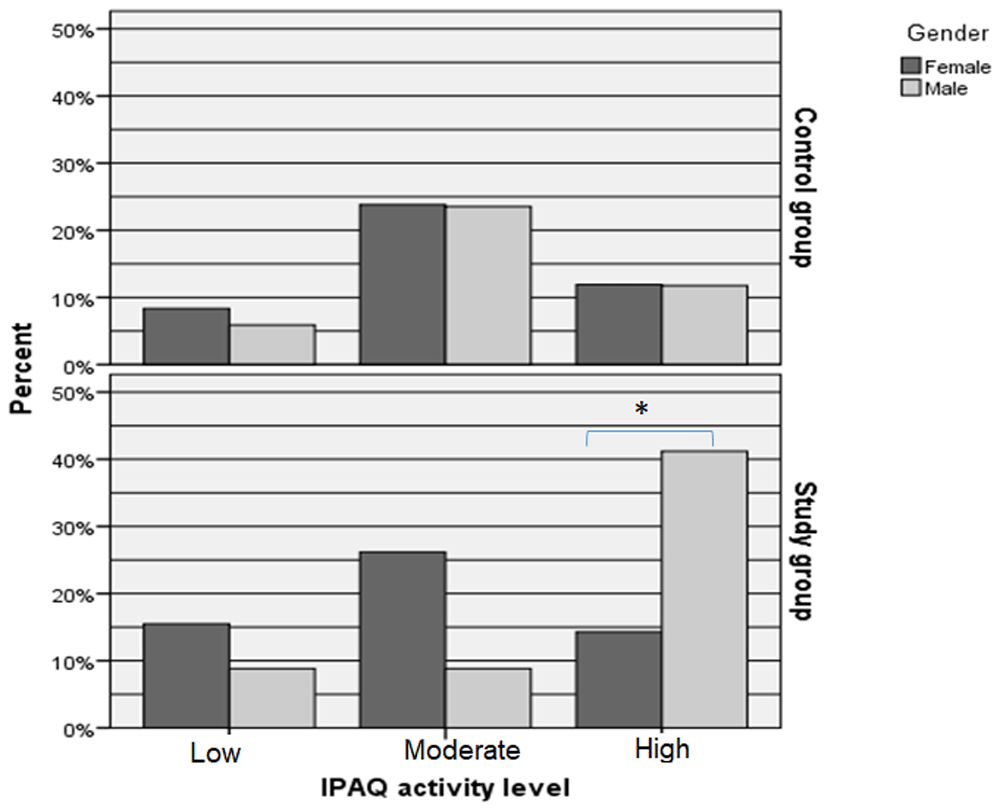
Figure 1. Effects of sex on physical activity level in both the study and control groups.
There was no significant difference in the IPAQ score by group (p> 0.05). Nevertheless, there was a significant difference by sex (F=9.09, p< 0.01), and the interaction between these terms was significant (F=5.81, p= 0.01), indicating that weight gain after entering university has different effects on the IPAQ score between males and females (Figure 2a). There was no significant difference in the IPAQ score by group (p> 0.05); however, there was a significant difference in the IPAQ score according to participation in sports activities regularly (F=13.58, p< 0.001) (Figure 2b), although the interaction between these terms was not significant (p> 0.05). There was no significant difference in the IPAQ score by group or parental encouragement during childhood, and the interaction effect between these terms was not significant (p> 0.05) (Figure 2c). There was no significant difference in the IPAQ score by group (p> 0.05). Nevertheless, there was a significant difference in the IPAQ score (F=5.53, p= 0.02), and the interaction effect between these terms was significant (F=5.07, p= .02) (Figure 2d). Students who are not bored when they do sport alone have higher IPAQ scores (p= 0.01). There was no significant difference in the IPAQ score by group or knowledge of physical activity-related facilities at university (p> 0.05), and the interaction effect between these terms was not significant (p>0.05) (Figure 2e). There was a significant difference in the IPAQ score by group (F= 4.57, p= 0.03) and time spent on sports (F=14.19, p< 0.001), and the interaction effect between these terms was not significant (p> 0.05) (Figure 2f). There was a significant difference in the IPAQ score by group (F=6.74, p= 0.01), but there was no difference in the number of school hours (p> 0.05), and the interaction effect between these terms was significant (F= 5.77, p=0.01) (Figure 2g). There was no significant difference in the IPAQ score by group or enjoyment of doing sports with friends (p> 0.05), and the interaction effect between these terms was not significant (p> 0.05) (Figure 2h). There was no significant difference in the IPAQ score by group or feeling anxious about being seen by other people during physical activity, and the interaction between these terms was not significant (p> 0.05).
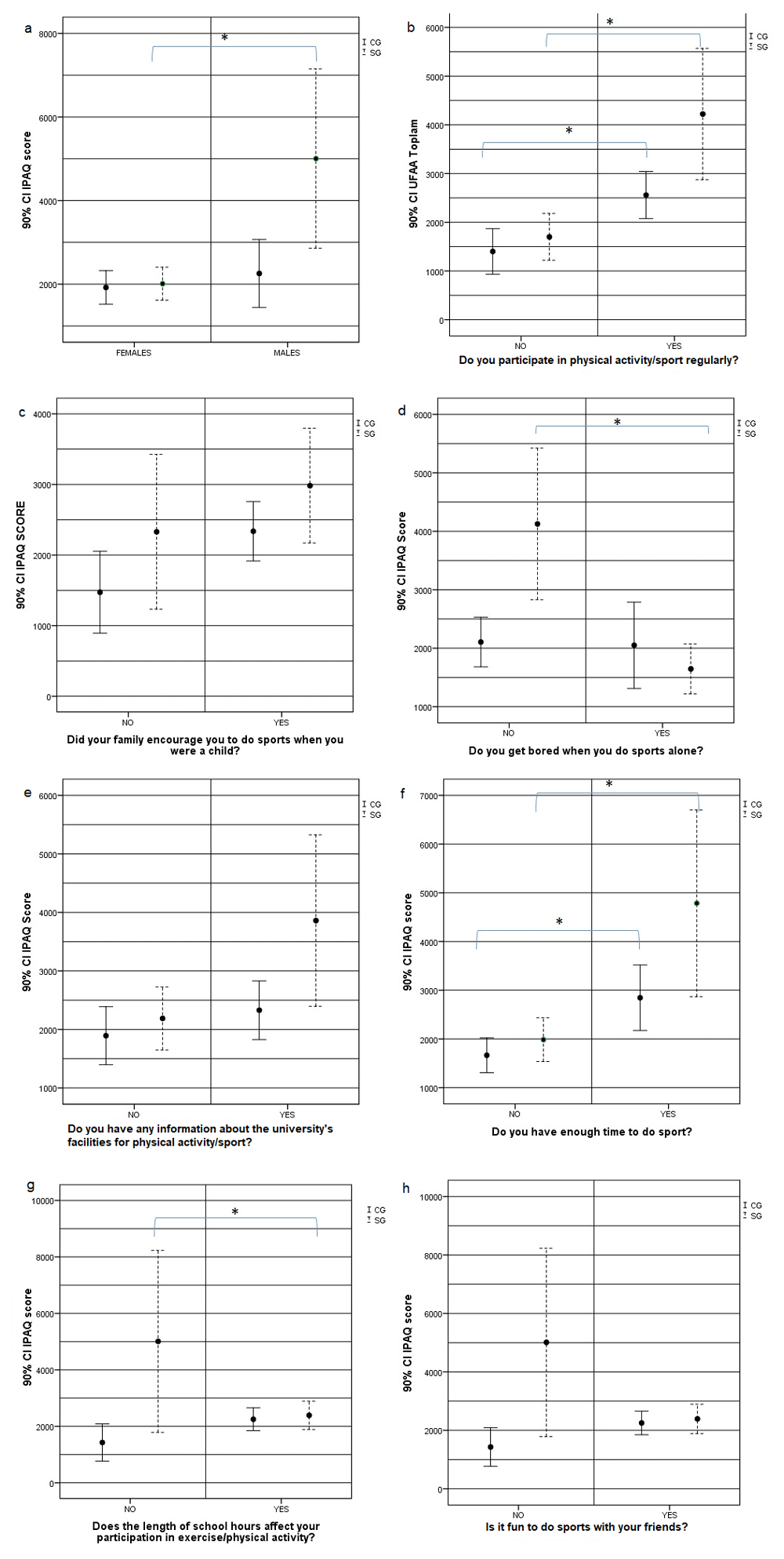
Figure 2. Effect of group and determinants of physical activity on the IPAQ scores of university students.
*Significant difference was found between groups. CI: Confidence interval. IPAQ: International physical activity questionnaire.
Discussion
Weight gain is one of the leading health problems, and the prevention of weight gain rather than weight loss is most successful. Because low physical activity leads to weight gain, it is important to identify determinants of physical activity so that we may eliminate one of the factors leading to weight gain. Weight-gained students believe that changes in eating habits are related to weight gain after they enter university. A greater percentage of weight-gained students become bored when they do sports alone and do not have information about campus facilities related to physical activity. Being female, having long course hours, and being bored when doing sports alone had negative effects on IPAQ scores in weight-gained students but not in the control group. Not participating in sports regularly and not having time to do sports had negative effects on IPAQ scores in both groups.
Our results concerning changes in eating and physical activity levels after entering university were similar to those of previous studies17, which reported that weight gain during university life is related to eating style but not to physical activity levels. Most of the students in our study reported that their eating habits changed after they entered university. It is expected that physical activity may be related to weight gain18; however, the university students included in this study believed that eating habits were the primary factor behind weight gain. Therefore, we believe that university students need to be informed about the effects of physical activity on body weight.
Our finding of a 34% regular sports attendance rate was similar to that of a study that reported an attendance rate of 26.4%19 but lower than that of other studies that reported 48–69% attendance rates20,21. According to the IPAQ categorical score, 23.8% (n=16) of the patients in the study group and 17.6% (n=9) of those in the control group were inactive, which was higher than that reported in previous studies22,23 but similar to that reported in another study24. The effect of gender on physical activity level in weight-gained university students has not been investigated to date. According to one study, 14% of males and 30% of females were inactive, and males performed more vigorous physical activity than females did24. Another study supported this finding25, which aligns with the results of the weight-gained group in our study; however, in the control group, our results did not support the effect of sex on physical activity level. This is the first study that groups university students as weight-gained and not weight-gained during their freshman year, and our results revealed that weight-gained females tend not to perform vigorous physical activity, which has additional effects on cardiorespiratory fitness in young people26. Furthermore, weight-gained males had higher IPAQ scores than weight-gained females did, which may indicate that males are more likely to use physical activity as a strategy to lose weight.
Our results are consistent with those of previous studies12,25, which reported that long course hours and not having time to do sports were barriers to physical activity. However, no studies have investigated differences in determinants between students who gain weight and those who do not gain weight during their freshman year at university. We believe that the reason we did not observe any differences between the study and control groups regarding long course hours as a barrier to physical activity is that course hours at university are similar for all the students included in the study.
Since enjoyment of physical activity is a key factor in preventing dropout from physical activity programs27, we asked some questions to university students during the interviews. University students often prefer engaging in sports with their peers20, a finding supported by our study across both groups. Additionally, our results revealed that a greater proportion of students in the weight-gained group reported feeling bored when exercising alone than did those in the control group. Notably, students who did not experience boredom while exercising alone had higher International Physical Activity Questionnaire (IPAQ) scores than those who did. This discrepancy may stem from the possibility that weight-gained students are more socially inclined and prefer exercising with peers. Sports are vehicles used to bring people together around the world28. Universities have some opportunities to do sports or physical activity that increases physical activity levels through peer interaction; however, some studies have reported that these opportunities do not reach students12. According to a meta-analysis, the effect of sports facilities at universities on the physical activity behavior of university students is unclear29. One study12 reported that many students felt inadequately informed about available sports facilities, a finding that our study corroborated for the weight-gained group but not for the control group. Ensuring that all students are informed about on-campus physical activity opportunities is crucial for preventing weight gain. While other studies have explored determinants of physical activity among university students, they have not specifically addressed the influence of knowledge about university sports facilities on physical activity behavior20–22,24.
Another noteworthy finding is that in both the study and control groups, most of the students reported that they did not feel anxious or embarrassed about their appearance while doing sports; however, poor body image and body esteem negatively affected the IPAQ total score of weight-gained students. Previous research has shown that body image and self-esteem mediate physical exercise participation among university students30, and 11% of university students do not use the university gym because of embarrassment25; however, no study has investigated differences between students who gain weight and those who do not gain weight during university. This study emphasized that body image and esteem are related to physical activity scores in the weight-bearing group. Our study highlights the relationships among body image, self-esteem, and physical activity levels in the weight-gained group, suggesting that therapeutic interventions to improve body image and self-esteem may encourage greater participation in physical activity. Goicoechea et al.31 noted a concern for body image and negative changes in the perception of appearance during COVID-19 confinement in university students; however, they did not investigate weight-gained university students specifically. While our study was conducted after the COVID-19 confinement period, the long-term effects of confinement on body image perception, particularly among weight-gained students, may still be relevant.
Parental control during childhood has been identified as a determinant of physical activity among university students12. Conversely, our study did not align with Deliens et al.’s study12, which showed that encouragement during childhood to do sports is not related to weight gain during the freshman year or the IPAQ score during university life. This discrepancy may be due to students being encouraged to participate in sports during childhood but failing to develop a lasting habit. Other studies have not explored the impact of childhood sports encouragement on physical activity levels and weight gain during the freshman year of university19,21. One study reported that the participation of relatives in physical activity is related to physical activity behavior in university students20; however, in this study, none of the students reported that physical activity is an enabler of physical activity.
This study highlights differences in the determinants of physical activity between university students who gained weight and those who did not, shedding light on the experiences of weight-gained students. As the first study to focus on the determinants of physical activity in weight-gained university students, our findings provide a foundation for future research. Ensuring that university students are adequately informed about on-campus sports opportunities may enhance physical activity participation and levels, particularly through socialization, which is especially important for weight-gained students. Providing sufficient information to university students about sports opportunities on campuses might improve their physical activity and physical activity level through socialization, which is important for weight-gained students. Additionally, our study is the first to identify that being female negatively impacts physical activity levels among weight-gained students.
One of the limitations of this study was its cross-sectional design, which was similar to related literature19–21,25 but restricted the ability to establish causal relationships. Because we used an interview to obtain information about students' thoughts about physical activity determinants, it is possible that students answered what they considered to be "politically correct" rather than what they thought, assuming a response bias20. Although we selected questions from related literature and asked an open-ended question about the determinants of physical activity, other unexamined factors may influence physical activity levels.
Conclusion
The findings of this study suggest that the determinants of physical activity differ between university students who gained weight and those who did not during their freshman year. The results of the study can be generalized to male and female university students because we do not have trans-gender university students in this study32. Further studies are needed to analyze the effect of being trans-gender on differences in physical activity determinants between weight-gained and nonweight-gained university students.
Ethics approval and consent to participate
This study was reviewed and approved by the Baskent University Institutional Review Board and Ethics Committee (Project no: KA23/246) Approval date: 24. August. 2023). All participants were informed about the nature of the study and verbal and written consent were obtained.
Consent for publication
All authors have given their consent for publication in the ORE Journal.
Availability of the data
[figshare]:[DE-PASS]. https://doi.org/10.6084/m9.figshare.2853240533.
The project contains the following underlying data:_- [DE-PASS]
-(underlying data.xlsx, descriptions of the underlying data.docx).
The project contains the following extended data
-STROBE_checklist_cross-sectional.docx,
-Extended data_body appreciation scale-2 Turkish version.docx,
-Extended data_Body esteem scaleTurkish version.pdf,
-Extended data_IPAQ_Turkish_self-admin_short.pdf,
-Extended data_Semi_structured_interview_Turkish_English.docx,
-ExtendedData_BAS2_English.docx,
-ExtendedDataBES_English.pdf ,
-ExtendedDataIPAQ_English_self-admin_short (1).doc )
Data are available under the terms of the Creative Commons Zero "No rights reserved" data waiver (CC0 1.0 Public domain dedication)(http://creativecommons.org/publicdomain/zero/1.0/).
Faculty Opinions recommendedReferences
- 1.
Teychenne M, Ball K, Salmon J:
Sedentary Behavior and depression among adults: a review.
Int J Behav Med.
2010; 17(4): 246–54. PubMed Abstract
| Publisher Full Text
- 2.
Maitiniyazi G, Chen Y, Qiu YY, et al.:
Characteristics of body composition and lifestyle in Chinese university students with Normal-Weight Obesity: a cross-sectional study.
Diabetes Metab Syndr Obes.
2021; 14: 3427–36. PubMed Abstract
| Publisher Full Text
| Free Full Text
- 3.
Irwin JD:
Prevalence of university students' sufficient physical activity: a systematic review.
Percept Mot Skills.
2004; 98(3 Pt 1): 927–43. PubMed Abstract
| Publisher Full Text
- 4.
Leslie E, Owen N, Salmon J, et al.:
Insufficiently active Australian college students: perceived personal, social, and environmental influences.
Prev Med.
1999; 28(1): 20–7. PubMed Abstract
| Publisher Full Text
- 5.
Vadeboncoeur C, Townsend N, Foster C:
A meta-analysis of weight gain in first year university students: is freshman 15 a myth?
BMC Obes.
2015; 2(1): 22. PubMed Abstract
| Publisher Full Text
| Free Full Text
- 6.
Vella-Zarb RA, Elgar FJ:
The 'freshman 5': a meta-analysis of weight gain in the freshman year of college.
J Am Coll Health.
2009; 58(2): 161–6. PubMed Abstract
| Publisher Full Text
- 7.
Morgan WP:
Prescription of physical activity: a paradigm shift.
Quest.
2001; 53(3): 366–82. Publisher Full Text
- 8.
Rai R, Jongenelis MI, Jackson B, et al.:
Factors influencing physical activity participation among older people with low activity levels.
Ageing Soc.
2020; 40(12): 2593–613. Publisher Full Text
- 9.
Council: Council recommendation of 26 November 2013 on promoting health-enhancing physical activity across sectors.
Official J Eur Union.
2013; C 354. Reference Source
- 10.
Kopcakova J, Dankulincova Veselska Z, Madarasova Geckova A, et al.:
Is being a boy and feeling fat a barrier for physical activity? The association between body image, gender and physical activity among adolescents.
Int J Environ Res Public Health.
2014; 11(11): 11167–76. PubMed Abstract
| Publisher Full Text
| Free Full Text
- 11.
Corr M, McSharry J, Murtagh EM:
Adolescent girls’ perceptions of physical activity: a systematic review of qualitative studies.
Am J Health Promot.
2019; 33(5): 806–19. PubMed Abstract
| Publisher Full Text
- 12.
Deliens T, Deforche B, De Bourdeaudhuij I, et al.:
Determinants of physical activity and sedentary behaviour in university students: a qualitative study using focus group discussions.
BMC Public Health.
2015; 15(1): 201. PubMed Abstract
| Publisher Full Text
| Free Full Text
- 13.
Murphy JJ, Murphy MH, MacDonncha C, et al.:
Validity and reliability of three self-report instruments for assessing attainment of physical activity guidelines in university students.
Meas Phys Educ Exerc Sci.
2017; 21(3): 134–41. Publisher Full Text
- 14.
Sjostrom M, Ainsworth BE, Bauman A, et al. editors:
Guidelines for data processing analysis of the International Physical Activity Questionnaire (IPAQ) - Short and long forms. 2005. Reference Source
- 15.
Tylka TL, Wood-Barcalow NL:
The Body Appreciation Scale-2: item refinement and psychometric evaluation.
Body Image.
2015; 12: 53–67. PubMed Abstract
| Publisher Full Text
- 16.
Mendelson BK, Mendelson MJ, White DR: Body-esteem scale for adolescents and adults.
J Personal Assess.
2001; 76(1): 90–106. PubMed Abstract
| Publisher Full Text
- 17.
Finlayson G, Cecil J, Higgs S, et al.: Susceptibility to weight gain. Eating behaviour traits and physical activity as predictors of weight gain during the first year of university.
Appetite.
2012; 58(3): 1091–8. PubMed Abstract
| Publisher Full Text
- 18.
Jebb SA, Moore MS: Contribution of a sedentary lifestyle and inactivity to the etiology of overweight and obesity: current evidence and research issues.
Med Sci Sports Exerc.
1999; 31(11 Suppl): S534–S41. PubMed Abstract
| Publisher Full Text
- 19.
Musharrafieh U, Tamim HM, Rahi AC, et al.: Determinants of university students physical exercise: a study from Lebanon.
Int J Public Health.
2008; 53(4): 208–13. PubMed Abstract
| Publisher Full Text
- 20.
Carballo-Fazanes A, Rico-Díaz J, Barcala-Furelos R, et al.: Physical Activity habits and determinants, sedentary behaviour and lifestyle in university students.
Int J Environ Res Public Health.
2020; 17(9): 3272. PubMed Abstract
| Publisher Full Text
| Free Full Text
- 21.
Romaguera D, Tauler P, Bennasar M, et al.: Determinants and patterns of physical activity practice among Spanish university students.
J Sports Sci.
2011; 29(9): 989–97. PubMed Abstract
| Publisher Full Text
- 22.
Faílde-Garrido JM, Ruiz Soriano L, Simón MA: Levels of physical activity and their relationship with motivational determinants, self-regulation, and other health-related parameters in university students.
Psychol Rep.
2022; 125(4): 1874–95. PubMed Abstract
| Publisher Full Text
- 23.
Lapa TY: Physical activity levels and psychological well-being: a case study of university students.
Procedia Soc Behav Sci.
2015; 186: 739–43. Publisher Full Text
- 24.
Rajappan R, Selvaganapathy K, Liew L: Physical activity level among university students: a cross sectional survey.
Int J Physiother Res.
2015; 3(6): 1336–43. Publisher Full Text
- 25.
Aceijas C, Bello-Corassa R, WaldhäuslN S, et al.: Barriers and determinants of Physical Activity among UK university students: Carmen Aceijas.
Eur J Public Health.
2016; 26(suppl_ 1): ckw174.255. Publisher Full Text
- 26.
Drenowatz C, Prasad VK, Hand GA, et al.: Effects of moderate and vigorous physical activity on fitness and body composition.
J Behav Med.
2016; 39(4): 624–32. PubMed Abstract
| Publisher Full Text
- 27.
Crane J, Temple V: A systematic review of dropout from organized sport among children and youth.
Eur Phy Educ Rev.
2015; 21(1): 114–31. Publisher Full Text
- 28.
Sage GH, Eitzen DS, Beal B: Sociology of North American sport. Paradigm Publishers, 2013. Reference Source
- 29.
Keating XD, Guan J, Piñero JC, et al.: A meta-analysis of college students' physical activity behaviors.
J Am Coll Health.
2005; 54(2): 116–25. PubMed Abstract
| Publisher Full Text
- 30.
Shang Y, Xie HD, Yang SY: The relationship between physical exercise and subjective well-being in college students: the mediating effect of body image and self-esteem.
Front Psychol.
2021; 12: 658935. PubMed Abstract
| Publisher Full Text
| Free Full Text
- 31.
Goicochea EA, Coloma-Naldos B, Moya-Salazar J, et al.: Physical activity and body image perceived by university students during the COVID-19 pandemic: a systematic review.
Int J Environ Res Public Health.
2022; 19(24): 16498. PubMed Abstract
| Publisher Full Text
| Free Full Text
- 32.
Caperchione CM, Kolt GS, Mummery WK: Physical activity in culturally and linguistically diverse migrant groups to Western society: a review of barriers, enablers and experiences.
Sports Med.
2009; 39(3): 167–77. PubMed Abstract
| Publisher Full Text
- 33.
Çinar Medeni Ö, Ezgi Dogan I, Pekyavas NO: DE-PASS. figshare. Dataset. 2025. http://www.doi.org/10.6084/m9.figshare.28532405.v3







