Introduction
The rapid transformation of Europe’s energy landscape is placing energy communities at the forefront of efforts to achieve decarbonisation, citizen participation, and local value creation. These communities, bringing together households, municipalities, and businesses, are uniquely positioned to harness distributed resources and support the integration of electricity, heating, mobility, and emerging technologies. However, the realisation of this potential depends not only on innovative business models, but also on the deployment of digital platforms that enable efficient, transparent, and automated coordination among diverse actors.
Recent developments in blockchain and digital platform technologies have opened new pathways for community-driven energy innovation. By enabling peer-to-peer trading, automated settlement, and secure value flows, these tools can help overcome long-standing barriers related to trust, data management, and multi-actor coordination. At the same time, the process of aligning business models with new digital capabilities is inherently iterative, shaped by local needs, technical constraints, and evolving regulatory frameworks.
Despite growing interest, most existing studies remain conceptual or technology-focused, offering limited evidence from operational energy communities where digital platforms and business models evolve together. This gap underscores the need for empirical research that links technical design with organisational adaptation and regulatory context.
Research question: How can blockchain-enabled digital platforms drive business-model innovation in sector-coupled energy communities, and under what organisational and regulatory conditions can these models scale?
This paper addresses these challenges by examining how business model innovation and blockchain-enabled digital platforms interact to support robust, sector-coupled energy communities. Drawing on lessons from six FEDECOM pilot deployments, we analyse the technical, organisational, and regulatory factors shaping the evolution of transparent, scalable community business models in practice. In doing so, we aim to provide a foundation for further research and practical action to advance the next generation of digital, sector-coupled energy communities.
State of the art and conceptual foundations
Business models for energy communities
The business model landscape for energy communities is rapidly evolving, with recent literature highlighting both the promise and fragmentation of current approaches. Energy communities are emerging as key players in the evolving energy landscape, fostering citizen participation and driving the transition towards sustainable energy systems. Business models are crucial for the success and sustainability of these communities, ensuring that benefits and costs are distributed equitably and that local knowledge is leveraged. The rise of peer-to-peer (P2P), community self-consumption, and transactive energy models reflects new business model configurations for local energy trading among various stakeholders.
Blockchain technology in sector-coupled energy communities
Blockchain technology is increasingly recognised for its potential to revolutionise the energy sector by enabling new business models, fostering transparency, and supporting innovation1–3. Its core attributes—decentralisation, immutability, and automation through smart contracts—make it particularly well suited for P2P energy trading, traceable transactions, and the integration of sector-coupled services such as electricity, heating, cooling, and mobility4–7. Blockchain supports local energy markets, enables direct trading among prosumers, and underpins new business models for energy communities4,6.
Several systematic reviews provide overviews of blockchain’s application in energy, emphasising both the technology’s promise and its current limits1,5,8. Case studies and conceptual frameworks further highlight the ways blockchain can reconfigure transaction structures, governance, and value flows4,9,10. Blockchain approaches are viewed as highly relevant to P2P energy trading and transactive energy models, where trust, decentralised verification, and automated remuneration are central for scalable, inclusive participation11,12.
However, there are also concerns that, without careful design, such models may risk perpetuating existing inequalities. Reis et al. (2021) offer a comprehensive review of energy community business models, identifying a diversity of arrangements but noting a lack of systematisation and maturity across the sector13. Several recent systematic reviews have mapped the complexities and diversity of energy community business models, focusing on P2P trading, sector-coupling, and the microeconomic dynamics among actors14–19. These studies highlight that while macroeconomic and policy frameworks are well explored, there is a need for more research on micro-level incentives, revenue streams, and mechanisms for sustained citizen engagement.
Maruf et al. (2024) similarly stress that while sector-coupled and renewable-based energy communities can deliver substantial environmental and economic benefits, practical deployment is hindered by technology integration, regulatory uncertainty, and limited business case development20. Recent comparative reviews further underscore the diversity of energy community business models and the evolution of arrangements across the EU, highlighting both the proliferation of collective self-consumption, peer-to-peer trading, and aggregation schemes, and the variety of local adaptations21–23.
Regulatory and operational challenges are well documented. Lowitzsch et al. (2020) and Inês et al. (2020) point to the heterogeneity of governance models and the slow pace of legal harmonisation under EU frameworks such as RED II24,25. Ramsebner et al. (2021) and ETIP SNET (2021) highlight the complexity of sector coupling—integrating electricity, heating, mobility, and hydrogen systems—while stressing the need for holistic “system-of-systems” approaches that go beyond single-technology pilots26,27. Efkarpidis et al. (2022) and the EN-TRACK project (2019) identify gaps in KPI definition and validation28,29, while Mohammadi (2023) and Košnjek et al. (2025) highlight the broad range of externalities, actor diversity, and business model risk factors that must be considered for successful replication of energy community initiatives30,31. Community-ownership and governance innovations were covered by Universal Smart Energy Framework (USEF) in 2019 and International Renewable Energy Agency (IRENA) in 2020, who emphasised the importance of local participation, risk sharing, and flexibility as central to robust value proposition development32,33.
Digitalisation and platformisation are increasingly seen as necessary for energy community scale-up, particularly through enabling value co-creation, automated operations, and performance-based remuneration. However, recent project evidence notes persistent pain points, including fragmented asset management, slow digital uptake, lack of trusted data-sharing frameworks, and limited options for transparent revenue distribution34. The FEDECOM value proposition analysis reveals that user archetypes—ranging from district system coordinators to e-mobility managers—face unique jobs, pains, and gains that are not fully addressed by legacy business models or generic digital solutions. The FLEXCoop project in 2020 demonstrated how digital platforms and marketplaces can facilitate local flexibility trading, introduce new contractual and risk-sharing mechanisms, and deliver additional value to both prosumers and aggregators35.
Against this backdrop, blockchain and automated remuneration mechanisms have gained significant research attention as potential enablers of trust, transparency, and scalable value flows within local energy markets36,37. In the context of energy communities, blockchain can automate P2P transactions, enforce settlement logic based on KPIs, and facilitate multi-actor coordination. Yet, most academic and applied projects remain at proof-of-concept stage, with few documented cases of operational integration and business model impact at scale. Nonetheless, barriers to scale—including interoperability, regulatory fragmentation, and clarity of value stream allocation—remain, as consistently highlighted in recent academic and industry studies3,22,35.
Challenges, barriers, and research directions
Despite its promise, blockchain adoption in sector-coupled energy communities faces substantial challenges. Regulatory uncertainty, technological immaturity, scalability concerns, and data privacy are well documented as primary barriers38–40. Institutional inertia and limited awareness can slow adoption, while the need for interoperability and standardisation remains acute4,10.
Still, the literature highlights significant benefits: increased efficiency through automation41, sustainability via local renewables42, improved resilience43, and greater consumer empowerment4. Future research should focus on scalable and secure platform design, business model innovation, socio-economic assessment, and progress toward technical interoperability6,44.
The present study builds on these insights, combining a systematic value proposition mapping across six energy community use cases with technical and market analysis from public FEDECOM deliverables. The goal is to demonstrate how digital business model innovation—integrating blockchain-based platforms and automated remuneration—can address real-world user needs, overcome regulatory and operational barriers, and create replicable value propositions for sector-coupled energy communities.
Alignment with European standardisation efforts
The findings and methodological choices of this work are consistent with current European coordination activities on energy community business models. In particular, the BRIDGE Business Models Working Group (BMWG) provides a reference framework for value chain mapping, role definitions, and KPI harmonisation across projects. FEDECOM’s approach follows this structure by linking value propositions and stakeholder roles through common categories such as service type, actor responsibility, and revenue flow.
Within the BRIDGE BMWG discussions, FEDECOM contributed insights on remuneration transparency and automation, expanding the group’s templates to include digital and blockchain-enabled value chains. The mapping of use-case activities to roles—aggregator, community operator, flexibility provider—was aligned with the BRIDGE taxonomy to facilitate cross-project comparability.
This alignment ensures that the business model archetypes and validation procedures developed in FEDECOM can be interpreted within a common European language for energy communities. At the same time, FEDECOM extends existing best practices by integrating platform-level verification and smart-contract settlement, which are not yet formally standardised in the BRIDGE documentation.
Methodology and analytical approach
This research applies a multi-stage, mixed-methods approach to synthesise current business model innovation and value proposition development for energy communities, drawing on participatory co-design and validation practices commonly applied in digital innovation and business model research. This approach combined qualitative and quantitative elements to link stakeholder engagement with measurable system validation. Workshop-based persona and value proposition mapping were used to identify user needs and pain points, while pilot data were analysed through a structured measurement and verification framework to test the associated business model logic.
The Value Proposition Canvas was selected as a participatory and transparent tool to bridge user requirements with platform functionalities. This approach has been widely used in digital innovation and business model design studies to capture evolving user expectations and translate them into replicable service logics. In this context, it allowed FEDECOM partners to document explicit ‘jobs, pains, and gains’ from stakeholder workshops and map them against technical functions of the digital platform.
Energy performance and flexibility metrics were compared across baseline and reporting periods, using consistent KPIs and common evaluation workflows. This integration of participatory design, literature synthesis, and quantitative verification ensures methodological rigour and distinguishes the approach from descriptive community energy studies that rely solely on surveys or case summaries. The analysis focuses on six representative energy community use cases from the FEDECOM project, selected to capture a diversity of market actors, technological contexts, and sector-coupling opportunities.
First, a qualitative review of academic and grey literature was performed to identify business model archetypes, value creation mechanisms, and recurring challenges in the evolution of energy communities14,21,22,23,12,45,11. Special attention was given to systematic reviews and EU project reports that examine both macro- and micro-economic factors, with a particular focus on P2P, collective self-consumption, and digitally enabled business models15–19.
Personas and value proposition maps for the FEDECOM use cases were developed through project workshops, and analysis of deliverables. The Value Proposition Canvas framework46 was used to structure and visualise the relationships between user jobs, pains, and gains, and the proposed products, services, pain relievers, and gain creators. The same structured approach was applied across all six use cases, facilitating a consistent basis for comparison and enabling iterative refinement as stakeholder feedback was incorporated.
For each persona, business model requirements were mapped to FEDECOM’s technical features—such as blockchain-enabled trading, automated remuneration, transparent transaction logs, and secure data exchange—by cross-referencing project deliverables and platform documentation with user needs identified in the value mapping. Iterative co-creation sessions with technical and market experts ensured alignment between the business model logic and the digital platform design. These sessions included regular feedback cycles during pilot deployment, enabling rapid identification and implementation of necessary adjustments in both business model logic and technical platform features.
Data sources integrated both qualitative and quantitative inputs. Qualitative data included outcomes from stakeholder workshops, interviews, and project documentation, while quantitative analysis relied on operational metrics collected from the pilot platforms. Each pilot involved at least one technical lead, a business model coordinator, and end-user representatives, ensuring that both market and operational perspectives informed the findings.
This iterative approach ensured that validation occurred continuously across pilots. Each feedback cycle consisted of capturing user input, refining the business model logic, and reassessing the resulting digital functionalities. The same sequence of mapping, implementation, and review was replicated across all six sites, which increases methodological transparency and supports reproducibility of insights. This consistent approach across all pilots ensures that future studies can replicate the mapping, validation, and feedback cycles under similar technical and organisational conditions.
In parallel, the remuneration component of the digital platform was validated through controlled test cases to ensure that automated settlements accurately reflected the agreed business rules. Each scenario covered under-delivery, compliant delivery, and over-delivery conditions, with corresponding penalties or rewards automatically applied through smart contract logic. These tests confirmed the integrity of the settlement flow from the blockchain layer to the external payment interface, demonstrating that the co-designed remuneration model could be executed transparently and reproducibly across different pilot configurations.
Finally, FEDECOM pilot deployment and implementation reports were reviewed to evaluate the potential operationalisation of business models and the ability of digital features (e.g., smart contracts, KPI-based settlement) to address practical barriers and stakeholder expectations. This approach ensures that the methodology is transparent and reproducible, providing a template for comparable studies in future energy community projects. Where available, user feedback and observed market outcomes were synthesised to draw lessons on business model robustness, scalability, and transferability. This methodological integration enables a holistic assessment of how current theory and FEDECOM technical innovations interact to shape the next generation of energy community business models.
FEDECOM business model innovation and platform alignment
This section is structured to first describe the overarching business model and platform architecture developed within FEDECOM, followed by the specific adaptations implemented across the six demonstration sites. The FEDECOM pilots provide an evolving perspective on how flexible, interoperable, and user-driven energy communities can be implemented in diverse real-world contexts. Rather than a finished product, FEDECOM’s approach to business model innovation and digital platform alignment is an ongoing, iterative process shaped by feedback from demonstration sites, technical development cycles, and continued stakeholder engagement.
Cross-pilot value proposition synthesis
A cross-case analysis was conducted to identify shared value creation mechanisms across the six pilots. The results show that, despite differing technical configurations and actor compositions, all implementations converge on a common logic structured around transparency, automation, and value redistribution. Using a Lean Model Canvas approach, the core elements of this blockchain-enabled business model can be generalised as follows:
Customer segments: Community operators, municipal aggregators, and prosumer collectives seeking flexibility, transparency, and data sovereignty.
Value propositions: Automated, auditable remuneration; simplified participation in local and cross-community trading; verifiable performance metrics; and improved trust between actors.
Key activities: Operation of digital marketplaces, flexibility dispatch, performance verification, and smart-contract settlement.
Key resources: Distributed ledger infrastructure, digital twins for asset optimisation, and standardised KPI datasets.
Channels and relationships: Community dashboards, API-based data exchange, and periodic reporting supporting regulatory compliance.
Cost structure: Platform deployment and integration with existing metering and market systems.
Revenue streams: Market fees, flexibility payments, and shared cost savings from local balancing.
This synthesis demonstrates that FEDECOM’s blockchain-enabled platform introduces three specific disruptions to the traditional energy value chain:
(i) Shift of trust mechanisms from central authorities to verifiable digital records;
(ii) Automation of settlement and verification, replacing manual reconciliation with programmable contracts; and
(iii) Redistribution of economic value, allowing local communities to capture part of the margin previously held by intermediaries.
By framing the business model this way, the pilots can be interpreted as contextual adaptations of a shared architecture rather than isolated demonstrations, reinforcing the replicability of the proposed value propositions. The following subsections illustrate how this shared architecture was instantiated in each pilot context, reflecting local asset mixes, governance models, and regulatory conditions.
Pilot-specific adaptations
Each pilot use case illustrates the challenges and opportunities inherent in adapting digital platform features and business model logic to local requirements, legacy constraints, and emerging value opportunities. The diversity of these approaches is visualised in Figure 1, which summarises the main business model configurations and value propositions across all six demonstration sites. For instance, in the Ur Beroa residential community in Spain (Figure 1A), the integration of 37 kWp of new photovoltaics and 60 kWh of battery storage, together with improved cascading controls and the testing of phase change thermal storage, has enabled Ur Beroa’s operator to optimise a 50-dwelling district heating network that was previously reliant on a 1.2 MW CHP engine and 6.8 MW of natural gas boilers. This ongoing process has delivered higher self-consumption, improved cost savings, and prepared the community for local trading and sector coupling. The Bilbao City Hall case (Figure 1B) shows how municipal portfolio management and renewable integration are being dynamically coordinated across six public buildings and two PV sites (totaling 1044 kWp of generation and 127 kWh of storage). FEDECOM enabled automated monitoring, real-time data integration, and improved reporting, facilitating both internal optimisation and readiness for future local energy trading.
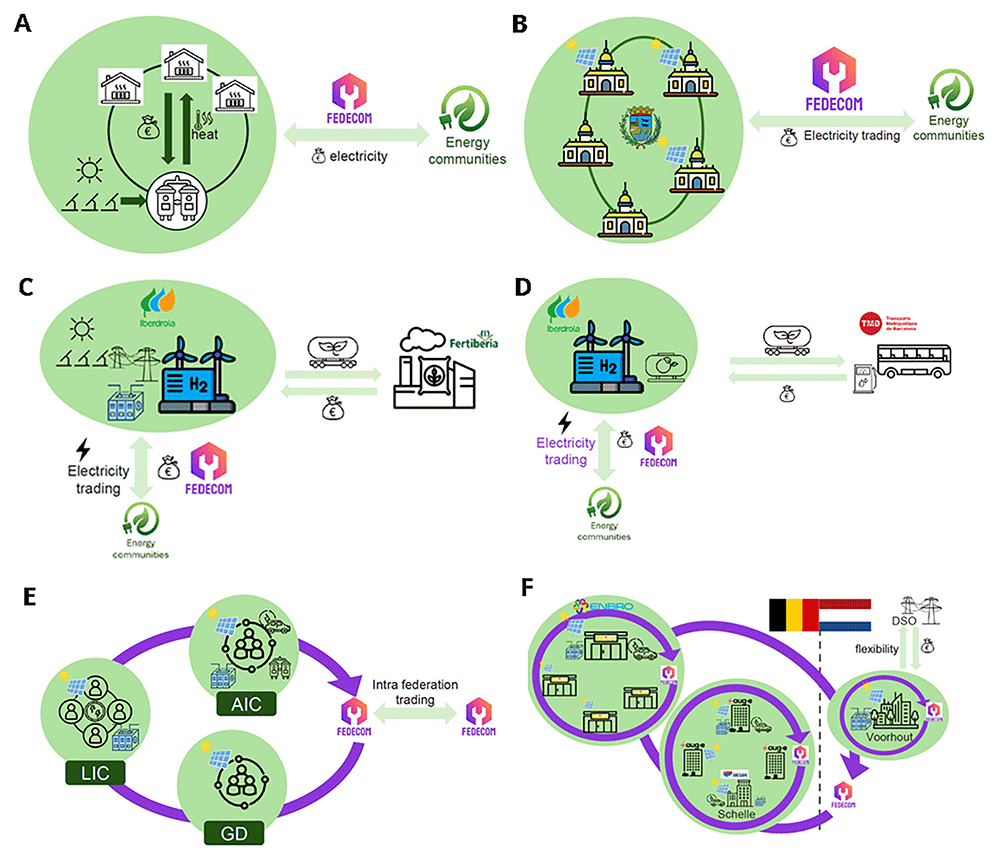
Figure 1. FEDECOM pilot business models and value propositions, highlighting how each use case introduces specific technical and organisational innovations within a shared digital and blockchain-enabled framework.
(A) UC1: Spain – Ur Beroa Residential Community. (B) UC2: Spain – Bilbao City Hall. (C) UC3: Spain – Puertollano Green Hydrogen Plant. (D) UC4: Spain – TMB Hydrogen Station. (E) UC5: Switzerland – Hydropower Federation. (F) UC6: Benelux – Cross-country E-mobility.
Similarly, the Puertollano Green Hydrogen plant (Figure 1C) demonstrates the integration of a 100 MW green hydrogen plant, 100 MW of PV, and a 20 MWh battery, with FEDECOM enabling optimal dispatch between electricity and hydrogen production. The platform supports green credential tracking and paves the way for multi-market participation, though further work on regulatory adaptation and commercial integration is ongoing. The TMB hydrogen station pilot (Figure 1D) highlights the acceleration of energy trading for public transport hydrogen infrastructure, with the platform supporting four new dispensers, expanded high-pressure storage, and secure links to a green hydrogen plant and PV. While FEDECOM has prepared TMB for broader market integration, further expansion and regulatory adaptation are still being addressed. In Switzerland, the hydropower federation pilot (Figure 1E) coordinated three communities with over 250 kWp of PV, new district batteries, and legacy hydro assets. FEDECOM enabled optimisation of self-consumption, ancillary service provision, and transparency in asset coordination, but also revealed the need for ongoing user training and iterative business model adaptation. The Benelux cross-country e-mobility pilot (Figure 1F) linked PV-powered EV charging sites across Belgium and the Netherlands, with integration of battery storage, smart charging, and dynamic control to enable local and cross-border electricity, flexibility, and storage trading. FEDECOM’s modular platform provided technical feasibility, while highlighting the need for new special purpose vehicles and regulatory alignment for full commercial rollout.
Across all use cases, value proposition mapping and business model adaptation remain iterative, shaped by real-time feedback and local user priorities. The platform’s ability to support transparent accounting, smart contract-based settlement, and flexible user roles has been instrumental in enabling these adaptations, even as regulatory fit and full integration with legacy systems continue to present challenges.
The diversity of FEDECOM’s pilot sites is reflected not only in their business models but also in the specific platform functionalities and market roles addressed by the project. Table 1 summarises the key FEDECOM market offers, the main stakeholder groups targeted, and the use cases where each offer was implemented or tested. To complement the descriptive overview, Table 1 synthesises analytical data drawn from FEDECOM’s techno-economic and validation work, highlighting each pilot’s main innovation focus and quantified contribution to the federation architecture.
Table 1. Mapping of FEDECOM platform market offers to stakeholder groups, use cases, and associated innovation focus.
| FEDECOM offers | To | Use cases | Innovation focus |
|---|
| Local Electricity Market | Energy communities
Real estate owners | UC2, UC5, UC6 | Demonstrated peer-to-peer
trading with measurable gains
in local self-consumption and
transparent settlement among
participants. |
| Local Flexibility Market | Energy communities
Real estate owners | UC2, UC5, UC6 | Enabled community-level
flexibility activation and
automated remuneration
based on predefined
performance indicators. |
| Inter-energy community energy trading | Cluster of energy communities
Large industrial energy consumers | UC1–UC6 | Validated interoperability
between local markets and
transparent cross-community
value exchange using
blockchain-based settlement. |
| Electricity storage trading | Energy communities
DHC network operators
Real estate owners
Electric vehicle fleet owners | UC1, UC3, UC5, UC6 | Supported multi-asset
coordination and monetisation
of storage flexibility across
electricity, mobility, and
heating sectors. |
| P2X trading | Energy communities
Hydrogen manufacturers
DHC network operators
Hydropower companies | UC1, UC3, UC4, UC6 | Linked electricity and
hydrogen value chains under
a single digital framework,
enabling sector-coupled
trading and verifiable carbon-
reduction accounting. |
The table links each offer to its main technological or market innovation, illustrating how the platform supports measurable improvements in transparency, flexibility, and sector coupling across pilots. As shown in Table 1, the platform enables local electricity and flexibility markets, supports inter-community energy trading, electricity storage trading, and P2X (power-to-x, e.g., hydrogen) trading. Each offer corresponds to different user groups—ranging from real estate owners, district heating (DHC) operators, and large industrial consumers to clusters of renewable energy communities and EV fleet operators. This mapping highlights the flexibility of the platform to accommodate a variety of trading and value creation logics, tailored to the operational and market realities of each pilot. For example, in Bilbao, real-time monitoring, automated control, and enhanced transparency provided clear benefits to municipal managers, while in Ur Beroa, cost savings and increased resilience were observed as key outcomes for residents. Across all pilots, transparent accounting, automated settlement, and flexibility management were highly valued by both technical operators and end users, though full integration remains a work in progress in several sites.
Performance was monitored across all demonstration sites using a common set of indicators covering self-consumption ratio, flexibility activation, remuneration accuracy, and user satisfaction. Early validation results show improvements in local energy use efficiency, smoother peak-load management, and reduced administrative time for settlement compared with baseline conditions. While specific values differ by pilot due to scale and data availability, the overall trend confirms that combining digital automation with community-centred business models produces measurable operational and cost-management benefits.
The mapping process also highlighted where blockchain-specific features—such as smart contract settlement and auditability—were critical to value proposition delivery, particularly in multi-actor, cross-community, or sector-coupled use cases.
To make these blockchain mechanisms transparent to practitioners, the smart contract design in the FEDECOM platform defines a clear operational structure linking measurement, verification, and remuneration. Each contract instance contains KPI-based trigger conditions comparing verified performance data against agreed baselines or dispatch targets; tolerance bands specifying reward or penalty logic for under-, compliant-, and over-delivery; allocation rules that distribute collective proceeds among participants according to shares, metered contribution, or contractual coefficients; and temporal clauses defining settlement windows and true-up procedures. The execution sequence depends on a verified data pathway from metering to the ledger through a permissioned validation layer, with on-chain event logs recording verified offers, matches, and settlements. This architecture enables transparent and auditable value exchange across pilots while preserving privacy by storing only hashed proofs on-chain.
FEDECOM’s technical backbone, the Grid Singularity (GSY) Distributed Energy Exchange (DEX) platform, is visualised in Figure 2. This modular blockchain-based architecture underpins secure trading, performance verification, and automated remuneration for all pilots. The architecture enables order matching, trade execution, KPI-driven settlement, and integration with external analytics or payment providers. Importantly, the platform’s flexibility has allowed project partners to rapidly test new incentive structures, user permission schemes, and market logic configurations in response to pilot feedback.
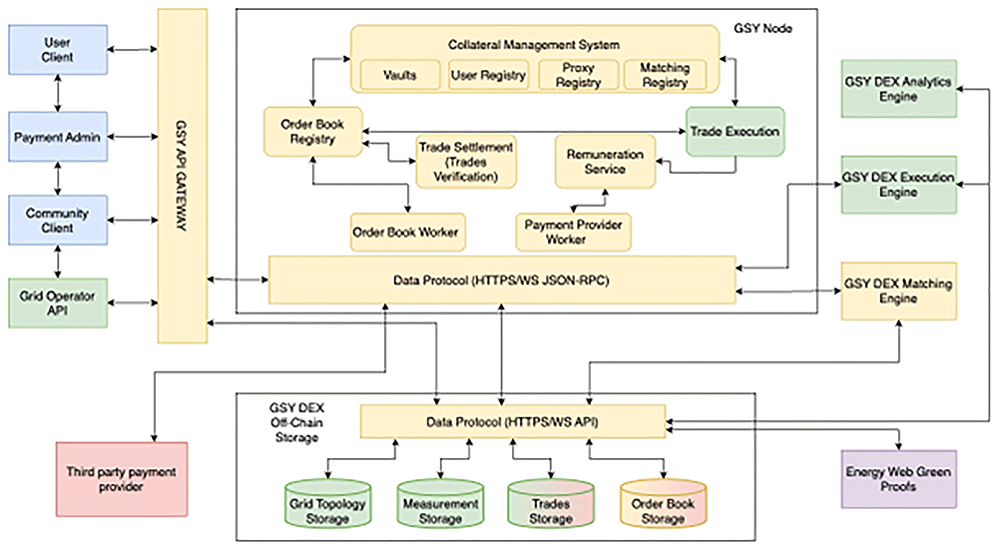
Figure 2. System architecture of the FEDECOM GSY DEX platform, showing blockchain-based market, remuneration, analytics, and payment integration.
Adapted from technical documentation developed within FEDECOM WP6.
As pilots progress, continuous improvement is guided by lessons learned from each demonstration site, technical user feedback, and evolving regulatory environments. For example, the BeNeLux Cross-country e-mobility pilot (Use Case 6) underwent substantial adaptation during the project, and the results described reflect both implemented features and ongoing work. The factsheets highlight ongoing challenges: for example, user training and legacy integration in the Swiss federation, regulatory negotiation for cross-border trading in BeNeLux, and iterative technical adaptation in the hydrogen and municipal pilots. The FEDECOM experience demonstrates that while robust, modular digital platforms and business model innovation are essential enablers, true alignment is achieved through ongoing co-design, flexible adaptation, and sustained stakeholder partnership.
While each use case reflects distinct contexts and objectives, several recurring challenges and transferable lessons can be identified across all pilots. Across the six pilot sites, several cross-cutting findings emerged. Interoperability between local assets and the federation platform proved to be a recurring challenge, requiring custom data mappings and integration interfaces. Regulatory uncertainty—especially around collective self-consumption boundaries and flexibility remuneration—was identified in all cases as a limiting factor for scalability. Despite these barriers, user engagement remained consistently strong when value propositions were framed around measurable local benefits such as cost savings, resilience, or environmental impact. Finally, pilots that combined technical validation with governance experimentation showed greater potential for replication, suggesting that social and institutional readiness is as critical as technical performance for successful scale-up of federated energy communities.
Discussion and implications
The FEDECOM pilot experiences reinforce that business model innovation and digital platform alignment for energy communities must be understood as adaptive, iterative, and context-dependent processes. The diversity of outcomes across pilots—from Spanish district heating to Swiss hydropower to cross-border e-mobility—demonstrates that both technical and organisational pathways are shaped by legacy infrastructure, regulatory environments, and evolving user needs.
One central lesson is that co-design between platform developers, technical partners, and local actors is essential. In several pilots, such as Ur Beroa and Bilbao City Hall, transparent real-time monitoring and automated settlement created immediate value, but also surfaced new requirements for user support and integration with existing systems. Where technical upgrades enabled new flexibility, storage, or trading capabilities, business models were adjusted in parallel—a process often requiring multiple iterations of user training and feedback.
These findings align with broader theories of digital transformation and business model innovation. The iterative adaptation observed across pilots exemplifies the principles of open innovation, where value creation emerges through continuous stakeholder collaboration and learning. Similarly, the evolving alignment between platform functionality and user needs reflects a dynamic capabilities perspective, in which organisations develop, integrate, and reconfigure resources to respond to technological and regulatory change. Moreover, the role of blockchain in strengthening transparency and trust resonates with prior research on digital accountability, confirming that distributed verification mechanisms can reinforce legitimacy and confidence in decentralised systems. Together, these parallels situate the FEDECOM results within ongoing academic debates on how digitalisation reshapes both organisational processes and value creation in energy systems. Building on these theoretical parallels, the following practical recommendations specify how different stakeholder groups can operationalise these insights.
The pilot factsheets highlight that technological enablement alone does not guarantee operational or financial success. For instance, while the FEDECOM platform allowed the Puertollano Green Hydrogen Plant and TMB Hydrogen Station to trial advanced energy management and market participation, the actual commercial impact is still dependent on regulatory approval and business model maturity. Similarly, in the BeNeLux e-mobility federation, technical feasibility of cross-border energy trading was demonstrated, but full implementation remains subject to legal, market, and organisational challenges.
Replication and scalability emerged as both opportunity and challenge. The Swiss federation’s positive experience with flexibility sharing and transparent data analytics points to pathways for replication elsewhere but also underscores the ongoing need for stakeholder engagement and adaptation to local context. Across all pilots, feedback repeatedly emphasised that the platform’s value was maximised when customisation—of business logic, user interface, and reporting—was prioritised.
A persistent barrier is regulatory and market alignment. Even with a flexible, modular platform, pilots encountered shifting requirements, uncertain remuneration pathways, and sometimes lengthy approval processes. These findings confirm that digital platform innovation must proceed in lockstep with policy advocacy and regulatory dialogue, not as an isolated technical exercise.
Concrete examples from the pilot contexts illustrate how targeted policy adjustments could accelerate adoption. In Spain, collective self-consumption is legally permitted but restricted to installations within a two-kilometre radius, limiting the potential for multi-municipal federation. Extending this perimeter or introducing dynamic virtual boundaries would enable wider replication of community trading schemes. In Switzerland, energy communities are recognised in law, yet participation in ancillary and flexibility markets remains limited to licensed suppliers; allowing certified community operators to aggregate and bid flexibility would open new revenue channels. In the Benelux region, cross-border coordination is hindered by differing tariff structures and settlement rules, suggesting that harmonised data-exchange protocols and standardised balancing-responsible roles are essential for scaling federated trading. These examples demonstrate that relatively small regulatory adjustments could substantially expand the operational reach of community-based digital marketplaces.
To complement this diagnosis with actionable steps, we propose a set of standardised regulatory measures that directly enable community-scale digital trading and automated remuneration: (i) harmonising distance and perimeter regulations for collective self-consumption to enhance federation among neighboring municipalities; (ii) establishing standard product templates and minimum bid sizes to encourage community involvement in flexibility and ancillary service markets, explicitly recognising community operators and aggregators as valid participants; (iii) creating a uniform KPI catalog and data exchange profiles to ensure comparability in remuneration and performance reporting across DSOs and TSOs; (iv) delineating data protection responsibilities for both on-chain and off-chain components to enable privacy-preserving settlements while maintaining auditability; and (v) acknowledging smart contract-based settlements and their integration with licensed payment services in sectoral guidance to ensure that automated remuneration aligns with existing market settlement and retail billing mechanisms.
While blockchain offers distinct advantages in transparency and automation, it also introduces technical and operational challenges that affect scalability. Transaction costs, computational overhead, and infrastructure requirements can increase complexity—particularly for public or hybrid networks used for frequent settlements. The architecture implemented in FEDECOM mitigates these impacts through a lightweight permissioned ledger with delegated validation and off-chain data handling, reducing energy use and latency compared with traditional proof-of-work systems. Nonetheless, additional coordination, cybersecurity, and compliance demands remain, underscoring the need to balance decentralisation and auditability with operational efficiency and regulatory simplicity in future replications. The energy consumption associated with the blockchain layer was assessed during pilot operation and found to be negligible compared with overall community energy use. Because FEDECOM employed a permissioned ledger with delegated validation and off-chain data storage, the consensus mechanism required only minimal computational effort. Continuous monitoring confirmed that the additional electricity demand of validation nodes was insignificant relative to the efficiency gains achieved through automation and reduced manual processing. These findings support the feasibility of blockchain deployment in community-scale applications without compromising the system’s net energy performance.
Ensuring replicability and scalability of the platform beyond the six pilots requires meeting several preconditions. First, interoperable data infrastructures and standardised metering interfaces must be in place to enable secure, verifiable exchange of operational data across communities. Second, governance frameworks should formally recognise community operators and aggregators as market participants capable of contracting flexibility and trading energy across jurisdictions. Third, regulatory environments need to support collective self-consumption and cross-community federation through harmonised distance and perimeter rules. Fourth, financial and institutional capacity at the local level is essential for operating and maintaining the digital infrastructure, including settlement, cybersecurity, and user support services. Meeting these prerequisites allows the FEDECOM model to scale from isolated pilots to a federated ecosystem of interoperable community markets, supported by practical resources such as the project’s Replication Playbook1 and Self-Assessment Tool2, which guide stakeholders through technical, regulatory, and organisational readiness checks for adoption and scale-up.
The FEDECOM experience also points to several forward-looking implications. First, open, modular platforms are crucial for enabling communities to experiment with new roles and business models as market rules evolve. Second, meaningful and ongoing stakeholder co-creation—including feedback loops, capacity building, and transparent communication—are prerequisites for sustainable deployment. Third, as community energy grows in scale and complexity, continuous improvement in both platform technology and business models is necessary, informed by real-world data and emerging best practices. Future work should also benchmark the scalability, energy use, and user acceptance of blockchain-based platforms versus centralised alternatives in operational settings.
In summary, FEDECOM’s pilot phase demonstrates that digital platform and business model innovation for energy communities is an ongoing, collaborative process. The platform’s modularity and flexibility allowed diverse communities to test, adapt, and advance new solutions, while also revealing the central importance of local engagement and regulatory fit. These insights should inform not only the next phase of FEDECOM but also the wider community energy sector as it moves toward a more decentralised, digital, and participatory future.
The implications of these results differ across stakeholder groups. For policymakers, the evidence suggests that regulatory frameworks must evolve toward recognising community operators as legitimate market actors and enabling cross-community trading under harmonised data and settlement rules. For community operators and local authorities, success depends on institutional capacity to manage digital platforms, ensure cybersecurity, and engage users through clear value propositions linked to measurable outcomes. For technology providers, future development should prioritise interoperability and low-overhead remuneration mechanisms to minimise integration and operational costs. Addressing these needs collectively will accelerate the emergence of scalable, federated community energy systems that combine technological efficiency with social legitimacy.
Conclusions and future directions
This study demonstrates that innovation in energy community business models and digital platform design—particularly those leveraging blockchain-enabled architectures—is both essential and inherently iterative. The FEDECOM pilots across Spain, Switzerland, and Benelux show that a modular, blockchain-based platform can support transparency, automation, and secure multi-actor value flows for a wide range of sector-coupled community models. Real-world deployments confirmed that technical upgrades such as smart contract-based settlement, auditability, and automated remuneration, when aligned with clear business models and local needs, enable new forms of trust, participation, and operational efficiency.
Beyond its empirical insights, this study makes a dual contribution. Theoretically, it advances understanding of how business model innovation and digitalisation interact in decentralised systems, showing that blockchain and digital platforms not only facilitate transactions but also redefine accountability, transparency, and adaptability. Practically, the cross-pilot analysis demonstrates how iterative co-design, measurable remuneration logic, and platform interoperability can translate these principles into actionable frameworks for replication. Together, these findings link conceptual progress on digital transformation with evidence from real-world deployment, bridging academic and practical domains.
However, the experience also underscores that digital platforms and blockchain are not one-size-fits-all solutions. Success depends on careful co-design with users, robust technical integration, and ongoing adaptation to regulatory and market changes. Achieving robust and replicable energy community solutions requires a combination of digital innovation, flexible business model design, and continuous engagement with stakeholders at all levels.
Looking ahead, future work should further benchmark the scalability, energy efficiency, and user acceptance of blockchain-based versus centralised solutions in operational community settings. Continued research is also needed to advance interoperability, support sector-coupling, and enable integration with third-party and external market platforms. Most critically, policy and regulatory frameworks must keep pace with digital innovation, ensuring that communities can benefit fully from the transparency, automation, and resilience that these platforms offer.
Future research should extend beyond technical benchmarking to examine the governance and accountability mechanisms underpinning federated energy platforms. Particular attention is needed on long-term sustainability — including platform ownership models, data-sharing incentives, and lifecycle maintenance — to ensure that digital infrastructures supporting energy communities remain transparent, inclusive, and resilient over time.
In summary, the FEDECOM pilots confirm that digitally enabled, blockchain-based platforms—when matched to context-specific business models and implemented through close collaboration—offer a viable path forward toward scalable, transparent, and resilient energy communities across Europe.
Ethics and consent
No ethics and consent were required.
Disclaimer
The views expressed in this article are those of the author. Publication in Open Research Europe does not imply endorsement of the European Commission.
Data availability statement
No data are associated with this article.
Acknowledgements
The author gratefully acknowledges the contributions of Ana Trbovich, Spyridon Tzavikas, and Ewald Hesse (Grid Singularity, Austria), Federico Giani, Davide Strepparava, and Vasco Medici (SUPSI, Switzerland), and Igor Jovanovic and Marko Jelic (IMP, Serbia) for their work on FEDECOM WP6 and the development of the GSY DEX platform architecture; Gorka Naveran Lanz, Estibaliz Castrillejo, Jose Antonio Izurieta (Veolia Giroa, Spain), Ivan Pasarin (EnergyWeb, Germany), Susana Lopez (Tekniker, Spain), and Axel Meuris (Earth, Belgium) for their work on pilots and KPIs; as well as all FEDECOM partners (especially Sander Smit from R2M Solution) for providing pilot factsheets, images, technical descriptions, and original analyses that were adapted for figures, tables, and descriptions of business model evolution and value proposition mapping in this paper. Any errors or omissions remain the responsibility of the author alone.
Faculty Opinions recommendedReferences
- 1.
Andoni M, Robu V, Flynn D, et al.:
Blockchain technology in the energy sector: a systematic review of challenges and opportunities.
Renew Sustain Energy Rev.
2019; 100: 143–174. Publisher Full Text
- 2.
Ferreira JPM, Gonçalves MJA, da Silva AF:
A systematic literature review in blockchain: benefits and implications of the technology for business. In: Advances in intelligent systems and computing. Springer International Publishing, 2019; 405–414. Publisher Full Text
- 3.
Ali O, Ally M, Clutterbuck P, et al.:
The state of play of blockchain technology in the financial services sector: a systematic literature review.
Int J Inf Manage.
2020; 54: 102199. Publisher Full Text
- 4.
Ahl A, Yarime M, Tanaka K, et al.:
Review of blockchain-based distributed energy: implications for institutional development.
Renew Sustain Energy Rev.
2019; 107: 200–211. Publisher Full Text
- 5.
Khezami N, Gharbi N, Neji B, et al.:
Blockchain technology implementation in the energy sector: comprehensive literature review and mapping.
Sustainability.
2022; 14(23): 15826. Publisher Full Text
- 6.
Ben Khaled MW, Ouertani Abaoub N:
Energy sector evolution: perspectives on energy platforms and energy transition.
Platforms.
2024; 2(2): 68–83. Publisher Full Text
- 7.
Sikorska M:
The development of energy blockchain and its implications for the energy sector.
Rev Econ Financ Invest.
2021; 1(1). Publisher Full Text
- 8.
Wakasala B:
Blockchain technology, regulatory environment and competitive edge in renewable energy sector in Kenya: a systematic literature review.
Int J Latest Technol Eng Manag Appl Sci.
2025; 13(12): 307–317. Publisher Full Text
- 9.
Ning L, Yuan Y:
How blockchain impacts the supply chain finance platform business model reconfiguration.
Int J Logist Res Appl.
2023; 26(9): 1081–1101. Publisher Full Text
- 10.
ZareRavasan A, Krčál M, Ashrafi A:
Blockchain and digital transformation of insurance business models.
International Journal of Blockchains and Cryptocurrencies.
2021; 2(3): 222. Publisher Full Text
- 11.
Capper T, Gorbatcheva A, Mustafa MA, et al.:
Peer-to-peer, community self-consumption, and transactive energy: a systematic literature review of local energy market models.
Renew Sustain Energy Rev.
2022; 162: 112403. Publisher Full Text
- 12.
Khanmohammadi S, Saadat-Targhi M:
Performance enhancement of an integrated system with solar flat plate collector for hydrogen production using waste heat recovery.
Energy.
2019; 171: 1066–1076. Publisher Full Text
- 13.
Reis IFG, Gonçalves I, Lopes MAR, et al.:
Business models for energy communities: a review of key issues and trends.
Renew Sustain Energy Rev.
2021; 144(6): 111013. Publisher Full Text
- 14.
Parashar S, Sood G, Agrawal N:
Modelling the enablers of food supply chain for reduction in carbon footprint.
J Clean Prod.
2020; 275: 122932. Publisher Full Text
- 15.
Waterworth A, Bradshaw MJ:
Unconventional trade-offs? National oil companies, foreign investment and oil and gas development in Argentina and Brazil.
Energy Policy.
2018; 122: 7–16. Publisher Full Text
- 16.
Jonsdottir AT, Johannsdottir L, Davidsdottir B:
Systematic literature review on system dynamic modeling of sustainable business model strategies.
Clean Environ Syst.
2024; 13: 100200. Publisher Full Text
- 17.
Ghalandarzadeh S, Kurti A, Unell C, et al.:
Community-Based Business Models for agricultural and forestry data ecosystems: a systematic literature review.
Smart Agric Technol.
2025; 11: 100958. Publisher Full Text
- 18.
Shahrivar S, Elahi S, Hassanzadeh A, et al.:
A business model for commercial open source software: a systematic literature review.
Inf Softw Technol.
2018; 103: 202–214. Publisher Full Text
- 19.
Muhsen H, Allahham A, Al-Halhouli A, et al.:
Business model of Peer-to-Peer energy trading: a review of literature.
Sustainability.
2022; 14(3): 1616. Publisher Full Text
- 20.
Maruf MNI, Mahmud S, Pasarín IS, et al.:
Demonstrating clean energy transition scenarios in sector-coupled and renewable-based energy communities [version 2; peer review: 2 approved, 1 approved with reservations].
Open Res Eur.
2024; 3: 193. PubMed Abstract
| Publisher Full Text
| Free Full Text
- 21.
Vernay AL, Avelino F, Barnes J, et al.:
Community energy business models: policy objectives and diversity across Europe.
Energy Policy.
2023; 179: 113653.
- 22.
Barabino B, Lazzari S, Binetti G, et al.:
Energy communities: a review of trends and gaps for developing business models, optimization approaches, and future research directions.
Sustain Cities Soc.
2023; 95: 104730.
- 23.
Energy Cities & LIFE LOOP Consortium:
D3.1 Report on selected business models for development of community energy projects. 2024. Reference Source
- 24.
Inês C, Guilherme PL, Esther MG, et al.:
Regulatory challenges and opportunities for collective renewable energy prosumers in the EU.
Energy Policy.
2020; 138: 111212. Publisher Full Text
- 25.
Lowitzsch J, Hoicka CE, van Tulder FJ:
Renewable energy communities under the 2019 European clean energy package – governance model for the energy clusters of the future?
Renew Sustain Energy Rev.
2020; 122: 109489. Publisher Full Text
- 26.
ETIP SNET: Smart sector integration, towards EU system of systems: building blocks, enablers, architectures, regulatory barriers, economic assessment (Position Paper). 2021. Reference Source
- 27.
Ramsebner J, Haas R, Ajanovic A, et al.:
The sector coupling concept: a critical review.
Wiley Interdiscip Rev Energy Environ.
2021; 10(4): e396. Publisher Full Text
- 28.
EN-TRACK Project: D1.4 Measurement and verification procedures for energy efficiency investments. 2022. Reference Source
- 29.
Efkarpidis N, Goranović A, Yang CW, et al.:
A generic framework for the definition of key performance indicators for smart energy systems at different scales.
Energies.
2022; 15(4): 1289. Publisher Full Text
- 30.
Košnjek E, Sučić B, Loncnar M, et al.:
Energy cost centre-based modelling of sector coupling in local communities.
Energies.
2025; 18(11): 2688. Publisher Full Text
- 31.
Mohammadi N:
Investigation of community energy business models from an institutional perspective: intermediaries and policy instruments in selected cases of developing and developed countries.
Sustainability.
2023; 15(10): 8423. Publisher Full Text
- 32.
USEF Foundation: White paper: energy and flexibility services for citizens energy communities. 2019. Reference Source
- 33.
IRENA: Innovation landscape brief: community-ownership models.
International Renewable Energy Agency, 2020. Reference Source
- 34.
Lennard Z:
FEDECOM - D8.4 market-analysis-and-ER-Table v1.0. FEDECOM, 2024. Publisher Full Text
- 35.
FLEXCoop Consortium: D2.7 Emerging business models, associated DR strategies and standard contracts templates – final version. 2020. Reference Source
- 36.
Nogueira WC, Garcés Negrete LP, López-Lezama JM:
Interval load flow for uncertainty consideration in power systems analysis.
Energies.
2021; 14(3): 642. Publisher Full Text
- 37.
Zhang Q, He M, Wang Y, et al.:
Analysis of air humidification process for humid air turbine cycle with a detailed air humidifier model.
Appl Energy.
2020; 279: 115833. Publisher Full Text
- 38.
Brilliantova V, Thurner TW:
Blockchain and the future of energy.
Technology in Society.
2019; 57: 38–45. Publisher Full Text
- 39.
Aini Q, Manongga D, Sediyono E, et al.:
The adoption of blockchain technology the business using structural equation modelling.
IJCCS (Indonesian Journal of Computing and Cybernetics Systems).
2024; 18(1): 13–24. Publisher Full Text
- 40.
Taherdoost H, Madanchian M:
Blockchain-based new business models: a systematic review.
Electronics.
2023; 12(6): 1479. Publisher Full Text
- 41.
Moreira S, Mamede HS, Santos A:
Business process automation in SMEs: a systematic literature review.
IEEE Access.
2024; 12: 75832–75864. Publisher Full Text
- 42.
Radhakrishnan R, Patra P, Das M, et al.:
Recent advancements in the ionic liquid mediated lignin valorization for the production of renewable materials and value-added chemicals.
Renew Sustain Energy Rev.
2021; 149: 111368. Publisher Full Text
- 43.
Yin C, Li F:
A novel evaluation method for the risk of simultaneous commutation failure in multi-infeed HVDC-systems that considers DC current rise.
International Journal of Electrical Power & Energy Systems.
2021; 131: 107051. Publisher Full Text
- 44.
Mangani TR, Coetzee H, Kellner K, et al.:
Socio-economic benefits stemming from bush clearing and restoration projects conducted in the D’Nyala nature reserve and Shongoane Village, Lephalale, South Africa.
Sustainability.
2020; 12(12): 5133. Publisher Full Text
- 45.
Schwidtal JM, Piccini P, Troncia M, et al.:
Emerging business models in local energy markets: a systematic review of peer-to-peer, community self-consumption, and transactive energy models.
Renew Sustain Energy Rev.
2023; 179: 113273. Publisher Full Text
- 46.
Osterwalder A, Pigneur Y, Bernarda G, et al.:
Value proposition design: how to create products and services customers want. John Wiley & Sons, 2014. Reference Source







