1. Introduction
Gross primary productivity (GPP) quantifies the largest terrestrial CO2 uptake flux in the global carbon cycle. However, when measuring the net ecosystem exchange (NEE) of CO2, separating the GPP signal from respiration is challenging (Reichstein et al., 2005; Wohlfahrt & Gu, 2015). To address this limitation, Carbonyl Sulfide (COS) is an atmospheric trace gas that has been identified as a promising tracer for GPP and several studies have explored its utility extensively (Asaf et al., 2013; Campbell et al., 2008; Kohonen et al., 2022; Montzka et al., 2007). COS primarily originates from anthropogenic sources and oceans, while vegetation predominantly acts as its sink (Berry et al., 2013; Kettle et al., 2002).
The application of COS to estimate GPP has been suggested because COS uptake by leaves proceeds through a stomatal pathway similar to uptake of CO2. Importantly, COS is assumed not to be released by plants due to its irreversible hydrolysis catalyzed by carbonic anhydrase (CA) (Notni et al., 2007; Protoschill-Krebs et al., 1996; Stimler et al., 2010). With this advantage of COS, the leaf relative uptake ratio (LRU) of deposition velocities of COS and CO2 has been introduced to scaling COS leaf uptake to photosynthesis (Campbell et al., 2008; Sandoval-Soto et al., 2005) (a detailed LRU description is provided in Section 2.1.2). However, previous studies have emphasized that LRU responds differently to environmental factors such as leaf temperature (Tleaf) and vapor pressure deficit (VPD), implying that it is not constant under varying conditions (Cochavi et al., 2021; Kooijmans et al., 2019; Stimler et al., 2010; Sun et al., 2018; Wohlfahrt et al., 2018).
Unlike photosynthesis, COS uptake by CA remains unaffected by light, rendering it a robust proxy for stomatal conductance to water vapor (
gsw). Accordingly, recent studies have used ecosystem-level COS exchange as a proxy for gsw, highlighting differences between stomatal and biochemical contributions to CO2 uptake (Cochavi et al., 2021; Wohlfahrt et al., 2018).
Differences in COS and CO2 responses to changes in Tleaf and VPD were observed under constant light conditions, but their causes remain unclear (Kooijmans et al., 2019; Stimler et al., 2010; Sun et al., 2018). Kooijmans et al. (2019) measured that LRU decreases with increasing temperatures (from 13 to 23°C) or increasing VPD (from 0.5 to 2.5 kPa) at the boreal forest site Hyytiälä in Finland, while CO2 uptake remained relatively stable. Understanding these variations is imperative for utilizing COS measurements to infer information about GPP.
To address these open questions, we investigate three potential explanations for the different responses of COS and CO2 uptake to increasing Tleaf and VPD under high-light conditions. First, the pronounced reduction in COS leaf uptake compared to CO2 uptake at higher Tleaf might be due to a potential COS compensation point (ΓCOS) at higher Tleaf (Hypothesis 1), which occurs when uptake and production are equal. If the atmospheric mole fraction is higher than ΓCOS, it generally indicates a predominance of uptake over production. Conversely, below this point, production exceeds uptake, resulting in a net release of COS to the atmosphere.
ΓCOS have been reported in a few vascular plants, algae, crops, and lichen fields (Belviso et al., 2022; Geng & Mu, 2004; Goldan et al., 1988; Kesselmeier & Merk, 1993; Kuhn & Kesselmeier, 2000; Maseyk et al., 2014). These measured ΓCOS values are lower than typical atmospheric COS mole fractions (≈500 pmol mol−1), which is why net COS uptake is observed. Stimler et al. (2010) also observed a ΓCOS of 60.7 pmol mol−1, though statistically indistinguishable from zero, and interpreted it as a possible diffusional feedback under high COS mole fractions. More recently, Gimeno et al. (2017) demonstrated temperature-dependent COS emissions in nonvascular bryophytes, suggesting that biochemical processes such as protein degradation could contribute to COS release at elevated Tleaf. However, ΓCOS of vascular plants and its temperature dependence remain poorly constrained. We therefore hypothesize that the observed COS uptake results from the coexistence of uptake and production processes, with ΓCOS exhibiting temperature dependence.
Second, COS leaf uptake might respond more strongly to stomatal closure than CO2 uptake (Hypothesis 2). Plants react to variations in VPD to optimize their water use efficiency (Farquhar & Sharkey, 1982). VPD-induced stomatal closure reduces CO2 inflow, but CO2 is still consumed within the mesophyll cells. Consequently, the leaf’s internal concentration of CO2 is reduced, increasing the CO2 gradient between internal and ambient air. This larger gradient could sustain CO2 uptake despite stomatal closure.
In contrast, the internal COS concentration is assumed to be much lower than ambient levels due to the higher catalytic efficiency of the CA enzyme (Protoschill-Krebs et al., 1996; Seibt et al., 2010; Tcherkez et al., 2006). Assuming that the internal COS concentration is (near-)zero, this concentration cannot reduce much further when stomata close, unlike the CO2 internal concentration. Consequently, in response to stomatal closure, the COS gradient between internal and ambient air will likely not reduce as much as the CO2 gradient, and so the COS gradient will not counteract the stomatal closure as is the case for CO2. Thus, decreasing gsw is expected to reduce COS uptake more than CO2 uptake.
Third, the enzyme CA could behave optimally at a lower temperature than the RuBisCO enzyme responsible for CO2 fixation (Cho et al., 2023; Stimler et al., 2010). Consequently, when Tleaf rises above the optimum temperature of CA but is still below that of RuBisCO, COS uptake could decrease while CO2 uptake still increases (Hypothesis 3). Enzyme activity typically increases with temperature until reaching an optimum temperature, and the rate and the optimum temperature might differ between enzymes. Optimum temperatures for the CA enzyme in previous models simulating leaf and soil COS uptake ranged from 15°C to 40°C (Cho et al., 2023; Ogée et al., 2016; Sun et al., 2015), significantly lower than the optimal temperature of 50°C reported for RuBisCO (Salvucci et al., 2001). Together, these hypotheses consider both stomatal and biochemical mechanisms that could explain the differential COS and CO2 responses.
Disentangling these hypotheses using field measurements is challenging due to interrelated and simultaneous variations of environmental conditions (e.g. Tleaf, VPD, and gsw). Laboratory experiments offer the advantage of observing COS and CO2 uptake changes at a leaf level under controlled conditions while independently varying environmental factors. To complement the experimental analysis and mechanistically interpret the observed gas-exchange responses, we developed a coupled CO2–COS– H2O conductance model based on a leaf conductance model previously established for GPP tracers such as the ∆17O and ∆47 isotopic composition of CO2 (Adnew et al., 2020; Adnew et al., 2021; Adnew et al., 2023). This model serves as a diagnostic tool that enables joint optimization of gas-exchange parameters through the shared stomatal pathway for the three gases and allows inference of internal variables, such as intercellular and chloroplast COS mole fractions, that are not directly measurable.
Finally, to validate the three hypotheses, we aim to investigate the existence of COS compensation points and responses of COS and CO2 leaf uptake to varying gsw and Tleaf. We will present measurement results from leaf gas exchange experiments with sunflowers under controlled environmental conditions. We will interpret the experimental results using the coupled leaf conductance model optimized using the experiments’ dataset.
2. Materials and methods
2.1 Leaf gas-exchange measurements
2.1.1 Leaf cuvette system.
We measured deposition velocities of COS and CO2 (VCOS and VCO2), i.e. fluxes normalized by mole fractions in air, using a leaf cuvette system. These experiments were conducted using sunflower plants (Helianthus Annuus L. cv. ‘Sunsation’), which are C3 photosynthesis type plants cultivated in a local plant nursery (Evanthia, Maasdijk, Netherlands). Plants were cultivated in a greenhouse under a day/night temperature regime of 18–21°C during the day and 15–18°C at night, with ventilation applied above 20°C. Germination occurred at 21–24°C. The species Helianthus annuus was originally described by Linnaeus (Species Plantarum, Vol. 2, p.904, 1753). Each sunflower plant was used for a maximum of 5 daytime hours to minimize physiological stress caused by prolonged exposure to experimental conditions. Gas exchange measurements were scheduled to align with the plants’ photosynthetic rhythm and were conducted during the local daytime window between 10:00 and 17:00 (local time, the Netherlands).
Tleaf was monitored within the leaf cuvette using a thermocouple touching the abaxial side of the leaf. A synthetic air mixture, composed of 79% nitrogen and 21% oxygen, was mixed and controlled using mass flow controllers (Bronkhorst, Veenendaal, the Netherlands) and humidified using a dew point generator (LI-610, Li-Cor). CO2 and COS were supplied from controlled gas cylinders and then added to the air-stream entering the LI-6800 system. CO2 mole fractions in the leaf cuvette were kept around 445.1 ± 3.5 μmol mol−1. COS was introduced from a gas mixture with synthetic air with a COS mole fraction of around 700 nmol mol−1, regulated by a mass flow controller (Analyt-MTC, Müllheim, Germany). Except for the first experiment to check ΓCOS, COS mole fraction levels were intentionally elevated (in the range of 900 to 1100 pmol mol−1), relative to typically atmospheric mole fractions (approximately 500 pmol mol−1) to improve the detectability of COS uptake. Air in the leaf cuvette was mixed by a fan, operated at approximately 10,000 rpm, and the boundary conductance near the leaf surface was maintained at about 2.44 mol m−2 s−1.
To control gsw, adjustments were made to the VPD. Initial gsw (mol m−2 s−1) values were estimated by measuring the total conductance of H2O (
gtw (mol m−2 s−1)) and applying a corresponding boundary conductance of H2O (
gbw (mol m−2 s−1)) according to the LI-6800 manual. We assumed equal distribution of stomata between the upper to lower side of the leaf and therefore applied a stomatal ratio of K = 0.5.
COS and CO2 mole fractions of the inflowing and outflowing air were measured using a quantum cascade laser spectrometer (QCLS) (Aerodyne Research Inc., Billerica, MA, USA). The air subjected to QCLS analysis was initially passed through a magnesium perchlorate (Mg (ClO4)2) drying trap to eliminate water vapor. For this purpose, magnesium perchlorate hexahydrate (99% purity; Sigma-Aldrich, Product Code: 309303-100G, Linear Formula: Mg (ClO4)2·6H2O) was used. The water vapor scrubber tubes employed were 50 cc stainless steel tubes with 0.25-inch tube fittings. Measurements of air from cylinders with known COS and CO2 mole fractions were performed for hourly calibration.
Once a leaf reached steady-state under the given conditions, data were recorded. The LI-6800 measured every second and was set to log data automatically every 3 minutes. Each log consisted of an average taken over 15 measurements within the preceding 15 seconds. The QCLS was set to automatically record data every second, totaling 150 measurements over each 150-second period. Then, the median over this 150-second interval was taken as the “data point”. Each QCLS interval had a corresponding LI-6800
log.
The air was passed through the analyzer at an approximate flow rate (AF (mol s−1)) of 0.35 mmol s−1. Subsequently, leaf assimilation rates (Fgas) of COS (FCOS (pmol m−2 s−1)) and CO2 (FCO2 (μmol m−2 s−1)) were calculated by:
(1)
Here, the [gas]in and [gas]out represent the mole fractions of COS (pmol mol−1) and CO2 (μmol mol−1) in the air entering and exiting the chamber, which are measured by the QCLS on a dry-air basis. The leaf area S (m2) was 9 cm2. Although transpiration slightly increases the outlet air flow due to the addition of water vapor (von Caemmerer & Farquhar, 1981, Appendix 2), the resulting increase in total molar flow (<3% under [H2O]out = 15–30 mmol mol–1) was neglected in Equation 1 for simplicity. This small effect was not considered in the flux calculations and was consistently omitted throughout the model analysis. The CO2 leaf assimilation rates obtained from the QCLS measurements closely matched those from the LI-6800 (R = 0.96, mean difference = 0.18 μmol m−2 s−1), confirming the accuracy of the CO2 flux measurements.
Hourly calibration corrected potential QCLS drift, and the data points were excluded when the dew point temperature approached or exceeded the air temperature in any experiment.
To account for COS emissions at higher temperatures from chamber material (Maseyk et al., 2014), we conducted empty chamber experiments using inflowing COS mole fractions of 750 – 900 pmol mol−1, which were adequate for evaluating chamber emissions, across a similar range of temperatures with experimental conditions. Additional experiments with low mole fraction (40 – 75 pmol mol−1) were conducted to evaluate potential emission increases originating from large concentration gradients between sampling air and chamber materials.
Figure 1 shows a slight increase in COS emissions with rising temperature, with no significant effect from inflowing COS mole fractions. Measurements were conducted under 40% relative humidity (RH), to avoid potential condensation or other artifacts during the empty chamber experiment. Leaf COS flux measurements were corrected using a linear fit of emissions against temperature in the empty chamber (R2 = 0.45) with chamber emissions averaging 6.7% of observed leaf COS flux.
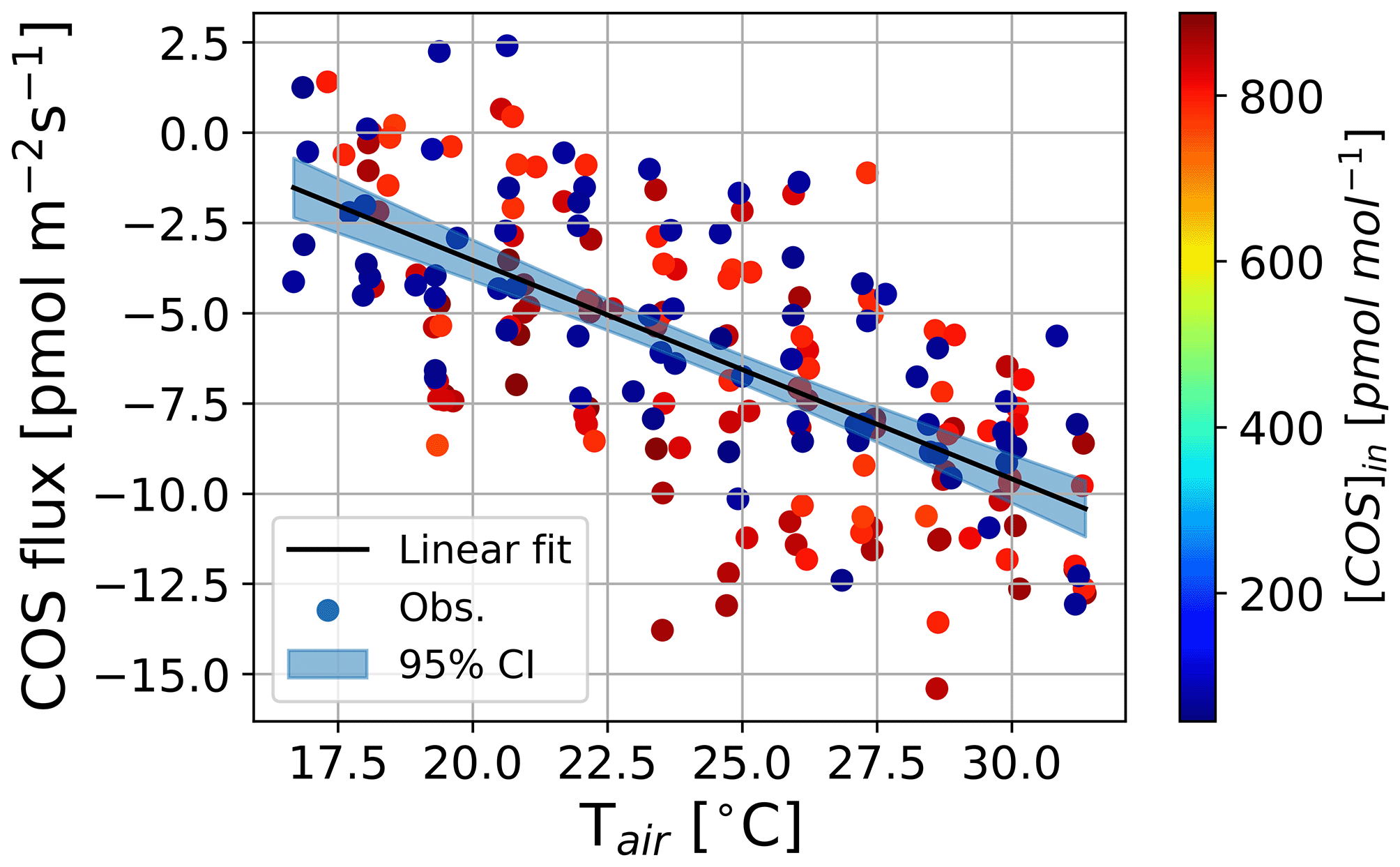
Figure 1. Measurements of COS flux at different air temperatures in the empty chamber.
Dots represent measurement data points and their colors indicate injected COS mole fractions in a chamber, black lines are linear fit equations, and filled areas indicate 95% confidential interval.
2.1.2 Experiments.
Table 1 lists the environmental factors that were used in the three experiments. We manipulated inflowing COS mole fractions, humidity, and air temperatures while keeping other environmental conditions constant, as specified in each experimental design. All environmental changes were introduced gradually to allow the leaf sufficient time to adapt to chamber conditions. For instance, we applied humidity (to achieve a desired gsw) and temperature changes of approximately 0.8 mol m−2 s−1 and 10°C, respectively, over a period of two hours. This gradual adjustment ensured that measurements reflect steady-state conditions and minimize transient effects from rapid environmental changes. To exclude the effects of light on VCOS and VCO2, high light intensity similar to growth conditions (600 μmol m−2 s−1) was maintained throughout all experiments.
Table 1. Environmental conditions during the three experiments.
The range of controlled and constant variables for each experiment is expressed as minimum ~ maximum and mean ± standard deviation, respectively. Experiment 1 (Sunflower 1) aims to detect COS compensation points at two temperatures. Experiments 2 (Sunflower 2, 3, and 4) and 3 (Sunflower 2 and 4) are designed to investigate responses of VCOS and VCO2 to stomatal conductance (gs) and leaf temperature (Tleaf), respectively, with Tleaf acting as a primary driver of mesophyll conductance (gm). We controlled a designated variable in each experiment while other variables including light intensity, air flow rate, and mixing fan speed were kept constant.
| Experiment (Control) | Experiment 1 ([COS]in) | Experiment 2 (
g
sw) | Experiment 3 (T
leaf) |
|---|
| Sunflower number (-) | 1 | 1 | 2 | 3 | 4 | 2 |
3 |
|---|
| gsw (mol m−2s−1) | 0.8 ± 0.0 | 0.9 ±0.1 | 0.4 ~ 1.1 | 0.3 ~ 1.0 | 0.3 ~ 0.6 | 0.6 ± 0.1 | 0.6 ± 0.0 |
| VPD (kPa) | 0.5 ± 0.0 | 0.5 ± 0.0 | 0.6 ± 0.1 | 0.7 ± 0.2 | 0.9 ± 0.3 | 0.7 ± 0.2 | 0.9 ± 0.3 |
| Tleaf (°C) | 19.8 ± 0.0 | 25.0 ±0.3 | 25.1 ± 0.0 | 26.4 ± 0.1 | 24.8 ± 0.3 | 19.1 ~ 30.9 | 19.0 ~ 29.8 |
| [COS]in (pmol m−2s−1) | 94.11 ~ 589.05 | 104.50 ~ 706.96 | 1096.4 ± 12.6 | 1181.9 ± 11.1 | 914.4 ± 29.6 | 1087.7 ± 41.1 | 926.8 ± 14.0 |
| [CO2]in (μmol m−2s−1) | 446.5 ± 0.1 | 449.1 ± 0.3 | 441.0 ± 0.4 | 446.2 ± 1.5 | 447.5 ± 1.7 | 439.9 ± 3.1 | 447.3 ± 1.4 |
The first experiment (Experiment 1) aimed to detect COS compensation points and their temperature dependence. To determine the existence of ΓCOS and its temperature response, we measured FCOS at four distinct inflow COS mole fractions ranging from 94 to 589 pmol mol−1 at two different leaf temperatures (19.8°C and 25.0°C). As in Gimeno et al. (2017), the values of the ΓCOS were subsequently calculated for each temperature by extrapolating the COS mole fraction at which FCOS reaches zero using a linear regression.
The second experiment (Experiment 2) aimed to compare responses of COS and CO2 uptake to stomatal closure. We examined the responses of VCOS and VCO2 to gsw while keeping other environmental factors constant, including air temperature (approximately 25°C). Thus, changes in VCOS and VCO2 predominantly reflect responses to changes in gsw. The modulation of gsw was accomplished by adjusting humidity within the leaf cuvette – hence modifying VPD – using the humidifier.
The last experiment (Experiment 3) aimed to compare responses of COS and CO2 uptake to changing temperatures. We observed VCOS and VCO2 while controlling the air temperature (Tair) within the leaf cuvette and maintaining other variables constant, including gsw. The desired gsw value was sustained by manipulating chamber humidity and thus VPD when necessary. The resulting leaf temperatures varied between 19.0 and 30.9°C.
Regarding a repetition of experiments, Experiment 1 was executed once with a single sunflower plant (Sunflower 1), while Experiments 2 and 3 were replicated with three different sunflower plants over three days (Sunflower 2, 3, and 4). During the measurement of COS, CO2, and H2O mole fractions in Experiment 3, the complete temperature range could not be covered consistently across all three repetitions due to fluctuating gsw conditions. Due to this limitation, data from Sunflower 3 were omitted from the analysis of Experiment 3. Overall, we collected 15 data points from Experiment 1 and 48 data points from Experiments 2 and 3.
The measured VCOS and VCO2 were used to calculate the LRU (-), which was used to characterize differing responses of COS and CO2 from Experiments 2 and 3 (Sandoval-Soto et al., 2005; Campbell et al., 2008):
(2)
where ACOS (pmol m−2 s−1) and ACO2 (μmol m−2 s−1) are assimilation rates of COS and CO2, respectively. These rates were normalized by outflowing concentrations [COS]out and [CO2]out, which are assumed to be the concentrations the plants are exposed to due to the well-mixed conditions (see Section 2.2.1).
2.2 Conductance model
2.2.1 General concept.
Since the observations were somewhat limited in exploring internal leaf processes, we developed a conductance model and applied an optimization method using 48 data points from Experiments 2 and 3. Experiment 1 (15 data points) was used to provide initial information of ΓCOS and its temperature dependence to the model (Section 3.2.2). This modeling framework was designed to mechanistically link experimental observations to internal gas-exchange processes.
Our leaf conductance model simulates the concurrent exchange of COS, CO2, and H2O in a plant leaf with the conditions of the laboratory experiments. Since these gases share the same stomatal pathway, their simultaneous modeling stomatal pathway, their simultaneous modeling helps us understand the mechanisms of leaf conductance. The model calculates mole fractions on a wet-air basis, while the measurements are reported on a dry-air basis. Accordingly, conversions between dry- and wet-air mole fractions were applied when comparing modeled and observed concentrations (see Section 2.1.1). Additionally, the model assumes that gas exchange reaches an equilibrium that we tried to attain in the conducted experiments. All model variables that remain constant in the model are listed in
Table 2. Variables that are excluded from Table 2 are targets for optimization as explained in Section 2.3.
Table 2. Model constants used in the model.
Variables in all gases were used for all models, while those specific to COS, CO2, and H2O were applied to their respective model. The molar volume (Vm) is at standard temperature (298 K) and pressure (100 kPa).
| Gas | Symbol | Description | Unit | Value |
Q
10 |
|---|
| All | S
| Leaf area | cm2 | 9.0 | |
| R
| Universal molar gas constant | J K−1 mol−1 | 8.314 | |
| Vm
| Molar volume | m3 mol−1 | 0.0248 | |
| Vcν
| Cuvette volume | cm3 | 109a | |
| COS | ∆
Ha,CA
| Activation energy of CA | kJ mol−1 | 40b | |
| ∆
Heq,CA
| Enthalpy change of CA | kJ mol−1 | 100b | |
| CO2 | τ298 K | Specificity factor between CO2 and O2 at 298 K | - | 2600c | 0.57 |
| K
c, 298 K | Michaelis-Menten constant for carboxylation at 298 K | Pa | 30c | 2.1 |
| K
o, 298 K | Michaelis-Menten constant for oxygenation at 298 K | Pa | 30000c | 1.2 |
| Rd
| Dark respiration at 298 K | μmol m−2 s−1 | 3.0c | 2.0 |
| p[O2] i
| Partial pressure of internal O2 | Pa | 20900c | |
| H2O | gmw
| Mesophyll conductance for H2O | mol m−2 s−1 | 10 | |
Figure 2a schematically illustrates the methodology for the gas exchange experiments. As described in Section 2.1.2, environmental conditions, including [COS]in, Tair, and VPD, were manipulated to test the hypotheses while keeping other variables, such as light levels, constant. The cuvette received controlled mole fractions of the three gases via the airflow.
Figure 2b depicts the exchange pathways of COS, CO2, and H2O within the sunflower leaf, which form the basis for the conductance model. We assumed that COS, CO2, and H2O production or consumption within the plant were governed by three conductances: boundary layer conductance (
gb (mol m−2 s−1)), stomatal conductance (
gs (mol m−2 s−1)), and mesophyll conductance (
gm (mol m−2 s−1)) limited by physical or biochemical processes
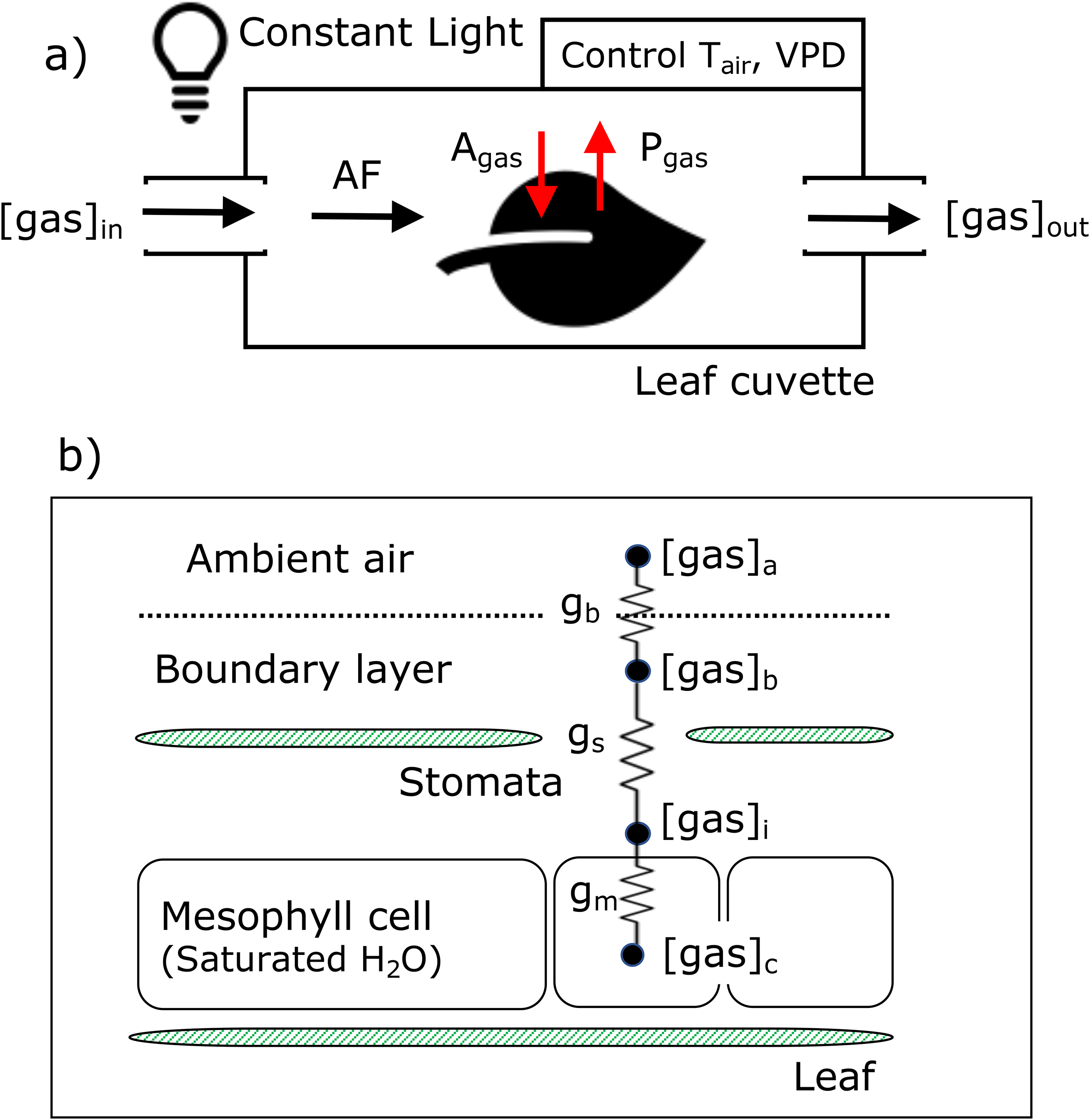
Figure 2. Schemes of leaf cuvette experiments (a) and diffusion pathways of COS, CO2, and H2O into and out of a leaf in the conductance model (b).
Agas and Pgas indicate the assimilation rate and production rate of each gas. gb, gs, and gm represent boundary, stomatal, and mesophyll conductance, respectively.
With a designated set of conductance values, the model simulates the mole fractions of the three gases in each layer: ambient air ([gas]a), boundary layer ([gas]b), and inter-cellular airspace ([gas]i)), and mesophyll level ([gas]c). The mole fractions of COS, CO2, and H2O are represented in units of pmol mol−1, μmol mol−1, and mmol mol−1, respectively.
The following rate equations describe the gas exchanges tendencies, assuming they achieve a steady state:
(3)
(4)
(5)
Here, Vm (m3 mol−1) is the molar volume, and Vcv (m3) is the effective air volume representing the gas-exchange region near the leaf surface. Under steady-state conditions, the first term on the left-hand side of Equation 3, Equation 4, and Equation 5, which represents the rate of gas accumulation, becomes negligible. To account for the different properties of COS and CO2 to H2O, the stomatal conductances (
gs,COS and
g
s,CO2) and the boundary layer conductances (
gb,COS and
g
b,CO2) are scaled proportionally to the conductance of water vapor (
gsw and gbw) (
g
s,CO2 = gsw/1.6,
g
b,CO2 = gbw/1.4,
gs,COS = gsw/1.94,
gb,COS = gbw/1.56) (Bonan, 2008; Seibt et al., 2010; Stimler et al., 2010).
For the COS and CO2 exchange at the stomatal level, a ternary system with H2O and air should be considered, because the transpiration (FH2O (mol m−2 s−1)) is significantly larger than COS and CO2 assimilation (Jarman, 1974; von Caemmerer & Farquhar, 1981). Thus, we added the ternary term in Equation 4 and
Equation 5 for the COS and CO2 models:
(6)
(7)
Although accounting for the H2O ternary system is important, its influence on the calculated mole fractions was found to be negligible. The smaller ternary effects within the leaf boundary layer were therefore not included, as they scale with E/gbw (von Caemmerer & Farquhar, 1981, Equation B10) and are expected to be negligible under our experimental conditions (large gbw and small E). Note that the mole fractions calculated by the model are expressed on a wet-air basis, whereas the observed mole fractions are reported on a dry-air basis. The moisture correction applied to model outputs is described at the end of this section.
To test Hypothesis 2, we analyzed how the intercellular mole fraction [gas]i influences the net flux. The flux was computedusing Equation 3, Equation 6, and Equation 7 to determine [gas]i, and then applied to the flux-gradient relationship:
(8)
Here, gb∼s denotes the conductance from the leaf boundary layer to the stomata. The deposition velocity (Vgas (mol m−2 s−1)) can be calculated as follows:
(9)
The term (1-[gas]i [gas]a−1) represents the effect of changes between internal and ambient mole fractions on the gas conductance and deposition velocity, termed Ambient Fraction Remaining (AFR). This concept is utilized in Section 3.2.3 for interpreting Hypothesis 2. Strictly speaking, the mass flow difference between the inlet and outlet and the ternary effect should be considered in Equation 8 and
Equation 9. However, these effects are expected to be minor under our experimental conditions (see above), and Equation 8 and
Equation 9 were used only to examine the conceptual relationship between [gas]i and flux. Therefore, for simplicity, these correction terms were omitted. Note that this omission does not affect the interpretation of AFR in Section 3.2.3.
This set of coupled rate equations can be solved analytically, resulting in mole fractions of the three gases in each layer. Conductance at the mesophyll level (
gm) and [gas]c were calculated using a different model for each gas. Descriptions of the individual biophysical processes at the mesophyll level for each gas are provided in subsequent sections.
From experiments, we measured [gas]out, while the leaf conductance model calculates [gas]a. Because the chamber air was well mixed, the modeled [gas]
out,est is considered equivalent to [gas]a for model-observation comparison. Thus, [gas]
out,est is used for [gas]a to interpret experimental data.
In the model, the estimated mole fractions for COS and CO2 are based on wet air, whereas the QCLS measures dry-air mole fractions. Therefore, to compare model results with observations, the modeled wet-air mole fractions were converted to their dry-air equivalents using the observed outgoing H2O mole fractions ([H2O]out,obs (mmol mol−1)):
(10)
For [COS]in,obs, which was measured after moisture removal, the same correction (Equation 10) was applied using [H2O]in,obs instead of [H2O]out,obs to convert from the dry-air to the wet-air basis before use in the conductance model.
Finally, net fluxes of the three gases were calculated using the same methodology as employed for the observations (Equation 1).
2.2.2 Water vapor model.
In our experiments, we observed water evaporation from leaves. We aimed to model this evaporation at the mesophyll level and its subsequent transport out of the leaves, governed by gsw. The unit of H2O mole fractions in all layers is mmol mol−1, and the unit of the flux is mmol m−2 s−1.
To represent the internal water vapor conditions, [H2O]c was calculated assuming that water vapor within the mesophyll intercellular airspace is saturated. However, we allowed for relative humidity within the intercellular airspace (RHi (%)) to be less than 100%, based on previous studies (Cernusak et al., 2018; Wong et al., 2022). To achieve this, we introduced a mesophyll conductance for water vapor (
gmw) and set it to an arbitrary value of 10 mol m−2 s−1, approximately ten times the largest observed value of gsw. This parameter was included to test the sensitivity of the model to possible non-saturation within the intercellular airspace.
The expression for [H2O]c relies on Tleaf (°C) and air pressure (Pair (Pa)):
(11)
(12)
Using these assumptions, we calculated the water vapor mole fractions in the atmosphere ([H2O]a), boundary layer ([H2O]b), and interior ([H2O]i) by solving Equation 3,
Equation 4, and
Equation 5. Finally, we estimated the RHi (%) from the calculated [H2O]c and [H2O]i:
(13)
2.2.3 CO
2
model.
We aimed to simulate the gross CO2 flux (FCO2, μmol m−2 s−1) and mole fractions of CO2 in each layer (μmol mol−1) using the model proposed by Farquhar et al. (1980). In this model, the gross CO2 uptake rate is calculated as the minimum value among assimilation limited by enzymes (Am), light (AE), and sucrose synthesis (AS), minus the dark respiration (Rd) :
(14)
Our experiments were conducted under a constant light intensity (PAR = 600 μmol m−2 s−1). We assumed that the AE and AS pathways were saturated, as light saturation points previously were obtained above 500 μmol m−2 s−1 (Lobo et al., 2013). Consequently, we calculated
g
m,CO2 ([CO2]i − [CO2]c) in Equation 7 with Am −Rd. Rd was estimated by Collatz et al. (1991).
Am is calculated by multiplying the maximum rate of RuBisCO carboxylation (Vmax,Rub) with the partial pressure changes from RuBP partitioning between the CO2 carboxylation and O2 oxygenation reactions:
(15)
where p [CO2]i (Pa) and p [O2]i (Pa) are the partial pressures of CO2 and O2 in the inter-cellular air space. Kc (Pa) and Ko (Pa) are Michaelis-Menten constants for CO2 and O2, respectively. Γ∗CO2 (Pa) stands for the CO2 compensation point independent of dark respiration.
Strictly speaking, RuBisCO carboxylation occurs within the chloroplast stroma and should depend on the chloroplast CO2 partial pressure (p [CO2]c), rather than p [CO2]i. However, our model does not explicitly include mesophyll conductance (
g
m,CO2), and thus p [CO2]c cannot be directly resolved. Accordingly, p[CO2]i was used as a proxy for p
[CO2]c, following the classical formulation of Farquhar et al. (1980).
The estimation of Γ∗CO2 is based on the partial pressure of oxygen linked to the side reaction of RuBisCO:
(16)
Here, T2 corresponds to Tleaf, and T1 is 25°C for the CO2 parameters Kc, Ko, and Γ∗CO2. The temperature function of
Vmax,Rub (μmol m−2 s−1) at Tleaf (°C) is calculated by (Badger & Collatz, 1977):
(17)
where ∆
Ha,Rub (J mol−1) is the activation energy of RuBisCO, valued at 60.0 kJ mol−1 (von Caemmerer & Evans, 2015), and
Tref,Rub (K) is the reference temperature (298 K). R is the universal molar gas constant (8.314 J K−1 mol−1).
2.2.4 COS model.
We constructed the COS model to estimate the gross COS flux rate (FCOS, pmol m−2 s−1) and mole fractions of COS in each layer (pmol mol−1). Accurate modeling of COS leaf uptake requires representing mesophyll conductance, which integrates both the diffusional transport of COS and biochemical conversion by CA.
Earlier approaches treated mesophyll diffusion and CA activity as linearly proportional to Rubisco’s Vmax (Berry et al., 2013). However, this simplification was shown to bias COS flux estimates, leading to the introduction of a revised CA-based temperature formulation (Cho et al., 2023). More recently, Lai et al. (2024) emphasized the importance of explicitly accounting for mesophyll diffusion in COS uptake models but also noted the lack of reliable parameterization for COS-specific mesophyll diffusion.
Building on these previous findings, we modeled biochemical conductance of COS in the mesophyll (
gm,COS (mol m−2 s−1)) using the CA activity–based function proposed by Cho et al. (2023), which implicitly represents mesophyll diffusion while minimizing estimation bias through its revised temperature dependence. This function describes the temperature dependence of CA activity using a specified Arrhenius equation and Michaelis-Menten Kinetics (Cho et al., 2023; Daniel et al., 2010; Ogée et al., 2016; Sun et al., 2015):
(18)
Here,
Vmax,CA (mol m−2 s−1) is the maximum catalyzation velocity of CA,
∆Ha,CA (J mol−1) represents the activation free energy of CA and ∆
Heq,CA (J mol−1) is the enthalpy change when the enzyme transits from activation to inactivation.
Teq,CA (°C) stands for the optimum temperature at which the concentrations of activated and inactivated enzymes are equal (Daniel et al., 2010; Ogée et al., 2016; Sun et al., 2015). We adopted the normalization factor AT as the value of fCA
(Teq,CA)−1.
To incorporate temperature-dependent compensation point behavior, applied the ΓCOS into [COS]c. We proposed four temperature functions of ΓCOS based on Experiment 1 data. For model S1, ΓCOS was set to zero across all temperatures, assuming no compensation point effects. For model S2, ΓCOS was represented as a linear function:
(19)
where Tref (°C) is the intercept temperature (16.4°C), determined from the linear regression of two ΓCOS values detected in Experiment 1 (Section 3.1.1). The slope mCOS (pmol mol−1 K−1) was set to 16.2 pmol mol−1 K−1, also derived from Experiment 1. At low temperatures, where ΓCOS becomes negative, we assumed ΓCOS = 0.
For model S3, ΓCOS was calculated using the Arrhenius function with a observation-based value of 55.0 pmol mol−1 at 293 K from Experiment 1:
(20)
and for model S4, ΓCOS was similarly computed using a reference value of 138.7 pmol mol−1 at 298 K:
(21)
where
∆Ha,Γ (kJ mol−1) represents the activation energy for ΓCOS. By solving for ∆H
a,
Γ using the two derived ΓCOS values, we determined an initial activation energy of 134.3 kJ mol−1.
Figure 3 shows these four ΓCOS functions (S1–S4) representing the prior temperature-dependent parameterizations tested in the modeling framework with their imposed uncertainties. The figure also shows the experimental ΓCOS estimates from Experiment 1, included solely for reference to illustrate the initial parameter alignment.
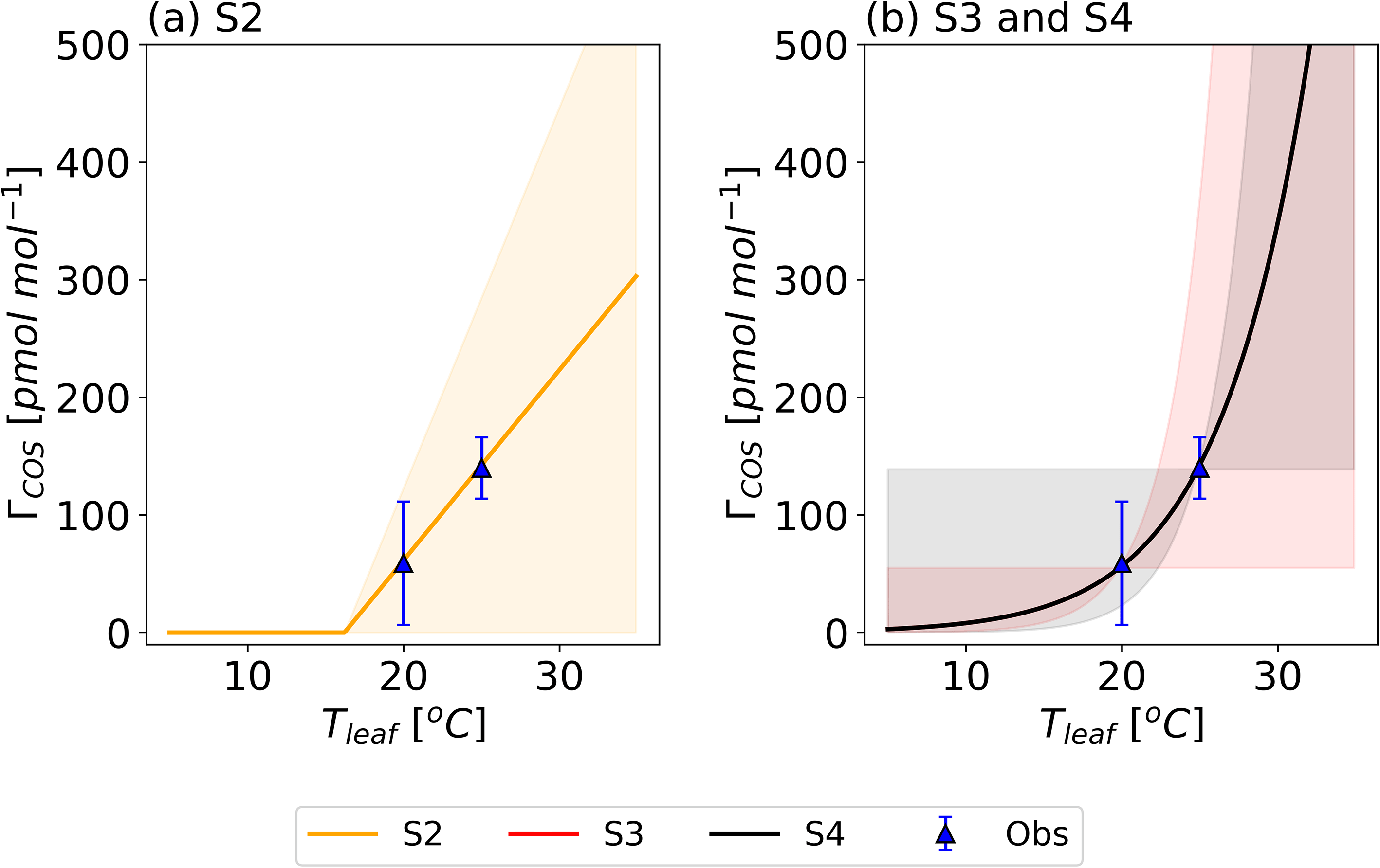
Figure 3. Prior temperature functions of the COS compensation point (ΓCOS) (lines) with their error ranges (shaded area).
Blue triangles show the regression-derived ΓCOS from Experiment 1, included for reference to illustrate the initial parameter setup. The S1 model assumed ΓCOS = 0 pmol mol−1. Model S2 describes ΓCOS as a linear relationship with Tleaf (a), while models S3 and S4 use an Arrhenius equation (b).
2.3 Indirectly derived COS compensation point
Because the temperature-dependent behavior of ΓCOS in Experiment 1 was derived from a limited set of measurements under a few temperature levels, additional validation was required to test whether the modeled ΓCOS functions are consistent across broader environmental conditions. To support this validation, we incorporated the indirectly derived ΓCOS from 48 data points in Experiments 2 and 3. By calculating [COS]c using our optimized model parameters in Equation 3,
Equation 6, and
Equation 7, we were able to indirectly estimate ΓCOS and compare it with the modeled ΓCOS.
First, we calculated [COS]b from the measured COS mole fractions with the rearranged Equation 3:
(22)
where [COS]in and [COS]a, along with AF, S, and
gb,COS, were applied from Experiments 2 and 3. Due to thorough mixing within the cuvette, we assumed [COS]out to be equivalent to [COS]a and used it accordingly (refer to Section 2.2). Although transpiration slightly increases the outlet air flow, this effect (<3%) was neglected to retain easy analytical expressions, consistent with the assumptions described in Equation 1. This formulation follows the same assumptions as in Equation 3 regarding ternary effects at the boundary layer, which were found to be negligible under our experimental conditions. Here, [COS]in and [COS]out were converted from a dry air basis to a wet air basis. We then used the derived [COS]b to calculate [COS]i using the rearranged Equation 6:
(23)
FH2O was calculated using Equation 1 with the observed [H2O]in and the modeled [H2O]a obtained by the H2O model. We used optimized gsw value in the the H2O model and
gs,COS. The reason for using the model-calculated [H2O]a instead of the observed [H2O]out is to consider the optimized gsw in FH2O.
Finally, [COS]i is used in Equation 7 to derive [COS]c:
(24)
where
gm,COS was determined using Equation 18 with optimized parameters
Vmax,CA and
Teq,CA. These indirectly calculated ΓCOS values vary depending on the chosen temperature-dependent functions of ΓCOS, which influence other parameters. Consequently, the indirectly derived ΓCOS values differ from ΓCOS functions due to their impact on the optimized parameters used in the calculations.
2.4 Parameter optimization
2.4.1 Optimization setting.
Beginning with the model state parameter (x), we calculated [gas]
out,est and compared these to the observed values [gas]
out,obs on a dry-air basis. We aimed to minimize the differences between our model and the observations during each optimization step. To accomplish this, we defined a cost function (Jtot) consisting of a background term (Jbg) and three observational terms that account for the differences between model estimations and observations of COS (JCOS), CO2 (JCO2), and H2O (J
H2O):
(25)
The first term of the cost function penalizes deviations of the state x from the prior state vector xa. This penalty depends on σ, which represents the prior error in the state vector. This background term is introduced to keep state variables within reasonable boundaries (Brasseur & Jacob, 2017). The last three terms of the cost function calculate the costs associated with deviations between modeled ([gas]
out,est) and observed mole fractions ([gas]
out,obs) for for COS, CO2, and H2O, respectively. Each term is normalized by its observational uncertainty to ensure consistent treatment of measurement errors, and each is scaled by optimization weights (Wbg, WCOS, WCO2, and WH2O) to balance the relative influence of each gas. These weights do not modify the observational errors but instead prevent any single gas—particularly CO2—from dominating the total cost. The determination of these weights is described in the following section.
The costs related to observations (JCOS, JCO2 , and JH2O) are influenced by observational errors (σCOS, σCO2 , and σH2O), derived from the measured COS, CO2, and H2O mole fractions. These observational errors were determined as the standard deviation of the measured mole fractions at outflow within the data point interval (150-second). Formally, σCOS, σCO2, and σH2O should also reflect model errors caused by model parameters not included in the state or by processes that were not modeled (Brasseur & Jacob, 2017). Note that we excluded data from Experiment 1 to validate the optimized temperature function of ΓCOS in Section 3.2.2.
Due to the larger relative error in [H2O]out,obs and [COS]out,obs than in [CO2]out,obs, the optimization procedure tended to focus on minimizing preliminary JCO2. To better utilize the non-CO2 observations, we introduced optimization weights for each cost component. The observed [CO2]out,obs values ranged from 379.4 to 390.0 μmol mol−1, with an average observational error of only 0.2 μmol mol−1 (0.05%). [COS]out,obs values ranged from 748.2 to 1032.4 pmol mol−1, with an average error of 16.7 pmol mol−1 (1.91%). [H2O]out,obs values ranged from 15.2 to 32.5 mmol mol−1 with a mean error of 0.3 mmol mol−1 (1.14%).
The targeted state parameters, along with their initial values and errors, are listed in
Table 3. We assumed that the parameters related to the temperature response of mesophyll cells are consistent across all experiments, as all sunflowers were cultivated in a similar climate. We constructed state vectors with variables that significantly impact the total cost and better quantify the combined leaf exchanges:
Vmax,CA ,
Teq,CA, and mCOS for COS,
Vmax,Rub and ∆
Ha,Rub for CO2, and gsw for all gases.
Table 3. State parameters (x) and their prior and posterior values with their errors based on model S2.
Posterior errors are calculated from 200 optimizations in a Monte Carlo method (Section 2.5). The last column denotes the error reduction. Prior and Posterior values for gsw are averaged values across the dataset from Experiments 2 and 3. Values in “Bounds” column with brackets indicate lower and higher bounds provided to the optimization.
|
Parameter |
Description |
Unit |
Bounds |
Prior ± Error |
Posterior ± Error |
(b-a)/a
1 (%) |
|---|
| Vmax,CA
| Maximum velocity for CA | mol m−2 s−1 | [0.01, 0.50] | 0.125 ± 0.060 | 0.217 ± 0.0372 | 38 |
| 0.189 ± 0.0293 | 52 |
| 0.230 ± 0.0424 | 30 |
| Teq,CA
| Optimum temperature for CA | °C | [1, 60] | 30.0 ± 15.0 | 39.7 ± 5.0 | 66 |
| mCOS
| Slope of ΓCOS
| pmol mol−1 K−1 | [1, 300] | 16.2 ± 16.2 | 22.4 ± 5.3 | 67 |
| Vmax,Rub
| Maximum velocity for RuBisCO | μmol m−2 s−1 | [1, 200] | 90.0 ± 20.0 | 94.4 ± 0.32 | 98 |
| 87.4 ± 0.53 | 98 |
| 82.9 ± 0.34 | 98 |
| ∆
Ha,Rub
| Activation energy for RuBisCO | kJ mol−1 | [1, 100] | 60.0 ± 12.0 | 54.5 ± 0.9 | 92 |
| gsw
| Stomatal conductance of H2O | mol m−2 s−1 | [0, 3] | 0.62 ± 0.09 | 0.64 ± 0.05 | 43 |
Although we selected sunflower leaves at similar development stages, variations in biochemical functioning existed among individual leaves. Therefore, we optimized
Vmax,CA and
Vmax,Rub for each individual plant, as these largely determine mesophyll conductance (Cho et al., 2023; Le Roux et al., 2001; Williams & Flanagan, 1996). The initial
Vmax,CA was based on the averaged
Vmax,CA across different phenological stages from two observation sites, Hyytiälä (Finland) and Harvard Forest (United States), as introduced by Cho et al. (2023). The standard deviation of
Vmax,CA was used as the state error. For
Vmax,Rub, we set the initial value as
Vmax,CA divided into the scaling factor 1400, derived from laboratory measurements of gas exchange in C3 plants (Berry et al., 2013; Stimler et al., 2010; Stimler et al., 2011).
Teq,CA is more crucial in determining CA’s temperature function compared to other kinetic variables (Cho et al., 2023). We adopted the initial value and state error of
Teq,CA directly from Cho et al. (2023), ensuring consistency with previous characterizations of CA kinetics.
To further evaluate the temperature dependence of ΓCOS , four temperature functions (S1 to S4) were tested within the conductance model. Each function was optimized and compared against observation-based ΓCOS. The S1 model excludes ΓCOS, while S2 applies a linear function with mCOS of 16.2 pmol mol−1. Both S3 and S4 use a temperature dependence described by an Arrhenius relationship. All models were initialized with the same prior error for ΓCOS, including the zero-compensation point, as shown in
Figure 3.
For the CO2 parameters, we optimized ∆
Ha,Rub, as it is an unknown parameter for Sunflowers. We determine the initial value and error of ∆
Ha,Rub using the mean and standard deviation across nine species reported by von Caemmerer and Evans (2015). Other temperature-dependent parameters were adopted from Collatz et al. (1991).
The LI-6800 derives gsw from water vapor exchange with its own uncertainties. Because gsw similarly affects the exchange of H2O, CO2, and COS through the same shared stomatal pathway, we optimize gsw in a coupled framework using flux information from all three gases to ensure internal consistency across species. The novelty of this framework lies in explicitly coupling these fluxes to derive a more physically consistent constraint on gsw, while also addressing potential uncertainties in gsw derived from LI-6800 measurements (e.g., stomatal ratio parameter K; Section 2.1.1).
Initial values for gsw were taken from the LI-6800 measurements during Experiments 2 and 3. We applied a random error of 0.08 mol m−2 s−1, representing the standard deviation of gsw from Experiment 3, despite efforts to maintain a constant gsw (± 0.06 mol m−2 s−1). In addition, we considered an extra measurement uncertainty of 0.02 mol m−2 s−1, based on known sources of instrumental bias—such as the leaf temperature underestimation (Garen et al., 2022) and background total leaf conductance to water observed in empty chambers (Hussain et al., 2024). We also added individual [H2O]out,obs errors by normalizing [H2O]
out,obs. The averaged initial gsw value and its standard deviation (prior error) are 0.61 mol m−2 s−1 and 0.09 mol m−2 s−1, respectively.
Assuming a Gaussian probability density function for the state parameters could lead to nonphysical values in the optimization process. Thus, we minimized Jtot using the Sequential Least SQuares Programming optimizer (SLSQP) from the SciPy Python library. This optimizer enables the specification of lower and upper bounds on the state space and is well-suited for solving nonlinear problems. The parameter bounds are listed in
Table 3.
2.4.2 Weight determination.
We selected weights to achieve more balanced prior costs across four components in Equation 25. The prior chi-squared value (χ2prior) was used to check the cost balance in prior condition. We set seven possible weights, and the corresponding χ2prior value ranged from 3 to 200, as listed in
Table 4. Then, we optimized parameters and calculated cost reduction rates for each part of the cost function. For H2O, we found a χ2prior value of about 3, indicating that the H2O model already performs well with the prior parameter settings.
Table 4. Candidates for weights in the observational terms (WCOS, WCO2, WH2O) based on the chosen χ2prior values.
|
χ
2
prior |
W
COS |
W
CO2 |
W
H2O |
|---|
| 3 | 0.337 | 238.8 | 3.24 |
| 10 | 0.101 | 71.6 | 0.97 |
| 30 | 0.034 | 23.9 | 0.32 |
| 50 | 0.020 | 14.3 | 0.19 |
| 100 | 0.010 | 7.2 | 0.10 |
| 150 | 0.007 | 4.8 | 0.06 |
| 200 | 0.005 | 3.6 | 0.05 |
We finally selected the weight combination that minimized the averaged reduction rates of JCOS and JCO 2 and ensured that each χ2poste exceeded the value of 0.6 to avoid over-fitting, including Jbg. The selected weights (WCOS = 0.034, WCO2 = 7.2, WH2O = 3.24, Wbg = 1.0), correspond to χ2prior values of 30, 100, and 3 for COS, CO2, and H2O, respectively. These weights lead to a more balanced ratio of χ2 prior across the observational parts (COS: CO2: H2O = 10: 33: 1), compared to the ratio without weights (1: 329: 4). Note that the prior value of Jbg is zero by design.
2.5 Error statistics
We evaluated the model performance using χ2 values, mean bias errors (MBEs), and root mean square errors (RMSEs). The χ2 metric was calculated by dividing the partial cost function by the number of observations or state variables (Tarantola, 2005). A posterior chi-squared value (χ2poste) of 1 indicates a good fit, as the model predictions fall within the error distribution fall within the error distribution of the observations. A χ2poste significantly greater than 1 indicates a poor fit, while a value smaller than 1 suggests potential overfitting. MBE indicates bias, with a positive value for overestimation and a negative value for underestimation. RMSE is the quadratic mean of the differences between estimation and observation, with a value of 0 indicating a perfect fit.
Note that the optimization process targets for χ2poste to reach 1.0, but we also give the improvement in MBEs and RMSEs for completeness. To assess the posterior error associated with the optimized state, we employed a Monte Carlo method. In this process, we optimized the parameters using 200 distinct ensemble members, introducing random noise within the bounds of the respective state and observational errors (Bosman & Krol, 2023; Chevallier et al., 2007; Cho et al., 2023).
Furthermore, we conducted 500 perturbed forward simulations to assess the spread in both prior and posterior models. Parameters were randomly sampled from Gaussian distributions of both the prior and posterior. Prior uncertainties were assumed uncorrelated, while for the posterior parameters, we used the correlations that were determined using the Monte Carlo optimization. We quantified the posterior covariance matrix and considered the cross-parameter correlations when sampling the parameters to evaluate the posterior model. Parameters more than three standard deviations from the mean were discarded. These simulations were conducted with designated environmental input variables: pressure = 103,100 Pa, air flow rate (AF) = 0.00035 mol s−1, [CO2]in = 400 μmol mol−1, [COS]in = 1000 pmol mol−1, [H2O]in = 15 mmol mol−1, gbw = 2.44 mol m−2 s−1, gsw = 0.6 mol m−2 s−1, and Tleaf = 25°C. We only varied one variable at the time, to evaluate its impact on the simulation.
3. Results
3.1 Experiments
3.1.1 COS Compensation Point (Experiment 1).
Figure 4 presents the results from Experiment 1 with Sunflower 1, aimed at determining ΓCOS by measuring FCOS while controlling [COS]out and maintaining constant gsw and Tleaf. Minor fluctuations in gsw occurred during temperature adjustments, increasing from 0.76 to 0.90 mol m−2 s−1 higher temperatures. FCOS shows a linear increase with increasing [COS]out, in agreement with findings from earlier studies (Gimeno et al., 2017; Kesselmeier & Merk, 1993; Stimler et al., 2010).
We quantified the regression-based ΓCOS using a linear function at two temperatures: ΓCOS was 55.0 ± 53.2 pmol mol−1 at 19.8°C and 138.7 ± 26.1 pmol mol−1 at 25.0°C (error estimates denote 95% confidence interval). These results indicate that ΓCOS increases with rising Tleaf, suggesting a potential temperature dependence.
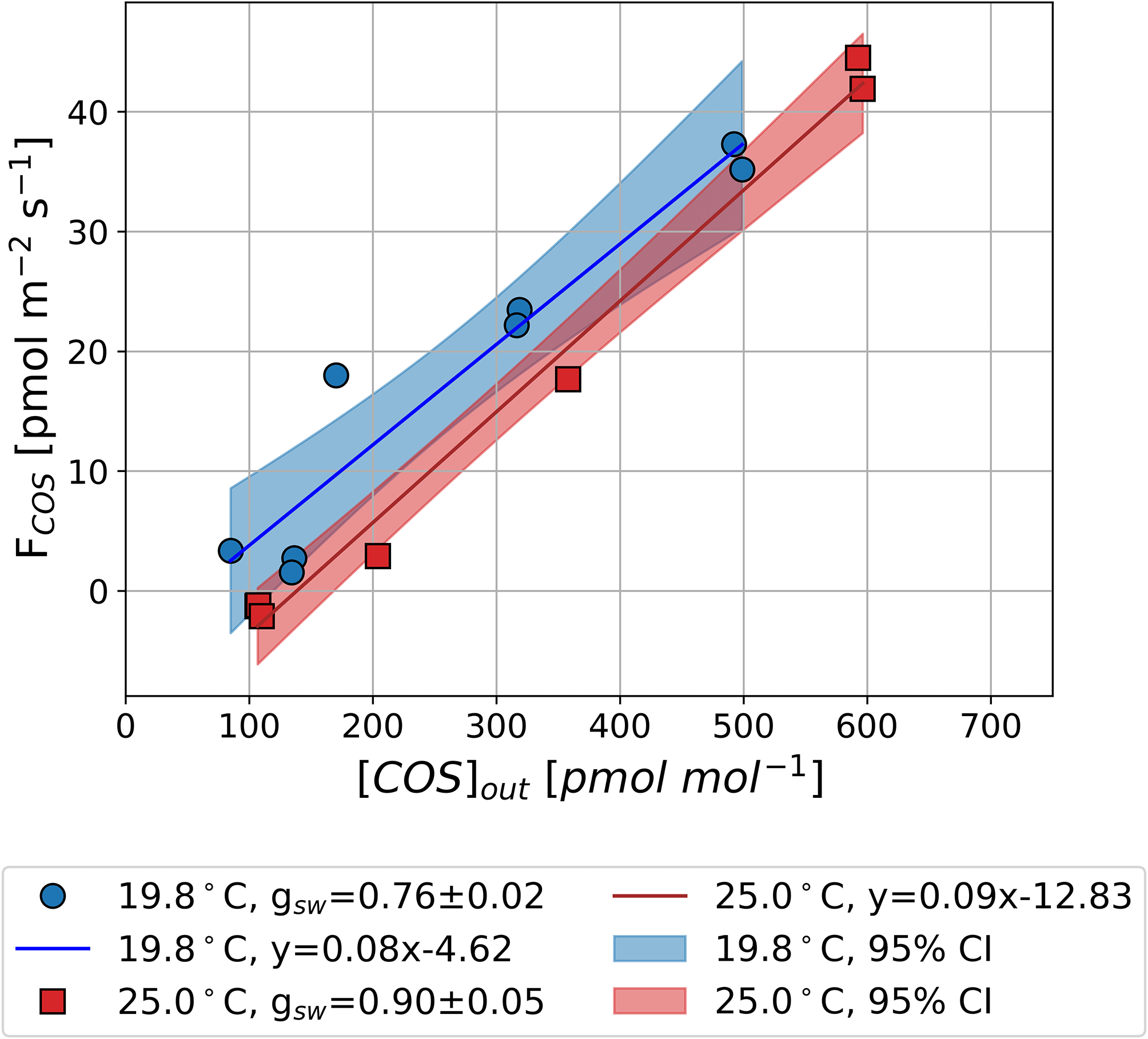
Figure 4. Observed mean COS net flux (FCOS) along an outflowing COS mole fraction ([COS]out) in the light at 25.0°C (rectangle and red areas) and 19.8°C (circle and blue areas) in Experiment 1.
Lines and shaded areas represent linear fits with 95% confidence intervals. Positive values in FCOS (y axis) indicate COS uptake, and negative values indicate COS emissions.
Although the empty-chamber regression effectively removed the baseline COS emission, some residual variability likely remained (RMSE = 6.9 pmol mol−1 for [COS] a and 2.73 pmol m−2 s−1 for FCOS). To evaluate the potential influence of this unresolved background variability, we propagated these errors to the regression-derived ΓCOS. When the uncertainty is included, the 95% confidence interval of ΓCOS widened from ± 53.2 to ± 93.4 pmol mol−1 at 19.8°C and from ± 26.1 to ± 48.9 pmol mol−1 at 25.0°C.
The large uncertainty at 19.8°C indicates that the corresponding ΓCOS value is statistically indistinguishable from zero. By contrast, the ΓCOS measured at 25°C remains significant even when this is propagated and instrumental uncertainty is considered. Even accounting for the reported QCLS uncertainty of approximately 7.5 pmol mol−1 for COS (Kooijmans et al., 2016), the ΓCOS value at 25°C remains statistically robust.
3.1.2 Responses to Stomatal Conductance (Experiment 2).
Figure 5 illustrates the observed relationships of VCOS, VCO2, and LRU with optimized gsw for three sunflower plants. The observed values show that both VCOS and VCO2 decrease with declining gsw, albeit at a slower rate at higher gsw values. Specifically, as gsw decreases from 1.0 mol m−2 s−1 to 0.4 mol m−2 s−1, VCOS declines by approximately 40%, compared to a decline of about 10% in VCO2. This difference persists even after accounting for the gsw ratio between COS and CO2 (1.21).
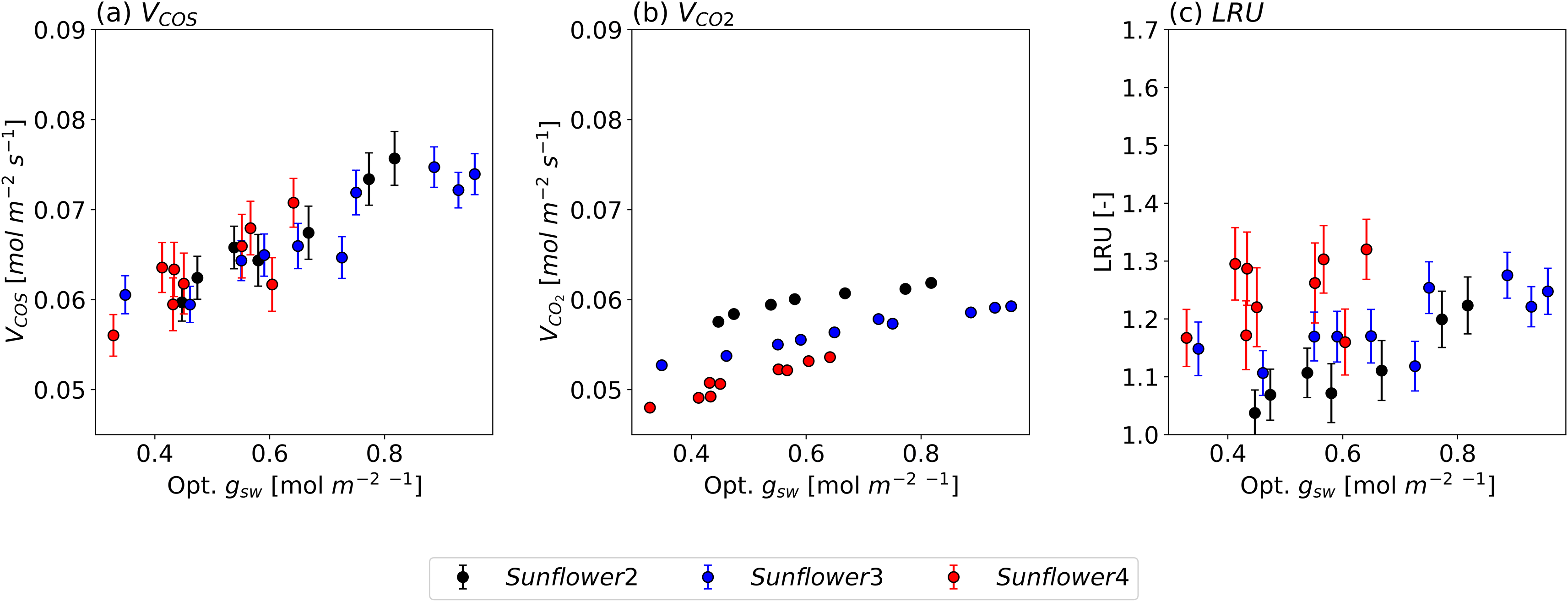
Figure 5. COS (a) and CO2 (b) deposition velocities and LRU changes (c) along the optimized gsw under leaf temperatures of approximately 25°C for three different sunflower plants, each represented in a different color.
The circles and error bars represent the median values and standard deviations of the data points for their respective 150-second intervals.
The greater sensitivity of VCOS to changes in gsw is also reflected in the LRU, which consistently increases with gsw across all sunflowers. These findings support the hypothesis that COS uptake is more sensitive to variations in gsw compared to CO2 uptake. Meanwhile, slight differences in VCOS and VCO2 values among individual sunflowers result in variations in LRU as well.
3.1.3 Responses to Leaf Temperature (Experiment 3).
Figure 6 shows the observed VCOS and VCO2, and LRU against Tleaf for two sunflowers, with gsw held approximately constant. For all sunflowers, VCOS decreases when temperatures exceed 25°C, whereas VCO2 increases with Tleaf up to approximately 30°C. The absolute rate of decrease in VCOS is larger than the rate of increase in VCO2. Consequently, LRU decreases as Tleaf increases. This trend can be attributed to the temperature responses of ΓCOS or/and the lower optimum temperature for CA than RuBisCO.
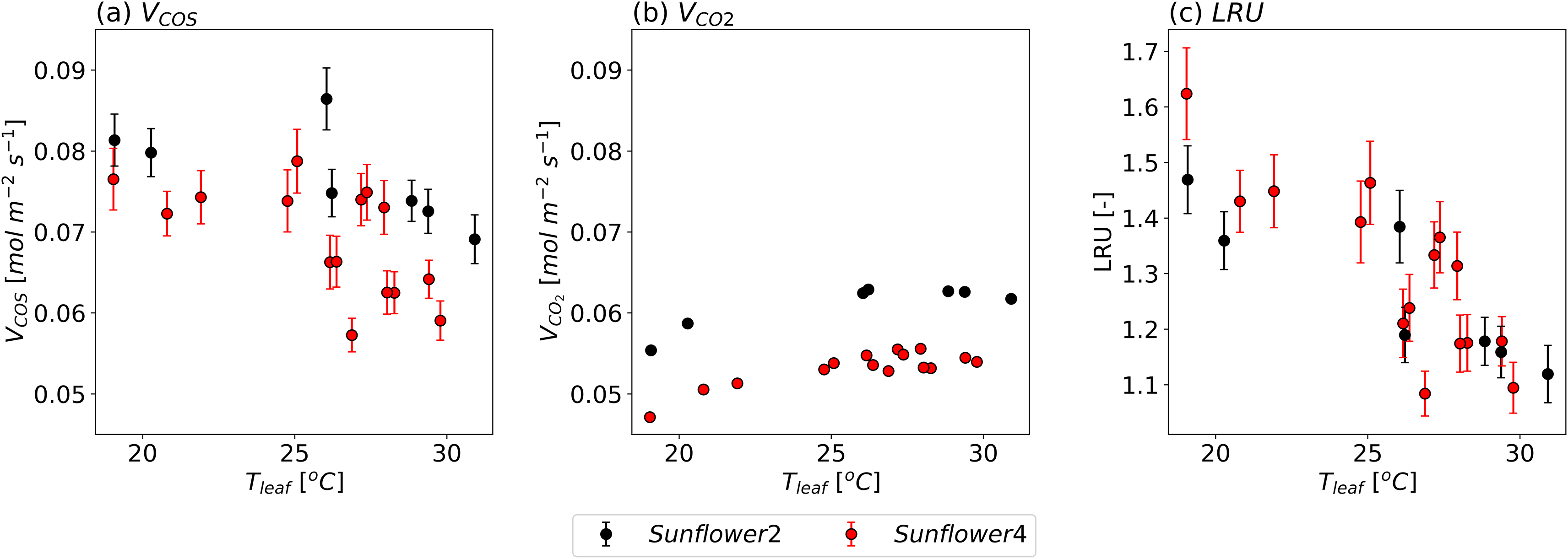
Figure 6. Same as
Figure 5, but as a function of Tleaf with maintained stomatal conductance at 0.6 ± 0.1 mol m−2 s−1 (mean ± standard deviation).
The temperature-dependent variations in VCOS and VCO2 also differ slightly between individual sunflower plants. While VCOS exhibited relatively large observational errors, VCO2 showed minimal errors. This suggests that while experimental uncertainties may influence VCOS, the variations in both VCOS and VCO2 are likely driven by micro-environmental differences, plant-to-plant variability, or other natural conditions, even within the same species grown in similar environments.
3.2 Model-assisted analysis
3.2.1 Optimization Performance.
We present the optimized results of model S2, which provides the best fit to the observations (Section 3.2.2).
Table 5 quantifies how well the optimized model estimates [COS]out, [CO2]out, and [H2O]out compared to observations. The optimized model simulated the mole fractions of all three gases more accurately, reflected by mostly reduced values of χ2, MSE, and MBE. Notably, the model biases were mitigated, as shown by the low posterior MBE values for [COS]out (0.15 pmol mol−1), [CO2]out (– 0.01 μmol mol−1), and [H2O]out (0.07 mmol mol−1). The χ2poste values for [COS]out, [CO2]out, [H2O]out, and the state variables are 6.65, 1.68, 2.24, and 1.00, respectively. The large χ2poste and RMSE for [COS]out likely result from its relatively larger observational error.
Table 5. The statistical indices of the prior and posterior estimated [COS]out, [CO2]out, and [H2O]out from model S2 compared to the observations with χ2 changes of state term (x).
The units of RMSE and MBE of [COS]out are pmol mol−1, [CO2]out is in μmol mol−1, and [H2O]out is mmol mol
−1.
| Index | [COS]
out | [CO
2]
out | [H
2O]
out | Background (State x) |
|---|
| Prior | Posterior | Prior | Posterior | Prior | Posterior | Prior |
Posterior |
|---|
| χ2 | 30.00 | 6.65 | 100.00 | 1.68 | 3.00 | 2.24 | 0.00 | 1.00 |
| RMSE | 16.71 | 7.93 | 3.63 | 0.71 | 0.30 | 0.45 | - | - |
| MBE | 11.77 | 0.15 | -1.52 | -0.01 | -0.14 | 0.07 | - | - |
To visualize these improvements,
Figure 7 presents scatter plots comparing the simulated atmospheric mole fractions from the prior and posterior models to the observed values. The optimized atmospheric mole fractions exhibit improved agreement with the observed values across all sunflowers, improving the performance of the prior simulations. The optimized model explains the variability in the observations with high R2 values from 0.93 to 0.99. The simulation errors, represented by the standard deviation of 500 forward simulations, were substantially reduced after optimization. Specifically for [COS]out, errors decreased from 47.4 pmol mol−1 to 12.5 pmol mol−1, for [CO2]out from 10.8 μmol mol−1 to 0.8 μmol mol−1, and for [H2O]out from 0.6 mmol mol−1 to 0.3 mmol mol−1. However, discrepancies remain, such as in Sunflower 2. Several posterior [COS]out and [CO2]out values of Sunflower 2 fall outside the weighted observational error range, likely due to measurement uncertainties.
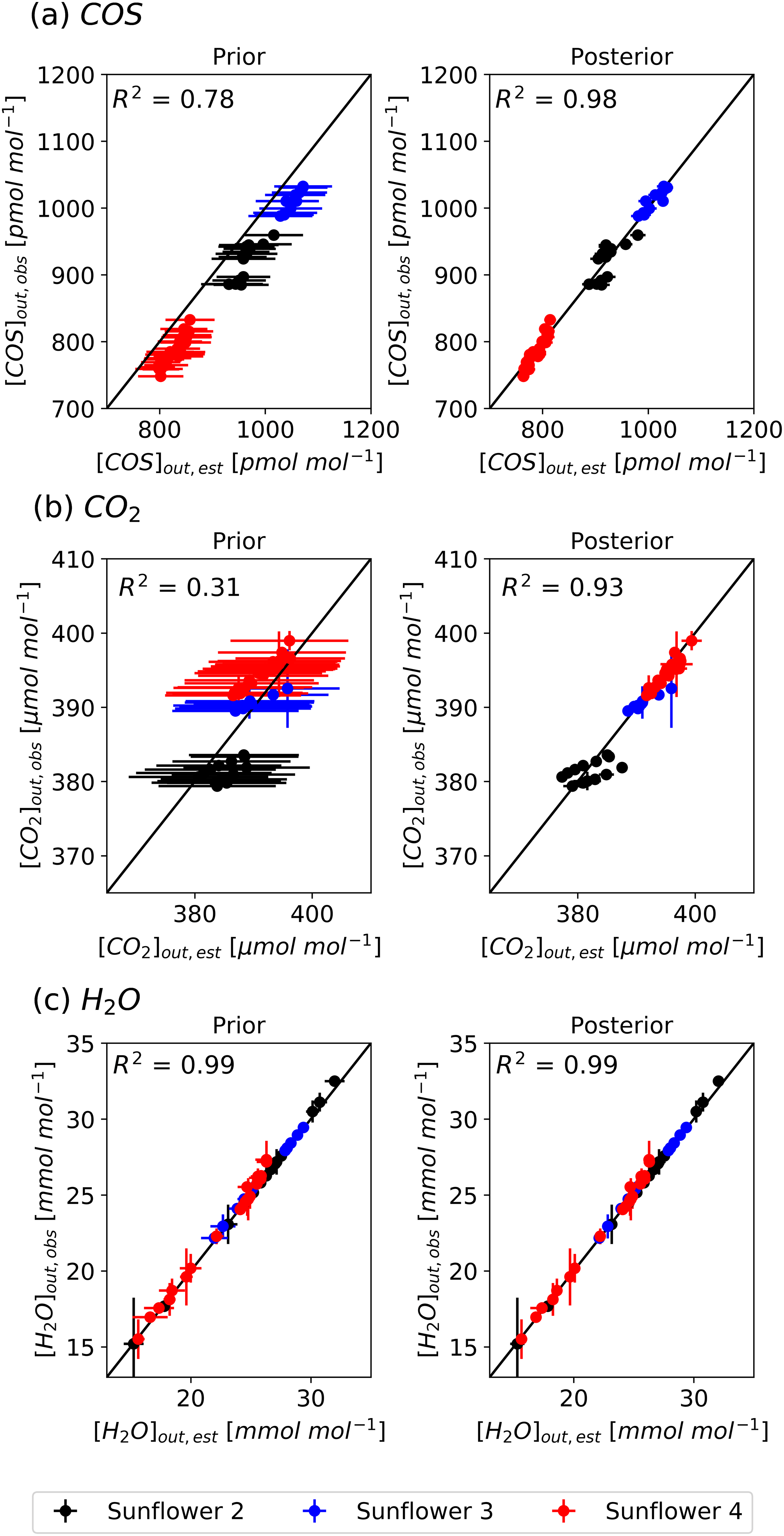
Figure 7. Scatter plots comparing the simulated (model S2) and observed atmospheric mole fractions of COS (a), CO2 (b), and H2O (c) with the prior parameters (left) and optimized parameters (right) with a 1:1 line indicating perfect agreement.
The vertical error bars represent weighted observational errors, taken as the standard deviations of measurements, and the horizontal error bars represent prior errors (left) and posterior errors (right). Colors indicate different sunflower plants (black: Sunflower 2, blue: Sunflower 3, red: Sunflower 4).
In addition to reproducing the observations well, the optimization also reduced the parameter uncertainties. The optimized state values and their posterior errors, along with error reductions, are presented in Table 2. As expected, errors associated with all target parameters were significantly reduced, with an average error reduction of 48%. An error reduction of more than 92% was achieved for CO2 parameters ∆
Ha,Rub and
Vmax,Rub. Prior uncertainties of
Teq,CA, mCOS, and
Vmax,CA were reduced by more than 30%, and the error reduction for gsw was about 43%.
Parameter values also shifted meaningfully after optimization. The optimized slope of ΓCOS (mCOS, 22.4 pmol mol−1 K−1) is slightly increased to the initial setting (16.2 pmol mol−1 K−1). With the optimized value of mCOS, the variable
Teq,CA was adjusted to 39.7°C, and the values of
Vmax,CA for each plant were optimized ranging from 0.189 to 0.230 mol m−2 s−1. These values increased significantly from their priors, 30.0°C and 0.125 mol m−2 s−1, indicating higher optimum temperatures and higher catalyzation velocities compared to the prior settings. The optimized
Vmax,Rub ranged from 82.9 to 94.4 μmol m−2 s−1, while ∆
Ha,Rub did not change substantially. The ratio of
Vmax,CA to
Vmax,Rub which is crucial for calculating CA activity from
Vmax,Rub based on the assumption of a linear relationship, ranges from 2160 to 2770.
The optimized gsw also showed consistent behavior. Comparisons of the optimized mean gsw values of 0.64 mol m−2 s−1 with the prior values of 0.62 mol m−2 s−1 reveal slight differences. Errors in gsw were reduced from 0.09 to 0.05 mol m−2 s−1. The optimized model yielded an average relative humidity within the leaf (RHi) of 98.82 ± 0.04%. These results confirm that allowing for slight non-saturation in the intercellular airspace (through
gm,H2O) had a negligible impact on the modeled fluxes, validating the assumption that the air within the intercellular airspace was effectively saturated under our experimental conditions. Simulations further confirmed that varying gmw (<10 mol m−2 s−1) did not alter the modeled fluxes or mole fractions, indicating that its effect was negligible under our experimental conditions.
Figure 8 illustrates the posterior covariance matrix derived from Monte Carlo calculations. Although several state variables were highly correlated after optimization (values above 0.7), they were retained as state parameters because their simulation errors were substantially reduced. For instance, three variables of COS parameters (Teq,CA, mCOS, and
Vmax,CA) were highly correlated, with values ranging from 0.69 to 0.87, as these parameters are all related to the mesophyll uptake of COS.
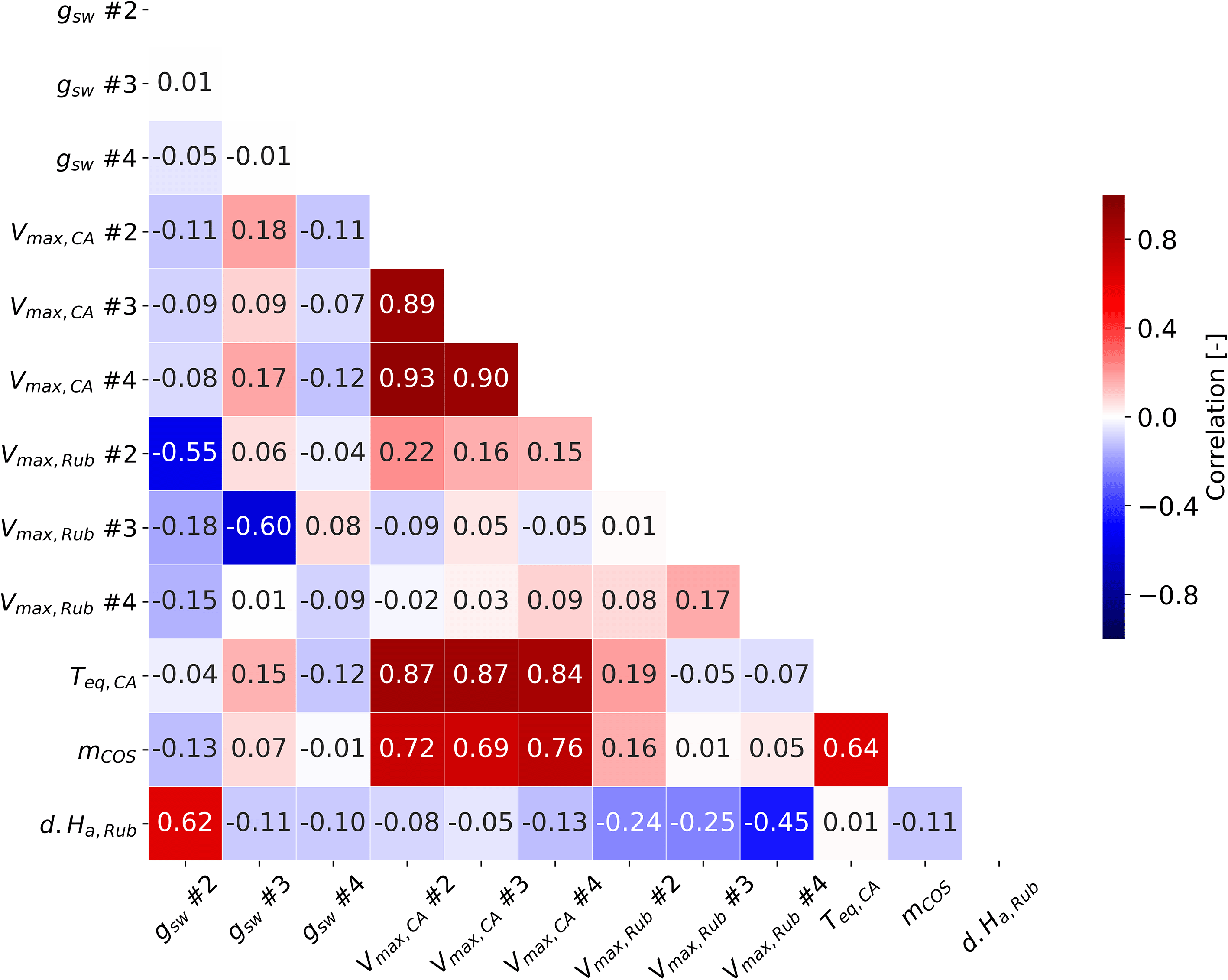
Figure 8. The covariance matrix for state variables.
Regarding gsw, only the first data point of each sunflower is marked.
3.2.2 COS Compensation Point (Hypothesis H1).
Table 6 summarizes the changes in total cost (Jtot) between prior and posterior estimations for each ΓCOS temperature function. Among the tested models, the lowest total cost was achieved with the linear model (S2), followed by the Arrhenius models S4 and S3, and the model without a compensation point (S1). These results confirm that incorporating ΓCOS with a linear temperature function into the leaf exchange model provides the best agreement with observations, as it minimizes the overall cost function and improves model performance. However, the total cost difference between the S2 model and the S4 model was only 1 unit.
Table 6. Prior (Pri) and posterior (Poste) contributions to the cost function of the state term, H2O, CO2, and COS parts, depending on the prescription of ΓCOS and its temperature dependence.
Jtot is the sum of costs for the states (Jbg), H2O (JH2O), CO2 (JCO2), and COS (JCOS).
| No. | Description of Γ
COS | Cost |
|---|
|
J
bg |
JH2O |
JCO2 |
JCOS |
J
tot |
|---|
| Function | Based T [
°C] | Post | Pri | Post | Pri | Post | Pri | Post | Post |
|---|
| S1 | ΓCOS = 0 | - | 54 | 144 | 97 | 4800 | 80 | 2437 | 349 | 580 |
| S2 | Linear | 16.4 | 57 | 107 | 81 | 1440 | 320 | 564 |
| S3 | Arrhenius | 19.8 | 59 | 100 | 80 | 2634 | 335 | 574 |
| S4 | 25.0 | 61 | 106 | 80 | 2634 | 319 | 565 |
To further evaluate the performance of these models,
Figure 9 compares estimated ΓCOS with two types of observation-based values across temperatures. The first type is regression-based measurements from 15 data points at two temperatures in Experiment 1 (blue triangles; see
Figure 4). The second type is indirectly derived ΓCOS in Experiments 2 and 3.
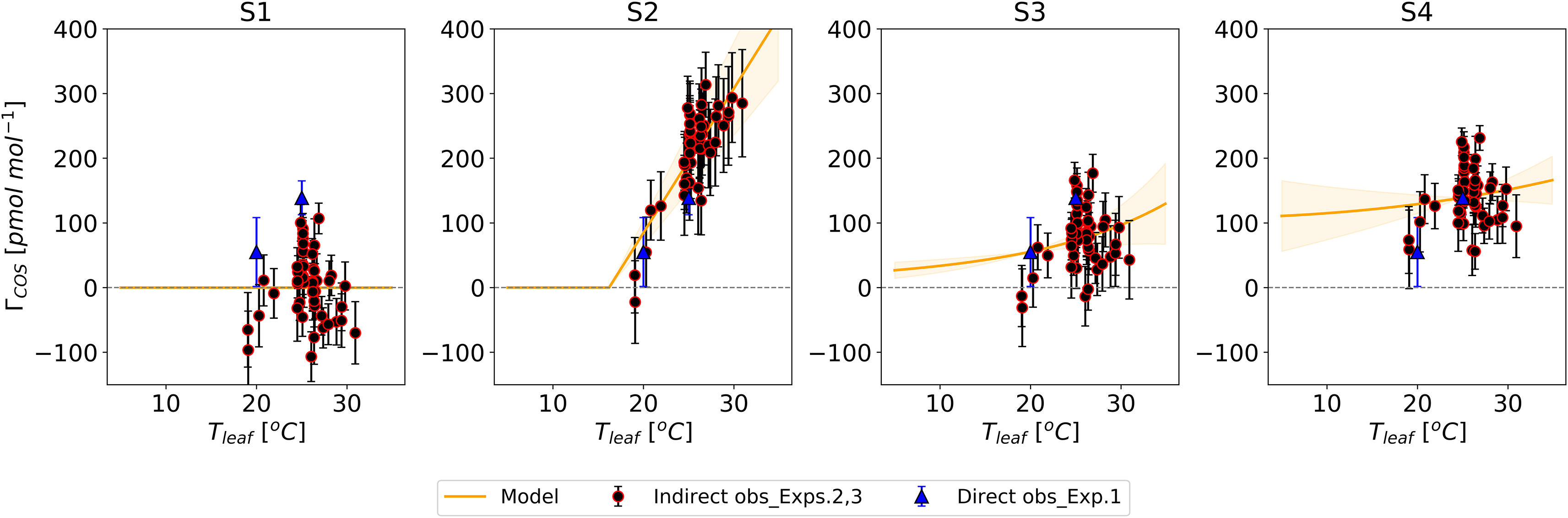
Figure 9. Posterior temperature functions for ΓCOS from S1 to S4 models, shown with orange lines and error ranges from 200 Monte Carlo simulations.
These are compared with ΓCOS values from Experiment 1 (blue triangles, regression-derived from two temperature points) and Experiments 2 and 3 (black circles with red edges, derived indirectly). Regression-derived ΓCOS measurements are 55.0 ± 53.2 pmol mol−1 at 19.8°C and 138.7 ± 26.1 pmol mol−1 at 25.0°C, detailed in Section 3.1.1). Indirectly derived values are averages with standard deviation error bars, calculated from parameters optimized through 200 Monte Carlo simulations (See
Section 2.5.).
The optimized S2 model best captures the ΓCOS measurements derived from both regression and indirect methods, compared to other models. Specifically, the S2 model achieved the lowest RMSE with the indirect derived ΓCOS (39 pmol mol−1). The RMSE values for the other models were: S1 = 50 pmol mol−1, S3 = 49 pmol mol−1, and S4 = 41 pmol mol−1, respectively.
3.2.3 Response to stomatal conductance (Hypothesis H2).
In Experiment 2, we confirmed that VCOS responds more strongly than VCO2 at low gsw values. To further interpret this behavior mechanistically, we explore how changes in deposition velocity due to gsw are influenced by interactions with mesophyll conductance. We calculated AFR values (1 –[gas]i/[gas]a) for both gases using the optimized S2 model, as these values cannot be directly measured (
Figure 10). Simulations were performed at a constant Tleaf of 25°C.
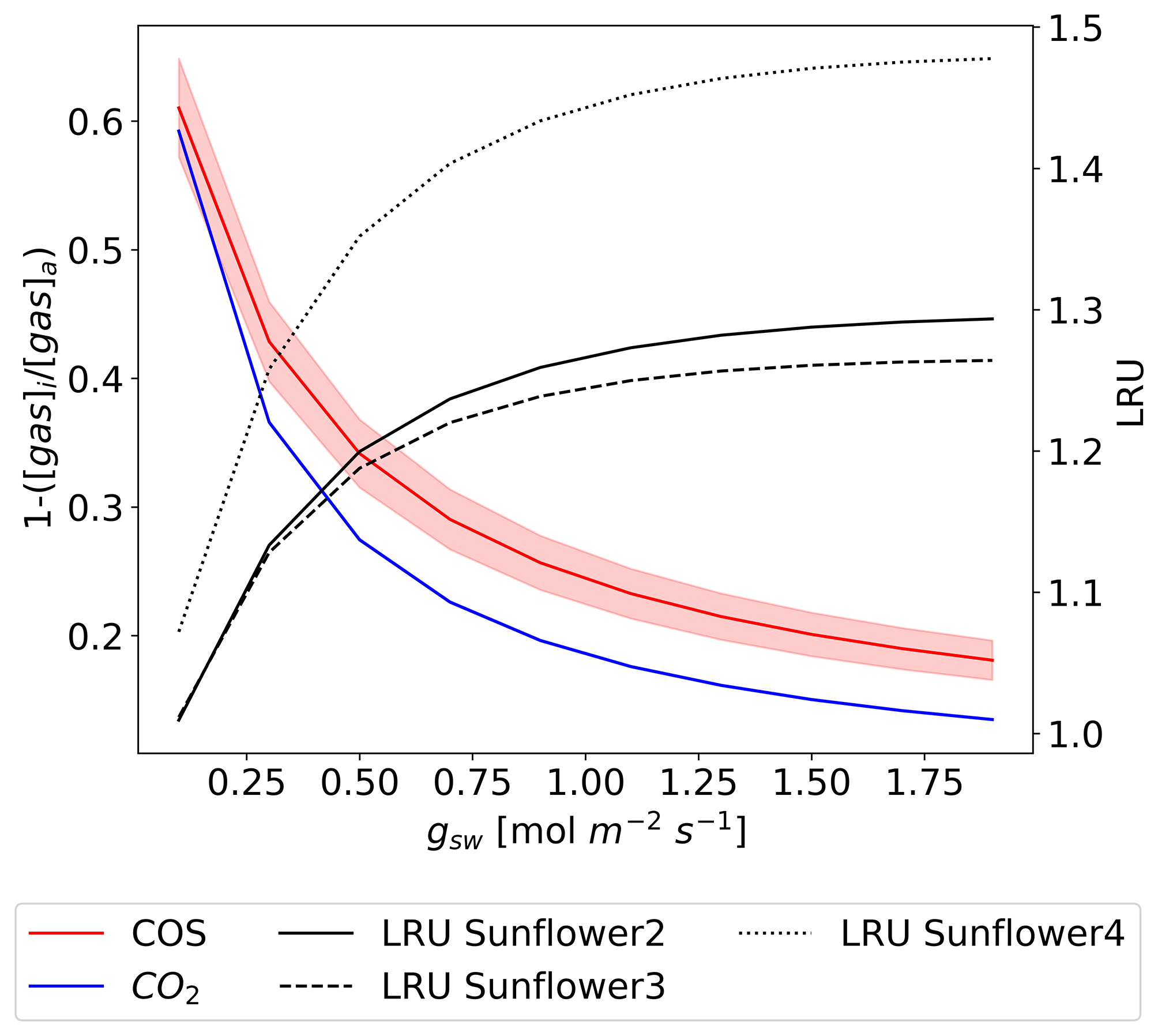
Figure 10. Simulated changes in (1 – [gas]i/[gas]a) for COS (red) and CO2 (blue) averaged among sunflowers 2, 3, and 4, with LRU (black, secondary y-axis) as a function of gsw each sunflower (Results from the S2 model).
The lines represent averages, and the filled areas indicate the standard deviation of 500 simulations using posterior error propagation.
The model results indicate that for both gases, AFR decreases as gsw increases, which provides support for Hypothesis 2. However, contrary to Hypothesis 2, which assumes that [COS]i is nearly zero thus resulting in AFR for COS close to 1, the actual modeled values range from 0.2 to 0.6 depending on gsw. This deviation indicates that [COS]i is not negligible and suggests a dynamic COS consumption within the leaf that does not bring [COS]i close to zero.
The model also reveals a distinct LRU pattern, showing sharp increases at low gsw values followed by stabilization at higher gsw. This response is consistent with observations from Experiment 2, where LRU exhibited similar trends in response to gsw. These results underscore the differing sensitivities of COS and CO2 uptake to gsw, as reflected in both experimental and modeled data.
3.2.4 Response to leaf temperature (Hypothesis H3).
To investigate the temperature function of enzyme activity separated from ΓCOS in VCOS, we calculated
gm,COS and
g
m,CO2 using the optimized model S2.
Figure 11 shows the temperature dependency of
gm,COS and
g
m,CO2 for three sunflowers. The magnitudes of these dependencies vary among plants due to differences in optimized Vmax values. The optimum temperature for
gm,COS is around 35 to 40°C, while for
g
m,CO2 it is approximately 35°C, which contradicts Hypothesis 3, proposing a lower optimum temperature for
gm,COS than for
g
m,CO2.
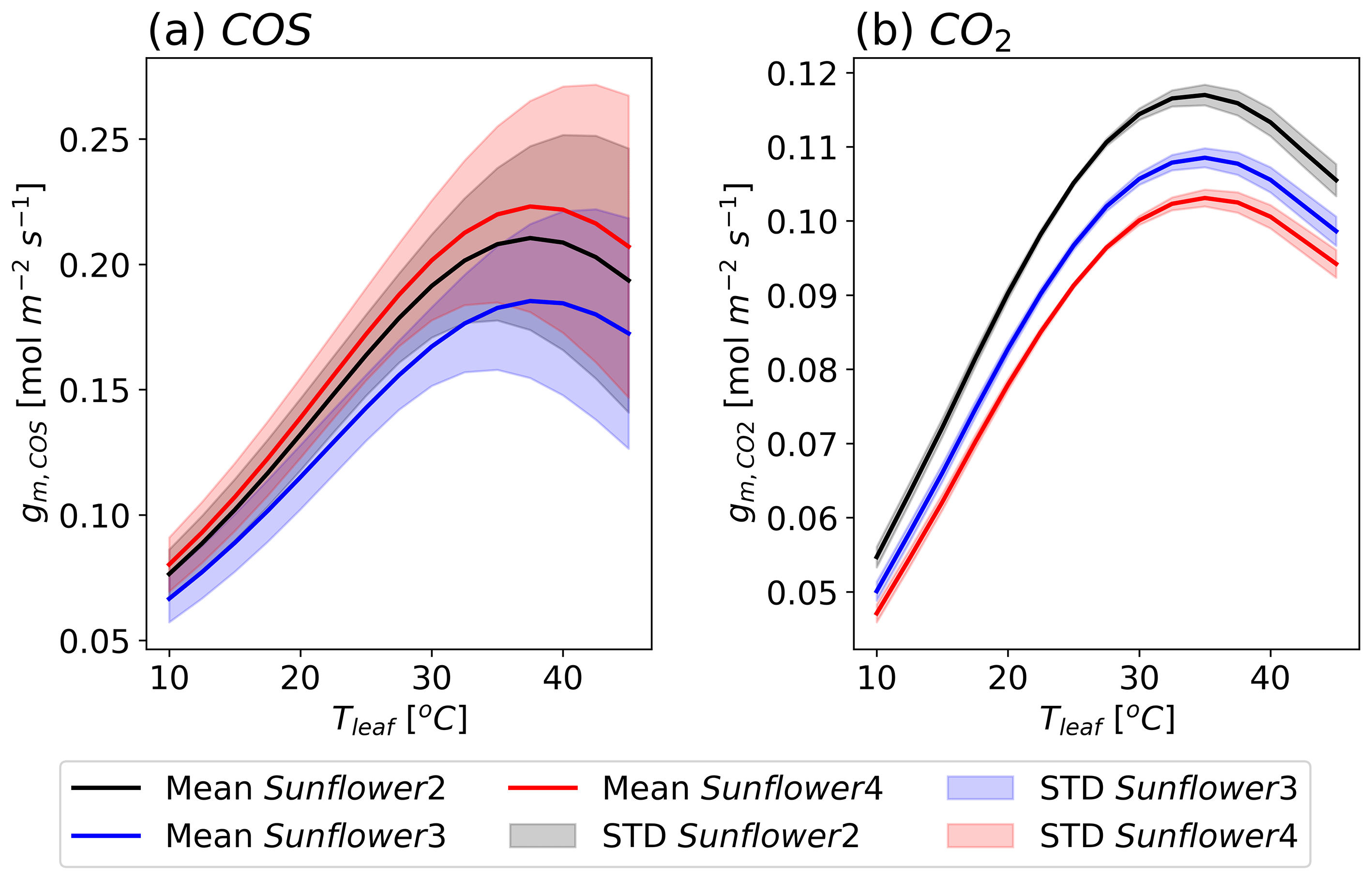
Figure 11. Modeled response of mesophyll conductances (
gm) to leaf temperatures (Tleaf) for COS (a) and CO2 (b) with three sunflowers (black: sunflower 2, blue: sunflower 3, red: sunflower 4, results from the S2 model).
The lines represent averaged values, and the filled areas indicate the standard deviation from 500 simulations using posterior error propagation.
The observed decline in VCOS above 25°C in Experiment 3 (
Figure 6a) is explained by the model-predicted impact of ΓCOS on COS uptake. While the optimum temperature for
gm,COS is approximately 35 to 40°C, the influence of temperature-dependent ΓCOS results in a much lower optimum temperature for VCOS, around 20°C. This is significantly lower than the optimum temperature for VCO2, which is approximately 30°C.
Overall, the model results suggest that the temperature dependence of ΓCOS plays a critical role in shaping the distinct responses of VCOS and V
COS2.
4. Discussion
This study aimed to investigate how leaf COS and CO2 fluxes respond differently to environmental changes and to identify which internal processes within leaves govern these differences. Laboratory experiments were conducted under controlled conditions to isolate the effects of stomatal conductance and temperature. However, to provide more insights in the internal processes that control COS exchange, we developed and optimized a coupled CO2–COS–H2O conductance model to mechanistically interpret the measurement data. Although the model involves some simplified representations of internal processes, these simplifications are minor and do not affect the overall interpretation. In this section, we discuss the uncertainties in both observations and model representations, the physiological implications of the observed COS compensation points, and their broader significance for biochemical parameters and the global COS budget.
4.1 Uncertainties in measurements and models
Before discussing measurement uncertainties, we emphasize that potential leakage effects were minimized in our experimental setup. Through improvements in our experimental setup, especially with the LI-6800 system incorporating new gasket materials (Advanced Polymer, Polyethylene, and Neoprene) and optimized flow paths, we minimized the gas leakage issues prevalent in previous systems like the LI-6400. No significant pressure differentials were observed during experiments, supporting the effectiveness of these enhancements. Additionally, maintaining the cuvette under slight positive pressure reduces the risk of inward leakage.
Nevertheless, several experimental limitations remain. First, the temperature range explored in this study was relatively restricted. Our optimization was based on data from Experiments 2 and 3, conducted at temperatures ranging from 19.0°C to 29.8°C. Therefore, additional experiments across a broader temperature range are necessary to confirm the existence and assess the temperature dependence of ΓCOS.
The choice of elevated COS concentration in the cuvette also introduces interpretative considerations. In our experiment, we increased the COS mole fraction in the cuvette to approximately 1000 pmol mol−1, significantly above natural ambient levels, to enhance signal detection and reduce noise. The primary purpose of our empty chamber experiments was to eliminate the effects of emissions from chamber materials. Conducting these tests at similarly high mole fractions also helped mitigate any emissions that could arise from this higher mole fraction setting.
This high COS mole fraction possibly contributed to slightly higher AFR (
Figure 10) because the high ambient mole fraction may influence the internal concentration. [COS]i/[COS]a values of about 0.63 ± 0.13 were observed under elevated ambient [COS]a conditions (Stimler et al., 2010), aligning with our results. Stimler et al. (2010) also reported a linear relationship between [COS]i/[COS]a and [COS]a, likely due to retro-diffusion from the leaves. Therefore, when applying our results to natural conditions ([COS]a about 500 pmol mol−1, the AFR may decrease. However, the high AFR is also possibly due to the influence of ΓCOS. The simulated [CO2]i/[CO2]a ranges from 0.4 to 0.9, consistent with values previously reported for C3 plants (0.5 – 0.8) (Black & Jones, 1985; Seibt et al., 2010; Tanner & Sinclair, 2015). Nevertheless, in Experiments 2 and 3, despite the high COS mole fractions, their consistent level throughout the experiments likely negated any impact on analyzing how gsw and temperatures relate to VCOS and VCO2.
In addition to the experimental limitations discussed above, a practical limitation arises from the mole fraction range used for model optimization. Model parameters were optimized using data obtained under relatively high COS mole fraction conditions (~1000 pmol mol−1) to ensure stable and precise flux measurements, whereas ΓCOS was determined from experiments conducted at lower inflowing concentrations (100–600 pmol mol−1). This discrepancy in concentration ranges may introduce some uncertainty when extrapolating parameters between optimization and compensation-point estimation. Nevertheless, the model formulation remains internally consistent, and the derived parameters are valid for interpreting the relative temperature-dependent behavior of COS exchange. Future experiments targeting near-ambient COS mole fraction levels will be valuable to further validate the applicability of these optimized parameters and to evaluate potential retro-diffusion effects under more natural conditions.
From a modeling perspective, only the enzyme CA is considered in determining the mesophyll conductance of COS. However, other enzymes, such as RuBisCO and phosphoenolpyruvate carboxylase (PEP-C), are known to also catalyze COS uptake (Lorimer & Pierce, 1989; Protoschill-Krebs & Kesselmeier, 1992). The contribution of RuBisCO to COS uptake is relatively minor compared to CA (Protoschill-Krebs et al., 1996), and its activity has not yet been quantified.
An additional source of uncertainty arises from the simplified representation of COS mesophyll conductance in our model. While mesophyll diffusion was not explicitly parameterized, it was implicitly represented through the temperature-dependent CA activity function (Cho et al., 2023) that integrates both diffusional and biochemical processes. Nevertheless, this implicit treatment may not fully capture variations in diffusional resistance under different environmental or structural conditions, and thus its influence on the temperature dependence of COS uptake cannot be completely excluded. Future modeling studies incorporating explicit mesophyll diffusion parameterization—beyond the current CA-based formulation—would help to disentangle the relative contributions of diffusional and biochemical controls, as well as potential COS emissions from leaves, in regulating COS exchange.
Beyond these structural uncertainties in the model, it is important to note that the conductance model was designed as an exploratory diagnostic tool. Its purpose was to integrate the coupled behavior of CO2, COS, and H2O exchange and to mechanistically interpret the observed fluxes. Despite its simplifications in not considering minor features, such as outlet mass flow change and boundary ternary effect, this framework represents the first attempt to jointly optimize gas exchange for the three gases, thereby providing a process-based means to independently estimate the COS compensation point. Overall, this approach highlights the potential of combined gas-exchange measurement and modeling to advance our understanding of COS biogeochemistry.
Taken together, the remaining uncertainties in both COS measurements and model structure require careful interpretation. Concerning Hypothesis 1, Model S2 was selected as the best model due to its minimal posterior costs and lowest RMSE with observation-based ΓCOS, despite higher H2O and background costs compared to S1, as shown in
Table 6. Furthermore, the minor differences in posterior costs and RMSE with indirectly derived ΓCOS between S2 and S4 suggest that S4 is a viable alternative. The strong correlation between the temperature dependence of ΓCOS (mCOS) and
Vmax,CA complicates the precise and independent determination of these two parameters. Although S2 and S4 employ different temperature-dependent formulations of ΓCOS, both model structures consistently support the presence of a COS compensation point.
Accordingly, the exact value and temperature dependence of ΓCOS remain uncertain, but including a compensation point in the models, as in models S2 and S4, significantly improves their alignment with observations. Even if S4 were to better represent the true underlying mechanism, both model structures indicate an increase in ΓCOS with temperature, although the optimum temperature derived under Hypothesis 3 may shift slightly depending on the assumed functional form of the temperature response of CA activity.
4.2 Possible causes of a COS compensation point
COS emission can occur due to leaf stress induced by external factors during experiments. To minimize the risk of mechanical damage or stress, the chamber was gently attached, and leaves were inspected post-experiment for physical damage such as bruising, desiccation, or discoloration. No visible damage was observed, and the limited measurement duration further reduced the likelihood of stress-induced COS emissions.
Previous studies on COS leaf exchange experiments have reported positive ΓCOS values, but often concluded these are statistically indistinguishable from zero due to high variability. For example, Stimler et al. (2010) observed a ΓCOS of 60.7 pmol mol−1 at 25°C, and attributed it to potential retro-diffusion under high COS mole fractions. Similarly, our ΓCOS at 20.0°C (55.0 ± 53.2 pmol mol−1) was statistically insignificant, whereas a significant ΓCOS (138.7 ± 26.1 pmol mol−1) was detected at 25°C. Considering that our experiments, like those of Stimler et al. (2010), were conducted under relatively high COS mole fractions, this pattern suggests that higher temperature may enhance diffusion-driven feedbacks. It should also be noted that our COS model does not explicitly account for mesophyll diffusion conductance, and thus part of the apparent emission function could be interpreted as an effect of internal diffusion-related mechanisms (e.g., retro-diffusion) within the leaf.
In addition to retro-diffusion, temperature-induced stress could also contribute to the observed COS compensation point. Previous studies, typically conducted below 25°C, did not assess temperature dependence. Our modeling revealed a linear relationship between ΓCOS and temperature, consistent with Gimeno et al. (2017), who reported higher ΓCOS in mosses at elevated temperatures. Although no visible stress was observed in our plants, temperature stress may have influenced ΓCOS. Gimeno et al. (2017) suggested that COS emissions could result from protein degradation under stress, releasing COS through the breakdown of sulfur-containing amino acids. This highlights the role of temperature-driven biochemical pathways in shaping ΓCOS values and supports the inclusion of ΓCOS in leaf gas exchange models.
Beyond temperature-driven stress, differences in species physiology also contribute to ΓCOS. Mosses studied by Gimeno et al. (2017) exhibited higher ΓCOS values than in vascular plants, likely due to enzymatic activity of associated fungi and bacteria. While microbial activity is not directly applicable to vascular plants, it underscores the importance of species-specific factors in determining COS emissions. In vascular plants, rapeseed is known to produce COS due to its high sulfur content, with ΓCOS exceeding 100 pmol mol−1 during ripening and senescence (Belviso et al., 2022). However, no experiments have previously been conducted to detect ΓCOS in sunflowers.
Previous studies (e.g., Maseyk et al., 2014; Belviso et al., 2022) reported that COS emissions occur during the ripening and senescence phases, indicating that senescence-related processes could explain COS emissions rather than active uptake from living tissues. In Maseyk et al. (2014) part of these emissions may have originated from the soil, whereas Belviso et al. (2022) provided strong evidence for plant-derived senescence emissions. Additionally, Kesselmeier and Merk (1993) reported ΓCOS values ranging from 57 to 328 pmol mol−1 in rapeseed and corn during flowering. In our study, measurements were conducted during the flowering phase, which could explain the observed COS emissions, although the exact source remains unclear. Sulfur emissions during senescence have been linked to the translocation of sulfur-containing amino acids and sulfur regulation in plant cells (Rennenberg, 1991).
Apart from biological factors, methodological advances may explain the discrepancies between our results and previous studies. We employed the Li-6800 system, which offers improved measurement accuracy, and evaluated an optimized conductance model incorporating temperature-dependent ΓCOS. Our findings confirm that all observations support an increase in ΓCOS with temperature.
Taken together, the existence of ΓCOS and its increase at higher temperatures may result from a combination of the factors discussed above. However, our current formulation of ΓCOS is expressed solely as a temperature-dependent function and does not explicitly include retro-diffusion effects. As a result, while the observed increase in ΓCOS with temperature is consistent with thermally driven processes, the potential contribution of internal diffusion feedbacks—particularly under elevated COS mole fractions—cannot be fully excluded.
At present, reliable measurements can only be obtained under relatively high COS mole fractions, which limits our ability to fully constrain ΓCOS dynamics near ambient conditions. Improving detection precision at low COS concentrations and incorporating explicit representations of internal diffusion in future models would enable a more direct evaluation of whether ΓCOS variability originates from retro-diffusion or from physiological and biochemical processes. Moreover, extending such measurements to different phenological stages and species, and exploring interactions with microbial associations and environmental stressors, will be essential for developing a more mechanistic understanding of COS exchange in plants.
4.3 Impact of COS compensation point on
Vmax,CA
When ΓCOS was explicitly considered in the optimization, the optimized ratio between
Vmax,CA and
Vmax,Rub ranges from 2160 to 2770, which is higher than previously obtained values of approximately 1200 from laboratory measurements with C3 plants (Berry et al., 2013). Kooijmans et al. (2021) reported an average ratio of 1616 ± 562 based on field observations in summer months. In contrast, when ΓCOS was excluded (model S1), the optimized
Vmax,CA became smaller, resulting in ratios of 1197–1327, closely matching the values reported in previous studies. Thus, models that incorporate ΓCOS result in higher optimized values of
Vmax,CA and consequently to higher ratios between
Vmax,CA and
Vmax,Rub, indicating a higher maximum catalyzation velocity of CA.
4.4 Consequences for the COS global budget
Our evidence of decreasing VCOS between 20 and 25°C (
Figure 6a) supports lower biosphere uptake in high temperature regions. The current COS budget has a missing source of roughly 400 GgS year−1, mainly due to the large biosphere sink calculated by the Simple Biosphere model (SiB4) in the tropics (Berry et al., 2013). In warm tropical forests, biosphere uptake would be significantly reduced.
The presence of ΓCOS could have implications for the global COS budget and the utilization of COS in estimating GPP, especially under conditions such as drought, where high temperatures and low humidity persist. Despite the uncertainty concerning ΓCOS in our experiments, including ΓCOS in our model better reproduced CO2 and COS observations. This suggests that incorporating ΓCOS into global biosphere models could enhance the accuracy of COS flux estimates. Differences in temperatures and humidity responses between CO2 and COS should also be considered. To further improve the large-scale modeling, it is recommended to measure ΓCOS and enzyme activity across diverse plant types, specifically tropical plants.
While our study focused on controlled conditions with a single species, larger variations would indeed be expected under natural conditions and across different species. Consequently, future research should therefore explore these factors in more diverse environmental settings to validate and generalize these findings.
Ethics and consent
Ethical approval and consent were not required.









