Introduction
The healthcare sector requires fast, reliable, and secure communication links that prevent interference with medical instruments. The growing use of telemedicine protocols, high-resolution imaging, and electronic health records necessitates stringent EMI-free transmission requirements. The operation of critical medical equipment gets disrupted because traditional RF-based solutions cannot function effectively due to electromagnetic interference in sensitive healthcare settings. Fiber-optic base networks transmit high data rates with no interference. However, deploying them remains costly, and making changes to their setup proves difficult, particularly in active healthcare facilities1,2.
Free-space optical (FSO) communication systems offer a promising alternative, combining low installation cost, EMI immunity, and gigabit-per-second performance3. The reliability and operational range of FSO links suffer degradation due to atmospheric attenuation caused by fog, haze, and rain. Real-world deployments need geographic and climatic adaptation for their successful implementation.
The recent studies have pointed out the need to optimize Free-Space Optical (FSO) systems with regard to a variety of climate and application conditions. As an example, Sharma et al.4 performed the evaluation of the efficiency of beyond 5G-related FSO connectivity, namely its stability in the presence of the haze effect in Malta, illustrating that 1550 nm is resilient with regard to the haze effect that reduces visibility. Likewise, Sharma et al.5 compared the performance attenuation due to snow conditions using artificial neural networks to predict Bit Error Rate (BER), which indeed demonstrates AI-based models can be used to predict the performance of systems under unfavorable weather conditions. Previous experiments by Sharma and Kaler6 handled inter-building high-speed connectivity using RF backup, with the practical advantages of hybrid designs being brought up in urban implementations. Recently, an overview on the role of Li-Fi in combination with the advent of IoT-based new sixth-generation (6G) communication systems has been provided by Sharma et al.7 in their more recent and expanded capabilities of optical wireless links and networks beyond the well-known FSO. These studies establish a foundation for climate-aware and application-specific optical wireless networks, motivating the present research.
The Mediterranean climate of Malta features clear skies and moderate rainfall, while the winters tend to be dominated by haze and fog that occurs very rarely8. The FSO system deployment in such conditions is possible if engineers focus on building resilient systems against haze and rain. This research work develops a 1550 nm FSO system for Maltese hospital campuses that incorporates environmental modeling, addresses medical requirements, and designs high-reliability optical links.
This work proposes a standalone 1550 nm FSO system designed for Maltese hospital campuses, where EMI-safe, cost-effective, and high-speed communication is essential. Unlike conventional RF-based networks, the proposed system eliminates EMI interference, reduces infrastructure cost, and simplifies deployment. The figure below, in Figure 1, presents a conceptual view of free-space optical (FSO) links connecting hospital departments at the campus level through EMI-free high-speed communication without using physical cables.

Figure 1. Conceptual FSO-based interdepartmental connectivity in a hospital campus6.
Related work and research gaps
Different research studies have been conducted to optimize the operation of FSO systems under different climate conditions. A detailed survey focusing on turbulence impacts in FSO links is presented in Khalighi and Uysal1, together with channel models developed by Ghassemlooy et al.9 for signal attenuation prediction using MATLAB software. The authors of Al-Gailani et al.10 analyzed drone-based medical logistics through FSO systems, and Gupta et al.11 developed machine learning techniques to enhance urban FSO deployment stability. Awan et al.12 investigated the FSO system for desert conditions, and the research by Habaebi et al.13 studied tropical environments, confirming that the 1550 nm wavelength outperforms 850 nm by reducing scattering under haze and rain. Ahmed et al.14 conducted healthcare research to discover wireless communication needs for future hospital networks, which required high-speed performance and EMI-free and reliable connectivity. Other works proposed hybrid FSO/RF architectures to mitigate fog disruptions; however, these solutions introduce unnecessary complexity and higher costs in regions with very rare fog, such as Malta (occurring fewer than two days per year)8. Esmail et al.15 presented models of fog attenuation to evaluate FSO link reliability under low-visibility scenarios.
Despite these advances, a critical gap remains: exploiting FSO systems for EMI-sensitive hospital environments has not been fully addressed. Current models either focus on general climatic effects or propose hybrid designs that are not cost-effective in low-fog regions. Furthermore, system designs tailored to specific regulatory requirements (IEC 60601-1-2) and regional climates like Malta are largely missing.
This study addresses these gaps by proposing a standalone FSO communication framework optimized for hospital applications in Malta’s Mediterranean climate. The design ensures reliable inter-departmental connectivity, compliance with EMI standards, and practical deployment without the overhead of hybrid architectures.
Contributions and novelty
This paper proposes a Free-Space Optical (FSO) communication system specifically designed and optimized for Maltese hospital environments, where EMI-free, cost-effective, and high-speed connectivity is essential. The novelty of this work lies in combining climate-optimized modeling, wavelength selection, and hospital-specific requirements into a single robust framework. Local meteorological data, including haze visibility of around 5 km and worst-case rain attenuation of 3.5 dB/km, are incorporated into MATLAB-based simulations to refine attenuation models and provide accurate performance predictions under Mediterranean conditions. The system employs a 1550 nm wavelength, which prior studies16 have shown to be superior in hazy atmospheres compared to shorter wavelengths such as 785 nm, making it the optimal choice for Malta, where haze is common and fog is extremely rare. Unlike existing hybrid FSO/RF architectures that increase cost and complexity, this study demonstrates that a standalone FSO system is sufficient for Malta, simplifying deployment and reducing operational expenses. The design is tailored to mission-critical hospital communication, enabling real-time telemetry, secure transmission of medical imaging, and electronic health records while fully complying with EMI safety standards (IEC 60601-1-2)17. In doing so, this research provides a regionally tailored, EMI-compliant, and climate-resilient FSO system blueprint for hospitals, offering a cost-effective alternative to RF-based links and delivering high availability (>99%), simplified installation, and scalable expansion across healthcare campuses.
Methods
Mathematical modelling of the proposed FSO system
This section derives the mathematical framework governing the performance of the proposed 1550 nm FSO system, aligning with system parameters chosen for Malta’s weather conditions and referencing prior works for each critical equation.
Transmitter model
The transmitter operates at 1550 nm with an optical power of 50 mW (extinction ratio 20 dB). It includes a laser diode modulated by a Mach-Zehnder modulator (MZM). A sequence of random bits is encoded on non-return-to-zero electrical pulses, which modulate the laser through the MZM. The MZM outputs a total optical power as follows:
The extinction ratio ER is defined as 9:
FSO channel model
The free-space optical channel accounts for both atmospheric attenuation and geometric loss.
Atmospheric Attenuation: Using Kim’s model9, the optical signal attenuation α(λ) is calculated as:
Where λ = 1550 nm, V: visibility (km), q = Particle size-dependent coefficient
For Malta’s climate, representative attenuation values are: clear air → α ≈ 0.43 dB/km (V = 10 km, q = 1.3); haze → α ≈ 2.7 dB/km (V = 5 km, q = 1.6); fog → α ≈ 15 dB/km (V = 1 km, q = 0.585·V + 1.05); rain → α = 3.5 dB/km (moderate rain)18. These values reflect typical conditions in Malta’s Mediterranean environment.
Beam Divergence and Transmitter Aperture: The transmitter’s beam divergence (θtx = 1.5 mrad) and transmitter aperture diameter (Dtx = 10 cm) determine the initial beam waist W09:
Geometric Loss: The Geometric loss Lg arising from beam spreading, is modelled as 9:
Where: L = 1 km; Drx = 20 cm (receiver aperture) producing
Total Channel Loss: The total channel loss combines atmospheric and geometric components9:
For instance, under a fog condition (α = 15 dB/km) over 1 km:
For clear air conditions (α = 0.43 dB/km) over 1 km, the total loss would be ≈0.43 + 11.25 = 11.68 dB.
Receiver model
A PIN photodiode at the receiver converts the optical signal to electrical current, with performance governed by the photodiode’s responsivity and noise characteristics9.
Received Optical Power: The received optical power Pr at the photodiode can be expressed as:
where all values are in linear scale or dB as appropriate. For example, under clear-air conditions over 1 km Ltotal = 0.43 + 11.25 = 11.68 dB::
Photodiode Output Current: The photocurrent generated Iph is given by 9:
where R is the photodiode responsivity (A/W) and Id is dark current. Given a typical PIN photodiode with R = 0.8 A/W and a negligible dark current Id = 10 nA. The photocurrent for Pr = 3.4 mW is:
Signal-to-Noise Ratio (SNR): The received SNR is affected by noise sources dominated by the shot noise and thermal noise 9.
Shot Noise Variance Calculation
Thermal Noise Variance Calculation
Assuming a receiver bandwidth of B = 1.25 GHz, at room temperature T = 300 K, and load resistance RL = 50 Ω
The SNR is given by:
SNR (dB) ≈ 66.93 dB
SNR Validation: The calculated SNR (66.93 dB) aligns with the simulated OSNR of 51.64 dB, accounting for optical vs. electrical domain differences.
Relation between Q-Factor and BER
The theoretical relationship between Q-factor and BER in optical communication is given by . High Q values result in extremely small BER values (for example, Q = 13 yields BER < 10−30), which cannot be measured in practice. To avoid reporting unrealistic values, all BER values below 10−12 are reported as “BER < 10−12”, representing the practical error-free region.
Link budget validation
The link budget confirms feasibility under Malta’s weather conditions5. Critically, receiver sensitivity depends on the bit rate due to noise bandwidth constraints. For the PIN photodiode, sensitivity is calculated as follows:
Receiver Sensitivity vs. Bit Rate: The minimum detectable power Pmin(sensitivity) for a target BER (e.g., 10–9) scales with bit rate Rb19
Where: Q = 6 (BER = 10−9) and N0 = Noise spectral density (W/Hz).
For the Rb = 1.25 Gbps NRZ system: Sensitivity = -35 dBm20.
So received power Pr = 5.32 dBm exceeds by 40.32dB, so the 40.32dB margin ensures robustness even at higher bit rate performance.
System design and simulation setup
The developed FSO communication system is designed to support high-performance connectivity between buildings in Maltese hospital campuses despite regionally observed haze, seasonal rainfall, and infrequent fog. The system architecture was modeled and simulated using OptiSystem, with atmospheric attenuation values derived from measured climate data processed in MATLAB. All simulations were performed using OptiSystem 21 (licensed at the University of Malta) and MATLAB R2024b. Authentic weather statistics were obtained from the Malta Meteorological Office and National Statistics Office (NSO) climate reports8,21, including visibility and precipitation data for 2020–2023. These data were processed via the Kim attenuation model to yield realistic attenuation coefficients representative of Malta’s climate (e.g., 0.43 dB/km for clear air, 2.7 dB/km for haze, 3.5 dB/km for moderate rain, and an extreme 25 dB/km for dense fog used as a safety margin). A wavelength-division multiplexing (WDM) transmitter operating at 1550 nm was modeled in OptiSystem with an output power of 50 mW. The 1550 nm wavelength was chosen for its low atmospheric attenuation, resilience against haze, and compatibility with commercial optics at the 1.25 Gbps data rate needed for hospital applications (patient monitoring, MRI image transfer, large file backup, etc.). The transmitter can be wavelength-tuned within the C-band (around 1500–1600 nm) if required for system flexibility.
The free-space channel was modeled for a nominal 1 km link, representing typical inter-building distances on a hospital campus. For simulations, an extremely high attenuation case of 25 dB/km was included to represent worst-case fog (far exceeding typical Maltese conditions) as a stress test. More realistic attenuation values were calculated in MATLAB for clear air (0.43 dB/km), haze (2.7 dB/km), and rain (3.5 dB/km), as noted above. The channel assumes a beam divergence of ~1.5 mrad and a receiver aperture of 20 cm, which together produce a geometric loss of about 11.25 dB for a 1 km link. Malta’s stable weather and low wind environment allow for passive rooftop transceiver mounting with minimal misalignment over time, reducing the need for active alignment systems.
On the receiver side, a PIN photodiode module with ~0.94 GHz electrical bandwidth was selected to minimize inter-symbol interference, ensuring proper demodulation even during low-visibility periods. Eye diagram analysis in simulation provides key indicators of signal integrity: for instance, the eye height is 1.88985e-6 and the decision threshold 1.14616e-6. Under clear-air conditions, these values correspond to a wide eye opening and stable signal detection. The system is designed with a sufficient power margin (≈25 dB/km beyond clear-air attenuation) to reliably handle rare fog events (which occur only ~2 days per year in Malta). This makes implementation simpler and more cost-effective than complex hybrid FSO/RF designs, as the FSO link alone can tolerate those rare extremes through power control or temporarily reduced data rate if needed.
Figure 2 shows the simulated FSO system layout. It includes a 1550 nm WDM transmitter with a high-power laser, a universal FSO channel model incorporating realistic atmospheric attenuation conditions, and a PIN photodiode-based receiver. The depicted FSO link range represents the maximum distance between hospital buildings in the campus scenario (on the order of 1–2 km for core departments).
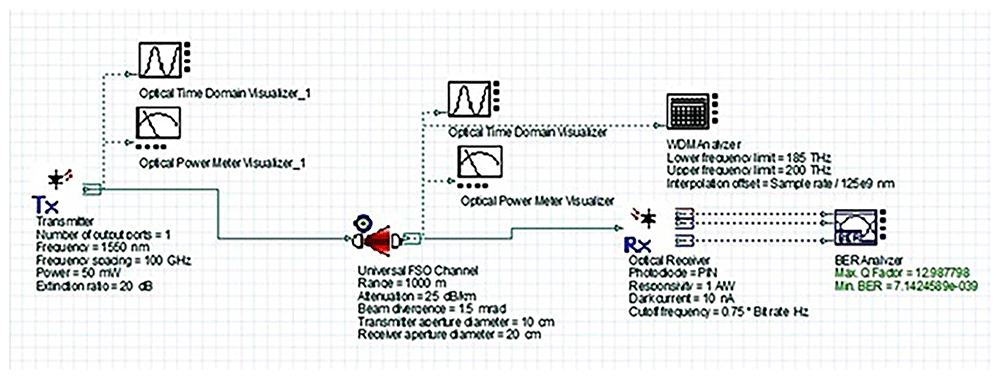
Figure 2. OptiSystem simulation layout of the proposed 1550 nm FSO system.
The Mediterranean climate of Malta consists of high humidity combined with coastal haze and very rare fog, and sporadic rainfall22. A summary of the studied weather conditions and their effects on the FSO link is provided in Table 1. These conditions form the basis for the attenuation values used in the simulations.
Table 1. Selected Weather Conditions for Malta’s FSO System Simulation.
| Weather Condition | Visibility (km) | Attenuation (dB/km) | Impact on FSO |
|---|
| Clear Air | > 10 | 0.2 – 0.5 | Minimal signal loss |
| Moderate Haze | 2 – 5 | 1.5 – 3.0 | Increased scattering in humid coastal zones |
| Moderate Fog | 0.5 – 1 | 8.0 – 15.0 | Severe attenuation; occurs <2 days/year |
| Moderate Rain | 2 – 5 | 1.0 – 3.5 | Absorption and scattering reduce signal reliability |
| Thick Cloud | — | — | Not applicable (links below cloud layer) |
| Snow | — | — | Not applicable (snow not observed in Malta) |
In parallel, climate data was analyzed to understand the frequency of various weather scenarios. Table 2 summarizes the annual frequency of clear air, haze, rain, and fog in Malta (based on 2020–2023 data), along with the dominant seasons for each condition21. As shown, clear-air conditions dominate (~68% of the time), followed by moderate haze (~25%). Moderate rain is relatively infrequent (~6%), and significant fog is extremely rare (<1%). These statistics validate the decision to prioritize clear-air, haze, and rain scenarios in the system’s attenuation modeling and performance testing. The rarity of fog supports using a simplified standalone FSO system without the need for hybrid RF redundancy in most cases.
Table 2. Climate Conditions and Link Scenario Breakdown21.
| Weather Condition | Visibility (km) | Annual Frequency | Dominant Seasons |
|---|
| Clear Air | > 10 | 68% | Summer |
| Moderate Haze | 2 – 5 | 25% | Winter/Spring |
| Moderate Rain | 2 – 5 | 6% | Autumn |
| Moderate Fog | 0.5 – 1 | < 1% | Winter mornings |
Results and discussion
A detailed simulation of the proposed system using both OptiSystem and MATLAB validates its feasibility for deployment in real-world hospital environments. The performance analysis of the proposed FSO system specifically considers Malta's climate1, where haze and seasonal rainfall are more prevalent than fog. The assessments of signal integrity and operational feasibility is based on four key performance metrics: BER, Q-Factor, link availability, and maximum reliable distance. Table 1 presents the operational impact of various attenuation levels on the outdoor hospital system functionality. In the simulations, 1.25 Gbps NRZ pulses are transmitted through the FSO channel, representing typical data rates required for hospital applications such as real-time patient monitoring, diagnostic imaging transfer, and secure medical record exchange.
BER performance and eye diagram analysis
Under standard clear-air conditions, the OptiSystem BER Analyzer indicates error-free performance. Figure 3 shows the eye diagram for the received signal in clear air, which exhibits a wide eye opening and stable timing. The simulated BER reaches the practical error-free region (BER < 10−12, indicating an exceptionally low error rate, well below the error threshold required for medical data communication. Values below 10−12 are theoretical and represent the error-free operating region rather than physically measurable BER values. The clear eye pattern and minimal inter-symbol interference confirm that the system can sustain high-integrity, gigabit-per-second data transmission in favorable weather, supporting applications such as medical imaging, patient telemetry, and large-scale data backup.
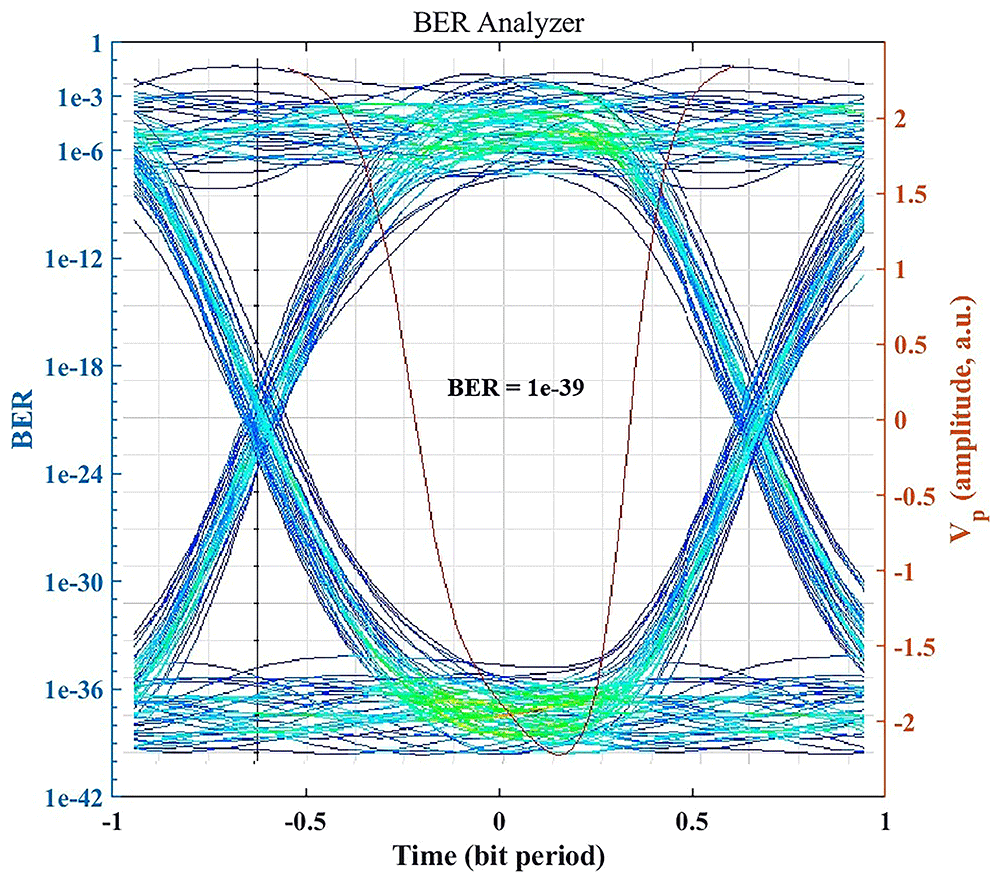
Figure 3. Eye diagram and BER under clear-air conditions.
Signal Integrity Assessment through Q-Factor
The Q-factor provides a quantitative measure of signal integrity by expressing the separation between logic 1 and 0 levels relative to noise. Figure 4 illustrates an achieved Q-factor of ~13 for the clear-air 1.25 Gbps link, which is well above the typical threshold Q ≈ 6 (corresponding to BER = 10−9) required for robust, low-error optical communication. A Q-factor of this magnitude indicates a substantial noise margin, supporting high-speed transmission with extremely low error rates. This ensures the system’s suitability for mission-critical hospital applications such as patient telemetry, medical imaging transfer, and secure health record synchronization. Even under seasonal haze or light rain, the system maintains Q > 6 (as shown later), underscoring its reliability and resilience to weather-induced impairments. All BER values corresponding to high Q-factor (Q > 6) are reported as BER < 10−12 to reflect practical measurement limits.
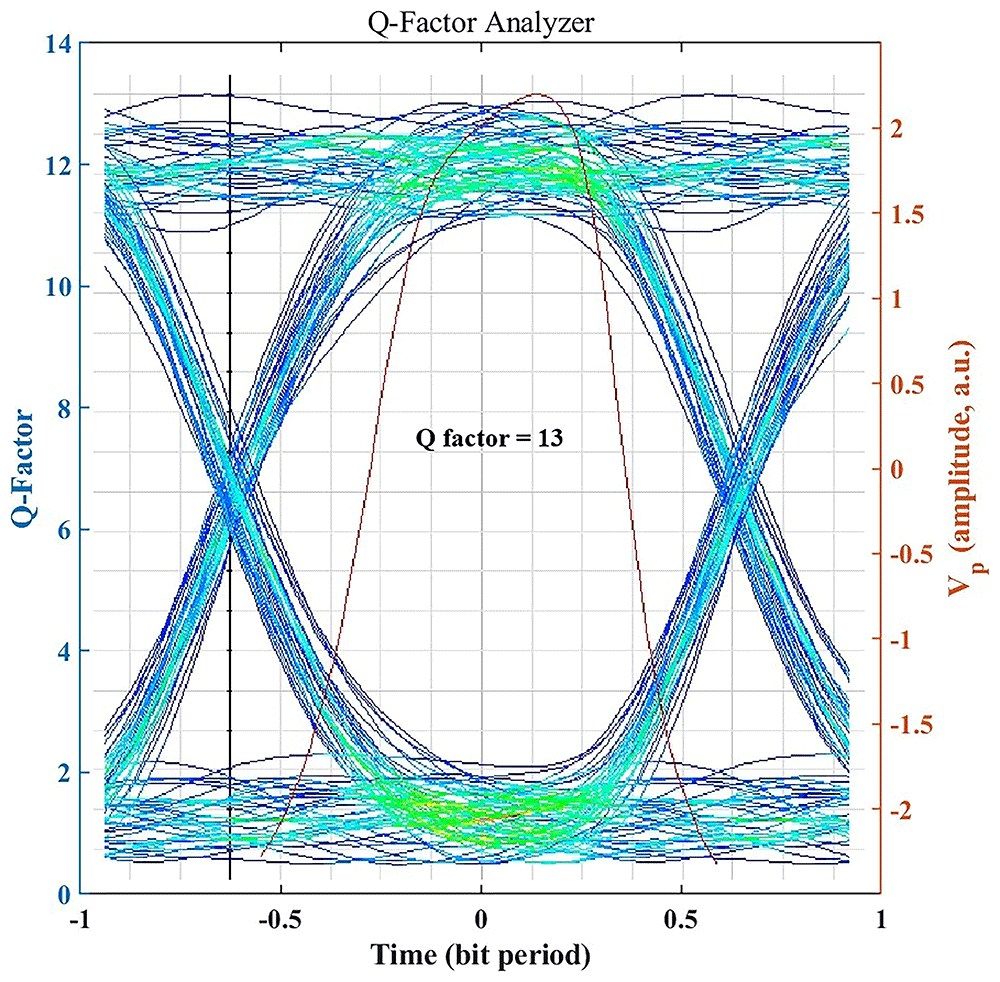
Figure 4. Eye diagram and Q factor under clear-air conditions.
BER degradation with link distance
The relationship between link distance and BER was examined via MATLAB simulations. Figure 5 plots the BER as a function of transmission distance in different weather conditions. As expected, increasing the distance causes the received optical power to drop (due to path loss and attenuation), which in turn degrades the BER. The system comfortably achieves BER < 10−9 up to about 2 km, ensuring error-free operation across typical hospital campus link lengths. Beyond 2 km, the BER begins approaching the 10−9 threshold under these weather conditions. Most inter-building distances in Maltese hospital campuses are within 1–2 km, meaning the system satisfies hospital deployment needs with ample performance margin. Even at 5 km (the extreme evaluated range), the BER remains below 10−9 in clear/hazy conditions. Under moderate rain, BER increases to ~10−8, which slightly exceeds the strict error-free threshold but can be effectively mitigated with forward error correction (FEC). This ensures that reliable and secure data transfer is still achievable, even at extended distances, for hospital communication requirements.
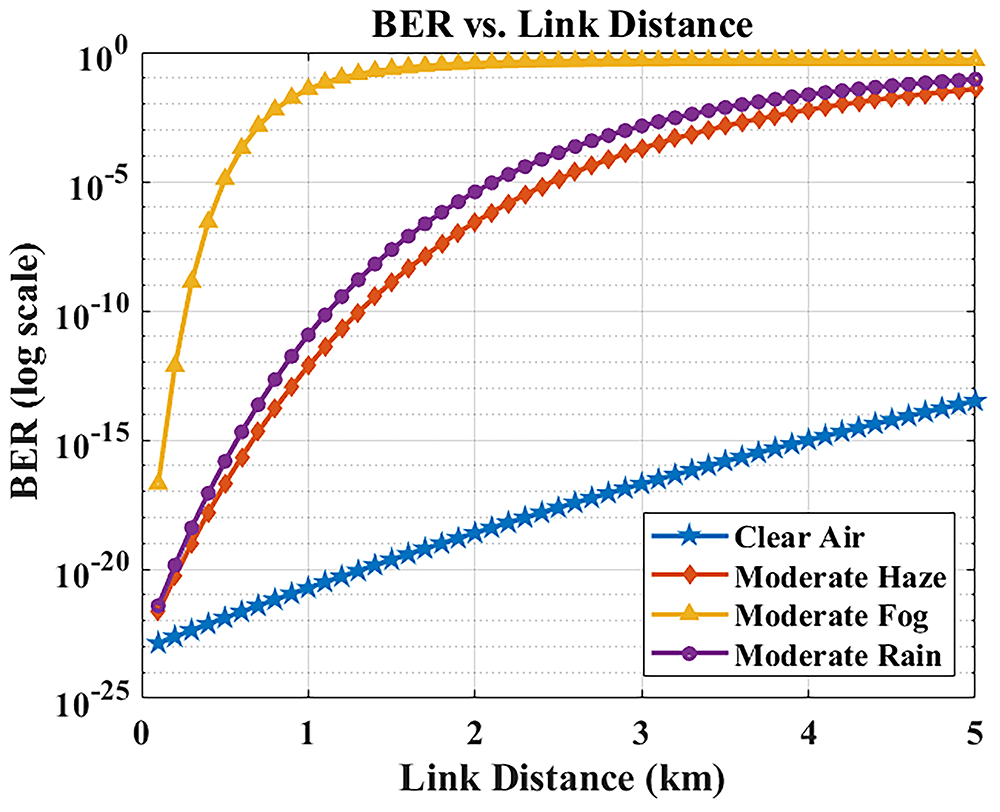
Figure 5. BER versus link distance in different weather conditions.
Received power vs. link distance
The distance between transmitter and receiver results in decreased received optical power through free-space path loss, combined with weather-based attenuation effects. Figure 6 shows the received power for different link lengths under different weather conditions (3.5 dB/km, representative of Malta’s climate).
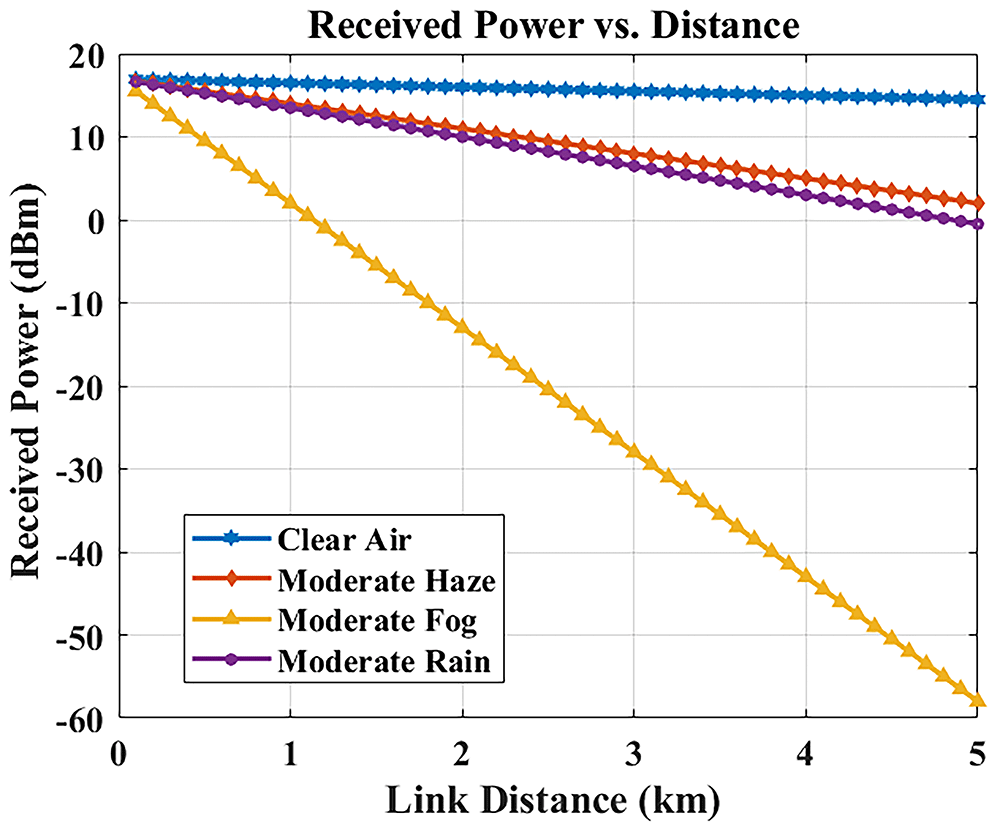
Figure 6. Received optical power versus link distance in different weather conditions.
At a link distance of 1 km, the received power remains at approximately –6.5 dBm, which is well above the receiver sensitivity threshold and thus enables reliable optical signal conversion. This confirms that the system can efficiently support inter-building hospital communication links at typical campus distances (1–2 km) while maintaining sufficient power margin for error-free transmission.
Link availability under maltese weather conditions
The reliability assessment of FSO systems heavily depends on link availability measurements, especially when used in critical applications like hospital communications, where minimal signal interruptions disrupt data integrity and real-time monitoring functions.
The link availability of the system emerges is illustrated in Figure 7 for four distinct Maltese weather conditions, assimilating visibility information of clear air, haze, fog, and rain conditions.
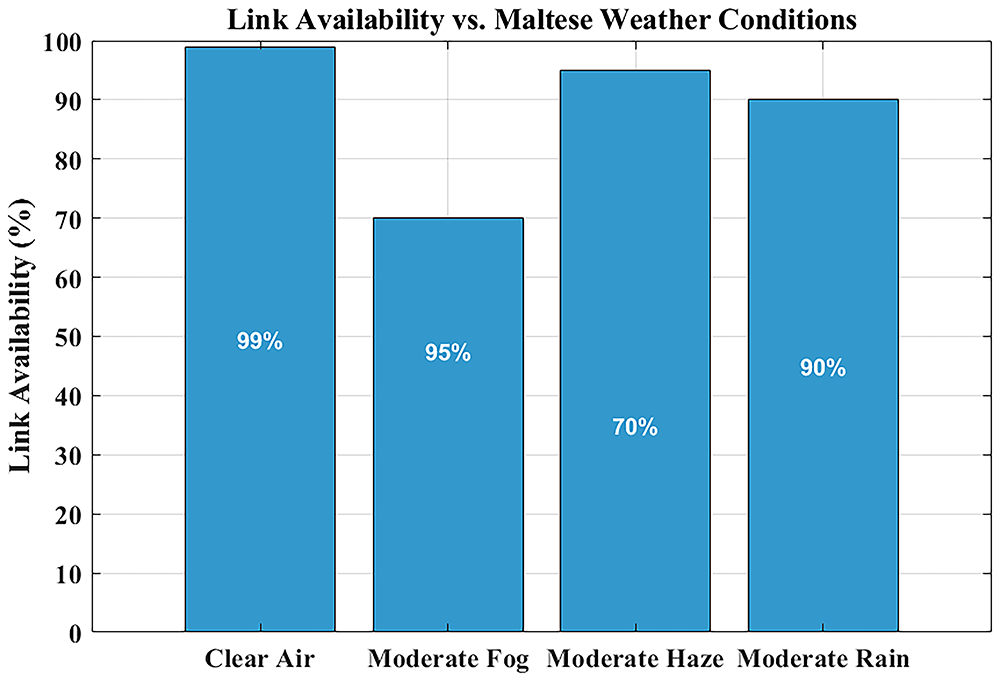
Figure 7. Link availability under Maltese weather conditions.
Link availability means the percentage of time the FSO system is able to have a consistent connection. This value is in this study by ensuring that the received signal power remains above the receiver sensitivity threshold of –35 dBm, with a link margin of ~29 dB under clear-air conditions. With MATLAB, values of attenuation as a result of the effects of weather (e.g., haze, rain, and fog) based on the visibility are used to estimate the received power. When the signal exceeds the threshold, it is said that the link is available. The cumulative time of such conditions is finally divided by the total time of observation to arrive at the percentage of availability of links.
Communication links under clear-air conditions exhibit near-perfect availability, which ensures uninterrupted communication streams. The system maintains ~99% availability under moderate rain and light haze. The link availability drops below 85% when moderate fog conditions with their high attenuation levels occur. However, fog events in Malta are rare—less than two days per year—making their impact negligible on long-term performance. This highlights that reliable hospital-grade connectivity can be achieved without hybrid RF backup, as rare fog events can be managed through automatic power control or adaptive data-rate reduction, rather than costly RF redundancy.
BER performance under Maltese weather conditions
The reliability of optical communication systems depends heavily on the Bit Error Rate (BER), a key parameter used to assess transmission accuracy. Figure 8 illustrates how BER varies under different weather conditions using attenuation values derived from actual visibility data in Malta. The system was simulated at a bit rate of 1.25 Gbps over a fixed link distance of 1 km, using attenuation levels specific to each weather scenario: 0.43 dB/km for clear air, 2.7 dB/km for moderate haze, 3.5 dB/km for moderate rain, and 15 dB/km for moderate fog.
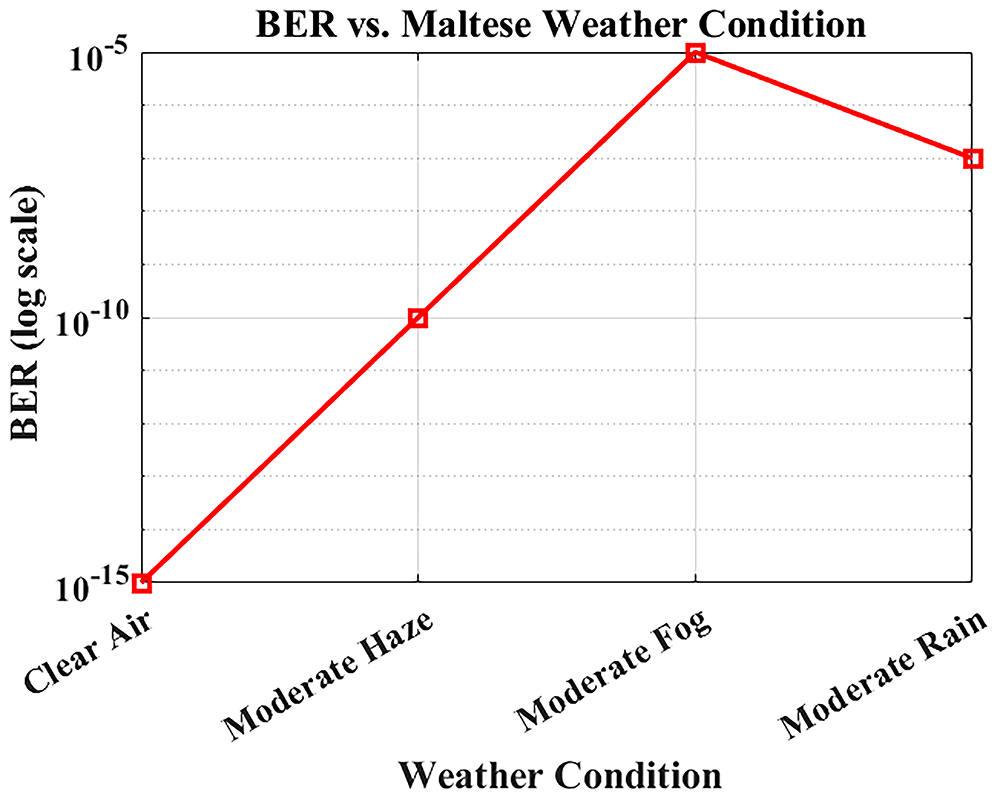
Figure 8. BER performance under different Maltese weather conditions.
Under clear-air conditions, the BER is effectively near zero, ensuring error-free operation. Reported BER values for clear-air, haze, and rain conditions remain in the practical error-free region (BER < 10−12). Moderate fog causes extreme attenuation and results in significant degradation, yet the system maintains operational functionality, albeit with reduced performance. Haze and rain cause moderate performance loss due to combined scattering and absorption effects, but the degradation remains within acceptable limits. Nevertheless, the FSO system still has a BER less than 10−9 under all possible weather conditions in Malta (clear air, haze, and rain), which validates its reliability for continuous hospital outdoor communication.
Q-Factor as a measure of signal integrity
The Q-factor relates directly to Bit Error Rate (BER) and to the signal-to-noise ratio (SNR) since it measures signal clarity. Deterioration of the weather conditions results in increased atmospheric attenuation and reduced Q-factor, both of which can be observed in Figure 9. The system was simulated at a bit rate of 1.25 Gbps over a constant link distance of 1 km, with attenuation values derived from Maltese visibility data: clear air (0.43 dB/km), moderate haze (2.7 dB/km), moderate rain (3.5 dB/km), and moderate fog (15 dB/km).
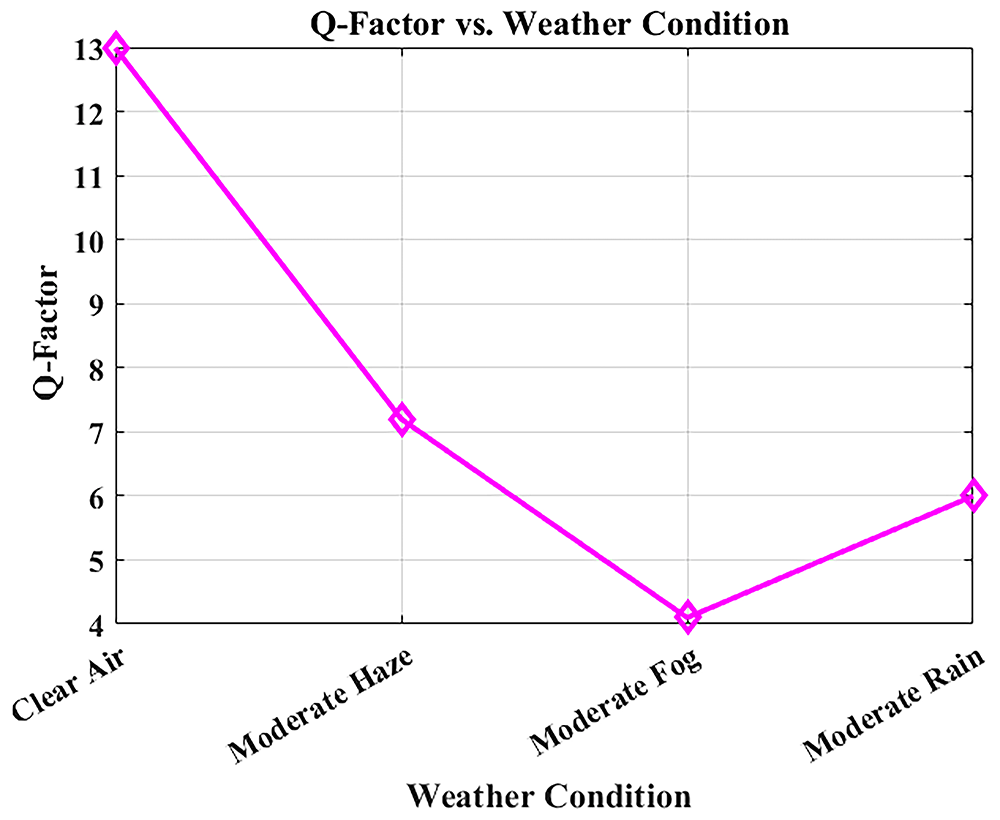
Figure 9. Q-factor variation with weather conditions in Malta.
With clear air conditions, the Q-factor is high at 12.99, which implies good signal integrity. In moderate haze and rainfall, the Q-factor remains above the critical threshold of 6, ensuring transmission quality remains acceptable for error-free communication. However, in foggy weather, where visibility is severely reduced by high attenuation, the Q-factor diminishes considerably. In such cases, power control adjustments or temporary data-rate reduction may be required to maintain performance, though the rarity of fog in Malta minimizes this challenge. These outcomes restate the robustness of the proposed 1550 nm FSO solution under typical Maltese weather conditions, qualifying it for inter-departmental hospital communications. Such resilience ensures continuous access to its digital patient record, imaging, and live health services.
Weather condition frequency and its impact on FSO attenuation
In order to guarantee the applicability of the simulation setting to the real weather patterns occurring in Malta, meteorological data obtained through official sources are considered over the period 2020–202321. Figure 10 shows the frequency distribution of some major weather conditions that may affect FSO signal propagation. The annual climate picture is characterized mainly by the dominance of clear air, as it happens approximately 68% of the time, then moderate haze comes in second at 25%. The percentage of moderated rain is about 6% and that of fog is very tiny to be seen less than 1%
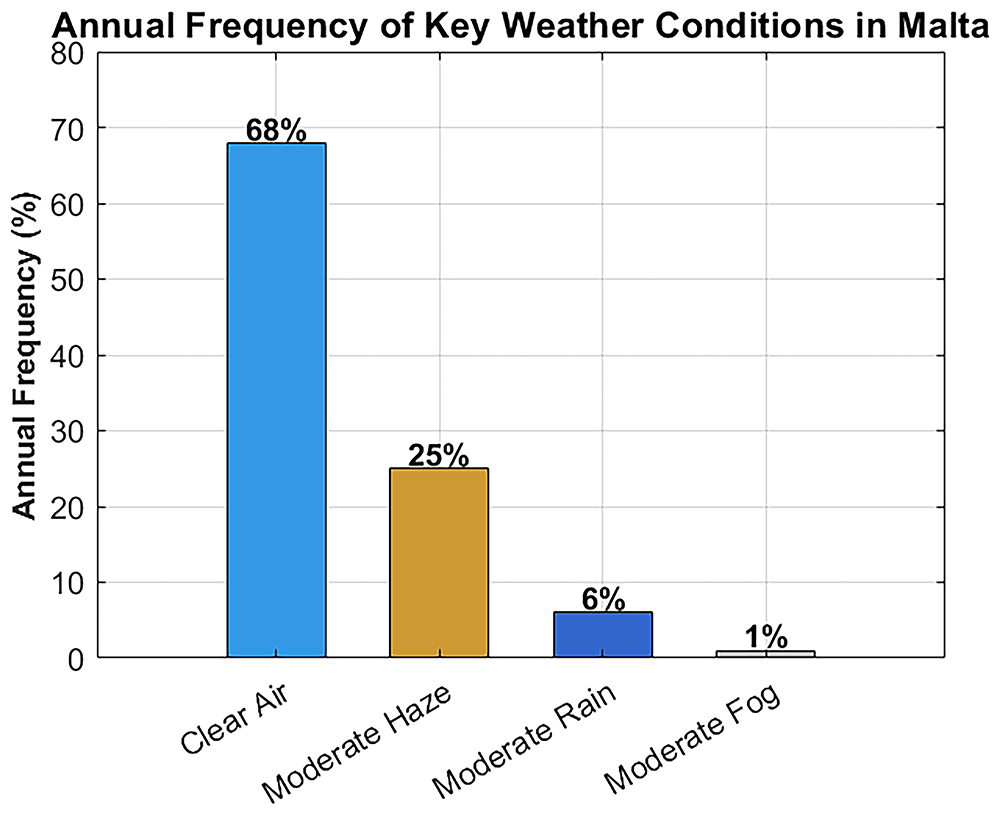
Figure 10. Annual frequency distribution of key weather conditions in Malta.
These statistics validate the decision to prioritize clear-air, haze, and rain scenarios in the system’s attenuation modeling and performance testing. The rare occurrence of fog supports the use of a simplified, standalone FSO system without the need for hybrid RF redundancy in most cases, while still ensuring reliable hospital connectivity.
Conclusion
This research brings a regionally optimized Free-Space Optical (FSO) communication system that maintains reliability for hospital inter-departmental networks in Malta. The system outperforms conventional RF-based solutions by eliminating electromagnetic interference (EMI) risks in medical environments while maintaining robust performance under Mediterranean weather conditions.
The architecture, based on a 1550 nm WDM-based transmitter and sensitive PIN photodiode receiver, was simulated under realistic climate scenarios using OptiSystem 21 and MATLAB R2024b.
Signal performance showed exceptional results through error-free operation (BER < 10−12 and a Q-factor of 13 in clear-air conditions. The system maintains high performance reliability when operating in conditions with moderate rain and haze since Q-factor values exceed 6 and BER metrics remain under 10−9. Link availability exceeds 99 % under standard conditions except for the rare occurrences of fog that affect Malta fewer than two days annually. Received power measurements indicate signal integrity maintenance at distances up to 5 kilometres, while operation reaches its best state at distances less than 2 kilometres, which fulfils all potential hospital deployment needs.
This study demonstrates that the proposed FSO system effectively addresses regional challenges such as coastal haze and seasonal rain, while also ensuring EMI resistance, simplified installation, and reduced deployment costs. Its standalone design eliminates the need for hybrid RF fallback systems, offering a cost-effective, streamlined solution.
Overall, this research delivers a dependable, hospital-focused FSO communication framework tailored for Mediterranean climates with limited fog occurrences. The proposed system ensures secure and high-speed data transfer for critical medical applications such as real-time monitoring, medical imaging, and electronic health records, while supporting scalable, future-ready healthcare networking infrastructures.
Future work and recommendations
Although the current system functions well under Malta's current climate conditions, a lightweight backup system that combines FSO and RF technology could serve as a redundancy measure to extend reliability across areas with changing climates. Conducting field trials on actual hospital campuses is recommended to validate simulation results, assess real-world performance, and identify potential installation challenges. Future applications of FSO systems include combining with 6G networks and Internet of Medical Things devices to aid in launching smart hospitals that support real-time data exchange, advanced diagnostics, and seamless inter-departmental communication.
Ethics and consent
Ethical approval and consent were not required for this study as it did not involve human participants, animals, or sensitive personal data.
Data availability
All data underlying this study are available from the Zenodo repository FSO Communication System in Maltese Hospitals (https://doi.org/10.5281/zenodo.17136324). The repository contains the following underlying data: Malta_Weather_Conditions.csv (weather condition data including visibility, attenuation, and annual frequency derived from Malta Airport observations and NSO climate statistics), Malta_Monthly_Averages.csv (monthly climate averages including temperature, sunshine hours, and rainfall obtained from the NSO Climate Publication 2022), and Simulation_Output_FSO.xlsx (Q-factor, BER, and received optical power results generated using OptiSystem and MATLAB simulations). The repository also includes extended data comprising Supplementary Table 1, which presents the complete weather–climate dataset used as input for simulation models, and Supplementary Figure Legends, which provide the titles and descriptions of all figures used in the manuscript. All data are available under the terms of the Creative Commons Zero “No rights reserved” data waiver (CC0 1.0 Public domain dedication).
Acknowledgements
The authors acknowledge the support of the Department of Computer Information Systems, Faculty of Information and Communication Technology at the University of Malta, for facilitating the simulation work.
Faculty Opinions recommendedReferences
- 1.
Khalighi MA, Uysal M:
Survey on free space optical communication: a communication theory perspective.
IEEE Commun Surv Tutor.
2014; 16(4): 2231–2258. Publisher Full Text
- 2.
Kaushal H, Kaddoum G:
Optical communication in space: challenges and mitigation techniques.
IEEE Commun Surv Tutor.
2017; 19(1): 57–96. Publisher Full Text
- 3.
Arnon S:
Optimization of urban optical wireless communication systems.
IEEE Trans Wireless Commun.
2003; 2(4): 626–629. Publisher Full Text
- 4.
Sharma PA, Xuereb L, Garg S, et al.:
Investigating the impact of haze on FSO system for beyond 5G connectivity in Malta. In: Applications of Artificial Intelligence in 5G and Internet of Things. CRC Press, Taylor & Francis, 2024; 513–518. Reference Source
- 5.
Sharma A, Xuereb PA, Garg L:
Evaluating the impact of snow on free space optical communication using artificial neural networks for BER prediction. In: IEEE International Conference on Cognitive Computing in Engineering, Communications, Sciences and Biomedical Health Informatics (IC3ECSB)). IEEE, Greater Noida, 2025; 1222–1226. Publisher Full Text
- 6.
Sharma A, Kaler RS:
Designing of high-speed inter-building connectivity by free space optical link with radio frequency backup.
IET Commun.
2012; 6(16): 2568–2574. Publisher Full Text
- 7.
Sharma A, Xuereb PA, Garg L:
Integration of Li-Fi and iot for sixth-generation (6G) communication systems. In: 2024 International Conference on Emerging Technologies and Innovation for Sustainability (EmergIN). IEEE, 2024. Publisher Full Text
- 8.
Galdies C:
The state of the climate 2022 - a multidecadal report and assessment of Malta’s climate. Valletta, Malta: National Statistics Office, 2022. Reference Source
- 9.
Ghassemlooy Z, Popoola W, Rajbhandari S:
Optical wireless communications: system and channel modelling with MATLAB. Boca Raton, FL, USA: CRC Press, 2019. Publisher Full Text
- 10.
Al-Gailani SA, Mohd Salleh MF, Salem AA, et al.:
A survey of Free Space Optics (FSO) communication systems, links, and networks.
IEEE Access.
2021; 9: 7353–7373. Publisher Full Text
- 11.
Mohsan SAH, Khan MA, Amjad H:
Hybrid FSO/RF networks: a review of practical constraints, applications and challenges.
Opt Switching Netw.
2023; 47: 100697. Publisher Full Text
- 12.
Awan MS, Csurgai-Horváth L, Muhammad SS, et al.:
Characterization of fog and snow attenuations for free-space optical propagation.
J Commun.
2009; 4(8): 533–545. Reference Source
- 13.
Habaebi MH, Jamal NFA, Islam R, et al.:
Tropical terrestrial free space optical link performance analysis.
Int J Interact Mob Technol.
2022; 16(12): 94–102. Publisher Full Text
- 14.
Ahmed I, Karvonen H, Kumpuniemi T, et al.:
Wireless communications for the hospital of the future: requirements, challenges and solutions.
Int J Wireless Inf Netw.
2020; 27: 4–17. Publisher Full Text
- 15.
Esmail MA, Fathallah H, Alouini MS:
Outdoor FSO communications under fog: attenuation modeling and performance evaluation.
IEEE Photon J.
2016; 8(4): 1–22. Publisher Full Text
- 16.
Kim II, McArthur B, Korevaar EJ:
Comparison of laser beam propagation at 785 nm and 1550 nm in fog and haze for optical wireless communications. In: Proc. SPIE 4214, Optical Wireless Communications III. 2001; 26–37. Publisher Full Text
- 17.
International Electrotechnical Commission: IEC 60601-1-2:2014+AMD1:2020 CSV – Medical electrical equipment – part 1-2: general requirements for basic safety and essential performance - collateral standard: electromagnetic disturbances – requirements and tests. 4th ed., 2020. Reference Source
- 18.
International Telecommunication Union: Attenuation due to clouds and fog. recommendation ITU-R P.840-8, 2019. Reference Source
- 19.
Agrawal GP:
Fiber-optic communication systems. Wiley, 2021. Publisher Full Text
- 20.
Thorlabs: PIN Photodiode FGA015. Datasheet, 2023. Reference Source
- 21.
Malta Meteorological Office: Annual climate reports 2020–2023. Valletta, Malta, 2024.
- 22.
Malta International Airport: Weather observations at Malta airport. January, 2024. Reference Source







