Introduction
With the 2015 Paris Agreement, the international community agreed to limit the rise in global temperature at least to below 2°C (UNFCCC, 2015). Mid-century net-zero or net negative climate scenarios rely on the large-scale deployment of Carbon Dioxide Removals (CDR) that can remove CO2 from the atmosphere. In the latest IPCC report (AR6), there are 1202 climate scenarios with >66% probability of limiting global warming to below 2ºC. More than half (605) of these scenarios are considering significant deployment of CDR (IPCC, 2023).
Nature-based Solutions (NbS) are defined as actions to protect, sustainably manage and restore natural or modified ecosystems, which address societal challenges (e.g. climate change, food and water security or natural disasters) effectively and adaptively, while simultaneously providing human well-being and biodiversity benefits (Cohen-Shacham et al., 2016). Some NbS also contribute to reducing the greenhouse gas content of the atmosphere, with an estimated global mitigation potential of over 10 GtCO 2 yr−1 under ambitious but realistic scenarios (Roe et al., 2019). However, it’s crucial to have a realistic picture of which NbS are feasible in which location, and at what scale; embarking on a pathway that assumes unrealistically large amounts of future NbS could lead society to set near-term targets that are too lenient and thus greatly overshoot the carbon budget, without a way to undo the damage (Dooley & Kartha, 2018).
To create appropriate plans that maximize the benefits of the implementation of these techniques while avoiding the risk of setting too-lenient targets, it is crucial to understand how these are affected by climate change, and which consequences their implementation would have on the environment.
Interviewing stakeholders is a good way of finding out about the perceived climate risks, co-benefits and barriers to the implementation of NbS. This study reports the results from interviews with 97 stakeholders in 12 countries on the effects on the environment of a range of NbS and the climate risks they face. At the same time, this study intends to gather insights on complementary effects of NbS beyond mitigation that should be considered when assessing their scaling potential.
NbS considered in the study
We consider a variety of established land and nature-based practices in this study, explicitly excluding ocean-based and technological solutions such as BECCS. The exclusion is due to ocean-based solutions being too novel to ensure significant widespread awareness among stakeholders, and to most technical solutions offering limited ecosystem services. To streamline the analysis, these practices have been categorized into NbS families, each containing related practices with similar risk and environmental effect profiles. Specific remarks for individual practices have been included in the results when necessary.
Afforestation, reforestation and forest management. Afforestation and reforestation are methods for re-establishing forest coverage in regions that have either never been forested (afforestation) or have been subject to deforestation (reforestation). These techniques are widely recognized and readily available. However, they require substantial land resources, which can lead to decreased food production or heightened food prices. Additionally, these methods are susceptible to political instability and inadequate governance, which can compromise the longevity and ancillary benefits of these projects. The estimated global mitigation potential of afforestation is approximately 4.9 GtCO2 per year. (Doelman et al., 2020). In this study, forest management encompasses different forestry-related practices such as forest restoration and Indigenous forest fire management (Bilbao et al., 2022).
Sustainable agriculture. In this study, the sustainable agriculture category encompasses a variety of agricultural practices that have been demonstrated to enhance carbon stocks or reduce greenhouse gas (GHG) emissions. These practices differ from conventional industrial agricultural techniques and do not involve a forestry component. Assessed methods include crop rotation, Integrated Soil Fertility Management (ISFM) (Laub et al., 2023), biochar, dry-seeded rice cultivation (Karki et al., 2023), reduced tillage (Christoph et al., 2019) and several traditional agricultural practices in Africa (Célestin et al., 2023). Estimates suggest these practices could potentially sequester several hundred million to gigatons of CO2 annually globally (IPCC, 2019).
Agroforestry and agrosilvopastoral systems. Agroforestry is the practice of deliberately integrating woody vegetation (trees or shrubs) with crops to benefit from the resulting ecological and economic interactions (Pantera et al., 2021). This practice encompasses a spectrum of systems, from incorporating trees at the peripheries of traditional agricultural fields to establishing intricate food forest systems. Agroforestry systems have the potential for carbon sequestration both above and below ground; however, the broad definition of agroforestry complicates the estimation of its global mitigation potential; however, IPCC estimates agroforestry could offset 0.1 to 2.1 gigatons of CO2 equivalent per year by 2030 (IPCC, 2019).
Agrosilvopastoral systems, a subset of agroforestry, integrate grazing animals into the practice. This categorization is significant as agrosilvopastoral systems frequently exhibit more intricate biological interactions and accelerated biological cycles than traditional agroforestry systems (Sanna et al., 2021).
Wetland management. Wetlands play a crucial role in carbon sequestration, soil health (including water balance, nutrient retention, and soil protection), biodiversity, and overall climate resilience. Their highest mitigation potential arises from the emission reductions associated with rewetting and preserving undisturbed wetlands. Wetlands are estimated to contain approximately the same amount of carbon as all forests combined, making them ten times more carbon-dense than forests. Although only 0.3% of all wetlands have been drained, the emissions from these disturbed wetlands are estimated to account for 6% of anthropogenic emissions (Bridgham et al., 2006) (Dixon et al., 1994). Aside from GHG emissions and environmental degradation, the draining of wetlands causes soil subsidence, which is associated with large socio-economic costs due to infrastructure damage. The wetland management techniques included in this study are in the family of wetland rewetting, a process where the water table of drained wetlands is raised to avoid the oxidation of organic matter and the sinkage of land.
Methods
Design process
This study aims to elucidate stakeholders’ perceptions of the risks, environmental impacts, barriers, and opportunities associated with NbS, understanding perceptions as “ideas, beliefs or images you have as a result of how you see or understand something” (Oxford, 2024) rather than strictly backed quantitative data. Stakeholder perceptions were systematically collected through a series of interviews, guided by a questionnaire with used by the interviewer as a supporting tool with open-ended questions. The questionnaire is available as Extended Data (Gil Picon, 2025a). As part of the method, all interviews received explicit consent from the interviewees, according to the methodolopgy approved by the project’s ethic committee (see Data Availability). The data in this study and its related database is anonymized as an explicit requirement from some stakeholders, who expressed their concerns about linking their responses to their identity. This labour-intensive methodology was intentionally chosen over less resource-intensive alternatives, such as online surveys, to ensure the acquisition of high-quality, nuanced responses.
The development of the questionnaire was based on an extensive literature review (Pidgeon & Butler, 2009; WOCAT, 2019; World Bank, 2024) on the risks linked to climate extremes (unusually intense climate events) and environmental impacts associated with NbS, and was created in collaboration with experts in modelling, earth observations, and stakeholder engagement. Potential risks and effects on the environment were shortlisted to avoid overlaps and stakeholder exhaustion, identifying the most clearly recognisable and relevant factors affecting the assessed practices, resulting in 17 options for climate risks and 18 options for effects on the environment. The shortlisting process was designed to ensure comprehensiveness by addressing the hazard-exposure-vulnerability profile of each option (Switzerland & Barros, 2012). Respondents were asked to indicate the up to 5 most significant climate risks and effects on the environment to avoid noise on the data. Following its initial design, the questionnaire underwent multiple rounds of testing and refinement in the Netherlands, Indonesia, and Portugal, ensuring diversity in environmental and sociocultural contexts. Each iteration allowed for adjustments in language and content to enhance the questionnaire's global applicability and representativeness, as illustrated in Figure 1.
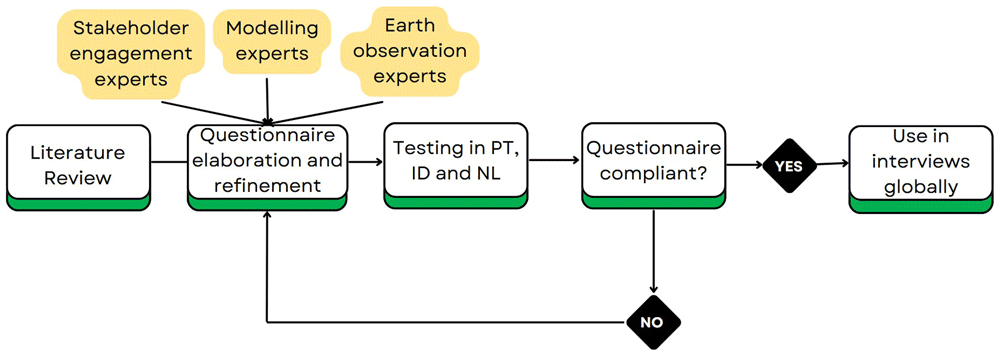
Figure 1. Questionnaire development flowchart.
Design steps are highlighted in green, and experts involved are highlighted in yellow.
After the questionnaire was deemed compliant by the pilot case studies, it was applied globally (see Geographical scope), with the questionnaires being translated to the local languages. Stakeholder engagement experts from each country produced a report accompanying the questionnaire for each interaction. The responsible scientist compiled and synthesised all the information in questionnaires and reports. Questionnaire responses on the most significant risks and effects on the environment were directly aggregated to produce quantitative data allowing for comparative analysis and the elaboration of charts (see Results and Data availability and extended data). The information in the reports was summarised on a country-practice basis and assisted in the interpretation of these results, bringing context and identifying links and nuances.
Geographical scope
Despite not aiming for statistical representativeness, this study aimed to achieve geographical significance by encompassing a diverse array of environmental conditions and sociocultural contexts. To do this, engagement activities took place in 12 globally spread countries, as shown in Table 1, along with the number of engagement activities per country. In each of these locations, at least two NbS were evaluated. This approach enabled the identification of location-specific risks and environmental impacts, as well as those intrinsically linked to the practices themselves through comparative analysis of techniques across different settings.
Table 1. Countries assessed and number of stakeholder engagement activities in each country.
| Country | Spain | Portugal | Germany | Switzerland | The
Netherlands | Burkina
Faso | Kenya | Vietnam | Nepal | Indonesia | Canada | Venezuela |
|---|
Number
of
interviews | 11 | 4 | 2 | 9 | 5 | 18 | 5 | 5 | 4 | 11 | 8 | 2 |
From Table 1 it can be noted that, despite some countries being over-represented (Spain, Burkina Faso, Indonesia and Switzerland), these case studies represent dramatically different natural and socio-economic environments, so results are not expected to significantly lean towards a specific bias.
Stakeholder selection
Before initiating the global consultation phase, a preliminary evaluation of the stakeholder network demographics was conducted. Recognizing the over-representation of certain profiles, notably male, academic, and consultancy stakeholders, a targeted engagement strategy was implemented to enhance representativeness, engaging a total of 97 stakeholders. Although gender parity was not fully achieved, with a respondent distribution of 34.2% female and 65.8% male, this outcome reflects a significant improvement compared to what would have occurred without targeted efforts. The gender disparity can be attributed to the male-dominated nature of the land use sector and challenges in engaging women in more conservative contexts (Gebrehiwot et al., 2018).
As illustrated in Figure 2, all age groups are similarly represented, and while research/consultancy/NGO profiles (described as knowledge industry in Figure 2) remain over-represented, there is significant representation across all stakeholder groups. This demographic assessment allowed for a more balanced and inclusive consultation process, reducing biases and better representing the stakeholder perceptions.
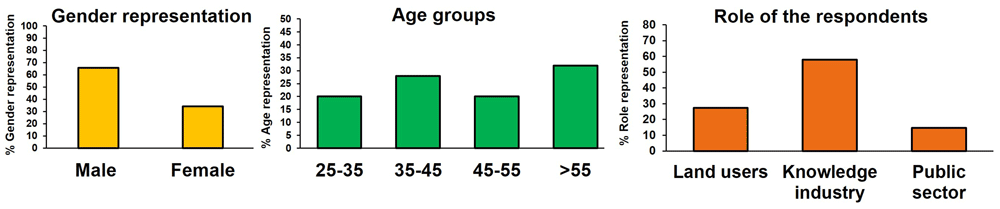
Figure 2. Demographics of the repondents.
Results
The abovementioned stakeholders were consulted by researchers in their home countries, with most engagement activities taking the form of interviews, and some results being gathered through stakeholder workshops. Data collected from these engagement activities was aggregated to generate an overview of the primary findings in climate risks and effects on the environment (as outlined below), with more detailed results available per NbS family (see Data availability and extended data).
Perceived climate risks
Figure 3 llustrates the most relevant perceived climate risks associated with the assessed practices, grouping some related risks within the same category for simplicity. Droughts, heavy rainfall, heatwaves, and erosion are universally recognized as the most critical climate risks across all evaluated practices and countries. A detailed analysis of stakeholder responses reveals that heatwaves and droughts are often mentioned interchangeably, as both typically result from prolonged periods of anticyclonic weather. However, stakeholders commonly highlight irregular rainfall patterns as the most damaging climate extreme, emphasizing that heat waves are not as damaging to the practices when accompanied by enough precipitation. Moreover, stakeholders perceive droughts not necessarily as a reduction in total annual rainfall but as prolonged periods with insufficient precipitation, leading to an irregular and unpredictable distribution of rainfall events (Udmale et al., 2014). This perception aligns with stakeholders' concerns about increasingly intense rainfall events, which exacerbate the risk of erosion. Consequently, erosion is identified as a major threat to practices, exacerbated by the cycle of droughts followed by heavy rainfall periods. (Qiu et al., 2021). Stakeholder perceptions of the main climate risks remained remarkably consistent across countries, highlighting that climate challenges faced by land users are similar in most locations; however, stakeholders from the global south generally reported higher levels of exposure to these hazards due to warmer climates and less developed land use infrastructure.
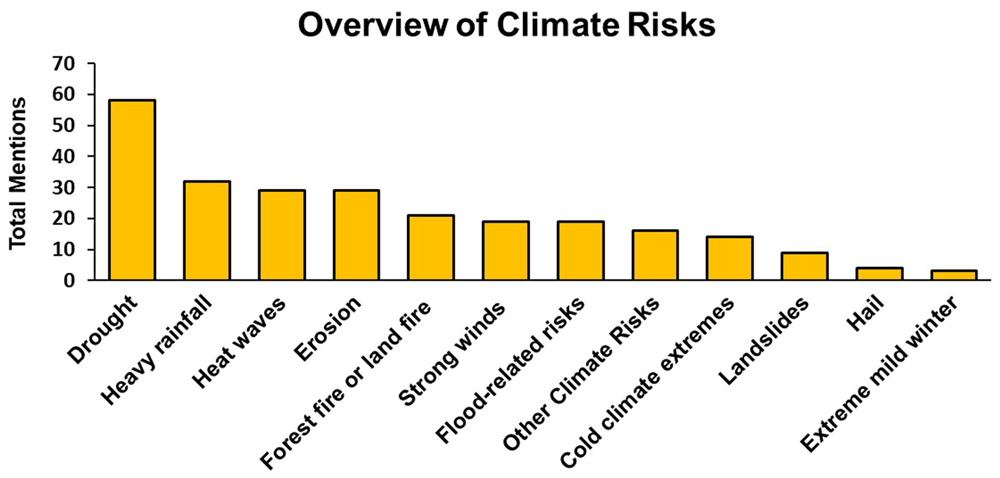
Figure 3. Overview of climate risks.
It is worth noting that perceptions of exposure vary significantly across different techniques. Well-designed NbS involving trees are regarded as remarkably resilient to most climate extremes once they reach maturity. However, they are vulnerable during their early stages, with droughts not only compromising the health of young trees (Engelbrecht et al., 2005) but also driving animals to feed on them when other food sources are scarce. Additionally, the majority of responses categorized as "other risks" refer to pests being perceived as an increasingly significant climate-related risk (Skendžić et al., 2021). Stakeholders highlighted the decline in vegetation health due to climate extremes, coupled with the proliferation of pathogens previously absent in the area, as the main contributing factors (Ryan, 2011).
More complex multivariable factors, perceived as more challenging to identify but with far-reaching effects, include the disruption of biological cycles. When normal interactions within the ecosystem are altered by climate extremes, cascading effects can arise in various forms and timeframes, threatening practices without an easily identifiable cause. These disruptions can have extensive and unpredictable impacts, complicating efforts to maintain and adapt sustainable practices (Carey, 2009).
Perceived effects on the environment
Despite the study being designed to elucidate both positive and negative environmental effects, only positive effects are shown in Figure 4, as mentions of negative impacts were very scarce during the engagement actions; most references to negative effects concerned a potential increase in albedo due to increased forest cover and biochar application, or the consequences of poorly implemented plans, such as an increase in the risk of pests and forest fires.
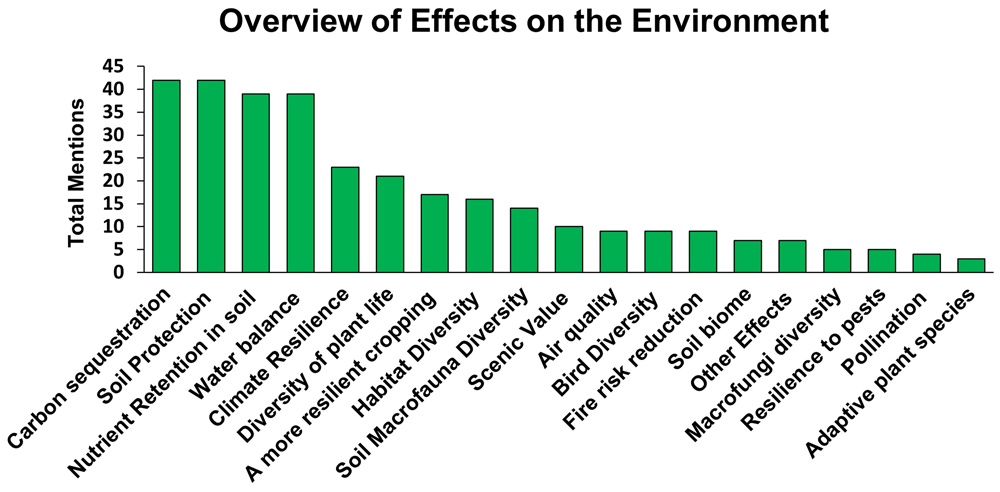
Figure 4. Overview of effects on the environment.
It is worth noting that carbon sequestration was mentioned as one of the top five effects in less than half (42 out of 97) of the engagement actions, as seen in Figure 4. This suggests that either the mitigation potential of some techniques is not perceived as one of the most relevant effects or, more likely, that effects related to increased resilience and climate adaptation are stronger implementation drivers or more easily observed benefits for most stakeholders.
Figure 4 reveals that most environmental effects count on significant number of mentions, with those related to soil health (nutrient retention, water balance, and soil protection) being the most frequently cited across practices and locations, along with effects related to resilience and biodiversity. Additionally, most techniques were reported to be capable of restoring degraded ecosystems, although heavily degraded ecosystems may be unsuitable for some practices and may require a multi-stage ecosystem restoration process (Aradottir & Hagen, 2013). The increase in biodiversity, notably through tree-related practices and various sustainable agriculture techniques, is reported to promote ecological interactions among system components (Udawatta et al., 2019), thereby enhancing system health and resilience to climate extremes.
Discussion
A detailed analysis of responses on climate risks reveals that rain irregularity—characterized by longer periods without precipitation, concentrated heavier rainfall, alternating drought and heavy rain periods, and off-season precipitation, and represented in this study as droughts and heavy rain rainfall —is perceived as the greatest threat to most practices, in line with previous studies (Byrareddy et al., 2024). Rain irregularity triggers detrimental processes such as erosion and decreased plant health, leading to cascading effects that degrade the system's condition across all assessed practices and locations; the effects of climate change are perceived to negatively affect NbS. This study addresses previously identified research gaps concerning the geographical distribution of risk assessment studies related to NbS (Quandt et al., 2023)
However, most of the evaluated NbS are reported to enhance and restore soil health and support more complex biological cycles. This is a particularly relevant observation given the findings on Climate risks, as it suggests that most practices enhance resilience against their primary climate hazards (such as rain irregularity), thereby preventing further ecosystem degradation processes (as soil erosion) (see Data availability and extended data) (Li & Fang, 2016). These improvements increase the system's resilience against climate extremes over time, counteracting the environmental deterioration processes initiated by climate change and unsustainable land use practices, making NbS powerful tools for climate adaptation. A relevant remark to previous studies (Lasco et al., 2014) is that agrosilvopastoral systems in Spain and Portugal are reported to increase carbon stocks compared to naturally occurring forests in their native areas.
Another observation that warrants special attention is that, despite carbon sequestration being frequently mentioned as an environmental benefit, it was cited in less than half of the engagement activities. This indicates that increasing carbon stocks is often not a primary priority for stakeholders, particularly among land users in the Global South, and signals that ecosystem services are the main driver for the implementation of NbS.
Implications and way forward
Perceptions from engagement actions consistently indicate that effects on climate adaptation and resilience are the primary drivers for stakeholders to implement NbS, while climate change mitigation, despite being a proven benefit across all assessed techniques, plays a secondary role in decision-making, particularly in developing countries. Most stakeholders report that the benefits of adaptation typically manifest in the mid to long term, whereas the major investments, increased workload, and often reduced yields occur during the implementation phase (Schulte et al., 2022). This dynamic significantly limits the upscaling potential of NbS.
Acknowledging the potential of NbS as tools for both mitigation and adaptation could bring opportunities for widening their implementation (Karki et al., 2023); carbon markets and mitigation policies, such as NDCs, offer the opportunity to capitalise on mitigation benefits in the early phases, easing the gap between initial investment and returns in the form of improved system resilience. Understanding the role of NbS in mitigation policies this way could have a dramatic effect on both mitigation and adaptation, as countries could foster NbS to meet their mitigation targets, and at the same time improve their resilience to the effects of climate change. This approach could be facilitated by improving financial instruments, fostering an entrepreneurial environment, and enhancing peer learning mechanisms, as previously identified (Karki et al., 2023) (UNFCCC, 2022). However, excessive bureaucracy and rigid environmental policies are reported to obstruct the implementation of NbS in the Global North, while unsupportive policies and a lack of technical resources have been identified as significant barriers in the Global South (Bößner et al., 2023).
Although NbS are regarded as effective tools for mitigation, stakeholder responses suggest their primary implementation driver for land users is their adaptation benefits (see Data availability and extended data). It is crucial to recognize that many of these practices require years or even decades to reach their full mitigation potential, and that careful planning is essential for their long-term effectiveness and sustainability. Expanding our understanding of NbS as valuable tools for both adaptation and mitigation—and recognizing that mitigation is often a top-down priority, while interest in adaptation typically emerges from the bottom-up—could help shape policies that are more socially acceptable and enhance the impact of implementation efforts.
Limitations and gaps
Given the broad range of techniques and locations covered, the primary aim of this study is not to achieve statistical significance but to prioritize quality engagement actions that provide context and nuances to the responses. The results shown in Figure 3 and Figure 4 are a direct aggregation of the responses, therefore results could show a bias towards the countries with the highest number of engagement actions. This was considered the best option, as representing the data as the aggregation of percentages in each country would result in less representative results, since the low number of interviews in some countries could introduce significant noise on the findings (see Table 1). Given the variety of profiles engaged (see Figure 1), the level of expertise on the assessed techniques varies, so the interviewers had to adapt to this factor and offer different levels of support during the engagement process; however, this variability is not necessarily a limitation, as it offers a more comprehensive understanding of the potential diversity of perceptions. For example, stakeholders in the global north were on average more informed about the mitigation potential and the policy framework linked to the practices, whereas stakeholders in the global south showed a higher awareness of the adaptation advantages. It is important to acknowledge a bias in the responses, with stakeholders associated with a particular practice often providing more positive feedback than those who are not directly involved. Further research is necessary to determine whether this bias corresponds to confirmation bias (Peters, 2022) or if parties not directly involved typically underestimate the benefits. A more comprehensive study could aim to create a detailed profile of the specific demographics of land use in different regions and tailor stakeholder engagement efforts to mirror these profiles, achieving an optimal representation. Besides, engaging a similar number of stakeholders from each country could help avoid biases.
Ethics and consent
All stakeholder consultations were conducted following ethical standards requiring explicit informed consent. Where written consent was not feasible due to stakeholder preference, vulnerability, or engagement setup, explicit verbal consent was obtained prior to collecting any data.
By providing consent, stakeholders confirmed that they:
• Understand the purpose of the study and how their responses will be used.
• Agree to participate voluntarily and understand they may withdraw at any time without penalty.
• Are assured that their data will be handled confidentially, anonymized, and stored in accordance with ethical guidelines and data protection regulations.
This study was approved by the ethics committee of LANDMARC (Grant Agreement No. 869367), based in TUDelft, Delft, the Netherlands, and led by Dr. Jenny Lieu. As per the internal procedures of this committee, no formal approval number was assigned. The ethics committee conducted an independent review to ensure compliance with ethical standards for research involving human participants.
The study was conducted in accordance with the principles of the Declaration of Helsinki (World Medical Association, 2013).
The signed ethics consent can be found in (Gil Picon, 2025b).
Data availability and extended data
Underlying data
Zenodo: Public Data Stakeholder consultation LANDMARC, https://doi.org/10.5281/zenodo.16038761 (Gil Picon, 2025b)
This project contains the following underlying data:
Public Data NbS. (Compliled results from the stakeholder consultations).
Ethics Committee Statement (Approval for stakeholder consultation methodology)
Data is available under the terms of the Creative Commons Zero v1.0 Universal
Extended data
Zenodo: Stakeholder perceptions of NbS Appendix, https://doi.org/10.5281/zenodo.16039213
(Gil Picon, 2025a)
This project contains the following extended data:
Stakeholder perceptions of NbS Appendix. (Extended granular data per NbS technique and region)
Data is available under the terms of the Creative Commons Zero v1.0 Universal
Acknowledgements
The authors would like to thank the LANDMARC project partners for providing a platform to expand our views on NbS, and to all current and past collaborators whose input made this study: José Rafael Marques da Silva, Patrícia Lourenço (Agroinsider), Federico Julián, Pilar Martín Gallego, María Martínez (Ambienta), Moritz Laub (ETHZ), Hannes Böttcher, Anke Benndorf (Öko-Institut), Malte Renz (JIN Climate and Sustainability), Mohamed Ahmed, Annemarie Klaasse (eleaf), Jenny Lieu, Luis Virla Alvarado, David Ismangil (TU Delft), Rosalba Gómez Martínez (COBRA collective), Eileen Torres and Maria Xylia (Stockholm Environment Institute), and Richard Flockemann (University of Sussex). This study benefited from European Union Horizon 2020 research and innovation program funding under Grant Agreement No. 869367 (LANDMARC).
Faculty Opinions recommendedReferences
- Aradottir AL, Hagen D:
Chapter three - ecological restoration: approaches and impacts on vegetation, soils and society. In: Sparks, D.L. (Ed.), Advances in Agronomy. Academic Press, 2013; 173–222. Publisher Full Text
- Bilbao B, Millán A, Luque MM, et al.:
An intercultural vision for integrated fire management in Venezuela [WWW Document]. Tropenbos Int, 2022. Publisher Full Text
- Bößner S, Xylia M, Bilbao B, et al.:
Capacity gaps in land-based mitigation technologies and practices: a first stock take.
Land Use Policy.
2023; 134: 106888. Publisher Full Text
- Bridgham SD, Megonigal JP, Keller JK, et al.:
The carbon balance of North American Wetlands.
Wetlands.
2006; 26(4): 889–916. Publisher Full Text
- Byrareddy VM, Kath J, Kouadio L, et al.:
Assessing scale-dependency of climate risks in coffee-based agroforestry systems.
Sci Rep.
2024; 14(1): 8028. PubMed Abstract
| Publisher Full Text
| Free Full Text
- Carey C:
The impacts of climate change on the annual cycles of birds.
Philos Trans R Soc Lond B Biol Sci.
2009; 364(1534): 3321–3330. PubMed Abstract
| Publisher Full Text
| Free Full Text
- Célestin T, Adulrahman L, Soumabere C, et al.:
Effects of Zaï pit depth on morphological traits, yield components and yield of Cowpea (Vigna unguiculata (L.) Walp) in Burkina Faso.
Asian J Adv Agric Res.
2023; 23(4): 55–68. Publisher Full Text
- Christoph B, Keel SG, Leifeld J:
The role of atmospheric Carbon Dioxide Removal in Swiss climate policy. 2019. Reference Source
- Cohen-Shacham E, Walters G, Maginnis S, et al.:
Nature-based solutions to address global societal challenges. 2016. Publisher Full Text
- Dixon RK, Brown S, Houghton RA, et al.:
Carbon pools and flux of global forest ecosystems.
Science.
1994; 263(5144): 185–190. PubMed Abstract
| Publisher Full Text
- Doelman JC, Stehfest E, Van Vuuren DP, et al.:
Afforestation for climate change mitigation: potentials, risks and trade‐offs.
Glob Change Biol.
2020; 26(3): 1576–1591. PubMed Abstract
| Publisher Full Text
- Dooley K, Kartha S:
Land-based negative emissions: risks for climate mitigation and impacts on sustainable development.
Int Environ Agreem Polit Law Econ.
2018; 18: 79–98. Publisher Full Text
- Engelbrecht BMJ, Kursar TA, Tyree MT:
Drought effects on seedling survival in a tropical moist forest.
Trees.
2005; 19: 312–321. Publisher Full Text
- Gebrehiwot M, Elbakidze M, Lidestav G:
Gender relations in changing agroforestry homegardens in rural Ethiopia.
J Rural Stud.
2018; 61: 197–205. Publisher Full Text
- Gil Picón G:
Stakeholder perceptions of NbS Appendix. 2025a. http://www.doi.org/10.5281/zenodo.16039212
- Gil Picón G:
Public data stakeholder consultation LANDMARC. 2025b. http://www.doi.org/10.5281/zenodo.16941410
- Intergovernmental Panel on Climate Change (IPCC) (Ed.): Technical summary. In: Climate change 2022 – impacts, adaptation and vulnerability: working group II contribution to the sixth assessment report of the intergovernmental panel on climate change. Cambridge University Press, Cambridge, 2023; 37–118. Publisher Full Text
- IPCC: Chapter 6 : Interlinkages between desertification, land degradation, food security and GHG fluxes: synergies, trade-offs and integrated response options — Special report on climate change and land [WWW Document]. 2019; (accessed 7.9.24). Reference Source
- Karki L, Lieu J, Xylia M, et al.:
Potentials and barriers to land-based mitigation technologies and practices (LMTs)—a review.
Environ Res Lett.
2023; 18(9): 093003. Publisher Full Text
- Lasco RD, Delfino RJP, Espaldon MLO:
Agroforestry systems: helping smallholders adapt to climate risks while mitigating climate change.
WIREs Clim Change.
2014; 5(6): 825–833. Publisher Full Text
- Laub M, Corbeels M, Couëdel A, et al.:
Managing soil organic carbon in tropical agroecosystems: evidence from four long-term experiments in Kenya.
Soil.
2023; 9(1): 301–323. Publisher Full Text
- Li Z, Fang H:
Impacts of climate change on water erosion: a review.
Earth-Sci Rev.
2016; 163: 94–117. Publisher Full Text
- Oxford: perception noun - definition, pictures, pronunciation and usage notes Oxford advanced learner’s dictionary at OxfordLearnersDictionaries.com [WWW Document]. 2024; (accessed 8.15.24). Reference Source
- Pantera Α, Mosquera-Losada MR, Herzog F, et al.:
Agroforestry and the environment.
Agrofor Syst.
2021; 95: 767–774. Publisher Full Text
- Peters U:
What Is the function of confirmation bias?
Erkenntnis.
2022; 87: 1351–1376. Publisher Full Text
- Pidgeon N, Butler C:
Risk analysis and climate change.
Environ Polit.
2009; 18(5): 670–688. Publisher Full Text
- Qiu J, Shen Z, Leng G, et al.:
Synergistic effect of drought and rainfall events of different patterns on watershed systems.
Sci Rep.
2021; 11(1): 18957. PubMed Abstract
| Publisher Full Text
| Free Full Text
- Quandt A, Neufeldt H, Gorman K:
Climate change adaptation through agroforestry: opportunities and gaps.
Curr Opin Environ Sustain.
2023; 60: 101244. Publisher Full Text
- Roe S, Streck C, Obersteiner M, et al.:
Contribution of the land sector to a 1.5 °C world.
Nat Clim Change.
2019; 9: 817–828. Publisher Full Text
- Ryan MG:
Tree responses to drought.
Tree Physiol.
2011; 31(3): 237–239. PubMed Abstract
| Publisher Full Text
- Sanna F, Campesi G, Deligios P, et al.:
Combined effects of microenvironment and land use on C fluxes in a mediterranean agro-silvopastoral system.
Eur J Agron.
2021; 130: 126348. Publisher Full Text
- Schulte LA, Dale BE, Bozzetto S, et al.:
Meeting global challenges with regenerative agriculture producing food and energy.
Nat Sustain.
2022; 5: 384–388. Publisher Full Text
- Skendžić S, Zovko M, Živković IP, et al.:
The impact of climate change on agricultural insect pests.
Insects.
2021; 12(5): 440. PubMed Abstract
| Publisher Full Text
| Free Full Text
- Switzerland, Barros V:
SPECIAL REPORT OF THE INTERGOVERNMENTAL PANEL ON CLIMATE CHANGE MANAGING THE RISKS OF EXTREME EVENTS AND DISASTERS TO ADVANCE CLIMATE CHANGE ADAPTATION SUMMARY FOR POLICYMAKERS 2. 2012. Reference Source
- Udawatta RP, Rankoth L, Jose S:
Agroforestry and biodiversity.
Sustainability.
2019; 11(10): 2879. Publisher Full Text
- Udmale P, Ichikawa Y, Manandhar S, et al.:
Farmers' perception of drought impacts, local adaptation and administrative mitigation measures in Maharashtra State, India.
Int J Disaster Risk Reduct.
2014; 10, Part A: 250–269. Publisher Full Text
- UNFCCC: Synthesis report for the technical assessment component of the first global stocktake. 2022.
- United Nations Framework Convention on Climate Change (UNFCCC):
Paris Agreement. Paris: United Nations,
2015. Reference Source
- WOCAT: Wocat [WWW Document]. Wocat, 2019; (accessed 7.5.24). Reference Source
- World Bank: Knowledge hub global program on nature-based solutions for climate resilience [WWW Document]. 2024; (accessed 7.5.24). Reference Source
- World Medical Association (WMA):
World Medical Association Declaration of Helsinki: ethical principles for medical research involving human subjects.
JAMA.
2013; 310(20): 2191–2194. PubMed Abstract
| Publisher Full Text