Disclaimer
The views expressed in this article are those of the authors. Publication in Open Research Europe does not imply endorsement of the European Commission.
Context
The Endocrine Society defines an endocrine disrupting chemical (EDC) as: “an exogenous chemical, or mixture of chemicals, that can interfere with any aspect of hormone action”1,2. Among EDCs, some naturally occurring compounds can be found3; however, most of them are synthetic, human-made chemicals. According to estimates of the European Environment Agency, approximately 70% of around 100,000 chemicals on the EU market have been poorly assessed for their safe use4. A significant number of them have been found to disrupt the endocrine system. As of June 2025, 227 substances were identified as EDCs at the EU level (List I), and additional 104 substances are currently under evaluation (List II).
EDCs can have substantial impact on ecosystem and human health. For instance, they can induce a wide array of reproductive and developmental disturbances in aquatic species5,6, as well as in birds and mammals5. Studies conducted in grassland and freshwater ecosystems have demonstrated that EDCs-induced disturbances can lead to reductions in both biomass and the capacity for ecosystem recovery6. Regarding human health, EDCs can interfere with endogenous hormone biosynthesis, metabolism, or action, disrupting homeostatic and developmental processes7. Epidemiological and experimental studies have linked EDCs exposure to impaired reproductive function, immune impairment, neurodevelopmental deficits, metabolic disorders, and hormone-dependent cancers8.
Interventions and communication campaigns are developed to reduce EDCs exposure. However, many of them rely on knowledge provision, with the idea that awareness raising is sufficient to induce behaviour change. Decades of work in behavioural sciences have demonstrated how the process is complex; and provide insights on how people change their habits. This paper is a call to use this scientific knowledge to build effective interventions, to ultimately have substantial impact on ecosystem and human health. We begin by discussing routes of exposure to EDCs, especially behavioural ones, before reviewing models of behaviour change. We then present examples of successful and less successful studies and campaigns, analysed through the prism of psychological determinants and behaviour change techniques. The HYPIEND project is then presented as an illustration of interventions aimed at reducing EDCs exposure based on behavioural sciences.
Routes of exposure
Human biomonitoring studies repeatedly report wide presence of EDCs in human bodies across various regions in the world9. People are exposed to EDCs from multiple sources, including environmental pollution (air10,11, water12–14 and soil15), but also through consumer products, including food16,17. Modifiable exposure is broadly understood as a behavioural or environmental factor that is measurable and modifiable by individuals, communities, or governments18. For example, bisphenols are added to plastics to improve physical, thermal and mechanical properties of the product. Even if the use of bisphenol A in food contact materials was banned in the EU, substitutes are commonly found in water bottles, food containers, and can leach into their contents19,20. An important dermal exposure to bisphenols is often attributed to thermal paper – receipts; and more recently, clothes made from synthetic textiles21. Phthalates are plasticizers added to plastics to increase flexibility and resistance to high temperatures and to achieve the same properties, to personal care products (to reduce cracking of nail polish, avoid stiffness in hairsprays or as fragrance retainers)22. Per- and polyfluoroalkyl substances (PFAS) are persistent EDCs used in water and stain-free surfaces like non-stick cookware, water-repellent clothing, stain-resistant fabrics and carpets, fast-food wrapping paper; and for smoothing effect in cosmetics23. Compounds that affect the endocrine system are frequently present in pesticides, as well as in their residues found in conventionally farmed crops and animal-derived foods. Ultra-processed foods are particularly high in these compounds due to processing, packaging, and formulation3. Flame retardants also represent a significant source of EDCs exposure, and their use has increased in parallel with the rising production and consumption of synthetic textiles24.
Reducing exposure through behaviour change
Addressing risk factors associated with EDCs requires multifactorial interventions25. One important approach is to reduce exposure through behaviour change. Individuals can make choices about the type of bottle they use to drink water, how frequently they ventilate their homes, or whether to use certain cosmetics, such as nail polish or perfume. Of course, people also depend on the types of products offered on the market26,27. However, when options are available, it remains that they must be willing to choose EDCs-free products, and beyond willingness, they need to be able to maintain these changes in their consumer habits in the long term. Those notions of willingness and capacity refer to important determinants of behaviour, which have been studied for a long time in psychology.
Evidence-based models of behaviour change
Since the 1950s, scientists have studied what predicts behaviour. Early work from behaviourists explains that the future likelihood of a behaviour depends on the consequences (positive or negative) that the person experiences when engaging in that behaviour28. Theories aiming to explain human behaviour later evolved to include not only external influences, but also internal ones, such as the perceived capability of performing a behaviour29,30, beliefs about the consequences of the behaviour, perceived approval by others and intention30,31. Other theories focused on the perceived health threat as a motivator for adopting health behaviours32,33, suggesting that someone will perform a health protective behaviour if they believe they are vulnerable to a threat, perceive the threat as severe, and that they are capable of adopting a protective behaviour. However, reviews and meta-analyses show that threat-related variables do not predict behaviour well34–38.
Models later evolved to include explanations about the process from intention to do something to the actual realisation of the behaviour39. The importance of both motivational (preceding the decision to act) and volitional (following the decision) phases for behaviour change were demonstrated in a meta-analysis40.
Other models focus on the importance of the context explaining that behaviour is shaped by multiple interconnected levels, ranging from the individual to the policy41. In the case of children’s behaviour, models have considered specific influences, notably the fact that the decision of the action is often not the responsibility of the child, instead they are often asked/required by the adults to do specific behaviours42.
This review of various models illustrates that even in the very early models of behaviour, information has never been considered sufficient to change behaviour successfully. Figure 1 illustrates schematically the process from information to behaviour change, incorporating findings from several behaviour change models.
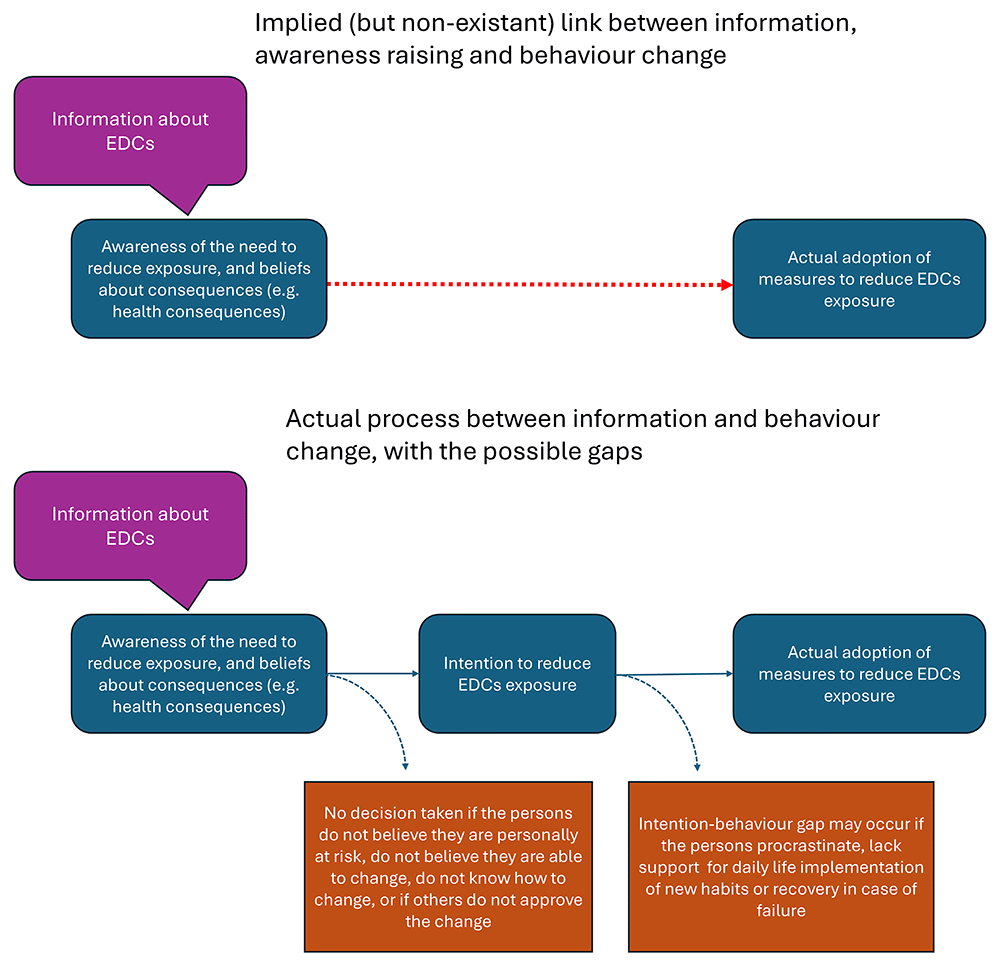
Figure 1. Schematic representation of the process between provision of information and the eventual resulting change in behaviour.
The gaps mentioned (in orange) are illustrative and not exhaustive of all possibilities. EDCs = Endocrine Disrupting Chemicals.
Nevertheless, despite being insufficient, information and knowledge can still be necessary. Greyson and Johnson43 showed how information is included in many of the models of behaviour. According to their analysis, beliefs about the consequences of the behaviour are constructed, at least in part, based on received information, and information can raise awareness of the need for change. In particular, information and knowledge may be needed for issues that people are not yet knowledgeable about. On the topic of EDCs, surveys and qualitative studies among various groups (students, pregnant women, and adults from the general population) indeed show that people lack knowledge about what EDCs are and the associated risks44–48. Correlational studies on the level of knowledge about EDCs and health behaviour showed mixed results: some report no significant association49,50, while another study showed that this association varied depending on the substances51. Knowledge about parabens was associated with more avoidance of chemicals in personal care and household products, but this was not the case for lead: lead was the most widely recognized substance, but the least avoided51.
Lifestyle interventions to reduce EDCs exposure
Reviews show that policy interventions (using natural experiment study design to test substances bans effects), as well as interventions that provide plastic-free foodware, or fresh food to the intervention group compared to canned food for the control group, succeed in reducing the levels of chemicals measured among participants52. However, controlled consumption studies attribute a passive role to participants and do not reflect real life conditions in which individuals have to make choices. This limitation is underlined in the review by Park et al.53, showing that only four studies among the ones reviewed let participants choose themselves alternative goods or food. In addition, among the 12 interventions reviewed, half lasted less than ten days53, failing to assess temporal dynamics of behaviour change. The review by Sieck et al.52 further indicates that educational and lifestyle interventions have unclearer effects on measured chemical levels than policy measures and studies in which participants’ consumption is controlled. Moreover, in the two reviews cited52,53, interventions are not analyzed in terms of theoretical framework of behaviour change. Thus, only a limited number of intervention studies have specifically tested, based on a theoretical background, how to promote long-term, voluntary change of habits in relation to reducing EDCs exposure.
Studies focusing on knowledge and risk-awareness illustrate that it is not sufficient for inducing behaviour change. A first example is the PREVED -Pregnancy, PreVention, Endocrine Disruptors- study is an example of a workshop-based intervention study designed to reduce EDCs exposure in pregnant women, with a focus on canned food consumption. The intervention focused on knowledge and risk perception. Results showed that it failed to significantly change behaviour, although risk perception scores increased significantly in the intervention group54. A second example is a study using biomonitoring as a technique to motivate exposure reduction55. Women received a personalized report mentioning either their individual chemical exposure levels, or exposure levels aggregated at the study level. Results were mixed: out of 15 behaviours, only four evolved in a positive direction, the frequency of ten behaviours did not change, and one protective behaviour (damp-wiping dust) decreased at follow-up. Whether the biomonitoring report was individual or aggregated did not influence the results.
Two studies including techniques besides information provision showed positive effects on behaviour. The first one showed that an education program for pregnant women, informing them about the effects of toxicants and providing strategies to practice protective behaviours, was successful in inducing behaviour change among participants exposed to the intervention56. However, a significant limitation of this study is the short timeframe of the evaluation: the post-test occurred four weeks after the intervention ended. Given the time it takes to develop new habits57, studies with longer time frames are needed to properly evaluate implementation of changes in daily lives. The study by Park and Chung, which targeted a cognitive bias that lead to consider oneself as less at risk than the average others, showed success in increasing protective behaviours in young women58. The intervention group was exposed to several behaviour change techniques (BCTs), including self-checking one’s habits of exposure, an information session, assessing barriers to reduce exposure, and signing a health contract. Their positive result is thus not surprising, as the intervention targeted a variety of psychological determinants and was not limited to providing knowledge. However, its quasi-experimental design and the lack of biological samples analyses reduce the reliability of these findings.
A review by Martin et al.59 of lifestyle interventions to reduce EDCs exposure among men and women in their reproductive age conclude on three key elements: 1) tailored education about how to avoid EDCs with interactive educational materials including question/answer option, 2) support and monitoring by counselors or peer discussion group to provide feedback and encouragement, 3) understand individual sources of exposure (through diaries for example) to provide replacement options for items known to contain EDCs.
Example of an awareness-raising campaign in Belgium
As part of the Belgian National Action Plan on Endocrine Disruptors (NAPED, 2022–2026), aiming to raise awareness in vulnerable population groups (pregnant women, women planning pregnancy, young children (0–3 years), and adolescents), public awareness campaigns are planned. These campaigns are coordinated by the Federal Public Service Health, in close collaboration with regional and community authorities. It serves as an example of a public health intervention designed to increase awareness and knowledge of endocrine disruptors.
In May 2024, the first campaign, targeting pregnant women, was launched. It combined the delivery of practical, accessible advice with simple, everyday recommendations tailored to reduce exposure in daily life with a targeted digital communication strategy. Dissemination was based on strong partnerships and leveraged digital channels such as Meta, YouTube, Pinterest, and optimised web content through search engine optimisation.
Healthcare professionals were engaged during the campaign through an informative email, which invited them to download a specially developed Q&A document on EDCs. They were also given the opportunity to order promotional materials, such as postcards and posters, via the Federal Public Service website. In total, over 80,000 postcards and 16,500 posters were ordered and distributed to more than 1,300 healthcare professionals and institutions. A second campaign is planned for November–December 2025. It will broaden outreach to include caregivers of young children (0–3 years) while reinforcing key messages aimed at pregnant women and their partners.
An external evaluation, conducted by a polling institute before and after the campaign among a representative sample of 1,000 Belgians, revealed a generally positive reception, with an average satisfaction score of 7.3/10 overall, rising to 8.0/10 among pregnant women. Knowledge about EDCs increased by 7 percentage points, and the campaign generated widespread interest among both professionals and the general public.
However, despite these encouraging results, self-reported behavioural changes were limited. While participants expressed greater awareness, behavioural changes remained gradual. This highlights a common challenge in health promotion: while a one-off information campaign can effectively raise awareness and improve knowledge, it is rarely sufficient to produce sustained behaviour change.
The HYPIEND behaviour change interventions
In the HYPIEND project, two multicomponent interventions have been designed to accompany pregnant women and parents of prepubertal children to reduce their daily life exposure to EDCs. The interventions consist of a digital tool and a set of workshops designed to promote lifestyle habits aimed at reducing EDCs exposure. Moreover, a school-wide educational program based on explicit teaching of healthy behaviors and positive reinforcement and a plastic-free canteen will be implemented in the participating schools. and a plastic-free canteen will be implemented in the participating schools.
EDCs exposure is targeted through the following categories of behaviour: Indoor air quality (e.g., ventilation, avoiding products with fragrances, choice of cleaning products, cleaning dust); choice of food (e.g., avoiding ultraprocessed food, fast-food, canned food and drinks and food with preservatives; favour organic when possible); food preparation (wash fruits and vegetables before eating and peel when relevant); food contact materials (to store, cook and consume); personal care products (choice of products, limit use of products); choice of clothing, furniture, toys and electronics; child’s behaviour (wash the baby/child’s hands after playing and before eating; for the perinatal study: do not allow to chew certain things; for the prepubertal study: have the child use a stainless steel bottle to drink); gardening and Do It Yourself activities; smoking; and occupational exposure (for the perinatal study only).
Both interventions rely on the Health Action Process Approach (HAPA)39. This model emphasises the translation of intention into action. It is known that around one out of two decisions that individuals take will not be acted upon60. For this reason, the HYPIEND interventions not only inform participants about what EDCs are and their potential impact but also inform them about changes that can be made at the individual level and contain techniques such as planning to help people implement their intentions. Those techniques are taken from a 93-techniques list, the BCTs Taxonomy61. The appropriate ones were selected using the Theory and Technique Tool, a related tool helping to identify relevant techniques based on empirical evidence. Participants from the control group will receive a booklet (also distributed to the intervention group) containing information about what EDCs are, and recommendations to reduce exposure, without any additional BCT.
Through the digital tool, participants are able to work on different missions aimed at minimizing exposure to EDCs. By selecting these missions successively, they receive frequent recommendations, tips and motivational quotes that help them to accomplish the selected mission. Some of the BCTs included in the digital tool are: graded tasks, used to increase task self-efficacy (i.e., initiate the change); action planning and problem solving, used to help intenders become actors; and providing tools to conserve mental resources, to increase maintenance self-efficacy (i.e., once the change starts and needs to become a habit).
Another tool used in the HYPIEND interventions is motivational interviewing62. It is an interviewing strategy to help the person resolve ambivalence to change, and trigger motivation emerging from within, by letting the person themselves evoke the arguments instead of the counsellor providing them. In the workshops, the animator will provide a brief education about EDCs and spend most of the session using motivational interviewing techniques in group, to help participants build a strong motivation to change. Figure 2 illustrates how the digital tool and the workshops target the HAPA constructs, with examples of BCTs used for each construct.
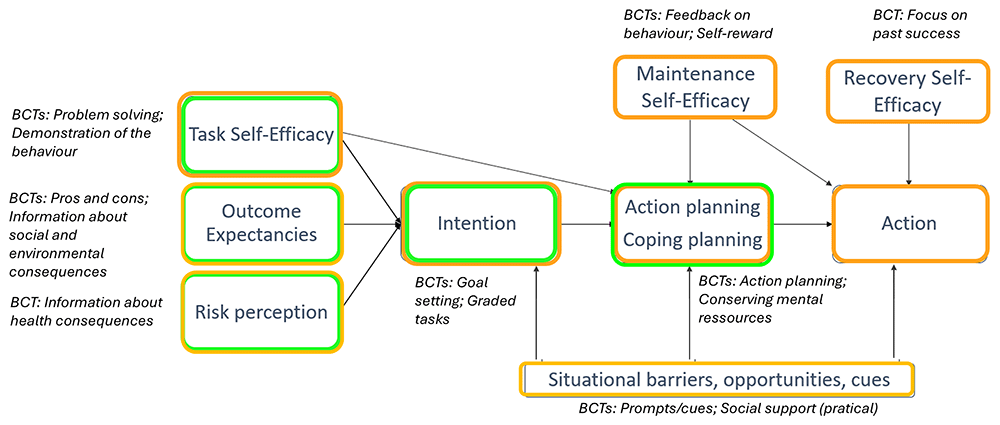
Figure 2. HAPA model, adapted from Schwarzer39 to reflect which components of the model are targeted through which HYPIEND intervention aspect (workshops = green, digital tool = orange).
Lifestyle interventions must consider the broader social–ecological context, including family dynamics63. For example, evidence shows that partner involvement in maternal health promotes healthier behaviours within households64, which is particularly relevant for reducing EDCs exposure, a process often requiring collective family action59. Yet, most interventions still focus solely on mothers65. Including partners in EDCs-related intervention studies is therefore essential for several reasons: it reflects the shared biological responsibility for reproductive health, it acknowledges the social and behavioural dynamics of households, and it allows interventions to target both partners to improve efficacy. Couple-based interventions are particularly well-suited for modifying shared behaviours63, such as food choices, product use, or environmental exposures at home, which are often difficult to change in isolation. For this reason, the HYPIEND intervention with pregnant women include the cohabiting partner, and the HYPIEND study on prepubertal children includes the whole family and the school through the School Wide Positive Behavioural Interventions and Supports (SWPBIS).
SWPBIS is a multi-tiered intervention designed to positively reinforce students' expected behaviours at school42. It aims to create a positive and secure school climate by explicitly teaching and positively reinforcing expected behaviours. These are defined beforehand in observable terms and explicitly taught to students. SWPBIS insists on the sense of adopting a behaviour (“Why” is it important to adopt a specific behaviour at school) and it asks teachers to model the expected behaviour (“How” to perform this behaviour). It is implemented throughout the whole school by all adults supervising the children. The effects of SWPBIS have been documented in several systematic reviews66–68. Sugai and Horner's42 model of positive behaviour support has been revisited and adapted to the context of the HYPIEND project (Figure 3).
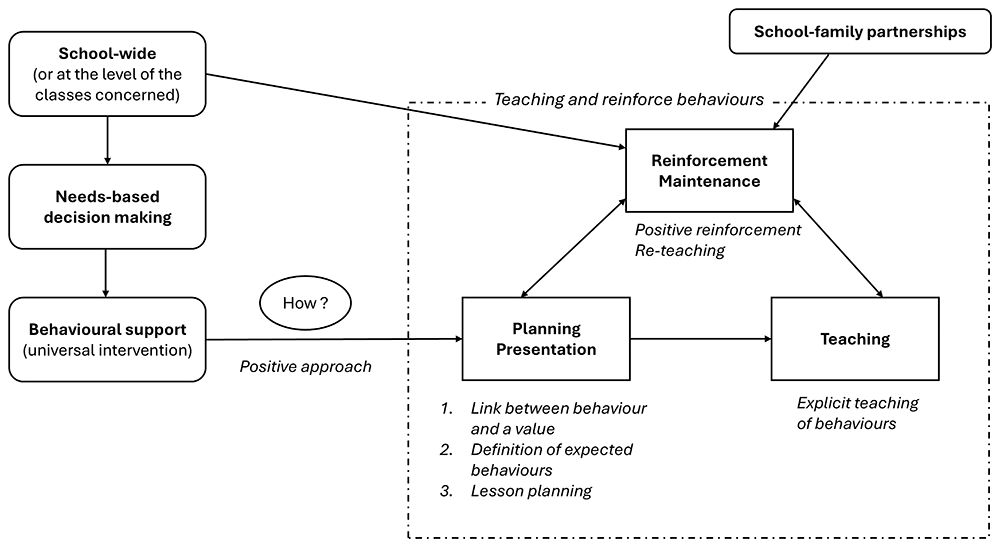
Figure 3. Model for supporting positive health behaviours among students as part of the HYPIEND project.
Based on the needs and observations of school stakeholders, health-related behaviours will be identified and explicitly taught at the school level or within the classes involved in the project. To support the adoption of these behaviours, strategies such as positive reinforcement and re-teaching sessions will be implemented. Reinforcement will be supported by the school-family partnership, the actions carried out at the whole-school level, and the planning and instructional phases.
The effectiveness of the HYPIEND interventions will be tested through a) a tricentric Randomized Controlled Trial (RCT) involving pregnant women and their infants up to 18 months of age in Spain, Belgium and Poland, and b) a bicentric RCT carried out at primary schools from Spain and Belgium for 28 months, targeted to prepubertal children and their parents. Through these RCTs we will evaluate if the multicomponent interventions are able to reduce the internal concentration of several EDCs families. We will further evaluate whether the anticipated reduction in exposure to EDCs can mitigate their potential adverse effects on growth, neurodevelopment, and pubertal maturation. To elucidate the biological mechanisms underlying EDCs-related health outcomes, we will conduct comprehensive analyses of hypothalamic-pituitary axis hormones, cytokines, epigenetic modifications (DNA methylation), gene expression profiles, and gut microbiota composition. In terms of behaviour change, we will measure both the psychological determinants of behaviour using a HAPA questionnaire, and EDC-related lifestyles habits through a self-report questionnaire.
The complete details on the RCTs protocols will be published shortly through specific papers, while the protocol for the perinatal study can already be found here: https://clinicaltrials.gov/study/NCT07142447.
Recommendations and conclusion
As stated by Davis et al.69, understanding behaviour is necessary for interventions to have the greatest possible impact. However, despite this existing scientific knowledge about human behaviour, an idea remains among some health professionals and policy makers70–72: ignorance is the problem, and education a straightforward solution71. Simis et al. mentions in their essay that an information deficit model persists because of the “lure of rationality”71 p.400 - the appealing but flawed notion that humans are primarily rational beings who will make logical choices once they are properly informed. This idea is attractive because it simplifies complex behavioural issues into a solvable knowledge gap, allowing experts to assume that more education alone can change behaviour. However, as mentioned above, human decision-making is influenced by a range of psychological and social factors that go beyond rational analysis.
According to Lippke and Ziegelmann, several reviews and meta-analyses showed that a majority of behavioural interventions reported no theoretical background73. We support the call in advocating an improvement in the quality of behaviour change interventions by relying on evidence-based models69,73, and advocate that this should also be the case for the field of EDCs.
To conclude, given the important health and environmental adverse effects of these substances, any attempt to change behaviours regarding exposure to EDCs should be carefully crafted to ensure maximum efficacy. For EDCs-related interventions to be both biologically and behaviourally effective, they must be tailored and holistic, actively involve the broader social environment and go beyond education and awareness by incorporating concrete and evidence-based BCTs. These elements are crucial to enhance motivation, engagement, and adherence, ultimately improving outcomes in both research and practice.
Abbreviations list
BCTs: Behaviour change techniques
EDCs: Endocrine-disrupting chemicals
HAPA: Health Action Process Approach
PFAS: Per- and polylfuoroalkyl substances
RCT: Randomized Controlled Trial
SWPBIS: School Wide Positive Behavioural Interventions and Supports
Ethics and consent
Ethical approval and consent were not required.
Data availability
No data associated with this article.
Acknowledgements
HYPIEND Clinical Core Investigator Group members: Silvia Orte, Laura Sistach, Antoni Caimari, Salvador Fernandez, Inés Velasco, Paula Sol Ventura, Marta Ocaña, Mirjana Andjelkovic, Ilse Van Overmeire, Adil Mardinoglu, Ozlem Altay, Hugo Vankelecom, Frauke Christ, Fernando Vela-Soria, Raquel Barea, Michal Ciebiera, Alicja Baska
Faculty Opinions recommendedReferences
- 1.
ENDOCRINE-DISRUPTING CHEMICALS. Endocrine Society, 2025. Reference Source
- 2.
Zoeller RT, Brown TR, Doan LL, et al.:
Endocrine-Disrupting Chemicals and public health protection: a statement of principles from the endocrine society.
Endocrinology.
2012; 153(9): 4097–110. PubMed Abstract
| Publisher Full Text
| Free Full Text
- 3.
Stiefel C, Stintzing F:
Endocrine-active and endocrine-disrupting compounds in food – occurrence, formation and relevance.
NFS J.
2023; 31: 57–92. Publisher Full Text
- 4.
AEE: The European environment: state and outlook 2020 : knowledge for transition to a sustainable Europe. LU: Publications Office, 2019; [cited 2025 Jul 7]. Reference Source
- 5.
Okuthe GE, Dube E, Mafunda PS:
Effects of pharmaceuticals and Endocrine-Disrupting Chemicals on reproductive biology of aquatic fauna: penguins as sentinel species.
J Xenobiot.
2025; 15(4): 110. PubMed Abstract
| Publisher Full Text
| Free Full Text
- 6.
Zhou J, Cai ZH, Zhu XS:
Are endocrine disruptors among the causes of the deterioration of aquatic biodiversity?
Integr Environ Assess Manag.
2010; 6(3): 492–8. PubMed Abstract
| Publisher Full Text
- 7.
Gore AC, Chappell VA, Fenton SE, et al.:
EDC-2: the endocrine society’s second scientific statement on Endocrine-Disrupting Chemicals.
Endocr Rev.
2015; 36(6): E1–150. PubMed Abstract
| Publisher Full Text
| Free Full Text
- 8.
Darbre PD:
Endocrine disruptors and obesity.
Curr Obes Rep.
2017; 6(1): 18–27. PubMed Abstract
| Publisher Full Text
| Free Full Text
- 9.
Govarts E, Gilles L, Rodriguez Martin L, et al.:
Harmonized human biomonitoring in European children, teenagers and adults: EU-wide exposure data of 11 chemical substance groups from the HBM4EU Aligned Studies (2014–2021).
Int J Hyg Environ Health.
2023; 249: 114119. PubMed Abstract
| Publisher Full Text
- 10.
Vasiljevic T, Harner T:
Bisphenol a and its analogues in outdoor and indoor air: properties, sources and global levels.
Sci Total Environ.
2021; 789: 148013. PubMed Abstract
| Publisher Full Text
- 11.
Gea M, Fea E, Racca L, et al.:
Atmospheric endocrine disruptors: a systematic review on oestrogenic and androgenic activity of particulate matter.
Chemosphere.
2024; 349: 140887. PubMed Abstract
| Publisher Full Text
- 12.
Thacharodi A, Hassan S, Hegde TA, et al.:
Water a major source of Endocrine-Disrupting Chemicals: an overview on the occurrence, implications on human health and bioremediation strategies.
Environ Res.
2023; 231(Pt 1): 116097. PubMed Abstract
| Publisher Full Text
- 13.
Profita M, Fabbri E, Vasumini I, et al.:
Endocrine Disrupting Chemicals in Italian drinking water systems: insights from a three-year investigation combining chemical and effect-based tools.
Heliyon.
2024; 10(5): e26785. PubMed Abstract
| Publisher Full Text
| Free Full Text
- 14.
Cordner A, Brown P, Cousins IT, et al.:
PFAS Contamination in Europe: generating knowledge and mapping known and likely contamination with “expert-reviewed” journalism.
Environ Sci Technol.
2024; 58(15): 6616–27. PubMed Abstract
| Publisher Full Text
- 15.
Maddela NR, Ramakrishnan B, Kakarla D, et al.:
Major contaminants of emerging concern in soils: a perspective on potential health risks.
RSC Adv.
2022; 12(20): 12396–415. PubMed Abstract
| Publisher Full Text
| Free Full Text
- 16.
Mezcua M, Martínez-Uroz MA, Gómez-Ramos MM, et al.:
Analysis of synthetic Endocrine-Disrupting Chemicals in food: a review.
Talanta.
2012; 100: 90–106. PubMed Abstract
| Publisher Full Text
- 17.
Paramasivam A, Murugan R, Jeraud M, et al.:
Additives in processed foods as a potential source of Endocrine-Disrupting Chemicals: a review.
J Xenobiot.
2024; 14(4): 1697–710. PubMed Abstract
| Publisher Full Text
| Free Full Text
- 18.
Alwan NA, Stannard S, Berrington A, et al.:
Risk factors for ill health: how do we specify what is ‘modifiable’? Robinson J, editor.
PLOS Glob Public Health.
2024; 4(3): e0002887. PubMed Abstract
| Publisher Full Text
| Free Full Text
- 19.
Nam SH, Seo YM, Kim MG:
Bisphenol a migration from polycarbonate baby bottle with repeated use.
Chemosphere.
2010; 79(9): 949–52. PubMed Abstract
| Publisher Full Text
- 20.
Ginter-Kramarczyk D, Zembrzuska J, Kruszelnicka I, et al.:
Influence of temperature on the quantity of bisphenol a in bottled drinking water.
Int J Environ Res Public Health.
2022; 19(9): 5710. PubMed Abstract
| Publisher Full Text
| Free Full Text
- 21.
Jurikova M, Dvorakova D, Bechynska K, et al.:
Bisphenols in daily clothes from conventional and recycled material: evaluation of dermal exposure to potentially toxic substances.
Environ Sci Pollut Res Int.
2024; 31(43): 55663–55675. PubMed Abstract
| Publisher Full Text
| Free Full Text
- 22.
Aldegunde-Louzao N, Lolo-Aira M, Herrero-Latorre C:
Phthalate esters in different types of cosmetic products: a five-year quality control survey.
Molecules.
2024; 29(20): 4823. PubMed Abstract
| Publisher Full Text
| Free Full Text
- 23.
Glüge J, Scheringer M, Cousins IT, et al.:
An overview of the uses of per- and polyfluoroalkyl substances (PFAS).
Environ Sci Process Impacts.
2020; 22(12): 2345–2373. PubMed Abstract
| Publisher Full Text
| Free Full Text
- 24.
Chen Y, Chen Q, Zhang Q, et al.:
An overview of chemical additives on (micro)plastic fibers: occurrence, release, and health risks.
Reviews Env.Contamination (formerly:Residue Reviews).
2022; 260(1): 22. Publisher Full Text
- 25.
Sargis RM, Heindel JJ, Padmanabhan V:
Interventions to address environmental metabolism-disrupting chemicals: changing the narrative to empower action to restore metabolic health.
Front Endocrinol (Lausanne).
2019; 10: 33. PubMed Abstract
| Publisher Full Text
| Free Full Text
- 26.
Pechey R, Marteau TM:
Availability of healthier vs. less healthy food and food choice: an online experiment.
BMC Public Health.
2018; 18(1): 1296. PubMed Abstract
| Publisher Full Text
| Free Full Text
- 27.
Fenta ET, Tiruneh MG, Anagaw TF:
Exploring enablers and barriers of healthy dietary behavior based on the socio-ecological model, a qualitative systematic review.
Nutrition and Dietary Supplements.
2023; 15: 13–23. Publisher Full Text
- 28.
Skinner BF:
Science and human behavior. Oxford England: Macmillan, 1953. Reference Source
- 29.
Bandura A:
Self-efficacy: toward a unifying theory of behavioral change.
Psychol Rev.
1977; 84(2): 191–215. PubMed Abstract
| Publisher Full Text
- 30.
Ajzen I:
From intentions to actions: a theory of planned behavior. In: J. Kuhi & J. Beckmann (Eds.), Action—control: from cognition to behavior. Heidelberg: Springer, 1985; 11–39. Publisher Full Text
- 31.
Ajzen I, Fishbein M:
The prediction of behavior from attitudinal and normative variables.
J Exp Soc Psychol.
1970; 6(4): 466–487. Publisher Full Text
- 32.
Rosenstock IM, Strecher VJ, Becker MH:
Social learning theory and the health belief model.
Health Educ Q.
1988; 15(2): 175–83. PubMed Abstract
| Publisher Full Text
- 33.
Rogers RW:
A protection motivation theory of fear appeals and attitude change.
J Psychol.
1975; 91(1): 93–114. PubMed Abstract
| Publisher Full Text
- 34.
Albarracín D, Gillette JC, Earl AN, et al.:
A test of major assumptions about behavior change: a comprehensive look at the effects of passive and active HIV-prevention interventions since the beginning of the epidemic.
Psychol Bull.
2005; 131(6): 856–97. PubMed Abstract
| Publisher Full Text
| Free Full Text
- 35.
Abraham C, Sheeran P:
The health belief model. In: Conner M, Norman P, editors. Predicting and changing health behaviour Research and practice with social cognition models. 3rd ed, Berkshire, England: Mc Graw Hill Education; 2015.
- 36.
Milne S, Sheeran P, Orbell S:
Prediction and intervention in health-related behavior: a meta-analytic review of protection motivation theory.
J Appl Soc Psychol.
2000; 30(1): 106–43. Publisher Full Text
- 37.
Janz NK, Becker MH:
The Health Belief Model: a decade later.
Health Educ Q.
1984; 11(1): 1–47. PubMed Abstract
| Publisher Full Text
- 38.
Carpenter CJ:
A meta-analysis of the effectiveness of health belief model variables in predicting behavior.
Health Commun.
2010; 25(8): 661–9. PubMed Abstract
| Publisher Full Text
- 39.
Schwarzer R:
Modeling health behavior change: how to predict and modify the adoption and maintenance of health behaviors.
Appl Psychol.
2008; 57(1): 1–29. Publisher Full Text
- 40.
Zhang CQ, Zhang R, Schwarzer R, et al.:
A meta-analysis of the health action process approach.
Health Psychol.
2019; 38(7): 623–37. PubMed Abstract
| Publisher Full Text
- 41.
Bronfenbrenner U:
The ecology of human development: experiments by nature and design. Harvard University Press, 1979; [cited 2023 Dec 5]. Publisher Full Text
- 42.
Sugai G, Horner RH:
Defining and describing schoolwide positive behavior support. In: Sailor W, Dunlap G, Sugai G, Horner RH, editors. Handbook of positive behavior support. Springer, 2009; 307–26. Publisher Full Text
- 43.
Greyson DL, Johnson JL:
The role of information in health behavior: a scoping study and discussion of major public health models.
Asso for Info Science & Tech.
2016; 67(12): 2831–41. Publisher Full Text
- 44.
Kelly M, Connolly L, Dean M:
Public awareness and risk perceptions of endocrine disrupting chemicals: a qualitative study.
Int J Environ Res Public Health.
2020; 17(21): 7778. PubMed Abstract
| Publisher Full Text
| Free Full Text
- 45.
Marić Đ, Baralić K, Ćurčić M, et al.:
Survey of attitudes and knowledge about endocrine disruptors among the student population of the republic of Serbia. EJEA. May 9, 2025; [cited 2025 Jul 8]; 110: EP672. Publisher Full Text
- 46.
Okman E, Yalçın SS:
Awareness and knowledge of endocrine-disrupting chemicals among pregnant women and new mothers: a cross-sectional survey study.
Toxics.
2024; 12(12): 890. PubMed Abstract
| Publisher Full Text
| Free Full Text
- 47.
Wee SY, Aris AZ, Yusoff FMd, et al.:
Public perception on human exposure risk: a case study on endocrine disrupting compounds in the environment.
Ecotoxicol Environ Saf.
2024; 270: 115830. PubMed Abstract
| Publisher Full Text
- 48.
Rouillon S, Deshayes-Morgand C, Enjalbert L, et al.:
Endocrine disruptors and pregnancy: knowledge, attitudes and prevention behaviors of French women.
Int J Environ Res Public Health.
2017; 14(9): 1021. PubMed Abstract
| Publisher Full Text
| Free Full Text
- 49.
Park S, Chung C:
Health behaviors related to Endocrine-Disrupting Chemicals and the associated factors of adolescent Korean girls.
Women Health.
2018; 58(8): 915–29. PubMed Abstract
| Publisher Full Text
- 50.
Yoon CM, Kim HJ:
Influencing factors of behavior for reducing exposure to Endocrine Disrupting Chemicals and demand for related education.
Eur J Investig Health Psychol Educ.
2022; 12(3): 295–305. PubMed Abstract
| Publisher Full Text
| Free Full Text
- 51.
Trifunovski A, Rotondi NK, Abbass-Dick J, et al.:
Analysis of Women’s knowledge, health risk perceptions, beliefs and avoidance behaviour in relation to Endocrine-Disrupting Chemicals in Personal Care and Household Products.
Toxics.
2025; 13(5): 414. PubMed Abstract
| Publisher Full Text
| Free Full Text
- 52.
Sieck NE, Bruening M, Van Woerden I, et al.:
Effects of behavioral, clinical, and policy interventions in reducing human exposure to bisphenols and phthalates: a scoping review.
Environ Health Perspect.
2024; 132(3): 036001. PubMed Abstract
| Publisher Full Text
| Free Full Text
- 53.
Park J, Lee H, Lee S, et al.:
Interventions on reducing exposure to Endocrine Disrupting Chemicals in human health care context: a scoping review.
Risk Manag Healthc Policy.
2022; 15: 779–91. PubMed Abstract
| Publisher Full Text
| Free Full Text
- 54.
El Ouazzani H, Fortin S, Venisse N, et al.:
Perinatal environmental health education intervention to reduce exposure to Endocrine Disruptors: the PREVED project.
Int J Environ Res Public Health.
2021; 19(1): 70. PubMed Abstract
| Publisher Full Text
| Free Full Text
- 55.
Boronow KE, Cohn B, Havas L, et al.:
The effect of individual or study-wide report-back on knowledge, concern, and exposure-reducing behaviors related to Endocrine-Disrupting Chemicals.
Environ Health Perspect.
2023; 131(9): 097005. PubMed Abstract
| Publisher Full Text
| Free Full Text
- 56.
Kim HK, Jeong GH:
Effect of pro-environmental prenatal education program on pregnant women’s environmental health awareness and behaviors based on the protection motivation theory.
Inquiry.
2022; 59: 004695802110470. PubMed Abstract
| Publisher Full Text
| Free Full Text
- 57.
Lally P, Van Jaarsveld CHM, Potts HWW, et al.:
How are habits formed: modelling habit formation in the real world.
Euro J Social Psych.
2010; 40(6): 998–1009. Publisher Full Text
- 58.
Park S, Chung C:
Effects of an action-guided intervention on optimistic bias and protective behaviors regarding endocrine disruptors in young women.
Women Health.
2022; 62(3): 234–44. PubMed Abstract
| Publisher Full Text
- 59.
Martin L, Zhang Y, First O, et al.:
Lifestyle interventions to reduce endocrine-disrupting phthalate and phenol exposures among reproductive age men and women: a review and future steps.
Environ Int.
2022; 170: 107576. PubMed Abstract
| Publisher Full Text
| Free Full Text
- 60.
Sheeran P:
Intention-behavior relations: a conceptual and empirical review.
Eur Rev Soc Psychol.
2002; 12(1): 1–36. Publisher Full Text
- 61.
Michie S, Richardson M, Johnston M, et al.: The behavior change technique taxonomy (v1) of 93 hierarchically clustered techniques: building an international consensus for the reporting of behavior change interventions.
Ann Behav Med.
2013; 46(1): 81–95. PubMed Abstract
| Publisher Full Text
- 62.
Miller WR, Rollnick S: Motivational interviewing: preparing people for change (3rd ed.). New York, NY: Guildford Press, 2013.
- 63.
Versele V, Deforche B, Aerenhouts D, et al.: Recommendations for the development of family-based interventions aiming to prevent unhealthy changes in energy balance-related behavior during the transition to parenthood: a focus group study.
Nutrients.
2022; 14(11): 2346. PubMed Abstract
| Publisher Full Text
| Free Full Text
- 64.
Tokhi M, Comrie-Thomson L, Davis J, et al.: Involving men to improve maternal and newborn health: a systematic review of the effectiveness of interventions. Van Wouwe JP, editor.
PLoS One.
2018; 13(1): e0191620. PubMed Abstract
| Publisher Full Text
| Free Full Text
- 65.
Sparks JR, Phelan S, Drews KL, et al.: The partner-an underutilized facilitator to support healthy gestational weight gain.
BMC Pregnancy Childbirth.
2023; 23(1): 446, [cited 2025 Jul 7]. PubMed Abstract
| Publisher Full Text
| Free Full Text
- 66.
Solomon BG, Klein SA, Hintze JM, et al.: A meta-analysis of school-wide positive behavior support: an exploratory study using single-case synthesis.
Psychol Sch.
2012; 49(2): 105–21. Publisher Full Text
- 67.
Lee A, Gage NA: Updating and expanding systematic reviews and meta-analyses on the effects of school-wide positive behavior interventions and supports.
Psychol Sch.
2020; 57(5): 783–804. Publisher Full Text
- 68.
Gage NA, Whitford DK, Katsiyannis A: A review of schoolwide positive behavior interventions and supports as a framework for reducing disciplinary exclusions.
J Spec Educ.
2018; 52(3): 142–51. Publisher Full Text
- 69.
Davis R, Campbell R, Hildon Z, et al.: Theories of behaviour and behaviour change across the social and behavioural sciences: a scoping review.
Health Psychol Rev.
2015; 9(3): 323–44. PubMed Abstract
| Publisher Full Text
| Free Full Text
- 70.
Marteau TM, Sowden AJ, Armstrong D: Implementing research findings into practice: beyond the information deficit model. In: Haines A, Donald A, editors. Getting Research Findings Into Practice. 1st ed. Wiley, 2002 [cited 2025 Jul 2]; 68–76. Publisher Full Text
- 71.
Simis MJ, Madden H, Cacciatore MA, et al.: The lure of rationality: why does the deficit model persist in science communication?
Public Underst Sci.
2016; 25(4): 400–14. PubMed Abstract
| Publisher Full Text
- 72.
Bubela T, Nisbet MC, Borchelt R, et al.: Science communication reconsidered.
Nat Biotechnol.
2009; 27(6): 514–8. PubMed Abstract
| Publisher Full Text
- 73.
Lippke S, Ziegelmann JP: Theory-based health behavior change: developing, testing, and applying theories for evidence-based interventions.
Appl Psychol.
2008; 57(4): 698–716. Publisher Full Text







