The development of innovative tri-generation technology is already a complex subject, as the individual components must work hand in hand and operate in a two-phase area, bringing thermodynamic challenges. However, the later application field of the technology is highly relevant for identifying potential use cases as well as boundaries and requirements. Even though the technology developed and demonstrated in the REGEN-BY-2 project has a low TRL, it is already relevant to picture a potential roadmap of the technology. An effective technology roadmap involves inputs from different stakeholder groups (International Energy Agency (IEA), 2014), such as end-users. This article presents the integration and consideration of user needs.
A previous study on user acceptance of innovative technologies highlighted eight fields that must be addressed to achieve user acceptance (Kim, 2015), see Figure 3). Learning concepts can be transferred from information technology to engineering technology. It is worth integrating any learning from simulations on the potential use cases directly in the technology or following a cooperative approach joining forces with other technologies to create synergies. As for technical experience, usability and safety are most relevant for the tri-generation unit.
This analysis presents and investigates the thermal demand patterns for different user types and joint use cases. The use cases are built through a combination of different single user types, as described below. Every user type has individual characteristics that depend on the daytime and outdoor climate. This information was transformed into individual factors for the daytime, and the climate was created. Together, they build factors for heating and cooling demand, which can be multiplied by the designed capacity of the single user types in the combined use cases. This allows defining the use cases by dimensioning the heating and cooling capacity of the single user types and merging them together. This methodology enables detailed analysis via dynamic simulations, including the outdoor temperature and daytime, in combination with specific weather data. Hourly data on heating and cooling are analyzed for each user type. This article focuses on four combined use cases, each defined through an individual combination of the single user types: industrial, office, residential, and retail. Single user types and use cases are explained in the following sections.
The energy demand was calculated using weather data for one location with information on an hourly basis for a full year, including temperature, radiation, humidity, wind, and other parameters, typically based on measurements from a weather station near the location. In this analysis, the energy demand for a typical climate in Stuttgart, Germany was chosen. Stuttgart has a moderate climate, typical for central Europe, with an average outdoor temperature of 9.6 °C.
Presentation of single user types and joint use-cases
Different individual user types and joint cases were characterized and described for typical patterns in thermal energy consumption. This section presents and describes the simplified demand profiles on hourly, seasonal, monthly, and annual scales for selected user types, and highlights their dependencies on ambient temperature.
Identification of single user types
The aim of this analysis was to replicate the use of a tri-generation unit on a large scale. Four individual user types were identified for a detailed analysis in which the tri-generation unit can serve as a promising energy supply solution. The analysis forms the basis for how a tri-generation unit can be used in real-world conditions. The four single user types help generate typical use cases that can be found in common built areas. Urban land use is commonly classified into four major built-up categories: residential, commercial/retail, office (often grouped as commercial/services), and industrial land uses (Zhou et al., 2018). Together, they form the basic structure of most European settlements. Industrial areas influence economic activity and land use; retail buildings represent everyday commercial services, office buildings cover administrative and service functions, and residential buildings represent where people live. When combined, these user types reflect the typical mix of functions that appears in almost every town or city in Europe (Cotella et al., 2020). Using these user types, it is possible to create mixed-use cases that represent real settlement constellations. The industrial user type represents manufacturing and production activities commonly located in dedicated zones or rural areas, but sometimes also next to the center of cities. They often show very high and continuous energy demand and play a significant role in interactive energy systems because of their high potential to use waste heat from industrial processes (Zhou et al., 2018),(Ise, 2025). Industrial users form key structural elements in mixed-use scenarios in several regions. Retail user type has a significant impact on the urban landscape and its energy demand. Especially in city centers, shopping malls or other retail stores provide fluctuations in occupancy and cooling demand. Commercial facilities are significantly affected by customer traffic and room conditioning for the customers (Loureiro & Labandeira, 2019). Additionally, grocery shops are also typical in rural areas, where food and beverages must be stored in cool conditions. Retail stakeholders are an essential component in creating layouts for European cities and municipalities. Office complexes shape the urban and suburban regions. They are characterized by a relatively high energy demand during the daytime but reduced energy demand during the nighttime as for no occupation. The energy demand of an office user is strongly dependent on the building typology. However, for most modern buildings, the trend goes toward a higher cooling demand because of the high share of glazing (Prieto et al., 2017). The residential user type represents the energy behavior of typical households. It appears in all settlement structures, and therefore serves as a universal reference case in mixed-use models. Residential buildings primarily require room heating and domestic hot water, whereas the cooling demand depends strongly on the building type. The energy demand fluctuates significantly over time. Although cooling use is still limited in many regions, it is increasing. Residential cooling areas are expected to grow by approximately 8% in Germany (Loureiro & Labandeira, 2019), making this user type increasingly relevant for future tri-generation applications.
Beyond the four described user types there are also other ones. However, only those patients with widespread and common characteristics were included. These include data centers, which are typical standalone systems. Moreover, maritime applications such as ports and ship-based systems fall outside the scope of land-based settlement structures. Aerospace-related facilities, including airports and industrial aerospace complexes, are large-scale, specialized infrastructures that are not representative of typical community layouts. Other niche or sector-specific consumers (e.g., hospitals, research laboratories, and agricultural greenhouses) that can be highly case-dependent and not suitable as generic archetypes are not considered in these analyses. However, these applications are still within the scope of tri-generation units.
Overall, these four single-user types serve as simple yet representative examples for modelling typical usage patterns in different regions, allowing a clear and consistent comparison of tri-generation performance across realistic mixed-use conditions.
Demand variation based on ambient temperature and schedule
To calculate the energy demand for heating and cooling for different use cases, the dependencies on the outdoor temperature and daytime were considered. The designed capacity in kW of the use cases is multiplied by each hourly factor for outdoor temperature and daytime to define the actual thermal load. The factor was divided into 25% steps, from 0% to 100%. Steps of 25% were chosen to consider the future controllability of tri-generation and to establish a framework for distinguishing between different types of users in terms of heating and cooling requirements, thereby enabling sensitivity analyses to be carried out at a later stage. Depending on the user type, the heating and cooling loads change with the outdoor temperature. In particular, the energy demand for heating and cooling in office and residential buildings is affected by weather. The heating load increased with a lower outdoor temperature in 25% steps from 0% to 100% of the defined installed heating capacity. Accordingly, the cooling load increases in 25% steps from 0% to 100% of the defined installed cooling capacity. To avoid unrealistic hourly changes in the load, the daily average temperature was used as the outside temperature. The retail user type behaves in the same way as office and residential users. The cooling load was set at a minimum level of 50%, regardless of the outside temperature, owing to the constant cooling demand for refrigeration. However, an increased cooling demand was taken into account for an ambient temperatures above 24 °C. The industry is independent of the outside temperature. The process energy demand is always necessary; therefore, the outdoor temperature dependency factor is always 100%. Table 1 shows the dependencies on the outside temperature, which were assumed for different user types.
Table 1. Set-point temperature for heating and cooling per user type and heating/ cooling intensity.
| Intensity | Heating | Cooling |
|---|
| Retail | Office | Residential | Industry | Retail | Office | Residential | Industry |
|---|
| 100% | ≤ 6 °C | ≤ 6 °C | ≤ 6 °C | ≤ 50 °C | ≥ 24 °C | ≥ 22 °C | ≥ 26 °C | -≥ 50 °C |
| 75% | ≤ 8 °C | ≤ 8 °C | ≤ 8 °C | | ≥ 24 °C | ≥ 20 °C | ≥ 24 °C | - |
| 50% | ≤ 10 °C | ≤ 10 °C | ≤ 10 °C | | -≥ 50 °C | ≥ 18 °C | ≥ 22 °C | - |
| 25% | ≤ 12 °C | ≤ 12 °C | ≤ 12 °C | | -≥ 50 °C | ≥ 16 °C | ≥ 21 °C | - |
| 0% | - | - | - | | - | - | - | - |
The energy demand of different use cases is not only dependent on the outdoor temperature. The heating and cooling demand in residential and office buildings changes throughout the day, based on the course of occupation. During the daytime, there is mostly more demand. In retail, it is possible that the cooling load rises in the morning hours for room conditioning when work starts. In the evening, cooling shelves are often opened by consumers, which increases cooling demand. Industrial demand is strongly individual in nature. Production with a batch process was assumed, where the heating and cooling demand always changes with the production in charges. The time schedules of the user types were built. The time factor can be multiplied by the outdoor temperature factor to calculate the real energy demand, depending on the use-case capacity. Figure 4 shows the different time factors for the single-user types.
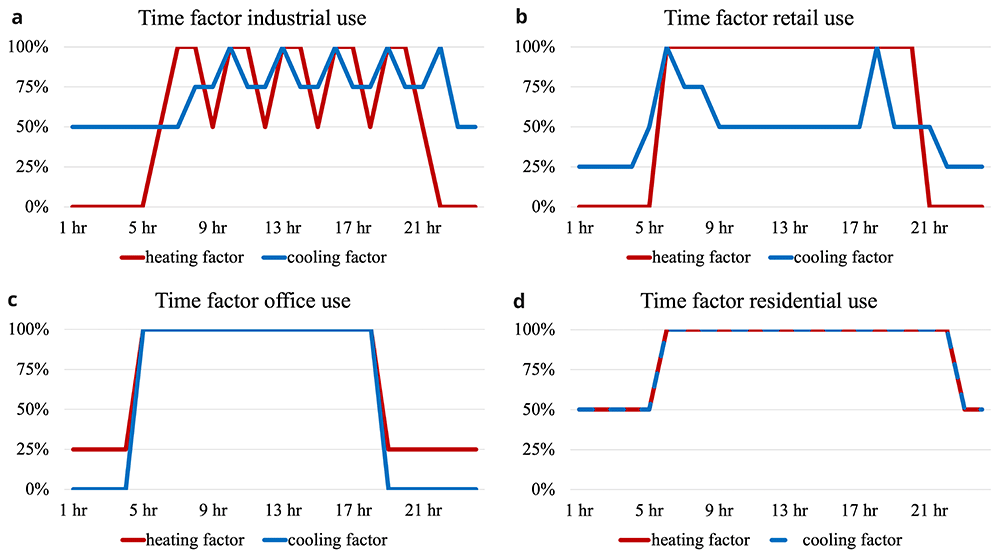
Figure 4. Time dependent factor for heating and cooling load for industrial user
(a), retail user (b), office user (c), and residential user (d).
User type 1: Industrial
For industrial usage, it was assumed that there was a large production hall with an average heat demand of 50 – 70 W/m² and 15,000–20,000 m². Owing to the high internal heat loads in industrial halls, there is a large cooling demand for air conditioning next to process cooling (Goetschkes, 2021). Therefore, large chillers are required. In line with these assumptions, the industrial use case was dimensioned with heating and cooling capacities each of 1,000 kW. The industrial user type is characterized by continuous energy demand throughout the year. In this case, a company produces during the daytime, which h is why the heating demand for process heat is very high during the day and shows daily fluctuations, which is typical for batch processing. The cooling demand for process cooling is similar to the heat demand. In addition, there is a need for process cooling to store products or for production processes that require cooling 24/7.
Figure 5 shows the daily demand for heat and cold temperatures throughout the year. As demand is constant on a daily basis, both diagrams show a constant demand.
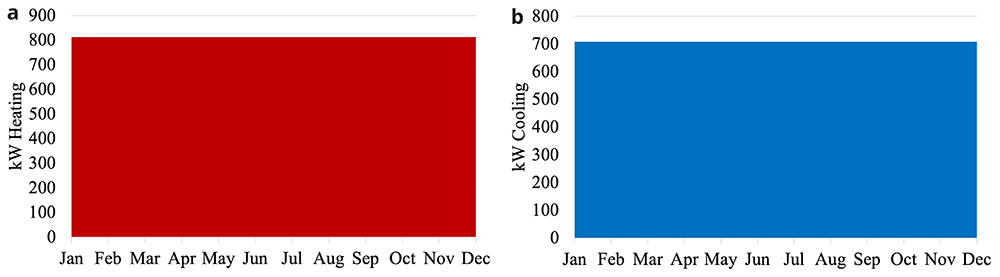
Figure 5. Average monthly heating
(a) and cooling (b) load of the industrial user.
Figure 6 shows the monthly values of both heating and cooling. Because the daily is constant and independent of weather conditions, the monthly variation is caused by the number of days per month.
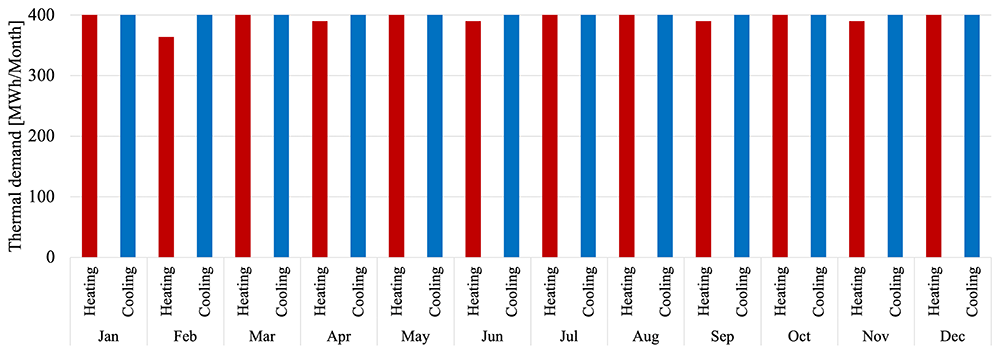
Figure 6. Industrial users monthly energy demand for heating and cooling.
Figure 7 shows the hourly course of the heating and cooling demand and the individual factors. The cooling demand is constant, whereas the heating demand occurs only during the daytime and alternates between 500 kW and 1000 kW.
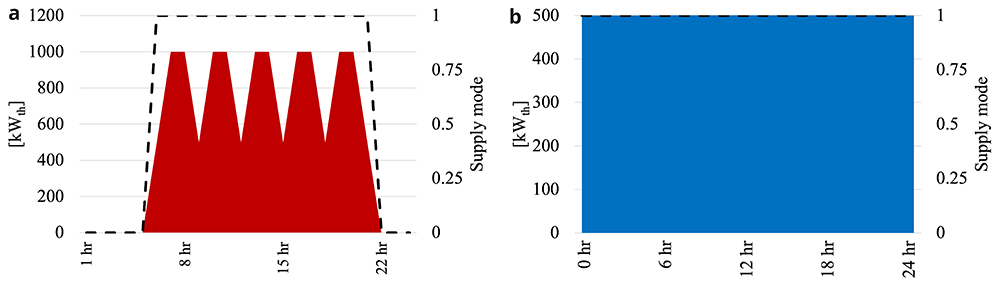
Figure 7. Industrial users heating demand on a winter day
(a) and cooling demand on a summer day (b).
User type 2: Retail
Retail users are defined by higher cooling requirements, especially when there are products that need to be stored in a chilled area or big malls and markets with high requirements for air conditioning. For example, a supermarket with 5,000 m² requires 50–80 W/m² for heat, while AC in retail requires up to 250 W/m². Modern supermarkets reject a large share of the waste heat from refrigeration systems directly to the ambient environment. Therefore, the effective cooling demand can be assumed to be slightly lower at approximately 120 W/m2 (Almebäck et al., 2022). For the retail use case, there is a supermarket or shopping mall assumed with moderate heat capacity at 300 kW, high internal loads, and high cooling for room conditioning and product cooling at 600 kW. For the retail user type, the continuous demand for cooling is considered to be cold at any time, especially for refrigeration applications. Heat demand depends on the climate conditions; therefore, in winter, there is a high heat demand to heat large commercial areas for the comfort of customers. Figure 8 shows the daily energy consumption throughout the year. The heat demand was the highest from December to March, whereas the cooling demand was quite constant, with a short peak in July.
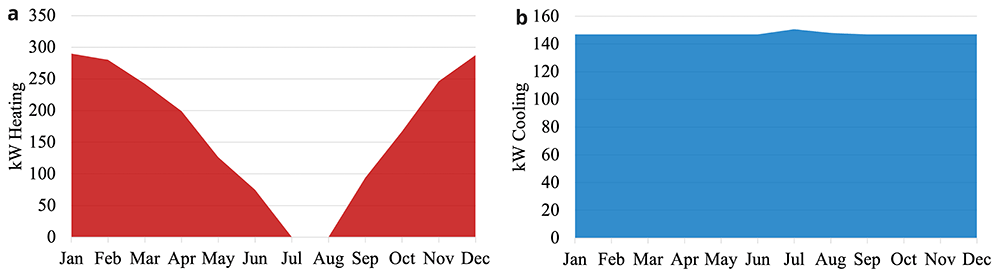
Figure 8. Average monthly heating
(a) and cooling (b) load of the retail user.
Figure 9 The monthly energy demand shows monthly variation for heating demand whereas cooling demand is quite constant.
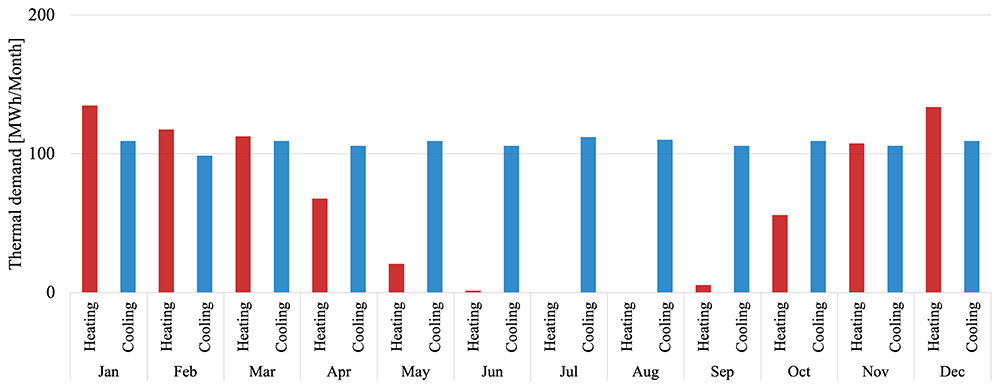
Figure 9. Retail users monthly energy demand for heating and cooling.
Figure 10 shows the daily course of heating and cooling demand for the retail use case. The heating demand is present only during the daytime, whereas the cooling demand varies per hour. There is a reduced cooling demand for refrigerators during nighttime, but an increased demand during daytime, considering the opening of refrigerator doors and product filling in the evening and morning.
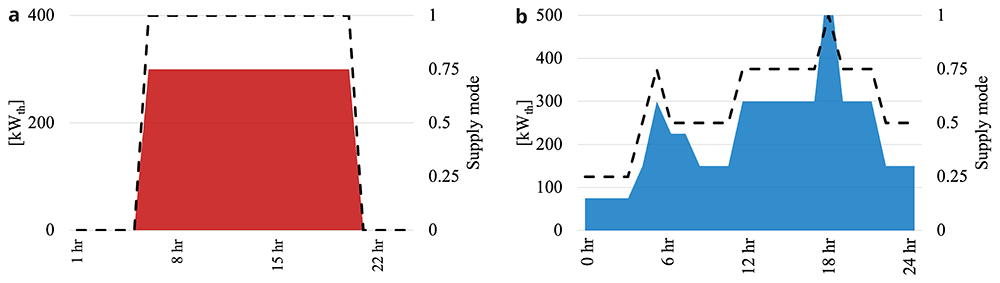
Figure 10. Retail users heating demand on a winter day
(a) and cooling demand on a summer day (b).
User type 3: Office
This user type shows an office complex with heat demand in winter but a slight decrease because of internal gains. The dominant energy vector of modern office buildings is cooling in the summer, especially when modern office buildings are often glazed (Prieto et al., 2017). In a 5,000 m² office building, it can be assumed that the heat load accounts for 60 W/m², and the cooling demand is slightly higher at 100 W/m². The heat capacity was 300 kW, and the cooling capacity was 500 kW. Heating demand in the office user type changes over the year from a high heat demand in summer to a long period of cooling demand in winter.
Figure 11 shows the heating and cooling demands for office use, with a cooling peak in August.
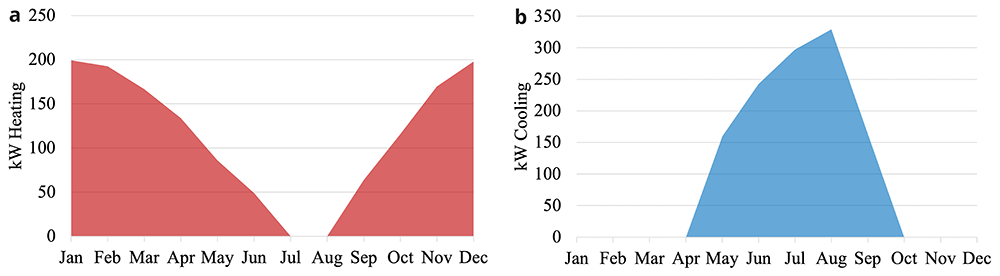
Figure 11. Average monthly heating
(a) and cooling (b) load of the office user.
Figure 12 shows the monthly energy demands for heating and cooling. During May, June, and September, this user type had a demand for both heating and cooling.
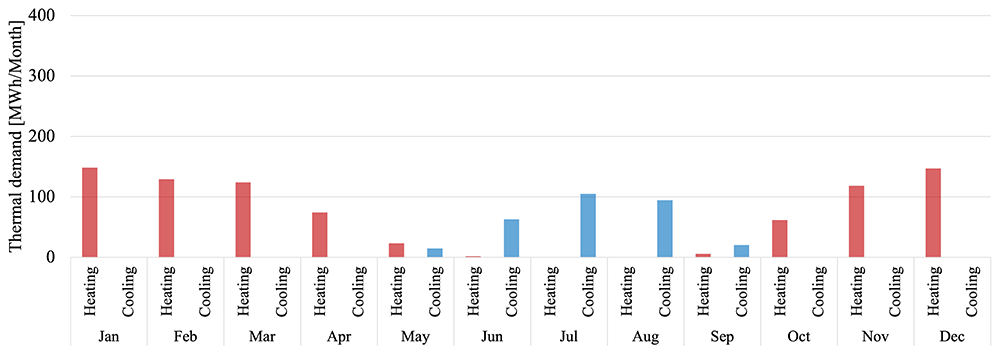
Figure 12. Office users monthly energy demand for heating and cooling.
Figure 13 shows the hourly variation in the heating and cooling demand throughout the day. A reduced heating demand is also considered during nighttime, whereas cooling demand is only considered during hours of occupation.
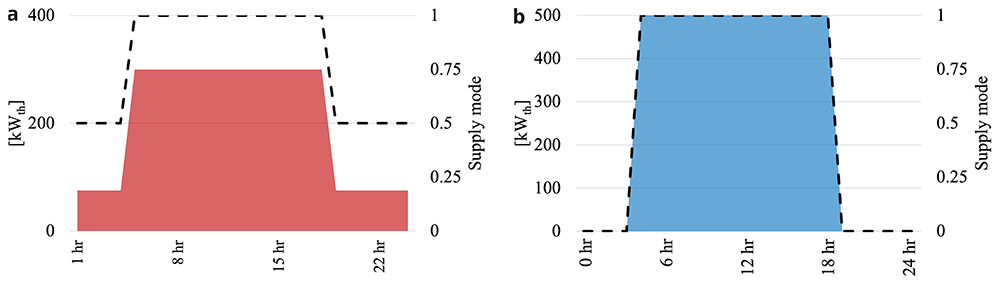
Figure 13. Office users heating demand on a winter day
(a) and cooling demand on a summer day (b).
User type 4: Residential
The energy demand of residential user types strongly depends on building typology. The maximum heat load can vary from 30 to 120 W/m². For the 100 residential units, 5 kW per unit was assumed. Only a minor portion of residential buildings use cooling in summer, but the units that have cooling systems installed will increase with climate change by approximately 8% by 2030 (Theuring, 2021), it was assumed that 1/5 of the units have cooling installed. That makes 500 kW heat capacity and 100 kW cooling capacity for residential use. Heating dominated the residential user type. Residential energy demand is highly affected by climate, in sections below the effect climate has on energy demand. Figure 14 shows that cooling load appears for a small period in summer, with low peaks of energy demand.
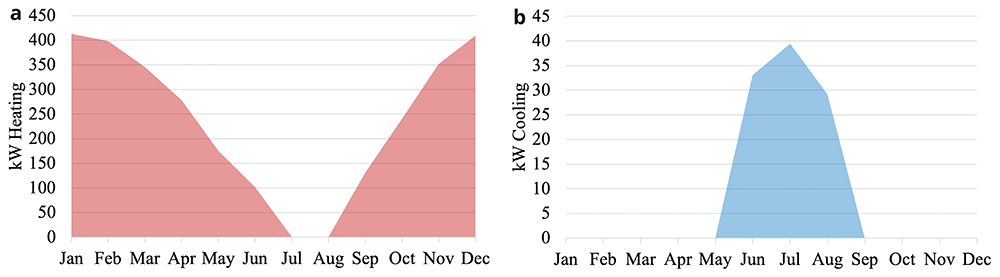
Figure 14. Average monthly heating
(a) and cooling (b) load of the residential user.
Figure 15 shows the monthly energy demands for heating and cooling. This user type shows very small demand for cooling in the representative climate in Stuttgart for central Europe.
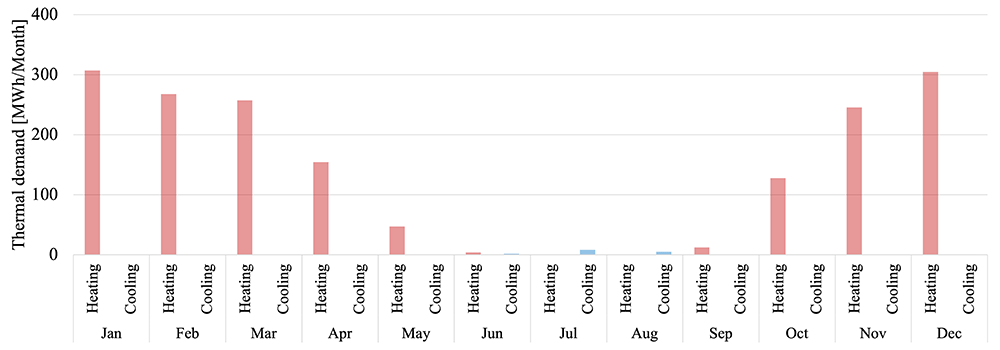
Figure 15. Residential users monthly energy demand for heating and cooling.
Figure 16 shows the hourly variation in the heating and cooling demand throughout the day. A reduced heating demand is also considered during nighttime, whereas cooling demand is only considered during hours of occupation.
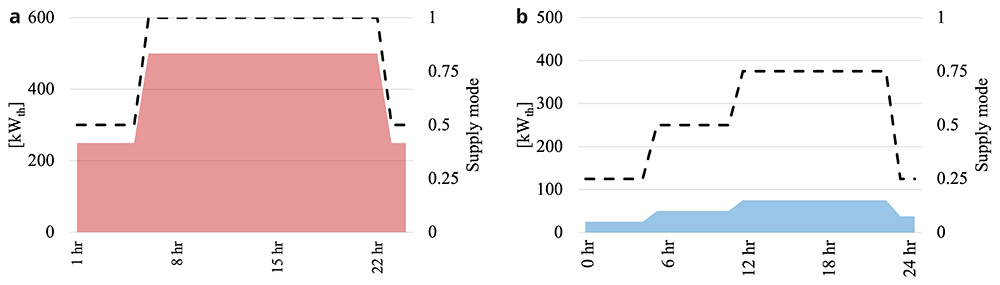
Figure 16. Residential users heating demand on a winter day
(a) and cooling demand on a summer day (b).
Combined user cases
In Europe, most civilized areas are coined through different types of usage in one area. The goal of the combined use cases is to create use-cases that characterize common constellations in European cities and municipalities. These combined use-cases provide a basis for wide replication of the tri-generation unit in different use-cases. To create these use-cases, the single user types identified before are combined to form typical constellations for widespread analysis. The use cases are oriented in typical urban or suburban structures. Four mixed-use cases were identified. The industrial area, a central urban district, a specific structure, which call the “Berlin Mix,” and a common rural municipality.
The describe single user types are combined in four specific use-cases:
Industrial site: In an industrial area, the manufacturing industry and offices of industrial companies are combined. The main impact of energy demand is industrial manufacturing, with a constant demand for heating and cooling for industrial processes. In addition, the thermal energy demand of office buildings influences the overall energy demand, with climate-dependent peaks.
Central urban district: In various city centers are big buildings with retail areas on the lower floors and offices above. The thermal energy demand of both user types, and thus, the overall energy demand, is mostly driven by the outdoor climate. In this case, the energy demand is influenced by the target to provide comfort to the users in the building areas. For the retail sector, some constant cooling demand needs to be provided for the entire year to store products.
“Berlin Mix”: This use-case brings together industrial, office, and residential user types. The term “Berlin Mix” refers to an urban structure defined by this specific combination of sectors, historically rooted in Berlin. In this configuration, the overall energy demand is shaped not only by climatic conditions but also heavily influenced by industrial load profiles. The relevance of the “Berlin Mix” has increased in contemporary urban planning, where mixed-use districts with integrated urban manufacturing and the creation of additional housing are increasingly viewed as key development strategies (Erbstößer, 2016).
Rural municipality: This rural municipality use case merges industrial, retail, and residential user types. This reflects the typical structure of village settings, where supermarkets and small manufacturing enterprises are situated in close proximity to residential neighborhoods.
Use-case 1: Industrial site
Based on the previous description for single user types, combined user types were built. Industrial energy demand can be generated through a large industrial production hall with an 800 kW capacity for process heat and 800 kW for process cooling, such as refrigeration conventionally supplied with large chillers. In modern office buildings, the cooling demand is dominated by high internal gains and glazed buildings. In this case, the cooling capacity was set to 300 kW, and the heating capacity was 200 kW. Figure 17 shows the capacities of each user type in this case for heating and cooling. Figure 18 shows that the industrial site is influenced by dominant energy demand through industrial users with continuous demand over the entire year. Figure 19 shows that monthly demand did not change significantly. Based on the climate dependency of the office user type, there were peaks of cooling in summer and heating in winter. In total, the energy demand of this case accounts for approximately 4,350 MWh per year for heating and 5,150 MWh/a for cooling.
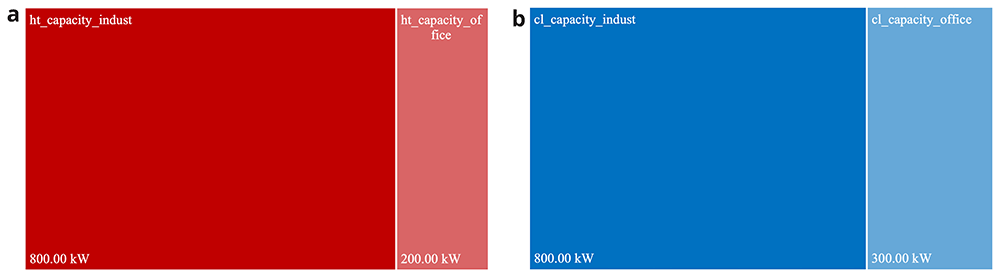
Figure 17. Load profile and interpretation of use-case 1 for heating
(a) and cooling (b).
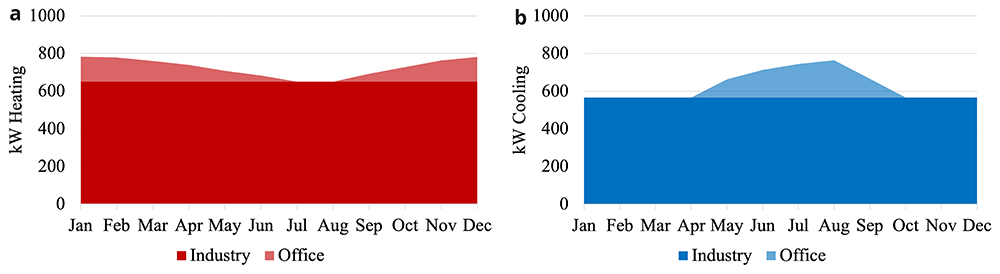
Figure 18. Average monthly heating
(a) and cooling (b) load of use-case 1.
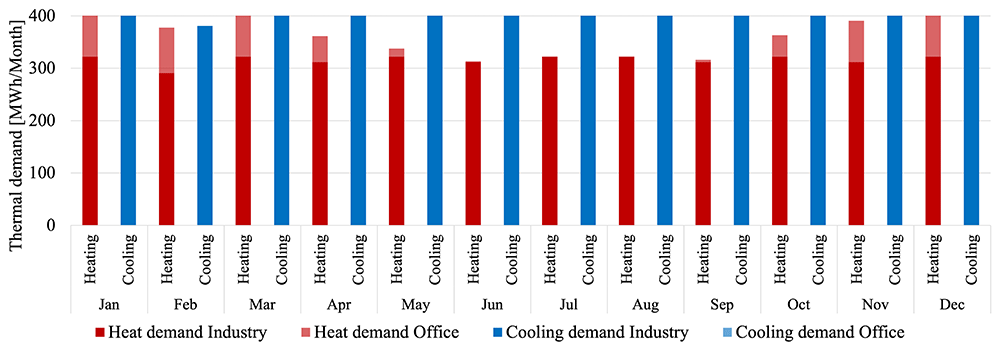
Figure 19. Monthly energy demand for heating and cooling in use-case 1.
Use-case 2: Urban central district
The urban central district is the only use case without continuous energy demand from the industry. Offices and retail stores are influenced by climate-dependent terms and conditions. The main role of room conditioning is to deliver comfortable conditions for users. The retail user type is special for having a continuous cooling demand, in addition to room conditioning, because of the requirements for storing products such as food and beverages. For this use case, it was assumed that only the lower floors of the central district buildings were retail stores. Therefore, it can be assumed that there are more office building areas. As in the case of the industrial site, office buildings show more cooling demand, with an installed capacity of 700 kW for cooling and 500 kW for heating. In line with the single-user retail, the capacity for cooling is two times larger than that for heating with 400 kW cooling and 200 kW heating in this specific case. Figure 20 shows the capacities of the user types in this case for heating and cooling. Figure 21 shows that the monthly heating and cooling loads showed a strong dependency on the outdoor climate in this case. In winter, energy demand is dominated by heating, whereas in summer, heating is not necessary and cooling demand peaks. Overall, the energy demand is more affected by the office user type. The heating demand accounts for 1,900 MWh/a and the cooling demand for 1,300 MWh/a.
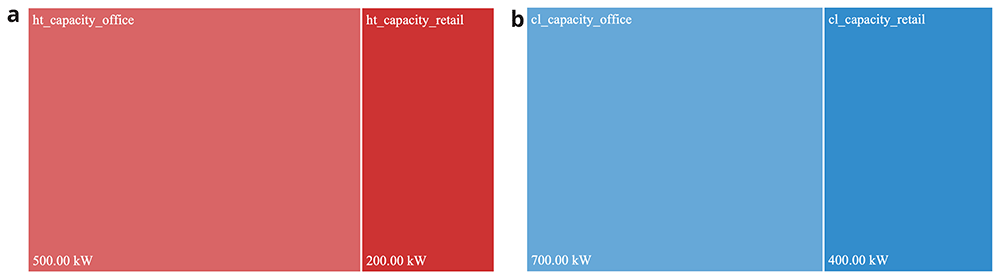
Figure 20. Load profile and interpretation of use-case 2 for heating
(a) and cooling (b).
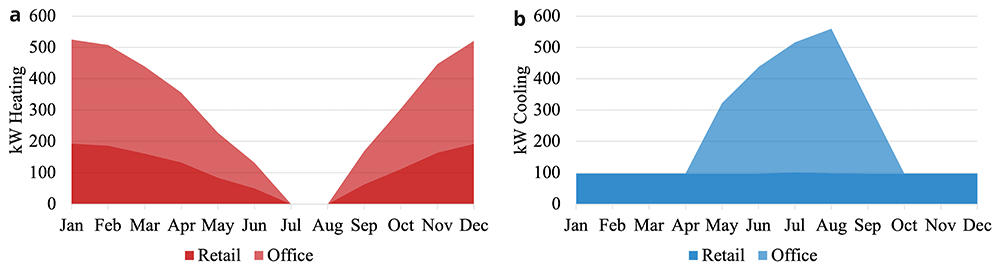
Figure 21. Average monthly heating
(a) and cooling (b) load of use-case 2.
Figure 22 shows the monthly energy demands for heating and cooling. This use case is strongly depending on outdoor climate. Between June and August there is no heat demand.
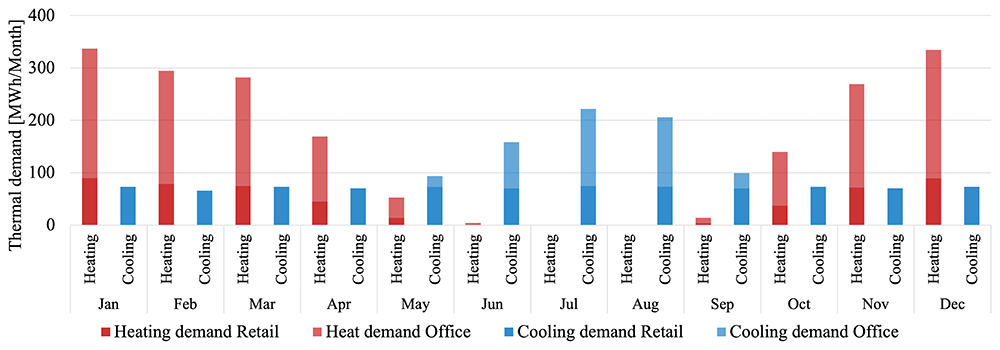
Figure 22. Monthly energy demand for heating and cooling in use-case 2.
Use-case 3: “Berlin mix”
The “Berlin Mix” in revitalized inner-city commercial areas stands out from typical inner-city structures due to its small industrial production workshops. In this case, the industrial continuous energy demand does not dominate the overall energy demand picture, with 150 kW of heating and cooling. Energy demand is mainly driven by the fluctuating demand of office and residential user types. Because it is assumed that the city area is revitalized, there are no modern glazed office buildings, and the cooling and heating loads each account for 300 kW. Similar to the single-user type, the cooling load in residential buildings is lower than the heating capacity with a 300 kW heating load and 50 kW cooling load. Figure 23 shows the capacities of each user type in this case for heating and cooling. Through the industrial user type, this case showed a continuous base load over the entire year showed in Figure 24. Figure 25 shows that the energy demand for office and residential users changes between summer and winter and is strongly climate dependent. In total the “Berlin Mix” accounts for 2,600 MWh/a heating demand and 1,100 MWh/a cooling demand.
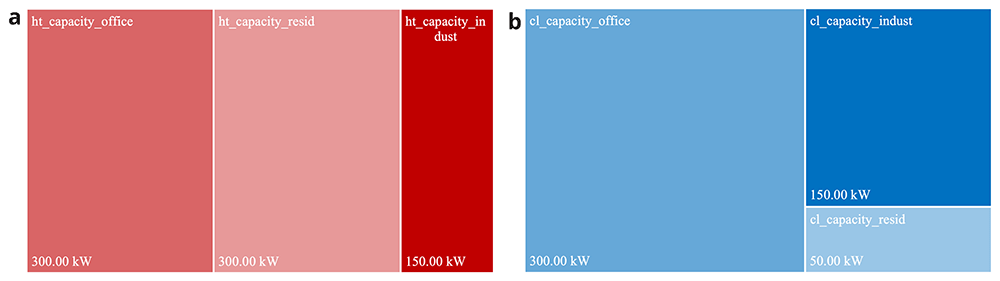
Figure 23.
Load profile and interpretation of use-case 3 for heating (a) and cooling (b).
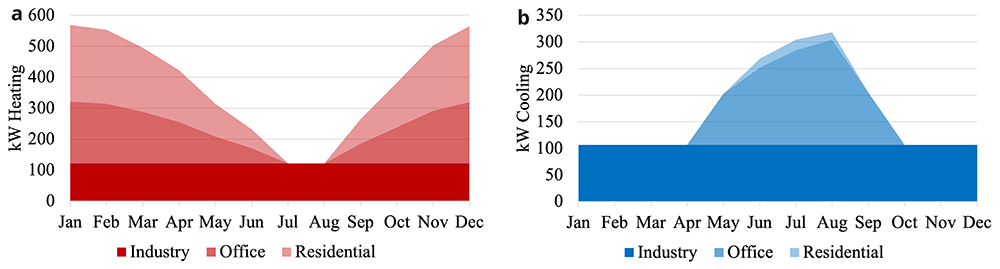
Figure 24. Average monthly heating
(a) and cooling (b) load of use-case 3.
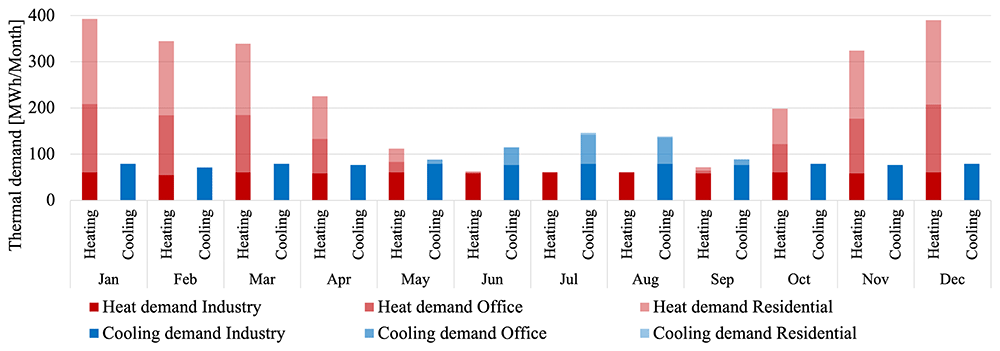
Figure 25. Monthly energy demand for heating and cooling in use-case 3.
Use-case 4: Common rural municipality
In municipalities, industrial areas are often located next to residential areas. Medium-sized production companies drive the energy demand picture of municipalities with a continuous demand for process heat and cooling. In addition, supermarkets supply the inhabitants of municipalities and are a crucial energy consumer with the typical energy demand picture of a single user type retail. For this use case, it was assumed that a medium-sized production mainly affects the energy load with 600 kW heating and cooling. In addition, a supermarket require a 150 kW heating load and 300 kW heating load. The residential user type required 350 kW of heating and 70 kW of cooling. Figure 26 shows the capacities of each user type in this case for heating and cooling. Figure 27 shows that over the entire year, there is a continuous high energy demand with peaks in winter due to the climate-dependent heat demand of retail and residential areas. In summer, the peak cooling capacity is nearly unnoticeable in the climate from Stuttgart.
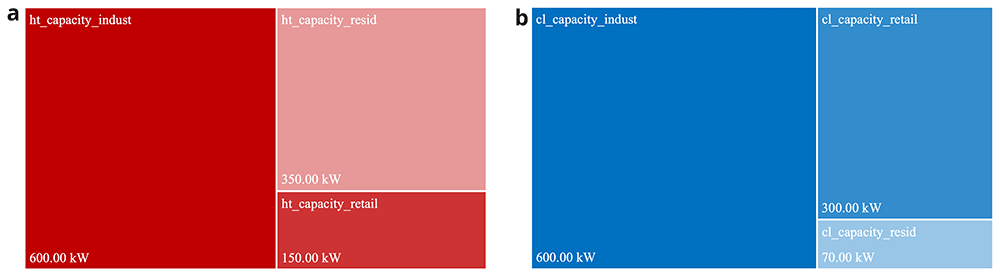
Figure 26. Load profile and interpretation of use-case 4 for heating
(a) and cooling (b).
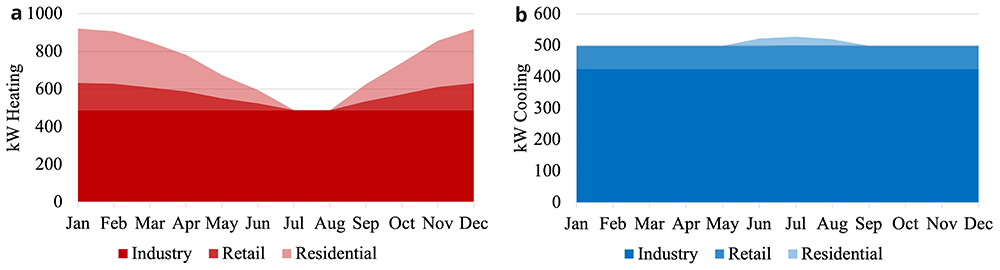
Figure 27. Average monthly heating
(a) and cooling (b) load of use-case 4.
Figure 28 shows the monthly energy demands for heating and cooling. This use case offers a continuous based energy demand for heating and cooling at the same time. In summer and winter peaks for heating and cooling are changing.
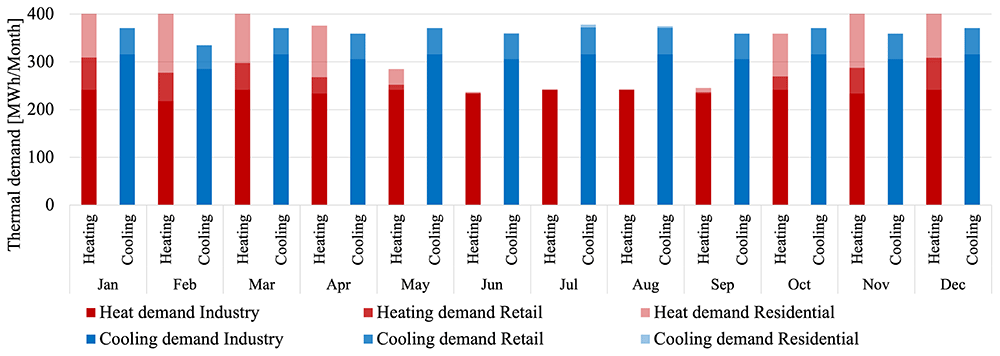
Figure 28. Monthly energy demand for heating and cooling in use-case 4.
Summary
Each use case shows a distinct load character shaped by a mix of user types. The industrial site stands out because of its strong, uninterrupted base load, where process-related heating and cooling dominate the overall profile and largely decouple the demand from seasonal effects. In contrast, the urban central district is driven by climate-dependent office loads combined with the steady refrigeration needs of retail, producing a clear seasonal pattern with pronounced summer cooling peaks. The “Berlin Mix” reflects a more balanced urban structure with small-scale industry and a stronger influence of office and residential users. The variability between winter heating and summer cooling is more visible, and no single consumer group dictates the energy profile. The common rural municipality shows a typical combination of medium industry, supermarkets, and residential areas, creating a blend of continuous industrial demand, climate-sensitive retail, and household loads. Together, these four cases illustrate how the composition of users, rather than capacity alone, shapes the characteristic behavior of local energy demand.
Whether the tri-generation unit can be used effectively is not determined by its nominal output but by the actual load profile of the users. Daily cycle, weekdays, seasonal shift between heating and cooling loads, annual operating hours, and the question of whether heating and cooling are required simultaneously. The identification of times where heating and cooling are needed simultaneously is crucial. These parameters decide between a technically possible operation and practical usage of a tri-generation unit. In many cases (office/residential), heating and cooling occur predominantly at different times, which means that a system that can supply electricity, heat, and cooling simultaneously without storage or intelligent operation regularly ends up in a partial load or mismatch operation. For the residential user in this analysis, the tri-generation unit only accounts for heating and not domestic hot water; with domestic hot water, there would be a continuous load for heating over the year. A tri-generation unit has the advantage of running continuously under a full load to generate electricity, heat, and cooling. Therefore, for the practical operation of the unit, a fitting load behavior is necessary. An operation strategy or the integration of thermal storage may be needed. In addition, consumption behavior influences economic efficiency over full utilization hours and the possibility of operating tri-generation systems during times of high electricity prices to sell electricity. Therefore, demand analysis is the basis for deriving reliable requirements for dimensioning, control, and system integration from use cases.
Impact of climate
In different climates, the load shares can shift significantly for specific use cases. In cold climates, the heating period can be longer and more intense, whereas in warm climates, the cooling load increases, often with clear summer peaks, which can change both the expected full utilization hours and the temporal overlap of heating and cooling requirements. To evaluate the changes through a different climate in this study, the energy demand and the load behavior of use-case 4, the rural municipality, were analyzed in cold and warm climates. The warm climate is represented by weather data from Madrid in Spain, with a mean ambient temperature of 14.7 °C. The cold climate is represented by Uppsala in Sweden, with a mean temperature of 7.5 °C.
In the case of rural municipalities, industrial users dominate the energy demand. As shown in Figure 29 and Figure 30 industrial production is not affected by the outdoor climate, so the major load of heating and cooling does not change with climate. This behavior gives the tri-generation unit a continuous demand for simultaneous heating and cooling at the same time. The other user types are residential and retail users with energy requirements that are entirely (residential) or largely (retail) dependent on the climate. Figure 31 shows that in cold climates, the heating period is significantly longer, and the heating load remains at a high level for a longer period. However, the maximum load was not higher than that in warm climates. On the other hand, Figure 32 shows that in warm climates, there are significantly higher peaks in the cooling load and longer cooling periods.
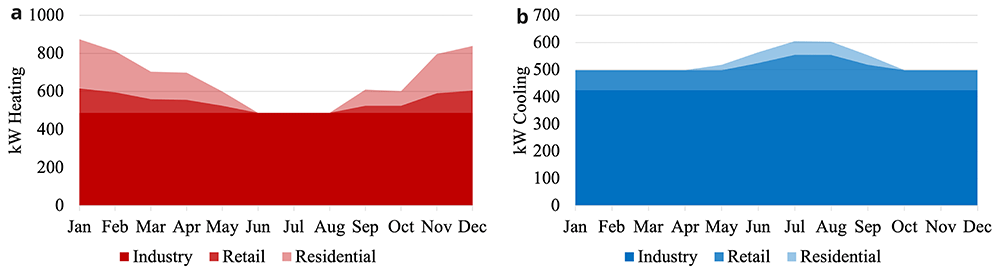
Figure 29. Average monthly heating
(a) and cooling (b) load of use-case 4 in Madrid (Spain).
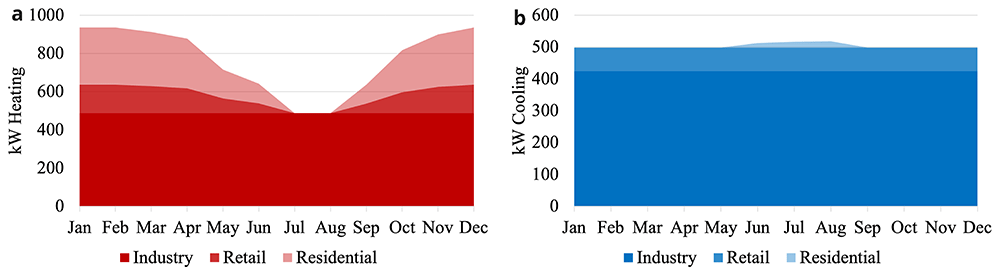
Figure 30. Average monthly heating
(a) and cooling (b) load of use-case 4 in Uppsala (Sweden).
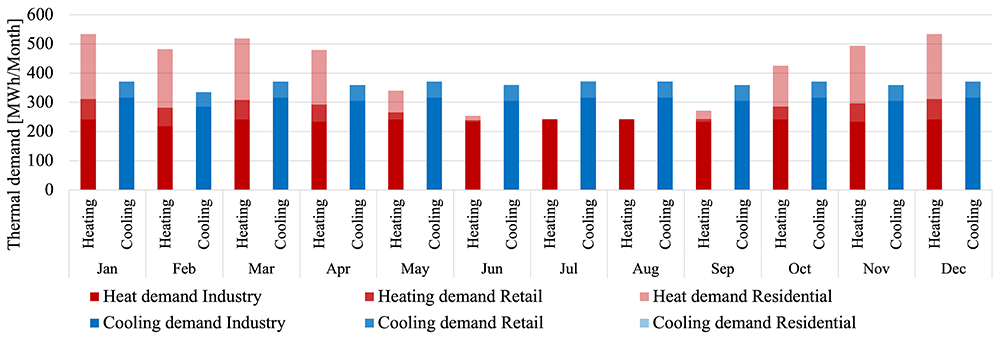
Figure 31. Monthly energy demand for heating and cooling of use-case 4 in Uppsala (Sweden).
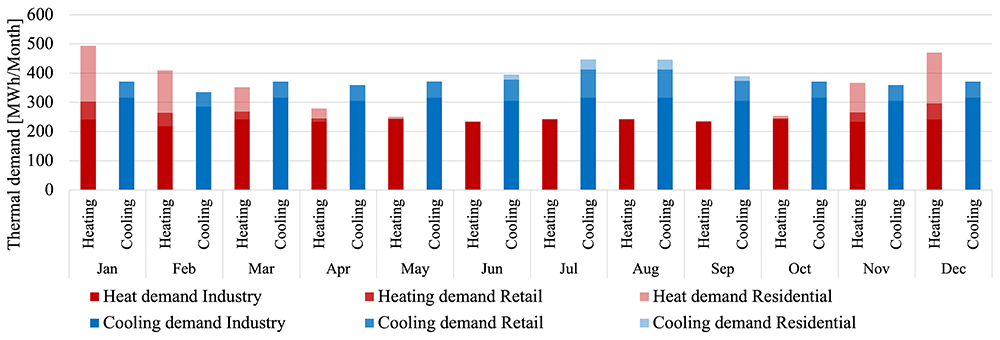
Figure 32. Monthly energy demand for heating and cooling of use-case 4 in Madrid (Spain).








