Context of the issue
In the context of the European Green Deal (European Commission, 2019), the plastics transition (European Commission, 2018), and the shift to a more circular and sustainable economy (European Commission, 2020), bioplastics are emerging as a promising alternative to fossil-based plastics (Di Bartolo et al., 2021; European Bioplastics, 2023; European Commission, 2022a; Rosenboom et al., 2022). This policy report, based on a survey of 18 industry stakeholders, reveals a strong interest from the sector: the acceptance of plant- and waste-based bioplastics is notably high.
However, a significant gap exists between this perceived potential and market reality. Consistent with the literature on industry barriers to the production and commercialization of biopolymers (see Possidónio et al., 2025), the findings presented in this policy report show that the plastics transition is still being hampered by economic, regulatory, and technological challenges that limit adoption and large-scale implementation. Companies face a dilemma: while they are willing to innovate towards sustainably, they are confronted with unstable supply chains, high production and commercialization costs, product performance challenges, scalability issues, lack of specialized workforce, and unfair competitiveness from other sectors (Possidónio et al., 2025). The lack of regulatory clarity and fair policies that acknowledge the differentiating factor of bioplastics, coupled with abusive misinformation about sustainability and environmental performance (e.g., mislabelling and misleading marketing campaigns), and activist claims of greenwashing undermines market and consumer trust, delaying an urgent transition (Ammendolia & Walker, 2024; Persakis et al., 2025).
In particular, the implications for waste- and insect-based bioplastics are especially relevant. These emerging feedstock streams hold significant potential to address multiple systemic challenges simultaneously, notably waste management challenges, the need to diversify raw material sources in the plastics transition, and the European Union strategic goal of reducing dependency on imported fossil resources as part of its broader energy security agenda (European Commission, 2022b). Specifically, waste- and insect-based bioplastic solutions can valorise organic, food, and agricultural waste streams that would otherwise contribute to environmental burdens, thereby supporting European Union Waste Framework Directive principles (European Parliament, 2008; European Parliament, 2025), enhancing sustainability and resource circularity. Through the conversion of low-value organic residues these offer an innovative route to generate biopolymers while reducing dependency on land-intensive crops or fossil-based resources. This capacity to transform waste into value-added materials positions waste- and insect-based bioplastics as strategic solutions that align with European Union ambitions for a circular bioeconomy (European Commission, 2024)
In this context, the present policy report synthesizes findings from an online multi-country survey of stakeholders across the bioplastics value chain, including manufacturers, processors, retailers, and R&D centres, to identify challenges, risks, and opportunities for the sustainable scaling of bioplastics.
Policy recommendations
Based on evidence from the multi-country survey, the following actions are proposed to accelerate the adoption of bioplastics and capitalize on their potential:
Mitigate market volatility and regulatory uncertainty: Market volatility and regulatory instability were the top risks identified by the sector (M = 3.89/5; SD = .76 and M = 3.78/5; SD = .88 respectively).
Action: Building on the European Union policy framework on biobased, biodegradable and compostable plastics (European Commission, 2022a), there is the pressing need to establish a comprehensive, long-term European regulatory framework for bioplastics that mitigates regulatory uncertainty and reduces market volatility. This framework should prioritize a stronger harmonization of definitions, standards, and certification schemes for terms such as “biodegradable”, “compostable” and “bio-based”, including clear rules for using these terms in marketing campaigns, and penalizations for companies that do not comply. As proposed by the Green Claims Directive (European Commission, 2023) and the subsequent legislative resolution of the European Parliament (2024), adopting clear and consistent criteria would help to eliminate confusions and misconceptions, increase accountability, and strengthen both industry and consumer trust in performance and sustainability claims, an area where 38.9% of the respondents were currently neutral.
Incentivize innovation focused on cost reduction, performance improvement, and product safety: High cost was highlighted by stakeholders as a critical barrier and a significant production risk. At the same time, belief in the performance of bioplastics is fragile, with 27.8% (n = 5) of respondents feeling neutral and 22.2% (n = 4) disbelieving in their performance.
Action: Following European strategic recommendations for the sector (European Commission, 2022a), it is crucial to reinforce public and private funding for bioplastics R&D with specific targets: (a) scaling up production to improve cost-competitiveness; (b) optimizing the technical properties of bioplastics, especially for waste-based and insect-based, that have the potential for higher sustainability benefits but are considered the most challenging to work with (M = 3.39/5; SD = 1.24 and M = 3.28/5; SD = 1.07 respectively); (c) developing an efficient network of infrastructure for the end-of-life recovery, recycling, and composting of bioplastics; (d) strengthening product-safety assessments, particularly regarding on long-term environmental and human-health impacts, to ensure robust safety standards that foster both industry and consumer trust; and (e) promoting effective and truthful public engagement and participation through the development evidence-based frameworks and interventions grounded in robust and methodologically sound social-science research.
Strengthen the value chain and market access: The primary barrier for industry stakeholders’ non-adoption was “lack of availability or supply” (M = 4.00/5; SD = .63), with “supply chain instability” also being considered a relevant risk (M = 3.61/5; SD = .98).
Action: In line with the long-standing recommendations of the Organisation for Economic Co-operation and Development (OECD, 2013) and more recent guidance from the European Investment Bank (Brzezicka et al., 2025), there is a pressing need to establish tax incentives or other financial mechanisms that reward the adoption of certified environmentally sustainable technologies. Particular focus should be given to supporting Small and Medium-sized Enterprises (SMEs) that invest in technology adoption, bioplastics procurement, feedstock processing, and supply chain development. Concurrently, incentives and tools should be implemented to foster and strengthen multi-sector collaboration platforms, initiatives, and networks, as partnerships between industry stakeholders were rated as the second-most effective strategy for managing risks (M = 4.22/5; SD = 1.06).
Promote consumer trust in bioplastics from waste valorisation: Insect-based products face stakeholder scepticism, showing lower levels of acceptance (M = 3.22/5; SD = 1.11), notably below traditional plastics (M = 3.33/5; SD = 1.37). Likewise, waste- and insect-based bioplastics were rated as the most challenging to work with (M = 3.39/5; SD = 1.24 and M = 3.28/5; SD = 1.07 respectively). Waste- and insect-based bioplastics are critical for the success of the plastics transition and the implementation of sustainable circular business models. This is accomplished by tapping into the valorisation of waste streams, supported by innovative bioprocessing pathways, without the risk of competing with food production resources. Promoting trust through clear knowledge-building practices, transparent policies, robust data-based evidence, and well-designed regulations is crucial to overcome misconceptions and encourage acceptance, positioning these sustainable alternatives as safe and environmentally beneficial.
Action: Given the growing reliance of many bioplastics industries on food and other waste valorisation processes, it is essential to establish clear and consistent regulatory pathways that allow the bioplastics sector to utilize waste stream resources. At the same time, promoting consumer engagement with these products is crucial to dispel misconceptions and ensure, through tailored and evidence-based interventions, that products derived from waste or insects are recognized as safe, complying with rigorous safety standards that protect human health and the environment. Transparent, evidence-based policies and regulations are also needed to build consumer trust and facilitate the adoption of these sustainable alternatives (European Parliament, 2024). Complementary to this, participatory, co-production, and citizen science initiatives should be encouraged to foster collaboration between industry and consumers, facilitating a shared understanding of waste- and insect-based bioplastics (European Commission, 2024). These initiatives must be supported by comprehensive research on the long-term impacts and benefits of waste- and insect-based bioplastics, including those arising from scaled-up production and widespread consumer adoption, areas where data is currently lacking. By bridging the gap between industry and consumers, such initiatives can help contextualize and address the challenges of bioplastics production and commercialization, thereby reducing the risk of greenwashing.
Build trust through transparency: Overall, survey results suggest that mistrust and misinformation are key challenges, not only for public perception, but also for industry stakeholders’ willingness to adopt bioplastics. For example, 38.9% (n = 7) of respondents were uncertain about claims of sustainability, 33.3% (n = 6) were uncertain about health and environmental safety claims, and 27.8% (n = 5) were uncertain about performance claims. If stakeholders do not trust the product, they will not invest. For that, companies need clear proof of material performance, safety, and sustainability, including certified Life Cycle Assessments (LCAs).
Action: To promote adoption and consumer trust in bioplastics, it is essential to implement European certification programs based on transparent and mandatory LCAs that independently verify and attest for the lower environmental footprint and safety of bioplastic products (European Commission, 2022b). These efforts should be complemented by consumer engagement actions that raise awareness, build trust, assure safety, and drive demand for bioplastics. Literature in the field (Domingos et al., 2025) suggests several key actions to achieve this: (a) developing targeted and tailored communication campaigns to increase consumer awareness and familiarity with bioplastics; (b) addressing knowledge gaps through customized materials and engaging industry stakeholders and consumers in co-creating the future of bioplastics; (c) ensuring that all claims are truthful, accurate, and supported by certified standards; (d) pre-testing and monitoring communications and interventions to assess their impact and effectiveness on consumer understanding and engagement; and (e) identifying and addressing misconceptions and information gaps that may arise (e.g., on production aspects, safety, benefits, risks, and disposal procedures) following consumer-centred evidence-based approaches. Additionally, companies can strategically utilize traditional and social media platforms, not only as communication channels but also as tools to monitor and understand consumer behaviour, and to inform future engagement strategies (Cruz et al., 2025).
Evidence and analysis
This policy report is based on an online survey of 18 stakeholders from the bioplastics sector, including manufacturers, processors, retailers, and R&D centres. All data is available on Open Science Framework (Farias et al., 2025). Participants’ ages ranged between 30 and 68 years old (M = 44.5; SD = 12.1), with the majority being female (n = 10; 55.6%). Most participants were from Europe (n = 16; 89%), predominantly Portuguese (n = 12; 67%), with others from Italy, Spain, the Netherlands, and Cyprus; two participants were from outside Europe (Brazil and India). Most reported working in Portugal (n = 13; 72%), while others worked in Greece, Italy, the Netherlands, Spain, and India. The study assessed barriers, risks, acceptance, and future scenarios for bioplastics. All participants reported having higher education degrees, with the majority (n = 11; 61.1%) reporting holding a PhD or equivalent. Two-thirds of the participants (n = 12; 66.7%) reported that their companies already work directly with bioplastics, while 27.7% (n = 5) expressed future interest. Participants had an average of 8.72 years of experience working with bioplastics (SD = 6.49), with most (n = 16; 88.9%) having over one year of experience and the majority (n = 14; 77.8%) having between 1 and 10 years of experience. On average, participants rated that their companies work more frequently with packaging-related products (M = 3.94/5; SD = 1.73), followed by food-related products (M = 3.22/5; SD = 1.83), agri-products (M = 2.17/5; SD = 1.58), cosmetic products (M = 1.94/5; SD = 1.47), health-related products (M = 1.78/5; SD = 1.22), and pharmaceutical products (M = 1.39/5; SD = .70).
The acceptance vs. adoption paradox: Figure 1 shows a high acceptance of plant- (M = 4.28/5; SD = .90) and waste-based bioplastics (M = 4.00/5; SD = 1.03). Acceptance levels were moderate for traditional plastics (M = 3.33/5; SD = 1.37), and lower for insect-based plastics (M = 3.22; SD = 1.11). However, this positive attitude towards plant- and waste-based bioplastics does not necessarily translate into widespread adoption due to practical barriers. As shown in Figure 2, stakeholders identified as main barriers to bioplastics adoption the lack of availability or supply (M = 4.00/5; SD = .63), high cost (M = 3.83/5; SD = .98), and performance concerns (M = 3.33/5; SD = .82). Moreover, participants also considered waste-based and insect-based bioplastics as the most challenging to work with (M = 3.39/5; SD = 1.24 and M = 3.28/5; SD = 1.07 respectively), and traditional plastics as the least challenging (M = 2.00/5; SD = 1.28).
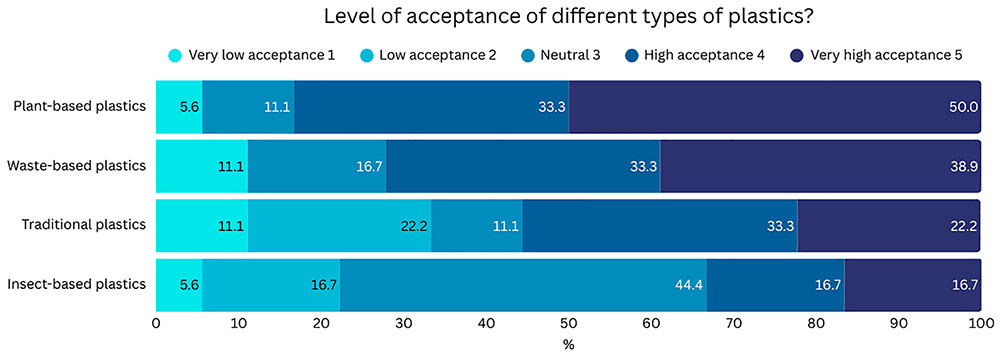
Figure 1. Stakeholders level of acceptance of different types of plastics.
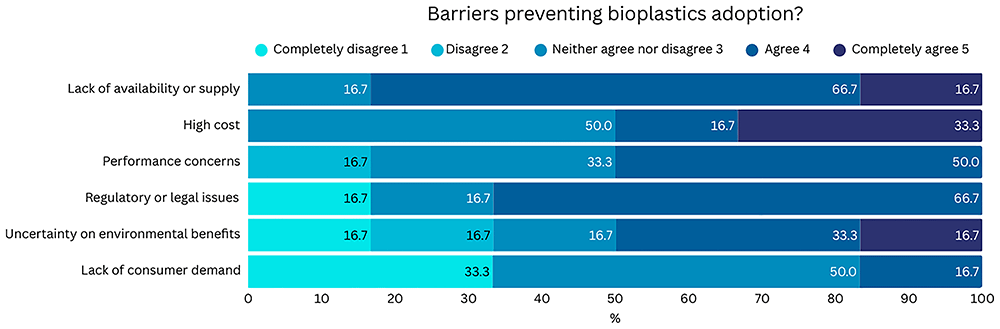
Figure 2. Barriers preventing bioplastics adoption by stakeholders.
Uncertainty as the main business risk: For companies already operating in the sector, the greatest risks are not technical but rather economic and regulatory. Market volatility (M = 3.89/5; SD = .76) and the absence of a clear legal framework (M = 3.78/5; SD = .88) were identified as critical risks that hinder long-term planning and investment, keeping the sector in a state of moderate, rather than rapid, growth (see Figure 3). Most participants perceived bioplastics as safe for human health (n = 12; 66.7%) and the environment (n = 12; 66.7%), but some also noted uncertainties about human safety claims (n = 6; 33.3%) and environmental safety claims (n = 6; 33.3%). Moreover, 7 (38.9%) participants reported that their companies are uncertain (neutral – do not trust nor distrust) about bioplastics claims of sustainability, and 5 (27.8%) reported that their companies are uncertain (neutral – do not trust nor distrust) about the technical performance of bioplastics (e.g., durability; flexibility; barrier properties).
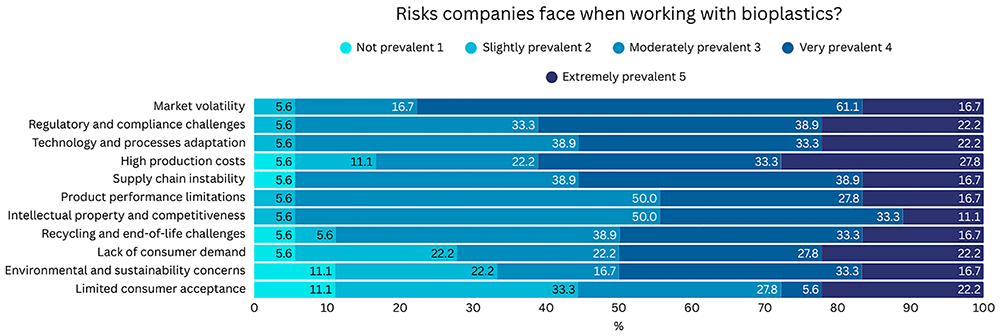
Figure 3. Risks companies face when working with bioplastics.
The future of bioplastics: As shown in Figure 4, participants reported that the most effective strategies to manage the risks companies face when working with bioplastics is resorting to internal test trials (M = 4.33/5; SD = 1.14), followed by collaborating with industry partners (M = 4.22/5; SD = 1.06), conducting market research (M = 3.56/5; SD = .86), and relying on certifications or third-party evaluations (M = 3.50/5; SD = .99). Following this, participants rated that they were most confident that in 5–10 years biopolymer production capacity will grow significantly (M = 4.22/5; SD = .73), specialized technology for biopolymer production will become significantly more available (M = 4.22/5; SD = .81), and industrial applications of biopolymers will grow significantly (M = 4.17/5; SD = .71). Comparatively, they were less confident that in 5–10 years properties of bioplastics will match those of conventional plastics (M = 3.39/5; SD = .98), pricing of bioplastics will decrease significantly, making them more cost-competitive with conventional plastics (M = 3.28/5; SD = 1.07), and taxes on biopolymer products will decrease significantly (M = 3.17/5; SD = .92). According to participants, key challenges influencing bioplastics business strategy and decision-making in the next 5–10 years (see Figure 5) will be economic uncertainties (M = 3.94/5; SD = .87), followed by production uncertainties (M = 3.83/5; SD = .99), supply uncertainties (M = 3.83/5; SD = 1.10), market uncertainties (M = 3.72/5; SD = 1.07), regulatory uncertainties (M = 3.67/5; SD = 1.19), and technological uncertainties (M = 3.39/5; SD = 1.20). Sectors leading bioplastics adoption are projected to be food packaging (n = 15; 83.3%), controlled-release fertilisers (n = 12; 66.7%), and industrial packaging (n = 10; 55.6%). Overall, the sector is optimistic that, with the right policies, challenges will be overcome and optimism will turn into tangible growth.
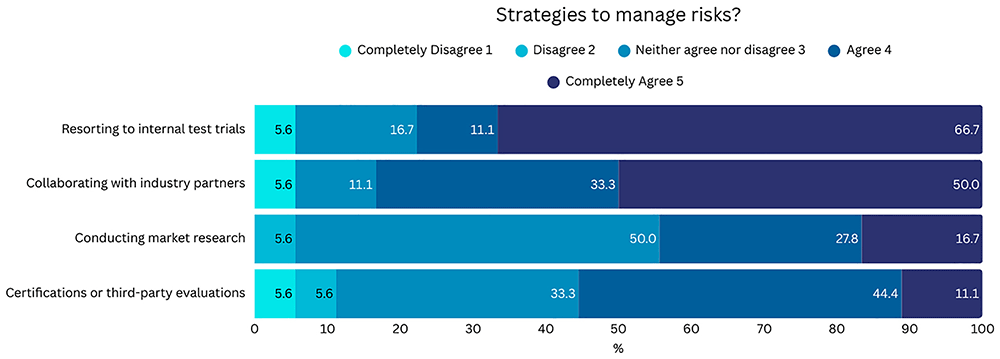
Figure 4. Strategies to manage the risks companies face when working with bioplastics.
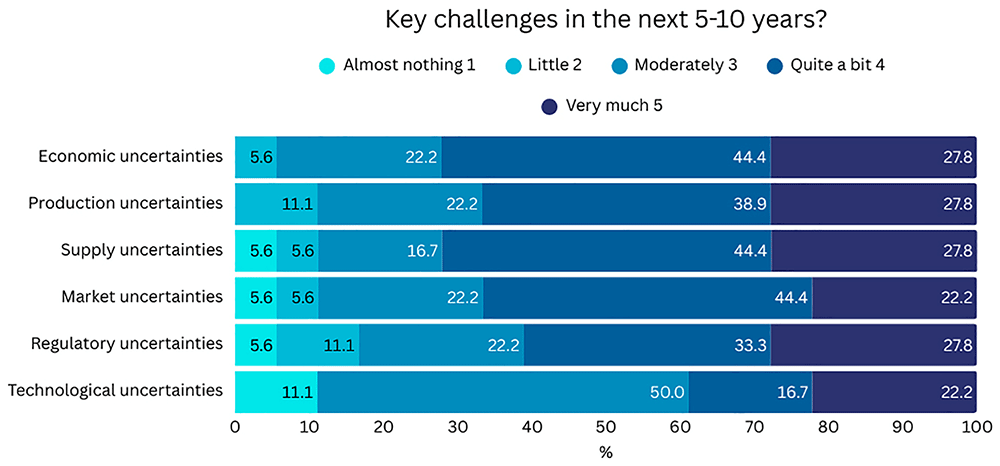
Figure 5. Key challenges influencing bioplastics business strategy in the next 5–10 years.
Reporting guidelines
This brief report was written following European Commission guidelines for policy reports (European Commission, 2025).
European Commission (2025). Sharing scientific evidence with policymakers: Guide on writing policy briefs for impact. Publications Office of the European Union. https://doi.org/10.2848/0209192
Ethics and consent
This study was carried out in accordance with the recommendations of the Portuguese Psychological Association (OPP) and the American Psychological Association (APA). The protocol was fully approved by the Lusófona University Ethics Committee (CEDIC) with the reference CEDIC-2024-2-24. All subjects gave informed consent in accordance with the Declaration of Helsinki. Informed consent was obtained digitally. When accessing the online survey participants first read the informed consent form and were given the option to accept or decline participation. Only after reading the informed consent form and accepting to participate were the participants able to procced to the survey questions.
Data availability statement
All data and materials are available on Open Science Framework: BioLamer - Policy Report. https://osf.io/9xy6r
The project contains the following underlying data:
BD BioLaMer 18 valid_PolicyReport.jasp (database with raw data on all the study variables reported in this policy report in JASP format)
BD BioLaMer 18 valid_PolicyReport.csv (database with raw data on all the study variables reported in this policy report in CSV format)
Data are available under the terms of the Creative Commons Zero “No rights reserved” data waiver (CC0 1.0 Public Domain Dedication). Data analysis was conducted using JASP 0.95.4.
Acknowledgments
The authors thank the stakeholders from the bioplastics industry who voluntarily participated in the study for their time, availability, and shared expertise. Their contributions provided valuable insights.
Faculty Opinions recommendedReferences
- Ammendolia J, Walker TR:
Consistently inconsistent: the false promise of ‘sustainable’ plastics.
Camb Prism Extinct.
2024; 2: e8. Publisher Full Text
- Brzezicka P, Collot S, Hudson G, et al.:
Scaling up Europe’s bio-based industries. European Investment Bank, 2025. Reference Source
- Cruz B, Vaitsi A, Domingos S, et al.:
Unpacking online discourse on bioplastics: insights from reddit sentiment analysis.
Polymers (Basel).
2025; 17(6): 823. PubMed Abstract
| Publisher Full Text
| Free Full Text
- Di Bartolo A, Infurna G, Dintcheva NT:
A review of bioplastics and their adoption in the circular economy.
Polymers (Basel).
2021; 13(8): 1229. PubMed Abstract
| Publisher Full Text
| Free Full Text
- Domingos S, Farias AR, Possidónio C, et al.:
Consumer demand for bioplastics: an umbrella review of barriers and recommendations.
Journal of Risk Research.
2025; 1–18. Publisher Full Text
- European Bioplastics: Statement of European bioplastics: EU policy framework on biobased, biodegradable and compostable plastics. European Bioplastics, 2023. Reference Source
- European Commission: A European strategy for plastics in a circular economy. (COM/2018/28 final). European Commission, 2018. Reference Source
- European Commission: The European green deal (COM/2019/640 final). European Commission, 2019. Reference Source
- European Commission: A new circular economy action plan for a cleaner and more competitive Europe (COM/2020/98 final). European Commission, 2020. Reference Source
- European Commission: EU policy framework on biobased, biodegradable and compostable plastics (COM/2022/682 final). European Commission, 2022a. Reference Source
- European Commission: REPowerEU plan (COM/2022/230 final). European Commission, 2022b. Reference Source
- European Commission: Substantiation and communication of explicit environmental claims - green claims directive (COM/2023/166 final). European Commission, 2023. Reference Source
- European Commission: Enhancing stakeholder involvement in EU bioeconomy policy - final report. Publications Office of the European Union, 2024. Publisher Full Text
- European Commission: Sharing scientific evidence with policymakers: Guide on writing policy briefs for impact. Publications Office of the European Union, 2025. Publisher Full Text
- European Parliament: Waste framework directive (directive 2008/98/EC). Official Journal of the European Union. 2008. Reference Source
- European Parliament: Substantiation and communication of explicit environmental claims - green claims directive (P9_TA/2024/0131). European Parliament, 2024. Reference Source
- European Parliament: Revision of the waste framework directive (directive 2025/1892). Official Journal of the European Union. 2025. Reference Source
- Farias AR, Domingos S, Possidónio C, et al.:
BioLamer - policy report. Open Science Framework, 2025. Reference Source
- Organisation for Economic Co-operation and Development [OECD]: Policies for bioplastics in the context of a bioeconomy. OECD Science, Technology and Industry Policy Papers, No. 10, OECD Publishing, 2013. Publisher Full Text
- Persakis A, Nikolopoulos T, Negkakis IC, et al.:
Greenwashing in marketing: a systematic literature review and bibliometric analysis.
Int Rev Public Nonprofit Mark.
2025; 22: 957–992. Publisher Full Text
- Possidónio C, Farias AR, Domingos S, et al.:
Exploring supply-side barriers for commercialization of new biopolymer production technologies: a systematic review.
Sustainability.
2025; 17(3): 820. Publisher Full Text
- Rosenboom JG, Langer R, Traverso G:
Bioplastics for a circular economy.
Nat Rev Mater.
2022; 7(2): 117–137. PubMed Abstract
| Publisher Full Text
| Free Full Text







