Introduction
The maritime domain has become increasingly vulnerable to complex and evolving security threats, including irregular migration, human trafficking, smuggling of drugs and arms, and illegal, unreported, and unregulated (IUU) fishing. These challenges, outlined in the FRONTEX “Risk Analysis for 2021” report, underscore the pressing need for advanced technological solutions (Nguyen et al., 2018), including the use of AIS data and machine learning for real-time maritime monitoring. Additionally, the fragmented nature of surveillance systems and operations across national, regional, and EU-level authorities highlights the importance of fostering multi-authority cooperation to address these challenges effectively.
To address these needs, the European Union’s Horizon-funded EURMARS project introduces an innovative surveillance framework aimed at enhancing multi-authority border security. EURMARS proposes a unified surveillance platform that integrates advanced sensing technologies, including high-altitude platforms, satellite imagery, uninhabited vehicles (UxVs), and ground-based sensors, into a cohesive and multitasking system. The framework promotes collaboration through its open architecture, which incorporates lessons learned from prior initiatives and aligns with the Common Information Sharing Environment (CISE) (Agency & EUCISE2020, 2022) to enable greater interoperability and coordination among stakeholders.
As part of this groundbreaking framework, this paper introduces a Decision Support System (DSS) designed specifically to address operational challenges in maritime border surveillance. The DSS leverages advanced Natural Language Processing (NLP) capabilities, powered by Meta-LLaMA-3-8B, to analyze user feedback gathered during and after operations. Real-time (online) feedback from incident handlers and post-incident (offline) feedback from reviewing officers are processed to extract actionable insights. These insights are then used to generate microtask recommendations aligned with predefined common operational procedures, enabling users to address complex maritime incidents with greater efficiency and accuracy.
A key innovation of the DSS is its voting mechanism, which aggregates feedback from multiple users to prioritize critical microtasks. This ensures the system remains both adaptable to diverse incident scenarios and consistent in maintaining procedural standards required for multi-authority collaboration. For example, during incidents such as AIS spoofing, vessel distress, or unauthorized maritime activities, the DSS provides context-specific microtask recommendations that enhance operational decision-making and coordination.
The DSS integrates seamlessly into EURMARS’s broader maritime surveillance architecture, complementing advanced sensing technologies such as high-altitude platforms, satellite imagery, and UxVs. By clustering and analyzing sensing results, the system delivers actionable intelligence to decision-makers, improving situational awareness and operational efficiency. Furthermore, the DSS incorporates AI-driven risk assessment and feedback-based adaptation, ensuring it evolves to meet the dynamic challenges of maritime border security.
This paper details the design, implementation, and evaluation of the DSS within the EURMARS framework. It focuses on the DSS’s NLP-driven feedback analysis module, microtask recommendation engine, and voting mechanism, as well as its integration into a multi-authority surveillance system. Preliminary evaluations demonstrate the DSS’s ability to improve decision accuracy, reduce response times, and promote procedural consistency, making it a valuable tool for addressing the growing complexity of maritime security threats.
Background / Related work
Border security has always been a critical concern for nations, requiring a balance between effective surveillance and strategic decision-making. Over the years, researchers have explored various technological approaches to enhance border surveillance, ranging from sensor fusion and computer vision to machine learning-based detection systems. While these innovations have significantly improved detection capabilities, they often lack structured decision-making frameworks to guide security operators in handling threats effectively. Our approach builds upon these advancements, but with a key distinction—we focus on supporting decision-making rather than merely providing detection alerts.
In the study by Essendorfer et al. (Essendorfer et al., 2009), One of the foundational works in border surveillance is the SOBCAH (Surveillance of Borders, Coastlines and Harbors) project, which introduced an architecture for integrating heterogeneous sensor data to improve situational awareness. The system fuses infrared cameras, radar, sonar, and external intelligence sources into a Common Operational Procedures (COP) to support decision-making at different levels. However, while their approach modifies the COP dynamically based on new data, it does not provide a structured framework for operators to process, analyze, or respond to threats efficiently.
Our work takes a different approach. Rather than modifying the COP, we focus on enhancing it through micro-tasks that support security operators. By incorporating both online and offline feedback loops, we allow for continuous performance improvement while ensuring strict adherence to Common Operational procedures COPs. This ensures that automation augments, rather than replaces, human decision-making.
Another significant work by Bein et al. (Bein et al., 2013) introduces a data-driven adaptation system that dynamically adjusts sensor behavior based on the contextual value of incoming data. Using influence diagrams and probabilistic decision models, this approach determines when to engage higher-level sensors, such as UAVs or advanced imaging systems, based on the cost-benefit tradeoff of additional information.
While this method enhances sensor network efficiency, it remains a computational decision model rather than an operational decision-support system. The influence diagram guides sensor allocation but does not assist operators in real-time threat evaluation or tactical decision-making. Our approach, in contrast, focuses on how security personnel interact with the data, ensuring that they receive structured support in responding to detected threats.
With the rise of computer vision and IoT, several studies have explored automated object and face detection as a means of monitoring border regions. A study by Ahamed Yasar et al. (Ahamed Yasar et al., 2020), presents a Raspberry Pi-based surveillance system that detects intruders using OpenCV for facial recognition. If an unrecognized face is detected, the system triggers an alert via LoRa communication.
While such an approach is useful for automating surveillance tasks, it is not a decision-support system—it simply detects and alerts without providing any structured response mechanisms. Our work acknowledges the importance of computer vision in surveillance, but we emphasize structured operator decision-making over simple detection alerts.
Another approaches in the field by Fatima et al. (Fatima et al., 2021), proposes a smart border surveillance system using machine learning for intruder detection. The system employs Raspberry Pi cameras, GSM-based alerts, and cloud-based encrypted image storage to detect unauthorized individuals. A deep learning model classifies detected individuals as either intruders or soldiers, with an additional face recognition layer to verify authorized personnel.
Despite its sophistication in intruder detection and classification, this approach remains an alert-based system rather than a suggestive or decision-making system. It provides detection but not guidance—security forces receive an alert, but there is no structured framework for responding to threats. False positives or uncertain detections could overwhelm operators with unnecessary alerts, reducing overall effectiveness.
In contrast, our approach does not aim to replace operators with machine learning models but rather to support them through structured workflows. By integrating micro-tasks and decision-support tools within the COP, we ensure that security personnel can assess, verify, and respond to threats systematically.
While existing research has significantly advanced border surveillance through enhanced detection, sensor fusion, and automated threat identification, operational decision-making remains a human-driven responsibility that requires structured support. Our approach is not a replacement but a complement to these advancements, ensuring that security personnel are equipped with the necessary tools to respond effectively.
Rather than modifying the Common Operational Procedures (COPs) dynamically (as seen in SOBCAH) or relying solely on automated AI-based alerts (as in IoT-driven and computer vision-based models), our system reinforces operational workflows through:
Active Operator Involvement: Decisions remain under human control, with structured support rather than full automation. This prevents over-reliance on AI-driven alerts and ensures context-aware responses to security events.
Preservation of Common Operational Procedures (COPs): Unlike some approaches that alter operational protocols, our system introduces micro-tasks that work within established security frameworks, enhancing rather than modifying existing COPs.
Integrated Feedback Loops: Both online and offline feedback mechanisms enable continuous system adaptation and performance refinement without disrupting security operations.
By integrating structured decision-support with adaptive learning, our approach ensures that border surveillance operators can efficiently translate threat detection into actionable intelligence. Rather than burdening personnel with raw sensor data or unverified alerts, our system streamlines threat response, providing clear, structured insights that enhance situational awareness. Automation is leveraged selectively to support, rather than replace, human judgment—ensuring that decision-making remains transparent, accountable, and aligned with established border security protocols. This approach reinforces EURMARS as a robust border surveillance platform, emphasizing operational efficiency, adaptability, and continuous improvement in managing security challenges.
Methods
The EURMARS platform operates as an integrated maritime surveillance framework, designed to consolidate and analyze data from a wide range of heterogeneous sources—including Automatic Identification System (AIS) data, satellite imagery, Uncrewed Aerial Vehicles (UAVs), and ground-based sensors. These data streams are processed and fused within the system’s central data fusion module to generate a unified operational picture.
Once fusion is complete, the Risk Protocol Module evaluates each detected event based on predefined threat assessment criteria. If an event is classified as high-risk—such as an instance of AIS spoofing, unauthorized vessel activity, or distress signaling—the system initiates the Decision Support System (DSS). At this stage, the DSS receives contextualized information about the threat, including location, involved assets, sensor metadata, and the assessed threat level.
Upon activation, the DSS retrieves the Common Operational Procedures (COPs) associated with the identified threat. These procedures represent structured, multi-step workflows codified by domain experts and aligned with the protocols of border and maritime authorities.
Confidentiality of COP steps
The detailed content of individual COP steps is confidential. Therefore, throughout this paper we refer to steps only by their ordinal labels (Step 1, Step 2, …) without disclosing their specific actions or descriptions. However, the microtasks associated with each step are not confidential and are presented as representative guidance generated by the DSS.
Rather than presenting the procedures as static checklists, the DSS enhances operator guidance through context-aware micro-tasks—specific, actionable units of work dynamically adapted to the operational context and sensor-derived information.
As an illustrative example, consider the scenario of a Vessel in Distress, which the Risk Protocol Module classifies as a high-priority threat. The DSS presents the operator with the relevant COP structured into five sequential steps (denoted only as Step 1–Step 5 due to confidentiality). Interface snapshots for these steps are depicted in Figure 1–Figure 5; captions are anonymized accordingly.
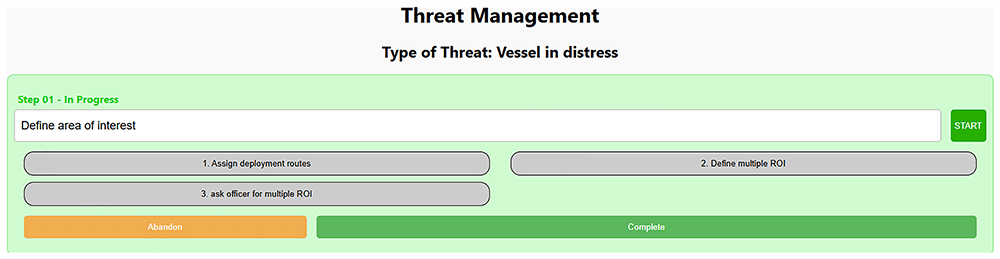
Figure 1. User interface view for Step 1 of the Common Operational Procedure (COP) related to a Vessel in Distress scenario.
The COP content is confidential; only the system interface is shown.
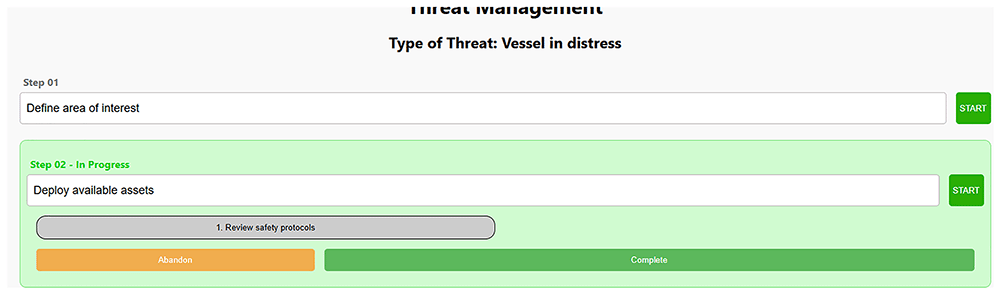
Figure 2. User interface view for Step 2 of the COP in a Vessel in Distress scenario.
The COP content is confidential; only the interface layout is illustrated.

Figure 3. User interface view for Step 3 of the COP in a Vessel in Distress scenario.
The COP content is confidential; the figure depicts the DSS operator interaction screen.

Figure 4. User interface view for Step 4 of the COP in a Vessel in Distress scenario.
The COP content is confidential and has been removed; the figure shows only the system interface.

Figure 5. User interface view for Step 5 of the COP in a Vessel in Distress scenario.
The COP content is confidential; only representative UI elements are displayed.
Microtasks can be updated dynamically via user feedback, which is processed through a structured mechanism described in the following subsections.
Microtask extraction and feedback loop processing
The DSS employs a two-phase feedback loop mechanism—integrating real-time user input during operation and post-operation feedback—to continuously refine microtask recommendations associated with each step in a Common Operational Procedure (COP).
To extract relevant microtasks from user input, the system uses the Meta-LLaMA-3-8B language model (Touvron et al., 2024) via a prompt-based mechanism. Free-text feedback from users is passed to a tailored prompt, and processed by the locally hosted quantized model Meta-LLaMA-3-8B-Instruct.Q4_0.gguf. Extracted microtasks are filtered for semantic richness and uniqueness to ensure clarity and actionability.
Example use:
Microtask aggregation and recommendation updating
To improve consistency, the system aggregates semantically similar microtasks submitted by different users for the same operational step. Sentence-level embeddings are generated using a transformer-based model, specifically paraphrase-MiniLM-L6-v2 from the Sentence-BERT family (Reimers & Gurevych, 2019). Cosine similarity is computed across microtask pairs, and those exceeding a similarity threshold (e.g., 0.7) are considered equivalent and merged. Their scores are combined for later prioritization.
To improve accuracy in edge cases, this similarity-based process is augmented with LLM-based reasoning via either Meta-LLaMA-3 or GPT-3.5. This hybrid design ensures that both lexical variation and contextual nuances are accounted for.
Merged microtasks are stored in a persistent database indexed by threat type and procedural step. Over time, this knowledge base grows and enables the DSS to offer progressively refined and context-aware recommendations.
Step-level recommendation synthesis
Beyond microtask guidance, the DSS also collects and refines full-text step recommendations. After operations, users may submit reflections on how a procedural step could be improved. These suggestions are grouped and summarized using a prompt-based interaction with an LLM to produce a concise, representative recommendation that maintains alignment with majority opinion without introducing speculative content.
This process ensures each procedural step benefits not only from granular microtask guidance but also from a coherent, high-level suggestion informed by operational experience.
Feedback collection and voting mechanism
The DSS integrates a structured voting mechanism to capture user perceptions about the relevance and quality of microtasks. Feedback is collected both in real-time (online) and after operations (offline).
Online feedback allows users to submit microtasks during live incidents. These are assigned a default weight of to reflect their provisional nature while still contributing to system learning.
Offline feedback, submitted post-operation, is more deliberate and includes ratings that follow a structured scale, as presented in Table 1.:
Table 1. Feedback labels and weighting scheme used in the DSS voting mechanism for microtask prioritization.
| Feedback Label | Weight |
|---|
| Not Applicable | –2 |
| Inaccurate | –1 |
| Insignificant | 0 |
| Helpful | +1 |
| Essential | +2 |
Votes are translated into cumulative scores, allowing the system to rank microtasks. Those consistently rated as "Helpful" or "Essential" are elevated in future recommendations, while lower-rated tasks are demoted or discarded. Offline feedback carries greater weight in aggregation due to its reflective nature.
By combining user feedback with semantic analysis and adaptive weighting, the system creates a robust loop that aligns evolving operational knowledge with structured procedure execution.
Ethics and informed consent
This study involved human participants in the form of operational personnel who interacted with the Decision Support System (DSS) during demonstration exercises. No personally identifiable information was collected at any stage, and all interactions were performed in a professional, duty-related context.
According to the institutional and national guidelines applicable to the participating organizations, the demonstration activities did not require formal review or approval by an institutional ethics committee, as they consisted of operational training exercises without the collection of sensitive or personal data.
All participants were informed about the purpose of the study and the use of their feedback for system evaluation and research purposes. Informed consent was obtained verbally prior to participation. Verbal consent was considered appropriate due to the minimal-risk, operational nature of the demonstrations and the absence of personal data collection.
Results
To evaluate the Decision Support System (DSS) and its ability to enhance operational procedures through microtask generation and user feedback integration, three field demonstrations were conducted across different EU member states in collaboration with national authorities and maritime agencies.
Note on confidentiality in reporting
For all results below, COP steps are referenced only as Step 1, Step 2, etc. The contents of the COP steps are confidential and not disclosed. We report representative microtasks per step, which are non-confidential.
Evaluation setup and demonstration scenarios
The DSS was tested through scenario-based exercises in the context of the EURMARS project, simulating realistic maritime threats. Each demonstration included structured user interaction with the system, involving live scenario execution and feedback submission. Two common threat scenarios were selected for longitudinal tracking across all demos to assess the progressive development of microtask recommendations:
These threats were accompanied by static Common Operational Procedures (COPs), composed of predefined steps codified by domain experts. Initially, these COPs included no microtasks. Over time, user interaction via the DSS interface contributed actionable microtasks based on real-world operator behavior.
Demo 1: Cyprus (15–16 October 2024)
Host: Joint Rescue Coordination Centre (JRCC), Larnaca, Cyprus
Participating End Users: Romanian Border Police, Bulgarian Defence Institute (BDI)
During the first demonstration, the DSS was introduced to operational personnel for the first time. Each threat scenario was executed approximately 20 times across training and evaluation rounds. The users provided online and offline feedback, which was used to generate initial microtasks for the most commonly executed steps.
The initial set of extracted microtasks is summarized in Table 2.
Table 2. Initial microtasks generated after Demo 1 (Cyprus) for the threats “Vessel shut down AIS transmission” and “Vessel entering area of interest,” organized by Common Operational Procedure (COP) step.
| Threat | Step | Example Microtasks |
|---|
| Vessel shut down AIS transmission | Step 1 | Confirm AIS signal loss; Identify the vessel |
| Step 2 | Locate last AIS transmission |
| Vessel entering area | Step 1 | Confirm vessel identity; Validate entry area |
| Step 2 | Evaluate proximity to hazards |
The outcome demonstrated the usefulness of real-time feedback in rapidly generating operationally relevant guidance. Operators felt better supported and more confident in taking next actions, especially in ambiguous scenarios.
Demo 2: Portland, UK (12–15 May 2025)
Host: UK Home Office
Participating End Users: JRCC, Romanian Border Police, Bulgarian Defence Institute
Following the first success, the DSS was deployed in a more complex environment involving approximately 25 full scenario executions per threat. Users interacted more extensively with the DSS, now equipped with partial microtask recommendations.
The microtask lists expanded considerably as users refined earlier contributions and added feedback to additional steps in the COPs.
The refined and expanded microtask set is presented in Table 3.
Table 3. Expanded microtasks generated after Demo 2 (UK), showing refinement and extension of recommendations across additional COP steps.
| Threat | Step | Example Microtasks |
|---|
| Vessel shut down AIS transmission | Step 1 | Confirm AIS signal loss; Identify the vessel; Check for system malfunction |
| Step 2 | Locate last AIS transmission; Determine proximity to high-traffic areas |
| Step 3 | Assess potential illegal intent |
| Vessel entering area | Step 1 | Confirm vessel identity; Review AIS/radar data |
| Step 2 | Assess environmental conditions; Check vessel course |
| Step 3 | Confirm regulatory requirements |
Feedback from this demo indicated that users found the DSS particularly helpful in clarifying procedural priorities during high-tempo operations. The growing list of validated microtasks contributed to increased procedural consistency among different agencies.
Demo 3: Shabla, Bulgaria (2–3 July 2025)
Host: Bulgarian Defence Institute (BDI)
Participating End Users: Romanian Border Police, JRCC
The final validated microtask recommendations are shown in Table 4.
Table 4. Final validated microtasks after Demo 3 (Bulgaria), reflecting mature, consensus-driven procedural guidance.
| Threat | Step | Example Microtasks |
|---|
| Vessel shut down AIS transmission | Step 1 | Confirm AIS signal loss; Identify vessel; Check for intentional shutdown |
| Step 2 | Determine proximity to sensitive areas; Check sea conditions |
| Step 3 | Attempt alternative communication; Assess illegal intent |
| Step 4 | Inform maritime authorities; Escalate to law enforcement |
| Vessel entering area | Step 1 | Confirm vessel identity; Review AIS/radar data; Check vessel behavior |
| Step 2 | Evaluate proximity to hazards; Assess environmental conditions |
| Step 3 | Confirm regulatory requirements; Validate compliance |
| Step 5 | Establish communication; Confirm purpose of entry |
The final demonstration focused on testing the maturity of the DSS under real-world complexity. With 16 full scenario executions per threat, users now engaged with a robust set of microtasks integrated directly into the DSS interface.
End users highlighted that microtasks improved both situational awareness and operational consistency. The DSS was especially appreciated for enabling structured, inter-agency coordination.
Impact and observations
Across all three demonstrations, the DSS proved valuable in supporting maritime operators through:
Progressive learning: Each round of user interaction expanded and refined the microtask knowledge base.
Consistency: Shared microtasks led to uniformity in how different agencies executed the same COP.
Decision assurance: Operators reported increased confidence in action selection and inter-agency handovers.
By the final demonstration, the DSS offered actionable, context-aware guidance tied to operational procedures, significantly improving real-time decision-making and long-term procedural learning.
Discussion
The iterative deployment and evaluation of the Decision Support System (DSS) across three real-world demonstration exercises revealed key insights into its utility, adaptability, and user-centered design. The structured inclusion of microtasks—initially absent from both operational procedures—evolved through successive interactions with domain experts and end users, highlighting the DSS’s ability to learn from operational behavior and support procedural standardization over time.
One of the most significant outcomes of the evaluation was the progressive enrichment of Common Operational Procedures (COPs) through contextualized microtasks. In the case of both threats—Vessel Shut Down AIS Transmission and Vessel Entering Area—the system began with no predefined microtasks, relying solely on the high-level procedural steps. Following each demo, the DSS incorporated feedback from live use cases, transforming abstract steps into actionable guidance while preserving the confidentiality of the step definitions. This transformation showcases the system’s capability to bridge the gap between strategic procedures and tactical execution.
Conclusions
This paper presented a Decision Support System (DSS) designed to enhance maritime border surveillance operations through the integration of context-aware microtasks and a structured feedback loop. Developed within the EURMARS framework, the system addressed the persistent gap between high-level operational procedures and real-time decision-making demands by providing step-level guidance in the form of dynamically extracted and evolving microtasks.
Data availability
This study is based on operational data and Common Operational Procedures (COPs) that are classified as EU RESTRICTED. These materials include sensitive information related to maritime security operations, operational workflows, and decision-making procedures used by national authorities. Due to security, confidentiality, and legal restrictions, these datasets cannot be made openly available.
In accordance with EU information security regulations and the data protection requirements of the participating authorities, the underlying datasets, COP content, and demonstration data remain restricted and cannot be deposited in an open-access repository.
However, all non-confidential illustrative examples, methodological descriptions, and aggregated, anonymized results necessary to understand the system architecture and evaluation approach are fully provided within the paper.
Extended data
No extended data can be made available for this study.
The materials that would normally constitute extended data—such as operational scenarios, COP step descriptions, internal system logs, and user interaction data—are classified as EU RESTRICTED because they contain sensitive operational and procedural information used by national maritime authorities.
As a result, these materials cannot be deposited in a public repository or shared openly in accordance with EU security regulations and institutional data protection requirements.
All non-confidential illustrations of system functionality and representative microtask recommendations are already included within the manuscript.
Acknowledgments
To all EURMARS project partners and to relevant end-user organizations (border surveillance personnel) involved in the demonstration exercises, the authors would like to express their gratitude for their valuable contributions, insights, and engagement. The authors also acknowledge the operational personnel who interacted with the Decision Support System (DSS) during the field demonstrations in Cyprus, the United Kingdom, and Bulgaria, providing essential feedback that contributed to the refinement of the system.
Faculty Opinions recommendedReferences
- Agency, European Maritime Safety, and EUCISE2020: Common Information Sharing Environment (CISE). 2022.
- Ahamed Yasar Z, Dinesh Kumar R, Aadarsh S, et al.:
Border surveillance system using computer vision. 2020 6th International Conference on Advanced Computing and Communication Systems (ICACCS). 2020; 623–628. Publisher Full Text
- Bein D, Madan BB, Phoha S, et al.:
Dynamic data-driven sensor network adaptation for border control. Sensors, and Command, Control, Communications, and Intelligence (C3I) Technologies for Homeland Security and Homeland Defense XII. 2013; 8711. : 114–122. Publisher Full Text
- Essendorfer B, Monari E, Wanning H:
An integrated system for border surveillance. 2009 Fourth International Conference on Systems. 2009; 96–101. Publisher Full Text
- Fatima N, Siddiqui SA, Ahmad A:
Iot based border security system using machine learning. 2021 International Conference on Communication, Control and Information Sciences (ICCISc). 2021; 1. : 1–6. Publisher Full Text
- Nguyen D, Vadaine R, Hajduch G, et al.:
A Multi-Task deep learning architecture for maritime surveillance using AIS data streams. arXiv Preprint arXiv: 1806.03972. 2018. Publisher Full Text
- Reimers N, Gurevych I:
Sentence-BERT: sentence embeddings using siamese BERT-networks. Proceedings of the 2019 Conference on Empirical Methods in Natural Language Processing. 2019. Publisher Full Text
- Touvron H, Martin L, Lu K, et al.:
Llama 3: open foundation and instruction-tuned chat models. 2024.







