Introduction
The increasing number and complexity of health research conducted in sub-Saharan Africa continue to drive the demand for robust research ethics oversight, efficient and consistent regulatory review, and functional pharmacovigilance systems1. Public health emergencies, outbreaks, and evolving technologies have increased the need for regulatory bodies and ethics committees to adapt their processes while maintaining the protection of participants and quality standards in clinical trials2.
Despite bearing approximately 25% of the global disease burden, Africa accounts for only 0.02% of the clinical trials registered globally, even though the region represents approximately 15% of the world's population3. Recent analyses highlight persistent under-representation: the 2024 Access to Medicine Index found that only 27.5% of late-stage R&D projects from 20 leading pharmaceutical companies included one or more African countries, and just 16 of 80 candidate medicines targeting priority diseases were tested in African settings4. Common challenges facing clinical trial regulatory authorities and ethics committees in the region include limited funding, staffing constraints, infrastructure gaps, and shortages of specialized expertise. These constraints may contribute to delays in protocol review, reduce the frequency and quality of inspection and monitoring, and limit the capacity to manage safety reporting and data governance as the volume of clinical research increases2.
Several continental and regional initiatives support harmonization and shared learning in clinical trial oversight. The African Vaccine Regulatory Forum (AVAREF) facilitates joint reviews, capacity building, and emergency preparedness5, while the African Medicines Agency (AMA) is being established to coordinate regulatory harmonization across the continent6. The African Medicines Regulatory Harmonization (AMRH) initiative, led by AUDA-NEPAD, has advanced progress toward the African Medicines Agency (AMA), with milestones such as the 2025 Memorandum of Understanding among WHO Maturity Level 3 National Regulatory Authorities to foster collaboration and reliance7–9. In Tanzania, strengthening ethics and regulatory systems has been supported through partnerships among regulatory bodies, universities, and research institutions, including EDCTP-funded capacity development initiatives10.
The ASCEND project “Moving Tanzania’s Clinical Research Ethics and Medicines Regulatory Capacity to the Next Level” was implemented to enhance clinical trial oversight and pharmacovigilance capabilities in the Tanzania Mainland and Zanzibar. The project combined training, digital systems development or strengthening, community engagement in safety reporting, guideline domestication, and networking among researchers and regulators.
A qualitative synthesis of the lessons learned from the ASCEND project was published previously by the consortium10. The present manuscript differs by presenting an implementation-focused case study that documents the components delivered, approaches used, and project period outputs. This manuscript is presented as a case study to support transparency and practical learning in capacity development for research ethics and clinical trial oversight.
Program description
Overview of implementation approach
The ASCEND project implemented a multi-component capacity development approach that combined targeted training, development or strengthening of digital systems, community engagement in pharmacovigilance, guideline domestication, and networking among key stakeholders (Figure 1). Implementation activities were coordinated by partner institutions in Tanzania Mainland and Zanzibar, with roles aligned with institutional mandates for research ethics oversight, clinical trial regulation, and pharmacovigilance.
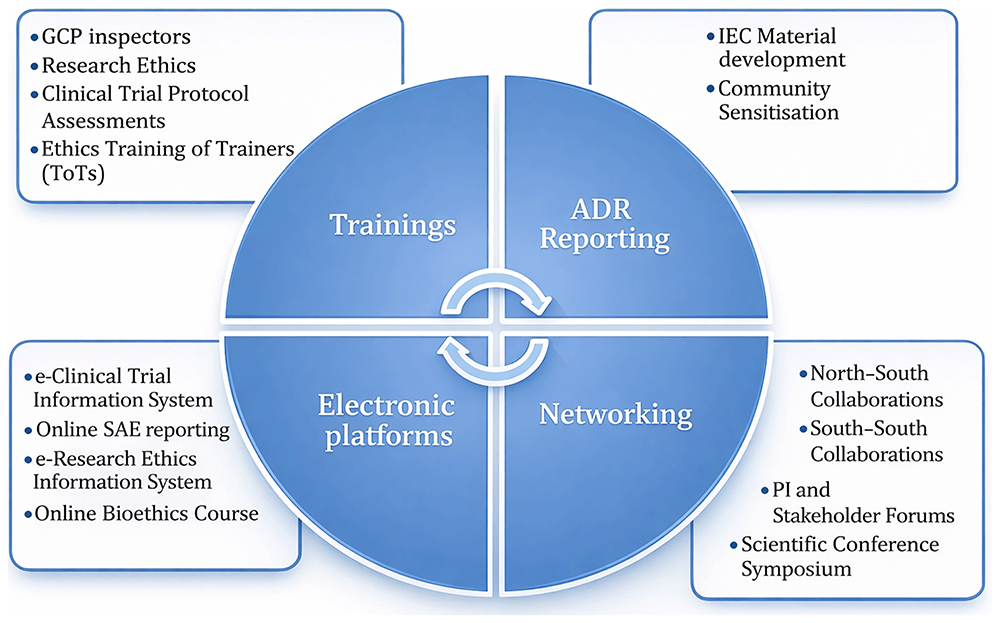
Figure 1. Core components of the ASCEND Project capacity-building interventions.
The figure illustrates the multi-component implementation approach of the ASCEND project, including training, digital systems development, community engagement for pharmacovigilance, guideline domestication, and stakeholder networking across Tanzania Mainland and Zanzibar.
No primary qualitative data, such as interviews, focus group discussions, or direct observations, were collected for the purposes of this study. We conducted a document-based case study using routine ASCEND project documentation generated by the implementing institutions during the project period. Documents reviewed included approved training curricula and materials, participant registers and attendance lists, training and mentorship reports, guideline domestication and standard operating procedure updates, consortium deliverables submitted to EDCTP2, and digital system documentation such as requirements specifications, deployment records, user guides, and records of system use where available. We included only documents produced between November 2020 and December 2023 that were directly related to ASCEND implementation. Documentation completeness was assessed by confirming that each major implementation component and planned deliverable had corresponding records. Where records were incomplete, we reported outputs conservatively. Output counts were verified by triangulating figures across at least two sources where possible and prioritizing signed registers, institutional logs, and the most contemporaneous implementation records. Where discrepancies were identified, they were reconciled using the most complete and contemporaneous records, with consultation with the relevant implementing institution when needed.
Training package development and delivery
Training activities were designed to strengthen competencies in clinical trial protocol assessment, Good Clinical Practice inspection, and research ethics review. A structured curriculum development process was used, including drafting of training content, review by subject matter experts, and validation steps to ensure relevance to national processes, alignment with international standards, and AVAREF guidance. Delivery combines classroom-based sessions, mentorship, and trainer approaches to institutional ethics committees.
Digital systems for ethics review and safety reporting
Digital tools have been developed or strengthened to support consistent workflows for ethics review and safety reporting. Implementation included requirement definition with end users, development or tailoring of system modules, user testing, and integration into institutional workflows. Requirement definition and testing were conducted with nominated focal persons from participating institutions representing ethics review, pharmacovigilance, and regulatory functions. User testing was undertaken during pilot deployment and end-user training, with feedback captured through structured feedback forms and facilitated debriefing sessions, and prioritized change requests logged for iterative refinement before full operational use.
End-user training was conducted to support adoption, including for serious adverse event reporting and clinical trial application submission and review processes.
Community engagement for pharmacovigilance
Community engagement drew on a community engagement model in pharmacovigilance and was implemented through district and regional sensitization activities. The Community Pharmacovigilance Engagement Model (PCEM) is a structured approach that identifies priority community stakeholder groups, selects appropriate communication channels, and links sensitization activities to clear reporting pathways for suspected adverse drug reactions and adverse events following immunization. The model was applied using multiple approaches during community sensitization activities, with the aim of increasing awareness and reducing fear related to reporting. Project close-out documentation indicated that the use of the model supported improved community awareness and reporting of ADRs.
Engagement aimed to increase public understanding of rights and responsibilities in research participation and to promote the reporting of adverse drug reactions and adverse events following immunization. Multiple communication channels were used to reach the community members and relevant local stakeholders.
Capacity strengthening in Zanzibar
A dedicated set of activities supported capacity strengthening for the Zanzibar Health Research Institute and Zanzibar Food and Drug Authority, including train-the-trainer courses, facilitated access to online ethics training resources, implementation of electronic systems for ethics review and serious adverse event reporting, and mentorship linkages with mainland institutions. This approach aimed to support both skill acquisition and institutionalization of processes.
Domestication of AVAREF guidance
The project supported the domestication of AVAREF guidance to harmonize ethical and regulatory review processes for clinical trials conducted in Tanzania Mainland and Zanzibar. Implementation included orientation for selected principal investigators and review and alignment of relevant guidelines and standard operating procedures within participating institutions.
Networking and stakeholder engagement
Networking activities convened forums for institutional review boards, national ethics committees, clinical trials and pharmacovigilance committees. Forums supported dialogue between researchers and regulators, promoted a shared understanding of requirements, and identified coordination improvements that could be implemented within existing mandates.
Ethics
Ethics clearance was obtained from ZAHRI under reference number ZAHREC/03/APRIL/2021/05. For the Tanzania Mainland, ethics clearance was obtained from NIMR under the reference number NIMR/HQ/R.8 a/vol. IX/3666.
This manuscript is a case study based on project documentation and does not report additional human participant data collection or post-project follow-up beyond the activities implemented during the ASCEND project period.
Results
Training outputs for protocol review, inspection, and ethics capacity development
Training materials for clinical trial protocol assessment and Good Clinical Practice inspection were developed and used to deliver capacity development activities for regulators and ethics reviewers. Thirty clinical trial protocol reviewers or assessors and 25 Good Clinical Practice inspectors were trained on international standards and AVAREF guidance. Three Zanzibar Food and Drug Authority inspectors received on-the-job exposure by participating in inspections at five clinical trial sites on Tanzania Mainland.
Nineteen early- and mid-career researchers were trained in research ethics and clinical trial-related guidelines, application processes, and compliance. Fifty trainers drawn from institutional ethics committees were trained on research bioethics and clinical trial topics to support dissemination within institutional review structures in Tanzania Mainland and Zanzibar. A short postgraduate ethics course was digitized and accredited for continuous professional development.
Digital systems outputs
An online serious adverse event reporting module was operationalized within the national medicines regulatory authority online pharmacovigilance reporting system. Thirty-nine users, including scientists and research administrators, were trained to use this module. Zanzibar institutions customized and adopted electronic systems developed by sister institutions in Tanzania Mainland, and thirty-five COVID-19 vaccinators in Zanzibar were oriented toward serious adverse event reporting using the system. These figures reflect the users reached during the project period for initial system operationalization and rollout, and do not represent full coverage of all potential end users nationally.
Community pharmacovigilance engagement outputs
A community pharmacovigilance engagement model was developed for use in Tanzania Mainland and Zanzibar. Sensitization activities using the model reached 500 people in Zanzibar and 218 people in Tanzania Mainland, focusing on adverse drug reaction reporting and adverse events following immunization reporting.
Networking outputs
The project convened two stakeholder forums and one principal investigator forum and organized a scientific symposium during the NIMR Annual Joint Scientific Conference 2022, chaired by the Chief Medical Officer from the Ministry of Health. Consortium visits to the Uppsala Monitoring Centre and Uppsala University supported exposure to pharmacovigilance system operations and contributed to networking activities.
Table 1 summarises the main capacity gaps addressed through the ASCEND project and the corresponding interventions and outputs documented during the project period.
Table 1. Capacity gaps addressed and key outputs from the ASCEND Project (2020–2023).
This table summarises the key capacity gaps identified during ASCEND project implementation and the corresponding interventions and documented outputs achieved in Tanzania Mainland and Zanzibar between 2020 and 2023.
| Capacity gap and intervention | Key outputs |
|---|
Limited capacity for clinical trial protocol review and
inspection; targeted short courses and on-the-job
mentoring implemented | Short courses developed and delivered; 30 protocol assessors
and 25 inspectors trained, including practical inspection
exposure for Zanzibar regulators |
Limited institutional capacity for research ethics review;
addressed through train-the-trainer and online learning
approaches | 50 trainers of trainers trained across Tanzania Mainland and
Zanzibar; ethics short course digitalised and accredited for
continuing professional development |
Fragmented or paper-based workflows for ethics review
and safety reporting; addressed through digital systems
development and integration | Electronic submission and review workflows operationalised in
Zanzibar; online serious adverse event reporting integrated into
the national pharmacovigilance system |
Limited awareness of national and international clinical
trial requirements among researchers; addressed through
targeted training | 19 early- and mid-career researchers trained on ethics and
clinical trial application processes |
Limited community awareness of medicine and vaccine
safety reporting; addressed through a community
pharmacovigilance engagement model | Community Pharmacovigilance Engagement Model developed
and applied; sensitisation activities reached 718 community
members |
Early adoption indicators were available for selected digital systems close to the project. In Zanzibar, operationalization of the ZAHRI and ZFDA systems enabled receipt, review, and approval processes, and by project close, the system had been used to receive two protocols for review leading to approval. In addition, electronic submission workflows were linked between NIMR and TMDA, and between ZAHRI and ZFDA, establishing an operational pathway for digital submission and review intended to strengthen routine regulatory processes. Sustainability-linked adoption was also supported through the institutionalization of training resources, including accreditation of the Bioethics CPD course and availability of the online course on the KCMC University in Moshi, Tanzania platform.
Discussion
This case study documents the implementation of a multi-component capacity development initiative for research ethics oversight, clinical trial regulation, and pharmacovigilance in Tanzania Mainland and Zanzibar. The project combined training, digital tools, community engagement, and structured forums for engagement between the researchers and regulators.
Operational achievements included the delivery of training packages and trainer cohorts within institutional ethics committees, implementation of electronic workflows for ethics review and safety reporting, and development of a community engagement model for pharmacovigilance. These outputs reflect institutional ownership by anchoring activities within mandated institutions and using the internal technical capacity for system development and maintenance10.
Implementation considerations included sustainability planning for staff turnover, continued demand for refresher training, and routine budgeting for stakeholder engagement forums11. The adoption of digital tools depends on user onboarding, clarity of roles, and maintaining data confidentiality through appropriate hosting, access control, and governance arrangements10. Recent pharmacovigilance capacity-building efforts in East Africa, such as the PROFORMA project (focused on Ethiopia, Kenya, Rwanda, and Tanzania) have similarly emphasized short-term training, cascade models, and integration with national systems to achieve sustainable knowledge development and post-marketing surveillance9. Likewise, the PAVIA project (2018–2023) demonstrated that blended e-learning and collaborative "triangle" models (linking regulators, public health programs, and research institutions) can lead to significant increases in adverse event reporting and knowledge gains in Tanzania and other countries, highlighting the value of structured, multi-stakeholder approaches, like those in ASCEND8.
Implementation occurred in a context with established institutional mandates for clinical trial oversight and ethics review in both Tanzania Mainland and Zanzibar, which enabled the rapid integration of training and digital tools into existing workflows. An enabling factor was the presence and active role of TMDA MUHAS RCORE as a platform for developing and delivering training packages for assessors and inspectors, supporting institutionalization beyond single workshops.
The project also benefitted from the deliberate linkage of electronic submission systems between Mainland and Zanzibar institutions, supporting integration into routine processes rather than standalone project tools.
The resource requirements for similar initiatives include dedicated technical personnel for system development and maintenance, training design and delivery capacity, and coordination time across institutions. Implementation required adaptation to risks, including system compatibility and COVID 19 related disruptions, addressed by reviewing existing systems before linkage, involving IT experts, and using hybrid or virtual meeting modalities, where needed.
Transferability to other settings is more likely when enabling conditions are present, including clear institutional mandates for ethics and regulatory functions, willingness to align with regional harmonization mechanisms such as AVAREF, and availability of technical teams able to support the development and maintenance of electronic systems5,12. Differences in the legal frameworks, staffing patterns, and resource availability should be considered when adopting this approach. These developments underscore the importance of building national projects to advance regional reliance and sustainability in pharmacovigilance and clinical trial oversight13.
This manuscript is limited to project documentation and project period outputs, and does not evaluate post-project outcomes, long-term effectiveness, or downstream impacts on review timelines or inspection performance. Future work could build on this documentation through formal evaluation designs that measure sustained system performance and use of pharmacovigilance reporting over time13.
Conclusion
The ASCEND project implemented a coordinated set of activities to support research ethics oversight, clinical trial regulations, and pharmacovigilance in Tanzania Mainland and Zanzibar from 2020 to 2023. Documented outputs include trained reviewer and inspector cohorts, operational electronic systems for ethics and safety reporting workflows, a community pharmacovigilance engagement model, and regular forums that support interactions between researchers and regulators.
By documenting the implementation approaches and outputs, this case study provides practical information that may assist institutions in planning similar capacity development initiatives. The conclusions are limited to activities and outputs achieved within the project period and do not include post-project follow-ups.
Data availability
The data underlying this article consist of internal ASCEND project documentation, including training registers, implementation reports, and system development records held by participating regulatory and ethics institutions in Tanzania Mainland and Zanzibar. These materials are not publicly available due to institutional confidentiality and governance restrictions. Ethics approval bodies did not require public data sharing for these records. Ethics approvals are described in the Ethics section. No additional human participant data were collected for this case study. Access to supporting documentation may be considered upon reasonable request to the corresponding author, subject to institutional approval.
Acknowledgements
We extend our heartfelt gratitude to the European & Developing Countries Clinical Trials Partnership (EDCTP) for their unwavering support and generous funding that made this project possible. We would like to express our sincere appreciation to all the trainers who played a pivotal role throughout the course of this project. We also extend our thanks to the administrative staff who provided essential logistical support, ensuring the seamless execution of the project. Furthermore, we acknowledge the crucial role played by IT developers Mr. John Maboko, Mr. Peter Agrea, and Mr. Ambele Mwafula, who supported the development and operationalization of online systems.
Faculty Opinions recommendedReferences
- 1.
Chaudhry I, Thurtle V, Foday E, et al.:
Strengthening ethics committees for health-related research in sub-Saharan Africa: a scoping review.
BMJ Open.
2022; 12(11): e062847. PubMed Abstract
| Publisher Full Text
| Free Full Text
- 2.
Cavaleri M, de Sousa CMA, Hacker A, et al.:
A roadmap for fostering timely regulatory and ethics approvals of international clinical trials in support of global health research systems.
Lancet Glob Health.
2025; 13(4): e769–e777. PubMed Abstract
| Publisher Full Text
- 3.
Amboka P, Kurui D, Wamukoya M, et al.:
A landscape analysis of clinical trials and infant clinical trials in Kenya, Ethiopia, and Nigeria.
Front Epidemiol.
2024; 4: 1417419. PubMed Abstract
| Publisher Full Text
| Free Full Text
- 4.
Access to Medicine Foundation: Access to Medicine Index 2024. 2024. Reference Source
- 5.
Akanmori B, Mukanga D, Bellah A, et al.:
The Role of the African Vaccine Regulatory Forum (AVAREF) in the accelerated clinical evaluation of Ebola vaccine candidates during the large West Africa epidemic.
J Immunol Sci.
2018; 2(SI1): 75–79. PubMed Abstract
| Publisher Full Text
| Free Full Text
- 6.
Ncube BM, Dube A, Ward K:
Establishment of the African Medicines Agency: progress, challenges and regulatory readiness.
J Pharm Policy Pract.
2021; 14(1): 29. PubMed Abstract
| Publisher Full Text
| Free Full Text
- 7.
Ndomondo-Sigonda M, Azatyan S, Doerr P, et al.:
Best practices in the African Medicines Regulatory Harmonization initiative: perspectives of regulators and medicines manufacturers.
PLOS Glob Public Health.
2023; 3(4): e0001651. PubMed Abstract
| Publisher Full Text
| Free Full Text
- 8.
Schievano F, Mwamwitwa KW, Kisenge S, et al.:
Development, assessment and educational impact of a blended e-learning training program on pharmacovigilance implemented in four African countries.
Front Med (Lausanne).
2024; 11: 1347317. PubMed Abstract
| Publisher Full Text
| Free Full Text
- 9.
van Puijenbroek E, Barry A, Khaemba C, et al.:
Short-term training, a useful approach for sustainable pharmacovigilance knowledge development in Tanzania, Kenya, Ethiopia and Rwanda.
Drug Saf.
2024; 47(12): 1193–1202. PubMed Abstract
| Publisher Full Text
| Free Full Text
- 10.
Fimbo A, Mwalwisi YH, Matiko D, et al.:
Lessons from enriching Tanzania’s clinical research ethics clinical trials oversight and pharmacovigilance through the ASCEND project.
Discover Public Health.
2024; 21(1): 54. Publisher Full Text
- 11.
Fimbo AM, Sillo HB, Nkayamba A, et al.:
Strengthening regulation for medical products in Tanzania: an assessment of regulatory capacity development, 1978– 2020.
PLOS Glob Public Health.
2024; 4(10): e0003241. PubMed Abstract
| Publisher Full Text
| Free Full Text
- 12.
Abdulwahab AA, Okafor UG, Adesuyi DS, et al.:
The African Medicines Agency and medicines regulation: progress, challenges, and recommendations.
Health Care Sci.
2024; 3(5): 350–359. PubMed Abstract
| Publisher Full Text
| Free Full Text
- 13.
Ndagije HB, Ampaire S, Sabblah GT, et al.:
Advancing pharmacovigilance practice in Africa: moving from data collection to data-driven decision making—report from the 4th ISoP Africa chapter meeting.
Drug Saf.
2026; 49(1): 129–135. PubMed Abstract
| Publisher Full Text
| Free Full Text