Introduction
REGEN (which stands for REGENeration of neighbourhoods towards a low-carbon, inclusive and affordable built environment) is an EU-funded project that aims to decarbonise EU neighbourhoods by employing a toolbox powered by digital technologies and sustainability assessments, complemented by social science practices to ensure inclusivity and community engagement. A Neighbourhood Regeneration Office (NRO) is one of the core approaches developed in the REGEN project. The NROs are meant to be the cornerstone of REGEN’s enactment of lasting behavioural change, being identified as the physical places where regeneration actually happens. NROs aim to provide advice and promote citizen engagement in regeneration interventions (Urra Uriarte et al., 2025). NROs are being deployed in four demo sites: Beckerich (Luxembourg), Dublin (Ireland), Milan (Italy) and Laredo (Spain). But what exactly are NROs? The main objective of this brief report is to summarize an attempt to conceptualise NRO as an innovative type of physical urban space integrating key elements from both ‘One-Stop Shops’ and ‘third places’, but with distinctive activities compared to existing neighbourhood offices, as they aim to create a participatory and interactive environment that strengthens collective urban regeneration efforts. This brief report also aims to establish conceptual groundwork for a replicable model that could be applied to future urban regeneration initiatives in other locations.
Methods
The approach of conceptualising the NROs has involved extensive research of both literature and practices of two (sub) populations (Yin, 2009) at both ends of the service spectrum, from regeneration advisory (One-Stop-Shops - OSSs) to diverse community-building functions (‘third places’) from which the actual cases were drawn, controlling extraneous variation and helping define the limitations for generalizing the findings (Eisenhardt, 1989). We then applied theoretical sampling as relevant for case selection method for our inductive approach (Denzin, 1978). The cases were thus chosen purposefully rather than randomly, aiming at refining ideas iteratively rather than increasing the total sample size (Harmaz, 2000). Specifically, we aimed at high diversity in terms of organisational models, sizes, thematic focus and financing options. Together, our analysis has covered 11 OSSs (some spanning multiple locations) and 19 ‘third places’. Analysed aspects included the scope, scale, objectives, and type of activities implemented.
OSS selection and analysis
The selection prioritized residential energy renovation initiatives embedded in larger urban renewal programs, as standalone projects may not capture the challenges related to integration into comprehensive urban development strategies. One-Stop Shops analysed include:
• Europa One-Stop-Shops,1 various regions, IT/DE/FR/PT/LV
• HolaDomus2, Olot, ES
• Opengela,3 Basque Country, ES
• Basque Urban Rehabilitation Societies (SUR),4 Basque Country, ES
• Lourdes Renove,5 Tudela, ES
• Coronación,6 Vitoria-Gasteiz, ES
• Office of Proximity and Promotion (OPI),7 Madrid, ES
• Integrated Network of Management Offices,8 Aragon, ES
• Mobile One-Stop Shop,9 Frederikshavn, DK
• Reimarkt,10 various cities, NL
• Electric Ireland Superhomes,11 various cities, IE
‘Third places’ selection and analysis
‘Third places’ were predominantly selected for their variety in terms of services provided, size and domain of activity. The analysed ‘third places’ include:
• Third Floor, Lisbon,12 PT
• Biblioteca Sociale Espinasse,13 Milan, IT
• fabULIS,14 Sarreguemines, FR
• Èlectrolab,15 Nanterre, FR
• FerroForum,16 Esch-Schifflange, LU
• VEWA,17 Dudelange, LU
• Collectif Abbal,18 Toulouse, FR
• Bouillonnante,19 Soupetard, FR
• Maison Malepère,20 Toulouse, FR
• Digital Village,21 Marseille, FR
• Baobab,22 Durban, ZA
• L’Oasis,23 Niamey, NE
• La REcyclerie,24 Paris, FR
• L’Hermitage,25 Autrêches (Oise), FR
• L’Effet Papillon,26 Baud (Morbihan), FR
• PING,27 Nantes, FR
• La Parcheminerie,28 Rennes, FR
• Fabryka,29 Dabrowa Górnicza, PL
• Wijkbedrijf Selwerd,30 Groningen, NL
Literature and practice review were followed by collaborative discussions between technical and scientific partners of the REGEN project. The resulting insights were reviewed and refined in consultation with the representatives of the four demo sites to propose the key activities of the NROs, ultimately leading to an operational framework for their implementation within and beyond the REGEN project.
Results
Key characteristics of One-Stop Shops
One-Stop Shops (OSSs) are service providers that consolidate complex processes—such as energy renovations or building projects—into a single, integrated offering, streamlining decision-making for non-expert users (Bertoldi et al., 2021). They emerged to address the fragmented and technically demanding nature of renovation projects, which traditionally require coordination among engineers, legal advisors, banks and multiple specialists, often overwhelming homeowners or small businesses. By centralizing responsibilities, OSSs reduce client burdens. This contrasts with conventional approaches, where asset owners must independently navigate disjointed supply chains and manage multiple service providers.
The concept gained traction in Europe through policy initiatives such as the 2016 Clean Energy for All Europeans package and the 2020 Renovation Wave, which encouraged member states to establish OSSs to accelerate energy-efficient renovations (
European Commission. Joint Research Centre., 2021). Today, OSSs operate globally, offering tailored advice and financing to support sustainable building upgrades while addressing systemic inefficiencies in the process.
OSSs have been extensively studied, with their categorization often reflecting the approach or context of implementation. For example, the INNOVATE programme (Cicmanova et al., 2020) classifies OSSs into four operational models based on the level of support they provide:
•
Facilitation: Provides free, user-focused advice to introduce clients to energy renovation benefits.
•
Coordination: Connects customers to vetted suppliers and financiers but does not assume responsibility for project outcomes.
•
All-inclusive
: Acts as a full-service contractor, managing advice, coordination, and financing while often guaranteeing energy savings.
•
ESCO (Energy Service Company): Finances projects through post-renovation energy savings.
Conversely, the TURNKEY RETROFIT initiative (Volt et al., 2019) categorizes OSSs by their business model drivers, highlighting their underlying motivations and value propositions:
•
Industry-driven
: Manufacturers and installers expand their business scope.
•
Consultant-driven
: Focuses on customer-centric advisory services.
•
ESCO-driven
: Emphasizes value-added solutions tied to guaranteed energy savings.
•
Local government-driven
: Aligns with climate or energy policy goals.
•
Cooperative: Prioritizes societal benefits beyond energy or cost savings.
These frameworks illustrate how OSSs adapt to diverse contexts, balancing user needs, market dynamics, and sustainability objectives to address the fragmented energy renovation landscape.
Key characteristics of ‘third places’
‘Third place’ is a term coined by Ray Oldenburg (Oldenburg, 1999) that refers to places where people spend time between home (‘first’ place) and work (‘second’ place). ‘Third places’ are locations where people meet to exchange ideas, have a good time, and build relationships (Butler & Diaz, 2016). It is where people can gather, put aside the concerns of work and home, and hang out simply for the pleasures of good company and lively conversation, making ‘third places’ the heart of a community’s social vitality and the grassroots of democracy (Oldenburg, 1999). They ‘serve as equalizers, transcending distinctions of status, class, and race.’ (idem). Indeed, Oldenburg ‘advocates for the immense social value they bring and points out their historical role, amongst others:
• the American tavern in the American Revolution
• the French café in the French Revolution
• the London coffee house during the Enlightenment
• the agora in Greek democracy’ (idem)
• the imperial Chinese teahouses
• or even the German bierstube and the Italian tabern.
Modern-times ‘examples of third places include churches, cafes, bars, clubs, libraries, gyms, bookstores, hackerspaces, stoops, parks, theatres,’ community centres like YMCAs and YWCAs, or senior centres, among others.’ (Wikipedia, 2025).
These community venues are perfectly suited for discussion and relaxed social interaction, oftentimes creating a lively atmosphere and a sense of camaraderie, distinguishing ‘third places’ from other public places. Moreover, they help unify the neighbourhood by bringing diverse people together and fostering a sense of community.
In summary, third places display the following eight characteristics (Oldenburg, 1999):
• Accessibility (easy to access),
• Accommodation (time-available outside of the 1st and 2nd places),
• Playful mood (enjoyable, entertainment by participants themselves),
• Low profile (homely and comfortable),
• Home away from home (well-integrated into daily life),
• Neutral (everyone free to come and go),
• Levelling (no importance on an individual’s societal status),
• Regulars (‘regulars’ play a role in integrating new visitors), and
• Conversation (as the main activity).
As such, they can serve as a good base for any broadly seen neighbourhood regeneration efforts.
Towards the definition of Neighbourhood Regeneration Offices
Our REGEN-driven approach proposes that NROs can be seen as community-focused spaces that blend technical support for sustainable urban renewal with social initiatives to strengthen neighbourhood ties. They aim to provide expert guidance on energy-efficient upgrades, eco-friendly building practices, and accessible funding options while creating spaces for residents to connect, collaborate, and shape their environment together.
The key features of NROs are:
• Technical Support: They offer advice on energy retrofitting, green building solutions, public funding and simplification of sustainable renovations.
• Social Engagement: They act as community hubs to spark conversations, organise workshops, and mobilise residents for collective action.
• Inclusive Planning: They ensure that all voices—especially marginalised groups—are included in decision-making to co-design solutions that meet local needs.
By combining practical tools with people-centred collaboration, NROs are meant to empower neighbourhoods to become more sustainable, resilient, and socially connected. They are designed to help residents turn ideas into action, ensuring urban renewal is both environmentally smart and community-driven.
Crucially, NROs are anchored in physical spaces within the neighbourhood (e.g. repurposed community areas, revitalised sites), creating a focal point for interaction and serving as as tangible gathering points for citizens, reinforcing the sense of ownership and collective action.
Indeed, our preliminary results suggest that an effective NRO should combine two key functions: 1) support to boost rehabilitation and 2) localised community-building. By merging these, NROs would be well-positioned to provide both practical tools and social interaction opportunities, creating a unique model for urban regeneration. They would serve as a bridge between technical support and community engagement, making neighbourhood transformation shared, accessible, and sustainable in the long-term. This dual nature of NROs and their conceptual and empirical underpinnings are presented in
Figure 131.
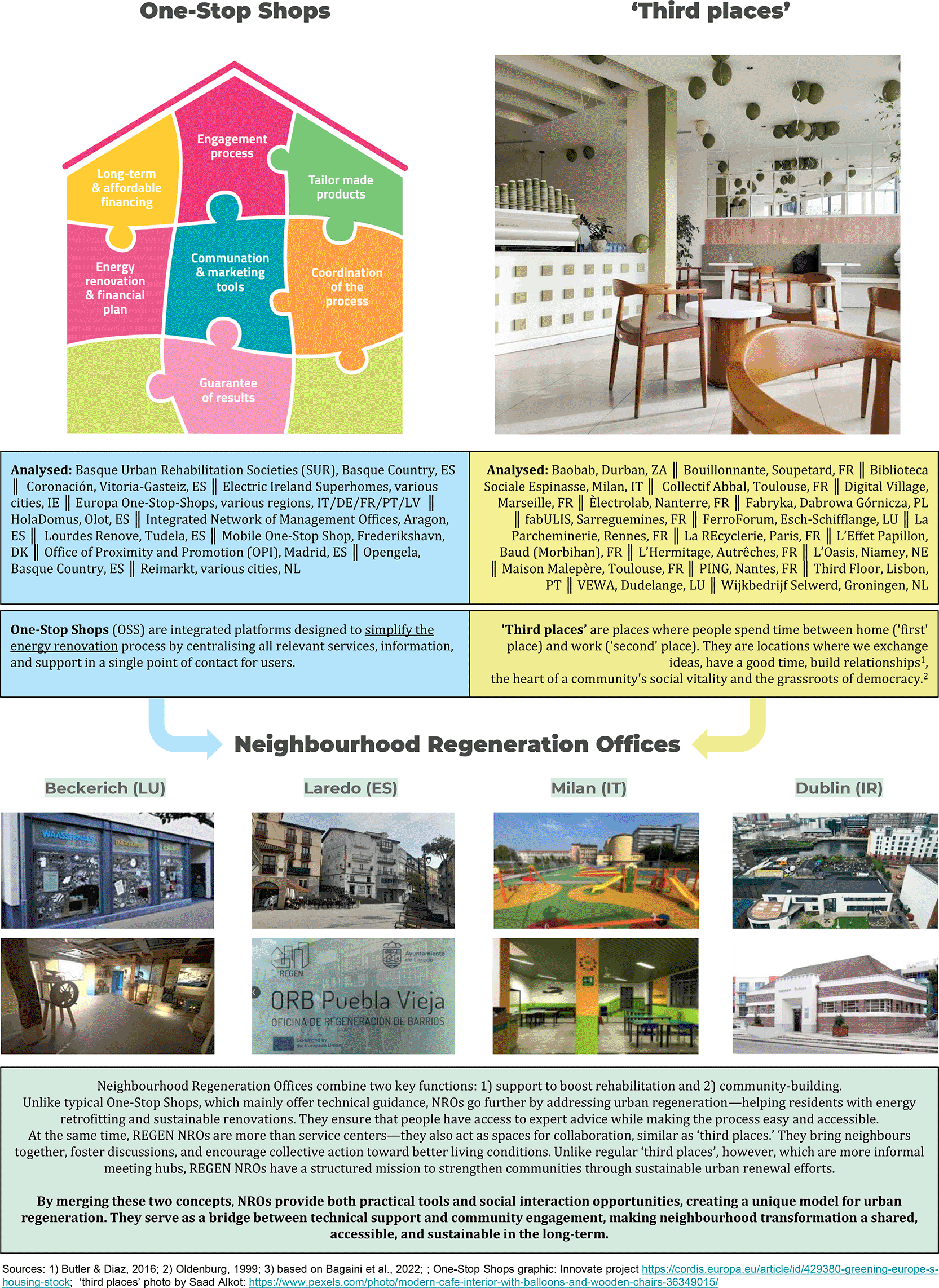
Figure 1. Neighbourhood Regeneration Offices as a combination of One-Stop Shop and ‘third place’ approaches.
Sources used with the Figure: 1) Butler & Diaz, 2016; 2) Oldenburg, 1999; 3) based on Bagaini et al., 2022; credits of One-Stop Shops graphic: Innovate project32; photo ‘third places’ Collectif Abbal (Toulouse, France)33.
Neighbourhood Regeneration Offices’ value proposition, core activities and alignment with New European Bauhaus
NROs offer a dual focus: technical expertise to advance urban rehabilitation and community-driven initiatives to foster social cohesion. Unlike conventional One-Stop Shops, which prioritize administrative support, NROs specialize in urban renewal by guiding residents through energy-efficient renovations, sustainable building upgrades, and neighbourhood revitalization. They simplify access to expert advice, ensuring these processes are user-friendly and inclusive. Simultaneously, they transcend traditional service centres by functioning as collaborative hubs like ‘third places,’ yet with a mission to bring together residents, stimulate dialogue, and mobilize collective action. This dual role bridges technical solutions with social engagement, transforming neighbourhoods into resilient, participatory spaces.
To foster citizen engagement, NROs in the context of REGEN project transform complex expert datasets and infrastructure plans into accessible formats for public dialogue. The project leverages advanced tools for built environment regeneration alongside an open GIS environment that supports data delivery to NRO managers for organising community workshops. Furthermore, REGEN introduces MUST, a tangible interactive device designed to help citizens understand neighbourhood conditions, collectively formulate requirements, and comment on development projects. By combining open data, expert tools, and interactive technologies, NROs aim to bridge the gap between professional planning and community participation (Yilmaz et al., 2025).
Such approach aligns closely with the New European Bauhaus (NEB) principles, emphasising sustainability, inclusion, aesthetics, and active participation. By integrating environmental, social, and design considerations, NROs aim at fostering holistic regeneration. Key domains include energy-efficient architecture, renewable energy systems, sustainable mobility, circular economy practices, and inclusive urban planning.
Central to this vision is the NRO’s role as a catalyst for collaboration. It unites residents, businesses, and experts to co-create regenerative strategies. By embedding the NEB’s core values—sustainability (climate-resilient neighbourhoods), inclusion (equitable participation and community-led stewardship), aesthetics (functional, inspiring public spaces)—it turns abstract principles into tangible, neighbourhood-scale change.
The NRO model redefines urban renewal by merging technical innovation with grassroots engagement, ensuring transformations are not only sustainable but also socially enriching. Through this approach, it contributes to a future where neighbourhoods are vibrant, inclusive, and environmentally conscious, embodying the NEB’s vision of a more beautiful, equitable, and sustainable Europe.
In concrete terms, this means a broad range of actions and services that NRO should be able to offer to the neighbourhood, in alignment with NEB values, as presented in
Table 1.
Table 1. Key activities of the Neighbourhood Regeneration Office and their alignment with NEB values.
|
Key activities |
Type of actions | Together | Beautiful |
Sustainable |
|---|
| Technical advice for refurbishment | Sustainability advice (energy, energy bills, residues, mobility, etc,.) | | | |
| Provide advice on existing materials and components in buildings that can be reused or recycled | | | |
| Gather direct information from suppliers | | | |
| Make agreements with potential suppliers | | | |
| Provide financial & funding information | | | |
| Manage aggregation possibilities between building interventions, group purchase of works, project management and/or coordination of a general contractor as single point of contact | | | |
| Showcase of new technologies | Demos of innovative renovation materials, processes and players | | | |
| Organise visits of most performing or original renovations | | | |
| Market place for offer and demand in different fields, commerce, construction (Showcase for local contractors) | | | |
| Stakeholder dialogue hub | Updated stakeholder focal point | | | |
| Contact & discussion between technicians, agents and all stakeholders | | | |
| Mediation between professionals | | | |
| Foster neighbourhood cohesion | A place for social interaction | | | |
| Collaborative (and/or co-working) opportunities & meeting place for associations | | | |
| Exchange place for residents concerns regarding neighbourhood | | | |
| Time bank: offer and demand to promote citizen support networks | | | |
| Raising awareness of the community | Dissemination of regeneration process to citizens | | | |
| Communication activities, socially engaging events, exhibitions … on environment, sustainable development and decarbonization. | | | |
| Workshops for school classes | | | |
| Social networks in local media | | | |
| Capacity building | Co-creation workshops using participatory technologies, e.g. MUST | | | |
| Guided social innovation development processes | | | |
| Ecosystem building and networking events, talks, workshops … | | | |
| Specific capacity building activities for deploying the LED (local economic development) | | | |
| Engage the community in city decision-making
| Direct feedback from citizens and other stakeholders (gather local knowledge) to improve city planning initiatives | | | |
| Participatory urban diagnosis (social, economic, …) | | | |
| Participatory budgeting for public space | | | |
| People-centric urban design (City acupuncture, Placemaking, Tactical urbanism …) | | | |
Discussion
While NROs are a new proposed concept, their ongoing implementation in the REGEN project provides promising outlook for such an innovative structure. Yet, at these early research stages, much remains unknown. Among these factors, the NROs’ business model and financial viability constitute the most pressing avenues for future research.
Within the REGEN project, our preliminary findings indicate that no single, formalized business model currently exists. Each NRO is deeply shaped by its territorial ecosystem, local priorities, and socio-economic realities. For instance, Laredo’s emphasis on cultural heritage differs significantly from Milan’s focus on addressing energy poverty. Despite this variability, when looking at the NROs through the lens of Business Model Canvas (Osterwalder & Pigneur, 2010), one core aspect appears consistent across all sites: the Value Proposition. A clear, credible, and visible value proposition is crucial for driving user uptake and strengthening community ownership. If this delivered value produces measurable and positive impacts, we hypothesise that key stakeholders, particularly municipalities, would be more inclined to secure long-term sustainability by allocating financial support. Beyond the Value Proposition, several other aspects will require close attention. These include Key Partners, Channels and Community Engagement, and Revenue Streams and Financial Viability. The latter requires strengthened fundraising capacity and robust cost-benefit arguments to justify ongoing municipal co-funding. A resilient structure is expected to be a hybrid public-private model combining municipal resources, private contributions, and community-based mechanisms.
As an evolving process, each site’s business model will continue to mature and adapt as NROs gain operational experience and refine their strategies. Ultimately, practice will show to what degree sustainable business models can be ensured for the NROs. Future research should track this empirical evidence to provide recommendations for suitable models for NROs.
Conclusions
The Neighbourhood Regeneration Office concept, developed within the REGEN project, is defined as a hybrid urban space that combines a One-Stop-Shop model for citizen and stakeholder support for sustainable renovation with the qualities of a ‘third place’ dedicated to community engagement. Its purpose is to foster holistic, socially rooted, and New European Bauhaus-aligned neighbourhood regeneration. By operating simultaneously as an accessible service hub and as a trusted community anchor, the NRO aims to create long-lasting behavioural, environmental, and social change within its neighbourhood. Practice and future research will verify if this concept will stand the test of time.
Ethics and consent
Ethical approval and consent were not required.
Data and software availability
This article is conceptual, so no data are associated with the article.
Acknowledgements
We gratefully acknowledge Olatz Nicolas from Tecnalia for her valuable support and contributions to the research on One-Stop Shops (OSS). We thank her for her insightful input and appreciate her role in advancing this work. We confirm that she has given her permission to be acknowledged in this publication.
References
- Bagaini A, Croci E, Molteni T:
Boosting energy home renovation through innovative business models: One-stop-shop solutions assessment.
J. Clean. Prod.
2022; 331: 129990. Publisher Full Text
- Bertoldi P, Boza-Kiss B, Della Valle N, et al.:
The role of one-stop shops in energy renovation: A comparative analysis of OSSs cases in Europe.
Energ. Buildings.
2021; 250: 111273. Publisher Full Text
- Butler SM, Diaz C:
“Third places” as community builders.
Brookings Institution;
2016.
Reference Source
- Cicmanova J, Eisermann M, Maraquin T:
How to set up a one-stop-shop for integrated home energy renovation? Energy Cities.2020.
Reference Source
- Denzin NK:
The research act: A theoretical introduction to sociological methods.
McGraw-Hill;
1978.
- Eisenhardt KM:
Building theories from case study research.
Acad. Manag. Rev.
1989; 14(4): 532–550. Publisher Full Text
- European Commission, Joint Research Centre:
One-stop shops for residential building energy renovation in the EU: Analysis & policy recommendations.
Publications Office of the European Union;
2021.
Reference Source
- Harmaz K:
Grounded theory: Objectivist and constructionist methods.Denzin NK, Lincoln YS, editors.
Handbook of qualitative research.
Sage;
2000.
- N.N:
Third place.
Wikipedia;
2025.
Reference Source
- Oldenburg R:
The great good place: Cafes, coffee shops, bookstores, bars, hair salons, and other hangouts at the heart of a community.
Hachette Books;
1999.
- Osterwalder A, Pigneur Y:
Business model generation: A handbook for visionaries, game changers, and challengers.
John Wiley & Sons;
2010.
- Urra Urarte S, Gryszkiewicz L, Cella C, et al.:
Conceptualisation of Neighbourhood Regeneration Office as an innovative model for stimulating participatory urban regeneration.
Sustainable Places 2025. 8–10 October 2025.
Milan, Italy:
2025.
- Volt J, Zuhaib S, Steuwer S:
Benchmarking of promising experiences of integrated renovation services in Europe.
Turnkey Retrofit project;
2019.
Reference Source
- Yilmaz D, Urra Uriarte S, Guerriero A, et al.:
A path towards citizen-led participation for low-carbon and affordable neighbourhood regeneration using participatory design digital tools.
Proceedings of the 2025 European Conference on Computing in Construction.
2025. Publisher Full Text
- Yin RK:
Case study research: Design and methods.
Sage Publications;
2009.




