Introduction
Violence and harassment in the world of work are not merely deviant interpersonal behaviours. They constitute fundamental threats to dignity, equality, and the sustainability of working systems (dos Santos, Viseu et al., 2026b). Conceptualisation of these phenomena is not a neutral academic matter, as it shapes institutional recognition, regulatory frameworks, preventive strategies, and organisational responses. When violence is framed narrowly as a set of discrete incidents, interventions tend to prioritise individual accountability and episodic management. When it is understood as structurally embedded in work arrangements, power relations, and normative systems, the scope of analysis, and of transformation, expands accordingly (Berger et al., 2026).
Over recent decades, research on Workplace Violence and Harassment (WPVH) has developed substantially. Empirical studies have mapped prevalence across sectors, countries, and occupational groups, refined typologies of aggression, examined relational dynamics (Aquino & Thau, 2009; Einarsen et al., 2020) and informed international legal instruments, including the International Labour Organization (ILO, 2019). Within this broader field, increasing attention has been directed toward Gender-Based Violence and Harassment (GBVH), recognising that sex and gender frequently shape exposure to it (dos Santos, Viseu et al., 2026b).
In this article, GBVH refers to forms of violence and harassment in the world of work in which sex or gender constitutes a central or contributing factor in the targeting, manifestation, or impact of harm. Although recognised in international instruments, such as ILO Convention No. 190 (ILO, 2019), the concept remains unevenly operationalised in organisational research and assessment frameworks. Yet, despite these advances, persistent conceptual fragmentation remains, particularly regarding the conceptualisation and the analysis and treatment of GBVH psychosocial processes.
First, much of the literature continues to privilege incident-based approaches, focusing on observable events rather than on the systemic and process-related conditions that render such events possible, recurrent, or normalised (Magnavita et al., 2024). Second, although structural gender inequalities are widely recognised, they are not consistently integrated into multidimensional models of work quality, leaving the relationship between violence and broader labour conditions under-theorised (dos Santos, Viseu et al., 2026b). Third, prevailing frameworks seldom articulate violence and harassment in relation to normative models that define what constitutes healthy, equitable, and sustainable work (Council of Europe, 2011; ILO, 2019). As a result, violence is often seen as a deviation within otherwise neutral organisational systems, rather than as a possible sign of underlying structural and psychosocial issues (Ferraro et al., 2018).
This fragmentation carries significant analytical and practical consequences. When violence is examined primarily as an event, its embedding within work design, organisational culture, workload distribution, career opportunities, social protection systems, and health and safety arrangements remains insufficiently visible (Barros et al., 2022; Havaei et al., 2020; ILO et al., 2002). Prevention strategies may therefore address symptoms while leaving underlying vulnerabilities structurally intact (Paull et al., 2012).
The Decent Work (DW) framework provides an appealing opportunity to integrate and address this fragmentation. Grounded on internationally recognised normative principles (ILO, 1999), DW conceptualises work as a multidimensional construct encompassing dignity, equity, security, participation, and opportunities for development (Ferraro et al., 2018). Rather than concentrating exclusively on behavioural transgressions, it provides a structural architecture through which work environments can be assessed in terms of their capacity to safeguard fundamental rights and sustain meaningful participation. Viewed through this perspective, violence and harassment cease to appear solely as interpersonal deviations; they emerge as potential indicators of systemic deficits in the organisation and culture of work (dos Santos, Viseu et al., 2026b).
Building on this premise, this article advances a reconceptualisation of GBVH as a systemic DW deficit, offering an integrative analytical architecture that addresses persistent fragmentation in the field. It situates GBVH at the intersection of structural work conditions, relational dynamics, temporal progression (Leyman, 1990; Velásquez, 2024; Walker, 2025), and intercultural meaning-making processes (Nelson & Luetz, 2021; Thomas et al., 2008), thereby reframing violence not as episodic disruption but as a potential manifestation of compromised work systems. In doing so, this article seeks to consolidate dispersed strands of scholarship into a coherent model capable of informing conceptual clarification, organisational governance, and preventive intervention.
To address these gaps, this article proposes an integrative conceptual framework that situates GBVH within the normative architecture of DW while incorporating structured classification, temporal dynamics, multilevel analysis, and intercultural interpretation. The framework contributes to the advancement of knowledge in five principal ways. Taken together, these contributions reposition GBVH within a normative framework capable of connecting conceptual clarification, empirical assessment, and structurally grounded prevention.
First, it introduces an A–B–C classification model that differentiates the core gender-based harm from culturally mediated ambiguity and from non-gender-based behaviours (Collins & Bilge, 2020; Magley et al., 2026; Sue et al., 2007), enhancing diagnostic precision while reducing risks of both under- and over-classification. Second, it incorporates a temporal and process dimension, encompassing frequency, persistence, and progression (Bambi et al., 2017; Leyman, 1990; Walker, 2025), to capture cumulative and escalating patterns of harm often overlooked in cross-sectional analyses (Ramesh et al., 2018). Third, it integrates a biopsychosocial-ecological perspective spanning individual, interpersonal, organisational, sociocultural, and intercultural levels of analysis (Bandura, 1999; University of Iowa Injury Prevention Research Center, 2001; Youssef-Morgan & Luthans, 2015), ensuring that violence and harassment are examined across interacting systems rather than isolated domains. Fourth, it conceptualises intercultural literacy as a transversal moderator shaping interpretation, classification, and organisational response (Deardorff, 2006; Leung et al., 2014; Nelson & Luetz, 2021; Ott & Michailova, 2018). Finally, it establishes a principled articulation between conceptual architecture and operationalisation, demonstrating how the framework can inform systematic measurement and structurally grounded prevention design. By aligning GBVH with the seven dimensions of DW, the proposed model reframes violence and harassment as psychosocial risk factors and processes embedded within work systems rather than as episodic behavioural deviations (dos Santos, Viseu et al., 2026b; ILO, 1999). This shift carries implications for research, policy, and organisational governance, enabling more structurally grounded prevention strategies, fairer classification processes, and context-sensitive interventions that strengthen equitable and sustainable working environments.
The article proceeds by first examining limitations in prevailing approaches to WPVH and GBVH, then elaborating the DW reframing and its theoretical foundations. It subsequently presents the A–B–C model, the temporal and multilevel integrations, and the role of intercultural literacy as a moderating mechanism (Hofstede, 1984; Jowsey, 2019; Ott & Michailova, 2018; Thomas et al., 2008). Finally, it outlines the operational implications of the framework and discusses its relevance for future research and policy development.
Limitations of prevailing approaches to WPVH and GBVH
Research on WPVH has generated substantial empirical and normative progress over the past decades. Within this expanding field, attention to GBVH has increased, yet conceptual frameworks specifically addressing GBVH remain comparatively underdeveloped. Prevalence studies have illuminated the scale of the phenomenon across sectors and countries (dos Santos, Semedo et al., 2026a;
European Union Agency for Fundamental Rights et al., 2024). Typological frameworks have refined distinctions among verbal, psychological, physical, and sexual forms (Bambi et al., 2017; Einarsen et al., 2020), and international legal standards have strengthened recognition and protection mechanisms (Council of Europe, 2011; ILO, 2019). These contributions have been essential in moving violence and harassment from marginal concerns to central issues within occupational health, equality policy, and labour governance. However, the consolidation of the field has also revealed structural limitations that constrain conceptual integration and preventive effectiveness (dos Santos, Viseu et al., 2026b). These limitations are described below.
Predominance of incident-based paradigms
Much of the literature conceptualises violence and harassment as discrete events (observable, reportable, and classifiable occurrences) often captured through retrospective self-report measures or administrative records (Magnavita et al., 2024). While such approaches are indispensable for documenting prevalence and severity, they may inadvertently emphasise episodic manifestations over systemic conditions.
This event-centred orientation risks obscuring how organisational design, workload pressures, hierarchical arrangements, and informal norms create environments where harmful behaviours become normalised or recurrent (Havaei et al., 2020; ILO et al., 2002). In such contexts, violence may not appear as exceptional disruption but as patterned interaction embedded within everyday work dynamics (Dellasega et al., 2014). When analytical attention remains focused on incidents alone, the structural drivers that enable repetition, escalation, or silence may remain insufficiently theorised (Bandura, 1977; Paull et al., 2012).
Fragmented integration of gender and work quality
A second limitation concerns the fragmented integration of gender analysis into multidimensional models of work quality. Although GBVH research explicitly acknowledges the role of gendered norms, power asymmetries, and structural inequalities (dos Santos, Viseu et al., 2026b), these dimensions are often examined in isolation from broader labour conditions such as remuneration structures, career trajectories, social protection arrangements, and occupational health systems.
As a result, gender-based harm may be analysed primarily through interpersonal or discriminatory lenses, without systematic articulation to the quality and organisation of work itself (Spector et al., 2014). This separation can obscure how gendered violence interacts with workload allocation, professional marginalisation, limited advancement opportunities, or precarious employment conditions (dos Santos, Semedo et al., 2026a). Without a systemic multidimensional work-quality framework, the relationship between gendered harm and structural labour deficits remains underdeveloped (Berger et al., 2026).
Limited conceptual articulation with normative work frameworks
A third limitation concerns the limited articulation of WPVH and GBVH research with normative models that define what constitutes healthy, equitable, and sustainable work. International conventions and equality directives establish legal obligations and protective standards (Council of Europe, 2011; ILO, 2019; ILO et al., 2002), yet scholarly models do not consistently integrate these normative foundations into conceptual analyses of violence.
Consequently, violence is frequently conceptualised as a behaviour that violates professional norms, organisational policies, or individual rights, rather than as a potential indicator of compromised work systems (Ferraro et al., 2018). This distinction is not merely semantic. When violence is interpreted primarily as misconduct, responsibility tends to be individualised (Bandura, 1999; Finkel, 2007). When it is understood as symptomatic of systemic deficits, responsibility expands to include organisational structures and processes and governance arrangements (dos Santos, Viseu et al., 2026b; ILO, 1999).
Insufficient attention to temporal and interpretative complexity
Finally, prevailing approaches often fail to adequately capture two interrelated complexities: temporal progression and interpretative ambiguity. Cross-sectional designs may identify exposure within defined time frames, yet they frequently lack conceptual integration of escalation pathways (Leyman, 1990; Magnavita et al., 2024), cumulative harm (Barros et al., 2022; Walker, 2025), and role fluidity over time (Aquino & Thau, 2009; Villafranca et al., 2021). Similarly, while cultural and contextual factors are acknowledged, frameworks rarely provide systematic mechanisms for differentiating between exclusively gender-based harm and socially ambiguous behaviours shaped by intercultural dynamics (Nelson & Luetz, 2021; Thomas et al., 2008).
These analytical gaps can produce risks of both under-recognition, where subtle or cumulative harms remain invisible (Ramesh et al., 2018; Sue et al., 2007), and over-classification, where contextual ambiguity is prematurely framed as intentional gender-based aggression (Collins & Bilge, 2020; Ott & Michailova, 2018). A more refined conceptual architecture is therefore required to enhance both precision and fairness (Deardorff, 2006; Leung et al., 2014).
Taken together, these limitations do not diminish the significant advances achieved in WPVH and GBVH research. Rather, they indicate the need for a more integrative framework capable of connecting behavioural manifestations to structural work conditions, normative standards, temporal processes, and interpretative dynamics (Berger et al., 2026; dos Santos, Viseu et al., 2026b). Addressing this need requires moving beyond event-centred analyses toward a systemic perspective in which violence and harassment are examined as embedded within, and potentially indicative of, broader DW deficits (Ferraro et al., 2018; ILO, 1999).
Reframing GBVH through the DW framework
The limitations identified in prevailing WPVH and GBVH approaches point to the need for a conceptual framework capable of integrating behavioural manifestations with structural work conditions and their consequences (dos Santos, Viseu et al., 2026b). The DW framework provides such an integrative architecture. In the present article, DW does not function as contextual background, but rather constitutes the organising normative architecture through which GBVH is reconceptualised.
As articulated by the ILO, DW constitutes a normative framework defining the conditions required for work of adequate quality, work capable of responding to individuals’ professional aspirations, safeguarding dignity, equity, security, and meaningful participation (ILO, 1999). It encompasses the content of work, the conditions under which it is performed, and the broader institutional and organisational context within which it is embedded. In this sense, DW establishes not merely economic standards, but normative criteria for evaluating the quality and sustainability of employment systems (ILO, 2019).
The multidimensional operationalisation of DW into seven interrelated dimensions reflects subsequent developments within Work, Organisational and Personnel Psychology, which translated these normative principles into analytically structured and experientially grounded constructs (Ferraro et al., 2018). Through such articulation, DW captures how work is lived, interpreted, and evaluated by workers themselves within defined normative boundaries.
DW is thus configured across seven interdependent dimensions: fundamental principles and values at work; adequate working time and workload; fulfilling and productive work; meaningful remuneration for the exercise of citizenship; social protection; opportunities for development and employability; and health and safety (Ferraro et al., 2018). These dimensions do not function as isolated indicators. Together, they form a coherent evaluative architecture through which work systems can be assessed in terms of their capacity to sustain dignity, equality, security, and long-term participation (ILO, 1999). Deficits in foundational dimensions may cascade across opportunity-related and protective dimensions, generating cumulative structural vulnerabilities rather than isolated organisational shortcomings (dos Santos, Viseu et al., 2026b).
When examined through this multidimensional lens, violence and harassment cease to appear solely as interpersonal transgressions and instead become intelligible as potential manifestations of structural misalignment within work systems (Berger et al., 2026). Deficits in fundamental principles, such as non-discrimination, voice, and respect, erode the normative safeguards that protect workers from gender-based harm (Council of Europe, 2011; ILO, 2019). Imbalances in workload and working time may intensify stress, strain relational climates, and normalise hostile interaction patterns (Barros et al., 2022; Havaei et al., 2020). The absence of fulfilling and productive work can foster professional marginalisation, particularly in gender-segregated roles (dos Santos. Semedo et al., 2026a). Inequitable remuneration structures may reinforce dependency and silence (
European Union Agency for Fundamental Rights et al., 2024). Weak social protection arrangements may discourage reporting by amplifying fears of retaliation or economic insecurity (ILO et al., 2002). Limited opportunities for advancement may concentrate certain genders in precarious positions of diminished authority (dos Santos, Viseu et al., 2026b). Insufficient health and safety governance may fail to recognise gendered psychosocial risks as legitimate organisational concerns (Magnavita et al., 2024).
Understood in this way, the seven dimensions of DW function not merely as contextual descriptors but as structural mechanisms that can either buffer against or facilitate gender-based harm. GBVH thus emerges simultaneously as a violation of foundational normative principles and as a potential indicator of systemic deficits across interacting dimensions (dos Santos, Viseu et al., 2026b). Structural gender inequalities, such as occupational segregation, unequal access to decision-making roles, and disproportionate exposure to precarious employment, may interact with DW deficits, intensifying vulnerability to GBVH in patterned rather than incidental ways (Collins & Bilge, 2020;
European Union Agency for Fundamental Rights et al., 2024). This reframing expands analytical focus from individual misconduct to institutional design and governance, without diluting personal accountability (Bandura, 1999; Finkel, 2007). Rather, it situates responsibility within a broader architecture of structural conditions that shape exposure, vulnerability, escalation, and response (Berger et al., 2026).
Figure 1 synthesises this structural reframing, illustrating how deficits across the seven interdependent dimensions of DW – as defined by Ferraro et al. (2018) – may operate as pathways through which GBVH emerges, is normalised, or escalates within work systems (ILO, 1999).
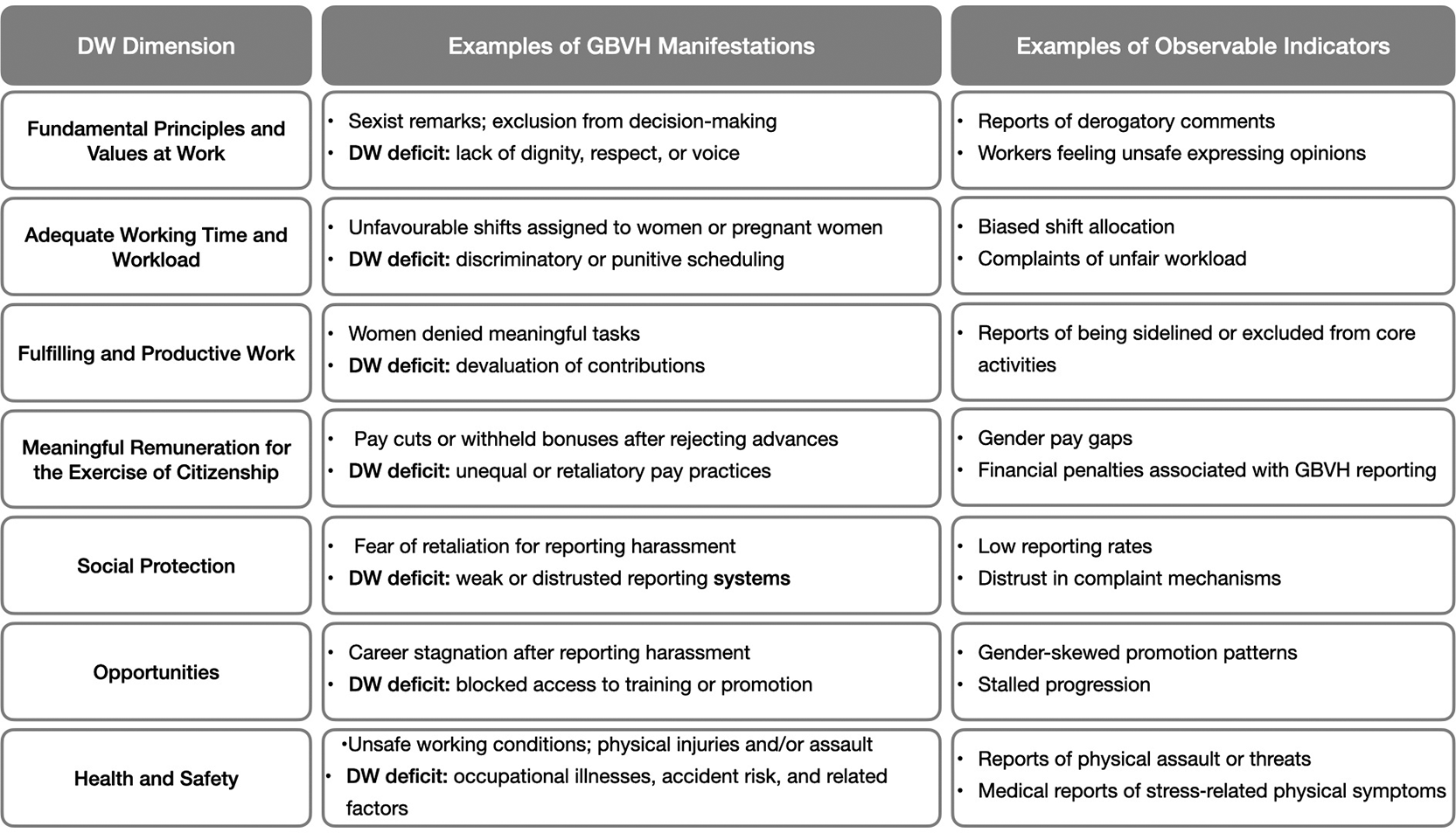
Figure 1. Decent work (DW) dimensions as structural pathways of gender-based violence and harassment (GBVH).
By rendering these structural interdependencies visible, the framework clarifies that prevention requires alignment of work design, governance, and normative commitments, not solely behavioural correction but structural coherence with DW principles (Ferraro et al., 2018; ILO, 1999).
Importantly, conceptualising GBVH through a DW lens does not reduce gender-based harm to generic organisational dysfunction. On the contrary, it sharpens analysis by illuminating how gender intersects with structural arrangements to produce differentiated exposure and impact (Collins & Bilge, 2020;
European Union Agency for Fundamental Rights et al., 2024). Gendered norms and hierarchies interact with opportunity structures, workload allocation, remuneration patterns, protection systems, and recognition mechanisms, embedding violence within broader configurations of inequality (dos Santos, Viseu et al., 2026b).
By repositioning GBVH within the DW architecture, the phenomenon can be analysed simultaneously as a physical and psychosocial risk factor, a breach of normative work standards, and a signal of structural imbalance (Ferraro et al., 2018). This integrative perspective bridges descriptive prevalence research with structurally grounded prevention strategies and provides a principled foundation for operational articulation (dos Santos, Semedo et al., 2026a).
The A–B–C classification model: Addressing interpretative ambiguity in GBVH
A persistent yet insufficiently resolved challenge in WPVH and, more specifically, in GBVH research, concerns interpretative and classificatory ambiguity (Magnavita et al., 2024). While overt forms of gender-based harm, such as sexual coercion or explicit gendered threats, are broadly recognised as unacceptable across legal and cultural contexts (Council of Europe, 2011; ILO, 2019), many workplace interactions occupy less clearly defined interpretative spaces. Subtle gendered hostilities, context-dependent behaviours, and culturally mediated communication patterns frequently generate uncertainty regarding intent, meaning, and harm (Sue et al., 2007; Thomas et al., 2008). Despite the centrality of classification to both research and organisational response, existing frameworks seldom provide a structured analytical architecture for navigating this ambiguity (Einarsen et al., 2020).
In practice, ambiguity tends to be resolved implicitly rather than systematically. Some approaches collapse heterogeneous behaviours under broad categories, risking conceptual inflation (Magnavita et al., 2024). Others rely predominantly on subjective perception without differentiating between explicitly gender-based harm and socially ambiguous conduct shaped by contextual factors (Ott & Michailova, 2018; Thomas et al., 2008). These tendencies generate two recurrent distortions: under-recognition, whereby subtle or cumulative gender-based harm is normalised or dismissed as misunderstanding (Nelson & Luetz, 2021; Sue et al., 2007); and over-classification, whereby behaviours situated in complex intercultural or relational contexts are prematurely labelled as intentional gender-based aggression (Collins & Bilge, 2020). Both distortions compromise analytical precision, organisational fairness, and the integrity of preventive strategies (dos Santos, Viseu et al., 2026b). Without structured differentiation, measurement tools risk conflating heterogeneous phenomena, thereby weakening both empirical validity and organisational legitimacy (Ferraro et al., 2018). Conceptual precision is therefore a prerequisite for reliable operationalisation.
To address this structural gap, the present framework advances the A–B–C classification model as a principled interpretative architecture. Rather than redefining the substance of gender-based harm, the model clarifies the analytical boundaries through which behaviours are assessed, thereby strengthening conceptual coherence within the field (dos Santos, Viseu et al., 2026b).
Zone C encompasses behaviours that unequivocally constitute gender-based violence or harassment. In this zone, sex or gender functions as a central and explicit contributing factor to harm, irrespective of contextual variation (ILO, 2019). Examples include sexual coercion, gender-based insults, sexualised threats, and other forms of conduct whose discriminatory or abusive character remains stable across interpretative frames (dos Santos, Semedo et al., 2026a; Spector et al., 2014).
Zone B captures behaviours situated within an intermediate domain of interpretative complexity. Here, gender may be a relevant factor, yet the meaning and classification of harm are influenced by contextual, relational, or intercultural dynamics (Nelson & Luetz, 2021; Thomas et al., 2008). This zone acknowledges that workplace interactions are embedded within systems of meaning, communication norms, and hierarchical structures that shape perception and response (Ang et al., 2007; Hofstede, 1984). Its purpose is not to relativise harm, but to introduce analytical differentiation where ambiguity genuinely exists (Deardorff, 2006). Given the growing number of migrants in Europe and other regions, intercultural contexts are increasingly present in the daily lives of citizens worldwide, making intercultural misunderstandings more frequent.
Zone A refers to behaviours that, following contextual clarification, do not constitute gender-based harm. This zone recognises that not all uncomfortable, conflictual, or inappropriate workplace interactions are gender-driven, violence or harassment and that conceptual integrity requires boundaries as well as recognition (Einarsen et al., 2020; Magnavita et al., 2024).
Crucially, the A–B–C model does not establish a moral gradient of severity, only an interpretative structure. Its purpose is not to rank experiences of harm, but to provide an analytical integrative framework capable of distinguishing different interpretable processes from an intercultural lens, while preserving normative commitments to dignity, equality, and non-discrimination (ILO, 1999, 2019). Its innovation lies in formalising a differentiation that is often handled informally or inconsistently in research and practice (dos Santos, Viseu et al., 2026b). By explicitly structuring the space between unequivocal harm and non-gender-based hostile interaction, the model reduces the risk of both invisibilising subtle GBVH (Ramesh et al., 2018; Sue et al., 2007) and expanding the category through insufficient contextual analysis (Collins & Bilge, 2020; Ott & Michailova, 2018). In this respect, it enhances both analytical rigour and procedural equity.
The relative breadth of Zone B is influenced by levels of intercultural literacy, defined as the capacity to recognise, interpret, and respond appropriately to culturally mediated behavioural cues (Leung et al., 2014; Nelson & Luetz, 2021). Lower levels of intercultural literacy expand interpretative ambiguity, increasing the likelihood of misclassification in either direction (Ang et al., 2007; Ott & Michailova, 2018). Higher levels narrow this zone, strengthening differentiation between cultural variance and gender-based harm (Deardorff, 2006; Thomas et al., 2008). The A–B–C model therefore anticipates and structurally integrates the role of interpretative competence within classification processes.
Building on the structured differentiation articulated above,
Figure 2 visually synthesises the A–B–C classification model as an interpretative architecture for analytical precision in GBVH.
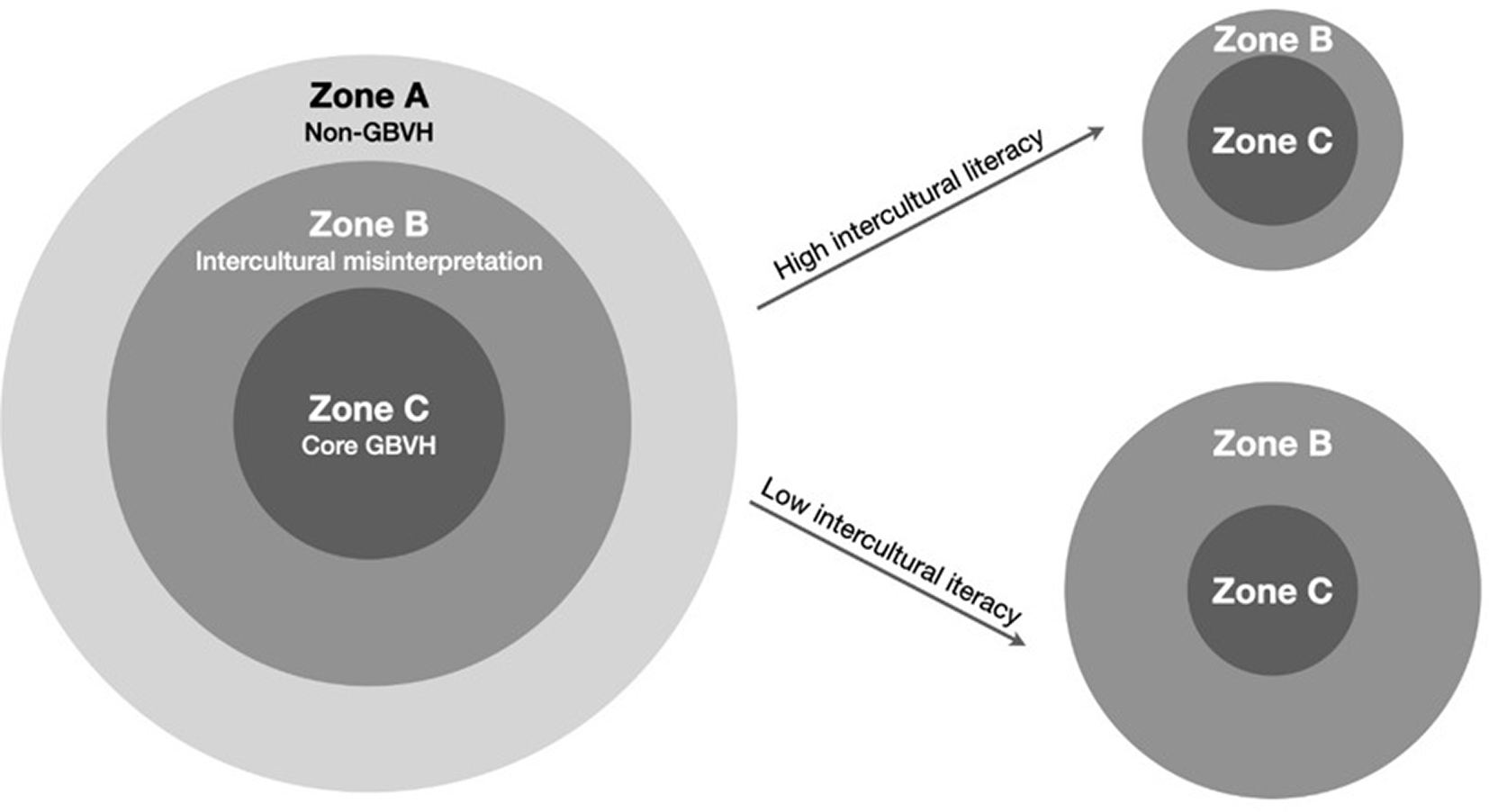
Figure 2. The A–B–C classification model.
The model should not be interpreted as a rigid categorisation device, but as a structured guide for principled differentiation, ensuring that classification processes remain aligned with normative commitments to dignity, equity, and contextual sensitivity (Deardorff, 2006; Leung et al., 2014).
By introducing this structured differentiation, the A–B–C model contributes to the conceptual consolidation of GBVH within the DW architecture previously articulated (
Figure 1) (Ferraro et al., 2018; ILO, 1999). It provides a bridge between behavioural manifestation and systemic evaluation, ensuring that classification processes remain aligned with normative principles of dignity and non-discrimination (Council of Europe, 2011; ILO, 2019) while remaining sensitive to contextual complexity (Nelson & Luetz, 2021; Thomas et al., 2008). In doing so, it advances the field beyond implicit categorisation toward a more coherent and defensible analytical framework (dos Santos, Viseu et al., 2026b; Magnavita et al., 2024).
Temporal escalation and cumulative harm: Beyond static conceptions of GBVH
Prevailing approaches to WPVH and GBVH frequently rely on cross-sectional or time-bounded measures that capture exposure within defined reporting periods (Magnavita et al., 2024; Ramesh et al., 2018). While such strategies are essential for prevalence estimation, they may inadvertently reinforce static conceptions of harm. Violence and harassment are thus often treated as isolated episodes rather than as processes unfolding over time (Leyman, 1990; Velásquez, 2024).
However, temporal dynamics are central to understanding the structural embedding of GBVH (dos Santos, Viseu et al., 2026b). Harm does not necessarily reside in the intensity of a single act alone, it may emerge through repetition, persistence, and escalation (Bambi et al., 2017). Low-intensity behaviours, such as subtle gendered hostilities, dismissive remarks, or exclusionary practices, may initially appear episodic or ambiguous (Sue et al., 2007). When recurrent, they can accumulate into patterns of marginalisation that progressively erode professional identity, psychological safety, and institutional trust (Barros et al., 2022; Walker, 2025), and provide the fertile soil for more severe behaviours.
To capture this dynamic dimension, the present framework integrates three interrelated temporal markers: frequency, persistence, and progression (Leyman, 1990; Velásquez, 2024). Frequency refers to the occurrence of behaviours within defined periods. Persistence denotes their sustained presence over time. Progression reflects the potential escalation in severity, scope, or relational consequences (Magnavita et al., 2024). These markers allow for the differentiation between isolated events and systemic patterns (Bambi et al., 2017), thereby aligning temporal analysis with structural interpretation (dos Santos, Viseu et al., 2026b).
Importantly, temporal progression is not merely additive, it can be transformative (Walker, 2025). Repeated exposure to gender-based hostility may shift organisational climates, normalise deviance, and entrench power asymmetries (Bandura, 1977; Dellasega et al., 2014). What begins as subtle exclusion may culminate in overt harassment, formal marginalisation, or withdrawal from professional roles (Leyman, 1990; Magnavita et al., 2024). Conversely, even a single acute incident may produce long-lasting psychological or professional consequences, altering participation trajectories within the workplace (Ramesh et al., 2018; Walker, 2025).
When examined through the DW architecture, temporal escalation reveals how structural deficits compound over time (Ferraro et al., 2018). Persistent violations of fundamental principles undermine dignity and voice (ILO, 1999, 2019). Recurrent overload erodes work-life balance and intensifies relational strain (Barros et al., 2022; Havaei et al., 2020). Repeated denial of opportunity constrains professional mobility (dos Santos, Viseu et al., 2026b). Inadequate protective mechanisms amplify silence and impunity (dos Santos, Semedo et al., 2026a; ILO et al., 2002). Over time, these interacting deficits generate cumulative structural vulnerability rather than discrete organisational failures (Berger et al., 2026).
The integration of temporal markers therefore extends the analytical scope of GBVH beyond momentary behaviour toward dynamic systems of harm (Magnavita et al., 2024; Velásquez, 2024). It allows researchers and organisations to identify early warning patterns (Ramesh et al., 2018), differentiate episodic conflict from systemic degradation (Bambi et al., 2017; Leyman, 1990), and recognise how seemingly minor behaviours may function as precursors to more severe manifestations (Sue et al., 2007; Villafranca et al., 2021).
By embedding temporal progression within the DW framework, the present model strengthens the alignment between psychosocial risk analysis and normative evaluation (ILO, 1999). GBVH can thus be conceptualised not only as a violation of principles at a given moment, but as a process through which structural misalignment unfolds and intensifies across time (dos Santos, Viseu et al., 2026b; Walker, 2025). This dynamic perspective is essential for designing prevention strategies that address trajectories rather than isolated incidents (Barros et al., 2022; Magnavita et al., 2024).
Multilevel biopsychosocial-ecological integration: Situating GBVH across interacting systems
Violence and harassment in the world of work do not emerge from isolated individuals nor from abstract structures alone. They are produced and sustained through interactions across multiple, interdependent levels of analysis (dos Santos, Viseu et al., 2026b). While existing research has generated valuable insights at specific levels focusing, for instance, on individual traits, interpersonal dynamics, or organisational policies, isolated explanations are rarely sufficient to account for the patterned and gendered nature of harm (Einarsen et al., 2020; Spector et al., 2014). A multilevel biopsychosocial-ecological perspective therefore becomes essential for consolidating the integrative architecture advanced in this article.
Within this perspective, GBVH is conceptualised as a phenomenon situated simultaneously at the individual, interpersonal, organisational, sociocultural, and intercultural levels (dos Santos, Viseu et al., 2026b). These levels do not operate hierarchically but relationally: each level shapes and is shaped by the others, generating dynamic patterns of vulnerability or protection (University of Iowa Injury Prevention Research Center, 2001).
At the individual level, personal characteristics, psychological resources, moral identity, and prior experiences (Bandura, 1999) influence exposure, response to harm and aggressive behaviours (Youssef-Morgan & Luthans, 2015). Yet individual traits alone cannot account for patterned gender-based vulnerability (Finkel, 2007). They operate within relational and structural contexts that either constrain or amplify their effects (Aquino & Thau, 2009; Bandura, 2016). For example, individuals with low self-control are prone to reacting aggressively when confronted with frustration (Warsicka, 2025). Therefore, this characteristic is an active individual determinant of WPVH. Likewise, those high in Machiavellianism have higher probability of involvement in bullying at work (Pilch & Turska, 2015).
At the interpersonal level, GBVH unfolds through direct interactions between colleagues, supervisors, subordinates, clients, or third parties (Spector et al., 2014). Power asymmetries, role expectations, modelling processes, and competitive dynamics shape how behaviours are enacted, interpreted, and reinforced (Bandura, 1977; Noor et al., 2008). Interpersonal climates may normalise subtle hostility long before overt harassment becomes visible (Dellasega et al., 2014; Paull et al., 2012).
The organisational level introduces structural determinants: leadership practices, reporting mechanisms, workload allocation, resource distribution, accountability systems, and informal norms (Havaei et al., 2020; ILO et al., 2002). Organisations are not neutral containers of behaviour, they actively configure the conditions under which dignity is safeguarded or eroded (dos Santos, Viseu et al., 2026b). Institutional silence, tolerance of minor transgressions, or inconsistent enforcement may transform episodic behaviours into systemic patterns (Villafranca et al., 2025).
Beyond the organisation, sociocultural frameworks shape the broader normative environment (
European Union Agency for Fundamental Rights et al., 2024). Gender hierarchies, labour market segmentation, legal protections, and societal expectations influence both exposure to GBVH and access to remedies (dos Santos, Semedo et al., 2026a). These macro-level arrangements define the boundaries of what is recognised as harm and what remains normalised.
Intersecting all these levels is the intercultural dimension, which modulates how behaviours are interpreted across diverse communication systems and cultural expectations (Leung et al., 2014; Thomas et al., 2008). Intercultural literacy influences classification processes, relational responses, and organisational decision-making (Deardorff, 2006; Nelson & Luetz, 2021), thereby interacting directly with the A–B–C interpretative architecture (Ang et al., 2007; Ott & Michailova, 2018).
Crucially, the multilevel systemic perspective does not fragment analysis into parallel domains. Rather, it reinforces the systemic logic of the DW framework (Ferraro et al., 2018; ILO, 1999). Structural deficits in work design may interact with interpersonal dynamics (Havaei et al., 2020); sociocultural norms may legitimise organisational tolerance (Collins & Bilge, 2020); individual coping strategies may evolve in response to repeated structural exposure (Walker, 2025; Youssef-Morgan & Luthans, 2015). GBVH thus emerges not as an isolated behavioural anomaly, nor as the product of a single causal layer, but as the outcome of interacting psychosocial and institutional configurations (Berger et al., 2026; dos Santos, Viseu et al., 2026b).
By embedding GBVH within a biopsychosocial-ecological system, the present framework strengthens explanatory coherence without displacing existing insights (e.g., University of Iowa Injury Prevention Research Center, 2001). It integrates them within a unified architecture capable of identifying leverage points for prevention, whether through individual support (Bandura, 1999), team climate transformation (Villafranca et al., 2021), organisational redesign, or policy reform (dos Santos, Semedo et al., 2026a; ILO, 2019).
In doing so, the framework aligns dynamic systems analysis with the normative architecture of DW (ILO, 1999), ensuring that evaluation of violence remains connected to dignity, equity, security, and sustainable participation across levels of work experience.
Intercultural literacy as a transversal moderator
In increasingly diverse labour markets, workplace interactions are shaped not only by gendered norms but also by cultural frameworks that influence communication styles, authority relations, emotional expression, and conflict management (Hofstede, 1984). Within such environments, behaviours may carry different meanings across cultural contexts, complicating the interpretation of intent, harm, and responsibility (Ang et al., 2007). For this reason, intercultural literacy emerges as a transversal moderator within the present framework.
Intercultural literacy refers to the capacity to recognise, interpret, and respond appropriately to culturally mediated behavioural cues without suspending normative commitments to dignity and non-discrimination (Deardorff, 2006; Nelson & Luetz, 2021). It does not imply cultural relativism, nor does it dilute the recognition of gender-based harm (Collins & Bilge, 2020). Rather, it strengthens analytical precision by enabling differentiation between culturally variant communication patterns and conduct that constitutes or contributes to GBVH (Leung et al., 2014).
Within the A–B–C classification model, intercultural literacy directly influences the breadth and interpretative management of Zone B (Nelson & Luetz, 2021). Lower levels of intercultural competence may expand interpretative ambiguity, increasing the likelihood of misclassification in either direction, either by normalising harmful conduct under the guise of cultural difference (Collins & Bilge, 2020) or by attributing gender-based intent to behaviours primarily shaped by communication style (Ang et al., 2007; Ott & Michailova, 2018). Higher levels of intercultural literacy narrow this zone of ambiguity, facilitating more accurate classification while preserving normative clarity (Thomas et al., 2008).
At the multilevel biopsychosocial-ecological scales, intercultural literacy interacts with individual awareness, interpersonal climate, organisational policy, and sociocultural norms (Leung et al., 2014). Leaders and institutions with limited intercultural competence may inadvertently reinforce silence, minimise harm, or apply inconsistent standards (Dellasega et al., 2014; Dreachslin, 2007). Conversely, organisations that cultivate intercultural literacy as a structural competency strengthen their capacity to uphold DW principles in diverse environments (Deardorff, 2006).
Importantly, intercultural literacy does not function independently of the DW architecture. It operates within normative boundaries established by fundamental principles and values at work (ILO, 1999, 2019). Cultural variation may shape modes of expression, but it does not override commitments to dignity, equity, and safety (Council of Europe, 2011). In this sense, intercultural literacy enhances rather than weakens normative evaluation: it refines interpretation without eroding standards.
By conceptualising intercultural literacy as a transversal moderator, the present framework integrates interpretative competence into structural analysis (Ott & Michailova, 2018; Thomas et al., 2008). It recognises that classification, prevention, and response are mediated not only by formal policies but also by the cognitive and relational capacities of actors operating within diverse work systems (Ang et al., 2007; Leung et al., 2014). This integration strengthens both procedural fairness and conceptual coherence (Deardorff, 2006), ensuring that sensitivity to diversity coexists with firm normative commitments (Nelson & Luetz, 2021).
Discussion and future directions: Advancing the conceptual architecture of GBVH
This article proposes a systemic reconceptualisation of GBVH by positioning it within the normative and multidimensional architecture of DW (Ferraro et al., 2018; ILO, 1999). In doing so, it moves beyond fragmented, event-centred, or single-level explanations (Einarsen et al., 2020; Magnavita et al., 2024) and introduces an integrative framework that links behavioural manifestations to structural work conditions, temporal processes, interpretative dynamics, and multilevel systems.
The theoretical model developed in this study contributes to the consolidation of the field in four interrelated ways.
First, it reframes GBVH from a largely incident-based phenomenon into a structural signal of potential deficits in DW (Ferraro et al., 2018; ILO, 1999). This shift broadens the analytical focus from isolated behaviours to the systemic conditions that may enable, normalise, or silence harmful conduct (Paull et al., 2012). Rather than treating violence exclusively at the level of individual misconduct, the framework situates responsibility within institutional design, governance arrangements, and normative alignment (Bandura, 1999; ILO et al., 2002).
Second, the A–B–C classification model introduces a structured interpretative framework designed to address persistent ambiguity in GBVH categorisation (Sue et al., 2007). By distinguishing between unequivocal harm where gender plays a role, culturally mediated ambiguity and interactions not grounded in gender-based dynamics (Nelson & Luetz, 2021), the model enhances analytical precision while maintaining procedural fairness (Deardorff, 2006). In this respect, it strengthens both conceptual clarity and organisational legitimacy.
Third, the integration of temporal escalation and cumulative harm challenges static conceptions of violence (Leyman, 1990; Velásquez, 2024). By integrating frequency, persistence, and progression as a key analytical marker (Bambi et al., 2017; Walker, 2025), the framework conceptualises GBVH as a dynamic process through which structural vulnerabilities may intensify over time (Barros et al., 2022). This temporal perspective underscores the need for early detection and systemic intervention (Ramesh et al., 2018).
Fourth, the multilevel biopsychosocial-ecological integration unites previously disparate explanatory approaches. (dos Santos, Viseu et al., 2026b; University of Iowa Injury Prevention Research Center, 2001) into a coherent architecture. By situating GBVH simultaneously across individual, relational, organisational, sociocultural, and intercultural systems, the model avoids reductionism while preserving normative clarity. Intercultural literacy, conceptualised as a transversal moderator (Leung et al., 2014; Ott & Michailova, 2018), further refines interpretative processes without weakening commitments to dignity and non-discrimination (Council of Europe, 2011; ILO, 1999).
Taken together, these contributions advance the conceptual architecture of GBVH in a way that is simultaneously normative, systemic, and operationally oriented. The framework does not displace existing research, rather, it reorganises it within a unified structure capable of guiding research, assessment, and prevention strategies.
From a policy perspective, reframing GBVH as a potential indicator of DW deficits strengthens the alignment between occupational health, equality regulation, and labour governance (Council of Europe, 2011; dos Santos, Semedo et al., 2026a; ILO, 2019). It encourages institutions to examine structural conditions, workload design, opportunity distribution, remuneration equity, social protection, and safety governance, alongside behavioural accountability mechanisms (Finkel, 2007).
At the organisational level, the model emphasises that sustainable prevention cannot rely solely on reactive case management (Havaei et al., 2020). It requires systematic evaluation of work systems against normative standards of dignity, equity, and security (ILO, 1999). Structural prevention therefore involves not only strengthening behavioural accountability but also scrutinising the distribution of power, resources, and opportunities that shape everyday work experience (Collins & Bilge, 2020). Operational instruments grounded in this architecture can function not merely as reporting instruments but as diagnostic mechanisms for structural improvement.
Future research should empirically explore GBVH through the interactions among DW dimensions, temporal markers, and classification zones across sectors and cultural contexts. Longitudinal research designs will be particularly valuable in capturing escalation dynamics and patterns of structural vulnerability.
Ultimately, advancing the study of GBVH requires moving beyond descriptive enumeration toward architectural integration (dos Santos, Viseu et al., 2026b). By aligning normative labour standards, psychosocial analysis, and interpretative precision within a unified framework (Leung et al., 2014), this article calls for a structural reorientation of both research and practice. Strengthening equitable and sustainable work systems is not merely a matter of responding to incidents (Einarsen et al., 2020). It requires re-examining and structurally realigning the conditions under which work itself is organised, governed, and experienced (ILO et al., 2002). Within this perspective, preventing GBVH becomes inseparable from strengthening DW itself. Future studies may produce the refinements that prove necessary to the framework presented here.
Ethics and consent
Ethical approval and consent were not required.
Data and software availability
No data or software are associated with this article.
References
- Ang S, Van Dyne L, Koh C, et al.:
Cultural Intelligence: Its Measurement and Effects on Cultural Judgment and Decision Making, Cultural Adaptation and Task Performance.
Manag. Organ. Rev.
2007; 3(3): 335–371. Publisher Full Text
- Aquino K, Thau S:
Workplace Victimization: Aggression from the Target’s Perspective.
Annu. Rev. Psychol.
2009; 60(1): 717–741. Publisher Full Text
- Bambi S, Guazzini A, De Felippis C, et al.:
Preventing workplace incivility, lateral violence and bullying between nurses A narrative literature review.
Acta Biomed for Health Professions.
2017; 88(5S): 39–47. Publisher Full Text
- Bandura A:
Social learning theory.
Prentice-Hall;
1977.
- Bandura A:
Moral Disengagement in the Perpetration of Inhumanities.
Personal. Soc. Psychol. Rev.
1999; 3(3): 193–209. Publisher Full Text
- Bandura A:
Moral disengagement: How people do harm and live with themselves.
Worth Publishers;
2016.
- Barros C, Meneses RF, Sani A, et al.:
Workplace Violence in Healthcare Settings: Work-Related Predictors of Violence Behaviours.
Psych.
2022; 4(3): 516–524. Publisher Full Text
- Berger R, Czakert JP, dos Santos NR , et al.:
Artificial Intelligence and Gender-Based Violence and Harassment in Healthcare: A Scoping Review [In press].
Open Research Europe.
2026.
- Collins PH, Bilge S:
Intersectionality.
Polity;
2nd ed.2020.
- Council of Europe:
Convention on preventing and combating violence against women and domestic violence (Istanbul Convention).2011.
Reference Source
- Deardorff DK:
Identification and Assessment of Intercultural Competence as a Student Outcome of Internationalization.
J. Stud. Int. Educ.
2006; 10(3): 241–266. Publisher Full Text
- Dellasega C, Volpe RL, Edmonson C, et al.:
An Exploration of Relational Aggression in the Nursing Workplace.
J. Nurs. Adm.
2014; 44(4): 212–218. Publisher Full Text
- dos Santos NR , Semedo C, Pais L, et al.:
Gender-Based Violence and Harassment in the World of Work – An analysis of prevalence and European legal frameworks [In press].
Open Research Europe.
2026a.
- dos Santos NR , Viseu J, Semedo C, et al.:
Decent Work Threatened: A Review of Reviews on Gender-Related Violence and Harassment in Healthcare [in press].
Open Research Europe.
2026b; 6. Publisher Full Text
- Dreachslin JL:
Diversity management and cultural competence: Research, practice, and the business case.
J. Healthc. Manag.
2007; 52(2): 79–86. PubMed Abstract
| Publisher Full Text
- Einarsen SV, Hoel H, Zapf D, et al.:
Bullying and Harassment in the Workplace.
CRC Press;
2020. Publisher Full Text
- European Union Agency for Fundamental Rights, Eurostat, & European Institute for Gender Equality:
EU gender-based violence survey 2024: Key results.2024.
Reference Source
- Ferraro T, Moreira JM, dos Santos NR , et al.:
Decent work, work motivation and psychological capital: An empirical research.
Work.
2018; 60(2): 339–354. Publisher Full Text
- Finkel EJ:
Impelling and Inhibiting Forces in the Perpetration of Intimate Partner Violence.
Rev. Gen. Psychol.
2007; 11(2): 193–207. Publisher Full Text
- Havaei F, Astivia OLO, MacPhee M:
The impact of workplace violence on medical-surgical nurses’ health outcome: A moderated mediation model of work environment conditions and burnout using secondary data.
Int. J. Nurs. Stud.
2020; 109: 103666. Publisher Full Text
- Warsicka H:
Understanding Employee Resources: The Role of Trait and State Self-Control in Burnout Prevention and Work Ability Enhancement.
Universitat de Valência;
2025. Doctoral Dissertation.
- Hofstede G:
Culture’s Consequences: International Differences in Work-Related Values.
Sage;
1984.
- International Labour Organization [ILO]:
Decent Work: Report of the director-general at 87th session of the international labour conference.1999.
- International Labour Organization [ILO]:
C190 - Violence and Harassment Convention, 2019 (No. 190).
ILO;
2019.
Reference Source
- International Labour Organization [ILO], International Council of Nurses, World Health Organization, & Public Services International:
Framework guidelines for addressing workplace violence in the health sector.
ILO;
2002.
- Jowsey T:
Three zones of cultural competency: surface competency, bias twilight, and the confronting midnight zone.
BMC Med. Educ.
2019; 19(1): 306. Publisher Full Text
- Leung K, Ang S, Tan ML:
Intercultural Competence.
Annu. Rev. Organ. Psych. Organ. Behav.
2014; 1(1): 489–519. Publisher Full Text
- Leyman H:
Mobbing and psychological terror at workplaces.
Violence Vict.
1990; 5: 119–126. PubMed Abstract
| Publisher Full Text
- Magley VJ, Kabat-Farr D, Malcore MA, et al.:
Workplace Incivility.
Annu. Rev. Organ. Psych. Organ. Behav.
2026; 13(1): 337–361. Publisher Full Text
- Magnavita N, Larese Filon F, Giorgi G, et al.:
Assessing Workplace Violence: Methodological Considerations.
Med. Lav.
2024; 115(1): e2024003. PubMed Abstract
| Publisher Full Text
| Free Full Text
- Nelson W, Luetz JM:
Towards Intercultural Literacy—A Literature Review on Immersive Cross-Cultural Experiences and Intercultural Competency.
Innovating Christian Education Research.
Springer Nature Singapore;
2021; pp. 395–422. Publisher Full Text
- Noor M, Brown R, Gonzalez R, et al.:
On Positive Psychological Outcomes: What Helps Groups With a History of Conflict to Forgive and Reconcile With Each Other?.
Personal. Soc. Psychol. Bull.
2008; 34(6): 819–832. PubMed Abstract
| Publisher Full Text
- Ott DL, Michailova S:
Cultural Intelligence: A Review and New Research Avenues.
Int. J. Manag. Rev.
2018; 20(1): 99–119. Publisher Full Text
- Paull M, Omari M, Standen P:
When is a bystander not a bystander? A typology of the roles of bystanders in workplace bullying.
Asia Pac. J. Hum. Resour.
2012; 50(3): 351–366. Publisher Full Text
- Pilch I, Turska E:
Relationships between Machiavellianism, organizational culture, and workplace bullying: Emotional abuse from the target’s and the perpetrator’s perspective.
J. Bus. Ethics.
2015; 128(1): 83–93. Publisher Full Text
- Ramesh T, Igoumenou A, Vazquez Montes M, et al.:
Use of risk assessment instruments to predict violence in forensic psychiatric hospitals: a systematic review and meta-analysis.
Eur. Psychiatry.
2018; 52: 47–53. PubMed Abstract
| Publisher Full Text
| Free Full Text
- Spector PE, Zhou ZE, Che XX:
Nurse exposure to physical and nonphysical violence, bullying, and sexual harassment: A quantitative review.
Int. J. Nurs. Stud.
2014; 51(1): 72–84. PubMed Abstract
| Publisher Full Text
- Sue DW, Capodilupo CM, Torino GC, et al.:
Racial microaggressions in everyday life: Implications for clinical practice.
Am. Psychol.
2007; 62(4): 271–286. Publisher Full Text
- Thomas DC, Elron E, Stahl G, et al.:
Cultural Intelligence.
Int. J. Cross-cult. Manag.
2008; 8(2): 123–143. Publisher Full Text
- University of Iowa Injury Prevention Research Center:
Workplace violence: A report to the nation.2001.
Reference Source
- Velásquez NR:
Exploring Psychological Violence in the Workplace: Implications for Mental Health and Organizational Well-being.
Nusantara Journal of Behavioral and Social Science.
2024; 3(4): 177–184. Publisher Full Text
- Villafranca A, Adams B, Krestow O, et al.:
Transforming from victim to survivor—Part 1: Strategies for clinicians to safeguard themselves, colleagues, and patients from disruptive intraoperative behaviour.
Operating Room Nurses Association of Canada Journal.
2025; 42(1): 56–64. Publisher Full Text
- Villafranca A, Hamlin C, Rodebaugh TL, et al.:
Development of Survey Scales for Measuring Exposure and Behavioral Responses to Disruptive Intraoperative Behavior.
J. Patient Saf.
2021; 17(7): e607–e614. Publisher Full Text
- Walker J:
Trauma, Power, and Psychological Safety: Understanding the Mental Health Impact of Workplace Bullying.
Healthcare.
2025; 13(23): 3084. PubMed Abstract
| Publisher Full Text
| Free Full Text
- Youssef-Morgan CM, Luthans F:
Psychological Capital and Well-being.
Stress. Health.
2015; 31(3): 180–188. Publisher Full Text




