Introduction
The 1995 United Nations (UN) Beijing Platform for Action established gender mainstreaming (GM) as the central global strategy for advancing gender equality. Its core premise was institutional: a gender perspective should be integrated across all stages of policymaking – agenda-setting, design, implementation, monitoring, and evaluation – so that public action does not reproduce existing inequalities (UN, 1995). From the outset, mainstreaming was conceived not as a one-sector equality policy but as a cross-cutting mode of governance intended to reshape how policy problems are defined, how institutions operate, and how accountability is organised. The European Union and the Council of Europe (1998) rapidly adopted and formalised this approach, embedding GM within supranational and national governance architectures.
Three decades later, GM is widely institutionalised across levels of governance. Equality units exist in ministries. Gender impact assessments and budgeting tools are mandated. Reporting systems and indicators track compliance. International organisations incorporate mainstreaming into strategic frameworks. Yet the impact of this institutional presence is not necessarily substantive. Across sectors and regions, scholarship documents how mainstreaming is translated and often made to fit into managerial procedures, rearticulated through sectoral rationalities, and unevenly connected to redistributive outcomes. It is too simple to conclude that the impact is consistently or inevitably low. Rather, there is high variability in outcomes: formal endorsement combines with differentiated implementation and shifting substantive ambitions to produce a range of outcomes that require detailed study and explanation.
Feminist research on GM has risen to this task. It has produced a rich and theoretically plural field. Concepts such as evaporation, co-option, dilution, translation, layering, and compliance without conviction help to describe recurrent dynamics in the governance of equality. Feminist institutionalist, discursive, interpretive, and governmentality approaches show how mainstreaming interacts with institutional hierarchies, professional cultures, and administrative technologies. Collectively, this scholarship offers a sustained empirical engagement with the institutional life of a cross-cutting normative reform.
In contrast, we find that dominant policy process theories and frameworks have not been as important to GM research (hereafter, ‘policy process theories’ as a shorthand for theories and frameworks which are often described as ‘mainstream’ by interpretive and other scholars, but we avoid this term to reduce confusion with ‘mainstreaming’; see Cairney and Heikkila, 2023: 291 for a list of dominant theories and terminological issues). Policy studies have developed influential theories for analysing agenda-setting, coalition behaviour, diffusion, and punctuated change, but few have been applied systematically to GM. At the same time, GM research frequently centers mechanisms such as institutional absorption, epistemic marginalisation, and procedural embedding that are less prominent in dominant policy process theories. Hence, engagement between these bodies of scholarship is visible but uneven and incomplete. There is high untapped potential to show how policy process theories and feminist analyses can be brought into meaningful conversation, to compare conceptual and analytical approaches and seek new ways to understand and address gaps in GM progress.
This review addresses that intersection directly in two way. First, it synthesises a wealth of insights from GM research, drawing on 732 peer-reviewed articles that engage with policymaking concepts or theories. Second, it shows how GM scholarship uses, adapts, or bypasses dominant policy process theory, and what this reveals about the potential value of mutual engagement. Rather than asking whether mainstream frameworks are applied correctly, we investigate what forms of explanation GM research employs and how approaches relate to dominant approaches within the policy sciences.
In doing so, we situate this study alongside four other systematic reviews examining how equity-oriented fields engage with policy process theory (Cairney et al., 2021a; Cairney & Kippin, 2022; Cairney et al., 2023; Cairney and Intropido, 2025). In those reviews, we focused on the potential and actual value of policy process theories to interdisciplinary approaches to health, education, climate change, and COVID-19 research. However, here we largely emphasise the value of GM research to policy process theories. We not only assess the uptake of policy process theory within GM scholarship, but also demonstrate how GM research improves their understanding of policymaking and governance systems.
Hence, we encourage policy process theory scholars to avoid the misperception that gender mainstreaming scholarship stands apart from the policy sciences. Rather, it elaborates mechanisms – including translation, proceduralisation, institutional layering, and epistemic filtering – that are integral to how reforms are stabilised and reshaped within contemporary governance. Bringing feminist research and policy process theories into dialogue improves our understanding of the trajectory of a substantive policy ambition – gender mainstreaming - and the policy process more broadly.
Methods
This is the eighth qualitative systematic review submitted by our team to Open Research Europe. To ensure a consistent approach, the following description draws on the Methods sections of our reviews on inequalities (Cairney et al., 2021a; 2022a, 2022b; 2022c; 2023; Cairney & Kippin, 2022; Cairney and Intropido, 2025; Munro and Cairney, 2020), and integrative (Cairney 2025a, 2025b) and collaborative (Cairney and Toomey, 2024, 2025a, 2025b) policymaking. Each review adapts Kuckertz and Block’s (2021) guidance on describing systematic reviews with the following categories.
Rationale. Our reviews of equity or equality policies are part of the Horizon 2020 project Integrative Mechanisms for Addressing Spatial Justice and Territorial Inequalities in Europe (IMAJINE). Its aims were to identify how policymakers and researchers understand ‘spatial justice’ and seek to reduce ‘territorial inequalities’. Our role was to examine how ‘(a) policy actors compete to define the policy problem of equity or justice in relation to inequalities’, and (b) ‘identify priorities in relation to factors such as geography, gender, class, race, ethnicity, and disability’ (Cairney and Kippin, 2022: 5). The project began in 2017 then pivoted to focus on COVID-19 and inequalities from 2020.
Engagement with previous reviews. This is our fifth qualitative systematic review focusing on inequalities. The first (Cairney et al., 2021a) sought lessons from studies of the use of policy theories in other disciplinary or interdisciplinary fields (Embrett and Randall, 2014; Munro and Cairney, 2020), and Such et al. (2019) guided our first protocol.
Research/guiding questions. Our review follows the broader series of equity policy reviews by examining how research on gender mainstreaming engages with policymaking and policy process theory. Our general focus is on how gender mainstreaming is conceptualised as a policy problem, how its implementation and outcomes are explained, and what this literature suggests about policymaking dynamics.
Our overarching guiding question was: How does gender mainstreaming research use policy process theory to understand policymaking?
Data extraction and analysis were guided by the following sub-questions:
• how gender mainstreaming and gender equality are defined;
• what policy outcomes are reported;
• which governance structures and contextual factors are identified as salient;
• what mechanisms are proposed to explain outcomes;
• which policy process theories or concepts are employed;
• what lessons are suggested for the design, adoption, implementation, or evaluation of gender mainstreaming.
Database and initial search terms
We searched four academic databases: Web of Science, Scopus, International Bibliography of the Social Sciences (IBSS), and Science Direct; and supplemented these with targeted searches in Google Scholar to identify additional relevant articles.
Searches combined terms referring to gender mainstreaming with terms relating to policy and policymaking. Specifically, the following expressions were used, singly and in combination, in the title, abstract, and keyword fields: ‘gender mainstreaming’, ‘mainstreaming gender’, ‘mainstream gender’, ‘mainstreaming of gender’, ‘gender mainstreamed’, and ‘GM’, together with ‘policy’, ‘policies’, ‘policy system(s)’, ‘policy cycles(s)’, ‘policy theory’, ‘policy theories’, ‘policy process theory (ies)’, ‘policy concept(s)’, ‘policymaker(s)’, and ‘policy-maker(s)’. Boolean operators (AND/OR) and truncation were applied as appropriate to capture variations in spelling and phrasing.
Timeliness. We ran this search from October 2021 to August 2025 (last search date was 05/06/25 for Scopus, 04/06/25 Web of Science, 09/07/2025 for ProQuest, and 07/08/2025 for Science Direct).
Manual searches and choices regarding initial inclusion
We applied a deliberately low threshold for initial inclusion, consistent with the broader series of equity policy reviews. Articles were included at the first stage if they referred to gender mainstreaming in relation to policymaking, without requiring explicit reference to policy theory. This strategy allowed us to capture the breadth of the literature, minimise the risk of overlooking foundational contributions, and identify how policy-relevant insights are distributed across the field rather than concentrated in explicitly theory-informed studies.
We complemented database searches with manual snowballing to identify frequently cited texts and foundational contributions. This process focused on references within included articles and key reviews of gender mainstreaming scholarship. We retained a broad inclusion logic during this phase, prioritising relevance to policymaking discussions over explicit engagement with policy process theory.
Subsequent screening and analysis allowed us to identify the subset of studies that engage more directly with policymaking dynamics, policy mechanisms, or policy process concepts. This staged approach mirrors the logic used in the wider review series (Cairney & Kippin, 2022: 5): beginning with a wide search and low inclusion bar to map the field, before examining how policy-oriented studies contribute to a more focused analytical narrative.
Final inclusion criteria were applied following full-text screening. The review included 732 peer-reviewed journal articles published in English (see
Table 1,
Figure 1, and the Extended data [St.Denny and Cairney, 2026]). To be eligible, texts had to:
1. Address gender mainstreaming directly as a policy strategy or governance approach;
2. Make a substantive reference to policymaking concepts or theories (including citations to ‘mainstream’ policy process theories or to the feminist policy analysis and institutionalist canon);
3. Be published in a peer-reviewed academic journal.
Table 1. Database search results and screening outcomes.
| Database | Search results | Duplicates | Excluded | Sought for retrieval | No access | Screened out | Final included |
|---|
| Scopus
| 818 | 624 | 11 | 183 | 4 | 41 | 138 |
| Web of Science
| 842 | 703 | 2 | 137 | 1 | 81 | 55 |
| IBSS/ProQuest
| 2907 | 2472 | 17 | 418 | 4 | 276 | 138 |
| Science Direct
| 1186 | 440 | 1 | 745 | 3 | 370 | 372 |
| Google Scholar
*
| 350 | 286 | 14 | 50 | 2 | 19 | 29 |
| Total
| 6103 | 4525 | 45 | 1533 | 14 | 787 | 732 |
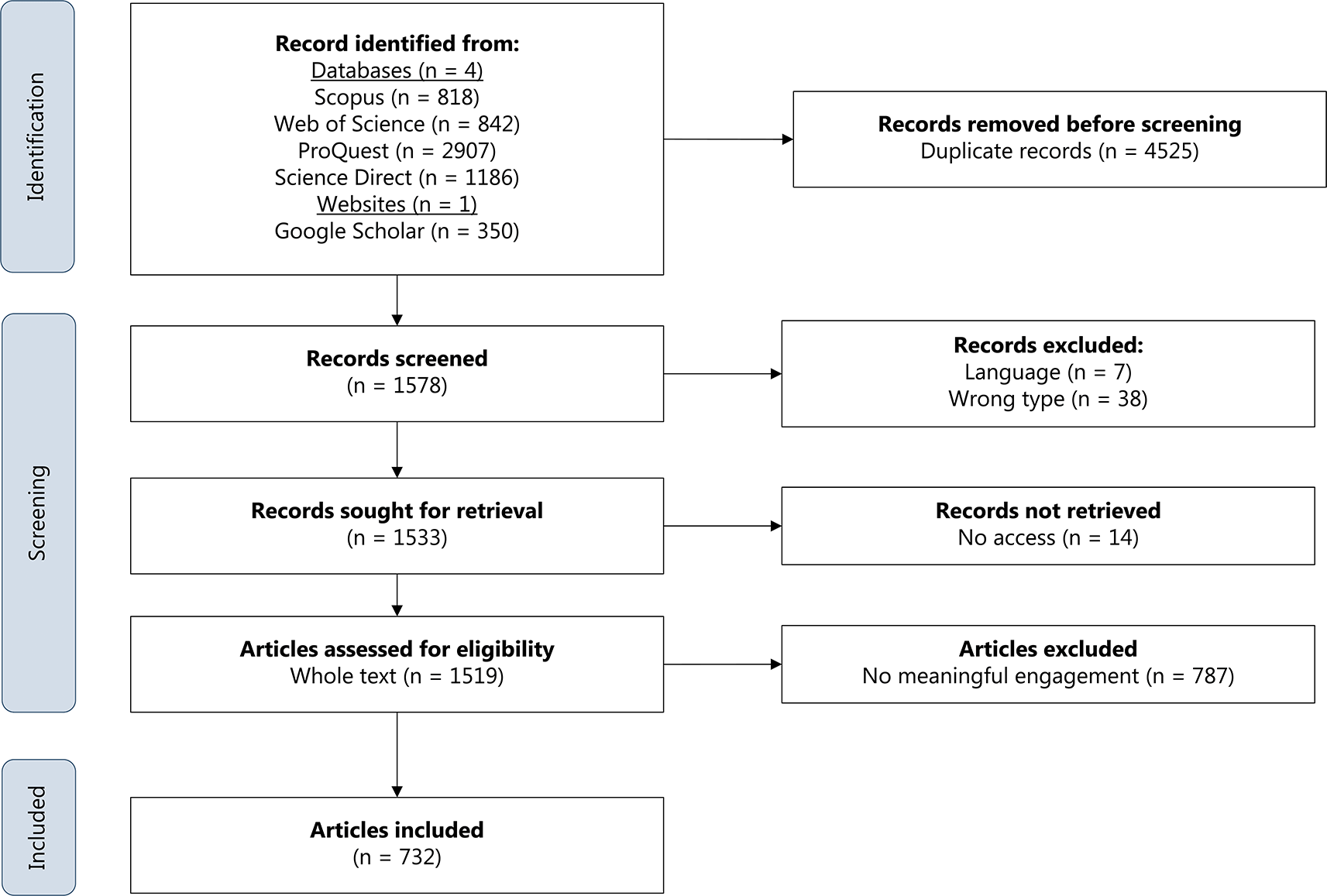
Figure 1. PRISMA review process flow diagram.
We excluded articles that:
• mentioned gender mainstreaming only tangentially, without engaging with its policymaking dimension;
• were limited to descriptive reporting of programmes or outcomes without conceptual reference to policymaking;
• were non-English language or grey literature (books, reports, policy briefs).
Routine data collection
The following aspects were coded (in Excel) for each included article (percentages are relative to the whole corpus):
Country/region of study. 331 (45.2%) of the 732 texts focused on single-country contexts, of these 61 (8.3%) involved subnational (local, regional, or devolved) contexts. 90 (12.9%) concerned multi-country contexts. Of the multi-country studies, 62 (8.4%) involved 2–5 countries, 9 (1.2%) involved 6–10 countries, and 17 (2.3%) studied more than 10 countries. 31 (4.2%) of studies were global in coverage. 11 (1.5%) of the multi-country studies compared subnational contexts. The top five countries studied across the corpus were: Sweden (n = 38, 5.1%); Spain (n = 33, 4.5%); South Africa (n = 32, 4.3%), and Germany (n = 22; 2%). 188 (X%) papers studied countries in Europe, of which 174 (24%) concerned Western Europe, and 12 (2%) concerned Central and Eastern Europe (CEE). 107 (15%) of papers concerned countries in Sub-Saharan Africa, 76 (10%) in Asia, 28 (4%) the Pacific, 23 (3%) North America, 13 (2%) Latin America, and 15 (2%) Middle East and North Africa (MENA). International organisations (IOs) represent an important focus of the corpus, with 159 (21.7%) of papers concerned with studying GM within IOs, chiefly the European Union (EU) with 115 (15.7%) papers. Overall, 347 (47.4%) of papers concern countries or IOs in the Global North, and 218 (2.7%) the Global South.
Country of author affiliation. Although the review covers a wide range of geographic settings, authorship is more concentrated. 343 (n = 46.8%) authorial teams had at least one member based in an English-speaking country. More than half (n = 403, 55%) of the authorial teams had at least one member affiliated with an institution in Western Europe, with comparatively fewer teams featuring members located in North America (n = 128, 17.4%), Africa (n = 76, 10.3%), Asia (n = 71, 9.6%), the Pacific (n = 62, 8.4%), CEE (n = 27, 3.7%), Latin America (n = 19, 2.6%), or the MENA region (n = 14, 1.9%). This points to a familiar asymmetry in knowledge production: GM is studied across diverse settings, but much of the academic interpretation of those settings continues to be mediated through Global North institutions.
Policy or case study issue. GM studies cut across a wide range of policy domains, although some areas clearly dominate. Most studies (n = 295, 40.3%) focus on equality policy, far outstripping other sectors. Beyond this core, the literature is dispersed across multiple domains. The most frequently examined areas are development (n = 73, 9.9%), economic policy (n = 38, 5.1%), foreign policy (n = 34, 4.6%), climate change (n = 32, 4.3%), employment (n = 32, 4.3%), health (n = 31, 4.2%), education (n = 24, 3.2%), and energy (n = 24, 3.2%). A second tier of policy areas includes peacebuilding and Women, Peace and Security (n = 22, 3%), environment (n = 21, 2.8%), urban policy (n = 20, 2.7%), defense (n = 19, 2.5%), agriculture (n = 16, 2.2%), justice (n = 15, 2%), and social policy (n = 14, 1.9%). More limited clusters of studies address disaster risk reduction (n = 10, 1.3%), science and technology (n = 9, 1.2%), and transport (n = 0.8, X%). Finally, a long tail of sectors is represented only sporadically. Marine policy, representation, forestry and natural resource management, entrepreneurship, public sector reform, procurement, higher education, Indigenous peoples’ policy, tourism, food, culture, civil rights, sport, and media each appear in fewer than five studies.
Research methods. In methodological terms, the corpus is dominated by qualitative approaches. Case studies are the most common design (n = 266, 36.3%), followed by interpretive policy analyses (n = 198, 27%). Poststructuralist discourse analysis is used in 38 studies (5.2%), while a smaller number of studies employ other qualitative approaches, including participatory action research and ethnographic methods (total n = 14, 1.9%). Beyond purely qualitative designs, the corpus includes 48 mixed-methods studies (6.5%) and 30 quantitative analyses (4.1%). A smaller subset consists of review articles, including 23 literature reviews (3.1%) and 5 systematic reviews (0.7%). Finally, a non-negligeable share of the corpus is non-empirical. Forty publications are conceptual pieces (5.4%), and 71 can be classified as commentaries (9.7%).
Analytical strategy
Our approach to ‘policy theory’ was deliberately inclusive, reflecting the heterogeneous intellectual character of the GM literature. We considered both explicit engagements with established policy process theories (e.g. Multiple Streams Framework, Advocacy Coalition Framework, Punctuated Equilibrium) and adjacent theoretical approaches commonly used in GM research, including feminist institutionalism, constructivist and post-structuralist discourse analysis, as well as bespoke concepts developed within the field. This inclusive strategy allowed us to capture the full range of theoretical resources mobilised in the literature.
From each included text, we extracted the following information: (i) author(s), year, and publication venue; (ii) definitions of gender mainstreaming and gender equality; (iii) reported policy outcomes; (iv) governance structures and contextual factors; (v) mechanisms of policy change; (vi) policy concepts and theories cited; and (vii) supporting quotations or illustrative examples.
We then conducted an inductive thematic synthesis across the corpus, identifying recurring analytical categories and emergent themes. This iterative process involved moving between individual studies and the corpus as a whole to refine thematic groupings and consolidate them into the analytical structure presented in the Results section. Particular attention was paid to how different theoretical approaches conceptualised gender mainstreaming, policy change, and implementation dynamics.
Limitations relevant to data gathering and analysis
As in the broader series of equity policy reviews, this study faces limitations related to the loose usage of key terms, uneven engagement with policy process theories, and the practical constraints of searching a large and heterogeneous literature. GM is used variably across disciplines and policy domains, and many studies refer to policymaking implicitly rather than through explicit theoretical engagement. We addressed this challenge by maintaining a low threshold for initial inclusion and adopting an immersive, staged analytical approach, allowing us to capture the breadth of the field while identifying the subset of studies that engage more directly with policymaking dynamics.
The corpus was restricted to English-language, peer-reviewed journal articles. This decision ensured comparability and consistency across the review series, but it privileges research produced in or oriented toward English-speaking and Global North academic contexts. It also excludes grey literature – including policy reports, governmental evaluations, and NGO analyses – where much practical experimentation with gender mainstreaming occurs. Consequently, the review captures the academic articulation of GM more than its full transnational practice.
The geographic distribution of both study settings and author affiliations reflects broader asymmetries in academic knowledge production. The literature is concentrated in European and other Global North contexts, with the European Union functioning as a frequent policy referent, while studies of non-European settings and author teams based outside these regions are comparatively less common. These patterns shape the narrative synthesis and limit the generalisability of findings, particularly in relation to institutional contexts that are underrepresented in English-language scholarship.
Finally, the review employs inductive thematic synthesis to identify recurring mechanisms and conceptual patterns. While this approach facilitates comparison across heterogeneous materials, it may underrepresent divergent or exceptional cases. The findings should therefore be interpreted as an analytical synthesis of dominant trajectories within English-language academic scholarship rather than a comprehensive representation of global gender mainstreaming practice. The results have clear implications for policy and policymaking, but their application is not universal.
The complete search protocol, PRISMA checklists, and structured bibliography is stored on the Open Science Framework (OSF) platform https://osf.io/hgesy/ (St.Denny and Cairney, 2026).
Results
Our review of 732 peer-reviewed articles reveals a consistent set of themes concerning how GM is defined, implemented, and theorised. Across settings, GM emerges as a contested concept whose transformative ambitions are often neutralised in practice. The literature points to enduring tensions between technocratic and transformative interpretations, the constraining effects of neoliberal governance logics, recurrent patterns of policy evaporation, and marked variation across geographic and sectoral contexts. Taken together, these findings depict GM less as a stable policy strategy than as a field of ongoing negotiation over the meaning and governance of gender equality. The following subsections present these findings in turn.
Gender mainstreaming as a contested concept
The first and most pervasive finding of our review concerns the contested nature of GM. Although international bodies have produced widely cited definitions, in practice these operate less as fixed guides than as flexible frameworks open to divergent, sometimes contradictory, interpretations. The UN Economic and Social Council’s 1997 definition describes GM as ‘a strategy for making women’s as well as men’s concerns and experiences an integral dimension of the design, implementation, monitoring and evaluation of policies and programmes in all political, economic and societal spheres so that women and men benefit equally and inequality is not perpetuated’ (UN ECOSOC, 1997: n.p.). The Council of Europe’s 1998 formulation similarly defines it as the ‘(re) organisation, improvement, development and evaluation of policy processes, so that a gender equality perspective is incorporated in all policies at all levels and at all stages, by the actors normally involved in policymaking’ (1998: 15).
These authoritative statements are repeatedly cited across academic and policy texts, yet their aspirational and deliberately open-ended language invites multiple, often incompatible, interpretations of what mainstreaming entails in practice. As GM travelled across sectors, institutions, and regions, it was variously redefined – as a managerial tool, a bureaucratic ritual, a participatory ideal, or a transformative feminist project. What emerges from the literature is not conceptual incoherence, but a structured field of contestation, in which different actors mobilise the same language of mainstreaming to advance distinct, and sometimes competing, political and administrative projects.
Our review identifies four analytically distinct but empirically overlapping orientations within this field: GM as administrative technology, as depoliticisation and symbolic compliance, as transformative practice, and as ambiguous and travelling concept. These orientations differ in how they conceive the relationship between gender, governance, and power, and in how they interpret the institutional consequences of mainstreaming. Collectively, they demonstrate that GM’s global diffusion and institutional endurance rest precisely on its interpretive flexibility, which enables adaptation and innovation while simultaneously creating opportunities for co-option and neutralization.
Gender mainstreaming as administrative technology
A first body of research interprets GM as a technical and managerial innovation within public administration. In this view, gender equality is reframed through the language of performance, harmonisation, and policy coherence. Often emerging from or adjacent to international organisations and public management scholarship, this literature presents GM as a neutral mechanism for enhancing policy efficiency (e.g. Reeves, 2002; Adeyeye and Akinbami, 2010; Kim and Kang, 2016). Mainstreaming becomes part of the state’s broader modernisation agenda – a means to ensure that all policies systematically account for gender implications through indicators, audits, and budgeting systems.
Empirical studies illustrate this orientation through analyses of sectoral initiatives (e.g. Clancy and Mohlakoana, 2020; Mangubhai et al., 2022; Buchy & Shakya, 2024; Vyhoska et al., 2024) and organizational procedures (e.g. Nicol, 2022) that equate successful mainstreaming with the establishment of gender toolkits, training programmes, or impact assessments. The analytical focus falls on procedural integration rather than on political or distributive outcomes (e.g. Brugere, 2014). Some authors describe this professionalisation as a marker of progress: by shifting gender equality from activist advocacy into administrative routine, mainstreaming becomes an normalisedcomponent of governance (e.g. Mahaprato, 2015). In this perspective, institutional embedding itself is treated as an achievement, even when substantive policy change remains limited or uneven.
Yet even within this descriptive literature, tensions are evident. Reliance on vague objectives and voluntary compliance mechanisms reveals that success is defined in procedural rather than transformative terms (e.g. Kelkay, 2022; Madhuri, 2025). Mainstreaming is measured by the presence of tools and processes rather than by shifts in power relations or resource allocation. These technocratic interpretations therefore lay the groundwork for a second, more critical strand of scholarship, which reads the same institutional developments not as evidence of success but as symptoms of depoliticisation.
Gender mainstreaming as depoliticisation and symbolic compliance
A second strand of scholarship interprets the technocratic turn not as progress but as the hollowing out of feminist politics. Authors in this tradition argue that GM has been absorbed into bureaucratic rationalities that neutralise difference rather than redistribute power. Lombardo and Meier’s (2008) analyses of EU equality discourse show that although the Amsterdam Treaty formally embedded gender equality across policy domains, implementation relied on instruments largely devoid of binding targets, timetables, or sanctions. Padovani’s (2016) study of the European Digital Agenda reaches similar conclusions: gender equality objectives have been operationalised through managerial tools – training, data collection, and guidelines – while the political ambitions of the Beijing Platform for Action largely receded from view.
Prügl (2011) provides the conceptual lens for understanding this depoliticisation, theorising mainstreaming as a ‘technology of government’. From a Foucauldian perspective, GM reshapes administrative conduct rather than social hierarchies: it ‘seeks to change the conduct of administrators in a way that tames the negative effects of difference’ while leaving intact the institutional and economic structures that generate inequality (Prügl, 2011: 74).
Empirical research reinforces this critique. Lee-Gosselin and colleagues, studying public and private organisations in Quebec and ministries in Morocco, find that mainstreaming delivers ‘mostly symbolic results’ and seldom alters organisational cultures or leadership structures (2013: 469). Donaghy’s (2004) analysis of Northern Ireland reveals a comparable pattern: equality units and statutory consultations have institutionalised procedural engagement without producing redistributive reform.
Across these cases, GM appears as a form of symbolic compliance – a bureaucratic exercise that legitimises institutions while leaving their foundations largely unchanged. Importantly, the critical force behind this scholarship derives from the very same institutional developments celebrated in the more technocratically-oriented literature. What one body of work describes as professionalization and administrative maturity, the other reads as depoliticization and containment. This internal tension is not incidental; it structures much of the GM field and motivates a third orientation that seeks to reclaim mainstreaming’s transformative potential.
Gender mainstreaming as transformative practice
A third orientation foregrounds the emancipatory potential of GM, arguing that it can still function as a vehicle for structural change when linked to accountability, participation, and intersectional justice. The theoretical anchor of this perspective lies in Mukhopadhyay’s (2014) argument that mainstreaming should not merely seek to insert women into the mainstream, but reconstitute the mainstream itself, transforming the institutional logics and epistemologies that determine what counts as policy knowledge. Likewise, Van Eerdewijk and Davids (2013) conceptualise mainstreaming through empowerment and capability frameworks that assess progress in terms of agency rather than procedural compliance.
Empirical studies illustrate both the promise and the limits of this transformative ambition. In Northern Ireland, Section 75 of the 1998 Act established a participatory form of mainstreaming that obliges public bodies to consult affected groups in policy design (Donaghy, 2004). This created new spaces for dialogue, though subsequent evaluations found that consultation often became formulaic once institutionalised. In post-apartheid South Africa, Ramparsad (2021) shows that mainstreaming remains a symbolic yet necessary discourse for linking gender equality to racial and class-based redress; its effectiveness depends less on administrative will than on accountability to social movements. In Southern Europe, Rodríguez-García and Donati (2021) demonstrate how participatory urban planning can reshape resource allocation, embedding equality principles within spatial governance. Yet Zartaloudis (2015) observes that under EU austerity regimes, the same tools were depoliticised into cost-efficiency measures stripped of feminist content.
Across these cases, transformation appears not as a stable endpoint but as a contingent and reversible process. Change depends on the continuous negotiation between feminist actors and institutional structures, and on the maintenance of political pressure within bureaucratic settings. Parpart (2014) similarly describes mainstreaming as a contested space where empowerment, resistance, and accountability are constantly redefined. Collectively, this body of work reframes GM as an ongoing practice of re-politicisation rather than as a fixed template capable of delivering automatic change.
Gender mainstreaming as an ambiguous and travelling concept
A fourth and more interpretive strand examines the definitional ambiguity of GM itself. Far from treating this as a weakness, these authors argue that ambiguity is intrinsic to GM’s diffusion and endurance. The same formula – ‘integrating a gender perspective’ into all sectors and stages of policymaking – is invoked to justify both transformative reform and minimal procedural adjustment (Lombardo, 2005). This semantic openness allows GM to move fluidly across ideological, institutional, and geographic boundaries, functioning simultaneously as a feminist aspiration and an administrative convenience.
In the European context, Krizsán and Zentai’s (2006) study of EU enlargement shows how candidate countries adopted GM language as a compliance requirement – signaling modernity while leaving domestic gender relations largely untouched. This ‘compliance without conviction’ illustrates how ambiguity can serve as a strategy of legitimation, enabling formal alignment with international norms without substantive redistribution (Krizsán and Zentai, 2006). Similar patterns appear in development cooperation. Donor agencies and local organisations often use identical definitions of mainstreaming but invest them with distinct meanings, ranging from superficial buzzword to secure grant funding to the articulation of claims for recognition, equity, or social justice (Wendoh and Wallace, 2005).
Other regional analyses trace how translation reshapes the concept itself. In Spanish urban policy, Donati and Rodríguez-Garcia (2024) show that mainstreaming was reframed as participatory governance – stripped of its feminist critique yet repurposed as an inclusion tool. Across different regional contexts, GM’s flexibility has been found to enable coalition-building among actors inside and outside the state who might otherwise resist explicitly feminist discourse (e.g. Andersson, 2015; Paterson and Scala, 2017). Ambiguity thus sustains both cooperation and contestation, making mainstreaming implementable across divergent political and moral economies (e.g. Arora-Jonsson and Sijapati, 2018).
Taken together, these studies recast ambiguity as a constitutive feature of mainstreaming rather than a sign of failure. Its openness allows it to travel, to be co-opted, and to be reclaimed. GM endures not despite its instability but because of it: its meanings remain in motion, sustaining both feminist innovation and institutional self-preservation.
Synthesis: contestation as the condition of mainstreaming
Across these four orientations, GM emerges less as a unified policy model than as a field of structured contestation over the meaning of equality in governance:
• The administrative strand institutionalises equality as a form of technical rationality;
• The critical strand exposes how this rationality depoliticises feminist aims;
• The transformative strand seeks to restore political agency and accountability;
• The interpretive strand explains how GM’s elasticity enables both co-option and endurance;
Together, these perspectives show that contestation is not an obstacle to mainstreaming but its defining dynamic. GM’s capacity to accommodate opposing interpretations – technocratic, feminist, bureaucratic, and emancipatory – ensures its persistence as a boundary concept linking feminist theory and policy governance. GM endures precisely because it remains unsettled: a space where political, epistemic, and institutional projects continuously collide and, at times, converge. These tensions, particularly between proceduralism and transformation, provide the conceptual foundation for understanding how broader governance paradigms shape the fate of gender equality policy, a question taken up in the following section.
The neoliberal policy paradigm and its effects on gender mainstreaming
The second major finding concerns the pervasive influence of the neoliberal policy paradigm on how GM is defined and enacted. Indeed, neoliberalism is a major reference point – and the object of most criticism by equity scholars – in our other systematic reviews. For example, in education policy, neoliberalism is defined as policymaking that:
‘favours individualism and non-state solutions, and therefore prioritises individual over communal or state responsibility, market over state action, and/or quasi-markets for public services (a competition to deliver services, designed and regulated by governments) … [and] giving relative priority to policies to ensure economic growth’ (Cairney and Kippin (2022: 4).
Similarly, in climate justice scholarship, neoliberal approaches are:
‘characterized by attempts to (1) prioritise economic growth over other aims such as sustainability and reducing inequalities, and favour market-based interactions over state responsibility and interventionism, often while (2) trying to ‘depoliticise’ climate change and restricting input to scientific or technocratic experts’ (Cairney et al., 2023: 5).
In the GM literature, neoliberalism is understood as a governing rationality that reorganizes the terms through which gender equality can be articulated, justified, and administered, reconfiguring it around market-compatible logics of competitiveness, accountability, and individual responsibility (e.g. Phillips, 2005; Walby, 2005; Woehl, 2011). It recasts equality as participation in the labour market, and transformation as market efficiency, and it tends to privilege those equality claims that can be translated into economic productivity and auditability. Since the mid-1990s, this rationality has reshaped both the institutional architecture and the conceptual vocabulary of equality policy, privileging market logic over redistribution and managerialism over politics (True, 2003; Phillips, 2005).
Neoliberalism operates through two complementary mechanisms. First, it restructures the state by imposing fiscal orthodoxy and new public-management tools that subordinate social objectives to budgetary discipline. Second, it reshapes subjectivities and discourses, recasting citizens and organisations as self-regulating, entrepreneurial actors whose value lies in measurable performance. Within this framework, the feminist project of transforming power relations is displaced by a technocratic project of enhancing effectiveness. As Elomäki (2015) and Walby (2018) argue, neoliberalism does not necessarily dismantle equality institutions but re-codes them – keeping them alive under new rules of evidence, accountability, and profitability.
Our review identifies five main dynamics through which neoliberal rationalities reshape GM:
• the instrumentalisation of equality as an engine of economic growth (‘smart economics’);
• the fiscal retrenchment and institutional erosion brought about by austerity;
• the managerialisation of equality through results-based governance; and
• the individualisation of responsibility and the co-option of feminist language within neoliberal and corporate frameworks.
Together, these dynamics show how GM has been transformed from a redistributive and institutional reform project into a multi-layered mechanism for governing gender through the market and its associated evaluative infrastructures.
Gender equality as economic efficiency: the rise of ‘smart economics’
A defining feature of neoliberal governance is the economic instrumentalisation of gender equality. In global development and economic policy, equality has been reframed as an input to growth rather than a goal in itself. The World Bank’s Gender Action Plan 2007–2010 epitomises this shift, asserting that gender equality is ‘smart economics’ because investing in women enhances productivity and returns on human capital (Waylen, 2022). Similar rhetoric pervades OECD and EU policy documents, which describe women as an ‘untapped resource’ or as ‘economic actors whose participation drives competitiveness’ (e.g. Elomäki, 2025).
The literature traces this logic to the convergence between feminist advocacy and market rationality during the 2000s. As Prügl (2011) notes, this alignment enabled feminist actors to enter economic policymaking arenas that had long excluded them, but it did so at the cost of depoliticising equality. Chant and Sweetman (2012) describe ‘smart economics’ as a discursive trap: by framing equality as economically rational, it becomes contingent on continued growth rather than rooted in social justice.
Empirical research confirms this trend. Analyses of EU employment strategies and national competitiveness plans show that GM is increasingly justified in terms of labour-market efficiency – raising female participation, improving productivity, and reducing welfare dependency (e.g. Perrons, 2005). In the Nordic countries, where equality is deeply institutionalised, discourses have nevertheless shifted toward the language of enabling women’s productive labour as a competitive asset (e.g. Rönnblom, 2005). In the ‘Global South’, efficiency dominates development planning, where equality is measured through indicators of return on investment rather than redistribution. Studies of microcredit programmes in Bangladesh (Zafarullah and Nawaz, 2019), women’s entrepreneurship initiatives (Vyas-Doorgapersad, 2017) and gender-responsive ‘value-chain’ projects in Sub-Saharan Africa (Mayoux, 2012), illustrate how equality is reframed as a tool for integrating women into market circuits while often leaving structural inequalities intact.
This economic reframing produces a characteristic ambivalence. On one hand, it grants feminist policy agendas pragmatic legitimacy – equality can now be defended before finance ministers and corporate leaders. On the other, it repositions gender as a factor of production, valued for its contribution to GDP rather than for its emancipatory potential. As Fraser (2013) argues, this ‘progressive neoliberalism’ converts feminist claims into resources for accumulation – an alliance that ensures feminism’s institutional survival while neutralising its radical critique.
Austerity and retrenchment: the erosion of equality infrastructures
If ‘smart economics’ represents the discursive face of neoliberalism, austerity constitutes its material foundation. The 2008 financial crisis triggered fiscal consolidation measures that profoundly reshaped the governance of gender equality. Across Europe, North America, and Latin America, governments implemented budget cuts, privatisations, and administrative mergers that weakened equality institutions and curtailed social policies vital to women’s economic security.
Walby (2018) describes austerity as contributing to gender regime change that dismantled decades of institutional progress: equality agencies were defunded, gender units dissolved, and care infrastructures reduced. Rubery (2015) demonstrates how austerity eroded the mechanisms necessary to sustain GM – training programmes, data systems, and inter-ministerial coordination – replacing them with ad hoc or volunteer-driven initiatives. Similar patterns are documented in Australia, where neoliberal restructuring dismantled federal gender equality machinery, reduced policy coordination capacity, and repositioned gender equality as an individualised labour-market issue rather than a structural governance concern (Rimmer and Sawer, 2016). Southern European cases also provide vivid evidence of this institutional hollowing out. In Spain, gender ministries were folded into social or family portfolios, signaling a political downgrading of equality concerns (Lombardo, 2017; Otero-Hermida and Lorenzo, 2020).
Beyond material consequences, austerity also transformed the discursive legitimacy of equality policy. Elomäki (2015) notes that feminist arguments for gender-responsive budgeting were reframed through a logic of fiscal discipline – equality now had to prove its cost-effectiveness to warrant inclusion. Ylöstalo (2020) also notes this tendency for a depoliticization of feminist economic claims, but finds they nevertheless served to draw attention to the gender differentiated effects of austerity politics. The result is a paradoxical situation in which GM persists rhetorically but loses substance; it becomes a discourse compatible with structural retrenchment. In this environment, equality is not necessarily abandoned but economized, that is pursued ‘when resources allow’ and celebrated as good governance rather than defended as a redistributive right.
Managerialism and performance governance: the audit culture of mainstreaming
A third dynamic concerns the rise of managerialism and the consolidation of an ‘audit culture’ within equality policy. Neoliberal public-sector reform introduced new vocabularies of accountability, performance, and evidence-based decision-making that profoundly reshaped GM’s operational logic (Elomäki and Ylöstalo, 2021a). The central question is no longer whether equality is being achieved but whether it can be measured.
Within New Public Management (NPM) frameworks, gender inequality is reframed as a problem of inefficient governance rather than of power relations (Wittbom and Häyrén, 2021). Lombardo and Meier (2008) show that, in EU contexts, success is increasingly gauged through procedural indicators – numbers of impact assessments, trainings, or policy references – while the substance of equality goals becomes secondary (see also Marx Ferree and Zippel, 2015; Minto and Mergaert, 2018; Minto et al., 2020; Svedenmark et al., 2022). In the Spanish case, Bustelo (2017) highlights the risk that gender-oriented evaluation becomes technocratic and procedural, generating extensive reporting and compliance practices without necessarily producing substantive institutional change.
This managerialisation transforms the epistemology of GM. As Bacchi and Eveline argue (2010), it privileges knowledge that can be quantified – indicators, benchmarks, rankings – while marginalising feminist methodologies rooted in reflexivity and qualitative analysis. The ‘audit trail’ becomes a proxy for accountability, encouraging institutions to manage visibility rather than outcomes. Yet several authors note that managerial tools can also be strategically re-appropriated. Feminist bureaucrats have at times used indicators and audits to expose inequality and pressure resistant agencies (e.g. Springer, 2020; Kulawik, 2020). This ambivalence reveals a broader neoliberal logic: managerial instruments depoliticise governance even as they create new means to render inequality visible.
Neoliberal responsibilisation and the co-option of equality discourse
A significant strand of the GM literature analyses neoliberalism not only as a policy context but as a mode of governing both subjects and meanings. Within this perspective, gender mainstreaming increasingly reframes equality as an individual responsibility and a managerial concern rather than a collective political project.
At the level of subject formation, empowerment is recast as personal adaptation rather than structural change (Mukhopadhyay, 2014). This aligns with what Rottenberg (2014) conceptualises as neoliberal feminism: a configuration in which gender equality is pursued through self-optimisation, competitiveness, and entrepreneurial agency, while institutional constraints recede from view. This logic is visible in GM discourse through the language of activation and employability, seen for example in both Spanish municipal (Otero-Hermida and Lorenzo, 2020) and EU employment policies (Woehl, 2011) and UK university equality plans (Tzanakou and Pearce, 2019).
This individualising turn reflects a broader epistemic shift, with equality becoming a matter of personal development rather than redistribution or power. At the institutional level, this responsibilisation is intertwined with processes of discursive co-option. Prügl (2011), drawing on Fraser’s (2013) account of progressive neoliberalism, describes neoliberal feminism as a mode of governance that mobilises feminist language – ‘empowerment’, ‘autonomy’, ‘participation’ – to legitimise market-oriented reforms. Within global and European governance, gender mainstreaming functions as a marker of modernity and good governance, aligned with managerial and competitiveness-oriented rationalities (Phillips, 2005; Daly, 2005).
Co-option does not displace feminist discourse but re-signifies it (Reeves, 2012). Equality language persists, yet its political content is reshaped to support existing governance priorities. Gender equality becomes compatible with neoliberal reform precisely because its redistributive ambitions are muted.
Together, responsibilisation and co-option help explain why GM often survives as discourse while losing transformative force. Equality is governed through individual performance and institutional legitimacy rather than structural change, rendering mainstreaming both durable and politically constrained.
Synthesis: neoliberal rationalities and the remaking of mainstreaming
Taken together, these four dynamics reveal how neoliberal governance has reconfigured both the conditions of possibility and the conceptual grammar of GM:
• At the economic level, equality is instrumentalised as a growth strategy
• At the fiscal level, austerity erodes institutional capacity
• At the managerial level, proceduralism supplants politics
• At the discursive level, empowerment is individualized and feminism itself is absorbed into the language of governance.
Across these domains, neoliberalism does not simply suppress GM – it reproduces GM in its own image. Equality becomes an attribute of modern governance, a marker of efficiency and legitimacy rather than redistribution. The feminist state is not dismantled but marketised.
Yet this transformation is not entirely one-sided. Within the gaps of neoliberalism, feminist actors continue to negotiate space for critique and innovation. Strategic appropriation of managerial tools, budget frameworks, and efficiency discourses can sometimes yield incremental gains. As Prügl (2011) notes, neoliberal feminism is both constraint and opportunity: it narrows the horizon of feminist politics while ensuring its institutional visibility. GM thus persists as a paradoxical formation: a strategy conceived to transform governance that increasingly survives through adaptation to the rationalities it sought to contest. The entanglement of gender equality with neoliberal governance has generated a recurrent pattern of rhetorical inclusion and substantive constraint, a dynamic that becomes especially visible in the ‘implementation gap’ analysed in the next section.
Policy evaporation and the limits of implementation
A third core finding of the review concerns what many authors describe as policy evaporation: the tendency for gender mainstreaming (GM) commitments to lose substance between formulation and implementation (Moser, 2005; van Eerdewijk, 2014). Across governance contexts, gender equality reforms are formally adopted and codified, yet progressively thinned out through routine administrative practices, organisational inertia, and shifting political priorities. Evaporation appears less as an implementation anomaly than as a defining feature of mainstreaming itself: the wider its diffusion, the more elusive its realisation becomes.
Originally developed to describe the disappearance of gender objectives in development planning, the evaporation metaphor refers not to outright abandonment but to the gradual loss of substance: commitments remain formally present but become increasingly diluted in practice. In this sense, Gm is often normatively binding in principle, but weakly enforced in practice (Hafner-Burton and Pollack, 2009).
This pattern must be read in continuity with broader neoliberal transformations of public administration. Managerialism, fiscal restraint, and performance-oriented governance intensify evaporation by rewarding procedural visibility over substantive change. Institutions are incentivised to demonstrate gender sensitivity through plans, indicators, and reporting tools, while leaving resource distribution and decision-making hierarchies largely untouched. Evaporation thus emerges not as an implementation accident, but as a predictable outcome of institutional logics that prioritise accountability to performance systems over accountability to citizens and affected groups (Bacchi and Goodwin, 2016).
Across the literature, five recurrent and overlapping mechanisms structure this process: symbolic and rhetorical adoption, bureaucratic resistance and institutional inertia, discursive co-option and dilution, weak accountability and enforcement, and political discontinuity.
Symbolic and rhetorical adoption: mainstreaming without substance
A first and highly visible mechanism operates at the moment of adoption itself. GM is frequently embraced rhetorically as a marker of modern governance and alignment with international norms, while remaining detached from the institutional and material conditions required for implementation. Commitments function as legitimising gestures rather than instruments of transformation.
Across international organisations, European institutions, accession contexts, and subnational administrations, studies consistently document a pattern of diffusion without depth: mainstreaming is accepted at the level of discourse but inconsistently operationalised in practice (Moser and Moser, 2005; Hafner-Burton and Pollack, 2002, 2009; True and Mintrom, 2001; Krizsán and Zentai, 2006; Ravindran et al., 2022; Bock, 2015; Freidenvall and Ramberg, 2021; Otero-Hermida and Lorenzo, 2020). Equality plans are drafted, terminology adopted, and procedures formalised, yet budgets, staffing, and political prioritisation remain limited.
Symbolic mainstreaming operates through institutional performances that generate the appearance of compliance while insulating organisations from critique. In this sense, GM functions as an ‘empty signifier’ (Lombardo and Meier, 2006), reassuring domestic and international audiences of commitment while allowing actors to avoid internal conflict and claim progress without measurable redistribution or change (Espersson, 2025). Mainstreaming endures as discourse precisely because it satisfies the performative demands of contemporary governance at low political cost.
Bureaucratic resistance and institutional inertia
A second mechanism operates through everyday bureaucratic practices that limit the reach of equality mandates. Rather than overt opposition, resistance typically takes the form of procedural delay, selective attention, and minimal compliance embedded in routine administrative work (Lombardo and Mergaert, 2013; Mergaert and Lombardo, 2014).
The literature identifies recurring patterns through which such resistance unfolds, including neglect of equality obligations (Howard, 2002), displacement of gender concerns to other policy levels or contexts (Cavaghan, 2013), postponement or downscaling of implementation (Ciccia and Lombardo, 2019), and organisational co-option through managerial reframing (Verloo, 2005: 351–352). These dynamics are rooted in bureaucratic structures themselves – sectoral silos, hierarchical performance systems, and competing policy priorities – which marginalise cross-cutting equality work (Benschop and Verloo, 2006). Equality units, usually small and under-resourced, remain dependent on the discretionary support of senior administrators whose institutional incentives often lie elsewhere (Verloo and Benschop, 2002).
Empirical studies illustrate these dynamics in practice. Lee-Gosselin et al. (2013) describe organisations in which mainstreaming initiatives are publicly endorsed but confined to narrowly defined technical domains such as training or data collection. Equality officers are positioned as ‘pioneers’ or ‘solitary promoters’, operating within systems structurally disinclined to integrate gender concerns into core decision-making processes (Lee-Gosselin et al., 2013: 482).
Crucially, this resistance is not only organisational but epistemic. Conflicts over what counts as legitimate policy knowledge – particularly between feminist, activist, and bureaucratic forms of expertise – shape the uptake of research-based evidence on gender and mainstreaming (Eyben, 2011; Cavaghan, 2013). Feminist knowledge is frequently positioned as normative or advocacy-oriented and excluded from the domain of ‘proper’ policy expertise (Andersson, 2015).
From a feminist institutionalist perspective, mainstreaming can be understood as a process of institutional translation, whereby feminist ideas pass through organisational filters shaped by professional norms, incentive structures, and bureaucratic cultures (Mackay, 2014; Verge et al., 2017; Elomäki and Ahrens, 2022; Kuhar et al., 2025). Through this process, potentially disruptive equality objectives are absorbed and reformulated into administratively manageable tasks. Evaporation, in this sense, reflects institutional adaptation that preserves existing hierarchies rather than simple implementation failure (van Eerdewijk, 2014).
Discursive co-option and dilution
A third mechanism of policy evaporation operates at the discursive level, where the feminist content of gender mainstreaming (GM) is diluted through shifts in language, framing, and problem definition (Verloo, 2005). In this case, evaporation occurs not through the removal of equality objectives, but through their reinterpretation.
This dynamic is particularly visible in the growing coupling of GM with broader frameworks such as diversity or intersectionality (Hunting and Hankivsky, 2020). The literature does not suggest that situating gender within a wider landscape of intersecting inequalities is inherently problematic. Intersectional approaches were developed precisely to challenge single-axis analyses and to foreground how systems of domination interact (Hankivsky, 2005; Hankivsky and Christoffersen, 2011).
What GM scholarship points to, instead, is a recurring implementation paradox: if gender equality has already proven difficult to mainstream in practice, the translation of broader diversity or intersectional frameworks into transformative policy action has been even more fragile (Hankivsky, 2013; Hankivsky and Mussell, 2018). Stratigaki’s (2005) co-optation paradox captures this dynamic, showing how tools originally designed to politicise inequality are absorbed into policy discourse in ways that neutralise their critical edge. As Squires (2005: 378) argues, the shift from gender equality to diversity management – rooted in corporate governance logics – risks reframing structural injustice as a matter of organisational optimisation. Thus, across these discursive shifts, seemingly radical concepts persist as vocabulary but are reconfigured to align with dominant institutional logics, allowing equality to remain visible while its transformative content is progressively thinned out (Eveline et al., 2009).
Accountability gaps and weak enforcement
A fourth mechanism concerns the limited development of binding accountability arrangements. Across governance levels, gender mainstreaming (GM) has been institutionalised primarily through instruments that prioritise coordination, learning, and reporting rather than statutory obligation (Hafner-Burton and Pollack, 2009). Formal commitments proliferate, but they are rarely accompanied by enforcement mechanisms capable of sanctioning non-compliance or reallocating authority.
GM architectures rely heavily on soft law instruments – guidelines, action plans, benchmarking, and self-reporting. These tools can support policy learning and agenda access, particularly in sectors with existing gender expertise (Mazey, 2002a; Alonso, 2017). At the same time, their voluntary and weakly enforceable character compounds implementation problems in multi-level polities, where responsibility is diffuse and enforcement capacity uneven (Alonso, 2017; Otero-Hermida and Lorenzo, 2020). Accountability deficits are thus structurally embedded in both the design and evolution of GM instruments. As Jacquot (2010) shows, the expansion of gender equality discourse under new modes of governance coincided with a shift from binding rules to procedural conformity, displacing accountability from outcomes to processes. Over time, processes of de-legalisation and routinisation further weakened political control, as monitoring expanded without corresponding sanctions or corrective leverage (Ahrens, 2019).
Taken together, these dynamics suggest that accountability gaps in GM are not incidental but constitutive of its prevailing governance architecture. Where enforcement is weak and evaluation is decoupled from sanction, compliance becomes procedural rather than substantive. Under such conditions, the appearance of action can be sustained even as institutional practices remain largely unchanged, rendering policy evaporation a structurally enabled outcome rather than an anomalous failure.
Political cycles and policy discontinuity
A final mechanism shaping policy evaporation concerns the political contingency of gender mainstreaming (GM) and its uneven institutional embedding over time. Across contexts, GM reforms often emerge under favourable political conditions but remain vulnerable to reversal, dilution, or neglect when those conditions change. Rather than consolidating cumulatively, mainstreaming trajectories are frequently marked by fragility, contestation, and interruption.
Comparative analyses highlight how GM institutions depend on shifting political opportunity structures. Research on Germany (Lang, 2009) shows that even when gender equality bodies and mainstreaming arrangements are formally established, their authority and scope remain contested and exposed to changes in leadership, administrative priorities, and partisan balance. Institutionalisation, in this sense, does not secure durability but produces a provisional settlement that can be reworked or hollowed out as political alignments shift.
Similar dynamics are evident in post-accession Central and Eastern Europe. Krizsan (2009) and Rawłuszko (2019) demonstrate that GM mechanisms introduced under EU conditionality often weakened once accession was secured and external incentives declined. In these cases, mainstreaming survived formally but lost political salience and operational force, particularly in contexts where domestic political actors were ambivalent or hostile to gender equality goals. The result was not abrupt dismantling, but gradual erosion through neglect, reframing, or selective application, including the rearticulation of equality-oriented mainstreaming into familialist or anti-gender policy agendas, allowing governments to retain the language of mainstreaming while redirecting its substantive goals (Grzebalska and Pető, 2018).
Work on Wales in the context of Brexit further underscores the dependence of GM on multilevel political anchoring. Minto and Parken (2021) show how access to EU norms, funding, and governance frameworks played a critical role in sustaining gender equality agendas at the substate level. The withdrawal of these supports exposed underlying vulnerabilities, as equality commitments persisted rhetorically while material resources and institutional leverage became increasingly uncertain. Political change thus did not eliminate mainstreaming outright but rendered its future contingent and precarious.
Taken together, these studies suggest that policy evaporation is closely linked to political cycles rather than discrete implementation failures. Where mainstreaming lacks strong legal entrenchment or a stable political constituency, its continuity depends on sustained alignment between actors, institutions, and opportunity structures. When that alignment weakens, GM tends to endure primarily as discourse, strategy, or formal mandate, while its capacity to shape policy practice recedes. Evaporation, in this sense, is recurrent and reversible, reflecting the politically contingent nature of gender equality governance rather than a definitive endpoint.
Synthesis: implementation as a politics of disappearance
Across the literature, policy evaporation emerges as a patterned feature of gender mainstreaming rather than an incidental implementation failure. It results from the interaction of institutional design, bureaucratic practice, discursive reframing, accountability arrangements, and political cycles. Together, these mechanisms sustain formal commitment while progressively eroding the capacity for substantive change.
Symbolic adoption allows institutions to signal alignment with gender equality norms at low political cost. Bureaucratic routines translate potentially disruptive objectives into administratively manageable tasks, stabilising organisations while limiting redistribution or challenge. Discursive shifts preserve consensus by reframing equality in terms compatible with dominant governance logics. Weak accountability diffuses responsibility and decouples evaluation from sanction, while political turnover interrupts consolidation and enables recurrent forgetting. These processes reinforce one another, producing implementation trajectories in which equality commitments persist procedurally even as their material and institutional force declines.
The cumulative effect is not the disappearance of policy, but its transformation. Gender mainstreaming endures as plans, indicators, and vocabulary, while decision-making hierarchies and resource allocations remain largely unchanged. Evaporation thus functions as a mode of governance, enabling institutions to claim progress without destabilising existing power relations.
Conceptually, this dynamic reflects a paradox of institutionalisation. As gender equality becomes embedded in bureaucratic routines, it gains durability but loses contestatory force. The openness and flexibility that facilitate mainstreaming’s diffusion also render it susceptible to absorption by established institutional logics. Evaporation, in this sense, captures the everyday workings of depoliticisation: not overt resistance or rollback, but the gradual thinning out of transformative ambition through administrative normalisation.
Geographic and sectoral variations in gender mainstreaming
The globalisation of GM stands as one of the defining paradoxes of contemporary governance. Conceived in the 1990s as a feminist innovation aimed at transforming public institutions and policymaking, it has since evolved into a near-universal approach adopted across levels and arenas of governance. International organisations such as the United Nations, the World Bank, and the European Union have embedded GM within their strategic frameworks; national governments have created equality units and mandated gender integration across ministries; and regional and municipal administrations now invoke it in domains ranging from budgeting and urban planning to climate adaptation. What began as a challenge to institutionalized gender inequality is now a globally accepted governance tool, deployed across diverse political, economic, and cultural contexts.
Yet this seemingly triumphant diffusion gives rise to a deeper puzzle: the more extensively mainstreaming is adopted, the more uncertain its political meaning and transformative intent become. How can a concept designed to challenge institutional power circulate so widely while producing such divergent practices?
This section addresses that question by analysing how GM’s meaning is continuously reshaped through three interrelated processes that surface from the review: institutional translation, political ownership, and sectoral reframing. These processes reveal how mainstreaming is appropriated, domesticated, or resisted across settings, generating local hybrids that share a vocabulary but not necessarily a politics. The result is less a story of success or failure than a portrait of a concept whose very elasticity ensures both its endurance and its depoliticisation.
Institutional translation: when governance systems absorb gender
GM rarely enters an institutional vacuum. It arrives in environments already structured by distinct administrative rationalities – legalist, technocratic, clientelist, or donor-driven – that shape how equality becomes governable. The Nordic countries are often cited as ‘most likely’ cases for success, given their robust welfare regimes and long-standing feminist movements (Andersson, 2017; Cairney, et al., 2021b). Yet, as numerous studies show, these are also contexts where institutional saturation replaces political transformation. Swedish and Finnish analyses describe ministries dense with gender coordinators, impact assessments, and evaluation templates, yet with persistent implementation issues due to organizational uncertainty and resistance (e.g. Sainsbury and Bergqvist, 2009; Ylöstalo, 2016). Norway illustrates a similar pattern of institutional translation without political traction: despite a long-standing statutory duty to gender mainstreaming, policy analyses show that gender perspectives are largely siloed or rendered invisible once they enter sectoral domains such as climate and regional development, where technocratic problem framings dominate and equality is treated as already settled rather than politically contested (Eggebø et al., 2023). In this context, mainstreaming operates less as a transformative strategy than as a background assumption, easily displaced by competing priorities and absorbed into routine governance practices (Rönnblom, 2005).
Across Western and Northern Europe beyond the Nordic countries, GM has been institutionalised primarily through legal and administrative instruments that stabilise equality work while limiting its transformative reach. In the United Kingdom and Ireland, statutory duties and mainstreaming frameworks routinised consultation, impact assessment, and reporting, but research shows that these mechanisms largely displaced gender concerns into procedural compliance, weakly connected to core policy priorities and vulnerable to shifts in political support (Carney, 2002; Veitch, 2005; Hankivsky and Christoffersen, 2011; Hankivsky, 2013). Belgian evaluations point to a similar dynamic, where dense coordination structures and monitoring systems prioritise measurable actions over substantive policy reorientation, reinforcing fragmentation rather than cross-sectoral change (Woodward, 2008; Meier and Celis, 2011). The Netherlands offers a sharp illustration of this pattern: despite sophisticated tools such as gender targets and assessments, mainstreaming often ‘evaporates’ in practice as gender is narrowed and absorbed into routine administrative work rather than reshaping institutional logics (van Eerdewijk, 2014).
Further south and east, institutional translation often takes the form of compliance without conviction. In Central and Eastern Europe, mainstreaming travelled as an accession technology: EU gender-equality rules were transposed quickly, while national coordination bodies remained weak, politically contingent, and prone to an adoption–enforcement gap once external leverage receded (Velluti, 2005; Einhorn, 2006; Weiner, 2009). In Southern Europe, multilevel architectures and equality machineries proved fragile: Spanish local governments used a limited repertoire of mainstreaming instruments and largely reproduced supra-municipal deficits before the post-2008 crisis coincided with the dismantling of equality policies (Alonso, 2017; Otero-Hermida and Lorenzo, 2020). Portugal’s gender budgeting trajectory similarly shows an agenda propelled by international commitments, yet repeatedly narrowed by austerity and thin political ownership into low-salience measures and stalled follow-through (Jorge et al., 2023).
Across these cases, GM emerges as a highly mutable instrument. In some contexts it signals administrative rigour; in others, aspirational alignment with external norms. The common thread is absorption: gender equality is folded into existing routines, where administrative form neutralises its disruptive potential.
Political ownership: Who governs gender?
If institutional translation explains how gender mainstreaming (GM) is absorbed, political ownership explains whose project it becomes once adopted. Across Latin America, Africa, and Asia – which together account for just over a quarter of the included studies (Africa 13.9% [n = 102], Asia 9.3% [n = 68], Latin America 3.5% [n = 26]) – the review shows that outcomes depend less on formal design than on where authority, resources, and accountability for gender equality are located.
In Latin America, mainstreaming has often been shaped by feminist mobilisation and participatory governance rather than technocratic diffusion alone. Subnational studies from Argentina and Brazil show that GM gains traction where feminist bureaucrats and civil-society actors embed gender concerns within dominant policy frames such as childcare, care work, and social inclusion, allowing mainstreaming to reshape concrete policy domains rather than remain a parallel equality agenda (Marcondes et al., 2022; Polischuk & Fay, 2025). Urban cases in Mexico City and Bogotá illustrate how locally owned mainstreaming – linked to participatory planning and budgeting – can generate material outcomes in transport, safety, and service provision, while also challenging the limits of standardised indicators through vernacularised understandings of care and everyday life (De Madariaga and Arvizu Machado, 2025). At the national level, Costa Rica demonstrates that mainstreaming becomes politically consequential only when descriptive representation and sustained feminist presence translate institutional access into substantive legislative change (Gray & Ziegler, 2025). Across the region, ownership is political but contingent: gains depend on coalitional stability and are vulnerable to electoral turnover and institutional rollback.
Across Africa, political ownership is shaped by a persistent tension between donor-driven agendas and domestic state capacity. National gender policies are frequently articulated through international commitments and SDG frameworks, yet implementation varies sharply with the alignment of external funding and internal political will (Vyas-Doorgapersad, 2015). In South Africa, extensive formal commitments coexist with weak enforcement, limited resources, and practitioner backlash, as gender mainstreaming is experienced as a technocratic exercise detached from struggles over power, race, and class (Mannell, 2012; Ramparsad, 2021). Sectoral studies from Tanzania and Uganda show how bureaucrats tactically deploy donor indicators to engage powerful ministries – achieving incremental gains in areas such as climate-smart agriculture or refugee policy – while remaining constrained by fragmented mandates and short funding cycles (Smith et al., 2023; Alupo, 2025). Across these cases, ownership is transactional: mainstreaming advances when bureaucratic entrepreneurship converges with political support, and stalls when either is withdrawn.
In Asia, the dominant pattern is formalisation without empowerment. Countries such as India, the Philippines, Thailand, Cambodia, Laos, and Indonesia institutionalised gender budgeting, focal points, and mandatory assessments early, often under international influence, producing elaborate frameworks with limited redistributive effect (Kelkar, 2005; Schech and Mustafa, 2010; Mahaprato, 2015; Tyagi & Das, 2017). Empirical studies consistently document a gap between procedural compliance and substantive change, as gender is narrowed to numerical inclusion, training, or reporting requirements (e.g. Kusakabe, 2005; Chang, 2018). In Japan and South Korea, mainstreaming has been rearticulated through neoliberal and managerial discourses – reframed as diversity management, work–life balance, or corporate inclusion – largely detached from feminist agendas and structural reform (Kim and Kim, 2011; Lee, 2020; Pianezzi & Inaba, 2025). Across the region, ownership remains technocratic rather than political: gender equality is administered, not contested.
Across these regions, a common lesson emerges. Gender mainstreaming acquires depth only when feminist actors inside or outside the state can claim and sustain political ownership over its objectives, resources, and interpretation. Where ownership is procedural, mainstreaming stabilises gender as a technical concern; where ownership is political, it opens space for redistribution, albeit precariously. Adoption alone does not govern gender; ownership does.
Sectoral reframing: how policy fields rewrite gender
Beyond geography, variation in GM follows the contours of sectoral governance. Each policy field possesses its own epistemic style – managerialism in development, technocracy in urban planning, biomedicine in health, risk logic in climate governance – and each redefines gender in its image (we find similar dynamics whenever public health or climate policies become subordinated to economic and security policies during attempts to support policy integration – Cairney, 2025a). These sectoral logics do not simply condition implementation; they reshape the very ontology of what counts as gender equality.
Development and aid policy epitomise the paradox of procedural success and substantive emptiness. By the late 2000s, virtually every major donor had adopted gender markers and action plans (Moser and Moser, 2005). Yet feminist evaluations show that integrating gender into project cycles often channels it into evaluation frameworks ill-suited to capturing structural and relational change, privileging measurable outputs while sidelining the political work of mainstreaming (Minto et al., 2020). Within this regime, gender becomes a variable to be rated. Yet, institutional ethnographies suggest that integration does not necessarily erase feminist intent; it instead forces gender advocates to recode political critique into bureaucratically acceptable narratives of process and performance (Gurung et al., 2010; Wittman, 2010; George, 2011).
In urban planning and infrastructure, gender is translated into spatial and procedural terms. Across European and Latin American contexts, mainstreaming has generated tangible design interventions – addressing everyday mobility, safety, accessibility, and care-related uses of space – often operationalised through audits, checklists, and participatory planning tools (e.g. Sánchez de Madariaga and Neuman, 2016; Huning, 2020). At the same time, comparative studies point to a persistent disjunction between these pragmatic gains and broader institutional change (e.g. Horelli, 2017). Gender considerations are increasingly embedded in planning routines, yet remain weakly connected to strategic investment decisions and feminist analyses of socio-spatial power (Greed & Reeves, 2005). As a result, gender planning tends to improve the usability of space without substantially altering planning hierarchies or decision-making authority, gaining traction where it aligns with existing policy concerns while leaving redistributive questions largely untouched.
In environmental and climate governance, gender is often reframed through technocratic logics of integration, sustainability, and risk management. Analyses show that mainstreaming often proceeds via strategies, guidelines, and reporting tools that discipline gender into administratively legible categories, aligning it with environmental objectives while marginalising feminist critiques of power, extraction, and political economy (Arora-Jonsson and Sijapati, 2018; Acosta et al., 2019). Within EU and multilevel governance contexts, gender-climate mainstreaming remains uneven and largely procedural, with limited incorporation into core policy instruments, budgets, or leadership structures despite growing rhetorical commitments to justice and inclusion (Allwood, 2020). Local and subnational cases suggest that more integrated approaches are possible when gender and sustainability are jointly mainstreamed and supported by political leadership and resources, but these arrangements remain contingent and difficult to institutionalise at scale (e.g. Pla-Julián & Guevara, 2020). Overall, environmental mainstreaming tends to render gender legible as an auxiliary concern compatible with sustainability agendas, rather than as a lens capable of reconfiguring environmental priorities or redistributing authority.
In disaster risk reduction and adaptation, gender mainstreaming is more explicitly institutionalised yet narrowly framed. Policy analyses show that national and subnational disaster plans routinely acknowledge women as a vulnerable group and incorporate gender-sensitive language across preparedness, response, and recovery phases, but largely fail to secure women’s participation in decision-making or control over resources (Oktari et al., 2021; Septanaya and Fortuna, 2023). Mainstreaming is thus concentrated in data collection, training, and protection measures, while co-decision and leadership remain absent from most plans, even where gender-specific guidelines exist. Similar dynamics appear in adaptation and mitigation policies, where gender is incorporated as a cross-cutting consideration without budgetary authority or enforcement, producing formal compliance with limited transformative effect (Olanrewaju, 2024). Across these cases, disaster mainstreaming often foregrounds vulnerability management rather than power redistribution, reinforcing protection-oriented approaches at the expense of political agency.
In the health sector, gender mainstreaming has been institutionalised earlier and more extensively than in most policy fields, particularly within national health systems and international organisations (Ravindran & Kelkar-Khamete, 2008). Initially centered on women’s and reproductive health, mainstreaming expanded into broader frameworks emphasising sex-disaggregated data, equity criteria, and accountability mechanisms embedded in rights-based agendas (Theobald et al., 2002; Kuhlmann, 2009). Empirical studies nonetheless show that these advances have narrowed gender analysis to what is legible within biomedical and programme-management frameworks, prioritising access, risk, and service uptake while leaving power relations within households, health workforces, and governance structures largely unexamined (Lamprell et al., 2015; Ravindran et al., 2022). Health thus illustrates both the institutional potential of mainstreaming and its epistemic containment, as organisational change coexists with a restricted conception of gender inequality (Payne, 2011).
In education, gender mainstreaming is most extensively documented in higher education, particularly in Europe, where it is institutionalised through curriculum frameworks, quality assurance processes, and equality plans. Studies show that gender is formally acknowledged yet unevenly translated into teaching content, assessment practices, and disciplinary knowledge, often encountering resistance rooted in academic autonomy and established epistemic hierarchies (Verge et al., 2018; Kitta & Cardona-Moltó, 2022). Rather than reshaping curricula, mainstreaming frequently takes the form of managerial compliance, with gender treated as a transversal theme or soft skill detached from core pedagogical authority (Morley, 2007). An individualising orientation appears especially pronounced in STEM (science, technology, engineering, medicine) education, with initiatives focusing on girls’ aspirations, confidence, and skills, framing inequality as a problem of participation rather than of disciplinary culture or institutional norms of excellence, and thereby reproducing gendered hierarchies within ostensibly inclusive educational reforms (Peña et al., 2021).
Similar dynamics recur beyond higher education. In primary schooling, teacher training, and field-level education programmes, mainstreaming is commonly operationalised through plans, indicators, and awareness-raising activities that prioritise access, participation, and behavioural change while leaving organisational governance and evaluative standards largely intact (Miske et al., 2010; Miralles-Cardona, 2025). Feminist and adult-education initiatives demonstrate greater critical potential where reflexive pedagogy is sustained, but these remain highly contingent on local leadership and resources (Clover, 2015). In religious and community-based schooling, gender equality is further reframed to align with existing moral and cultural logics, enabling partial accommodation while delimiting feminist critique (Riswani et al., 2019).
In economic and labour policy, gender mainstreaming is most visibly institutionalised through gender-responsive budgeting (GRB), which translates equality objectives into the procedural language of public financial management. Empirical studies show that GRB has secured a foothold within finance ministries and budget cycles, improving transparency and, in some cases, enabling modest reallocations towards care, parental leave, or equality programmes (e.g. Quinn, 2017; Elomäki and Ylöstalo, 2021b; Stanimirović & Klun, 2021; O’Hagan and Nesom, 2023). Yet its effects remain largely circumscribed. GRB overwhelmingly targets expenditure rather than revenue, debt, or macroeconomic strategy, and frequently operates as an audit device detached from core economic decision-making (Sodani and Sharma, 2008). Equality is thus reframed as a matter of fiscal efficiency and good governance rather than distributive justice.
Similar dynamics shape gender mainstreaming in employment and labour-market policy. EU-level analyses show that mainstreaming has been closely aligned with activation and competitiveness agendas, equating equality with higher female labour-market participation while leaving job quality, segmentation, and unpaid care largely unaddressed (Fagan et al., 2005; Whoel, 2011; Rittenhofer & Gatrell, 2012; Elomäki, 2025). In practice, gender often appears as a transversal objective in employment strategies, but implementation relies on soft coordination, benchmarking, and voluntary compliance, producing uneven and fragile outcomes (Stratigaki, 2005; Jacquot, 2010). Work-life balance policies illustrate this tension: parental leave and flexible working arrangements expand choice, yet frequently reinforce existing gender divisions by accommodating care to labour markets rather than restructuring labour and care regimes (Scambor & Scambor, 2008; Perrons, 2005).
In peace, security, and justice, GM is primarily channeled through the Women, Peace and Security (WPS) agenda. Across UN, EU, and national settings, implementation has prioritised procedural incorporation – gender training, checklists, advisers, and National Action Plans – while leaving military and policing hierarchies largely intact (Joachim and Schneiker, 2012; Guerrina and Wright, 2016). Comparative studies show that WPS is routinely interpreted as the inclusion of women rather than as a challenge to masculinised security logics, producing what Newby and Sebag (2021) describe as ‘gender sidestreaming’ rather than transformation. In EU peacekeeping and CSDP missions, gender expertise is often marginal to operational planning, activated late in mission design, and subordinated to strategic and geopolitical priorities (Guerrina and Wright, 2016; Kirby & Shepherd, 2016; Deiana & McDonagh, 2018).
Nevertheless, the literature also points to limited but instructive sites of traction where WPS implementation extends beyond central security institutions. Studies of localisation and regional initiatives show that when women’s organisations and civil society actors are formally involved in monitoring or agenda-setting, WPS resonates more closely with lived experiences of insecurity and can generate modest gains in responsiveness and legitimacy (Hendricks, 2017; Martel et al., 2022).
Theoretical orientations in GM scholarship
This review has two related aims. The first is to synthesise GM scholarship in terms of its substantive patterns: how mainstreaming travels, how it is translated, and how its political meaning shifts across institutional and sectoral contexts. We addressed that aim by mapping recurrent dynamics such as institutional translation, political ownership, and sectoral reframing. The second aim concerns the field’s relationship to policy process scholarship. Beyond documenting empirical patterns, this review examines how GM research theorises policymaking: which analytical traditions structure its explanations, how canonical frameworks are mobilised, and if new conceptual tools are developed. This section therefore turns to the theoretical architecture of the field. It maps three interrelated patterns that emerge from the corpus: the selective uptake of policy process theories or frameworks, the centrality of feminist institutionalism, and the prominence of discursive and governmentality approaches. Together, these orientations delineate the conceptual terrain within which gender mainstreaming has been analysed.
Gender mainstreaming and the selective uptake of dominant policy process theories
One of the clearest patterns emerging from the review concerns the relatively limited explicit engagement with policy process theories within GM scholarship (see Weible, 2023; Cairney, 2020 for a full account of these theories). Only a small proportion of studies mobilise canonical frameworks such as the (1984) Multiple Streams Framework (MSF), the Advocacy Coalition Framework (ACF), or Punctuated Equilibrium Theory (PET), with only isolated contributions explicitly drawing on these approaches (e.g. Blatter et al., 2015). At the same time, the corpus is heavily concerned with agenda-setting, institutional resistance, coalition-building, policy diffusion, and implementation dynamics.
In other words, questions central to policy process research are present throughout the literature, but most GM-focused analytical frameworks do not draw routinely on policy process theories. Or, these theories are applied in focused or partial ways.
For example, explicit mobilisation of the MSF is rare. Only a small number of studies directly engage the framework to analyse agenda-setting dynamics. Puig-Barrachina et al. (2017) traces how gender budgeting in Catalonia survived austerity by exploiting fleeting attention to fiscal crisis (the ‘problem stream’), the existence of equality policy instruments (‘policy stream’), and shifting partisan configurations which boosted the motivation of policymakers to adopt those instruments (politics stream). Similarly, research on the incorporation of gender into higher education quality assurance shows how gender equality was reframed to resonate with dominant audit logics, enabling the adoption of GM instruments while diluting transformative intent (Caravaca and Moschetti, 2025).
More commonly, GM scholarship borrows selectively from MSF vocabulary without adopting the full model. In particular, policy entrepreneurs feature prominently (Kingdon, 1984 inspired their study in policy process theories). Mazey (2002b) characterises the European Women’s Lobby as exploiting treaty reform windows to constitutionalise mainstreaming within the EU. Tiessen and Okoli (2022) analyse feminist bureaucrats in Canadian foreign policy as entrepreneurial actors aligning gender frames with diplomatic priorities. Studies of gender training frameworks in India and of EU external gender action plans similarly describe strategic actors translating equality claims into institutionally legible idioms of efficiency, governance reform, or international credibility (Bragg, 2004; Beier and Çağlar, 2020). Recent work extends this engagement by hybridising MSF with interpretive approaches. Maningo’s (2025) analysis of the Philippine SOGIE Equality Bill (Sexual Orientation, Gender Identity, and Expression) reconceptualises the MSF’s streams as discursive patterns, demonstrating how disjunction between problem definition, the (in) feasibility of solutions, and the motivation to adopts solutions can produce prolonged legislative stalemate rather than major change during a window of opportunity. Here, MSF becomes a heuristic for analysing non-decision and discursive blockage rather than agenda success.
Across these contributions, MSF is neither foundational nor absent. It appears as a modular toolkit often combined with insights from other theoretical traditions including feminist institutionalist or discursive analysis. The pattern is one of selective incorporation rather than paradigmatic alignment.
Engagement with the ACF is even more limited than with the MSF. Only two studies in the corpus explicitly mobilise the ACF to analyse gender mainstreaming dynamics. In these cases, ACF is used to map policy subsystems containing coalitions of actors pursuing competing belief systems, and subject to resource asymmetries that concentrate power in one dominant coalition. Analysing the implementation of the WPS agenda in Nigeria, Asante (2023) shows how previously marginalized civil society actors gained conditional access to counter-terrorism governance but remained positioned at the margins of a dominant security coalition. In other words, this is negotiated but limited incorporation of new actors within an established subsystem where the policy core beliefs of a dominant coalition limit their influence. Liebert (2002), engages more selectively with the ACF, integrating its insights into a broader multi-factor analysis of the barriers and constraints to effective GM in the context of the multi-level
EU.
Beyond these explicit applications, the concept of ‘advocacy coalitions’ appears more diffusely across a small subset of papers. Mazey’s (2002a) contribution on integrating gender into policy process theory refers to such coalitions and epistemic communities as carriers of policy frames, but without engaging the ACF’s full architecture. Similarly, other studies invoke alliances, networks, and institutional filters without situating these within the structured logic of the ACF. Thus, while coalitions and coalition dynamics constitute a significant domain of inquiry across the corpus, analyses of these processes draw predominantly on concepts and frameworks from social movement theory rather than on the Advocacy Coalition Framework (e.g. Guenther, 2008; Grosser and McCarthy, 2019; Pereira and Paleo Mosquera, 2025).
The overall pattern is of unsystematic ACF deployment. When used explicitly, ACF research foregrounds structured conflict, belief-driven coordination, and the role of external events or crises in opening space for gender equality claims. More commonly, however, GM scholarship adopts coalition vocabulary descriptively, embedding it within feminist institutionalist or constructivist analyses rather than committing to ACF as a dominant explanatory framework. As with MSF, the uptake is selective and modular rather than paradigmatic.
There is no explicit mobilisation of Punctuated Equilibrium Theory (PET) in the corpus. This absence is notable because many GM studies describe patterns that resemble PET’s core empirical observation, namely that policy change tends to proceed according to extended periods of institutional stability interrupted by episodes of intensified reform activity. PET-adjacent concepts – most notably that of ‘venue shopping’ – do appear, but in limited and selective ways. Verge (2021), analysing feminist alliances in Catalan higher education reform, describes how equality actors shift between legislative, administrative, and quality-assurance arenas when facing resistance. Similarly, Celis et al. (2013) use venue shopping to capture the movement of feminist actors across institutional sites when blocked in one arena. In these cases, venue shifts are framed as strategic responses within multi-level governance contexts, but without embedding analysis within PET’s broader explanatory framework.
Concepts of policy transfer and diffusion appear more frequently in the corpus. In this strand of work, GM is analysed as a travelling policy model, moving across governance levels through mechanisms of emulation, lesson-drawing, coercion and adaptation. Studies of international knowledge transfer into national contexts (e.g. Chubarova & Grigorieva, 2021; Kuhlmann & Annandale, 2012) emphasise translation rather than replication: mainstreaming is not copied wholesale, but reinterpreted within existing administrative traditions and political constraints. Alonso (2017) shows how learning in multi-level settings is uneven and strategic, shaped by resource asymmetries and institutional opportunity structures.
Analyses of diffusion (e.g. He 2023; Reilly 2013) treat GM as a policy innovation whose adoption correlates with regional clustering, international organisational membership and domestic institutional configurations. In these accounts, diffusion is patterned but mediated by national culture, administrative capacity and political will. True and Mintrom (2001) foreground transnational advocacy networks as conduits of policy ideas, highlighting the role of entrepreneurial actors in coupling gender equality claims to prevailing governance agendas.
A distinct but related strand engages the international relations literature on norm diffusion. Krook and True (2010) conceptualise gender equality norms as dynamic and contested processes rather than fixed entities, arguing that diffusion entails ongoing reinterpretation and internal contestation. In this view, mainstreaming spreads not despite ambiguity, but because of it: its discursive flexibility enables alignment with diverse normative environments. Norm diffusion is therefore less about policy convergence than about the circulation and rearticulation of meaning.
The contrast between these literatures is subtle but appears significant. Public policy approaches to transfer and diffusion tend to focus on institutional pathways, governance mechanisms and administrative learning. IR-inspired norm diffusion analyses foreground discursive construction, contestation and the co-evolution of norms within broader normative fields. The GM corpus draws selectively on both traditions, but rarely integrates them systematically. As a result, GM is alternately theorised as an instrument that travels and adapts, or as a norm whose meaning shifts through contestation.
Across these engagements, policy process theories are neither absent nor paradigmatic. MSF, ACF and PET appear sparingly and are typically mobilised in modular ways, borrowed for specific concepts rather than adopted as comprehensive explanatory models. By contrast, transfer and diffusion literatures are more visibly present, yet even here the corpus oscillates between institutionalist accounts of policy movement and constructivist analyses of norm contestation. The prevailing pattern is therefore one of selective incorporation and theoretical layering: GM scholarship engages core policy process concerns, including agenda-setting, coalition-building, diffusion, learning, but does so through hybrid combinations rather than systematic alignment with any single policy process theory.
Feminist institutionalism and the gendered nature of policymaking
Within the corpus, feminist institutionalism (FI) constitutes a sustained and internally coherent explanatory framework. The central premise of FI, namely that institutions are gendered orders structured through the interaction of formal rules, informal norms, and power hierarchies, maps closely onto the empirical puzzles raised by GM. Rather than asking whether and to what extent mainstreaming exists, FI-oriented studies tend to ask how institutional architectures condition what it can become. FI is used to account for what happens once gender enters the institution and, in particular, to capture and explain the structured filtering, strategic contestation, and incremental reconfiguration that shape its trajectory.
Across cases, the literature documents a recurrent gap between formal adoption and practical enactment. Studies of Swedish municipalities labelled as ‘model’ implementers show that even dense formal infrastructures – action plans, boards, coordinators – coexist with prioritisation congestion, weak political steering, and selective uptake (Friedenvall & Ramberg, 2021). Implementation deficits are not random; they reflect institutional logics that downgrade gender relative to other policy imperatives.
A key analytic move in FI scholarship is to relocate explanation from policy design to institutional positioning and gatekeeping. Elomäki and Ahrens’ (2022) analysis of the European Parliament demonstrates that committees and party groups operate as gendered gatekeepers: although formal mainstreaming rules exist, core actors control agenda access and interpretation, determining whether gender perspectives are incorporated or sidelined (see also Debusscher, 2020). Similarly, Jenichen et al. (2019) show that variation in the implementation of global gender-security norms is shaped less by formal commitments than by the configuration of domestic veto players and institutional access points. Institutions filter global norms through pre-existing hierarchies.
Resistance is rarely expressed as overt rejection; it more often takes the form of patterned institutional accommodation. Vida’s (2021) analysis of Horizon 2020 (EU research funding) shows how gender equality requirements are reframed through the dominant evaluative languages of excellence and competitiveness, narrowing their transformative potential by aligning them with existing performance logics. Rather than being excluded, gender is incorporated on terms that render it compatible with prevailing standards of merit and innovation (Tildesley, 2023). A related dynamic is visible in Barraza Uribe and Salinas’ (2021) study of Chile’s Special Unit for Human Rights, Gender-Based Violence, and Sex Crimes, where the formal integration of gender-based violence into prosecutorial mandates reorients organisational symbols and procedures but leaves entrenched masculine norms within the institution largely intact. Together, these cases illustrate what FI theorises as conversion and layering: new equality mandates are institutionalised, yet their effects are filtered through pre-existing hierarchies and logics that constrain their redistributive reach.
FI scholarship also foregrounds micro-political dynamics. Studies of opposition municipalities in Turkey show how gender advocates navigate partisan constraints, exploiting institutional ambiguities to advance incremental change (Ertugal & Bagdadi, 2023). Agency operates within structured limits: actors mobilise networks, reinterpret mandates, and strategically frame equality claims, yet their influence remains contingent on hierarchical backing and resource access.
Across these analyses, three mechanisms recur:
1.
Gatekeeping: Core institutional actors (committees, ministries, party groups) control interpretation and agenda access.
2.
Layering and conversion: Gender norms are added to existing institutional arrangements (‘layering’) or reinterpreted through them (‘conversion’), often incorporating equality procedurally while diluting redistributive content.
3.
Institutionalised resistance: Informal norms – disciplinary hierarchies, technocratic standards, partisan divides – systematically marginalise gender claims.
FI therefore provides more than a vocabulary for ‘implementation gaps’. It reframes mainstreaming as an encounter between gender equality norms and well-established institutional orders. Divergent outcomes across cases are explained through variation in power distribution, epistemic hierarchies, and the embeddedness of gender advocates within decision-making.
Interpretive and post-structuralist approaches to studying GM
Interpretive, discursive, and post-structuralist approaches constitute a second major current in the GM literature. Where feminist institutionalism foregrounds rules and organisational positioning, these approaches shift the analytical focus to the production of meaning: how gender inequality is framed, how problems are represented, and how certain solutions become intelligible within prevailing governance rationalities. Depoliticisation is analysed not only as an outcome (limited impact), but as a mechanism. Gender becomes governable by being reformulated as a matter of information deficits, coordination failures, or managerial competence rather than as a structural relation of power.
A first strand draws on frame analysis and often more specifically on Critical Frame Analysis (CFA), which was originally developed specifically to analyse gender equality policies in Europe (Verloo, 2007). Across this scholarship, policymaking is conceptualised as a site of contestation over meaning, in which gender equality is constructed through competing problem definitions, normative justifications, and solution proposals (e.g. Lombardo, 2005; Verloo, 2005; Lombardo & Meier, 2008; Joachim & Schneiker, 2012; Paterson and Scala, 2017). Rather than treating policy language as descriptive, CFA examines how particular dimensions of inequality are foregrounded or marginalised and whose interpretations are authorized (e.g. Marcondes et al., 2022). Across EU policy domains, authors show how equality frames are stretched, narrowed, or bent to align with dominant economic and administrative rationalities (e.g. Lovecy, 2002; Lombardo & Meier, 2006; Sarikakis & Nguyen, 2009; Debusscher & Hulse, 2014; Padovani, 2016). Gender is frequently reframed through competitiveness, employability, or demographic sustainability, preserving formal commitment while constraining transformative scope. Subsequent applications extend this logic to employment, childcare, media, and development policy, documenting patterned shifts from rights-based to market-oriented justifications and from structural inequality to individual responsibility (e.g. Stratigaki 2005; Woehl 2011). Dilution appears not as simple failure, but as the outcome of frame alignment processes through which feminist claims are partially rearticulated to fit prevailing paradigms.
A second strand mobilises discourse analysis and critical discourse analysis (CDA). Here the analytical horizon widens from discrete frames to broader discursive formations that structure governance. Studies of employment, social policy, environmental governance, foreign policy, transitional justice, and higher education show how GM is embedded within neoliberal rationalities of activation, competitiveness, and human capital formation (David & Guerrina, 2013; Chaney, 2016a, 2016b; Arora-Jonsson & Sijapati, 2018; Cheong et al., 2024; Lauritzen & Guldvik, 2025). Policy language constructs women as underutilised labour supply, care as a barrier to market participation, and equality as a productivity-enhancing resource (e.g. Pianezzi & Inaba, 2025). CDA-informed analyses emphasise that such representations do not merely reflect policy priorities; they help constitute governing rationalities and stabilise subject positions, such as the ‘employable,’ ‘entrepreneurial,’ or ‘responsibilised’ woman. Discursive ordering thus delimits what can be thought and done in the name of gender equality (Andersson et al., 2018).
A third cluster explicitly engages Bacchi’s ‘What’s the Problem Represented to Be?’ (WPR) approach (Bacchi, 2010). WPR demonstrates a connection between the solutions advanced by policy actors and the problem representations that they support (without necessarily making their assumptions explicit). The approach examines problem representations as historically produced and contingent, often to reopen questions that other policy texts would present as settled. Applications range from gender-based analysis in Canada (Paterson, 2010) to health policy in England (Payne, 2014), AI (Rönnblom et al., 2022) and forestry (Ville et al., 2023) policy in Sweden, and climate-smart agriculture in Tanzania (Smith et al., 2023). A recurring finding is the representation of gender inequality as a deficit of knowledge, data, or awareness. Training modules, indicators, and evidence-generation appear as appropriate remedies, while structural power relations recede from view. WPR analyses therefore expose how mainstreaming frequently displaces hierarchy and redistribution in favour of technocratic correction.
Taken together, these approaches conceptualise mainstreaming as a discursive field in which meanings are stabilised, contested, and reformulated. They complement institutional accounts by showing how equality is structured through rules and routines, and rendered intelligible and governable through language.
Synthesis of findings
This review addressed two aims: to synthesise the GM scholarship in terms of its substantive patterns, and to examine how it engages with policy process theory. The analysis identified recurrent empirical dynamics including institutional translation, political ownership, sectoral reframing, neoliberal recoding, and proceduralisation, and mapped a structured theoretical landscape characterised by selective uptake of policy process frameworks, the prominence of feminist institutionalism, and sustained engagement with discursive and governmentality approaches.
Discussion
The review identifies gender mainstreaming as a reform that is simultaneously institutionalised and continuously reshaped. Across contexts, it becomes embedded in administrative architectures, reporting systems, coordination mandates, and professional routines, while its substantive orientation shifts in relation to sectoral priorities, political alignments, and dominant epistemic standards. This combination of durability and variability suggests that mainstreaming operates as a distinctive mode of normative reform within contemporary governance systems. In other words, GM begins as an ambiguous aim that enjoys high rhetorical support, then it translates into a wide range of different policies and practices when shaped by the actors, rules, and norms governing its use in different contexts. Although this range of experiences is wide, a common finding is that there is a major gap between high rhetorical ambition and much lower substantive changes to practices and outcomes.
Understanding GM in this way reframes both of this review’s aims. At the empirical level, the recurrent dynamics documented in the corpus – translation, proceduralisation, reframing, and uneven redistribution – point to patterned mechanisms through which equality is stabilised and rearticulated in institutional settings. At the theoretical level, the structured but selective engagement with policy process scholarship raises questions about how normative reforms are conceptualised within the broader canon of policy analysis.
The Discussion section develops these implications in four steps. It first elaborates the character of gender mainstreaming as a patterned mode of governance. It then considers the field’s selective engagement with policy process theories or frameworks. The third section examines the conceptual contributions generated within GM scholarship itself. The final section reflects on what these findings imply for the study of policy processes more broadly.
Gender mainstreaming as a patterned mode of governance
The empirical patterns identified in the review indicate that gender mainstreaming operates through a recurrent configuration of institutional, discursive, and managerial practices. These practices do not function independently. Rather, they interact in ways that stabilise equality within governance architectures while continually reshaping its scope and orientation. The result is a reform that is formally institutionalised across levels of governance yet substantively variable in its transformative and redistributive reach.
A first defining feature of this configuration is institutional embedding. Mainstreaming is incorporated into strategic plans, inter-ministerial coordination mechanisms, reporting requirements, budgeting procedures, and training programmes. Equality units and gender focal points are established; impact assessments and disaggregated data collection become formal expectations; compliance is documented through indicators and periodic reporting. This embedding produces endurance. Even where political priorities shift, the procedural presence of mainstreaming often persists as part of administrative routine.
Yet institutional embedding does not imply uniform transformation. The review shows that equality objectives are consistently mediated by sectoral rationalities and organisational hierarchies. In economic governance, equality is articulated through labour-market participation, productivity, and fiscal sustainability; in development policy, through ‘empowerment’ and capacity-building; in budgeting, through performance metrics and expenditure tracking. These differences are substantive, not rhetorical. They show how mainstreaming is reshaped to align with the dominant forms of knowledge and reasoning in each policy domain.
Translation functions as both an enabling and constraining mechanism. It enables mainstreaming to travel across policy arenas by rendering equality claims intelligible within existing frameworks of expertise. At the same time, translation redefines the content of those claims. Redistribution, structural reform, and power asymmetries may be reframed as matters of efficiency, coordination, or performance management. Equality thus becomes organised through instruments that prioritise measurability and administrative coherence.
This pattern intersects with what the literature describes as proceduralisation. Equality is operationalised through audits, checklists, guidelines, reporting templates, and impact assessments (e.g. Ahrens, 2019). These tools formalise the requirement to consider gender within policymaking processes. They standardise attention to equality across ministries and sectors and create documentary traces of compliance. Proceduralisation enhances the visibility and durability of mainstreaming within governance systems. It also shifts the locus of accountability toward demonstration of consideration rather than demonstration of redistributive effect.
At the same time, the literature does not treat proceduralisation as purely constraining. Institutional embedding through formal tools can create footholds for feminist actors within bureaucratic settings. Reporting requirements, budget annexes, and impact assessments may provide leverage points from which equality claims can be reintroduced into decision-making arenas. Even when transformative outcomes are limited, the routinisation of gender analysis can destabilise taken-for-granted assumptions and expose policy domains to new forms of scrutiny (e.g. Rawłuszko, 2019). Proceduralisation therefore operates ambivalently: it can narrow equality into administratively manageable tasks, yet it can also institutionalise openings that make gender hierarchies more contestable over time.
The concept of policy evaporation captures how equality objectives are reshaped within this configuration (e.g.
Van Eerdewijk, 2014). Evaporation does not necessarily entail the disappearance of gender from policy discourse. Instead, it describes a patterned transformation whereby equality commitments remain present in strategic documents and procedural requirements while their substantive implications are filtered through institutional priorities. Gender objectives are layered onto existing policy frameworks or converted into administratively manageable tasks. Institutional logics oriented toward stability, fiscal discipline, or technocratic expertise shape which aspects of equality claims are retained and which are marginalised.
Political ownership further conditions these dynamics. Mainstreaming may be advanced by executive leadership, equality units, international organisations, or civil-society actors. Changes in governing coalitions, bureaucratic restructuring, or external pressures alter the salience and interpretation of equality mandates. The durability of mainstreaming often depends on its capacity to be embedded procedurally in ways that do not require continuous high-level political mobilisation. This helps explain how mainstreaming can survive shifts in partisan alignment while exhibiting fluctuations in substantive ambition.
Taken together, these mechanisms suggest that GM operates as a mode of governance characterised by elasticity and routinisation. Elasticity can be understood to refer to its capacity to adapt to diverse institutional and sectoral contexts without losing formal coherence. Routinisation refers to its embedding in administrative practices that stabilise its presence irrespective of fluctuating political attention. These features account for both the global diffusion of mainstreaming and the variability of its material effects.
Importantly, this patterned configuration does not reduce GM to symbolic compliance. The review documents instances of partial redistribution, shifts in budgetary priorities, and institutional learning. However, these outcomes occur within a broader architecture that channels equality claims through translation, proceduralisation, and managerial accountability. Substantive change appears as contingent, uneven, and often incremental, rather than as structural displacement of dominant institutional logics.
Understanding GM as a patterned mode of governance therefore directs attention to the interaction between formal mandates, informal norms, epistemic hierarchies, and administrative technologies. Mainstreaming persists not solely because of political consensus but because it has been incorporated into the everyday mechanics of governance. Its political meaning, however, remains open to redefinition within those mechanics. This dual character – procedural endurance combined with substantive malleability – constitutes a central empirical insight of the review.
Selective engagement with ‘mainstream’ policy process theory
The structured but selective engagement with policy process theories or frameworks documented in the analysis warrants interpretation. Frameworks such as the MSF, ACF, and PET appear infrequently in the corpus and, where they do, rarely function as organising paradigms. Insights from the policy transfer literature are more common. When ‘mainstream’ theories are mobilised, they are typically used to illuminate specific dynamics, including agenda access, coalition alignment, or policy diffusion, rather than to structure explanation comprehensively.
This pattern reflects the empirical configuration identified in the preceding section. Policy process theories and frameworks were developed to explain dynamics such as agenda-setting, subsystem competition, coalition behaviour, lurches of policy attention, and a tendency to find minimal policy change in most cases but major change in some (Weible, 2023; Cairney et al, 2025). These phenomena are not absent from GM scholarship. Researchers routinely examine when gender equality issues reach political agendas, why they stall, and how alliances form around or against mainstreaming across institutional levels. Thus, what differs is less the empirical phenomena under investigation than the explanatory orientation. Agenda breakthroughs and coalition dynamics are more often situated within broader feminist institutionalist or interpretive analyses that foreground institutional hierarchies, epistemic authority, and discursive structuring.
Accordingly, the analytical center of gravity shifts from episodic agenda change to processes of institutional reproduction. A substantial portion of GM research concentrates on developments unfolding after formal adoption: the translation of equality into sectoral rationalities, the layering of norms onto existing structures, procedural embedding through audit instruments, and the filtering of redistributive claims through epistemic hierarchies. These processes operate primarily within administrative routines and informal norms rather than at moments of overt political contestation.
Policy process frameworks can accommodate elements of these dynamics, yet they typically treat institutions, beliefs, and venues as variables within broader accounts of competition and change. GM scholarship, by contrast, treats institutions as gendered structures of authority and legitimacy. It examines the distribution of credibility and the positioning of equality knowledge within professional hierarchies, as well as the ways in which policy instruments translate normative commitments into administratively actionable tasks. Institutional and epistemic mediation therefore assume a more central explanatory role than coalition realignment or attention shifts alone.
The limited engagement with PET illustrates this contrast. PET explains macro-level patterns of agenda stability and abrupt change driven by shifts in attention and information processing (Baumgartner et al., 2023). The corpus, however, rarely describes GM in such terms. Rather than identifying long equilibria disrupted by sharp punctuations, GM studies predominantly trace gradual embedding, layering, translation, and drift within institutional settings. The relative absence of PET thus reflects a substantive orientation toward institutionalisation and authority rather than episodic agenda disruption (also note that ‘punctuated equilibrium’ may be used in new institutionalist studies without reference to PET, and to focus on the possibility of more gradual but still transformative change – e.g. Streeck & Thelen, 2005: 1).
Diffusion and policy transfer frameworks occupy a different position. Unlike the MSF, ACF, or PET, they are frequently mobilised, particularly in analyses of mainstreaming’s transnational circulation. Competition, emulation, and coercive pressure are often acknowledged – especially in supranational and EU contexts (e.g., True, 2016; Hardt & von Hlatky, 2020; Ion et al., 2025). Yet these mechanisms are rarely treated as sufficient explanations of convergence. Instead, diffusion is examined through processes of mediation and reinterpretation within domestic institutional and epistemic contexts.
Circulation is therefore analysed less as replication than as translation. As GM travels across jurisdictions, its meanings, institutional forms, and redistributive implications are reconfigured through existing administrative hierarchies, sectoral rationalities, and professional standards. Convergence emerges primarily at the level of vocabulary, while institutional design and transformative reach diverge considerably. This orientation aligns more closely with interpretive and constructivist accounts of policy mobility than with models that treat diffusion primarily as a driver of cross-national similarity.
Taken together, these patterns suggest that the selective uptake of policy process theories reflects the empirical character of the object under study. GM scholarship gravitates toward mechanisms constitutive of normative reform, including institutional reproduction, epistemic marginalisation, procedural embedding, and discursive reframing. Although such mechanisms are not absent from policy process theories, they are seldom its organising focus.
The relationship is therefore best understood as asymmetrical integration rather than convergence or isolation. Policy process frameworks provide partial analytical leverage, but they are typically incorporated into broader institutionalist or interpretive architectures. The dominant explanatory orientation remains anchored in how equality commitments are mediated, stabilised, and reshaped within governance arrangements. Seen in this light, the field’s engagement with policy process scholarship appears structured rather than incidental. It corresponds to the nature of gender mainstreaming itself: a cross-cutting normative reform whose trajectory is shaped less by episodic agenda competition than by ongoing processes of institutionalisation and reinterpretation.
Conceptual contributions of GM scholarship
Beyond mapping empirical trajectories, the GM literature develops a set of analytical resources that refine understanding of how normative reforms unfold within established governance systems. These contributions are grounded in sustained empirical engagement with the gap between formal endorsement and practical transformation. Across the corpus, recurring concepts and mechanisms coalesce into a structured account of how power, knowledge, and institutional routines shape the fate of cross-cutting reforms.
Institutional absorption and layered continuity
A first contribution concerns the theorisation of institutional absorption. GM scholarship repeatedly documents how equality mandates are incorporated into pre-existing organisational architectures without displacing dominant governing logics. Although some studies frame mainstreaming in terms of success or failure – often emphasising the latter – the literature also documents more differentiated patterns. Although the scholarship does not always explicitly mobilise the vocabulary of gradual institutional change, the patterns it documents map closely onto that tradition (cf. Streeck & Thelen, 2005; Mahoney & Thelen, 2012). Across the corpus, institutional continuity and change are depicted as unfolding incrementally, through the accumulation, redirection, and adaptation of existing arrangements, producing outcomes that are partial, uneven, and context-dependent.
What gradual institutionalists would describe as layering appears in analyses of the addition of equality rules, specialised units, reporting obligations, and audit requirements onto established administrative structures. Such additions expand formal architecture while leaving underlying distributions of authority largely intact. Similarly, processes akin to policy conversion are evident where equality objectives are redirected into formats aligned with prevailing institutional priorities such as training modules, coordination checklists, budget annexes, or impact assessment templates. Through these mechanisms, equality commitments are rearticulated as administratively manageable techniques rather than as structural transformation.
This body of work specifies how reforms that aim to alter power relations may be stabilised organisationally precisely through their incorporation into routine practice. Institutional absorption does not eliminate normative ambition; it reorganises it within existing structures. The emphasis shifts from rupture to patterned adaptation, from displacement of dominant logics to coexistence under hierarchical constraint. GM scholarship thus contributes a nuanced account of continuity-through-reform, showing how institutional reproduction and reform can proceed simultaneously.
Epistemic hierarchies and the organisation of authority
A second conceptual strand concerns epistemic authority. Across cases, GM research foregrounds how credibility and legitimacy are distributed within policy institutions. Equality knowledge competes with economic modelling, fiscal forecasting, technical expertise, and legal reasoning. Decisions about which arguments are considered serious, which data are treated as decisive, and which actors are invited into strategic arenas are structured by professional cultures and informal norms.
Rather than treating institutions as neutral arenas of rule application, GM scholarship analyses them as hierarchies of expertise. Gender analysis may be formally required yet positioned as peripheral to core decision-making. Equality units may produce reports that circulate symbolically but lack influence over budgetary priorities. Informal norms – what counts as ‘hard’ versus ‘soft’ knowledge, what is deemed politically realistic, what is seen as economically responsible – shape the boundaries of legitimate intervention.
By centering epistemic marginalisation, this literature expands the analytical focus beyond actor coalitions or formal mandates. It demonstrates how institutional power is reproduced through everyday judgments about relevance and seriousness. Reform trajectories are thus shaped by both overt political contestation and routinised assessments of credibility embedded in professional hierarchies.
Proceduralisation and audit governance
A third contribution concerns the theorisation of proceduralisation. GM is frequently operationalised through instruments such as gender impact assessments, performance indicators, reporting templates, evaluation frameworks, and training programmes. These instruments formalise the obligation to consider gender across policy domains. They standardise attention, produce documentary traces of compliance, and integrate equality into administrative workflows.
Within the literature, these dynamics are often described in terms of bureaucratic depoliticisation or technocratic dilution. As equality commitments are translated into procedural requirements, contestable normative claims are reframed as matters of method, documentation, and compliance. Rather than measuring redistributive outcomes directly, institutions demonstrate adherence to process: that analysis has been conducted, consultation undertaken, or documentation completed. Equality thus becomes embedded within audit regimes and performance frameworks that reward the demonstration of due consideration.
Conceptualised as proceduralisation, this strand of scholarship clarifies how managerial technologies reshape normative reform. Procedural embedding can enhance visibility and institutional durability while simultaneously narrowing the scope of contestation. The emphasis on measurability and documentation reorients equality toward what can be standardised and monitored. In doing so, GM scholarship contributes to broader debates on audit culture and new public management by specifying how cross-cutting normative commitments are reorganised through administrative instrumentation, often under conditions described by its own authors as depoliticising.
Translation, elasticity, and cross-sectoral reform
A fourth strand concerns translation and elasticity. GM circulates across governance levels and policy domains while retaining formal coherence as a reform label. Its adoption by international organisations, national administrations, regional authorities, and sector-specific agencies demonstrates its capacity to travel institutionally. Yet this travel is systematically accompanied by reinterpretation.
Translation refers to the process through which equality objectives are rearticulated in relation to dominant sectoral rationalities. In economic governance, equality may be framed as labour-market efficiency; in development policy, as empowerment; in budgeting, as expenditure tracking; in climate governance, as vulnerability assessment. These translations allow mainstreaming to align with existing institutional logics.
Although the literature does not typically employ the term elasticity, many studies – particularly those that draw on the work of Lombardo et al., (2009), describe how the meanings of gender equality and mainstreaming are ‘stretched’, ‘bent’, or selectively redefined across institutional contexts. What we describe here as elasticity captures this recurring pattern: a reform becomes widely institutionalised while producing uneven and sometimes contradictory effects. Shared vocabulary coexists with divergence in policy design, implementation practices, and substantive ambition.
By documenting these processes of semantic stretching and institutional adaptation, GM scholarship refines understanding of cross-cutting reforms that are not confined to bounded policy subsystems. It shows how such reforms are reassembled within heterogeneous institutional terrains while maintaining sufficient discursive coherence to sustain their legitimacy.
Middle-range concepts and patterned mechanisms
Across these strands, a cluster of recurring middle-range concepts can be identified. Some are explicitly articulated within the GM literature itself, such as evaporation, co-option, and compliance without conviction, while others represent analytical syntheses that map documented patterns onto adjacent theoretical vocabularies, particularly neo-institutionalism. Taken together, these terms do more than describe isolated cases; they capture mechanisms that recur across institutional contexts.
Evaporation and dilution, as discussed in the literature, specifies how equality objectives are filtered and attenuated as they move through institutional layers. Co-option captures the redirection of equality language toward agendas that alter its substantive intent. Compliance without conviction names the coexistence of formal adherence and informal resistance. Concepts such as layering or proceduralisation, whether explicitly invoked or analytically inferred, similarly illuminate how reforms are stabilised through incremental adjustment and administrative instrumentation. Together, this repertoire provides vocabulary for analysing how normative ambition is reorganised within governance systems.
These contributions are cumulative in effect, even where they arise from distinct analytical traditions. They yield a structured account of how cross-cutting reforms interact with institutional reproduction, epistemic authority, and administrative technologies. GM scholarship thereby develops an analytical repertoire that extends beyond gender policy alone, clarifying how reforms aimed at unsettling entrenched hierarchies are stabilised, translated, and managed within existing governance architectures.
Implications for policy process research
The preceding sections suggest that what might appear as theoretical incompatibility – reinforced by longstanding critiques of gender blindness in dominant policy process theory (e.g., Kenney, 2003; Mackay et al., 2011; Mazur & Hoard, 2014) – can also be interpreted as a divergence in the analytical center of gravity. Policy process frameworks are mobilised infrequently to illuminate agenda dynamics, coalition formation, venue shifts, and policy diffusion. GM scholarship centers mechanisms of institutional reproduction, epistemic authority, and administrative routinisation. Bringing these strands into dialogue clarifies several dimensions of policy processes that merit further specification.
Cross-cutting normative reform and subsystem boundaries
Much policy process research has historically developed through the study of bounded subsystems: policy domains characterised by identifiable actors, coalitions, and issue definitions (cf. McCool, 1998). Recent refinements have complicated this picture, drawing on complexity theory (e.g. McGee & Jones, 2019) and networked governance (e.g. Crowley et al., 2020: 17) to account for overlapping venues, polycentricity, and cross-level interaction. Yet even in these formulations, analysis often retains a focal policy domain as its organising unit.
In contrast, gender mainstreaming is explicitly cross-cutting, formally mandated to operate across ministries, sectors, and governance levels. Its institutionalisation does not unfold within a single subsystem, even where that subsystem is understood as porous or networked. Rather, it proceeds through horizontal integration across heterogeneous administrative fields. This structural position has analytical consequences. Cross-cutting normative reforms encounter multiple institutional logics simultaneously, including fiscal discipline in finance ministries, professional autonomy in technical agencies, and sectoral performance metrics in line departments. Their trajectory cannot be reduced to competition within a discrete issue network or even to interaction among partially overlapping subsystems. It involves sustained negotiation across divergent organisational rationalities and epistemic orders.
Policy process theory offers tools for analysing multi-level governance and venue interaction, and complexity-informed approaches have further broadened its scope. GM scholarship adds something different. By tracing how horizontal mandates for gender equality are translated across administrative fields, it demonstrates that these environments are not neutral arenas of coordination. The actors, rules, and epistemic standards that constitute them are structured by hierarchies of authority and legitimacy that condition whose knowledge counts and which priorities prevail.
Reforms that seek to redistribute power across domains therefore require analytical models attentive not only to subsystem interaction or institutional multiplicity, but to the socially structured hierarchies of authority embedded within those terrains, including gendered, racialised, classed, and other intersecting forms of stratification. Cross-sectoral mediation is not simply a problem of coordination under complexity; it is also a site of power reproduction.
Institutional continuity as a central mechanism
A second implication concerns the analytical status of continuity. Much policy process theory has prioritised episodes of change, including agenda breakthroughs, coalition realignments, and punctuations, as primary sites of explanation. Neo-institutionalist traditions, including theories of gradual institutional change, have broadened this focus by theorising layering, conversion, drift, and exhaustion. GM scholarship builds on these insights but moves further by interrogating how continuity is structured.
Institutional reproduction is not a random or neutral process of incremental adjustment. GM research demonstrates that the absorption, reinterpretation, or containment of reform is patterned by socially differentiated distributions of authority. Attending to gender, and to other intersecting forms of stratification, reveals (1) which elements of reform endure, are diluted, or are marginalized, which (2) reflects existing hierarchies of legitimacy and institutional voice. Stability is not simply slow-moving change; it is the structured reproduction of power within governance arrangements.
Institutional embedding, layering, and conversion thus illuminate more than gradual adaptation. They specify how normative commitments are incorporated in ways that often preserve underlying distributions of authority. Reform trajectories are shaped by routinised practices, professional norms, and documentary procedures operating within stratified institutional environments.
Integrating this emphasis would extend policy process research by foregrounding continuity as a mechanism of patterned power reproduction. Analytical attention shifts toward the everyday processes, such as documentation requirements, coordination procedures, professional standards, through which reform is stabilised, constrained, or selectively transformed within bureaucratic practice.
Epistemic authority and administrative technologies
A third implication concerns epistemic authority and policy instrumentation. GM scholarship demonstrates that reform trajectories are shaped not only by institutional positioning or actor coalitions, but by the organisation of authority and expertise within governance systems. The forms of knowledge recognised as credible, whether grounded in fiscal reasoning, sectoral performance metrics, or gender analysis, for example, delimit the boundaries of legitimate intervention. Attending to gender reveals that these hierarchies of expertise are neither neutral nor incidental. Rather, they reflect structured distributions of institutional legitimacy.
In drawing attention to these dynamics, GM scholarship invites policy process researchers to engage more directly with a foundational body of work on gender, knowledge, and power (e.g. Hartsock, 1983; Harding, 1986). This scholarship has long demonstrated that economic rationalities and technocratic metrics carry significantly greater institutional authority than claims rooted in social reproduction, care work, or structural inequality (Folbre, 1994; Tronto, 1994). Within this hierarchy of ‘epistemic authority,’ gendered needs are frequently ‘depoliticized’ by being translated into the neutral, administrative language of technical expertise (Fraser, 1989), which favors measurable efficiency over transformative justice (Daly, 2005). Reform outcomes are therefore conditioned not only by political alignment but by the underlying discursive structures that determine which forms of knowledge are authorized to define problems and legitimate solutions in the first place (Bacchi, 1999; Payne, 2014).
Administrative technologies intensify these asymmetries. Instruments such as impact assessments and reporting frameworks do more than operationalise prior commitments; they shape the terms in which equality can be articulated. By translating normative ambitions into measurable indicators and procedural requirements, they privilege forms of knowledge that fit existing audit regimes while rendering other dimensions less legible. Equality objectives may be reformulated to align with managerial logics, fiscal constraints, or performance benchmarks, thereby redefining what reform comes to mean in practice.
Policy process theories examine the relationship between the broad ideas that shape policy debate (such as dominant beliefs or paradigms) and the adoption of specific policy solutions or instruments that fit within this ideational context. GM scholarship extends this work by showing how epistemic authority and administrative technologies interact within stratified institutional contexts. Instruments embed particular rationalities and distribute credibility unevenly; they stabilise some interpretations of reform while marginalising others. The translation of normative commitments into administrative devices is a process of selective amplification and containment. Attending to gender and to intersecting structures of inequality more broadly exposes how these epistemic and technological processes participate in the reproduction of power within policy systems.
Normative reform under conditions of governance elasticity
Finally, GM research clarifies how cross-cutting normative reforms can achieve widespread institutional diffusion while exhibiting substantive variability. What we describe here as elasticity, and what the literature often depicts in terms of stretching, bending, or reinterpretation, enables GM to align with diverse sectoral rationalities and political contexts. This adaptability supports institutional endurance. At the same time, it renders reform outcomes contingent upon the organisational environments within which commitments are translated.
From the perspective of policy process theory, this pattern complicates conventional accounts of diffusion. Diffusion is frequently conceptualised as a mechanism of convergence, competitive emulation, or norm internalisation. GM scholarship demonstrates that diffusion may instead generate formal convergence alongside interpretive divergence. Reform labels travel across jurisdictions and sectors, yet their operational meaning is reconfigured in interaction with existing institutional logics and hierarchies of authority.
Attending to elasticity therefore shifts analytical focus from whether norms spread to how they are reconstituted through governance processes. Normative reform does not move intact from one context to another; it is selectively stabilised, reframed, and sometimes diluted as it encounters differentiated distributions of power and expertise. Recognising this dynamic refines understanding of how global or cross-sectoral commitments are domesticated within local administrative arrangements, and how durability and transformation may coexist within the same reform trajectory.
Synthesis
Taken together, these implications indicate that GM scholarship extends policy process research by foregrounding mechanisms that are frequently under-explored, chiefly: institutional absorption, epistemic stratification, procedural embedding, and cross-sectoral translation. These dynamics become particularly salient when reform seeks to redistribute power across policy domains and unsettle entrenched hierarchies. Greater attention to these dynamics in GM research reflects the analytical demands posed by a type of reform that is simultaneously normative, cross-cutting, and embedded in administrative routine.
Rather than positioning GM scholarship at the margins of the policy process canon, this review suggests that GM research moves beyond applying existing frameworks towards generating new insights from a new empirical domain. It specifies how relations of power and regimes of knowledge shape institutional reproduction and condition reform trajectories. These insights extend beyond gender policy, illuminating how transversal normative commitments are sustained, reshaped, and sometimes diluted as they move through complex governance arrangements.
Conclusion
Gender mainstreaming was introduced as a strategy to transform the institutional conditions under which policy is made. Three decades of scholarship now allow a more differentiated assessment. The literature reviewed here shows that GM has achieved durable institutional presence across governance levels and sectors. At the same time, its political content and redistributive reach remain contingent. This dual character – procedural endurance combined with substantive variability – constitutes the central empirical insight of the review. In other words, GM has strong and high level political or rhetorical traction but this initial commitment does not translate into predictable practices or uniform outcomes.
The first aim of this article was to synthesise the substantive patterns that structure GM research. Across cases, mainstreaming operates through recurring mechanisms: institutional embedding, translation into sectoral rationalities, proceduralisation through administrative instruments, and the filtering of equality claims through epistemic hierarchies. These mechanisms do not simply reflect uneven implementation. They reveal how cross-cutting normative reforms are incorporated into governance architectures in ways that stabilise their presence while reshaping their scope. GM persists because it has been routinised; it varies because it is continually reinterpreted within heterogeneous institutional contexts.
The second aim was to examine how GM scholarship relates to policy process theory. The review shows that engagement with canonical frameworks is selective but structured. Concepts from agenda-setting, coalition analysis, and diffusion research are mobilised where analytically useful, yet the overarching explanatory orientation of the field centers institutional reproduction, epistemic authority, and administrative technologies. Rather than positioning GM scholarship outside the policy sciences, this pattern suggests a different analytical emphasis. GM research foregrounds dimensions of policymaking that are integral to understanding how ambitious reforms are stabilised, translated, and rendered governable within established institutional orders.
In doing so, the field has generated a set of middle-range concepts – evaporation, layering, conversion, compliance without conviction, co-option, translation – that travel across cases and clarify patterned mechanisms of reform absorption. These concepts refine analysis of how normative ambitions interact with bureaucratic routine, professional hierarchies, and managerial instrumentation. They extend the study of policy processes beyond moments of agenda breakthrough to include the everyday practices through which reform is sustained, reshaped, or contained.
The implications extend beyond gender policy. Cross-cutting reforms aimed at altering entrenched hierarchies – whether in climate governance, diversity policy, or social inclusion – confront similar institutional terrains (Cairney, 2025). The dynamics identified in GM research provide analytical leverage for examining how such reforms diffuse widely yet produce uneven effects. They underscore that policy change cannot be understood solely through shifts in formal rules or political coalitions. It also unfolds through translation, procedural embedding, and the organisation of expertise within administrative systems.
This review therefore contributes not only a synthesis of a mature and plural field, but also a repositioning of that field within the policy sciences. Gender mainstreaming scholarship does much more than document the fate of a single reform. It brings into focus how power operates through institutions, discourse, and administrative practice in the making of policy. By centring these mechanisms, it expands the analytical vocabulary available for studying normative reform under conditions of institutional continuity.
GM’s global diffusion may have rendered it familiar as governance language. The scholarship surrounding it remains analytically creative and productive. It invites policy research to attend more closely to the interaction between formal commitment and institutional reproduction, between discursive endorsement and administrative instrumentation. In doing so, it reinforces a foundational insight: policymaking is not only about decisions and outputs, but about how authority, knowledge, and routine practices will structure or influence what any reform can become.








