1. Introduction
1.1 Rationale
Artificial Intelligence (AI) is projected to become a global infrastructure capable of making autonomous decisions and mimicking human cognitive skills. Its development inevitably concerns human rights. Firstly, becoming a global infrastructure means fundamentally shaping the lives of individuals and the evolution of society. Secondly, unlike previous industrial revolutions that primarily automated routine tasks, the AI innovation wave targets higher-order reasoning and autonomous decision-making skills. It is therefore crucial to prepare the upcoming generation of AI researchers and professionals to embrace responsibly the impact of their work.
Motivated by these challenges, we convened in 2022 as a group of early-career researchers and professionals from across Europe. The goal was to devise an opportunity for early-career researchers and professionals in AI to discuss two core questions: 1) what kind of AI to pursue and 2) how to achieve it, i.e. how to combine ethos and tekhne (Srikumar et al. 2022).1 This is the rationale underlying the creation of the “Ethos+Tekhne”2 school for early-career researchers and professionals in AI.
Our initiative contributes to the growing ecosystem of interdisciplinary study courses and programmes, research groups, and conferences around Europe and globally that combine the technical perspective on AI with legal, ethical and philosophical considerations. In support of this momentum, this paper offers key insights to devise an interdisciplinary seasonal school, hoping to provide useful elements that other training programmes on emerging technologies can adopt, leverage and improve.
1.2 Structure
In this paper, we present design principles and results from the first two editions of the Ethos+Tekhne school, held in Pisa, Italy, in 2023 and Paris, France, in 2025. We structure the paper in two main sections: one outlining the underlying design principles and differences of the two training programmes (Section 2), and the other one discussing the outcomes from this initiative, by highlighting the axes of action in ethical AI development that emerged from participants’ discussions, their feedback, and the ripple effects at team and institutional level (Section 3). We conclude by summarising the innovative approaches taken and their significance in preparing future researchers for the ethical challenges in building the global infrastructure of AI.
2. Methods
We designed the programme based on three main principles: pluralism (Section 2.1), narrative (Section 2.2), and balance (section 2.3). Each principle underpinned several factors that contributed to the value and success of Ethos+Tekhne.
Ethics and Consent
This work reports participant data from both editions. All data were collected anonymously through online questionnaires, and with written informed consent from the respondents to participate in this research. In France, an ethical opinion is only mandatory under the Jardé law for scientific research that improves biological or medical knowledge and/or changes the care of subjects.
2.1 Pluralism
The most fundamental pillar to design our programme was pluralism: multidisciplinary perspectives, diverse learning activities, and heterogeneous backgrounds of participants.
2.1.1 Topics, speakers, and organising team
One key element was the originality and boldness in conceiving, proposing, and implementing a horizontal educational scenario within the traditionally vertical sci-tech pillar of AI. This approach enabled the integration of interdisciplinary perspectives and fostered dialogue between ethics, technology, and society (Sections 2.2.1–2, and
Table 1A-B). Moreover, the diversity of speakers further enriched the experience. Speakers differed in terms of gender, age, sector of expertise, and career stage, ranging from AI researchers and big-tech engineers to philosophers, lawyers, economists, policy advisors, journalists, and Members of the European Parliament (MEPs). This diversity was an outcome of the diversity in terms of network, resources, and experience within the organising team, which included early-career researchers in AI, both STEM and non-STEM, as well as a journalist and a young professional from the private sector. The heterogeneity of topics and speakers created a dynamic environment where multiple voices could intersect, contributing to a more inclusive and multifaceted understanding of the challenges and opportunities at the interface of AI and ethics.
2.1.2 Learning activities
We also diversified learning activities. We planned theoretical lectures in the morning, to provide working knowledge to all participants, followed by more practical sessions in the afternoon, to leverage the content learnt in the morning, with activities ranging from discussion panels to workshops, coding tutorials, group writing, and a moot court competition (Fig. 1). Moreover, we further broadened the discussion by organising a cinema night where participants, as future AI developers and professionals, met with the local community for an open conversation on AI development, fostering a mutual exchange of knowledge and opinions (Seismic Foundation 2025).
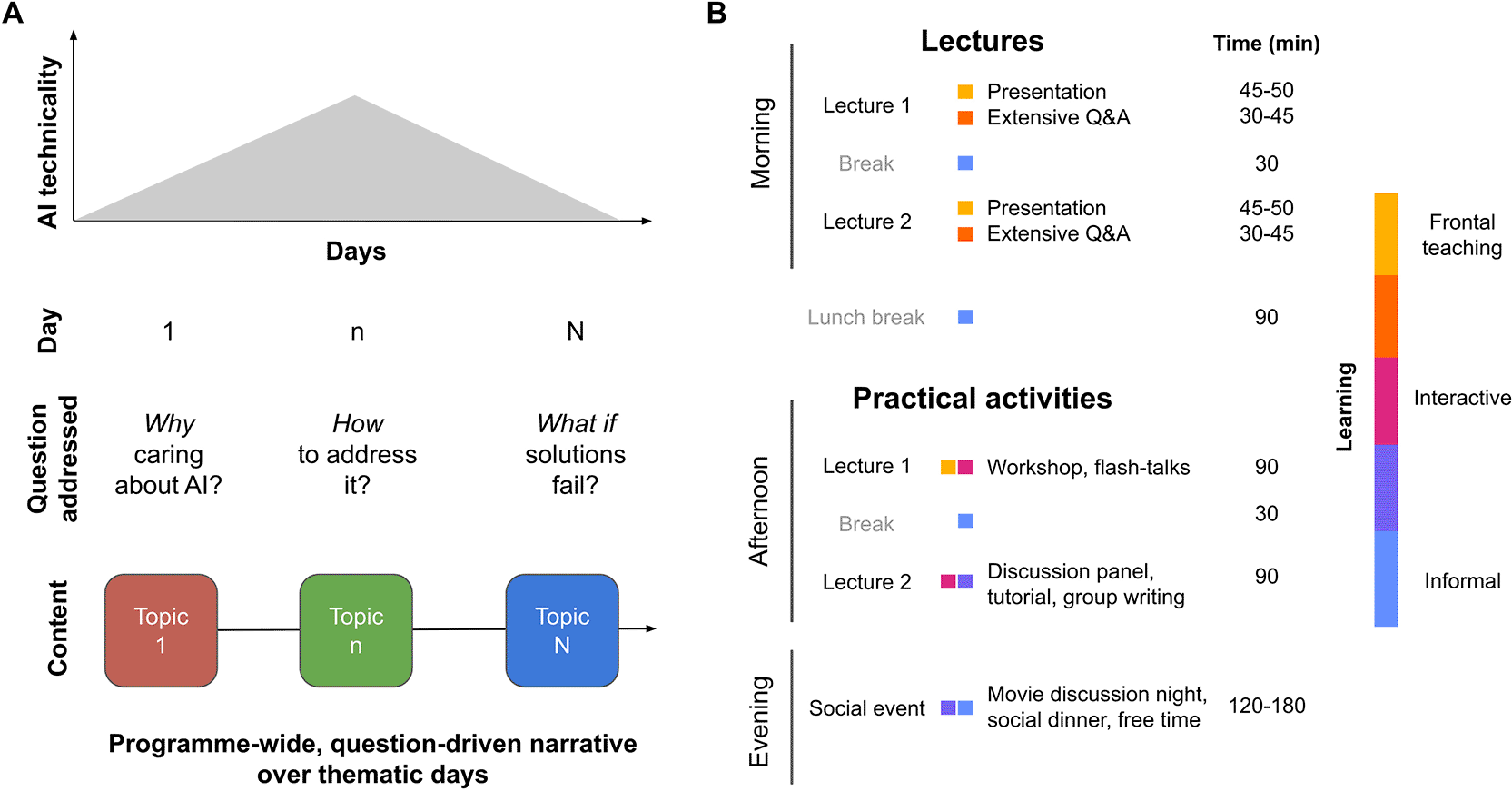
Fig. 1. General programme structure: between-days (A) and within-day (B).
The programme was designed around a main narrative organised into thematic days, each addressing a specific question (panel A). The general questions driving the narrative were “why”, “how”, and “what if it fails?” (see
Table 1A-B for more details). While the first day aimed to spark motivation, the following days addressed how to address problems and barriers. More specifically, we set the most technical details about AI algorithms mid-programme, following the popular hourglass model for writing. The last day was devoted to discussing what happens if solutions fail, leading to unwanted consequences of AI deployment. Within-day (panel B), we planned four main time slots per day. We scheduled more theoretical content and frontal sessions in the first half of the day, to provide foundational knowledge, while more practical and interactive activities in the second half. Each session lasted about 75–90 minutes. In the case of lectures, we shortened time for presentations, allocating more time for Q&A or debate. Sessions were separated by 30-min breaks, and 1.5 h lunch break, to encourage participants to digest information over informal chats, favouring quality over quantity of learning.
2.1.3 Target audience and participation
The training programme targeted early-career researchers (PhD students, post-docs, master’s students, research assistants). In terms of participant profile (Fig. 2A), the first edition was composed mainly of PhD students. In contrast, the second edition featured a more diverse group, including a greater number of master’s students and the presence of independent participants, who had not been represented previously. Regarding academic fields (Fig. 2B), the first edition targeted primarily participants from STEM (science, technology, engineering, and mathematics), while the second edition showed a more balanced distribution. Participation from philosophy, law, and medicine increased, and field representation expanded to include the social sciences and management. This shift reflects a deliberate effort to broaden the scope of the initiative, making it more inclusive across both career stages and disciplinary perspectives. In both editions, heterogeneity of backgrounds and educational levels played a key role in sparking debates on AI that combined both STEM and non-STEM perspectives.
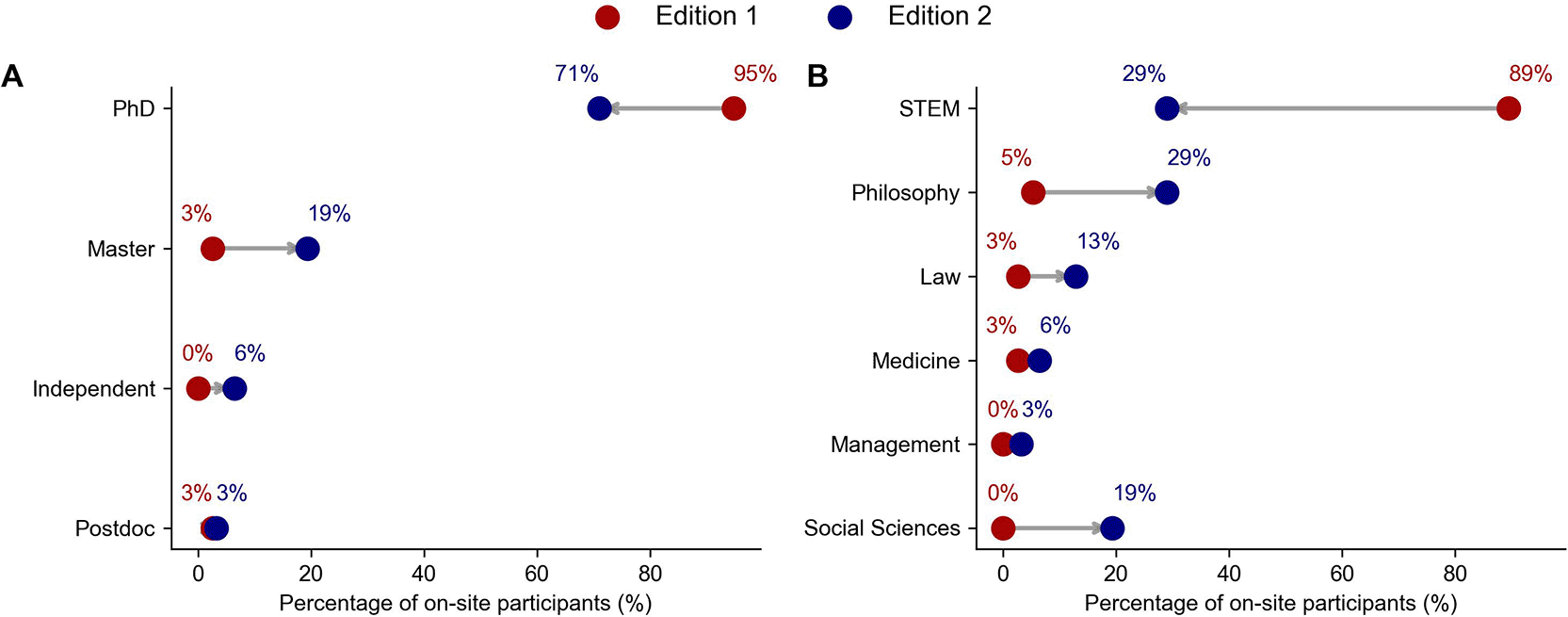
Figure 2. Aggregate participants’ profile in first and second edition: current job or educational level (A) and background domain (B).
In the first edition (red), the number of total on-site participants was 38. All participants were enrolled as PhD students, with the exception of one master student and one post-doc. Two students came from a background in philosophy, one from law, one from medicine, and the remaining 34 from STEM subjects. In the second edition (blue), 31 participants came together, including 22 PhD students, 6 master students, two independent or aspiring researchers, and one post doc. This edition attracted participants from a broader variety of backgrounds: 9 participants were from STEM fields, 9 from philosophy, 6 from social sciences, four from law, two from medicine and one from management.
2.2 Narrative
The narrative of the school programme was based on starting with why (Sinek 2009), before discussing the how. The aim was to first create the space for participants to form their own intrinsic motivation to engage with the impacts of AI, and then address the ethical and technical constraints in AI development. We placed the most technical details about AI algorithms mid-programme, following an hourglass model (Fig. 1). The programme’s topics were inspired by the Ethics Guidelines for Trustworthy AI (High-Level Expert Group on Artificial Intelligence 2019), and designed to promote the Sustainable Development Goals (SDGs), focusing on SDG 5 (Gender equality), SDG 8 (Decent work and economic growth), SDG 9 (Industry, Innovation and Infrastructure), SDG 10 (Reduced inequalities), SDG 16 (Peace, Justice and Strong Institutions).
Table 1. The day-specific questions addressed by the first (A) and second (B) editions of Ethos+Tekhne, with a summary of the daily topics of the training programmes to address such questions.
Daily questions, topics, and their order were chosen to create a programme-wide narrative based on these questions (Sections 2.2.1 and 2.2.2).
| A |
|---|
| First edition |
|---|
| Day | Question addressed |
Topic |
|---|
| 1 | Why should we care about AI? | The socio-economic impact of AI |
| 2 | What are the legal constraints within which we should operate in AI? | EU regulations for a fair and private AI |
| 3 | Once aware of the legal constraints, how can we gain a deep technical understanding of AI? | eXplainable AI (XAI) |
| 4 | Once we have gained a technical understanding of AI models, how can we improve their fairness? | AI bias identification and trustworthiness assessment |
| 5 | Once all the legal and technical precautionary measures have been adopted, what are the legal consequences in accidents involving AI? | Legal liability in AI |
| B |
|---|
| Second edition |
|---|
| Day | Question addressed | Topic |
|---|
| 1 | Why should we care about AI? | The socio-economic impact of AI |
| 2 | How can we design and deploy Generative AI responsibly, ensuring technical soundness and ethical alignment? | The technical and ethical dimensions of Generative AI |
| 3 | What are the legal constraints and compliance challenges in AI? | The EU regulatory framework for AI systems, intellectual property and copyright |
2.2.1 First edition programme
In the first edition, we designed a programme over five thematic days (
Table 1A).3 Following our narrative principles, we opened the programme by discussing the importance of engaging with AI as an emerging global infrastructure. Accordingly, the first day focused on the impacts of AI on society, individuals, and the economy. The morning sessions analysed how AI could affect markets, employment and inequalities (Coveri et al. 2021), and prompted a debate on the political and cultural aspects of deskilling, reskilling, and upskilling individuals (Pianta 2020).4 The afternoon sessions introduced the concept of the “unheimlich” (uncanny) as a sensation humans may experience when interacting with robots (Henry 2025), and concluded with a panel moderated by a journalist that welcomed the perspective of big-tech engineers on AI development (Murray 2021).
The second day was designed to discuss the legal boundaries within which AI developers and professionals would operate. The day began with a debate on the differences between the application of ethics and law in AI (Comandé 2022), followed by a technical explanation of person identification from images (Zhou 2019). The afternoon was devoted to the AI Act (The European Parliament and The Council of the European Union 2024). This risk-based EU regulatory framework was first introduced by a policy advisor, and then discussed directly with two MEPs,5 including the AI Act co-rapporteur, and the founder of an ethical AI consultancy company (Huyskes 2025), in the form of a panel moderated by a journalist.
The third day stepped into the technicalities of the “black box” problem, to better understand the functioning of machine learning and AI models. Lectures presented approaches to explainable AI (XAI) such as post-hoc methods (Samek et al. 2021), and two applicative scenarios, in energy trading (Parginos et al. 2022) and image classification (Balayn et al. 2022). A hands-on tutorial then showed the code to use XAI techniques (Giannotti, Naretto, and Bodria 2023), such as LIME, LORE and SHAP.
The fourth day stressed the importance of algorithmic design, choosing healthcare as the focus domain for its broad appeal. Lectures highlighted open-access solutions against the risk of exacerbating inequalities (Norori et al. 2021), the challenges for the patient-caregiver relationship (de Miguel et al. 2020) and an open-source Python toolkit for algorithmic fairness (Bellamy et al. 2019). Finally, an engineer and a philosopher guided participants in the identification of ethical risks, technical flaws and sources of bias when designing and deploying deep learning algorithms in hospitals (Cacciatore et al. 2022).
On the fifth day, at first, participants debated liability in an AI-related legal case study through a moot court competition, representing the parties involved (Franco 2023). To elaborate on the school’s content, participants then wrote an extended abstract in small groups on their favorite programme topic. Finally, participants met citizens for an open discussion, led by a philosopher (Merenda 2020) and a computer science professor (Giannotti, Naretto, and Bodria 2023) at the local cinema. We screened the science-fiction movie Her (Jonze 2013), to begin the debate by exploring how an emotional or sentimental relationship, typically reserved for human-to-human interaction, could instead apply to the relationship between a human and a generative language model.
2.2.2 Second edition programme
In the second edition, we developed a programme over three thematic days designed to immerse participants in the multifaceted realities of Generative AI, blending theoretical insights with practical engagement (
Table 1B).6
The first day began with an interactive quiz that set a collaborative tone, followed by lectures addressing AI’s impact on democracy (Cave and Dihal 2020), labour and power structures (Guarascio and Reljic 2025; Coveri et al. 2025), and military uses highlighting urgent regulatory needs on autonomous weapons (Stop Killer Robots 2024). A roundtable critically examined AI’s environmental and social costs through diverse perspectives from labour market (Cetrulo and Nuvolari 2019), robotics (Blanchard 2023), and post-growth economics (Vrizzi and O’Neill 2025), moderated by a journalist (De Martino 2025). The day closed with a documentary screening on global AI power dynamics (DW 2024), which sparked informal reflections and peer dialogue.
The second day focused on the technical and ethical foundations of generative AI. Morning lectures explored how these systems function and their ethical challenges (Pappalardo et al. 2024), alongside the importance of standardisation to promote fairness and accountability (Williams 2022). Participants then tackled real-world AI safety issues (Grey and Segerie 2024) and engaged in a hands-on workshop led by PhD students invited from Scuola Normale Superiore’s Responsible GenAI group (Muscato et al. 2025), fostering practical skills and collaborative learning. The day ended with a social dinner encouraging informal exchanges and networking.
The final day addressed legal and regulatory aspects, starting with an introduction to the EU AI Act and GDPR by an AI and privacy lawyer (Franco 2023), followed by insights into AI’s challenges for copyright law (Sganga 2018). The afternoon featured a two-part workshop on AI compliance, combining theoretical discussions and participant-led lightning talks, allowing attendees to actively apply their knowledge.
2.3 Balance
The third design principle of the Ethos+Tekhne school concerned balance, in terms of space and time to interact (Section 2.3.1), providing not only quantity, but also quality, of interaction (Section 2.3.2). Moreover, we aimed to balance information provided to the participants with information gathered from them. Specifically, we allocated time for participants to process and explain what they had learnt (Section 2.3.3).
2.3.1 Space and time to interact
We limited participant group size for the on-site training to 30–40 individuals, in order to encourage close interaction, while streaming the daily programme for anyone to audit online, to promote open access for anyone interested. With respect to on-site participants, our goal was to provide each individual with enough space and time to actively engage in discussions. For this reason, the programme schedule aimed to balance activity and break time to allow participants to digest the new information and exchange thoughts in informal settings (Sections 2.2.1 and 2.2.2). We typically scheduled four activities per day, each lasting 75–90 minutes each. For lectures, this included 45–50 min presentations complemented by generous Q&A time. We allocated a 30-minute break between sessions, and a long lunch break (1.5 h) between morning and afternoon (Fig. 1B).
2.3.2 Quality of interactions
The initiative’s positive impact was reinforced by careful attention to the quality of relationships among participants and instructors, the creation of an open and non-judgmental atmosphere that fostered collaboration and learning, and the deliberate choice to maintain a relatively small number of participants. These settings, combined with social events and sustained interaction over several days, allowed meaningful connections to form, and encouraged the development of a vibrant, supportive learning community.
2.3.3 Group writing to consolidate knowledge
After receiving new information, an important step to transform it into coherent and structured knowledge is writing (Rivard and Straw 2000). At the end of the school, participants were invited to write an extended abstract in groups of 4–5 people on one of the school’s topics, to further exchange ideas, digest concepts and cement their knowledge. Groups were formed based on similar interests, creating the potential to connect them and let them leverage their text for a more formal paper later on. In the first edition, the group writing session took place in the afternoon of the last day, while in the second edition, participants were asked to submit their work during the week following the end of the school, in order to maximise the content offered to them despite the shorter duration of the event.
3. Results
Here, we present three types of results: i) the three main axes of actions that emerged from participant discussions (Section 3.1); ii) participant feedback concretising into a regenerative approach (Section 3.2); iii) the way training programmes in AI can connect Europe (Section 3.3).
3.1 Highlights: three axes of action
Overall, the lectures and discussions highlighted three main axes for ethical AI development: “AI for Good”, “Good for AI”, and “Good AI”. “AI for Good” proposes AI development, applications and deployment that address social challenges (e.g. healthcare, climate change, etc.). “Good for AI” envisages socio-economic (rather than technological) innovation, to create a healthy environment for AI to be developed and applied (O’Neill et al. 2026; Edelman et al. 2025).7 This axis is based on the idea that the socio-economic system and policies fundamentally shape their own components (here, the AI). Finally, “Good AI” refers to coding AI algorithms that comply with ethical and legal principles. An example is the ALTAI (Assessment List for Trustworthy AI) principles (EU High-Level Expert Group on AI, 2020). These principles are: 1) human agency and oversight, 2) technical robustness and safety, 3) privacy and data governance, 4) transparency, 5) diversity, non-discrimination and fairness, 6) environmental and societal well-being, and 7) accountability. Such algorithms leverage both software accessibility infrastructure and the development of computational tools to analyse AI algorithms’ outputs and decision-making processes. Overall, these three axes of action involve experts across diverse skill domains — from more technical researchers (e.g. to develop “Good AI”), to researchers and professionals that can apply AI to specific real-world challenges (“AI for Good”), to researchers and professionals devising policies and system-level change (“Good for AI”).
3.2 Participants’ feedback
The training took place in March 2023 in Pisa, Italy, and in March 2025 in Paris, France. A post-school survey reported an overall mean satisfaction score of 4.2/5.0 (mean 4.4/5.0, median 4.0/5.0 for the first edition; mean and median 3.0/4.0 for the second edition) (Fig. 3A). The survey also collected suggestions for improvement. In the second edition, we substantially improved at least three of the top four areas for improvement (Fig. 3B), i.e. tutorials, socialising, and availability of teaching material, while identifying further areas for improvement.
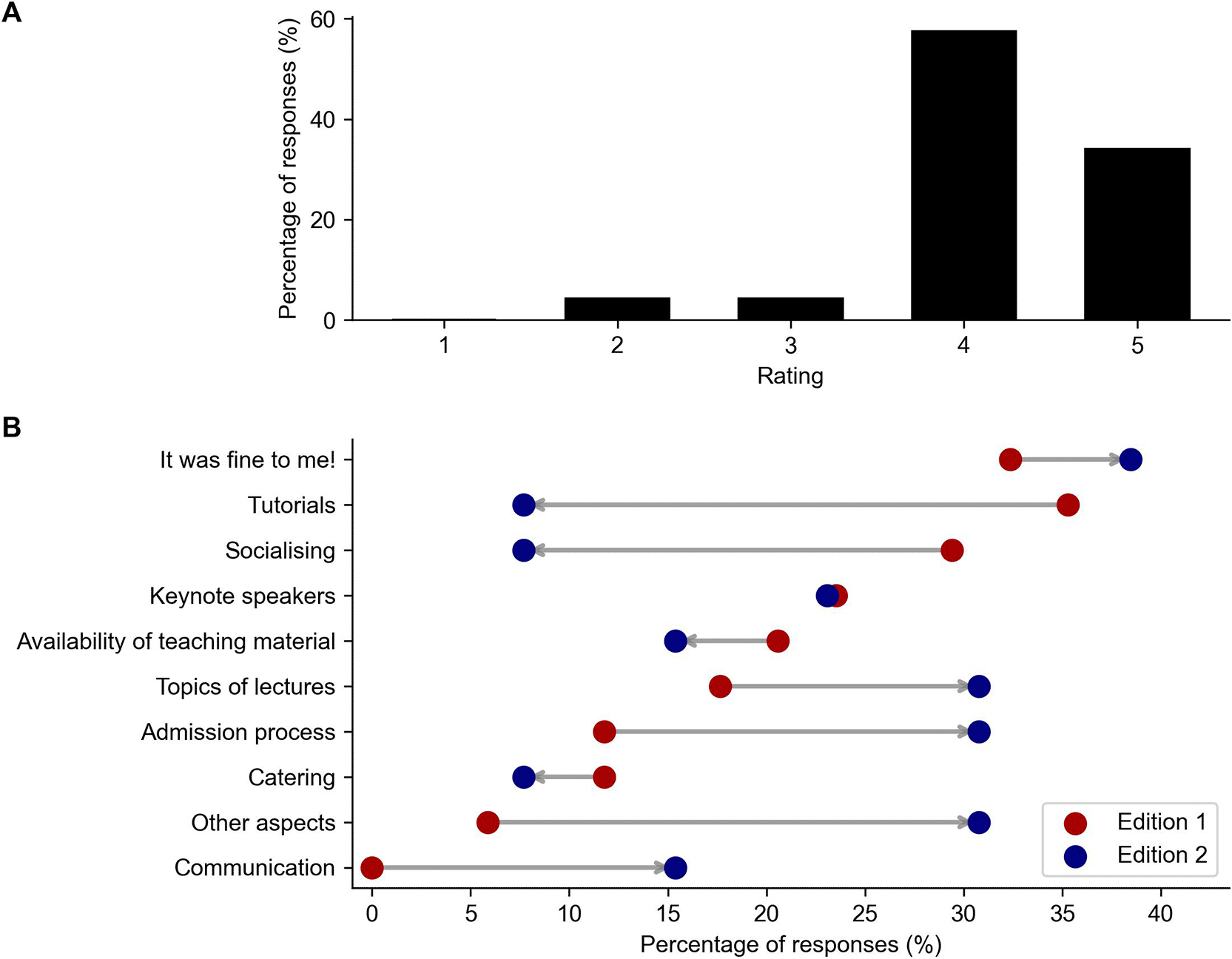
Figure 3. Overall satisfaction scores (A) and points-of-improvement votes (B) by responding participants.
We collected feedback from on-site participants 2–4 weeks after the spring school. The survey included a mix of multiple-choice and open answers questions. In the first edition, the survey totalled 11 questions; in the second, 18. In the first edition, 34 participants out of 38 replied; in the second, 13 out of 23 (this total number of participants excludes the 8 members from the organising team). Panel A shows the aggregate answers from the two editions to the question “How would you rate the Spring School?”. In the first edition, possible ratings ranged from 1 to 5 (“A waste of time”=1, “Excellent” = 5); in the second, from 1 to 4 (“Poor” = 1, “Adequate” = 2, “Good” = 3, “Excellent” = 4). We rescaled values from the second edition to a 1–5 scale. Panel B shows the aggregate answers from the two editions to the question “What should we improve?”. Every time a respondent ticked an option, we counted it as a “Yes”; respondents were allowed to select multiple options. The percentage is calculated with respect to the number of respondents for each edition. For this question (“What should we improve?”), in the survey for the second edition, we added the option “Communication” in the survey; we set its score to zero for the first edition.
3.2.1 Positive feedback
Participant feedback highlighted several strengths of the initiative. Many respondents expressed appreciation for the diverse, knowledgeable speakers and participants. The opportunity to easily engage with this diversity fostered rich discussions and fruitful networking opportunities. Many also valued the daily thematic structure, which offered clarity and a wide range of perspectives on AI. The format of the lectures — with manageable lengths, followed by interactive Q&A sessions — was praised for maintaining focus, encouraging participation, and enhancing understanding. The practical activities — such as group work, abstract writing, workshops, and notably the “moot court competition” session — were especially well received for being insightful and offering deeper engagement with the content. The balance between scientific content and social interaction was seen as a major strength: social moments during breaks were praised for encouraging informal learning and connection-building. Moreover, participants particularly appreciated the welcoming atmosphere, with friendly and approachable organisers. Overall, participants found the event enriching, eye-opening, and well-structured, and they recommended maintaining its interdisciplinary and interactive approach.
3.2.2 Areas of improvement
Participants highlighted three main areas for improvement: i) the intensity of the schedule, despite the long breaks, with suggestions to shorten the number of days or reduce the number of sessions; ii) poor time keeping during the event caused delays and decreased audience attention toward the end of each day — an aspect mainly due to the engaging nature of the talks and the spontaneous discussions that often extended beyond their allotted time; and iii) the late admission confirmations, making travel planning difficult. With respect to the first edition, the second edition improved on: i) some logistical aspects, concerning venue (electric outlets, room temperature, seating) and online connection (affecting remote speakers); ii) a more accessible level of some technical talks in AI for participants from different backgrounds; iii) longer and more focused time for abstract writing (Section 2.3.3); and iv) the addition of social events in the evening, beyond the movie night. In the future, the school also aims to evaluate its impact, adding an ex-ante evaluation of the participants, to compare it to their ex-post knowledge.
3.2.3 Regenerative nature
All respondents in both editions answered “Yes” to “Do you think there should be a second/third edition?”. While this result may suggest a bias in the collected responses (i.e. only participants who highly enjoyed the school responded), it is a promising achievement underscoring the support and enjoyment of many participants. As evidence, these responses also turned into concrete action: some first-edition participants formed the core of the organising team for the second edition, and in turn, some second-edition and first-edition participants are currently organising the third edition. This regenerative nature is the most tangible result of the engagement and enjoyment of participants with the current design principles of the Ethos+Tekhne training programme.
3.3 Connecting Europe
Additionally, training initiatives are also opportunities to connect Europe. First, this initiative served as a first-time inter-institutional collaboration between three institutions,8 showing how new initiatives can create new connections across European institutions. Moreover, the new team, who will soon be running the third edition,9 doubled the number of EELISA partner institutions10 and joined forces with the United Nations Institute for Training and Research (UNITAR).11 Second, the European Court of Auditors audited the school online to evaluate the effectiveness of the EU Commission’s investments in AI research. This aspect suggests that the impact of training programmes in AI can go beyond learning for participants, benefitting EU institutions as well.
From these promising results, in the long-term, the school aims to create a network of European universities that train young AI researchers in understanding and discussing the European regulatory framework on AI and thus building a responsible AI infrastructure.
4. Conclusions
In line with the latest recommendations in the field of AI (Srikumar et al. 2022),12 we devised a novel multidisciplinary training for the upcoming generation of AI researchers to align their technical skills with societal impact. We identify three main successful ingredients of our programme: 1) the strong diversification of speakers and learning activities, 2) the creation of a programme-wide, question-driven narrative over thematic days, and 3) the allocation of time and space for participants to digest information, engage and interact with speakers and with each other. Moreover, two further ingredients strengthened our initiative: its bottom-up nature, as it was organised by and for young researchers and professionals, and the creation of cross-country inter-institutional partnerships to organise the school. We believe that all these elements jointly offer solid bases to help prepare the upcoming generation of young researchers and professionals in AI to uphold the responsibility of building a global infrastructure.
Acknowledgements
The organising team of the “Ethos+Tekhne: a new generation of AI researchers” EELISA spring school included, in the first edition: Daniele Cavalli, Konstantinos Parginos, Giuseppe Parisi, Raffaele Salvia, Viola Stefanello, and Letizia Lamperti, together with the co-authors Filippo Galli, Laura State, Alberto Arturo Vergani, and Stefano Vrizzi (coordinator); in the second edition: Antoine Bordas, Guido Cassinadri (coordinator), Lorenzo Fontanelli, Jay Luong, Clara Punzi, Stefano Tramacere, together with the co-authors Sara Mazzucato and Amric Trudel (coordinator). Currently, the third edition team includes Sofia Bell, Noemi Luna Carmeno, Mahshid Cheraghi, Marybelle Cherfan (coordinator), Dumitru Denis, Ivan Fino, Ismini Mathioudaki, Gabriele Nanino, Janice Sairus, Maritza Salcido, Dániel Sándor, Barnabás Suciu, Simone Vagnoni. Moreover, the realisation of the school has only been possible thanks to the crucial work of the administration and support team, and the Scientific Committee. The administration and support team included Rossella Raso, Camille Roger, Elisa Guidi, Jean-Baptiste Astruc, Sabrina Bigazzi, Chiara Busnelli, Elena Cambi, Silvia Gargini, Francesco Forino, as well as Viviane Lunardi, who helped manage and collected the feedback of the first edition. We are particularly grateful to Camille Roger and Rossella Raso, who were the key points of reference throughout the two editions. The Scientific Committee was composed of Calogero Oddo, Sara Moccia, Lorenzo Bartalesi, Roberto Pellungrini and Florian Yger in the first edition, Boris Gutkin, Sara Moccia, Calogero Oddo in the second edition, with a special thanks to Calogero Oddo and Sara Moccia for believing in and helping shape this initiative since its early stages. More broadly, we would like to thank the organising institutions Paris Sciences et Lettres, Scuola Normale Superiore, and Scuola Superiore Sant’Anna for hosting the classes and providing facilities. Additionally, we would like to thank Diane Gabeloteau for suggesting to us the inter-institutional funding opportunities from EELISA. Furthermore, we would like to thank Antonio Capellupo at Cinema Arsenale for welcoming us and leading us in the process of organising a movie discussion night in Pisa with an international audience during the first edition. Ethos+Tekhne was organised as part of the Ethics, Social Commitment and Entrepreneurship (ESCE) EELISA community.
We would also like to thank Daniel Walton O’Neill for his feedback on the manuscript, and Mireia Codina Tobias for her feedback on the figures. In particular, Stefano Vrizzi would like to thank Laura State for early discussions on the idea and design of an interdisciplinary summer school on AI.
Finally, we would like to thank all the participants, for their active contributions to the school and for continuing this initiative, and all the invited speakers, for offering their time and sharing their knowledge.
References
- Balayn A, Rikalo N, Lofi C, et al.:
How can Explainability Methods be Used to Support Bug Identification in Computer Vision Models?
Proceedings of the 2022 CHI Conference on Human Factors in Computing Systems.
2022; 1–16. Publisher Full Text
- Bellamy RK, Dey K, Hind M, et al.:
AI Fairness 360: An extensible toolkit for detecting and mitigating algorithmic bias.
IBM J. Res. Dev.
2019; 63(4/5): 4:1–4:15. Publisher Full Text
- Blanchard A:
Matériels, usages et société: éco-conception multidisciplinaire d’objets.
Drôles d’objets 2023.
2023.
Reference Source
- Cacciatore A, Migliorelli L, Berardini D, et al.:
Some Ethical Remarks on Deep Learning-Based Movements Monitoring for Preterm Infants: Green AI or Red AI?
Image Analysis and Processing. ICIAP 2022 Workshops: ICIAP International Workshops, Lecce, Italy, May 23–27, 2022, Revised Selected Papers, Part II. N.p.
Springer International Publishing;
2022. Print ISBN: 978-3-031-13323-7; Online ISBN: 978-3-031-13324-4. Publisher Full Text
- Cambridge Festival:
How will AI affect the democratic process?2024. dir.
Reference Source
- Cave S, Dihal K:
The Whiteness of AI.
Philos Technol.
2020; 33(August): 685–703. Publisher Full Text
- Cetrulo A, Nuvolari A:
Industry 4.0: revolution or hype? Reassessing recent technological trends and their impact on labour.
J. Ind. Bus. Econ.
2019; 46(3): 391–402. Publisher Full Text
- Comandé G, editor:
Elgar encyclopedia of law and data science.
Edward Elgar Publishing; 2022. Publisher Full Text
- Coveri A, Cozza C, Guarascio D:
Monopoly capitalism in the digital era.
LEM Working Paper Series.
2021. Reference Source
- Coveri A, Cozza C, Guarascio D:
Blurring boundaries: an analysis of the digital platforms-military nexus.
Review of Political Economy.
2025; 37(4): 1632–1663. Publisher Full Text
- De Martino C:
Monétisation des contenus et IA: l’IAB Tech Lab veut accompagner les éditeurs.
Mind Media.
2025.Reference Source
- de Miguel I , Sanz B, Lazcoz G:
Machine learning in the EU health care context: exploring the ethical, legal and social issues.
Inf. Commun. Soc.
2020; 23(8): 1139–1153. Publisher Full Text
- DW, dir:
AI Supremacy: The Artificial Intelligence Battle Between China, USA and Europe.
DW;
2024.
- Edelman J, Zhi-Xuan T, Lowe R, et al.:
Full-Stack Alignment: Co-Aligning AI and Institutions with Thick Models of Value.
arXiv preprint arXiv:2512.03399.
2025.
- EU High-Level Expert Group on AI:
Assessment List for Trustworthy Artificial Intelligence (ALTAI) for self-assessment.
Shaping Europe’s digital future.
2020.
Reference Source
- Franco G:
5 cose da sapere sulla nuova legge europea sull’intelligenza artificiale.
La Repubblica.
2023.
- Giannotti F, Naretto F, Bodria F:
Explainable for Trustworthy AI.
Human-Centered Artificial Intelligence: Advanced Lectures.
Springer International Publishing;
2023. Publisher Full Text
- Grey M, Segerie C-R:
AI Safety Atlas.
French Center for AI Safety (CeSIA);
2024.
Reference Source
- Guarascio D, Reljic J:
AI and Employment in Europe.
Econ. Lett.
2025; 247(0165–1765): 112–183. Publisher Full Text
- Henry B:
Robotic and Cybernetic Plots in the Global Imaginary, on “Iride, Filosofia e discussione pubblica”2/2025; pp. 311–334. Publisher Full Text
- High-Level Expert Group on Artificial Intelligence:
Ethics Guidelines for Trustworthy AI.2019.
Reference Source
- Huyskes D:
Constructing automated societies. Socio-cultural determinants and impacts of automated decision-making in public services.
Magazzini Digitali dedicato alle Tesi di dottorato;
2025. Doctoral dissertation.
Reference Source
- Jonze S:
Her.
Annapurna Productions;
2013. dir.
- Merenda F:
Reading Arendt to rethink truth, science, and politics in the era of fake news.In Democracy and Fake News.Routledge;
2020; pp. 19–29. Publisher Full Text
- Murray N:
Neural network for generating images trained with a generative adversarial network.
U.S. Patent Application 17/024,030, filed March 25, 2021.
- Muscato B, Passaro L, Gezici G, et al.:
Perspectives in Play: A Multi-Perspective Approach for More Inclusive NLP Systems.
arXiv.
2025.Publisher Full Text
- O’Neill DW, Vrizzi S, Carmeno NL, et al.:
The economic alignment problem of artificial intelligence.
arXiv preprint arXiv:2602.21843.
2026.
- Norori N, Hu Q, Aellen FM, et al.:
Addressing bias in big data and AI for health care: A call for open science.
Patterns.
2021; 2. Publisher Full Text
- Pappalardo L, Citraro S, Cornacchia G, et al.:
A survey on the impacts of recommender systems on users, items, and human-AI ecosystems.
arXiv.
2024.
Publisher Full Text
- Parginos K, Bessa R, Camal S, et al.:
Interpretable data-driven solar power plant trading strategies.
2022 IEEE PES Innovative Smart Grid Technologies Conference Europe (ISGT-Europe).
2022; 1–5. Publisher Full Text
- Pianta M:
Technology and work: key stylized facts for the digital age.
Handbook of Labor, Human Resources and Population Economics.
Springer, Cham;
2020; 1(17): 1–17. Print ISBN: 978-3-319-57365-6; Online ISBN: 978-3-319-57365-6. Publisher Full Text
- Rivard LP, Straw SB:
The effect of talk and writing on learning science: An exploratory study.
Sci. Educ.
2000; 84(5): 566–593. Publisher Full Text
- Samek W, Montavon G; , Lapuschkin S et al.:
Explaining deep neural networks and beyond: A review of methods and applications.
Proc. IEEE.
2021; 109(3): 247–278. Publisher Full Text
- Seismic Foundation:
On The Razor’s Edge: AI vs Everything We Care About.
Seismic Report 2025.
2025.
Reference Source
- Sganga C:
Propertizing European Copyright: History, Challenges and Opportunities.
Edward Elgar Publishing Limited;
2018. Reference Source
- Sinek S:
Start with Why: How Great Leaders Inspire Everyone to Take Action.
Penguin Publishing Group;
2009.
- Srikumar M, Finlay R, Abuhamad G, et al.:
Advancing ethics review practices in AI research.
Nature Machine Intelligence.
2022; 4(12): 1061–1064. Publisher Full Text
- Stop Killer Robots:
Submission on Autonomous Weapon Systems to the United Nations Secretary-General.2024.
Reference SourceReference Source
- The European Parliament and The Council of the European Union. Regulation (EU) 2024/1689 of the European Parliament and of the Council of 13 June 2024 laying down harmonised rules on artificial intelligence and amending Regulations (EC) No 300/2008, (EU) No 167/2013, (EU) No 168/2013, (EU) 2018/858, (EU) 2018/1139 and (EU) 2019/2144 and Directives 2014/90/EU, (EU) 2016/797 and (EU) 2020/1828 (Artificial Intelligence Act).2024. http://data.europa.eu/eli/reg/2024/1689/ojER
- Vrizzi S, O’Neill DW:
Modelling the Doughnut of social and planetary boundaries with frugal machine learning.
EurIPS 2025 “Rethinking AI” Workshop.
2025. Publisher Full Text
- Vrizzi S, Vergani AA, State L, et al.:
Ethos+Tekhne Feedback surveys.2026. Publisher Full Text
- Williams R:
Using iterative pairwise external validation to contextualize prediction model performance: A use case predicting 1-year heart failure risk in patients with diabetes across five data sources.
Drug Saf.
2022; 45(17): 563–570. PubMed Abstract
| Publisher Full Text
| Free Full Text
- Zhou K, Yang Y, Cavallaro A, et al.:
Omni-scale feature learning for person re-identification.
In Proceedings of the IEEE/CVF international conference on computer vision.
2019; pp. 3702–3712.