European countries are actively advancing their sustainability in water and soil management, displaying diverse levels of readiness, institutional capacity, and implementation approaches. Much of this effort is included in National Strategic Plans (NSPs) that align with broader European frameworks such as the Common Agricultural Policy (CAP), the Water Framework Directive (WFD), and the European Green Deal.
In general, these frameworks aim to promote a resilient and environmentally sustainable agricultural sector, while ensuring the long-term health of Europe’s natural resources. The analysis demonstrates that most European countries exhibit a high degree of policy alignment with EU sustainability objectives. In this sense, this point reflects the most difficult challenge for the policy, but also the capacity of stakeholders to adopt the financial and regulatory national or European framework.
Questionnaire results showed overall excellent national alignment with EU policy such as the CAP and WFD and directives, clear focus on various sustainability goals, and underscored the continuing need to a technology forward approach to agricultural practices regarding efficient water use, and water and soil pollution. Areas of opportunity include addressing the lack of knowledge within the farming sector and poor message clarity within and between policies.
4.1. Results analysis
Almost all participants were able to identify their NSPs and expressed alignment with several EU policies, with the highest alignments to the CAP, WFD and Green New Deal and Farm to Fork. These were followed by seventy percent alignment with Natura 2000. Though not provided as a response, several respondents wrote in 2030 SDGs as being aligned. As respondents were not given this as an option, this suggests that perceived alignment would have been higher among respondents had this been included in the list and also indicates a relevance and awareness of SDGs within the agricultural sector. Most participants agreed that their NSPs enhance climate resilience and deliver co-benefits for sustainable water management, reduced pesticide and fertilizer use, rural development, and farmer support. Biodiversity conservation (82.4%) and organic farming (70.6%) emerged as particularly prominent objectives, while about one-third of respondents identified carbon sequestration as a key sustainability priority.
When asked to list three specific policies, their compliance requirements, monetary support and scale of vision, there were several interesting similarities and differences among participants. Most responses included a mix of voluntary and mandatory policies, all of which included significant funding through national subsidies, EU programs, and rural development funds. Often participation in voluntary programs was encouraged through access to these funds and focused on encouraging sustainable best practices.
Mandatory policies were more aimed at environmental protection, such as nitrate use and pollution. In general, policies focusing on water management, organic farming, and climate adaptation were most common. Regarding enforcement, less than 10% of policies across all participants’ responses were judged to be weak with little to no enforcement. For the large part of the policies, about two thirds of respondents considered them to be moderately enforced, though some gaps may exist within these. This is in line with the fact that many policies were described as voluntary, with distribution of funds being the main driver for participation. Most policies covered long-term goals aligning with 2030 or 2050 timelines and included structural changes, like modernization of irrigation, as well as behavioral changes, like crop diversification.
Regarding sustainability and specific SDGs, only one respondent said that one of their national policies was ineffective at promoting sustainability, while over three quarters of the other policies were either considered very effective or effective. Participants were asked to list the main sustainability goals related to their national policies, and the area with the most room for improvement was the adoption of technology, followed by soil health and promotion of biodiversity. Only one policy from one respondent considered to be very effective at the promotion of technology, while the large majority of others marked that technology promotion was only moderately effective or neutral. Further details are presented in Table 2.
Table 2. Effectiveness of governance policies in promoting sustainability and technology adoption.
| Effectiveness of governance policies | Very effective | Effective | Neutral | Ineffective | Do not know |
|---|
| Sustainability | 10.4% | 68.8% | 10.4% | 2.1% | 8.3% |
| Technology adoption | 4.2% | 58.3% | 22.9% | 2.1% | 12.5% |
As shown in Table 3, these results suggest the policy has a strong environmental foundation. They are most strongly associated with climate mitigation and water use efficiency, reflecting its focus on preventing climate change and encouraging sustainable agricultural practices. Clean Water and Sanitation was selected by the majority of respondents, indicating that these policies are (Table 3).
Table 3. The main sustainability goals targeted.
| Climate mitigation | Water use efficiency | Soil health | Biodiversity | Technology adoption |
|---|
| Total Average
| 72.9% | 70.8% | 68.8% | 64.6% | 52.1% |
The suggestion from some participants that decent work and economic growth (SDG8) and industry innovation and infrastructure (SDG9) should have been included in sustainable goal alignment highlights areas where more emphasis could be put on stakeholder interests. Likewise, zero hunger (SDG2) was perceived as more poorly aligned to national policy as compared to life on land, clean water and sanitation (SDG6), climate action (SDG 13) and responsible consumption and production (SDG12). An overview of these SDG contributions is presented in Table 4 based on the questionnaire results.
Table 4. Contribution of SDGs.
| SDG2- zero hunger | SDG6- clean water and sanitation | SDG12- responsible consumption and production | SDG13- climate action | SDG15- life on Land | SDG14- life below water |
|---|
| Total Average
| 54.2% | 83.3% | 64.6% | 79.2% | 62.5% | 6.3% |
However, the practical application often faces significant challenges, such as high initial costs for new technologies, a lack of immediate profitability for farmers, and insufficient awareness among the agricultural community. This suggests that while the vision and policy frameworks for readiness are positive, the actual applicability still requires support and adaptation to local economic realities and farmer engagement. Policies often require structural changes in land use practices, which involve initial investments, legal adjustments, and additional labor or knowledge. Farmers will face challenges without adequate financial incentives or technical support.
Table 5 summarizes the challenges in the implementation of policies.
Table 5. The challenges in enforcement of policies.
|
Lack of government funding | Weak institutional coordination |
Low awareness among farmers |
Conflicting policy objectives |
Not profitable for farmers |
Farmers can invest |
High bureaucracy |
No market for products |
|---|
| Total Average
| 58.3% | 41.7% | 64.6% | 35.4% | 47.9% | 52.1% | 56.3% | 8.3% |
The questionnaire responses indicate that most policy implementation efforts are executed by public entities, most often at the national level (see Figure 1). While information about policies adequately reaches farmers and other users, engagement from involved stakeholders in shaping new policies is often occasional rather than consistently collaborative. This suggests a need for stronger partnerships. Furthermore, only approximately half of farmers receive necessary advisory support or training from public institutions, which highlights an opportunity to expand these services (including practical training and on-site advice) to significantly boost the adoption of sustainable practices. Reflecting a strong push for innovation, national strategies prioritize technologies that improve water efficiency and soil health, frequently mentioning advanced tools like precision irrigation systems, digital monitoring, and smart farming practices. This technological advancement is a core pathway toward a resilient agricultural sector, with targeting for digital transformation and efficient water use, and seeking to use cutting-edge solutions to optimize resource management.
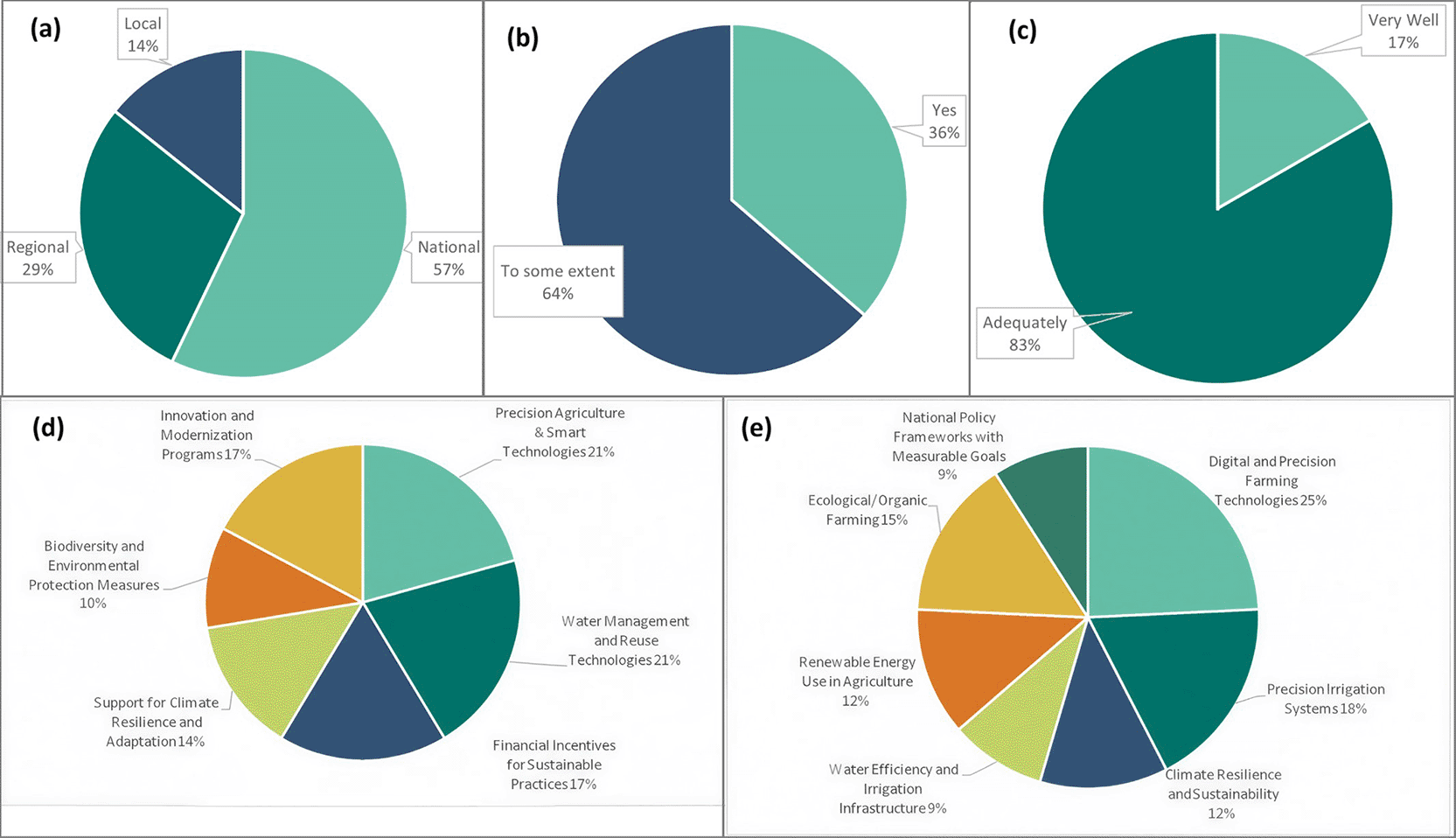
Figure 1. Overview of implementation, stakeholder involvement, communication, and top policy/technology targets.
(a) Level of policy implementation, (b) Stakeholder Engagement, (c) Policy Communication, (d) Most frequently mentioned policies and technologies, (e) Most frequently mentioned targets and themes
As shown in
Table 6, key primary actors are often government ministries, especially those focused on agriculture, as well as farmer cooperatives. These actors guide the implementation of policies and facilitate the shift towards sustainable methods. The collective effort of diverse stakeholders, from policymakers to private companies and local communities, is essential for building together an effective and long term framework for sustainability.
Table 6. Stakeholders and actors overall influence average rating.
| Stakeholder/actor | Overall influence rating (1 = very low, 5 = very high) |
|---|
| Ministry of Agriculture | 4.56 |
| Farmer Organizations | 4.12 |
| Ministry of Environment | 3.86 |
| Water Agency/Regulator | 3.73 |
| Private Sector | 3.62 |
| Research Institutions | 3.50 |
This assessment of policy fit, institutional capacity, and market potential across selected European countries indicates varying levels of readiness for water sustainability and soil health, as well as varied support requirements.
A distinct group of countries, including the Czech Republic, Greece, and the Netherlands, generally exhibit high overall readiness to implement sustainable practices and technologies. These nations are typically highlighted by strong alignment with European frameworks, well-funded incentives, and robust institutional and engagement capacities. For these countries, suggested support often focuses on advanced solutions, such as integrated innovation for pollution reduction, location-based information platforms, and interdisciplinary and inter-agency approaches. For instance, countries demonstrating strong policy fit are suited for advanced monitoring and precision irrigation technologies.
The majority of surveyed countries, including Albania, Cyprus, Denmark, France, Italy, Poland, Portugal, Spain, Turkey, and Ukraine, are categorized by moderate readiness. These nations generally show partial alignment with European frameworks, moderate financial incentives, or some institutional and engagement capacity. The suggested support for this diverse group frequently emphasizes a combination of approaches:
• Integrated Monitoring & Modeling Platforms and Tailor-made Tools: This includes the development of platforms, farmer tools, and co-developing recommendations to enhance understanding and application.
• Financial & Technical Farmer Support: There is a significant need for financial and technical assistance, alongside the promotion of profitable and accessible solutions and effective economic models to incentivize adoption.
• Participatory Approaches and Living Labs: Many countries benefit from encouraging multi-actor engagement, establishing living labs, and creating demonstration sites to drive innovation and practical implementation.
• Capacity Building & Knowledge Sharing: Initiatives focus on training, knowledge transfer, and raising awareness among farmers to bridge existing gaps.
• Evidence-based Policy Recommendations: A clear focus is placed on strengthening governance through evidence-based monitoring tools and reliable policy recommendations.
• Targeted Interventions: Some regions require support related to specific challenges, such as addressing water quality and climate change or focusing on post-war recovery and cost-benefit solutions in particular river basins.
Ultimately, the pathway for sustainability in European agriculture depends on continuous learning, stronger collaboration, and a willingness to integrate new technologies. By addressing the current gaps in funding, coordination, and awareness, and by encouraging technology-driven approaches, European countries can ensure that their water and soil resources are protected for future generations, leading to a more competitive and cooperative agricultural landscape.
However, systemic challenges remain widespread:
• Policy and Governance Barriers: Many Member States face issues such as inadequate public funding, institutional fragmentation, weak coordination mechanisms, and overlapping or conflicting policy objectives. Countries like Albania, Turkey, Greece, and Italy report difficulties balancing economic growth with environmental objectives, while Spain and Ukraine highlight inconsistencies between national and regional governance frameworks.
• Economic and Financial Constraints: High upfront costs, limited access to credit, and low profitability of sustainable technologies continue to discourage farmer adoption. This is particularly evident in Portugal, Spain, and Turkey, where financial support mechanisms are insufficient or poorly targeted.
• Knowledge and Capacity Gaps: Despite policy alignment, many farmers remain unaware of available programs or lack the technical expertise to implement advanced technologies. The absence of advisory networks and extension services further limits technology diffusion and reduces the practical effectiveness of policy measures.
The impact of European water and soil policies on promoting best practices is multidimensional. While policies provide a solid framework, their effectiveness is heavily influenced by national-level implementation, institutional capacity, and market dynamics. The integration of advanced digital tools and real-time monitoring platforms is seen as a promising pathway to narrow the gap between policy design and practical implementation. Establishing ongoing feedback mechanisms and linking financial incentives to targeted capacity-building initiatives are crucial for strengthening institutional effectiveness and promoting adaptability.







