Introduction
Current demographic trends suggest that the global population aged 80 years and older will triple between 2020 and 2050, reaching 426 million (WHO, 2025). As populations age, a growing proportion of older persons live with multiple long-term health conditions, often requiring complex and resource-intensive care. This trend places increasing pressure on both health and social care systems (Ploeg et al., 2017). At the same time, workforce shortages are intensifying (
European Commission, 2024), and citizens’ expectations are shifting toward care that is not only safe and of high quality but also accessible, timely, and personalized. In response, healthcare systems worldwide are implementing preventive and proactive care models (Ebrahimi et al., 2021). These models emphasize early identification of health problems, support for self-management, and timely interventions, with the dual aim of improving outcomes and reducing strain on resources. Parallel to this shift, care delivery is being reoriented from institution-based settings, such as hospitals, toward home and community-based services (Wysocki et al., 2015; Yu et al., 2024).
Artificial intelligence (AI) has emerged as a promising tool to support this transition by enabling early risk detection and proactive interventions (de Siqueira Silva et al., 2024). The combination of consumer-grade wearable devices like smartwatches combined with AI has shown promising results. For instance, a systematic review (Lee et al., 2022) identified AI models trained on wearable and mobile sensor data for early detection of cardiovascular diseases such as arrhythmias, diabetes, and hypertension. In addition, during the COVID-19 pandemic, multiple studies showed that changes in continuously monitored physiological data, such as heart rate, steps, and sleep patterns, could be used with AI models to detect infection several days before symptom onset (Cheong, et al., 2022). Recently, a study from Standford combined detailed sleep data with AI and was able to predict 130 diseases with high accuracy (Thapa, et al., 2026). Together, these studies suggest that continuous measurements, combined with AI, have the potential to predict imminent health decline.
Thus, this opens the possibility to use continuous monitoring data analysed with AI-driven predictive models to identify individuals at risk of functional or clinical decline in the near future, and alert healthcare professionals to enable timely interventions that may prevent adverse outcomes (Miotto et al., 2018). In this way, AI can support more proactive care (Belmin et al., 2022; Choudhury et al., 2020) and help older persons remain in their homes longer, promoting “ageing in place” while personalizing care to individual needs (Shiwani et al., 2023). Despite the potential of AI, significant barriers remain (Groeneveld et al., 2025). Successful AI solutions must be clinically relevant, technically reliable, and meaningfully integrated into both healthcare workflows and the daily lives of older persons (Choudhury et al., 2020). Adoption is hindered by liability concerns, technical limitations, reliability issues, and ethical and privacy considerations (Wubineh et al., 2024). Furthermore, many AI tools have been developed without sufficient validation in real-world settings (Shiwani et al., 2023), and there is limited evidence on how such tools can be embedded into decision-making processes in ways that are useful, trusted, and contextually appropriate (Petersson et al., 2022; Loveys et al., 2022). Similarly, recent reviews emphasize the urgent need for implementation-focused research that bridges the gap between technical development and clinical adoption (Gama et al., 2022).
Project aim and research questions
The project Predicting Care Needs of Older Adults in the Healthcare System through AI-Enabled Analysis of Patient Monitoring Data (PAI) responds to this gap by developing, implementing, and evaluating a predictive AI model based on smartwatch-derived monitoring data to predict health decline in older persons in the near future.
The following research questions (RQ) will be answered by the project:
• RQ1) How can an AI-driven predictive model based on wearable-derived monitoring data be developed to identify health decline among older persons (≥75) in the near future?
• RQ2) How can the AI model be adapted for effective implementation across diverse local health and social care contexts?
• RQ3) What are the experiences of integrating the AI model together with smartwatch-derived monitoring data into health and social care practices?
• RQ4) How can the outcomes of data-driven prediction of the care needs of older persons be measured and evaluated in a pilot implementation?
• RQ5) What are the lessons learned, perceived benefits and challenges of implementing a predictive AI model based on smartwatch monitoring data in different health and social care settings?
The study will be conducted in Spain, Norway, and Sweden. By working across these diverse national contexts, the project can draw on a broader range of experiences and approaches. This enables deeper insight into how predictive AI can be integrated into different health and social care systems, and enhances the transferability of the findings.
Study protocol
To answer the research questions, the study will use both qualitative and quantitative designs and be conducted across several countries, with researchers with technical, clinical, and organizational backgrounds.
The project comprises three phases: I) AI model development, II) pilot implementation in Sweden, Norway, and Spain, and III) development of recommendations based on lessons learned, perceived benefits and challenges (
Figure 1).
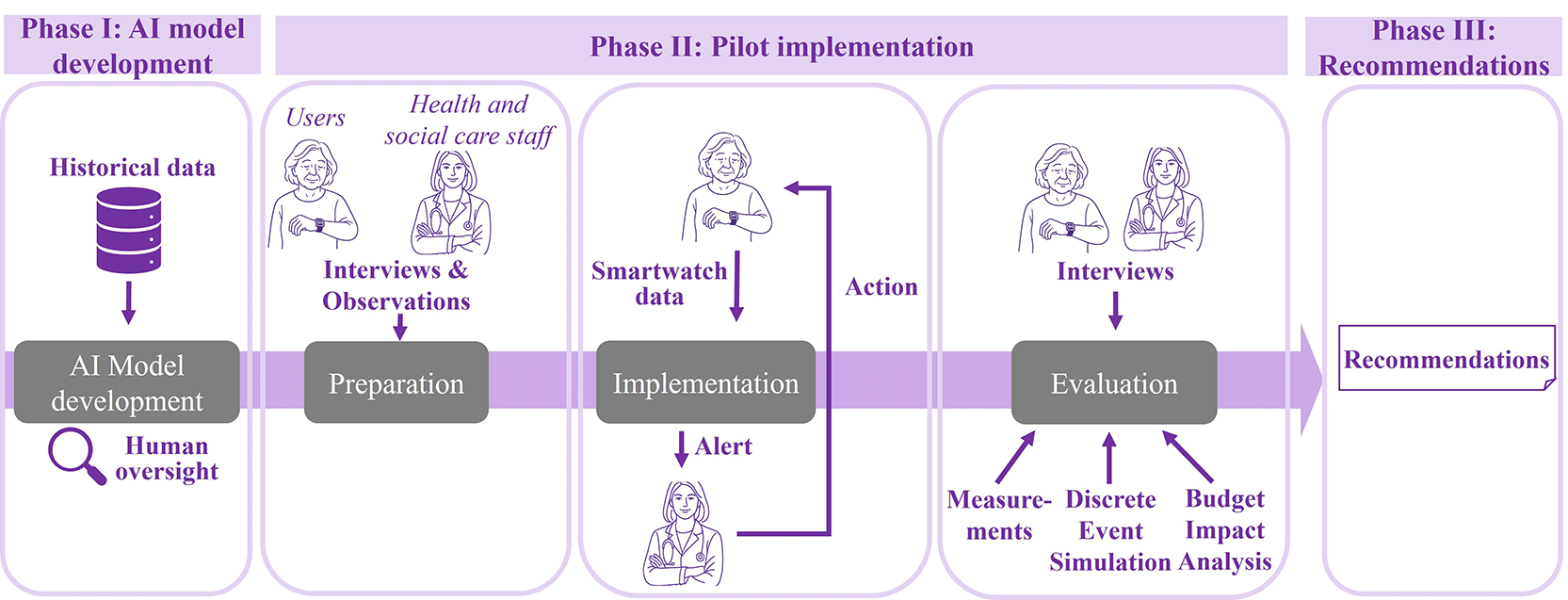
Figure 1. Overview of the three phases of the project.
The website of the project is: https://www.his.se/en/research/informatics/information-systems/predict-the-healthcare-needs-of-older-adults-using-ai/
User involvement
The predictive AI model will be developed and implemented in close collaboration with relevant stakeholders. This includes health and social care staff, support staff like IT personnel and service users and patients from hospitals, primary care, nursing homes, and recipients of home care. This inclusive approach is essential for identifying the challenges and opportunities of predictive AI and for ensuring that the AI model is aligned with clinical workflows, user needs, and regulatory requirements, thereby enhancing its sustainable implementation.
Phase I, RQ1: Development of the predictive AI model
Overall approach
Detecting health decline in older persons within the next few days or weeks requires the ability to identify subtle physiological and behavioural changes before they escalate into serious clinical events. To do this, continuous monitoring data that can capture day-to-day variations in activity, sleep, heart rate variability or other indicators that may signal deterioration in health, are needed. However, monitoring data alone is not enough. It must be meaningfully linked to real episodes of health decline to understand which patterns precede clinically significant events. In practice, one of the clearest indicators of such deterioration is the use of emergency care services, where acute changes in health become visible.
Therefore, developing an AI model capable of predicting health decline requires datasets that combine continuous monitoring data with reliable records of emergency department visits or other urgent care encounters. By connecting these two types of data, the project aims to build an AI model that can identify which measurable changes precede adverse outcomes and that can be used to provide early warnings of health decline in older persons.
Participants
The AI model will be developed for older persons (≥75 years) who are willing to and can wear a smartwatch with continuous monitoring of activity, heart rate, and sleep.
Data collection
The variables to be collected and connected are continuous outputs from smartwatches (heart rate, steps, and sleep), use of emergency care services, and data on user characteristics that are known to be easily collected (age and gender). Such data will be included from two main sources: 1) the population-based Trøndelag Health Study (HUNT4) (Åsvold et al., 2023), linked with National register data on healthcare use, and 2) the All of Us research hub (U.S. Department of Health and Human Services, n.d.). In addition, it will be search for other data sources based on historical health records that can be assessed for their suitability to support the training of the AI model.
HUNT4 and healthcare use data
The HUNT4 study was conducted between 2017 and 2019 (Åsvold et al., 2023) and included continuous movement measurement using two Axivity AX3 tri-axial accelerometers worn for seven consecutive days. The devices were placed on the right thigh and the lower back. These devices recorded acceleration along three spatial axes at a sampling rate of 50 Hz. The continuous accelerometer signals were segmented into 5-second windows to capture activity patterns, where more than 160 statistical and frequency-domain features were extracted from each window. The resulting feature set was then used to train machine learning models that classified daily activities, like lying, sitting, standing, walking, running, cycling, and sleeping (Bach et al. 2021, Logacjov et al. 2021). As the input to the AI model must mirror the type of data that can be gathered from smartwatches (i.e., steps, activity time, and sleeping patterns), the monitoring data from HUNT4 will be translated to mirror these.
To have a measure of health decline in the near future, use of emergency healthcare services will be taken from two national patient registers, one for primary care (Norwegian Registry for Primary Health Care) and one from specialist care (Norwegian Patient Registry). Using the time of the HUNT4 activity, any visit to the hospital coded as emergency and any visit to the General practice out-of-hour service within the next three month will be linked to the activity data using the unique national identifier assigned to each Norwegian citizen.
All of Us Research Hub
The All of Us Research Program from the USA is one of the largest biomedical data sources available (U.S. Department of Health and Human Services, n.d.). This program includes, among others, a large-scale longitudinal research initiative that integrates questionnaire data, electronic health record data, and data from consumer-grade smartwatches. These data are linked to each other and thus allow the creation of datasets for developing predictive AI models without further linkage. Data are analysed in the All of us researcher desktop, which is a secure web-based solution with a function that prevents the raw data from being downloaded. The data from the smartwatches include variables such as heart rate, sleeping patterns, and number of steps per minute.
The data from the electronic health records includes healthcare use and diagnoses, encounters and procedures, harmonized using the Observational Medical Outcomes Partnership (OMOP) Common Data Model. The specific variables include the date for the encounter, type of encounter (e.g., emergency department visits, inpatient admissions, outpatient visits), length of stay, and death. Diagnoses and comorbidities are based on International Classification of Diseases (ICD) and Systematized Nomenclature of Medicine – Clinical Trials (SNOMED) codes. Additional data about the participants that will be explored for inclusion are sociodemographic variables.
AI model development
The AI model development will be conducted in three stages, separately for the datasets. The first stage involves identifying and understanding how to handle variables that can be used in the analysis and that are also available when the AI model is implemented. This includes handling missing data, normalizing scales, and simple transformation of the variables in the datasets to make them usable for the machine learning described below. In addition, derived variables, which are variants of the raw data variables, will be made. The purpose of this process, known as feature engineering, is to transform the original data in ways that may reveal patterns the AI model can learn from more effectively. For example, a variable such as steps per minute can be aggregated or transformed to identifying which time of day the user is most active, or creating variables that reflect activity intensity per hour, peak activity windows, or day–night activity ratios. In other words, by creating multiple forms of the same underlying variable through aggregations, ratios, categorical flags, statistical descriptors, or time-based transformations, the so-called feature space will be expanded, providing the model a richer foundation to learn from. In practice, having several carefully engineered variations of each original variable improves the model’s ability produce more accurate predictions.
The next stage is model training and prediction, where the goal is to determine which combinations of monitoring data and user characteristics are most useful for predicting health deterioration, which may result on emergency care visits, in the coming next days or weeks up to 3 months. This means to let the computer learn patterns from the data focusing on the changes that occur in monitoring data before someone ends up in emergency care. These patterns are the ones the AI model will look for when it gets (transformed) data from smartwatches during the implementation to make predictions.
To perform this analysis, several types of supervised machine learning algorithms will be tested. Supervised means that the model is trained on examples where the outcome is already known, i.e. where emergency visits did or did not occur. The algorithms to be evaluated include:
• Random Forest (RF): A method that builds many decision trees and combines their results. It is good at handling complex interactions between variables and tends to be robust even when data is noisy.
• eXtreme Gradient Boosting (XGBoost): A more advanced tree-based algorithm known for high accuracy. It builds many small trees in sequence, where each tree tries to correct the mistakes of the previous ones. XGBoost is often strong in predictive tasks with structured data-based algorithm known for high accuracy.
• Long Short-Term Memory (LSTM) neural networks: A type of deep learning model specifically designed to work with timeseries data, where the order of events matters. LSTMs can learn patterns over time, such as changes in activity, sleep, or vital signs that build up before an emergency visit.
The AI models developed will be trained and validated using standard evaluation techniques, including:
• Hold-out validation: where the data is split into separate training and testing sets, so the model is evaluated on data it has never seen before.
• K-fold cross validation: where the data is repeatedly divided into different subsets to ensure the model’s performance is stable and not dependent on a single train/test split.
To select the best AI model, model performance will be evaluated using standard metrics that are widely used in predictive analytics to investigate how reliably the model identifies people at risk, including the following:
• Accuracy: The overall proportion of correct predictions.
• Precision: How often the model is correct when it predicts a risk (important for avoiding too many false alarms).
• Recall: How well the model identifies all the people who needed emergency care (important for not missing anyone at risk).
As the chosen AI model is implemented in practice (Phase II), feedback will be used to adjust it. This includes evaluating the clinical relevance of the alerts, the appropriateness of their timing, and whether the patterns it identifies are medically relevant. This feedback loop allows for gradual refinement and improvement of the model so that it fits better with the clinical context and becomes more useful in routine practice.
To better understand why the model makes certain predictions, explainability techniques such as SHapley Additive exPlanations (SHAP) will be used (Ponce-Bobadilla et al., 2024). SHAP helps break down each prediction into contributions from different variables, showing how much each feature, such as activity patterns or demographics, pushes the prediction toward higher or lower risk. This is used to learn more about the model’s decision-making process, and to support transparency and thereby trust in the model.
Phase II, RQ 2–4: Pilot implementation
Overall approach
Understanding the consequences of implementing AI models in real-world care settings requires observing how such systems interact with existing care practices, the currently used technologies, and health and social care staff’s decision-making. Ideally, this would be accomplished through a full-scale deployment of an AI-enabled solution that is fully integrated into the health and social care operational systems. However, such integration is complex, time-consuming, and dependent on multiple existing infrastructures that can be affected directly or indirectly by the introduction of a new AI model. Within the scope of a limited research project like the PAI project, a more feasible approach is to use a proxy model that mimics the user-facing aspects of a fully integrated solution while avoiding the risks and resource demands of deep system integration.
In this project, the proxy model relies on different secure cloud services (
Figure 2). One service collects data from the smartwatches worn by the participants, ensuring continuous monitoring. The second service receives this data, processes it through the predictive AI model, and presents alerts through a user interface dedicated to the health and social care staff involved in the study. Together, these systems emulate the essential technical functions of a future integrated solution, data ingestion, prediction generation, and alert presentation, while remaining isolated from operational IT infrastructures. The services involved will adhere to established data protection requirements (including GDPR) and maintain appropriate data safety and privacy controls.
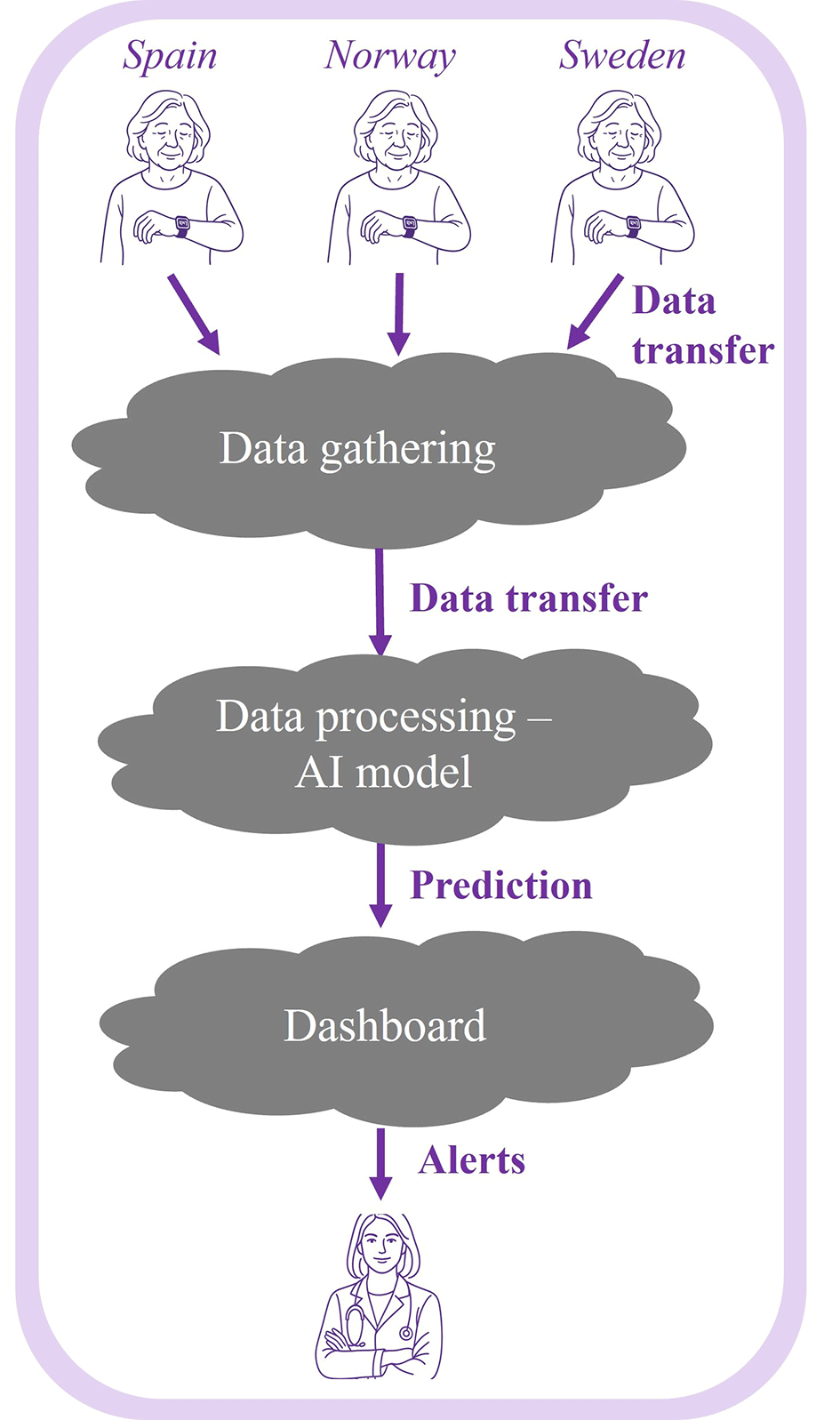
Figure 2. Overview of the proxy model.
Even with such a proxy model, it is crucial that the introduction of the solution does not disrupt established and effective care workflows. Therefore, the proxy model must be adapted to the realities of the participating organisations. This requires a careful exploration of current practices, including how staff detect health decline today, which information sources they rely on, how decisions are made, and how digital tools are incorporated into these daily routines. By mapping existing workflows, the project can identify how to set up the use of smartwatches for the users, where and when predictive alerts might add value, what adaptations are needed to ensure acceptance, and how to avoid burdening health and social care staff with additional tasks or parallel processes.
Once the proxy model is aligned with existing practices, the pilot implementation begins. Initially, the focus is on studying how health and social care staff respond during the early introduction of the system, how they perceive the alerts, which adjustments are needed, and what practical challenges arise. Over time, as the proxy model becomes part of regular routines during the pilot, the project examines how the solution works when it is used more naturally and consistently. This approach allows the study to capture experiences, perceived benefits and challenges including potential effects on care processes and outcomes as they unfold in real settings.
This phase will be divided into the three main stages as presented in
Figure 1.
1. The preparation stage (pre-implementation) focuses on understanding current practices for recognizing and managing health deterioration among older persons.
2. The implementation stage involves the deployment of the smartwatches and the use of the AI model in health and social care.
3. The third stage of evaluation and analysis focuses on systematic assessment of experiences and outcome measurements.
The implementation stage will consist of three main activities:
• The first activity is related to the technical setup (see
Figure 2), with data transfer from the smartwatch to a cloud service. Participants explicitly will authorize which data categories may be shared. Each participant will be assigned a study specific identifier to prevent direct identification. Authorized data will be transmitted to a secure platform that hosts the predictive AI models and performs continuous analysis.
• The second activity is related to the use of the smartwatches. Prior to use, users, next of kin, and/or health professionals will receive training covering essential functions, including how to wear and charge the device and perform basic troubleshooting. Devices will also be configured to ensure secure data transmission and storage. Ongoing support will be available to help maintain the correct use over time.
• The third activity is related to the integration of the solution into health and social care services. When the algorithm detects possible imminent health decline, an alert will be made available to health and social care staff via a secure digital dashboard (
Figure 2). These alerts are intended for decision support only and will be considered alongside professional clinical judgement. Health and social care staff will receive training on interpreting and responding to AI-generated alerts, providing structured feedback on alert quality and clinical relevance, and documenting actions taken in response. This feedback loop will be used to refine alert thresholds and improve contextual fit.
Participants
There are five groups of participants in this phase; users of the smartwatch, next of kin, health and social care staff, managers and IT professionals.
Inclusion criteria for the users of the smartwatches are persons aged 75 years or older, who have at least one of the comorbid conditions included in the Charlson Comorbidity Index and who can provide informed consent to participate in the study. Exclusion criteria include older persons with dementia, due to challenges in obtaining informed consent. Individuals unable to use a smartwatch for continuous monitoring will also be excluded. An appointed contact person at each participating site will help with user recruitment by identifying eligible individuals. Those who are interested will be informed in more detail and those agreeing to participate will sign an informed consent. In addition, next of kin of eligible users may be included, for example to provide complementary perspectives.
Inclusion criteria for the professionals are involvement in the delivery of care or services to the group of users targeted in this project: Health and social care staff who provide services for the users. Managers must have responsibility for staff involved in the care of older persons. IT professionals must have knowledge of or responsibility for the organization’s digital infrastructure.
The number of participants (sample size) is intentionally not to achieve statistical power, but to capture a broad range of experiences and contextual factors across settings. The study aims to recruit between 100 and 150 users from Norway, Spain, and Sweden and between 15 and 30 professionals.
Data collection
The data collected will cover all three parts of the pilot implementation (preparation, implementation and evaluation) and will be both qualitative (all three parts) and quantitative (implementation, evaluation).
Qualitative data
The qualitative data will be collected through interviews and observations with the different groups of participants described above. Interviews will be conducted in either group or individual formats, depending on practical considerations. The interviews will take place where it is convenient for the participants. Observations will be conducted when deemed necessary to gain a deeper understanding of workflows. Semi-structured interview and observation guides will be developed to capture perspectives from users, next of kin, health and social care staff, managers and IT professionals. Although the overarching themes are shared, each guide will be adapted to the different participants and stages. Box 1 presents the interview and observation guides developed for the initial stages of the implementation phase.
Box 1. Interview and observation guides to be used. The wording will be adapted to the different stages (preparation, implementation and evaluation).
• The services users and/or next of kin will be asked about how they notice and interpret changes in their health and daily functioning, and what influences their decisions to seek help, their experiences with monitoring technologies, including usability, comfort, and perceived usefulness, as well as communication with health and social care services.
• Health and social care staff and managers will be asked about how signs of health deterioration are identified in practice, including what cues, information sources, and routines guide recognition, the decision-making processes, collaboration within and outside the service, strengths and weaknesses in existing workflows, expectations and experiences with digital monitoring tools, as well as organizational and technical factors that influence effective detection and response. In addition, they will be asked about their attitudes towards predictive AI, including perceived benefits, challenges and the organizational and ethical factors that may shape these attitudes.
• IT professionals will be asked about the technical and infrastructural conditions required to support predictive AI in elderly care, including system compatibility, data flows, security, and reliability. They will also be asked about challenges and opportunities related to integrating smartwatch-derived data into existing IT environments, resource needs, organisational constraints, and requirements for ensuring that AI-based alerts function effectively within clinical and operational workflows.
The analysis of qualitative data will be done using practical thematical analysis (Saunders et al., 2023). This is a hands-on framework for conducting rigorous yet accessible thematic analysis, especially designed for teams including professionals, patients, and researchers. It is a three-step process. The first step involves reading, it is an immersive engagement with data to identify meaningful segments. It is followed by coding, where labels are assigned to data fragments, ideally during team-based sessions. And finally, theming, where similar does are clustered into coherent themes, using group workshops to ensure shared interpretation.
Quantitative data
The quantitative data to be collected will include indicators about AI alert performance and use (e.g., total number of alerts and usefulness of alerts), healthcare use (e.g., emergency visits and care coordination events), participant engagement and data quality (e.g., watch wear time and data completeness), service user safety (e.g., mortality rates), and resource use (e.g., staff training and unit costs).
To collect this data, health and social care staff will be asked to complete a short questionnaire for each alert generated by the AI model. In addition, data will also be collected from the system logs generated from the AI model platform and summaries produced by the staff based on documentation from the clinical record system for each user. Other types of data will be collected by the project through different sources.
The quantitative data will be analysed mainly descriptively. Patterns of resource use will be further examined using a discrete event simulation (DES) model (Law, 2024) to compare intervention and control scenarios.
Phase III, RQ 5: Recommendations
In this final phase, insights from all the previous phases of the project will be systematically synthesized across the three participating countries. The purpose is to develop context-sensitive recommendations for integrating smartwatches and predictive AI models into elderly care to predict health decline in the near future. The resulting recommendations will aim to provide concrete guidance on: 1) Implementing smartwatch-based monitoring for older persons’ care; 2) integrating AI-generated alerts into clinical workflows; as well as 3) ensuring data protection and ethical use of predictive analytics.
The recommendations will be made using a multistep synthesis process. First, findings will be jointly reviewed to identify recurrent patterns, contextual differences, and cross-country similarities and differences relevant to implementation. From this, themes will be organized into key domains; technical, clinical, organizational, ethical, legal, and user experiences. Then a structured barrier-enabler framework will be used to classify practical challenges and success factors within each theme. Each barrier will be paired with suggestions for actionable strategies, and each enabler will be translated into a recommended practice.
Finally, draft recommendations will be refined through workshops with service staff, service user representatives, managers, and IT stakeholders, ensuring that the final versions reflect operational reality and end user perspectives.
The project’s recommendations will be disseminated across the scientific community, the health and social care sector, and society at large. Scientific dissemination will be carried out through peer-reviewed publications, ensuring that the project’s empirical results and implementation insights are accessible to the wider research community. In parallel, practice-oriented dissemination will take place through websites, social media and presentations aimed at health and social care staff, managers, policymakers, and other relevant actors.
Ethics and data protection
This project will be conducted in line with recognized research ethics standards, including the European Code of Conduct for Research Integrity (ALLEA, 2023), which covers principles of reliability, honesty, respect, and accountability, and serves as the reference integrity framework for EU-funded research.
Ethics approvals will be obtained in each country. Participant information and consent will include information about the purpose of the study, the option to withdraw, and what they consent to. This includes for the service users to give access to their record notes and smartwatch-generated
data.
Given that healthcare AI is regulated as a high-risk domain under the EU Artificial Intelligence Act (Regulation (EU) 2024/1689, 2024), the study will implement human oversight throughout design, deployment, and use of the alerting workflow. Clinicians retain full decision authority and AI outputs are decision support only.
All data processing will comply with the GDPR and national health research law. Security of processing follows GDPR Article 32 (Regulation (EU) 2016/679, Art. 32, 2016), including risk-based organizational and technical measures (e.g., pseudonymization, encryption, access control, monitoring, resilience testing). Vendors of the smartwatch and cloud services operate within a controlled environment that meets these requirements; storage and analysis are hosted within the European Economic Area (EEA), and access is restricted to authorized staff only.
Data will be pseudonymized at the earliest feasible stage and stored on secure, access-controlled servers. A Data Management Plan will define roles and responsibilities. The project will also uphold transparency and accountability obligations of the AI Act for high-risk systems (e.g., recordkeeping, information for deployers) and maintain a continuous feedback loop with clinical users to monitor performance, detect anomalies, and prevent automation bias.
Discussion
To our knowledge, this is the first project to use artificial intelligence (AI) to analyse data from smartwatches and other monitoring data to identify early signs of health decline in older persons regardless of diagnosis.
While continuous monitoring and AI can support early detection for a substantial subset of older persons, it will not cover everyone. Existing evidence indicates that AI applied to continuous monitoring (e.g., heart rate, activity, sleep, temperature) can detect risk increases or incipient events for many (Cheong, et al., 2022, Lee et al., 2022). However, these studies also point to some challenges, with performance depending on signal quality, adherence, and population characteristics (Lee et al., 2022). Adherence can be particularly challenging for people who cannot use or tolerate wearables due to e.g., advanced dementia, skin sensitivity, or severe functional limitations. It also includes persons for whom data quality is too sparse for reliable use. Thus, equity remains a concern if parts of the target population cannot use wearables like smartwatches. This indicates that alternative data capture routes (e.g., caregiver-assisted devices, ambient or service touchpoint data) as the basis for AI models should also be investigated in the future.
Still, even with a successful AI model, a persistent gap remains between AI development and its implementation in real-world contexts, particularly in terms of trust and acceptance among both health and social care staff and patients (Petersson et al., 2022; Loveys et al., 2022). A central focus of this project is therefore understanding how existing workflows in health and social care systems must be adapted to accommodate predictive AI, as well as the technical infrastructure required to support continuous monitoring. This is needed as health and social care systems differ in digital infrastructure, staffing, and governance. Previous research has shown that technical reliability alone is insufficient for adoption; AI solutions must also align with professional practices and the lived realities of older persons (Choudhury et al., 2020). Barriers such as workflow misalignment, concerns about liability, technical limitations, and ethical dilemmas, including data privacy, have constrained adoption (Wubineh et al., 2024). After implementation, success depends on continuous monitoring and local recalibration as models may drift, and performance may attenuate in new contexts. Furthermore, future workforce acceptance is not guaranteed, indicating the need for sustained training, maintaining clear accountability for acting on alerts, and experiencing outcome benefits.
It is expected that the structure of the project, especially with an analysis of care workflows, followed by pilot implementation and evaluation can provide data that can pinpoint the specific challenges in embedding predictive AI into diverse health and social care contexts. Also, the cross-country perspective is essential for identifying which integration elements are context-specific and which can be generalized. This is needed to be able to provide recommendations on contextual, technical, organizational, and user-related factors for successful scaling.
Conclusion
This project sets out to develop and test a predictive AI model that can identify early indicators of health deterioration in older persons and trigger timely, proactive interventions within routine care. It also examines how the AI model is adopted and used in real-world workflows by identifying and supporting training needs, alert handling, human oversight, governance, and the organizational and technical conditions required for safe, effective, and equitable deployment across diverse care settings. The project will even include the development of evidence-based recommendations to support the responsible and scalable implementation of the proposed AI-based solution in health and social care.
The approach is innovative in two ways. First, it moves beyond disease specific detection to focus on general decline, leveraging subtle changes in relatively easily measured physiological processes. Second, the project paves the way for learning about and overcoming implementation challenges. Moreover, by conducting pilot implementations in Spain, Norway and Sweden, the project also creates opportunities for cross-country learning and knowledge exchange between health and social care systems. These insights are essential for understanding which aspects of integrating predictive AI into routine care are context-specific and which can be transferred or adapted across settings.
If successful, the project will provide a foundation for scalable, person-centred predictive care. Ultimately, the goal is to support the delivery of the right care at the right time for older persons, enabling more proactive and data-informed decision-making that improves quality of life while supporting sustainable service delivery in routine practice.
Ethics and consent
Ethical approval for this study was obtained from the relevant ethical authorities in each participating country. In Norway, approval was granted by the Regional Committee for Medical Research Ethics in Central Norway (Approval No972719). In Spain by the Comité de Ética de la Investigación con medicamentos (Reference No. PI2025007) for conducting the different steps of the project. In Sweden, the ethical approval was obtained from the Swedish Ethical Review Authority for the mapping of the processes (Dnr. 2025–07542-01) and the pilot implementation and evaluation (Dnr 2026–02320-01).
All participants in the research project will receive written information about the study and will provide informed consent prior to participation. Participation is voluntary, and participants may withdraw from the study at any time without consequences.







