Introduction
Urban digital twins are increasingly presented as instruments through which cities can observe, simulate and govern complex urban processes. By linking physical space, sensor data, analytical models and decision routines, they promise more anticipatory forms of planning and service delivery. Their applications now extend across land use, transport, energy, the built environment and public participation, and technical research identifies real time data integration, model interoperability and computational capacity as important conditions for their use (Ketzler et al., 2020). Cases such as Herrenberg and Zurich show that three-dimensional urban models can support planning communication and public feedback (Dembski et al., 2020; Schrotter & Hürzeler, 2020; White et al., 2021). However, the shift from simulation to public service raises another problem: a system may be technically feasible, but institutionally untrustworthy. As recent comparative studies reveal, urban digital twin governance inherently faces an efficiency-legitimacy trade-off, where rapid technological deployment must be continuously balanced against institutional accountability (Zhou et al., 2026a).
This problem is particularly prominent in the European Union, because the construction of digital government cannot be separated from expectations of data protection, administrative transparency and rights-based accountability. Urban digital twins can integrate location, building, mobility, environmental and administrative records, which means that their public value and social risks depend on data sharing. If government departments emphasise prediction without clarifying data collection, model access, contestability and responsibility, citizens may interpret digital twins as administrative visibility rather than public value. Smart city research warns that technology-led governance may reduce residents to data providers or service users rather than rights-bearing participants (Cardullo & Kitchin, 2019; Joss et al., 2019). Only when participation is credible and public value is visible can open innovation improve the evaluation of digital public services (Paskaleva & Cooper, 2018).
The existing literature offers important insights, but it remains fragmented for explaining trust in urban digital twins. Technical studies show constraints related to data quality, standardisation, interoperability, maintenance and cross organisational collaboration (Ketzler et al., 2020). Work on artificial intelligence and the Internet of Things shows that predictive capacity and continuous sensing intensify questions of data governance, explanation, privacy, security and infrastructural inequality (Bibri et al., 2024; Almalki et al., 2023). Case based research demonstrates that participation can be embedded in digital twin platforms, but not whether citizen input changes model assumptions, planning decisions or resource allocation (Dembski et al., 2020; Schrotter & Hürzeler, 2020; White et al., 2021). The unresolved issue is therefore not whether urban digital twins can be built, but under what conditions they can operate as legitimate public services.
This article approaches urban digital twins as public digital services rather than modelling systems alone. Smart city governance research has shifted from deployment towards organisational arrangements, governance capacity and public value (Mora et al., 2023; Gracias et al., 2023). Digital twins and immersive urban spaces may reshape services and urban economies, but their benefits depend on inclusive governance (Allam & Jones, 2021). Service dominant logic understands value as co created through use, while public service dominant research locates public value within ecosystems of governments, organisations and users (Vargo & Lusch, 2004; Osborne et al., 2013; Osborne et al., 2022). Moore (1995) adds that public value depends on organisational capacity and an authorising environment. For urban digital twins, predictive speed, service accessibility and interoperability cannot be separated from transparency, contestability and data rights.
The existing digital government research specifically expounds on the efficiency aspect of this argument. Research by Mergel et al. (2019) points out that digital transformation reconfigures organisations, service relationships and public sector capabilities, rather than just digitising processes. Local government studies emphasise leadership, cross departmental knowledge and implementation experience, while digital public service research examines participation channels, information quality, service continuity and responsibility boundaries (Pittaway & Montazemi, 2020; Lindgren et al., 2019; Cortés-Cediel et al., 2023; Yuan et al., 2023). Integrated e-government frameworks similarly combine technological, organisational, social and public value dimensions (Malodia et al., 2021). In this study, efficiency readiness is captured by user centricity and key digital enablers, because accessible services, mobile usability, user support, digital identity, pre filled data and interoperable infrastructure provide practical conditions for data-intensive services. Service design, interface design and expectation disconfirmation research suggest that convenience, information quality and service experience influence digital government satisfaction, although satisfaction is not institutional trust (Chan et al., 2021; Prokop & Tepe, 2022; Zhang et al., 2022).
Repeated service performance may nevertheless signal governmental capacity and responsiveness. E-government public value research identifies service improvement, efficiency, openness and participation as outcomes of digital public services, while Internet of Things enabled public services may increase adoption when citizens perceive public value (MacLean & Titah, 2022; Chohan & Hu, 2020). Digital skills differences across EU Member States shape practical access (Rodriguez-Hevía et al., 2020). Studies of service quality and government trust often report positive associations, although these relationships depend on prior trust, perceived risk, economic conditions, inequality and institutional context (Alsarraf et al., 2023; Li, 2021; Beshi & Kaur, 2020; Gozgor, 2022; Palmisano & Sacchi, 2024). These findings show that it is necessary to examine whether a stronger digital service environment is related to institutional trust without claiming to measure trust in a specific urban digital twin.
In terms of legitimacy, the concern is whether digital public services are embedded in institutions that citizens consider accountable and rights-respecting. Legitimacy refers to the judgement of whether behaviour is appropriate and conforms to shared rules, and procedural justice studies show that neutrality, voice and respect affect people’s evaluation of authority (Suchman, 1995; Tyler & Tyler, 2006). Transparency is often regarded as a route to trust, but evidence is conditional. Government openness and open data can improve visibility, but transparency can only really help build trust when information is understandable and can be used for oversight (Schmidthuber et al., 2021; Matheus & Janssen, 2020; Matheus et al., 2023). Experiments also show that transparency in decision-making can enhance trust in some cases, but information disclosure alone cannot replace credible procedures (Grimmelikhuijsen et al., 2021; Grimmelikhuijsen et al., 2020).
Algorithmic governance has exacerbated this concern. Visibility does not make complex systems knowable. Credible transparency must be linked to legal norms and use contexts. Artificial intelligence in the public sector needs to distinguish between technical explanation, procedural communication and political responsibilities (Ananny & Crawford, 2018; Felzmann et al., 2019; de Fine Licht & de Fine Licht, 2020). Algorithmic ethics involves opacity, distributed responsibility and embedded values, while artificial intelligence ethics guidelines often face gaps in implementation (Mittelstadt et al., 2016; Hagendorff, 2020; Jobin et al., 2019). Automated decision-making will complicate the issue of legitimacy, because there may be differences in the evaluation of input, process and outcomes, and procedural information, outcomes, discretion and explanation will affect people’s perception of fairness (Starke & Lünich, 2020; Martin & Waldman, 2023; Nagtegaal, 2021). Human-machine collaboration may lead to automation bias or selective adherence, so human oversight cannot automatically secure responsibility (Alon-Barkat & Busuioc, 2023; Green, 2022). Public sector artificial intelligence research confirms that citizens will evaluate the competence, risk, safeguards and accuracy of artificial intelligence, and trustworthy artificial intelligence links technical reliability with rights, regulation and interdisciplinary governance (Araujo et al., 2020; Ingrams et al., 2022; Robles & Mallinson, 2025; Wanner et al., 2022; Lukyanenko et al., 2022; Yeung & Bygrave, 2022).
These two aspects lead to the problem of balance. Digital government may enhance administrative capacity, but it also increases the difficulty of oversight. The algorithmic society expands the scope of classification, prediction and resource allocation, while embedding public power into the technical system (Burrell & Fourcade, 2021). When public institutions rely on private technology infrastructure, efficiency-centred governance may weaken political deliberation, exacerbate technocratic risks, and blur the boundaries of responsibility (Sætra, 2020; Taylor, 2021). AI governance therefore requires responsibility chains, organisational arrangements and enforceable rules rather than ethical principles alone (Lo Piano, 2020; Novelli et al., 2024; Ulnicane et al., 2021). Urban digital twins make this issue visible because they depend on multi organisational data, continuous monitoring and predictive models. Evidence from digital twins in tourism and energy, blockchain public governance and algorithmic regulation shows that data ownership, model control, stakeholder power, public management responsibility, law and democratic institutions remain central to sustainable digital governance (Rahmadian et al., 2023; Solman et al., 2022; Tan et al., 2022; Ulbricht & Yeung, 2022).
This study asks whether the national governance conditions that make urban digital twin oriented public services feasible are associated with institutional trust in EU Member States, whether the association is linked to efficiency readiness, legitimacy readiness or their coordination, and whether it reflects cross-national differences or short-term within-country change. It does not measure actual urban digital twin deployment, because no consistent annual city level dataset covers all 27 Member States. Nor does it treat digital government maturity as digital twin adoption. Urban digital twin governance readiness is instead defined as the national digital service and governance capacity that makes such services easier to develop, deliver and secure legitimacy for such services. It combines user centricity, key digital enablers, transparency and rule of law, with the first two pillars representing efficiency readiness and the latter two representing legitimacy readiness.
On this basis, the empirical expectations are organised around the relationship between governance readiness, institutional trust and the possible coordination of efficiency and legitimacy. The first expectation concerns the overall enabling environment for urban digital twin oriented public services. Where national digital service capacity, transparency and legal safeguards are stronger, citizens are more likely to encounter public authorities as capable, responsive and institutionally reliable. Governance readiness should therefore be associated with higher trust in regional or local public authorities.
H1:
Higher urban digital twin governance readiness is positively associated with trust in regional or local public authorities.
The second expectation separates this overall readiness into its two conceptual components. Efficiency readiness captures the practical capacity to deliver accessible, user-centred and interoperable digital public services. Because such services can signal administrative competence and responsiveness, efficiency readiness is expected to be positively related to institutional trust. Legitimacy readiness, by contrast, captures the extent to which data-intensive public services are supported by transparency, accountability and the rule of law. Since citizens evaluate not only whether digital services work, but also whether public authority is exercised in a procedurally credible and rights respecting manner, legitimacy readiness is also expected to be positively associated with trust.
H2a:
Efficiency readiness is positively associated with trust in regional or local public authorities.
H2b:
Legitimacy readiness is positively associated with trust in regional or local public authorities.
The final expectations address the relationship between these two dimensions. In data-intensive services such as urban digital twins, technical capability is unlikely to be interpreted independently of the institutional safeguards surrounding it. Legitimacy readiness may therefore strengthen the association between efficiency readiness and trust by making service capability appear publicly accountable. Conversely, when efficiency readiness exceeds legitimacy readiness, digital governance may be perceived as administratively capable but insufficiently constrained, which may weaken trust.
H3:
Legitimacy readiness positively moderates the association between efficiency readiness and trust in regional or local public authorities.
H4:
A larger gap in which efficiency readiness exceeds legitimacy readiness is negatively associated with trust in regional or local public authorities.
Figure 1 summarises the conceptual framework linking efficiency readiness, legitimacy readiness, UDT governance readiness and institutional trust.
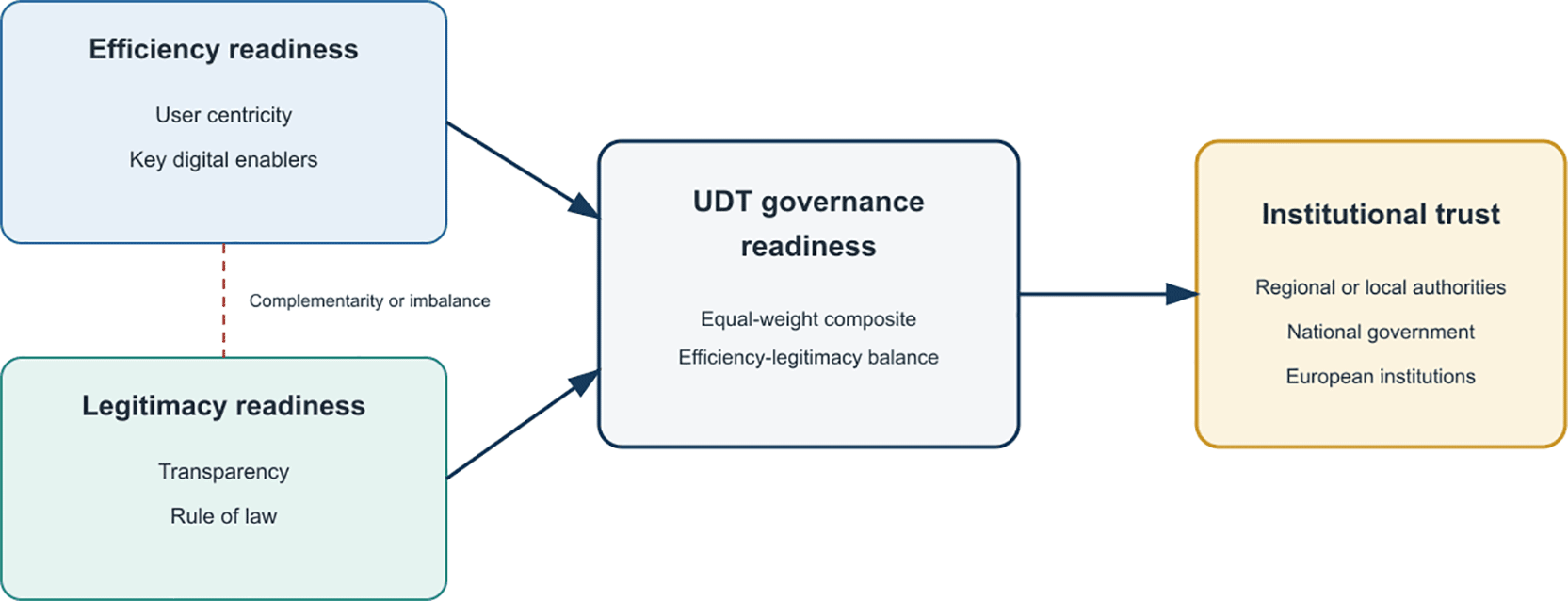
Figure 1. Conceptual framework for UDT governance readiness and institutional trust.
The figure summarises the conceptual structure of the study. Efficiency readiness is composed of user centricity and key digital enablers, while legitimacy readiness is composed of transparency and rule of law. These dimensions form UDT governance readiness and are examined in relation to institutional trust in regional or local authorities, national government and European institutions. UDT = urban digital twin.
Methodology
Research design and sample
The empirical analysis is based on a balanced country-year panel covering the 27 Member States of the European Union from 2022 to 2025, yielding 108 observations. This design is appropriate for examining macro level co variation between digital governance conditions and institutional trust, although it cannot capture how residents in a particular city evaluate a specific urban digital twin system. The unit of analysis is therefore the country-year, and the findings should be interpreted as evidence about national governance conditions that may support urban digital twin oriented public services, rather than as evidence about actual platform use or citizen experience with a concrete digital twin.
Institutional trust is measured using weighted national percentages from Standard Eurobarometer waves 97, 99, 101 and 103. The main dependent variable is the share of respondents who report that they tend to trust regional or local public authorities. This outcome is selected because urban digital twins are usually planned, procured or operated through local and regional administrative systems, while the Eurobarometer does not provide a harmonised annual series for trust in city governments. Trust in national government, the European Union and the European Commission is used in robustness checks. These variables should not be read as direct measures of trust in urban digital twins. They measure trust in public institutions that may govern data-intensive public services.
Digital service indicators are taken from the European Commission eGovernment Benchmark. Each trust year is matched with the closest available benchmark year, so that trust observations from 2022 to 2025 are matched with digital government indicators from 2021 to 2024. We use this lagged matching strategy to improve the temporal ordering of the analysis, although it cannot completely eliminate concerns about reverse causality or unobserved institutional factors. User centricity, transparency and key enablers form the main digital government pillars. For the 2025 trust observations, the revised benchmark structure is mapped onto comparable dimensions of online service delivery, user friendliness and identity services. Because this mapping may introduce measurement discontinuity, one robustness check excludes 2025. Rule of law is measured with the annual World Justice Project Rule of Law Index. The macroeconomic controls are obtained from Eurostat and include the logarithm of real GDP per capita in 2020 chain linked euros, the unemployment rate for the population aged 15 to 74 and annual average harmonised consumer price inflation.
Table 1 summarises the constructs, operational measures, data sources and analytical roles used in the empirical analysis.
Table 1. Measurement and data sources.
| Construct | Operational measure | Source | Analytical role |
|---|
| Institutional trust | Percentage tending to trust regional or local public authorities | Standard Eurobarometer 97, 99, 101 and 103 | Main outcome |
| Alternative institutional trust | Trust in national government, the European Union and the European Commission | Standard Eurobarometer 97, 99, 101 and 103 | Robustness outcomes |
| User centricity | Accessibility and user-facing performance of digital public services | European Commission eGovernment Benchmark | Efficiency pillar |
| Key enablers | Digital identity, pre-filled data and interoperable service infrastructure | European Commission eGovernment Benchmark | Efficiency pillar |
| Transparency | Visibility of service processes, personal-data use and service design | European Commission eGovernment Benchmark | Legitimacy pillar |
| Rule of law | Overall institutional safeguards and credible enforcement | World Justice Project Rule of Law Index | Legitimacy pillar |
| Economic development | Log real GDP per capita in 2020 chain-linked euros | Eurostat nama_10_pc
| Annual control |
| Labour-market pressure | Unemployment rate, population aged 15–74 | Eurostat une_rt_a
| Annual control |
| Price pressure | Annual average HICP inflation | Eurostat prc_hicp_aind
| Annual control |
Index construction
The Urban Digital Twin Governance Readiness Index is designed to measure the national enabling environment for urban digital twin oriented public services, not the actual deployment of urban digital twin platforms. It combines four pillars: user centricity, key digital enablers, transparency and rule of law. User centricity and key enablers represent efficiency readiness, because they capture the practical capacity to deliver accessible, interoperable and user facing digital services. Transparency and rule of law represent legitimacy readiness, because they capture the institutional conditions under which data-intensive public services can be made visible, accountable and legally constrained.
The four pillar variables are first standardised over the pooled sample of 108 country-year observations. The composite value is defined as:
(1)
The composite score is then rescaled to a 0 to 100 index through min max normalisation:
(2)
Equal weighting is used to keep the index transparent and to avoid imposing unverified statistical weights on a short panel. Higher values indicate that the national digital service and institutional environment is more favourable for developing and legitimating urban digital twin oriented public services. Efficiency readiness and legitimacy readiness are calculated from the same pooled standardised variables:
(3)
(4)
The coordination between efficiency and legitimacy is examined through the product term
. Directional imbalance is measured as
, where positive values indicate that efficiency readiness exceeds legitimacy readiness. Variance inflation factors range from 1.06 to 2.96, suggesting that severe multicollinearity is not present in the main specifications.
Model specification
The modelling strategy distinguishes overall cross-national association from within-country change. The first model is a pooled panel specification with year effects:
(5)
In this equation,
contains the macroeconomic controls and
captures common year effects. Standard errors are clustered by country. Since this model retains stable differences between Member States, it estimates the overall association between governance readiness and trust, but it should not be interpreted as evidence of within-country change.
The second model adds country effects:
(6)
This two-way fixed effects model identifies the association from changes within the same country over time. Because the panel covers only four years and governance indicators tend to change slowly, this specification is a demanding test of short-term co movement.
To separate within and between country components more explicitly, a Mundlak decomposition is estimated:
(7)
Here,
represents the within-country association and
represents the between country association. This model clarifies whether the observed relationship is mainly driven by stable differences between Member States or by short-term changes within countries.
The separate roles of efficiency and legitimacy readiness are examined with the following specification:
(8)
The complementarity hypothesis is tested by adding
, while the imbalance hypothesis is tested by including efficiency readiness and
in the same model. Robustness checks use feasible generalised least squares allowing for country specific heteroskedasticity and a common first order autoregressive process, exclude 2025, replace the self constructed index with the official eGovernment composite score and use alternative trust outcomes. No instrumental variable approach is used because the available data do not provide a credible external instrument that is both strongly related to governance readiness and plausibly excluded from institutional trust. All estimates are therefore interpreted as associational evidence.
Results
Descriptive results
Table 2 reports the descriptive statistics and bivariate correlations for the main variables, showing clear variation in both institutional trust and governance readiness across the EU27 panel. Trust in regional or local public authorities has a mean of 57.99%, with a standard deviation of 11.92 percentage points. Trust in national government is lower, at 37.44%, while trust in the European Union and the European Commission is close to 52.8%. The Urban Digital Twin Governance Readiness Index has a mean of 61.67 and a standard deviation of 24.26, indicating substantial cross-national variation in the digital service and institutional conditions that may support urban digital twin oriented public services. In the bivariate results, local or regional trust is positively correlated with governance readiness, at 0.53. Legitimacy readiness has a stronger correlation with local trust, at 0.66, than efficiency readiness, at 0.29. The efficiency legitimacy gap is negatively correlated with local trust, at minus 0.34. These associations are descriptive and do not yet account for macroeconomic conditions, year shocks or stable country characteristics.
Table 2. Descriptive statistics and bivariate correlations.
| Variable | Mean | SD | Min | Max | 1 | 2 | 3 | 4 | 5 |
|---|
| Trust in local authorities (%) | 57.99 | 11.92 | 30.00 | 82.00 | 1.00 | | | | |
| UDT Governance Readiness Index | 61.67 | 24.26 | 0.00 | 100.00 | 0.53 | 1.00 | | | |
| Efficiency readiness | 0.00 | 0.94 | −3.10 | 1.42 | 0.29 | 0.89 | 1.00 | | |
| Legitimacy readiness | 0.00 | 0.87 | −1.63 | 1.54 | 0.66 | 0.87 | 0.55 | 1.00 | |
| Efficiency-legitimacy gap | 0.00 | 0.86 | −2.38 | 2.14 | −0.34 | 0.09 | 0.54 | −0.41 | 1.00 |
Figure 2 shows the country average relationship between governance readiness and trust in regional or local public authorities. Luxembourg, Denmark, Sweden and Austria combine high readiness with high local trust. Estonia and Malta have relatively high readiness but local trust below the fitted line, whereas Germany and Hungary show comparatively high local trust at more moderate readiness levels. The figure therefore suggests a positive overall association, while also indicating that readiness alone does not explain all national differences in trust.
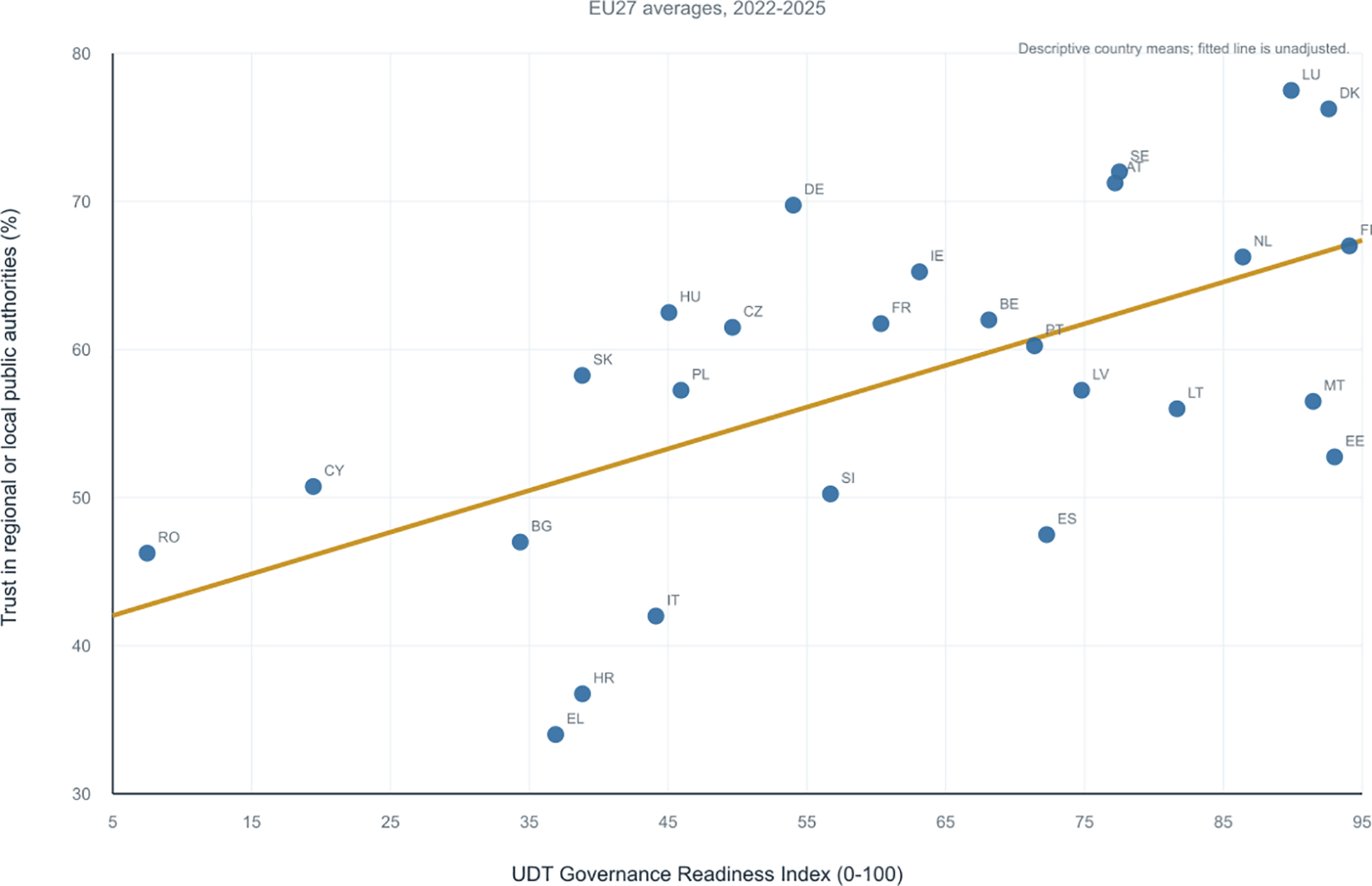
Figure 2. Country-average UDT governance readiness and local institutional trust.
Country averages for the 27 EU Member States, 2022–2025. The horizontal axis reports the Urban Digital Twin Governance Readiness Index, scaled from 0 to 100. The vertical axis reports the percentage of respondents tending to trust regional or local public authorities. The fitted line indicates the bivariate country-average association. UDT = urban digital twin.
Governance readiness and local trust
Table 3 reports the pooled, two-way fixed-effects, Mundlak and FGLS estimates for the association between UDT governance readiness and trust in regional or local public authorities. The pooled panel model with year effects provides evidence of a positive overall association. After controlling for real GDP per capita, unemployment and inflation, a ten point increase in UDT governance readiness is associated with a 1.56 percentage point increase in trust in regional or local public authorities, with a standard error of 0.61 and
. This result supports H1 only at the level of cross-national association. Once country fixed effects are included, the coefficient becomes minus 0.66, with a standard error of 1.16 and
. This estimate does not indicate that short-term changes in readiness within the same country are accompanied by corresponding changes in local trust.
Table 3. UDT governance readiness and trust in regional or local public authorities.
| Variable | Pooled panel | Two-way FE | Mundlak within | Mundlak between | FGLS |
|---|
| UDT-GRI, per 10 points | 1.560 (0.609) | −0.661 (1.158) | −0.661 (1.017) | 1.434† (0.719) | 0.841 (0.511) |
| Macroeconomic controls | Yes | Yes | Within and between | Within and between | Yes |
| Country effects | No | Yes | Decomposed | Decomposed | Panel variance |
| Year effects | Yes | Yes | Yes | Yes | Yes |
| Observations | 108 | 108 | 108 | 108 | 108 |
| Adjusted R2 | 0.579 | 0.891 | 0.613 | 0.613 | Not applicable |
The Mundlak decomposition confirms this distinction. The between country coefficient is 1.43, with a standard error of 0.72 and
, while the within-country coefficient is minus 0.66, with a standard error of 1.02 and
. The feasible generalised least squares estimate remains positive, at 0.84, but is less precise, with a standard error of 0.51 and
. Therefore, we believe that the main reason why H1 has only received limited support is the stable differences between Member States, rather than detectable short-term changes within countries.
Efficiency, legitimacy and balance
The results for efficiency readiness, legitimacy readiness and their balance are more cautious. In the two-way fixed effects model, the coefficient for efficiency readiness is minus 1.20, with
, and the coefficient for legitimacy readiness is minus 0.27, with
. Neither estimate is statistically significant, so H2a and H2b are not supported by within-country evidence. The interaction between efficiency and legitimacy is also not significant, with a coefficient of minus 0.42 and
, providing no support for H3. The gap variable has a coefficient of 0.27, with
, and its direction is not consistent with H4. Although the FGLS estimates for efficiency and legitimacy are positive, they remain statistically non significant. The results therefore do not justify a claim that an efficiency legitimacy trade off has been empirically identified in this four year panel.
Figure 3 presents Member States’ average positions on efficiency and legitimacy readiness. Some countries are close to the balance line, while others show clearer directional differences. Hungary’s efficiency readiness is higher than legitimacy readiness, while Ireland has the opposite pattern. The figure clarifies the conceptual distinction between the two dimensions, but the regression results do not show that these differences systematically correspond to changes in local trust during the period observed.
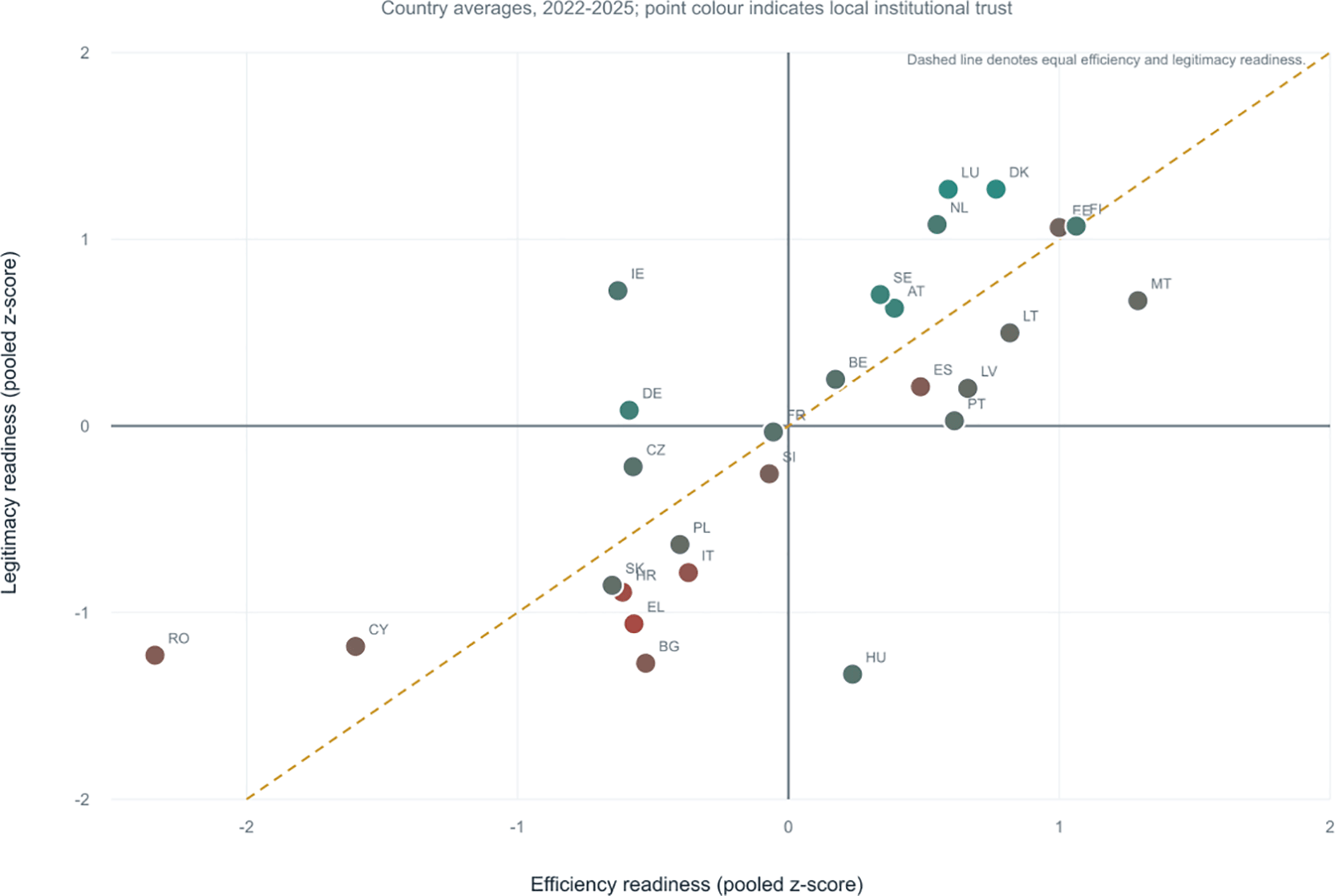
Figure 3. Efficiency and legitimacy readiness across EU27 countries.
Country-average positions of EU Member States on efficiency readiness and legitimacy readiness, both measured using pooled standardised scores. The diagonal line indicates parity between the two dimensions. Points away from the line indicate directional imbalance between efficiency-oriented and legitimacy-oriented readiness.
Robustness checks
The robustness checks reinforce the distinction between cross-national association and within-country changes. When alternative trust outcomes are used, the pooled estimate is still positive. A ten-point increase in governance readiness is associated with a 1.71 percentage point increase in trust in national government (
), a 2.03 percentage point increase in trust in the European Union (
), and a 1.88 percentage point increase in trust in the European Commission (
). In contrast, the corresponding fixed effects estimates are not statistically significant.
Figure 4 visualises this contrast, with pooled confidence intervals located on the right side of the zero point, while fixed-effects intervals cross the zero point.
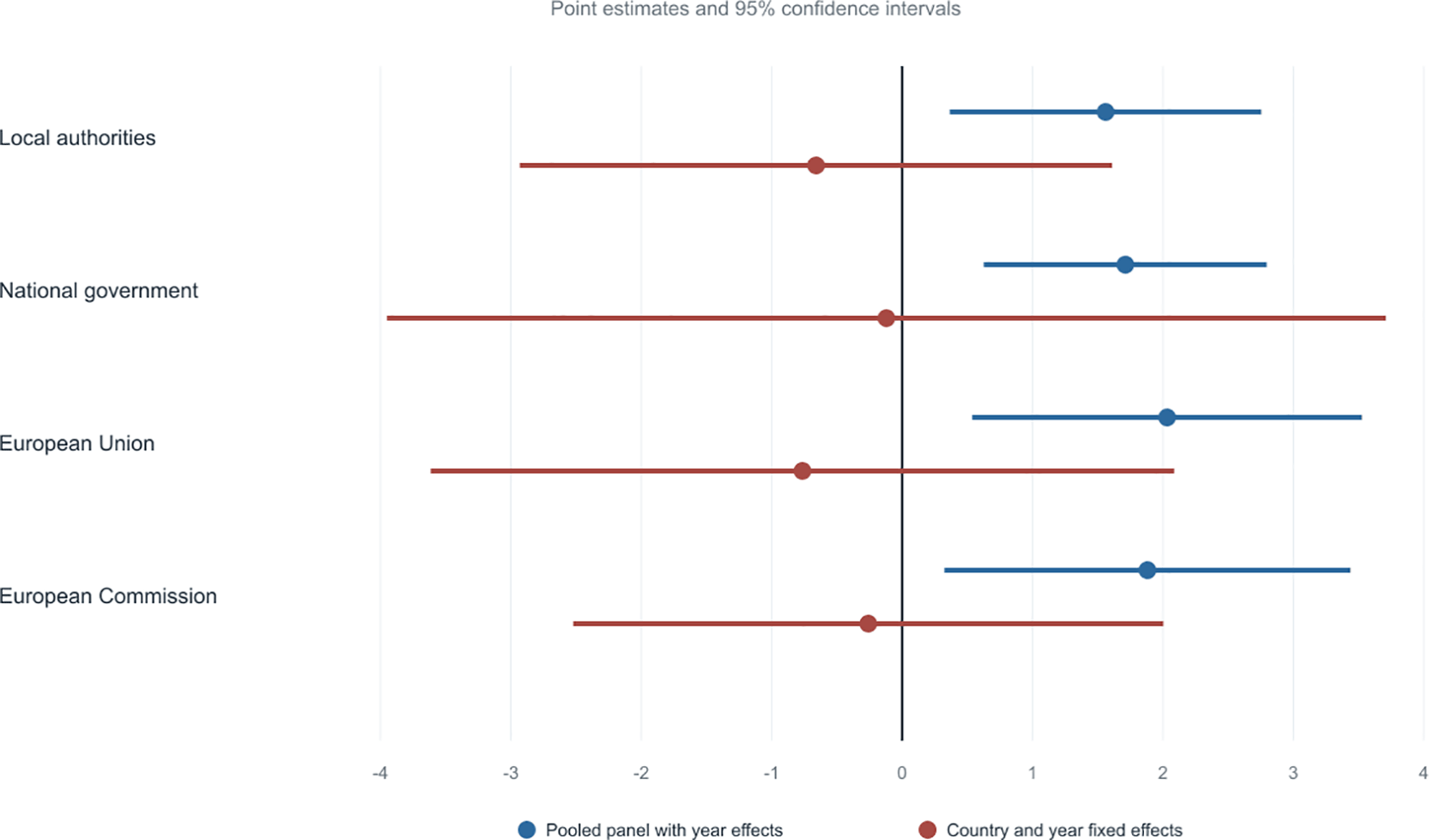
Figure 4. Association between UDT governance readiness and institutional trust.
Point estimates and 95% confidence intervals for the association between a ten-point increase in the Urban Digital Twin Governance Readiness Index and institutional trust outcomes. Pooled estimates refer to panel models with year effects; fixed-effects estimates refer to two-way fixed-effects models. All models include macroeconomic controls. UDT = urban digital twin.
Table 4 reports the robustness checks across alternative trust outcomes and alternative model specifications. Further checks lead to the same substantive interpretation. Excluding 2025, the pooled coefficient of local trust is 1.51,
, indicating that this positive association is not driven by the revised benchmark mapping. After replacing the self-constructed index with the official eGovernment composite score, the pooled coefficient weakened to 0.23,
, and the fixed effects coefficient was 0.06,
, which was not significant. In general, the evidence shows that digital governance readiness and institutional trust coexist across EU Member States, but it does not show that within-country readiness improvements generate short-term trust gains.
Table 4. Robustness across outcomes and alternative specifications.
| Specification | Estimate | Clustered SE | p value | Interpretation |
|---|
| Local-authority trust, pooled | 1.560 | 0.609 | .017 | Positive cross-national association |
| National-government trust, pooled | 1.711 | 0.553 | .005 | Positive cross-national association |
| European Union trust, pooled | 2.032 | 0.762 | .013 | Positive cross-national association |
| European Commission trust, pooled | 1.881 | 0.794 | .026 | Positive cross-national association |
| Local-authority trust, two-way FE | −0.661 | 1.158 | .573 | No detectable within-country association |
| Excluding 2025, pooled | 1.510 | 0.580 | .015 | Stable to revised benchmark mapping |
| Official eGovernment score, pooled | 0.232 | 0.126 | .077 | Weaker alternative-index association |
| Efficiency × legitimacy, two-way FE | −0.423 | 1.309 | .749 | No evidence of complementarity |
| Efficiency-legitimacy gap, two-way FE | 0.273 | 2.659 | .919 | No evidence of an imbalance penalty |
Discussion
Answering the research question
The findings answer the research question with an important qualification. Across EU Member States, higher digital governance readiness is associated with higher institutional trust. This pattern appears not only in regional or local public authorities, but also in national government and European institutions. However, when the analysis focuses on short-term changes within countries, the same relationship is not found. Therefore, the fixed effects and Mundlak within estimates show that the coexistence of readiness and trust across countries is part of broader governance configurations, rather than showing that the improvement of readiness can be quickly translated into trust gains.
This distinction also clarifies the empirical status of the balance between efficiency and legitimacy. The results do not identify a significant complementarity effect, nor do they show that an situation in which efficiency readiness exceeds legitimacy readiness is penalised. Therefore, the balance between efficiency and legitimacy should be understood as a continuing governance design problem, rather than a statistical mechanism demonstrated by this study. The positive cross-national association may reflect long-standing differences in administrative capacity, social trust, economic development and rule of law traditions. Once country fixed effects absorb these stable characteristics, the remaining short-term variation will be limited, and the estimates become less precise.
Relationship with existing research
The pooled results are consistent with public value research on digital government. High-quality digital services may signal competence, responsiveness and reliability when citizens experience them as accessible and useful (Chan et al., 2021; MacLean & Titah, 2022). The perspective of the service ecosystem further suggests that digital capacity becomes valuable only through the interaction between residents, public organisations and institutional arrangements (Osborne et al., 2022). Evidence of e-government during crises also shows that citizen participation is influenced by perceptions of government, which helps to explain why technology readiness can coexist with trust without directly producing it (Amosun et al., 2022).
The absence of significant within-country effects is also consistent with research on transparency. Disclosure does not automatically increase trust, because citizens may interpret transparency as responsible openness, or as evidence of institutional problems (Grimmelikhuijsen et al., 2020). Digital transparency depends on whether information is usable, whether institutions respond to scrutiny, and whether oversight is credible (Matheus et al., 2023). Public sector artificial intelligence research also shows that accuracy, transparency and trust are not interrelated through a simple linear pathway, because risk perceptions and acceptance of intelligent systems are still institutionally conditioned (Araujo et al., 2020; Wanner et al., 2022).
Urban digital twin case studies show that platforms can widen participation channels (Dembski et al., 2020; White et al., 2021). Yet participation entry points do not necessarily create institutional influence. Residents may be able to submit feedback without knowing whether it changes models, decisions or resource allocation. The social acceptance of urban digital twins therefore depends less on interface use alone than on the institutional relationship surrounding that use.
Theoretical implications
The first theoretical implication is that UDT governance readiness should be carefully distinguished from deployment. It is not a measure of whether cities have installed digital twin platforms, nor a measure of direct user trust in a specific system. It captures the institutional capacity that precedes the public use of data-intensive urban technologies. This definition avoids overstating general e-government maturity as digital twin adoption, while allowing digital twin research to engage with service design, public value and legitimacy.
The second implication is the need to distinguish cross-national fit from within-country transformation. The between country results suggest that digital governance capacity and institutional trust may belong to the same long term institutional pattern. The within-country results show that short-term digital upgrading does not necessarily move trust. Trust may respond more strongly to repeated service encounters, visible accountability after disputes and institutional handling of errors than to annual changes in macro level readiness indicators.
The third implication concerns efficiency and legitimacy. The descriptive results suggest that legitimacy readiness is more closely correlated with trust than efficiency readiness, but the regression models do not support the claim that legitimacy statistically moderates efficiency. A more cautious interpretation is that efficiency and legitimacy are joint design requirements for public digital services, whose relationship should be tested with city level or project level measures of citizen perception.
Managerial and policy implications
Urban managers should avoid presenting digital twins mainly through cost savings, predictive accuracy or faster response. Their public value should be clarified through data sources, model access, intended use, human review, correction channels and responsibility mechanisms. Transparency should be integrated into service interactions, not just limited to compliance documents. If residents only see the visual output but do not understand how data affects decision-making, technological visibility may conceal institutional opacity.
Procurement and partnership arrangements must also maintain public responsibility. Urban digital twins are usually developed by software vendors, consulting companies, public utilities and administrative departments. Contracts should specify data control, model updates, third-party audits and exit mechanisms. By doing so, cities can configure these procurement rules as ‘institutional middleware’ to encapsulate compliance complexity and lower the entry barriers for sustainable entrepreneurs (Zhou et al., 2026b). Public institutions should not shift the responsibility for algorithmic errors or data misuse to suppliers, because in technologically mediated governance, the risk of loss of public value is still significant (Taylor, 2021).
Participation mechanisms should be linked to decision-making authority. Citizen feedback should clearly specify its receiving procedures, evaluators and the generation of responses. If models affect vulnerable groups or spatial resource allocation, cities can adopt phased pilots, independent impact assessments and revocable data authorisation. The claims of smartness, sustainability and convenience should be matched with verifiable, rights-based safeguards.
Limitations and research boundaries
There are clear boundaries in this study. The dependent variables measure general institutional trust, not the direct trust in the urban digital twins. Indicators at the national level cannot capture differences between cities or specific service interactions. The four-year panel data limits the statistical power of the fixed effects models, and the e-government and rule of law indicators change slowly. The digital government indicators in 2025 need to be mapped, but the exclusion of that year will not substantially change the pooled results. The pooled estimates may still be affected by omitted variables and reciprocal relationships, so they should not be interpreted causally.
Future research should construct city year datasets on digital twin deployment, data types, participation arrangements, governance structures and controversies. Resident surveys should directly measure perceived service quality, procedural fairness, data control, explanation and willingness to use specific services. Repeated surveys before and after implementation, combined with comparison cities, would allow researchers to examine the temporal formation of trust more directly. Qualitative work could also show how transparency promises are translated into procurement, model maintenance and public consultation.
Conclusion
This article examined whether the national governance conditions that may support urban digital twin oriented public services are associated with institutional trust across the European Union. The evidence from the 27 Member States suggests that countries with higher Urban Digital Twin Governance Readiness tend to report higher levels of trust in regional or local public authorities. A similar positive association is observed for trust in national government, the European Union and the European Commission, and the main pooled result remains stable when the 2025 observations are excluded. These findings indicate that digital governance capacity, transparency and legal safeguards are part of the broader institutional environments in which public trust is more likely to be found.
The analysis also shows the limits of this relationship. The country fixed effects models, the Mundlak within component and the FGLS estimates do not provide sufficient evidence that short-term improvements in readiness are accompanied by corresponding increases in trust within the same country. Nor do the interaction between efficiency and legitimacy or the efficiency legitimacy gap reach statistical significance. The results therefore support a cautious interpretation: governance readiness and institutional trust coexist across European countries, but the available four year panel does not demonstrate that readiness improvements directly generate trust gains.
Urban digital twins should not be presented as technologies that can secure public acceptance through optimisation, prediction or visualisation alone. Their public value depends on long term administrative capacity and credible institutional safeguards, as well as on whether specific projects translate transparency, accountability, participation and data rights into practices that residents can observe and use. For policy makers and urban managers, the focus should therefore move beyond the number of systems deployed towards the quality of the governance arrangements through which those systems operate. The balance between efficiency and legitimacy is still crucial, but it should be regarded as a requirement for design and evaluation, not as an empirically proven causal law. Future research should use longer-term city-level data and direct measures of citizens’ perception to examine how citizens’ trust in specific urban digital twin services is formed over time.







