Introduction
This article emerges from a series of participatory and creative research workshops that we participated in as organisers/researchers and participants/co-researchers. The workshops were part of an ongoing research project on young people’s experiences of migration and (im) mobility across borders. Research for the project is ongoing in five countries - France, Greece, the UK, Canada and South Africa - and this article is based on part of the research carried out in eThekwini-Durban, South Africa. We wanted to co-write this article to try and move towards a fuller co-creation of knowledge, going beyond just participatory activities and research and bringing participation into the space of dissemination of knowledge within academic spaces. We write from our different positions as three researchers of different backgrounds and five participants/co-researchers who took part in the workshops. We hope that this attempt to co-write an article will show our different perspectives on the research process and allow us to highlight the different outcomes, results and forms of knowledge produced for all of us. It is rare that participants in research get to comment afterwards on how they felt during the research process, but we feel that this is a vital step in doing research that is less extractivist (Gorman, 2024; Godrie, 2025) and which takes seriously the question of restitution of research results (Santana de Andrade et al., 2026). After a brief exposition of the South African context and the methods used for this project, we each discuss our position within the research, what we expected from the participatory workshops, how we felt about the workshops themselves and the activities, and what we think the results were. We also reflect on the limits and possibilities of this co-writing process itself.
South African context
Whilst South Africa is often described as possessing a comparatively progressive refugee legal framework (Landau and Amit, 2014), a growing body of research highlights how increasingly restrictive interpretations and implementations of law and policy have significantly constrained access to protection in the country. These developments, alongside rising xenophobia and Afrophobia (Waiganjo, 2018; Cross and Cross, 2020; Kavuro, 2022; Santana de Andrade et al., forthcoming) and broader anti-migrant sentiment, have contributed to increasingly precarious living conditions for people in situations of forced migration (Mutanda, 2022; Tawodzera & Crush, 2023). The suspension of documentation for new arrivals since 2020,1 closure of several Refugee Reception Offices and difficulties accessing the online asylum system (Khan & Lee, 2018) have created substantial barriers to obtaining an asylum seeker permit. Even when permits are granted, they typically require renewal every six months, although the frequency may vary depending on the discretionary authority of Home Affairs officials.
Recent amendments to refugee and immigration legislation have further tightened requirements by reinforcing a “good cause” criterion, obliging asylum seekers to justify either ‘irregular (ised)’ entry into the country or delays in lodging an asylum claim.2 Failure to demonstrate such justification may result in detention or deportation. Consequently, many individuals who entered South Africa without first securing a Section 23 asylum transit3 permit at a border post—or who were refused such permits by immigration officials—remain particularly vulnerable to arrest or removal when attempting to regularise their status. Reports indicate that prospective asylum seekers are sometimes turned away when seeking to lodge claims, leading many to live with the constant risk of detention.4
In addition, prolonged delays in refugee status determination procedures and relatively low recognition rates mean that even those able to submit asylum claims often remain in limbo for extended periods, sometimes lasting many years. For example, estimates from 2019 suggested a backlog of approximately 150,000 asylum appeal cases, with projections indicating that clearing this backlog could take decades to clear (Cele, 2024).
Children and young people face additional challenges related to documentation and legal status. Initially, children are registered as dependents on their parents’ asylum applications—frequently under the father’s file—which can create significant difficulties if parents become absent or unavailable (Crankshaw et al., 2023). Although Section 33 of South Africa’s Refugees Act allows dependent children to derive legal status from their caregivers, this derivative status does not automatically continue into adulthood (Willie & Mfubu, 2016). As a result, many young people fail to secure independent documentation and become undocumented precisely at the moment they reach adulthood.
Upon turning 18, young people are required to submit their own asylum applications, as they can no longer remain listed on a parent’s file. Given the administrative barriers and systemic delays outlined above, this transition can be particularly challenging. The process typically involves an individual interview in which applicants must demonstrate why returning to their country of origin is not possible. This requirement is especially difficult for those who arrived in South Africa at a very young age and have little memory of their country of origin, or for those born in South Africa who have never lived in their parents’ country of nationality. In theory, children of asylum seekers or recognised refugees who were born in South Africa may apply for permanent residence at age 18; however, restrictive interpretations of the law and administrative obstacles frequently render this pathway extremely difficult to access, and in some cases contribute to situations of de facto statelessness.5
An asylum seeker or refugee permit should in theory give the holder the right to work and to access education, but the reality is that these rights are compromised by administrative blockages, as described above, and discriminatory practices by education providers and employers, as well as by (theoretically illegal) police control (Kaziboni et al., 2022) and wider public harassment. One example is Operation Dudula, an afrophobic/xenophobic mobilization that has contributed to increasing the vulnerabilities of young people. Within that framework, Black non-South Africans are constructed as “other”, “illegal”, and “criminal” — in contrast to imagined South African identities (Ngwane, 2021; Amnesty International, 2022; Al Jazeera, 2023; Katsere, 2019), with many being deprived from accessing medical care and schools (Ngcobo, 2025).
Methodology of our workshops
Initially, the “research team” which included Jane, Glenda, and Aron as well as two other colleagues (Tamaryn and Juan) organised six focus group discussions with young people aged 15–25 who were in situations of forced migration in South Africa and whom we contacted through Refugee Social Services (RSS), a support organisation for asylum seekers and refugees in eThekwini-Durban, South Africa. The researchers’ idea was to meet the young participants, find out more about them, and discuss their situation, but most importantly, discuss what kind of activities they wanted to take part in and what topics were relevant to them. From that initial discussion we found out what the young people would like to do and organised participatory workshops using photography and podcasting. We deliberately introduced participatory methodology from the beginning of the project as we wanted to ensure that the young people were involved as active agents in the decision making about what activities they wanted to engage in, and in how they used the skills taught in each workshop to narrate their own experiences in the way they chose. There were 5 groups attending 4 to 8 workshops carried out over 4 weeks with groups of in-school and out of school young people, including young mothers.
All participants gave written consent to their participation (with specific project information and forms for those under the age of 18) and to the recording of the focus groups and workshops. We discussed with each participant whether they wished to use their own name or a pseudonym when their photographs or podcasts were made public and carefully informed them of all possible implications of their choices. The only people named in this article are the authors who have all chosen how they wish to be named here. They have all consented to the publication. Ethical approval for the study was obtained from the Comité Ethique of the Université Paris 8, France and from the Humanities & Social Sciences Research Ethics Committee (HSSREC) of the University of KwaZulu-Natal, South Africa.
This article is written by 3 members of the initial research team - Jane, Glenda and Aron, and 5 of the young participants - Alex, Jay, Jorojina, Rammy and Israel.6 Alex and Jorojina participated in the podcasting workshops whilst Jay, Rammy and Israel took part in the photography workshops. One of the difficulties in planning this article was choosing which of the young people we would invite to write with us, and in this way, the process of co-writing is clearly not an equal one, as the three researchers were the ones initiating the process and inviting participants to co-author with them. The questions which we tackle in this article were ones which we had raised at each session of the workshops i.e. what participants expected from the sessions? How did they feel during them? What they thought they had gained? So we could have asked all 28 participants to write with us. Given the logistical difficulties of this, we made the choice to select participants who had been particularly present and had participated regularly in all sessions. This selection is, however, subjective on our part and can be seen as one of the limits to this co-writing process.
From the beginning we were open with the participants about our role as researchers, and many were curious about what our job entailed, what we did as researchers, and what would happen to the data produced during the workshops. For some the idea of being able to write or speak about their lives and the issues they faced in a public context was one which seemed very important and gave more value to their participation in the project. Indeed, some gave us poems, and written manifestos to publish on our website for this reason. The young participants who write with us here are amongst those who expressed a high level of interest in being able to write and publish in a public forum and who were in part responsible for giving us the idea of writing this article.
Multiple positionalities
Jane: I am officially the “leader” of this project as I am the person who wrote the grant application and obtained the funding. This means that I am somehow the “boss” of my co-researchers, which sometimes feels uncomfortable to me, even though of course I know that this discomfort comes from a very privileged position. I am also the only member of this current research team and the only one of the writers who has a full time and permanent academic job. As a white woman with citizenship and legal status in two European countries - France and the UK - I have the privilege of greater mobility than some of my research colleagues, and than all of the young people we are working with. I am also the oldest member of the team and thus the furthest removed in age from the young participants/co-researchers which I think might also create a greater distance between us. In terms of academic writing, I have a long experience of writing and publishing books and articles. I am thus much more secure and at home in writing than the fellow participants.
Glenda: I am a postdoctoral researcher within the project responsible for conducting research in South Africa alongside Jane, Aron and project partners. I am a 39-year-old French-Brazilian woman. Born and raised in Brazil, I acquired French citizenship in 2021, which grants me more mobility than some of my working partners and all the young people we work with. Although of mixed heritage as a Brazilian, I pass as white. This perception has often conferred me “racial” privileges in a South Africa molded by racial divisions (Addae et Quan-Baffour 2022). My Brazilian background informs my engagement with perspectives from the Global South. As a migrant living in Europe, I remain attentive - despite my own privileges - to the structural constraints that affect migrants in different ways. Most of the participants call me Madam/Miss Glenda, with the exception of young mothers, who see me as a ‘younger person’ because I do not hold any parenting responsibilities. In terms of cultural capital, I had privileged access to formal education, which positions me in a comfortable place to write this paper.
Aron: I joined this research project as a postdoctoral fellow. As a male refugee, my displacement trajectory closely intersects with the study’s focus. I was born in Eritrea and fled political repression in 2012. I crossed several borders to reach South Africa and am still struggling to cross social, economic and political borders. I foreground my identity in this group as a refugee researcher rather than as Eritrean. To most South Africans, I am identified as a foreigner because of my complexion which means I am restricted from accessing some social spaces. My Eritrean citizenship seems to lose practical relevance due to my refugee status and my stance and activism against the Eritrean government. A decade ago, my refugee status enabled me to access higher education, and I was privileged to pay local tuition fees during my studies. However, access to social services and opportunities has become increasingly restricted. Most of the youth involved in this project face greater barriers, particularly in accessing higher education due to legal and financial constraints. Within the research team, I consider myself the least academically mobile due to restrictions that come from being a refugee in South Africa; for example, I cannot travel to participate in international conferences. Employment opportunities also remain limited, as many academic positions prioritize citizens. Nevertheless, my experiences of forced displacement, exclusion, and everyday discrimination allow me to identify closely with the young partners in this project, shaping my engagement and approach to the research.
Alex: I am a male, and I identify as a man. I am a Black African. My nationality is Congolese, and I currently live in South Africa. I am a young adult. My social position is shaped by my nationality, culture, age, and my experiences living in a different country. Being Congolese is an important part of my identity, and it influences my values, traditions, and the way I relate to others. I am also actively involved in my church and passionate about music, which plays an important role in my social and spiritual life. These experiences contribute to my personal growth and my role in my community. My position in society continues to develop as I grow personally, socially, and spiritually.
Jorojina: My name is Jorojina Elisha a 18 years old black girl born and raised in South Africa, living as a refugee. Since I became part of the GRABS project, I have finally felt accepted in a community that doesn’t care about my nationality or background but cares for my progress and feelings.
Rammy: I am a 20-year-old African female of Ugandan nationality currently residing in South Africa and an aspiring Law student. I am a focused, disciplined, and goal-driven individual committed to excellence, growth, and effective collaboration. I am proud to be part of the GRABS project as an honour and valuable opportunity as it allows me to contribute meaningfully while strengthening my skills in a professional environment. I am proud to be associated with an initiative that promotes learning, teamwork and positive impact.
Israel: I am a 19-year-old young man, who was born in the Democratic Republic of Congo and grew up in South Africa. I love doing art and playing football as well as taking pictures. I joined the GRABS programme, and I feel really good being a part of it as it has helped me improve a lot.
Jay: I am originally from the Democratic Republic of Congo but currently calling South Africa home. I like diving into good books or crafting my own stories. When I’m not reading or writing, you can find me mingling with people, soaking up new experiences, and attending events that spark interesting conversations. I’m all about connecting, learning, and growing.
Considering co-writing: Possibilities and challenges how we wrote this paper
Why did we want to do a co-written article? For the researchers in the team, we feel that this process is part of our commitment to do less extractivist research (Gorman, 2024; Godrie, 2025). We understand this less extractivist research as a way of resisting just “collecting data” from research participants, but rather moving toward co-producing knowledge (Freedman et al., 2024) which could be valuable for all of us (researchers and participants) in different ways. Researchers in the field of forced migration have written for a long time about the need to stop “stealing” refugee’s stories (Pittaway et al., 2010) or “ghosting” refugees (Cabot, 2016), but this is sometimes harder to do in practice even if we wish to. Co-production or co-creation of knowledge can be seen as ways of opening up spaces of learning which are not usually open to those in marginalised situations (Lenette, 2019; Ponzoni, Ghorashi & Rast, 2025). One big issue with co-production and anti-extractivism is that of how to restitute the results of any research. Sometimes researchers fail completely to do this, and often results and knowledge gained from the research are published in journals or books which are not accessible to those who participated (Godrie, 2025). We hoped that the experience of co-writing would overcome some of these barriers by allowing participants to write for themselves about how they experienced the research and what they learned from it and that we could create this article by “thinking with” each other in order to create more layered and “thicker” forms of knowledge (De La Bellacasa, 2012). But also to create a possibility for our participants/co-researchers to have their words and thoughts published in a format and in a space which would not otherwise be open to them. This is an integral part of our attempt to carry out decolonial and non-extractivist research (Thambinathan & Kinsella, 2021; Omodan, 2025), making space for research participants to share their knowledge about experiences of living in a situation of forced migration in the ways that they want to and opening up spaces for restitution and dissemination of research that might not otherwise be available to them. We see decoloniality not as something which can be achieved easily but as a “life-long process that actively works to dismantle and re-create within and outside of the academy” (Thambinathan & Kinsella, 2021, 3). We wanted the research to bring benefits to the participants - learning new skills, gaining confidence in communication - and being an author of an article in an academic journal was one of the ways in which we thought they could indeed benefit. We thus hope this article is one step towards re-configuring our relationship as researchers and participants towards one of greater equality in the process of knowledge production and dissemination.
However, even this experience of co-writing cannot overcome the structural inequalities within any academic research project. As we discussed in our positionality statement above, Jane, Glenda and Aron have experience in writing academic articles, experience which means that the possibilities of really co-writing (in the sense of an exactly equal contribution from all authors) is structurally limited. As established researchers we know the codes and norms, both explicit and implicit of academic research and writing and we realised that if we wanted to publish this article in an academic journal then there were some parts of the writing process that we would have to lead or indeed do ourselves, for example any literature review or framing of the arguments we wish to make in academic language. We did try to keep the number of citations low and the language we use jargon free and relatively simple so that we could all participate as co-writers as fully as possible, and we have even re-ordered the article somewhat so that this more theoretical section is not the first part of the article as might be habitual, but we know that limitations on this co-writing do remain. This is particularly the case here where we are writing with young people who have not had the privilege to access tertiary education even though many of them do aspire to this (Freedman et al., forthcoming).
Considering these limitations, Jane, Glenda and Aron were responsible for the framing and conceptualisation of this paper and we created a list of questions that our co-writers could reflect on in order to contribute as fully as possible. We also edited their responses (as minimally as possible) to keep clarity and coherence. After Jane, Glenda and Aron produced the original draft we circulated this to everyone so that they could comment and edit what was written, to ensure that they were happy with the end result and had contributed as fully as possible.
What did we want from the workshops?
Writing this article has shown us that we had different expectations from the workshops and indeed different ideas about what they would contain. Jane and Glenda had been involved in a lot of planning and discussion of the use of participatory workshops in the initial preparation phase of the whole project, and we had discussed these plans in detail with Aron as well before the workshops began. The participants/co-researchers were initially approached through a civil society organisation, Refugee Social Services (RSS), and during a first set of focus group discussions the research team explained to them about the podcasting and photography workshops, but this explanation might not have been as clear as was hoped as can be seen in our initial thoughts below.
Jane and Glenda: When we thought about this research, we were hoping that we could do research that would tell us about the young people’s experiences, but that also would be fun for them and would give them some skills that they could use after the research was finished. We know that whilst we are doing the workshops we will need to find “data” which we can share with different communities and we do hope that this data will have some kind of impact on shaping policies or discourses around young people in situations of forced migration. We are also aware that we need to justify what the project is doing to the funders, particularly Jane as the PI, and that this might limit the freedom we have as researchers to do what we want. At the same time, we want to balance this with doing something which young people enjoy and find beneficial. So in fact, we wanted various things from the workshops, and we were worried at times that they might not all be possible. For example, we wanted young people to learn about photography and enjoy taking photos and wanted them to appropriate the workshops and take whatever pictures they wanted, but at the same time we did hope that they would take pictures that we could use for academic analysis and for writing articles.
Aron: The fear I had before the workshop started was that they (the participants) would come with high expectations. I might have shared my fear with Glenda when we were telling them about the activities they would like to do (the workshops). I was afraid that they would raise their hopes, as most of them are living in difficult conditions.
We found out through writing this article however, that the young participants/co-researchers were not at all sure about what the workshops would entail and that in some cases the initial realisation of what we would be doing was a bit disappointing.
Alex: The first day when I arrived, I was feeling ‘If I do this, what am I going to gain?’ We speak about the refugees, the situation, but at the end of it. Is it going to change anything? Is going up to the higher authority?
Jorojina: Firstly, that day, maybe I was expecting a recording studio, and I did not know there were not going to be a lot of people in our group, just 2 or 3. But I was excited to be there.
Rammy: I was a little disappointed. At the time, I was really in need of my papers (documentation), and I thought that there were going to be lawyers here to help me.
Israel: I thought it was about sports. As I kept coming, I realized it was about arts and an exhibition. I was disappointed it wasn’t about sports, but as I went on, I got the camera … I saw what it was about.
Jay: At the beginning of the workshop, I expected a clear outline of the agenda, highlighting the skills we’d acquire and what we would be doing throughout the session. It did meet my expectations.
These expectations not met reveal the discrepancies between the information the participants/co-researchers received and understood, including information the research team had shared with our partner organisation when we asked them to help us reach out to the potential participants about our workshops, but also directly with them, during the first focus group discussions. As researchers we reflect that perhaps we are not always good enough at really explaining to the people we work with what the object of our research is, what we are intending to do, and what we might expect from them during the research process. Particularly in putting into words that might be easier for everyone to understand.
As researchers, Jane, Glenda and Aron were grateful that these initial disappointments seemed to disappear as the research progressed, but we know that it is a lesson to learn for future research about explaining ourselves more clearly and being more explicit as we engage potential participants into our research. This is important for our research to engage in substantive ethical practice - the participants should understand exactly what they are engaging in at all times. We note this as something that we must improve in future research activities.
How the sessions went
Jane and Glenda: We had between 4 and 8 sessions per group, depending on the participants’ availability. The initial sessions went quite smoothly because we had already met all of the participants before during the focus groups. However, as we realised the participants were not all really sure what to expect and so we had to re-explain quite a lot about the research process and the workshops. Our idea of helping them to acquire some new skills such as how to take a good photograph or how to write a script and edit a podcast were perhaps a mixed success. We feel that some participants were more interested and learned more quickly than others. We realised that as we were not professional photographers or sound technicians/editors there was a limit to what we could teach, and that some of the final products might not be perfect, but we found that this was not really what counted during the workshops but rather the whole process of making and learning together.
Aron: Some participants needed more structured support in tasks like story development or using equipment. A small amount of additional training time or one-on-one guidance could have helped them perform even better. But overall, their enthusiasm compensated for these challenges.
Jane and Glenda: We feel that this was a shared experience with the participants who also learned a lot from discussing each other’s work and sharing experiences and opinions with each other. One of the most challenging aspects was holding ourselves back from intervening in the participants’ choices about what topics they wanted to work on, what photographs they would select for their exhibition, how to edit their podcasts and so on. Our commitment to participatory research and co-production meant that we wanted these choices and decisions all to be theirs, but at the same time we did have opinions on these things and it was hard not to talk about them.
We also had challenges when a lot of the participants were regularly late for our sessions, and sometimes did not turn up at all. We of course understood all the constraints that they faced - having to find work and earn money, transport issues, and on occasions being stopped by the police - however it was sometimes disappointing and frustrating when we were waiting for them for hours or when they didn’t show up at all.
Aron: we were accommodating according to their flow, even when a few of them pushed the limits, mainly for being late, but we were not dismissive. Some part of me was saying they should learn to be punctual, and we have to do something, part of me was also saying they have more challenges to shoulder, so let it go. Thus, the only weakness would be discipline from them in terms of punctuality and being organised. They could grow more if they get help on that. Overall, I think the strength of the sessions came from the flexibility. We allowed the youth to shape the rhythm, which made the activities feel organic rather than imposed. This responsiveness helped maintain their engagement and made the space more genuine.
For the participants/co-researchers, there were mixed experiences from the workshops. They all said that they enjoyed their participation, but also other feelings emerged.
Alex: I realised I had to pull up my socks, I mean learning more about computers, learning about editing. It made me discover that I can do much better, if I am willing to learn. I loved being in the podcast. It was something that I wanted to do, editing.
Rammy: I enjoyed the part we had to sit and discuss the pictures, it was fun. I had mixed feelings. I took a picture and people see things in different ways. But maybe that’s OK. Sometimes I was sad and happy at the same time.
Jay: I actually found participating really interesting and engaging; I got a lot out of the hands-on activities and interacting with others.
Relationships between participants
Relationships between the researchers
When considering positionality, researchers may focus on their position with respect to participants in their projects, but less on relationships within the research team. For us as researchers it is also important to think about the relationships and power dynamics between us, dynamics which are important to the reflexive and ethical conduct of the research but also might impact on the way the project is implemented and on our relationships with our participants.
Jane: As the oldest and most experienced researcher, and also the senior member of the team, I feel a responsibility towards my younger researcher colleagues. I think I am sometimes uneasy with the position of “lead” researcher. I know what I want to achieve from the research and how I want it to go but I am very wary of trying to impose my point of view or give orders to Glenda and Aron. I felt that both Glenda and Aron were able to establish connections with the young people we were working with both because they were closer in age, and because Aron shared an experience of forced migration with which the young participants could identify. This was really beneficial for the way the workshops went and I think that their position in the research and the way that they conducted the workshops really enabled the young people to be open and participate fully.
Aron: I have great respect for both Jane and Glenda. This respect comes not only from our professional interactions, but from observing the passion and care they each bring to the work and to the youth themselves. I feel that we have developed a relationship that is both professional and collegial. I am more comfortable speaking with Glenda, perhaps because we have had opportunities to open up to each other and see one another honestly. I admire her passion, energy, and the compassion and kindness she shows the youth, which is something I personally value and learn from, especially as I am someone who often focuses on the bigger picture, and maybe neglects the emotional, human side of things. With Jane, I have always had high respect for her academic work since the first time we met. In the project I have been humbled by her willingness to support and entertain the youth. In the last month, when there were misunderstandings, I remained at ease knowing that the youth had both of them genuinely caring for them.
Glenda: I have known Jane for several years and have previously collaborated with her, which has fostered a relationship of trust. This allows me to feel comfortable expressing concerns or discomfort when necessary. I greatly admire her intellectual work and have learned significantly from our collaboration. Aron, by contrast, is someone I came to know through this project. Initially, our interactions were mediated through intermediaries, but as we began working more closely together, our relationship evolved into one characterised by openness, honesty, and mutual support. He is deeply committed to working with the youth involved in the project, and this commitment is both evident and inspiring.
Relationships between young people
The young participants/co-researchers mostly did not know each other before joining the workshops, although a few of them had been at school together. For the research team one of the unexpected and very positive outcomes was the way we felt that the young people became friends and supported each other. We know that many of them keep in touch and talk regularly via WhatsApp. Indeed this feeling of connection and friendship is a strong theme in the experiences of the young people.
Alex: Also, to be honest, I am the kind of person that does not open up much, I do not talk, but working with people I learned more. Working with others, I learned. I loved working with them. They also opened up, they were kind. We found ourselves in the very same shoes. I did not know them before, we met for the first time. We built a friendship, I have their numbers, we share on WhatsApp. I can say we are more than friends.
Jorojina: At first when you said that we were going to be in groups, I found that was going to be difficult, because people do not put in a lot of effort. We were running out of time. But then Joy (another participant) proposed to everyone to write a part. Alex said that we did not need to be rigid. The others were not available, but then they came. Communication was keen. I saw people coming everyday to do the podcast. At first I was worried, but eventually, it was excellent.
I live in Glenwood; there are not a lot of foreigners there. I just knew Mel from the first group discussion. The first day I was very quiet, the boys were defending South African behaviours and we had disagreements on the topic. With the boys at the beginning was not easy, with the girls it was easier. But then with time we all became friends I think. We have a nice relationship.
Rammy: I did not know anyone. Now I have become a fashion model for one of the other young women. We became friends, now we are in a sisterhood. Sometimes Mary7 invites me to do other stuff, Jay8 has a socks business and we support her.
Jay: My relationship with others was pretty chill, we all vibed well and supported each other. This made it easy to share ideas and learn from one another.
Relationships between young people and researchers
One of the major things we discussed within the research team was our relationship with the young people who participated in our workshops, and how we could organise the research in order to minimize, when possible, the power dynamics and multiple hierarchies.
Aron: My relationship with the young partners has been growing continuously throughout the project. In the beginning, I felt more connected to the young men, but over time I have developed meaningful relationships with most of the participants. They are at ease with me—they text me freely, ask questions, and even request support or small favours. This has made me feel increasingly responsible for their wellbeing and growth. Whenever possible, I try to find resources or opportunities that might help them learn and grow further. I am in a more privileged position than most of them, and I don’t want them to be limited by their challenges. Being a refugee is synonymous with restriction in South Africa, knowing that it is difficult to tell people to see beyond the boundaries when all they see is blocking walls. But we cannot be prisoners of the boundaries, as I try to challenge those boundaries, be it social, legal, economic or political, I would love to entrust that spirit on them as well.
Being familiar with local expressions/words might have helped me, so it was not difficult as I expected. I have also gone through similar experiences. With the young women, it was different, not necessarily because they were not responding or because they showed some reservations, but I felt like they would be more connected with Jane and Glenda (as women). But this gradually changed during the podcast and photography workshop, they became more open to us as they became more familiar with us. It seemed more natural, maybe we succeeded in making the space a natural space to speak about their experiences. I feel the project has given them the voice, the confidence and agency to share their experiences and what they think about situations around them. It was a process for both of us, though them as participants and we as researchers, to grow in this relationship.
I felt that the participatory methods gave them more power. For example, the podcast was their voices—unfiltered, unedited, and coming from their own reflections—it gave them a sense of ownership over their stories. It allowed them to speak as experts of their own lives, not simply as young refugees being interviewed. This shift changed my own understanding of what research can look like: less controlled, more collaborative, and far more empowering.
In many ways, the process challenged me to rethink my role. I was not just a researcher; I became a facilitator, a listener, and sometimes an emotional companion. This helped me develop a deeper empathy and a more grounded connection with the youth.
Alex: The first day when I came, I did not want to speak, but she (Glenda) encouraged me. My brother (Aron) was asking me questions, he was pushing me to speak up my mind. I am glad to meet with you. To meet some people (from the group). It was a very good thing to find out.
Rammy: The first impression you (Jane, Glenda & Aron) gave us was a smile, the cinema, we did not have to put money in. There is nothing bad to say.
Israel: You (Jane, Glenda & Aron) make me feel comfortable.
Jay: All the researchers were super approachable, kind and helpful. They made me feel comfortable asking questions and sharing my thoughts. It felt like a great dynamic.
How did we feel after the workshops
Following the workshops, we had an exhibition and public podcast listening on 26 November 2025, at the Diakonia Centre in eThekwini, a community centre that is well known to the young people and the refugee communities in Durban. The event featured the photographs produced by the young participants with their own captions and titles, and a public listening to the episodes of the podcast that they had recorded, followed by a question and answer session with the audience. As researchers this was our first experience of organising an exhibition and we were really happy both about the audience reaction, and also about how much the young participants seemed to enjoy the event. We then organised another exhibition at the KwaZulu-Natal Society of the Arts (KZNSA) Gallery on 31 January 2026. This exhibition in a public gallery was another opportunity for the young participants to show their photographs to a public audience. For many it was the first time they had visited a public art gallery, and so to be able to enter the space as exhibitors was a big moment for them.
Exhibitions
Rammy: It was great to see my pictures, my name on them. People asked about the captions, what I meant by it. It was a great feeling. Talking and having debates was really hard to me, to talk to people that I do not know; the confidence that I got at the workshop I used it in the exhibition to explain to people.
Israel: The display was very very good. I felt honored, inspired. It was the first time that I got a lot of recognition for my photos, it was nice getting comments from other people. It was the first time outside of the church, taking pictures. It felt really good, I felt proud of myself. Now, I have a literal exhibition.
Jay: When my pictures were exhibited I felt like I was on top of the world. It was cool to see my work out there and people checking out, loving it and commenting on it. It was definitely a confidence booster. Seeing my picture get sold was the highlight. It made me feel happy, famous, super validated, like my art resonated with someone.
Podcast listening
Alex: When it came to the end of the podcast, to the public listening, I came to realize that there were many people there. It is also about encouraging people to share our stories. People asked questions. It can help them in their mind, I mean mentally, in this country we do not have many opportunities, so when we talked about it might encourage them to keep moving forward. I did not know that was going to be like that, people looking at me, I was sitting in front and I wanted to disappear. But if you do not listen to yourself, I cannot know where I make mistakes. Listening to myself made me think also about what I can work on myself.
Something I learned is that if they (the audience) do not ask questions, it means they did not bother, but because they asked questions it means it touched them, and also that I had something to say to them. I felt good. That day, it felt nice to express myself and to give something to them.
Jorojina: Strange. At first it was strange, I could hear every mistake I made. But I was really happy, that we actually produced that, that we actually did it. At home my mum calls me a journalist now. My parents were really happy. It was a good thing to talk about what is happening in South Africa. But they said it would have been better if it was filmed. They told me: “You are speaking too fast”. You made me sit in front, I did not want to make eye contact with people, but seeing people coming, I felt proud. I was happy and embarrassed.
What we learned, how this contributed to our research
This research is ongoing and the learning process is constant. So far, organisers/researchers and participants/co-researchers have grown, although in different ways. The contribution to the research remains however unbalanced to the benefit of organisers/researchers, and one example is this article that will still have more impact on organisers/researchers careers’ than participants/co-researchers. But this also demonstrates the limits of co-research.
Aron: I have grown personally and academically; I learned participatory research. But most importantly the best achievement is seeing the youth strengthening their sense of hope, identity and inspiration is significant. It is transformative, a research project directly impacts and imparts those kinds of benefits. I think through the process they have developed self-worth and they are looking for more. Another outcome I see is that the workshops helped them develop concrete skills—such as storytelling, communication, podcasting, planning and teamwork—which many of them had never been exposed to before. These skills are not only relevant for the project but are also tools they can carry with them into their futures.
I also think we managed to create a rare space of safety and trust. Many of the young people told us directly that this was the first time they felt genuinely listened to without judgment and without being reduced to their struggles. This emotional safety was not automatic—it was built slowly through consistency, empathy, and respect. Seeing them open up, challenge each other, and reflect deeply on their experiences shows that we created a community, not just a research activity.
Finally, I think the project contributed to building solidarity among them. Many of the youth did not know each other before, yet by the end they had formed friendships, support networks, and a sense of collective identity as young refugees navigating similar challenges. This peer connection is something that extends beyond the project and may continue to support their resilience and wellbeing long after the research ends.
Jane and Glenda: Using participatory research in this way was a new experience for us and so in some ways an experimentation. We both felt that this research made us feel happier than many previous research projects as we were not just listening to people in situations of forced migration tell their stories (often unhappy and traumatic stories) but actually really engaging with the young participants and enjoying spending time together to support them to produce photographs and podcasts which were very meaningful. We feel that using these methods and making sure we had real participation where participants chose the themes of their work, discussed amongst themselves, recorded and edited podcasts, categorised and curated photographs allowed the young people to really express themselves and say what they wanted about their lives. Sometimes we were surprised by the choices they made, for example, there were many photographs of nature - trees and flowers - which we didn’t necessarily imagine was a theme that would come up. But the explanations that the young people gave for taking these photographs and the way that they described and categorised them was very inspiring and pushed us to think more about what we had previously assumed about their lives, given the very difficult conditions in which they are living. It also taught us to really question what research is and what counts as research in different circles. Some of the academic colleagues who we have talked to have seemed sceptical about the value of some of the activities and about how we could write about and publish this research. But one of the things that has perhaps been very important in this process is to widen our idea of what research should look like and to be open to various and unexpected interactions and ways of doing research. Even writing this article has really pushed us to reflect on knowledge production and dissemination and what it can and should look like. We sincerely hope that this is making a small contribution to doing non-extractivist and decolonial research which does also bring something back to participants.
Alex: I was a very shy person, it also built that confidence in me. Now I do not find it very hard. When we were listening to the podcast, there were people that I did not know, so now, it also helped me personally, to build my confidence. I do not like listening to myself, but as I said, it built confidence in me. I can do it.
Rammy: Taking the pictures, I had to connect myself … to think how do I see my life?, so I had something to say. I am finally seeing things. The reasons behind what I do. Pictures are good to share and open up. Talking and having debates was really hard for me, to talk to people that I do not know; the confidence that I got at the workshop I used it in the exhibition to explain to people.
Israel: A lot of improvement, confidence, creativity and trying more things. It makes me see things differently and I feel different … I learned what I see is not what everybody sees. We have different perceptions of things.
Conclusion
This article is part of an ongoing research project and process. We hope that we have managed to make a contribution to showing how participatory research can be carried out and how we can work together as researchers and participants both to produce new knowledge and to share it in different ways. We realise that this is an unfinished process and that we have a lot more to learn. As such we do not have firm conclusions yet, but we would like to finish with a photograph taken by Jay and the accompanying caption that she wrote. This photo was chosen to reflect something that we heard from many of the audience at the photo exhibition and podcast listening. People who told us that they had learnt a lot about the difficult conditions in which these young people were living, but who also had been struck by the expressions of hope that they brought forward in their work. We hope that our activities, as well as contributing to rethinking research practices, will contribute to this hopefulness and to seeing and understanding the experiences of young people in situations of forced migration in new ways.
It is a new day
By Jay
Morning brings a fresh start and hope for some, while others find peace and freedom in the night. Some people welcome the morning light as a chance to leave worries behind, while night lovers see it as a harsh reality. For those carrying yesterday’s pain, morning brings relief and a new change to try again. Each person’s heart beats to a different rhythm, and that’s what makes life rich and diverse. But one thing is certain, every new day is a chance for everyone to try their best. (Figure 1).
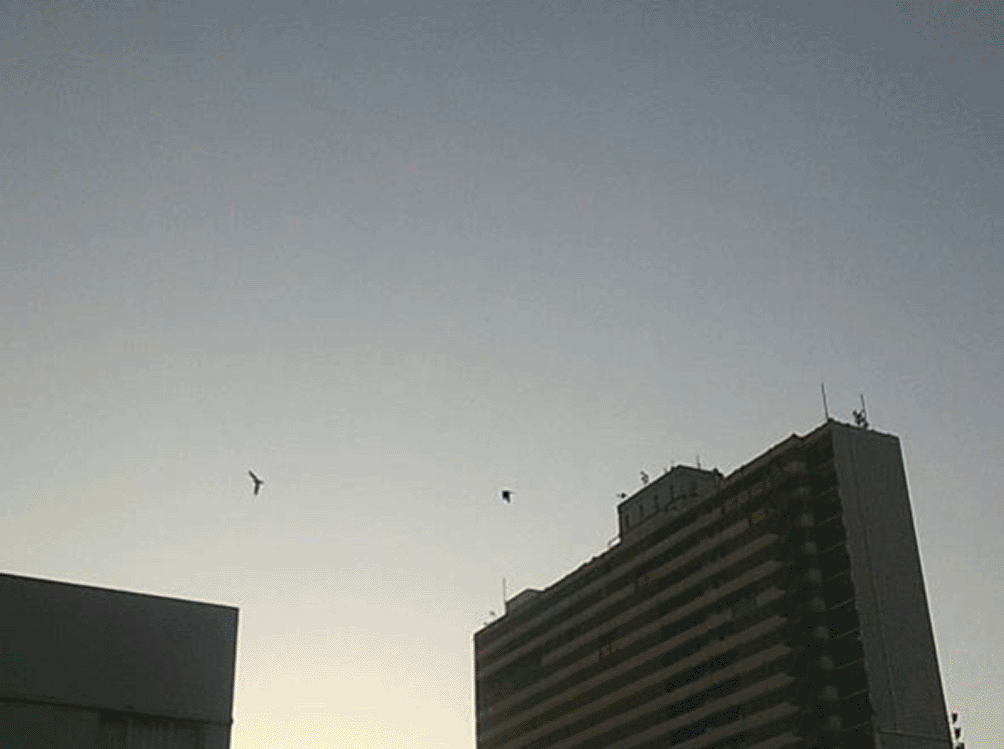
Figure 1. It is a new day.
Ethics statement
Ethical approval for the study was obtained from the Comité Ethique of the Université Paris 8, France (no approval numbers are provided by this committee) and from the Humanities & Social Sciences Research Ethics Committee (HSSREC) of the University of KwaZulu-Natal, South Africa, Number HSSREC/00008061/2024. Ethics review and approval was also provided by the European Research Council Executive Agency, Reference: Ares(2024)5403458.
Data availability statement
Data includes recordings and transcriptions of focus group discussions and workshops with young people in situations of migration who might be considered to be in a vulnerable situation. As recommended during the ERC ethics review “To ensure that vulnerable participants’ vulnerabilities are not further enhanced, the applicant should consider putting measures in place for responsible and sensitive dissemination of the research findings”. This includes not making all of our data publicly available. Due to the sensitive nature of the material and ethical commitments to participants, transcripts and notes are not publicly available. We can make some fully anonymised data available on request to the research team. Requests to access the data should be directed to grabs@univ-paris8.fr.
References
- Addae D, Quan-Baffour KP:
Afrophobia, “black on black” violence and the new racism in South Africa: The nexus between adult education and mutual co-existence.
Cogent Soc Sci.
2022; 8(1): 2130458. Publisher Full Text
- Al Jazeera:
South Africa’s Operation Dudula vigilantes usher in new wave of xenophobia.2023, September 26. Retrieved July 15, 2025.
Reference Source
- Amnesty International:
South Africa: Migrants living in constant fear after deadly attacks.2022, April 19. Retrieved July 14, 2025.
Reference Source
- Cabot H:
“Refugee Voices”: Tragedy, Ghosts, and the Anthropology of Not Knowing.
J. Contemp. Ethnogr.
2016; 45(6): 645–672. Publisher Full Text
- Cele Z:
Safeguarding sexual minorities in South Africa: Asylum seeker management system leading to immigration detention (Order No. 31908280).
ProQuest Dissertations & Theses Global; ProQuest Dissertations & Theses Global: The Humanities and Social Sciences Collection. (3196620750).
2024.
Reference Source
- Crankshaw TL, Freedman J, Mutambara VM:
Intergenerational trajectories of inherited vulnerabilities amongst young women refugees in South Africa.
Comp. Migr. Stud.
2023; 11(1): 10. Publisher Full Text
- Cross M, Cross M Jr:
Migration, Xeno/Afrophobia and Human Rights in South Africa.
Migrants and Comparative Education.
Brill;
2020; pp. 189–204.
- De La Bellacasa MP:
‘Nothing comes without its world’: thinking with care.
Sociol. Rev.
2012; 60(2): 197–216. Publisher Full Text
- Freedman J, Crankshaw TL, Rajah Y, et al.:
"But We Just Need Money": (Im) Possibilities of Co-Producing Knowledge With Those in Vulnerable Situations.
Soc Inclus.
2024; 12.
- Freedman J, Santana de Andrade G, Crankshaw T, et al.:
“How far I go is not my choice”. Immobility, Administrative Violence and Ontological Insecurity amongst Young People in Situations of Forced Migration in South Africa.
Comp. Migr. Stud.
2026.
- Godrie B:
Resisting scientific extractivism: A post-extractivist policy of knowledge production with marginalised communities.
Gateways: International Journal of Community Research and Engagement.
2025; 18(1): 1–14. Publisher Full Text
- Gorman J:
Beyond research extractivism in environmental justice research.
Rights and social justice in research.
Policy Press;
2024; pp. 161–182.
- Katsere I:
“Afrophobia”: Language does the dirty work.
University of Cape Town Humanities Faculty;
2019, May 22. Retrieved July 14, 2025.
Reference Source
- Kavuro C:
The disappearance of refugee rights in South Africa.
Obiter.
2022; 43(1), 49–78. Retrieved September 28, 2025.
Reference Source
- Kaziboni A, Lancaster L, Machabaphala T, et al.:
Scapegoating in South Africa: Busting the myths about immigrants.
ISS Southern Africa Report.
2022; 2022(53): 1–16.
- Khan F, Lee M:
Policy shifts in the asylum process in South Africa resulting in hidden refugees and asylum seekers.
Afr Hum Mobil Rev.
2018; 4(2): 1205–1225.
- Landau LB, Amit R:
Wither policy? Southern African perspectives on understanding law,‘refugee’policy and protection.
J. Refug. Stud.
2014; 27(4): 534–552. Publisher Full Text
- Lenette C:
Arts-based methods in refugee research.
Singapore:
SpringerSingapore;
2019.
- Mutanda D:
Economic threat, new nationalism and xenophobia in South Africa: Some reflections.
African Security Review.
2022; 31(3): 332–350.
- Ngcobo K:
Anti-migrant group ordered to stop blocking foreigners from South African healthcare.
BBC;
2025, 5 Nov. (consulté le 19, february 2026).
Reference Source
- Ngwane T:
Amakomiti: Grassroots Democracy in South African Shack Settlements.
Pluto Press;
2021. Publisher Full Text
- Omodan BI:
Building reciprocal relationships through decolonial practices in academic research.
Cogent Soc Sci.
2025; 11(1). Publisher Full Text
- Pittaway E, Bartolomei L, Hugman R:
‘Stop Stealing Our Stories’: The Ethics of Research with Vulnerable Groups.
J Hum Rights Pract.
2010; 2(2): 229–251. Publisher Full Text
- Ponzoni E, Ghorashi H, Rast M:
Co-creating Practices Toward Refugees.
Reflexivities and Knowledge Production in Migration Studies: Pitfalls and Alternatives.
2025; 55.
- Santana de Andrade G, Morrell I, Freedman J:
Discussing the use of participatory methods with young people on the move.
Frontiers in Human Dynamics.
2026; 7-2025. Publisher Full Text
- Santana de Andrade G, Freedman J, Crankshaw T, et al.:
«Kwerekwere » - On Afrophobia towards black migrants in South Africa.forthcoming.
- Tawodzera G, Crush J:
‘A foreigner is not a person in this country’: xenophobia and the informal sector in South Africa’s secondary cities.
Urban Transformations.
2023; 5(1): 2. PubMed Abstract
| Publisher Full Text
| Free Full Text
- Thambinathan V, Kinsella EA:
Decolonizing methodologies in qualitative research: Creating spaces for transformative praxis.
Int J Qual Methods.
2021; 20: 160940692110147. Publisher Full Text
- Waiganjo AG:
Coping mechanisms in navigating xenophobia-afrophobia-related challenges within the transnational space: case of Somali refugee women in Gauteng, South Africa.
J. Int. Migr. Integr.
2018; 19: 649–666. Publisher Full Text
- Willie N, Mfubu P:
Responsibility sharing: Towards a unified refugee protection framework in Africa.
Afr Hum Mob Rev.
2016; 2(3): 542–566. Publisher Full Text