Introduction
Industry 5.0 emerges as a key driver for utilizing research and innovation to create a more sustainable and human-centric industry.1 Creating a human-centric industry requires developing human-aware systems capable of understanding and adapting to workers. Human-aware systems rely on data-driven frameworks and technologies, such as AI-based methods, digital twins, and affective computing, to model, monitor, and respond to human states and behaviors. Therefore, to develop realistic industrial human-aware systems, it is essential to collect data that enables a better understanding of workers’ state.
At the workplace, workers’ actions and behaviors can be influenced by their emotional and cognitive states.2 Thus, human-aware systems should be trained with information that allows them to interpret and react to workers’ internal states. In this area, physiological activity provides great information about the internal status of workers. Physiological signals can be processed to derive states such as stress or attention, which can then be used to improve workers’ interaction with industrial entities such as robots.3
Currently, it is common to find industrial data from PLCs, robots, or navigation maps. On the other hand, it is difficult to find open-access physiological data from workers performing industrial activities. Majority of the available open-access sources of physiological data have been collected in controlled scenarios such as laboratories, and in contexts not related to industry. This dataset aims to fill this gap by providing recordings of physiological signals of four operators working in a quality control and packaging station of an assembly line. The dataset contains cardiovascular and ocular activity signals recorded while the operators executed tasks in a cooperative and a manual workstation.
Finally, this dataset has been collected and generated within the scope of the AI Powered human-centred Robot Interactions for Smart Manufacturing (AI-PRISM) project, which aims to improve human-robot interactions by making machines aware of workers current and future activities within the workplace.
Materials and methods
Data collection scenario
This dataset was gathered in a real-world assembly line located in Silverline Endustri Ve Ticaret A.S. (Silverline) facilities, a partner from the AI-PRISM project that manufactures home appliances. The data collection was conducted in the last section of the assembly line, in charge of the quality control and packaging of exhaust hoods. This section is composed of a cooperative and a manual workstation. In the cooperative workstation, the worker interacts with two collaborative robots (cobots) to perform the quality control of exhaust hoods. In this workstation, the operator cooperates with the cobots performing tasks such as pick and place, visual inspection, or grounding test. On the other hand, a second worker is located at the manual workstation to complete the process by assembling the filter, cleaning, and packaging the exhaust hoods.
Figure 1 illustrates a schema of the operations performed in this section of the assembly line.
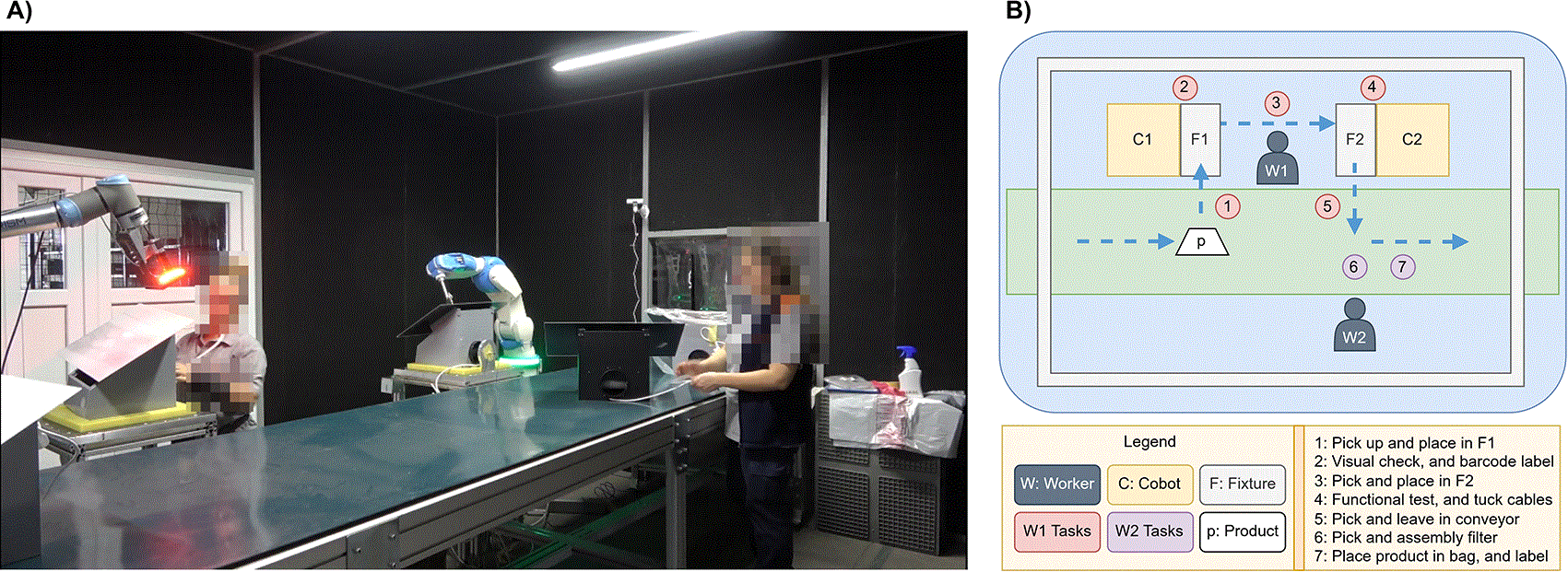
Figure 1. Quality Control & Packaging Section Layout.
A) Real-world assembly line. B) Operational workflow diagram.
The assembly workflow proceeds as follows. First, the exhaust hood is transported along the conveyor until it is picked up by the operator. The operator picks up the hood and places it in the fixture in front of a cobot. Next, the operator connects the hood and activates the cobot to perform a visual inspection for defects. Once the inspection has been completed, the operator places a barcode inside the hood and transports it to the fixture in front of the second cobot. After fixing the hood, the operator activates the cobot to perform the functional tests (grounding, isolation, and high-tension tests). When finished, the operator unplugs the hood, tucks the cable, and returns the hood to the conveyor. When the hood arrives at the second operator, they assemble the filter and metal label, clean the product, package it, and attach a label to the packaged product.
Participant recruitment and ethical policies
A total of four Silverline workers volunteered to participate in the data acquisition sessions. All workers were female, between 25 and 38 years old. Participants were not instructed to abstain from coffee, tea, smoking, or engaging in physical exercise prior to the data collection to preserve their typical routines. Written consent was obtained from all participants prior to the data collection. Furthermore, since the study involved human subjects and the collection of video recordings and physiological data, an application for ethical review was submitted prior to data collection. The Academic Ethics Committee of the Tampere Region approved all ethical and experimental procedures and protocols under the Statement 165/2023, performed in line with the GDPR and EU/institutional ethics codes.
Data collection
The data collection took place over two weeks in Silverline’s facilities. The workers were equipped with wearable devices to record their physiological activity during task execution. During the duration of the experiments, data from all four workers were collected in both the cooperative and manual workstations. Workers performed under their regular working conditions to capture the range of variations they typically experience in their work routine.
Two different wearable devices were used to record workers’ cardiovascular and ocular activity. Cardiovascular activity was recorded using the Polar H10 chest band, which has a sampling rate of 130 Hz. On the other hand, ocular activity was collected with Pupil Invisible glasses with an eye-tracking sampling rate of 200 Hz.
During the recording sessions, the eye-tracking glasses experienced overheating issues. To prevent data loss, recordings were taken in intervals of 20–30 minutes. Additional refrigeration periods were required during which workers continued their tasks, but eye-tracking data was not recorded. Therefore, the released dataset includes only time periods for which both the Polar H10 chest band and the Pupil Invisible eye-tracking glasses were working simultaneously. As a result of this situation, the last worker has less available data than the rest. Despite the overheating problems, it was possible to collect approximately 9 hours of data recording.
Data processing
To ensure synchronization between wearable devices, all video and physiological data streams were recorded using iMotions software.4 Each recording session was segmented by assembled product, and each assembled product was further divided into assembly steps using timestamp markers. An Area of Interest (AOI) corresponding to the operator’s visual work area was defined for each assembled product. Eye-tracking and electrocardiography metrics, including fixations, saccades, blinks, heart rate, and R-R intervals, were exported from iMotions in.csv format. The exported files were then processed using programming tools such as a Python/Jupyter Notebook pipeline to organize the data by recording session, assembled product, and assembly step, while handling missing values, outliers, and data inconsistencies. The resulting dataset contains timestamped ocular and cardiovascular measurements for all recorded sessions.
Ethics approval and informed consent
All ethical and experimental procedures and protocols were reviewed and approved by the Academic Ethics Committee of the Tampere Region on November 20th, 2023, under the Statement 165/2023 concerning a statement request 51/2023 “AI powered human-centred robot interactions for smart manufacturing AI-prism – psycho-physiological signal sensing for emotional-cognitive modelling: assessing skill levels and avatar generation”, following the ethical principles and guidelines defined by the Finnish National Board on Research Integrity (TENK). Before starting the data collection, all the participants were informed about the purpose of the study, its procedures, and their rights as participants, and the measures implemented to ensure their privacy and the confidentiality of their data. Participants gave written informed consent, confirming their voluntary participation in the study and their right to withdraw at any time.
Data availability
The data collected during the study is publicly accessible at Zenodo on https://doi.org/10.5281/zenodo.17658957.5
The dataset is structured as follows:
•
001(.zip) – 004(.zip): refers to the identification code assigned to each participant. Each.zip file contains four folders: blinks, ecg, fixations, and saccades.
•
blinks: This folder contains the .csv files from the different recording sessions in which the worker participated during the study. Each of these.csv files contains data related to the blinks of the worker during the corresponding session.
•
ecg: This folder contains the .csv files from the different recording sessions in which the worker participated during the study. Each of these.csv files contains data related to the electrocardiogram (ECG) of the worker during the corresponding session.
•
fixations: This folder contains the .csv files from the different recording sessions in which the worker participated during the study. Each of these.csv files contains data related to the fixations of the worker during the corresponding session.
•
saccades: This folder contains the .csv files from the different recording sessions in which the worker participated during the study. Each of these.csv files contains data related to the saccades of the worker during the corresponding session.
The.csv files are structured into columns corresponding to specific features of their own nature (blinks, electrocardiography (ECG), fixations, or saccades). Additionally, there can be found generic identifiers such as
• Worker ID: Identification code of each participant.
• Experiment Name: Name given to the recorded session.
• Event Label: Task of the assembly process that the worker was executing at that timestamp.
• Event Group: Number of the assembled product relative to the session. In blinks, fixation, or saccades, it could also refer to whether the worker was staring at the product’s working area or at another worker.
• Start: Time when the event described in Event Label begins.
• End: Time when the event described in Event Label finishes.
• Timestamp: Time when the data stream was recorded.
The dataset is licensed under Creative Commons Attribution 4.0 International (CC-BY 4.0) Public Domain Dedication license.
References
- 1.
European Commission:
Industry 5.0.
Accessed: Jul. 14, 2026.
Reference Source
- 2.
Aquino DPG, Jalagat DRC, Ahmed DKA, et al.:
Employees’ Mental Health and Productivity and its Impact on Contextual and Task Performance in Organizations.
Journal of Advanced Research in Dynamic and Control Systems.
2020; 12: 708–719. Publisher Full Text
- 3.
Toichoa Eyam A, Mohammed WM, Martinez Lastra JL:
Emotion-Driven Analysis and Control of Human-Robot Interactions in Collaborative Applications.
Sensors.
2021; 21. PubMed Abstract
| Publisher Full Text
| Free Full Text
- 4.
iMotions A/S:
iMotions, ver. 10.
Copenhagen, Denmark:
2025.
- 5.
Toichoa Eyam A:
Dataset of Workers Physiological Signals During Assembly Tasks.
Zenodo.
Nov. 2025. Publisher Full Text







