Introduction
Freight transport and logistics are undergoing a profound transformation driven by the combined pressures of decarbonisation, digitalisation, urbanisation and supply-chain resilience. The European Green Deal, the Sustainable and Smart Mobility Strategy, and the ambitions of the Digital Transport and Logistics Forum (DTLF) require logistics systems to become significantly more energy-efficient, multimodal, interoperable and transparent. At the same time, disruptions, from global crises to local bottlenecks, have highlighted the fragility of traditional, siloed freight systems and reinforced the need for more adaptive, connected and resilient transport networks.
Against this framework, research on hyperconnected logistics has accelerated. Concepts such as the Physical Internet (PI) envision a logistics ecosystem characterised by modular, standardised physical units, open and collaborative data flows, and real-time synchromodal orchestration across modes and networks. Parallel advances in Internet-of-Things (IoT), digital twins, AI-based optimisation, and zero-emission transport technologies demonstrate the potential of cyber-physical systems to radically reconfigure freight mobility. Yet despite rapid technological progress, the transition toward fully integrated, PI-compatible logistics remains incomplete. Interoperability gaps persist at multiple levels, including physical interfaces, semantic models, data governance frameworks and operational standards, limiting the scalability and real-world impact of emerging innovations.
The EU-funded project HOLOGISTICS builds upon this evolving landscape by developing twelve innovations that collectively represent the building blocks of a next-generation logistics ecosystem. These innovations span modular physical systems, digital-intelligence layers, federated data ecosystems and zero-emission transport technologies. Through real-world pilots and cross-sector collaboration, HOLOGISTICS seeks to demonstrate how these innovation streams can converge into a functioning, interoperable, multimodal architecture aligned with PI principles and European TEN-T objectives. The project therefore provides an ideal lens through which to examine the state of the art and identify the research challenges that must be addressed to enable scale-up. Despite extensive research across these domains, the literature remains fragmented: studies often focus on isolated technologies, modes or use cases without fully exploring how these elements interact within an integrated logistics architecture. What is missing is a synthesised understanding of the cross-cutting challenges that must be overcome to advance from promising prototypes to system-level transformation.
This paper responds to this need by offering a systematic, PRISMA-guided thematic analysis of recent developments in hyperconnected logistics and by articulating a set of research priorities grounded in both academic evidence and the innovation trajectories of HOLOGISTICS. The contribution of this paper is threefold. First, it consolidates developments across modularisation, cyber-physical optimisation, federated data ecosystems and zero-emission operations into a coherent, evidence-based state-of-the-art overview. Second, it identifies the systemic gaps, technical, organisational and regulatory, that inhibit the emergence of PI-aligned, hyperconnected logistics networks. Third, it outlines a forward-looking research direction that connects these challenges to the real-world innovation agenda of HOLOGISTICS, positioning the project as a catalyst for bridging the divide between technological capability and system-level implementation.
In line with PRISMA 2020 reporting guidance, this systematic review was guided by the following review question: which technologies and mechanisms currently enable, and which gaps currently constrain, the transition toward hyperconnected, zero-emission, Physical-Internet-aligned freight logistics in Europe? The specific objectives were to (i) systematically identify and synthesise literature relevant to this question; (ii) map this evidence onto four cross-cutting themes — modular physical systems, digital-intelligence and cyber-physical optimisation, interoperable data ecosystems and governance, and zero-emission energy-optimised operations; and (iii) identify the technical, organisational and regulatory gaps that must be addressed to advance from isolated technological progress to system-level transformation.
Methods
This review is reported with reference to the PRISMA 2020 statement for systematic reviews, adapted to the scope of a technology and standards evidence base rather than a clinical-outcomes review. The completed PRISMA 2020 checklist and a PRISMA flow diagram (
Figure 1) have been deposited in an open-access repository and are cited in full in the Data Availability statement and References below.
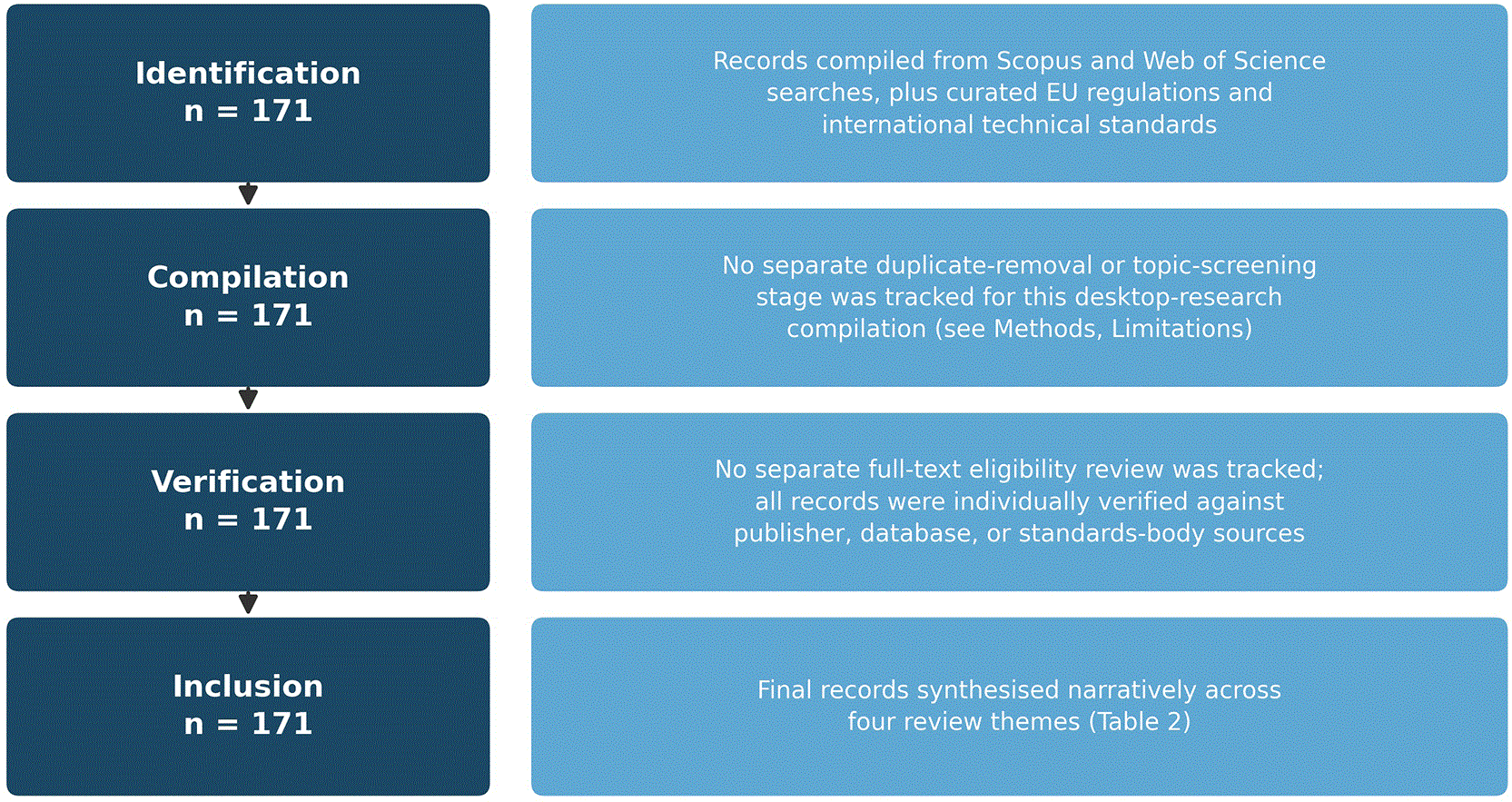
Figure 1. Record-compilation flow diagram for this systematic review.
All 171 records in the reference base (References 1–171) were compiled through Scopus and Web of Science searches, supplemented by curated EU regulations and international technical standards, and individually verified against publisher, database, or standards-body sources before inclusion in the narrative synthesis. No formal multi-stage screening/exclusion funnel was tracked for this desktop-research compilation; see Methods – Selection process and Discussion – Limitations. Figure supplied as a separate file (Figure 1_flow.jpg).
Protocol and registration
This review was not prospectively registered. The review’s research question and eligibility criteria (below) were defined internally within HOLOGISTICS Task 1.2 (Desktop Research).
Eligibility criteria
Eligible records comprised peer-reviewed journal articles and conference proceedings addressing modular physical logistics systems, digital intelligence and cyber-physical optimisation, interoperable data ecosystems and governance, or zero-emission and energy-optimised transport operations, together with directly relevant EU regulations, international standards (ISO, IEC, ITU, IMO, IACS, IHO) and other official technical or policy documents underpinning these four themes. No language, publication-date, or study-design restriction was applied a priori; in practice, eligible records span 1995–2026, with 85% published from 2020 onward.
Information sources
Records were compiled from the Scopus and Web of Science databases, supplemented by official European Commission, United Nations/UNECE, and international standards-body sources (ISO, IEC, ITU, IMO, IACS, IHO, CESNI, DNV, Bureau Veritas), as part of the desktop-research process underlying HOLOGISTICS Deliverable 1.2.
Search strategy
Database searches combined terminology for each of the four review themes (e.g. “smart container”, “digital twin”, “federated data space”, “zero-emission vessel”) with logistics- and transport-specific qualifiers. Full, database-specific Boolean search strings were not retained in the project records available for this analysis; this is noted as a limitation. Records were supplemented by direct identification of applicable EU legislation and international technical standards relevant to each theme.
Selection process
Records were compiled and screened by the two authors for relevance to the four review themes. Granular, stage-by-stage screening counts (for example, records identified before de-duplication, records excluded at title/abstract versus full-text stage) were not retained in the project documentation available at the time of this analysis; only the final, de-duplicated list of 171 records could be verified and is reported here. This is noted as a limitation, and a full PRISMA flow diagram will be reconstructed if the underlying screening records become available.
Data collection process and data items
For each eligible record, the following data were extracted: authors, publication year, title, and source journal, venue, or issuing body. Records were independently classified by the review team into one of the four review themes based on title and subject matter (
Table 1). No formal outcome measures were pre-specified, consistent with a review that synthesises enabling technologies, standards and organisational mechanisms rather than intervention effects.
Table 1. Distribution of the 171 records across the four review themes.
| Review theme | n |
% |
|---|
| A. Modularisation and automated physical systems | 31 | 18.1% |
| B. Digital intelligence and cyber-physical optimisation | 49 | 28.7% |
| C. Data ecosystems, interoperability and governance | 48 | 28.1% |
| D. Zero-emission and energy-optimised operations | 43 | 25.1% |
| Total
| 171
| 100.0%
|
Study risk of bias assessment
Because the included literature spans conceptual analyses, simulation studies, empirical evaluations, and official standards or regulatory instruments across engineering, computer science, transport-policy and logistics-management traditions, no single validated risk-of-bias or critical-appraisal tool was applied across all records. This is noted as a limitation in the Discussion.
Synthesis methods
Given the heterogeneity of record types, designs and metrics, results were not pooled statistically and no meta-analysis was conducted. Findings were instead grouped into the four review themes (
Table 1) and synthesised narratively within each theme (Results). No formal investigation of heterogeneity or sensitivity analyses were conducted, consistent with this narrative-synthesis approach.
Results
Study selection
The desktop-research process underlying HOLOGISTICS Deliverable 1.2 compiled a final, de-duplicated bibliography of 171 records: 26 records discussed directly in the narrative synthesis below with individually verified bibliographic details, and a further 145 records retrieved through database searches and curated regulatory/standards sources. All 171 records were individually checked against publisher, database, or standards-body sources at the time of writing (see
Figure 1, supplied as a separate file). Stage-by-stage screening counts preceding this final list (e.g. total records initially retrieved, duplicates removed, records excluded at title/abstract or full-text stage) were not retained in the project documentation available for this analysis; this is noted as a limitation in the Discussion, and
Figure 1 (supplied as a separate file; legend at the end of the manuscript) therefore reports record compilation and inclusion only, rather than a full four-stage PRISMA identification/screening/eligibility/inclusion flow.
Study characteristics
The 171 records span 1995 to 2026, with 85% (145 of 171) published from 2020 onward, reflecting the fast-moving nature of the underlying technologies while retaining foundational earlier work and current (2025–2026) standards and regulatory instruments.
Table 1 shows the distribution of records across the four review themes. Records were most heavily concentrated in the data-ecosystems, interoperability and governance theme (48 records, 28%), reflecting the breadth of technical standards and EU regulatory instruments underpinning this theme, followed by digital intelligence and cyber-physical optimisation (49 records, 29%), zero-emission and energy-optimised operations (43 records, 25%), and modularisation and automated physical systems (31 records, 18%). The complete bibliographic list of all 171 records is provided in the References section.
Synthesis of results
Findings are synthesised narratively below across the four review themes, consistent with the approach described in Methods. Every one of the 171 records in the reference base is cited at least once below or in the Discussion; see References for full bibliographic details.
Modularisation and automated physical systems
One key area of study for modularisation is the increasing need for interoperable, reusable, and sensor-enabled load units. Smart, reusable and recyclable packaging has been studied extensively in the food sector, where closed-loop container networks, bi-objective packaging network designs, and IoT/RFID-enabled smart packaging systems have been found to improve traceability, reduce waste, and preserve product integrity across food supply chains.1,2,3,5,29,30,35,37 Dynamic numbering and identification schemes for modular cargo containers extend this interoperability logic from packaging to the container level itself.4
Automation in physical handling processes forms a second strand of this literature. Automated and semi-automated loading platforms, electric railcar and wheel loaders, and hydraulic excavators using positive-flow and load-sensing drive systems have been shown to reduce dwell time, manual handling labour, and energy consumption at rail and terminal facilities.6,46,47 Rail-specific automation, including automated recognition of railroad infrastructure from LiDAR data and the deployment of autonomous trains, is reported to improve both safety and service network efficiency.7,27,39 Robotised infrastructure at inland-waterway and port facilities, and industrial robotics more broadly, are similarly linked to efficiency gains and emission reductions,8,45 while smart stacking and integrated scheduling of handling equipment with bidirectional flows have been shown to raise throughput at automated container terminals.33,49
A third strand connects physical modularisation directly to the PI concept and to freight interoperability between modes. Studies frame PI as requiring standardised, modular, and smart containers combined with interconnected hubs; digital-twin-based inbound synchronisation frameworks, smart box-enabled product-service systems, and spatial wireless-sensor-network models for container monitoring have been proposed to operationalise this vision for warehouses and PI-hubs.38,40,43,44,48 Freight-carriage interoperability between maritime and rail transport modes has been identified as a further precondition for sustainable, modular freight networks.36 Design of reliable logistics hub networks under disruption, rail-road PI cross-docking hub scheduling that accounts for energy consumption, port digital-twin development explicitly aimed at decarbonisation, and simulation-based studies of rail-borne bulk logistics efficiency further illustrate how physical-layer redesign is increasingly evaluated jointly against efficiency, reliability and environmental criteria.28,31,42,74 Sector-wide adoption of advanced manufacturing and automation technologies, however, continues to face structural barriers and enablers that shape how quickly such modular, automated systems diffuse in practice,41 including in energy-intensive settings such as mining load management34; technical standards for physical equipment, such as electrical requirements for cargo/carrier cycles, remain an active area of standardisation.32
Digital intelligence and cyber-physical optimisation
Digital twins, predictive analytics, and AI-driven optimisation have come to characterise “next generation” logistics. Digital twin use cases for ports/terminals and intermodal facilities cover predictive applications,9,10,11 and digital twins of vessels and maritime assets more broadly.64,83 Studies show that integrated digital twin architectures, and predictive maintenance models built on them, can reduce energy consumption, shorten vessel turnaround times, and optimise operational planning.12 Systematic reviews of digital twin applications in construction, energy efficiency, and oil and gas find consistent gains in predictive accuracy and lifecycle-service quality but persistent challenges around definition, standardisation and cybersecurity of the twin itself.50,51,52,53,59,70,76,88 Digital-twin-enabled ship routing frameworks that explicitly account for decarbonisation regulatory compliance, IoT-based frameworks for ship-maintenance information exchange, and digital-twin/cybernetic feedback approaches to smart-city logistics extend this concept into operational decarbonisation and urban planning.60,62,89
Synchromodal and AI-driven optimisation of freight flows forms a second major strand. Agent-based re-planning, optimisation-simulation approaches, and systematic reviews of synchromodal transportation consistently report improved dynamic re-routing, load balancing and capacity management relative to static planning,13,14,15,16 while broader surveys of AI in logistics and supply chain management identify route optimisation, demand forecasting and fleet management as the most mature AI application areas to date.54,58,63,65,67,68,81,87 AI-based hub-location and last-mile optimisation studies, including matheuristic and multi-agent deep-reinforcement-learning approaches to e-commerce logistics and EV charging coordination, report measurable efficiency and cost improvements over conventional heuristics.56,61,66,72,79,85 The economics of automating public and shared transport operations more broadly is also shown to affect operator cost, travel time and subsidy requirements, extending AI-driven optimisation questions beyond freight into passenger-freight synergies.86
A third strand addresses the IoT as the connective layer enabling both digital twins and AI optimisation. Comprehensive surveys of IoT applications in smart logistics report consistent gains in real-time visibility, monitoring and traceability, though interoperability and standardisation gaps between platforms persist,57,78,84,90 and roadmaps for integrating blockchain with IoT propose decision-making frameworks to secure these data flows.71,75 Security remains a recurring concern in IoT-enabled digital twins of maritime transportation systems.73 Enabling technologies for urban smart mobility further illustrate how IoT, AI and digital-twin layers converge at the city scale.77 Finally, adoption research indicates that organisational, social and governance barriers, rather than the underlying technologies themselves, are often the binding constraint on AI and Industry 4.0 uptake in logistics and smart-city contexts,55,69,80,82 a theme that connects directly to the governance literature discussed below.
Data ecosystems, interoperability and governance
Interoperability is one of the most significant challenges to overcome in order to realise the PI vision. Standardisation of data models, use of APIs, and development of federated data spaces have been highly emphasised as areas for fostering interoperability between systems.17,18,19,95,114 The European Commission’s Digital Transport and Logistics Forum (DTLF) has spurred the development of the Common European Mobility Data Space (EMDS) and the eFTI Regulation on electronic freight transport information, which together establish the regulatory basis for standardised, cross-border logistics data exchange within the EU;99,101,102 the European Blockchain Services Infrastructure (EBSI) extends this basis toward verifiable, decentralised data exchange.100 Concepts for federated data spaces such as IDSA gain acceptance as governance frameworks for collaboration between multiple organisations,18 and recent work on data sovereignty formalises the requirements for actors to retain control over shared data within such spaces.106,131
A second strand concerns sector-specific data-exchange standards and single-window concepts. The Single Window Concept for international trade, transport and seaports, global data-exchange standards for smart container digital services, business requirements for logistics data sharing identified within the EU-funded FENIX project, and automatic information exchange between interoperable systems at seaport terminals each describe practical mechanisms for consolidating fragmented data flows into interoperable services.92,94,115,128 Blockchain-enabled IoT logistics systems for tracking high-value shipments, and international standards for tracking and tracing on inland waterways and for electronic consignment notes (eCMR), extend this single-window logic to shipment-level provenance and paperless documentation.93,129,130 A broader literature review of operational decisions in collaborative supply chains, and a roadmap evaluating the role of data networks and APIs for operational efficiency in small and medium enterprises, situate these data-exchange mechanisms within wider supply-chain collaboration and firm-level adoption questions.97,118 Maritime- and inland-waterway-specific technical standards, including IHO S-57 hydrographic data, CESNI’s River Information Services standard, NMEA 0183 for marine electronics, connected and automated mobility on-board unit standards, and ITU radio-communication standards for automatic identification and VHF data exchange, provide the lower-level technical interoperability layer on which these data-sharing services depend;96,109,112,113,121,124 IACS cyber-resilience requirements and ISO standards for shipboard machinery data further extend this interoperability layer into cybersecurity and asset-data management.107,108,111 At the vehicle-to-grid interface, ISO 15118 defines the communication interface enabling electric vehicles to participate in interoperable energy and mobility data exchange.110 Analytics of European and national standards for data quality, interoperability and safety confirm that this standards landscape remains under active development and harmonisation.123
A third strand addresses data governance more broadly. Studies on data governance for trustworthy AI, data sovereignty in information systems, and embedding public-interest values in data governance collectively argue that technical interoperability must be matched by clear governance rules on access, control and accountability if federated data spaces are to be trusted by participants.116,131,133 EU-level instruments such as the Cybersecurity Act, the rail interoperability technical specification for freight wagons, the inland-waterway technical-requirements Directive, and non-financial reporting obligations under Directive 2014/95/EU illustrate how regulatory and governance frameworks are being built out in parallel with technical standards.98,103,104,119 Sector analogues from outside freight logistics, including the European Health Data Space and cross-border health-data interoperability projects, offer transferable governance lessons on balancing data sharing with sovereignty and trust.105,126 Persistent adoption barriers for IoT and secure, cloud-based logistics data-sharing technologies in logistics and smart-city contexts, including IoT-enabled hazardous-goods monitoring applications, are reported consistently across this literature,91,117,120,122,125,127,132 reinforcing the conclusion from the digital-intelligence theme above that governance and organisational readiness, not technology per se, are the binding constraint on interoperable data ecosystems.
Zero-emission and energy-optimised operations
Studies on transport decarbonisation have pointed to electrification, hydrogen propulsion concepts, and multi-agent energy optimisation as crucial drivers for zero-emission logistics corridors.20,21,138,148 Battery-electric and hybrid-electric propulsion, as well as fuel-cell power systems, have been shown to already reduce emissions significantly and to improve energy efficiency for inland waterway transport and port-related activities,20,168 while systematic reviews of Industry 4.0 technologies applied to inland waterway transport identify traffic monitoring, smart navigation, emission reduction, big-data analytics and cybersecurity as the five leading application domains for the sector.145,161 Impact studies of automation and zero-emission propulsion on small inland cargo vessel design confirm that automation and decarbonisation are increasingly evaluated as joint, rather than separate, design objectives.135
Multi-agent reinforcement learning and distributed optimisation strategies have also been found to have significant applications for charging-synchronisation strategies and for fleet management balancing energy scheduling processes, as in.22,23,24,134,157 Cooperative and hierarchical multi-agent systems for EV charging scheduling across multiple stations, decentralised management of large-scale EV fleets, and distributed convex optimisation for EV aggregators report consistent improvements in charging efficiency, grid congestion and fleet utilisation relative to centralised or myopic scheduling approaches;158,160,162,163,164,169,170,171 decentralised energy-management strategies for EV charging within islanded microgrids extend these gains to off-grid and resilience-critical settings.136
While the integration of logistics route-planning strategies with energy-grid management remains at an early stage, several studies have shown promising interest in this area for future development, including automated electric transportation deployment strategies compared against isolated approaches144 and policy decision-support frameworks assessing the economic viability of inland waterway transport in sustainable urban areas.156 Case studies of inland waterway transport development, and of digital information services needed to sustain it, confirm that economic viability and digital readiness must be assessed jointly with environmental performance,159,165 while sustainability-issue taxonomies for inland waterway transport situate these findings within the wider UN 2030 Agenda.140 Regional electric-propulsion standardisation efforts, such as policy recommendations for electric passenger ferries on inland waterways in the Philippines, illustrate how this transition is being operationalised outside Europe as well.166 A substantial body of international standards and regulatory instruments now underpins this transition: IEC and IEC/IEEE standards for electric-vehicle conductive charging, shore-side electrical installation requirements, and high-voltage shore connection in ports,139,149,150,151,152 the IMO’s draft Maritime Autonomous Surface Ships (MASS) Code, DNV rules for autonomous and remotely operated vessels, and Bureau Veritas machinery and electrical requirements collectively govern the safe deployment of automated, zero-emission vessels;137,141,153 ITU radiotelephone and automatic-identification-system standards provide the communication backbone for these automated maritime operations.154,155 EU instruments including the Euro 7 emissions and battery-durability regulation and EMSA guidance on battery energy storage systems on board ships extend this regulatory layer to vehicle- and vessel-level emissions and safety,142,143 while national and international bodies continue to update inland-waterway-specific technical and operational requirements, including Dutch regulations for automated inland shipping experiments and UNECE’s harmonised technical recommendations for inland navigation vessels.146,147,167
Discussion
Key challenges and future research priorities
A transition towards hyperconnected and emission-free logistics is characterised by a set of interrelated issues that form a clear path for research in the coming years. One key issue is holistic support for PI-compatible modularisation. Although recent breakthroughs in intelligent containers, reusable packaging, and automated loading systems have shown improved performance in terms of efficiency, traceability, and recycling potential,1,2,4,29,35 today’s landscape is far from holistic overall. Current approaches tend to be lock-and-key in nature and emerge in either mode-related or corridor-related domains, depending on heterogeneous design parameters, incompatible proprietary schemas, and differing coupling standards. This creates scalability and interoperability challenges and, therefore, demands a holistic definition and compatibility-testing infrastructure for modular logistics systems.5,6,41
The success of digital twins is inextricably linked to developments in federated data environments, which several scholars consider to be the cornerstones of next-generation freight systems.18 Although rigorous models such as those defined by DTLF, IDSA, and the EMDS are already well established, their application leaves room for improvement. Empirical analyses make clear that reaching agreement on governance rules, and ensuring API compatibility and interoperable semantics among transport entities, remains problematic.17,19,95,116 Without scalable, trustworthy infrastructure underpinning data exchange, intermodal transport governance today faces limitations in several respects, and further research is required to better understand governance and trust-establishment approaches.
Decarbonisation brings about a further set of structural issues. Optimising emission-free corridors requires the holistic governance of transport and energy networks, whereas traditional optimisation benchmarks still largely treat vehicle routing, dispatch, and energy supply as separate, unrelated problems.22 Multi-agent predictive optimisation models and frameworks have shown promising potential for charging coordination and depot-scale optimisation, but their interaction with, and responsiveness to, energy networks and market conditions, such as price signals, is not yet satisfactorily addressed in the recent literature.12,24,162
A further challenge concerns the governance of human-AI collaboration, as AI-driven decision-making becomes increasingly embedded in logistics operations. Optimisation algorithms and predictive models continue to take on greater operational responsibility, raising questions of explainability, liability and acceptance by human operators.25 Research communities stress the importance of auditability and transparency, particularly in systems where automation influences safety-critical or time-sensitive decisions.26 Future work must advance human-in-the-loop design principles, clarify responsibility distributions, and develop regulatory frameworks that ensure trustworthy integration of autonomous and semi-autonomous systems in logistics.
These challenges collectively form a layered research agenda that mirrors emerging architectures for hyperconnected logistics. At the foundation lies the need for interoperable physical modularisation; above it, digital twins and AI-driven orchestration provide adaptive capabilities; federated data ecosystems serve as the connective tissue enabling cross-actor collaboration; zero-emission energy optimisation ensures environmental alignment; and governance structures ensure transparency, trust and human agency. Progress in any one layer is contingent on advances in the others, reinforcing the need for integrated, multi-layer research capable of advancing logistics toward a fully PI-enabled and zero-emission future.
Interpretation
The synthesis of recent research shows that hyperconnected logistics is emerging from the progressive alignment of several previously separate innovation streams. Modular physical systems, digital twins, federated data architectures and zero-emission technologies are now developing in parallel, yet their integration remains partial and uneven. The literature highlights that although intelligent containers, reusable modular units and automated handling platforms are increasingly available,1,2,38 their deployment is still constrained by incompatible standards and fragmented operational practices, limiting their contribution to end-to-end multimodal coordination.
Digital twins show similar patterns of progress and fragmentation. Significant advances have been made in modelling maritime operations, port processes and predictive maintenance.9,11,12 However, these implementations remain largely domain-specific: digital twins rarely interoperate across assets, organisations or modes, and their semantics are not yet standardised.50,53 This prevents the emergence of “network-level twins” capable of supporting synchromodal planning or corridor-wide optimisation. Scholars increasingly argue that a new generation of digital twin architectures, interconnected, semantically aligned and synchronised with operational data, is needed for predictive and resilient logistics.52
The discussion becomes even more complex when considering data governance. Research on data spaces and interoperability frameworks stresses the importance of establishing shared semantics, trusted access mechanisms and governance protocols.18,19,106,131 Yet empirical studies reveal that logistics actors continue to operate within highly siloed information systems. Even where technical APIs exist, trust, liability and competitive concerns hinder data sharing. This misalignment between digital potential and organisational readiness reinforces the need for robust governance models that enable cross-actor collaboration without undermining data sovereignty.
Decarbonisation pressures further amplify these challenges. Studies on electric and hydrogen propulsion demonstrate clear environmental benefits but also highlight operational vulnerabilities, especially where energy supply, charging logistics and routing decisions interact.21,168 Only a limited number of works explore integrated planning approaches that coordinate transport operations with energy-system constraints, despite their importance for designing zero-emission multimodal corridors.
Taken together, this body of research exposes a structural gap between technological maturity and systemic maturity. Technologies such as AI, digital twins, IoT, and multi-agent optimisation are advancing rapidly, yet the governance frameworks, standardisation mechanisms and cross-domain integration needed to deploy them at scale are evolving more slowly. This tension reflects a recurring theme in logistics innovation: progress within individual domains does not automatically translate into system-level transformation. In this context, the challenges identified above can be interpreted as elements of a multi-layered transition pathway. Modular physical assets form the base of a PI-compatible ecosystem; above them, digital twins and AI provide the cognitive capabilities for orchestration; federated data ecosystems offer the connective tissue enabling collaboration; energy-optimised infrastructures ensure environmental sustainability; and governance structures anchor the human and regulatory dimensions. The literature suggests that advancing these layers in isolation is insufficient: meaningful progress requires integrated research that simultaneously addresses physical, digital, organisational and regulatory aspects.
Limitations
This review has several limitations that should be considered when interpreting its findings. First, no formal risk-of-bias or critical-appraisal tool was applied to included records, given the heterogeneity of record types (academic studies, EU regulations, and international technical standards) across engineering, computer science, transport-policy and legal traditions; the review therefore cannot report a formal certainty-of-evidence rating. Second, and most importantly, the stage-by-stage screening counts that preceded the final 171-record bibliography (records initially retrieved, duplicates removed, records excluded at title/abstract or full-text stage) were not retained in the project documentation available for this analysis. Third, the full database-specific Boolean search strings used during the original desktop-research phase were not retained; the terms reported in Methods describe the search approach but are not independently reproducible in their exact original form. Fourth, thematic classification of records into the four review themes was performed by the review team based on title and subject matter rather than a pre-registered, independently verified coding scheme.
Implications for research and practice
Taken together, these findings imply that future research on hyperconnected logistics should treat physical modularisation, digital-intelligence orchestration, data governance and energy optimisation as jointly evolving layers rather than as sequential or independent research programmes. For practitioners piloting individual HOLOGISTICS innovations, the review suggests that interoperability and governance dependencies, rather than the physical or digital technologies in isolation, are likely to determine whether pilot-scale gains translate into system-level, PI-aligned transformation.
Conclusions
This paper has synthesised current developments across modular logistics systems, digital twin technologies, federated data spaces and zero-emission transport, highlighting how these domains collectively underpin the transition toward hyperconnected freight ecosystems. While the literature demonstrates rapid technological progress, particularly in IoT-enabled modular assets, predictive digital twins and multi-agent optimisation, system-level integration remains limited. Fragmented standards, heterogeneous data models and insufficient governance structures continue to hinder the deployment of PI-compatible solutions at scale.1,9,18 The structured analysis presented here shows that the next stage of innovation depends on the co-evolution of several layers: interoperable physical modularisation, semantically aligned digital twins, trusted and sovereign data-sharing mechanisms, energy-aware optimisation frameworks, and human-centric governance models. Advancing any one layer in isolation is unlikely to unlock meaningful transformation; instead, future work must address their interactions and the institutional, regulatory and organisational conditions that shape them.19,22,25
In this regard, the HOLOGISTICS project plays a vital bridging role. By implementing a series of twelve innovations spanning port/intermodal connectivity, zero-emission last-mile distribution, and shared electric vehicles, the project directly tackles many of the structural weaknesses identified above. The pilots realise the Physical Internet principles of modularity, real-time visibility, synchromodality, and open data exchange in concrete real-world corridors aligned with the TEN-T network, moving from theory to practice. HOLOGISTICS also proposes governance and interoperability tools that contribute to overcoming fragmentation in freight logistics within the European context. By using data-exchange models that fall within the framework of the European Mobility Data Space (EMDS), the project creates the preconditions needed for its various actors to interact within a framework of data sovereignty. By merging physical innovations with digital-intelligence layers and governance-interoperability frameworks, HOLOGISTICS exemplifies the possible co-evolution of technological, organisational and regulatory innovations needed to achieve the system-level transformation required to fulfil the PI vision and the EU’s decarbonisation ambitions.
The research priorities identified, ranging from standardised modular asset specifications to cross-actor data governance, network-level digital twin orchestration, and integrated energy-transport coordination, provide a roadmap for guiding academic inquiry and innovation policy. In doing so, they support not only the ambitions of HOLOGISTICS but also broader European objectives for decarbonised, interoperable and resilient freight mobility. Continued progress in these areas will be essential for realising the vision of a Physical-Internet-enabled, zero-emission logistics ecosystem capable of meeting future societal and economic demands.