1. Introduction
1.1 Digital transition of rural and island producers
Digitalisation is reshaping agricultural production, advisory services, market relationships and rural entrepreneurship. Digital tools can facilitate access to information, connect producers with consumers, support participation in agricultural knowledge and innovation systems and create opportunities for income diversification. Digital agriculture may also contribute to more sustainable agricultural systems, but its benefits depend on how technological, economic, environmental and social dimensions are balanced.1 Digital transformation should therefore not be understood as the simple introduction of new technologies. It is a socio-technical process shaped by infrastructure, institutional arrangements, user capabilities, trust and the extent to which digital services correspond to everyday agricultural practices.2,3,4,5
Persistent inequalities in connectivity, affordability, digital literacy and access to technical support create multiple levels of digital exclusion, particularly for small-scale producers and geographically remote rural communities.6,7,8,9 Even where internet access is available, producers may lack the confidence, time or practical skills required to use digital services for commercial purposes.7,8,9 The rural digital divide therefore extends beyond physical connectivity. It also concerns whether individuals can use digital technologies meaningfully, independently and consistently.
This distinction is particularly important for small-scale producers. Digital platforms can potentially reduce geographical isolation, expand access to markets and allow producers to communicate the provenance and local identity of their products. Nevertheless, adoption is influenced by perceived usefulness, ease of use, social support, trust, skills, costs and uncertainty regarding the benefits of participation.10,11 Digital transformation can therefore reinforce existing inequalities when platforms are designed around the resources and capabilities of larger or more digitally experienced businesses.3,4
For remote island communities, digital participation can be especially significant. Geographic isolation, small domestic markets and seasonal demand can limit conventional market access, while digital channels can enable producers to reach customers outside the island and connect agricultural products with tourism and agritourism activities. However, the existence of a platform does not itself ensure participation. Producers must also be able to translate products, services and local knowledge into credible and attractive digital content.
1.2 Digital skills, market access and platform adoption
Participation in a digital marketplace requires a combination of technical, commercial and communication skills. Producers may need to create accounts, navigate interfaces, upload products, determine prices, prepare descriptions, take and edit photographs, manage orders and understand basic issues related to payments, privacy and data security. Although these tasks may appear relatively simple to experienced users, together they can create a substantial listing burden for producers with limited time, previous e-commerce experience or confidence in producing digital content.
Research on farmers’ adoption of precision-agriculture technologies and digital platforms indicates that adoption depends not only on access but also on perceived usefulness, effort expectancy, farm and user characteristics, perceived relevance, social influence, available support and trust.10,11,12 A platform may be perceived as useful while still being considered too demanding for independent use. Similarly, a favourable attitude towards digital technology does not necessarily translate into account creation, product uploading or sustained platform participation. Adoption readiness should therefore be examined through concrete intended behaviours rather than through general attitudes towards technology alone.
Digital education can help address these barriers when it is practical, locally relevant and directly connected to the tasks users are expected to perform. Previous educational research in Greece, although undertaken in the different field of environmental and waste-management education, has identified gaps between familiarity with a topic, positive attitudes and the ability to act on that knowledge.13,14 Evidence from a targeted experiential intervention has also shown the value of connecting educational content with concrete, contextually meaningful activities.15 These findings do not constitute evidence about rural platform adoption, but they support an educational approach that moves beyond information provision towards guided application.
For rural e-commerce, such an approach may include photographing an actual product, preparing a credible description and completing a guided upload. These activities make digital market participation more tangible than a general platform demonstration. They can also reveal where the platform continues to create unnecessary effort. Training and platform development should therefore be treated as connected processes: education helps participants develop practical capabilities, while participants’ experiences identify interface changes and support mechanisms required for meaningful adoption.
Human support remains important within this process. Digitalisation changes how agricultural knowledge is generated, exchanged and applied, creating new capability requirements not only for farmers but also for advisers and other agricultural knowledge and innovation system actors.16 Trainers, cooperatives, peer networks and advisory actors can build trust, explain unfamiliar procedures and help when producers encounter difficulties.16,17
This is particularly relevant when artificial intelligence is incorporated into rural platforms. Artificial intelligence assistants may reduce the effort required to prepare descriptions, locate information or understand platform procedures, but their usefulness depends on accessibility, transparent limitations, locally grounded information and continued human oversight.18,19 Previous work on AI-supported digital environments also indicates that accessibility and inclusive interaction design should be treated as core design requirements rather than as additional features.20
1.3 Challenges of small island communities
Small island agricultural communities experience many of the challenges affecting other rural areas, but geographical isolation can intensify them. Limited local markets, transportation costs, seasonal demand, demographic decline, ageing agricultural populations and restricted access to specialised advisory services can constrain the viability of small farms and rural enterprises. At the same time, island products frequently derive their economic value from provenance, traditional knowledge, cultural identity and distinctive landscapes.
Research on small Mediterranean islands highlights the interaction of demographic, economic, environmental and institutional pressures and the need for integrated approaches that support agriculture, local knowledge and territorial resilience.21 These pressures are also visible in rural Greece, where digitalisation is developing alongside depopulation, labour shortages, uneven infrastructure and structural changes in agricultural production.22 Under these conditions, the success of a digital platform depends on more than its technical functionality. It must correspond to the language, products, stories, working routines and support structures of the community.
Kythera and Antikythera provide a relevant setting for examining these issues. The islands’ agricultural economies include olive oil, honey, wine, herbs and processed local products, alongside opportunities for farm visits, tastings and other agritourism experiences. These activities can provide complementary income and strengthen connections between agricultural production, place and tourism. However, producers seeking to reach customers outside the islands must convert products and experiences into credible digital content while managing logistical constraints, uncertainty about customer demand and concerns about online transactions.
The challenge is therefore not simply to make island products available online. It is to represent their local character without reducing them to generic digital listings. Product photography, storytelling, information about production practices and links between products and agritourism experiences can help communicate provenance and authenticity. In this context, digital capability becomes part of the producers’ ability to make the economic and cultural value of place visible to external markets.
1.4 The DASK platform and the research gap
The Digital Agricultural Skills and Knowledge (DASK) initiative was developed for producers and rural stakeholders in Kythera and Antikythera. It combines locally delivered educational activities with a bilingual digital platform integrating an online marketplace, agritourism experiences, training resources, a knowledge repository and a Greek-primary, English-secondary artificial intelligence assistant. The platform was designed as a unified digital environment rather than as a collection of separate services for product sales, training and agricultural information.
In this project, the term “digital terroir” was used as a design heuristic for adapting digital functions and content to the characteristics of place rather than imposing a standardised solution. The platform is intended to represent local products, practices, terminology and agritourism opportunities while responding to low digital literacy, intermittent connectivity and limited access to advisory services. Its artificial intelligence assistant is grounded in a curated bilingual data interface containing information on local crops, seasonal activities, traditional practices, products, agritourism experiences, cooperatives and training content. This retrieval-grounded approach is intended to reduce reliance on unsupported general-model responses and provide guidance that is more relevant to the island context.23
The assistant is not presented as a replacement for agricultural advisors or human support. It is designed as an accessible interface through which users can obtain guidance on platform use, product promotion and locally relevant agricultural information. Voice and image-supported interaction, mobile use and low-bandwidth accessibility are intended to reduce barriers for users who may be less comfortable with text-based digital systems. At the same time, the design recognises that privacy, transparency about data use, security, benefit-sharing, data governance and human verification are central conditions for trust, particularly within a small and potentially identifiable community.19,23–25
The educational component of DASK was organised around practical participation. The February activity focused on platform familiarisation and co-creation, whereas the June workshop included product presentation, product photography and guided uploading using participants’ own products and experiences. These activities recognised that adoption barriers may be located not only in the interface but also in the time, skills and confidence required to create suitable online content. For participants in the June workshop, the approach also enabled assessment of the platform through direct use.
Existing research has identified factors affecting farmers’ general intention to adopt digital technologies and agricultural platforms.10,11 Rural digital-divide research has also documented inequalities in connectivity, capabilities and service availability.8,9 Research on artificial intelligence for agricultural extension has highlighted the potential of conversational systems while emphasising grounding, participation, social infrastructure and human oversight.18,19
However, limited empirical evidence is available on how producers in small European island communities respond to locally adapted digital education combined with guided use of an integrated platform. Evidence is particularly limited concerning readiness to perform specific adoption behaviours, such as independently uploading a product or an agritourism experience, perceptions of locally grounded artificial intelligence assistance and the forms of continued support producers consider necessary after initial training. The present study addresses this gap through an exploratory evaluation of the DASK project activities and platform.
1.5 Aim and research questions
This study aimed to examine digital-platform readiness among producers and rural stakeholders in Kythera and Antikythera and to evaluate their immediate responses following locally adapted digital education and guided use of the DASK platform. An exploratory survey-based, unmatched pre-post design with descriptive quantitative analysis and qualitative content analysis was used to describe baseline digital readiness, post-activity evaluations, adoption intentions, perceived barriers and continuing support needs.
Because the baseline and post-activity questionnaires were anonymous and responses could not be linked at the individual level, the study does not estimate within-person change or causal effects of the activities. Comparisons between the two samples are interpreted descriptively.
The study addressed the following research questions:
1. What levels of digital readiness, previous online-market experience, platform-adoption intention and perceived barriers were reported by producers and rural stakeholders before participation in the DASK project activities?
2. How did post-activity respondents evaluate the relevance and comprehensibility of the project activities, the usability of the DASK platform, the usefulness and trustworthiness of its artificial intelligence assistant and the support required for continued use?
3. What descriptive differences were observed between the unmatched baseline and post-activity samples in the reported likelihood of independently uploading a product or an agritourism experience and in concerns about privacy and data security?
2. Methods
2.1 Study design and setting
This study used an exploratory survey-based, unmatched pre-post design with descriptive quantitative analysis and qualitative content analysis of open-ended responses. The evaluation was conducted in the context of the Digital Agricultural Skills and Knowledge initiative in Kythera and Antikythera, Greece, between 7 February and 23 June 2026.
Data were collected in connection with two main stakeholder activities. The first was an online platform-introduction and co-creation activity held on 7 February 2026. The second was an in-person hands-on training workshop held at the Kytherian Association in Chora, Kythera, on 20 June 2026. A remote platform-evaluation session was also organised on 22 May 2026 as part of the wider platform-development process, but it did not generate a separate questionnaire dataset for the present analysis.
Anonymous baseline questionnaires were completed before each activity. Post-activity questionnaires were completed after the February platform-introduction and co-creation activity or after the June hands-on training and guided platform-use workshop. Because no respondent identifier was collected, baseline and post-activity responses could not be linked at the individual level. The two datasets were therefore treated as separate, potentially overlapping but unmatched samples. The study was not designed to estimate within-person change or establish causal effects of the activities. Because the two activities differed in intensity and content, the pooled post-activity sample should be interpreted as an evaluation of the broader DASK engagement process, not of a uniform intervention.
Multiple-choice and free-text activity responses were collapsed into four mutually exclusive summary groups for
Table 1. The grouping rules are documented in the data dictionary.
Table 1. Characteristics of the baseline and post-activity survey samples.
| Characteristic | Baseline, n (%)
N = 20 |
Post-activity, n (%)
N = 21 |
|---|
| Age group
|
| 25–44 years | 7 (35.0%) | 9 (42.9%) |
| 45–64 years | 10 (50.0%) | 9 (42.9%) |
| 65+ years | 3 (15.0%) | 3 (14.3%) |
| Primary activity group
|
| Olive and other crop production | 12 (60.0%) | 10 (47.6%) |
| Beekeeping | 3 (15.0%) | 4 (19.0%) |
| Food processing or other local products | 2 (10.0%) | 4 (19.0%) |
| Mixed or other rural activity | 3 (15.0%) | 3 (14.3%) |
| Baseline agritourism status
|
| Already offering agritourism | 5 (25.0%) | Not collected |
| Considering agritourism | 10 (50.0%) | Not collected |
| Not offering agritourism | 5 (25.0%) | Not collected |
2.2 Participants and recruitment
Participants were adults involved in agricultural production, local-food processing, rural entrepreneurship, agritourism or other activities connected with the rural economy of Kythera and Antikythera. Their main activities included olive and olive-oil production, beekeeping and honey production, viticulture and wine production, traditional food processing, aromatic plants and other locally relevant products.
Participants who reported Athens as their current area of activity had a direct professional, productive or entrepreneurial connection with Kythera or Antikythera.
Participants were recruited through the local networks of the project partners, particularly the Kytherian Foundation for Culture and Development, and through direct communication with producers and rural stakeholders. Sampling was purposive and convenience-based because the evaluation targeted people who were directly connected with the islands’ agricultural and agritourism activities and were available to participate in the project workshops. No formal sample-size calculation was conducted because the study was exploratory and embedded within a small-scale pilot intervention.
The final dataset contained 20 baseline questionnaires and 21 post-activity questionnaires. Of the baseline responses, seven were collected in association with the February activity and 13 with the June activity. The post-activity dataset included eight responses associated with the February activity and 13 with the June activity. Questionnaire entries relating to the June workshop were completed between 20 and 23 June 2026.
2.3 The DASK platform and project activities
DASK is a bilingual digital environment designed to support local producers and rural stakeholders in Kythera and Antikythera. The platform integrates product listings, agritourism experiences, educational resources, locally relevant agricultural information and a Greek-primary, English-secondary artificial intelligence assistant. The assistant uses retrieval-grounded information relating to local products, crops, practices, organisations and training content and is designed to complement rather than replace human advice and verification.23
The February activity introduced the DASK concept, explored participants’ needs and gathered early feedback on the proposed platform. The June workshop provided more structured and practical training. It began with completion of the baseline questionnaire, followed by an introduction to the DASK initiative and a demonstration of the platform’s functions.
Participants then took part in a practical product-photography activity using locally produced goods that they had brought to the workshop. Guidance covered lighting, background selection, framing, camera angles and the preparation of credible images for online product listings. Participants subsequently received guided support to create or access a platform account, prepare product information and upload a product. The workshop concluded with questions, discussion, feedback and information about the next steps. The main educational principle was learning through direct application using participants’ own products, rather than platform presentation alone.
2.4 Data collection instruments
Two Greek-language questionnaires were developed specifically for the DASK pilot evaluation and administered through Google Forms. The questionnaires were designed as project-evaluation instruments and were not presented as previously validated psychometric scales.
The baseline questionnaire collected information on:
• area of activity, age group and main productive activity;
• current or intended involvement in agritourism;
• confidence in using smartphones and computers;
• internet access while working;
• previous online sales and digital product promotion;
• previous use of artificial intelligence tools;
• likelihood of trying an integrated product-and-agritourism platform;
• likelihood of independently uploading a product or agritourism experience;
• perceived usefulness of a Greek-language artificial intelligence assistant;
• barriers to online selling and promotion;
• privacy and data-security concerns; and
• participants’ definitions of successful platform use.
The post-activity questionnaire examined:
• comprehensibility, pace and local relevance of the training;
• perceived ability to apply what had been learned;
• ease of platform navigation and interface comprehensibility;
• perceived feasibility of independently uploading a product;
• perceived sales and agritourism potential;
• trust in platform data use and privacy concerns;
• perceived usefulness and intended use of the artificial intelligence assistant;
• willingness to trust artificial intelligence responses without human verification;
• preferred interaction format;
• comfort using the platform in the post-activity sample;
• short-term intentions to create an account and upload products or experiences;
• expected support needs;
• proposed platform improvements; and
• intended practical use during the following two months.
Most evaluative and likelihood items used five-point ordinal scales, with higher scores representing a more positive evaluation, greater confidence or greater likelihood, except for items that explicitly measured concern. Values of 4 or 5 were classified as a positive evaluation or high likelihood for descriptive reporting.
The explicit item concerning the platform’s potential to create new income opportunities was included in the later questionnaire version and was therefore answered by 13 participants. Responses of 4 or 5 were classified as indicating substantial perceived income opportunities. Applicable denominators are reported for every item that was not administered to the full post-activity sample.
2.5 Outcome measures
Adoption readiness was operationalised through intended, task-specific behaviours rather than through a composite scale. The main indicators were:
1. likelihood of independently uploading a product;
2. likelihood of uploading an agritourism experience;
3. likelihood of creating an account or trying the platform;
4. likelihood of using the artificial intelligence assistant; and
5. perceived need for continued assistance.
Project-activity and platform acceptability were described through ratings of comprehensibility, local relevance, applicability, ease of navigation and interface clarity. Artificial intelligence acceptance was examined through perceived helpfulness, intended use and willingness to trust responses without human verification. Economic potential was assessed through perceived opportunities for sales, customers, agritourism income and new income sources.
Only sufficiently aligned baseline and post-activity items were used for direct descriptive comparison. These comparisons concerned independent product uploading, agritourism-experience uploading and privacy or data-security concerns. Other items were analysed within their respective questionnaire because their wording or response focus differed between the baseline and post-activity instruments.
The privacy items were conceptually similar but differed in referent: the baseline item concerned online platforms generally, whereas the post-activity item concerned the DASK platform. Their comparison is therefore descriptive and should be interpreted cautiously.
2.6 Data analysis
Quantitative data were analysed descriptively using frequencies and percentages. Five-point responses were presented across their full distributions and, where relevant, grouped into high or positive responses, defined as scores of 4 or 5. Percentages were calculated using the number of valid responses to each item as the denominator. Missing responses were not replaced.
For the three aligned baseline and post-activity indicators, differences were expressed descriptively as changes in the proportion of participants selecting 4 or 5. No paired analysis was conducted because individual responses could not be matched. Inferential significance tests were not used because of the small, unmatched convenience samples and the exploratory nature of the evaluation. Observed differences should consequently not be interpreted as estimates of the effectiveness of the activities.
Open-ended responses were analysed using conventional qualitative content analysis. I.K. read all responses repeatedly, assigned short descriptive codes and consolidated similar codes inductively into categories relating to adoption barriers, expected benefits, platform concerns, desired improvements and continued support needs. N.D.T. independently reviewed the category structure against the anonymised responses, and any differences in interpretation were resolved through discussion. Because the responses were brief and the analysis was exploratory, the findings were reported as descriptive categories with frequencies and used to contextualise the quantitative results rather than to generate a stand-alone thematic model.
2.7 Ethical considerations
The questionnaires were administered as part of the evaluation activities of the Digital Agricultural Skills and Knowledge project, implemented by DASKALOS APPS, the Kytherian Foundation for Culture and Development and Environmental Consulting. The data collection was not initiated, sponsored, managed or conducted as a research project of the University of Thessaly or the Institute of Communication and Computer Systems. The academic affiliations reported in this article identify the authors’ affiliations at the time of publication and do not indicate institutional oversight of the original DASK evaluation activities.
The implementing consortium did not have an institutional review board or a formally constituted research ethics committee.
No prospective ethics approval, waiver or exemption was therefore obtained. The questionnaires were originally designed and administered as anonymous, minimal-risk project-evaluation instruments associated with educational and platform-development activities. The subsequent academic analysis and preparation of the manuscript were conducted using only the anonymised project-evaluation data. No retrospective ethics approval is claimed.
Research ethics and participant wellbeing were nevertheless considered through specific safeguards embedded in the design and administration of the evaluation. Participation in both the DASK activities and the questionnaires was voluntary. Questionnaire participation was limited to adult producers, rural entrepreneurs and other adult stakeholders connected with the agricultural and agritourism activities of Kythera and Antikythera, and no minors participated.
Before completing each questionnaire, participants received information in Greek explaining the purpose of the evaluation, the anonymous nature of participation and the intended use of the responses in aggregated form for scientific purposes. Participants could decline to complete the questionnaire or discontinue completion without penalty and without losing access to the training activities or the DASK platform.
The questionnaires did not request names, email addresses, telephone numbers or other direct personal identifiers. No respondent-linkage key was created, and baseline and post-activity responses could not be matched at the individual level. Questionnaire data were managed separately from workshop registration information and from consent records concerning photographs taken during project activities.
Only anonymised or aggregated data were used in the analysis. Before public deposition, exact timestamps and detailed location information were removed or generalised, demographic and occupational categories were broadened, verbatim open-ended responses were replaced with non-disclosive thematic codes and the rows were shuffled. These disclosure-control measures were applied because participants belonged to a small island community in which combinations of indirect characteristics could otherwise increase the risk of re-identification.
At the beginning of each Google Form, participants were provided with the following information in Greek: “Με τη συμπλήρωση του παρόντος ερωτηματολογίου, συμφωνώ να συμμετέχω ανώνυμα στην έρευνα αξιολόγησης του workshop/πλατφόρμας DASK για επιστημονικούς σκοπούς. Τα δεδομένα θα χρησιμοποιηθούν συγκεντρωτικά.”
In English, the statement reads: “By completing this questionnaire, I agree to participate anonymously in the evaluation study of the DASK workshop/platform for scientific purposes. The data will be used in aggregate.”
Informed consent was indicated electronically, rather than verbally, through the participants’ voluntary completion and submission of the questionnaire after reading this information. No separate consent-response variable was included in the questionnaire exports.
Questionnaire responses could not be linked to identified individuals or matched across the baseline and post-activity data-collection points. Workshop registration information and consent records relating to photographs taken during the activities were managed separately and were not included in the questionnaire datasets or the present analysis.
The overall project-activity and evaluation process is summarised in
Figure 1.
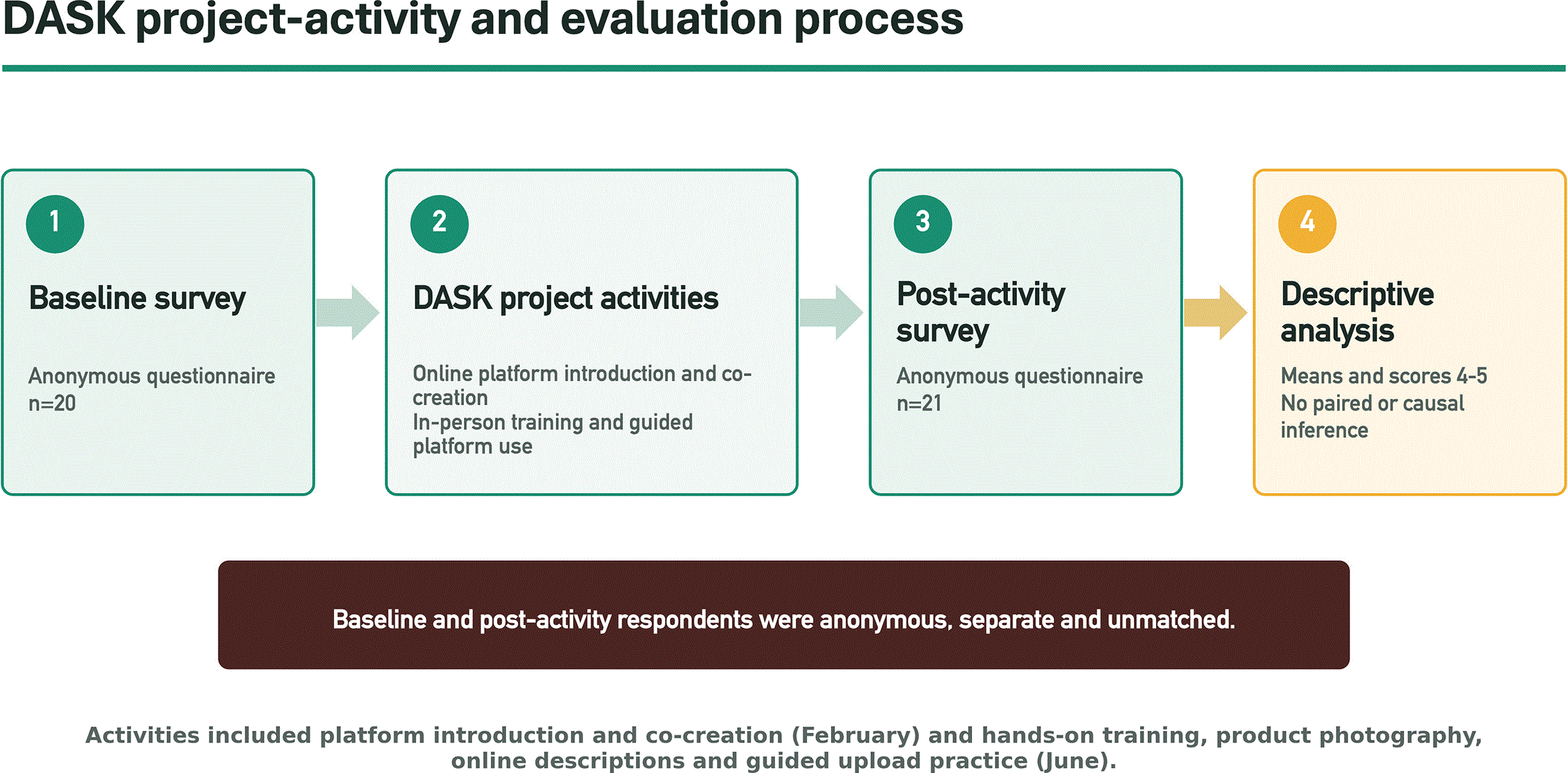
Figure 1. DASK project-activity and evaluation process.
Baseline and post-activity questionnaires were anonymous and unmatched. The February activity focused on platform introduction and co-creation, whereas the June activity included hands-on training and guided platform use.
3. Results
3.1 Participant characteristics
The baseline dataset included 20 responses, and the post-activity dataset included 21 responses. Because questionnaires were anonymous, the extent of overlap between the two samples could not be determined.
In the baseline sample, seven respondents (35.0%) were aged 25–44 years, ten (50.0%) were aged 45–64 years and three (15.0%) were aged 65 years or older. The post-activity sample showed a similar age distribution: nine respondents (42.9%) were aged 25–44 years, nine (42.9%) were aged 45–64 years and three (14.3%) were aged 65 years or older.
Olive and other crop production represented the largest activity group in both samples, accounting for 12 baseline respondents (60.0%) and ten post-activity respondents (47.6%). Beekeeping accounted for three baseline respondents (15.0%) and four post-activity respondents (19.0%). Food processing or other local products accounted for two (10.0%) and four respondents (19.0%), respectively. Three respondents in each sample reported mixed or other rural activities.
At baseline, five participants (25.0%) were already offering an agritourism experience, ten (50.0%) were considering doing so and five (25.0%) were not planning to offer one. The characteristics of the two unmatched samples are presented in
Table 1.
3.2 Baseline digital readiness and adoption barriers
Baseline respondents generally reported greater comfort using smartphones than computers. Fourteen of 20 respondents (70.0%) selected scores of 4 or 5 for smartphone use, compared with 11 of 20 (55.0%) for computer use. The corresponding mean scores were 3.85 and 3.75 on the five-point scales.
Internet access remained uneven. Twelve respondents (60.0%) described their connection while working as good or stable, six (30.0%) reported moderate or low access and two (10.0%) reported almost no access.
Previous digital-market experience was limited. Fourteen respondents (70.0%) had never sold products online, while four (20.0%) had done so occasionally and two (10.0%) systematically. Twelve respondents (60.0%) had never promoted products online, five (25.0%) had done so occasionally and three (15.0%) systematically. Similarly, 12 respondents (60.0%) reported no previous use of artificial intelligence tools.
At baseline, eight respondents (40.0%) reported a high likelihood of trying an integrated product-and-agritourism platform within two months. However, task-specific readiness was lower. Five respondents (25.0%) reported a high likelihood of independently uploading a product and four (20.0%) reported a high likelihood of uploading an agritourism experience. Eight respondents (40.0%) considered a Greek-language artificial intelligence assistant highly useful for promotion, sales or sustainable-practice guidance.
Lack of time was the most frequently selected barrier to online participation, reported by ten respondents (50.0%). Bureaucracy or shipping logistics was selected by seven (35.0%), lack of digital skills by five (25.0%), and difficulty preparing photographs or descriptions by five (25.0%). Costs or commissions and distrust or security concerns were each selected by four respondents (20.0%). Multiple barriers could be selected.
In the open-ended baseline responses, successful platform use was most frequently associated with sales and access to wider markets, ease of use, product visibility and the longer-term economic viability of local production.
3.3 Post-activity evaluation of the project activities and platform
Post-activity evaluations of the educational activities were strongly positive. Twenty of 21 respondents (95.2%) rated the workshop as comprehensible, while all respondents rated its pace and duration positively. Nineteen respondents (90.5%) considered the examples relevant to the local context, and 16 (76.2%) reported confidence in applying what they had learned.
The platform was also evaluated positively in terms of immediate usability. Eighteen respondents (85.7%) rated navigation positively and 19 (90.5%) considered the language, terminology and buttons clear. Sixteen respondents (76.2%) considered it realistic to upload a product independently, including photographs, price and description.
Fourteen respondents (66.7%) believed that the platform could increase sales or provide access to new customers, and the same number believed it could support the development or strengthening of agritourism income. Fourteen respondents also expressed high trust that their data would be used appropriately. Full post-activity results are presented in
Table 3.
3.4 Adoption readiness in the unmatched baseline and post-activity samples
The proportion reporting a high likelihood of uploading a product was 25.0% at baseline and 52.4% in the post-activity sample, representing a descriptive difference of 27.4 percentage points. The corresponding mean scores were 2.85 and 3.33, a difference of 0.48 scale points.
For uploading an agritourism experience, high-likelihood responses accounted for 20.0% of the baseline sample and 42.9% of the post-activity sample, a descriptive difference of 22.9 percentage points. Mean scores were 2.85 and 3.00, respectively.
High privacy or data-security concern was reported by 45.0% of baseline respondents and 28.6% of post-activity respondents, a descriptive difference of −16.4 percentage points. Mean concern scores were 3.15 at baseline and 2.90 in the post-activity sample.
These differences describe response patterns in two unmatched samples and do not represent within-person changes or causal effects of the activities. The comparisons are presented in
Table 2 and
Figure 2.
Table 2. Selected unmatched baseline-to-post descriptive comparisons.
| Outcome | Metric | Baseline
N = 20 | Post-activity
N = 21 | Descriptive difference
(post - baseline) |
|---|
| Likelihood of uploading a product | Mean (1–5) | 2.85 | 3.33 | +0.48 |
| Likelihood of uploading a product | Score 4–5, % | 25.0% | 52.4% | +27.4 pp |
| Likelihood of uploading an agritourism experience | Mean (1–5) | 2.85 | 3.00 | +0.15 |
| Likelihood of uploading an agritourism experience | Score 4–5, % | 20.0% | 42.9% | +22.9 pp |
| Privacy and security concern | Mean (1–5) | 3.15 | 2.90 | −0.25 |
| Privacy and security concern | Score 4–5, % | 45.0% | 28.6% | −16.4 pp |
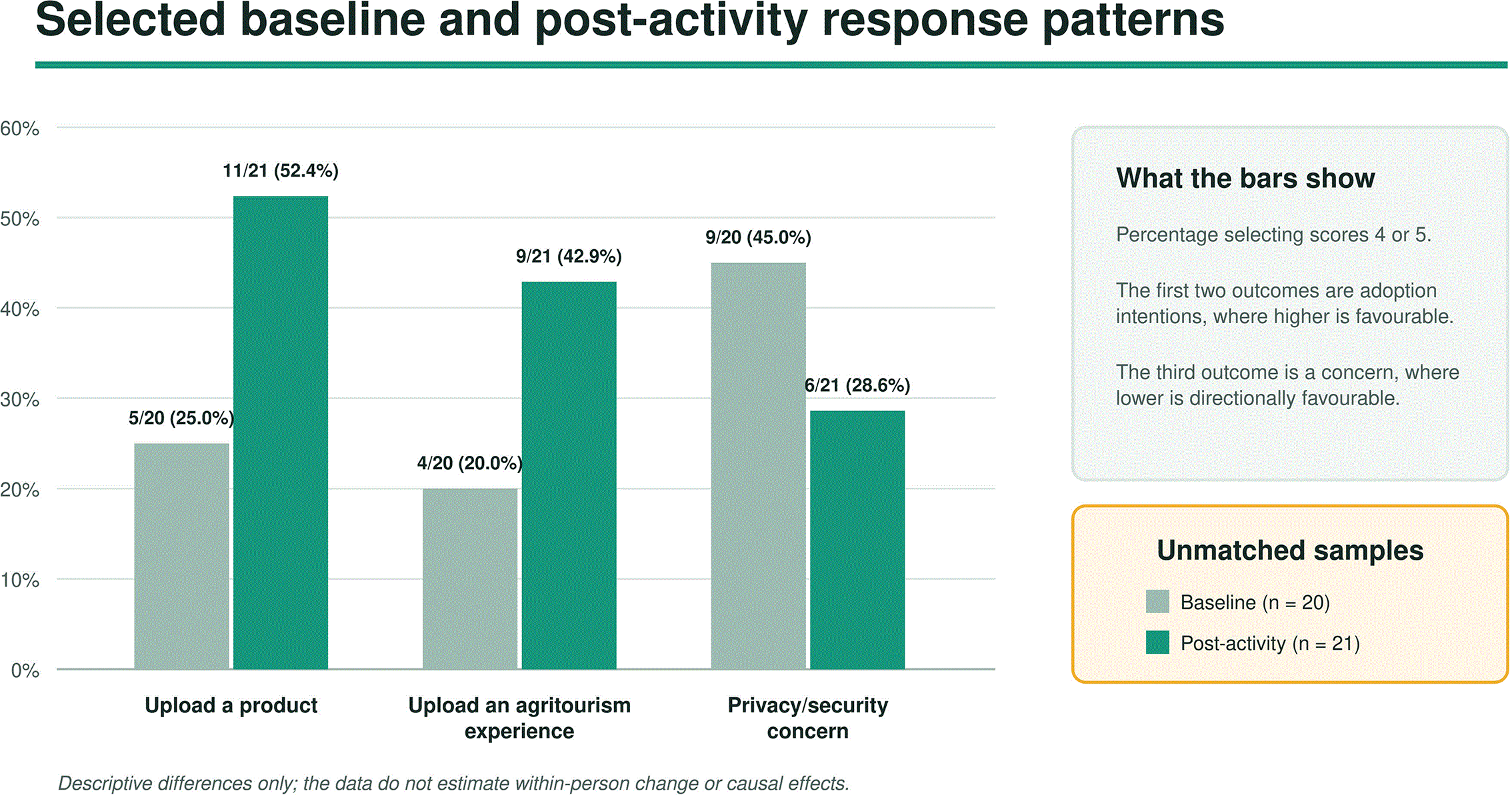
Figure 2. Selected baseline and post-activity response patterns.
Bars show the proportion selecting scores of 4 or 5. Baseline n = 20 and post-activity n = 21. The first two outcomes are adoption intentions, for which higher values are favourable; privacy/security concern is a barrier, for which lower values are directionally favourable. Samples were unmatched, so the differences are descriptive and do not represent within-person change or causal effects.
3.5 Post-activity adoption intentions
In the post-activity sample, 14 respondents (66.7%) reported high comfort in using the platform. Thirteen (61.9%) reported a high likelihood of creating an account or trying the platform within the following month.
Eleven respondents (52.4%) reported a high likelihood of uploading at least one product within two months, whereas nine (42.9%) reported a high likelihood of uploading an agritourism experience. Nine respondents (42.9%) reported a high likelihood of using the artificial intelligence assistant at least three times during the first month.
These findings indicate that favourable evaluations of usability did not translate uniformly into immediate behavioural intentions. Although 16 respondents considered independent product uploading realistic, only 11 reported a high short-term likelihood of uploading a product.
3.6 Usefulness and trustworthiness of the AI assistant
Sixteen respondents (76.2%) considered the Greek-language artificial intelligence assistant useful for product promotion and the preparation of product descriptions. Perceived usefulness for advice on sustainable agricultural practices was lower, with nine respondents (42.9%) selecting scores of 4 or 5.
Only five respondents (23.8%) indicated that they would trust the assistant’s answers without human verification. Nine respondents (42.9%) selected scores of 1 or 2, while seven (33.3%) selected the midpoint. This pattern indicates interest in AI-supported assistance alongside a clear preference for continued human verification.
Text was the most frequently preferred interaction format, selected by ten respondents (47.6%), followed by image-based interaction, selected by eight (38.1%). Four respondents (19.0%) selected step-by-step or video-based interaction, and two (9.5%) selected voice interaction. Multiple interaction formats were recorded for respondents selecting all available options.
3.7 Perceived economic opportunities and support needs
Fourteen respondents (66.7%) rated the platform positively in relation to increasing sales or accessing new customers, and 14 (66.7%) rated its potential contribution to agritourism income positively.
The explicit item concerning new income opportunities was administered only to the 13 participants completing the later questionnaire version. Eleven of these respondents (84.6%) selected scores of 4 or 5. The mean score was 4.38.
Among these 13 respondents, the most frequently selected income pathway was selling products to new customers outside Kythera and Antikythera, reported by 11 respondents (84.6%). Reconnecting with previous visitors was selected by seven (53.8%), improving digital visibility by six (46.2%), improving product photographs or descriptions by five (38.5%) and developing agritourism experiences by four (30.8%). Multiple pathways could be selected.
Continued assistance was nevertheless considered important. One-to-one support was the most frequently selected option, reported by 12 respondents (57.1%). Video guides were selected by eight (38.1%), step-by-step printed or PDF guidance by seven (33.3%), incentives or additional visibility by seven (33.3%) and support through a cooperative or local organisation by five (23.8%).
3.8 Open-ended findings
The most frequently reported post-activity concerns concerned insufficient customer demand and security, trust or the quality of participating businesses, each identified in six responses (28.6%). Time constraints and technical or internet-access problems were each identified in four responses (19.0%). One respondent explicitly emphasised that the platform should be adapted to Kythera rather than implemented as a generic digital solution.
Among the 15 valid responses proposing platform changes, the most frequent requests concerned stronger sales functions or a clearer commercial directory, improved usability and automation, and closer adaptation to the visual identity and characteristics of Kythera. Three respondents did not propose a specific change or remained uncertain.
When asked about intended use during the following two months, eight respondents (38.1%) described product listing or promotion, while two referred to account or profile creation. Five respondents (23.8%) remained exploratory or uncertain about how they would use the platform. These responses reinforce the quantitative finding that positive perceptions of the platform coexisted with a continuing need for practical assistance and clearer pathways from initial interest to active use.
The complete post-activity evaluation, adoption-intention and perceived-support results are presented in
Table 3.
Table 3. Post-activity evaluations of the project activities, platform, AI assistant and adoption intentions.
| Outcome | Mean (1–5) | Score 4–5, n/N | Score 4–5, % |
|---|
| Activity evaluation
|
| Workshop content was comprehensible | 4.57 | 20/21 | 95.2% |
| Workshop pace and duration were appropriate | 4.62 | 21/21 | 100.0% |
| Workshop was relevant to the local context | 4.38 | 19/21 | 90.5% |
| Confidence in applying the learning | 4.05 | 16/21 | 76.2% |
| Platform evaluation
|
| Ease of platform navigation | 4.24 | 18/21 | 85.7% |
| Clarity of platform language | 4.24 | 19/21 | 90.5% |
| Realism of uploading a product | 4.10 | 16/21 | 76.2% |
| Perceived platform potential to increase sales | 3.90 | 14/21 | 66.7% |
| Perceived platform potential for agritourism income | 3.86 | 14/21 | 66.7% |
| Trust in platform data handling | 3.86 | 14/21 | 66.7% |
| AI assistant
|
| Usefulness of AI for promotion and product descriptions | 4.24 | 16/21 | 76.2% |
| Usefulness of AI for sustainable-practice guidance | 3.48 | 9/21 | 42.9% |
| Trust in AI answers without human checking | 2.71 | 5/21 | 23.8% |
| Adoption intentions
|
| Comfort using the platform in the post-activity sample | 3.95 | 14/21 | 66.7% |
| Likelihood of creating a platform account | 3.76 | 13/21 | 61.9% |
| Likelihood of uploading a product | 3.33 | 11/21 | 52.4% |
| Likelihood of uploading an agritourism experience | 3.00 | 9/21 | 42.9% |
| Likelihood of using the AI chatbot | 3.29 | 9/21 | 42.9% |
| Perceived new income opportunity | 4.38 | 11/13 | 84.6% |
4. Discussion
4.1 Principal findings
This exploratory study examined digital readiness and immediate responses to locally adapted training and guided use of the DASK platform among producers and rural stakeholders in Kythera and Antikythera. Three principal findings emerged.
First, participants expressed general interest in digital market participation, but baseline readiness to perform specific platform tasks was limited. Only one quarter of baseline respondents reported a high likelihood of independently uploading a product, and one fifth reported a high likelihood of uploading an agritourism experience. Limited online-selling experience, time constraints, logistics, digital skills and difficulties preparing photographs or descriptions were among the main reported barriers.
Second, the project activities and platform were evaluated positively. Most post-activity respondents considered the content comprehensible and locally relevant and rated the platform’s navigation and terminology favourably. Nevertheless, positive usability evaluations did not translate uniformly into intentions to adopt the platform. Although 76.2% considered independent product uploading realistic, only 52.4% reported a high likelihood of uploading a product during the following two months.
Third, participants were interested in the artificial intelligence assistant but remained cautious about relying on it without human verification. The assistant was perceived as more useful for product promotion and description preparation than for sustainable agricultural advice. Combined with the strong demand for one-to-one assistance, this finding indicates that digital tools were more readily accepted as complements to human support than as autonomous sources of agricultural guidance.
4.2 From general interest to specific adoption behaviours
The results demonstrate the importance of distinguishing favourable attitudes towards digitalisation from readiness to perform the actions required for platform participation. At baseline, 40.0% of respondents reported a high likelihood of trying the integrated platform, but only 25.0% reported a high likelihood of independently uploading a product. This difference suggests that initial interest does not eliminate the practical burden of preparing photographs, descriptions, prices and other listing information.
This finding is consistent with technology-adoption research indicating that perceived usefulness, effort expectancy, relevance, trust and available facilitating conditions jointly shape farmers’ intentions to adopt digital platforms.10,11 In the present study, the discrepancy between perceived feasibility and intended action remained visible in the post-activity sample. Participants could regard product uploading as understandable and technically realistic while still being uncertain whether they would complete it.
Time was the most frequently reported baseline barrier, ahead of limited digital skills. This is important because it suggests that additional technical instruction alone may not be sufficient. Platform developers should also reduce the time and effort required to create listings, for example through reusable templates, assisted description preparation, simplified image uploading and locally available support. Adoption therefore depends on both users’ capabilities and the extent to which the platform reduces unnecessary demands on them.
The descriptive differences between the unmatched samples are nevertheless encouraging. High likelihood of uploading a product was 27.4 percentage points higher in the post-activity sample, while the corresponding difference for uploading an agritourism experience was 22.9 percentage points. These patterns are compatible with increased task familiarity following demonstration and guided practice. However, they cannot be interpreted as within-person improvement or as evidence of a causal effect of the activities because the anonymous baseline and post-activity responses could not be matched.
4.3 The role of practical and locally adapted digital education
The strongly positive assessment of comprehensibility, pace and local relevance supports the use of practical education connected directly to participants’ products and working context. Rather than presenting digital commerce abstractly, the June workshop involved photographing actual local products, preparing their digital presentation and completing guided platform tasks.
However, the post-activity results combine responses associated with the February online platform-introduction and co-creation activity and the June in-person hands-on workshop. The positive pooled evaluations cannot therefore be attributed specifically to the practical components of the June workshop.
This approach appears particularly appropriate for adult participants with different levels of digital experience. The practical activities allowed participants to identify not only what the platform could provide but also what they would personally need to do to participate. This is consistent with earlier educational findings showing that positive attitudes and general familiarity do not necessarily translate into applied knowledge or action, and that contextually meaningful activities can support the transition from awareness to practical engagement.13,14,15
These earlier studies were conducted in environmental and waste-management education and cannot provide direct evidence about rural e-commerce adoption. Their relevance lies in the shared educational principle: information provision is insufficient when the intended outcome requires participants to perform specific behaviours. In DASK, product photography and guided uploading made the requirements of digital-market participation visible and actionable.
At the same time, the findings indicate that initial engagement and training activities cannot remove every barrier. More than half of post-activity respondents requested one-to-one support, while others preferred videos, step-by-step guidance or assistance through a local organisation. Locally adapted digital education should therefore be understood as the beginning of an adoption process rather than as a self-contained intervention.
4.4 Artificial intelligence as assisted rather than autonomous support
Participants’ responses revealed a differentiated assessment of the DASK artificial intelligence assistant. While 76.2% considered it useful for product promotion and preparing descriptions, only 42.9% rated it highly for advice on sustainable agricultural practices. This distinction may reflect differences in perceived risk. An imperfect product description can be reviewed and revised relatively easily, whereas inaccurate agricultural advice may have more serious practical consequences.
Only 23.8% of respondents indicated that they would trust the assistant’s responses without human verification. This should not be interpreted simply as rejection of artificial intelligence. Instead, it suggests conditional acceptance based on the task, the perceived consequences of error and the availability of verification. Participants appeared willing to use the assistant as a supportive interface but were reluctant to treat it as an unquestioned authority.
This pattern supports recommendations that conversational agricultural systems should be grounded in relevant information, transparent about their limitations and embedded within human advisory and social-support structures.18,19 It also supports the DASK decision to use a curated bilingual information environment and to position the assistant as a complement to, rather than a replacement for, human advice.23
The preference for text and image interaction over voice interaction also challenges the assumption that voice will necessarily be the most accessible format for rural users. Accessibility should not be reduced to a single interaction mode. Instead, platforms should allow users to select between text, photographs, voice and step-by-step visual guidance according to the task and their individual confidence.20
4.5 Place-based value, agritourism and “digital terroir”
Two thirds of post-activity respondents believed that DASK could support sales, access to new customers and agritourism income. Among the 13 respondents who received the explicit income-opportunity item, 84.6% selected a positive response.
Reaching customers outside Kythera and Antikythera was the most frequently identified income pathway. Respondents also recognised the potential to reconnect with previous visitors and improve the digital visibility of local products. These findings illustrate how an island-focused platform can connect agricultural production with tourism and continuing relationships between visitors and place.
The findings also support the relevance of the DASK concept of “digital terroir”. Participants did not only request functional improvements; they also asked for closer adaptation to Kythera’s identity and expressed concern that the platform should not become a generic digital solution. Product photographs, descriptions, stories and agritourism experiences should therefore communicate provenance and local identity while remaining usable for external customers.
This place-based approach corresponds with research showing that the sustainability of agriculture on small Mediterranean islands depends on the interaction of production, local knowledge, cultural identity, demographic pressures and territorial conditions.21 It also reflects the wider context of rural Greece, where digitalisation develops alongside demographic decline, labour shortages and unequal access to services and infrastructure.22
Nevertheless, perceived economic opportunity should not be confused with demonstrated market impact. The present study did not measure completed listings, customer transactions, sales revenue or additional agritourism bookings. These indicators require follow-up after the platform has been used under operational conditions.
4.6 Implications for platform implementation
The results suggest that the next stage of DASK should focus on converting favourable evaluations into completed adoption behaviours. Three implementation priorities emerge.
First, listing effort should be reduced. Guided templates, assisted photograph selection, draft descriptions and simplified product-upload workflows may help participants move from account creation to active product presentation.
Second, continued local support should be maintained. One-to-one assistance, Digital Champions, cooperatives and other local intermediaries can help resolve problems, build trust and maintain engagement after initial training. This is consistent with the importance attributed to advisory networks and AKIS actors in supporting agricultural innovation.17
Third, artificial intelligence functions should be developed according to task-related levels of risk. Promotional content may be an appropriate early use because users can inspect and edit the output. Agricultural guidance should include clear sources, limitations and routes to human verification. Trust should be earned through transparency and reliability rather than assumed from the presence of a locally grounded assistant.
More broadly, the DASK experience indicates that training and platform development should operate as an iterative process. Training helps users develop capabilities, while guided use reveals where the platform remains unclear, time-consuming or insufficiently adapted to the community.
4.7 Strengths and limitations
A strength of the study was its focus on task-specific adoption behaviours rather than general attitudes towards technology. It also combined ordinal questionnaire responses with open-ended feedback. For participants in the June workshop, the platform was additionally evaluated through practical use involving their own products, which increased the contextual relevance of the evaluation.
Several limitations must nevertheless be acknowledged. The samples were small, purposively recruited and limited to one island context. The baseline and post-activity questionnaires were anonymous and could not be matched, while their partial overlap could not be established. Differences between the samples must therefore be interpreted descriptively and cannot demonstrate individual change or the effectiveness of the activities.
The privacy and data-security items were also not fully equivalent: the baseline item referred to online platforms generally, whereas the post-activity item referred specifically to the DASK platform. The observed difference in reported concern should therefore be interpreted cautiously and not attributed solely to participation in the project activities.
The questionnaires were developed for project evaluation and were not validated psychometric instruments. Most outcomes concerned self-reported perceptions and intentions rather than observed adoption. Responses collected immediately or shortly after the activities may also have been influenced by short-term activity enthusiasm or social desirability.
The explicit new-income item was available only to 13 post-activity respondents. Furthermore, not all participants were currently involved in agritourism, which may have reduced the relevance of the agritourism-upload item for some respondents. Finally, the study did not examine longer-term platform use, completed transactions, income change or customer outcomes.
The post-activity sample combined respondents exposed to two activities of different intensity: a February platform-introduction and co-creation activity and a June hands-on training workshop. The pooled estimates therefore do not isolate the effect of a single standardised intervention.
4.8 Future research
Future evaluation should follow participants beyond the initial engagement period and combine questionnaire data with behavioural indicators, including account creation, completed product and experience listings, use of the artificial intelligence assistant, returning platform visits and requests for support. Where ethically and practically appropriate, confidential identifiers could allow baseline and follow-up responses to be linked without collecting names.
Follow-up research should also examine whether positive intentions lead to actual sales, new customers, repeat purchases by former visitors or additional agritourism bookings. Comparisons with other rural and island pilot settings would help determine which findings reflect the specific characteristics of Kythera and which may be transferable to other small communities.
The forms of support should also be evaluated. Comparing self-guided resources, one-to-one assistance, Digital Champion support and cooperative-based support could identify which mechanisms most effectively help producers progress from interest to sustained platform participation.
4.9 Overall interpretation
The DASK pilot provides preliminary evidence that locally adapted digital education and guided platform use are acceptable to producers and rural stakeholders in a small island setting. Participants recognised potential benefits for product visibility, external market access and agritourism, while their responses also exposed a persistent gap between positive evaluation and intended action.
The central implication is that meaningful rural digitalisation requires more than providing access to technology. Producers need relevant training, low-effort workflows, trusted local support and digital tools that reflect the identity and practical conditions of the community. Artificial intelligence may contribute to this process, particularly for promotional and informational tasks, but the findings support an assisted model in which users retain control and human verification remains available.
5. Conclusions
This exploratory study examined the digital readiness of producers and rural stakeholders connected with Kythera and Antikythera and their immediate responses to the DASK platform-introduction, co-creation and training activities. Participants generally evaluated the project activities and platform positively and recognised potential benefits for product visibility, access to new customers and agritourism development. However, the findings also revealed a gap between favourable usability evaluations and intentions to complete specific platform-adoption tasks.
The descriptive comparison of the unmatched samples showed higher post-activity proportions of respondents reporting a strong likelihood of uploading products and agritourism experiences. These patterns are compatible with greater familiarity following platform presentation and guided use, but the study design does not permit attribution to the activities, estimation of within-person improvement or causal inference. Longer-term evaluation based on matched responses and observed platform activity is required.
The findings suggest that rural digital adoption depends not only on access to technology or general digital literacy, but also on the effort required to prepare content, the availability of trusted local assistance and the relevance of the platform to the identity and economic conditions of the community. Practical activities using participants’ own products were well received, while the continuing demand for one-to-one assistance indicates that training should be followed by sustained implementation support.
Participants showed particular interest in using the artificial intelligence assistant for product descriptions and promotional activities but were considerably more cautious about unverified agricultural guidance. The findings therefore support an assisted model of artificial intelligence use in which outputs remain transparent, editable and subject to human verification.
Overall, DASK offers a promising place-based approach to connecting agricultural production, digital commerce, agritourism and locally grounded learning. Its longer-term value will depend on whether positive intentions are converted into active accounts, completed listings, platform use, transactions and measurable economic opportunities for local producers.
Consent
Informed consent was obtained electronically, rather than verbally, through the voluntary completion and submission of the questionnaire. At the beginning of each Google Form, participants were informed in Greek that, by completing and submitting the questionnaire, they agreed to participate anonymously in the evaluation study of the DASK workshop and platform for scientific purposes and that their data would be used in aggregated form. All participants were adults aged over 18 years, and no minors participated in the study. No separate consent-response variable was included in the questionnaire exports.
Ethics statement
The questionnaires were administered as part of the evaluation activities of the Digital Agricultural Skills and Knowledge project, implemented by DASKALOS APPS, the Kytherian Foundation for Culture and Development and Environmental Consulting. The questionnaire activities were not initiated, sponsored, managed or conducted as a research project of the University of Thessaly or the Institute of Communication and Computer Systems. The academic affiliations presented in this article identify the authors’ affiliations at the time of publication and do not indicate institutional oversight of the original DASK project-evaluation activities.
The implementing consortium did not have an institutional review board or a formally constituted research ethics committee. The questionnaires were originally administered as anonymous, minimal-risk project-evaluation instruments associated with educational, stakeholder-engagement and platform-development activities. No prospective ethics approval, waiver or exemption was sought or issued, and no retrospective ethics approval is claimed.
Ethical considerations and participant wellbeing were addressed through voluntary participation, prior information in Greek about the evaluation and intended use of the responses, electronic informed consent, restriction of questionnaire participation to adult stakeholders, the absence of direct personal identifiers, separation of questionnaire data from registration and photographic-consent records, and analysis and reporting only in anonymised or aggregated form. The participants were adult stakeholders connected with the agricultural and agritourism activities of Kythera and Antikythera, including producers, rural entrepreneurs and other individuals involved in the local rural economy. Participants could decline or discontinue questionnaire completion without penalty or loss of access to the DASK activities or platform.
Additional disclosure-control measures were applied before public release because the evaluation involved a small island community. Exact timestamps and detailed location information were removed or generalised, demographic and occupational categories were broadened, and verbatim open-ended responses were replaced with non-disclosive thematic codes. A signed statement from the DASK Project Coordinator documenting the organisational context and the safeguards applied is provided with the resubmission as supporting documentation. This statement is not presented as retrospective ethics approval, a waiver or an exemption.







