Introduction: “the promise of the relics of the Holy Body of some soldier”1
“In the most gracious audience afforded me by His Holiness Pope Pius IV, I received with immense gratitude from His Holiness the promise of the relics of the Holy Body [Corpo Santo] of some soldier. Finding myself close to my departure from Rome, since this is a perfect opportunity to send the body to my own homeland, I have the honor to beseech you to have the generosity to remind His Holiness the Pope of His promise, together with that of some other Relic, particularly that of the Holy Cross, with their authenticating documentation. I ask this begging that your good graces might excuse my own ardor in this matter. I pray for some opportunity to be able to serve His Holiness the Pope, and that He will ask anything from me in the future. With due obsequies I remain your most Devout and Humble servant, Count de Borch.”2
In April 1778 Count Michał Jan Borch (or von der Borch-Lubeschitz und Borchhoff, 1753–1810) submitted this supplication to a representative of the Cardinal Vicar of Rome3 (See also extended data, Appendix 1). His petition for “the Holy Body [Corpo Santo] of some soldier” is today preserved in the Archive of the Custodian of Sacred Relics and Cemeteries (on whom more below) in Roman Diocesan Archives, together with hundreds of other such petitions from Catholic supplicants from all corners of the globe, made between 1737 and 1783 (Figure 1). The 25 year-old Borch was preparing to conclude a European grand tour begun in 1772 and return to his family’s estates in the historical territory of the Inflanty Voivodeship (Polish: Województwo inflanckie), also known as Polish Livonia, Livonia, or Inflanty4. In fact, Borch would prolong his travels for another three years before departing Italy on the death of his father, perhaps in part due to unstable circumstances back home, which made his situation in the north uncertain and his diplomatic skills at sympathetic Italian courts especially valuable. Today, the geographic area that Borch referred to as his Patria (“Homeland”) corresponds to Latgale, the eastern region of Latvia along the Daugava river, marking Baltic Europe’s frontier with Russia5. The same year that Borch departed on his grand tour, however, Inflanty had been translated from an administrative division within the historical territory of the Polish-Lithuanian Commonwealth of the Polish-Lithuanian Commonwealth (consisting of the Grand Duchy and the Crown Kingdom of Poland), to a newly annexed territory of Czarist Russia6. Even as the young nobleman wrote in hopes of bringing back sacred souvenirs, his homeland in a sense existed only in collective memory as a relic of what had been one of early modern Europe’s largest and most diverse states, fragmented and forcibly integrated into a new empire in the first of three so-called Partitions of Poland-Lithuania (1772, 1793, 1795), territorial divisions perpetrated by Russia, Prussia, and Austria that progressively fractured the Commonwealth until the conglomerate state ceased to exist altogether7.
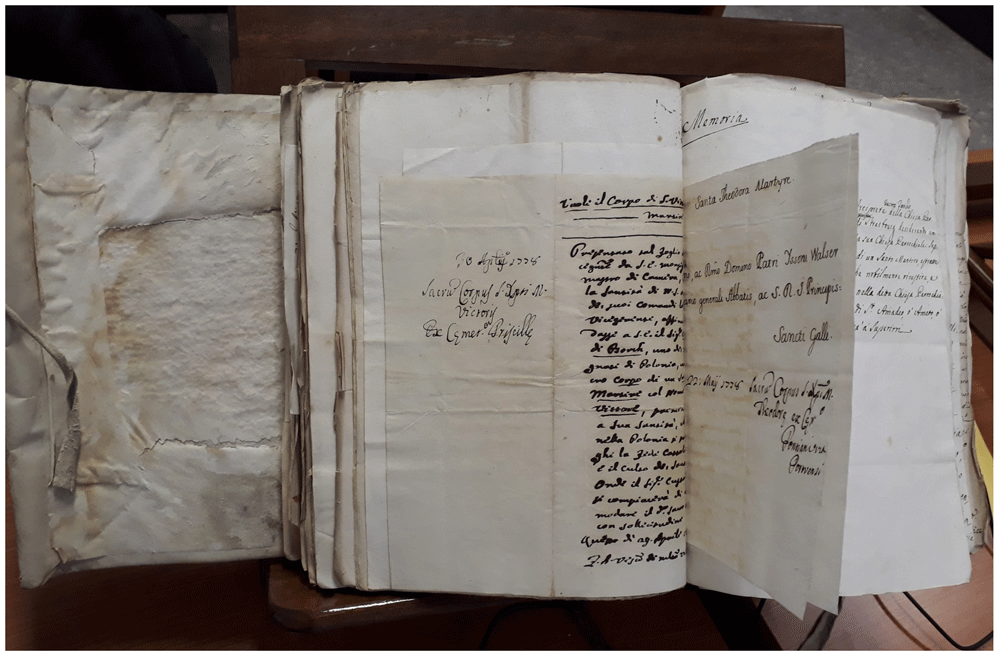
Figure 1. Rome, Archivio Storico della Diocesi di Roma, Archivio Storico del Vicariato di Roma, Archivio del Custode delle SS.
Reliquie, Volume 77 (1737–83), “Custodia delle S.S.Reliquie dell’Imo Sigr Card. Vicario di N.S.|Corpi, e Reliquie de’ SS. Martiri Donati|Tomo I. Dall’anno 1737-al 1783|Giacinto Ponzetti Custode.” Image: Ruth Sargent Noyes.
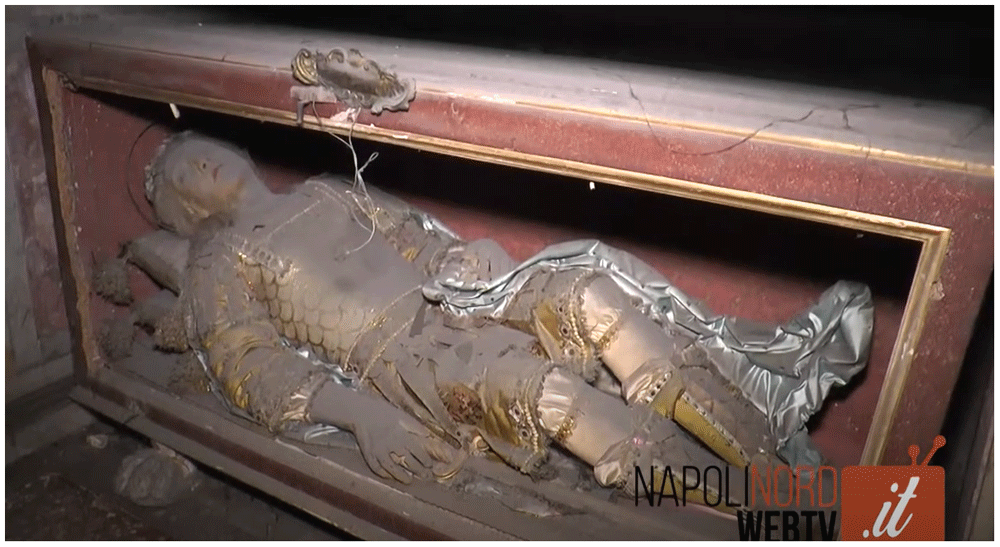
Against the background of the dissection of his Patria 2500 kilometers to the north, Borch ostensibly asked for relics in the form of complete skeletal remains of one of the many ancient imperial soldiers supposedly martyred after converting to Christianity. Catholic scholars maintained that legions of them populated subterranean cemeteries beneath the urbe8. What he actually would receive might be more accurately characterized as a relic-sculpture or so-called corposanto (Italian for “holy body,” plural corpisanti)9 (Figure 2). Corpisanti represent a hybrid species of multimedia artwork that integrated relics and reliquary within a single sculptural form and were peculiar to late eighteenth- and early nineteenth-century Rome, where they were serially manufactured under the purview of the papacy and Church agents10. These luxurious fabrications incorporated scant human remains mined from the catacombs within a man-made, life-size anthropomorphic illusion of integral corporality, lavishly attired in courtly regalia and typically fashioned in the guise of a sponsa Christi (“bride of Christ”) or miles Christi (“soldier of Christ”)11.
Taking Borch’s relic request as a point of departure, this article offers a first study of the traffic of corpisanti between Rome and sites in the Grand Duchy and Polish Livonia in the decade just before and during the Age of Partition (c. 1750–1800), a watershed period when the territories of not only the Papal States, but also Livonia and the Grand Duchy were subject to dissolution by imperial powers12. Given the state of scholarship on this under-studied phenomenon, what follows firstly frames an overview of current knowledge on corpisanti more broadly against cases in Inflanty and the Grand Duchy. Regarding the use of the terms Grand Duchy of Lithuania and Polish Livonia (or Inflanty), it should be noted that these political-administrative entities represented separate and distinct units within the Polish-Lithuanian Commonwealth, although they constituted a single cultural region and its elites embodied one social group. Given that this article focuses predominantly on cases that were located in Polish Livonia, while cases from the Grand Duchy appear predominantly as contextual background, Polish Livonia will be therefore emphasized as a particular entity. What follows secondly provides a clearinghouse of secondary and primary source evidence on this topic, with particular attention to providing previously largely unpublished or under-studied texts pertaining to corpisanti cults in the north in translation, included as appendices13. While a detailed analysis of each of these texts is beyond the purview of the present study, it should be noted that a striking commonality across these writings is a shared mode of address regarding the corpisanti, which are often referred to not as things or relics per se, but rather as persons, bodies, or protagonists. This phenomenon evinces not only general conventions regarding the cults of saints in the period under investigation, but also the more specific success of these relic-sculptures in projecting the illusion of embodied corporality and indeed personhood. In proceeding, the article also presents a study in methods of collaborative scholarship in the pandemic era, investigating across distinct genres of source materials and material and artistic cultural heritage objects accessed via scholarly networks both in the field and online, representing historic sites and institutions in present-day Italy, Ukraine, Belarus, Poland, Latvia, and Lithuania.
“treasuries of precious jewels”
When Michał Jan Borch composed his supplication in Rome, his father Lithuanian Grand Chancellor Jan Jędrzej (or Andrzej) Józef Borch (1713–80) ranked among the most powerful Livonian magnates in the shrinking Commonwealth14. Historically, aristocratic clans like the Borch owned and actually governed much of Poland-Lithuania, a conglomerate polity subdivided into a patchwork of patrimonial latifundia—large autonomous estates with private towns, private armies, trading privileges, and proprietary currencies, linked by familial alliances15. Borch’s territorial holdings were concentrated in Inflanty, an area that drew cultural, diplomatic and economic potential from its geographic location along a major waterway and important trade thoroughfare linking Czarist Russia with the Grand Duchy and Baltic sea ports. This strategic position situated its resident magnates as powerful and wealthy patrons who took an active interest in cultivating their cultural and political horizons, building up their estates as centers and satellite courts16.
Like neighboring Polish Livonian clans such as the Plater (on whom more below), Borch descended from venerable Westphalian houses who immigrated north centuries earlier in the medieval Baltic crusades, converted to Lutheranism in the early modern period, and back to Catholicism by the early eighteenth century17. They held numerous honors and posts in government and the Church, and their members enjoyed the polymathic and international educations, were fluent in multiple languages, authored works of literature, science and history, maintained vast correspondence networks, and undertook extensive European grand tours18. The Borch ranked among the only in Polish Livonia to hold the titles of Counts of the Holy Roman Empire, and vigorously cultivated both their crusader origins and ties to the Roman Church, overseeing after the Northern Wars (c. 1650–1720) a web of monuments largely built or re-built that articulated Inflanty’s sacred topography on Europe’s north-eastern frontier, where the long Counter-Reformation negotiated a complex web of intersecting yet potentially opposed political and religious interests in the decades preceding and during the Age of Partition19. In the midst of this instability interrelated magnate families staked for themselves a strategic position as a north-easternmost Roman Catholic stronghold, even as they negotiated the process of transition from the Commonwealth’s political system of nobles to Czarist Russian administrative frameworks and fought to acquire or reconfirm their privileged position within the new state’s distinct linguistic, social, political, cultural and religious structures20. Their cultural campaigns of self-fashioning staged a renovation of Romanitas that cultivated literature and historiography, and art and architecture that inflected late baroque and rococo Italianate forms.
Within the complex and changing landscape of Catholic elites in the eighteenth-century Grand Duchy, importing and engaging with sacred relics played a crucial constitutive role in reifying their shifting borderlands zone as Antemurale Christianitatis (Bulwark of Christendom) guarding against martial, spiritual and ideological threats on behalf of Catholicism21. Relics could embody power and instantiate identity on both a local and national level in this period22. At the turn of the seventeenth century the Spanish monarchy famously harnessed the prestige of unrivaled collections at El Escorial to bolster royal authority23, in the early seventeenth-century Rome the Oratorian congregation defied papal censure to stage the lavish translation of their founder’s body in the manner of an ancient martyr24, in mid-seventeenth-century Florence the Medici reified the longevity and scope of their dynasty with an encyclopedic collection of first-class relics and reliquaries grouped according to material in special display cabinets25, and at the end of the century in Vilnius (Pol. Wilno) the cathedral chapter vied with scions of the powerful Pac (Lithuanian: Pacas) for control of the precious relics of Polish-Lithuanian saint Kazimierz Jagiellończyk (1458–84, canonized 1602)26. As manifestations of socio-political prestige and power, relics also proved vital agents in period diplomacy between diverse prerogatives: Pope Alexander VII (1599–1667) gifted the remains of St. Zénon to King Louis XIV of France to seal their reconciliation in 166427, while the Medici and Pac negotiated a political rapprochement through a mutual exchange of relics of their respective grand ducal patron saints in the 1670–80s28.
According to Counter-Reformation theology reaffirming the cult of relics and saints, thanks to the proximity and multiplicity of their heavenly avatars, the saints, to the Divine, relics enabled the galvanic diffusion of supernatural aura through material traces, such that they were considered not only (or even mainly) as symbols of power, prestige, and piety, but actual conductors of divine grace, much like metals conduct electricity29. Within the Roman Catholic cult of relics, more desirable ‘primary’ or ‘first-class’ relics (meaning physical corporeal remains) were especially precious for their proximity to the divine, distinguished according to the Church from ‘secondary’ (objects a holy person used or touched) and ‘tertiary’ (objects in physical contact with one of these secondary objects)30. Canon Law further distinguished between significant (insignes) relics—typically a saint’s entire body or a major body part such as the skull—and non-significant (non insignes) relics31. The Counter-Reformation papacy accorded special attention to primary insigne whole-body relics that demonstrated postmortem bodily incorruption, a miraculous manifestation suggesting the subject was divinely exempt from the physical process of decomposition. Whereas such corporal integrity was historically recognized by the Church as an indicium sanctitatis and proof of resurrection, during the seventeenth century the phenomenon became a particularly valued and commonplace sign of holiness amongst new “modern” candidates for canonization, and increasingly confirmed by medical autopsy performed by professional experts under the Vatican’s remit32.
Rather than quelling widespread engagement with relics amongst European elites, the wars and upheaval and advent of the Enlightenment in the eighteenth century instead catalyzed a renewed fervor for the cult of relics amongst elite and well-educated Catholic constituencies, including in the Grand Duchy, where relic translations were fueled by bi-directional local and exterior factors, ranging from the rise of recently Polonised and re-Catholicized magnates like the Borch amidst a religiously diverse polity and manifold loss of or perceived threats to sacral heritage, to neocolonial interests from the perspective of Rome and the Apostolic Chamber attending the long Counter-Reformation33. In this context, catacomb relics held to be the remains of the earliest Paleochristian converts and champions—many thought to be Roman soldiers—who valiantly died for their faith played a particularly charged discursive role34. The rediscovery of the Roman catacombs in 1578 had transformed the burial chambers beneath the papal city into what seemed inexhaustible “treasuries of precious jewels” and “mines of sanctity.”35 Their seemingly countless ranks in the form of bones of the first martyrs constituted a numinous army ready to be mobilized through translatio (ritual relocation of relics) in global battles against heresies and for souls, especially in transalpine confessional borderlands and frontier zones36.
While large insigne relics were the most sought-after, the widespread demand for and seemingly interminable supply of these paleochristian saints and martyrs were so great that “catacomb relics” actually ran a wide morphological gamut: partial remains might be installed in wooden polychrome sculptures or relic busts, such as those made around the mid-eighteenth century for the Franciscan convent in Valkininkai (Pol. Olkieniki), about 55 km southwest from Vilnius37 (Figure 3–Figure 5). Fragments could also be displayed in so-called “relic galleries” on the altar mensa, such as those surviving in the parish church of Viļāni (Pol. Wielony), formerly a Bernardine monastery church, today in eastern Latvia38 (Figure 6). This morphology emerged by the mid-eighteenth century to accommodate a portable solution to a dual “demand-and-supply” situation: the widespread spoliation of relics from altars, and the burgeoning quantity of miniscule relics issuing from the catacombs to satisfy burgeoning demand39. Yet another solution to the problems of friable relics that proliferated in the eighteenth century were so-called pasta di reliquie (“relic paste”) objects, manufactured by mixing pulverized bones into a paste and molding this substance into miniature sculptures, as in two examples installed in two reliquary busts, also originally from Valkininkai, which combined these molded objects with small catacomb relic fragments40 (Figure 7–Figure 8).
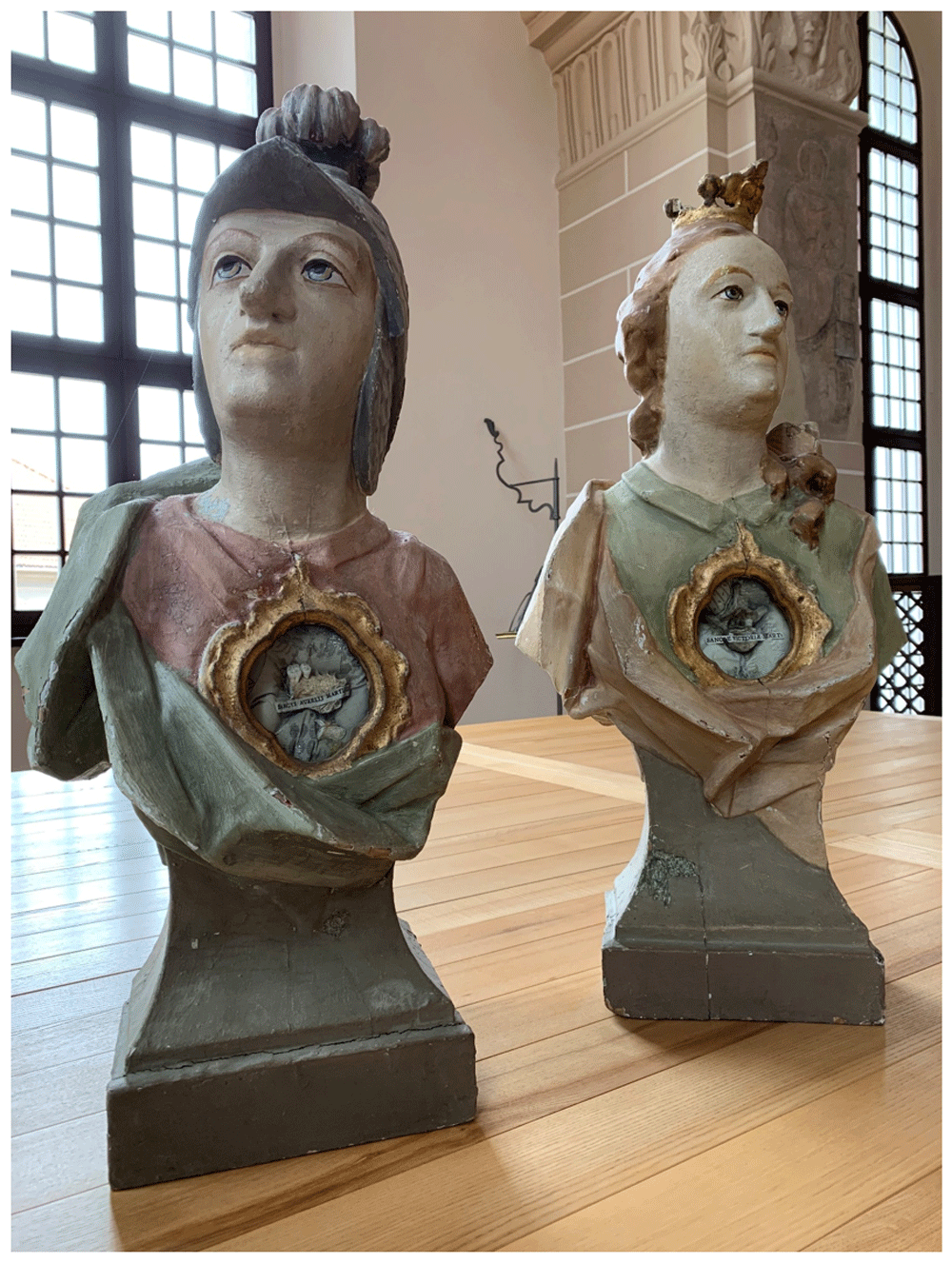
Figure 3. Catacomb reliquary busts of St. Aurelius (left) and St. Victoria (right), frontal view.
Human remains (skeletal fragments), polychromed wood, textile, and mixed materials. Second half of the eighteenth century. Formerly Franciscan convent in Valkininkai. Church Heritage Museum, Vilnius, Lithuania. Image: Ruth Sargent Noyes.
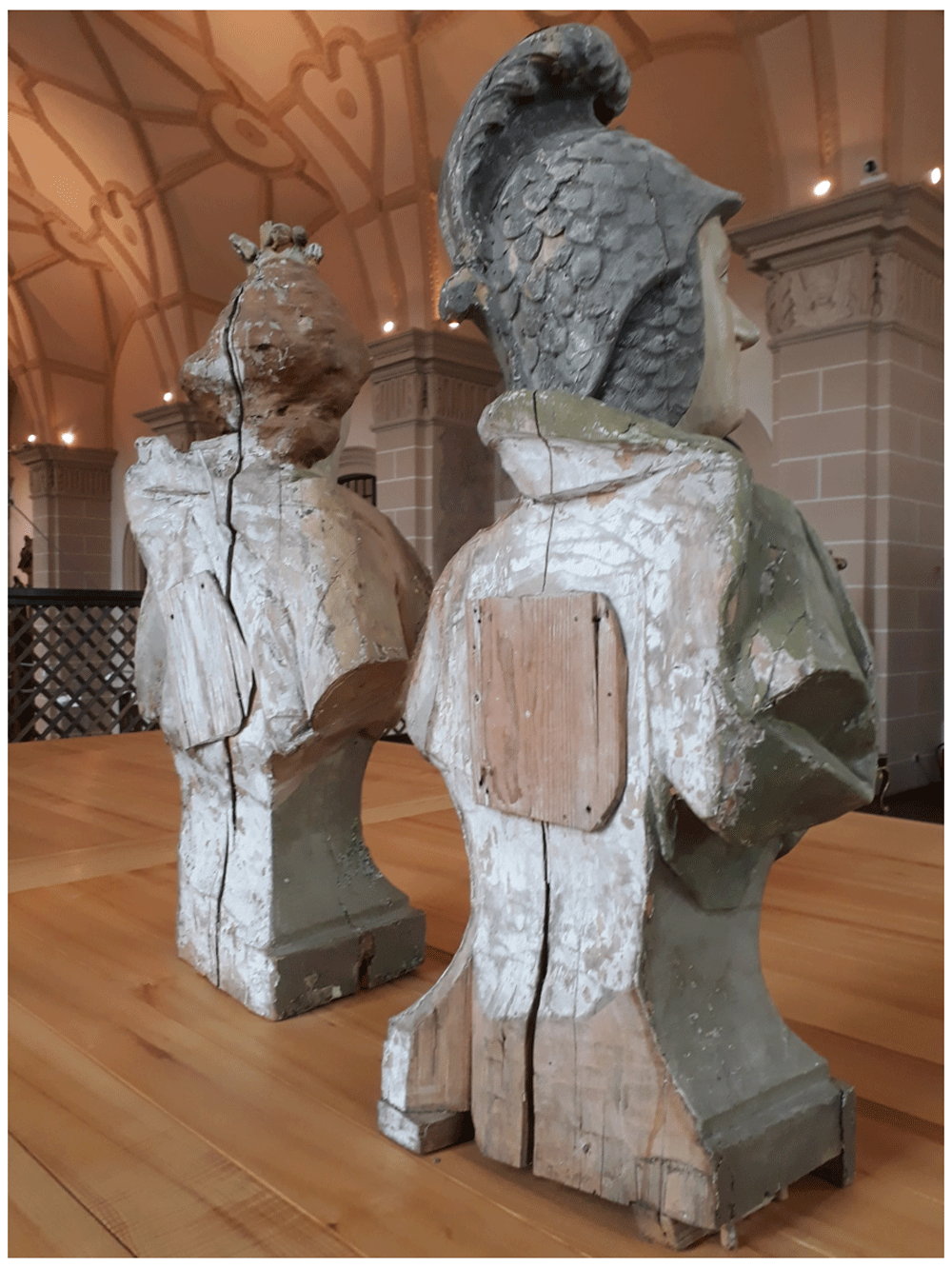
Figure 4. Catacomb reliquary busts of St. Aurelius (right) and St. Victoria (left), dorsal view.
Human remains (skeletal fragments), polychromed wood, textile, and mixed materials. Second half of the eighteenth century. Formerly Franciscan convent in Valkininkai. Church Heritage Museum, Vilnius, Lithuania. Image: Ruth Sargent Noyes.
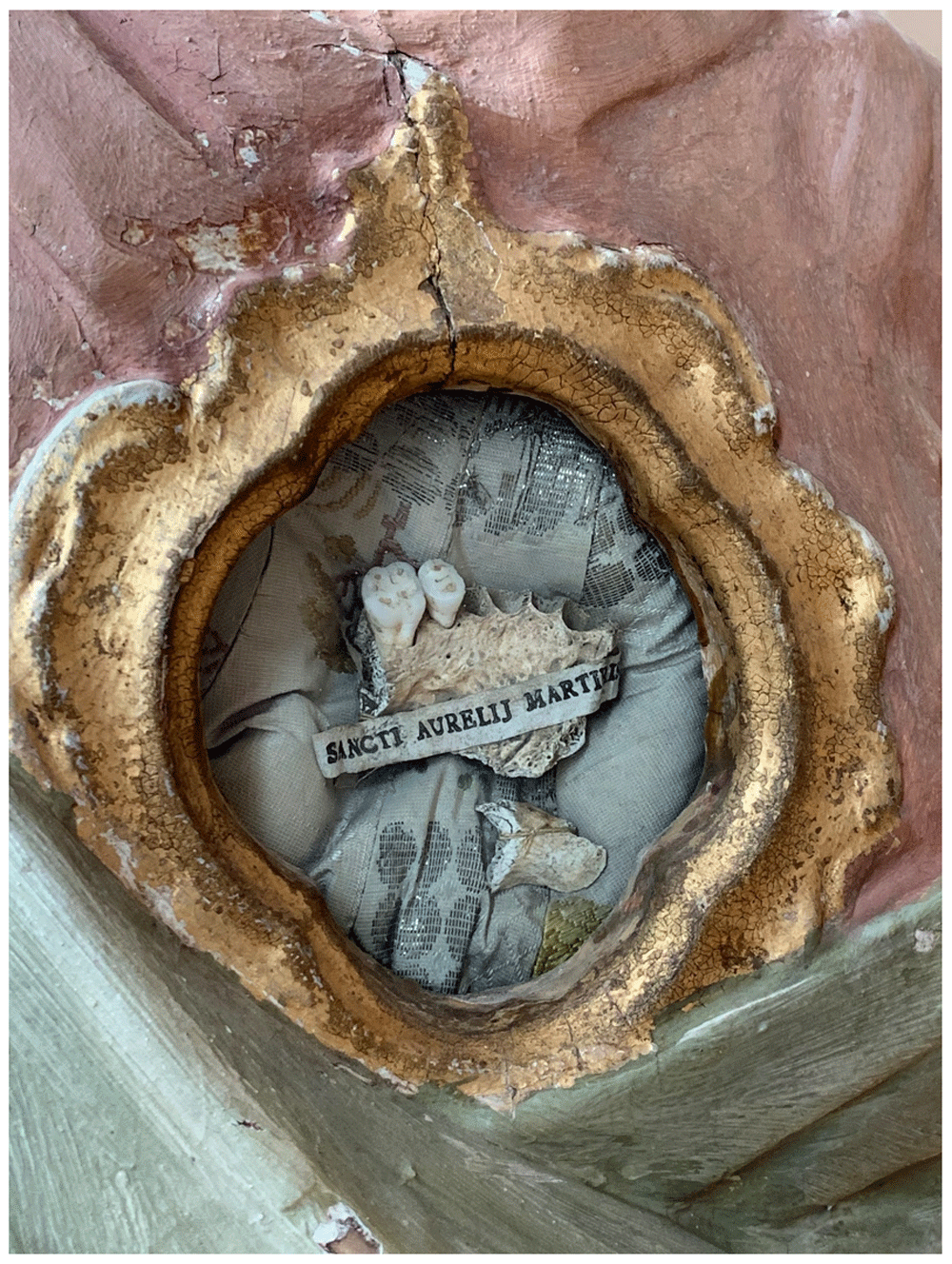
Figure 5. Catacomb reliquary bust of St. Aurelius, detail.
Human remains (skeletal fragments), polychromed wood, textile, and mixed materials. Second half of the eighteenth century. Formerly Franciscan convent in Valkininkai. Church Heritage Museum, Vilnius, Lithuania. Image: Ruth Sargent Noyes.
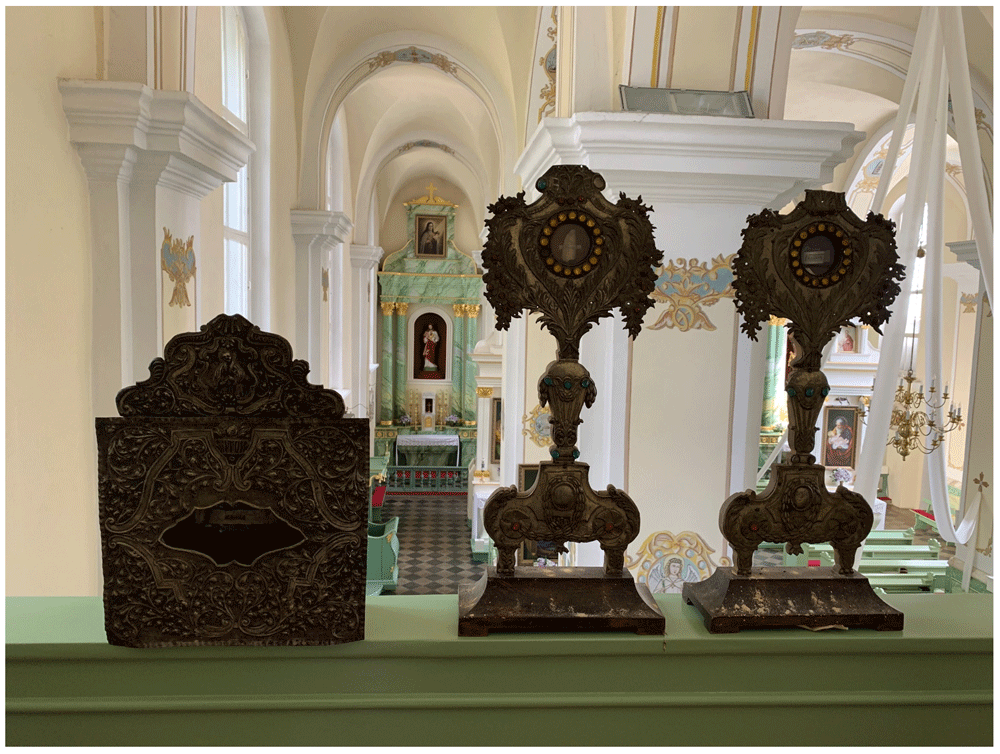
Figure 6. Catacomb relic galleries.
Mid- to late-eighteenth century. Human remains (skeletal fragments), wood, metal, and mixed materials. Mid-eighteenth century. Parish church, Viļāni, Latvia. Image: Ruth Sargent Noyes.
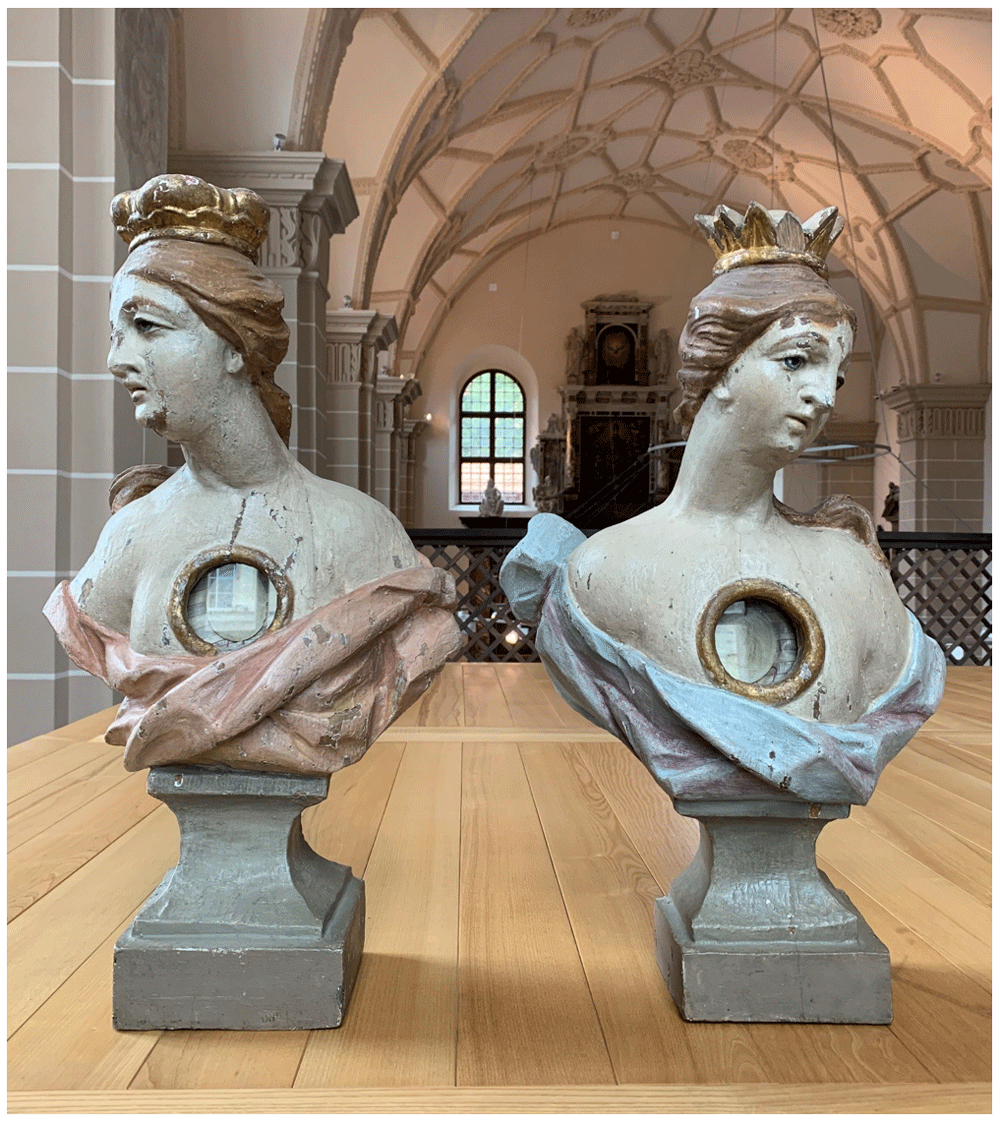
Figure 7. Reliquary busts containing pasta di reliquie and catacomb relics, frontal view.
Human remains (skeletal fragments), polychromed wood, wax, textile, and mixed materials. Second half of the eighteenth century (post 1765). Formerly Franciscan convent in Valkininkai. Church Heritage Museum, Vilnius, Lithuania. Image: Ruth Sargent Noyes.
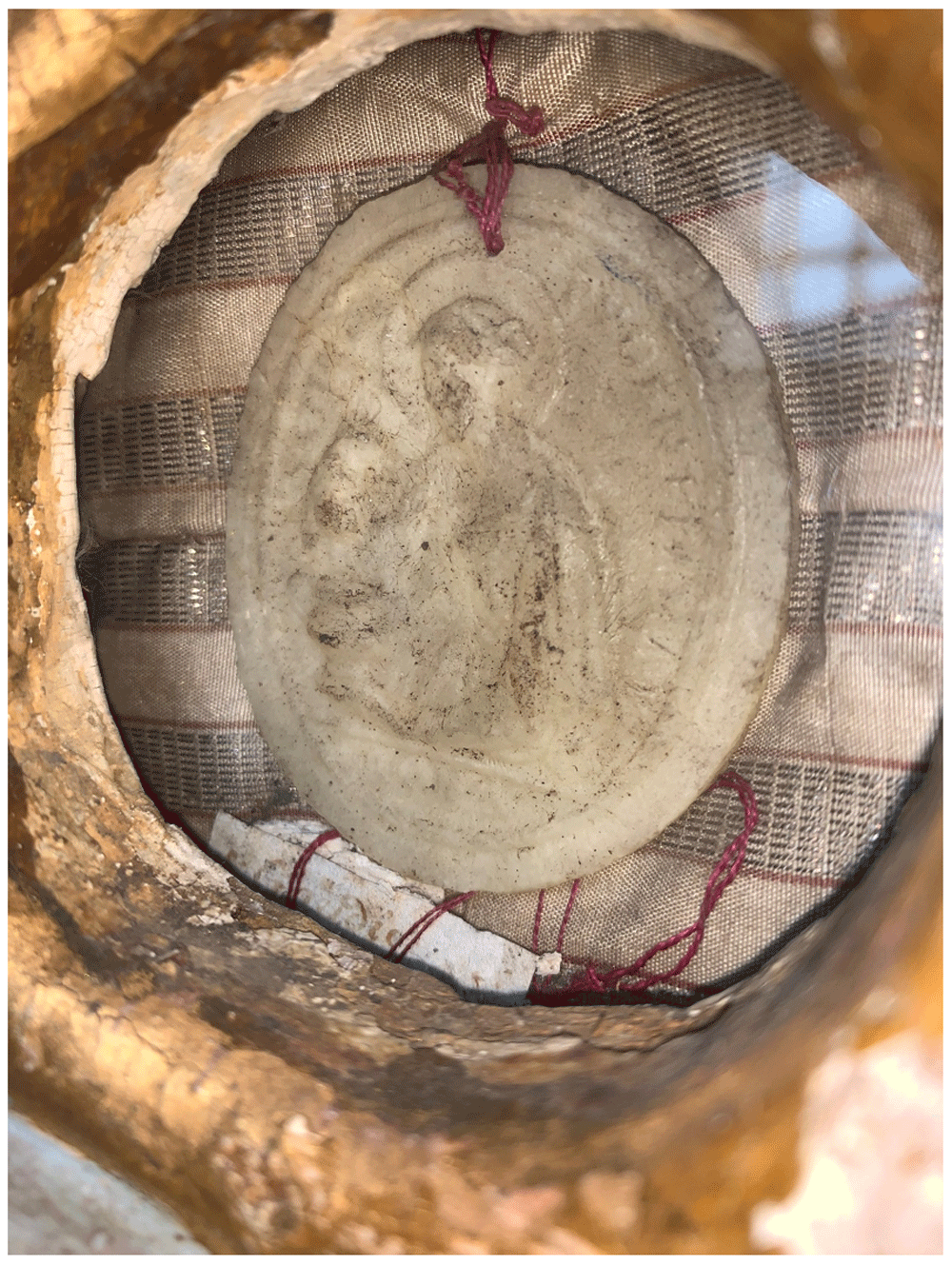
Figure 8. Reliquary busts containing pasta di reliquie and catacomb relics, detail.
Human remains (skeletal fragments), polychromed wood, wax, textile, and mixed materials. Second half of the eighteenth century (post 1765). Formerly Franciscan convent in Valkininkai. Church Heritage Museum, Vilnius, Lithuania. Image: Ruth Sargent Noyes.
By the time Borch found himself in the urbe, there was already a history of traffic in numinous catacomb imports more generally between Italian lands, the Crown, Livonia, and the Grand Duchy that stretched back well over a century41. As early as the first decades of the 1600s, Jesuits divided between the Provinces of Poland and Lithuania around 80 catacomb bodies imported from Rome; after 1631 some of these relics were translated into three Jesuit churches, a private chapel, and the cathedral in Vilnius. Other catacomb relics were installed in the chapel (and subsequently to the parish church and Jesuit church) of the new Jesuit college of Kražiai (Pol. Kroże) in the region of Samogitia (Pol. Żmudź, Lith. Žemaitija); those of saints Crescentius, Clemens, Martinianus, Martiniana, Emiliana, and Faustina were brought to Samogitia ante 1639. In the north-eastern Lithuanian diocese of Smolensk (today in Russia) the body of catacomb saint Callistratus was donated to Smolensk cathedral church circa 1645, under the aegis of the powerful magnate and Great Standard-Bearer of Lithuania, Nicolas (Mikołaj) Sapieha (1581–1644), who also brought four such bodies to his residence in Kodeń (in contemporary eastern Poland) in the 1630s after a trip to Rome. Around 1751 the body of the catacomb saint Fortunatus was brought to Samogitia cathedral in Varniai (Pol. Wornie)42. Relics of St. Valens extracted from the catacombs of Trasone and Saturnino in 1763 were translated on the occasion of the installation in the Trinitarian Church in Vilnius in 1765 under Vilnius Bishop Ignacy Jakub Massalski43.
“an unexhaustable mine of relics”
Highly desirable to Catholic religious communities, affluent grand tourists, and pious elites, catacomb relics were initially excavated by and dispersed through the networks of newly-founded religious orders like the Jesuits and Oratorians44. After initial piece-meal attempts at regulation, by the second half of the seventeenth century the Apostolic Chamber had established an administrative system to centralize, legalize, and standardize the booming market for distribution of this precious resource according to requests from the faithful, particularly for the most valuable insigne relics comprising more or less intact skeletons45. These could sell on the open market for up to 100 scudi, approximately 10% of Borch’s annual Grand Tour allowance. Excavating the catacombs as a numinous quarry, the Vatican oversaw exploitation of a resource it claimed on the one hand limitless, based on estimates for the total number of Roman martyrs around 64 million, and on the other under heretical threat46. To put the phenomenon of catacomb relic regulation in statistical perspective, for the period 1657–1791, documented cases of their legal authentication (on which more below) totaled over thirty-five thousand; for the period 1814–1850 such authentications reached two thousand47. While the phenomenon of the translatio of catacomb relics from subterranean Rome to Baltic Europe is admittedly little-known today, what might be described as a sort of invasion of the north by the remains of ancient Italo-Roman bodies and body parts, what might be termed the Baltic’s ‘Romanization’ or even “catacombization,” unfolded via constituencies, initiatives and dynamics both internal and external. Starting after 1600 and climaxing by c. 1800, this mass migration operated according to standards and regulations under the aegis of the Apostolic Chamber, but at the behest or demand of requesting constituencies like the Count Michał Jan Borch. Thus each exported relic represented a response to a particular call, by means of a bureaucratic system divided between two Church offices charged by 1700 with distribution: the first, the Papal Sacristan, reported directly to the pontiff; the second, the Cardinal-Vicar of Rome, superintended his Vicegerent, and in turn a designated Custodian of Sacred Relics and Cemeteries48.
Borch’s autograph appeal in Italian (he was fluent in Italian, Polish, and French, conversant in German, with a basic knowledge of English) to the Custodian of the Cardinal Vicar survives bound in a volume with hundreds of other mostly successful petitions—giving some indication of the scope of the system—and shows added notations by the Cardinal Vicar’s staffage (on which more shortly) according to bureaucratic convention49 (Figure 1). Borch’s case demonstrates that such petitions characteristically represented a bureaucratic endpoint of sorts rather than point of departure, as he reminded the Custodian of a previous audience with Pope Pius VI (Giovanni Angelo Braschi, 1717–99; r. 1775–99), where the pontiff promised the holy body of a warrior-martyr50. Consumer competition was keen, and the process to obtain such rare relics could entail years and multiple papal audiences, which in addition to particular linguistic and formal economies also subsumed a specific documentary and monetary system, typically comprising papal rescripts, taxes, fines, and fees for secretaries, translators, notaries, and other third-party agents51. Both Sacristan and Vicar oversaw squads of so-called cavatori (“quarry-men”) who descended with a designated ecclesiastical expert to identify and remove authentic remains once a given supplication was approved52. In Borch’s case, annotations in a second hand on the verso of his request specify that the day prior to his officially soliciting the Vicegerent, orders had been conveyed on 29 April 1778 on behalf of Pius VI that “the body of St. Victor Martyr” be given “to His Excellency the Count de Borch, one of the magistrates of Poland…such that the Catholic Faith and the cult of Saints might be honored in Poland”53 (see extended data, Appendix 1). An inscription on his petition in a third hand dated 30 April specified that “the Holy Body of St. Victor [extracted] from the Cemetery of St. Priscilla,” indicating a site on the Via Salaria used for Christian burials from the late second through the fourth century54.
From these inscriptions can be inferred firstly that his relics had been “baptized” with a name and identity chosen by Borch himself, most likely according to mentions in the Roman Martyrology, of which there were about three dozen55. This was according to period custom issuing from the fact that cases of so-called nomine proprio catacomb relics, where traces of a name were found in situ in the burial loculus, were exceedingly rare, and in the majority of cases of unidentified remains, the requesting party could christen the bones themselves56. Second, it suggests that Borch had either misrepresented his office (he was not yet a magistrate) or it was misconstrued by Vatican officials. Third, it demonstrates that Borch’s successful navigation of the Roman courts and the support of elites within this milieu was likely key to his success in being granted relics at all (and apparently on short notice). Lastly, it indicates that despite the recent partition of Poland-Lithuania and Russian annexation of his family’s latifundia in Polish Livonia, Borch was still perceived—and presented himself—in the papal city as a relic of the Polish aristocracy and defender of Catholicism, and that these perceptions may have helped his case in procuring relics57. In fact, the young nobleman’s personal correspondence from this period shows he was sometimes given to exaggerating his official titles at the Italian courts, and was particularly sensitive regarding what he viewed as disrespectful treatment at the papal court, where the rescheduling of his audience with Pius VI was a particular sore point58.
Borch had been in close contact for two years with high-ranking members of the Curia who both had connections to Catholic interests in Poland-Lithuania and to the cult of relics: Cardinal Giovanni Francesco Albani (1720–1803), who was relator of the Sacred Congregation of Indulgences and Sacred Relics and Cardinal Protector of the Kingdom of Poland in the Roman Curia, and Cardinal Antonio Eugenio Visconti (1713–88), who performed various duties on the Congregation for Indulgences and Sacred Relics (Prelate, 1742-, Prefect, 1782-) and had been nuncio to Poland (1760–66)59. A mounting existential crisis for the Holy See against the expanding Russian imperial remit crystalized during the years that Borch spent in the orbit of the Roman courts60. Following the first partition of Poland in 1772, Russian Empress Catherine unilaterally founded the Latin Catholic Diocese of Mohilev (Pol. Mohylew) in defiance of the laws of the Catholic Church and in direct challenge to the pope, splitting its territory from the Dioceses of Inflanty, Vilnius and Smolensk, and appointing Stanisław Bohusz Siestrzeńcewicz (1731–1826) as its first bishop in 1773. From Rome’s perspective Siestrzeńcewicz was a controversial candidate, given that he was a Catholic convert only recently ordained. In 1782 the tsarina elevated Siestrzeńcewicz to metropolitan archbishop of Mohilev61. Pius VI initially refused to recognize this new see and Catherine’s appointee, then initiated negotiations represented by nuncio Giovanni Andrea Archetti62. Eventually, facing the prospect of the founding of a new Russian papacy, Pius canonically sanctioned the new Archdiocese of Mohilev with the Bull "Onerosa pastoralis officii" of 15 April, 1783, which reserved to his office the foundation of other dioceses in the territory of the archdiocese, the largest in the world at the time63. The result, however, left a Russian Catholic archdiocese typical in structure but exceptional in that it reported not to the Holy See but to tsarist government ministry; Archetti was not recognized as an official nuncio and a Russian “envoy” was only established in Rome in 181764.
That Borch was swiftly conceded prestigious relics of a supposed Rome soldier martyred for the true faith should be viewed against the unfolding antagonism between encroaching Russification in his homeland and the efforts of the Holy See to sustain its legacy of global hegemony. Victor’s bones may have been autopsied by Church-appointed medical experts for signs of violent injury to substantiate a martyr’s death, though such paleopathology was not carried out in every case65. To ratify their genuineness and ensure the chain of custody, Victor’s relics were furnished with a so-called Authentic: these pre-printed notarized certificates baptized the sacred remnants with names and identities that as noted above were usually indicated by the supplicant66 (Figure 9). As can be seen from a period example for catacomb relics of St. Valens from the Catacomb of St. Saturninus, issued by the Custodian of Relics and Cemeteries on behalf of the Vicar-General in 1763, Authentics also furnished a validating description of the relics and the container into which they were placed, and specified from which cemetery the remains were taken and to whom they were entrusted67 (Figure 10).
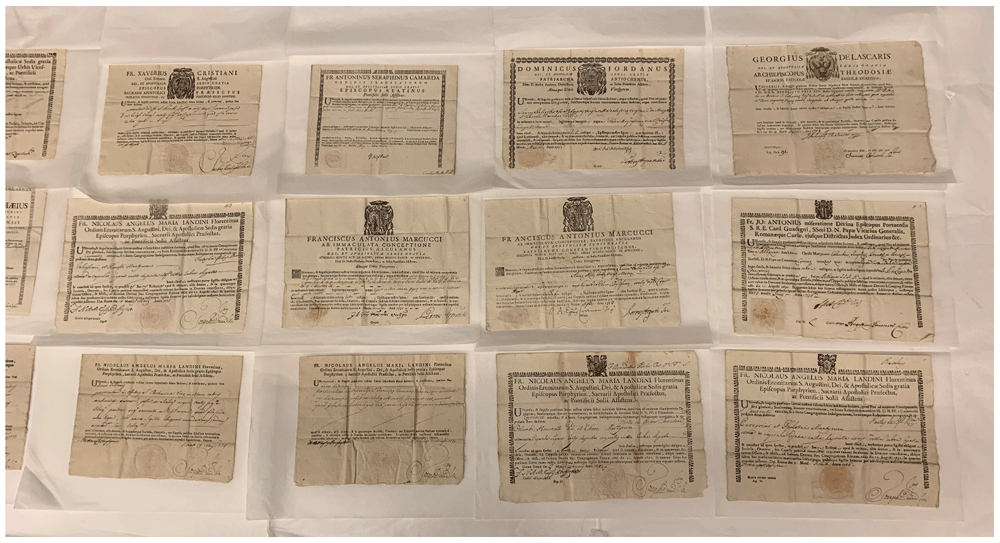
Figure 9. Authentic certificates.
Seventeenth-nineteenth centuries. Ink on laid rag paper. Church Heritage Museum, Vilnius, Lithuania. Image: Ruth Sargent Noyes.
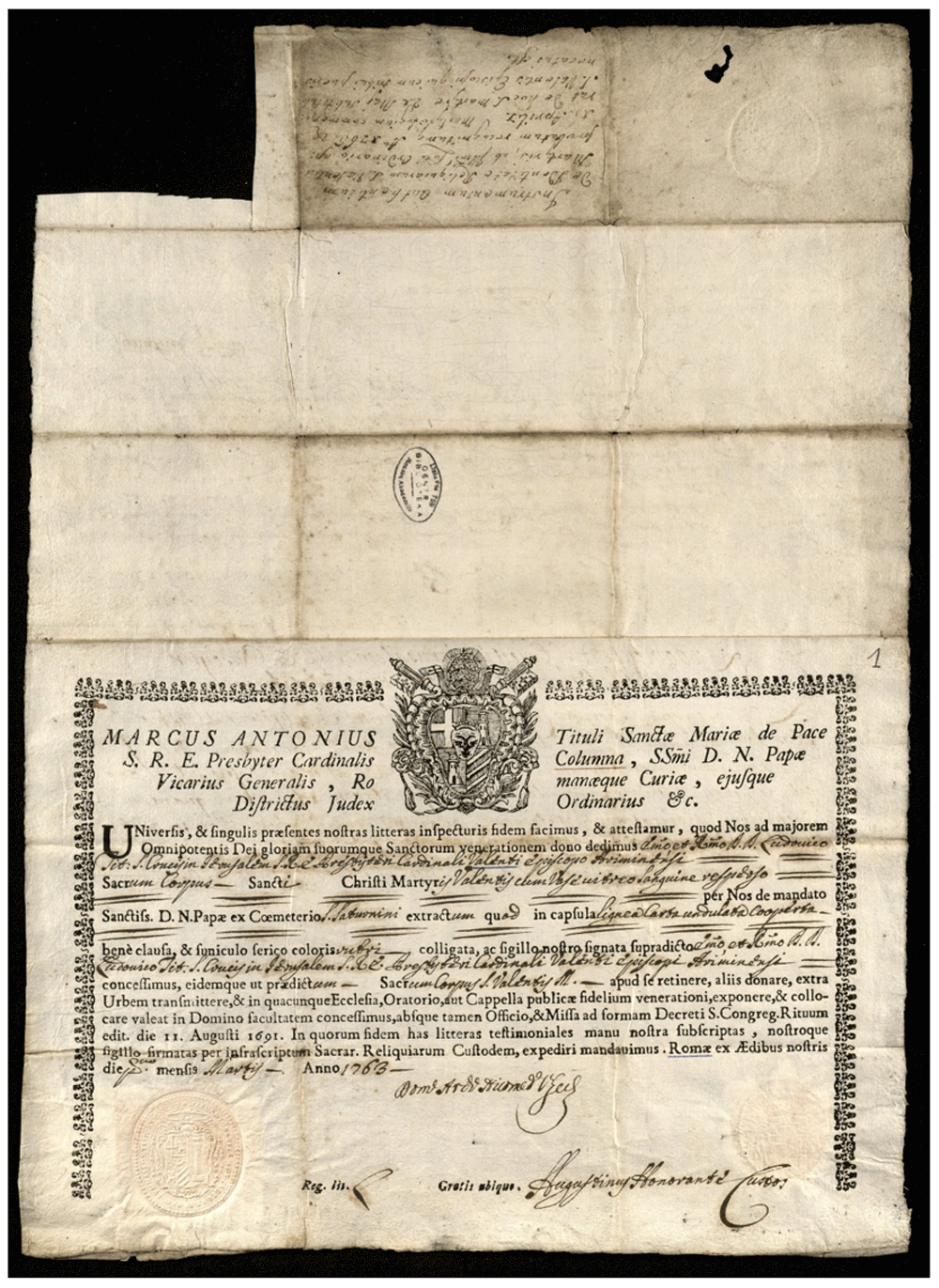
Figure 10. Authentic for catacomb relics of St. Valens from Catacomb of St. Saturninus, issued by the Custodian of Relics and Cemeteries on behalf of the Vicar-General.
Ink on laid rag paper. 1763. Vilnius, Wroblewskis Library of the Lithuanian Academy of Sciences Archives, LMAVB_RS F273-388 1r-2v. This figure has been reproduced with permission from: Wroblewskis Library of the Lithuanian Academy of Sciences Archives.
Luigi Francesco Leonardo Desanctis (1808–1869), an Italian-born Catholic theologian turned evangelical protestant and ardent Catholic critic, penned an eyewitness exposé of the processing of catacomb relics in an account of his shocking visit to the former Jesuit College in Rome, partly repurposed as a relic depository:
“…The second room is full of wooden chests, dyed green, containing the relics of popular saints. In this room there are four priests, whose business it is to place the relics in shrines for distribution, and you shudder to see the tables covered with a confused mass of bones, teeth, pieces of old garments, hair, and so forth, tumbled together with the greatest indecency, so that I could not believe that they were relics, till our priest assured me of the fact. I conclude the priests who distribute them do not believe in them; if they did, they would treat them less contemptuously….[The Reverend Custodian] said ‘The catacombs send us each week the bodies of saints, such that we have an overflow of common relics. Our catacombs are an unexhaustable mine of relics, but we have really very few distinguished relics, and don’t know what we’ll do in 50 years’ time.’ I asked how the Pope could decide whether the skeletons found in the catacombs belonged to the saints. ‘The Pope!’ he replied, ‘The Pope doesn’t get mixed up in such things. He commits them to the Cardinal-Vicar, the Vicegerent, and the Sacristan…who visits the remains as they are disinterred, and when he believes them to have been saints, sends them here for us to baptize and distribute to the faithful’. ‘To baptize!’ I interrupted, with astonishment; ‘do you baptize dead bones?’ The Custodian explained that by baptizing, he meant nothing more than naming them. No one knows to whom a certain skeleton once belonged, but the reliquary stands in need of relics of S. Pancrazio, for example, and the skeleton is called S. Pancrazio.”68
“miraculous bones, with unqestionable signs of martyrdom”
Desanctis’s colorful description gives a sense of the sordid banality of the catacomb relic boom, a banality that unfolded from the dark and dank loculi of the catacombs mined by professional quarrymen to the ersatz workshops in the houses of religious orders where bones and other remnants were sorted and christened, and a banality camouflaged not only by the intricate courtly rituals, conventions and procedures that unfolded from the palaces of cardinals who facilitated supplicants like Borch to the Vatican offices and lavish rooms of the papal palace, but also by the material enclosing of the relic-remains within a sealed theca (small glass capsule) for miniscule relics or baule (chest) for larger remains, in which these relics were ordinarily delivered to supplicants69. These typical containers accomplished in an economical fashion essential reliquary functions, instantiating the ritual processes of selection, enshrinement, and institutional authentication that imbued the contents with beauty, value and efficacy, and staging their advent to the audience of the faithful, even if this appearance actually entailed the contents’ invisibility70. Once the relics arrived at their final destination, local communities often had them translated into more elaborate enclosures and displays, a widespread phenomenon most spectacularly realized in the reassembled, bedecked, and bejeweled skeletons installed at the Bavarian collegiate basilica of Waldsassen from the late seventeenth century71.
By the late eighteenth century when Borch received St. Victor, however, a confluence of factors in Rome had given rise to a new satellite industry that sprung up around the robust trade in catacomb relics, in part as a solution to the Custodian’s complaint as relayed by Desanctis: namely, the mounting dilemma that while global demand for relics remained strong, the catacombs offered an “unexhaustable mine” for countless “common” but increasingly scarce “distinguished” relics, a state of affairs that threatened to put the entire economy of catacomb relic translation in jeopardy72. By the turn of the nineteenth century, prestigious insigne remains—intact major bones, integral skulls, and especially complete skeletons—were in increasingly short supply, as the seemingly endless resource of the urbe’s underground ossuaries had been overexploited and largely reduced to small, fragile, friable fragments, which lacked the spiritual (and social) caché associated with large, intact, and recognizably corporal integral relics73. This crisis in numinous resource management intersected with a constellation of others during the final pontificates of the century, that of Clement XIV (Giovanni Vincenzo Antonio Ganganelli, 1705–74; r. 1769–74) and Pius VI (Giovanni Angelo Braschi, 1717–99; r. 1775–99), perhaps best remembered for presiding over the dissolution of the Jesuit Order, of the territory of the Papal States, of the papacy’s financial resources, and of Catholic hegemony more generally74.
Facing a centuries-long Papal dominion under threat as never before, under their purview the Holy See mounted an Enlightenment counter-reform campaign to reaffirm the papal city as caput mundi, renovate the image of the papacy as international arbiter of taste, reaffirm the illusion of integral Catholic empire, and refill depleted Vatican coffers75. Crucial to these manifold endeavors was the promotion of Rome as a primary destination on the Grand Tour, attracting flocks of foreigners as pilgrims to marvel at not only pious Christian sites and the opulent papal court, but also the remarkable antiquities that had endowed fame on the city for centuries and were concurrently collected, showcased, and safeguarded in new buildings and galleries overseen by the pontiff, his extended family and courtly circles, as well as sold in the form of originals, reproductions, and forgeries to well-off tourists like Count Borch76.
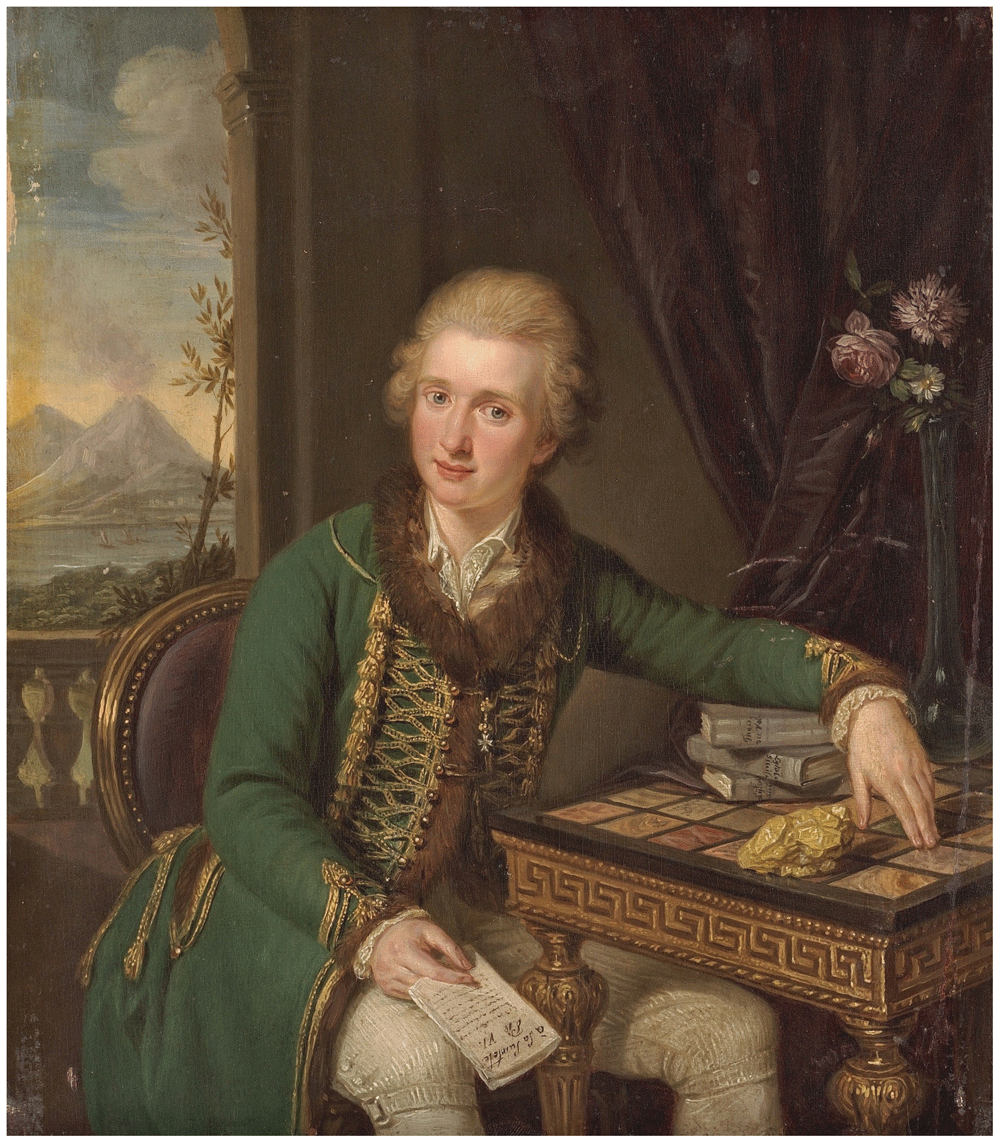
For his part, while in Rome Borch longed to sit for sought-after portraitist Pompeo Battoni and hankered for cameos by renowned glyptic artist Giovanni Pichler; his predilections as an aspirational collector were documented in an oil portrait from this period by Austrian-born artist Ludwig Guttenbrunn (1750–1819), today in the Tretyakov Gallery, Moscow (Figure 11). The painting figures him against a Neapolitan landscape, seated at an ornate Scagliola or Pietre Dure table, signaling both his good taste (Scagliola was equally popular in Italy and the Grand Duchy) and mineralogical and antiquarian interests77. Gesturing to his own volumes on natural history and ethnography in Italian lands that he published during his sojourn on the peninsula, he proffers a folio with the inscription “to His Holiness Pius VI,” adumbrating at once the papal audience where Borch solicited a promise of relics from the pontiff, and the dedication to Braschi of his Lythologie sicilienne (Sicilian Lythology), a work on petrology and mineralogy, which received its imprimatur from the Vatican Master of the Sacred palace on 9 June 1778, shortly after Borch received his relics78. His dedication framed his own natural historical expertise against Pius’s many initiatives and strategies to systematize, valorize, and extract profit from resources under the papal aegis79, most famously in the Bonificazione Pontina (“Pontine Land Reclamation”) to develop and cultivate the malarial Pontine Marshes south of Rome80, but also to drain marshes around Città della Pieve, Perugia, Spoleto and Trevi and connect lake Trasimeno near Perugia to the Tiber river81, open lead and aluminum mines82 and marble and alabaster quarries83, boost tobacco and paper production84, reform the Annona Pontificia regulating grain in papal territories85, and monetize water flowing into Rome86.
Amongst this range of environmental resources might also be posited the numinous remains conserved within the loculi of the catacombs. The entwined issues of dwindling supply and strong demand created an opportunity for innovation: corpisanti catacomb relic-sculptures represented a solution that interwove patronage, collecting and production in the arts, spiritual, bureaucratic and economic reforms, and resource management. Corpisanti bring together the holy relic and the reliquary container into a single sculptural form, incorporating bodily remains in the form of scant bone fragments within a three-dimensional sculpture made to approximate a human figure, outfitted and staged to appeal both to late baroque-rococo courtly tastes and neoclassical antiquarian sensibilities (Figure 2, Figure 12). The excavation, production, and distribution of corpisanti entailed strip-mining the already over-exploited Roman catacombs for friable skeletal fragments and consolidating the often pulverized relics within a luxurious life-size material fantasy of integral anthropomorphy. Scholarship tends to posit 1772 as the terminus post quem for the advent of these relic-sculptures in the Roman milieu, attributing the first exemplar to the administration of surgeon and would-be Roman courtier Antonio Magnani. He oversaw in 1772 the reconstituted catacomb relics of St. Felicissima, displayed in the Palazzo Ruspoli to great popular acclaim, and thereafter under the aegis of the Papal Sacristan superintended the burgeoning corpisanti industry on the papacy’s behalf in a specially created Vatican post, “Restorer of Holy Bodies of the Pontifical Chapel,” which vanished with his death in 180887. However, it will be shown here that relic-sculptures surviving in the Baltic suggest that Magnani's role was that of consolidating (not initiating) a phenomenon that began by the middle of the eighteenth century and climaxed during the Braschi pontificate. Their serial manufacture by nameless artisans in workshops under the Vatican’s purview started c. 1750 and reached a kind of apogee under Pius VI, proliferating exponentially and achieving such a morphological proto-industrial consistency that some specimens appear almost identical. Scholarship also widely refers to these unique objects as ceroplastic relics, since some examples (possibly the earliest specimens, though this remains to be verified) included visages, hands, or other body parts modeled from wax88. However, that most surviving specimens include very minimal wax in their fabrication renders this nomenclature somewhat imprecise and suggests that wax was phased out of production—possibly because of the expense of high-quality material, because it demanded highly skilled artisans and was less conducive to large-scale production, or because it tended to degrade (discolor, melt, or attract hungry church mice)89. The nomenclature cuerpo-relicario (“body-reliquary”) adopted in some scholarship is more accurate90.
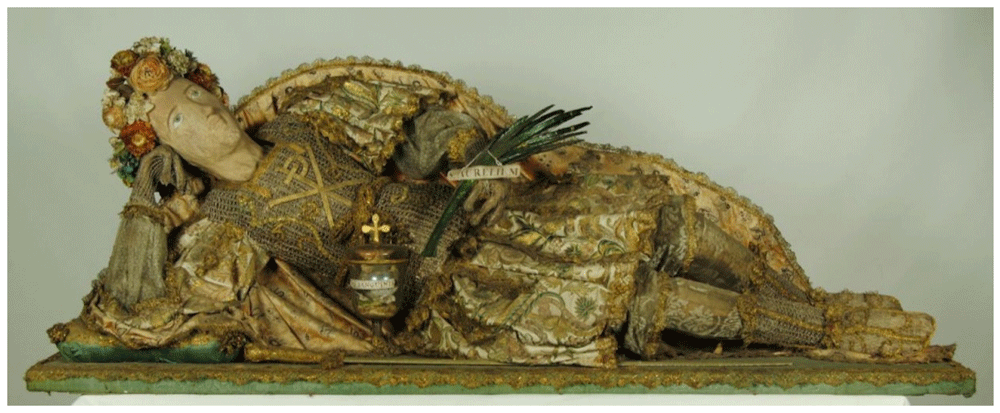
Figure 12. Corposanto relic-sculpture of St. Aurelius, frontal view.
Human remains (skeletal fragments), metal wire, wood, wax, textile, polychromy, laid paper, and mixed materials. Circa 1789. Cathedral of Porto, Portugal. This figure has been reproduced with permission from: Joana do Carmo Palmeirão, “Imagem-relicário de Santo Aurélio mártir pertencente à Sé Catedral do Porto. Estudo e conservação integrada das relíquias,” MA thesis, Universidade Católica Portuguesa, 2015, 153, fig.1.
Borch’s pursuit of geological knowledge regarding the formation and detection of subterranean resources and riches, his aspirations at the courts of Italy, his self-fashioning as an elite defender of Catholicism on the north-eastern frontier of Europe, and his ambitions as a collector of precious naturalia, mineralia and art works, made him an ideal consumer of this relatively new luxury commodity. Once he had the authenticated relics of St. Victor deposited without art, as Desanctis observed, in a wooden casket for transport, he could opt to keep the box of bones; or, he could engage additional middlemen to broker the transformation of the fragments into a corposanto relic-sculpture. That a good portion of period requests for corpisanti came from petitioners like Borch who had in fact not come to Rome with the principal aim of securing such relics, but only arrived at the idea after some time in the city, suggests aggressive advertising, even as these numinous artworks grew more difficult to obtain, thereby enhancing their perceived value as luxury goods. Corpisanti were of course in of themselves advertisements for a variety of Roman luxury industries concurrently fostered by the Apostolic Chamber, for which the fertile Bonificazione Pontina and the Apostolic Chamber’s other initiatives were to have furnished raw materials, manufactured products, and byproducts, such as wire, paper, cotton and hemp, and textiles. A recently analyzed example utilized at least eleven different textiles, eight embroidery techniques, and fifteen different kinds of metallic thread91 (Figure 12, Figure 13). Spectacular ornamentation made these figures very much at home in outré courtly environments of the period.
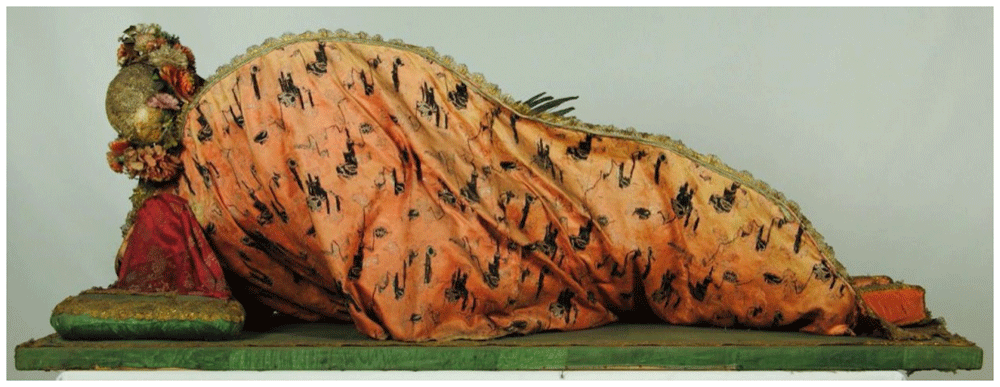
Figure 13. Corposanto relic-sculpture of St. Aurelius, dorsal view.
Human remains (skeletal fragments), metal wire, wood, wax, textile, polychromy, laid paper, and mixed materials. Circa 1789. Cathedral of Porto, Portugal. This figure has been reproduced with permission from: Joana do Carmo Palmeirão, “Imagem-relicário de Santo Aurélio mártir pertencente à Sé Catedral do Porto. Estudo e conservação integrada das relíquias,” MA thesis, Universidade Católica Portuguesa, 2015, 153, fig.2.
Dressed and cabinetized with an air of archaeological authenticity within a tableau setting redolent of the catacomb burial cubiculum inside a sumptuous glass coffin, corpisanti like Victor generally represented one of two types: the male Miles Christi, equipped as one of the myriad Roman soldiers martyred after converting to Christianity, and the female Sponsa Christi, fitted out as one of the virtuous Roman virginal converts martyred for refusing marriage to anyone but Christ (Figure 14). Both types were typically arranged in a reclining position modeled after ancient sarcophagi, classical statuary, and Roman baroque church sculpture that evoked hagiographic accounts of execution, entombment, and ecstasy—leaning on an elbow subtly addressing the beholder, or recumbent facing heavenward92. They were most often posed on a thin mattress-like upholstered platform and propped up on silk chintz or similarly elaborately covered cushions, accessorized with sandals, armor, weapons, other accoutrements, and a small chalice representative of the so-called vas sanguinis, an ampule of blood often found in the catacombs and identified as proof of martyrdom93. When Borch eventually did return to newly Russified Livonia after his father’s death in 1780 and settled on his inherited estate of Varakļāni (Pol. Warklany), he first kept Victor in the chapel inside his Italianate palace, which he had rebuilt by Vincenzo Mazotti, a Roman of noble parentage with courtly aspirations in Warsaw and some architectural training94 (Figure 15). Borch decorated the interior of his palace with mural paintings of Italianate landscape vedute—featuring mountains and grottos that echoed his expertise in lithology—and classicizing trompe-l'oeil recreating palatial decoration of imperial Rome that he likely saw first-hand during his Grand Tour95 (Figure 16–Figure 18). Inside the Varakļāni palace surrounded by vestiges of the count’s Italian travels and a gallery of family portraits, the relic-sculpture disinterred from Roman earth was initially placed in proximity to natural historical cabinets displaying ample collections of minerals, stones, and gems unearthed from Italian soil, realizing the Pauline metaphor in First Peter 2:4 of the bodies of saints as precious “living stones” in luxurious textiles and bric-a-brac96. In this highly suggestive context, St. Victor elicited the Borch’s origins in Livonia among pious Medieval crusaders under the papal aegis, forging a connection with the first victorious Christian martyrs of the past and devout champions of Roman Catholicism amidst religio-political and cultural upheaval in his homeland.
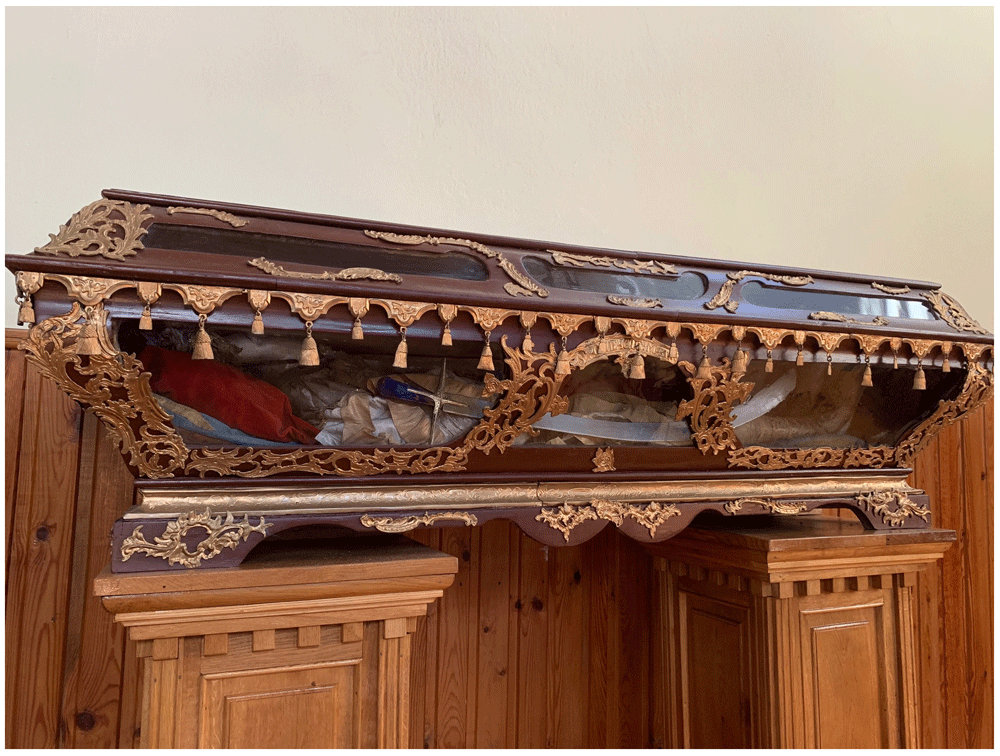
Figure 14. Corposanto relic-sculpture of St. Bonifacus.
Human remains (skeletal fragments), metal wire, wood, wax, textile, polychromy, laid paper, and mixed materials. Second half of the eighteenth century (post 1765), altered late nineteenth century. Formerly Franciscan convent in Valkininkai. Valkininkai Parish Church, Lithuania. Image: Ruth Sargent Noyes.
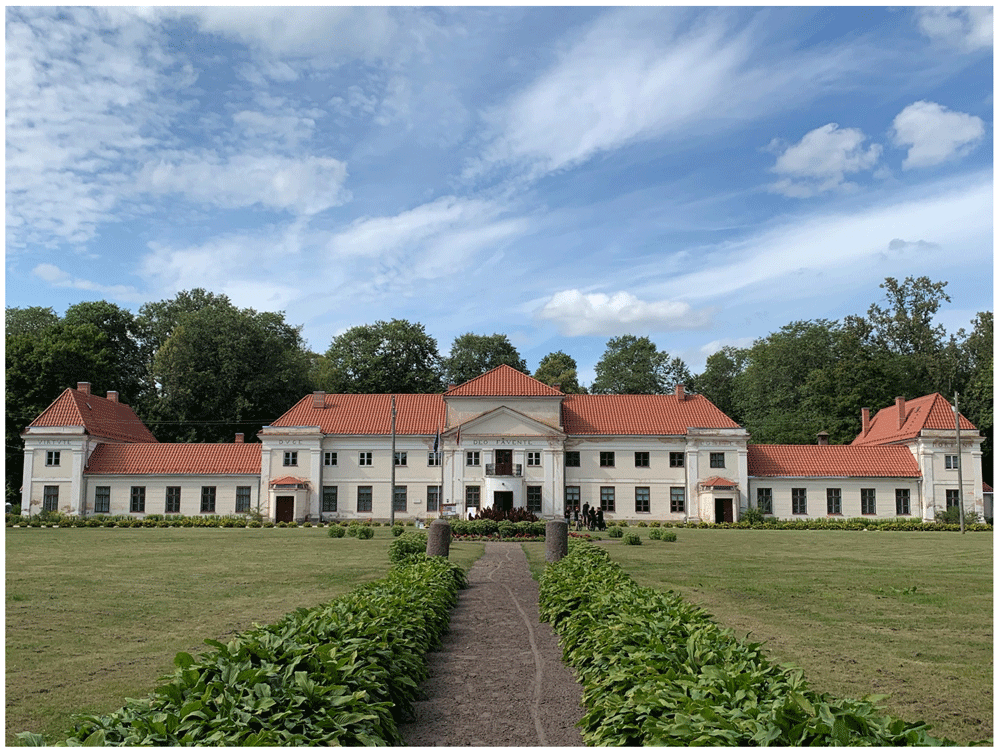
Figure 15. Vincenzo Mazotti, Borch manor palace.
Turn of the nineteenth century, circa 1783–1810. Varakļāni, Latvia. Image: Ruth Sargent Noyes.
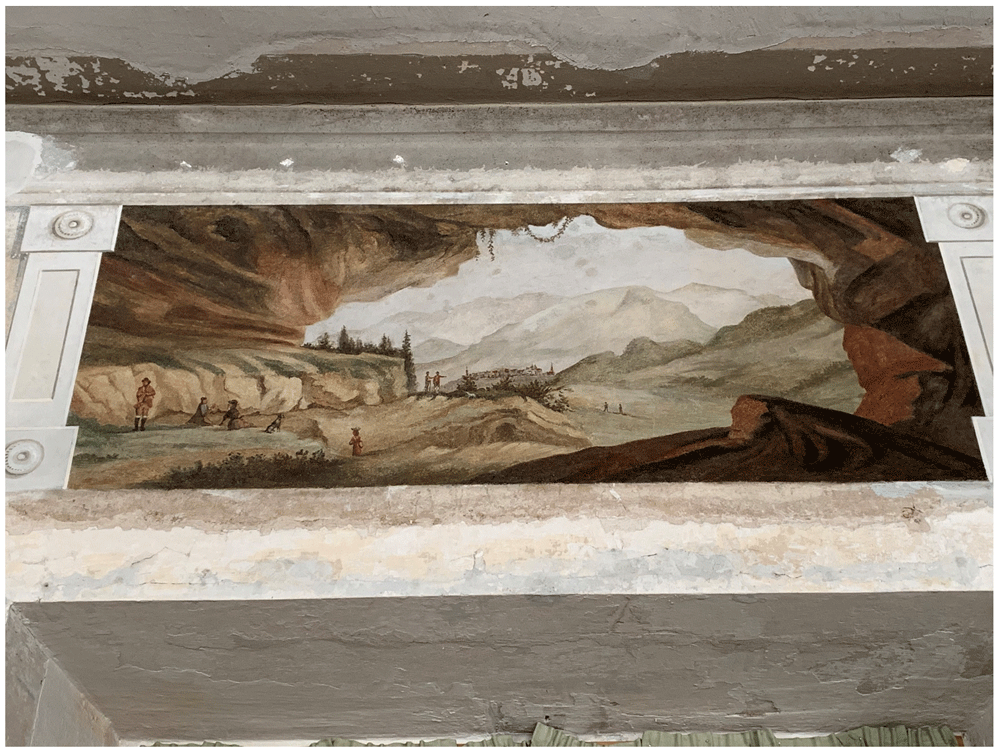
Figure 16. Unknown artist, mural painting of a landscape veduta with grotto.
Turn of the nineteenth century, circa 1783–1810. Borch manor palace, Varakļāni, Latvia. This figure has been reproduced with permission from: courtesy of Varakļāni Regional Museum.
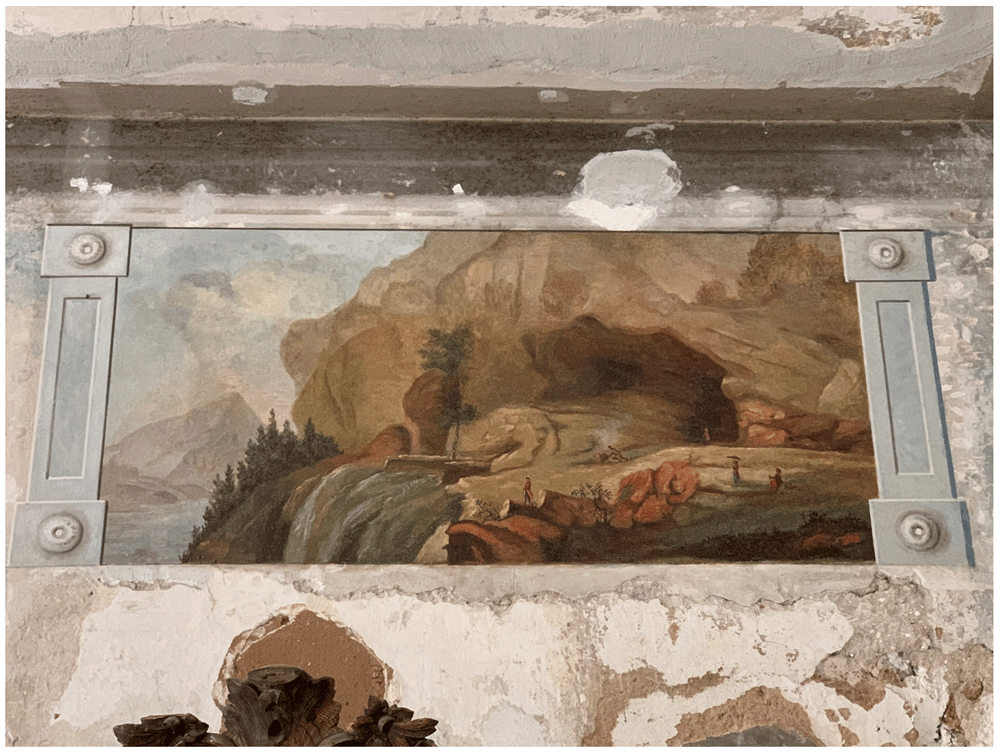
Figure 17. Unknown artist, mural painting of a landscape veduta with grotto.
Turn of the nineteenth century, circa 1783–1810. Borch manor palace, Varakļāni, Latvia. Image: Ruth Sargent Noyes.
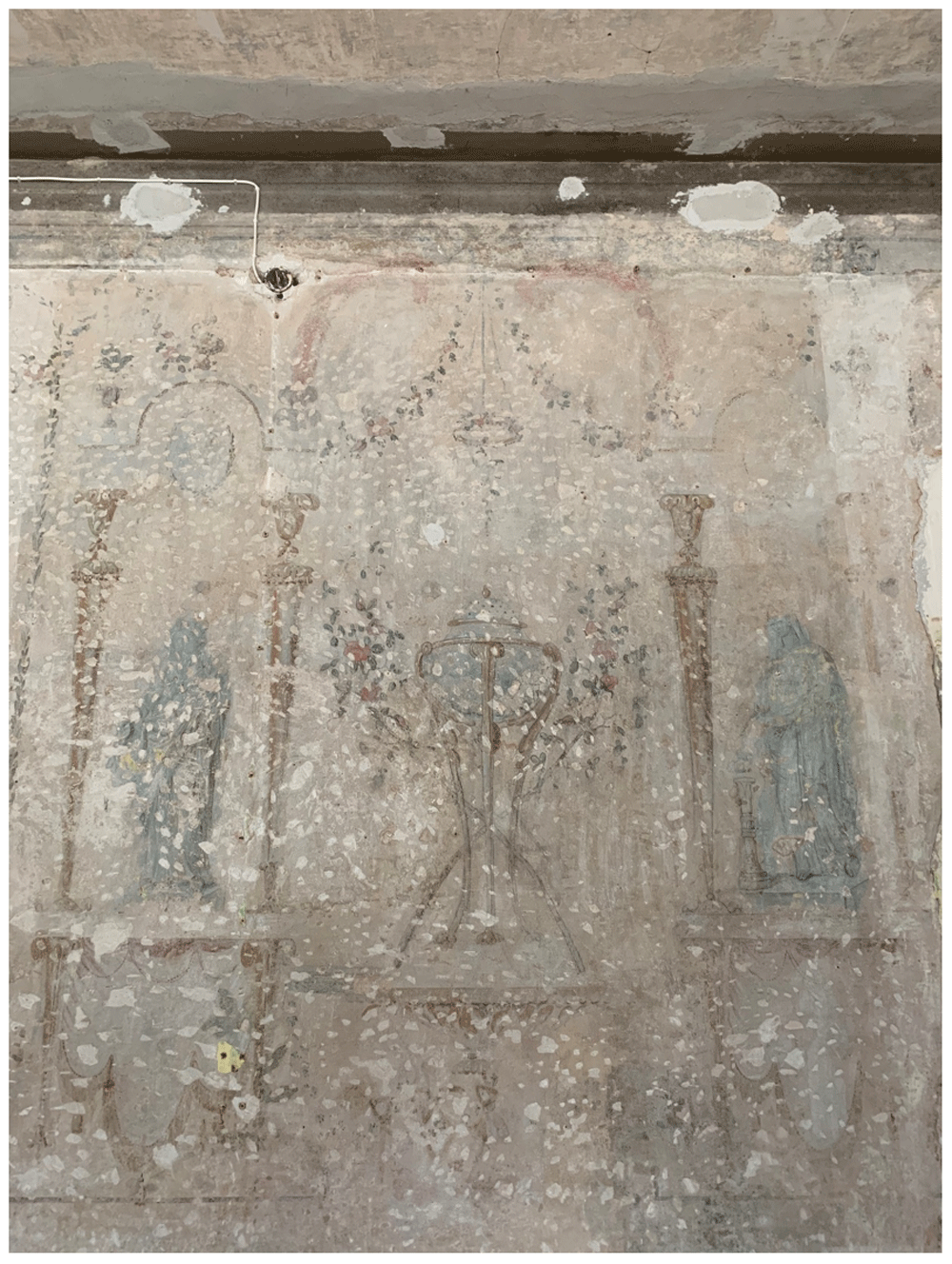
Figure 18. Unknown artist, trompe-l'oeil mural painting with classical statues, grotesques, festoons, and tripod.
Turn of the nineteenth century, circa 1783–1810. Borch manor palace, Varakļāni, Latvia. This figure has been reproduced with permission from: courtesy of Varakļāni Regional Museum.
Both the erudite fashioning and lavish decoration of these sculptures served to mask the material banality of their manufacture: while referencing monumental sculpture in form and style and functioning as a reliquary uniquely embodying a member of the heavenly court in distinctly worldly materials, these objects were actually closer to puppets, dolls, ex-votos, pignattas, and similar ephemeral sculptures in fabrication97. Recent investigations using more and less invasive methods reveal common aspects: skeletal armatures of wood and wire, flesh and limbs of cartapesta (compressed, molded rough-grade paper akin to papier maché) stuffed with cotton wool and mixed vegetal materials like hemp, skin of glue-saturated thin fabric polychromed with wax—all comprising a three-dimensional scaffold into which were interpolated scarce bone fragments puzzled together in defiance of actual anatomy, lavishly translated into a visual fantasy of a whole restored beatific corpse98 (Figure 19). Their scientific inaccuracy and material and socio-cultural precarity constituted the punchline to French occultist Jacques Albin Simon Collin de Plancy’s 1821 description of the sculpted relic-figure of St. Ovide, “a practically unknown holy martyr, who was the patron [saint] at one time quite famous in Paris. His body was greatly venerated by the Capuchins of place Vendôme…That which was particular about this body, was that it had two left feet, which were burnt in 1793”99.
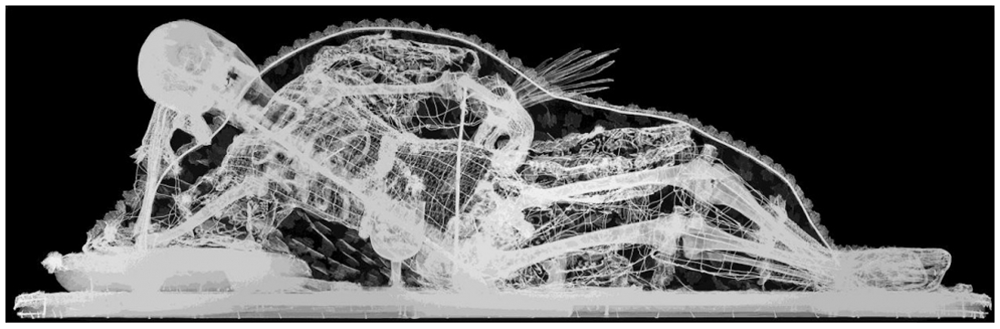
Figure 19. Corposanto relic-sculpture of St. Aurelius, radiographic view.
Human remains (skeletal fragments), metal wire, wood, wax, textile, polychromy, laid paper, and mixed materials. Circa 1789. Cathedral of Porto, Portugal. This figure has been reproduced with permission from: Joana do Carmo Palmeirão, “Imagem-relicário de Santo Aurélio mártir pertencente à Sé Catedral do Porto. Estudo e conservação integrada das relíquias,” MA thesis, Universidade Católica Portuguesa, 2015, 172, fig. 48.
The precarious position of the figure St. Victor as a diplomatic avatar for the Roman Church amidst tense religio-political struggles in the northern borderlands is attested by the conditions of the eventual translation of the corposanto relic-sculpture in April 1783 from Borch’s palace to an eponymous chapel inside the parish church in the center of Varakļāni, which he was developing into a center for religion and trade100 (see extended data, Appendix 2). His plan for the St. Victor chapel included an altarpiece (apparently never realized) depicting the martyr before the Roman Emperor Diocletian101. The count’s translation of St. Victor and his ability to obtain a plenary indulgence for celebrating the saint’s annual festival can not only be linked to contemporary negotiations between Russian imperial and Roman papal authorities regarding the status of the Archdiocese of Mohilev to which Varakļāni was subject, but was directly predicated on Pius VI’s recognition of Mohilev in April that same year102. The jumbled and heavily edited text of a draft for the dedicatory inscription for St. Victor’s eponymous chapel that survives amongst Borch family papers in the Latvian Historical Archive suggests either confusion about or resistance against Siestrzeńcewicz’s title and the precise status of the Roman Church in the region103.
“a special body of some Saint”
St. Victor unfortunately did not survive the destruction wrought upon the northern borderlands of Russia, Estonia, Latvia, Belarus, Poland, and Lithuania, in the course of conflicts during the early twentieth century, a fate shared by many fellow corpisanti, whose annihilation metonymized the violence incurred on local human populations of diverse ethnic and religious backgrounds. Whatever remains of Victor is guarded in a small sealed metal casket of modern facture in Varakļāni parish church (Varakļānu Romas katoļu draudze), Latvia104 (Figure 20–Figure 21).
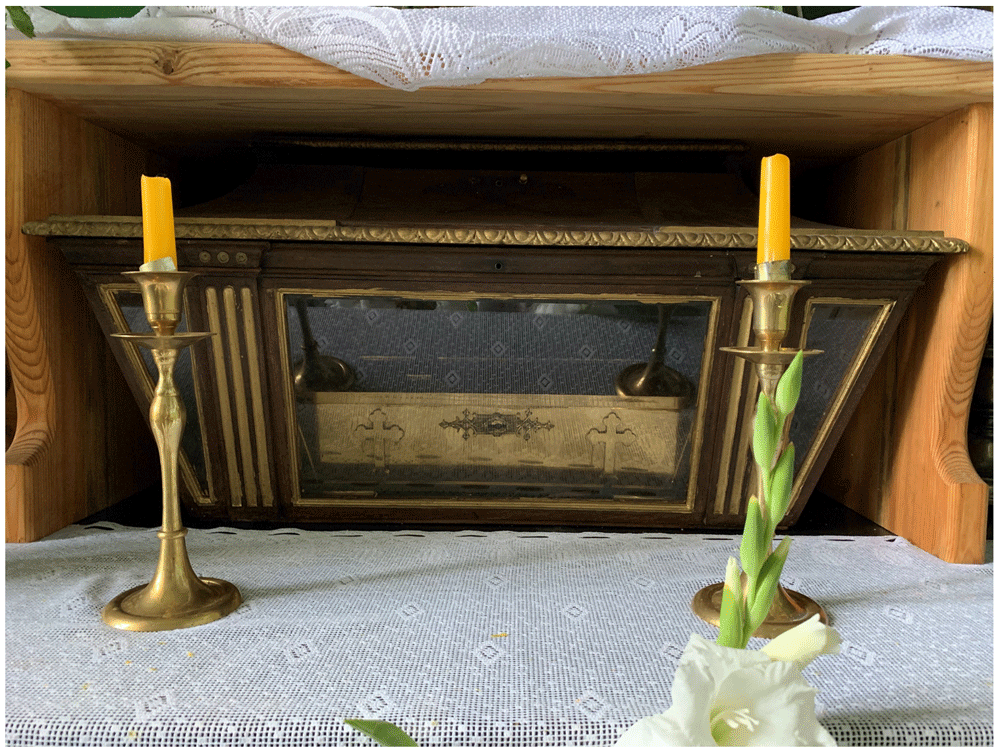
Figure 20. Outer reliquary coffin containing remains of St. Victor relics.
Polychromed wood and glass. Early- to mid-twentieth century. Varakļāni parish church, Latvia. Image: Ruth Sargent Noyes.
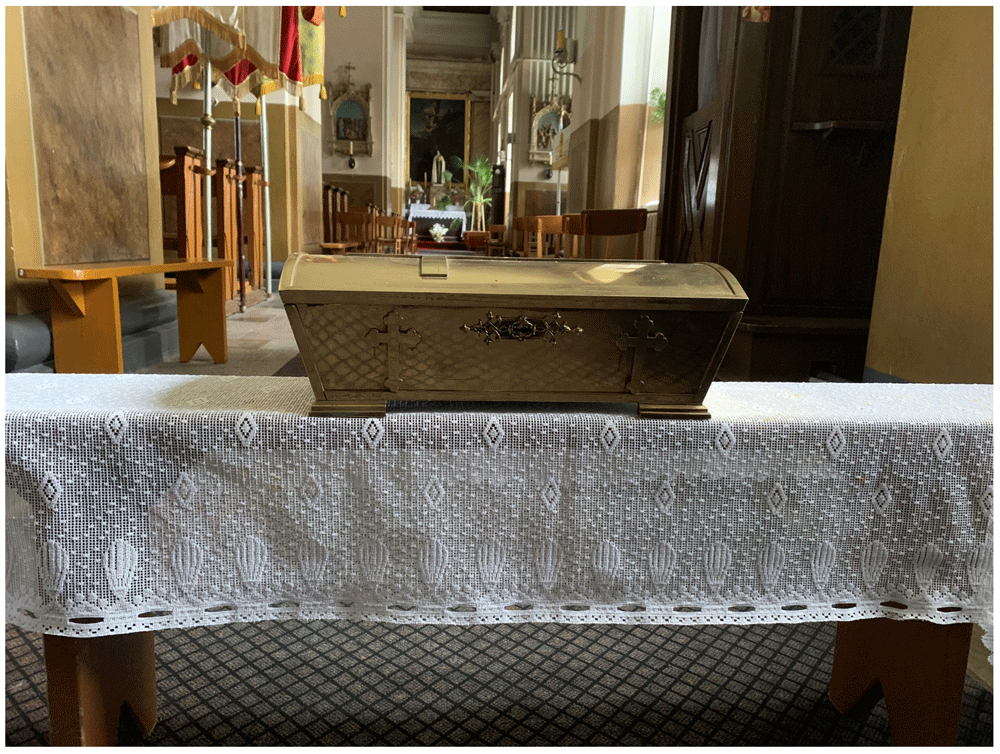
Figure 21. Inner reliquary coffin containing remains of St. Victor relics.
Metal (likely brass). Early- to mid-twentieth century. Varakļāni parish church, Latvia. Image: Ruth Sargent Noyes.
Likewise devastated was the relic-sculpture of St. Donatus in nearby Krāslava (Pol. Krasław), a town in present-day Latvia that was the center of a latifundium on the Daugava river, and close to that of Varakļāni105. What survived of Donatus in the wake of the Second World War is today kept in a modern tabernacle in St. Louis Church (Krāslavas svētā Ludvika Romas katoļu baznīca) in Krāslava, where the saint is still the focus of a contemporary regional cult, annual festival, and pilgrimage; a tiny relic is also displayed within a glass theca inside a silver crucifix likely dating to the late eighteenth century106 (Figure 22–Figure 23).
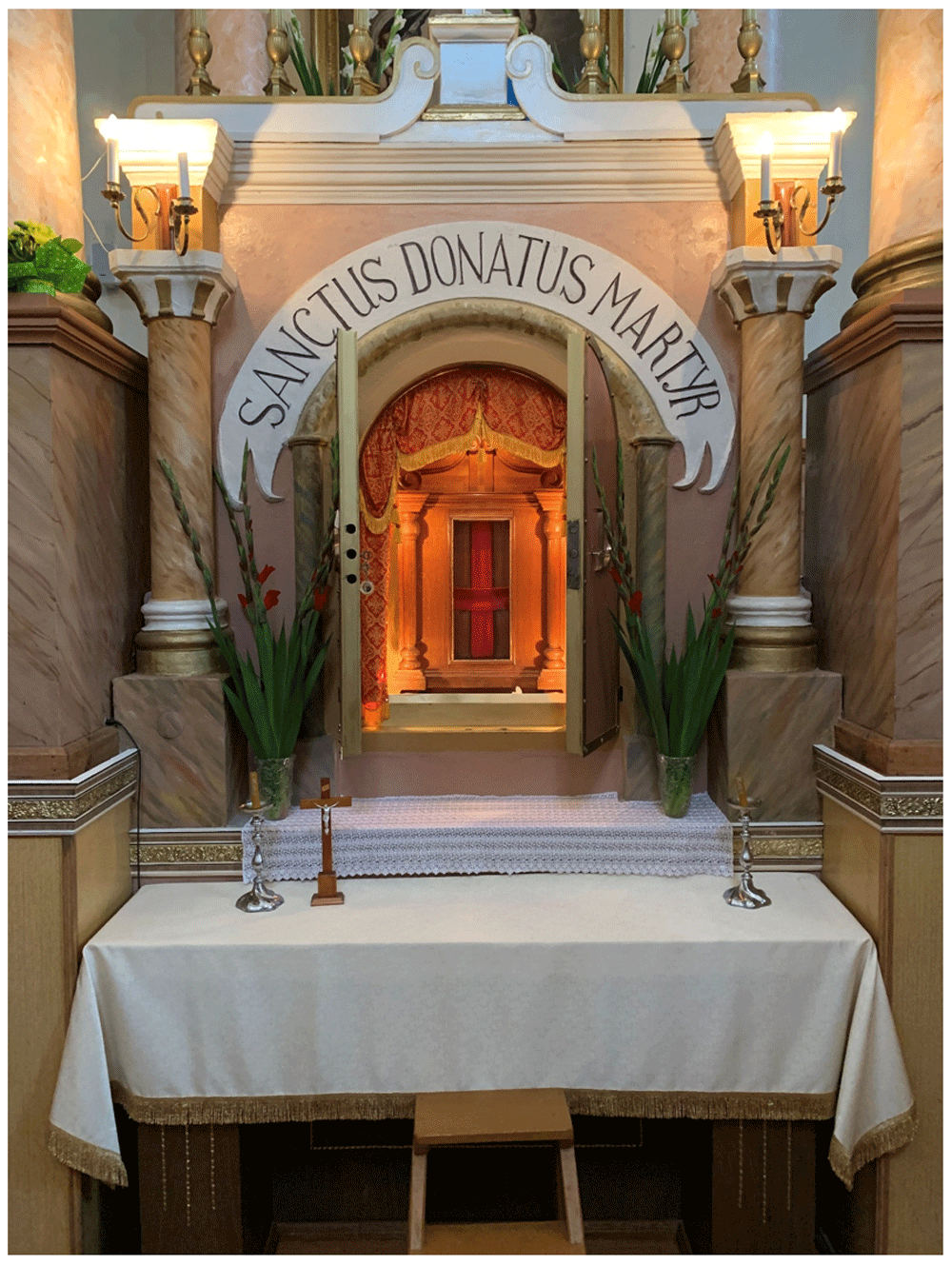
Figure 22. Reliquary tabernacle containing remains of St. Donatus relics.
Polychromed wood. Mid-twentieth century. St. Louis Church, Krāslava, Latvia. Image: Ruth Sargent Noyes.
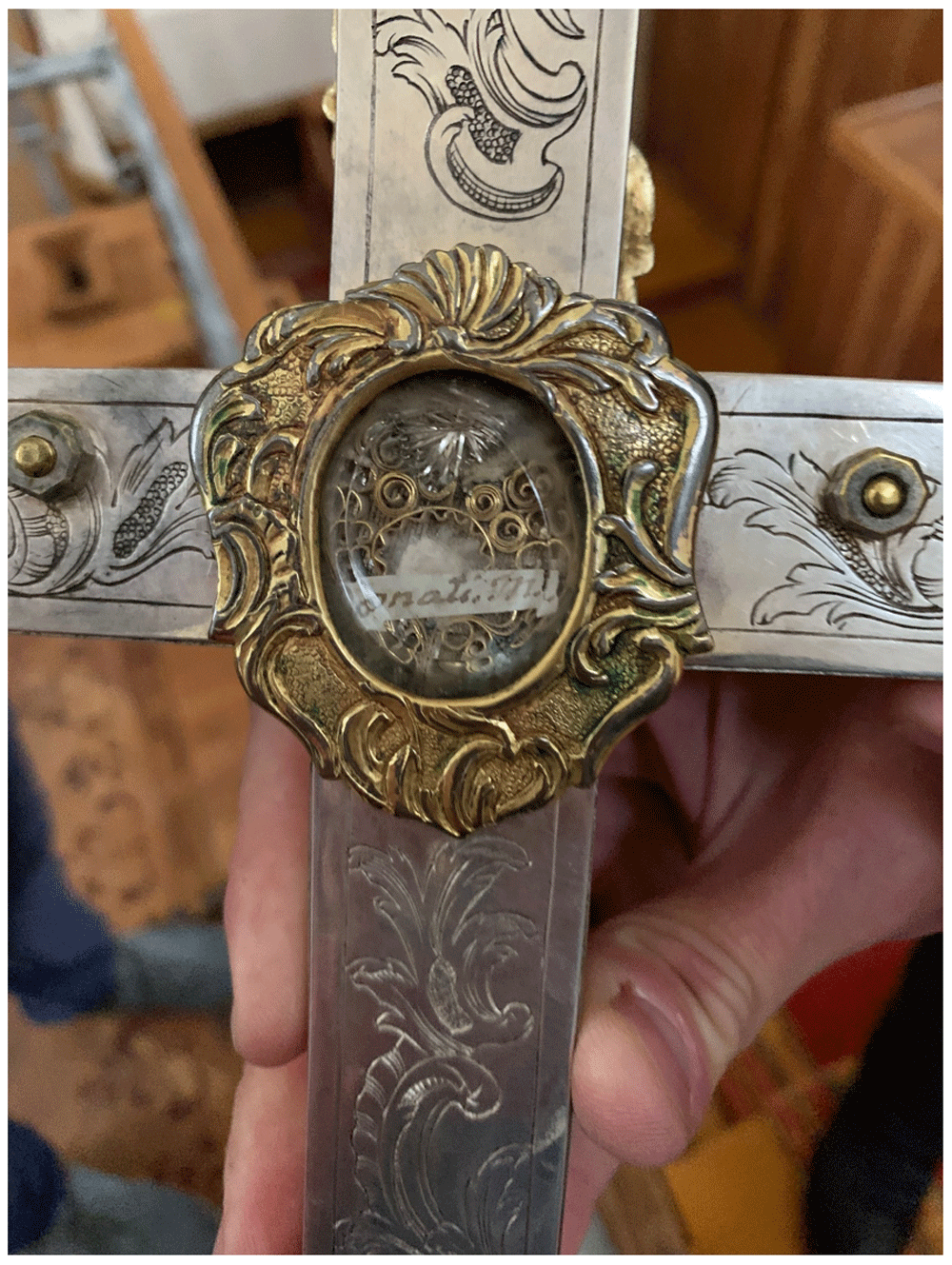
Figure 23. Crucifix with reliquary theca containing St. Donatus relics.
Silver, gilding, modern hardware. Late eighteenth century. St. Louis Church, Krāslava, Latvia. Image: Ruth Sargent Noyes.
However, Donatus survives in photographs from the early twentieth century, when the figure occupied an exalted position in a glass coffin installed above the altar in an eponymous chapel (Figure 24–Figure 25). In later the eighteenth century, Krāslava was the private town of the powerful Plater (or Broel-Plater), magnates who like the Borch were of Westphalian origin, presided over vast estates in Inflanty, held top governmental positions in the Grand Duchy, and played key roles in negotiations related to the partitions of Poland-Lithuania107.
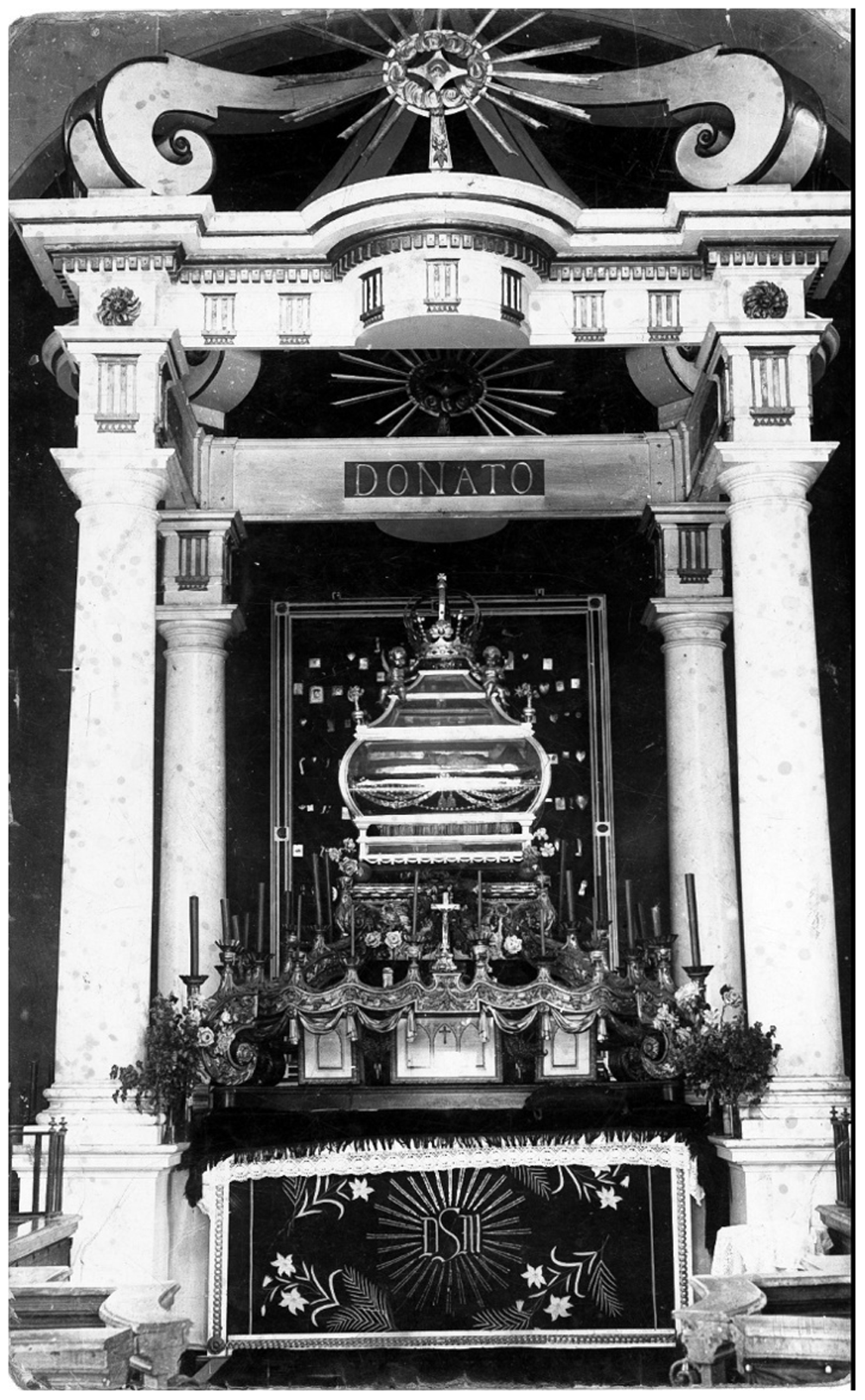
Figure 24. St. Donatus Chapel. Early- to mid-nineteenth century (photo circa 1920s, installation pre-1944).
St. Louis Church, Krāslava, Latvia. This figure has been reproduced with permission from: courtesy of Krāslavas vēstures un mākslas muzejs, Krāslavas novada Tūrisma informācijas centrs un Starptautiskais kulinārā mantojuma centrs.
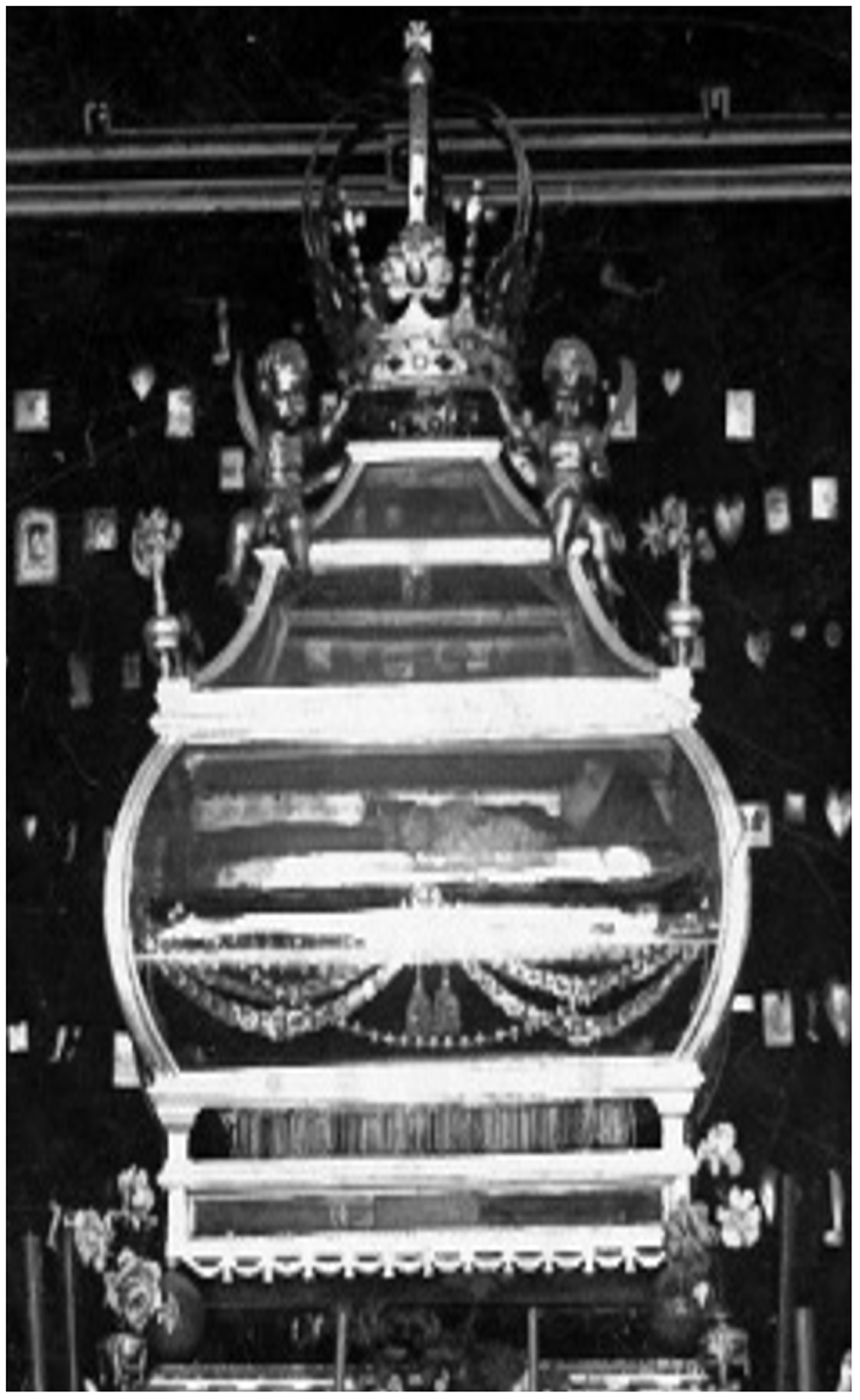
Figure 25. St. Donatus Chapel, detail.
Early- to mid-nineteenth century (photo circa 1920s, installation pre-1944). St. Louis Church, Krāslava, Latvia. This figure has been reproduced with permission from: courtesy of Krāslavas vēstures un mākslas muzejs, Krāslavas novada Tūrisma informācijas centrs un Starptautiskais kulinārā mantojuma centrs.
Under Count Konstanty Ludwik Plater (1722–78) and his son Kazimierz Konstanty Plater (c. 1749–1807), the Plater staged a renovation of the region’s spiritual and political landscape that proved chameleon-like in its adaptability to changing conditions on the ground and would later serve as a model for regional development emulated by Michał Jan Borch at Varakļāni108 (Figure 26–Figure 27). Notably, Kazimierz Konstanty Plater married Borch’s sister Izabela Ludwika Borch (1752–1813), closely linking the two families109. Begun as a series of prestigious building projects with the aim of transforming Krāslava’s status to become the new seat of the Bishopric of Livonia, the Plater’s campaign entailed a series of projects in art, architecture and the built environment focused around the town that included a Catholic church dedicated to St. Louis IX (1214–70), pious medieval French monarch, famed Holy Land crusader and collector of relics, and likely designed by the Paracca, a northern Italian family of architects from the Lugano lake region of Lombardy and Plater protégés110 (Figure 28). The masonry church was sufficiently complete in 1768 to be awarded the status of Cathedral of Livonia by the Polish sejm (parliament of nobles)111.
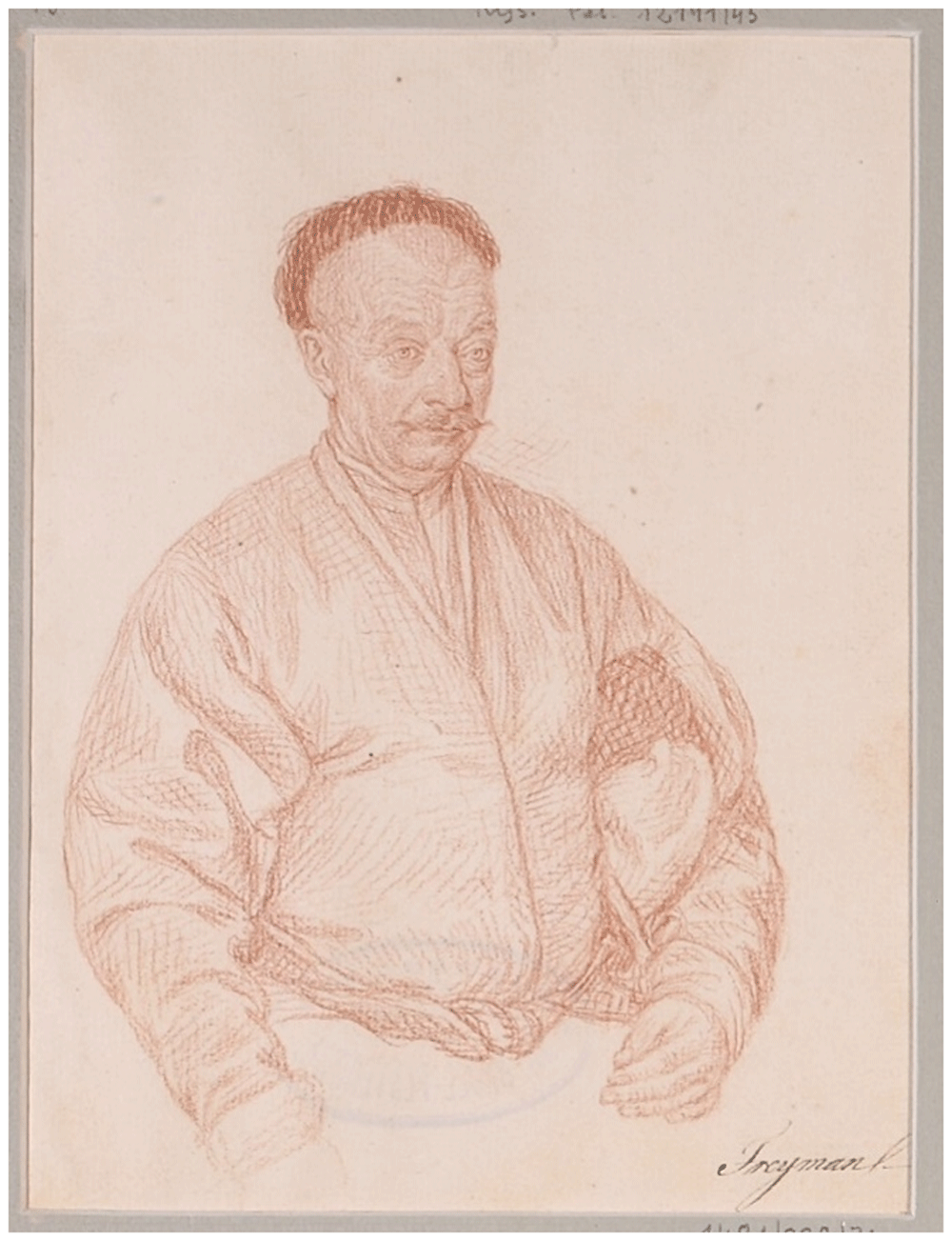
Figure 26. Filippo Castaldi (1734–1814), portrait of Count Konstanty Ludwik Plater.
Circa 1778. Sanguine (Red chalk) on paper. Album Obywateli Inflant, Rys.Pol.12141, National Museum, Warsaw, Poland. This figure has been reproduced with permission from: courtesy of Department of prints and drawings, National Museum.
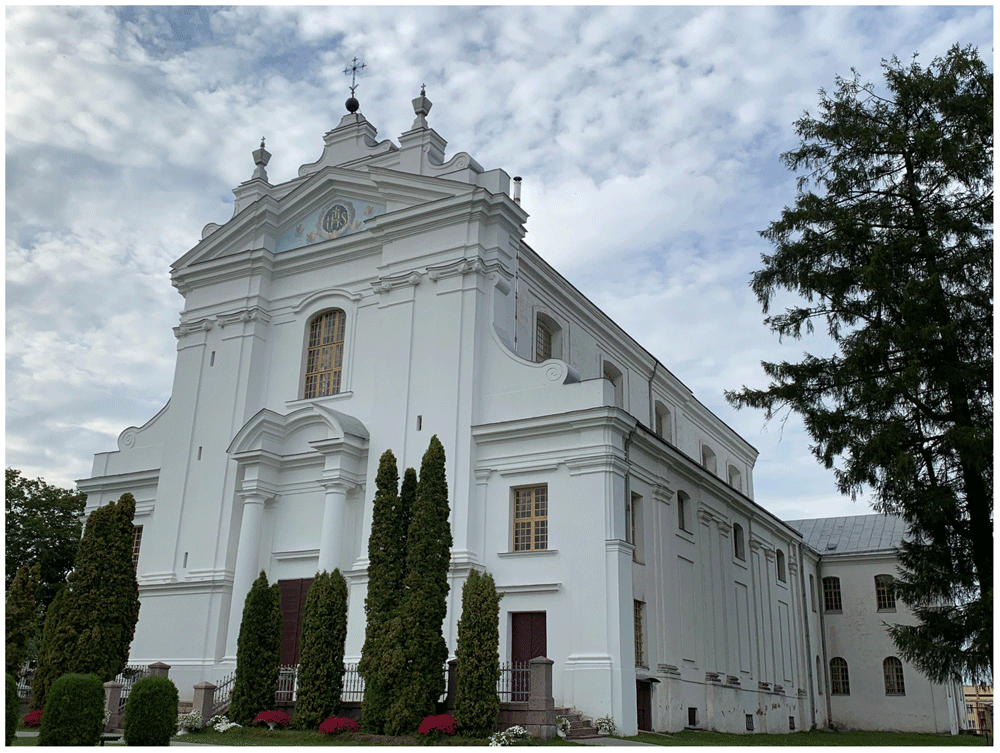
Figure 28. Antonio Ludovico Paracca (1722-c. 1790), Church of St. Louis (attributed).
Circa 1755–1767. Krāslava, Latvia. Image: Ruth Sargent Noyes.
The status of the Plater’s church and latifundia radically changed subsequent to the first partition of 1772, as Krāslava became subordinate to the new Russian diocese of Mohilev initially centered in St. Petersburg. At this moment of uncertainty, the Plater themselves, like Count Michał Jan Borch, traveled to Rome and solicited catacomb relics a few years before Borch arrived at the end of his Grand Tour. However, the Plater undertook their pilgrimage to the urbe not in person but by proxy, dispatching another artist-protégé from Inflanty to the peninsula to negotiate on their behalf: their agent was painter Filippo Castaldi (1734–1814), born in Arpino in the province of Frosinone just outside Rome, who had immigrated to the Commonwealth and first appears in the records of Inflanty in 1760, and may have traveled south both for personal reasons and on his patrons’ behalf112. On 22 January 1774 Castaldi wrote from Rome to Kazimierz Konstanty Plater with an account of his hitherto unsuccessful efforts to obtain “a special body of some Saint” (un corps particulier de quelque Saint) through unofficial channels, claiming to have “gone already twice in vain to find [relics] in the catacombs according to established custom and practice”113 (see extended data, Appendix 3). The painter explained the necessity of a papal rescript and a papal audience where he should appear on the Platers’ behalf; he even provided a script—no doubt conveyed to him by a secretary or scribe in the Vatican palace well acquainted with procedure—to be translated into Latin, signed, and sealed by the elder Count Konstanty Ludwik Plater. Lastly, Castaldi enclosed with his letter a gift of two small relics: one of St. Louis King of France and another of the true Cross for Kazimierz Plater’s wife Izabela Ludwika Borch, sister of Count Michał Jan Borch114.
Thus Borch’s own request four years later for the corposanto of St. Victor and a true Cross relic was apparently made in direct imitation of what his Plater relations had previously obtained with Castaldi’s help. Indeed, the relic-sculpture of St. Donatus imported to Krāslava likewise represented an ancient Roman soldier martyred for the faith115. Like Borch at Varakļāni, the Plater only oversaw the official translatio of St. Donatus to Krāslava’s new church in 1784, the year following Pius’s aforementioned Bull “Onerosa pastoralis.” Before this, they first kept the relic-sculpture in the private chapel inside their palace, surrounded by mural paintings of Roman vedute and architectural quadrature executed by Castaldi after prints by Gianbattista Piranese, likely souvenirs of his Roman mission for the Plater116 (Figure 29–Figure 31).
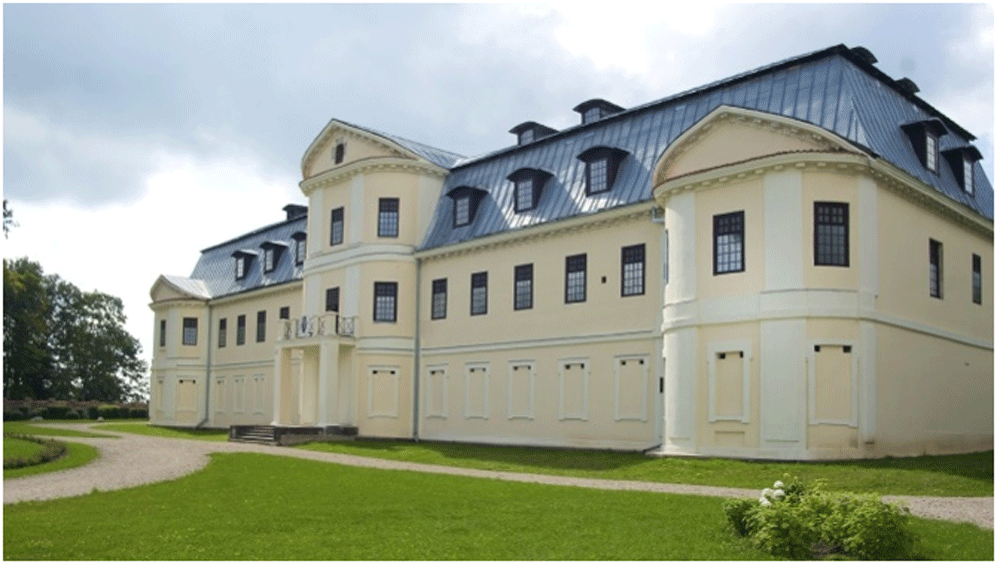
Figure 29. Plater manor palace.
Begun c. 1760. Krāslava, Latvia. Image: Ruth Sargent Noyes.
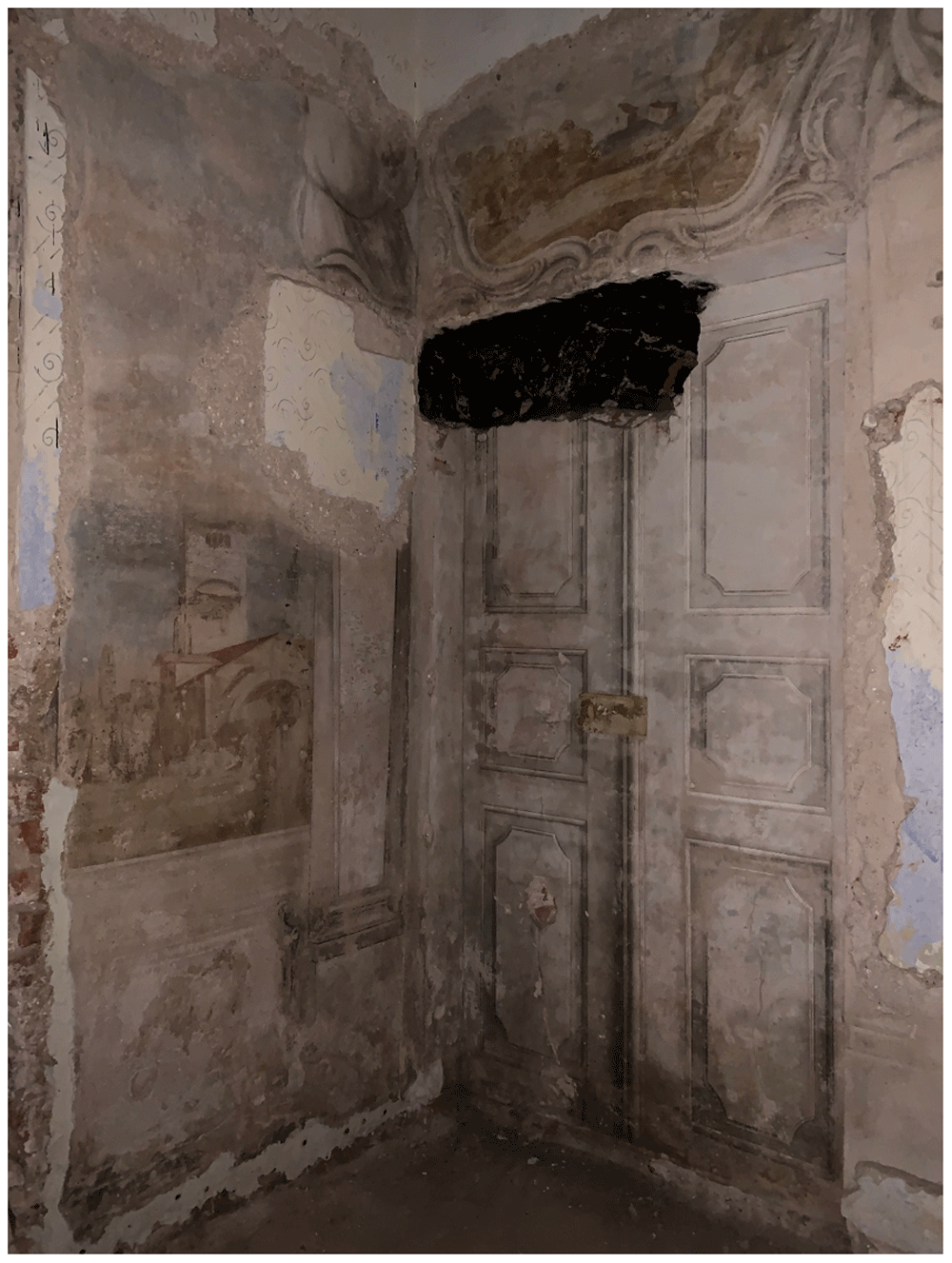
Figure 30. Filippo Castaldi, mural paintings of landscape vedute and trompe-l'oeil of classical statues and architectural quadratura.
Post 1760. Plater manor palace, Krāslava, Latvia. Image: Ruth Sargent Noyes.
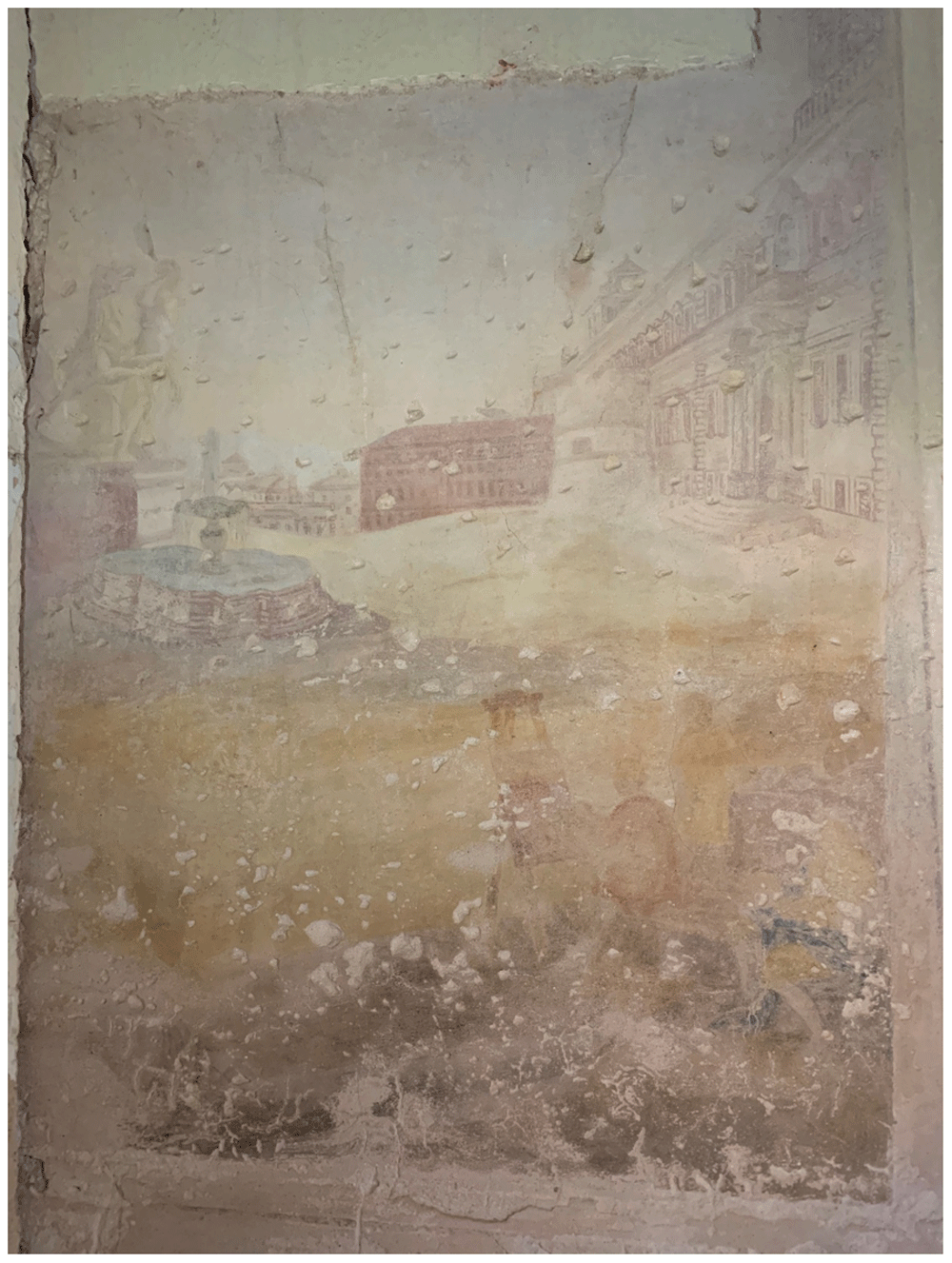
Figure 31. Filippo Castaldi, mural painting veduta of the Palazzo Quirinale, Rome.
Post 1760. Plater manor palace, Krāslava, Latvia. Image: Ruth Sargent Noyes.
In 1790, at the start of Kazimierz Plater’s three-year stint as Castellan of Trakai (Pol. Troki), with a plenary indulgence conceded by Pius VI a new liturgical holiday in the name of St. Donatus was established in the region, prompting construction of an eponymous chapel to safeguard the relic-sculpture and accommodate pilgrims. This project was initiated by Konstanty Plater’s widow Augusta Ogińska (1724–91), whose testament accorded funds for construction of the Donatus chapel and beneath it a subterranean family crypt, a design that gestured to the promise of resurrection through its physical alignment of the decaying corpses of deceased Plater family members with the artificially reintegrated body of their special saint117 (see extended data Appendix 4).
“some parts of the saintly martyr are visible”
Appearances of corpisanti in Baltic territories seem to cluster within certain geographic areas and around noble family relations thrown into relief against the dramatic transformations of Grand Duchy territories immediately prior to and during the Age of Partition. This phenomenon suggests that emulation among local magnates and along axes of intermarriage and religious affiliation may have been a contributing factor in efforts to procure such distinctive relic-sculptures. Konstanty Plater’s wife Augusta Ogińska hailed from the princely family Ogiński, one of the largest and most powerful in the Grand Duchy, who maintained their political stronghold in the Vitebsk (Pol. Witebsk) Voivodeship, an administrative division and local government in the north-eastern Grand Duchy (today divided between Belarus and Russia), not far from Polish Livonia. Two years before the Plater dispatched Castaldi to Rome, in 1772 the corposanto of catacomb saint Fortunatus was translated to the Franciscan Church of the Holy Trinity in Syanno (Pol. Sienno) and the pope conceded plenary indulgence for the saint’s feast day on 22 June118. Syanno was a private town of the Ogiński, part of a Vitebsk latifundium annexed by the Russian Empire in the first partition, like those estates in Inflanty119. Fortunatus was procured through the patronage of Castellan of Trakai and Grand Clerk of Lithuania Tadeusz Franciszek Ogiński (1712–1783) and his wives Izabella Radziwiłł (1711–1761) and Jadwiga Załuska (d. 1793)120. That this relic-sculpture and other catacomb relics were significant for the Ogiński is evinced by their mention in personal accounts121.
Similar to the case of the Plater, the importing of St. Fortunatus was apparently executed through a Franciscan middle-man operating on behalf of elite patrons122. The translation of Fortunatus was moreover recorded in two 1772 publications: a devotional booklet and a sermon delivered on the occasion123 (see extended data, Appendix 5). Both printed in Vilnius on the Franciscan presses, these hagiographies signal efforts invested in promoting the broader importance of the catacomb saint’s nascent cult on both a regional and national level in Lithuania. Ogiński was furthermore responsible for the catacomb relics of St. Teofilus (or Theophilus), translated in 1680 in a silver coffin to the Church of St. Johns in Vilnius; and others of unnamed saints in 1768 to the Trinitarian monastery in Maladzyechna (Pol. Mołodeczno), a town in the Minsk Vovoideship (today in Belarus) purchased by the family early in the century124. These three strategically located locations manifested the magnates’ power and presence throughout the Grand Duchy, from its capital to its provinces, and cast a numinous net across their far-flung territories that reified a transhistorical notion of translatio imperii, whereby the glory and sacral power of Rome might be transferred to the far north, a concept nurtured in historiographical discourse of this period125.
The Franciscans, in turn, represent a direct connection to a still earlier case of catacomb relic-sculptures that may have inspired the emulation of the Ogiński: the aforementioned Franciscan monastery in Valkininkai that received an array of catacomb relics (detailed above) in the form of small fragments and pasta di reliquie, was also endowed with the corposanto figure of martyr-soldier St. Bonifacus, excavated from the catacombs of St. Agnese and imported by Provincial Superior Bonawentura Bunielski in 1765126. The Valkininkai Franciscans were under the protection of Great Hetman of the Crown Józef Potocki (1673–1751), among the wealthiest magnates in the Commonwealth of the period, and his wives Wiktoria Leszczyńska (d. 1732) and Ludwika Mniszech (1712–1785), thus offering a striking precedent for emulation by the Ogiński127. Funds provided through the testament of Wiktoria furnished an oak and glass coffin lavished with rococo ornaments to contain Boniface, while Ludwika was involved in the solemn translatio to the Franciscan church on 28 June 1766, after inspection and authentication of the relics by Vilnius Bishop Ignacy Jakub Massalski (1727–1794) on 29 November 1765. Evidence of these events and the Franciscans’ promotion of Bonifacus’s cult can be found in a devotional booklet they published in Vilnius in 1770, O Sprowadzeniu I złożeniu ciała Świętego Bonifacego Męczennika w Kościele Olkinickim Franciszkańskim krótka Wiadomość (On the Bringing and Deposition of the Body of Saint Bonifacus Martyr to Olkiniki [Valkininkai] Franciscan Church), which includes a relation of the 1766 translation128 (see extended data, Appendix 7).
This publication is important not only for its detailed textual account, but also for its visual representation of the relic-sculpture in its original state as it arrived from the papal city: a print etched and engraved by J. Piotrowski after a design by S. Mackiewicz identifying “the body of the holy martyr St. Bonifacus exported from Rome by Pope Clement XIII [Carlo della Torre di Rezzonico, 1693–1769; r. 1758–1769] in 1765” was bound in the slim volume (Figure 32). It shows the relic-sculpture of a male figure dressed in the guise of an ancient soldier and lounging on its side with elbow bent upon a silken mattress, its head reclining on fringed cushions and right hand, while its left hand grips the palm of martyrdom; arranged on the mattress are a sword and ampoule of blood. This design already in 1765 clearly reflected the common morphology shared by the serially manufactured corpisanti in the final decades of the century, suggesting that the chronology dating these relic-sculptures to a date after 1772 should be reconsidered.
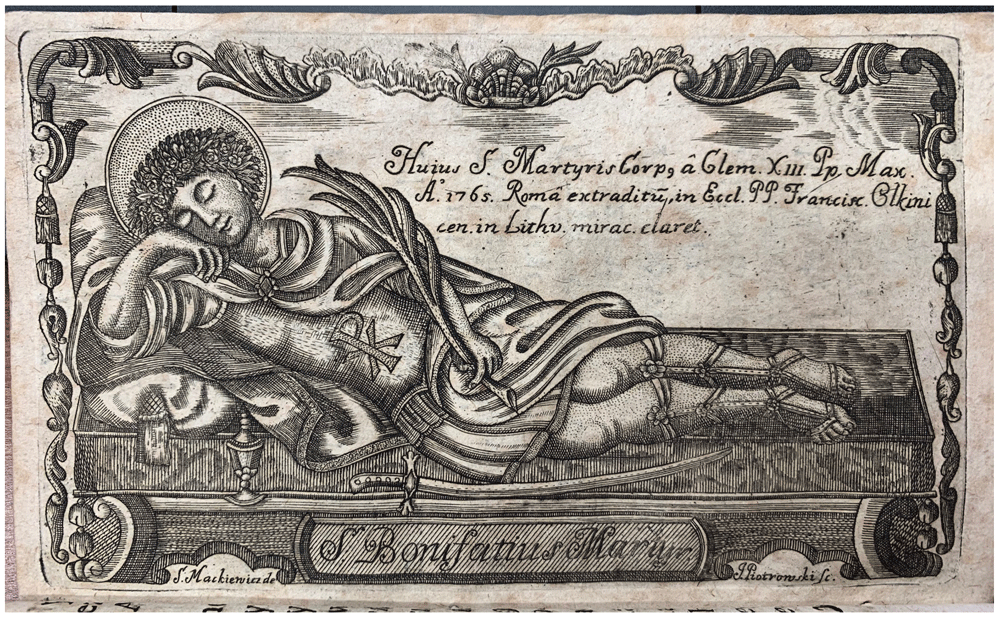
Figure 32. J. Piotrowski after a design by S. Mackiewicz, “the body of the holy martyr St. Bonifacus exported from Rome by Pope Clement XIII [Carlo della Torre di Rezzonico, 1693–1769; r. 1758–1769] in 1765.” Circa 1770.
Etching and engraving on paper. In O Sprowadzeniu I złożeniu ciała Świętego Bonifacego Męczennika w Kościele Olkinickim Franciszkańskim krótka Wiadomość. Vilnius: W Drukarni J K M. XX. Franćiszkanow, 1770. Vilnius University Library, Rare books collection, IV-22490. Image: Ruth Sargent Noyes.
A nineteenth-century church inventory recorded not only the manner of the installation of the glass coffin on the altar mensa, but also the ornamentation and appearance of the relic-sculpture itself:
“…some parts of the saintly martyr are visible: the head, both shins, and two arm bones, all dressed in knight's armor. The cape is made out of red velvet, lined with white brocade, embellished with wide gold galloon, with sleeves made out of silver net and shoes and socks made from the same material, and next to each of the shoes and socks there are four Czech green stones, whereas on the chest – a star of the white eagle, embroidered in gold by Mychal Granovsky, the sword is wooden, plated with silver. Hands are made from Czech glass, ampoule with blood of this Saint....” (see extended data, Appendix 6)
Crucially, this description underscores what would become by the end of the century the typical mode of fabrication of corpisanti, whereby portions of the skull and bones of the lower shins or wrists were attached to the wire or wooden armature constituting the underpinning ”skeletal” structure and left visibly exposed for maximum effect. Valkinainkai further constitutes an important case because unlike many other examples of corpisanti from the period, this relic-sculpture has survived largely intact until today, having been moved from the monastery (since destroyed) to the local parish church in the late nineteenth century; today this unique sacral artwork has been transferred to the Church Heritage Museum in Vilnius, where at the time of this study it is presently the object of analysis and conservation129 (Figure 14, Figure 33–Figure 40).
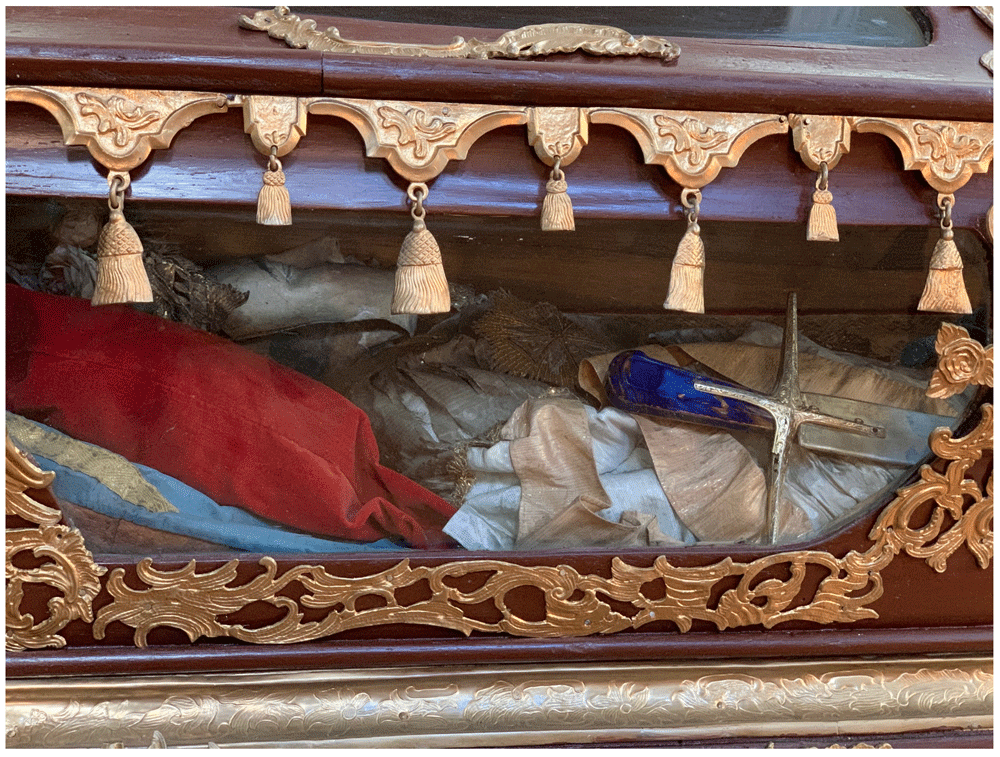
Figure 33. Corposanto relic-sculpture of St. Bonifacus.
Human remains (skeletal fragments), metal wire, wood, wax, textile, polychromy, laid paper, and mixed materials. Second half of the eighteenth century (post 1765), altered late nineteenth century. Formerly Franciscan convent in Valkininkai. Valkininkai Parish Church, Lithuania. Image: Ruth Sargent Noyes.
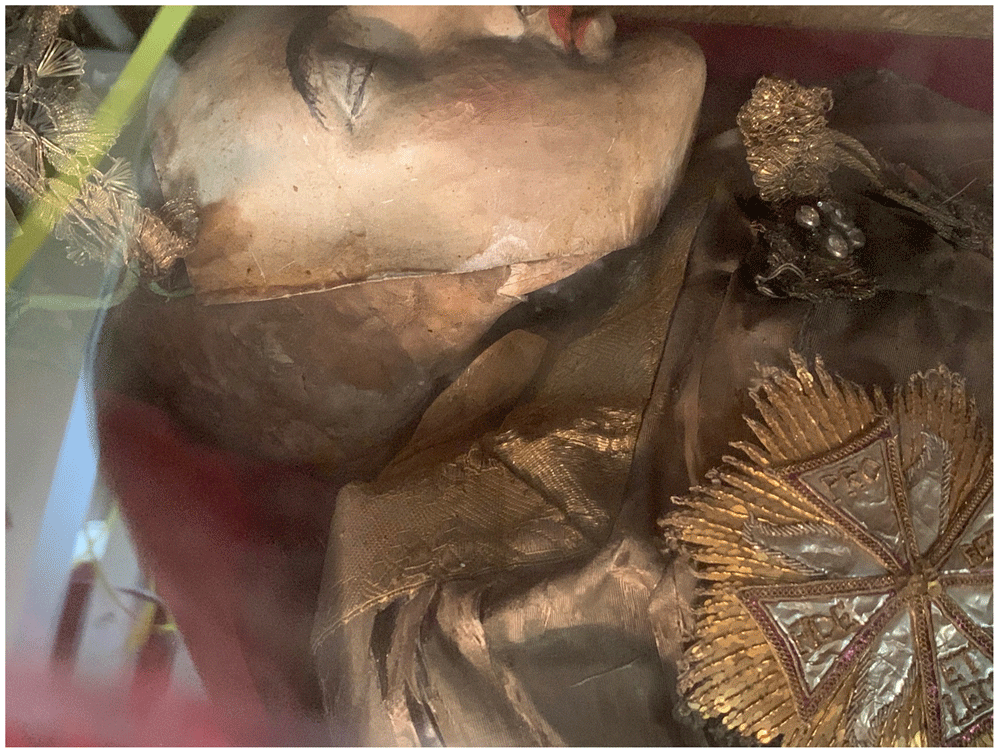
Figure 34. Corposanto relic-sculpture of St. Bonifacus.
Human remains (skeletal fragments), metal wire, wood, wax, textile, polychromy, laid paper, and mixed materials. Second half of the eighteenth century (post 1765), altered late nineteenth century. Formerly Franciscan convent in Valkininkai. Valkininkai Parish Church, Lithuania. Image: Ruth Sargent Noyes.
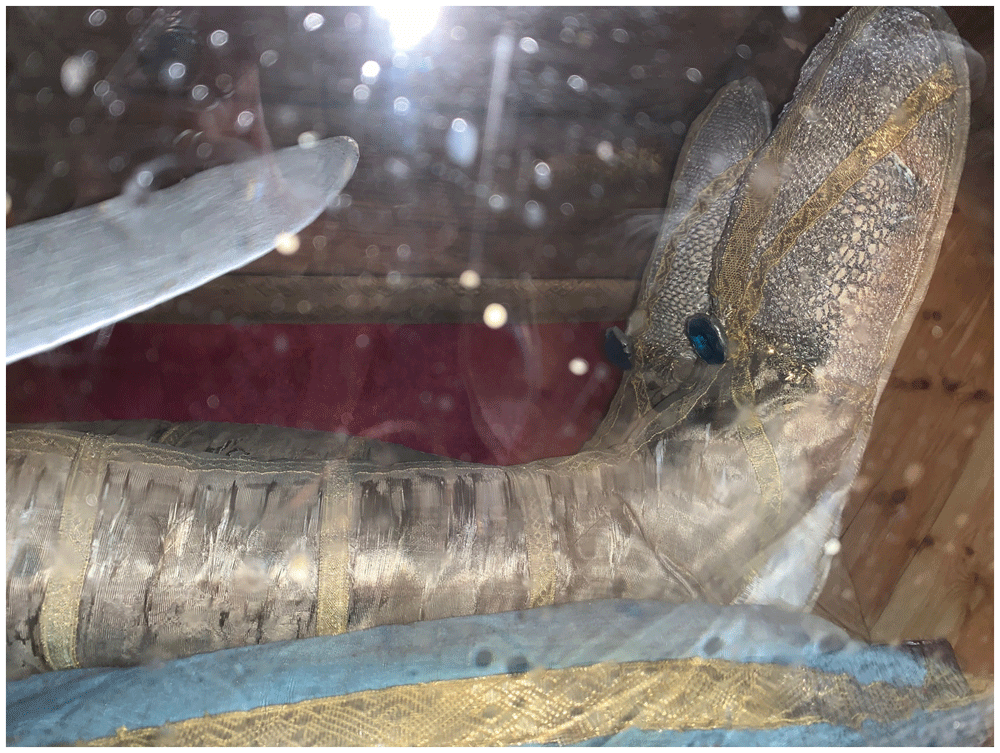
Figure 35. Corposanto relic-sculpture of St. Bonifacus.
Human remains (skeletal fragments), metal wire, wood, wax, textile, polychromy, laid paper, and mixed materials. Second half of the eighteenth century (post 1765), altered late nineteenth century. Formerly Franciscan convent in Valkininkai. Valkininkai Parish Church, Lithuania. Image: Ruth Sargent Noyes.
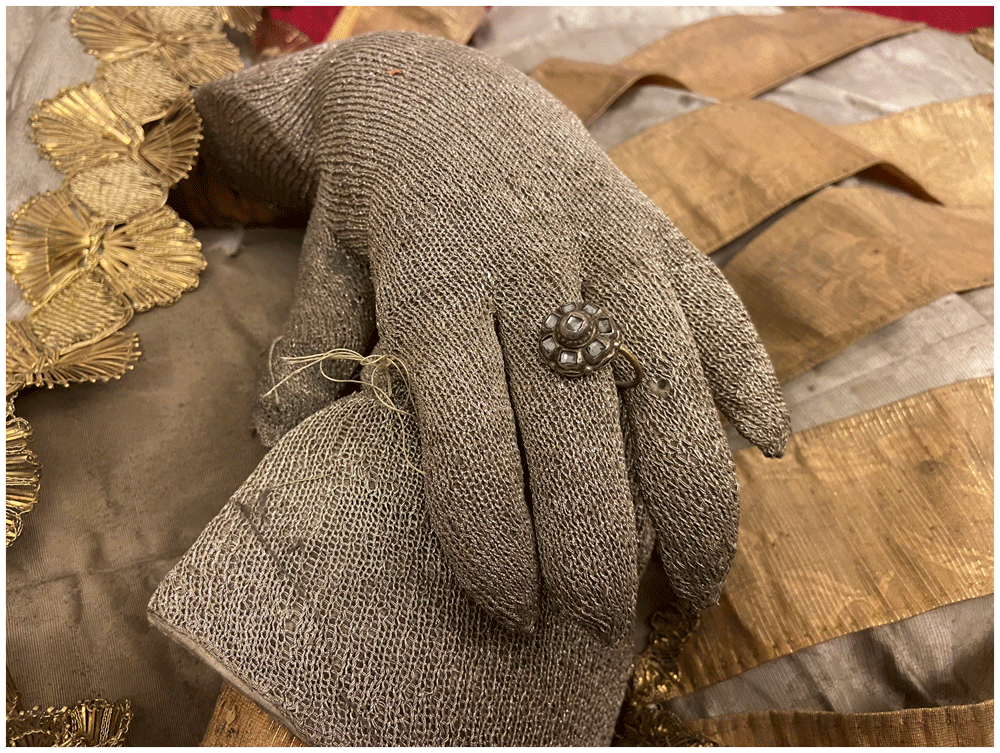
Figure 36. Corposanto relic-sculpture of St. Bonifacus.
Human remains (skeletal fragments), metal wire, wood, wax, textile, polychromy, laid paper, and mixed materials. Second half of the eighteenth century (post 1765), altered late nineteenth century. Formerly Franciscan convent in Valkininkai. Valkininkai Parish Church, Lithuania. Image: courtesy of Sigita Maslauskaitė-Mažylienė.
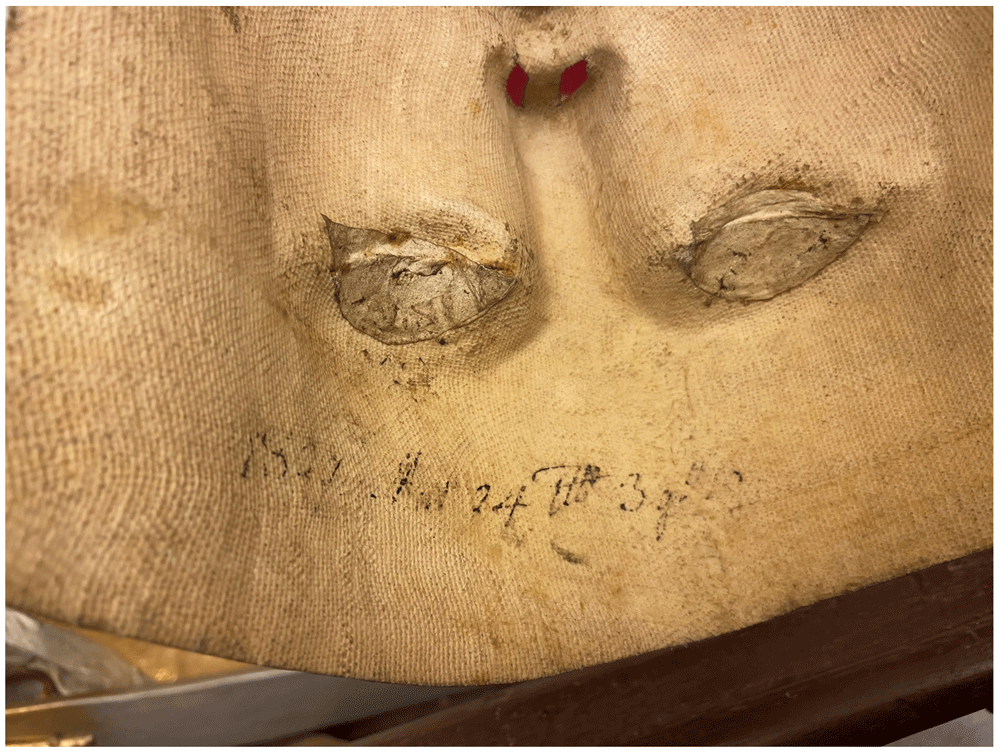
Figure 37. Corposanto relic-sculpture of St. Bonifacus.
Human remains (skeletal fragments), metal wire, wood, wax, textile, polychromy, laid paper, and mixed materials. Second half of the eighteenth century (post 1765), altered late nineteenth century. Formerly Franciscan convent in Valkininkai. Valkininkai Parish Church, Lithuania. Image: Ruth Sargent Noyes.
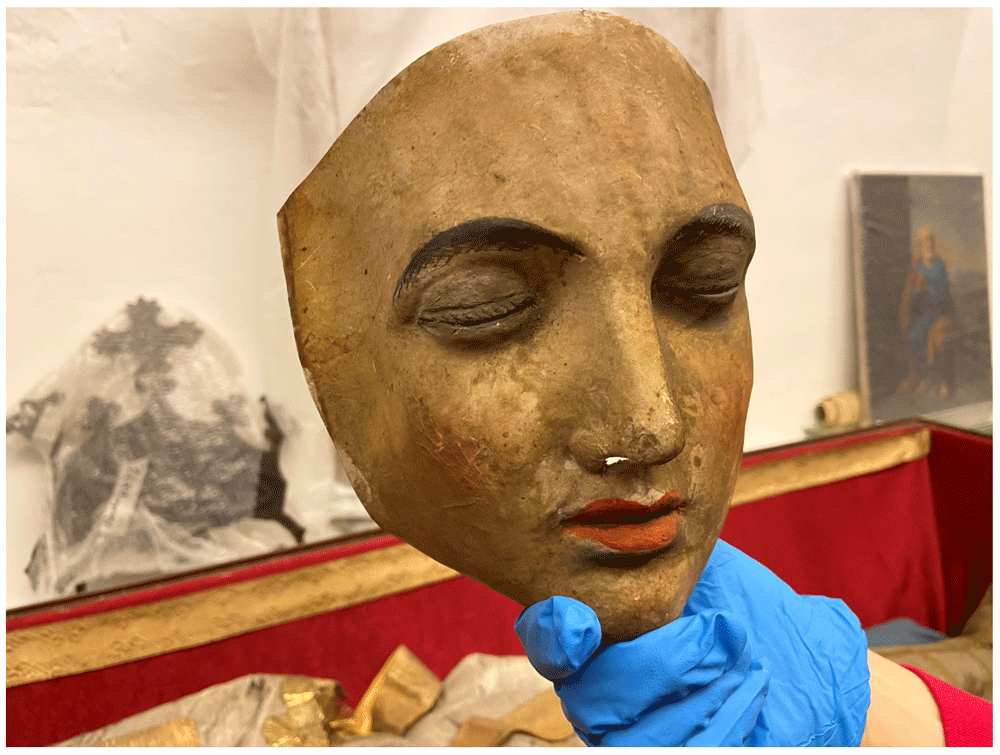
Figure 38. Corposanto relic-sculpture of St. Bonifacus.
Human remains (skeletal fragments), metal wire, wood, wax, textile, polychromy, laid paper, and mixed materials. Second half of the eighteenth century (post 1765), altered late nineteenth century. Formerly Franciscan convent in Valkininkai. Valkininkai Parish Church, Lithuania. Image: courtesy of Sigita Maslauskaitė-Mažylienė.
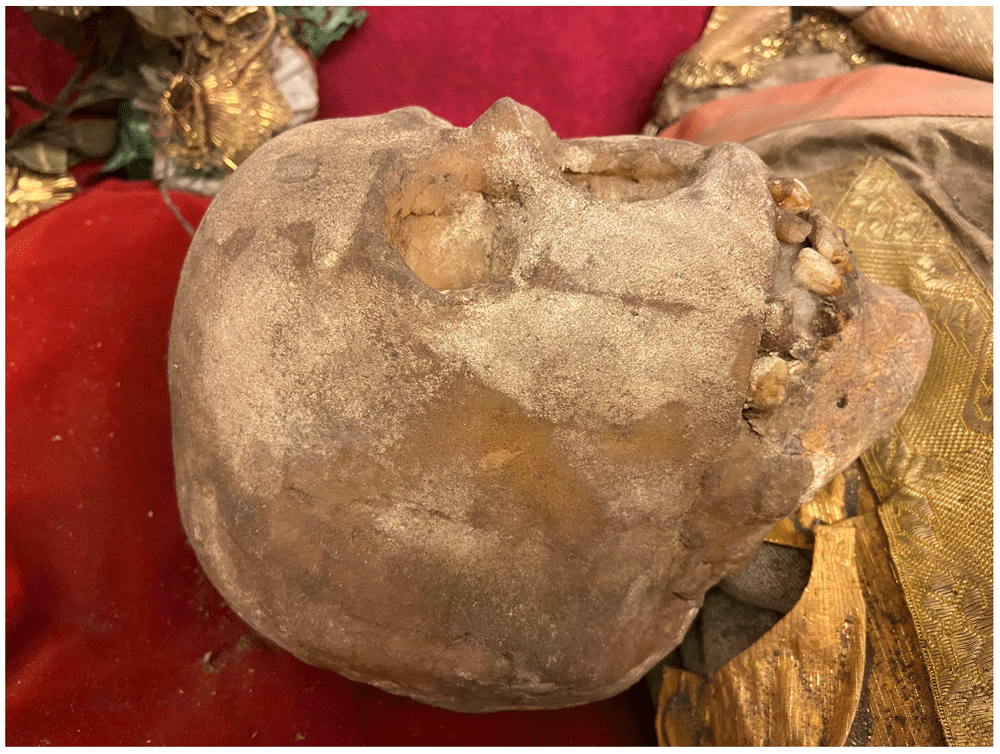
Figure 39. Corposanto relic-sculpture of St. Bonifacus.
Human remains (skeletal fragments), metal wire, wood, wax, textile, polychromy, laid paper, and mixed materials. Second half of the eighteenth century (post 1765), altered late nineteenth century. Formerly Franciscan convent in Valkininkai. Valkininkai Parish Church, Lithuania. Image: courtesy of Sigita Maslauskaitė-Mažylienė.
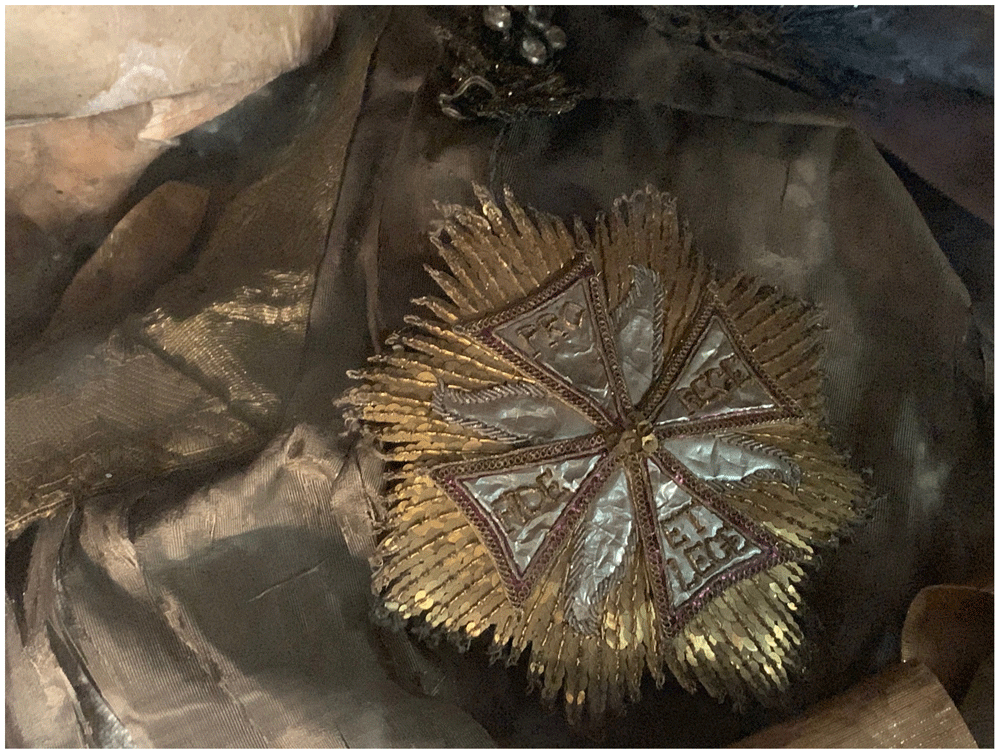
Figure 40. Corposanto relic-sculpture of St. Bonifacus.
Human remains (skeletal fragments), metal wire, wood, wax, textile, polychromy, laid paper, and mixed materials. Second half of the eighteenth century (post 1765), altered late nineteenth century. Formerly Franciscan convent in Valkininkai. Valkininkai Parish Church, Lithuania. Image: courtesy of Sigita Maslauskaitė-Mažylienė.
It is clear from photos that Bonifacus in its current state has undergone significant changes since its early depiction in the 1770 print: the general posture has been completely alterred from the initial position as it would have left the Roman workshops. This was likely done at an early moment in its history, in conjunction with the initial installation to fit in the specially donated coffin. The accompanying ampoule, martyrial palm frond, and red velvet cape have been lost and the entire figure redressed, most likely in the course of later (probably nineteenth-century) restoration efforts by the local community.
Still preserved are the ornamental sword—probably of Roman manufacture—and the embroidered star of Poland's highest order, the Order of the White Eagle (Pol. Order Orła Białego), most certainly added on the occasion of the 1765 translatio to represent Potocki’s membership130 (Figure 37).
The same restoration that redressed Bonifacus also furnished the figure with a fresh face, in the form of a molded, polychrome canvas mask inscribed with the year 1899 on its reverse (Figure 38–Figure 39).
Such a provision was no doubt made because the original head of the sculpture had deteriorated to the point of violating Church decorum; in fact, the unmasked cranium as it is today presents a strong impression of eighteenth-century pastiche, with only a partial mandible bone and a few teeth visible (Figure 40). It was common manufacturing process to reconstitute and reshape often extremely fragmentary cranial bones quarried from the catacombs into the semblance of a complete skull using an amalgum of plaster, glue, dessicated milk powder, and other malleable materials, or even papier maché131.
“with unquestionable signs of martyrdom”
A final case of corpisanti in the Baltics significant both for reasons of dating and survival is that of St. Justinian (or Justin) in Mosar (Pol. Mosarz), a village in present-day western Belarus, where the relic-sculpture was transferred in the nineteenth century from its original position in the church of the Discalced Carmelites in Old Myadzyel (Pol. Stary Miadzioł, hereafter Myadzyel)132. Today Justinian in Mosar, like Donatus in Krāslava, remains a center of pilgrimage activity in the region133 (Figure 41). Within the Grand Duchy of Lithuania, Myadzyel was part of the Vilnius Voivodeship and was spared from the first partition of 1772. In the late seventeenth century the town and surrounding properties were acquired by a rising clan from Vitebsk in the north-east, the Koszczyc, who obtained privileges from Polish King King Augustus III in 1736 for the town. In 1754 Starost of Zarzecze134, Antoni Tadeusz Koszczyc (b. 1720), founded a community of Discalced Carmelites in Myadzyel. For this, he had erected a masonry monastery and church of Our Lady of the Scapular (consecrated on 15 August), and also journeyed to Rome for the Holy See’s sanction by Pope Benedict XIV (Prospero Lorenzo Lambertini, 1675–1758; r. 1740–1758). From Benedict XIV, Koszczyc likewise obtained the catacomb relics of St. Justinian, one of the oldest corpisanti still preserved today in more or less original form, thanks in part to a local cult in Mosar in the early twentieth century135.
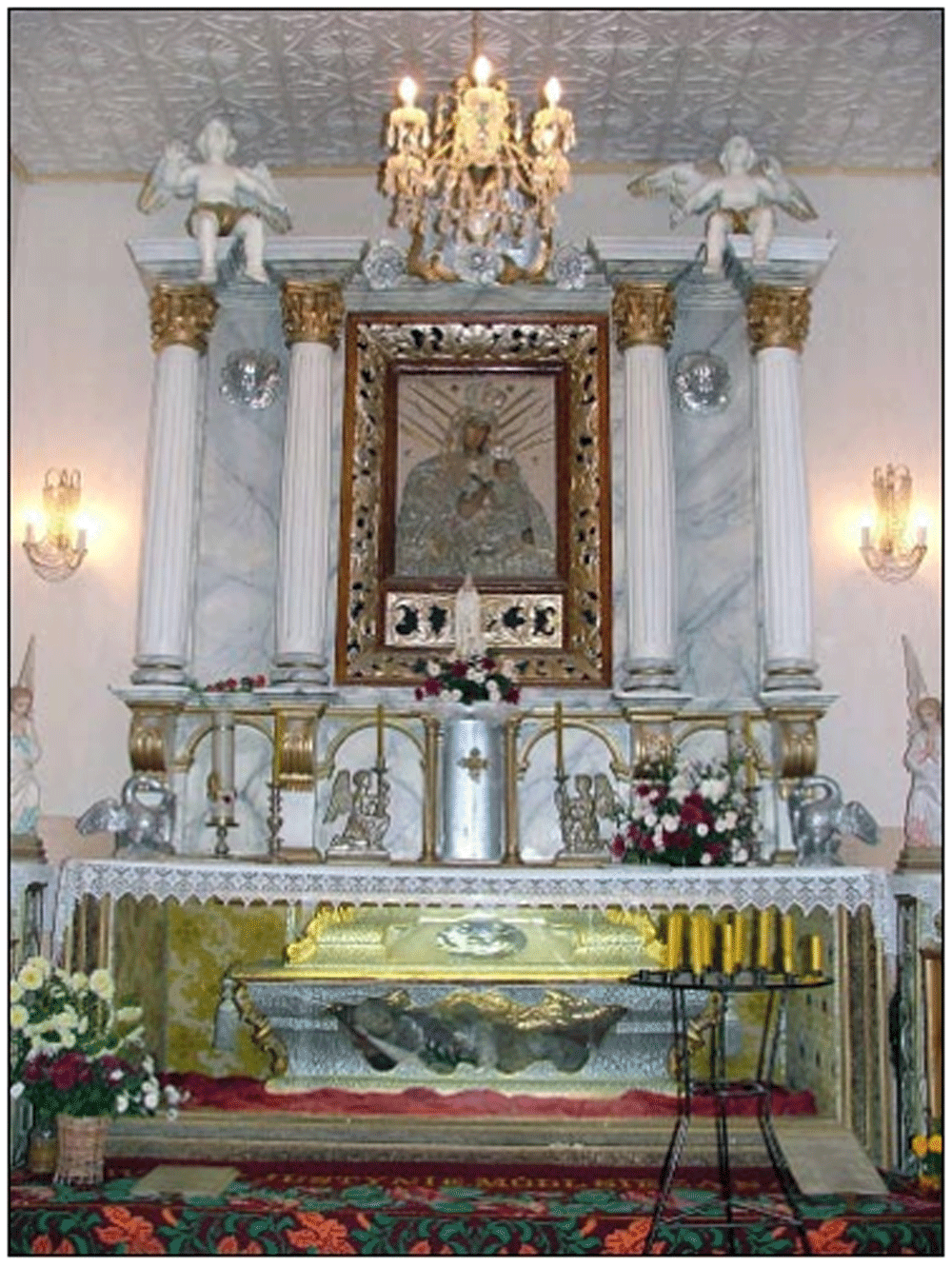
Figure 41. Corposanto relic-sculpture of St. Justinian.
Human remains (skeletal fragments), metal wire, wood, wax, textile, polychromy, laid paper, and mixed materials. Second half of the eighteenth century (post 1754). Formerly Church of the Discalced Carmelites in Old Myadzyel. Mosar Parish Church, Belarus. Image in the public domain: http://www.radzima.org/eng/object-photo/4815.html (accessed 15 February 2021).
Despite its early date relative to the established corpus of this typically late eighteenth-century art form, the relic-sculpture shares morphological similarities with later examples, demonstrating that corpisanti were already well in production and becoming established as a distinct genre by mid-century. Although Justinian’s advent in the Grand Duchy predated the partitions of the Commonwealth by some decades, evidence suggests there was renewed bidirectional activities between Myadzyel and Rome involving the saint’s cult soon after the first partition in 1772: in April 1773 Pope Clement XIV issued a papal brief establishing a brotherhood of St. Justinian136. In 1780, perhaps following the example of hagiographies printed for Bonifacus and Fortunatus, the devotional booklet Nabozenstwo Do S. Justyna Męczennika (Devotion to St. Justin Martyr) was published in Vilnius137 (see extended data, Appendix 8). The text sets a brief vita of the relatively obscure martyr, an adolescent killed under Emperor Diocletian, against an account of the heroic and saintly pilgrimage of Antoni Koszczyc to procure the relics:
“…Such saintly efforts, supported by a fortunate desire, received a result: the Holy Father Benedict XIV was graciously persuaded, and he ordered to look for bodies of the Holy Martyrs in the aforementioned cemetery [of St. Sebastian]. Soon those bodies, buried for one thousand four hundred and fifty years, have been found. The whole body of one willingly fallen in his young years for Christ's faith, saint Justinian's miraculous bones, with unqestionable signs of martyrdom: for which the Most High Shepherd of the Church gave thanks to God [and] gave this holy gift to the greater honor and glory of God to … Lord Antoni Koszczyc the Starost of Zarzecze.”
The mention of “unqestionable signs of martyrdom” indicates the probable forensic examination by Vatican experts of the skeletal remains incorporated into this corposanto, a practice mentioned above that emerged as part of the catacomb relic regulatory system in Rome. Likewise pointing to Roman origins are the circumstances of Justinian’s installation today in Mosar beneath the altar mensa. This reflects a widespread practice throughout the Commonwealth for displaying whole-body relics within a so-called confessio altar design, with the relics behind or beneath the altar table138. This reliquary altar configuration resonated the biblical account in the Book of Revelation 6:9 (“I saw there, beneath the altar, the souls of all who had been slain for love of God’s word and of the truth they held”) and had its origins in the papal city139. Catholic Counter-Reformation historians maintained this was an ancient Christian liturgical architectural arrangement first initiated in the urbe for the conservation and ritual display of martyrs’ relics, to mark the site where the first saints “confessed” and died for their faith140.
Conclusion: “relic states”
This article has undertaken to shed new light on an overlooked but significant chapter in the intersecting histories of the Catholic cult of relics and cross-cultural relations between the Italian peninsula and the Baltic littoral, by mapping the invention, production, and distribution of corpisanti catacomb relic-sculptures from papal Rome against elite religio-political networks in Inflanty and the Lithuanian Grand Duchy, during a watershed period when constituencies involved faced new horizons of territorial and cultural degeneration. This initial study has also aimed to provide an overview of the research landscape on this interdisciplinary and intercultural topic, including offering an array of primary source texts in translation as appendices, which constitute a methodological essay on the issue of what kinds of multifaceted investigative strategies might be most effective for analyzing this multidimensional subject. Hardly exhaustive, this study might furnish a point of entry into what is a broad phenomenon and indicate fruitful ground for future research. There are numerous cases of Baltic corpisanti that remain to be contextualized and indeed identified in the north: in the territory of present-day Belarus, for example, it is known from nineteenth-century church inventories that the corposanto of St. Clemens (or Clement) was once in the parish church in Kyemyelishki (Pol. Kiemieliszki), not far from Vilnius (now the Hrodna region in Belarus), and the corposanto of another St. Clemens still survives in Hrodna (Pol. Grodno), the latter brought by Karol Litawor Chreptowicz (d. 1801/1802), starost of Hrodna, Lithuanian field guard, and ensign at the Lithuanian court141 (see extended data, Appendix 9). Chreptowicz obtained the relics during a pilgrimage to Rome in 1767, when in a papal audience with Clement XIII the starost protested destruction wrought in his lands by Russian forces and solicited catacomb relics of a martyred soldier; the Authentic was issued by the Cardinal Vicar on 16 January, 1768 for remains from the catacomb of St. Priscilla142. Chreptowicz only returned to Hrodna with Clemens in 1780, which occasioned another authentic manuscript prepared under Bishop of Vilnius Ignacy Jakub Massalski, who then oversaw the translation to the Brigittine monastery church during a three-day indulgenced festival on 3–5 June 1781143. The festivities and translatio were recorded in the hagiographical booklet, Solenna introdukcya ciała S. Klemensa Męczennika (Solemn introduction of the body of S. Clement Martyr)144 (see extended data, Appendix 10). In another case requiring further research, it is clear from the Roman archives of the Custodian of the Cardinal Vicar that in July 1778, Count Manuzschi (or Manuzzi), starost of Opsa (then in the diocese of Vilnius, now in Belarus, Vitebsk region), was granted the corposanto of St. Coronatus after a papal audience145 (see extended data, Appendix 11). While the details of the fate of Coronatus after being quarried from the Catacombs of San Ciriaco in Via Ostiense remain to be determined, it should be noted that the supplicant in this instance was husband to a possible mistress of the last King of the Polish-Lithuanian Commonwealth, Stanisław August Poniatowski146. A more extensive and comprehensive bidirectional approach to source materials such as that modeled here would prove instrumental in mapping the phenomenon in the Baltic. This would include emplotting the results of a comprehensive review of the archives of both the Cardinal Vicar and Papal Sacristan in Rome—both records of individual supplications and copies of Authentic certificates—against church inventories for dioceses from the former Grand Duchy.
By way of conclusion, we offer reflection on some overarching themes that emerge from the study of ‘Baltic catacombs,’ whereby the translation of corpisanti exposes the reliance of a self-styled center (papal Rome) on its so-called artistic periphery (granducal Lithuania and Livonia)147. Delimited by common boundaries of relic exchange, those involved mapped a virtual territory beyond themselves, their promulgation of complimentary models of religiostity embodied by their built environment delimiting the notional survival of a transregional Roman imperium as ideological relic consecrated in discursive practices that synchronically reached back through history to reaffirm retroactively both the Baltic region’s Catholic crusader origins and common dynastic interests. Attending to corpisanti in the far north also productively problematizes enduring ideas related to cultural transfer where the Baltic is persistently construed as recipient rather than source148. We might view these various ritual movements through the discursive lens of boreal frontier-making, whereby the translated presence of the earliest Christian martyrs’ relics recast the territories of Polish Livonia and the Grand Duchy as essentially untamed heathen lands ripe for Occidentalizing by means of colonizing missionary efforts of the long Counter-Reformation, which in turn promised new martyrdoms. From this perspective, the translation to the north of corpisanti might be framed in terms of colonial occupation by an alien force—the ranks of ancient ‘soldiers of the faith’ sent out into the farthest reaches to conquer and civilize to the glory of Catholicism, the papacy, and Rome. We might, on the other hand, view these translations in terms of self-fashioning on the part of Commonwealth elites by means of symbolic and actual translatio imperii, whereby Rome’s glory and divine aura were displaced to the north. From this point of view, the infiltration of the north with catacomb relics might instead be reframed in terms of the tapping into and draining Rome of its symbolic political and actual sacral power. By tapping into the Roman catacomb relic ‘circuit’ coursing with supernatural charge, to effectively reroute and drain that same circuit, relic recipients in the Baltic and elsewhere potentially subverted both conventional center-periphery and colonial relationships.
The very physical and discursive mutability of relics as religious, political and cultural indexical signs evinces their continuing and evolving role as not only symbols of the region’s shared past (for Catholics and non-Catholics alike) but also diplomatic agents in shaping the region’s culturally distinct representation within larger everchanging European nation-states, suggesting a relationship between the figure of saints and that of states, wherein a story of mutation is echoed in both sites, whereby death of a saint is used to revitalize life of a state through repeated display. Here the architecture of sacred ritual-as-diplomacy gets folded into many forms of governmentality, religiosity, spirituality, and affect at different historical moments to suit different agendas, collective and individual. Beginning from St. Victor’s translation from Rome, we can retrace the role played by his relic-sculpture as a necropoliticised site inflecting the vicissitudes of numerous entities and their inter-relations across and between various courtly, regional, and international settings, from which emerges a mode of relationality between saint and state, demonstrating that the changing conditions of the bodies of the Baltic corpisanti maps onto the changing condition of Poland-Lithuania, and its relations with the Holy See, throughout the endurance and disaggregation of the territories of both at the turn of the nineteenth century149.
Data availability
Underlying data
All data underlying the results are available as part of the article and no additional source data are required.