Project concept
The concept of this project is based on the core competencies for PS research6 as well as on the guide for developing training programmes in PS research7 defined by the WHO’s PS branch. The core competencies for PS research – fundamental concepts of PS, designing and conducting PS research, and putting research evidence into practice – are proposed as a foundation for strengthening research capacity by guiding the development of training programmes for researchers in PS. PS researchers should be able to describe the fundamental concepts of the science of PS in their specific social, cultural, and economic context, design and conduct PS research, and be part of the process of translating research evidence to improve the safe care of patients. The basic concepts of patient safety are discussed during the under- and postgraduate training of health professionals; also, the continuous professional training courses focused on patient safety are available for health staff. Thus, this project does not focus on this part of core competencies and mainly focuses on the development of competencies in methods, techniques, and experience for PS research among the ICM-UT’s ESRs and staff. To ensure the sustainability and continuity of PS research in the future, competencies required for the successful translation of evidence into practice, and crucial research aspects (e.g., intellectual property rights of research results, human resources, and change management in clinical settings) will be included in the training program. These objectives will be achieved through training and research strategy development, the results of which will be expressed as an increase in scientific excellence in PS research and the increased visibility of ICM-UT. The increased level of soft skills will promote the participation of ESRs in further PS research and thereby contribute to the achievement of the long-term impact of the PATSAFE project (Figure 1).
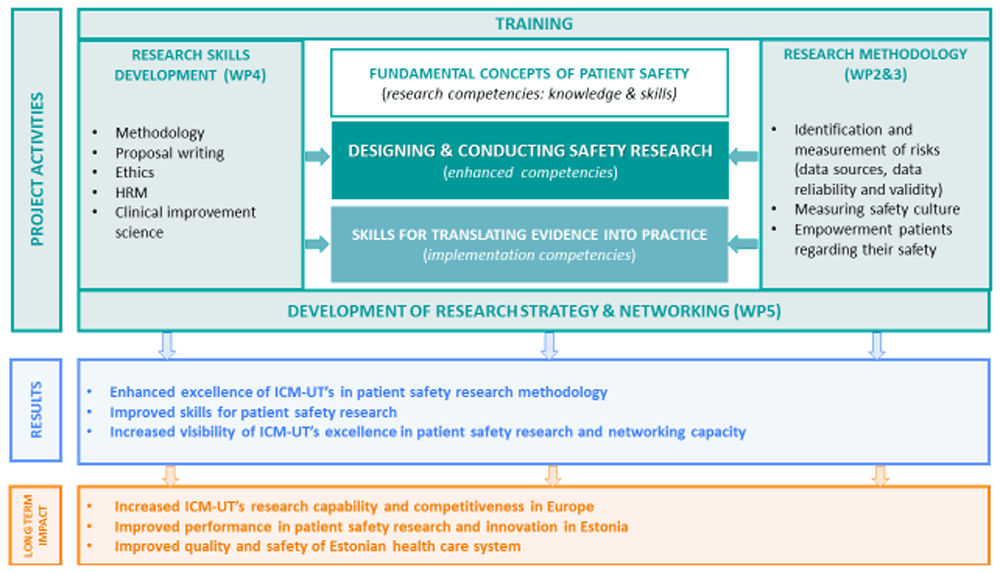
Figure 1. Conception of the Patient Safety Research Centre (PATSAFE) project.
Considering the SWOT analysis results, the PATSAFE twinning partnership activities involve continuous, peer-to-peer collaboration, training academic staff and ESRs, and networking and coordination activities. Looking ahead, active involvement of ESRs in the project, development of the national research strategy on PS, and establishment of the Estonian Patient Safety Research Network will ensure the long-term sustainability of PS research in ICM-UT and Estonia as a whole.
Project activities
The activities of the project are planned according to the findings of the SWOT analysis, aiming to deliver maximum impact on ICM-UT's scientific excellence and to contribute to ICM-UT’s long-term research sustainability.
1. Identification and definition of the main priorities in short-, medium-, and long-term PS research
These activities are planned to increase the research capacity and visibility of the ICM-UT in PS research, and directly address the lack of international visibility in the field of PS and low involvement of patients in health care safety research. In the short term, staff exchanges of two-three researchers from the ICM-UT will visit FAD and IQ-healthcare to identify and envisage research topics that are currently addressed at these institutions and at the international level, and how they are implemented. We identify the researchers who have interest in doing PS research or are already involved in PS research. The identification of research topics is based on the national and international priorities in PS research: both the experts on national as well international level will be involved – representatives of researchers, practitioners, patients and policy-makers. To prioritize the research topics, we will use the Delphi technique. Additionally, a multidisciplinary workshop will be organized by the end of the second project year to reach a consensus in prioritization of research topics, including qualitative techniques and a prioritization matrix to find the main short-, medium-, and long-term research needs and challenges. The results will include a list of specific topics, levels of care, and methodologies that are most important, appropriated and adapted to the ICM-UT and Estonia. In this process, patients are involved, to integrate their perspective into the priorities definition of research topics that mostly focus on the procedures and outcomes most important for them. We will involve the patients through their representative organizations by inviting the patient representatives to take part in the priority setting for patient safety research. We will contact the potential participants using the publicly available contact information; the participation is based on the voluntary basis for all participants, including the patients’ representatives. Therefore, the ethical approval is not needed.
2. Implementing the training program in PS research methodology
The PATSAFE training program structure features two pathways. Path one focuses on methods for analysis and improvement, such as measuring and analysing risks and hazards, PS improvement interventions, and implementation research. Path two involves methods for researching PS awareness: patient safety culture and patient safety empowerment. This research methodology training program integrates the ‘learning by doing’ approach, using traditional training lectures, with more interactive and participatory activities, combined with mentoring and peer-to peer exchange, in order to work in parallel with the development of specific scientific outputs (proposal, projects, publications, etc.).
Implementing the training program includes face-to-face training seminars, virtual training, short-term staff exchanges, and workshops.
The development of the training program is based on a constructivist view on learning; the principles from adult learning and the flipped classroom approach are used to develop the learning materials and activities.
The learning views from constructivist learning, adult learning and flipping the classroom are translated into the following concrete principles of the program.
All courses consist of a basic and an advanced version. Participants can choose which version they want to follow based on their learning goals or prior experienced, supporting their self-directed learning. workshops of the course they want to follow based on their learning goals or prior experiences, supporting their self-directed learning.
Including activities and assignments that have a close link to participants’ workplace and interests.
Performing activities and assignments in collaboration with colleagues or peers.
Providing feedback on the assignments from both PATSAFE teachers as from peer participants (peer feedback).
The training program is developed in several steps. First, a needs assessment is undertaken to get insight in the learning needs and preferences regarding the content and learning activities of potential participants. Based on this assessment, general learning goals regarding the main themes (fundamental of patient safety, safety culture & patient involvement, soft skills) are formulated by the curriculum development team. This team compromises of experts on various patient safety topics and healthcare quality topics, researchers, a research ethicist, an educational advisor and technical administrators
Based on the general learning goals, the program is structured in three modules (fundamentals of PS, safety culture & patient involvement and soft skills development) and each module consists over several courses. The courses in the program have different educational formats based on the overall learning goal: full online courses provided on an online learning platform with no live interaction with teachers and courses that include multiple workshops in small groups. Multiple learning methods are used such as reading literature, watching webinars from experts, performing practical and research assignments, doing knowledge tests and being active on forums. All teachers in courses are experts related to a topic on PS.
For every course a flyer is developed and spread amongst potential participants: academic staff, ESRs, health care practitioners. These flyers include a link on which participants could enroll to the course and get access to the learning materials. The flyers are spread in the different mailing lists in the Faculty of Medicine of the University of Tartu and Faculty’s information letter, on the project webpage and university’s continuous education program.
Theoretical topics from paths one and two will be addressed by face-to-face interactive seminars, including case studies and discussions. For the virtual training, all the materials prepared are organized via modules and pathways using a Moodle e-learning platform. This e-learning platform is also used to promote exchange and facilitate work between face-to-face activities. The described activities focus on strengthening the scientific and technological capacity to identify and measure risks and hazards in PS, PS culture, and empowering patients to improve their own safety. They address the weaknesses that were revealed in the SWOT analysis: limited knowledge in patient safety research methodology among the ICM-UT research staff and ESRs, and a limited number of medical doctors and nurses with enough knowledge and skills in patient safety research. To assess how the knowledge and skills regarding PS research improved during implementation of the program, various assessments are undertaken. Depending on the content and goals of the different learning modules, an assessment method is used such as knowledge tests, practical activities or written assignments.
3. Development of a joint research proposal and publications
Poor safety culture might be a serious obstacle for PS research, as the quality of research results depends to a great extent on the readiness of clinicians to support the research process. Thus, research in safety culture indicates obstacles to the willingness of staff to participate in research processes or opportunities to improve safety culture and thus promote patient safety research.
Research activities are guided by the WHO PS research priorities and competencies and will directly address weaknesses like scepticism towards PS research and data collection, and limited knowledge in PS research methodology among the ICM-UT research staff and ESRs.
Using topics prioritized in phase one and implemented in parallel with phase two, face-to-face interactive training seminars will be organized in phase three to address different soft skills needed to ensure that research topics are correctly translated into specific outputs. At least three proposals will be prepared during the life span of the project. The participants of these training seminars are the members of the academic staff as well the ESRs who participate in the training program and are interested to write the research proposal.
Writing the scientific papers will also be a means to integrate training, mentoring, and exchange into specific scientific output. With this, different types of skills are practiced.
During the implementation of this project, ICM-UT staff’s and ESR competency in the qualitative and quantitative research methods for patient involvement and empowerment for PS research are expected to increase. This activity addresses weaknesses like low involvement of patients in health care safety research and limited knowledge in PS research methodology among the ICM-UT research staff and ESRs.
Workshops are organized as follow-up activities to the aforementioned activities.
The research activities address the following weaknesses: lack of international visibility in PS research, scepticism towards PS research and data collection about the risks and hazards of PS among practicing clinicians, and the low involvement of patients in health care safety research. To assess improvement, we define the indicators that are described in detail in the Impact section of this protocol.
4. Stakeholder engagement, dissemination, and exploitation
This section coordinates the engagement of relevant stakeholders and implements an ambitious plan of innovative activities to increase the impact of the project research. These activities directly address weaknesses like the lack of international visibility and scepticism towards PS research and data collection.
This phase covers the integration of PS research into the development plans of the ICM-UT, the Faculty of Medicine of the University of Tartu, and the Estonian National Health Plan. Elaborating the long-term strategic development plan, and involving relevant stakeholders, will ensure maximum synergies with national and European priorities, maximize the effects of structural funds, and ensure that research and innovation resources attain critical mass. Moreover, the strategy will increase the visibility of ICM-UT’s scientific excellence and its potential as an equal partner within European academia and health politics. At the end of the project, we will organize a national conference on PS and PS research. As an exploitation strategy, the consortium will take advantage of the material, methodology, and experience developed during phases one, two, and three and organize a virtual training course on PS research open to other potential interested professionals in Europe. To carry out the course implementation, we will perform a business case study, combining marketing, diffusion, and launching.