Plain language summary
To tackle the challenges of climate change we will need to rely a lot more on renewable energy sources. This is not only a technical problem, at the end of the day solar panels and wind energy are already widely available, but also requires all of us to change our way of life and how we build our houses and consume our energy. Renewable Energy Communities (REC) are a new idea how to make it easier for all of us to get involved and contribute to the solution. The key idea is to engage with our neighbours and to jointly find ways to improve our local energy infrastructure by investing together into new local renewable energy sources.
In this paper we are describing how four small-town communities across Europe in Italy, Spain, Austria, and Finland are involved in a project that tries to help them build such a Renewable Energy Community. We organised open workshops in each of these locations to gather feedback from local people in these communities on their energy goals and the information they need to decide what to do to achieve these goals.
Local knowledge collected in these workshops will directly influence the tools developed to support the creation and running of Renewable Energy Communities across Europe. The main feedback we received has been that such tools should include information about technical and financial cost and benefits, but also include social and community building features.
Introduction
The Clean Energy Package1 recently released by the EU aims at a more efficient decarbonisation and a better integration of renewable sources into the energy system. The current energy system is undergoing a change from conventional fossil fuel use towards approaches based on renewable energies and is shifting from a centralised model towards more decentralised concepts. Within this transition Renewable Energy Communities (REC) are a new focal point aiming to actively involve consumers and citizens from the start of the design phase all the way to the end of the process, where a community is influencing the development of relevant energy products and services, such as for example the management of small power producers of renewable energy.
According to the EU Renewables Directive Article 2(16) a Renewable Energy Community has been defined as “a legal entity: (a) which, in accordance with the applicable national law, is based on open and voluntary participation, is autonomous, and is effectively controlled by shareholders or members that are located in the proximity of the renewable energy projects that are owned and developed by that legal entity; (b) the shareholders or members of which are natural persons, SMEs, or local authorities, including municipalities; (c) the primary purpose of which is to provide environmental, economic, or social community benefits for its shareholders or members or for the local areas where it operates, rather than financial profits”2.
Compared to other market players, RECs are therefore mainly non-commercial actors in the energy ecosystem empowered to produce, consume, store, sell and share renewable energy in a local self-controlled setting. The REC is a new type of entity and will be based on adequate legal frameworks, which need to be created in the context of national renewable energy policies by member states. The purpose of these energy communities is to be empowered to participate and get access to the local energy markets, ensuring that no discrimination through regulatory and administrative barriers hinder the access and engagement of the REC. A value driven approach is envisioned for the RECs based on non-commercial purposes such as social, environmental, or economic community benefits. The focus is explicitly not on the individual’s financial gains like in the case of traditional market players3,4
The change from a centralised to a more decentralised energy system while putting the RECs in the centre5 requires the engagement of local communities of different sizes, different socio-economic backgrounds, and different regional circumstances. In this work we are presenting a co-design activity from four distinct demonstration sites across Europe representing small communities in different climate zones with different requirements and preferences as follows (see Figure 1):
Berchidda (Italy) is a town in the north of the island of Sardinia with 2758 inhabitants.
Ollersdorf (Austria) is a town of about 1000 inhabitants in the Burgenland region of Austria.
Ispaster (Spain) has 740 inhabitants and is situated in the Basque country in northern Spain.
Kökar (Finland) is a municipality with 234 inhabitants located on the Aland Islands in the Baltic Sea
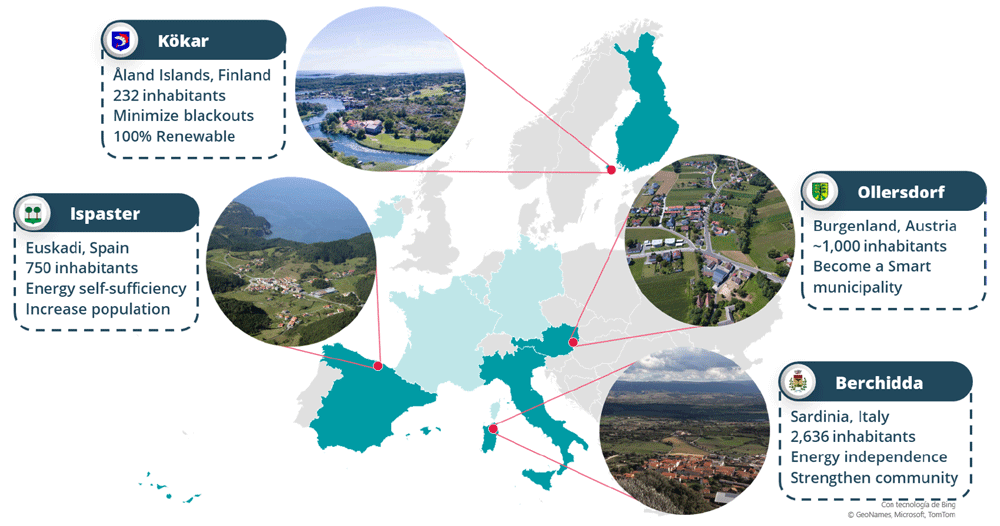
Figure 1. Demonstration sites of the LocalRES project5.
All of these communities are relatively small and remote, with Berchidda being the largest pilot site amongst the four.
While a lot of focus of designing novel renewable energy solutions is on technical innovation and development6, social innovation is of equal importance to foster acceptance and drive sustainable change. It has been recognised that the involvement of citizens as part of the energy transition to enhance the decarbonisation of the local energy system needs to consider particularities of participants, their social norms, and other cultural aspects to improve the motivation and commitment to increase participation in the RECs.
One approach to achieve these aims is to create and co-design tools7, which can support the REC to reach community goals set in the energy domain. Such tools should assist the decision-making process, showing if community energy projects are suitable and providing the required information on how to generate, store, consume and sell the energy. To achieve maximum acceptance and support of the community, such tools have to be co-designed with the citizens to collect and finally deliver all necessary technical, economic, environmental, and social information. Tools which are meant to support energy community activities also need to present the benefits and drawbacks of relevant scenarios in an uncomplicated language to ensure that the general public being the users of these tools can understand the information provided. Such easily understood information reduces the perceived complexity and should empower citizens to make informed decisions about community goals and scenarios regarding the local energy system.
In the following article we will describe an approach for how to engage and collect relevant input from the communities to enable the co-design of supporting tools considering local structures and requirements. Outcomes in the context of the LocalRES project5 that will inform the design process for developing such community supporting tools will be presented.
Methods
Co-creation and participatory processes
Participatory design or co-design is a technique, which tries to be democratic by involving all relevant stakeholders in the design process and to give participants a voice8, so that they can actively contribute with their views, needs and interests to the final outcomes. Heeks and Kenny9 define a stakeholder as an organisation, a social group, a community, or an individual, who can influence or is influenced through the design process and its outcomes. According to Cumbula, et al.,7 communities and individuals get the opportunity during the co-design process to provide details concerning the social and cultural background and knowledge and therefore give insights to the designers about the local context. That information needs to be integrated in the final version of the supporting community tools, particularly if the initiative is based on local knowledge and communication [e.g., 10,11. So-called Heroes, Role Models or Champions, who are representing the community as part of the community, are known to increase the social acceptance as well as the involvement of potential participants12. Giving members of the community the opportunity to provide meaningful contributions about needs, priorities, and interests right from the start of the design process helps to improve the “ownership of the problem and its solution”13, which leads to a higher acceptance14 as well as usage rates of community support tools.
The design process is also a learning process, where the design team gets a better understanding of the local identity, culture, and background knowledge about the project and the system to be developed, as well as information about the circumstances and needs from the perspective of citizens15. However, there are also some limitations in the context of co-design approaches. Most prominent is the “design-reality gap”16 or participation gap, which occurs when people are excluded from taking part in the design process for various reasons, even if their interests are at stake. One example of this is the gender-gap, referring to the fact that women are often less represented than men17 or where a single person of relevance represents an entire community18.
Collecting relevant information from citizens requires a dialogue between the design team and the local community. This engagement with citizens can be achieved by organising co-creation workshops with the aim of gathering views of local participants as well as disseminating information and onboarding interested parties. To facilitate such workshops with the citizens, pre-workshops with representatives of the community, for example the mayor and/or local energy experts, should be conducted to prepare the open sessions with the citizens. In these preparatory activities a first version of relevant scenarios for the community should be built, which then can be used in the citizens workshop as an introduction to initiate a discussion and to develop these initial scenarios further. The benefit of these activities is not limited to gathering requirements for technical developments, but crucially contributes to the building of a community of end users that is ultimately responsible for implementing the suggested developments.
Data collection approach
Four co-design citizen workshops were conducted at the demo sites of the LocalRES project in Berchidda, Ollersdorf , Ispaster, and Kökar (see Figure 1). A preparatory representative workshop for each site served as an initial baseline for developing specific community goals and scenarios, based on existing energy assets and connections as well as potential future assets, upgrades, or alterations, which could potentially contribute to the community’s renewable energy goals. Each of the four representative workshops was attended by a citizen representative together with local energy experts and the project researchers. They took place in an online setting during March/April 2022 and lasted about 2 hours each. The corresponding four citizen workshops were then organised in a face-to-face setting in April/May 2022 at the demo sites themselves with a duration of about two and a half hours each. The participants were citizens of the pilot sites, including the local mayor as well as the energy experts who already participated in the preparatory representative workshops. The citizen workshops were organised and delivered by project researchers in the respective local languages and documented using detailed paper-based minutes, which were translated into English for further analysis.
To engage directly with interested parties and collect their feedback for the benefit of the project was the primary objective of the citizen workshops. They started with presentations, re-capturing the purpose of the LocalRES project as well as presenting mock-ups for a potential support tool with its functionalities, including the most relevant scenarios for each pilot site identified during the representative workshops. It was mentioned that the mock-ups were only meant as an idea for what the supporting tool could look like and that based on the outcomes of the workshops it will be adapted to the needs and requirements of each community. It was also emphasized how a support tool can be beneficial for a Renewable Energy Community to reach joint community goals. Furthermore, the purpose of a support tool was described, giving all involved participants some insight into the bigger picture, what should be achieved as a community goal and which opportunities according to different scenarios are available. The possibility to create new scenarios and discuss it with the community and how it could lead to a better exchange between community members was also discussed.
The outcomes of the representative workshops were used to create a questionnaire for each pilot site, including the individual goals and scenarios for each community. No additional pilot test of the questionnaire was conducted due to small expected sample sizes. The main purpose was primarily to initiate a discussion amongst workshop participants and to gather mainly qualitative feedback from citizens. Therefore, the questionnaire was not intended as a rigorous quantitative evaluation source. There were some initial concerns that the questions provided might be too difficult for participants to understand, but that was one of the main intended goals to find out on which level each energy community is currently on. The questionnaire was meant as a starting point for discussion and to collect qualitative input. Participants of the workshops were encouraged to discuss the questions with people sitting next to them or at the same table. Therefore, questions were not pre-tested, as would be expected from a thorough empirical study, but rather developed according to the information requirements of the support tool design team. However, some empirical results could be derived, giving an indication which aspects are of interest to the different communities. All workshops only took place once and thus no follow-up questionnaire was conducted.
The questionnaire (cf. 19) was paper-based and structured in the way, that the first questions were the same for all four test sites and only goals and scenarios differed according to the individual test sites. It was translated into the local languages (Italian, German, Spanish, Euskera, and Swedish) and handed out after the presentation so that participants got some time to complete it. Participation was voluntary and anonymous, and it was used to start the discussion about the understandability of the presented support tool, the goals, and scenarios as well as other goals and scenarios of interest and the community development in general. Detailed minutes of the sessions were recorded and used as qualitative feedback in addition to the written comments given on the questionnaire by participants. No audio or video recording took place for the citizen workshops, while the online representative workshops were recorded for internal use by the LocalRES project partners. The datasets presented in this study can be found in the Open Science Foundation repository19.
Participants and recruitment
All interested citizens of the four respective communities were invited to the workshops by the community representatives via locally appropriate communication channels. Most of the recruitment channels were the same for all pilot sites. Advertisement of the workshop via the official website or newsletter of the municipality or the official Facebook site were used by all pilot sites except Ispaster, which used a face-to-face approach, i.e., direct personal invitations by the local mayor, to get citizens interested and involved in the renewable energy community project. Others used additional locally relevant communication channels, such as by e-mail (Berchidda) or letters by post (Kökar).
A total of 64 citizens were engaged across the four demonstration sites. For Berchidda 13 people participated in the citizen workshop, in Ispaster 14 participants showed up, while Ollersdorf had 22 participants, and Kökar was able to engage 15 interested parties.
Ethical considerations
The LocalRES project has undergone ethical review by the European Commission (Proposal Number 957819) and obtained ethical approval for conducting the citizen workshops at the four pilot sites. Consent of participants to collect anonymous data in the context of the LocalRES project was sought orally at the beginning of each workshop by the organisers and participants were informed that they could withdraw from the study at any time. All workshop activities and questionnaires were completely voluntary, and all data collection was anonymous.
Data analytics procedure
The main focus of this work has been the qualitative analysis of the comments written down by participants and recorded in the workshop minutes. They were collated to be used to inform future developments on all aspects that are relevant to the citizens in the different communities. In addition to this, a statistical analysis of participant feedback was conducted to evaluate the differences and commonalities between the four sites.
There was one project researcher fluent in the respective local languages acting as coder for each pilot site, who translated the feedback into a prepared Excel sheet for evaluation. Qualitative comments were systematically organised according to recurring topics by pilot site and then compared to each other (see below). The quantitative statistical analysis was conducted using Excel and PSPP.
Results
Characterisation of the citizen workshops
Ollersdorf has been the most advanced community amongst the four demo sites. There was a general good understanding of the energy community, which already was well established and interested to move to the next stage by integrating a community support tool to better communicate with each other and reach its community goals. The goals discussed during the workshop included achieving 100% renewable energy for the community, energy self-sufficiency and supply security. The workshop discussion was very focused and on a high level regarding the interests, needs and requirements when it came to possibilities implementing new energy systems in town. Broadening the scope of the support tool to include topics like water usage or aspects around food was an extended interest voiced by workshop participants.
While the discussion in Ollersdorf was very focused, the discussion in Berchidda was lively with a different focus. The goals of the community discussed during the workshop included how to save on the cost of energy and maximise the return on investment, but also achieving energy self-sufficiency and enabling every individual within the community to freely choose what equipment to install without jeopardising grid operation. Participants in Berchidda showed strong concerns about costs and financial aspects, particularly regarding the current rise in energy prices. There was a general worry that energy investments would not bring the right return and it was proposed to investigate local, national, or even EU-level incentives and grants to cover installation costs. Therefore, the discussion was concerned not just around sustainability questions but also how to make the energy community profitable. Despite the focus on financial issues another aspect that came up during the workshop was privacy concerns as a sensible topic. Interestingly, this was very specific to Berchidda and not observed for example in the Ollersdorf workshop, t(24.93)=2.25, p=0.03.
Ispaster is a very young energy community and therefore their focus was mainly how to develop the community itself. Energy goals discussed during the workshop included the supply of all public buildings with 100% renewable energy, self-sufficiency of the local school, reduction of the dependency on the main grid and achieving energy autonomy, as well as promoting communal energy production in the town. Also, questions like how to engage more people and to broaden the scope of the community were reoccurring themes. A suggestion was to integrate more subjects of interests into the supporting community tools, for instance socioeconomic activities to support the development of local businesses in the industrial area were mentioned. Another point that came up was the suggestion to use local heroes or energy champions to represent the community as well as to approach and engage more citizens in energy activities.
Participants in Kökar showed a comprehensive interest in the other demo sites and the LocalRES project in general. Goals specific to Kökar addressed during the workshop included the overall increase of renewable asset utilisation, achieving self-sufficiency on the island, increasing the reliability of the electricity supply, and the development of EV charging infrastructure. Participants were very forthcoming to express their personal views and ideas. While in other pilot sites there seemed no major problem with the questionnaire, some participants in Kökar required extra explanation from the organisers to understand the questions and scenarios. The workshop revealed a knowledge gap between participants regarding energy topics, which led to the difficulty of some to express their wishes and needs in more technical terms. This outcome reflects very well, that each energy community and each individual in the community is at a different stage and that this needs to be assessed and the results need to be integrated into community supporting tools. Another aspect of interest, similar to Ispaster, was the establishment of energy champions or local heroes, who could mitigate the difficulties which arose during the workshop by communicating and translating complex energy topics between experts and the citizen.
A common observation amongst all pilot sites was a clear demographic shift towards older and male participants. Over 78% of participants were older than 45, and more than 30% of participants were older than 65. Only 1/3 of the participants were women. The workshops demonstrated very clearly that mainly men participated and that women were underrepresented. This issue has already been noticed in other EU Horizon 2020 projects20 as well and needs further investigation to ensure an equal representation of all relevant stakeholders.
Feedback of workshop participants
The feedback of workshop participants with regards to potential support tools for Renewable Energy Communities can be structured into the following three categories:
technical and presentation, i.e., tools for visualising energy generation and consumption on an individual and a community level,
financial and economic, i.e., tools for calculating costs and return on investment for the individual and for the community,
social and communication, i.e., tools that help with community building and community engagement.
While the three categories are interrelated and cannot easily be separated, it has been found that to create and maintain a viable Renewable Energy Community information on all three is required by participating citizens. The general conclusion of the workshops was that the more relevant information is given the more participants feel empowered to make informed decisions and take actions.
Furthermore, the citizen workshops made very clear that community supporting tools need to be adapted both to the specific requirements of the participating town as well as to the needs of the individual end users. Across the board it has been observed that the presented tool mock-ups seem to be difficult to understand and overly technical for a distinct subset of participants. Therefore, the development of community tools needs to consider the varying degree of technical literacy.
In the following we will detail the specific feedback received during the workshop sessions. A major point has been that community goals and scenarios must be sufficiently specific, elaborated and provide information on currently available as well as future renewable energy sources. This includes the energy efficiency of the current system as well as pathways towards upgrades and improvements that can be installed to meet the requirements of the energy network with respect to current and expected energy consumption and production. To that end, the importance of adaptability towards each community who are interested in using support tools to plan and organise their energy community activities has been pointed out. For the creation of individualized goals and scenarios it is essential that those goals and scenarios are based on real data. Vague information and estimations were perceived as insufficient and as a reason not to use or introduce support tools for the community. To get a better understanding of the energy load of the community and to be able to adjust personal behaviour accordingly, it was suggested to make the energy flows and energy balance of the town available as well as giving some information about the existing energy systems in town.
Not only the information provided itself, but also the preferred mode of presentation differs between communities. Different user interfaces and platforms have to be targeted by community supporting tools. The workshops revealed some differences between the four demonstration sites. For example, workshop participants in Berchidda were more interested in a mobile application in comparison to participants in Ollersdorf, t(24.6)=2.34, p=0.03 as well as in comparison to Kökar, t(23.93)=2.88, p<0.01. On the other hand, participants in Ollersdorf have been more interested in a web page compared to participants in Berchidda, t(19.69)=2.21, p=0.04, as were participants in Ispaster, t(21.33)=2.28, p=0.03 and Kökar, t(20.66)=2.38, p=0.03. Not all participants felt comfortable with electronic means of communication, with some voicing a preference for paper-based information.
A reoccurring topic during the workshops was investment costs in relation to benefits and disadvantages expected from potential upgrades of the energy system. These have to be embedded in the real circumstances and based on real data relevant for the local community. Those requirements dominated the comments written down by participants accompanied by the wish to be presented with relevant data in a simple and easy to understand manner. Information on the real expected return-on-investment is required for each individual personally involved by investing in personal or communal assets. Cost of maintenance, repairs, transport, logistics and who is eligible to install systems have to be addressed as well.
Two levels of interest were established during the workshops, one was concerning the community level and the other the individual level. For both not only a detailed breakdown on costs and benefits, but also clear instructions and guidelines how to get actively involved to contribute to community goals will be required. Feasibility studies on both levels has been another topic of interest, with a clear view that unrealistic goals and unapplicable scenarios should not be presented at all.
Grants, incentives, and funding opportunities for individuals as well as for the community have to be part of the presentation. It was found to be not sufficient enough to focus on technical indicators only, but to also provide relevant information concerning administrative issues and how to apply for relevant financial support.
Finally, social and community engagement aspects must be addressed. Community support tools need to not just accommodate participation in the decision process but also communication between users of the tools should be enabled. A feeling of being heard and taken seriously and feeling actively engaged needs to be conveyed. Particularly the communication aspect was a reoccurring request by workshop participants in all pilot sites, looking for enhanced communication, better coordination and planning of actions, as well as giving each participant a voice to express thoughts, ideas, and networking opportunities.
While the interaction between energy systems and suppliers, public service and municipalities, and private citizens was mentioned as relevant and the reliance on real data was seen as crucial, data privacy issues were a concern, which needs to be focused on when constructing tools for the community. The process of designing any tools has to be as transparent as possible and a trustworthy relationship between citizens and any service providers has to be established before any action can be taken.
Amongst workshop participants there was a clear preference to use community supporting tools not just individually, but in a community focused group setting as well. However, overall participants fall into either of two segments, those who prefer to use a tool for themselves and those who prefer a group setting, r(63)=-0.59, p<0.001. For any supporting tools this means that information and results can be used in different settings and circumstances.
There was a general interest to broaden the scope of the energy community by not just focusing on energy systems and improvements of the same only, but to include other relevant topics as well. Those topics are usually highly individualised and specific to the community, but included for example health, sustainability, cleaning, washing, composting, locally produced food, water supply, traffic, sewage, as well as alternative CO2 and energy reduction measures, fire and flood protection and the development of economic aspects such as businesses and employment strategies in the region. In conclusion this means that energy communities have to be thought in a broader context and that they are also a vehicle for citizens to engage with each other and with wider local and communal concerns.
Participants showed an interest in becoming role models, not just individually but also as an energy community. Such renewable energy communities could lead the way for other communities, and as a consequence future supporting tools should reflect on the possibility to share information about successful community projects, so that new communities can learn from the experience of more established existing communities in other parts of Europe.
Limitations
The main limitation of the presented case studies is a potential selection bias; only interested parties participated in the workshops, therefore it is only their views that are represented here. It is noteworthy that only a very specific demographic dominated the discussion, with very few younger people and very few women giving their input. Over-representation of older male participants has been observed in other studies as well21,22. While this might reflect the distribution of decision makers in the community, it is important to address this issue to achieve a broader and more future-proof support of emerging Renewable Energy Communities.
Another limitation arises from the nature of small-town communities, where influential individuals tend to influence who is attending events and what topics are discussed. While this is a benefit when it comes to participant recruitment and the formation of Renewable Energy Communities, there is also a danger that certain segments of the population are not reached and that their input is not considered.
Finally, COVID impacted the execution of the workshops by delaying them for several months. The time between the initial engagement with citizens and the final face-to-face co-creation workshops has been extremely long due to prevailing restrictions. It cannot be ruled out that these delays led to disengagement with the formation of the Renewable Energy Communities, nor can it be ruled out that certain segments of the population did not attend the face-to-face events due to COVID concerns.
Conclusions
Renewable Energy Communities are a novel approach to address decarbonisation and decentralisation of the energy system. Unlike previous approaches they not only focus on technical and economic aspects, but also provide a social and community dimension to addressing the challenges of the energy transition. Therefore, engaging citizens in all parts of the process is crucial and supporting tools to enable these actions need to be developed.
Co-creation is a valuable methodology to gather information from all stakeholders by engaging all from the start of the design process. Not only does it allow developers to gather all relevant information for the design of potential support tools, but it also can serve as a vehicle for engaging and understanding local communities and their energy related concerns early on, thereby fostering the creation of Renewable Energy Communities in the process. In this work we presented a case-study of four small-town European communities and gathered feedback during co-creation workshops. In summary it can be concluded that technical, economic, and social factors have to be addressed when designing community supporting tools and ultimately renewable energy systems. To reach the broadest possible audience within a community, a spectrum of modes of presentation as well as platforms need to be considered to ensure that different levels of technical literacy and willingness to engage are addressed. Costs and return on investment for both the individual as well as the community as a whole are a major concern. However, social considerations should guide the establishment of Renewable Energy Communities as well. All citizens should have the opportunity to be actively engaged and all activity needs to be perceived as useful and feasible, while at the same time they need to be heard and their input needs to be taken seriously. Enhancing communication and trust in the decision-making process has to be fostered by transparent processes and data collection.
The age and gender gap observed in all four workshops is a concern that warrants further investigation. Underrepresentation of the younger generation and of female participants will have an impact on long term acceptance of any measures being taken, therefore broadening the scope of existing and emerging Renewable Energy Communities towards all demographics has to be encouraged to make a success of these initiatives.
Data availability
Underlying data
OSF: European small-town Renewable Energy Communities: Participatory design of supporting tools as a vehicle to engage and understand local communities and their energy related concerns19.
This project contains the following underlying data:
- ResearchData LocalRES Citizen Workshops.xlsx (data collected from participants via questionnaires during the workshops)
Extended data
This project contains the following extended data:
- ResearchData LocalRES Citizen Workshops.pdf (dataset description, including the questionnaire distributed to the workshop participants)
Data are available under the terms of the Creative Commons Attribution 4.0 International license (CC-BY 4.0).
Acknowledgements
This work is the result of the joint effort of many people contributing to the LocalRES project and the preparation and delivery of the four workshops. These are Christian Beder and Martin Klepal from MUNSTER TECHNOLOGICAL UNIVERSITY, Benjamin Horvilleur and Claire Lucas from ARTELYS, Carolina Pastor and Andrea Gabaldón from FUNDACION CARTIF, Bernd Strobl from MARKTGEMEINDE OLLERSDORF IM BURGENLAND, Rolf Eriksson from KOKAR KOMMUN, Niko Korpela from FLEXENS OY AB, Garbiñe Saenz from AYUNTAMIENTO DE ISPASTER, Iñaki Gaztelu from EZE BARRIZAR KOOP ELK TXIKIA, Irantzu Urcola from FUNDACION TECNALIA RESEARCH AND INNOVATION, Diana Vaz from AIGUASOL, Emilio Ghiani from COMUNE DI BERCHIDDA, Sara Ruffini and Raphaelle Papa from R2M ENERGY SRL, and Natalia de Assis Brasil Weber from AUSTRIAN INSTITUTE OF TECHNOLOGY.
Faculty Opinions recommendedReferences
- 1.
Directorate-General for Internal Policies of the Union:
European policies on climate and energy towards 2020, 2030 and 2050. 2019. Reference Source
- 2.
European Union: DIRECTIVE (EU) 2018/2001 OF THE EUROPEAN PARLIAMENT AND OF THE COUNCIL of 11 December 2018 on the promotion of the use of energy from renewable sources. 2018. Reference Source
- 3.
Ghiani E, Giordano A, Nieddu A, et al.:
Planning of a smart local energy community: The case of berchidda municipality (italy).
Energies.
2019; 12(24). Publisher Full Text
- 4.
Roberts J, Frieden D, d’Herbemont S:
Compile - Energy Community Definitions. 2019. Reference Source
- 5.
Horizon 2020: Empowering local renewable energy communities for the decarbonisation of the energy systems. 2021. Publisher Full Text
- 6.
Huang Z, Yu H, Peng Z, et al.:
Methods and tools for community energy planning: A review.
Renew Sustain Energy Rev.
2015; 42: 1335–1348. Publisher Full Text
- 7.
Cumbula S, Sabiescu A, Cantoni L:
Co-design with communities. a reflection on the literature. 2013. Publisher Full Text
- 8.
Harrington C, Erete S, Piper AM:
Deconstructing community-based collaborative design: Towards more equitable participatory design engagements.
Proc ACM Hum-Comput Interact.
2019; 3(216): 1–25. Publisher Full Text
- 9.
Heeks R, Kenny C:
The Economics of ICTs and Global Inequality: Convergence or Divergence for Developing Countries? Development Informatics Group Institute for Development Policy and Management, University of Manchester, 2002. Reference Source
- 10.
Rodil K, Winschiers-Theophilus H, Jensen KL:
Enhancing cross-cultural participation through creative visual exploration. In: Proceedings of the 12th Participatory Design Conference: Research Papers - Volume 1. New York, NY USA, Association for Computing Machinery. ISBN 9781450308465. 2012; 81–90. Publisher Full Text
- 11.
Winschiers-Theophilus H, Chivuno-Kuria S, Kapuire GK, et al.:
Being participated: A community approach. In:
Proceedings of the 11th Biennial Participatory Design Conference.
New York, NY USA, Association for Computing Machinery. ISBN 9781450301312. 2010; 1–10. Publisher Full Text
- 12.
Simpson G:
Looking beyond incentives: the role of champions in the social acceptance of residential solar energy in regional australian communities.
Local Environ.
2018; 23(2): 127–143. Publisher Full Text
- 13.
Ramirez R:
A ’meditation’ on meaningful participation.
The Journal of Community Informatics.
2008; 4(3). Publisher Full Text
- 14.
Lee J, Lee D, Park Y, et al.:
Autonomous vehicles can be shared, but a feeling of ownership is important: Examination of the influential factors for intention to use autonomous vehicles.
Transportation Research Part C: Emerging Technologies.
2019; 107: 411–422. Publisher Full Text
- 15.
Verran H, Christie M, Anbins-King B, et al.:
Designing digital knowledge management tools with aboriginal australians. In:
Performative Knowledge Making.
Charles Darwin University, Australia, 2006. Reference Source
- 16.
Proenza FJ:
Telecentre sustainability-myths and opportunities.
J Dev Comm.
2001; 1–8. Reference Source
- 17.
Kanji N, Greenwood L:
Participatory approaches to research and development in IIED:Learning from experience. IIED, London, 2001. Reference Source
- 18.
Parker S:
The co-production paradox. 2007.
- 19.
Blanke J, González AB, D’Oca S, et al.:
European small-town Renewable Energy Communities: Participatory design of supporting tools as a vehicle to engage and understand local communities and their energy related concerns. 2022. Reference Source
- 20.
Horizon 2020: Holistic dEmand response Services for European residenTIAl communities. 2021. Reference Source
- 21.
Hanke F, Guyet R, Feenstra M:
Do renewable energy communities deliver energy justice? exploring insights from 71 european cases.
Energy Res Soc Sci.
2021; 80: 102244. Publisher Full Text
- 22.
Conradie PD, De Ruyck O, Saldien J, et al.:
Who wants to join a renewable energy community in flanders? applying an extended model of theory of planned behaviour to understand intent to participate.
Energy Policy.
2021; 151: 112121. Publisher Full Text