Introduction
The Clean Energy Package1 recently released by the EU aims at a more efficient decarbonisation and a better integration of renewable sources into the energy system. The current energy system is undergoing a change from conventional fossil fuel use towards approaches based on renewable energies and is shifting from a centralised model towards more decentralised concepts. Within this transition REC are a new focal point aiming to actively involve consumers and citizens from the start of the design phase all the way to the end of the process, where a community is influencing the development of relevant energy products and services, such as for example the management of small power producers of renewable energy.
According to the EU Renewables Directive Article 2(16) a REC has been defined as “a legal entity: (a) which, in accordance with the applicable national law, is based on open and voluntary participation, is autonomous, and is effectively controlled by shareholders or members that are located in the proximity of the renewable energy projects that are owned and developed by that legal entity; (b) the shareholders or members of which are natural persons, SMEs, or local authorities, including municipalities; (c) the primary purpose of which is to provide environmental, economic, or social community benefits for its shareholders or members or for the local areas where it operates, rather than financial profits”2.
Compared to other market players, RECs are therefore mainly non-commercial actors in the energy ecosystem empowered to produce, consume, store, sell and share renewable energy in a local self-controlled setting. The REC is a type of entity and will be based on adequate legal frameworks, which need to be created in the context of national renewable energy policies by member states. The purpose of these energy communities is to be empowered to participate and get access to the local energy markets, ensuring that no discrimination through regulatory and administrative barriers hinder the access and engagement of the REC. A value driven approach is envisioned for the RECs based on non-commercial purposes such as social, environmental, or economic community benefits3,4.
However, the establishment of RECs faces a combination of technical, financial, social, and regulatory barriers that can hinder their development and long-term viability. One of the main obstacles lies in the complex regulatory and administrative frameworks that vary across regions and often lack clarity regarding community participation and grid integration3,4. Additionally, financial barriers, such as high upfront investment costs, limited access to financing, and uncertain revenue streams, often discourage community initiatives5. Social and organizational challenges, including insufficient public awareness, lack of trust among stakeholders, energy injustice, non-willingness to engage, and limited technical expertise, are further aspects to consider when trying to build a RECs6–8.
Municipalities play a pivotal role in overcoming these barriers by acting as facilitators, enablers, and sometimes active partners in REC development. As local governments, they are well positioned to mobilize stakeholders, provide legitimacy, and align energy initiatives with broader sustainability goals9,10. Municipalities can contribute by offering access to public assets such as rooftops or land, integrating RECs into local energy and land-use planning, and supporting awareness campaigns that foster citizen engagement. Moreover, their involvement in co-investment or public-private partnerships can help reduce perceived risks and attract additional funding. In this way, municipalities act as intermediaries between top-down energy policy and bottom-up community action, ensuring that RECs are embedded within a coherent local energy transition strategy.
This work is part of the Horizon Europe LocalRES project11. LocalRES stands for “Empowering Local Renewable Energy Communities for the Decarbonisation of the Energy Systems” and seeks to deploy innovative local energy systems led by RECs, in order to enable a socially fair energy transition. It intends to hand control of renewable energy production and management back to communities and citizens by developing digital tools and optimizing energy vectors such as electricity, heating and mobility.
While a lot of focus of designing novel renewable energy solutions is on technical innovation and development12, social innovation is of equal importance to foster acceptance and drive sustainable change. It has been recognised that the involvement of citizens as part of the energy transition to enhance the decarbonisation of the local energy system needs to consider particularities of participants, their social norms, and other cultural aspects to improve the motivation and commitment to increase participation in the RECs.
One approach to achieve these aims is to create and co-design tools13, which can support the REC to reach community goals set in the energy domain. Such tools should assist the decision-making process, showing if community energy projects are suitable and providing the required information on how to generate, store, consume and sell the energy. To achieve maximum acceptance and support of the community, such tools have to be co-designed with the citizens to collect and finally deliver all necessary technical, economic, environmental, and social information. This trend is evident in numerous Horizon Europe projects-not only in the LocalRES project presented here, but also in initiatives such as ENPOWER14, HESTIA15, and E2District16. However, despite the European Commission’s recent shift toward a more holistic approach to energy research that emphasizes social and community dimensions, much of the academic literature continues to focus predominantly on the technical aspects, often overlooking the crucial social component17–19. Tools which are meant to support energy community activities also need to present the benefits and drawbacks of relevant scenarios in an uncomplicated language to ensure that the general public being the users of these tools can understand the information provided. Such easily understood information reduces the perceived complexity and should empower citizens to make informed decisions about community goals and scenarios regarding the local energy system. The change from a centralised to a more decentralised energy system while putting the RECs in the centre20 requires the engagement of local communities of different sizes, different socio-economic backgrounds, and different regional circumstances. This work presents a co-design activity from four distinct demonstration sites across Europe representing small communities in different climate zones with different requirements and preferences as follows (see Figure 1):
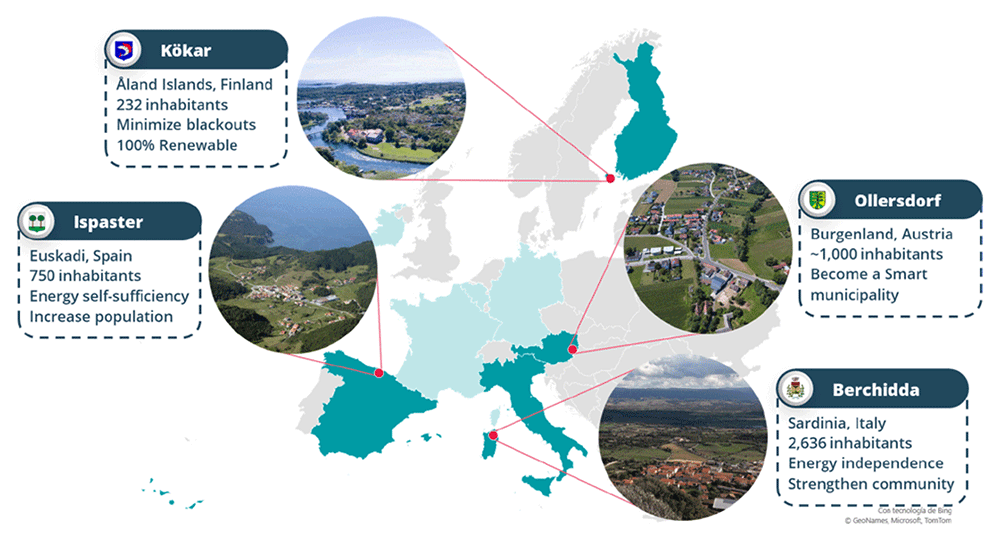
Figure 1. Demonstration sites of the LocalRES project.
Berchidda (Italy) is a town in the north of the island of Sardinia with around 2,800 inhabitants. The community is characterized by a strong local identity and an economy traditionally based on agriculture, small-scale industry, and tourism. Berchidda experiences a Mediterranean climate, with hot, dry summers and mild, wet winters, which shapes local energy needs, particularly for cooling in summer and heating in winter. In recent years, the town has shown growing interest in sustainable development initiatives, including renewable energy and energy efficiency projects.
Ollersdorf (Austria) is a small town of approximately 1,000 inhabitants located in the Burgenland region of eastern Austria. The area experiences a temperate continental climate, characterized by warm summers, cold winters, and moderate precipitation throughout the year. These climatic conditions influence local energy demand, particularly for heating during the winter months. The municipality has a strong tradition of community cooperation and has been active in implementing local sustainability initiatives. Ollersdorf is a very advanced community with very active and engaged members where many RE projects are already put into place.
Ispaster (Spain) is a small municipality with approximately 740 inhabitants, located in the Basque Country in northern Spain. The town experiences an oceanic climate, characterized by mild temperatures, high humidity, and abundant rainfall throughout the year, which supports its lush green landscapes and agricultural activities. The community is known for its strong local identity, However, Ispaster is a relatively young REC, where a significant degree of scepticism among residents was observed.
Kökar (Finland) is a small municipality with approximately 230 inhabitants, located on the Åland Islands in the Baltic Sea. The area experiences a cold temperate climate with long, snowy winters and mild summers, which significantly influences local energy needs and consumption patterns. Despite its small population, Kökar has a close-knit community and a strong tradition of local governance, with a high interest particularly in the other REC of the LocalRES project.
Although all four towns are relatively remote, the varying levels of REC development revealed notable differences in residents’ awareness and understanding of the energy transition, as well as the perceived importance of local energy projects and activities. In more advanced communities, such as Ollersdorf, high engagement and prior experience with renewable energy initiatives facilitated constructive discussions and active participation in co-creation workshops. Conversely, in newer or less established RECs, like Ispaster, scepticism and limited familiarity with energy transition concepts required additional effort to build trust, explain technical and economic aspects, and encourage meaningful participation. That demonstrated the need to tailor communication, support tools, and participation approaches to the unique context and readiness of each community.
Therefore, a significant research gap exists in understanding how participatory and co-creative approaches can inform the design of inclusive, socially responsive, and technically robust tools that not only support the operation of RECs but also strengthen trust, transparency, and collective decision-making at the local level.
The objective of this study is to examine how co-creation methodologies can be effectively employed to engage citizens and local stakeholders in the development of RECs. By focusing on the intersection of technical, economic, and social dimensions, the research seeks to understand how participatory processes contribute to the design of tools and frameworks that support community-based energy initiatives. Ultimately, the study aims to generate insights and recommendations that foster inclusive citizen participation, enhance trust and transparency in decision-making, and promote the successful establishment and long-term sustainability of RECs in small-town European contexts.
In the following article, we present an approach for engaging local communities to gather relevant input to facilitate the co-design of supporting or planning tools that account for local structures and specific requirements. The outcomes discussed stem from the LocalRES project20 and provide insights that will inform the design process for developing community-planning tools aimed at fostering the establishment and effective operation of RECs.
Methods
The chosen approach was a participatory or co-design method, which involved all relevant stakeholders, such as organisations, communities, and individuals, in the design process to ensure that local knowledge, cultural context, and community needs shape the final outcomes13,21. These collaborative approaches enhance ownership, acceptance, and long-term use of community tools22,23 but can face challenges like participation or gender gaps when certain groups are excluded24,25.
Four co-design citizen workshops were conducted at the demo sites of the LocalRES project in Berchidda, Ollersdorf, Ispaster, and Kökar (see Figure 1). A preparatory representative workshop for each site served as an initial baseline for developing specific community goals and scenarios, based on existing energy assets and connections as well as potential future assets, upgrades, or alterations, which could potentially contribute to the community’s renewable energy goals. Each of the four representative workshops was attended by a citizen representative who showed high interest in the topic and project and acted as a local champion or ambassador together with local energy experts, the mayors who were driving this initiative and the project researchers. They took place in an online setting during March/April 2022 and lasted about 2 hours each. The corresponding four citizen workshops were then organised in a face-to-face setting in April/May 2022 at the demo sites themselves with a duration of about two and a half hours each. The participants were local citizens of the pilot sites who had an interest in RECs and the energy transition, including the local mayor as well as one to two local energy experts who already participated in the preparatory representative workshops and two project researchers. The citizen workshops were organised and delivered by project researchers in the respective local languages and documented using detailed paper-based minutes, which were translated into English for further analysis.
To engage directly with interested parties and collect their feedback for the benefit of the project was the primary objective of the citizen workshops. They started with presentations, re-capturing the purpose of the LocalRES project as well as presenting mock-ups for a potential planning tool with its functionalities, including the most relevant scenarios for each pilot site identified during the representative workshops (see Appendix). The planning tool aims to support both experts and citizens in developing and managing a REC. For experts, it provides a comprehensive vision of the energy system, helping them design and assess long-term scenarios while evaluating the impact of decisions on emissions, costs, and sustainability, as well as supporting land-use planning. For citizens, it promotes active participation by granting access to relevant information, enabling them to make informed decisions as community members, understand how choices affect their personal situations, and perform individual simulations to measure their impacts (the newest version of the planning tool can be found here ENPOWER). It was mentioned that the mock-ups were only meant as an idea for what the planning tool could look like and that based on the outcomes of the workshops it will be adapted to the needs and requirements of each community. It was also emphasized how a planning tool can be beneficial for a REC to reach joint community goals. Furthermore, the purpose of a support tool was described, giving all involved participants some insight into the bigger picture, what should be achieved as a community goal and which opportunities according to different scenarios are available. The possibility to create new scenarios and discuss it with the community and how it could lead to a better exchange between community members was also discussed.
The outcomes of the representative workshops were used to create a questionnaire for each pilot site, including the individual goals and scenarios for each community (see Appendix). No additional pilot test of the questionnaire was conducted due to small, expected sample sizes. The main purpose was primarily to initiate a discussion amongst workshop participants and to gather mainly qualitative feedback from citizens. Therefore, the questionnaire was not intended as a rigorous quantitative evaluation source. There were some initial concerns that the questions provided might be too difficult for participants to understand, but that was one of the main intended goals to find out on which level each energy community currently was on. The questionnaire was meant as a starting point for discussion and to collect qualitative input. Participants of the workshops were encouraged to discuss the questions with people sitting next to them or at the same table. Therefore, questions were not pre-tested, as would be expected from a thorough empirical study, but rather developed according to the information requirements of the support tool design team. All workshops only took place once and thus no follow-up questionnaire was conducted.
The questionnaire26 was paper-based and structured in the way, that the first questions were the same for all four test sites and only goals and scenarios differed according to the individual test sites. It was translated into the local languages (Italian, German, Spanish, Euskera, and Swedish) and handed out after the presentation so that participants got some time to complete it. Participation was voluntary and anonymous, and it was used to start the discussion about the understandability of the presented planning tool (the newest version of the planning tool can be found here ENPOWER), the goals, and scenarios as well as other goals and scenarios of interest and the community development in general (see Appendix). Detailed minutes of the sessions were recorded and used as qualitative feedback in addition to the written comments given on the questionnaire by participants. No audio or video recording took place for the citizen workshops, while the online representative workshops were recorded for internal use by the LocalRES project partners. The datasets presented in this study can be found in the Open Science Foundation repository26.
In Berchidda, the table arrangement encouraged small-group discussions, while in Ispaster, participants sat in a half-circle and engaged in a collective discussion about the questions and scenarios. In Ollersdorf, participants were initially quiet and focused on completing the questionnaire individually, but once the scenarios relevant to their town were introduced, the discussion became lively and engaging. In Kökar, participants showed strong interest in the LocalRes project and in learning about the experiences of other communities, highlighting the importance of actively listening to participants and clarifying any misunderstood questions or information.
Participants and recruitment
All interested citizens of the four respective communities were invited to the workshops by the community representatives via locally appropriate communication channels. Most of the recruitment channels were the same for all pilot sites. Advertisement of the workshop via the official website or newsletter of the municipality or the official Facebook site were used by all pilot sites except Ispaster, which used a face-to-face approach, i.e., direct personal invitations by the local mayor, to get citizens interested and involved in the renewable energy community project. Others used additional locally relevant communication channels, such as by e-mail (Berchidda) or letters by post (Kökar).
A total of 64 citizens were engaged across the four demonstration sites. For Berchidda 13 people participated in the citizen workshop, in Ispaster 14 participants showed up, while Ollersdorf had 22 participants, and Kökar was able to engage 15 interested parties.
Ethical considerations
The LocalRES project has undergone ethical review by the European Commission (Proposal Number 957819) and obtained ethical approval for conducting the citizen workshops at the four pilot sites. Consent of participants to collect anonymous data in the context of the LocalRES project was sought orally at the beginning of each workshop by the organisers and participants were informed that they could withdraw from the study at any time. All workshop activities and questionnaires were completely voluntary, and all data collection was anonymous.
Data analytics procedure
The main focus of this work has been the qualitative analysis of the comments written down by participants and recorded in the workshop minutes. They were collated to be used to inform future developments on all aspects that are relevant to the citizens in the different communities.
There was one project researcher fluent in the respective local languages acting as coder for each pilot site, who translated the feedback into a prepared Excel sheet for evaluation. Qualitative comments were systematically organised according to recurring topics by pilot site and then compared to each other.
Results
Characterisation of the citizen workshops
Ollersdorf has been the most advanced community amongst the four demo sites. There was a general good understanding of the energy community, which already was well established and interested to move to the next stage by integrating a community support tool to better communicate with each other and reach its community goals. The goals discussed during the workshop included achieving 100% renewable energy for the community, energy self-sufficiency and supply security (see Appendix). The workshop discussion was very focused and on a high level regarding the interests, needs and requirements when it came to possibilities implementing new energy systems in town. Broadening the scope of the planning tool to include topics like water usage or aspects around food was an extended interest voiced by workshop participants.
While the discussion in Ollersdorf was very focused, the discussion in Berchidda was lively with a different focus. The goals of the community discussed during the workshop included how to save on the cost of energy and maximise the return on investment, but also achieving energy self-sufficiency and enabling every individual within the community to freely choose what equipment to install without jeopardising grid operation. Participants in Berchidda showed strong concerns about costs and financial aspects, particularly regarding the current rise in energy prices. There was a general worry that energy investments would not bring the right return, and it was proposed to investigate local, national, or even EU-level incentives and grants to cover installation costs. Therefore, the discussion was concerned not just around sustainability questions but also how to make the energy community profitable. Despite the focus on financial issues another aspect that came up during the workshop was privacy concerns as a sensible topic.
Ispaster is a very young energy community and therefore their focus was mainly how to develop the community itself. Energy goals discussed during the workshop included the supply of all public buildings with 100% renewable energy, self-sufficiency of the local school, reduction of the dependency on the main grid and achieving energy autonomy, as well as promoting communal energy production in the town (see Appendix). Also, questions like how to engage more people and to broaden the scope of the community were reoccurring themes. A suggestion was to integrate more subjects of interests into the planning tool, for instance socioeconomic activities to support the development of local businesses in the industrial area were mentioned. Another point that came up was the suggestion to use local heroes or energy champions to represent the community as well as to approach and engage more citizens in energy activities.
Participants in Kökar showed a comprehensive interest in the other demo sites and the LocalRES project in general. Goals specific to Kökar addressed during the workshop included the overall increase of renewable asset utilisation, achieving self-sufficiency on the island, increasing the reliability of the electricity supply, and the development of EV charging infrastructure (see Appendix). Participants were very forthcoming to express their personal views and ideas. While in other pilot sites there seemed no major problem with the questionnaire, some participants in Kökar required extra explanation from the organisers to understand the questions and scenarios. The workshop revealed a knowledge gap between participants regarding energy topics, which led to the difficulty of some to express their wishes and needs in more technical terms. This outcome reflects very well, that each energy community and each individual in the community is at a different stage and that this needs to be assessed and the results need to be integrated into community planning tools. Another aspect of interest, similar to Ispaster, was the establishment of energy champions or ambassadors, who could mitigate the difficulties which arose during the workshop by communicating and translating complex energy topics between experts and the citizen.
A common observation amongst all pilot sites was a clear demographic shift towards older and male participants. Over 78% of participants were older than 45, and more than 30% of participants were older than 65 (Table 1).
Table 1. Age distribution.
| 18–24 | 25–34 | 35–44 | 45–54 | 55–64 | 65+ |
|---|
| Berchidda | 0% | 15% | 15% | 23% | 8% | 38% |
| Ollersdorf | 0% | 0% | 9% | 14% | 36% | 41% |
| Ispaster | 7% | 7% | 21% | 29% | 29% | 7% |
| Kökar | 0% | 20% | 0% | 13% | 40% | 27% |
Only 1/3 of the participants were women. The workshops demonstrated very clearly that mainly men participated and that women were underrepresented (Table 2).
Table 2. Gender distribution.
| Female | Male |
|---|
| Berchidda | 31% | 69% |
| Ollersdorf | 39% | 61% |
| Ispaster | 14% | 86% |
| Kökar | 38% | 62% |
This issue has already been noticed in other EU Horizon 2020 projects27 as well and needs further investigation to ensure an equal representation of all relevant stakeholders.
Feedback of workshop participants
Coming back to the identified key research gap in the development of RECs concerning the limited understanding of how participatory and co-creative approaches can meaningfully shape tools that are both technically robust and socially responsive, tools that support trust, transparency, and collective decision-making at the local level. Addressing this gap, the study examined how co-creation methodologies can engage citizens and local stakeholders in designing frameworks that reflect local needs and concerns (the newest version of the planning tool can be found here ENPOWER).
The results presented below illustrate how our participatory engagement approach enabled the collection of locally grounded insights and requirements that inform the co-design of REC support and planning tools. These findings demonstrate how community input can be translated into practical design criteria, directly contributing to closing the identified research gap (key Recommendations for Co-Design of REC Supporting Tools can be found in Table 3).
Table 3. Key Recommendations for Co-Design of REC Support and Planning Tools.
| Theme | Recommendation Summary | Implications for Tool Design |
|---|
|
Localisation & Real Data
| Tools must reflect local conditions and use accurate, community-specific data. | Base scenarios on real energy flows, infrastructure, and consumption patterns; avoid vague estimates. |
|
User Diversity & Technical Literacy
| Different users require different levels of detail and clarity. | Provide layered interfaces; design for both individual and group use. |
|
Visualisation
| Clear, intuitive visual representations are essential for comprehension. | Use simple dashboards, maps, diagrams, and transparent indicators of energy generation and consumption. |
|
Financial Transparency
| Users need clear cost–benefit and ROI information at both individual and community levels. | Integrate feasibility studies, grants, incentives, maintenance costs, and administrative steps. |
|
Social & Communication Features
| Community engagement and communication must be supported. | Include messaging, notifications, feedback channels, and features supporting collective decision-making. |
|
Platform Flexibility
| Communities vary in preferred communication and interface formats. | Provide mobile apps, web-based tools, and paper-based alternatives depending on local preferences. |
|
Trust & Data Privacy
| Transparency and data governance are crucial for adoption. | Make data handling practices explicit; co-design privacy rules with communities. |
|
Cross-Community Learning
| Communities want to learn from successful examples elsewhere. | Incorporate case studies, shared experiences, and benchmarking tools. |
|
Holistic Community Integration
| Citizens link REC development to broader local priorities. | Allow expansion into sustainability topics (e.g., mobility, food, waste, water, local economy). |
|
Individual & Collective Decision-Making
| Tools must support personal choices and community goals simultaneously. | Provide action guidelines, role descriptions, and visualisations showing individual contributions to shared goals. |
The feedback of workshop participants with regards to potential support tools for REC can be structured into the following three categories:
technical and presentation, i.e., tools for visualising energy generation and consumption on an individual and a community level,
financial and economic, i.e., tools for calculating costs and return on investment for the individual and for the community,
social and communication, i.e., tools that help with community building and community engagement.
While the three categories are interrelated and cannot easily be separated, it has been found that to create and maintain a viable REC information on all three is required by participating citizens. The general conclusion of the workshops was that the more relevant information is given the more participants feel empowered to make informed decisions and take actions.
Furthermore, the citizen workshops made very clear that community supporting tools need to be adapted both to the specific requirements of the participating town as well as to the needs of the individual end users. Across the board it has been observed that the presented tool mock-ups seem to be difficult to understand and overly technical for a distinct subset of participants. Therefore, the development of community tools needs to consider the varying degree of technical literacy.
In the following we will detail the specific feedback received during the workshop sessions. A major point has been that community goals and scenarios must be sufficiently specific, elaborated and provide information on currently available as well as future renewable energy sources. This includes the energy efficiency of the current system as well as pathways towards upgrades and improvements that can be installed to meet the requirements of the energy network with respect to current and expected energy consumption and production. To that end, the importance of adaptability towards each community who are interested in using support tools to plan and organise their energy community activities has been pointed out. For the creation of individualized goals and scenarios it is essential that those goals and scenarios are based on real data. Vague information and estimations were perceived as insufficient and as a reason not to use or introduce support tools for the community. To get a better understanding of the energy load of the community and to be able to adjust personal behaviour accordingly, it was suggested to make the energy flows and energy balance of the town available as well as giving some information about the existing energy systems in town.
Not only the information provided itself, but also the preferred mode of presentation differs between communities. Different user interfaces and platforms have to be targeted by community supporting tools. The workshops revealed some differences between the four demonstration sites. For example, workshop participants in Berchidda were more interested in a mobile application in comparison to participants in Ollersdorf, as well as in comparison to Kökar. On the other hand, participants in Ollersdorf have been more interested in a web based platform compared to participants in Berchidda, as were participants in Ispaster. Not all participants felt comfortable with electronic means of communication, with some voicing a preference for paper-based information.
A reoccurring topic during the workshops was investment costs in relation to benefits and disadvantages expected from potential upgrades of the energy system. These have to be embedded in the real circumstances and based on real data relevant for the local community. Those requirements dominated the comments written down by participants accompanied by the wish to be presented with relevant data in a simple and easy to understand manner. Information on the real expected return-on-investment is required for each individual personally involved by investing in personal or communal assets. Cost of maintenance, repairs, transport, logistics and who is eligible to install systems have to be addressed as well.
Grants, incentives, and funding opportunities for individuals as well as for the community have to be part of the presentation. It was found to be not sufficient enough to focus on technical indicators only, but to also provide relevant information concerning administrative issues and how to apply for relevant financial support.
Two levels of interest were established during the workshops; one was concerning the community level and the other the individual level. For both not only a detailed breakdown on costs and benefits, but also clear instructions and guidelines how to get actively involved to contribute to community goals will be required. Feasibility studies on both levels have been another topic of interest, with a clear view that unrealistic goals and unapplicable scenarios should not be presented at all.
Finally, social and community engagement aspects must be addressed. Community support tools need to not just accommodate participation in the decision process but also communication between users of the tools should be enabled. A feeling of being heard and taken seriously and feeling actively engaged needs to be conveyed. Particularly the communication aspect was a reoccurring request by workshop participants in all pilot sites, looking for enhanced communication, better coordination and planning of actions, as well as giving each participant a voice to express thoughts, ideas, and networking opportunities.
While the interaction between energy systems and suppliers, public service and municipalities, and private citizens was mentioned as relevant and the reliance on real data was seen as crucial, data privacy issues were a concern, which needs to be focused on when constructing tools for the community. The process of designing any tools has to be as transparent as possible and a trustworthy relationship between citizens and any service providers has to be established before any action can be taken.
Amongst workshop participants there was a clear preference to use community planning tools not just individually, but in a community focused group setting as well. However, overall participants fall into either of two segments, those who prefer to use a tool for themselves and those who prefer a group setting. For any supporting tools this means that information and results can be used in different settings and circumstances.
There was a general interest to broaden the scope of the energy community by not just focusing on energy systems and improvements of the same only, but to include other relevant topics as well. Those topics are usually highly individualised and specific to the community, but included for example health, sustainability, cleaning, washing, composting, locally produced food, water supply, traffic, sewage, as well as alternative CO2 and energy reduction measures, fire and flood protection and the development of economic aspects such as businesses and employment strategies in the region. In conclusion this means that energy communities have to be thought in a broader context and that they are also a vehicle for citizens to engage with each other and with wider local and communal concerns.
Participants showed an interest in becoming role models, not just individually but also as an energy community. Such RECs could lead the way for other communities, and as a consequence future planning tools should reflect on the possibility to share information about successful community projects, so that new communities can learn from the experience of more established existing communities in other parts of Europe.
Limitations
The main limitation of the presented case studies is a potential selection bias; only interested parties participated in the workshops, therefore it is only their views that are represented here. It is noteworthy that only a very specific demographic dominated the discussion, with very few younger people and very few women giving their input. Over-representation of older male participants has been observed in other studies as well6,28. While this might reflect the distribution of decision makers in the community, it is important to address this issue to achieve a broader and more future-proof support of emerging RECs.
The age and gender gap observed in all four workshops is a concern that warrants further investigation. Underrepresentation of the younger generation and of female participants will have an impact on long term acceptance of any measures being taken, therefore broadening the scope of existing and emerging RECs towards all demographics has to be encouraged to make a success of these initiatives.
Another limitation arises from the nature of small-town communities, where influential individuals tend to influence who is attending events and what topics are discussed. While this is a benefit when it comes to participant recruitment and the formation of RECs, there is also a danger that certain segments of the population are not reached and that their input is not considered.
Finally, COVID impacted the execution of the workshops by delaying them for several months. The time between the initial engagement with citizens and the final face-to-face co-creation workshops has been extremely long due to prevailing restrictions. It cannot be ruled out that these delays led to disengagement with the formation of the RECs, nor can it be ruled out that certain segments of the population did not attend the face-to-face events due to COVID concerns.
Conclusions
This study set out to address a key research gap in the development of RECs: the limited understanding of how participatory and co-creative approaches can shape tools that are not only technically robust but also socially responsive and trusted by local communities. By employing a co-creation methodology across four European demonstration sites within the LocalRES project, the research examined how citizens and local stakeholders articulate their needs, expectations, and concerns regarding REC support and planning tools.
The findings demonstrate that effective REC tool design must be firmly grounded in local contexts, real data, and community-specific requirements. Participants consistently emphasised the need for clear visualisations of energy flows, transparent and comprehensible financial information, and functionalities that support both individual and collective decision-making. Equally important were communication features that foster community engagement, build trust, and enable meaningful participation. The study also highlights the diversity of user preferences, ranging from digital platforms to paper-based formats, and the necessity of accounting for varying levels of technical literacy. Moreover, the workshops revealed that citizens view RECs as embedded in broader sustainability and community development concerns, suggesting that future tools should adopt a holistic perspective extending beyond energy alone.
Drawing on these insights, the study offers a set of concrete recommendations for the co-design of REC tools. These include adapting tool design to local conditions, providing layered interfaces for different user profiles, ensuring financial and technical transparency, integrating communication and community-building features, and enabling knowledge exchange between communities. Together, these recommendations outline a pathway for creating inclusive, trustworthy, and adaptable tools that can support the establishment, operation, and long-term sustainability of RECs in small-town European contexts.
Ultimately, this work demonstrates the value of co-creative approaches in shaping tools that are aligned with community needs and capable of empowering citizens in the energy transition. Future research should build on these findings by testing and refining co-designed tools in real-life REC deployments, further exploring how participatory design can strengthen energy justice, local capacity building, and collective governance in diverse community settings.